I have written something like this before, but it’s worth repeating with emphasis: A society can become more unequal while simultaneously becoming more affluent, reducing absolute poverty, and improving the material circumstances of even its least affluent members. Poor people in America live much better than poor people elsewhere. Moreover, there are far fewer poor people in America today than there were in the past. Capitalism had a rough go early on; the Marxist critique made sense at the time. But in its developed form, capitalism has lifted hundreds of millions of people out of absolute poverty.
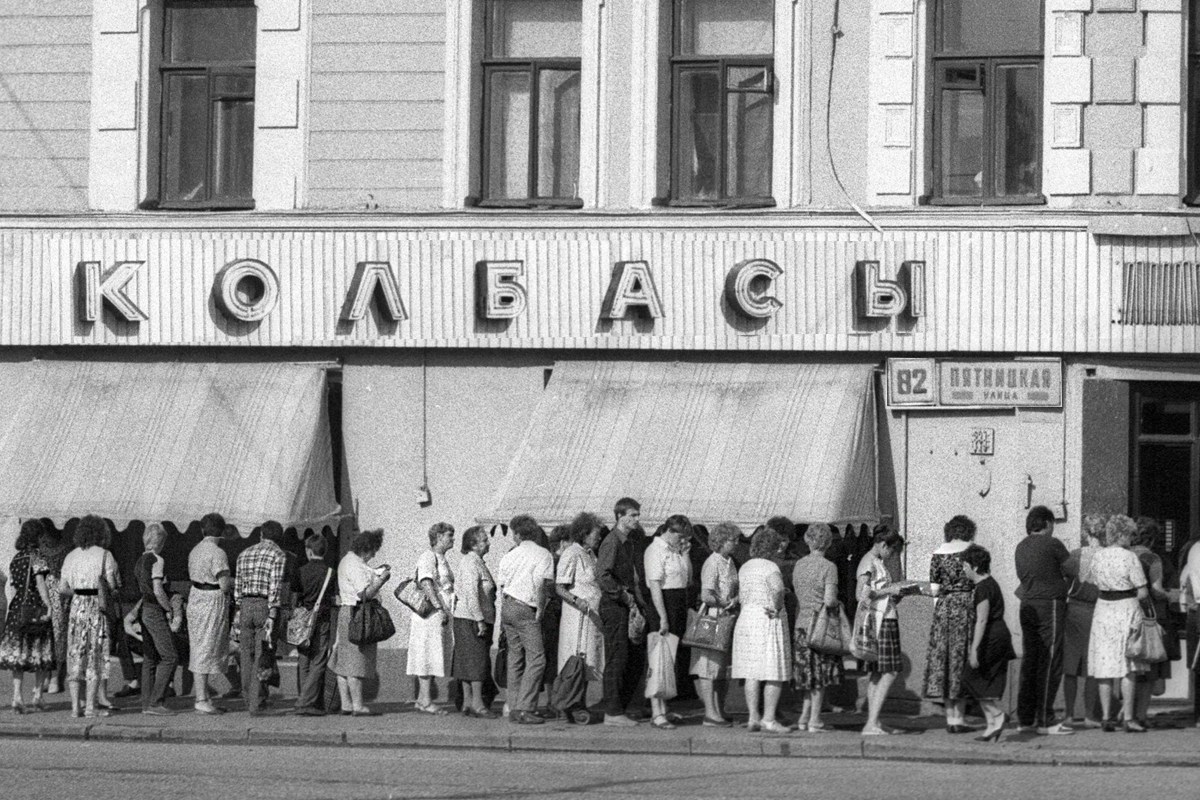
Conversely, a society can have relatively little inequality while leaving virtually everyone comparatively poorer. That’s socialism in a nutshell. It makes the general population uniformly poor by making them uniformly and artificially average—except of course for the apparatchiks and the bureaucrats who command the lives of others.
The first type of society, based on the capitalist mode of production, despite the objective fact of exploitation (which is true for all human societies, so that’s a wash), puts liberty central to its ethics. A free and open society produces inequality because cultural, natural, and social traits are unequally distributed across the population. There is no paradox in what results from liberty: the general population benefits by allowing the unequal distribution of traits to determine economic development. The success of some improves the conditions of the rest.
The latter type of society is what socialism inevitably brings. This result is inherent in the logic of this mode of production. By artificially constraining the most ambitious, talented, and intelligent (not to be confused with the formally educated for whom credentialism substitutes for wisdom) among us, the general population suffers.
Learning this truth turned me against socialism several years ago. That and the authoritarianism socialism necessarily entails. The problem of authoritarianism is a crucial piece. Even a comfortable prison is still a prison. To make a population equal, its variability must be externally controlled, i.e., liberty must be suppressed, and this produces mediocrity. Kurt Vonnegut, Jr., describes this in his short story “Harrison Bergeron.” Halfway to Harrison’s world lies a dystopian nightmare.
This is why socialists dwell on inequality as if inequality per se were the problem. They have to avoid admitting that human life improves under conditions of material inequality. So they stoke envy and resentment among those who don’t rise, even while their conditions improve overall. Socialists build their coalitions by fomenting and leveraging ressentiment. I, too, used to dwell on inequality, before Frederick Hayek convinced me that inequality is an inherent feature of natural life. Confusion over this is particularly odd in a man who accept Darwin’s account of natural history. Man is, after all, an animal.
I realized this after publishing essays either defending socialism or criticizing capitalism (some of which have become rather popular). This might be seen as unfortunate except that in defending socialism I steel-manned the argument and therefore am able to more thoroughly destroy it.


