
Nathan Cofnas, an American philosopher and self-described “race realist,” currently holding a postdoc in the Department of Philosophy and Moral Sciences at Ghent University, whose investigation brought the Jason Arday plagiarism controversy to public attention (see Jason Arday Found Dead After Fall From Grace), has been making the podcast rounds to take questions about the Arday affair, as well as his views on group differences in intelligence.
In these appearances, Cofnas presents himself less as an advocate of racial hierarchy than as someone willing to examine empirical claims about differences among human populations that he believes are too often treated as beyond legitimate inquiry. Predictably, his arguments have generated considerable controversy, particularly because questions about race and intelligence sit at the intersection of contested science, racial stereotypes, and contemporary debates over academic freedom and discrimination.

Before turning to Cofnas’s argument, I think it is useful to briefly consider the logic of affirmative action, since positive discrimination (which I clarify in a moment) is among his chief political and ethical concerns.
* * *
At its core, affirmative action rests on the proposition (an assumption, really) that outcome disparities among groups cannot necessarily be attributed to differences in individual merit or ability, especially in the case of race, since individual differences aggregate along those lines—and it is “racist” to presume racial groups vary on average in significant traits, such as intelligence. After all, the powerful have constructed race as a tool to obtain and keep power. There really is no such thing as race, so no differences can be attributed to it. Therefore, if historical discrimination or unjust structural forces explain disparities between groups, then treating individuals identically in the present may not be sufficient to eliminate their effects.
Readers should not miss the problem that what requires evidence is assumed to be true (for ideological reasons). But let’s put that problem aside for the moment. Another problem we cannot put off is the fallacy of misplaced concreteness, a species of reification in which concrete individuals are assumed to be the statistical average of the abstract demographic category classifying them. Such persons do not actually exist. Therein lies the problem with affirmative action.
Affirmative action attempts, in various ways, to compensate for or counteract presumed inequalities by considering membership in groups conceptualized as social constructions. This logic becomes particularly important when considering claims about group differences in intelligence, because such claims raise a fundamental question: to what extent can disparities in educational, occupational, or other outcomes be attributed to discrimination and unequal opportunity, and to what extent might they reflect differences in characteristics that are relevant to those outcomes? The latter question is decried as racism. In the case of race, progressives deny the objectivity of the categories they use to promote selective group advantage.
In Executive Order 10925, issued in March of 1961, President John Kennedy directed federal contractors to take “affirmative action” to ensure that applicants and employees are treated without regard to race, creed, color, or national origin. It was essentially a proactive equal opportunity requirement. The EO did not establish a system wherein whites were subject to racial discrimination. Nor did Title VII of the 1964 Civil Rights Act establish racial preferences. Affirmative action became anti-white discrimination in 1965 with President Johnson’s Executive Order 11246, and when the Labor Department began requiring contractors to develop programs with numerical goals and timetables for increasing minority representation.
The hijacking of affirmative action is sometimes sold as positive discrimination. Negative discrimination involves differential treatment that disadvantages an individual or group. By contrast, positive discrimination involves differential treatment intended to advantage a group or individual. The qualifiers here are similar to those Isiah Berlin uses in his distinction between “negative” and “positive” liberty. Berlin does not claim that positive liberty (freedom to exercise agency or achieve something) was always good or without dangers, but rather identifies a different conception of liberty, with negative liberty denoting freedom from interference or constraint.
But is this a distinction without a difference? If a man faces no constraints on his freedom, then is he not therefore free to exercise agency or achieve something he has in mind? The same applies to the distinction between positive and negative discrimination. If a group is given an advantage in college admissions or on an employment application, is not another group disadvantaged in its own pursuit of the same? This seems necessarily so. There is no real difference in the distinction.
In the 1978 Supreme Court case Regents of the University of California v. Bakke, the justices examined this dilemma. The University of California at Davis medical school had reserved 16 of 100 seats for applicants from certain disadvantaged racial minority groups. Allan Bakke, a white applicant, was rejected twice despite having higher admission scores than some applicants admitted through the special program. Bakke sued, arguing that the quota violated the Equal Protection Clause and Title VI of the Civil Rights Act. In a 5-4 decision, the Court ruled for Bakke.
However, while rejecting racial quotas, the Court held that race could be considered as one factor among many in admissions. I recently published an analysis of the Court’s ruling (see The Bakke Error: Compounding Problems in Need of Definitive Solving). I argue there that Powell’s decision sanctioned the rise of DEI, which, despite the 2023 case Students for Fair Admissions v. Harvard and Students for Fair Admissions v. UNC, in which the Court ruled that, in using race in undergraduate admissions, Harvard and the University of North Carolina violated the Constitution (UNC), as well as federal civil-rights law in the case of Harvard, remains determined to shape the future of millions aspiring high school graduates. Because the Bakke decision effectively rationalized discrimination, Powell’s compromise shaped the environment that has corrupted higher education.
The language of positive and negative discrimination is not value-neutral. Both types of discrimination, even if we suppose a difference between them, if allowed, concretely harm individuals who, in principle, have an inherent right to equal treatment. Moreover, as noted earlier, justifying this harm presupposes that the disadvantages individuals bring to college admissions or employment applications result from historical discrimination or unjust structural forces. As a consequence, affluent blacks are given advantages over working-class whites based on abstract demographic classifications.
* * *
The media dwells on Arday’s fate, framing Cofnas’s intervention as precipitating Arday’s demise. In making this about Cofnas’s actions in a specific case, the media sidesteps Cofnas’s broader argument, which is that, essentially, the Arday case is evidence of a broader problem in academia: DEI and racial preferences cause institutions to elevate people based on their racial identity rather than whether they meet ordinary standards of academic merit, and the entailment that those institutions then have an incentive to protect their hires from scrutiny because their success serves an ideological and representational purpose.
Before the Arday affair, Cofnas had already noted that, under strict meritocratic selection, the proportion of black academics, accepting average racial differences in cognitive ability, would be far lower than it is in elite universities. If Harvard’s admissions and hiring standards were strictly colorblind, for example, black student representation would be much lower than their representation in the general population. This would be true also of Harvard professors.
Cofnas sees Arday as a particularly revealing case: Cambridge celebrated him as a historic black professor even while serious questions about his scholarship and biography were being raised before Cofnas’s intervention. Cofnas’s argument is not merely that Arday committed plagiarism; it is that the institutional conditions surrounding DEI made Arday’s elevation and subsequent protection possible, and that the episode therefore illustrates what Cofnas regards as the corrosive effects of racial preferences on academic standards. This is the point that the media skirts.
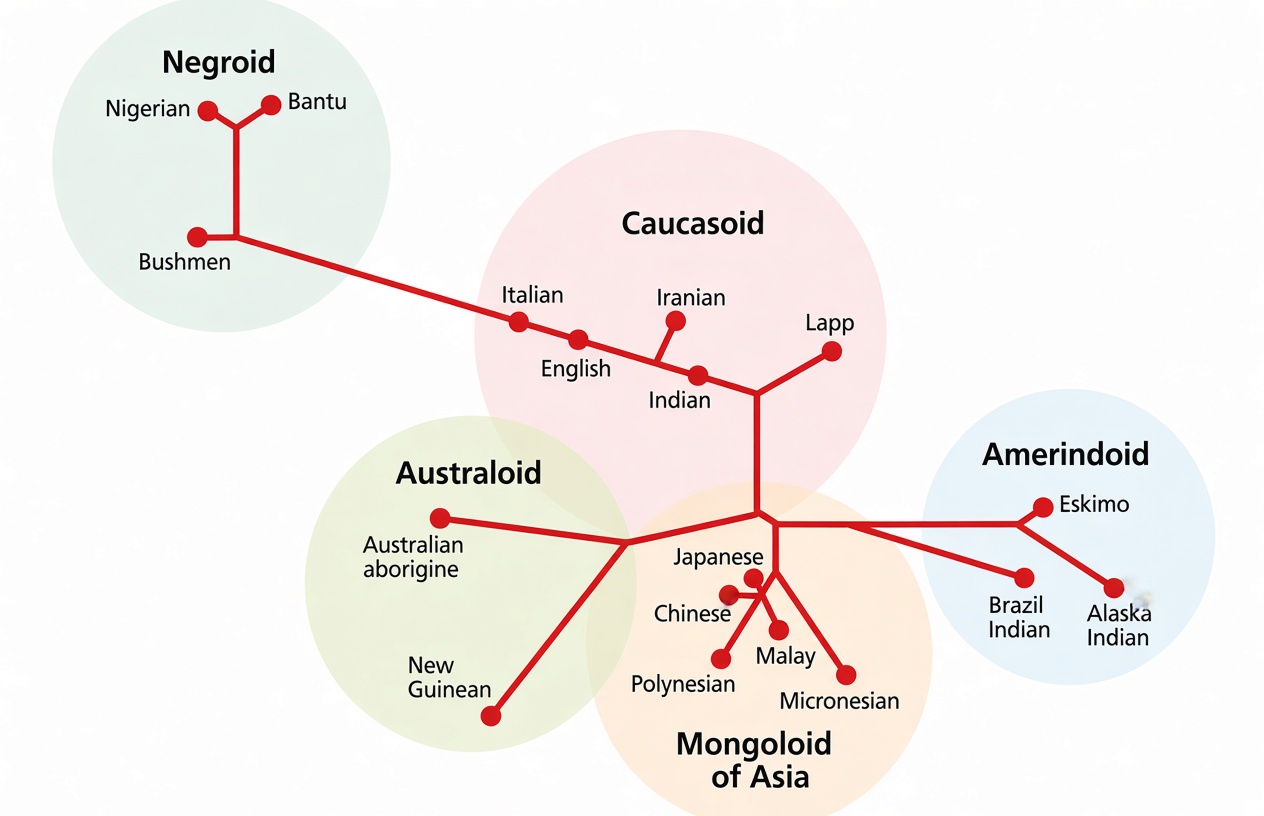
Cofnas’s “race realist” argument is that racial groups are not merely socially constructed categories but correspond, at least to some extent, to populations with different inherited ancestral characteristics (the phylogenetic tree from population genetics data shared above indeed finds that phenotypic traits cluster along the lines of historically intuitive conceptions of race, here using the older anthropological language for these caregories), and that these differences may help explain persistent average disparities in outcomes—particularly cognitive-test and educational outcomes. Cofnas argues that the conventional explanation, which attributes such disparities primarily to discrimination, socioeconomic conditions, or institutional structures, is therefore incomplete.
His preferred principle is individual meritocracy: people should be judged as individuals, not according to racial quotas or demographic representation. His Harvard example is meant to illustrate the implications: a Harvard study associated with the Students for Fair Admissions litigation found that if undergraduate admissions were based solely on grades and test scores, the black share of the entering class would have been about 0.7%, rather than its actual share; Cofnas argues that because faculty are selected from an increasingly academically selective population, the black share of Harvard faculty under a strictly meritocratic, colorblind system would consequently be even lower.
The crucial further step in Cofnas’s argument is that he does not regard unequal racial representation as necessarily evidence of racism or institutional failure. If the underlying group differences are partly inherited, then equal treatment of individuals can legitimately produce unequal group outcomes independent of historical circumstances or social structuring. He nevertheless acknowledges a political problem: a multiracial society might not tolerate a system in which some groups become almost absent from prestigious institutions, and he has therefore suggested that society may have to balance meritocracy against social and political stability.
* * *
We have two competing explanations for group-level disparate outcomes. One explanation emphasizes group-level differences and argues that, if admissions and hiring were strictly colorblind, the representation of black students and professors at elite institutions would be lower. This connects to the broader argument that people and groups tend to sort into different fields and occupations, much as men and women have historically exhibited different patterns of occupational choice. Indeed, the more open the society, the greater the differences between men and women.
The competing explanation attributes such disparities to the legacy and continuing effects of systemic racism. (It frames gender differences using the same logic, despite the absurdity of suggesting that sex differences don’t matter in the distribution of attributes and interests.) From this perspective, present equal treatment may not be sufficient to eliminate disparities produced by historical and institutional inequalities, which is part of the rationale offered for affirmative action and DEI initiatives. Again, this assumes what remains to be demonstrated: that decades after de jure segregation was abolished, de facto segregation remains.
The debate should concern assessing the competing explanations. However, universities promote one explanation while marginalizing, even effectively forbidding, the other. Universities treat particular lines of inquiry as illegitimate when they conflict with prevailing institutional assumptions. But why is a university taking an arbitrary institutional position in favor of one explanation over the other? Is that not unbecoming for an institution whose primary mission is to seek the truth through open inquiry? And what of academic freedom, the right professors and students enjoy that permits them to pursue such inquiry without fear of consequence?
I have experienced this bias firsthand, albeit not on the question of race realism. There have been consequences for my views concerning issues associated with critical race theory and gender identity doctrine. When I presented Roland Fryer’s findings that systemic racism does not explain disparities in lethal police-civilian encounters, but rather neighborhood conditions and situational factors do, with blacks overrepresented in the serious crimes that bring them more frequently into confrontations with the police, I was called to the dean’s office for an explanation. Perhaps I should have refused, but I was too damn curious to hear what the dean had to say. When I debunked the queer claim that men can become women, a group of students circulated a petition to get me fired.
Consider this hypothetical: a university assumes, as an institutional stance, that racial differences are real. One expects that researchers would not be punished for investigating evidence that might support such differences. By the same logic, it would be inappropriate to punish a researcher for conducting research intended to disprove the claim that there are racial differences and that these differences matter. The reader will note that I simply flipped the current situation on its head.
Compare debates over racial identity with debates over gender identity. Both involve claims about characteristics that are sometimes treated as immutable; institutional opposition to certain views about transgender identity can function similarly to institutional opposition to challenges to prevailing assumptions about race. Whether a university takes an official stance for or against the gender binary and its immutability, its professors should have the freedom to explore the question either way. Failing to defend academic freedom marks the institution not as a place of open inquiry, but as an ideology factory. The academic becomes a line worker whose work is determined not by his interests but by his manager’s demands.
This is the most troubling aspect of the Cofnas controversy. Universities should remain agnostic or neutral regarding genuinely disputed scientific questions rather than treating one position as institutionally acceptable and the opposing position as beyond the bounds of legitimate inquiry. Inquiry into racial differences is not analogous to flat-eartherism, the geocentric conception of the solar system, or intelligent design. Then again, the biology professor interested in intelligent design should not be forbidden to investigate the theory that a greater intelligence designed the universe and all the things in it.
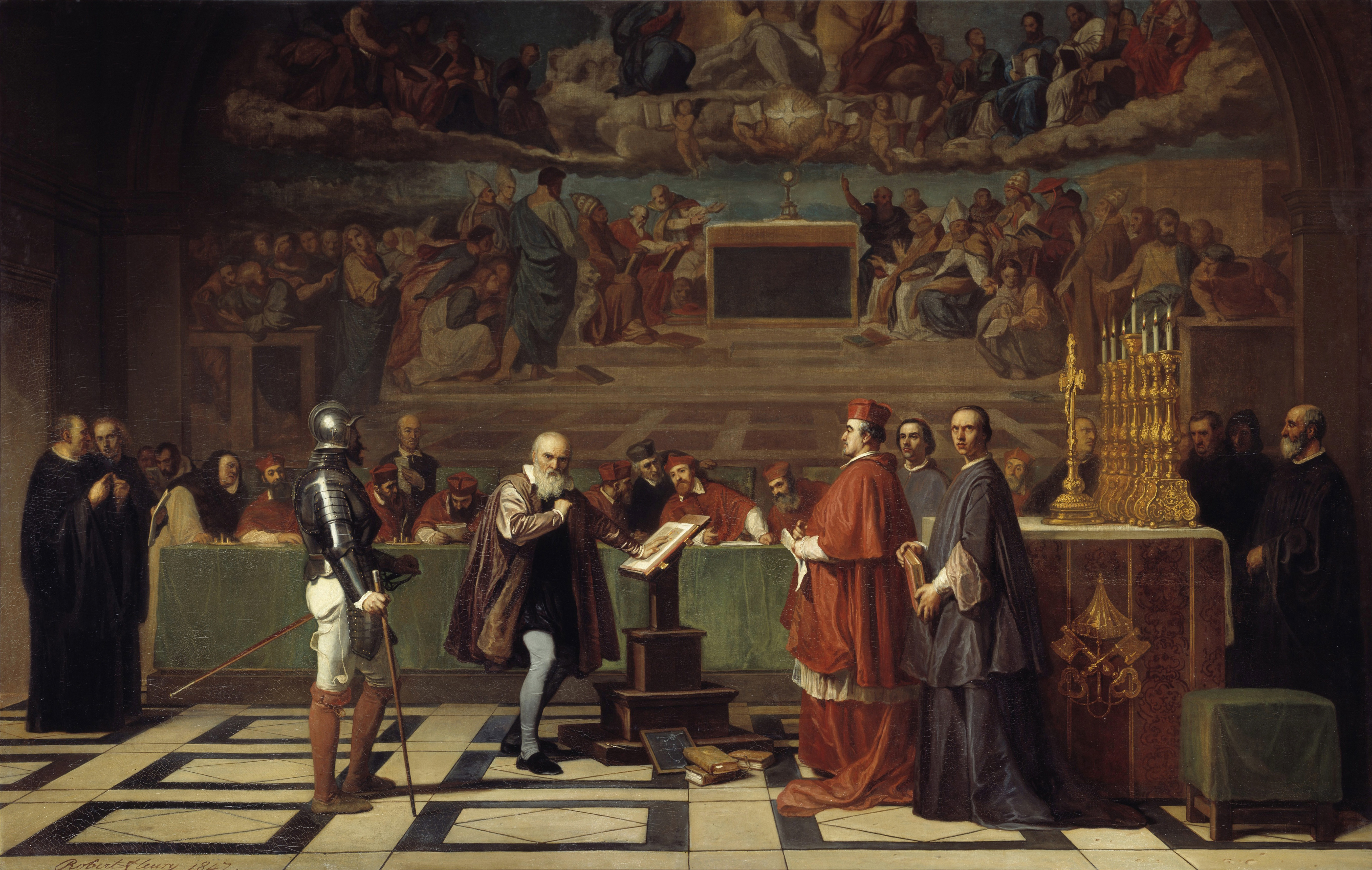
Darwinian evolutionary theory is paradigmatic in the university not because its administrators declared it to be, but because free inquiry established it as such. This is the only way to avoid what happened to Galileo (albeit the Church could not, in the end, resist the momentum of Copernicus’s 1543 De revolutionibus orbium coelestium).


