
When people tell you that, excluding American Indians, all Americans are descendants of immigrants, they are misrepresenting the historical situation. The English who founded the United States were colonists or colonial descendants. So were the French and Spanish who colonized the Americas. They were not immigrants.
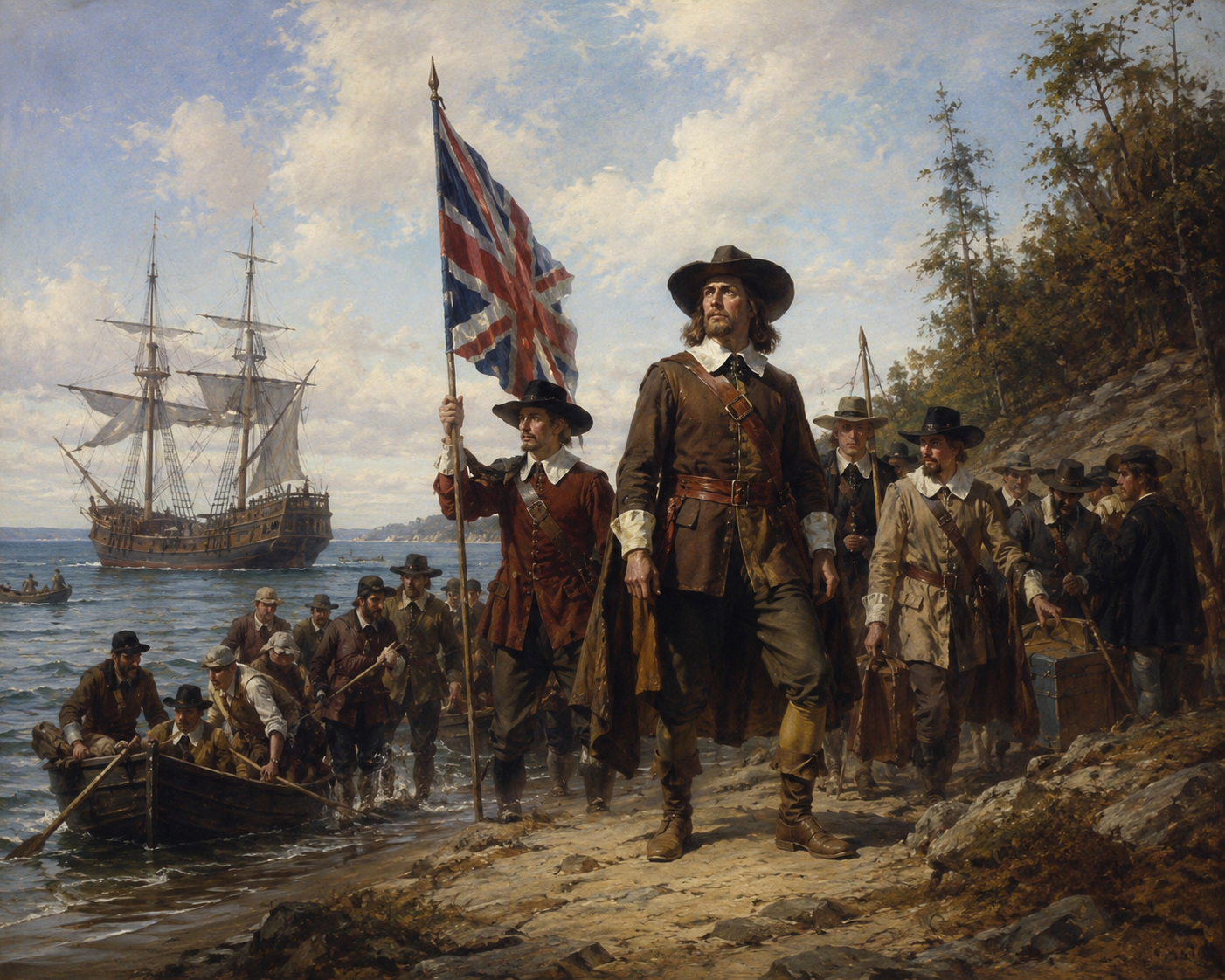
Using the standard definition of immigration—moving from one sovereign country to another, residing there long-term or permanently, under a system of defined borders and citizenship laws—early European colonists in North America could not have been immigrants. The United States did not then exist and wouldn’t for well more than a century. Indeed, no countries existed in the Americas at the time Europeans were landing on their shores. There were only tribes and a few kingdoms. Although at times they strategically used the term “nation” in negotiations, the Indians were identified by their specific community, clan, or alliance network. There was no immigration law, citizenship system, or border control.
What history actually records is that the Europeans who initially settled America were moving within imperial domains (Britain, France, Spain, etc.), not into a modern nation-state. What is implied by those who say we are all immigrants is an expansive definition of the term that renders it nonsensical.

Consider this statement: “All those who permanently left Africa are immigrants.” Since humans originated in Africa, everybody outside Africa ultimately descended from somebody who left Africa.
The indigenous peoples of Europe were immigrants, if by that term we mean they descended from those who migrated to Europe roughly 45,000 years ago. It will not do to say I am descended from Europeans. One has to go back further in time than that—a lot further.
If the claim were true, then American Indians are not the indigenous peoples of the Americas but rather the descendants of immigrants, since their ancestors arrived on these lands by boat or land bridge. They were immigrants from Asia. But, then again, the Asians are the descendants of immigrants, too.
Why aren’t American Indians condemned for opposing European immigration when they were the descendants of immigrants themselves? You’ve seen the memes. If this is stolen land, who did the Indians steal it from? If one says the Indians settled unsettled patches of land, this is true of the Europeans who colonized North America, as well. The expanse of North America is vast, and there were large tracts of uninhabited land. But the truth is that Indians displaced other Indians.
The world outside of Africa has no indigenous peoples—if by “indigenous” we mean species that are native to a particular place, especially in the sense of having originated there. But that strict definition seems as strange as the expansive definition of “immigrant.”
Indigenous also refers to people who have a deep historical continuity with a land before later arrivals or colonization. Progressives may be nodding their heads at this definition, but that would make white Americans the indigenous people of North America, since they have a deep historical attachment to the land, and contemplating such a thing sets woke heads on fire.
How dare a man like me, whose family tree extends centuries into my country’s past, claim to be a native American, right? I must be the descendant of immigrants. This bakes their noodle: I am both. Not all people who look like me can say that. Nor can black Americans whose ancestors were brought here before there was a country called the United States. Many of them were brought here before the United States existed. They were not immigrants.
If one still embraces the definition of immigrant that includes all those who move from one place to another, this leaves the Africans as the only indigenous population in history. Yet, even here, one runs into problems. Which Africans?
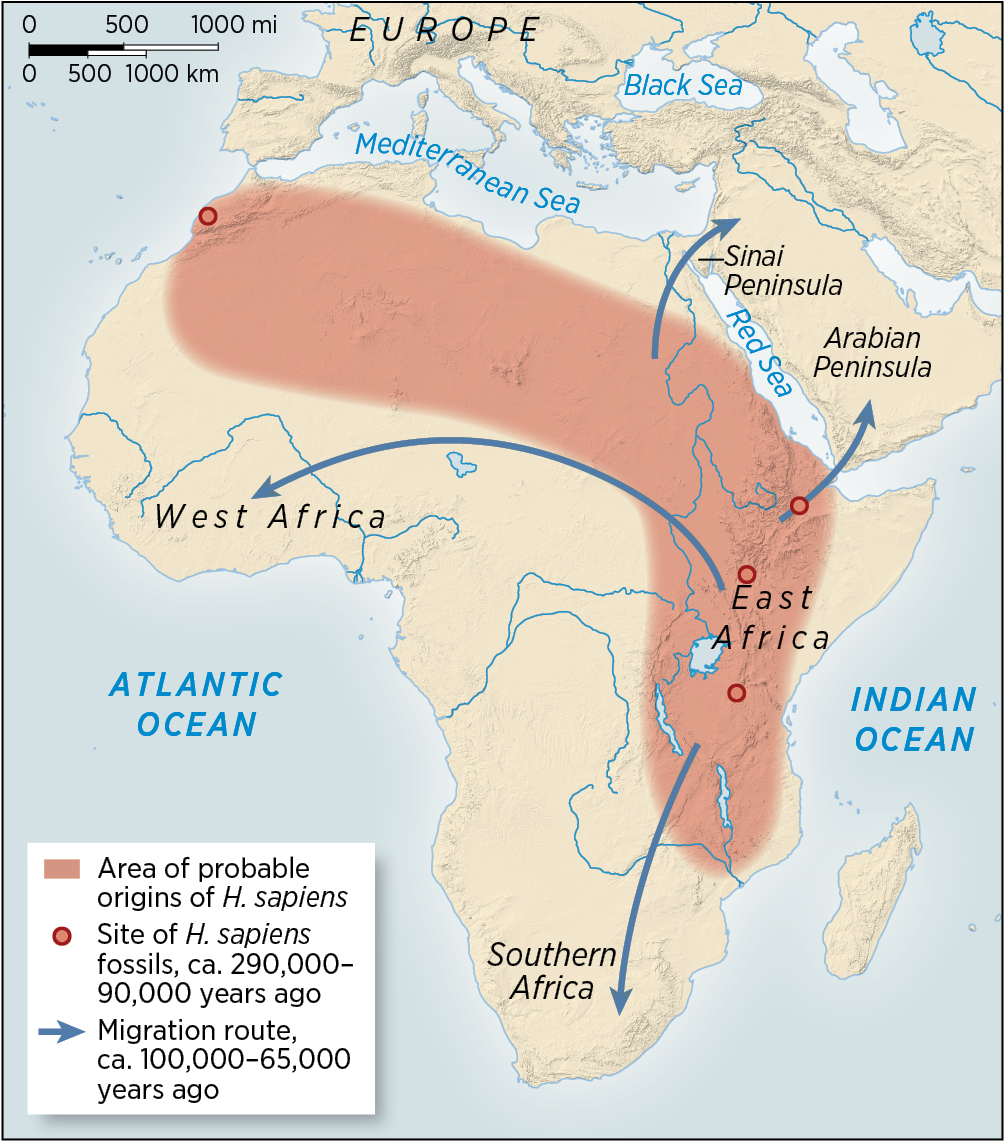
Humans originated somewhere in Africa. The pan-African model posits that Homo sapiens developed through gene flow across the continent, principally East Africa and North Africa, perhaps also parts of Southern Africa. But that’s not all of Africa. If the broad definition is used, as one can see in the above map, most Africans are themselves immigrants, since they radiated from the species’ likely place or places of origin.
At this point, I hope the reader sees that the broad definition suffers from a logical problem that can be summed up this way: If everybody is an immigrant, then nobody is, since the term “immigrant” differentiates nothing. It is no longer a meaningful term.
Finding the one spot where the first modern human appeared won’t help clarify the matter. If you are a scripture-believing Christian, Jew, or Muslim, that indigenous one is Adam, and Adam was kicked out of Eden, along with the first woman. Adam and Eve were immigrants. There are no indigenous people in Eden. Only God and his angels.

We are left with the standard definition. To be an immigrant means to leave one country and move to another. Using that definition, the claim that we are all immigrants is plainly untrue. Only some of us are immigrants or descended from immigrants. It is estimated that half or more white Americans living in the United States today are descended from “Colonial Stock,” i.e., those who arrived before 1776. More than ninety percent of black Americans living in the United States today are descended from individuals who arrived before the nation was established. So, no, we are not a nation of immigrants.
Here’s the reason for this exercise: the fact that some of us are descended from immigrants creates no burden on Americans to welcome immigrants. That’s the obligation “we’re all descendants of immigrants” sneaks into the conversation: “How can you oppose immigration when you are yourself a descendant of immigrants?” This is a fallacious argument, to be sure, but falsifying the claim, we negate a rhetorical flourish deployed to emotionally blackmail the population.
This question is not an argument. It’s a guilt trip. Don’t feel guilty. Your nativism is a legitimate sentiment, and there is nothing untoward about the politics of immigration control.


