
Production note: I obtained the transcript of Ed Husain’s remarks on Triggernometry from YouTube, fed it into ChatGPT, and asked the bot to remove timestamps and reproduce the conversation in a coherent form. I then produced a summary of the output, focusing on Husain’s observations that were pertinent to the analysis presented here. I’ve been careful to ensure that the reader can differentiate between Husain’s ideas and my own, which are highly similar.
To put my purpose in doing this straightforwardly, I am using Husain’s narrative to reinforce my own analysis for the reader and to introduce Husain to those who may be unfamiliar with his work. Although I have some disagreements with Husain (which will emerge over the course of the analysis), he is in the main correct about the history of the Muslim Brotherhood and its implications.

Ed Husain is a British writer, academic, and political adviser best known for his work on Islamism, radicalization, the Middle East, and relations between Islam and the West. He teaches at Georgetown University and Columbia University. Last month, he appeared on Triggernometry to discuss the problem of Islamism and the Muslims Brotherhood. In this essay, I summarize his argument for readers to use in explaining the problem to others. What Husain makes clear, in my view, is that Islamism is the modern-day instantiation of National Socialism. It is not only like Nazism ideologically, but, as I have shown in previous essays, historically allied with Hitler and his project to exterminate world Jewry.
For Husain, the Muslim Brotherhood should be understood primarily as an ideology rather than simply an organization. Although the Brotherhood possesses formal institutions and affiliated groups, its true significance lies in the political worldview it introduced into modern Islam, which in turn shapes Muslim thought. Rather than representing the continuation of a long-standing Islamic tradition, the Brotherhood represents a decisive break from classical Islamic thought. While I disagree with Husain about the distinction between Islam and Islamism (they are closer than he thinks), there is much merit in his argument, especially in the practical sense in that it allows moderate Muslim leaders to sway the masses towards a reformist path.
Founded in Egypt in 1928 by Hassan al-Banna, the Muslim Brotherhood emerged as a modern revolutionary movement whose ambition was to establish an Islamic state, restore the caliphate, and ultimately replace the nation-state with a transnational political order governed by its own interpretation of Islamic law. In Husain’s view, this ideology later became the intellectual foundation for organizations such as Hamas, al-Qaeda, and ISIS, while also shaping Islamist activism throughout the West. The Red-Green Alliance we see in the United States is rooted in the Brotherhood’s ideology. These are the politics behind the Council on American-Islamic Relations, or CAIR. The Brotherhood’s ideology is what motivates the Islamization of the West, including the corruption of Western academia.
The origins of the Muslim Brotherhood lie in three grievances articulated by its founder, Hassan al-Banna. First, al-Banna regarded the abolition of the Ottoman Caliphate in 1924 as a catastrophe for the Muslim world. The disappearance of the caliphate symbolized the loss of Muslim political unity and global influence. Al-Banna believed that Muslims required a single political authority capable of confronting Western powers and resisting competing civilizations. The Brotherhood’s ambitions are totalitarian.
Second, al-Banna objected to the growing presence of Western missionaries, particularly American evangelical organizations operating throughout Egypt. To him, their activities demonstrated not merely foreign religious influence but Muslim weakness and political decline. The reader must remember that, while Muslim teaching claims the Abrahamic god and accepts Jesus as a prophet in Islam, Islam rejects the divinity of Jesus. They must diminish Jesus to clear the way for Muhammad to be the last prophet of God’s message. The diminution of Christ is essential for establishing Islam as the final solution. Once this view is accepted, the Abrahamic faith and its history become fully Islamized, and any rejection of it makes the heretic the proper subject of subjection and violence.
Third, al-Banna viewed the Westernization of Egyptian society as evidence of cultural decay. This mirrors the way German National Socialism depicted the Jews as responsible for Entartung or degeneracy. The cosmopolitan life of Cairo—with its alcohol consumption, dancing, European fashions, and expanding liberal culture—appeared to al-Banna as a surrender of Islamic civilization to Western values.
These three developments convinced al-Banna that the Muslim world faced a comprehensive civilizational crisis requiring political action rather than simply religious renewal. For Husain, Islam is a religious system, like any other (Thomas Jefferson viewed Islam similarly). The problem of Islamism lies with the politicization of the Muslim faith and the fusion of religion and state. In my view, Islam is a political system, which the imposition of Sharia makes clear. But conceptualizing Islam as a religious system makes it (potentially) reformable. From a pragmatic standpoint, characterizing it as such may have utility.
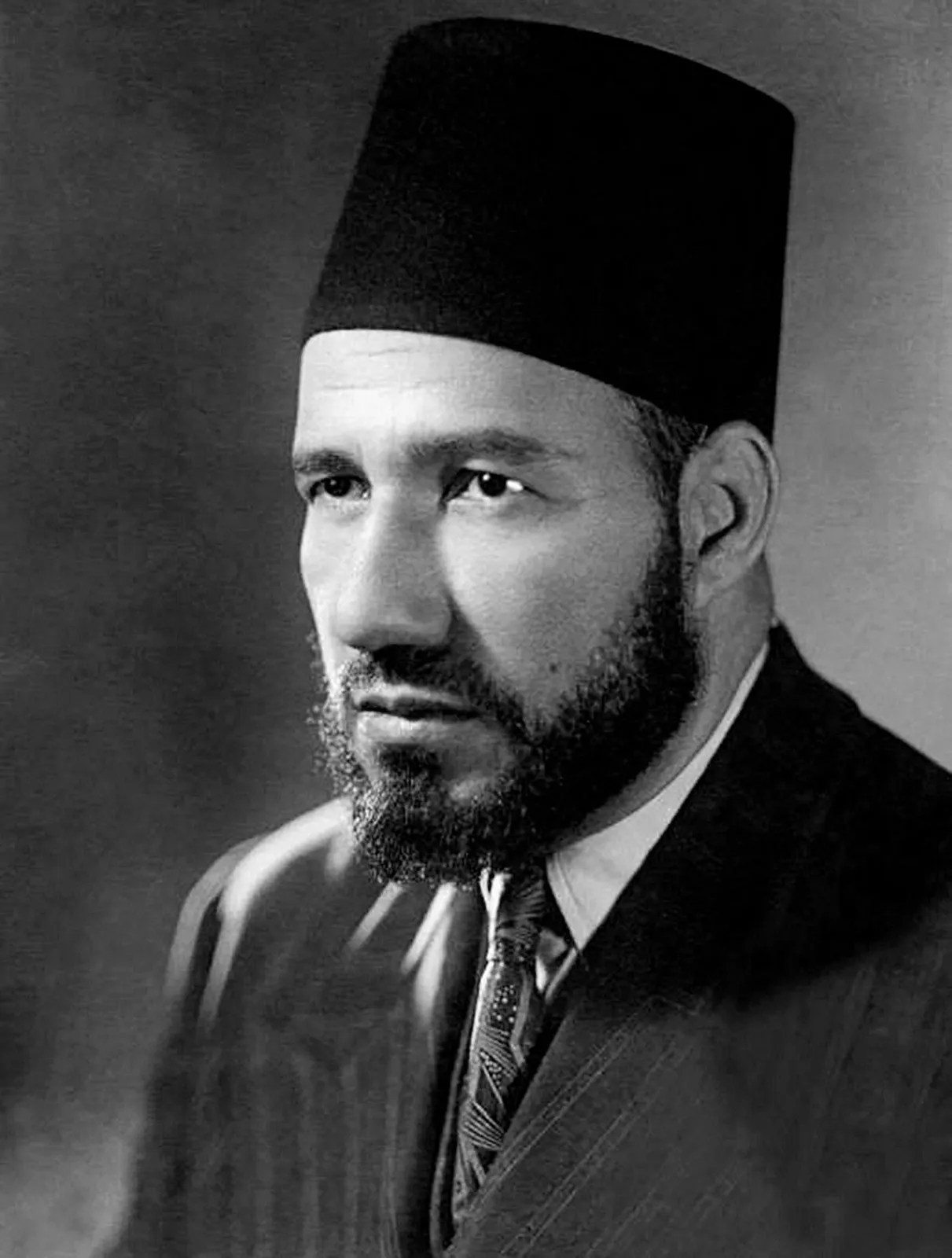
Al-Banna first sought support from Egypt’s established religious authorities. He appealed to Al-Azhar, the most prestigious Sunni institution in the Muslim world, urging it to confront these developments. According to Husain, Al-Azhar rejected his revolutionary urgency, preferring gradual scholarship and religious guidance over political mobilization. Al-Banna then approached Egypt’s Sufi orders, hoping they would embrace his vision. But they also rejected him, insisting that spiritual reform begins with the individual rather than political confrontation. They viewed his activism as dangerously politicized and inconsistent with the prophetic model.
These rejections proved decisive. Husain argues that this moment marked the Brotherhood’s fundamental departure from mainstream Islam. Instead of accepting the accumulated authority of classical institutions, al-Banna created an independent ideological project centered on capturing political power. In a world where secularism resists the pull of religious zealotry, capturing political power requires force. Thus, in places where the project embeds, those advocating its goals have eventually turned to terrorism and other forms of political violence.
It is crucial to note that, while the US government has not designated the entire global Muslim Brotherhood as a foreign terrorist organization (FTO), it has officially designated specific chapters and branches as terrorist entities. That’s a start, but the government has met resistance all along the way. Experts have warned the Trump Administration against designating the Brotherhood as a whole an FTO. The reason why we will come to that in time. It suffices to say here that their reasoning is not sound. The only way to deal with terrorism is to recognize it and disable it—and that means going to the heart of the problem: its ideology. (This is true of Antifa, as well.)
* * *
Husain argues that the Brotherhood should be understood less as a religious revival than as a modern political ideology. Its central objective became the creation of an Islamic state governed by Sharia as state law. Unlike the modern nation-state, however, this state would possess no permanent borders. It would exist as an expanding political entity—a caliphate—with frontiers rather than fixed territorial limits. Its mission would ultimately be universal rather than national.
This vision, which aligns with the spirit of National Socialism, fundamentally rejects the legitimacy of sovereign nation-states. Whereas the modern international order is built upon independent states operating within recognized borders and legal jurisdictions, the Brotherhood regards such arrangements as temporary historical accidents destined to disappear beneath a unified Islamic political order. Islamists must Islamize the countries in which they embed. Hitler viewed the nation-state in the same way. He disregarded boundaries and Nazified the territories he conquered.
For Husain, this ambition distinguishes the Brotherhood from traditional Islamic scholarship. Classical Islamic literature, he contends, contains no systematic doctrine requiring Muslims to establish a single global Islamic state. Throughout Islamic history, multiple Muslim governments existed simultaneously, often independently of one another. Even during the lifetime of the Prophet Muhammad, Muslim communities lived under different political arrangements. Consequently, Husain argues that the Brotherhood’s doctrine of a universal Islamic state is a twentieth-century political innovation rather than a continuation of classical Islamic teaching.
* * *

While Hassan al-Banna founded the movement, Sayyid Qutb transformed it into a revolutionary ideology. Sayyid Qutb traveled to the United States during the late 1940s and spent some time there. Sent by the Egyptian Ministry of Education to study American educational systems, he spent several months studying at the University of Northern Colorado (then Colorado State College of Education).
Qutb’s experiences in the US profoundly shaped his worldview. Rather than admiring American society, he returned to North Africa convinced that Western civilization represented moral corruption. He condemned American sexual freedom, criticized women’s public independence, rejected aspects of American popular culture, and developed an intense hostility toward what he regarded as Western decadence.
After returning to Egypt, Qutb was imprisoned by the Egyptian government. His imprisonment convinced him that even governments claiming to be Muslim had abandoned authentic Islam. Popular images of Qutb often depict him standing behind bars (we saw this with the Nelson Mandela cult of personality, a strategy of generating popular support not only for the African National Conference but also the goals of the South African Communist Party). From this experience emerged one of the Brotherhood’s most influential concepts: that contemporary Muslim societies themselves had fallen into a condition of ignorance comparable to pre-Islamic paganism.
This conviction found its fullest expression in Qutb’s 1964 Milestones. In that work, Qutb argued that existing Muslim governments no longer possessed genuine Islamic legitimacy. Through the doctrine of takfir (an Islamic term that denotes the excommunication of one Muslim by another, whereby a self-professed Muslim is declared an apostate or an unbeliever), he declared that rulers—and eventually entire societies—could be regarded as outside Islam. Violence against such governments therefore became religiously justified.
According to Husain, Milestones represented a decisive transformation in Islamic thought. Earlier conservative Islamist teachings focused on resisting foreign domination. Qutb redirected revolutionary violence toward Muslim governments themselves. From this point onward, ordinary Muslims became the principal victims of Islamist violence because they refused to embrace the Brotherhood’s revolutionary program.
This piece is often missed by Western observers. To be sure, Westerners are frequently targeted by Islamic terrorists. But most political violence is perpetrated by Muslims against other Muslims. Hitler had no qualms about perpetrating violence against fellow Germans whom he viewed as deviating from the path laid before them.
Despite remaining a minority movement, the Brotherhood achieved remarkable influence. It offered simple political answers to complex problems. Its slogans condensed its ideology into memorable formulas: “The Qur’an is our constitution,” “Jihad is our path,” “Martyrdom is our highest aspiration,” and, most significantly, “Islam is the solution.”
For Husain, these slogans represent political innovations rather than classical Islamic teachings. They transform Islam from a faith concerned with worship, ethics, and spiritual life into a comprehensive political program claiming to solve every social and political problem. Followers of Christopher Hitchens know that he often appealed to the slogan “Islam is the solution” as a reason for fearing the encroachment of Islam into Western societies.
At the same time, the Brotherhood reframes political conflicts as exclusively religious struggles. Geopolitical disputes become attacks upon Islam itself. For example, the Brotherhood frequently deploys the term “Islamophobia” to convey this paranoia, as if resistance to Sharia is akin to anti-gay prejudice.
Progressive Westerners are all too eager to take up the Brotherhood’s cause. Indeed, one can trace the origins of the term to the Runnymede Trust’s Commission on British Muslims and Islamophobia’s Islamophobia: A Challenge for Us All, published in 1997. In the report, Islamophobia is defined as “an outlook or world-view involving an unfounded dread and dislike of Muslims, which results in practices of exclusion and discrimination.” Its authors assert that “anti-Muslim prejudice has grown so considerably and so rapidly in recent years that a new item in the vocabulary is needed.”
Runnymede’s intervention dovetails with the propaganda project of the Organization of Islamic Cooperation (OIC), comprised of 56 Islamic nations. The OIC pushes the UN to criminalize Islamophobia to establish in international law the criticism of a particular religion as a thought crime. The UN has acquiesced. For example, the UN Human Rights Council OHCHR on Freedom of Religion continually urges countries to implement measures against “hate speech.” While the OIC’s official positions are, at least ostensibly, antagonistic to the Muslim Brotherhood, it is no accident that both the OCI and the Brotherhood are keen on establishing Islamophobia as a hate crime.
There are considerable efforts to deny the Brotherhood’s role in creating the propaganda term. Philosopher Roger Scruton was dismissed from a government role as the UK’s unpaid housing adviser in 2019 after making this assertion in an interview published by The New Statesman in April 2019. The Spectator later published full transcripts showing selective context, and The New Statesman issued an apology for unfair representation. The British government followed with an apology and reappointed him later that year, but the episode spoke volumes about the role the charge of Islamophobia plays in silencing voices. What motivated The New Statesman’s hit piece? Islamophilia is the obvious answer. Scruton died the following year.
Whatever its origins, the term’s function is clear. Muslims are encouraged to interpret conflicts in Kashmir, Palestine, or elsewhere primarily as evidence of a global assault upon their religious identity. Once problems are defined in this manner, the Brotherhood is enabled to present its political program as the only adequate response to those it has portrayed as the enemies of Islam.
The Brotherhood’s success therefore lies not in representing most Muslims but in functioning as an organized ideological minority capable of mobilizing populations through emotionally compelling narratives centered on grievance, identity, and political redemption. However antagonistic the OIC may be to the Brotherhood, the common attitude unites them in a convergence of sentiment.
* * *
Returning to the historical narrative, following repression in Egypt during the 1950s and 1960s, Brotherhood activists dispersed throughout the Middle East. Many settled in Saudi Arabia and other Gulf states, where they entered educational institutions and influenced new generations of students. Husain notes that Qutb’s brother, Muhammad Qutb, played a particularly important role in transmitting Brotherhood ideology to figures such as Osama bin Laden.
Brotherhood members increasingly entered universities in Britain and the United States, as well, as political refugees. Rather than abandoning their ideology, they established charities, community organizations, educational institutions, mosques, and Islamic centers that gradually disseminated Brotherhood ideas within Western Muslim communities—and beyond. This is the Islamization project.
Husain presents Hamas as a model of this pattern. Beginning as a charitable and educational movement in Gaza, it gradually constructed extensive social networks before eventually developing an armed wing, which has become a proxy for the Islamic Republic of Iran’s war on the West. Thus, for Husain, charitable activity functions not merely as humanitarian work but also as the foundation upon which broader ideological and political movements are built.
* * *
A central component of Husain’s argument is that the Muslim Brotherhood should be understood within the broader intellectual context of twentieth-century totalitarian ideologies. He argues that the movement absorbed ideas circulating during the interwar period rather than simply reviving classical Islam. Like fascist and totalitarian movements, Islamism seeks comprehensive political transformation through a single ideological system. It envisions history as a struggle between true believers and corrupt societies. Rejecting political pluralism, it aspires to create an all-encompassing political order.
Husain further argues that important personal and ideological connections existed between elements of the Brotherhood and supporters of Nazi Germany, particularly through relationships involving the Grand Mufti of Jerusalem. (I have documented this in several essays. See Jew-Hatred in the Arab-Muslim World: An Ancient and Persistent Hatred; The Danger of Missing the Point: Historical Analogies and the Israel-Gaza Conflict; Why the Israel-Gaza War Is Not Seen Like World War II—and What That Reveals About the Present Situation.)
Crucially, the similarities are ideological rather than merely historical. Both Nazism and the Brotherhood are atavistic and globalist in character. They seek expansive political orders transcending existing borders. Both claim to possess a comprehensive solution capable of restoring historical greatness.
The Brotherhood’s slogan “Islam is the solution” reflects the same totalizing political impulse characteristic of twentieth-century totalitarian ideologies. As the co-host of Triggernometry, Francis Foster noted, it resembles the name of the Nazi project to exterminate the Jews: “the Final Solution.” Husain immediately agreed and praised Foster for so cleanly articulating the parallel.
According to Husain, Western governments have consistently misunderstood the nature of the Brotherhood. Because it often presents itself through charities, educational institutions, advocacy groups, and religious organizations, Western officials frequently interpret it as a moderate religious movement or a legitimate civil society actor. This mistakes tactical moderation for ideological moderation.
He further contends that British intelligence agencies historically tolerated Brotherhood networks because they believed these organizations could provide strategic leverage against governments in the Middle East. What appeared to be manageable political assets gradually evolved into influential ideological networks capable of radicalizing successive generations of British Muslims. The result, Husain argues, is that Western governments now confront a movement they helped accommodate while ignoring repeated warnings from Muslim-majority governments that had already experienced the Brotherhood’s methods firsthand.
Perhaps Husain’s most important—and objectionable—distinction is between Islam as a religion and Islamism as a political ideology. He insists that the Brotherhood does not represent Islam itself. Most Muslims reject its revolutionary program, just as many of its earliest critics came from within Islamic scholarship. The Brotherhood’s greatest opponents have often been ordinary Muslims and Muslim governments rather than Western societies.
For Husain, the central mistake made in contemporary political discussion is the failure to distinguish between a fourteen-century-old religious tradition and a modern ideological movement that appropriates Islamic language while fundamentally transforming its political meaning. Again, I do not agree that it is simply a matter of distinguishing between Islam and Islamism. Islamism is the fruit of Islam, but if the distinction is taken to heart by the Muslim majority and Islam can be nudged towards reform, it should undermine the more extremist versions of the religion by moderating Islamic doctrine.
I will have more to say about whether it is possible to separate Islamism from Islam (I don’t think it is). But for now, it is vital—for those serious about confronting the problem of Muslims in the West—to take Ayaan Hirshi Ali’s argument on this subject into consideration. She argues that reforming Islam itself will undercut extremism. The idea here is that Muslims should be less inclined to follow their prophet, since uncritical devotion is one of the ways extremists garner popular support.


