
This essay does three things. First, I summarize Eric Hoffer’s thesis in his 1951 book, The True Believer: Thoughts on the Nature of Mass Movements, which distinguishes those who change their sympathies by falsifying their beliefs based on evidence and logic from those who do so because of psychological needs. Second, I elaborate on William James’s 1902 book, The Varieties of Religious Experience, to differentiate two cognitive styles: the “once-born” and the “twice-born.” Third, I illustrate the importance of falsification using two examples. I conclude with reflections on confronting the one-born personality in one’s own journey to enlightenment.
* * *
In 1951, Eric Hoffer published The True Believer: Thoughts on the Nature of Mass Movements. This was Hoffer’s first book. In it, he was less concerned with the specific position individuals hold and more with the psychology underpinning the position. I want to briefly summarize Hoffer’s thesis because it bears on this essay’s subject: revising one’s worldview. The paradigm shift I experienced was not the rapid change Hoffer identifies in his subjects; rather, it was a progressive collapse brought about by facts and a willingness to change my mind in the face of them.
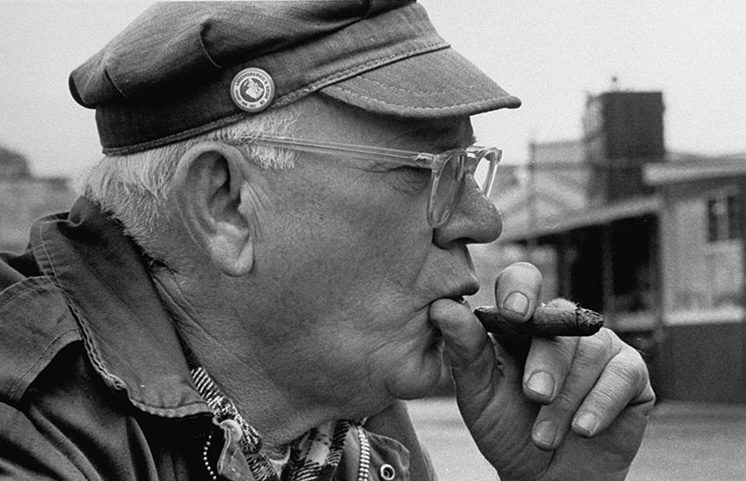
The ordinary, reflective person arrives at beliefs as conclusions: he considers arguments and evidence, reaches a position, and may later change that position if his reasoning or the evidence changes. He can move from progressivism to liberalism (or conservatism) after carefully considering these different positions. The same is true for those who abandon religious belief for other—or even embrace unbelief—because his commitment is ultimately to what he regards as reasonable and true. His beliefs are therefore, at least in principle, provisional and revisable.
The true believer, by contrast, does not primarily embrace a cause because he has reasoned his way to it; the cause satisfies a deeper psychological need—for belonging, certainty, identity, purpose, or escape from dissatisfaction with the self. In this case, the relationship between belief and reasoning is reversed: rather than reasoning leading to a commitment, the commitment organizes the person’s reasoning. The individual asks less often (if ever), “Is this true?” Rather, he asks, “How can I understand the world in terms of my cause?” This starts from the wrong position. It leads to motivated reasoning.
Hoffer was interested in people who move from one ideological extreme to another while retaining the same intensity of commitment, not in those who reason themselves in and out of worldviews. How, Hoffer wondered, can someone passionately believe one doctrine and then passionately embrace its opposite? That depends. If it is a reasoned shift, one based on facts and logic, then the man who changes did so on a rational basis. If it is rapid and without a reasoned process, then psychology becomes the proper subject of study.
Hoffer’s answer is that, for the true believer, the particular doctrine was never the deepest object of commitment. The underlying commitment was to the cause itself and to the psychological experience that the cause provided. Some individuals are predisposed to embrace causes first. Consequently, the ideology can change while the personality structure remains much the same. The person who moves from one mass movement to another has therefore not fundamentally changed; he has simply transferred his need for belonging, identity, and purpose from one cause to another.
Hoffer’s true believer should not be equated simply with a fanatic or an unintelligent person. This is not his argument, even though some true believers are fanatical and stupid. A true believer may be highly intelligent and capable of sophisticated reasoning, but he places his reasoning, such as it is, in the service of a prior commitment. Reason becomes less an instrument for discovering what is true than an instrument for defending and rationalizing what he has already committed himself to. Such a man does not use reasoning to falsify his position. He tends instead to deploy sophistry.
In this sense, Hoffer’s true believer is distinguished not by the particular ideology he holds or even by the intensity with which he holds it, but by a characteristic psychological relationship to ideology: the cause provides the self, and beliefs are organized around the cause or worldview rather than the cause or worldview being the conclusion of independent reasoning. This brings me to the subject of this essay.
* * *
A few days ago, a student working to establish a Turning Point USA chapter (the international organization Charlie Kirk founded to organize young conservatives) on campus emailed me seeking advice. He had read some of my essays and wanted a more detailed explanation. He also sought any suggestions I might have about dialoguing with those with whom he disagreed.
One particular essay, The Lakatosian Turning Point: How I Overcame Progressive Programming, prompted him to ask me how I came to abandon progressivism (which I have always been uncomfortable with), as well as my move from socialism to liberalism. Since I elaborate on my reasons in the essay, I won’t rehash all my answers here. One thing I didn’t include in the email was what might be described as soul-searching. I felt those thoughts were a bit too heady for an email. However, I do want to put them down in today’s essay.
Until I studied the claims of critical race theorists, Palestinian activists, queer advocates, communists, and others, I was sympathetic to them. My sympathies resulted from a worldview I now reject. Explaining its structure would take a lengthy essay (and I have already done that in numerous essays). The point I want to make in this essay is that most people believe the things they do because they rely on a worldview they never examine. I rejected my worldview because I suffered from its contradictions—not just belief against fact, but thoughts that ran contrary to principle. This, I found, distressing. So I sought a way out of the suffering. The more I learned, the more I understood that I wasn’t wrong about a few things; I was wrong about many things. Over time, I came to understand why: my worldview was deeply flawed. To end my suffering, I had to revise it.
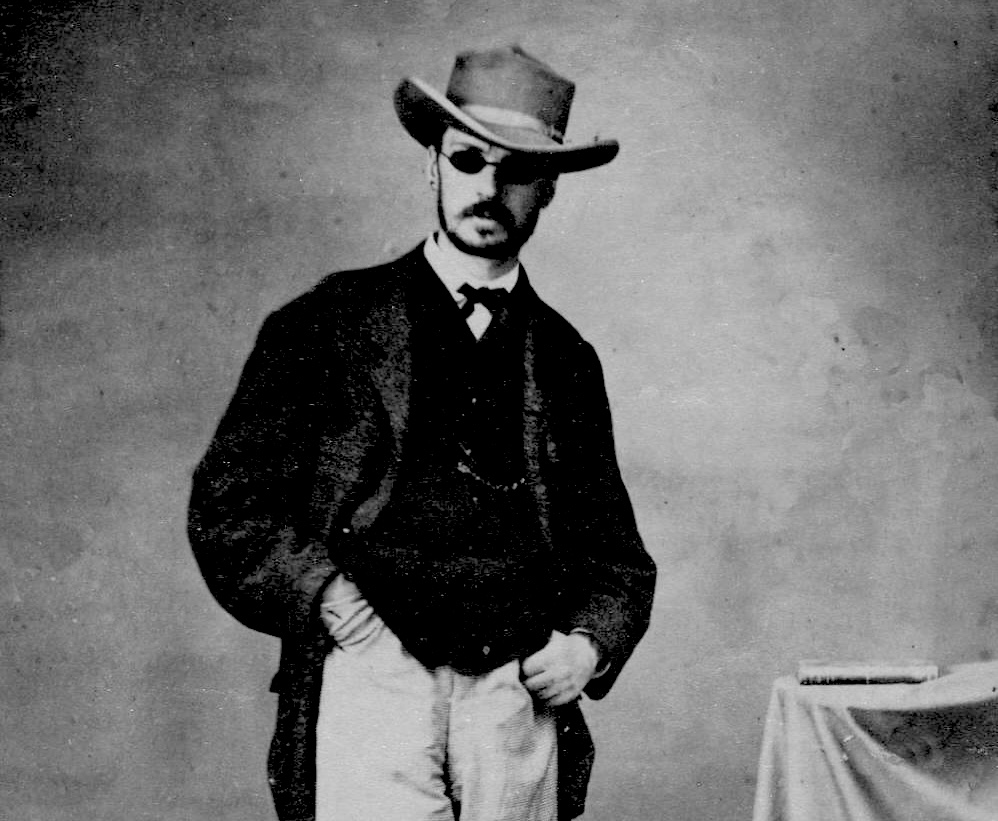
In his 1902 book The Varieties of Religious Experience, the pragmatist philosopher and theologian William James distinguished between the once-born and the twice-born to describe two different ways people experience life and meaning.
The once-born man’s worldview feels natural. He accepts the convictions he has been given without questioning—perhaps superficial questioning here and there—and certainly doesn’t feel a deep need to pursue radical self-transformation. This is understandable; for most people, the one-born life is uncomplicated. Why complicate the matter by interrogating it? Besides, the once-born man is tribal and aware, perhaps, for the most part, subconsciously, that his tribe may judge him harshly for questioning the tribal worldview. He may lose family and friends. He risks his career and livelihood. So he doubles down. He rationalizes the contradictions. He suffers quietly—if he feels he suffers at all.
The twice-born man, by contrast, has experienced a profound doubt or the inadequacy of ordinary life that makes his natural way of seeing the world untenable. It’s not just contradictory beliefs that haunt him, but an unhappiness that compels him to find a way out of crisis. He wants to be happy, and he is willing to pursue it despite knowing the consequences—even knowing that new sources of unhappiness await. For James, such a man undergoes a psychological or spiritual rebirth, arriving at a new outlook that incorporates the reality of suffering rather than simply denying it. In my understanding of James, that includes embracing the truth his worldview kept at bay with a tangle of rationalization.
For James, the twice-born man is not necessarily a man who has merely adopted a new set of doctrines; rather, the crucial feature is a transformation of consciousness. Unlike with Hoffer’s true believer, a different psychology is at work here. The twice-born man has moved from an initial, comprehensive way of experiencing the world, passed through crisis, and emerged on the other side with a deeper sense of meaning and purpose.
Sometimes a man need not go through that. Many men are right all along, and they don’t need to study to find out why (though they may wish to). But some do. I was such a man. I think being a scientist and a teacher played a role in self-examination (see Freedom, Control, and the Lessons of Openness in Teaching: A Personal Reflection). Certainly, for me, anyway, the times called for it. The madness of the moment was outstripping my old worldview’s capacity to explain and understand it.
* * *
In this section, I use two examples illustrating the evolution of my thought and politics through falsification and show that it was less a case of simply “changing my mind” than of discovering that I had never subjected parts of my worldview to adequate empirical or historical scrutiny. A person falsifies his beliefs, in this sense, when he stops treating them as established simply because they fit within a larger interpretive framework and instead examines the evidence for them and their entailments. Once those beliefs are examined, contrary evidence can force a revision not merely of the individual belief, but of the worldview that had given the belief its meaning. I have written extensively on both examples on this platform, so I will summarize them here.
The first example is the question of lethal police–civilian encounters. I had accepted, largely uncritically, the interpretation supplied by critical race theory: that racial disparities in police use of lethal force were principally evidence of systemic racial bias in policing. That belief was sufficiently embedded in my worldview that I had not seriously examined the empirical literature that might challenge it. Roland Fryer’s 2017 research forced me to do so. More importantly, I realized that Fryer was not an isolated contemporary dissenting voice: Robert Sampson (in the 1990s) and William Wilbanks (in the 1980s) had reached findings relevant to the question years earlier. My worldview excluded them from consideration. The important realization was not simply that I had been wrong about one empirical proposition. It was that I had mistaken an interpretation for an established fact, failing to examine evidence that was available long before I encountered the argument that eventually changed my mind.
The second example involved my support for the gender identity movement. Here, the problem was not that I encountered a particularly persuasive counterargument; rather, I began a much deeper examination of the history of the concept itself—its intellectual origins, its development within medicine and psychology, and the changing assumptions underlying it—to determine whether I was on the right side of the issue. I discovered that what I had regarded as an obvious and settled understanding of human identity was actually a comparatively recent intellectual and institutional development, involving substantial conceptual changes, unresolved empirical questions, and significant entailments. That historical investigation produced the same unsettling realization as the police research: I had been treating the conclusions of a particular intellectual framework as if they were simply descriptions of reality.
The cumulative effect was consequently much larger than changing my mind about two issues. When beliefs that had functioned as load-bearing premises of a worldview failed under closer examination, other conclusions that depended upon those premises became questionable as well. I therefore began reconsidering the framework itself rather than attempting to preserve it by modifying isolated beliefs. In that sense, the change in my political standpoint was a consequence rather than the cause of the process: I did not begin by deciding to change my politics and then look for arguments to justify doing so; I examined beliefs I had previously held uncritically, found that some could not withstand the examination, and followed the implications of that discovery into a broader reconsideration of my worldview. This led to a change in my politics.
* * *
One can know how much self-transformation scares people by suffering the consequences of becoming a twice-born man. I knew that was coming. But it has been worth it. At least it was for me. For the lifelong conservative, since progressives experience him in no other way, he isn’t particularly controversial. Progressives have written him off already. He’s a known adversary from the enemy tribe. But when one is known as a leftist and walks away from the commitments of the extreme end of the spectrum, he has abandoned his tribe. He is an apostate. He has joined the enemy. From the worldview of the leftist, this means there must be something wrong with the man.
The sense of betrayal can be expressed obnoxiously: the tribe wonders what happened to their man. Some of my former students have expressed this frustration. Some think I was always somebody they didn’t really know; I kept my true thoughts well hidden (which means I was being deceptive). Part of the problem is that they saw what they wanted to see. They projected their own politics onto me. They thought they knew me and were surprised to learn they were wrong. And disappointed. But they weren’t always wrong. I changed. And change is difficult for those who see themselves in you. In their eyes, you are a betrayer. I never considered keeping the paradigm shift to myself. It seemed more important to make known what saved me: a commitment to truth. As an educator, I wanted to show others how they, too, can share this commitment.
Freedom and Reason, which began as a travel blog inspired by my trips to Jordan at the invitation of the United Nations University, has evolved into a platform concerned with many things. One of those is recounting my journey through intellectual and political life. It seems the proper place to talk about how a certain character of mind finds a man not only striving for objectivity, but also confronting the barriers that prevent him from admitting the truth that was staring him in the face all along. Doing this takes a degree of humility, even if writing it down doesn’t sound very humble. But somebody needs to say it. So I will.


