
“In times long gone by, there were two sorts of people; one, the diligent, intelligent, and, above all, frugal elite; the other, lazy rascals, spending their substance, and more, in riotous living.” —Karl Marx, Das Kapital, Volume I, Chapter Twenty-Six: “The Secret of Primitive Accumulation”
Before I begin today’s essay, I suggest to readers my essays, The Problem is Not Worker Ownership but Socialism at Scale, and Let It Go, People—Won and Done, published last week. The arguments I make there bear on the thesis presented here, in particular my analysis of Karl Marx’s work in light of Frederich Hayek’s defense of liberty, with respect to the first, and the master narrative of slavery as original sin, with respect to the second. Today’s essay assumes points and references I made there. Whether the reader chooses to read those essays or not, I will proceed as if he has so that I may avoid repeating myself.
* * *
It would be entirely uncontroversial to note, in traveling the world, or even the United States, that culture plays a significant role in shaping the lives of people, and that people, through their speech and action, reproduce that culture over time. How people organize their societies, the worldview that shapes their attitudes and behaviors, the technologies they develop and deploy—these are the stuff of what anthropologists know as ideational and material culture. It is cultural variation that determines whether a people are advanced or primitive, rich or poor. Those without a written language produce no great works of literature, and so on. The only symphonies one hears in primitive cultures are crickets chirping in the dark.
A recent post on X (posted above) usefully illustrates the force of culture in explaining individual conduct and appropriate societal reaction to it. Sheikh Taj El-Din Hamid Hilaly justifies rape using the following analogy. “If you take out uncovered meat and place it outside on the street without a cover and the cats come and eat it [w]hose fault is it, the cats or the uncovered meat?” As one might expect, here’s the answer: “The uncovered meat is the problem. If [a rape victim is] in her room, in her home, in her hijab, no problem would have occurred.” The Australian religious leader denied that he was condoning rape and was suspended from his duties at the mosque for a couple of months. Yet the sheikh’s analogy is a common one in Islamic societies. Almost no imams are disciplined for such pronouncements. The sheikh was “disciplined” for optics.
This sheikh’s argument is not entirely alien to Western culture. Some readers have no doubt heard before the argument that if a rape victim had not been dressed provocatively, then she would not have been victimized. This is a paradigm of victim-blaming. Today in the West, such an argument is made by only a small number of people who have not yet been educated about the matter of where responsibility rightfully rests for the crime of rape. It is not the expression of the dominant culture, but of subcultural backwardness. In Islam, the backwardness of such an argument to Western eyes is an expression of Muslim culture. The sheikh was disciplined only because he was in Australia, and his comments were understood by the Muslim community as a public relations problem in a Western nation that Muslims have not fully Islamized.
Here’s another example:
Instrumental music is haram in many Islamic societies because Muhammad didn’t like it. According to various Hadiths, he saw music as a sinful distraction that leads to immorality. So, crickets.
* * *
Western observers are rightfully horrified by the sheikh’s analogy (and by Muhammad’s dislike for musical instruments). Some among us will tell us that such attitudes do not represent the view of all Muslims; however, most of us know that this is a ready example of Islamic thinking (we have heard similar analogies before), and, furthermore, that we are at liberty to say so without widespread condemnation. However, when it comes to explaining the pathologies of black America, such cultural explanations for the extraordinary homicide and robbery rates in black neighborhoods—to take two striking facts—are off limits, especially if the observer is a white man.
A white man risks being smeared as a racist for commenting on the attitudes and behaviors associated with crime and violence, poverty, single-family households, and the general social disorganization clearly evident in black neighborhoods. His motive to see that black residents of these neighborhoods are protected and have opportunities to rise above such pathologies is disparaged. He is not supposed to actually care about black people. Progressives are the ones who actually care. They show it by perpetuating the conditions that disorganized black America—conditions they established during the New Deal and Great Society.
At the same time, no one hesitates to cite culture in explaining why whites think and behave as they do, even when such explanations strain credulity (implicit race bias, systemic racism, and the rest of it), except if it’s an explanation for why whites—and white-adjacent populations—lead the nation in every significant metric of human thriving. Citing white culture is only allowed when used to advance the myth of white supremacy; if used to explain white success, it is cataloged as evidence for the myth. And those who make such explanations are condemned as white supremacists.
Indeed, what is particularly striking about black subculture is how its associated lifeways are rationalized by blaming white America for them. Self-professed white progressive allies amplify these grievances and are, as noted, largely responsible for them, both in how grievances are framed, for example, in the rhetoric of “white privilege,” and in policies that reproduce the aggrieved conditions. As for the ordinary white family living in America’s heartland, those most likely governed by the mainstream culture that has proven its efficacy in producing affluence and the good life (when followed), those who, at the expense of no one, have profited from their alignment with it—what did they have to do with the state of black America? Who runs the blue and chocolate cities? Not the salt of the Earth. There is no plague of murder and robbery in red states beyond the blue cities they contain.
Even many of those blacks who have integrated with mainstream culture and traveled entrepreneurial and professional paths—businessman, doctor, and lawyer—often rehearse the grievances of those who are held back by such beliefs and their enablers. Even with the advantages afforded blacks by affirmative action and DEI, and the tens of trillions of dollars redistributed downward, signs of a nation bending so far over backwards that its citizens downgrade their own aspirations and make room in their budgets for the taxes they must pay, the blame still falls on white people for the circumstances confronting black Americans. A black man is successful despite the obstacles that white people allegedly throw in his way; a white man is successful because he stands on the bodies of the black men. Such is the power of the black subculture and the oppressor-victim frame that extends up through the class structure.
* * *
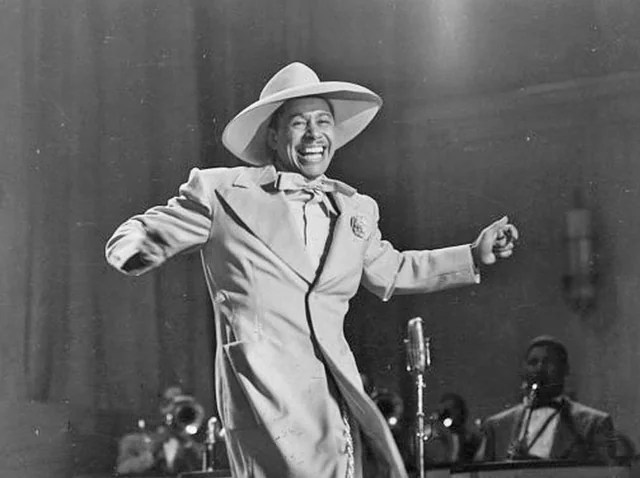
While the white man must hold his tongue, a black man, at least in the past, could shame those who made poor choices in life—the spendthrift of Marx’s parable (quoted at the top of this essay), offered in the last chapter of Capital as a clever criticism of Adam Smith and other organic intellectuals of the bourgeoisie who explained inequality in this way. Cab Calloway’s 1931 song “Minnie the Moocher,” to take an obvious instance, makes Smith’s moral argument. The “Ho-Dee-Ho” song is often taken as a fun call-and-response about a woman who dreamed of being kept by the King of Sweden. But there’s a dark message there Calloway would have us pay attention to. Nobody who has looked into Calloway’s celebrated song should remain ignorant of its point.
A “moocher” is someone who lives off others, begging for support rather than making something of herself. The fictional Minnie is based on a real person named Minnie Gayton, a woman who lived by begging rather than supporting herself independently. That Minnie, a black woman, never made anything of herself and died from exposure in Indiana in 1951. The only items Minnie possessed for decades were a baby carriage and a brick she carried in it. Her sympathizers hoped she was not alive to see somebody steal her only possessions as she lay exposed to the elements. The thief’s identity remains unknown to this day. Behind the toe-tapping standard is a sad story.

Not long after Minnie’s passing, the state became the father of future generations of Minnies. The taxpayer is the King of Sweden. The generalized Minnie has become associated with the controversy surrounding Ronald Reagan’s reference to the “welfare queen.” However, unlike Calloway, Reagan was a racist for suggesting the reason why such persons exist in America. The opinions of the fortieth president were illegitimate because he was white, and those he characterized as mooches were understood by everybody to be black.
There is a clarification to be made here that will become relevant in a moment. Like Calloway’s Minnie, Reagan’s inspiration was also an actual person, Linda Taylor, a woman from the Chicago area who was convicted of welfare fraud in the 1970s. Taylor used multiple aliases to collect benefits fraudulently and committed numerous other crimes. Obliquely, Reagan described a woman in Chicago with dozens of aliases, multiple addresses, and lavish benefits to illustrate what he argued were abuses in the welfare system. The original Minnie was a sympathetic figure, the sociological categorization of which I will come to shortly. Taylor was not. She falls into another category that I will, in time, note. However, both are deviants. Moreover, both are moochers.
The analytical difference is academic, but the substance is important. But for those leveling charges of racism against Reagan, any difference is immaterial; no suggestion of deviant behavior is permissible when the subject is the conduct among black Americans. After Reagan, any person of any race came to understand that he must steer clear of identifying among blacks the problem of sloth—the failure to do what is required to live an upright life, care for others, or nurture one’s own potential—as the culprit in determining the fate of many Minnies. They must avoid suggesting that Taylor’s action had anything to do with black culture. They suggest that Taylor, like the Somalian migrant engaged in fraud in Minneapolis, is at best only a small minority of their respective communities.
There are exceptions. Barack Obama, the charmed son of a white woman, was allowed to shame black parents who bought sugary sodas for their children with food stamps. But, as a general rule, nobody should explain these behaviors, which are, in point of fact, ordinary, in any other way but by ascribing them to the fevered imagination of white supremacists.
* * *
Marx sets up his “anecdote of the past” by characterizing the interpretation as performing “about the same part as original sin in theology.” I am certain readers know that original sin is a Christian doctrine that teaches that all human beings inherit a fallen condition because of the first sin committed by the first humans, Adam and Eve, their story told in the Book of Genesis. But perhaps some might not know what that original sin entails. According to myth, they ate of the fruit of the tree of the knowledge of good and evil that grew in Eden. Thus, they committed the first act of disobedience and introduced sin into the world.*
Marx makes the point plain by summarizing Genesis in a short sentence: “Adam bit the apple, and thereupon sin fell on the human race.” Here he means to belittle explanations that suggest human agency has a role in determining a person’s fate by mocking Christian theology, which he had been wont to do since early in his publishing career (see his 1843 essay “A Contribution to the Critique of Hegel’s Philosophy of Right”). Such an explanation is, according to him, “insipid childishness.”
Today, the Marxist frame finds a black man offering such an explanation dismissed as an “Uncle Tom” (Thomas Sowell comes to mind, but he is one of many blacks who have become the targets of scorn). For Calloway, Minnie’s story symbolizes the precarious allure of life on society’s margins. This, perhaps, explains the attraction of gold chains as a conspicuous appearance of wealth when one’s underlying situation is actually one of poverty. Another manifestation may be found in the practice of leaving price tags on one’s clothing, visible signs communicating to others that an item was expensive or newly purchased. And we mustn’t forget Taylor, the welfare queen who devoted considerable effort to enriching herself with ill-gotten gains.
Such practices may strike those outside the subculture as odd. Why would a woman want to be dependent on people she doesn’t know? Why would one hang a gold chain around his neck when he might invest his money in endeavors that generate wealth over the life course, not only for himself but for a family that may be proud of him? Why would an individual wish to convey wealth while making little effort to actually achieve a higher station in life and the dignity that comes from hard work? Here’s why: Taylor and her ilk believe society owes them something because society is to blame for their situation. In particular, white people. Minnie dreamt of a benefactor who would accept her sloth and gift her gold chains and expensive-looking clothes. Taylor went to extraordinary lengths to avoid honest work. They both lived on the generosity of white people.
For those who deny that such choices have anything to do with culture, they find refuge in Marx’s explanation that “insipid childishness is every day preached to us in the defense of property” and embrace the Old Moor’s “real” explanation: “In actual history, it is notorious that conquest, enslavement, robbery, murder—briefly force—play the great part.” Those who earn what they have are really those who enjoy ill-gotten gains. Taylor stands accused of taking back what is rightfully hers. Her “crime” was reparations-in-kind. Minnie’s fantasy replaced the effort to achieve a station higher than the lowly one she occupied. Marx replaces the behavioral explanation with a structural one rooted in the “secret history of primitive accumulation.” (Read the text for yourself. Follow the URLs at the bottom for the following chapters.)
* * *
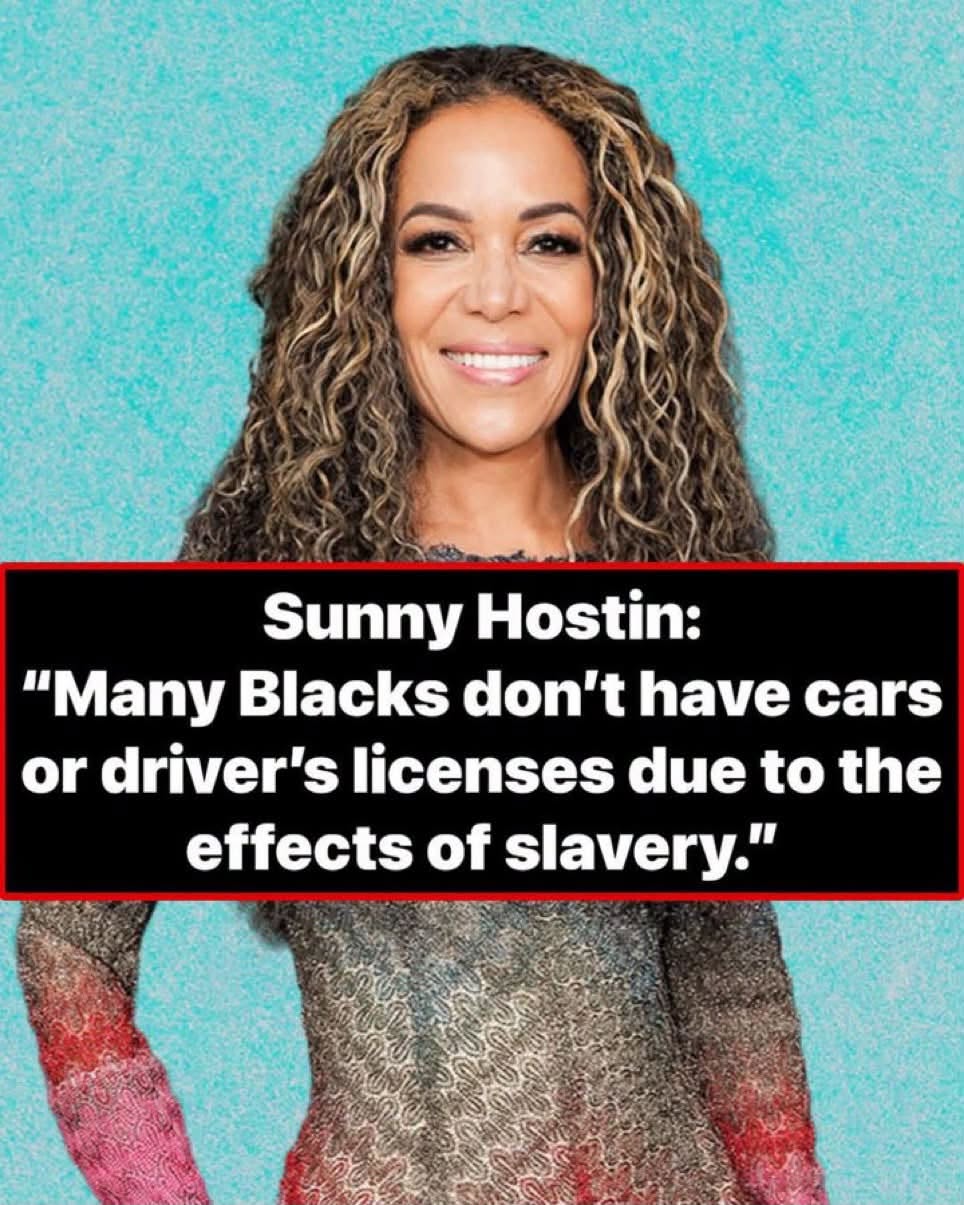
It should not escape the reader that Marx provides the frame for the argument that Minnie’s situation is ultimately rooted in the legacy of slavery, which Sunny Hostin blames for the relative absence of cars and driver’s licenses in black America. This explanation is known as the appeal to “root causes,” which, in social science and progressive ideology, precludes references to attitudes and behaviors in explaining the fate of black people in the aggregate. (However, Hostin did not shy away from appealing to her high status and her son’s virtue when the police rolled him up.)
For the left, structure erases agency. But only selectively. The argument that black people have, on average, rejected true ambition and the norms that make success possible is ruled out of order. More accurately, then, those the “root causes” crowd identifies as “the oppressed” are portrayed as puppets dancing on the ends of strings operated by the powerful few. Today’s democratic socialists promise to replace the puppetmaster with themselves.
My discipline of sociology bridged Marx and the root causes paradigm in stages. Marx’s argument challenged the legitimacy of capitalism as a moral system (albeit he avoided putting it that way, since all morality could be reduced to ideology), so progressives had to be crafty in smuggling Marx into academia and popular discourse. Anti-communism complicated matters. There was a time when liberals and conservatives alike could dismiss explanations that condemned capitalism without being accused of being Nazis. (Today, anti-communism marks a fascist.)
The prevailing school of thought, namely functionalism, also complicated matters. Although Marx viewed society as an evolving, interconnected system, he did not share the functionalist assumption that social institutions exist primarily because they contribute to the stability and maintenance of society for the good of all. Functionalism, especially in the work of later sociologists such as Émile Durkheim and Talcott Parsons (a professor at Harvard, where Merton pursued his graduate studies), emphasized the ways institutions work together to preserve cohesion. Marx instead argued that history is emergent and organic, meaning societies develop through dynamic processes shaped by contradictions, conflict, and material conditions. He saw social change as driven largely by class struggle and tensions within economic systems rather than by a natural tendency toward balance. In his view, morality is an ideology concealing exploitative social relations.
This distinction was important in bringing Marx into mainstream sociology because it positioned conflict theory as a major alternative to functionalism, expanding sociology’s focus from social stability to power, inequality, and historical transformation, and thus threatening what sociologists viewed as the paradigm: structural-functionalism. The trick was how to work Marx into the discipline without invoking the man’s name. That would come later.
In his 1938 article in the American Sociological Review, “Anomie and Social Structure,” Robert Merton helped advance the project of erasing human agency by labeling Minnie as a “retreatist.” The retreatist is a category of people who withdraw from the norms and values that form the basis of the legitimate society. This class suffers not from a disjuncture between cultural goals and societal institutions—the pursuit of the “American Dream” divorced from the means to achieve it—but from the realistic rejection of both, even if Minnie dreamt of a life by the side of a Swedish king.
Retreatism, for Merton, is one of several “modes of adaptation.” Another mode of adaptation is “innovation.” This category captures the Taylors of the world. Here, the desire to acquire things is estranged from the legitimate means to achieve them. Innovation is a clever way of describing the criminal offender. If a man cannot obtain his gold chain through exchange, he will obtain it through force or fraud. If Somalis can’t run childcare facilities and health clinics, they will claim they can, and Democrats in Minneapolis will give them money for their schemes.
In Merton’s scheme, both adaptive modalities deviate from the cultural norms. Rather than root personal conduct in human nature—his account of such explanations is pitched as a strawman—Merton locates social pathology instead in the “definite pressure” of “social structures,” albeit permitting culture to play a role, what he calls the “socio-cultural sources” of deviant behavior, to frame the behavioral entailments.
“There persists a notable tendency in sociological theory to attribute the malfunctioning of social structure primarily to those of man’s imperious biological drives which are not adequately restrained by social control. In this view, the social order is solely a device for ‘impulse management’ and the ‘social processing’ of tensions. These impulses which break through social control, be it noted, are held to be biologically derived. Nonconformity is assumed to be rooted in original nature. Conformity is by implication the result of a utilitarian calculus or unreasoned conditioning. This point of view, whatever its other deficiences [sic], clearly begs one question. It provides no basis for determining the nonbiological conditions which induce deviations from prescribed patterns of conduct.
“In this paper, it will be suggested that certain phases of social structure generate the circumstances in which infringement of social codes constitutes a ‘normal’ response. The conceptual scheme to be outlined is designed to provide a coherent, systematic approach to the study of socio-cultural sources of deviate behavior. Our primary aim lies in discovering how some social structures exert a definite pressure upon certain persons in the society to engage in nonconformist rather than conformist conduct. The many ramifications of the scheme cannot all be discussed; the problems mentioned outnumber those explicitly treated.”
The question still concerns the source of deviant behavior, but Merton prepares future sociology to sharply constrain the range of possible answers. It’s not that social structure explains nothing, but that it must explain everything, lest we be Hobbseans. Though Merton is prepared to acknowledge culture in this narrow frame, those who came after Merton—Richard Cloward and other progressives—adapted Merton’s thesis, removing the behavioral attributes and vanquishing culture as an explanation. Their ideas shaped the policies of the Great Society. All along, the Marxian element in Merton’s 1938 essay was recognizable, even if Merton was not explicit about having smuggled in the man. Merton was careful to couch his theory in the language of Durkheimian functionalism and American sociology, rather than class conflict or historical materialism. He left it to Cloward and others to be more transparent in their sympathies.
Daniel Patrick Moynihan, who himself played a big role in policy formation in the 1960s, eventually came to the realization, which he expressed in his 1993 essay “Defining Deviance Down,” that American society had become so accustomed to rising levels of crime, family instability, mental illness, and other forms of social disorder that it increasingly reclassified these behaviors as normal rather than confronting them as problems. (He also changed his mind about the pathologies of the “Negro family,” but that’s a subject for another essay.)
Moynihan’s contention was that when the volume of deviant behavior exceeds society’s capacity to control it, those in authority lower their standards of what counts as unacceptable, effectively defining deviance down, and then transmit the lowered standards to the population at large. He identifies several ways this happens, including humanitarian motives (such as deinstitutionalization of the mentally ill), political or social expediency, and gradual normalization through repeated exposure. Moynihan warns that this process weakens shared social norms, reduces public willingness to address serious social problems, and leaves communities increasingly tolerant of behaviors that earlier generations would have considered alarming or unacceptable.
Moynihan writes in that sociological style, which makes his argument elusive to some readers. The takeaway is that defining deviance down has several harmful consequences. It erodes shared social norms by lowering the threshold for what society considers unacceptable behavior. It reduces public recognition of serious social problems because behaviors once viewed as alarming come to be seen as ordinary or inevitable. It weakens the motivation to address those problems through policy, law enforcement, or community action.
Moreover, it can undermine public confidence in social institutions if people perceive that authorities are simply redefining problems rather than solving them—or worse: some see what others define as social problems as expressions of personal liberty. A question occurs to the libertine mind: Why shouldn’t a man defecate in the street or masturbate in public? Such a man is free from the coercive force of culture imposed by oppressors. That’s a good thing, no? All norms are oppressive (except those the progressive wishes to impose.) It is not that such voices fail to seek anarchism creeping in, but rather extol the virtue of anarchism itself. They are nihilists. This is where defining deviance down takes a society. Moynihan didn’t say as much himself, but it’s where his argument goes.
* * *
To explicitly link the foregoing to the essay at hand, rather than confronting the pathologies of black America, academics and policymakers, with the prevailing sense-making institutions in tow, make the problem worse by excusing it—and condemning those who don’t. They justify excusing deviance—even to the detriment of the deviant—by appealing to root causes, which necessarily implicate white people. And they impose a monopoly on explanation by smearing those who point to the role of agency in shaping outcomes. By racializing the problem, the accusation that academics and policymakers are blaming capitalism for inequality (as if inequality is among the myriad social formations of history exclusive to capitalism) can be avoided.
Obviously, there is less concern about the accusation today; among democratic socialists, appealing to Marxian class rhetoric to explain poverty has become common. What accounts for this is that the democratic socialist is not really going after capitalism, or more precisely, the corporatocracy; transnational corporate power lies behind the electoral success of a relatively small stratum of elites and their handpicked candidates. They use Marx’s anecdote as a means to whip up popular support for the destruction of America and the West more broadly and move the masses further down the road to serfdom. Eat the rich has replaced anti-communism as the prevailing justification for obscene levels of wealth accumulation.
For the lay observer whose moral compass still points true north (where West is on the left), Minnie’s adventures teach us that chasing illusion and living a life of indulgence lead to isolation and ruin rather than fulfillment and success, making Minnie a universal metaphor of the consequences of living outside conventional social norms. But the masses are not to consider that Minnie would have been better off integrating with mainstream culture and its values of achievement, hard work, and punctuality.
Today, achievement culture is framed as white, and appealing to it is beyond the pale. The way of dependency, learned helplessness, and short time horizons is not the work of agency, but structure (where no progressive can be responsible for it), and it mustn’t be framed in the terms I use to describe it. Many blacks reject achievement culture and instead embrace a culture of poverty, where their choices guarantee failure. This is the pathology of sloth. To admit this makes one a bad person. Truth requires no caring about whether progressives think we are bad people. The truth can be brutal, but it is not cruel.
* * *
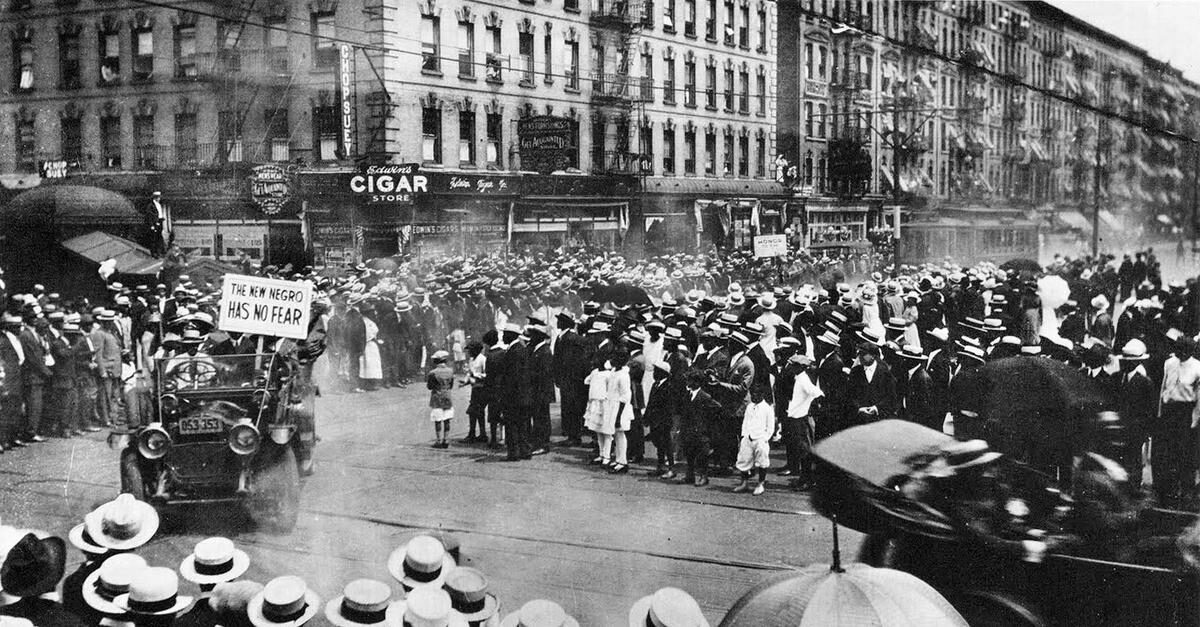
Oh, what they would think of a Calloway today. Calloway was a black man who came to prominence during the Harlem Renaissance. As black America was becoming ascendent, the strivers in the community could see the problem of mooching. So they mocked it. They made Minnie the poster girl of urban pathology. The “New Negro” had progress on the mind. He could not be held back by the past, and he certainly wasn’t going to leave his fate to Minnie and her ilk.
It took Democrats little time by history’s clock to check the New Negro and normalize Minnie with the Great Society. They had sociological theory behind them. Now there are tens of millions of Minnies thanks to the tens of trillions of dollars spent on welfare programs of various sorts—to manage a population that globalists relegated to their status. That is the structure we need to talk about. We must also talk about how agency is at work, too, since the denationalization project is the plan of men who know what they are doing. Social structure is an abstraction. Transnational corporate power is concretely real.
As anti-white bigotry—the globalist strategy to set nations against themselves—has been increasingly challenged by those affected by it, the politics organized by corporate power have become more open in their intent, blaming the rich for the situation of the poor, which is then used to expand government. An extension of corporate power, the administrative state ultimately replaces the invisible hand of the free market with the visible hand of corporatism. Republicanism gives way to authoritarianism, and all the liberal freedoms of the Enlightenment are reduced in scope and quality by technocratic control.
* * *
Marx called the liberal-capitalist origin story “Robinsonade,” referencing the literary genre of castaway and survival fiction, the prototype of which one finds in Daniel Defoe’s 1719 novel Robinson Crusoe. Marx debunks the origin story. He argues that, in reality, capitalism did not emerge because some people simply worked harder or saved more. Instead, it required a historical process he calls “primitive accumulation”: the forcible separation of producers from their means of production. Thus, inequality is not the result of natural differences among individuals but of historical expropriation and class formation. Capitalism begins with an unequal distribution of property produced through political and economic coercion, not merely through market exchange. Thereafter, the capitalist system reproduces and expands that inequality because capitalists appropriate the surplus value created by workers.
Marx must ignore in his historical account the fact that inequality is also a sign of liberty, in which men plainly rise and fall on ambition, discipline, and relative talents. Never mind that! He had a revolution to foment!
Curiously, in that same chapter, Marx notes that even though Crusoe is alone on his island, at least apart from his kind, he does not begin from a completely natural or pre-social state. Crusoe brings with him the categories of thought, habits, know-how, and skills acquired in English bourgeois society. Crusoe knows how to make tools, organize work, and calculate his labor time because he has already been shaped by a particular historical society. Marx even notes that Crusoe keeps books, reflecting the mindset of a practical Englishman. This is part of Marx’s broader argument that individuals are always products of historical and social conditions. What could he be referring to other than culture?
To be sure, Marx’s historical account is not untrue. Peasants were dispossessed of common lands through enclosures, artisans lost control of their tools, and colonial conquest, slavery, state violence, and legal changes concentrated property in the hands of a relatively small class. Don’t forget about Crusoe’s Man Friday, whom he rescues from a group of cannibals who are about to kill and eat him. Rescued from the savages, Friday becomes Crusoe’s faithful and obedient servant. Once workers no longer owned land or productive assets, they had little choice but to sell their labor power to capitalists. But, as noted above, missing from the account is the development of liberal freedom, where one sees the emergence of private property and the possibility of upward mobility.
We must, in accepting Marx’s account, ignore that class remains distinct from caste in that one can change stations in a class system. The world that social class replaced was largely one of caste, including the coercive category of race. America has neither king nor peasant. The artisan still exists. But the colonial subject and the slave don’t. Black people are no longer limited by de jure segregation. However, they are limited by their own attitudes and behaviors—and the party they vote for in large numbers.
Marx believes classical economists such as Smith take existing property relations for granted and use them to explain how capitalism functions. Rejecting their narrative, he shows how those property relations themselves came into existence and are used to exploit man and nature. Marx thus credits himself with having discovered the secret history of primitive accumulation. By contrast, his nemesis, Smith, presents inequality as emerging from voluntary economic activity. Wrong, says Marx; it originates in a history of coercion, dispossession, and the creation of a propertyless working class. Were the feudalist relations superior? And what about what comes after capitalism?
There must indeed be a class that sells its labor. This is necessary for capitalism to work. But this, too, is a functionalist argument. And it is true of most large-scale societies. However, the question is not whether abstract man is fated to be a proletarian worker, for he is not in a class-based society. That question has already been answered. The question is whether this is the station he is content to occupy. He may very well be. After all, there is no shame in working. Man has had to do that since he was expelled from Eden. There is shame in mooching, though. So the matter resolves to the sort of moral question that Marx abhorred.
Marx cannot escape morality. One might even say that Marx’s account is itself am attribution of original sin, since it roots the world’s misery in the emergence of capitalist relations, a sin that can only potentially be absolved by eliminating capitalism and establishing a classless and stateless social order—a return to the original conditions of the species before. Therein, for Marx, lies justice. Here, Marx is not original. There were those before him who also rationalized sloth in this way. Before the great communist put pen to paper and ranted at the podium, Jean-Jacques Rousseau, in Discourse on the Origin of Inequality (1755), argued that inequality arose with private property. Henri de Saint-Simon, Charles Fourier, and Robert Owen were others who said much the same.
Nor can we say that Smith and his ilk imported a theological account into their explanation of inequality. It seemed self-evident to them that under the free arrangements of capitalism, the poor were largely the authors of their own fate. Smith admitted to concentration of wealth, but he also believed competitive markets create general prosperity. However, those who seek affluence must strive to achieve it. That was only fair.
Smith’s observations seem self-evident today. But for globalization, which in his notorious speech on free trade Marx advocated precisely to impoverish the proletariat and thus accelerate the conditions necessary for communist revolution (or common ruin of all competing social classes), the system remains, in the main, a free and open one. I came from poverty and now live a comfortable life, achieved by hard work. Anecdotal? I’m hardly the only one who can tell the same basic story.
Those who find themselves ensnared in the ghetto life are not powerless. They are not only free to try and make it, but they also free to organize collectively to demand that the government pursue economic nationalist policies that will make jobs readily available. Why don’t they? Where are the mass protests against mass immigration and offshoring? Where is the demand for work? Why do they organize instead for free food, housing, and medicine? Have you ever wondered? Because of the pathology of sloth.
* * *
An Endnote
Recall when I wrote that, according to myth, Adam and Eve ate of the fruit of the tree of the knowledge of good and evil that grew in Eden, thus committing the first act of disobedience and introducing sin into the world. I must add that this is the case at least on man’s part. In the war in heaven, in which Michael and his angels cast out Satan and those allied with him who were in rebellion against God, Satan is reasonably charged with the first act of disobedience. Many Christians hold that this occurred before Satan in serpentine form seduced Eve, who then seduced Adam. Thus, God remains aloof from the seduction of Eve.
As for inequality, the Bible presents a balanced view. It recognizes that many people are poor because of circumstances beyond their control, such as famine or misfortune, and repeatedly commands God’s people to care for them with compassion and generosity. This is the duty of those who are sympathetic to others’ plight. At the same time, Scripture condemns sloth, teaching that those who can work should do so diligently and responsibly. Books such as Proverbs warn that idleness can lead to poverty. The New Testament encourages believers to work honestly and provide for themselves and others. The biblical view distinguishes between poverty caused by unjust circumstances, which calls for mercy and justice, and poverty resulting from persistent laziness, which calls for personal responsibility. And so should we.
I do not reference the Bible to justify the argument I make in this essay, but rather to point out that the problem of sloth is an old one, and that mankind has long known that the solutions to the problem of laziness are found not in coercive social arrangements that have strivers supporting those who seek freedom from work, but rather in the demand that those who can work provide for themselves—and the recognition that, if the conditions are such that this proves too difficult, should be met with collective action demanding not mediocrity but an opportunity to provide for oneselves and his family.
However, I do want to dwell in Eden for just a bit longer to make a point about freedom. I hope Christians will pardon me for this observation, but it seems to me that this garden of delights that the first couple found themselves in is akin to the welfare state, albeit one of abundance, harmony, and innocence. Adam did not have to work to make a life for Eve. Everything they could want they had within their grasp—except for what the two trees God planted there could give them: conscience and eternal life. But there is a third matter: freedom.
God specifically forbade the first humans from partaking of the fruit from the tree of the knowledge of good and evil. He told them that doing so would bring death. And, as things turned out, this was true in time. He did not tell about the Tree of Life and how its fruit would make them immortal beyond Eden, which, in their fallen condition, would prove unbearable. So God placed cherubim and a flaming sword to guard the way to the tree in case they learned of its existence (after all, God spared the serpent’s life).
In expelling Adam from paradise, God told him this: “Because of what you’ve done, the ground itself is now working against you. From this point on, getting what you need to survive will take hard work and constant effort. The earth won’t easily provide for you—it will grow weeds, thorns, and obstacles along with the food you need. You’ll have to work tirelessly just to earn your daily bread, and you’ll keep doing so for the rest of your life. In the end, you’ll return to the earth from which you came, because you were formed from dust, and one day your body will become dust again.”
Sounds unbearable. But wasn’t everlasting life in Eden itself also an unbearable condition? To be sure, Adam and his wife enjoyed all the creature comforts imaginable. They did not know they could become like gods, and they were only deceived by the serpent into losing their place in paradise. But paradise, despite its bounty, was, at the same time, something of a prison with no work program. No effort was required from them, but they were also not at liberty to make history or improve themselves.
Erich Fromm famously repurposed the story of the Garden of Eden as a metaphor for the birth of human freedom rather than simply the origin of sin. In his view, Adam and Eve’s act of eating from the forbidden tree marks humanity’s break from an instinctive, harmonious unity with nature and the beginning of genuine self-awareness and independence. By disobeying God’s command—man’s first act of disobedience—they become conscious of themselves as separate individuals, capable of making choices and bearing responsibility for them. This newfound freedom came at a cost, of course: they experienced fear, isolation, shame, and uncertainty after being expelled from Eden. But it came with something else: autonomy. As hard as freedom was, it meant that man was able to choose for himself, reap the rewards of his industry, and suffer the consequences for wrongful action. Only after being expelled from paradise did man become a moral agent who knew good from bad.
For Fromm, this tension lies at the heart of the human condition. He used the story as a warning. Freedom is not merely liberation from external constraints and the beginning of history, but also a burden that can produce anxiety, leading people to seek security by submitting to authority. What sort of authority people submit to is a terribly important question. Shall it be the authority of duty and ethics? Or shall it be the authority of communist and fascist states? Or the welfare state? The Eden story therefore illustrates both the achievement and the challenge of human freedom—the irreversible transition from innocent dependence to autonomous existence. Man became free to choose and was shouldered with the burden of choosing wisely.
* * *
One last note, while it is on my mind. It is striking how similar the story of Eden and the fall of man is to the Zoroastrian account of how evil entered the world, which dates to roughly 3,000 years ago. In this tale, in the beginning, Ahura Mazda, a primordial spirit, creates a perfect world. The world is good and pure: the sky, the waters, the earth, plants, animals, and finally the first human, Gayomard. Everything was created without death, disease, or corruption. The other primordial spirit, Angra Mainyu, or Ahriman, perceived the radiant creation of Ahura Mazda, but instead of admiring it, he became consumed with envy and hatred. When Ahriman invaded the material creation, he brought with him death, disease, decay, drought, poisonous creatures, lies, violence, and demonic beings called daevas.
The first man, Gayomard, died from Ahriman’s assault. Yet from his seed eventually came the first human couple, Mashya and Mashyana, through whom humanity continued. The point is that evil entered the world not because Ahura Mazda created it, but because Ahriman freely chose to corrupt what was good.


