
“Based on all the physical evidence, key witnesses, and what the prosecution presents, I thought it was enough proof that she knew exactly what she was doing and planned it,” Michael Desronvil said in a statement to CBS News.
Desronvil is the lone juror in the Lindsay Clancy murder trial voting to convict the mother accused of strangling her three children to death with exercise bands. Three cheers for Desronvil. We need men like him to uphold American virtue.
Readers may know that the judge declared a mistrial on September 4 after the jury failed to reach a unanimous verdict following nearly 40 hours of deliberation. As one anonymous juror characterized the proceedings, “big personalities” attempted to browbeat Desronvil into acquitting Clancy of murder—“not guilty by reason of insanity”—but he wasn’t having any of it.
“I didn’t have any doubts,” Desronvil said. “As I tried to explain different possible theories during deliberation, I kept getting cut off as if I had doubts based on the evidence presented.”
Progressives were going after Desronvil like wolverines until one of the most outspoken jurors revealed that he was a black man. After that revelation, the woke mob had to “sit with that,” as the visibly stunned CBS morning host Gayle King put it. (The oppression hierarchy isn’t always obvious.)
Clancy’s claim that command hallucinations told her to murder her children was a central issue in her trial. The issue was whether these hallucinations negated mens rea, the legal notion of the “guilty mind,” and therefore whether she was responsible for murdering her children. This was the “reasonable doubt” the “big personalities” complained to the judge about.
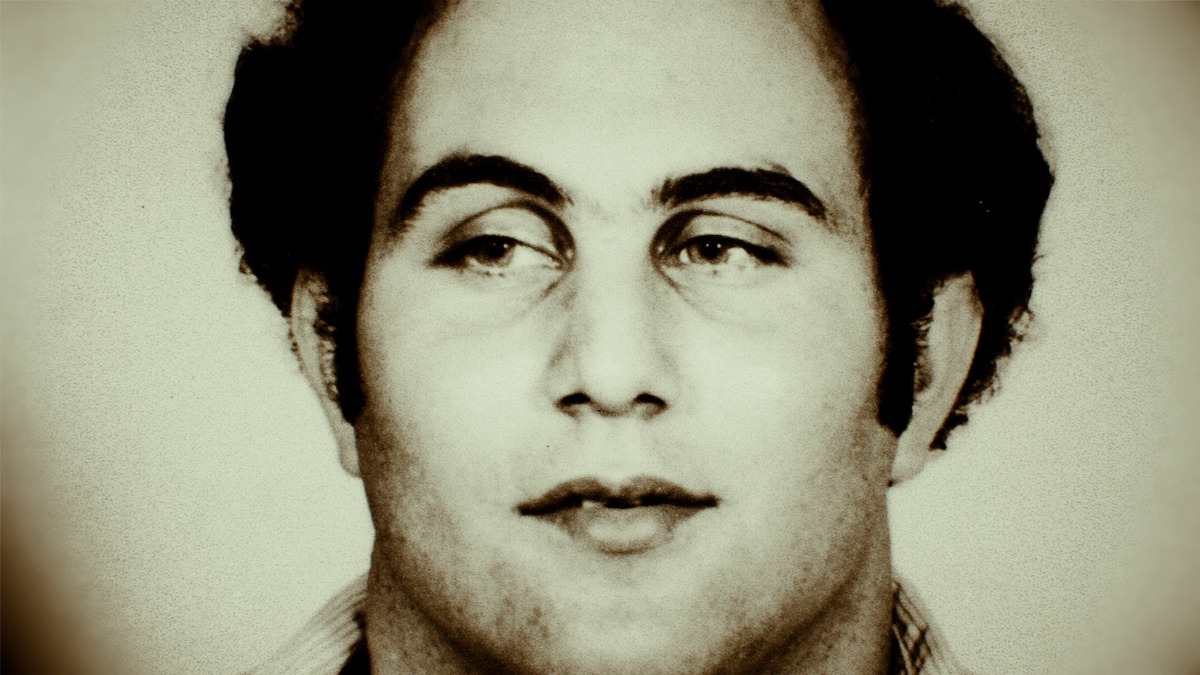
Clancy is not the first person to claim that a voice in her head commanded her to murder. The “Son of Sam” killer, David Berkowitz, told authorities and reporters that his neighbor, Sam Carr, owned a black Labrador retriever named Harvey. According to Berkowitz, an ancient demon possessed Harvey and, through him, commanded Berkowitz to go out and murder people.
Berkowitz later admitted he lied about Harvey. He told reporters he said that to prepare an insanity defense. Did Clancy do the same thing? How could one know for sure, since the claim of having experienced hallucinations is a subjective phenomenon? Berkowitz lied about it. Why not Clancy?
I’m not disputing that people hallucinate. But the individual claim of experiencing hallucinations is something of an unfalsifiable claim. One should be especially skeptical of the claim when the individual claiming to experience hallucinations is doing so in the context of a murder trial. The incentive to escape prison by claiming insanity seems obvious enough.
Command hallucinations are presumed auditory hallucinations in which a person experiences a voice instructing them to perform a particular action. Psychiatrists insist that command hallucinations are a well-established clinical phenomenon.
Assuming such a thing exists, psychiatrists add nuance: a hallucinatory command does not, by itself, tell us whether the person will act on the command. The problem is not whether people hear commands, but why some obey while others resist.
The appeal to hallucinatory command is a profound epistemological problem. Just as there is no way to know for sure whether a man really believes he is a woman (or that he believes he was abducted by aliens, etc.), there is no objective means of determining whether a person is lying about their hallucinations. But, for the moment, let’s explore the assumption that a person is actually experiencing command hallucinations and see what psychiatry says about the phenomenon.
Granting that hallucinations are real, researchers have found substantial variation in compliance—that is, whether an individual obeys hallucinatory commands. Rejecting the simple stimulus-response model of command hallucinations, psychiatrists insist that compliance is not automatic; if a hallucinated voice tells someone to perform a dangerous act, it does not follow that the person will do so. Those suffering from command hallucinations are more likely to comply when they recognize, regard as real, or have a delusional relationship to the voice. Another key factor is the voice’s power or authority.
In this view, the crucial question is not merely what the voice says but what it means to the person hearing it. The idea is that an affected individual who regards a voice as entitled to obedience, omniscient, powerful, or threatening experiences greater pressure to comply than someone who hears the same words but regards the voice as meaningless, powerless, or unreal.
Given the subjective nature of claims to have experienced command hallucinations, the fact that the claim is not the principal controversy remains troubling. Yet, granting such phenomena, the controversy in forensic psychiatry turns on whether such commands cause criminal behavior.
The distinction has consequences for criminal proceedings. A clinician assessing someone who reports command hallucinations cannot simply ask whether the voice has issued a dangerous instruction and then assume that the individual is likely to obey it. The question becomes: how powerful does the person believe it to be?
Note the language. How do we determine the power of belief? We know belief is powerful. Anybody who’s ever seen a faith healing knows that. We infer that the person believes there’s a god and that the healer is channeling miraculous power through his body. But the person receiving the anointing could be faking his belief. How do we know? We do know the healing is fake.
To understand why this is important, i.e., whether it matters in adjudicating criminal cases, consider the Muslim terrorist who believes that it is his obligation to perform Jihad. He believes his god commands him to perpetrate violence, and that there are rewards that come with his obedience.
Are the rest of us to regard the terrorist’s god as real, or excuse his actions on the grounds of his faith in illusion? How is a person operating on a presumed god’s dictates any different from Berkowitz obeying the commands of the demon speaking through his neighbor’s Labrador retriever? Or a voice in Clancy’s head commanding her to strangle her children to death with exercise bands?
We’ve noted that, according to psychiatry, the perceived power differential between the voice and the person determines whether the person acts on the command. However, this does not prove that perceived power explains every case; rather, it provides evidence against the idea that compliance is simply an involuntary reflex to a hallucinated instruction. Let’s grant psychiatry this much. That means the person who hallucinates a command might resist the command. Are they therefore responsible for their actions? Not if they can’t resist.
Thus, a defendant who claims that a hallucinated voice commanded them to commit a crime raises questions about whether the alleged hallucination actually existed, whether it contributed to the behavior, and what effect the person’s mental state had on their ability to understand or control their actions. That’s a lot to ascertain with any certainty.
No laboratory test can tell us with any certainty that a person actually heard a particular voice at a particular moment. Nor is there a test that determines variable compliance across individuals. How could there be? We cannot know whether a person hears voices or only claims to. It follows that there is always reasonable doubt about whether a person who appears normal is really insane. (If, as the jury foreman claimed, Desronvil said he understood the concept of reasonable doubt, was this what he was talking about?)
Forensic psychiatrists skirt the unfalsifiability problem by appealing to expertise. They examine the individual’s account alongside medical records, observed behavior, psychiatric history, collateral information, and other available evidence. The conclusion is an interpretation based on criteria the profession established—the same crowd that invented gender identity. Professional opinion substitutes for certainty.
The possibility of malingering—intentionally faking or exaggerating mental or physical illness to avoid responsibility—remains a genuine forensic concern, particularly when a defendant has an obvious incentive to portray criminal behavior as the product of psychosis. Another complication is the problem that some patients conceal or deny their command hallucinations during assessment, as might be said in the Berkowitz case (if we assume he wasn’t lying to begin with).
However, psychiatrists insist that the possibility of malingering or denial should not be confused with evidence that command hallucinations are inherently fictitious or unreliable. They will cite substantial clinical and research literature documenting people who experience such hallucinations, sometimes with serious consequences. The forensic problem is therefore evaluating an individual claim, not deciding whether command hallucinations as a category are “real.”
The language of free will introduces another complication. It may be tempting to describe a person who obeys a command hallucination as having lost free will, or to imagine the hallucinated voice as taking control of the person’s body. Although command hallucinations are widely recognized in psychiatry, no comparable consensus exists that hearing a command reliably predicts compliance or that compliance demonstrates the complete loss of voluntary control.
Assuming the voices are real, the free-will question thus becomes whether command hallucinations operate like a mechanical switch that bypasses the person’s entire capacity for decision-making. We’re told the forensic question is better framed in terms of the person’s mental state and its relationship to the criminal act rather than asking whether the person’s “free will” was completely overridden.
As one might imagine, forensic psychiatrists and psychologists disagree about the proper role of free-will concepts in assessing criminal responsibility. Some argue that free will is conceptually important. Others argue that forensic practitioners should avoid the concept because it is not a legal criterion. What then of actus reus, i.e., voluntary action?
Moreover, it introduces metaphysical questions that psychiatric examination cannot resolve. But is that a question for psychiatrists to answer? Is this not instead a matter for the law to determine? How deeply are we prepared to embed neoclassical criminology in criminal procedure?
As we have seen, forensic psychiatry skirts these difficult questions by treating command hallucinations as a phenomenon requiring individualized assessment rather than as a general explanation for behavior in the affected population. Thus, the field separates (1) the existence of a psychiatric phenomenon and (2) its causal significance for a particular criminal act into two separate questions. How is this science?
At any rate, that’s the forensic psychiatric view. I don’t find it convincing. Or particularly relevant. The reader will have noted my skepticism (I went to some lengths to make it obvious while also being charitable). I can put my skepticism bluntly: Even if we suppose command hallucinations are real, what must they be in any given case? Moreover, what does it matter?
After all, Clancy’s thoughts were telling her to do something bad. The voice in her head was her voice. What else could it be? Doesn’t every intentional homicide involve a brain instructing a body to kill somebody? Clancy and her defenders can claim that she was estranged from her own thoughts, but that’s yet another subjective claim.
I understand the desire to see severely mentally ill people somewhere other than prison. Frankly, I don’t care where these people go as long as it’s not among the rest of us. Clancy murdered her own children. If I believe she experienced command hallucinations in the past and that she cannot resist them, then I must assume she may experience them again—and there is no reason to believe she is capable of resisting them in the future. In other words, I must presume she is unsafe around any children for their sake.
There are two kinds of error risk in this situation: a Type I error (false positive) would be keeping Clancy institutionalized when she is no longer mentally ill or dangerous enough to justify continued confinement—an infringement on her liberty and autonomy; a Type II error (false negative) would be releasing her after clinicians or the court conclude that she is sufficiently recovered, when in fact she remains capable of causing serious harm to herself or someone else.
Massachusetts law explicitly recognizes this tension: continued involuntary commitment requires evidence that mental illness creates a likelihood of serious harm, and if that condition no longer exists, the court can order discharge. Clancy could be released into the public. Was there not sufficient evidence that her mental illness caused serious harm at trial? If we assume that she was insane, was that not what led to the deaths of three children?
Committing a Type II error can have extraordinarily severe consequences even when the probability of reoffending is relatively low. A Type I error can mean prolonged deprivation of liberty even when the person poses no longer-term danger. Given these options, risking a Type I error seems the most prudent course. If Desronvil had the same calculus in mind, then he was right to hang the jury and hope for another trial with a jury without “big personalities,” i.e., militant feminists.
The systemic problem is allowing people who commit heinous crimes to be found not guilty by reason of insanity and allowing them to potentially go free. Indeed, if a man hears voices commanding him to kill, then he arguably represents a much greater threat to public safety than the man who is in command of his own thoughts—and we would never acquit the rational man.
Even if we determine that Clancy did not commit the act voluntarily and with malice, we must assume for society’s sake that she remains a continuing threat to public safety. We can never know for sure that she is no longer a danger. I recognize that the truism that past behavior predicts future behavior is truer as a general statistical principle than when applied to an individual. But it’s true enough to risk a Type I error in extreme cases like Clancy’s.


