Democrats are doing the class warfare thing on Elon Musk. Never forget that this is the party that censored social media. Musk liberated the social media space. Even on Facebook, posts that appear in your timeline today would have been removed yesterday. Free speech has value in part because it’s a means to good ends. Democrats are authoritarians who seek to shut down free thought and innovation, while expanding and entrenching administrative control over the population. Bureaucrats in the private sector exist to ensure the endeavor progresses rationally. Government bureaucrats seek power to determine the lives of others. This is why the left is still upset over DOGE.
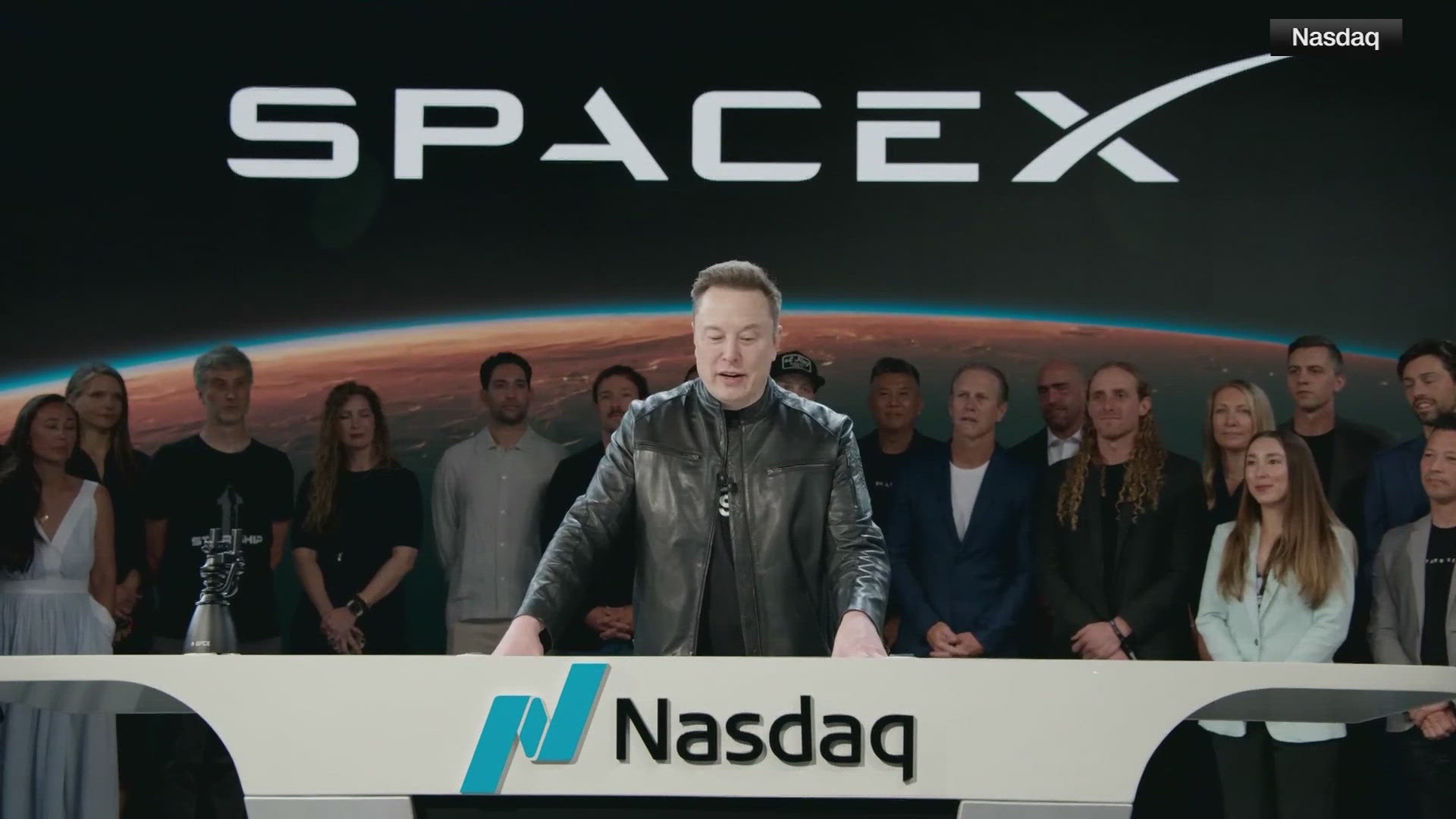
The recent announcement that Elon Musk has become the world’s first trillionaire has triggered a predictable and revealing response from the progressive left. Numerous Democratic politicians have taken to social media to decry the milestone, using it as a rallying cry for higher taxes on the wealthy. They present themselves as speaking for the tens of millions whom they have impoverished. This reaction exposes a deep ideological commitment to wealth redistribution, an approach that leads to economic stagnation and decline rather than prosperity. The evidence of this is all around us.
At its core, the left’s outrage is not so much rooted in the belief that government can more effectively advance frontier technologies like artificial intelligence, autonomous vehicles, or reusable rockets, as it stems from a desire to seize private capital to fund expansive social programs—healthcare, housing, and other forms of public assistance, as well as support for illegal immigrants. These are the very areas where progressive policies have created dependency and inefficiency.
Inefficiency is inherent in government bureaucracies. Dependency builds party loyalty among those who have been idled by progressive policy. Thus, the deeper underlying impulse is to redistribute resources from those who generate value through innovation to address the downstream consequences of prior government interventions and keep a devoted class of voters.
Musk and other entrepreneurs assume enormous financial and personal risks in pursuit of ambitious goals, such as making humanity multi-planetary. Taxpayers, by contrast, bear no such direct accountability when government ventures fail. But they do bear the costs.
Democratic Party rhetoric serves a familiar political purpose: stoking class resentment against bold entrepreneurs. Entrepreneurs like Musk are the driving force behind the technologies that have dramatically improved our quality of life—advances in communication, computing, energy, and transportation. While no technology is without downsides, and reasonable regulation is warranted in certain cases, free markets reward those willing to invest capital, intellect, and time at the frontiers of science. The left loathes the entrepreneur because it lights the path to autonomy and self-actualization. It also demonstrates good government.
Taxing away profits that these individuals reinvest into further breakthroughs reduces the resources available for innovation. Money in the hands of visionary private actors, guided by market signals and personal stake, is far more likely to yield productive outcomes than money funneled through government bureaucracies. It’s no secret that the modern administrative state is not populated by the “best and brightest.”
There was a time, in the mid-twentieth century, when large-scale government projects—like the Apollo moon landings—represented the pinnacle of national ambition. The twenty-first century is different. Today, private entrepreneurs backed by substantial capital can pursue massive endeavors without the waste, fraud, and abuse that frequently plague public spending. Even the casual observer can see that the US government has transformed into a bloated welfare and administrative state, far removed from the limited republic envisioned by the Founders. Elevation of the private sector is written into the language of the Constitution.
Government has legitimate and critical roles, to be sure: providing for the common defense, enforcing laws, securing borders through effective immigration and customs enforcement, and investing in core infrastructure and public utilities. It should not, however, be tasked—or task itself—with managing the endless fallout from decades of progressive policies.
Globalization that exported American jobs, combined with the importation of cheap labor across both labor-intensive and high-skill sectors, has created economic and social pressures that the government now administers at enormous cost. The result is an inefficient, controlling apparatus that crowds out private initiative and burdens taxpayers. By contrast, entrepreneurial capitalism, when allowed to function, channels human ingenuity and capital into solving humanity’s greatest challenges. Punitive taxation aimed at redistribution undermines this engine of progress.
Rather than penalizing success, policymakers should foster an environment where risk-takers can continue pushing boundaries. The alternative—ever-greater government control over wealth and innovation—risks repeating the historical pattern of decline that accompanies centralized economic planning. A return to first principles is, therefore, essential. We must demand limited government and unchain the creative powers of those who move beyond the logic of government bureaucracy.
The left’s reaction to Musk’s achievement is not merely about one man’s fortune; it is a window into a philosophy that prioritizes redistribution over creation, and envy over aspiration. America’s future depends on rejecting that path and recommitting to the principles of free enterprise and limited government.
Musk is solving many world problems while firing the imaginations of our youth—those who resist indoctrination. It is much better to have that work occur in the private sector and tame the government’s penchant for taxing capital and spending the revenue on welfare and expanding the administrative state. The government is bloated, debt-ridden, and a drag on growth. Better that capital remain in the private sector and let entrepreneurs and the crowd take the risk. This space draws the brightest minds.
Ever heard the saying: “Good enough for government work”? We used to say that while noting in frustration the years of road repair. That’s the logic of public bureaucracy. There is no incentive to be productive when one’s paycheck comes from the taxpayer. Taxpayers deserve better than that.
It’s not greed that drives Elon Musk and people like him. He’s not walking around with all that money, blowing it on luxuries, or funding anti-American/West NGOs organizing the rabble on our streets, undermining the Republic. He’s reinvesting it in frontier technologies and advancing the scientific enterprise through practical action. Ambition and the spirit of discovery fuel individuals like Musk. These are the fuels that propel civilization.


