
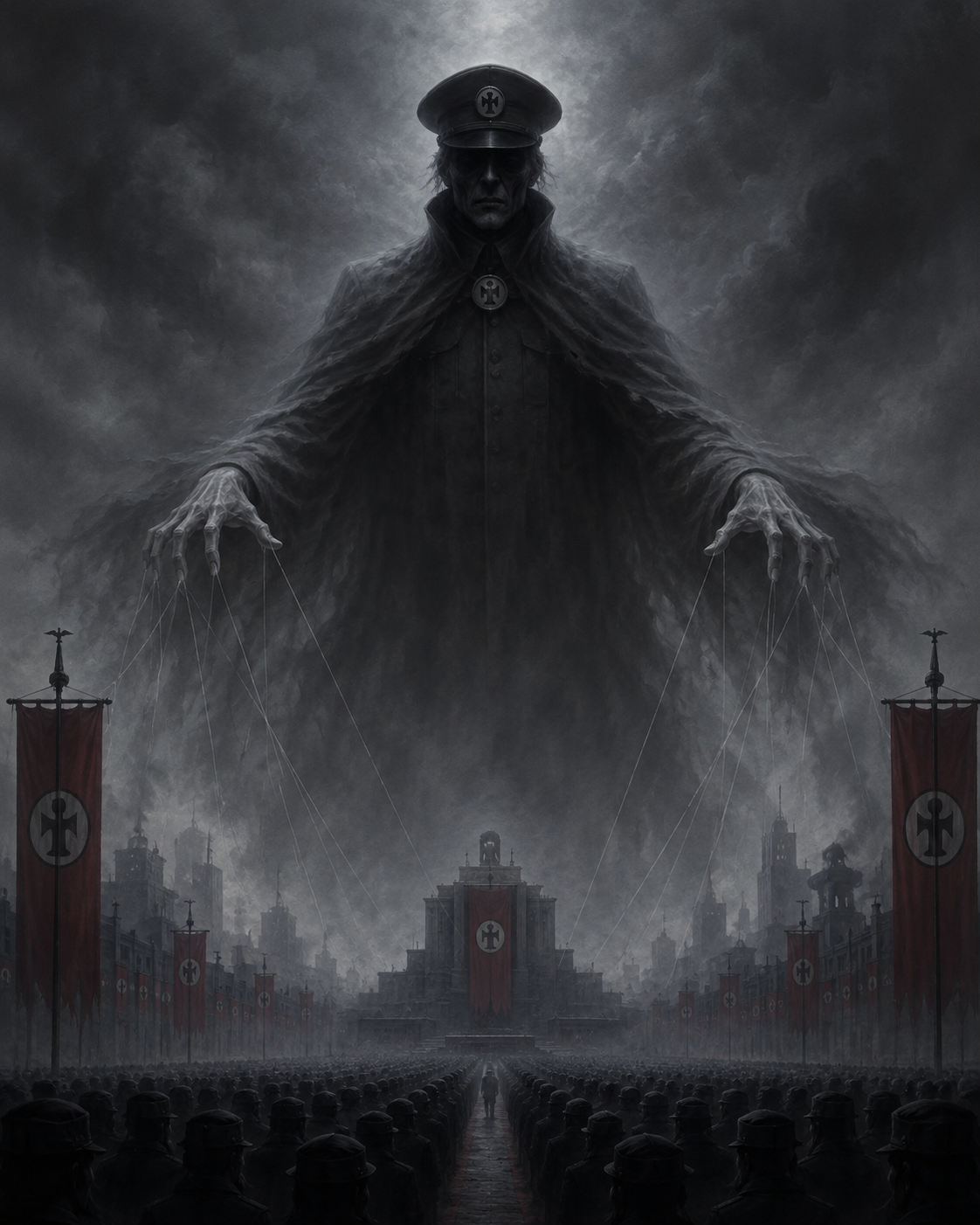
The rational observer doesn’t need distinct lines of political thought to be working together in an explicit coalition for them to function as one. What is required is not formal coordination, but a shared concern or animating principle that anchors these otherwise separate forces. If different ideological movements are moving toward the same end, if they share an underlying antipathy towards something, they form what is effectively an implicit coalition. This is the phenomenon of convergence.
We can see this dynamic in what is often called the “red–green alliance.” Here, elements of the progressive left and Islamist movements form an affinity grouping. The red piece includes strands of anarchist, communist, and socialist thought that, at times, align tactically with jihadist movements. Here, what binds otherwise very different ideologies together is a shared hostility toward Jews. Antisemitism serves as a unifying thread.
A similar tendency appears on the right. There has been a noticeable development of antisemitic rhetoric alongside a more sympathetic stance toward Islam among some figures associated with the “America First” tendency, most notably Tucker Carlson, Meghan Kelly, and Candice Owens.
Influencers in this space have suggested that the left and right should find common ground based on shared grievances, including and especially hostility toward Jews. Many of these voices are Catholic. There is an obsession with Christian Zionism, not solely as part of Christian eschatology, but as an animal bred by the Jews. Nick Fuentes is exemplary of this tendency.

Lately, the alignment of the far right and Islam has become more than convergence, with Christian antisemites taking to sharing on social media the postmodernist standpoint of Edward Said and critical race theory to make the case that the Jews are white settlers displacing Arabs they call “Palestinians.” (See History Matters, and On Matters of History, Israel Wins the Debate to understand the problem.)
Antisemitic sentiment has existed within segments of both the Catholic and Orthodox traditions over many centuries. With the Protestant Reformation, there emerged a shift in which aspects of what might be described as “Jewish sensibility”—a practical, this-worldly orientation—became more integrated into mainstream Christian thought in Europe. (See The Dark Heart of Antisemitism: Separating the Haters from the Critics.)
This shift helped create conditions in which capitalism could develop more broadly in Europe, no longer seen as exclusively associated with Jewish communities but as compatible with Christian ethics. Before this, the rationalism that came to prevail in Europe (interest, profit)—and then globally with world capitalism—was condemned for its Jewishness. The far right is open in its hostility to the Enlightenment. But it doesn’t realize that it is opposed to the rational foundation of capitalist relations. They would be quite comfortable standing with the monarchists on the right side of the French National Assembly. (I am not here denying the excesses on the left side of the French Revolution. But the Ancien Régime had to go.)
Karl Marx wrote about these themes in an early essay, “On the Jewish Question.” There, he developed an analysis of Judaism and economic life, where he framed “practical Judaism” in relation to “theoretical Christianity.” Later thinkers, such as Max Weber, in addition to his landmark The Protestant Ethic and the Spirit of Capitalism, explored the idea of ancient Judaism as a bridge, or more accurately a pivot, between Eastern (Oriental) and Western (Occidental) traditions. From this perspective, the synthesis of religious and philosophical ideas that gave rise to Protestantism, in turn, contributed to the Enlightenment and liberalism—the intellectual and economic foundation of the modern West.
The ideas of liberalism, which represent a unified front against the irrationalism of communism, fascism, and Islam, emerge from this development. Before this, Christianity and Judaism were viewed as antithetical. The emerging reactionary coalition, combining elements of the left and right, pines for a return to anti-Jewish antipathy. It is atavistic in a most extreme way. Tragically, antisemitism has made significant inroads in popular culture. This nascent alliance threatens the future of freedom and reason in the West.
Batya Ungar-Sargon, who, like me, and for many of the same reasons, escaped from the left-wing warp of the twenty-first century, noted on X Saturday that Fuentes has now come out as a Democrat. He’s not alone, she observed. I, too, have noted this (a while ago, see The Woke Reich and the Enemy Within). “Many erstwhile Right-wing podcasters are now finding they have more in common with the Left these days, thanks to a meeting of minds on a singular issue: One’s level of comfort blaming Jews for the world’s ills,” she says in the clip shared above.
It is not just Fuentes switching loyalties. I am watching to see if Tucker Carlson and Marjorie Taylor Greene make the move next (Greene seems close to announcing her switch). They’re drawn to the left because antisemitism is manifest in Democratic Party politics.
In an interview with Maria Bartiromo over the weekend, House Democrat Ro Khanna advanced the conspiracy that Jews are the puppet masters. It’s not the rabble on the streets anymore. It’s the Democratic Party. This is an entailment of the Democrat strategy to use Muslims and other Third Worlders, whose Jew-hatred is notorious, for electoral advantage. They have to abandon Israel for their new constituency, namely the Muslims. Democrats believe there are enough self-loathing Jews to keep a toehold in that community. They’re right. Shockingly, Zohran Mamdani, the Shi’a Mayor of New York City, won the 2025 election with roughly 30 percent of the Jewish vote, according to exit polls.
* * *
What amalgamates disparate political tendencies is a shared hostility toward the West itself, often characterized as decadent. In this framing, decadence is linked to perceived Jewish manipulation of Western institutions and values. More than this, modernity itself is the work of Jewish operatives seeking to enslave the goyim. This narrative draws on much older patterns of thought, in which longstanding prejudices are repurposed in contemporary political contexts.
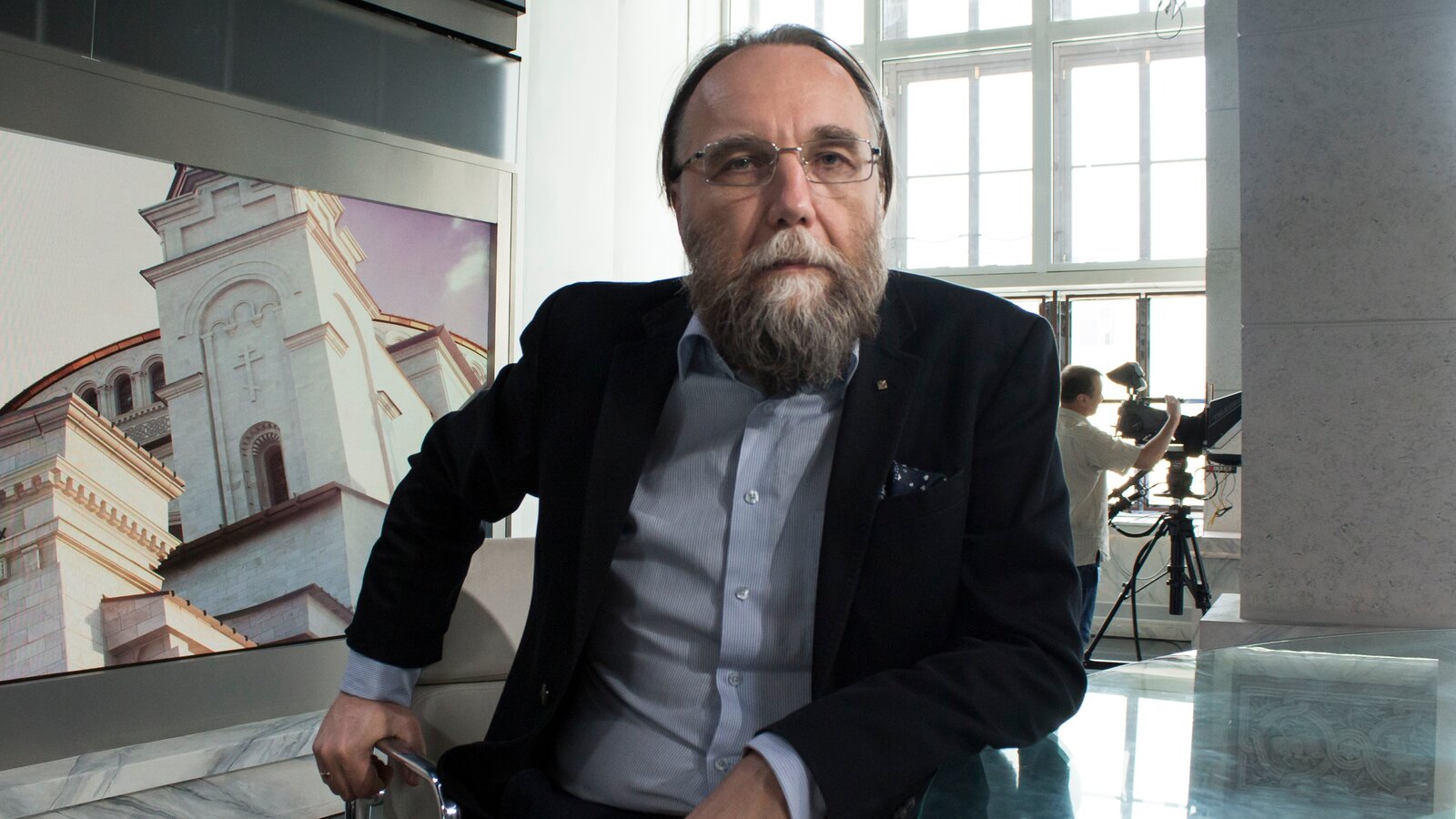
A contemporary figure associated with the critique of the liberal West is Alexander Dugin, a Russian philosopher whose work has gained attention in far-right circles. Carlson interviewed the ideologue in Moscow in late April 2024 (Carlson also met and interviewed Vladimir Putin and traveled about Moscow, singing its praises). During the interview, Dugin—often described in Western media as “Putin’s brain”—railed against Western liberalism.
Like many on the left and the far right, Dugin argues that the modern liberal West is in a state of cultural and moral decay. It is, but not for the reasons he supposes. He positions his philosophy—sometimes called the “Fourth Political Theory”—as an alternative to communism, fascism, and liberalism. It is yet another attempt at a “Third Way.” He emphasizes a return to tradition, civilizational identity, and a multipolar world order in opposition to what he sees as Western universalism. This means he rejects human nature, seeing what people are in terms of what culture has made them. In effect, he advances a right-wing postmodernism wrapped in the language of premodern atavism.
What is the Western universalism Dugin and his followers oppose? One finds them in the founding documents of the American Republic—the Declaration of Independence, the Constitution, and the Bill of Rights—as well as the Universal Declaration of Human Rights adopted by the United Nations in the post-WWII period (put aside the corruption of the UN and its Third Worldization for now). However much the reactionary right appeals to the ideas that founded the American Republic, they explicitly reject liberalism. Demanding the right of free speech, publishing, and assembly from this crowd is strategic, not principled. They are, in substance, illiberal.
A paradoxical feature of the illiberal attitude—the essence of authoritarianism—I am describing is the rhetorical conflation of liberalism and progressivism, a confusion engineered by the Democratic Party as part of its legitimation project. These terms are, in fact, opposites; the latter represents the ideology and practice of corporate statism.
Corporate statism is profoundly illiberal—and the goal is transnationalist. Thus, a contradiction emerges: the Red-Green alliance is organized by progressive forces. Since progressivism is diametrically opposed to liberalism, the reactionary right is pulled into the gravitational pull of the transnational project. This is paradoxical because the project is at the same time understood by the right as Jewish in character. Antisemitism deranges people.
I am opposed to the transnationalist project, too, but not because of any ethnic character. I oppose the project because of its goals: to reorganize the world as a neofeudalist global order in which the world proletariat is managed in techno-estates run by transnational corporations and financiers comprising a new aristocracy. The fact that Jews are overrepresented among elites does not signal an ethnic cabal to take over the world, but rather indicates a culture prone to material success, which reaches its zenith in Jewish practical life. Such a culture is not to be rejected, but emulated.
Dugin’s framework draws heavily on thinkers like Martin Heidegger, who joined the Nazi Party in 1933, the same year he became rector of the University of Freiburg (in his rectoral address, he aligned the university with the destiny of the German Volk and National Socialism), and on geopolitical theories associated with Eurasianism, a cultural and political doctrine arguing that Russia is neither fundamentally European nor Asian, but a distinct civilization with its own historical destiny, geopolitical sphere, and values.
Synthesizing these ideas, Dugin portrays the West, particularly the United States, as a force that erodes traditional cultures and imposes a homogenizing liberal ideology worldwide. In this sense, his critique resonates with both far-right and some far-left critiques of globalization, even though their underlying values differ significantly. How is this not the sister of European fascism?
* * *
I will return to Dugin in a moment, but I need to say something about the evolution of anti-globalization sentiment on the left—enough to make a new section. When I was in graduate school in the 1990s, the critique of political economy grasped the peril inherent in the transnationalist reorganization of the world, even if it did not appreciate its corrective, namely, economic nationalism (nationalism is a dirty word on the left). Regional and global financial and trade networks, such as the IMF, World Bank, the WTF, the EU, NAFTA, and GATT, were major targets of criticism.
Over the course of the twenty-first century, focus on these networks not only waned but street-level action came under the control of elites associated with transnational corporate power and world finance. Anti-Israel, anti-American, and anti-West sentiment came to the fore. This is in part due to postmodernist corruption, reflected in the rise of critical race theory, post-colonial studies, and queer theory, and tendencies with a substantial pro-Muslim bias (French philosopher and pedophilia advocate Michel Foucault is the exemplar). However, antisemitism was present in critical political economy circles before then, cloaked in criticisms of Israel, which was designated an apartheid and genocidal state.
Most notorious among those obsessed with the Jews and their supposed wickedness was James Petras, who taught for many years at Binghamton University and wrote extensively on imperialism, US foreign policy, and global capitalism. He became controversial for writings about pro-Israel lobbying and what he described as disproportionate Jewish influence in US politics and media, as if this were a bad thing. The work most associated with that controversy is The Power of Israel in the United States. In this book, Petras crossed from criticism of Israeli policy or lobbying networks into sweeping claims about “Jewish power” that echoed longstanding antisemitic narratives about covert ethnic control over world affairs.
Supporters, by contrast, argued Petras was analyzing organized political influence, similar to analyses of other lobbying groups. A similar rationalization is seen in the rehabilitation of Stephen Walt and John Mearsheimer’s reputations in the wake of their book The Israeli Lobby and US Foreign Policy. Walt and Mearsheimer were careful in distancing themselves from ethnic essentialism, whereas Petras’ work was highly reductive. Even those otherwise sympathetic to critiques of US foreign policy or Israeli state policy were compelled to distance themselves from his work. Too much, too soon. Walt and Mearsheimer gave the antipathy intellectual cover.
However, over the intervening years, Petras’ antisemitism has been mainstreamed. This view was introduced in a major way into the Democratic Party by former president Jimmy Carter in his 2006 book Palestine: Peace Not Apartheid, wherein he argued that Israel’s occupation of the West Bank and construction of settlements constituted a system of apartheid. This sent progressives in search of other books leveling the same charge. There, they found the work of Noam Chomsky and Norm Finkelstein (who recently appears to regret what he helped start), as well as Ilan Pappé and Avi Shlaim, the so-called “New Historians.” They learned from them a falsehood: that Palestine was an Arab land and that Jews were interlopers—white settler colonists. The work of Edward Said provided the postcolonial theory that would lend intellectual heft to their antisemitic worldview.
* * *
Returning to Dugin, what makes his work significant is that he provides an intellectual vocabulary for civilizational opposition to the West. His “Fourth Political Theory” is explicitly anti-West. He argues that communism, fascism, and liberalism are products of the same Western modernity and should be replaced with something rooted in cultural particularism, religion, and tradition.
This stance is to be distinguished from my own nationalism, which emphasizes the universalism of reason and science. In my worldview, liberalism is not limited by cultural frames. Other moral systems are particular. Liberalism is universal. But for Dugin, all moral systems are particular; all knowledge is rooted in cultural systems and is thus relative, hence his advocacy of multipolarism. The parallels between his theory and postmodernism are unmistakable, and it is here that the left and right find common ground.
Thus, the elements of Dugin’s thinking create what may appear to the Western universalist as strange overlaps where very different groups share a common opposition to Western liberalism. Because liberalism and its universalism are treated as the primary enemy, groups that otherwise disagree can appear aligned in their opposition.
Dugin’s belief that modern society has lost its spiritual grounding resonates across ideological lines, especially among those who see modern culture as morally decadent and, crucially, irredeemable. Dugin interprets global politics as a struggle between “Atlanticism” (the US and its allies) and “Eurasianism” (a bloc led by Russia and aligned civilizations). This framing naturally encourages alliances of convenience among those opposed to US influence. This is how Fuentes can celebrate Stalin’s birthday.
Dugin is often portrayed as an ultranationalist. But ultranationalism is a widely misunderstood political worldview. Characteristic of regimes like Nazi Germany, ultranationalism is built upon the premise that one nation—often defined in ethnic or racial terms—possesses a unique superiority and historical destiny. This worldview does not aim to integrate nations into a shared global framework, but rather to elevate one above all others, at the expense of sovereignty.
Ultranationalism thus subverts nationalism and represents a form of globalism, one that parallels corporate statism. Indeed, the political-economic arrangements underpinning fascism are corporatist. Ultranationalism appears to be an internally contradictory ideology. Whatever its contradictions, it serves the interests of those who are reordering the world.
But the contradiction is important to interrogate. It arises because such regimes, despite appealing to nationalism, pursue aggressive expansion beyond their borders. Ultranationalists reject the interstate system. Under Adolf Hitler, for instance, the idea of Lebensraum justified territorial conquest across Europe. This expansionism was not an effort to create a cooperative or interconnected global order. Instead, it sought to impose a rigid hierarchy in which conquered peoples would be displaced, eliminated, or subordinated. The goal was not global integration, but world domination.
In this light, ultranationalism does not exactly represent a paradoxical form of globalism as we understand it, namely world capitalism in its corporatocratic phase, so much as a rejection of the international principle of national sovereignty, what is known as the Peace of Westphalia. Ultranationalism opposes liberal universalism. The modern state system rests on the idea that nations coexist as formally equal actors (albeit sovereignty is conditional on behavior). Ultranationalist ideologies explicitly deny this premise.
A more precise way to understand the dynamic, then, is to see ultranationalism as combining intense inward nationalism to mobilize its population, often ideologically rooted in palinogensis, with outward imperialism. Its ambitions may be global in scope, but they are not globalist in spirit, at least not in the way globalism is understood in mainstream political economic thought (whatever the problems with that). Rather than seeking a world of interconnected equals, it envisions a world reordered under the supremacy of a single idea—one that is authoritarian and illiberal.
* * *
Crucially, Dugin has publicly aligned himself with the traditions and symbolism of the Russian Orthodox Church and frames his political philosophy in explicitly religious and metaphysical terms. His broader ideology of “Eurasianism” draws heavily on Orthodox Christian ideas about civilization, spiritual destiny, and opposition to Western secularism. Antisemitic sentiment is inherent in this worldview.
Are readers familiar with the work of John Chrysostom (c. 347–407 CE), one of the most important figures in early Christianity, revered in Eastern Orthodoxy as a saint, theologian, and master preacher? Born in Antioch and trained in classical Greek rhetoric before turning to an ascetic Christian life, Chrysostom became a priest, gaining widespread recognition for his sermons, which emphasized moral reform and a rigorous Christian life. Later, he was appointed Archbishop of Constantinople, one of the most powerful positions in the Christian world at the time.
As archbishop, Chrysostom became known for his outspoken criticism of corruption and excess, both among the wealthy and within the Church hierarchy. This outspokenness made him powerful enemies, including members of the imperial court. His conflicts eventually led to his exile, and he died in hardship while being transported further into exile. After his death, however, his reputation grew, and he came to be honored as one of the great Church Fathers. The Divine Liturgy most commonly used in Eastern Orthodox churches today is traditionally attributed to him.
Those who follow him may admit that his legacy is complicated by a series of sermons known as Against the Jews, in which he harshly criticized Jewish religious practices and Christians who participated in them. If we are to recall Chrysostom, this ought to be our focus. These texts are widely regarded today as examples of early Christian anti-Jewish polemic and have been the subject of significant criticism.
Rationalizing Chrysostom’s antisemitism, his defenders will note that, like many figures from late antiquity, his life reflects both the theological achievements and the cultural conflicts of his time. Yet, the fact that Chrysostom stands as a towering and influential Orthodox figure, admired for his preaching and moral vision, his appeal to antisemites makes it impossible to ignore the centuries-long thread of antisemitism through time.
I note all this because the reader needs to understand that Catholicism is not the only Christian faith with a long history of antisemitism. This is not to say that all Catholics and Orthodox Christians are antisemites. It is to say: beware of Alexander Dugin and his Orthodox brethren.
* * *
To be sure, the secular left will never embrace Christianity. At the same time, to characterize the left as secular is problematic (see Genes, God, and Gender: Why Secular Societies Invent New Religions). The left will never embrace Christianity because it is seen as a feature of the decadent West. But wokism is a new religion, and it parallels more extreme religious legalisms of the past. Hence the lure of Islam.
Strands of Catholicism and Orthodoxy also share much with Islam. At their core is a common loathing of the Jews and the view that the West and its liberal values are decadent.
It is unlikely that there could ever be an explicit coalition of the left and the far right. Gender identity doctrine is a major obstacle. But it doesn’t matter in the final analysis. It only matters that both sides work against the West and the Enlightenment. That is reason enough to oppose what constitutes an effective alliance against freedom and reason.


