
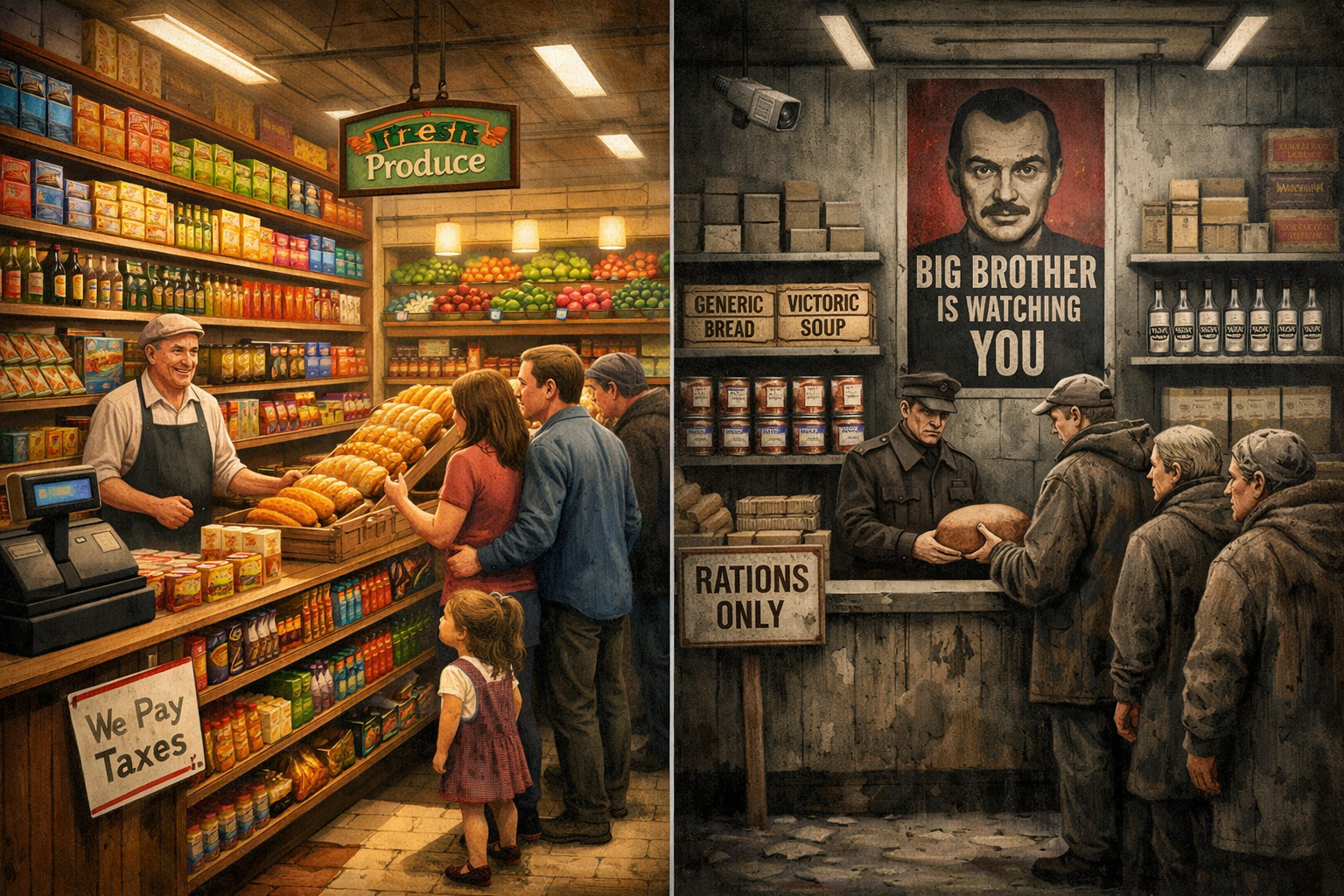
A private grocer stocks shelves according to customer demand. He pays taxes and offers both premium and generic products to keep customers satisfied and returning. Both consumer desire and state coffers benefit.
A government grocer, by contrast, stocks shelves according to bureaucrats’ whims while consuming tax dollars. No revenue is generated, only consumed. Generic products dominate to reduce costs. Customer satisfaction is secondary; shoppers make do with what is available.
In the first case, customer needs are met, and revenue is generated. In the second, customers accept what the government decides is best, while public resources are diverted elsewhere, or public debt grows. As private grocers disappear, revenues decline, and the specter of austerity looms. To the extent that they survive, a two-tiered system of choice and quality prevails.
Risk shifts from the private sector to the public, placing the burden of failure on taxpayers. Grocers no longer compete to offer a variety of breads; instead, customers line up for whatever the government provides, carrying it back to cramped apartments, both purchased with modest state support. The wide selection of alcoholic drinks is replaced with something like Victory Gin. It dulls the senses well enough, but the government will not pay for it.
Imagine such a world: Orwell’s Nineteen Eighty-Four made real. There, the proles accept what Big Brother allows them to have. They love Big Brother—or at least, they must. What choice do they have?


