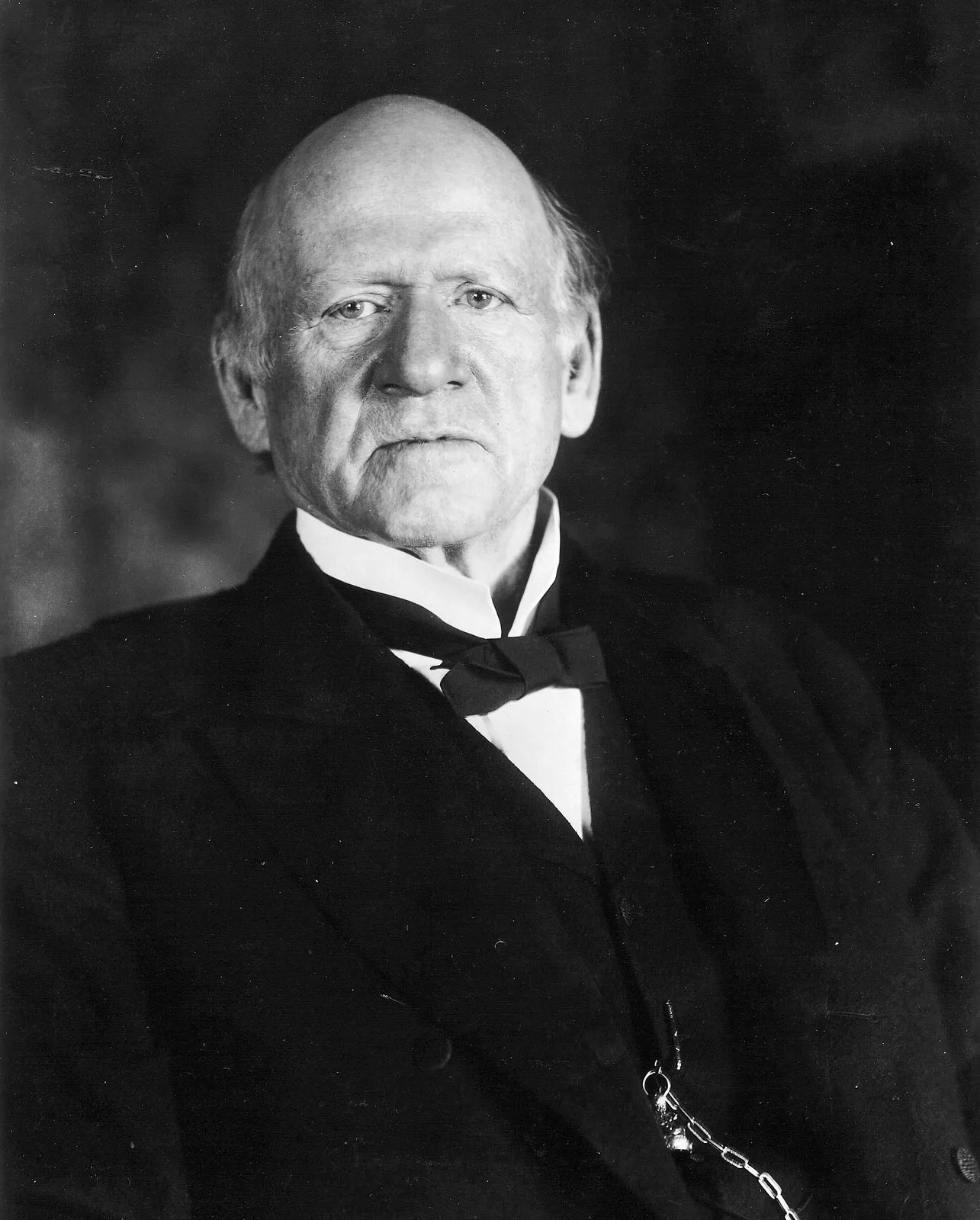
In the lone dissent in Plessy v. Ferguson (1896), Justice John Marshall Harlan articulated one of the most enduring principles in American constitutional law: the color-blind ideal. “Our Constitution is color-blind,” Harlan wrote, “and neither knows nor tolerates classes among citizens. In respect of civil rights, all citizens are equal before the law.” He continued: “The law regards man as man, and takes no account of his surroundings or of his color when his civil rights as guaranteed by the constitutional amendments are involved.”
Readers of this platform know that I am a fan of Harlan’s dissent in Plessy. I have written about his opinion before the recent panic over the abolition of racial gerrymandering. There, I focused on affirmative action and the doctrine of diversity, inclusion, and equity (see Colorblindness and Blindness to Color; Our Colorblind Constitution: What Justice Harlan Can Teach Justice Jackson About Equality and Fairness; The Constitution is Colorblind—So Why Do Democrats Insist that the Country is White Supremacist?). I also applied the facts of Plessy in critiquing the absurdities of transgenderism and transracialism (see The Strange Essentialisms of Identity Politics). I don’t agree with all of Harlan’s opinions, but there are a number of them I wholeheartedly agree with.
In addition to Plessy, the “Great Dissenter” disagreed with the Court’s decision declaring the Civil Rights Act of 1875 unconstitutional, arguing that Congress had the authority to prevent private individuals from discriminating against black citizens. In Lochner v. New York, Harlan opposed the Court’s decision to strike down state economic regulations limiting labor hours, rejecting the use of “substantive due process” to invalidate worker protections. He also dissented in Downes v. Bidwell, arguing that the Constitution and Bill of Rights should fully apply to residents of newly acquired US territories.
Where I disagree with his judgment most stridently is in Jacobson v. Massachusetts, in which Harlan wrote the majority opinion upholding a state law mandating vaccinations during a public health outbreak. He argued that individual liberty is not absolute and that states may enforce reasonable health regulations to protect public safety. This decision was used later in Buck v. Bell, which upheld compulsory sterilization laws for people labeled “unfit.” That opinion was written by Oliver Wendell Holmes Jr. and became infamous for the line, “Three generations of imbeciles are enough.” Harlan was no longer alive when that decision was handed down, so I cannot say for sure he would have agreed. But he did establish the precedent that made the decision possible.
At any rate, in Plessy, Harlan rejected the notion that the state could impose racial classifications that divide citizens into separate legal or social categories, even under the guise of equality. Harlan got this one right. So should we; we should all reject this notion. The justice warned that such distinctions stamp one race with a “badge of inferiority” and arouse race hate by embedding racial consciousness into law. Today, Americans are rejecting racial classifications. And Southerners are leading the way.
The resistance to equality of suffrage is fierce. The resisters—the party of the Slavocracy and Jim Crow, and today the Administrative State, that is the Democratic Party—tell us that the color-blind idea is racist. Antiracism, they insist, requires subjecting the fate of individuals to racial classification. If the inversion sounds familiar, that’s because it is. We have heard such things before. “All animals are equal, but some animals are more equal than others.” That was the pigs’ slogan in George Orwell’s Animal Farm. In his Nineteen Eighty-Four, Orwell suggested more: “War is peace,” “Freedom is slavery,” and “Ignorance is strength.”
The principle of colorblindness, rooted in the Reconstruction Amendments and the ideal of equal citizenship, provides a powerful framework for critiquing modern racial gerrymandering—particularly the deliberate creation of majority-minority voting districts. When electoral maps are drawn to ensure that a racial or ethnic group constitutes a numerical majority in a district, the state engages in precisely the sort of racial classification Harlan condemned. It sorts citizens by skin color, assigns them to political categories, and allocates opportunities for representation on that basis. Far from transcending race, such practices institutionalize it as the central feature of the electoral process.
* * *
Harlan’s logic rests on a fundamental rejection of racial castes in civil and political life. We must pursue his logic. The Fourteenth Amendment, he argued, elevated all citizens to equal status before the law, erasing the legal relevance of prior servitude or racial origin in determining citizenship rights. Voting and fair representation are quintessential civil rights. To draw district lines so that one group is “packed” into majority-minority districts while others are dispersed is to treat voters not as individuals but as members of racial blocs whose interests are presumed to be monolithic and permanently divergent.
To accomplish this, the government must first identify citizens by race and hypostatize the resulting categories—an inherently divisive enterprise (not to mention fraught with imprecision)—then engineer boundaries to achieve racially predetermined outcomes. This process transforms elections from a contest of ideas and individual preferences into racial bean-counting. But this is not merely a fallacious enterprise. The racial bean-counting is about obtaining and perpetuating partisan political power. (See Democrats in Full Meltdown Over Tennessee’s Redistricting Law; The Project to Establish Voting Rights on Rational Grounds Thwarts Progressive Power Grab; Louisiana v. Callais and the Politics of Selective Collectivism.)
Such districts reinforce the very racial consciousness Harlan sought to eliminate. By implying that black voters need “black districts” to achieve effective representation, the practice suggests that cross-racial coalitions are insufficient and that political destiny is tethered to ancestry. It echoes the caste system Harlan opposed: separate political spheres for separate races. Traditional districting principles—compactness, contiguity, respect for political subdivisions, and communities of interest defined by shared economic or social concerns rather than skin color—are subordinated to racial quotas. The result is bizarrely shaped districts that prioritize race above all else, as the Supreme Court recognized in Shaw v. Reno (1993), when it subjected such plans to strict scrutiny.
Proponents of majority-minority districts argue that they remedy past discrimination and ensure minority voices are heard in a system historically dominated by majorities. Yet the color-blind principle, if integral, does not bend for remedial purposes. The Constitution, on his reading, forbids racial classifications in the allocation of civil rights regardless of the benevolent intent behind them. Moreover, we are first and foremost individuals.
Using race today to engineer outcomes risks entrenching the very thinking the Reconstruction Amendments aimed to eradicate. It tells citizens that the government views them primarily through a racial lens and that fair play requires perpetual racial balancing. This perpetuates division rather than fostering the common citizenship Harlan envisioned, in which “the humblest is the peer of the most powerful” without regard to color. But progressives want Americans to see the world through a racial lens. This is why they decry color-blindness as racist. They presume racism and then wield racism to right the wrong they presume.
Harlan did not deny the reality of historical injustice or racial prejudice. Nor do we. But like the justice, we believe that the proper constitutional response is to forbid the state from acting on race categories, not to embed them more deeply in law. A color-blind approach to redistricting prioritizes race-neutral criteria, allowing natural political coalitions to form across racial lines as individuals pursue shared interests. Representation then arises from voters choosing candidates in integrated electorates, not from government-engineered racial enclaves—or ethnic or religious enclaves, a real possibility if the indentitarian scheme established by the Voting Rights Act of 1965 were generalized. I ask the reader to imagine Muslim-majority voting districts.
In an era still grappling with the legacy of race in American life, Harlan’s dissent offers a principled path forward. Southern dissent from the scheme of racial gerrymandering walks that principled path. Opposition to majority-minority districts doesn’t reflect indifference to minority participation; it reflects fidelity to the ideal of a Constitution that “neither knows nor tolerates classes among citizens.”
By treating voters as individuals rather than racial representatives, we move closer to the color-blind republic Harlan defended—one in which political rights are secured without regard to race, and government draws maps for citizens, not for racial groups. We have already missed out on sixty years of progress in this regard. To be sure, we have made progress despite such practices, but not all the progress we could have made. We are now correcting a grave error we inherited from our recent ancestors by leaning into a constitutional principle established by our forefathers.