
Remember when Joe Biden said he decided to run for president because of the “Unite the Right” event in Charlottesville, Virginia? Apparently, there were “very fine people, on both sides” in Charlotteville—at least from the perspective of the Southern Poverty Law Center (SPLC).
Yesterday, FBI Director Kash Patel and the Department of Justice announced an eleven-count federal indictment against the SPLC, alleging that the organization secretly paid over 3 million dollars to individuals connected to extremist or hate groups between 2014 and 2023. The SPLC used shell companies or disguised entities to route those payments, and failed to fully disclose the activities to donors or financial institutions. The charges include wire fraud, bank fraud, and conspiracy to commit money laundering. Patel characterized the conduct as the SPLC “not dismantling extremist groups, but manufacturing extremism,” and accused it of misleading donors about how their contributions were being used.
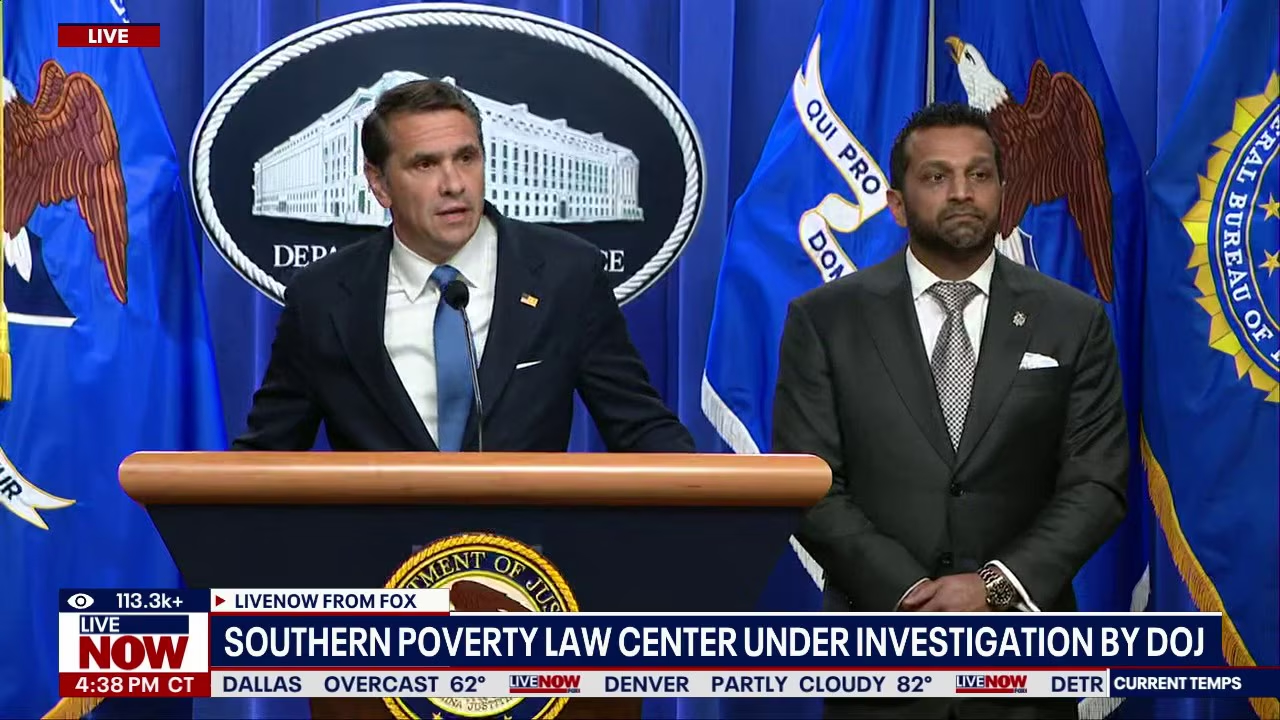
I have written about the SPLC previously. In 2018, I published The Irony of the Southern Poverty Law Center’s Authoritarian Desire, in which I criticize the organization’s double standard, especially its failure to treat black nationalism and Islam as extremist movements. More recently, in 2023, I published Southern Poverty Law Center Defames Parents Invested in Safeguarding Children, which defends the parents’ rights group Moms for Liberty against the SPLC’s attempt to designate that organization as a hate group. The SPLC manufactures hate groups to maintain the perception on the left that conservative Christianity and white supremacy remain significant threats to ethnic, religious, and sexual minorities.
In a twist that would make even the most jaded satirist blush, the very organization that once lectured the nation about spotting “hate” now stands accused of secretly funneling millions to the very extremists it claimed to be fighting. While the SPLC busied itself branding half the country as bigots and elevating Charlottesville into a sacred parable of American wickedness, it was apparently writing checks—through layers of shell companies—to the very dragons it professed to slay. The irony is almost poetic: the self-appointed guardians of tolerance didn’t just fail to dismantle extremism—they allegedly helped bankroll it, all while harvesting donations from those who trusted them to do the opposite.


