
Justice Lewis F. Powell Jr. erred in allowing affirmative action for diversity goals in the landmark 1978 Supreme Court case Regents of the University of California v. Bakke. I recognize that he compromised to get that decision (his was the controlling decision). But given that diversity adds no value, it should not have been allowed. The Court has since remedied the Bakke error in several ways, but in the meantime, the nation suffered for far too long. Powell’s decision sanctioned the rise of DEI, which remains determined to shape the future of millions—Supreme Court rulings notwithstanding. Bakke shaped the environment that corrupted higher education.
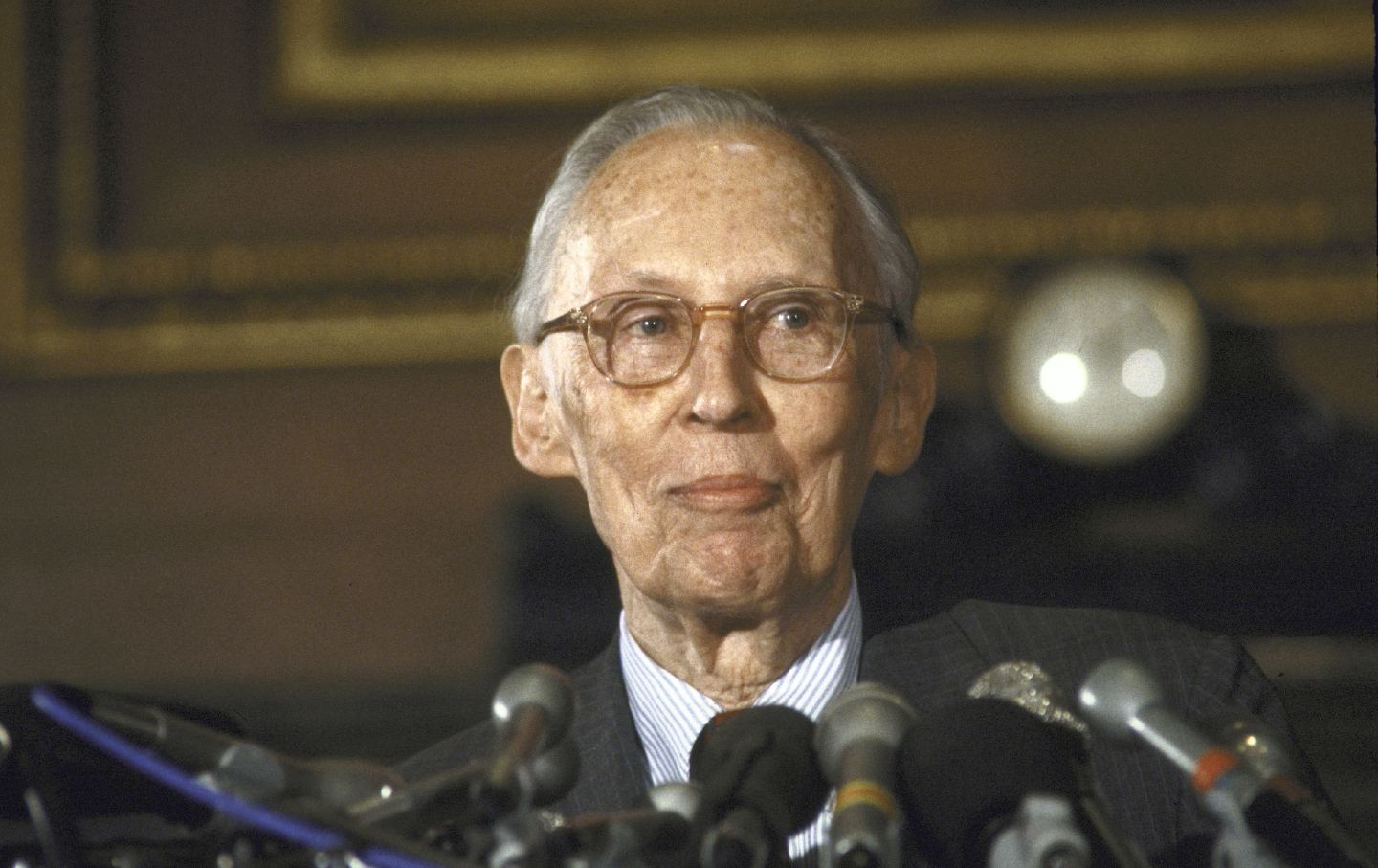
Powell got this part right, however: a university can neither use racial preferences to remedy societal discrimination (presuming this is a meaningful concept) nor provide compensation for historical wrongs. Privileging groups viewed as victims of societal discrimination, he argued, does not justify disadvantaging individuals who were not responsible for those harms. Seems obvious enough, but at the time, discriminating against whites in the present was deemed an appropriate remedy for past discrimination.
The importance of abolishing such a controlling principle cannot be exaggerated. To tell a white kid that he has to meet a higher standard than a black kid, or that he has to give up his place in line for a black kid who is not as accomplished or talented as he is, punishes the white kid for something someone else did. Affirmative action is like arresting a random black man for homicide because a black man somewhere murdered somebody. That is race-based discrimination, a practice antithetical to the colorblind principle at the heart of the Constitution.
As I have explained in several essays (see, e.g., Justice Harlan’s Color-Blind Constitution and the Abolition of Racial Gerrymandering; Our Colorblind Constitution: What Justice Harlan Can Teach Justice Jackson About Equality and Fairness; The Constitution is Colorblind—So Why Do Democrats Insist that the Country is White Supremacist?), equal treatment and individual justice are foundational to a free society. Treating individuals as if they are personifications of an abstract group is regressive (isn’t it weird that people calling themselves progressives advance regressive law, policy, and process).
Collective punishment is tribal. Modernity transcends such primitive thinking—at the very least, it shouldn’t codify it into law and policy. Affirmative Action should never have happened. Racial gerrymandering should never have been allowed. These practices are un-American. The Executive should compel all institutions to end all diversity programming based on suspect categories today. The only justification for treating individuals in terms of groups should be reserved for natural categories, such as age, gender, or disability, since treating individuals differentiated by biology or accident creates inequality. On grounds of class, ethnicity, or race, it is inherently discriminatory and unjust.
Despite doing something, Powell did not do enough. Perhaps in the moment, this was all he could do. But this is always the problem with compromising principles for expediency: it leads to half-measures that often compound problems in need of solving. Powell gave the tribalists time to institutionalize the doctrine of identitarianism to the detriment of millions of deserving Americans over time. And now we have to blast it out of our institutions, while facing accusations of racism for doing the right thing.


