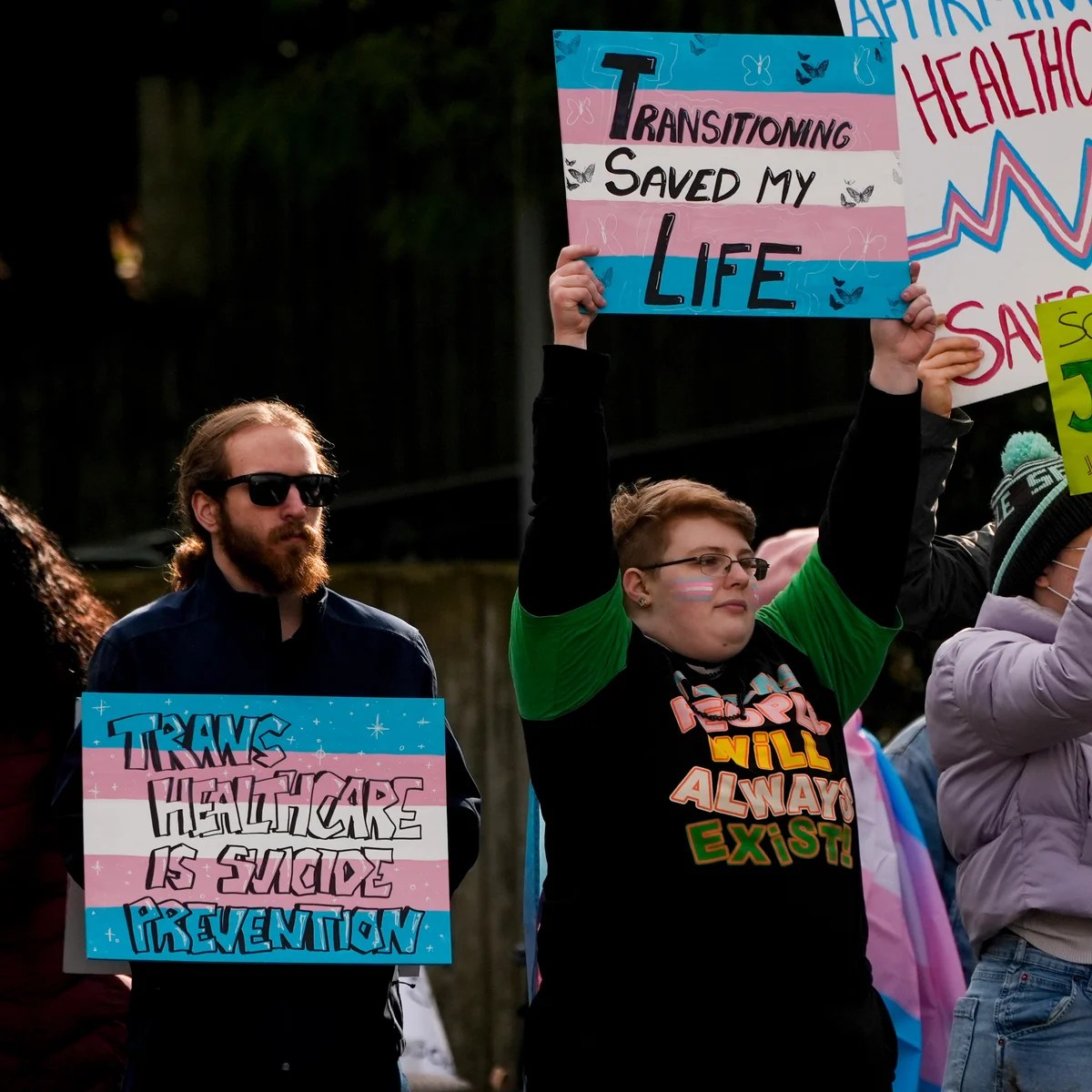
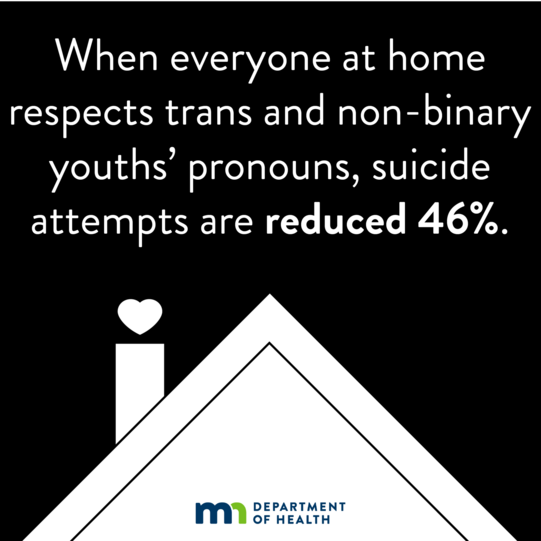
The argument that we must recognize trans-identities because of suicidality—“Do you want a daughter or a dead son?”—is wrong for (at least) three reasons: emotional blackmail, demanding people lie, and misleading the public on the true cause of the high rates of suicide in this population. Emotional blackmail promotes suicidality by valorizing it as a weapon disordered personalities may use to manipulate others to get what they want. We see the same thing with threats of violence against those who refuse to lie about gender. Indeed, suicidality is a threat of self-violence blamed on those who conform to the truth of gender. The reality is that the disordered personality is the true source of suicidality.
Before I get to these three reasons, for perspective, I want to say something about suicidality in minority populations generally. The trans activist argument is that suicidality is high in trans-identifying individuals because of social stigma and rejection. Yet suicide rates for black Americans were lower than for white Americans during the period of Jim Crow. Moreover, while suicide, suicidality, and acts of self-destruction did occur among enslaved people before Emancipation, it was not as common as one might assume given the brutality of slavery. This is an important finding in sociology: populations can endure extraordinarily severe oppression without exhibiting exihibiting elevated rates of suicidality or suicide.
Would the queer community argue that gender nonconforming people are historically more oppressed than black Americans under Jim Crow or chattel slavery? How would they explain the fact that, since the late 1990s and especially after around 2010, suicide rates have increased among black Americans, where before they were lower than for whites, with the sharpest increases occurring among children, adolescents, and young adults? What explains this paradox?
The queer community will blame high suicidality among trans-identifying individuals on alienation from community and family. But suicidality among blacks and mental illness, substance abuse, etc., were lower in the past because individuals conformed to societal expectations. Such conformity was necessary for acceptance by community and family. Community integration, family structure, religious participation, and, crucially, cultural attitudes toward suicide provided the stable environment associated with good mental health outcomes. This last factor is vital. The black community did not promote suicide as an act of resistance or a subcultural alternative to prevailing norms but instead condemned suicide.
* * *
Imagine a white man who demands that others regard him as a black man. Plainly, he is white, so most people would decline to honor his wishes. Suppose he says that if people do not regard him as a black man, then he will kill himself. Should that make a difference? Hardly. A healthy society does not allow people to blackmail others into doing something the community doesn’t believe in. A healthy society expects that the white man must come to terms with the race he was born into. A healthy society does not pretend with the man that he is something he is not and can never be.
Second, it is wrong to demand that people lie or face punishment for telling the truth. It is possible that those who honor the request of a man to regard him as a woman are not lying because they really believe he is (hard to believe, but people are capable of believing the most absurd things). But others know it is impossible, and therefore the demand is that they lie. It is unethical to compel people to lie. It is generally wrong to even ask them to. It is never okay to tell people that they cannot speak the truth. This is the difference between a free society and an authoritarian one.
Third, the appeal to self-harm misattributes the source of suicidality in this population. Research has consistently found that those asserting trans identities have one or more psychiatric comorbidities, including bipolar disorder, major depressive disorder, schizophrenia, and personality disorders—what psychiatry classifies as Cluster B types: antisocial, borderline, histrionic, and narcissistic personality disorders. These illnesses/disorders are all strongly associated with significantly higher suicide rates compared to the general population. more likely to threaten or attempt suicide. The higher suicidality among trans-identifying individuals is not from social stigma surrounding trans identities or resistance to transitioning. It is, moreover, exacerbated by a culture promoting blackmail. When society did not valorize the threat of suicide for this purpose, suicide rates among gender nonconforming individuals were lower.
* * *
There are three things at work here. First, trans is a social contagion in which people are taught to use the threat of self-harm as emotional blackmail. Doctors use the threat to encourage transitioning, from which they profit handsomely. Second, trans activists and the medical industry have moved the locus of suicidality from the illnesses and disorders identified as “gender identity,” an invention of sexology, a project to normalize paraphilias. Third, we know social stigma is not at issue, not only because of the high suicide rates associated with the psychiatric comorbidities (which have grown worse because they are not being treated properly), but also because suicidality is not reduced by transitioning.
This population, whether they transition or not, remains suicidal. That’s explained by the psychiatric conditions associated with transgenderism, not because of trans identification. Telling a mentally ill person to threaten suicide if they don’t get what they want predictably leads to more threats and attempts to harm themselves. The emotional blackmail piece thus makes the problem worse. Moreover, the transition itself plays a role. Realizing that one had made the biggest mistake of his life is expected to increase the likelihood of suicide. Changing his body solved nothing. The suffering of many of those with drastically altered physiology and mutilated genitals is unbearable. Everybody around them betrayed them. They needed help but were instead mutilated and made permanent medical patients. As sociologists have noted for decades, suicide is for many preferable to horror.
* * *
The solution to the problem of trans identification is threefold. First, the medical and psychological industries must stop affirming the delusions of the mentally ill and excusing the behavior or disordered personalities and instead treat the psychiatric condition. In the case of anorexia and cutting behavior, doctors treat the illness. They do not perform bariatric surgery on the anorexic or encourage cutting. The anorexic is not fat. She suffers from a mental disorder. It would be unethical to treat her case any other way, and a physician who affirmed her subjective experience of her condition would face disciplinary action. It follows that doctors and psychologists should be punished with loss of license and prison time for practicing gender affirming care, which is, in truth, gender denying.
Second, we must stop cultural and educational tolerance of trans identification. The government should defund any organization or institution that promotes queer ideology. If promotion of queer ideology persists in public institutions, then the government should shutter them. The state should punish those who groom children to accept perversion. Such persons have no place in a rational and good society. Third, society should not reduce stigma surrounding trans identification (or furry identification, etc.). On the contrary, it should increase stigmatization of paraphilias. Making paraphilias embarrassing and shameful deters others from adopting them.