
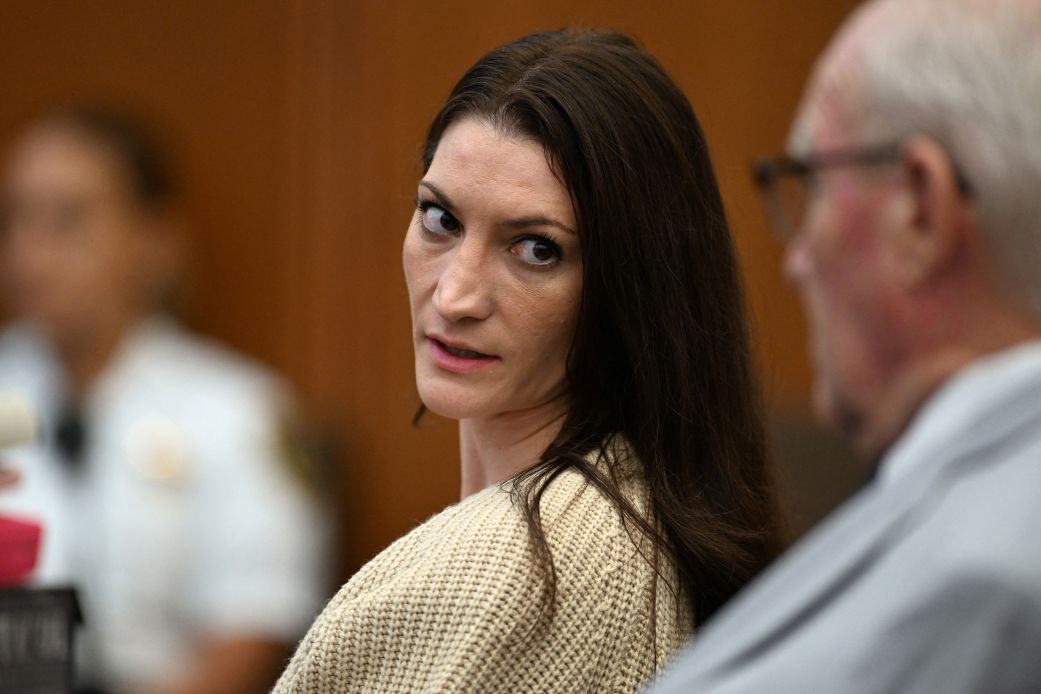
As I hit publish, the jury in the Lindsay Clancy murder trial is deliberating. The criminal justice aspects of the case are interesting. However, the public response to mothers who kill their children is changing in ways that raise interesting sociological questions about crime, gender, mental illness, media, and collective identity. The contrast between earlier high-profile cases of maternal filicide and the contemporary response to Lindsay Clancy is striking. In case one were wondering, it has not always been like this. Those of my age are not wrong to remember that things used to be different. I checked.
Spencer Pratt posted a video about the Clancy case and connects it with larger changes in Western culture, especially in the American context. His video is effective and on point. I highly recommend it. Understanding the situation is imperative if we are going to address a constellation of problems confronting the West. In this essay, I provide a sociological analysis of the situation that aligns with Pratt’s observations. Like Pratt, I have no solutions to the problems he identifies. Even if I did, the political forces arrayed against reason appear too great to overcome. I despair for our civilization.
* * *
Mothers who killed their children were once—and not that long ago—overwhelmingly portrayed as either monstrous figures or tragic women destroyed by mental illness. However, in the latter instance, they were not treated as folk heroes. Today, as the Lindsay Clancy case demonstrates, a mother alleged to have killed her children can become the focus of organized public advocacy, with hundreds of women rallying in support of the accused and framing the case not as a murder but as evidence of a broader failure of maternal healthcare. More than this: as a sign of patriarchal oppression.
The underlying pattern of filicide is differentiated by gender and the age of the child. Overall, fathers account for more filicides across age groups. However, mothers are disproportionately represented among perpetrators during infancy. Fathers, by contrast, are more likely to kill older children. The distinction also appears in the circumstances surrounding the crimes. Paternal filicide involving older children is more often associated with control, intimate-partner conflict, retaliation, or threatened separation. Maternal filicide of infants is frequently associated with postpartum psychiatric disorders. Even then, women have not historically looked upon women who kill their children because of severe psychiatric conditions as a reason to celebrate them.
I was asked recently if serial killers ever sought medical help. The question was prompted by my comparison of Clancy’s actions to those of serial killers to note the difference in societal reaction. The answer is yes. As a teenager, Edward Kempter murdered his grandparents. But after psychiatric intervention, he was freed and went on to murder several women. Ted Bundy, responsible for murdering numerous women, sought psychiatric help for intrusive ideations while he was murdering women. Few people would defend the actions of Kemper or Bundy because they sought psychiatric help and somehow came up wanting. Clancy also sought psychiatric help, yet her case is blamed on the failure of psychiatry.

The history of notorious maternal-filicide cases illustrates how dramatically the interpretation of such crimes can differ according to the perceived motive and psychological condition of the perpetrator. Clancy stands out. But there is another similar case. Andrea Yates, who drowned her five children in 2001, became the paradigmatic example of maternal filicide associated with postpartum mental illness. Her history of depression, psychosis, and schizophrenia, together with her delusional belief that Satan had corrupted her children, eventually led to a retrial in which she was found not guilty by reason of insanity. Most people found Yates’ actions inexcusable, yet the National Organization of Women (NOW) championed her cause. This was an early sign of what was to come.
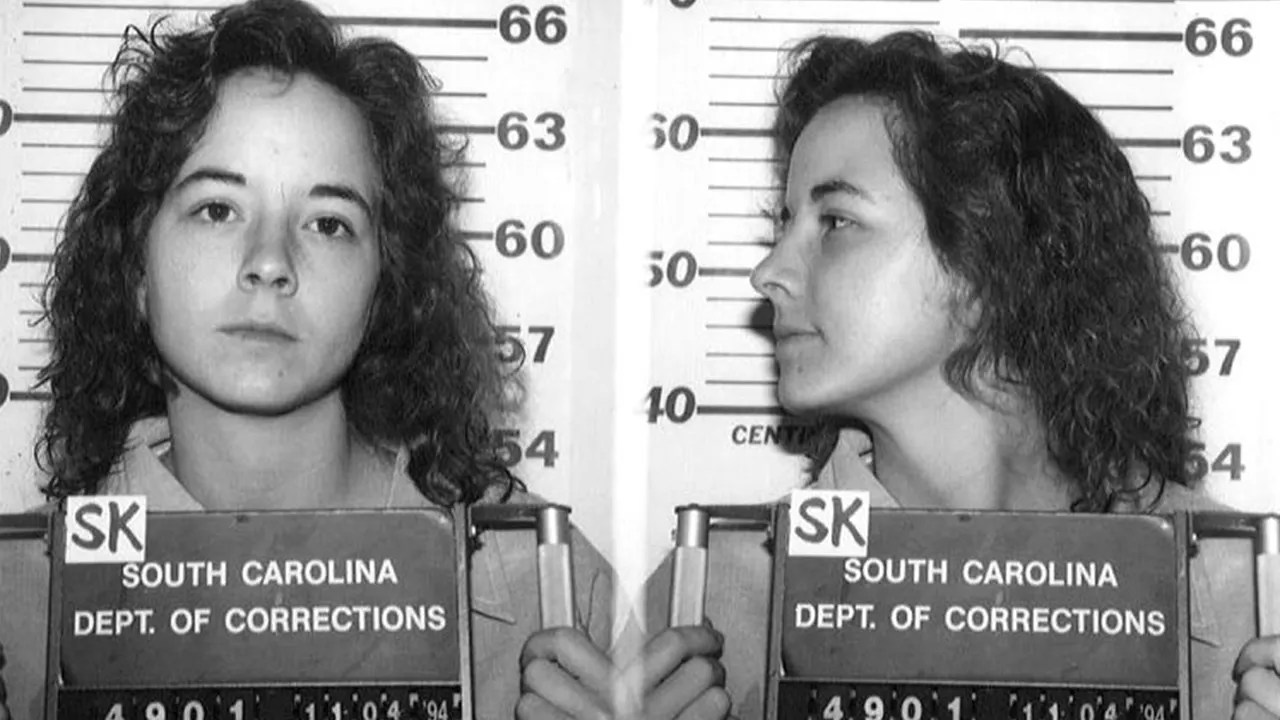
Other cases produced the opposite reaction. In 1994, Susan Smith drowned her two young sons after becoming involved with a man who did not want a relationship with a woman who had children. In 1983, Diane Downs murdered her daughter and attempted to murder her other two children while pursuing a relationship with a man who did not want children. In both cases, the crimes were interpreted primarily as acts of selfishness rather than manifestations of severe mental illness. Public reaction was correspondingly condemnatory and punitive.
It is difficult to conclude that killing children for men who do not want them is also not a sign of psychiatric illness. Likewise, the defense of Clancy is not only that she suffered from mental illness, but also that she was overburdened by the responsibility to care for her three children. Is it mental illness or liberation from motherhood that draws the empathy of other women? Is the mental illness angle a rationalization of woke feminists in the age of radical gender politics?
That sympathy depends heavily upon the perceived meaning of the act, as well as its political significance, is an easy observation. The woman who is understood to have been overtaken by psychosis may be reconstructed as a victim of illness. The woman who appears to have acted rationally for selfish reasons is reconstructed as a moral monster. She is, in effect, Cathy Ames, the main villain and a central character in John Steinbeck’s 1952 novel East of Eden. At the same time, the burden of women, framed by feminism as gendered oppression, seems to underpin a lot of the empathetic response. This is a new development. After all, wishing to be free from the burden of motherhood is itself an act of selfishness.
The cases of Darlie Routier and China Arnold demonstrate additional possibilities. Routier’s conviction in 1997 for stabbing her sons to death, before cutting her throat and arms, produced an enduring true-crime controversy centered largely on forensic evidence and questions of innocence. Arnold’s 2005 killing of her infant daughter in a microwave produced intense public revulsion because the circumstances appeared to involve domestic conflict rather than an obvious psychiatric crisis. Does putting an infant in a microwave not suggest mental illness? What mother does that over a spat with her boyfriend?
Arnold is not the only child murder case involving a microwave. In 1999, Elizabeth Renee Otte killed her five-week-old son by putting the child in the microwave. Investigators determined that Otte had mistaken the infant for a bottle of milk while experiencing an epileptic seizure. She was convicted of the lesser charge of involuntary manslaughter and served five years in prison. Critics and skeptics rejected the epilepsy defense, arguing that Otte had intentionally harmed the baby out of jealousy or postpartum detachment. Although there was sympathy for Otte, there was no national movement defending her because she suffered from mental illness. Postpartum detachment was not yet an acceptable excuse for murdering one’s child.
* * *
What makes the Lindsay Clancy case sociologically distinctive is not that people expressed sympathy for a mother accused of killing her children. Sympathy existed in earlier cases, most notably that of Andrea Yates. The change lies in the form that sympathy takes.
The sociologist seeks to explain and understand changes in the social environment (at least this one does). This requires exploring the changing framing of social problems, such as the downward redefinition of serious deviance, and the phenomenon of mass psychogenic illness (moral panics, etc.), as well as dynamics of social contagion.
For example, there have always been men who believe, or at least claim, they are women, but how the public understands such delusional thinking is altered by ideology. The shift in understanding brought about by queer politics not only affirmed and substantially normalized the delusion but opened space for more men to believe they are women. Not just men. In fact, the social contagion has affected girls and women much more than men. Since the emergence of postmodernist politics, there has been a sharp rise in queer identification across genders.

In the Clancy case, support has taken the form of organized collective action, including demonstrations by hundreds of women linked explicitly to questions about maternal mental health and healthcare. This has been accompanied by a flood of TikTok videos by women not only expressing sympathy for Clancy but also expressing loathing for their own children and citing the burdens of motherhood to justify it. The case has consequently become more than a dispute about one woman’s culpability. For some supporters, Clancy has become a symbolic struggle over the treatment of mothers, psychiatric care, and the medical system itself. More than this, it has become a political cause.
This raises a broader question: why does this form of collective identification seem much more visible today than it was during the period in which many of the earlier famous cases occurred? This is the same question one asks when trying to understand why gender identity disorder is no longer treated as a disorder at all. Today, the dysphoria experienced when believing an impossible thing demands medical and even public affirmation of the delusion—with the entailment that a greater number of people believe the impossible thing. The risk that Clancy will inspire more mothers to murder their children is a very real problem.
One important answer is the transformation of the media environment. Here, the problem is a dramatic change in the consumption of true-crime programming, around 80 percent of which is consumed by women, disproportionately white middle-class women.
True crime itself is hardly a new phenomenon among women. Women’s engagement with accounts of crime extends back centuries, from execution broadsheets and sensational literature to nineteenth-century newspapers. The Whitechapel murders enthralled the public. In the twentieth century, television programs such as Unsolved Mysteries and Dateline NBC helped establish the modern true-crime genre.
Since the 2010s, however, podcasts, streaming services, Facebook, Reddit, TikTok, and other digital platforms have transformed true crime from something primarily passively consumed into something audiences can actively participate in. Women become detectives who can organize investigations into crime cases. They can even start their own podcasts about them.

There is no doubt in my mind that this is in part what lies behind the popularity of Candace Owens and her conspiracy theories surrounding the Charlie Kirk assassination. The twist trope is central to true-crime storytelling. The twist, common in crime shows, movies, and novels, is a sudden shift in a case in which the prime suspect, the timeline of events, or the culprit’s identity turns out to be completely different from what investigators or the public first believed. The straightforward theory of the case, however overwhelming the evidence, cannot be what happened.
For Owens and her followers, a grand conspiracy must be behind Kirk’s murder. The alleged murderer, Tyler Robinson, must be a patsy. Knowing this plays to a female audience, Owens generates revenue by substituting a bad pulp fiction account for an open-and-shut case of political assassination. While right-wing political commentary traditionally skews heavily male, Owens commands one of the highest proportions of female listeners in the conservative digital space. For Owens’s followers, Zionists lurk at the heart of the conspiracy. For those defending Clancy, it’s the husband, the oppression of motherhood, or the medical industry. Often all three.
The key difference is the movement from a largely one-way media system to an interactive one. During the 1980s, 1990s, and early 2000s, Susan Smith’s case was mediated primarily through television networks and newspapers. The public could debate the case privately, but the infrastructure via which thousands of strangers could organize themselves around a common interpretation was comparatively minimal. The media largely determined the available narrative frames: the perpetrator could be presented as a monster, a tragic mentally ill woman, or something in between. This is no longer the case.
To be sure, mass psychogenic illness and social contagion have been a perennial human phenomenon. Older readers likely remember the 1980s Satanic Panic phenomenon. There are many more examples. However, in the age of the Internet, contagions spread rapidly and intimately, and affect a much larger proportion of the population. We see this in the spread of Tourette’s or rapid-onset gender dysphoria through adolescent females who gather in chatrooms. Crazes and fads have long been a problem even before the Internet, but the Internet has accelerated the spread of memetic contagions.
* * *
However, given the perennial problem of social contagion, something more must be at work to fully explain the phenomena sociologists confront. That something more is the emergence of postmodernist ideology. The shift in feminism from gender equality and equity to woke rhetoric of “oppressor” and “oppression,” often framed as the “perpetrator-victim” dynamic, has changed the interpretative framework and altered mass perception. Thus, one must consider socialization in a novel worldview.
The interactive nature of digital media and the appearance of woke politics have altered the audience’s interpretation of crime narratives. A person who rejects the dominant narrative no longer must remain an isolated audience member. She can find thousands of others who share her interpretation, communicate with them continuously, produce alternative narratives, and organize collective action. The result is what has been described as an “affective public,” a network organized less around formal membership than around shared emotional identification. The corruption of postmodernism has changed the character of emotional identification. This transformation explains why contemporary maternal-filicide cases have become vehicles for forms of self-advocacy that would have been difficult to organize in the pre-digital media modernist environment.
Women who identify with the experiences of pregnancy, childbirth, postpartum depression, psychiatric treatment, or maternal exhaustion see a case such as Clancy’s not merely as the story of another person. They see it as a threatening illustration of something that could, under sufficiently extreme circumstances, happen to a woman like themselves. The accused mother consequently becomes a symbolic figure through whom broader grievances about motherhood and healthcare can be expressed.
Modernist understanding of gender relations and the role of women, namely the importance of the nurturing mother and child protection, has been derailed by feminized mass culture, gender studies and other postmodernist dogmas, and woke politics. These beliefs and politics find expression through digital media with widespread effects. We see this phenomenon in the transference of motherly instinct from children to immigrants, racial minorities, and the trans-identified, shifts noted by scholars Heather Mac Donald and Helen Andrews (for a more general account, see Mary Eberstadt’s Primal Screams: How the Sexual Revolution Created Identity Politics).
Socialized in a radically different worldview, the public is less likely to ask, “Who did it?” or “Why did she do it?” and more likely to ask, “What does this tell us about the society in which we live?” The well-educated layperson, armed with gender doctrine acquired during undergraduate education, not only learned in the major (criminal justice, ethnic studies, psychology, women, gender, and sexuality studies, etc.) but in general education, becomes an amateur social theorist and armchair criminologist. True crime becomes a vehicle for discussing gender expectations and the burdens of contemporary motherhood, institutional failures, medical authority, and psychiatric treatment.
The effect extends beyond true-crime sensationalism. We see similar shifts in mass interpretation of lethal police-civilian encounters, for example. The false claims of Black Lives Matter and mass media dissemination of academic language (“systemic racism,” etc.) around 2010 find people interpreting phenomena easily explained by benchmarks and situational factors they can’t grasp, such as the fact that blacks are overrepresented in serious crime and therefore more likely to confront law enforcement, as proof of white supremacy.
More broadly, we see it in the partisan attitudes of progressive women and feminized males towards government action. The censorship of information, the deplatforming of dissenting experts, lockdowns, mandatory masking, and other public health mandates become noble under progressive administrations. Mothers took to social media to share images and videos of marching their children to clinics to be jabbed with experimental mRNA shots. Pregnant women deliberately overdosed on Tylenol when Donald Trump suggested a link between autism and the over-the-counter painkiller.
* * *
The same digital structures that popularize alternative or previously marginalized interpretations also produce increasingly insulated communities of belief. When people find it psychologically difficult to accept that an apparently loving mother could deliberately kill her children, online communities provide explanations that protect the preferred image of the mother—or, alternatively, of the burdens of motherhood, which are now defined as arbitrary and oppressive. Claims that the husband was responsible, that evidence was fabricated, or that authorities concealed the truth can circulate alongside legitimate criticism of the prosecution or healthcare system. The sensational tends to dominate. Algorithms reinforce these interpretations by repeatedly exposing users to material that confirms their existing or preferred beliefs.
I want to draw an important distinction between skepticism and denialism. Skepticism about a prosecution, particularly in a complicated psychiatric case, is entirely legitimate. But a community can move beyond skepticism when emotional identification makes guilt itself psychologically unacceptable. Mapping conspiratorial worldviews or identity politics onto emotional identification invites people to entertain the most absurd things. At that point, the question is no longer simply whether the evidence establishes guilt. The accused becomes someone whom the community feels compelled to defend because accepting her guilt would threaten a larger moral or social identity. Clancy is no longer guilty; an abstraction becomes the culprit.
This has led to some frightening online confessions from mothers about their feelings towards their own children and the celebration of filicide by OBGYNs. Noa Sterling, a Canadian physician, posted a video in which she said she was “proud” of Clancy. “I don’t know what else you could’ve done. You [Clancy] were far beyond what should be expected of a single individual.” The response has been fierce. Sterling is accused of erasing the victims in the case, and critics and medical peers are actively demanding that the medical board review her actions and medical license. The fact that an OBGYN felt safe making and sharing a video praising a child murderer is an indicator of her profession’s corruption by woke doctrine.
* * *
The contrast between Lindsay Clancy and women such as Susan Smith is therefore revealing. In the latter and similar cases, the dominant public interpretation was that the women who sacrificed their children for their own interests were bad people. There was little basis for a collective identification with them as victims. In the Yates case, by contrast, severe mental illness provided a powerful alternative framework: the mother could be understood simultaneously as the perpetrator of an appalling act and as a victim of a psychiatric disorder. Taking up her case, NOW signaled more than that. Yates was the canary in the coal mine. The Clancy response extends this latter framework into the digital age, where sympathy for a child killer can become an affective public. An individual criminal case becomes a proxy struggle over an entire category of social experience, with empathy putting women in Clancy’s wheelchair.
The deeper sociological question, then, is not simply why people defend women accused of killing their children. It is why particular cases produce collective identification. The answer lies in understanding the interaction among the characteristics of the crime, cultural understandings of motherhood and mental illness, the legitimacy of psychiatric explanations, and the structure of contemporary digital media.
Maternal filicide remains one of the most morally shocking forms of homicide because it violates one of the strongest cultural expectations surrounding motherhood: that a mother should protect her children. That expectation is not only cultural but a product of natural history. Natural history cannot be wished away with the jargon of social constructionism.
Nor does it appear that a majority is prepared to wish it away. The expectation of maternal care has not disappeared altogether, which is why the rest of us look upon these developments with horror. What has changed is the capacity of audiences to construct competing explanations for its violation and to organize collectively around those explanations to promote maternal filicide. The minority that postmodernism has corrupted is not small. Nor can we be sure it won’t grow larger.
The historical comparison therefore indicates a shift from spectatorship to participation amid ideological and technological change. Earlier audiences could sympathize with, condemn, or debate a mother who killed her children, but they were largely separated from one another. Moreover, traditional culture reinforced the natural history of motherhood. Contemporary audiences can form and easily spread a counter-narrative, and transform sympathy into a social movement valorized by alternative epistemic communities.
In this sense, the pathological response to Lindsay Clancy tells us as much about the transformation of the public sphere as it does about maternal filicide itself. The crime is individual, but the reaction to it has become increasingly collective, identity-laden, and participatory.
What can we do about it? As I said at the start of this essay, the forces arrayed against reason appear overwhelming. How does a society undo decades of woke feminism? However, in their own personal situation, men can do something about it: avoid women who support Lindsay Clancy. A man might consider whether his children are safe around such a woman, especially if she is posting images and videos to social media of her loathing her children. Women can do something about it, too: criticize other women who rationalize child murder, even if it strains friendships. Society cannot let this minority grow. Shame remains a powerful weapon at our disposal.


