Also, What’s Up With People Still Wearing Masks?
Most people who died with COVID (SARS-CoV-2) also had other conditions. The Centers for Disease Control and Prevention (CDC) noted that approximately 6 percent of certificates listed COVID as the sole condition. What other conditions were present among the rest of those who died? Diabetes, frailty, heart disease, respiratory conditions, etc. Official guidance treated COVID as the underlying cause when it was thought to have initiated or significantly contributed to the fatal chain of events. However, this practice overcounts deaths in a high-comorbidity syndemic. It is a judgment call, and many things can affect judgment.
Researchers at Stanford University analyzed 57 million US death certificates. They found that reclassification almost doubled COVID assignments, while classifications that weight multiple listed causes (rather than assigning 100 percent of the death to a single underlying cause) reduced the COVID burden by 44–63 percent. In other words, around half of reported deaths were due to other factors.
Another study by Stanford researchers, “Large-scale assessment of socioeconomic, demographic and health system structures with US county excess mortality, 2020-2024,” concluded that the true pandemic burden of COVID-19 in the US for 2020–2023 was likely less than half—or even around a third—of the officially assigned deaths. They estimate around 100,000 deaths under age 65 and 300,000 among those 65 and over, for a cumulative total on the order of around 400,000.
When one considers years of life lost (many decedents were elderly with limited remaining expectancy—indeed, the average age of COVID deaths was well above the average life expectancy), as well as whether excess mortality itself includes substantial indirect effects from responses rather than the virus alone, the death toll usually cited is almost certainly exaggerated by a considerable amount.
Considering all these matters, the death toll was closer to a few hundred thousand direct COVID deaths rather than the official one or more million. Coding practices, multimorbidity weighting, and the distinction between deaths primarily caused by the virus versus those in which it played a lesser or incidental role drove the overestimate. But that is not the only driver of the overestimates. The profit motive played a significant role. And politics. The pandemic response was a power grab by the corporate state.
When confronted with the Stanford studies, defenders of the pandemic response pivot to excess deaths. Excess deaths measures are purported to capture direct COVID deaths plus indirect effects (overwhelmed health systems, delayed care for other conditions, behavioral changes). The public is told that this makes excess death measures more comprehensive than reported COVID counts.
Of course, excess deaths do not comprise a pure measure of SARS-CoV-2 fatalities. Methodological choices matter. Those concerns aside, estimates for excess deaths for the first full pandemic year (March 2020–February 2021) indicate around 656,000 people died with COVID. The second year statistics are somewhat lower, around 586,000. This yields a total of 1.2 million excess deaths for the two years.
However, even if one were to accept the numbers, it is rational to suspect that a sizable share of excess deaths, especially early on, may have stemmed from pandemic responses or other causes rather than the virus itself. Meta-analyses of invasive mechanical ventilation (IMV) outcomes in COVID patients typically report case-fatality rates around 45–52 percent overall (higher early in the pandemic and in older patients). By contrast, mortality among non-ventilated hospitalized COVID patients was substantially lower. Ventilator-associated pneumonia (VAP) was a problem.
Moreover, early caution against routine corticosteroids contributed to many deaths. When doctors finally administered corticosteroids, they reduced 28-day mortality by about one-third among patients on IMV. The WHO issued strong recommendations in September 2020 for systemic corticosteroids in severe and critical COVID-19, but retained a conditional recommendation against them in non-severe disease. By then, many patients had died.
If COVID deaths are exaggerated by death certificate processing, which the evidence indicates they were, then the excess deaths beyond what can be attributed to COVID, and even COVID-related measures, indicate that something beyond COVID and COVID-related measures killed hundreds of thousands of people in the aftermath of the Pandemic. Indeed, excess deaths did not return to normal in the two years (2022-2023) following the first and second years of the pandemic. It was not until 2024 that the numbers returned to normality (assuming the pre-COVID baseline). What occurred during this period?
I think readers know. The rise and decline of the mRNA jab. Confirmed and well-documented risks of the mRNA COVID-19 vaccines (primarily Pfizer-BioNTech and Comirnaty and Moderna and Spikevax) are associated with serious adverse events. Large-scale monitoring systems (VAERS, VSD, international cohorts covering tens to hundreds of millions of doses) have characterized these over years of use. Myocarditis and pericarditis (inflammation of the heart muscle or its outer lining) are established serious risks linked specifically to the mRNA platform.
Prominent critics of the mRNA platform include cardiologists such as Peter McCullough and Aseem Malhotra, early mRNA researcher Robert Malone, and others who have argued that the absolute risks of serious adverse events (especially cardiovascular ones) are higher than official figures suggest. Moreover, myocarditis cases are more frequently severe or leave lasting damage than commonly acknowledged by the industry. Re-analyses of the original Pfizer and Moderna randomized trials (notably Fraiman et al.) found an excess of serious adverse events that, in their view, approached or exceeded the reduction in COVID hospitalizations in the trial populations. In other words, Big Pharma knew the risks and concealed or obscured them.
The dark reality of the pandemic response is revealed by the broader signals of excess mortality, sudden deaths, or multi-system harm after rollout that are under-investigated or suppressed: autopsy case series, ambulance data, all-cause mortality trends—that is, evidence of net harm in certain groups. Additional concerns include residual DNA contamination, prolonged spike protein expression, frameshifting, lipid nanoparticle effects, or potential for autoimmune or oncogenic risks.
* * *
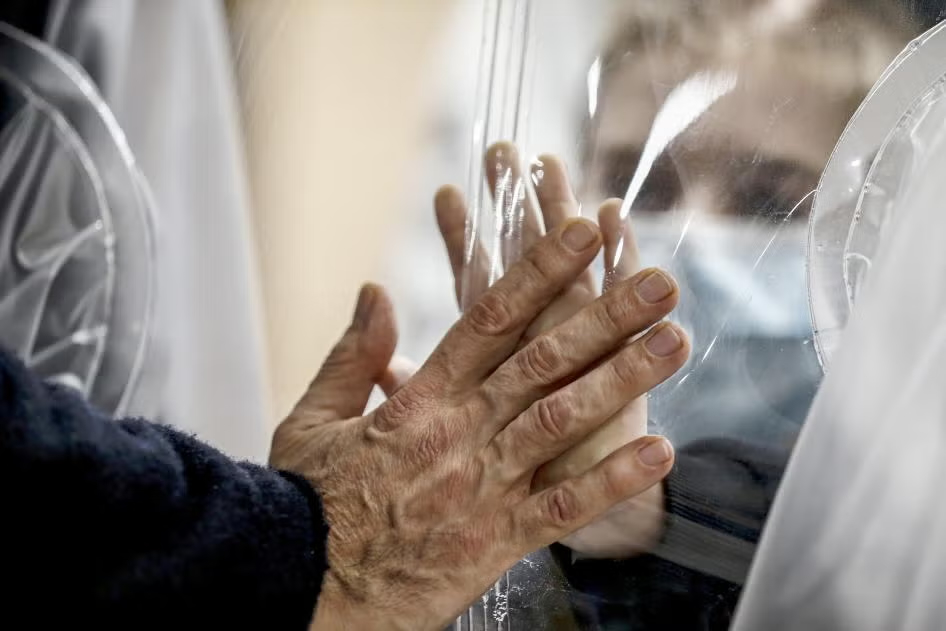
There’s another matter related to the pandemic response worth commenting on. This is the question of masking. You may have noticed that people are still masking. If the threat of COVID has passed, then why do people continue to wear masks? Moreover, since it has become widely understood that cloth and surgical masks provide little to no protection from viruses, what is the point of wearing masks even if the COVID threat were elevated?
In a late September 2026 episode of Real Time with Bill Maher, in the context of the ongoing controversy at a Massachusetts lesbian bar (Last Ditch) that faced intense backlash for making one night a week mask-optional in 2026, plus broader observations of people still masking at DSA meetings and on the street years after the acute pandemic phase, Maher asked neuroscientist Andrew Huberman to explain.
Huberman charitably responded that while some have medical reasons, most do not. “It’s a political statement,” he said. He linked it to symbolism (referencing Banksy-style protest imagery) and noted masks also serve as a form of anonymity, as well as social signaling. Masks are tribal; they signal affinity. Huberman is not speculating. There is substantial evidence that mask-wearing became (and in some circles remains) a form of political/social identity signaling rather than purely a health decision.
During the pandemic, multiple studies documented strong partisan divides on the question. Mask use correlated more strongly with political affiliation than with local COVID severity or policy. It functioned as a visible social identity marker: people cooperated more with those who matched their masking behavior, with Democrats and Republicans showing clear differences in attitudes and compliance. Mask-wearing signalled loyalty to progressive ideology, where faith in medicine is of a religious quality. We saw that as well with receptivity to mRNA jabs. Progressives marched their children to doctors’ offices and pharmacies to get their children jabbed and shared pictures of the moment on social media. Dr. Anthony Fauci became a saint.
Medical reasons still exist for a minority, such as immunocompromised people and specific high-risk situations (this presuming that masking offers protection). To clarify, then, the claim is not that no one has a health reason, but that for many visible, ongoing cases in non-medical contexts, the primary driver is political and symbolic. In progressive or left-leaning activist spaces (e.g., DSA meetings, identity-focused venues), continued high rates of masking long after mainstream public health guidance shifted and excess mortality largely normalized cannot be explained solely or even mostly by individual medical risk. It aligns with it becoming a tribal or ideological marker—similar to other visible signals of group belonging.
We see this in the rationalizations of left-wingers when the COVID pandemic comes up for discussion. I was told in a recent encounter that the BLM protests were not problematic, despite churchgoers being kept from services, because a large majority of protestors were wearing masks. The claim about mask-wearing is true. But for what purpose were BLM protestors wearing masks? The type of masks worn is revealing. For the most part, protestors wore bandanas or cloth masks with political slogans on them (“Black Lives Matter” and, ironically, “I can’t breathe”). Surgical masks appeared much less often (in fact, the government dissuaded the public from wearing surgical masks because of shortages), and N95/respirators rarely appeared.
Given that bandanas, cloth masks, and surgical masks do not protect the wearer from transmitting and receiving the virus, what other function might masks serve beyond signalling tribal affinity? As readers know, the protests were not peaceful, but riotous. Rioters often wear masks to conceal their identity. Taken together, shared anonymity and tribal affinity represent a unified political front. BLM was a color revolution, its purpose: to disorganize civil society. Those who continue to wear the masks several years out from the pandemic indicate the continuation of the political project.
* * *
The politics of masking matches broader patterns of how pandemic behaviors became and remain polarized and sticky as cultural signals. Bringing this back to the first part of this article to illustrate, those who need the COVID Pandemic to be as bad as it possibly can be will treat the CDC estimate of more than one million people who died from the virus as if they are sacrosanct. They need for there to be millions of deaths to justify authoritarian desire.
One will find the attempt to educate them about statistics futile. What one is likely to get instead is a challenge: “What would you have done differently?” Not that what I would have done matters in clarifying facts, but I do know what I would not have done. I would not have locked down society, forced people to wear masks and socially distance, derailed the developmental trajectory of millions of children, or made continued employment or organizational presence dependent on whether the individual was jabbed with an experimental mRNA vaccine we knew years earlier causes systemic inflammation throughout the body.
Achieving herd immunity early in the pandemic would have solved the matter. My pandemic plan would have started there: let the young and healthy go about their lives as they normally would. Most cases of infection were asymptomatic. After all, SARS-CoV-2 is a coronavirus, one of the three virus types associated with the common cold. Over time, the more lethal form would have attenuated. All the calamity associated with lockdowns and all the rest of it would have been avoided. Yes, people would have died (people died anyway), but this is nothing new in history when a novel virus spreads through a population. We would have avoided all those deaths caused not by the virus but by the medical industry’s response to it.
Contemplating deaths in the name of freedom, I am reminded of Patrick Henry’s rousing March 1775 speech in which he concluded with: “What is it that gentlemen wish? What would they have? Is life so dear, or peace so sweet, as to be purchased at the price of chains and slavery? Forbid it, Almighty God! I know not what course others may take; but as for me, give me liberty or give me death!”
* * *
One last thing. In the early days of COVID-19, Democrats fought against a travel ban. Thousands of Chinese were arriving in the US daily on planes originating in the very place where the virus first appeared, yet Trump was smeared as a racist for restricting travel from China. Remember that? Don’t ever forget it. And don’t ever forget that churches and schools were shut down while rioters burned buildings and cars and assailed police and civilians, their actions valorized by Democrats.
* * *