
Forty-one percent of Arab American registered voters backed Kamala Harris in 2024. Thirty-nine percent backed Trump. Arab Americans leaned Democrat in 2024 but not by much. Today, 58 percent of Arab American registered voters back Democratic congressional candidates. That is a significant shift. As I will show later, Arab Americans of any religion, along with non-Arab Muslims, make up a substantial voting bloc.
One might at first blush think this has to do with Republican antagonism towards Muslims. In fact, most Arab Americans are not Muslim. Around 63 percent of Arab Americans are Christian, mostly Catholic and Orthodox. One in ten is Protestant. One-quarter of all Arab Americans are Muslim. That is a significant minority, but it is still a minority.
Here’s another wrinkle. Other polling shows that 53 percent of US Muslims identify with the Democratic Party. Crucially, not all of them are Arabs. In fact, only a minority of Muslims are Arab; between 12 and 25 percent of Muslims is the best estimate. This means that Arabs are switching to Democrats for reasons other than the Democratic Party’s embrace of Islam. To be clear, Islam is playing a role, just not the major role. At least not directly.
So what is going on here? This has more to do with ethnicity, national identity, foreign policy, and reactions to the Trump administration than with Islam. Christian Arab Americans share with Muslim Arab Americans concerns about discrimination, immigration, Middle Eastern conflicts, and American foreign policy. This points to a deeper problem than religious identification. Because progressives have realized the vision of a multicultural (and therefore transnational) society, shared ethnic or ancestral identity is politically meaningful even when religious identities differ.
This is the problem of foreign ethnic solidarity. It is one thing to immigrate to the United States and assimilate into American culture, a situation in which one becomes an American first while understanding his origins (moving even beyond the so-called hyphenated American, i.e., Irish-Americans, German-Americans, and so on), and quite another thing to immigrate to the United States and remain aloof from civic nationalism. Milton Gordon explains this in his seminal 1964 book, Assimilation in American Life, where he breaks down the integration of minority groups into stages of assimilation. I won’t review his thesis here, but it informs my argument.
The relative failure of Arab Americans to assimilate into US society is particularly troubling since one of the characteristics of Arab ethnic affinity is antisemitism. Jew-hatred is deeply woven into Arab ethnicity. There was quite a lot of antisemitism in European populations that immigrated to the United States, but assimilation with American culture, which in its origins was approving of the Jews (since the United States is arguably the paradigm of capitalism in world history), by and large extinguished anti-Jewish prejudice.
What I am suggesting in this essay is that Arab Americans are not turning to Democrats because they necessarily agree with them politically, but rather because of anti-Jewish antipathy and, for this reason, disapproval of Trump’s policies with respect to the Middle East. The crosstabs associated with the polling I noted at the top of this essay support my argument. Eighty percent disapprove of Trump’s handling of Israel and Gaza. Seventy-five percent disapprove of Trump’s handling of Iran. My concern that this is driven by antisemitism is inferred from my ongoing analysis of Arab culture.
Otherwise, why would Arabs disagree with Trump over the Middle East? Israel is in the right. As with any other sovereign nation-state, Israel has a right to collective self-defense. Israel was attacked on October 7, 2023, and was attacked by Arab countries many times before that. Moreover, Trump was right to strike Iran. Iran is guilty of many things that abrogate its claims to sovereignty. Foremost, it is a fascist state. If the world learned anything from WWII, it is that fascist states should be nipped in the bud. The Islamic Republic of Iran is developing nuclear weapons, which it will use to attack its neighbors. With its ballistic missile program, it has developed the means to attack Europe and other regions outside the Middle East. Iran funds proxy armies, such as Hamas and Hezbollah, which threaten not only Israel but many other countries. Furthermore, Iran has attacked Americans directly.
One may glean further evidence from Arab American attitudes towards Israel itself. According to polling from 2024, half of American Arabs support a two-state solution, with separate Israeli and Palestinian states. Such an arrangement would directly threaten Israel’s security. But it gets worse than that. Only 34 percent of Arab Americans support a single state with equal rights for Israelis and so-called Palestinians, i.e., Arab Muslims. This is, in fact, the situation in Israel, where one in five Israelis is an Arab Muslim with equal rights. The Arab American majority opposes civic nationalism. They want strict ethnostates. And here’s the kicker: only 6 percent of Arab Americans support maintaining a single Israeli state without Palestinian statehood. In other words, if there is no Palestinian state, then Israel should not exist.
It is reasonable to ask why another Arab state is so important to Arab Americans. The Arab League comprises 22 nation-states—12 in Asia and 10 in Africa. There is only one Jewish state. Arab Americans prefer a twenty-third Arab state over a single Jewish state. Of course they do. Arab states have attacked Israel many times in the past to erase Israel as a state. This is certainly about the Jewish problem. Since Democrats have signaled their shift in allegiance from the Jews to the Arabs, with the embrace of Islam and opposition to Israel as the most visible signs of the shift, and Trump has expressed his support for Israel and acted on the threat posed by Iran, Arab Americans have shifted their support to the Democratic Party.
This has occurred even though the proportion of Arab Americans of any religious stripe and non-Arab Muslims is roughly the same as the Jewish American proportion. This signals an ideological shift in the Democratic Party towards the far left and its future ambitions for the US ethnic and religious demographics to transform America in these terms. The Jewish cabal theory looks rather silly in this light.
All this points to the larger problem of immigration—it’s not just Muslim immigration that is undermining America; it’s Arab immigration more broadly. Arabs who immigrate here, whatever their religion, are not assimilating with American culture, which has historically been capitalistic and liberal. Under Trump, a liberal-minded businessman from Queens, Americans have a president who puts their country first. Arab Americans don’t put America first. They put their ethnicity first. Nor do Democrats put America first. The party is the party of transnationalism.
It is crucial to understand that Arab Americans are not like European Americans. For one thing, European immigrants to the United States had time to assimilate because mass immigration ended in the 1920s. Between the late-nineteenth and early-twentieth centuries, mass immigration to the United States was largely driven by European exodus from their homelands. The Immigration Act of 1924, also known as the Johnson–Reed Act, established strict national-origin quotas that favored immigration from northern and western Europe while sharply restricting immigration from southern and eastern Europe and excluding most immigration from Asia. The 1921 Emergency Quota Act, which first introduced numerical limits based on national origin, preceded the 1924 law. So America doubled down in 1924. This is important because it gave the nation time to assimilate European populations.
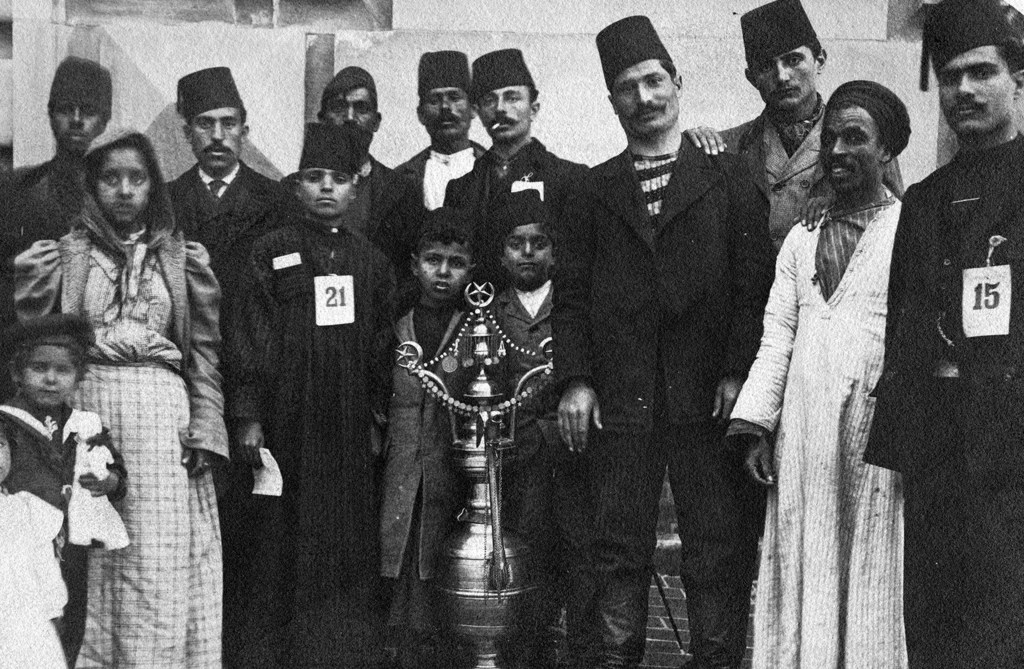
There were many Arabs who came here during this period. As it did with European populations, the Johnson-Reed Act provided time for Arab assimilation. However, as should be obvious, Arabs are not the same as Europeans, even Christianized populations, although Christianity does make a difference. The earliest Arab immigrants came overwhelmingly from the eastern Mediterranean, especially areas that were then part of the Ottoman Empire. They did not come from the Arab countries that exist today. Among the early Arab immigrants were Maronite Catholics, Eastern Orthodox Christians, and Melkite Catholics from Lebanon, Syria, and the Palestinian territories. These Arab populations were more amenable to assimilation.

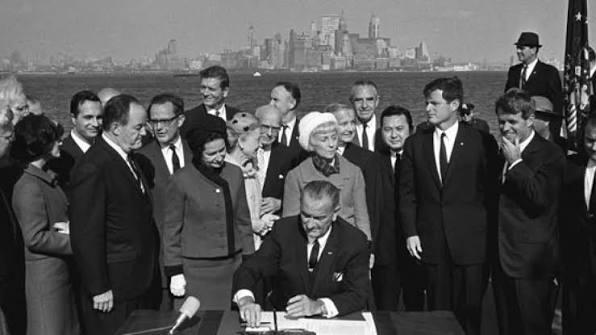
There was a second wave after Israel was formed, but it was small, since these immigration laws noted above sharply restricted entry into the United States. However, the Immigration and Nationality Act of 1965, also known as the Hart-Celler Act, fundamentally changed the system by eliminating the national-origins quota structure. This opened the door to a flood of immigrants from Egypt, Iraq, Jordan, Lebanon, Syria, and later Yemen, populations influenced by the politics that developed after the formation of Israel. The new arrivals worked from a different worldview. At the same time, they shared Arab ethnicity with the descendants of earlier arrivals.
Then there is the problem of Islam. As just noted, the early Arab immigrants were overwhelmingly Christian. However, a greater proportion of Arab immigrants arriving after 1965 were Muslim. I cannot assign any statistics with precision, but I can confirm that the Migration Policy Institute explicitly describes the post-1965 Middle Eastern and North African (MENA) immigrant population as having a much higher Muslim share than previous immigrants. My argument is that it is Arab ethnicity, especially among newer arrivals, that is the core of the problem. But it’s not as if Islam plays no role. A worldview lies at the intersection of Arab ethnicity and Muslim identity. Its synergy expands its sphere of influence.
It is important to map these developments onto recent changes in immigration patterns. Historically, net migration was positive throughout the post-World War II era and especially in the decades following the 1965 immigration reforms. The last clear period of sustained net outflows was the 1930s (Great Depression), when both economic conditions and repatriation efforts, focused largely on Mexican nationals. These produced negative numbers.
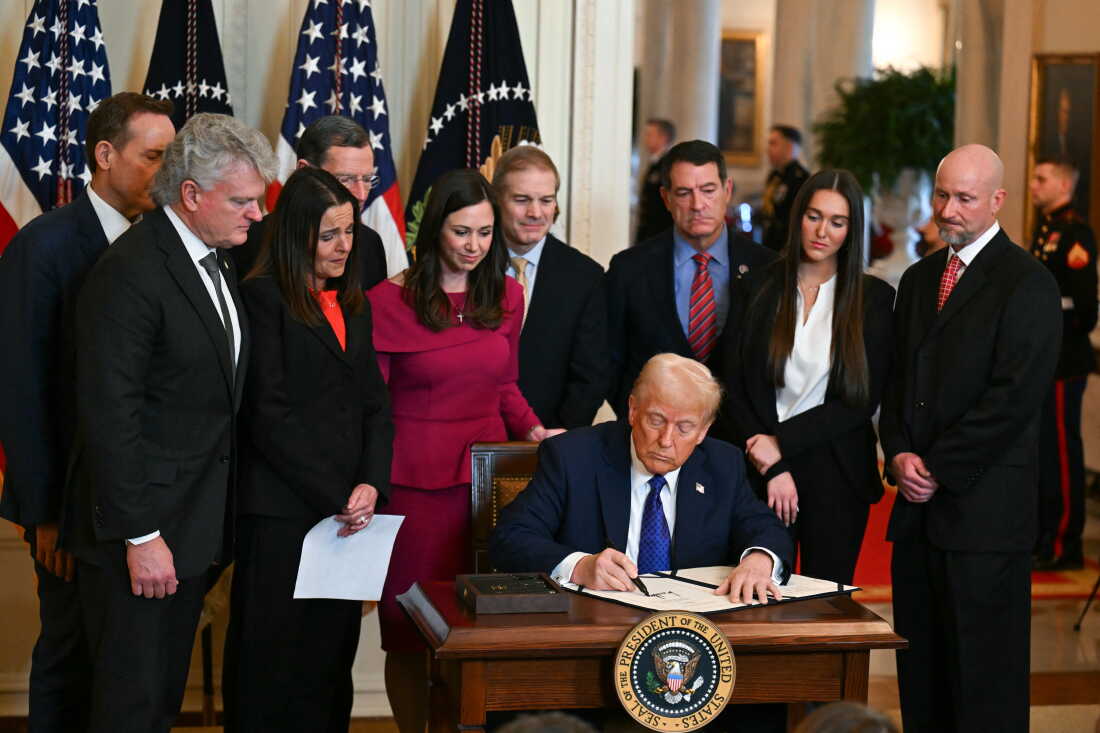
However, the United States has not experienced net negative immigration since then—until Trump was elected to his second term. Under Biden, millions of immigrants entered the country, many of them from the MENA region (the Middle East and North Africa). Donald Trump re-election changed that. A January 2026 economic analysis estimates that the United States experienced negative net migration in calendar year 2025, marking the first time in at least half a century that more people left the country than entered. This shift was driven by a sharp decline in new arrivals, alongside increased voluntary departures and removals resulting from Trump administration policies.
If these trends continue, newer arrivals will have a chance to assimilate into American culture. But we are still faced with the problem of resistance to integration among Arab populations, a situation exacerbated by the fact that more Arabs today are Muslim than they were a hundred years ago. Muslims are especially resistant to assimilation. As we have seen, Muslims are not, for the most part, Arab, but come from cultures, Islam aside, stubbornly resistant to assimilation. From the standpoint of national integrity, we are letting in the wrong people. But then Democrats want to undermine national integrity to advance transnationalism.
Here is the present paradox. Combining all Arab Americans (of any religion) and non-Arab Muslims in the United States yields an estimated total of roughly 2-3 percent of the population. That is seven to ten million people, more than enough to sway elections, and they are strategically distributed across the nation. America needs more time to reduce the proportion of these populations relative to European descendants—and more thoroughly integrate those who remain with American culture. But because of the strength of the combined voting bloc, Democrats are likely to win the midterm elections and thwart Trump’s efforts to strengthen US national integrity by restricting immigration. Moreover, a good showing in 2026 could strengthen Democrats for 2028. At the same time, the shit show Democrats will inevitably bring could have the opposite effect of bolstering Republican chances in that cycle. But two years is a long time to find out. Democrats can do a lot of damage in two years. They are well-organized and ruthless. Not that those aren’t admirable qualities, just that they are on the wrong side of the partisan divide.
Trump has shown the country that few changes in law are needed to restrict immigration. Democrats and their Republican allies (the RINOs) in Congress advanced the canard of a comprehensive legislative change to keep the source of cheap labor and new voters flowing. Trump really only needed to enforce existing laws.
That mass immigration is inevitable has always been a lie. Hart-Celler gave politicians the machinery to increase immigration if they choose to. Crucially, it’s a matter of who is in office. We can have as much or as little immigration as we want depending on whether Democrats or Republicans are in power—as long as the Republicans are populist-nationalist in worldview. Elect Democrats or RINOs, and the mess starts all over again. Elect MAGA Republicans, and patriots can continue making America great again.
It is no exaggeration to say that the 2026 Midterm Elections are a fork in the road. Either we keep America, or we lose it.


