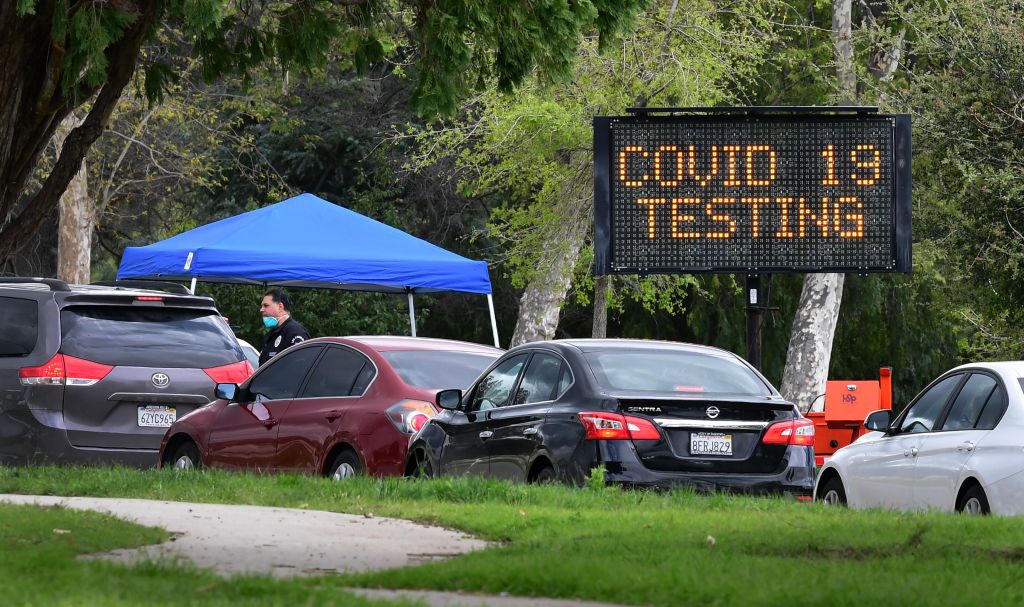
What is in the Interests of Working People? Not Institution Telling People How to Live Their Lives

A party for working people would focus on health, education, income, and retirement security for all people. That means high-quality health care for everybody, a guaranteed job at a living wage or adequate compensation for unemployment and disability, an end to mass immigration and a return to domestic high-value industrial production, free public education through college for all who qualify and job training for those who do not (or do not wish to go to college), and a universal and guaranteed pension program. That’s it. Beyond these guarantees, life should largely be left to individuals to live as they decide. Indeed, guaranteeing basic rights to health, education, work, and leisure allows individuals the maximal degree of freedom to make something of themselves.

A party for working people would guarantee formal equality and promote in law and policy substantive equality. That means it would eschew the progressive politics of law and policies based on demands for equity and diversity. Such law and policies are discriminatory, privileging some individuals over others on the basis of group identities. Indeed, law and policies based on group identity should be categorically illegal. Proposed laws and policies should instead the necessity of individual rights and liberties regardless of race, sex, etc., for freedom’s sake. A working class party that represent all working people would demand that the government guarantee fundamental liberal and secular freedoms for all people, free speech, freedom of conscience, etc. It would explicitly reject political correctness and speech codes and vigorously protect the right of individuals to express their opinions and to be offensive.

A party for working people would operate on populist principles of individual rights and liberties while rejecting the progressive politics of perpetuating corporate power and class hierarchy legitimized by tokenism. A party for working people would promote a strong national government based on liberal and secular values and the ethic of individualism. Obviously, the Democratic Party cannot be that party. It is a progressive corporatist organization that works against the interests of working people and individual liberty. It pushes equity and diversity over equality and merit. It fragments the working class by promoting identity politics and multiculturalism. It interferes with free thought and expression. 

I hear people wonder aloud why working people would vote against their own interests by voting Republican, as if Democrats actually represented working class interests. Identity politics and political correctness are not in the interests of working people. Identity politics and political correctness comprise the hegemonic work of progressive capitalist power. This work is about fracturing the working class by identity and then subduing a patchwork of groups through tokenism while marginalizing other groups. It’s a divide-and-conquer politics. The Democratic Party is a dead end.

In light of this, it’s not difficult to understand why so many working class people vote Republican. They see in the Republican Party a negation of the work of the Democratic Party, the latter’s work representing a harm to their interests. Even if the Democratic Party guaranteed health, education, income, and retirement security for all people, it would still be objectionable if it did not also eschew leftwing identitarian politics. The Republican Party is not a viable option in the long run. But neither is the Democratic Party. Folks are going to have to come to terms with that fact.

We Should Stop Citing the Case-Lethality Rate for COVID-19—or Start Using it for Influenza

The CDC estimates that, for the 2019-2020 flu season (last surveillance point was April 4, from the end of September), there were 39 million flu illnesses. The number of positive tests for the flu was 291,241. I will refer to positive tests as flu cases. That’s quite a discrepancy. I explain this in a moment.

The CDC attributes 24,000 deaths to the flu so far this season. That’s a case-lethality rate of 9.7%, or roughly one dead for every ten persons who test positive—a shocking statistic. However, on the basis of the estimated number of actual illnesses, the death rate is 0.75%, or less than one in a hundred.

The multiple used this year to estimate actual cases from positive cases is a factor of 134. There are complex reasons why this number is utilized and you can read about the mathematical models used to make the estimate in the following CDC page: https://www.cdc.gov/flu/about/burden/how-cdc-estimates.htm. The model was developed because epidemiologists are aware that far fewer cases are confirmed by testing than actually exist in the population.

There are 675,243 confirmed cases of and 34,562 deaths from COVID-19 so far. That is a case lethality rate of 5.1%, or roughly half the case lethality rate for the flu based on confirmed cases. However, we must keep in mind that the CDC does not report case lethality rate for the flu. It uses the epidemiological estimates to calculate the death rate.

Applying the same extrapolation as applied by the CDC to flu illnesses this year yields 106 million COVID-19 illnesses. That would put the death rate at 0.63% from COVID-19. Again, the lethality of the SARS-CoV-2 virus is less than that of influenza.

Now, it is unlikely that 106 million Americans have had or currently have COVID-19. I am only applying the multiple to raise the issue about reporting of relative risk.

Consider that he standard estimate for asymptomatic and mild (cold-like) cases is around 80%. Accepting that number, that still represents 21 million flu-like illnesses from SARS-CoV-2. That still seems like a large number (and this would have implications for the degree of herd immunity discussed in my previous podcast). If It is possible that either asymptomatic and mild cases are a greater percentage of the total number of cases or the multiple is smaller for COVID-19 than it is for the flu. But the question we should be asking is why has no multiple been applied to COVID-19 at all?

The comeback will likely be that we don’t yet have the experience with this virus to know to approximate that number, but we surely know the number is significantly greater than zero. If 80% have no symptoms or only mild symptoms, then the majority of cases are not being tested. And there are many with severe cases that are to tested. These obvious facts should be communicated clearly by authorities and the media. All reporting about deaths should emphasize this point.  

Or to put this another way, we might ask why there is a multiple applied in the case of flu illnesses. My guess is that, at least in part, a one-out-of-ten case-lethality rate for influenza would provoke calls for social distancing, sheltering-in-place, and quarantine for the flu, and that would make normal life impossible. Smartly, an epidemiological model is applied to reduce the rate of death from the illness.

But the problem here should be obvious. The authorities and the media are comparing apples to oranges—and they are doing so in a direction that makes COVID-19 seems much more deadly than the flu. To be sure, COVID-19 is deadly. It may very well be more deadly. But how much more deadly? For sure, it is not nearly as deadly as the case-lethality rate makes it appear since it is obvious that most cases of SARS-CoV-2 infection are unreported, whereas dead bodies from flu-like viruses rarely go unreported (at least not for long). (And we have seen authorities including the COVID-19 death counts bodies that have not tested positive for SARS-CoV-2.)

We need authorities to come clean on this discrepancy. Not being clear about the relative risks of COVID-19 over against the flu feeds the panic exploited by the federal and state and local governments to justify the sharp and unprecedented curtailment of freedom and democracy. It appears that they have manufactured the panic.

Life is Risky. Freedom is Precious

To those who say that the folks who want the lockdown to end are for killing people, I hope they’re for the abolition of automobiles to prevent the 35-40 thousand automobile deaths that occur annually in the United States alone, many of those deaths occurring through no fault of the victims (drivers, passengers, and pedestrians). 

If the scolds are not posting memes about the genocidal intentions of those who drive automobiles (I confess, I drive one), then the scolds must know that they’re tacitly agreeing to tolerate those tens of thousand of deaths of their brothers and sisters for the sake of the freedom and convenience of traveling by automobile. 

Remember, the risks associated with automobiles involve more than just deaths from accident. Tens of thousands of people die prematurely (many more than from accidents) from air pollution caused by car exhaust. And what about all the people injured in automobile accidents?

How has society dealt with the risks associated with automobiles? Not by taking away automobiles or punishing people for driving them (unless they cause death and injury in a manner society does not approve of). We have not dealt with the risk of automobiles by limiting the freedom of individuals who want to travel by automobile. We have instead taught people how to drive more safely, have made automobiles safer, and have made automobiles more environmentally friendly. 

Suppose we could reduce the frequency of suicides by punishing people who say things that may contribute to a person’s motivation to perpetrate self-harm. To be sure, there is often a preexisting condition like depression lying in back of self-harm. But who is attributing COVID-19 deaths to high blood pressure or type II diabetes? It’s the pathogen (that the vast majority of people survive). With suicide, it would follow that persons saying hurtful things to vulnerable people is the proximate and therefore primary cause of death from suicide. Would that justify suppressing the right to free expression? Or is free expression for all who wish to pursue it more important than the lives of those who are prone to suicide?

I can keep producing examples in this fashion. Many things we do as free people have risks associated with them. The authoritarian approach to risk is to restrict or take away freedom. Authoritarians treat freedom as the problem. If speech motivates actions deemed detrimental to others or to society, then speech needs to be curtailed. People have to be controlled. In contrast, the humanist approach is to make things safer and make people wiser, not shut down the freedoms that make life worth living.

Maybe we will one day have a risk-free alternative to the automobile (I hope so, but not everybody does). Maybe one day we will solve the problem of mood disorders and suicidal ideations. Maybe one day we will have an effective therapy for viruses. Until then, if risk reduction involves sharply limiting human freedom, then at least be consistent and limit your own freedom. Stay away from cars by sheltering-in-place (albeit sometimes cars collide with houses so you may never be completely safe). Rarely is anybody forced to drive an automobile (or take a bus, or a train, or a plane). Stay home and let the rest of the world go on driving—and living.

In the end, humans cannot mastermind death, disease, and injury. Nor can the government. Life is risky. Death is inevitable. We can take steps to reduce the risks for most things we face in life. But we mustn’t adopt measures that substantially diminish the freedom of all.

Why Did The West Build Up China?

At least the present crisis exposes a massive error on the part of Western powers. I will be charitable and assume that the Western bourgeoisie did not intend to put the United States in an inferior position with respect to China. I will assume for the sake of considering the situation in which we find ourselves, that the Chinese were considered by the globalists (the neoimperialists), to be a typical third world country, one that could be peripheralized for the sake of capitalist accumulation in the core in the context of the fall in the rate of profit in the post-WWII period (thanks to economic nationalism and the organized labor movement), its leadership shaped into colonial collaborators. Put simply, the Western bourgeoisie sought to turn China into its workshop in its neoliberal war on labor and the left, launched in the United States in the 1960s. 

But things didn’t turn out so well, as the COVID-19 calamity makes clear. Why? China wasn’t the typical colonial dependency. The sophistication of the Chinese Communist Party, the state apparatus under its ruthless command, controlling infrastructure and real estate, meant that, whatever surplus the West hoovered out of China’s export processing zones, the regime would share in that surplus. The Chinese Communist Party plowed the value it extracted from the Chinese proletariat into development and expansion, while exploiting its international linkages to draw more capital to territory. Now a totalitarian nightmare state controls the global supply chain.

Imagine the response of Western publics if this degree of interpenetration had been achieved for the United States and the Soviet Union during the Cold War. It would have been scandalous and those responsible for it branded traitors. The shift in mass consciousness with the dismantling of the Soviet Union was seismic. Despite the continued threat of nuclear war, worry about weapons of mass destruction largely evaporated. While the Chinese Party continued to oppress the largest population on the earth, armed with advanced nuclear weapons, awareness of the threat of totalitarian socialism went missing with the oligarchic pillaging of Soviet Union. Nixon’s journey to China had prepared the ground for good will towards the most totalitarian regime in existence. As the Soviet Union faded into memory, the Western intelligentsia declared the “end of history.” In reality, globalization established the beginning of the end of the West.

Have folks considered why Democrats, hardliners on post-socialist Russia, fingering Trump as Putin’s stooge, are so soft on China? Why are the Russophobes attacking Trump for deflecting from his own failures by putting the finger on China?

Future Containment of COVID-19: Have Authorities Done the Right Thing?

I fear the authorities who claim to know best have made a terrible mistake. In the absence of an effective vaccine (or any vaccine at all) for SARS-CoV-2, they have prevented the population from developing widespread immunity to the virus, what we call “herd immunity” (or “herd protection”). Since this virus is now part of the seasonal mix (that’s right, it’s not going away), this means that the same situation experienced this spring will be re-experienced in the future. If we had to lockdown on account of this virus this time, that is, if the lockdown were necessary, then we will have to lockdown again next time. But we won’t. This suggests that not only was the lockdown unnecessary, but that the whole exercise was counterproductive to the ends of reducing future outbreaks of the virus. A lot of hope is being placed on finding an effective vaccine in record time.

What is “herd immunity”? When an infectious agent enters a population that has no immunity to it, it spreads very quickly. One person can infect many people. Each newly infected people in turn infects more people. And so on. This is called “community spread.” If a sizable proportion of the population is immune to the agent, a limited number of spreaders will in turn slow the spread. For example, if 80% of a population is immune to a virus, only one out of every five persons may contract and spread the virus (exposure does not necessarily mean infection). Without 100% of a population enjoying immunity from the agent, some persons may still contract and spread the virus, but 80% herd immunity means fewer outbreaks of the virus and the virus may be effectively contained. It is generally accepted that between 70% and 90% is a high degree of herd immunity.

There are two ways to achieve immunity to a virus. The first way is to contract the virus and survive it. If a large enough number of persons get the virus and survive, the population will have achieved some degree of herd immunity. The second way to achieve immunity to a virus is an effective vaccine. For example, presently, the efficacy of the seasonal flu vaccine is around 35-40%. Others have immunity from acquiring the flu in previous seasons. The flu is still widespread. Many people get sick from it. And some will die from it. But many people won’t get sick from it thanks to their own immunity and to the immunity of others. So even with lower levels of herd immunity, the detrimental mass effects of a virus are mitigated.

Keep in mind that some viruses are more stable than other viruses. DNA viruses, such as chickenpox (varicella), mutate rather slowly. One may acquire life-time immunity after contracting and surviving a DNA virus. RNA viruses, such as influenza, mutate more rapidly. Exposure provides time-limited protection. However, not all RNA viruses mutate as quickly as others and exposure to any strain may provide some protection to mutants of that strain. This is why the flu vaccine has limited efficacy in providing herd immunity and becomes less effective over time while, at the same time, those who acquired a flu strain in years past may have immunity for this strain in future flu seasons. For example, the Hong Kong flu, influenza A (H3N2), while devastating during the 1968-1969 flu season, continues to circulate without the accompanying devastation. Many of us who lived through that virus, however much our immunity to it is diminishing over time with the mutation of the virus, acquired some degree of immunity to the Hong Kong flu. Moreover, re-exposure to the virus boosts our immunity response as our bodies learn to recognize variations on the original pathogen.

And this brings us the problem of the response of many governments to the SARS-CoV-2 virus. The world population is 7.8 billion people. The number of confirmed cases of the virus is 1.9 million. Of those confirmed cases, 121,987 have died. That leaves 1.8 million who, if they all survive, with possible immunity. That’s 0.023 percent of the world population. In the United States, which has been hit harder by this virus than most countries, with 328.2 million people, and 563,820 confirmed cases (after subtracting deaths), the percent with possible immunity is 0.17 percent. That is obviously far below the levels we need to manage future outbreaks of COVID-19, the disease caused by SARS-CoV-2. 

We know that most people who get the virus are asymptomatic (they are exposed and produce antibodies but do not develop the disease COVID-19) or have only mild symptoms. The evidence suggests that this accounts for eight out of every ten persons. Most of those persons are not tested. Moreover, there are some with severe symptoms, that is, those who experience a flu-like illness, who are also not tested. They recover without medical intervention. Let’s suppose that there is ten times the number of confirmed cases in the population who will become infected and acquire immunity. That takes us to 1.17 percent herd immunity, still far below what is needed to limit future outbreaks.

In other words, the lockdown has prevented the achievement of anything close to a desirable level of herd immunity. It seems to me that the smart thing would have been to identify those who were at special risk from the virus and protect them while allowing the virus to burn through the world population. This would have relegated the virus to the common viral mix the human population endures every year without calamity. 

One argument for the lockdown wasn’t so much to prevent people from getting the SARS-CoV-2 virus per se, but to prevent the spread of SARS-CoV-2 to save hospitals from being overwhelmed by COVID-19 cases. While this seems reasonable, and many are lauding the lockdown’s accomplishment over against the apocalyptic predictions, getting through the current period with a limited number of infections, represents a pyrrhic victory. Politicians and pundits love the war metaphors, so while we will have won the battle, we are facing much greater loses in the next season of war, which will cover many more months than the period encompassing the present pandemic. The question we should be asking of the official rational is why weren’t hospitals prepared to deal with COVID-19? But this is aside from the question raised by this essay. Or, perhaps, I might put it this way to bring this into consideration: why did we sacrifice acquiring herd immunity for the sake of the failure of the medical-industrial complex?

The Wuhan Virus, the Chinese Communist Party, and its Menagerie of Useful Idiots

For those of you who have been reading my blog of late, you know that I am critical of the societal reaction to the Wuhan virus. In this essay, I want to discuss several issues that have me troubled, foremost establishment and popular apologia for the Chinese Communist Party.

First, it is clearly the case that the Chinese Communist Party suppressed information about the virus and allowing infected persons to leave Wuhan and travel the world. Despite evidence of a novel virus in November 2019, as late as mid-January, Chinese officials were denying or downplaying human-to-human transmission of the virus and censoring doctors and scientists, for example Dr. Li Wenliang, who himself became a victim of the virus altering being accused of “spreading rumors” for alerting other doctors about the appearance of a new form of pneumonia. By the time China finally publicly confirmed human-to-human transmission, it was already too late to stop the global spread of the virus. And China continues to deceive by censoring research on the origins of the virus, compelling any work to be reviewed by the Ministry of Science and Technology.

The Chinese Communist Party

China’s lies were amplified in a disinformation campaign organized by the World Health Organization (WHO), led (since 2017) by Ethiopian Tedros Adhamon, whose praise of the totalitarian regime’s respond to the virus has been effusive. In the face of the obvious, that had China acted sooner the frequency of cases in Wuhan could have been reduced by up to 95 percent (University of Southampton), Tedros identified China’s actions as a model for the world. This was quite a turnaround from the WHO’s crisis of China during the SARS outbreak in 2003, when that organization criticized China for its obfuscations and lack of preparation. For its part, the WHO under Tedros did not declare a global health emergency until a week after China confirmed human-to-human transmission. It would take more than a month before the WHO would declare COVID-19 a pandemic. At this point, the virus had spread to nearly every continent. 

In an email to The Atlantic’s Kathy Gilsinan, White House trade advisor Peter Navarros writes, “Even as the WHO under Tedros refused to brand the outbreak as a pandemic for precious weeks and WHO officials repeatedly praised the [Chinese Communist Party] for what we now know was China’s coordinated effort to hide the dangers of the Wuhan virus from the world, the virus spread like wildfire, in no small part because thousands of Chinese citizens continued to travel around the world.” When Trump criticized the WHO, the media quickly told the story as the efforts of a president to deflect criticisms of his response. “Where were the warning signs? Who should have blown the whistle?” New York Governor Andrew Cuomo asked at a recent daily briefing. “The president has asked this question, and I think he’s right. The president’s answer is the World Health Organization should’ve been blowing the whistle.”

Director-General of the World Health Organization Tedros Adhamon

Why didn’t the WHO blow the whistle? It is useful to know the background of Tedros, whose official title at WHO is Director-General. Tedros is a member of the Tigrayan People’s Liberation Front and associated with the Ethiopian People’s Liberation Front, openly Marxist-Leninist organizations until the demise of the Soviet Union led to the abandonment of communist rhetoric. In October 2017, in an early indicator of Tedros’ quality of judgment, the Director-General appointed Zimbabwe’s president Robert Mugabi, notorious for human rights abuses, to serve as WHO Goodwill Ambassador. It was payback for Mugabi having engineered Tedros’s candidacy for the position. This decision led the editor-in-chief of the prominent medical journal Lancet to call Tedros “Dictator-General.” 

The headline of Gilsinan’s Atlantic article (“How China Deceived the WHO”) attempts to portray the organization as a victim of Chinese deception. But Tedros’ background and his actions suggest otherwise. Taiwan notified Tedros at the end of December that a new form of pneumonia had been identified in Wuhan and that there was human-to-human transmission. In January, Tedros met with Chinese leaders, including President Xi Jinping, about would be identified as SARS-CoV-2. The WHO stated in a January 14 tweet: “Preliminary investigations conducted by the Chinese authorities have found no clear evidence of human-to-human transmission of the novel #coronavirus.” That tweet echoes a declaration by the Wuhan Health Commission. Indeed, Berkeley research scientist Xiao Qiang, who closely monitors official statements coming from China, finds the WHO’s messaging routinely echoes those of the Chinese government. In February 2020, Tedros stated that there was no need to address the matter in the manner taken by US President Donald Trump, who, on February 2 imposed travel restrictions on China, as it would interfere with “international trade and travel.” Tedros said: “Such restrictions can have the effect of increasing fear and stigma, with little public health benefit.” Throughout this period, Tedros praised China for its containment of the virus. In April, in response to criticisms of Tedros and the WHO by US President Donald Trump, Tedros admonished critics of his leadership with this highly disturbing statement: “If you don’t want many more body bags, then you refrain from politicizing it.”

Second, I am skeptical of the approach the government has taken in terms of its purported efficacy, effects, and ambitions. Sweden is pursuing a less restrictive model without the consequences suggested by those who push the more restrictive model. Health officials are well aware of the fact that, for most children and adults, infection from this virus is asymptomatic or mild. I have reported this on this blog. In the United States, most people could have continued to go about their lives, learning and working. And living. They would in the course of the pandemic acquire herd immunity, which would reduce the frequency and severity of future outbreaks. This virus is now part of the viral mix that circulates the planet every year. The practice of social isolation has severely damaged the economy, which itself comes with health effects, as well as imposing heavy emotional and psychological burdens populations.

Dr. Anthony Fauci Director of the National Institute of Allergy and Infectious Diseases

Governments have not before responded to a virus in this manner. Governments have, with little public resistance, expanded police and surveillance apparatuses. Once instituted, such constraints on liberty are rarely lessened. Those who violate shelter-at-home and quarantine rules are being punished, forced to wear ankle bracelets. Dr. Anthony Fauci has suggested an immunity registry. Louisiana Republican Bill Cassidy is advocating the idea. Why stop with this virus? Why not have certificates for every virus antibodies? What if someone forgets and leave their certificate at home? Should individuals be chipped? Or how those little tattoo animals get? Visible under a certain frequency of light? Like 9-11, this virus represents an opportunity to pull a lot of things off the shelf. House arrest, cell phone tracing, mandatory vaccination, and antibody registries are just a few of them.

Third, the way the media and governments have presented the facts of this virus feeds the hysteria that governments need to obtain compliance from the public for the shuttering of social life. For example, by reporting a case death rate in light of confirmed cases instead of a realistic model of the number of actual cases, which is likely at least 10-20 times greater than confirmed cases, the lethality of the virus has been exaggerated. Even the observation that with more testing death rates will decline is spun as if more positive cases would make the threat of the virus even greater. Once a narrative of deadly pestilence is up and running, suggesting greater numbers without at the same time helping the public understand that this makes the virus more ordinary fuels panic. Another example is the routine failure to use proportionality in reporting. The big headline of late is that the death toll in United exceeds the total death toll in Italy. But the reporting failed to remind the public to keep in mind that the population of the United States is much larger than Italy. Same with Spain. Proportionally, the US death toll is about a sixth of that in Italy and Spain. 

Anticipating that some will accuse me of downplaying the severity of this health threat, I have said all along that this virus is deadly to the elderly, those with comorbidities (such as high blood pressure and type II diabetes), and those with compromised immune systems. At the same time, influenza is deadly, yet we have never shuttered our society on account of this. The Hong Kong flu of 1968 (influenza A [H3N2]), to take a notable example, killed some 100,000 persons in the United States alone (around a million worldwide). Like the Wuhan virus, most deaths were among those 65 years of age or older. H3N2 continues to circulate as a seasonal influenza A virus. The 2017-2018 flu season also took many tens of thousands of lives in the US (H3N2 was the predominant strain). Of course I am not saying that this virus is the flu. It’s not. They’re different viruses by definition. What I am comparing is the response to viruses. As a sociologist, I am trained to ask about the societal reaction piece. Why is the reaction so radically different this time? 

Recently the media prompted Dr. Anthony Fauci to confess that an earlier lockdown of US society probably would have saved lives. It’s an obvious answer. If you believe that the mitigation regime advocated by Fauci saved lives, and it is intuitive for anybody who understands the germ theory of disease that it would, ignoring everything else, then you would have to say that, the earlier the intervention, the more lives would be saved. This response is so obvious that to ask the question of Fauci is a bit dishonest. That is, there is an ulterior motive here: in the current political climate, the no-duh answer is meant to be used against a president the establishment media has endeavored to delegitimize, first claiming Trump was a Russian agent, then claiming he sought help from Ukraine to destroy his eventual 2020 rival, currently former Vice President Joe Biden. But whether the federal government could have acted earlier depends on the information on hand. A lot of countries were caught flat-footed by this. Why? Because the Chinese Communist Party was determined to suppress vital information. The question is part of an effort by the mainstream media to lay at Trump’s doorstep the connivance of the establishment to hold China blameless for its machinations.

The establishment White House press corps is, frankly, embarrassing. It’s not just about going back to work—what they constantly harp on when Trump talks about ending or lessening the lockdown. It’s about getting back to life. The question, “Should Americans have to choose between health and work?” is asking “Should Americans have to choose between health and life.” I guess you don’t have to choose between them and you can be a germaphobic agoraphobic shut-in (hope you have an independent source of wealth to draw on). But most of us don’t want to live like that.  Establishment journalists ask questions as if we will never get back to life. “Will cases spike when we get back to life?” Of course they will. These people act as if humans have never had to deal with a virus before. People contract and die from the flu. Higher per case death rate with the flu, in fact. Do we shut down life on account of it? I haven’t seen that before. The same logic that says we cannot get back to life because people will get a virus means that we can never get back to life. The level of absurdity is astonishing. Orwellian double consciousness.

Finally, apologia for the Chinese Community Party is the piece that has me most troubled today. That so many Americans, from the establishment commentariat down to our young people, so readily apologize for the action of the Chinese government is a testament to the social logic of globalization and the corruption of common sense by postmodernist thinking. For the Chinese Communist Party, truth is subjective, serving whatever ends the party sees fit. The CCP is the epitome of the postmodernist regime. Maoism is the foundation of identity politics and New Left ideology. This is where this “woke” rhetoric comes from. It’s anti-Western in fundamental attitude. It’s Third worldism run amok. It’s why Tedros can be such an appealing figure. For those who loathe the West, an African is a powerful substitute for an objective Director-General. We are being told that China was wounded by Western imperialism, so who is the West to complain about the behavior of its totalitarian government? In other words, we had this coming to us. We hear the same nonsense when the West highlights China’s human rights record, which is appalling. What about the West’s human rights record? They decry. Please. There’s no comparison.

 Nicholas Christakis surrounded by students at Yale, 2016

When I hear about how the United States’ response to the virus is the worst, but that China handled it brilliantly, and any criticism of the Chinese Communist Party is portrayed as an attack on the Chinese people and therefore “xenophobic” and “racist,” and that we should trust the China-centric WHO, my mind, in search of an explanation for such insanity, turns to the images of mobs of social justice warriors at American universities surrounding professors and hurling woke slogans at them. Such scenes are reminiscent of something else that many of you may remember: Mao’s Cultural Revolution. The parallel is not coincidental.

The New Left fascination with Maoism, anti-colonialism, and Thirdworldism in the 1960s-70s had an enduring effect on left-wing thinking. In time, leftwing ideologues became cultural managers at universities pushing anti-Western sentiment in various programs and administrative offices. If you’ve even been compelled by your employment contract to participate in a “diversity and inclusion” seminar, to learn about “microaggressions,” to be accused of “white privilege,” made to feel guilty for being of European ancestry, to go through what is essentially a reeducation camp, then you have experienced Maoism. Elites have joined regressive leftwing ideas with transnational corporate ambitions. The culture industry encourages the masses to mock and marginalize those who ask why their leaders would sell out the working classes of the West, to smear their comrades as “nativists” and “nationalists.” A new generation of politically-active Americans have been swimming in a profound anti-American stew that serves up the interests of globalists as progressive politics. The New Left has produced a menagerie of useful idiots.

Look at My Mask. Where’s Yours?

Those who warned about the perils of globalization and international finance in the 1990s were branded “conspiracists” and “antisemites.” Remember that? Folks were waking up from a long nap only to be gas lit. Black helicopters.

Same with those who warned about the surveillance state and corporate domination. They were “diagnosed” with “paranoia.” Tinfoil hats. 

Now those who observe that the United States is indeed dependent on its most powerful rival, China, and the global supply chain it engineered under the cover of transnationalism are accused of “xenophobia” and “racism.” 

Same with those who ask why Western governments would subject their workers to cheap foreign labor. Do folks think capitalists are replacing native-born workers with foreign labor out of humanitarianism? They’re doing it to maximize profits and crush labor. How did they make those on the left not only okay with that but eager to virtue signal about it?

Have folks figured out yet that such accusations exploit New Left weaknesses and postmodern stupidities to suppress and derail working class concerns and interests? The left today is pathetic.

“Look at my mask. I’m such a good person.”

When war and surveillance and so on are not lines in the sand for the progressives who tell the left to vote Democrat to preserve the possibilities of progressivism, one must realize how deeply co-opted those whom you call your comrades have truly become. Progressivism is the problem. 

Without a left-wing populist-nationalist movement, the United States is doomed. The Democratic Party right down the Squad exists to prevent such a movement. The so-called “democratic socialists” are sheepdogs. The American worker is being absorbed into a global system of corporate domination. It has been absorbed into a global system of technocratic control. The system has totalitarian aspirations.

The present situation is the wet dream of the neoclassical economist. When are folks going to wake up from the nightmare? Remember the Chicago school economist telling us how much more important markets are than democracy? How commonwealth must give way to private power? We are going through authoritarian exercise to deepen the conditioning to that principle. They are enclosing everything. 

That sounds “paranoid,” doesn’t it? Good dog. 

All things considered, I would rather have personal liberty than a progressive police state that checks my thinking. Today, I live under the twin evil of corporate capitalist rule and Orwellian control over language—thought control. 

I reject contemporary left-wing politics. It’s worse than stupid. It’s anti-worker and anti-liberty. I say this as a Marxist and a socialist. I am not with you. I am a libertarian.

Asking Critical Comparative Questions About the Coronavirus Pandemic

Based on the most recent CDC influenza report, period starting September 29, 2019 and ending March 28 2020, there were 246,842 positive specimens (influenza types A and B) and 24,000 deaths. That’s a 9.7% death rate. Of course, that not how the media report the statistic. The media reports the extrapolated numbers from the CDC, which knows that most influenza cases are not tested.

There is a slogan out in the social media world that SARS-CoV2 is not influenza. This is a red herring. I am making a point about media framing and threat selection. It’s like how we might ask why the United States bombs Libya for human rights violations when Saudi Arabia carries out human rights violations with impunity. I know a lot of people don’t ask that question, but it is the kind of question I ask all the time. I wouldn’t be surprised to hear progressives asking this question.

This virus is not a type of flu, of course. It’s a coronavirus, which is about 5-15% of the viral mix every year. However, like influenza and rhinoviruses, coronaviruses are one of the pathogens associated with pneumonia. That’s what we’re talking about: pneumonia cases, hospitalizations, and deaths.

Coronaviruses are not new. We know quite a lot about them. SARS and MERS are the more famous coronaviruses that jumped from animal reservoirs and made people very sick, so we have had years of experience with the serious forms. SARS and MERS were much more serious than the present virus, which is why they had trouble spreading. To be successful, viruses need to avoid killing too many hosts. SARS-CoV-2 is, for most people who test positive asymptomatic (perhaps because of immunity?) or very mild, so it spreads more successfully. Like rhinoviruses. Most of the people we know have probably had one or more. 

To the extent that these are pathogens implicated in pneumonia, that is what is relevant to the point I am making, which actually means to make a comparison not of the virus families but to the variable response by governments and media in light of their relative lethal character. If the reasons given for the extreme reaction of governments, media, and the public hold for coronavirus, then they should hold for influenza. But they don’t and so we need to ask why. 

If influenza was reported in the way this coronavirus is being reported, then we should be much more worried about the flu, as it spreads more widely and kills more people—at least according to the CDC and the WHO. Indeed, authorities were talking about implementing some of the same mitigation strategies with the 2009 swine flu—(H1N1)pdm09—virus, but they rolled out only some of those measures. One of the particular threats identified was the risk to younger people. But swine flu turned out to be rather ordinary. In a normal flu season, the global deaths tolls are between 250,000 and 500,000. The numbers of confirmed cases of swine flue (less than two millions) and deaths (less than 20,000) were much lower (keep in mind that other viruses killed people, too). But when you estimate an upper limit of 1.4 billion cases worldwide, the death rates drop dramatically. 

So the question is why the reporting on SARS-CoV-2 isn’t using the same order of magnitude as typical estimates. If we take the upper estimates for 2009 for H1N1, the estimated number of infections is 700 times greater than the number of positive specimens. I only need to use a factor of 10 to bring the COVID-19 deaths to less than one percent. If I use a factor of 700 it looks like a normal flu season. That is an important observation. It’s an obvious one, which is why it is so astounding that we don’t hear about all the time. Why are we relying on confirmed cases to calculate death rates in this case but not in the other case?

Saying that this bug is not the flu is not a useful point. It’s a coronavirus and not an influenza viruses. What is useful to point out is that both viruses—as well as rhinoviruses—are causes of lower respiratory illness, both pneumonia (which often involves secondary bacterial infection) and ARDS and that threat selection and societal reaction are variables in explaining an unprecedented moral panic that will impose extraordinary hardship on working people.

When we think critically about frames and threat selection we engage comparative thinking. We have to compare the response to coronavirus (this particular one) to the response to other RNA viruses, such as influenza and rhinoviruses. It’s similar to comparing wars or revolutions or genocides. We’re talking about viruses. SARS-CoV-2 isn’t the Andromeda Strain. It isn’t terrorism. Coronaviruses, like influenza and rhinoviruses are a cause of pneumonia. Moreover, they’re RNA viruses.

We have to ask the critical question: Why is the death rate from influenza not calculated using the same criteria the media uses to calculate the death threat for SARS-CoV-2? If the media did that, influenza would have a much higher death rate than SARS-CoV-2. More than twice as many people have died from influenza than this particular coronavirus this pneumonia season. Are those deaths unimportant? Why didn’t we shutter society and throw millions of people out of work (to lose their homes and their health care) to save persons from influenza? Pneumonia from influenza disproportionately kills old people, yet we keep open the economy. Where is the virtue signaling mob shaming folks for going about their lives while old people die from influenza? 

Influenza is a global health problems, killing tens of thousands across the planet every year. In 2009, it killed between 150,000 to 575,000 globally. Do the comparison. You have to ask (well you don’t have to, but it seems to me that thinking people would) why this virus and not the other virus? You might suggesting I am diminishing the significance of coronavirus. Why are you diminishing the significance of influenza?

Other questions critical thinkers ask:

What are the consequences of these extreme mitigation measures—extraordinary police and surveillance measures, extreme deprivation of individual liberty, shutting people off from human contact, many in the twilight of their lives, and a host of other problems along lines of livelihood, freedom, emotional and psychological well being, etc. Who benefits from the crisis? Who loses from it? 

Why were hospitals so unprepared for this pandemic? Decades of privatization and the social logic of bureaucratic rationalization have led to drastic cost-cutting measures to increase profits for shareholders. The logic of Fordism shapes the system, the logic of just-in-time production. As a fairly bad flu seasons wound down, some hospitals were unable to handle the case load from another virus. And this should really trouble us considering the 2017-2018 flu season sent up huge red flags about readiness. By treating the present situation as unusual, that the virus is some unique demonic force, the frame functions to mask the failure of the medical-industrial complex to be prepared for an out-of-season crisis.

So here’s my question to those who get bent out of shape when the response to this virus is compared to the response to other viruses: Why do you think we shouldn’t ask comparative questions about public response to viral pathogens? Some folks clearly think we shouldn’t because they pronounce the comparison moot. Why does questioning societal reactions so trouble you? It’s what we do in social science all the time.

These are a rhetorical question, of course. I know why the slogan is being disseminated. We aren’t supposed to do the comparative work since this works against portraying the virus as a unique existential threat. By making it a novel threat, it frees governments to pull things off the shelf they have been wanting use for a long time. The justifies actions without any real popular discussion. And it creates a public that will clamor for vaccines and antivirals.

There is an interest in ramping up panic. Remember the case of Wolfgang Wodarg (Council of Europe) who, in 2009, pointed out that major pharmaceutical companies had organized a “campaign of panic” to press WHO into declaring a pandemic to move product. If a vaccine is developed (and there will be more than one product), given the panic, there will be no shortage of customers. I have to be honest, I don’t trust the corporate media to operate in the public good. They are corporations selling audiences to other corporations.

There’s a very good reason for being concerned about how governments and corporations frame such things. In 1976, pharmaceutical corporations and governments around the world, including the US government, manufactured a swine flu epidemic. Despite the fact that there were no confirmed cases of swine flu anywhere on the planet outside of five soldiers at Fort Dix, a US military facility in New Jersey (a suspicious occurrence in itself), the government rolled out a massive vaccination program accompanied by an extensive propaganda campaign involving print and television media. Scores of Americans were injected with the experimental swine flu vaccine.   

One consequence of the program was scores of people suffering vaccine injury, several hundred of them developing a sometimes lethal and always devastating paralytic condition called Guillain-Barré syndrome, or GBS.  The government, shamefaced, had to cancel the program. To this day, mainstream news organizations continue to run interference for vaccine manufacturers by denying the link between vaccines and GBS.  However, as Dr. Meryl Nass, an expert on vaccines and bioterrorism, points out, at least ten separate studies of the 1976 swine flu vaccine confirmed the link.

Some Virus Did Something

Ah, the war metaphor.

“Front lines.” “Coming ashore” “Hunker down.” “The trenches.” “Under siege.” Such phrases are rampant in the COVID-19 narrative. We are “at war” with a virus. These metaphors are used to anthropomorphize danger. And to manufacture glory.

In war, the soldier is lionized. The hero fighting for your freedom and security. Thank him for his service and sacrifice. He stands on that wall. Better be grateful. Don’t look beyond the soldier in the field to the forces that put him there.

The military-industrial complex needs resources and control over the narrative. Skepticism about the prudence and rightness of military action is shouted down with “Support our troops!” Dissension endangers the order that makes freedom (profits) possible. The soldier cries that the government ties his hands. And sells him short. “Let us fight the war on our terms. You do your part.”

The police borrow the language. “War on crime.” “War on drugs.” “War on cops.” We’re living in the era of the soldier-cop.

In pestilence, the healthcare worker is similarly exalted. Trump is a “war-time president.” Our heroes are on the “front lines” fighting for our health and lives.

The medical-industrial complex needs resources and control over the narrative. Free them to navigate the battlefield on their terms—which means empowering technocrats to govern the population’s movements. Don’t question the judgment of healers and scientists in the service of the “war effort.” Get in line.

Skeptics are heretics, dangers to health and well being. They’re like the peacenik.

The signs of pestilence

Pharmaceutical corporations managing the scenes? What are you? A conspiracy theorist? You fancy this a plot emanating from the Deep State? You really think these brave soldiers would exaggerate a viral threat to sell their tests, their therapies, their vaccines?

Whatever else they do, and their sacrifices are noted (as are those of who die on actual battlefields), they’re fighting for the sake of corporate profits moving under the cover of glory. The medical establishment has its diagnostics and nostrums. Face masks and latex gloves are the flags and ribbons of war. Don them, brave citizen, and proudly show your uncritical support for the “war” against the “invisible enemy.” Share pictures of yourself properly uniformed on Facebook and Instagram so your friends thank you for your patriotism. Tie light blue ribbons around the tree in your neighborhood. Scold those who don’t adhere to doctrine and ritual.

Threat selectivity and fallacious comparisons are signs of propaganda. The capitalist state and the corporate media select the threats “we” fight (the criminals “we” suppress and so on). Propaganda is never an objective assessment. There, the determination of threats is ideological, in line with political-economic need, and without regard to truth. Promoting fear, the moral entrepreneur conditions and induces the public to demand action.

It is much the same with the medical-industrial complex as it is with the military-industrial complex. Medical and pharmaceutical corporations, with the government and the media at their backs—and in tow—select profitable pathogens and raise awareness (hysteria) about them. The formula: manufacture danger and then meet the threat-demand with products and services.

The companies have their vaccines and antivirals for influenza—and profit handsomely from them. The efficacy of these products are questionable, but they have them. By February 2018, a particular bad season for influenza, Sanofi had raked in three-quarters of a billion dollars in profits, and GlaxoSmithKline’s vaccine business had climbed about 76 percent (“U.S. Flu Season Reaches Peak, Vaccine Profits Climb.”). A network of pharmaceutical companies produced 12 different vaccines for the 2017-18 flu season (and vaccines are but a division among divisions that pump out a myriad of chemical preparations every year). The Centers on Disease Control (CDC) dutifully reported (estimates of) tens of millions of flu cases, hundreds of thousands of hospitalizations, and tens of thousands of deaths.

The present pathogen, the novel coronavirus, a member of a family of viruses that are always present in the viral mix every year, represents a great profit potential in vaccines and antivirals. (See “When a Virus Goes Viral.”) Seemingly to aid the manufacture of danger, the typical method of estimation has gone to the wayside, and death rates are calculated from confirmed cases. It’s terrifying.

Rhinoviruses—the other major cause of cold-like illness—are not a profit potential. They are “common.” But it won’t take much going forward to select one them (A, B, or C), reveal it to be the culprit behind pneumonia deaths (which it is is) and “we” can enjoy vaccines and antivirals for that, too.

Product designers: “How will they know they want this?”

CEOs: “We will tell them what they want.”

A recent CNBC headline warned: “Coronavirus could kill more Americans than WWI, Vietnam or Korean wars, White House projection shows.” We are at war. Using CDC’s material, CNBC could have reported that every year pneumonia/influenza kills roughly the same number of Americans who died in the Korean War. During the 2017-18 flu season, nearly as many Americans died from pneumonia/influenza as died in the Vietnam war (CNBC inflates the number of dead Americans from that imperialist adventure). Where are the great flu pandemics on this list? Spanish? Shanghai? Hong Kong?

CNBC’s terrible inaccurate—but more importantly irrelevant graphic

And this headline: “Over 3,000 people have died in US from coronavirus, surpassing 9/11 death toll,” from The New York Post. “COVID-19 [it sounds like a terrorist cell or kick murder squad] has killed at least 3,170 Americans, surpassing the 2,977 victims who were killed in the World Trade Center, Pentagon, and four hijacked planes on September 11.” The article continues: “The 9/11 attacks had been the deadliest event in the continental US since the Japanese killed 2,403 Americans at Pearl Harbor in 1941.”

But viruses don’t mean to kill you. They have no agency. They don’t make war. Doctor are soldiers unless they are “soldier-doctors.”

I will leave you with this bit of wisdom from one of my favorites intellectuals, Douglas Murray.

Some toasters did something

When a Virus Goes Viral

The virus first known as the Wuhan virus or Chinese virus, then the 2019 novel coronavirus, is technically called severe acute respiratory syndrome coronavirus 2 (SARS-CoV-2). The disease is called the coronavirus disease (COVID-19). Like influenza viruses and rhinoviruses, coronaviruses are associated with potentially severe respiratory infections. This essay identifies problems with the reporting of this virus by government sources and media outlets.

Rhinoviruses (HRVs) were discovered in the 1940s and are estimated to be responsible for more than one-half of all cold-like illnesses. There are three genetically distinct HRV groups (A, B, and C) and they are traditionally associated with upper respiratory tract infection, otitis media, and sinusitis. However, calling them “cold-like” downplays their severity in the public mind. They are, in fact, recognized as a lower respiratory tract pathogen. As such, the represent a serious threat to individuals with asthma, the elderly, and those with compromised immune systems. There are presently neither vaccines nor (to my knowledge) antiviral therapies for rhinoviruses. The CDC puts it this way: “The common cold is normally a mild illness that resolves without treatment in a few days. And because of its mild nature, most cases are self-diagnosed. However, infection with rhinovirus or one of the other viruses responsible for common cold symptoms can be serious in some people. Complications from a cold can cause serious illnesses and, yes, even death.” That is, it is a source of flu-like illness.

Like rhinoviruses, coronaviruses are a family of viruses. There are many more types and they widespread in many animal species. They are usually associated with mild to moderate upper-respieratory tract illnesses, i.e., the common cold. However, like rhinoviruses, coronavirus are also a lower respiratory tract pathogen. At least three times during this century, serious coronavirus disease outbreaks have occurred as a result of a coronavirus jumping from non-human species to humans: SARS (severe acute respiratory syndrome) in 2003, MERS (Middle East respiratory syndrome) in 2012, and, currently, COVID-19. All three were associated with panics, but the panic over COVID-19 is historically outstanding.

We hear a lot about how SARS-CoV-2 is uniquely contagious. “Everybody’s catching it,” I was recently told. But the numbers reported so far are far less than the numbers of influenza cases every year (tens of millions in the United States alone), or rhinoviruses every year, which are more common than the flu, as everybody knows intuitively. The common cold rampages every season (viruses want cooler temperatures, shorter days, and people congregating in enclosed spaces), and they’re responsible for scores of lethal respiratory ailments. Yet we hear nothing about that in the media even though it is recorded in the medical literature. And you won’t hear in the media that many of these cold-like illnesses are caused by the coronaviruses that represent between 5% to 15% of the viral mix that circulates every year. You do hear about the flu, of course, but the stories are not framed like COVID-19. The CDC estimates an average of up to 60 thousand influenza deaths every year. Whether you or I have lost somebody to the flu, tens of thousands of people have. Every year. In fact, far more people likely die from influenza viruses than from corona viruses. Yet we do not shutter society and socially isolate on account of these lethal threats.

I don’t want to be misunderstood, SARS-CoV-2, like influenza A and B (the prevailing influenza virus this season is our old 2009 nemesis influenza A [H1N1pdm09]), is a serious health challenge. But in light of the fact that we have these challenges every year, we have to ask what is the novel circumstances that ask us to risk potentially long term damage to the economy, measures that deprive people, especially tens of thousands of people at the end of their days, of a quality social life and the company of their loved ones. Life is more than keeping hearts beating as long as possible. Life is about living. For thousands of people, they don’t have that much living left. We are also being asked to give up a considerable degree of personal liberty. Indeed, it is rather astonishing to see the way a cult of safety has produce so many people prepared to sacrifice a lot of liberty for a false sense of security. Why false? Because viruses have burdened mankind and our fellow species since time immemorial. And they won’t let up any time soon. Probably not ever.

The problems with the government and media hysteria were clear from the beginning of this panic if one worked logically through evidence and inference. Readers would be astonished by the numbers of people who die from rhinoviruses every year. Indeed, according to the World Health Organization (WHO), “rhinovirus is an underappreciated cause of severe pneumonia in vulnerable groups” (see Hai and associates 2012). The WHO estimates that some two million children die each year from acute respiratory tract infection associated with rhinoviruses. It’s not listed as the cause of death. But Coronavirus is. That’s because we now have a test for it. Moreover, it was not widely reported in the media at the time, nor has it been brought in the context of the current situations, but up to 80,000 people died of flu in the winter 2017 in the United States. That is the highest death toll in 40 years. A lot of those who died were elderly.  “I’d like to see more people get vaccinated,” the director of the Centers for Disease Control and Prevention, Dr. Robert Redfield, told the Associated Press in September 2018. Like to see more people get vaccinated? That’s it? Why didn’t he say that we should shut down the economy and shelter in place to save tens of thousands of lives? Was Redfield asked about which older person in his life he was prepared to sacrifice to keep society open?

As testing SARS-CoV-2 has expanded, the proportional death rate from COVID-19 has dropped. A lot. This was expected. The vast majority of cases are asymptomatic or presenting with mild symptoms. The problem with government and media reporting mobility and mortality in this situation is that they’re taking the death rates from confirmed cases. Those who have cold-like illness from SARS-CoV-2, or who have no symptoms at all, are not likely to be tested. It is widely recognized by scientists that the number of unreported cases of SARS-CoV-2 are 10-20 times greater than the numbers of confirmed cases. If we take the 10 percent figure, the calculations put SARS-CoV-2 at flu mortality rates. Why, for example, are Germany’s numbers so much better than those of Italy or Spain? “The biggest reason for the difference, infectious disease experts say, is Germany’s work in the early days of its outbreak to track, test and contain infection clusters. That means Germany has a truer picture of the size of its outbreak than places that test only the obviously symptomatic, most seriously ill or highest-risk patients.” If we tested a large representative sample we would find the death rate to be lower everywhere. Moreover, in tests for the suspected virus, most come back negative, which means others viruses are making people sick, in some cases, very sick. The media isn’t telling you the numbers of those who die from rhinoviruses and other flu-like illnesses. Moreover, it is one thing to die with SARS-CoV-2. It is another to die from it.

I just visited the CDC website. Based on a sample of 8.5% of the population, it is estimated that, for flu season 2019-2020, there are between 38–54 million flu illnesses (various influenza viruses), 18–26 million flu medical visits, 400–730 thousand flu hospitalizations, and 24–62 thousand flu deaths. This is from March 27, 2020. This is real-time surveillance. (Supposedly.) Why isn’t the media curious about this? Why aren’t they informing the public? This is an extremely important question to pursue. If coronavirus turns out to be as dangerous as we were told—so dangerous that we had to wreck the economy to mitigate its burden—it will be said that the swift action of the United States government prevented the full extent of the pandemic predicted. Indeed, the precautionary/preventative action will need to have produced dramatic effects to derail the apocalyptic forecast by the government and media. But given the magnitude of that effect, why would the CDC project essentially the same flu numbers as they have over the last decade? If shutting down society will sharply reduce the coronavirus pandemic, then it must sharply reduce the numbers associated with influenza, or seasonal flu, since the transmission mechanism is the same. The order of magnitude should be very great. Yet, if these CDC numbers are in real time, it is not having an effect. The numbers are the same as the yearly average. What is going on? Is there no association between isolation and quarantine and influenza infections, hospitalizations, and deaths? If so, there is no association between isolation and quarantine and coronavirus infections, hospitalizations, and deaths. Given this, the only rational conclusion would have to be that the burden of the coronavirus pandemic has been fantastically miscalculated. 

Now, the CDC might claim that—if they revise the influenza numbers downward (and I will get closer to actual real-time numbers in a moment), which they will have to if isolation and quarantine work—the dramatically lower numbers indicate that the vaccine was more effective this flu season. But this still won’t make sense, because the flu vaccine, efficacy statistics problematic to begin with (for one reason because people are vaccinated against prominent strains for which they already have natural immunity), becomes less effective as the season wears on because influenza viruses (like most RNA viruses) mutates rapidly and the vaccine is produced only at one point in time. 

Let’s go deeper into this. First, I want to emphasize something the government and media aren’t but should be. When we’re talking about serious respiratory infections, we’re actually talking about pneumonia, which is the catchall term for a lung infection that ranges from mild to so severe that a person has to be hospitalized. I have reported twice to the doctor with severe respiratory infections that were diagnosed as pneumonia. What was the cause? Unknown, although both were treated a bacterial. I just had a flu-like illness last week (still affected it by it). Was it influenza? Maybe. But it could have been a rhinovirus. It also could have been a coronavirus. I may be one of the thousands—or tens of thousands—of unreported coronavirus cases. The causes of pneumonia may be bacterial, viral, or fungal. Flu viruses (influenza A and B), cold viruses (half of which are rhinoviruses), RSV viruses (respiratory syncytial virus, which affects children), and bacteria (Streptococcus pneumoniae and Mycoplasma pneumoniae). But among the causes of pneumonia are also coronaviruses, which, again, make up an estimated 5% to 15% of the viral mix every year. The media isn’t telling you this. What this means is that of the pneumonia deaths reported by the CDC every year, a proportion of them are from coronaviruses. Why influenza is often paired with pneumonia in the statistics is because influenza types, unlike rhinoviruses and coronaviruses, have vaccines and are monitored closely for vaccine production. This changes the way we perceive the threat.

Now, suppose there are 70,000 deaths one year from pneumonia. We are unsure of the mix of viruses implicated in these deaths. It could be 30,000 influenza viruses cases, 20,000 rhinoviruses cases, and 20,000 coronaviruses cases. Change the percentages if you want. It doesn’t matter. We’re dealing with huge numbers, numbers so huge that they should have panicked the public years before. This speculation isn’t off the hook. Remember, up to 80,000 people died of flu in the winter 2017 in the United States alone. The point is that all of these are implicated in lethal pneumonia. But since the CDC estimates these numbers, and since they test for influenza and not for rhinoviruses or coronaviruses, the numbers of all those who die from flu-like illness are thrown into the hopper with the influenza label, thus obscuring the numbers of people who die every year of the common cold, the assumption is that these are flu deaths. Now that we have a test for a coronavirus, it makes it appear as if a new virus is responsible for deaths that coronaviruses caused in years past that were not tested because there was no test and therefore not recorded as the cause of death. So, if the total number of pneumonia deaths this season are lower than the total number of pneumonia deaths of, say, the previous season, then whatever caused them, we are (over)reacting to the now-possible identification of a virus not to an actual new viral threat.

Based on that CDC report I noted earlier, The viral burden may actually be less this year than before. Maybe because of isolation and quarantine, but also because the death rates from pneumonia fluctuate annually. But if it is less or turns out to be the same as last year or the worst past year, you now know that influenza is not exclusively responsible for the tens of thousands of deaths every year from pneumonia. In other words, this may not be an extraordinary event, but rather a panic induced by being able to identify a virus by name thus making it appear as a new lethal force not actually a new lethal force, or at least no more of a new lethal force than every mutated virus implicated in pneumonia deaths. It will still be the case that the largest share of pneumonia deaths every year will be caused by influenza and rhinoviruses. But if we treated those threats the way we treat the threat of the less common coronaviruses, we would have to shut down society every year for the same reason we are claiming we have to do so now. That is what is novel here: the societal reaction.

Currently, the number of those estimated to who have died from pneumonia this flu season is around 24,000. Suppose we add 10,000 deaths attributed to coronavirus. That’s 34,000. That still less than half the pneumonia deaths from 2017. The death toll from coronavirus would have to be quite high to match the estimated up to 60,000 average annual pneumonia deaths. We have separated in the public’s mind the coronavirus from pneumonia deaths by a method that, for the first time, singles out the coronavirus as a special disease. This makes it feel like a novel event. But in fact coronaviruses are a mix in the viral burden annually and have always carried lethal consequences for vulnerable populations.  

As I said, this was a health crisis. Influenza is a health crisis. Diabetes (which kills more people than influenza) is a health crisis. But there may be no extraordinary event justifying shutting down society. The societal reaction may be induced by a new definition not a new threat. This would be consistent with the social profile of previous mass hysterias, such as serial killers, satanic ritual murders, child abductions, and so on. 

What strikes me as remarkable in all this—along with what is happening right now in real time—is how the H1N1 subtype of Influenza A in 2009, a variation on the virus implicated in the Spanish flu that killed so many people almost 100 years earlier, didn’t spark hysteria to the extent this coronavirus has. The CDC estimates that 151,700-575,400 people worldwide died from (H1N1)pdm09 virus infection during the first year the virus circulated. Perhaps it was because there was a vaccine available (which I did not receive). But had we panicked then as we are right now (not me, but clearly a lot of people), just think of how many lives could have been saved—if there is an association between social isolation and quarantine and infection rates.

The media is reporting that Italy has passed the 10,000 death mark. This is terrifying. But it will help to keep calm by keeping in mind that Italy always shows a higher rate of influenza-attributable excess mortality compared to other European countries, especially in the elderly. This is because of very poor air quality in Italy, a country known as the China of Europe. Consider that a study of the winter flu seasons 2013/14 to 2016/17 found an estimated average of 5,290,000 cases with more than 68,000 deaths attributable to flu epidemics estimated in the study period. That’s more than 17 thousand deaths annually. It is important to keep in mind terrain, life style, and the adequacy of health services when considering the impact of infectious agents. Almost 15,000 coronavirus victims—more than half the world’s total—have died in Italy and Spain. See the International Journal of Infectious Diseases. I would be greatly surprised to see these numbers replicated in other Western industrialized societies.

Stories emphasize how different SARS-CoV-2 is from the flu virus. Technically, this is true, because coronaviruses are not influenza viruses. They are not rhinoviruses, either. But all of these are a cause of pneumonia deaths. So when stories tells us its different, they are not wrong. However, what they are not telling us is that coronaviruses have always been different, have always been a cause pf pneumonia, and that therefore the situation is different for a different reason. And the way people are shaming those who question the government and media narrative makes this societal reaction a classic moral panic. When you are not allowed to ask reasonable questions about a scientific matter, when skepticism is treated as heresy, then you know you are in the midsts of a moral panic.

I am not denying that coronavirus is a burden. Influenza and rhinoviruses are also burdens. All of these pathogens kill people every year. Nobody wants anybody to die. So we need to deal with these burdens. What I am arguing is that shuttering an economy on account of coronavirus is novel will have serious consequences for jobs and livelihoods, not to mention emotional and psychological needs and human liberty, and, moreover, that wanting to get back to a normal life as soon as possible is not remotely the same as saying we want to kill old people. The societal reaction is following a pretty standard sociological explanation, except on steroids. It is proceeding on the basis of a novel definition of the situation more than a novel virus.  The panic is viral.