There is a particular kind of racism in history, the racism associated with national socialism, or Nazism, that denies Jews their whiteness. Whiteness is used here in the racial sense, as in caucasian. As I have shown on the pages of Freedom and Reason, there are reckoned on basis of population genetics a handful of racial categories, only five likely, these determined by constellations of phenotypic traits revealed by factor analysis, albeit intuitively known for centuries. The caucasian race is distributed across Europe, Middle East and North Africa (MENAs or Arabs), and into the Indian subcontinent (e.g., Persians).
Supporters of Hamas gather at Harvard shortly after the terrorist group massacred and kidnapped Jews and others in Israel.
Within this vast geographical area lie numerous ethnic groups that have in the development of the modern world become nation states. Israel, the only Jewish state in the world, is one of them. Nazis race science conflated ethnicity and race, seeing a myriad of racial groups in the myriad of ethnicities. Race theorists for the regime then endeavored to organize that myriad into a hierarchical system that placed ethnic Germans at the top of the ladder, with Jews located towards the bottom rungs. All along the truth was that Jews were as racially white as the ethic German. Both are caucasian. As we can understand, Nazis science was corrupted by ideology.
In June of 2019, I wrote a very lengthy (and frankly rather prescient) piece on the matter titled Race, Ethnicity, Religion, and the Problem of Conceptual Conflation and Inflation. In the epigraphs that often adorn my posts, this one, by David Bernstein, law professor at the George Mason University and contributor to the legal blog, The Volokh Conspiracy, appeared at the top of that analysis: “Note that this does not mean that the Irish, Italians, Jews, Poles, Arabs, and so on didn’t face discrimination, hostility, assertions of inferiority and occasionally even violence. They did. But historically, they were also considered white.” This quote was drawn from Bernstein’s essay “Sorry, but the Irish were always ‘white’ (and so were Italians, Jews and so on,” published in the Washington Post on March 2017.
Bernstein is right. It was always understood in the United States that Jews were white. The distribution Jews faced in America was not on account of racial distinction but because Jews were confronted by a Christian majority. Jews were never under the rules of Jim Crow. Nor did the rules applied to black Americans apply to any ethnicity from the geographical regions described in the previous paragraph (Asian populations are a different story). Bernstein stresses that such historical facts exposes the distortions of ideologically-driven academic literature and political rhetoric. Indeed. With this as a departure point, my June 2019 essay explored the emerging trend among Jews questioning their whiteness, with some deploying a rhetoric suggesting that Jews had never been white. We are seeing in the streets of cities and towns across the trans-Atlantic space confirmation of Jewish concern over their status in Western society. No longer outsiders, they are included in oppressor class.
I noted in June 2019 that, given political developments, “the pariah status of whiteness has produced some curious effects.” I provided several examples. One of them was Seth Frantzman, writing for The Jerusalem Post, December 2018 (“Now they call us ‘White Jews’”), he cautioned his readers about the whitening of Jews. Tagging it the “new American antisemitism,” he warned of a “creeping hatred” towards Jews. “The labeling of Jews as ‘white’ and debates on how to ‘treat Jews,’” he said, “is a form of dehumanizing rhetoric designed to force Jewish people into a binary of ‘white/non-white’ that is currently trendy in US discussions.” He continued: “The new toxic discussion taking place primarily in the United States is designed to label Jews as ‘white supremacists.’” Despite conflating qualitatively different categories of things—ethnicity, race, and religion—, Frantzman had put his finger on something.
Fast forward to today. Those young Americans and Europeans out on the streets calling for the elimination of the Jews from their homeland see as the racialized minority the Muslim, the follower of a religion founded by another white people, the Arabs, the actual majority in the region where Jews have for millennia made their home. The actual minority in the region, the Jew, driven from Arab lands, seven million living in a space one-fifth the size of the state of Kentucky, becomes a colonizer in his own land. In the strange alchemy of social justice, Jews become the bad guys. Antisemitism finds its dissimulation in the jargon of post-colonial ideology. Frantzman’s concerns were warranted.
Venture capitalist David Sacks, appearing on the All-In Podcast (see above for full episode), tells us that in the aftermath of recent events, a growing number of Jewish individuals are recognizing a sense of disconnect from the political left (as the mainstream defines left). He anticipates that a significant portion of the Jewish community will shift towards the right, aligning themselves with the Republican Party—an alignment Sacks has personally maintained for some time.
There are several reasons Jews have historically supported the Democratic Party. The community has longstanding ties to social movements, including the civil rights movement, that have shaped the cultural and historical connections that influence contemporary political preferences. Jewish values often emphasize social justice and compassion, aligning Jews with Democrats on issues such as the environment, healthcare, and income inequality. Concerns about discrimination have led many Jews to support the party that, at least ostensibly, emphasizes inclusivity and equal rights. Higher levels of education and urbanization, common among Jewish Americans, are associated with Democratic Party support, as well.
Sacks notes that, over the past few decades, there has been a notable shift within the civil rights movement and the left, marked by the emergence of woke ideology, which emphasizes identity groups over colorblindness. Rather than bridging racial differences, this ideology accentuates them, manifesting in an equity agenda characterized by the redistribution of resources among different racial groups. This dynamic generates division and resentment.
Many Jews had not fully acknowledged the transformation of the left in this direction, perhaps stemming from the belief that, under this woke paradigm, Jews would naturally be considered a victim group. However, a realization is dawning that, within the framework of this ideology, Jews are perceived simply as white individuals with a Jewish background, making them members of the oppressor class. Many within the Jewish community, Sacks contends, are awakening to the realization that this ideology becomes destructive by casting Jews as adversaries.
Sacks tells his audience that, under these circumstances, it’s expected that a considerable number of Jewish individuals will reevaluate their political allegiances. A shift towards the right seems to be underway, he suggests, as more Jewish individuals become attuned to the evolving landscape of political ideologies. It’s hard to listen to Bari Weiss’ moving speech addressing the Federalist Society and not hear a collective voice in her words and her passion.
But the problem isn’t that Jews are white. It will not do to abandon Christians to the woke mob and escaping into a self-serving reracialization. As the great sociologists have pointed out, geniuses as grand and different as Karl Marx and Max Weber, practical Jewish life is realized in the Christian world with the rise of Protestantism. It is this historic development that makes possible capitalism and the Enlightenment and the incorporation of Jews fully into Western society. In contrast, Islam has no capacity for the emancipation of religion from the state—it’s fated to be a totalitarian ideology. And Jews are white in any case. Social constructionism has its limitations. Rather, the problem is woke progressivism and its antipathy to equality, individualism, liberty, and republicanism.
.@DavidSacks: "You're gonna see in the wake of this is that a lot of Jewish people are realizing that they don't have a home on the left anymore. And I expect that many Jews are going to start shifting right into the Republican Party, to a place where I've been for a while….… pic.twitter.com/71Vq6cHWZZ
Recently, hedge fund manager Bill Ackman raised the profile of this issue by going after the presidents of Harvard University, MIT and the University of Pennsylvania for applying a double standard with respect to speech codes. Ackman has focused on the disparity between Harvard’s commitment to free expression and its ranking in the Foundation for Individual Rights and Expression (FIRE) free speech rankings. He notes that faculty members there have expressed concerns about a perceived narrowing of acceptable speech and self-censorship on campus. They confirm the existence of a perspective that associates whiteness at Harvard with oppression, normalizing hostility towards Israel and Jews. The Office of Diversity, Equity, Inclusion, and Belonging (ODEIB) focuses on colonialism, denials of indigenous rights, and racism, which cases whites as oppressors. There are claims of discrimination against straight white males, Asians, and individuals of Indian origin in the hiring process.
I am proud to lead a bipartisan letter with @RepMoskowitz and 72 of our colleagues to the members of the Governing Boards of @Harvard, @MIT, and @Penn demanding that their presidents be removed after this week's @EdWorkforceCmte hearing.
This brings me to Emma Green’s 2016 Atlantic article penned a month after Donald Trump shocked the pollsters and won the presidency of the United States, defeating the establishment favorite Hillary Clinton. The article was titled simply “Are Jews White?” The subtitle is telling: “Trump’s election has reopened questions that have long seemed settled in America—including the acceptability of open discrimination against minority groups.” In the piece, Green goes after Steve Bannon, who she accuses of shilling for white nationalism, feeding an alt-right troll army engaged in antisemitism (i.e., shit-posting). Green noted that progressive groups were eager to mount a rebellion and Trumpism, and that Jews, three-quarters of whom voted for Hillary Clinton, believing that Trump won largely on account of racism and white supremacy, were eager to join in. However, some of the groups Jews sought allyship with had “singled out particular Jews for their collusion with oppressive power.” Green sense the approach storm before most did.
“These are rough sketches of two camps, concentrated at the margins of US political culture,” Green surmised. “On the extreme right, Jews are seen as impure—a faux-white race that has tainted America. And on the extreme left, Jews are seen as part of a white-majority establishment that seeks to dominate people of color. Taken together, these attacks raise an interesting question: Are Jews white?” The suggestion that the political right in the United States sees Jews as “impure” and “faux-white” is wrong. One might object that she is talking about the extreme right. But she is lumping Trump and Bannon in with that tendency. Trump is a liberal New York businessman adored by the cultural and political elite until he sought the presidency. Bannon is hardly the fascist and antisemite she thinks he is. It is the progressive left that fulfills Green’s worst dreams. This is the crow that images a white-majority establishment seeking to dominate racialized minorities. Moreover, how does any of this raise the question “Are Jews white?” Asserting that Jews do not fit neatly into American racial categories, despite admitting that “[f]rom the earliest days of the American republic, Jews were technically considered white, at least in a legal sense,” the rest of Green’s essay involves rehearsing the debunked thesis that Jews, like many European ethnic groups, underwent a process of “becoming white.”
Vivek Ramaswamy, who is seeking the nomination to be the presidential candidate for the Republican Party in 2024, writes, “Yesterday, Van Jones called me a ‘demagogue’ for discussing the Great Replacement Theory. Well, here are Van’s words in 2021: ‘The request from the racial justice left: we want the white majority to go from being a majority to being a minority and like it. That’s a tough request, and change is hard.’” Van Jones says a lot more. Here is the video Ramaswamy shared:
Yesterday, Van Jones called me a “demagogue” for discussing the Great Replacement Theory. Well, here are Van’s words in 2021: “The request from the racial justice left: we want the white majority to go from being a majority to being a minority and like it. That’s a tough request,… pic.twitter.com/yPRvJ2VCUa
If Republicans in Congress were serious about addressing antisemitism, they would've voted for my resolution to condemn the white supremacist, antisemitic Great Replacement Theory. They aren't serious about addressing these issues and they aren't serious about governing. pic.twitter.com/UVCnL8zEF1
The Great Replacement Theory isn’t a theory. It’s a project. Elites have admitted it. They didn’t need to admit it, of course; motive is always determined by fact pattern (criminals lie). The millions flooding into Western societies with no demand to assimilate to Western culture confirmed the motive before Van Jones did (see The Progressive Politics of Mass Immigration; Biden’s Policy is Open Borders). However, elites working to diminish the white majority in North America and Europe—and this includes members of parties that appear oppositional to the casual observer—have never been bashful about their plans. As I have shown Freedom and Reason, a major piece of the plan was announced more than one hundred years ago (see An Architect of Transnationalism: Horace Kallen and the Fetish for Diversity and Inclusion). Those who pursue this end cannot dissimulate the project by attaching the smear of antisemitism and white supremacy to those who speak the truth. Not now. Not ultimately. There is nothing intrinsically Jewish about the replacement project. Indeed, as we have seen, Jews are one of the groups targeted by the replacement project (see Frantz Fanon and the Regressive Ethics of the Wretched: Rationalizing Envy and Resentment—and Violent Praxis; Why the Woke Hate the West; Woke Progressivism and the Party of God). I will be blogging more about why the Jews are targeted by the progressive left this weekend.
AI crudely sketches the transnational corporate order
Let’s see what we see, shall we? The great replacement is an elite project to disrupt cultural integrity in the West in order to disintegrate the respective national proletariats of the trans-Atlantic space and reintegrate denationalized proletarians in a global system of transnational corporate control. Again, this is not a Jewish project. To be sure, Horace Kallen was a Jew. And, yes, George Soros is a Jew (never forget the way the elite went after Elon Musk for being critical of the tendency Soros represents; see Magneto, Soros, and Musk; more generally, George Soros and the Cudgel of Antisemitism). But then ask yourself, Is Klaus Schwab Jewish? For the record, Schwab is Swiss. He was raised a Catholic. Academic, media, and political elites really do think we’re stupid. They depend on you not knowing what’s going on, which should be incentive enough to get you looking into things. (See If We Allow This, We are Over. See also George Soros, Philanthrocapitalism, and the Coming Era of Global Neo-Feudalism.)
Progressive elites don’t really care about ethnicity and race except where they can weaponize it against the Enlightenment and Western Civilization. That’s what all this postcolonial gibberish is about. This is why such crackpot notions as poststructuralism and postmodernism and every nonsense theory that flows from them (gender identity theory aka queer theory, critical race theory, etc.) have colonized and corrupted our institutions (The Peril of Left-Wing Identitarianism). This is why a consequentialist frame of truth has replaced the ontological one, with the hierarchy of power in back of left identitarianism assumed. This is why BLM and Queers for Palestine. This is what underpins the color revolution of 2020 and the coming color revolution of 2024—already underway in 2023! None of this is accidental.
The world capitalist economy has long been in force. This was inevitable for reasons Karl Marx and Friedrich Engels explained in their 1848 pamphlet The Communist Manifesto (the criterion-related validity of which can no longer be reasonably questioned). The step being completed now is national dissolution and universalizing of a global legal and political structure under which all workers will be ruled undemocratically and without liberal freedoms—and those displaced and replaced by machines and other rationalizations managed by the custodial state. (See The Globalist Project: The Managed Decline of the Modern Nation-State and the Rise of Corporate State Tyranny. However, I discuss this in several essays on this blog, some of which I have cited above.) Though what brought us here feels inevitable, the end game is not. But the People have to move with haste to stop it.
Changing the culture of the West is vital to the replacement project, a project determined to preserve the wealth of the few as capitalism in its corporatist phase, what Ernest Mandel described in the early 1970s as “late capitalism.” Mandal describes in his landmark Late Capitalism the ascendance of multinational corporations (MNCs, or TNCs) in the global economy, transcending national borders and reshaping economic relations, analyzing the pivotal role of finance capital, its integration with industrial and commercial capital, the deepening relationship between the state and the economy, with state intervention (regulatory measures, fiscal policies, etc.) becomes a defining feature, these directed by capitalist elites (control dissimulated in neoliberal rhetoric). Mandel scrutinizes the impact of technological advancements on the capitalist mode of production documenting their transformative effects on labor and productivity (see my own Physical Capital, Human Capital, Technology, and Productive Work—These Drive the Real Economy). The inherent contradictions and crisis tendencies in capitalism become ever more pronounced in late capitalism.
This explains the anti-Western sentiment and authoritarian and truly imperialist character of progressivism and social democracy across the trans-Atlantic space. This is why Western Civilization is reduced to whiteness and condemned for its success (see The Myth of White Culture). Elites are delegitimizing the modern nation-state. They are delegitimizing democratic-republicanism and classical liberalism. Their aim is totalitarian control over all the earth. Democrats are the tip of the spear for the American wing of the project. This is why operatives like Van Jones, Jamaal Bowman, and Joe Biden work so hard (and with Biden that must be hard work) to confuse the public by projecting the ethnicism and racism inherent in left identitarianism onto others—then brag about it while admitting the end goal. They have said it out loud: they want whites to be a minority across North America and in Europe. This is why whites (which includes Jews and Asians, the latter labeled “white-adjacent”) are demonized by today’s left. In order to diminish the relative proportion of an ethnic or racial group in a population, a crucial step is to make them out to be the bad guys, to dehumanize them. If they’re the bad guys, then you can replace them with the good guys (Muslims, for example). Who determines who the good guys are tells us who is pulling the levers of power (hint: it’s not the Jews).
25 year old Muslim man engaged to a 10 year old girl.
To drive home the point, according to queer theory, the eleven-year-old girl is a sexual being—was long before this, perhaps around the age of three—and knows what she wants. This is why “Queers for Palestine” does not strike the woke progressive as an odd slogan. From his standpoint, it isn’t odd at all. He shares the same ideas with respect to children as the man in the video, a widespread sentiment in this culture; children are to be controlled by the adults who seek to exploit them. These are the ideas that are borne by the culture bearers flooding the trans-Atlantic space. But they’re also ideas that find a source in Western paraphilias. There’s a reason why Michel Foucault wrote approvingly of the Islamic Revolution in Iran (see Foucauldian Seductions: Busty Lemieux and the Hijab; Since it is Not Possible to Change the Soul, the Body Must be Changed—Manifestations of Clerical Fascism; Simulated Sexual Identities: Trans as Bad Copy). The Western elite is inviting the barbarians inside the city walls and defending them against the People who would safeguard children against the evil expressed here. And the elite find their foot soldiers in street-level expressions like Trantifa. This is just one element of the culture war being waged against the People.
“In its completely developed form, this family exists only among the bourgeoisie. But this state of things finds its complement in the practical absence of the family among the proletarians, and in public prostitution.” —Karl Marx and Friedrich Engels, The Communist Manifesto (1948)
To be sure, the left loves to call their political enemies “fascists” and “Nazis.” But they don’t spend any time talking about Adolf Hitler’s theories or spreading fear about “Hitlerism.” This is because Hitler’s work was the work of a hack. High in emotional intelligence, as sociopaths tend to be, Hitler’s writing is ordinary and his theories crackpot. But the political right works overtime to spread fear about Marxism. This is because Karl Marx’s work is chockfull of profound sociological insights and his theories enjoy considerable criterion-related validity. Marx is to social thought what Darwin is to natural history, or Einstein is to physics. This is why Marx is taught in college classrooms, while Hitler’s writings are unnecessary to consider. The fact that Marxism is recognized as a legitimate scientific endeavor drives right wing ideologues up the wall. And so everything left of center becomes “socialist”—and everything socialist, “Marxist.”
The obsession with Marx doesn’t mean that his right wing critics spend anytime reading his work. Jordan Peterson, an educated man, in preparing for his debate with Slavoj Zizek back in 2019, skimmed The Communist Manifesto. Before and beyond that, by his own admission, he had never bothered to read any Marx at all. Yet he feigned to talk about Marxist thought as if he had given it the attention he’d given Carl Jung or Friedrich Nietzsche’s work. But, to his credit, that’s more Marx than most other right-wing critics have read. Most people attribute to Marx things other right-wing thinkers say, especially the influential intellectual dark web (IDW). So, when Black Lives Matter co-founder Patrisse Cullors said in a 2015 video that surfaced in June that she and her fellow organizers are “trained Marxists,” she had for America’s right wing made clear the movement’s ideological foundation. But it’s not true. Cullors and her associated are adherents to critical race theory. Now queer theorists are held up by right-wingers (some left-wingers, too) as Marxists for wanting to “abolish the family.” This is not true, either.
The importance of reading the corpus of Marx’s writings, as well as developing a good understanding of the work of Hegel and other relevant thinkers, is illustrated by the misreading of Marx’s fourth thesis on Feuerbach, a document he penned in 1845. There Marx writes, “Feuerbach starts out from the fact of religious self-alienation, of the duplication of the world into a religious world and a secular one. His work consists in resolving the religious world into its secular basis. But that the secular basis detaches itself from itself and establishes itself as an independent realm in the clouds can only be explained by the cleavages and self-contradictions within this secular basis. The latter must, therefore in itself be both understood in its contradiction and revolutionized in practice. Thus, for instance, after the earthly family is discovered to be the secret of the holy family, the former must then itself be destroyed in theory and in practice.” Many think that Marx is calling for the abolition of the family. See, for example Richard Weikart’s essay “Marx, Engels, and the Abolition of the Family,” published in a 1994 issue of the History of European Ideas. (Weikart is the Intelligent Design advocate who blamed Darwin for the Holocaust.)
But Marx isn’t talking about the family at all in that passage. He is using the term as a metaphor. Marx is critiquing traditional philosophical approaches, most immediately that of Ludwig Feuerbach, who, according to Marx, stops at the contemplation of the material world without moving on to practical, transformative action. In the quoted sentence, Marx is expressing the idea that once we understand that the “holy family,” which represents the abstract and idealistic philosophy, i.e., ideology, is, in reality, rooted in the “earthly family,” i.e., the actual material conditions and social relations, we must go beyond mere theoretical understanding. The phrase “the former must then itself be destroyed in theory and in practice” is Marx calling for a radical transformation of both theoretical and practical conditions. Put another way, the “earthly family” refers to actual social and material relationships among individuals, while the “holy family” represents the philosophical abstractions that have historically been detached from these real-world conditions. Marx is arguing for a dynamic and revolutionary approach that goes beyond contemplation and necessitates a transformation of both our understanding (theory) and the concrete social structures (practice). The goal is to move from understanding the world to actively changing it. He even says in the final thesis (thesis eleven): “The philosophers have only interpreted the world, in various ways; the point is to change it.” How embarrassing for Professor Weikart!
Where does this idea that Marxists advocate for the abolition of the family come from? What did Marx and Engels have to say about the family? Michèle Barrett, in her entry “Family” in the encyclopedic Dictionary of Marxist Thought, tells readers that “Marx himself did not develop an analysis of the family independently of that produced by Engels, and indeed the evidence suggests that his own conception of the family was naturalistic and uncritical.” She notes that The Communist Manifesto calls for the “abolition of the family,” but that this has often been interpreted as a call to replace the bourgeois family with a proletarian, socialist one, usually assumed to be based on heterosexual serial monogamy. Even if there are errors in Barrett’s entry (and there are—Marx had quite a lot to say about the subject and the polemic referenced is more subtle than the suppose consensus), there’s nothing there to support the claim that Marx and Engels call for the abolition of the family—or turn children over to the state, the warning that typically follows. If we cannot find support for the vulgar anti-socialism of the political right in an entry in Tom Bottomore’s definitive dictionary of Marxist thought, then perhaps we can find it elsewhere.
Karl Marx, the founder of the Materialist Conception of History
This is the matter I wish to take up in this essay, which is a continuation of my on-going exposé on postmodernist-corrupted ideology of the left, showing once more that gender ideology and elements of the academic and popular progressive agenda bears no resemblance to the materialist conception of history found in Marxism, but is instead an expression of a quasi-religious development commonly called “Wokism.” Wokism is not Marxist; it is the popular cultural and ideological expression of corporatism and managerialism under late capitalism. What feeds the culture and ideology is the nihilistic tribalism of poststructuralist/postmodernist and identitarian ideas and politics. These and other reactionary philosophies provide the source of queer theory (see Foucault), post-colonial studies (see Said), and all the rest of it—that is, the anti-Enlightenment and anti-Western movement currently threatening democratic-republicanism and liberal arrangements (see (see The Peril of Left-Wing Identitarianism; Why the Woke Hate the West). In academia and corporate boardrooms, woke manifests as soft fascism (speech codes, DEI, etc.; see The Bureaucratic Tyranny of DEI). On the streets, the fascism is quite a bit harder (Antifa, BLM, the Party of God; see The Woke-Islam Alliance and the Threat to Secularism; Woke Progressivism and the Party of God). Marxists loathe all of this. Moreover, where’s the class struggle? The alleged left today talks about everything but social class. References to capitalism are at best code for cisgendered white supremacy. As I recently clarified in a back-and-forth on X (Twitter): “Marxists are not the problem. It’s the people running struggle sessions at your workplace and marching around with ‘Queers for Palestine’ banners that ought to worry you,” before adding: “And corporate control over culture and information.”
I am moved to write this essay because of an Internet exchange. The day before yesterday I made a comment (which I will come to in a moment) vis-a-vis Karlyn Borysenko’s freakout on my X (Twitter) timeline yesterday (which was spectacular). Borysenko is an organizational psychologist who runs consulting business and wrote a book called Zen Your Work. I followed her on X (Twitter) because I had caught her on an August 2020 episode of Triggernometry “Anti-Racism Training Doesn’t Work” and found her interesting. She was saying many of the things I had been blogging about. I even referenced the episode in a September 2020 blog essay The Origins and Purpose of Racial Diversity Training Programs. It’s Not What You Think. In my comment to account (I had never commented there before), I merely clarified the Marxist position on the gender binary; Borysenko badly garbled the position in a question to a Marxist-turned-libertarian professor appearing on her Discord server. She blew up and blocked me and another user. To be sure, Borysenko’s personality borders on pathological narcissism (something I picked up from her Discord server), but the speed with which she went from zero to hyperventilating surprised me—that is until I realized that my intervention undermined her grift. An Internet acquaintance explained this to me (the one she blocked): she can’t have somebody who has read and understands Marx coming between her and her audience. It helped me understand why, despite closing her discussion with Francis Foster and Konstantin Kisin on Triggernometry with telling them that her central concern is the addiction to anger that marks the social justice movement, she would blow a gasket over a benign comment.
For context, in the comment I will share in a moment, I’m responding to comments implying that what I’m arguing is correct but then go on to say that this isn’t what today’s Marxists believe and therefore my point is irrelevant. “Why are we arguing over things men who died a long time ago said” was the general sentiment. By today’s Marxists, the crowd means adherents to queer theory, crackpots with whom I strongly disagree; as I will explain in a forthcoming essay on Freedom and Reason, elaborating arguments I have already made, queer theory is the result of postmodernism and sexology, deeply problematical projects that stand in opposition to Marxism with respect to the gender binary and the theorization/fate of the family. Indeed, the conflation of Marxism and queer theory is among the most vulgar of right-wing conceits about left wing politics.
So here’s my comment (it was to one user, but addressing several of them): “Thanks for recognizing I’m right about Marx and Engels. But it’s not just them. There’s a long history with historical materialism. However, for you and others desperate to avoid reworking the ‘critique’ you’ve been handed, pretending queers are Marxists because it fits your narrative is dishonest and self-deluding. To be sure, queers (not the slur for gays and lesbians, but adherents to gender ideology and the anarchist praxis of transgression) want to abolish the family. This is because they want to get at children. Marxists seek the abolition of capitalism because it’s destructive to working class families and harms children. That the exploitative bourgeois family is abolished in the process is not the abolition of the family per se. To not get that straightaway exposes the speaker as ignorant. I always assume people are willing to deepen their understanding. I’m charitable that way.” That final statement honestly contains no snark.
My clarification to Borysenko’s feed that started all of this was merely this: “Marx and Engels argue that there’s a natural sexual division of labor and that this division is a primordial fact of the species—just as it is for all mammalian species. The gender binary not only precedes capitalism, but all societies based on social class. Engels wrote a whole book about it, a book based on Marx’s notes on Ancient Society by Morgan. I don’t know of any Marxist who argues that the gender binary was created by capitalism. In fact, anybody who claims to be a Marxist who would tell you that doesn’t understand Marxism at even the most basic level.” Since Borysenko is not a Marxist, my criticism wasn’t meant to tear her down. Also, note that I said nothing of family abolition. I was specifically responding to Borysenko’s malformed question with a clarification. What I see now is that right wing certainty about the gender binary, which is warranted, is held in tandem with right wing certain about the patriarchal family, which is mistaken.
— Karlyn Borysenko, the modern day Yuri Bezmenov (@DrKarlynB) December 1, 2023
Borysenko responded to my clarification with the above video, which she purports expresses the Marxist standpoint, but which couldn’t possibly, since the speaker, Mary Bowman, assistant professor at DePaul University, argues that the gender binary is an ideological construction of bourgeois society. As I had already noted, correctly, Marx and Engels assume that the gender binary is primordial, i.e., that it has always existed. Moreover, they recognize that, from time immemorial, there has been a sexual division of labor. Even if they had made this explicit in their world, those familiar with their work infer this since Marx and Engels operate from a scientific materialist standpoint that accepts the Darwinian model of natural history. For Marx and Engels there are only men and women. Moreover, they seek to establish a social order that will allow men and women to live for one another rather than for capitalist production. In other words, Marx and Engels seek the opposite of what queer theorists seek, which truly is to abolish the family (as well as any solidity to gender categories); except where she apes the jargon, Marx and Engels’ work refutes everything Bowman says.
Refuting Bowman is no difficult task, to be sure. Ridiculously, Bowman argues that the gender binary is a white supremacist invention, a claim is so absurd that one can easily imagine Marx and Engels rolling their eyes at the corruption of knowledge in colleges and university—not the corruption of Marxism, mind you, but of basic historical and anthropological knowledge. And while there is a relation between class and family in capitalist society (which I will turn to in a moment), Bowman mystifies the relation by discussing men in general, something Marx insisted one never do in working from a materialist conception of history. Such questions concerning class, consumption, family, production, etc., must always specify the spatial-temporal and developmental context: Which class in what type of class-based system at what point in time? What type of consumption relative to what mode of production at what developmental stage? What type of family relative to what social class and what mode of production? And so on. This is what trips so many people up in reading, e.g., The Communist Manifesto: they miss the adjective (bourgeois) before the noun (family).
Errors abound in this clip. Bowman claims that women’s work was “feminized.” Here, she is denying that women are natural beings, typical of queer theory where, as Judith Butler tells her audience, “woman” is a “performance” (how the performance was feminized is typically mystified). But the reality is that women are feminized because of natural history (albeit along a continuum, since plainly there are masculinized women, as evidenced by the Bowman’s visage). The gender binary is not, as Bowman claims, “one aspect of the cultural devastation wrought by colonization.” Or species is sexual dimorphic. The claim that follows that, prior to the emergence and spread of the Enlightenment via the world capitalist economy, there were other genders is therefore obviously false, since there are only two genders. To be sure, one can find a culture here or there that managed gender nonconformity and other deviations by creating unique statuses, but this doesn’t change the fact that, e.g., the fa’afafine in Samoan culture is a man (fa’afafine means “in the way of a woman”) anymore than the schizophrenic-cum-shaman in in actual communication with the spirit world. Moreover, the fact that women controlled their reproduction capacity in ancient times is an ordinary fact of human life. In fact, as a matter of natural history, the female of our species hides estrus for this purpose. Other animals control reproduction, as well. The claim that the oppression of women and other gender status categories is a unique tool of white supremacy is more nonsense. The oppression of women has been occurring for millennia, for reasons Marx and Engels explain. Frankly, I could not have selected a clip that illustrates my argument better so succinctly than the video Borysenko believes contradicts my point (it’s only 1:46 long).
So, let’s turn to Marx and Engels’ argument. For starters, I should remind the reader that Barrett’s article I cited at the top has errors. She is particularly interested in The Origin of the Family, where Engels contends that the bourgeois family is founded on a material basis of inequality between husband and wife. He describes the wife’s role as producing legitimate heirs for property transmission in exchange for necessities, likening it to a form of prostitution. Engels thesis is rather more sophisticated than Barrett lets on. Engels book is based on Marx’s notes on the American anthropologist Lewis Henry Morgan’s work, work that Barrett characterizes as “dubious.” Since Barrett doesn’t appear to know that Marx had a rather well-developed theory of the family, which I will cover in detail in this essay, it is unclear her source in making the claim. However, Barrett does have a point in noting that Engels account “underplays the palpable domination of men in the proletarian family as ‘residual,’ and fails to consider the domestic division of labor and the burdens imposed on women undertaking a ‘double shift’ of wage labor along with childcare and housework at home.” We cannot expect Engels to fully escape his place in time.
Friedrich Engels, author of The Origin of the Family, Private Property and the State
While Engels’ analysis has faced criticism, notably in that it minimizes male dominance in proletarian families and overlooks the domestic division of labor and the added burdens on women juggling childcare, housework, and wage labor, it provides a distinctively materialist perspective on the family, explaining variations in family forms across different social classes. Engels, in his 1884 The Origin of the Family, Private Property and the State, famously writes, “According to the materialistic conception, the determining factor in history is, in the final instance, the production and reproduction of the immediate essentials of life. This, again, is of a twofold character. On the one side, the production of the means of existence, of articles of food and clothing, dwellings, and of the tools necessary for that production; on the other side, the production of human beings themselves, the propagation of the species. The social organization under which the people of a particular historical epoch and a particular country live is determined by both kinds of production: by the stage of development of labor on the one hand and of the family on the other.” (Obviously, this formulation precludes any significant jettisoning or even skirting of the reality of sex differences.)
Moreover, in “actually existing” socialism rooted the Marxist-Leninist tradition, Marx and Engels’ arguments form the basis of official family policy. For example, in the Soviet Union, there was an emphasis on involving women into productive labor (which was the case of proletarian women already under capitalism), while combining the wage with a social provision of childcare facilities. Official ideology exalted the “working mother.” To be sure, as Barrett points out, while Lenin argued for the socialization of housework, such socialization was never understood as involving men undertaking domestic chores. However, whatever other problems state sociological had, the demand that women would participate in the work force without having to abandon their children to uncertainty or impoverishment was met. (This is not an endorsement of the state socialist model. For my assessment of this mode of production, see my 2003 review essay The Soviet Union: “State Capitalist” or “Siege Socialist”?)
Barrett is disappointed that Marx and Engels don’t present a more radical critique and solution to the problem of the family (here her post-structuralist leanings poke through). Such a “socialist family,” she tells the reader, falls far short of critiques of the family in more general radical thought. “Marxist thought on the family has therefore tended to be less uncompromisingly critical than utopian socialist, libertarian, anarchist and feminist positions.” The anarchist piece covers queer theory. This is not to say that Barrett would agree with Bowman’s assessment of history; rather it is to say that Barrett wouldn’t endorse Bowman via the Marxist route. (Without reading into Barrett’s work I cannot say for sure, but from what I have read, her work is leagues more substantial than Bowman’s, who appears as a graduate student waved through and put on the tenure track for reasons of diversity and inclusion. Sorry to sound cruel, but this is not high-quality stuff.)
To understand Marx, one must start from his starting point, which is the question of property, as well as grasp his critique of Georg Hegel’s theorization of the family, and his use of Ludwig Feuerbach’s transformative method. Perhaps there is no more compelling voice on the matter than Shlomo Avineri and his Social & Political Thought of Karl Marx, published in 1968. Before I turn to an analysis incorporating his work, I want to briefly acknowledge Avineri’s passing on Friday, December 1 at the age of ninety. This news shook me. Amid the discussion of Marx’s views on gender and the family, and in preparing to pen this blog essay, I pulled from my shelf the next morning Avineri’s book. I wanted to see what he thought about my argument. His work affirms it. I then turned to the Internet to see what Avineri was up to these days and discovered that he had died. I met Avineri at the United Nations University in Amman, Jordan back in 2006, when we were assigned the task of lecturing on religion and politics (see Journey to Jordan). We stayed in the same hotel and had lunch and dinner together for several nights. He was a fascinating man and I regret not staying in touch.
Some of what follows are close paraphrases from his book. You can find his words on pages 28-29, 89-91, and 163 of the 1996 edition to compare. Avineri begins by noting Marx’s use of Feuerbach’s transformative method to show that property inverts the relations between the human subject and the world of objects. To summarize Feuerbach’s method, which he presents in his book The Essence of Christianity, published in 1842, a critique of Hegel’s The Phenomenology of the Spirit, in the same way that Absolute Spirit attains self-awareness through manifesting itself in the finite world, the finite spirit attains self-knowledge by projecting itself into the concept of God, recognizing the outward projection as merely serving as the framework through which the human spirit unveils its intrinsic essence. Put another way, being is not the result of thought, but rather thought comes from being. According to Marx, Hegel transforms property in his method from being an object of the will into the master of the will. By asserting that an individual is defined by their class status, one essentially declares that humanity becomes a predicate of its possessions.
In the passages that draw Marx’s focus, Hegel examines the status of the landed gentry holding entailed estates. Comparable to England, in Prussia, primogeniture was applied to the landed property of the gentry. This practice ensured that the family estate transferred in its entirety from the father to the first-born son. The eldest son inherited both the title and the estate, with all other children excluded from the inheritance concerning landed property. This arrangement, by rendering the landed estates of the nobility and gentry essentially inalienable through sale, effectively curtailed the potential fragmentation of noble estates, preserving them in their entirety. Thus, the form of family was functional to the reproduction of the property structure, which means that the class imperative used the wife as a producer of heirs.
Hegel not only endorses this arrangement but also perceived it as a manifestation of, and assurance for, the elevated ethical conduct of the gentry. He contends that the entailed estate (a type of ownership where property on transfers to specific family members) places the property of the aristocracy not in the hands of arbitrary individuals but within the family unit. According to Hegel’s system, the family serves as the repository of substantive ethical life; thus, any social group linking its property to the family minimizes the capricious impacts of civil society on its members. Possessing property immune to state interference and relatively impervious to unforeseen market fluctuations, the aristocracy is exceptionally equipped for roles in civil service and political leadership (this is a view advanced by James Madison and other elites during the founding of the American Republic). Hegel asserts that individuals within this group could be anticipated to exhibit greater freedom from interpreting their functions as public servants through the lens of self-interest compared to any other segment of society.
Marx criticizes this perspective by highlighting the inconsistency in Hegel’s advocacy for a form of property immune to the influences of both civil society and the state, which contradicts Hegel’s earlier conceptualizations of property (obviously, a complete account of this is beyond the scope of this essay). By shielding the noble estate from reliance on state authority and societal demands, Hegel implies that the unadulterated concept of property, as exemplified in the entailed estate, exists in isolation from its social surroundings. While Hegel initially defined property as an object subject to the free disposal of its owner, he now appears to suggest that property is entirely divorced from individual will. Moreover, the detachment of entailed property from the social fabric poses an even more profound dilemma. The Hegelian state was initially depicted as a universality that reconciles concrete interests; however, it now appears that the class deemed most suitable for governing the state possesses a form of property whose social connections have been severed entirely. The claimed ethical significance for the nobility becomes susceptible to criticism. Hegel asserts that the nobility’s dependence on family enhances its ethical character, but Marx highlights the contrary reality for the noble estate. In essence, entailed property undermines family solidarity, as only the eldest son holds any stake in it. Hegel envisions the family as the “ethical spirit in its natural and immediate phase,” yet he diminishes this solidarity, stripping it of genuine significance.
Marx reflects on this: “That class founded [according to Hegel] on the family [the aristocracy] lacks therefore the basis for family life—love as the real, active, and determining principle. It is family life without spirit, the illusion of family life. In its highest form of development, the principle of private property contradicts the principle of family.” This understanding never changes in Marx’s work (contradicting Weikart’s superficial understanding). “This is then the sovereign magnificence and superiority of private property, landed property, about which in modern times so many sentimentalities have been uttered and for whose sake so many multicolored crocodile tears have been shed.” Marx exposes the inconsistency in Hegel’s stance by comparing his definition of private property in the Philosophy of Right as alienable and freely disposable with his subsequent observations on entailed estates. According to Marx, these statements are incompatible. Entailed property, in Hegel’s view, shapes self-consciousness and the essence of personality. However, Marx contends that if property is deemed inalienable, it renders all other aspects of human existence, such as personality, self-consciousness, ethical life, and religion, alienable: “‘The non-transferability of property amounts to the transferability of free will and ethics.”
“Marx’s way to socialism is not a collectivism which subsumes the individual under an abstract whole; it is rather an attempt to break down the barriers between the individual and society and to try to find the key to the reunion of these two aspects of human existence,” Avineri writes. “Within this context Marx sees communism as the ultimate trend of human life, the identity of man with the circumstances of life.” Marx defines communism as “the positive abolition of private property, of human self-alienation [and] therefore as the return of man to himself as a social, i.e. really human, being, a complete and conscious return which assimilates all the wealth of previous development.” The desired outcome allows man to live according to his natural other-directedness, which is more sensually expressed in his sexual relations with his betrothed.
Marx thus identifies a blueprint for the future paradigm in the family, or more precisely, in the dynamics between the sexes. According to Marx, the distinctive nature of these relationships holds a systematic significance, allowing them to serve as a general model for the structure of human relations in a socialist society. Sexual relations, in Marx’s view, possess both necessity and spontaneity, epitomizing an exceptional focus on the other. The inherent interdependence in the sexual relationship, where one’s satisfaction relies on the satisfaction of another, signifies a reciprocal nature. Marx contends that if these relations become one-sided, they lose their character as a true relationship, reducing the other person to a mere object rather than an equal participant. In the chapter on communist society in the Economic-Philosophical Manuscripts, Marx extensively delves into sexual relationships, emphasizing their integral role in shaping the envisioned societal structure.
“The immediate, natural, and necessary relation of human being to human being is also the relation of man to woman,” Marx writes. “In this natural species-relationship man’s relation to nature is directly his relation to his own natural function. Thus, in this relation it is sensuously revealed, reduced to an observable fact, the extent to which human nature has become nature for man and to which nature has become human nature for him. From this relationship man’s whole level of development can be assessed. It follows from the character of this relationship how far man has become, and has understood himself as, a species-being a human being. The relation of man to woman is the most natural relation of human being to human being. It indicates, therefore, how far man’s natural behavior has become human, and how far his human essence has become a natural essence for him, how far his human nature has become nature for him. It also shows how far man’s needs have become human needs, and consequently how far the other person, as a person, has become one of his needs, and to what extent he is in his individual existence at the same time a social being.”
Reread that passage and note this line in particular: “The relation of man to woman is the most natural relation of human being to human being.” Here Marx is saying, in the most explicit way possible, that there are men and women and that their relations are the most natural relations between humans. This is not a person who denies the gender binary. Nor is it a person who seeks the abolition of the family—if by family one means the separation of men and women in committed relationships marked by the sexual dynamic. This is what Marx meant when he said this.
Avineri writes, “These considerations may also help to explain Marx’s vicious, if not vulgar, attack on the bourgeois family in The Communist Manifesto. The text of the Manuscripts reveals the depths of Marx’s feelings about what he conceived to be the utmost travesty of sexual relations. According to him, the nineteenth-century bourgeois world made even the limited reciprocity of family life impossible and turned the woman into a mere object.” (I’d say this does in fact explain Marx’s polemic.) Avineri then quotes Marx directly: “The bourgeois sees in his wife a mere instrument of production…. On what foundation is the present family, the bourgeois family, based? On capital, on private gain…. The bourgeois clap-trap about the family and education, about hallowed co-relation of parent and child, becomes all the more disgusting the more, by the action of modem industry, all family ties among the proletarians are tom asunder, and their children transformed into simple articles of commerce and instruments of labor.” Marx wasn’t seeking to dissolve the family but to save it. Save it from what? Exploitation and estrangement under capitalism.
Avineri writes, “There are clear Hegelian overtones in this discussion, though Marx’s construction of them is highly original.” In Philosophy of Right, Hegel perceives the family as inherently ethical due to its foundation on reciprocity. However, he believed that the egoism prevalent in civil society erodes this reciprocity, leaving it preserved only within the confines of internal family relations. Marx, in contrast, argues that civil society, characterized by egoistic pursuits, renders even this ethical sense of family life impossible. As long as civil society persists, it will obstruct the reciprocal essence of family life. Marx rejects the notion of constructing a society modeled on the family, considering it a romantic fallacy. Instead, he sees the family and sexual relations as a potential paradigm only insofar as they indicate the feasibility of other-oriented relations. The challenge lies in avoiding romantic idealization of the family or sexuality while simultaneously devising a solution that transforms the fundamental structural principle of sexual relations into a universal guiding principle for social organization. According to Marx, achieving this transformation hinges on a correct understanding and overhaul of the production system within the societal framework.” This is everything.
The source most people cite to make the claim that Marxist want to abolish the family is The Communist Manifesto. The foregoing renders the meaning of the pamphlet clearly. Marx and Engels tell their audience that, according to their critics, communists propose the abolition of the family and note that this is a notion that even the most radical individuals find shocking. But to understand the proposal, an examination of the foundation of the present family, specifically the bourgeois family, which is rooted in capital and private gain, is in order. This familial structure the communists are critical of is fully developed only among the bourgeoisie, while among the proletarians, the practical absence of the family is evident. Both parents are forced into wage labor, the children either left to fend for themselves or forced into wage labor, as well. Indeed, bourgeois rhetoric on the sanctity of family and education (a response to the communist plan for public education) becomes repulsive in the context of capitalism’s impact, tearing apart family ties among the proletarians and reducing their children to mere commodities and labor instruments.
Marx and Engels theorize that the existence of the bourgeois family is intricately linked to the presence of capital. This feels somewhat like a tautology, but it is part of the materialist conception of history that family and sexual relations are tied to modes of production and to class positions with those modes. The family’s demise, both the bourgeois family and the proletarian family, is envisioned as a natural consequence when its complement, i.e., capital and the exploitation of labor, vanishes. Consequently, the bourgeois family and capital will both cease to exist together. If the proletarian family is abolished, it is only in the sense that the demoralizing conditions under which the working class attempts to make families will be replaced by conditions that allow the man and woman to have a truly sensual relationship on egalitarian grounds as described above.
Marx and Engels also take on the related accusation that communists aim to introduce the “community of women.” The community of women is a situation where all women are available to any man seeking to have sex with them. Weikart and other conservatives want to make this about the problem of “free love.” But it is really about prostitution. The bourgeois perspective is biased on the matter since they view women as mere instruments of production. As explained in the earlier discussion about the entailed estate, the elite see the family as a mechanism for transmitting wealth down the father’s line (patrilineage), the eldest son receiving the inheritance. As instruments to this end, the wives of the bourgeoisie are already in a sense prostitutes. Thus the bourgeois misconception arises from the belief that common exploitation of production tools implies a shared fate for women.
The goal of communism, as Marxists see it, is to eliminate the subjugation of women as instruments of production. The bourgeois indignation towards the supposed introduction of community of women by communists is therefore deemed ridiculous, as this arrangement has existed for centuries. Have you yet picked up on the fact that the The Communist Manifesto is a polemic and Marx and Engels are debunking bourgeois propaganda, a polemic that is at times dripping with ferocious sarcasm? Go back and read the document with new eyes. The critique is devastating, punctuated by Marx and Engels observation that bourgeois marriage is in fact a system of shared wives, with the bourgeoisie not limiting themselves to the wives and daughters of proletarians. This is no call for the abolition of family, but the abolition of conditions that make the other-directedness of a loving man-woman dyad difficult if not impossible.
The proposed abolition of the family by Marx and Engels in The Communist Manifesto is thus intricately tied to the elimination of the bourgeois family, which is fundamentally based on capital. The critique of communists as promoting a community of women is unfounded, as the true objective is to eradicate the exploitation of women as mere instruments of production, a notion that has persisted throughout history and is evident in bourgeois practices. The goal is the abolition of the present system of production, leading to the eradication of both public and private forms of prostitution. Marx and Engels are feminists. Not queers in the sense conveyed by gender ideology. They are socialist feminists.
As the reader can see, the argument that capitalism created the gender binary and the standard model of the family, the man-woman dyad, i.e., the idea of a heterosexual pair forming the core of a family unit, is rather easily blown up. The gender binary is primordial and all the rest of is has cultural and historical foundations that extend far beyond the capitalist economic systems and its emergence. The man-woman dyad is traceable back to ancient civilizations, where marriage and family structures were integral to societal organization. To be sure, various factors, including cultural norms, economic forces, and religious beliefs, have influenced the development of family models throughout history, but the man-woman dyad is the most common form—and remains the most common form.
Therefore, while it’s true that societal changes, including economic shifts such as the Industrial Revolution, influence family structures, the man-woman dyad is not a creation by capitalism or of white supremacy. To make such a claim is to profess profound ignorance of anthropology and history. One must accept that capitalism, or any other economic mode of production, even if the Marxist standpoint is rejected and economics is seen as lesser part of a broader historical and cultural context, has played a role in shaping societal structures, including family dynamics. It’s essential in any scientific analysis of history and society to consider the multifaceted influences on family structures, acknowledging the contributions of cultural and religious traditions, economic systems, and social norms throughout history. The man-woman dyad has been a prevalent family model across various societies and time periods, shaped by a complex interplay of historical, cultural, and social factors. Moreover, the gender binary is an anthropological truth, timeless and unchanging. Queer theory rejects all this, and is therefore crackpot.
As for Borysenko, like many animals of the Internet, she seeks and consumes information from a rather closed circuit containing ideas that conform to ossified and reductive thought, what I call the practice of cerebral hygiene, a practice reinforced by the fans she has accumulated. Why grow when one’s ideas find such a receptive audience who don’t know enough to challenge you, especially when you can always block those who do? Her PhD obtained from an online for-profit degree mill, in the field of organizational psychology no less, it’s doubtful Borysenko attended many seminars of substance or bothered to read deeply into the literature she feigns to critique, all of which is evident in the output. Before the Internet, individuals of this sort were marginal, as their self-assessment as intellectuals wouldn’t have sufficed to get them where they would have a critical audience, namely the academy (which, today, is itself a closed circuit). The rationalization for all this is, of course, Freud’s defense mechanism of reaction formation, which finds right wing figures boasting about not having taught at a college or university, which they tells us is a hellscape of Marxist corruption, despite the fact that the academy, with a few notable exceptions, is almost entirely devoid of Marxists. The boasting and resentment now has purchase, thanks to the Internet. Since this avenue allows a few to distort the knowledge base, and because the academy has become corrupted by woke postmodernism, I, too, have become an animal of the Internet.
George Santos, New York Republican, is the sixth member to be expelled from the US House of Representatives. There were 311 votes to expel George Santos from Congress. One hundred and five Republicans voted to boot Santos. Only two Democrats voted against expelling Santos. Santos is the first to be kicked out of Congress without having fought for the Confederacy or being convicted of a crime. This is an unprecedented and truly dangerous action congress has taken.
Rep. George Santos speaks on the House floor, Nov. 30, 2023
Here’s what folks have to understand about today and why it matters to them. First, this establishes a terrible precedent: if the establishment doesn’t like a member, they get him indicted and remove him from Congress. This is lawfare. Second, Santos was under a federal criminal indictment. He was not convicted of the charges leveled against him. The man is innocent until proven guilty. Congress made itself the judge and jury. Third, expelling Santos disenfranchises the voters of his district. Instead of the voters deciding Santos’ fate, politicians from other districts did.
I don’t care if you don’t like Santos, or you think he did what he is accused of, or you just want to see a Republican suffer. All that is beside the point if you believe in the rule of law and the democratic principle. If Santos is ever convicted of a crime, then that’s a different matter. But if you understand how easy it is for a prosecutor to accuse a person of a crime, then you must know that meting out consequences for somebody not convicted of a crime risks making a whip for your own back. We have to defend legal innocence in this nation or we lose everything. This is one of the few principles standing between freedom and tyranny.
Finally, Republicans actually diminished their narrow majority by expelling Santos. What was up with that? Don’t tell me principle.
* * *
Speaking of tyranny, did you see this?
Heated exchange during Senate Judiciary Cmte. roll call vote.
Chair @SenatorDurbin dismisses calls by committee Republicans to debate two judicial nominations.
As I have noted in previous essays and blog entries, gender refers to genotypes in a sexually dimorphic species. For all animal species gender is binary. For mammals, reptiles, and birds gender is unchangeable. There are females and males, their respective sex determinable by chromosomes and gametes. In our species, adult females are called “women” and adult males are called “men.” In swine, the analogs are “sow” and “hog.” In horses, “mare” and “stallion.” Etcetera. Pronouns refer to these realities. Crucially, gender is not subjective, However/whatever a man might think of himself or believe himself to be, he is objectively a gender—and only one gender. To claim otherwise, to refer to him by his imagined gender, is to deny scientific reality. Gender is not subjective. Truth has its own integrity. An honest society proceeds on the basis of truth.
In a news item from the Yale School of Medicine, dated September 19, 2021, Carolyn Mazure, Professor in Women’s Health Research, and Professor of Psychiatry and Psychology, writes, “Perhaps at some point in time [gender and sex] were used as synonyms, but this is no longer true in science.” Not “perhaps.” Gender and sex were synonyms in science for centuries (see, e.g., Sex and Gender are Interchangeable Terms). Mazure is engaged here in a classic propaganda technique called “mystification,” which involves distorting or obscuring history to make certain facts appear uncertain. The facts are no uncertain. The synonymous character of gender/sex still holds in material science.
The “authority” Mazure cites, now under the umbrella of the National Academies of Science, Engineering, and Medicine (NASEM), is the Institute of Medicine (IOM), which organized the Committee on Understanding the Biology of Sex and Gender Differences in 2001. “The committee advised that scientists use these definitions in the following ways: In the study of human subjects, the term sex should be used as a classification, generally as male or female, according to the reproductive organs and functions that derive from the chromosomal complement [generally XX for female and XY for male]. In the study of human subjects, the term gender should be used to refer to a person’s self-representation as male or female, or how that person is responded to by social institutions on the basis of the individual’s gender presentation. In most studies of nonhuman animals, the term sex should be used.”
The committee “concluded there was more than sufficient evidence that, beyond reproductive biology, there were major differences in the biology of women and men that greatly affected their health and influenced treatment and prevention strategies.” Notice that the terms “women” and “men” are used here. It’s a binary. Despite the slogan “Trans women are women,” one would hope that the medical industry would continue treating trans women as a men and vice-versa in light of these major differences. Perhaps now the document would be rewritten to substitute “women” and “men” with “female” and “male,” but clearly these terms are synonyms, merely different words indicating the same reality, and clearly there is a binary. It is difficult to wriggle out of the truth.
Focus on recommendation that medical science drop the term “gender” when referring to “nonhuman animals.” As I have shown, scientists have referred to gender in nonhuman animals—and plants—for centuries and there is no justification from a scientific materialist standpoint for jettisoning the term gender with respect to nonhuman animals or for repurposing the term for human animals to convey “self-representation as male or female,” or to describe how social institutions respond to that person on the basis of the individual’s self-presentation, the human animals. Anthropologists, historians, and sociologists have had no problem conveying human subjectivity or cultural and historical variation in sex roles.
Why gender is dropped for nonhuman animals and repurposed for human animals is because humans can be confused about their gender and this confusion comes with great benefits to the medical-industrial complex. In other words, the redefinition is for commercial purposes (as well as for normalizing paraphilias). The Yale School of Medicine news item is an instantiation of corporate propaganda produced by a functionary of the medical-industrial complex, disinformation designed to market “life-saving gender-affirming health care,” a multibillion dollar transnational enterprise integrating biotech, chemical manufacturers, and pharmaceutical industries with medical firms and health insurance companies. The more people who are confused about gender the more customers for the industry.
Source: @NoGender on X (formerly Twitter)
At the bottom of the article is a brief glossary which includes the construction “cisgender,” defined as a term used to describe “an individual whose gender identity aligns with the one typically associated with the sex assigned to them at birth.” The entry tells readers that this term that is preferable to “non-trans,” “biological,” or “natal” man or woman. This neologism is preferred because it is paradoxical and thus furthers the mystification. Consider once more the slogan “trans women are women.” If one accepts that trans women are women, i.e., that some men are women, then the category women no longer refers to all women, as only some women are women. Women become defined as a subclass of a greater class of women, which means that there really is no such thing as a woman in gender ideology. One might object that a woman is “a person who identifies as a woman,” but that is merely a circular definition with no meaningful content (see Scientific Materialism and the Necessity of Noncircular Conceptual Definitions). It is true that non of these terms—“non-trans,” “biological,” or “natal” man or woman—are desirable. That’s because we already have a term exclusive of men. The term is woman.
In an October 7, 2021 video report, VICE News obtained access to the tunnels Hamas’ built to conduct terrorist operations against Israel. Reporter Isobel Young conducted an interview with a 25-year-old individual who had joined Hamas during adolescence. During the interview, Young stated, “You guys fired the first rockets,” to which the Hamas terrorist responded, “The first aggression is the occupation.” Rank-and-file Hamas are taught to think this way by such figures as Omar Baddar, an anti-Israel propagandist based in Washington DC associated with the Institute for Middle East Understanding (IMEU) and other pro-Palestinian organizations, who argues that Palestinians shouldn’t bear the blame for violence, citing Israel’s status as an occupying power as the root cause. Torturing and massacring Jews is not an act of terrorism, in this view, a rationalization that many Western intellectuals are eager to soften, but just retaliation for Jews occupying their land. Muslims burning babies and raping and killing women is the Jews’ fault. They’re responsible. Indeed, what the West calls “terrorism” is actually the righteous struggle the Algerian psychoanalyst Frantz Fanon cast as that of the victim against his executioner, today couched in the rhetoric of “oppressed and oppressor.”
If you listen to what Hamas sympathizers in the West are saying, which parrots what the Hamas terrorists are saying, you can see how easy it has been for Western youth, taught to think this way in their college courses, and even by ideas embedded in K-12 curriculum, to rationalize the kidnapping, torture, and murder of Jewish and other civilians in Israel. It’s what also permits Western youth to rationalize the extraordinarily high levels of criminality in black-majority neighborhoods, i.e., to define deviance down. It’s what allows Western youth to rationalize violent Antifa, Trantifa, and Black Lives Matter action in America’s streets. And it’s why the core ethics of the West, ethics based on the liberal principles of the Enlightenment, are rejected, while those chanting “No Justice! No Peace!” embrace authoritarian and illiberal ideas and practices. The new fascism in our streets comes to us wrapped in a rhetoric of social justice and victimhood.
This viewpoint absolves those who portray themselves as the oppressed for any moral responsibility for their actions—for the theft and destruction of property and the maiming and killing of civilians. Just as whites, however much they seek allyship, no matter how many feet they wash, are a permanent problem for the woke progressive, the mere existence of Israel is the problem for Palestinians—and this justifies the violence. The narrative of Palestinian victimhood is fueled in the West by the body of critical theory corrupted by postmodernism, a viewpoint that at once asserts and denies universal truth, while reducing discourse to action all around. The narrative serves to empower terrorists foreign and domestic. It also serves to rationalize the invasion of the West by Third World culture bearers who refuse to integrate with the social and cultural systems of the host countries. The call to reject these ideologies and prevent their propagation in universities is emphasized by the rational to counteract this belief system; however, the oppressed-oppressor narrative has successfully colonized Western institutions and its agents in positions of power portray attempts to return to sanity as chauvinist, fascist, and racist.
In his 1961 The Wretched of the Earth, Fanon advocated violence not simply as legitimate action in the struggle for liberation but as a necessary step in overcoming the psychic complex of black inferiority, which was the result of centuries of demeaning white European colonization. Because all blacks are demeaned in this way, the victims of intergenerational trauma, they are not merely justified in using violence against any white person, but should do so for purposes of collective self-dignity and self-esteem. Social justice from the Black Power standpoint is not about justice, then, but about retribution. But it’s not only about settling the score. It doesn’t seek equality after that, but instead a new racial hierarchy, one that flips the script, with whites are on bottom and blacks and other oppressed minorities on top enjoying appropriated white wealth.
Frantz Fanon 1961 The Wretched of the Earth. Note the subtitle.
Fanon’s thesis, what Jean-Paul Sartre calls “a classic of anti-colonialism in which the Third World finds itself and speak to itself through his voice,” has been taken up by Third Worlders everywhere to cover for the criminal desire to appropriate what the West built. The success of the West is perceived by Fanon and his followers as not only purchased at the experience of wretched, but as the source of their wretchedness. The Third world looks the way it does not because the people there neither developed nor adopted the ways of the West but because the white man is a racist. Fanon’s thesis was joined with Mao Zedong thought to globalize the social logic of revolution against the West and shift the struggle from social class to racial identity (see The Mao Zedong Thought Shift from the Class-Analytical to Race-Ideological; Maoism and Wokism and the Tyranny of Bureaucratic Collectivism; The Cultural Revolution; The New Left’s War on Imaginary Structures of Oppression in Order to Hide the Real Ones).
The hatred of Jews is not because Jews stole Palestinian land. As I have shown, Jews had a continuous presence in what is today Israel for some 3500 years—before there was even an Arab culture and language (see Jew-Hatred in the Arab-Muslim World: An Ancient and Persistent Hatred). No, the hatred of Jews throughout history has been because Jews have been one of the most successful ethnic groups in history. The source of the hated and loathing is envy and resentment. With the Protestant Reformation, Christians became like the Jews and, like the Jews, became highly successful. Indeed, the most dynamic economic system in history, capitalism, is the result of Christians taking up rational economic behavior exemplified by Jewish culture and spreading it throughout the world. The United States is especially despised by the victims of culture and history because this country is the paradigm not only of capitalism but of civil liberties and rights and democratic-republic government. The US is a secular nation that accepts all races and all religions, that defends freedom of conscience, speech, assembly, and association. America led the way in abolishing slavery and establishing universal human rights. It follows that America would be portrayed as the “Great Satan” and the founding ethnic group as “white devils.” (See my recent essay The Education of Bill Maher—and Ayaan Hirsi Ali’s Conversion to Christianity for a longer discussion of this point.)
“Converting to Islam has become the latest trend on TikTok. Purple-haired influencers, including one who identifies as a ‘leftist queer gremlin,’ are donning the hijab in the wake of the Israel-Hamas war,” writes Julie Burchill for Spᴉked. Some of this fascination with Islam is attributable to the viral video of a TikTok influencer declaring an existential crisis after reading mass murderer Osama bin Laden’s “Letter to America,” which garnered over 14 million views on the social media platform before TikTok acted to remove them. The Guardian likewise scrubbed the letter from its platform, which had been the major source of the document. But mass receptivity to a superficial rant by the long deceased al-Qaeda leader comes in the context of a growing fascination among Western youth with a clerical fascism that dovetails with their secular one. Censoring the writings of bin Laden and other Islamists won’t stem the disturbing trend the moment highlights. Indeed, censorship will only make the kids more curious. We need a better solution to the problem.
Over the past 24 hours, thousands of TikToks (at least) have been posted where people share how they just read Bin Laden’s infamous "Letter to America," in which he explained why he attacked the United States.
The trend did draw some attention in legacy and social media in the United States, but a consensus quickly formed that doing so would feed the trend, so the coverage was light or the trend was repurposed. The latter was the case over at Salon, where Amanda Marcotte exploited the phenomenon to pivot to the desired moral panic over Christian nationalism, telling her readers to worry less about TikTokers and bin Laden and “fret more than Mike Johnson shares the terrorist’s views.” The governor of New York, Kathy Hochul, used the opportunity to vow action against social media companies while announcing new strategies to prevent young people from having their “minds polluted by the venom that is being spewed on these sites.” She ordered the director of Division of Homeland Security and Emergency Services to develop “media literacy tools” for k-12 in public schools to teach students and teachers to “understand how to spot conspiracies, theories and misinformation, disinformation and online hate.” Readers of Freedom and Reason know the focus of such literacy tools will be much less on the problem of clerical fascism and much more concerned with portraying conservative Christians and populist and patriotic Americas as “domestic terrorists.” (I have written about this extensively. See, e.g., The Establishment Project to Demonize Conservative White Males. What’s This All About?)
What lies behind this fascination with Osama bin Laden and Islamism and the conversion of young Westerners to Islam? Burchill quotes Lorenzo Vidino, director of the Program on Extremism at George Washington University, who theorizes that this trend symbolizes the ultimate form of youthful rebellion. “At this point, what’s more rebellious, what’s more anti-Western and anti-capitalism and anti-establishment, than a conversion to Islam?” Describing the result as “a sort of collage that makes very little sense,” he notes that the desire for rebellion moves youth to pick and choose among “different aspects of different extremist ideologies that are completely incompatible with one another.” This is correct albeit superficial and reductionistic. It won’t do as an explanation to chalk this up to youthful desire to rebel against authority and tradition. The sociological question is why Western youth desire rebellion and why they choose Islam.
As for media analysis, it tends to stay focused on the superficial. Burchill writes in her Spᴉked piece, “One does wonder what strange psychological kink would make someone feel this way—to worship people who would hurt them. We see it most clearly with our short-sighted chums, ‘Queers for Palestine’.” Later in the essay, we find Burchill getting close to something: “Perhaps the worst kind of magical thinking is what I call Commie Colonialism—the left’s insistence that all non-white people are, at heart, liberal or woke.” She correctly observes, “When someone is in the grip of this delusion, there are no limits on the outlandish things they might say.” Reaching for an example, she quotes Susan Sarandon who suggested that fearful jews are “getting a taste of what it feels like to be a Muslim in this country.” (For her suggestion, Sarandon’s talent agency dropped her, a move with which I disagree.) But, again, what is the source of the delusion? (Also, as an aside, why do the folks over at Spᴉked consistently mislabel progressivism—and themselves? The first thing that should strike one when reading that publication is how liberal it is.)
These deluded young leftists—deluded by socialization in an institutional web organized by corporatist logic and the obsession with diversity—see Islam as the non-white religion and therefore the good religion. White and nonwhite youth hate whiteness, with whites loathing their race assigned at birth. Unlike their gender, which they are encouraged to deny, they are told that race is an inescapable caste relations, and so Islam becomes the way to escape from freedom. Islam allows for virtue signaling around racial self-loathing. Of course, Islam is not a good religion. Of the Jewish-based traditions, Islam is the worst. But there’s a bad premise in all of this: While there are Muslims who are nonwhite, Islam is not a non-white religion. Arabs are white.
But the ignorance of Western youth doesn’t end there. What about the hundreds of millions of non-whites counted among the 2.4 billion Christians in the world? Christianity is far and away the largest religious faith in the world, its congregation represent a third of all humans on the planet. Christians outnumber Muslims globally by several hundred million people—people of all races and ethnicities found throughout the world. There are tens of millions of Christians in sub-Saharan Africa. Most black Americans are Christian (nearly 80 percent). The brown people of Central and South America (albeit still caucasian) are Christian. And there is an untold number of Chinese Christians not counted because the totalitarian People’s Republic of China won’t allow them to freely practice or acknowledge the extent of their existence.
Western youth have been made so dumb by the educational system that they don’t know even the most basic things about the world. Yet the rest of us are supposed to cater to their (ironic) fear of progress and pathological need to have impossible things affirmed as real and righteous. To be sure, the deluded youth are victims of a mass indoctrination program designed to turn them against the West to facilitate the transnational corporate restructuring of the world capitalist economy. But the offspring of any mammalian species possesses the same inherent capacities as its parents, a fact to which tens of millions of young Westerners who haven’t succumbed to the madness testify. Hope lies with them. Still, the elite amplify the voices of the deluded and use the loudness to crowd out reason and cow the sensible. There’s plenty of blame to go around.
All this makes it all the more important that those of us who have the courage to speak the truth never lose our confidence to do so. “Courage is contagious,” as Billy Graham was fond of saying. If Graham’s explicit devotion to Christianity troubles you, remember what probable-atheist Winston Churchill told us (and Steve Bannon garbles): “Courage is the most important of all the virtues, because without courage you can’t practice any other virtue consistently.” To be sure, many of our youth eschew virtue (choosing instead worship of the self), but there is enough of us still standing, religious and nonreligious, to reclaim Western Civilization. But we need to move quickly and forcefully.
It’s Thanksgiving. Media sources are reporting that the al-Harir US military base in Kurdistan, Iraq, has been attacked for the third time. The Islamic Resistance Group in Iraq issued a statement yesterday, confirming that they utilized drones to directly strike the base. The group stated that the attack was a response to the Israeli occupation’s alleged crimes against Palestinians in Gaza. This development follows a Reuters report, indicating that the US army conducted “precise” strikes on two facilities in Iraq in retaliation for what it claimed were attacks on its forces in the region.
According to several sources (see, e.g., “Islamic Resistance in Iraq appears to be responsible for attacks in the country and there’s no end in sight,” Atlantic Council) US military bases in Iraq and Syria have faced continuous attacks since mid-last month, stemming from a show of solidarity with what the Islamist consider the resistance in Gaza and opposition to the US backing of Israel’s effort to defeat Hamas and affiliated terrorist organizations there.
On November 13, a series of missile and drone strikes targeted US occupation bases in Syria as a response to recent defensive US airstrikes. On November 17, the Islamic Resistance in Iraq declared that its forces had launched attacks on three US bases situated in Syria and Iraq. In retaliation for what they deemed as crimes against their people in Gaza, the Mujahideen of the Islamic Resistance in Iraq utilized two drones to strike the American occupation base, Tal Baidar, located west of the Syrian city of Hasakah. Prior to this announcement, the coalition had already disclosed the targeting of two additional bases in Iraq: the Harir base and the Ain al-Assad base.
AI generated
As of last week, the Pentagon has disclosed more than sixty attacks on US bases in Iraq and Syria since the previous month. The statement noted that 59 US soldiers had been injured. There are reports of deaths with subsequent Islamist actions. The Islamic Resistance in Iraq, a coalition of various Iraqi resistance groups with ties to Iran’s Islamic Revolutionary Guard Corps (IRGC), was established last month to express solidarity with the Palestinian resistance. Naim Qassem, the Deputy Secretary-General of Lebanon’s Hezbollah, emphasized in a recent interview with El-Mundo that attacking US positions in West Asia is essential to halt the mass killings of Palestinians in Gaza. He argued that US military intervention aligns with the violent Israeli reaction and aims to safeguard what he termed as a “monstrosity.”
Historians will backdate the start of WWIII, but it appears to be underway. This time it’s the West against the clerical fascist, the new Nazis, who are in many ways more brutal than the old ones. This is not a time for a weak president. Yet the elite have installed the weakest and most unAmerican president we’ve ever had (at least in my lifetime). Worse, our young men have been brought up to be less than enthusiastic about their country and the Western way of life that spoiled them. Biden and NATO’s timing in provoking Russia into entering Ukraine will be judged poor in hindsight. Of course, the Islamist pick their spots. They have struck because the West is weak and overextended. We cannot know this for sure, since we cannot rerun history, but it seems highly unlikely any of this would be happening if Trump were president.
A map of every “far right” or “far left” government in Europe. The right governments are in red (source).
On the plus side of the ledger, populist-nationalism is on the move across the West. Argentina on choose on Sunday libertarian Javier Milei as its new president. The way the corporate media tells it, the nation took a gamble on an outsider with unconventional views to address an economy grappling with triple-digit inflation, an imminent recession, and escalating poverty. Riding the tide of voter frustration with the political establishment, Milei secured victory with a larger-than-anticipated margin, garnering approximately 56 percent of the vote, surpassing his rival, Peronist Economy Minister Sergio Massa, who admitted defeat with just over 44 percent of the votes.
In the Netherlands, Geert Wilders is expressing his ambition to become the next prime minister after securing a significant victory in a landmark election. His primary focus, he stated, will be controlling immigration. His election win serves as a warning to mainstream political parties throughout Europe that the issues at the forefront—immigration, the cost of living, and climate change—may turn them out of office. They need no more evidence than the right-wing coalition government in Sweden, which has announced that it’s exploring legislation to enhance requirements for migrants entering the country. The law may include requiring as a condition of residency adherence to fundamental standards of integrity: any foreigner who does not adhere to an “honorable lifestyle” and respects Sweden’s “fundamental values” will be deported.
I hope I never have a day in my life when I won’t or can’t be thankful for living in the greatest republic that ever existed—the United States of America. Although I am not responsible for the actions of those now dead and gone, I can be thankful for my ancestors who founded and built and defended this great nation. I worry about the future, though, not only because of the threats abroad, but the rot inside. The enemies of America are in charge of the machinery of the republic. I’m not religious, but I know many of you are and will pray for America. I’m thankful for that, too. We need more than prayers, though. We need action.
The Nation has just published a piece by John Nichols wondering why, if Marianne Williamson is polling just as well against Biden as Nikki Haley is against Trump, the media is obsessed with Haley and ignoring Williamson. This isn’t obvious? Unfortunately, Nichols doesn’t provide the comprehensive explanation needed. So I will do that in today’s blog.
With Ron DeSantis not ready for primetime, Nikki Haley is rising in the polls—and in the eyes of the establishment
Despite being well behind Donald Trump in polling (as are all Republican hopefuls), Nikki Haley, former governor of South Carolina and US ambassador to the United Nations, signals that she will serve as a pliant functionary for the permanent political class, She is rapidly become the darling of the donor class, the billionaire hedge fund managers, etc., who own the leadership of the Senate on both sides of the aisle. Haley is the authoritarian and warmonger they love to love. Although Haley walked backed her demand that social media ban anonymous accounts after massive pushback, her emphatic advocacy of the position signaled the desired illiberal personality type, and her commitment to funding Ukraine to perpetuate Biden and NATO’s disastrous proxy war with Russia has garnered support across the military-industrial establishment. Nikki Haley would therefore be the worst possible president—if the metrics are democracy, freedom, and peace. But those aren’t the metrics, are they.
The other piece of this is the media’s pathological obsession with Donald Trump. Trump is a clear and present danger to corporate governance and the globalist agenda. The establishment drove Trump out of office and they’re determined to prevent his return. The resort to lawfare, with states attempting to take Trump off the ballot (failing in Colorado, but several more suits are ready to go) and jurisdictions hitting him with all manner of criminal charges, with one court even trying to take from him his business empire, tells us what the end goal is, to prevent Trump from running, with Haley the last Republican standing. We’ve all seen the polls. If they hold, and there’s no reason to think they won’t, Trump will be the next president. That’s why the establishment is in total meltdown. With DeSantis clearly not ready for primetime, Haley is their gal.
Marianne Williamson has also been rising in the polls—with no help from the establishment media
As for Williamson, she’s a crackpot. But that’s not why the elite don’t want her. Nicholes tells his readers that “Williamson proposes deep cuts in Pentagon spending, and a new approach to international relations that focuses on diplomacy and peacemaking.” That’s certainly part of the explanation. “Polls indicate that Williamson’s strongest support comes from young Democrats and Democratic-leaning independents, who have been particularly critical of Biden’s approach to the conflict between Israel and Palestine, and who have been supportive of more ambitious responses to economic inequality, racial injustice and the climate crisis.” For some of the same reasons, the establishment doesn’t want Robert Kennedy, either; but they couldn’t ignore him, so they discredited him instead. Now that he is no longer a candidate for the Democratic Party, the establishment media is giving Kennedy the Williamson treatment. But if Williamson continues to rise in the polls, the establishment will give her the Kennedy treatment.
The establishment needs a functionary like Gavin Newsom or Hillary Clinton to be their president. These figures can promise the elite to not be our president. Newson and Clinton can be counted on to continue the globalist agenda, promoting off-shoring of production and defending mass immigration—i.e., the super-exploitation of foreign labor at home and abroad—starting more wars and deepen those in which the US is already involved, expand the national security apparatus, and continue the woke agenda in our schools. Put simply, what is needed from both parties are establishment operatives who will push the transnational project of managed decline of America and the West.
What terrifies elites is the populist-nationalist movement that promises to restore the American Republic—that right, the bipartisan movement to put America first and make her great again by going back to first principles. We see how terrified elites are in their reaction not only to Trump but also to Kennedy. Trump and Kennedy are populist-nationalists committed to democratic-republicanism and classical liberal ideals. We see this also in the attack on Supreme Court justices. Progressives are desperate to portray conservative justices (especially Clarence Thomas) as corrupt to delegitimize their liberal approach and originalist legal philosophy. Constitutionalism, nationalism, and populism are diametrically opposed to illiberal and collectivist praxis of progressivism and globalism, and so those who represent these things must be destroyed.
It feels good to have one’s argument validated by somebody like Yascha Mounk, even if I disagree with him about the implications of populism to liberal democracy (in my view he has misunderstood the anti-establishment impulse of the movement). Mounk is a German-born Jewish political scientist associated with Harvard University and Johns Hopkins University. Mounk is also a Senior Fellow at the German Marshall Fund. He is known for his work on issues related to democracy, populism, and political theory. See, for example, his 2018 book The People vs. Democracy: Why Our Freedom Is in Danger and How to Save It, where he makes the point with which I disagree.
Yascha Mounk is a German-born Jewish political scientist associated with Harvard University, Johns Hopkins University, and the German Marshall Fund
I haven’t red Mounk’s new book, The Identity Trap: A Story of Ideas and Power in Our Time, but I was fortunate to catch his interview with Glenn Lowry (see below). Nearly everything Mounk says about woke ideology in this interview I have been saying on my blog Freedom and Reason for years. In the interview, Mounk reflects on a significant transformation in the beliefs of his social circle over the past decade, noting a substantial shift in left-wing ideologies in America. In 2023, the understanding of being left-wing is markedly different from that of 2005 or 2010. This change is attributed to the proliferation of new ideas, often termed “woke” (Mounk doesn’t like the word) or linked with identity politics, though Mounk prefers the term “identity synthesis” to encapsulate the nuanced evolution. Acknowledging historical instances of white identity politics, Mounk argues that the current left’s ideology is distinctive, rooted in influences such as postmodernism, post-colonialism, and critical race theory. Key intellectual figures like Michel Foucault, Edward Said, and Gayatri Spivak have significantly shaped the discourse on power, identity, and oppression.
I have written about this, but it bears repeating: one of the difficult things to deal with in light of the rapid shift in left-wing sensibilities is that I remained stubbornly resistant to the ideas that currently corrupt left-wing thought, which alienated a lot of colleagues and friends (even family). Unaware that it is in fact those around me who have changed, many people came to perceive me as the one who has changed; they see themselves as on the left, so the perception was that I had moved to the right. To be sure, I have changed in some ways; but that change has come about by recognizing that there was programming during my graduate school experience that put into my epistemic system ideas from post-colonial studies and critical race theory, a system that was not yet sophisticated enough to exclude bad ideas. The new millennium found me reviewing and reassessing my understanding of the world and the myriad ways thinkers attempt to grasp it and purging from the system the worst of those ideas I found there.
I have also taken great pains to emphasize that woke is not Marxist. This is one of the most satisfying moments of this interview is Mounk explaining why woke progressive ideology—critical race theory, inter sectionalism, post colonial studies, race essentialism—is not is not Marxist, neo-Marxist, or cultural Marxism, or any of those other labels that both the left and the right attempt to attach to progressive ideology. Today’s progressivism is postmodernist. Whatever monsters one wishes to credit to Karl Marx, the man is not the creator of this one.
Lowry asks Mounk to trace the intellectual and political history of the identity synthesis. Mounk begins with Foucault, who rejected grand narratives and grand theoretical attempts to structure our comprehension of the world and history, attempts that encompassing both philosophical liberalism and Marxism. Foucault’s skepticism extends to the notion of societal progress, especially concerning the treatment of the mentally ill, criminals, and sexual minorities. Departing from conventional perspectives, Foucault redefines power, rejecting the naive top-down view associated with laws, bureaucratic states, and enforcing police forces, and focusing instead on power as deeply embedded in our discourses, evident in conversations and audience engagement, where the framing of ideas becomes an exercise of power. This intellectual solvent effectively enables critiques of democratic institutions, as well as post-war France’s limitations, albeit lacking a distinctly activist stance, positing that any set of discourses could be as oppressive as the next, leaving no definitive ground for refusal.
In the subsequent phase, post-colonial thinkers are drawn to these ideas, seeking to reconstruct their newly independent countries without adopting Western ideologies like liberalism or Marxism. Recognizing the need for more than critique, they endeavor to infuse politics into postmodernism. Edward Said emerges as a pioneer in this field, utilizing Foucault’s discourse concept as a primary tool. Said goes beyond exposing discourses, employing them as a form of political power. In works such as Orientalism, Said endeavors not only to reveal how the West’s representation of the East justified colonial rule but also to invert the discourse, providing a means to resist. This marks the genesis of discourse critique as a political tool, a politicized form of discourse critique that is observable in contemporary politics. We see the fruit of Said’s labor in the mob on the street. We also see these ideas in contemporary feminist politics, where engagements range from advocating for abortion rights to scrutinizing and critiquing cultural artifacts like the Barbie movie.
Another significant contributor to this trajectory is Gayatri Spivak, an Indian literary theorist. Spivak accepts the critique of stable identity categories presented by figures like Foucault. Acknowledging the limitations of essentialist understandings of identity, she introduces the concept of “strategic essentialism.” While recognizing the philosophical flaws in essentialist notions, Spivak argues that, for practical purposes, identity categories are essential to advocate for the most oppressed individuals in places like Kolkata who may lack a voice. This results in a paradoxical term, acknowledging the philosophical discrepancy while asserting the strategic necessity of essentialism; Spivak underscores the paradoxical need for identity categories despite critiquing essentialist notions. The narrative further explores the popularization of these ideas, including the concept of intersectionality, in social justice movements.
Mounk puts all this together for Lowry. The movement gleans from Foucault the rejection of neutral forms of truth, embracing a perspective that challenges the idea of objective truths. Although he leaves this out in the interview, it is from Said that activists derive their fetish for marginalized and peripheral people. Spivak contributes a politicized form of discourse analysis to the intellectual toolkit, offering a lens through which activists assume control over the political dimensions of language. Enter critical race theory. From Kimberlé Crenshaw, activists adopt the popularized iteration of intersectionality, a concept that has taken on a life of its own in contemporary social justice movements. We can add to Mounk’s list queer theory and the work of individuals such as Judith Butler. This amalgamation of ideas serves as a comprehensive framework for understanding and engaging with the complexities of modern social justice activism.
Beyond intellectual history, Mounk scrutinizes the transformation of these ideas into a dominant political and cultural force, particularly evident in 2020 with the riots surrounding George Floyd’s death. In light of the protests on our streets, The Identity Trap could not have landed at a better time. Mounk also touches on the concept of the “successor ideology,” distinct from but related to “wokeism” (see my recent post The Threat of Successor Ideology). This ideology, championed by the administrative state and the technocratic elite, encompasses a set of ideas that justifies the moral norms enforced by the woke. The subsequent political economy analysis reveals how this ideology, once marginal, became the prevailing moral orthodoxy in major American institutions. Mounk highlights the paradoxes within the successor ideology, including the privileged background of many proponents and its extreme self-denunciation, where individuals are expected not only to accept guilt but to affirm it.
These intellectual currents underpin the destructive ideology pushed throughout the education system and pressed into the brains of Western youth, from k-12 through colleges and universities, by administrators, counselors, teachers, and staff. Mounk tells us how this happened. In the page of Freedom and Reason, I tell you why this is happening. This is not a communist takeover of the trans-Atlantic system. It’s the fascist destruction of Western Civilization—which is why elites in the West promote the clerical fascism of the Islamists—with a new world order as the end goal (this is what Mounk misunderstands about populism). Of course, not all of today’s youth seeks totalitarianism. But too many of them do.
So what is to be done? In The Identity Trap, Mounk argues for the restoration of liberalism in the democratic sense, advocating for core values like free speech, due process, and open inquiry. Mounk challenges the illiberal tendencies within the successor ideology and calls for a return to the Enlightenment principles that underpin a multiracial democracy. As readers of my blog know, this is my argument, as well. I look forward to getting my hands on The Identity Trap. Readers of this blog should grab a copy, too. We need more voices like Yascha Mounk.

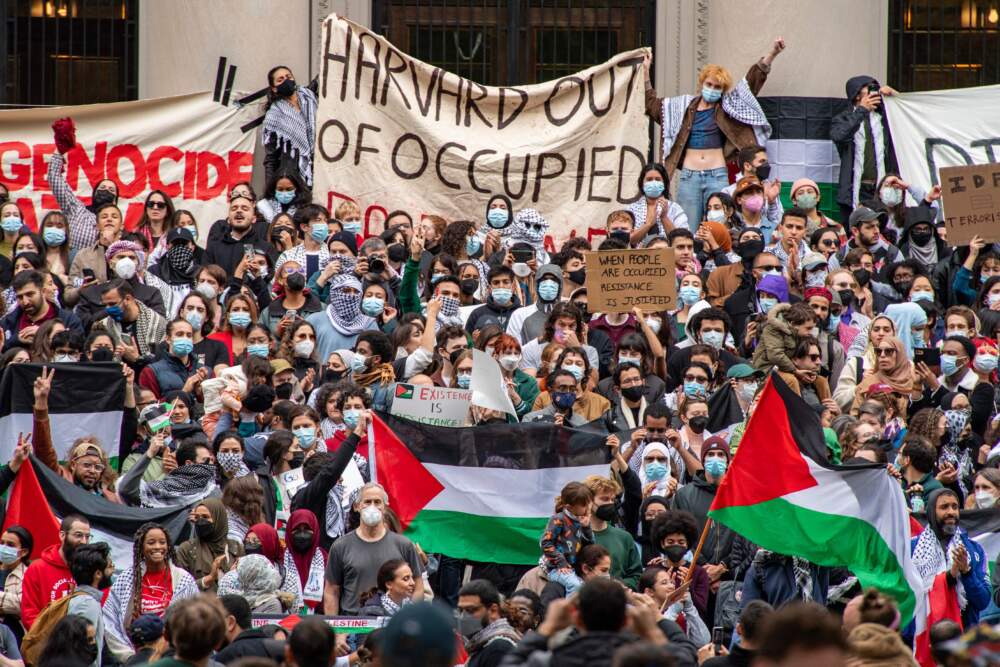


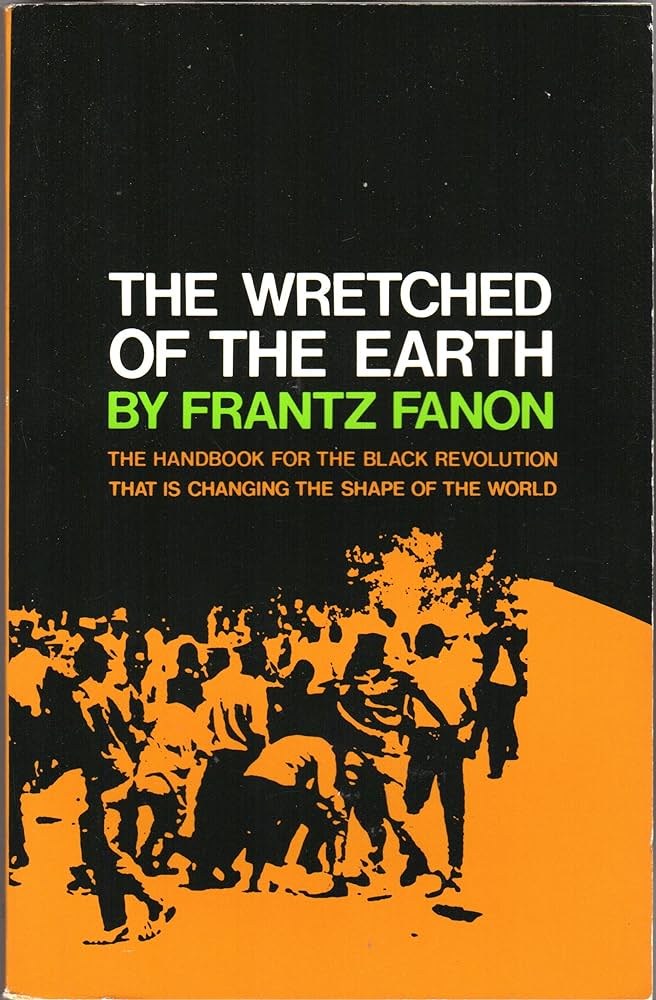



 freedom and reason