
Ayaan Hirsch Ali on Christianity: “That legacy consists of an elaborate set of ideas and institutions designed to safeguard human life, freedom and dignity—from the nation state and the rule of law to the institutions of science, health and learning. As Tom Holland has shown in his marvelous book Dominion, all sorts of apparently secular freedoms—of the market, of conscience and of the press—find their roots in Christianity”
Bill Maher thinks progressives are liberals when he calls out the contradiction between the values he supposes they hold and the fact that they’re out in the streets supporting the Party of God. But progressives are not liberals. There is no contradiction. Progressives have always been illiberal.
Progressivism articulates the soft fascism of corporate governance, a system that emerged in the late nineteenth century in which an administrative state, subservient to corporate power, directs the masses for the benefit of the master it serves. With this development, technocratic rule is recoded as democracy. But it’s really a species of authoritarianism.
Under technocratic rule, all the rights Maher identifies that liberalism brought the world—the result of Western Civilization and European culture and the global spread of capitalism—become subject to the determination of administrators and regulators. They are in effect negated as rights and become functionally arbitrary.
In Europe, the analog to progressivism is social democracy. In the UK, the analog to the US Democratic Party is the Labour Party. These parties are not working class parties, but elite organizations representing the interests of the professional-managerial strata that directs the working class for the benefit of the corporate elite. Programs such as diversity, equity, and inclusion (DEI) reflect the work of progressive thought. DEI and its analogs represent the antithesis of liberal freedom. They are regressive and tribal. Yet Maher stands with the Democrats.
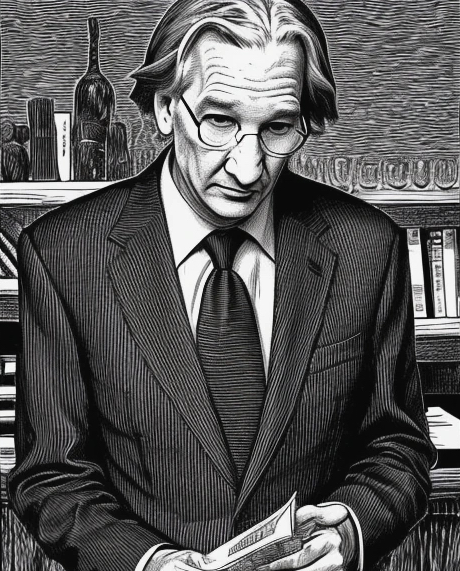
Maher also forgets to mention, or perhaps in his case his atheism makes it impossible to see or tells him to omit, the source of these principles: the Judeo-Christian tradition, especially after the Protestant Reformation. The idea of the individualism that emerges from this worldview is a game changer. From this follows human rights and religious liberty.
Maher’s dig at Republicans is especially noteworthy given the trajectory of his political-ideological transformation. His performance here appears to be an act of self-suppression. He has had quite a few of these in recent years. He must know that it’s the populist Republicans who represent his values, while the Democrats represents the soft fascism (and sometimes the hard fascism) of corporate governance. But because Republicans are committed Christians, Maher can’t bring himself to admit it. So while he’s getting more things correct as he walks this path, he seems unsure of where the path leads.
Ayaan Hirsi Ali, whom I have for years appreciated, and appreciate no less for her conversion, albeit I find it surprising and unnecessary, has become a Christian. It’s surprising because emancipation from faith belief for many is caused by and causes a radical shift in cognitive style. I had thought this was the case with Ali. To believe again in the supernatural after leaving a faith seems difficult for this reason. Indeed, it’s usually the true believer who can hop from one set of incredible beliefs to another. I don’t for a second believe Ali is a true believer. I thought perhaps her move was a show of solidarity with the West, but she argues that atheism can’t equip us for civilizational war. I don’t agree with that. I do agree that we are in a civilizational war, and in that war we must count among our comrades Christians and Jews.
The Russell Ali is referring to in the tweet is Bertrand Russell who, in a 1927 lecture, “Why I am Not a Christian,” touches various philosophical and theological issues in critiquing the rationality and validity of Christian beliefs. Expressing skepticism about the existence of God, Russell argues that there’s insufficient evidence to support the belief in a deity. He addresses historical aspects of Christianity, questioning the authenticity of biblical narratives and highlighting what he sees as inconsistencies in the biblical accounts of Jesus’ life and teachings. He discusses moral and ethical issues, suggesting that the moral teachings of Jesus, while often admirable, were not unique to Christianity and could be found in various philosophical traditions. He raises the classic philosophical problem of evil (theodicy), questioning how the existence of evil and suffering in the world could be reconciled with the idea of an all-powerful and benevolent God.
All these are solid points to make. But what Russell does not address sufficiently is the logic of Christianity that allowed for the development of the Enlightenment and Modernity—humanism, individualism, liberalism, rationalism, and secularism. That the supernatural elements of Christianity are irrational does not render inert the rational elements of the faith. It’s difficult to see outside of Judaism, other religious logic enshrining Christian values. Moreover, as we see with Islam, basing a religion on Judaism doesn’t mean its logic is carried over. And not all forms of Christian carry over this logic. As Max Weber rightly notes in his his most work, The Protestant Ethic and the Spirit of Capitalism, capitalism emerges in the places where Protestantism takes hold. The only other source of those values is Judaism, which Protestantism allowed Christians to behave like.
Weber tells us in a series of religious essays written during World War I (the ending of which today we commemorate) that included—really centered—ancient Judaism, “For the Jew, the social order of the world was conceived to have been turned into the opposite of the one promised for the future, but in the future it was to be overturned so that Jewry could be once again dominant. The world was conceived as neither eternal nor unchangeable, but rather as being created. Its present structure was a product of man’s actions, above all those of the Jews, and of God’s reaction to them. Hence the world was a historical product designed to give way to the truly God-ordained order.”
Weber continues: “There existed in addition a highly rational religious ethic of social conduct; it was free of magic and all forms of irrational quest for salvation; it was inwardly worlds apart from the path of salvation offered by Asiatic religions. This ethic still largely underlies contemporary Middle Eastern and European ethics. World-historical interest in Jewry rests upon this fact.” His conclusion is dramatic and prophetic: “Thus, in considering the conditions of Jewry’s evolution, we stand at a turning point of the whole cultural development of the West and the Middle East.” Except of the Island that is Israel, the Middle East has lost these ethics. It is now overrun by clerical fascists.
The German-American sociologist Reinhard Bendix, in summarizing Weber thesis, writes, “Free of magic and esoteric speculations, devoted to the study of law, vigilant in the effort to do what was right in the eyes of the Lord in the hope of a better future, the prophets established a religion of faith that subjected man’s daily life to the imperatives of a divinely ordained moral law. In this way, ancient Judaism helped create the moral rationalism of Western civilization.”
In an early essay, Karl Marx also remarked upon these qualities of Judaism and how they crossed over into Protestantism in a manner like Weber thesis. “Judaism reaches its highest point with the perfection of civil society, but it is only in the Christian world that civil society attains perfection. Only under the dominance of Christianity, which makes all national, natural, moral, and theoretical conditions extrinsic to man, could civil society separate itself completely from the life of the state, sever all the species-ties of man, put egoism and selfish need in the place of these species-ties, and dissolve the human world into a world of atomistic individuals who are inimically opposed to one another.” One sees here that while Marx is highly critical of the egoistic and selfish attributes of individualism he nonetheless recognizing this as a form of emancipation of man from automatic embeddedness in societal institutions. Marx concludes that, “From the outset the Christian was the theorizing Jew, the Jew is, therefore, the practical Christian, and the practical Christian has become a Jew again.”
This is why the Christian West must stand with the Jew in his struggle against the forces of irrationalism, the sharia-supremacist drive pursued by the Party of God—the Islamist. This is why the Islamist hates the Jew and the Christian West. And this is why the woke progressive marching in the street finds affinity with the Islamist. He, too, hates the Christian and the Jew. Our struggle is therefore not just an external one. The enemy is within. And he e joins the barbarian inside the city walls.
Ali could never entertain these arguments because she is, as a right-wing intellectual, is a sworn enemy of Marxism. If she possessed what cognitive style I attributed to her, perhaps she would benefit from understanding this argument, one that would allow her to throw in with the Christian without adopting his faith. But this is the problem with intellectuals like Ali—and commentators like Maher; blocking avenues of possible thought constrains one’s choice of comrades. In Maher’s case, it means he will continue to vote for candidates from the Democratic Party while taking potshots at the Republicans who are defending Western Civilization. At least Ali is on the right side.


