
Do you know who else pursued reciprocal tariffs? Franklin Roosevelt and the Democrats during the Great Depression. What? You lie. Nope. I don’t lie. See the Reciprocal Trade Agreements Act of 1934. Under the law, the president—without prior congressional approval—had the authority to negotiate tariffs bilaterally.
Why on earth would America want reciprocal tariffs? Not a hard question to answer: to maintain a trade balance so billions of dollars (now trillions) don’t leave the United States buying cheap goods from overseas. But it more than this. Reciprocal tariffs protect American industry and workers from foreign competition. Remember, America had closed off mass immigration in the 1920s. All this is what built the affluent working class in America—and undergirded the Civil Rights Movement.
My social media feeds—and of course the feeds of the legacy media—are desperately attempting to gin up panic over tariffs. “Smoot-Hawley!” Hey, lefties, 1993 wants its cheap propaganda back. Somehow the barometer the left is using is Wall Street and the opinions of the big financiers and their simps in the media.
How did the left become so obsessed with the interests of Wall Street? Why are they siding with the elite who sold out the working class? Wasn’t it only a few years ago that there was a mass movement called “Occupy Wall Street”? Remember that? Obama moves in and clears their encampments, and knuckleheads go home to return advancing the utterly fallacious arguments by Black Lives Matter and trans activists? Do they not remember that it was Obama who bailed out Wall Street?
Tell us you don’t have a clue about how the world works without telling us you don’t have a clue about how the world works. This is why I call this “zombie politics.” Reality check: organic working class politics lie well outside of the faux-left (progressive) sphere. If you’re not following the thread, the faux-left is now fully a tool of the globalist elite.
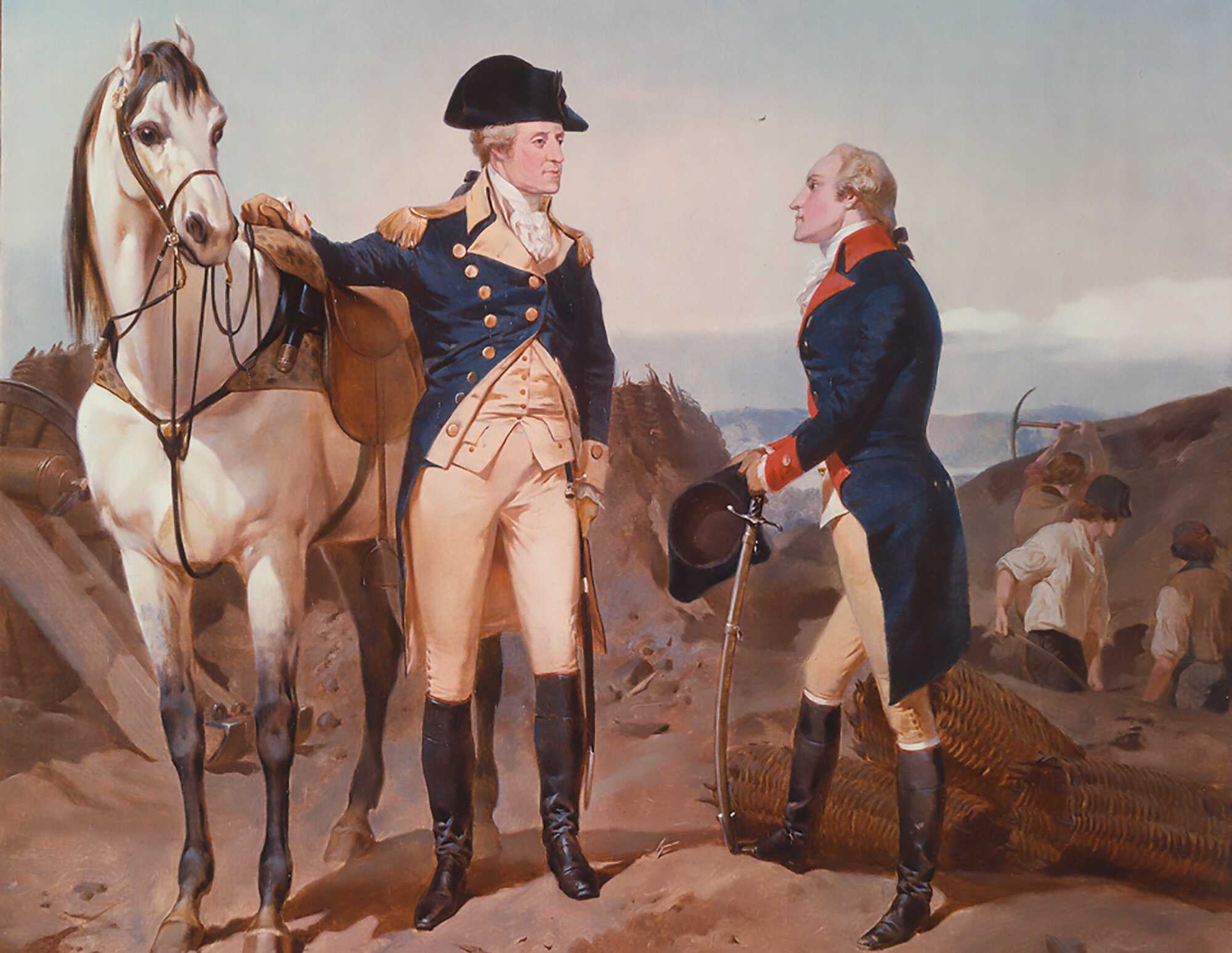
There is a long history of tariffs in the United States, stretching back to the nation’s founding. Tariffs were a core component of the American System. Alexander Hamilton, in his “Report on Manufactures” (1791), argued for government support of industry through infrastructure development and tariffs. Hamilton believed that diversifying the economy beyond agriculture would make the United States self-sufficient and less reliant on European imports. He was right.
The very first Congress of the newly minted American Republic, way back in 1789, passed the Tariff Act, signed by President George Washington on—wait for it—July 4. The purpose? Raising revenue for a fledgling government with no income tax (it should have stayed that way). Tariffs became the federal government’s primary revenue source, accounting for almost all of its income in the early years.
The Tariff of 1792 raised rates to fund military costs. During the War of 1812, which saw trade disrupted by British blockades, domestic manufacturing got a boost. After the war, the Tariff of 1816 became the first to explicitly protect domestic industry. Rates were considerable: 20-25 percent duties on manufactured goods like iron and textiles. The purpose was to protect American industries from British and other competition. Americans had learned the lessons of the War of 1812. Tariffs proved themselves as a tool in national economic development.
The Tariff of 1824 jacked up rates on cotton goods, iron, and wool. It was followed by the Tariff of 1828. As expected, the 1828 measure was adamantly opposed by the slavocracy, the oppressive exploitative system represented by the Democratic Party—globalists way back then. The measure raised duties to nearly 50 percent. This infuriated Southern exporters who decried retaliatory foreign tariffs. “Trade war!” This is what sparked the Nullification Crisis in 1832, when South Carolina tried to void the law. They failed.
The slavocracy was persistent. In 1846, the Democrat president James Polk slashed rates. The party pushed hard for free trade. This was followed by the 1857 Tariff Act, which dropped duties to about 20 percent—the lowest since 1816.
But the Civil War changed things rather dramatically (intentional understatement). With the South tossed from Congress, Republicans passed in 1861 the Morrill Tariff, raising rates to protect industry and fund the war. Rates climbed to nearly 40 percent by 1864. Post-war, they remained high—averaging 40-50 percent through the late nineteenth century. The McKinley Tariff of 1890 pushed duties even higher, hitting nearly 50 percent on dutiable goods. The purpose? Again, to shield American manufacturers from foreign competition.
Do readers see a pattern? Here are more data points. The Democrats, with the Wilson-Gorman Tariff of 1894, reduced rates, but Republicans restored high tariffs with the Dingley Act of 1897—pushing the rate to nearly 60 percent on some items. Protectionism remained until the early twentieth century. It is important to note that the Wilson-Gorman Tariff came at the same moment Democrats tried to impose an income tax on the American people, an attempt to shift revenues from external sources to internal sources. The Supreme Court struck down the law. (So Democrats pushed into the Constitution the Sixteenth Amendment, which established the income tax in America.)
With Republicans back in power after World War One, the Fordney-McCumber Tariff of 1922 raised rates again to protect farmers and industries battered by European recovery following World War One. This was followed by the Smoot-Hawley Tariff of 1930, signed by Herbert Hoover, which pushed duties to nearly 60 percent on tens of thousands of good.
In 1934, navigating the Great Depression, Franklin Roosevelt secured the Reciprocal Trade Agreements Act, which, as noted, let the president negotiate them down bilaterally. Negotiations with foreign countries allowed Roosevelt to push down the overall tariff rate by 1939.
The picture changes drastically post-World War Two. Global elites championed trade liberalization. The General Agreement on Tariffs and Trade (GATT), launched in 1947, saw the US slash tariffs. The Trade Act of 1974 further empowered presidents to negotiate reductions, and by the 1980s, average rates had plummeted to around five percent. In the 1990s, the North American Free Trade Agreement (NAFTA eliminated most tariffs with Canada and Mexico. Globally, under the World Trade Organization (WTO), US tariffs fell to an average of 2-3 percent by the 2000s.
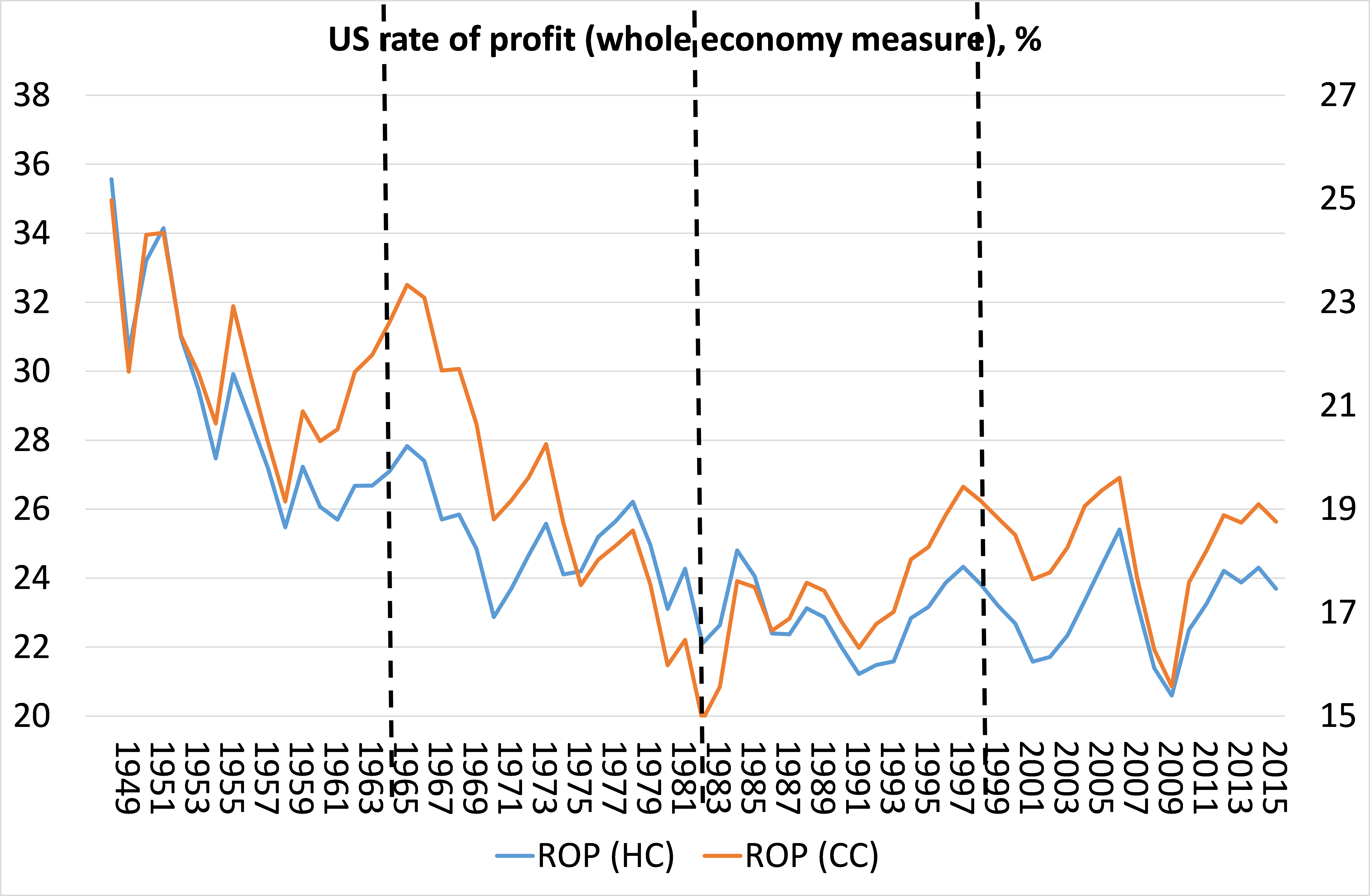
In the post-World War II period, globalization accelerated with expanded trade and integrated markets through institutions like the GATT and later the WTO. This era, which is the era that eschewed tariffs to protect American industry and workers, saw multinational and transnational corporations gain tremendous power, allowing capital to flow freely across borders, with production shifting to lower-cost (wages, etc.) regions.
The falling rate of profit during this period (see above chart) is a consequence of globalization and the over-accumulation of capital (this was theorized by Marx, for the record). As firms invested heavily in technology and scale to stay competitive, the organic composition of capital (the ratio of constant to variable capital) increased, squeezing profit margins. Shifting production to areas with cheaper wages may have offset declining profits here and there, but in the long term eroded them further as surplus value extraction declined.
Decades later, after the hollowing out of America’s manufacturing core, the country finally had a president who understands the American System. Donald Trump shocked the pollsters by beating Hillary Clinton in the 2016 presidential election. In 2018, Trump, citing national security concerns (Section 232 of the Trade Expansion Act), imposed tariffs on aluminum and steel. Trump hit China with duties on billions in goods. These were scaled back somewhat under a 2020 deal with China, but many have remained in place.
This brings us to the present moment. Trump was tossed from office in 2020 under cover of a pandemic and a color revolution. But in one of the greatest political comebacks in American history, Trump blew out his Democratic opponent in 2024, and with his return, and with Republicans controlling both chambers of Congress, America sees the return of reciprocal tariffs.
The American System lives again. Predictably, global elites are in full meltdown. They don’t want an American System. They want a World System, one they control—one that enriches them at the expense of American workers. And their representatives in America, the Democrats, more unpopular today than at any point since pollsters have tracked such matters, are desperately trying to make what Trump calls “Liberation Day” out to be an existential threat to the future of the world economy. We’ll see. But based on history, I don’t think so.


