The Biden regime’s 2022 fiscal year budget is out and the policy document replaces the word “mothers” with “birthing people” in a section that, while admitting “[t]he United States “has the highest maternal mortality rate among developed nations, with an unacceptably high mortality rate for Black, American Indian/Alaska Native, and other women of color,” has been interpreted by many as erasing mothers by listing a range of measures designed to “help end this high rate of maternal mortality and race-based disparities in outcomes among birthing people.”
The term “birthing people” is newspeak from the realm of trans-rights activism. The rationale from this camp for changing words in this way is about making language less rigid in terms of gender and more inclusive of those who claim to exist on the side of the gender binary opposite of their sex or lie entirely beyond the gender binary. One hears alongside “birthing people” such constructs as “chest-feeding” instead of “breastfeeding” and “people who menstruate” to refer to women. (Ancient warriors wore breastplates, for the record.)
‘People who menstruate.’ I’m sure there used to be a word for those people. Someone help me out. Wumben? Wimpund? Woomud?
Opinion: Creating a more equal post-COVID-19 world for people who menstruate https://t.co/cVpZxG7gaA
Biden’s budget has become another moment in what is typically referred to as the “culture war,” a struggle mostly blamed on the intolerance of conservatives towards human diversity. A story in the Indian Express, “Explained: History of, and row around, US budget using ‘birthing people’ instead of ‘mothers’,” accuses conservatives of using the “‘woke bogey’ to derail important, long overdue conversations.” It singles out Rowling (who is not a conservative) for having been offended by the constructs of “menstruating people” and “menstruators” replacing “menstruating women.” However, “menstruating women” would be a redundant construction, which was the point of Rowling’s objection to a story about “people who menstruate.” Poor reporting here.
Why would we need to say “birthing people”? Because it is not just women who give birth, according to the Indian Express. “Transmen—a person assigned the female gender at birth but who identifies as a man—and genderqueer people—who identify as neither man nor women—also give birth.” Newspeak is confusing to many people. The construct “female” refers to a biological truth. A person may, very rarely, be mistakenly assigned female at birth if there are congenital anomalies. There is a conditions, congenital adrenal hyperplasia, where excessive androgen production (male steroid hormone) produces ambiguous or masculinized genitalia and alters brain circuitry so that a genetic female will behave in a more traditionally masculine manner. Androgen insensitivity syndrome, another rare condition, can lead to a genotypic male having the external genitalia of a female. In the Dominican Republic, there are boys known as “Guevedoces” who appear as girls at birth but become boys at the onset of puberty (see “The extraordinary case of the Guevedoces”). However, a female may wish to reject her gender or sex assignment and identify as a boy or a man as defined by the gender binary (Buck Angel, a transsexual, speaks about the various issues surrounding all of this) or identify as a person beyond the gender binary.
The Indian Express notes the case of Freddy McConnell, a writer for The Guardian, who gave birth in the UK in 2018 while identifying as a man. McConnell opted against a hysterectomy because he was interested in having a baby. McConnell lost a legal battle to be officially recognized as the father of his baby. English common law requires those who give birth to be identified as the mother on the child’s birth certificate, a decision upheld at the Court of Appeal in April 2020. The Indian Express reports that “[p]eople argue that since the language of pre- and post-natal care is entirely built around a female mother, it erases such parents.” (The paper assumes language that suggests the possibility of a “male mother.” Other constructs may be imagined, but for any of them one must change the way one talks and thinks about things. Healthline’s article “Can Men Get Pregnant?” is illustrative.) Moreover, the paper notes, a surrogate may give birth to a child but not be the mother of that child. If there is no genetic relation between the woman and the child, I have been told by one person that the surrogate is not a mother at all. She is a “birthing person.” But why not just say surrogate?
The birthing person could be used in the future to incubate embryos created in the lab using a technique where the DNA of a man would be substituted for the DNA inside the woman’s egg. The sperm from the other man would be used to fertilize thst egg and a surrogate would carry the child to term. This is how it was reported by ABCNews in 2006: “The technique, which scientists agree still lies far in the future, would use the egg of a woman. Genetic material inside the woman’s egg would be removed and replaced by the DNA of one of the men. That ‘male egg’ would then be fertilized by the sperm of the other man and a surrogate mother would carry the child to term.” Newspeak would demand an updating of the language used by ABCNews. Indeed, changing language means that the hoops scientists would have to jump through to make this possible would be needlessly pursued, since the egg of a transman, who is by definition a man, could be used instead of an egg from a woman. And, if like in McConnell’s case, the uterus is retained, there is no need for a surrogate.
Working with standard and common sense definitions, a mother is a woman in relation to her child or children. To clarify, a woman is an adult female human being. Traditionally, society has distinguished between birth mothers and adoptive mothers. Women who have given up their child for adoption are still mothers. The birthing was not an imagined event. If the report wanted to be inclusive and express acceptance that there are women who carry babies who don’t identify as mothers (some surrogates and other women who do not identify as such), then the report could have been more inclusive by writing “birthing mothers or persons.” (The construct “birthing females” was suggested to me in a conversation but quickly withdrawn as soon the redundancy was obvious.) As it is, the report is so deliberately politically correct that it concerns maternal mortality rates while, in Orwellian euphemism, eschewed the facts of life. After all, “maternal” refers to mothers, especially during pregnancy or shortly after childbirth. Doesn’t the report therefore need new language for everything related to persons formerly known as mothers and women—while continuing to include mothers in the language? You know, to be inclusive?
This is such a half-assed attempt at newspeak that it’s embarrassing. But this is my government attempting to change the way citizens speak about basic and everyday truths. The implications of such an Orwellian practice are wide ranging if society is to take it seriously. Consider the practice of determining relations by reckoning matrilineal lines of descent, i.e., kinship with a mother. Is this basic anthropological truth to be rendered nonsensical for the sake of a political agenda?
I want to close by make sure readers know that I do recognize the role that surrogates play in allowing parents to have children and that one may not wish to describe that role as “mother.” I can understand why one would distance himself from such a profound emotional relation as that between mother and child by using technical language. Humans rationalize actions in all sorts of ways. The medicalization of social reality in words and practice is carried in the logic of corporate bureaucratic and technocratic relations. As we know, while language reflects reality, it also shapes perception of reality. As Orwell warned us, those who wish to change mass perception of reality are particularly interested in this function of language. Degendering language is colonizing the lifeworld in the same way that racialization is, pushed by corporate state power.
I try to not to be offended by the things others say. However, in this case, I find very troubling my government describing my mother—or women in general—in cold instrumentalist (and postmodernist) language. My mother is a mother and my government should refer to her as such, especially in policy language concerning maternal mortality. It is women who die in childbirth, even surrogates.
To pretend as if there is not a grand attempt to diminish the significance of women in the present epoch is delusional or dishonest. So, if it were just some person saying we should talk this way, I would most likely dismiss it. It is a ridiculous way of speaking and there are plenty of ridiculous people in the world. People believe in a myriad of non-things and use language and formulas to manufacture them and stand them over real things. It’s when they have power that it gets concerning. This is my government doing this. It affects my mother, my sister, and my wife.
At least we are not yet where Canada is. In 2013, in Saskatchewan (Human Rights Commission) v. Whatcott, the supreme court ruled that truthful speech can nonetheless be restricted if it runs afoul of state-approved language surrounding, among other things, the new norms expressed by prescribed language on gender and sex. In that case, which has become the basis of law and policy in Canada, the judges write, “Truthful statements can be presented in a manner that would meet the definition of hate speech, and not all truthful statements must be free from restriction.” In other words, truth is neither a defense nor an exception.
I want to close with good news from Great Britain. The BBC today carried the following headline: Maya Forstater: Woman wins tribunal appeal over transgender tweets. Forstater did not have her contract renewed at the think tank Center for Global Development in March 2019 after posting a series of tweets questioning government plans to let people declare their own gender. She claimed she was discriminated against because of her beliefs, which include the opinion “that sex is immutable and not to be conflated with gender identity.” In the initial tribunal, employment Judge James Tayler ruled, in language aligned with the Canadian high court, that Forstater’s approach was “not worthy of respect in a democratic society.” He concluded that she was not entitled to ignore the rights of a transgender person and the “enormous pain that can be caused by misgendering.” In other words, her truth claim was hate speech and therefore discrimination was justified.
In a higher court, Justice Choudhury said Forstater’s gender-critical beliefs “did not seek to destroy the rights of trans persons.” How could they? Thankfully the course corrected the error. But it is terrifying that Forstater was let go and that a lower court upheld that decision because she stated that sex is an immutable characteristic. Have we now the technology to turn the XX genotype into XY? Even if we did, why should a person be punished for words? But let’s not get overconfident about matters. Yes, a higher court has recognized Forstater’s right to express her opinion (the human right of cognitive liberty) and emphasized the truth that saying that a person cannot change her or his sex does not violate that person’s rights. And this is a very important moment. However, it is but one victory in the struggle for liberty. The outcome of that struggle is anything but clear.
Frustrated with the tendency of social media users to uncritically go with what somebody told them somebody else said, I recently wrote on Facebook, “When you don’t read a report or a study or watch a speech or a press conference and let the media tell you what the report said or what was said at the press conference, what you are essentially saying is, ‘Here, you tell me what to think.’” I get it. Technocracy brings with it a popular over-reliance on expertise. At least technocrats (selectively) appeal to it. We hear the demand for such over-reliance in the refrain: “Trust the science.”
The phrase “the science” is a curious one. Notice I italicized the article. When I appeal to the power of science I might put it this way: “trust science.” However I put it, no article will appear. Science is a method of apprehending the world. It is not an entity. It is not the priest or the church. Consider that there were Nazi scientists. There were doctors and experts in fascist regimes forming opinions about a range of things. For example, the Nazis judged some races to be inferior to others. Some of them were hanged at Nuremberg. Apparently their expertise was not above reproach.
In this essay, by opinion, I mean a judgment about something not necessarily based on fact or knowledge. Of course, an opinion may be based on fact or knowledge. You cannot merely say, “Well, that’s your opinion.” Scientists form opinions. Judges form opinions. They have expertise in their fields of study and practice. An expert is a person possessing an authoritative and comprehensive knowledge of or skill in a particular area. A rational person will recognize that not all opinions carry equal weight on the scales of truth. He should also recognize that experts do not always agree on what is truth or likely to be true.
But the appeal to expertise is a common one in our culture. When I question an expert’s opinion, for example on the efficacy or safety of some medical intervention, such as a vaccine or the wearing of masks, I hear from others a criticism that points to my lack of expertise in medicine. How would I know whether the expert is right or wrong if I’m not an expert in that area? They suggest I listen to an expert, the name of whom they often have at the ready. This is an interesting move since, for the most part, those who make the criticism and provide the expert lack expertise in medicine.
There is an interesting paradox here. How does the critic know that the expert he provides is the correct authority if he is not himself an expert in that particular area? By his own lights, if I knew what I was talking about, he wouldn’t know it since he is not an expert. But somehow, he knows more than I do, since he knows which expert I should listen to. He somehow knows I should not be listened to. This expert he provides is not proffered. The expert has the final word on the subject. Listen to Fauci. “You don’t even have to think about, dude.”
If I ask why I should listen to this person, the critic will likely respond that he trusts that the person is knowledgable of and has been trained in that particular area and has been judged to be an expert by some official body or respected authority. But it’s easy enough to point to another person, knowledgable about and trained in that same area, also judged to be an expert by some official body or respected authority, who has a different opinion. We might suggest that different opinions is the way science and medicine get better over time (which is why it is so scary that social media platforms are censoring contrary opinions—even by experts).
When confronted by two experts with differing opinions who does the non-expert choose as the authoritative one? If one takes his time to study the respective opinions of these experts, perhaps even consult the scientific literature on the subject matter, then he might be able to rationally judge which of them has the better opinion. But, short of putting in this work, which people rarely do (who has the time?), it is likely that the non-expert is going to arbitrarily pick one of them. I say arbitrary here not in the sense of random choice or personal whim, but rather for some reason not based on fact or reason. The choice will be ideological. It will be political.
For the non-expert who selects his opinions on a political-ideological basis, the expert selected will be quite naturally the one who agrees with his opinion, which is by definition not an expert one since it is held by a non-expert. By the critic’s own standard, why should we listen to his opinion? By my standard, which is to avoid uncritically relying on an opinion formed merely on the basis of appeal to authority, I shouldn’t listen to his opinion. Not that expertise doesn’t matter. But the critic is not an expert. By this own admission. He knows an expert when he sees one.
But have you noticed that those who chastise others for not “listening to the experts” or “trusting the science” don’t really listen to experts or trust the science? I am an expert in several areas of sociology. Among my areas of expertise are race, crime, and criminal justice. You might use me as an expert opinion on the question of systemic racism in policing, for example. Those who insist on listening to the experts and trusting the science might appeal to my expertise. But in my experience, this only happens when my opinion agrees with their opinion. They want me to say something, but only when what I say is agreeable. When it isn’t, they disregard my expertise. (Hell, as I discuss in a moment, they disregard me altogether.) If a conversation ensures, it proceeds as if the lay person has as much knowledge about or training in my area of expertise. They rarely do.
Sometimes people get mad at me or tell me that they are disappointed in me when I express a disagreeable opinion, even when my opinion is formed on the basis of my expertise and represents a reasonable conclusion from the scientific literature on a subject (which I have been trained to analyze). On occasion (too many these days) I have had faculty (anonymously), family, friends, and students telling me that I am not the person they thought I was or, more generously, that, somewhere, somehow, I lost my way. Some bad opinion has corrupted, polluted, or radicalized me. With expressions of profound dismay, sometimes dressed in feigned empathy, more often aimed with shame, they tell me that they hope I will find my way back to their opinion.
Their opinion. That’s really what their complaint is all about, isn’t it? They thought I upheld their judgment. Far more important than my expertise—for if it were truly important, then they would consider my opinion—is whether my opinion aligns with theirs. At best, my agreeable opinion only served as an expert endorsement of their lay opinion, which is correct regardless of facts and reason. They exploited my esteem to bolster their case. They wanted to wear my authority. When I no longer agreed with them, I was no longer useful to them.
More than this, I became an adversary, one whose expertise could potentially sway those around them, which is all the more reason to dismiss my opinion as issuing from a man lost in the wilderness. “Don’t listen to him. Something happened to him.” The possibility that they may be confused or deluded by propaganda or ideology is skirted by portraying the expert—whose scientific training is fungible across a range of disciplines—as the ideologue. They are not unreasonable for clinging to an opinion this expert finds disagreeable. The expert is unreasonable and others shouldn’t trust him. Because, in faith-belief, it’s all about trust. This does not damage the practice of appealing to expertise because it is a cynical appeal. There are other experts out there who will articulate a more agreeable opinion. Cite them as the authority.
I am no elitist. I want people without expertise to throw themselves into an area and gain useful knowledge about it. If people want to challenge a trained sociologist, then bring it on. Plenty of people are smart and knowledgeable enough about subject areas in which they have little or no training to make for interesting conversations. But the amateur advances knowledge really only if he knows what he’s talking about or knows what he’s doing. And he usually doesn’t. Indeed, one thing expertise is good for is knowing when people don’t know what they’re talking about. But I’m damned here, as well; I am arrogantly lording my expertise over the amateur if I expose his lack of knowledge.
Barbara Sprunt, for National Public Radio, in “The Brewing Political Battle Over Critical Race Theory,” describes CRT as “an academic approach that examines how race and racism function in American institutions.” I’m a sociologist who has taught law and society, race and ethnicity, and social theory (among other things) for a quarter century. I teach critical race theory. I understand it. I’m not going to let NPR lie about it.
NPR turns to academics to back up its claim that opposition to CRT is a reflection of right-wing anxieties. They didn’t talk to me. Believe me, academics are among the most deeply indoctrinated people on the planet. As cultural managers, it is crucial to get them on board, and decades have been spent recruiting people into humanities and social sciences to take up and dissiminate New Left and postmodernist doctrines. The truth is that CRT is an illiberal doctrine masquerading as an academic approach. That it prevails in our cultural institutions demonstrates the success of corporate power leveraging the neo-Marxist strategy of the “long march.”
Sprunt quotes Republican Ralph Norman as saying, “Critical race theory asserts that people with white skin are inherently racist, not because of their actions, words or what they actually believe in their heart—but by virtue of the color of their skin.” Norman is correct. According to CRT doctrine, white people are racist by virtue of their skin color. The only way to lessen one’s racism is to be an ally by proclaiming anti-racism and anti-whiteness. You cannot be non-racist, according to the anti-racist worldview. This is why you are forced into diversity training sessions—you are presumed racist. Denying you are racist is a sign of fragility, which loops back to race privilege, which whites possess at birth.
CRT asserts that our legal system is an institution designed by whites to reproduce white racial power. CRT says MLK, Jr.’s dream of a colorblind society is a form of white power. King was, from this view, a naive preacher sucking up to white people. He bought into the American creed, which CRT claims to reveal as racist. CRT rejects colorblindness for law and policy based explicitly on racial categories. CRT is a system of formulas that pull social structures from thin air. Its fallacies make it easy to demolish, but you have to escape the church of the woke to get the critique.
What makes CRT so fundamentally illiberal, and by that I mean authoritarian, is that it equates liberalism, the foundation of law and policy in the West, the ideas that make of free people, with white supremacy. It then demands the dismantling of white supremacy by dismantling the present legal order. CRT seeks to replace Enlightenment notions of individual rights and the presumption of innocence, with the burden of proof lying with those making accusations, with group-based rights, and the presumption of guilt on that basis, with no possibility of denying guilt, thus shifting law and policy away from a equality to equity, where those have less take from those who have more on the basis of racial identity.
If it is unclear from which group wealth is to be appropriated, then let me make it clear: white people owe black people because of things dead white people did to black people a long time ago. It’s a doctrine of original sin, and whites are the eternal sinners. CRT leads us into the absurdity of poor whites enjoying race privilege while rich blacks suffer race oppression. You can only get to that lunatic conclusion by assuming all whites are racist.
The function of CRT is to distract the masses from class struggle and economic inequality by ramping up antagonisms and resentments based on supposed tribal differences. That it’s the Democrats pushing this, while Republicans, especially the populists, resist it, tells you which party best represents the interests of the ruling economic class. That progressives push open borders and populists push back is another clue as to who best represents the ruling economic class. CRT and open borders benefits corporations and the protects the system that secures their power.
We see the same thing in the United Kingdom, where the Labour Party has redesigned its politics to appeal to affluent white progressives and a constellation of minority groups claiming victimhood status over against working class Brits. Populism in the West is pushing back. This is why we hear so much in the corporate media about white reactionaries resisting CRT. But they aren’t white reactionaries. They have liberal instincts.
I want to use today’s blog to talk about two things. First, COVID-19 appears to be winding down. It will likely make a comeback next winter, since strains of the coronavirus pass through the population every year (many of you reading this blog have already had a coronavirus at some point in your lives), but because of herd immunity, it likely won’t be as bad as it appears it was this time around. Second, the reparations discussion, like the coronavirus, is also making the rounds again. However, unlike the coronavirus, there appears to be no effective immune response to the virus of racial animosity and resentment. We have to expose the agenda behind it.
COVID-19
On the COVID-19 front, we are now at a weekly average of cases we haven’t seen since March 2020. On June 1, 2021, the seven-day case average was 17,119. It is almost certain that there were far more cases in March of last year. We are currently daily testing many thousands of more subjects for the virus than we were back then. Cases began falling after the peak in early January, 2021, indicating that the population had reached herd immunity.
Although authorities are eager to promote vaccines as the reason for the sharp decrease in cases, the vaccines cannot be responsible for most of it. The peak case frequency was January 8, 2021 (more than 300 thousand cases). At that point 0 percent of the population was fully vaccinated and only 2 percent had received one of the mRNA vaccine. By March 10, 2021, with only 10 percent of the population fully vaccinated, we had already seen a more than 80 percent decrease in daily cases from the January 8 peak. Many of those who have been vaccinated had already had the virus, so any efficacy claims later in the year is confounded with what we now know is effective natural immunity from SARS-CoV-2 (if you have had COVID-19 a vaccine is unnecessary).
Despite this, the campaign to be vaccinated is now targeting children. It is profoundly unethical to persuade children to take an experimental vaccine for a virus that, for the vast majority of them (and for the vast majority of the general population), carries no deleterious effects (see “A Moral Panic. A Year Later”). That we got to the point where parents would not en masse rise up and protest the exploitation of children as experimental subjects indicates that we are far down the authoritarian road of trusting corporate power and the functionaries in its employ (fear and misinformation haves played roles in this; see “‘Whatever that number is’”). And how forgotten the horrors that produced the Nuremberg Code (“The Immorality of Vaccine Passports and the Demands of Nuremberg”).
We already had an indication of how far down that road we already are when virtually the whole of the medical-industrial complex, for the sake of investments in vaccines, refused to treat those with COVID-19 or at risk from COVID-19 with therapeutics, such as hydroxychloroquine and ivermectin, and the public dutifully went along with it (“The Enduring Panic Over SARS-CoV-2”). Tens of thousands of people died unnecessarily. At least from a moral standpoint (corporate profits do not seek moral means when they don’t have to). Perhaps now that Trump is no longer in office, and we are actually able to publicly question the role of the People’s Republic of China in spreading and possibly manufacturing SARS-CoV-2, we can shake up popular consciousness.
(Note: I have written extensively on the COVID-19 pandemic on Freedom and Reason going back to March 2020. To find those blogs, search site:andrewaustin.blog and “COVID-19” or “SARS-CoV-2.”)
Reparations
In an article in Politico concerning the one hundredth anniversary of the Tulsa massacre of black Americans by white Americans, a descendent of a survivor, Anneliese Bruner, calls on the former vice-president Joe Biden to embrace reparations. For his part, the former vice-president, in a speech from Tulsa n May 31, 2021, spoke about “reaffirming our commitment to advance racial justice through the whole of our government, and working to root out systemic racism from our laws, our policies, and our hearts.”
“The argument was a striking contrast from his predecessor, Donald Trump, who promoted a heroic vision of American history,” David Smith of The Guardian writes. In typical Trump-bashing: “On the massacre’s 99th anniversary, Trump had posed with a Bible outside a historic church after security forces teargassed protesters outside the White House. He headed to Tulsa later that month for a campaign rally that breached coronavirus safety guidelines.” Smith continues, “Biden’s message appeared to be the opposite of ‘Make America great again’ [referencing the slogan President Trump lifted from Ronald Reagan]—an acknowledgment that America’s history includes slavery and segregation, and that only looking that fully in the face can allow it to move forward.”
In that speech, Biden claims that, “there was a clear effort to erase [the Tulsa massacre] from our memory, our collective memory.” I have long known about the Tulsa massacre. I lecture on it in my sociology courses. But even before that, I knew about it and discussed it with those around me. I am not aware of any efforts to erase the event from history. Biden means to represent the case as something hidden from Americans in order renew the reaction to crimes perpetrated long ago in order to advance the antiracist project of racial justice. To remember something does not mean it was forgotten.
Although unintentional, Smith’s characterization of Biden’s speech as lying opposite to Trump’s draws a nice contrast between the attempt to portray America as fixed and frozen and those who tout the record of America’s progress. In the former, America’s historic paralysis is found in its establishment in 1619 as a racist slave state. In the latter, America’s progress is thanks to its founding in 1776 on the Enlightenment principles of equality and liberty for all. In other words, Trump’s MAGA slogan has its antithesis in Biden’s speech: MARA, or “Make America racist again.” (See “Truth in the Face of the 1619 Project: The United States and the West Did Not Establish Slavery—They Abolished It.”)
The title of Smith’s article: “Joe Biden calls for US to confront its past on 100th anniversary of Tulsa massacre” suggests we haven’t. The facts determine whether this claim is true. Since Tulsa, the United States has abolished Jim Crow segregation, passed landmark civil rights legislation, and made discrimination against black Americans illegal. Before Tulsa, our ancestors overthrew monarchy and established a democratic republic that protects free speech rights, the right to assembly, the right to privacy, and the right to self-defense. Having inherited slavery from a world in which the practice was ubiquitous, our ancestors abolished the slave trade and fought a devastating civil war to emancipate blacks from slavery, setting an example for the whole world. More Americans died in that war than any other war America has fought. Having inherited patriarchy from a world in which sexism was ubiquitous, the United States affirmed the right of women to participate in politics. In the 1940s, the United States help lead the effort in defeating the threat of world fascism, a war that encompassed the globe, and in its aftermath led the world in the global recognition of universal human rights (and in establishing the Nuremberg Code). More recently, the United States led the way in marriage equality. Let’s celebrate our past instead. The claim is untrue.
Those who claim no progress have an agenda (see “The Elite Obsession with Race Reveals a Project to Divide the Working Class and Dismantle the American Republic.”) Critical race theory is organized to overthrow liberalism and replace it with an illiberal system of group rights based on race. Instead of equality before the law, antiracists call for equity, in which those who have little make a claim on those who have more and do so on the basis of ancestry. Moral entrepreneurs are exploiting Tulsa and other unforgotten moments in history to extract wealth from others on account of the suffering of others, most of whom are long in their graves.
To be sure, those who perpetrated the Tulsa massacre should have been held accountable for their actions. Are there any still alive? We know there are three survivors. Are there surviving perpetrators? There is no statute of limitations on murder (that goes for lynching, too). Find them and drag them into court. Justice delayed or never made is justice denied. While we can regret that nothing was done then, the crimes are in the distant past and, without perpetrators to hold responsible, nothing can be done now—not without creating more victims.
Nobody is to blame for criminal actions except those who perpetrate them or, perhaps, those who could have prevented them but didn’t. To ask the descendants of those who perpetrated a massacre a century ago to pay money to those descended from the massacred is to hold children guilty for the crimes of their parents. This is a deeply immoral principle. Blood guilt is a primitive quasi-religious notion. Surely we’re not talking about reparations from all those who share the skin color of those who perpetrated the massacre. That would be a deeply racist proposition.
* * *
Imagine, if you will, a theory that explains the evolution of natural life by idenfiying God as the causal force. In order to see God, one needs a specific language that reveals him, since God is the unseen causal force operating behind the seen/scene. Now imagine that this theory catches on at colleges and corporations and administrators set up training sessions to make sure all employees align their thinking with the theory. Let’s call the theory “creationism.”
Now consider a theory that purports to explain the evolution of social life by identifying racism as the cause force. In order to see racism one needs a specific language that reveals it, since racism is the unseen causal force operating behind the seen/scene. The theory has caught on at colleges and corporations and administrators have set up training sessions to make sure all employees align their thinking with the theory. Let’s call the theory “critical race theory.”
You can substitute natural selection for God in the first paragraph. We teach natural selection in the classroom. But we don’t require all employees to attend training sessions to make sure they align their thinking with natural selection. There are college professors who believe in creationism. We don’t send them to struggle sessions or cancel them on the basis of their beliefs. Moreover, there are competing ideas in the field of natural history. We don’t punish a teacher for teaching punctuated equilibrium. We do worry when they teach creationism, since this is a secular society.
However, critical race theory is not comparable to established theories of natural history. Critical race theory is comparable to the first theory I articulated, the one that appeals to supernatural forces. Critical race theory comes replete with a theory of original sin and collective guilt. A child is guilty for the crimes of his parents and on account of his race, an abstraction without any empirical underpinnings. Natural selection proceeds by induction from empirical generalization. There is a world of difference between critical race theory and science.
In this blog I show that critical race theory (CRT) advances anti-Enlightenment standards and explain why this would be a disaster for education and the law. In the process, I talk about moment in my awakening to the problems of what we might call the “Awokening.”
* * *
States have been moving to prohibit the inclusion of critical race theory (CRT), a quasi-religious doctrine smuggled in through, among other things, the revisionist “1619 project,” and, more broadly, antiracist politics, in public school curricula. (Arizona, Arkansas, Georgia, South Dakota, and Texas have passed or are debating legislations restricting or banning the teaching of CRT and related ideas.
One of the latest state government to protect children from this malevolent ideology is my home state of Tennessee. The Tennessee State House voted to ban CRT from public schools. The legislation, which now moves to the Tennessee State Senate, prohibits public schools from promoting collective guilt and race essentialism.
The founder of the “1619 project,” journalist Nikole Hannah Jones, decries resistance to CRT as an attack on freedom of thought. Her characterization of the resistance as anti-intellectualism is wrong. The resistance is about limiting the indoctrination of students in what Manhattan Institute’s Christopher Rufo correctly identifies as state-sanctioned racism (see Rufo’s piece in The New York Post, adapted from his article in City Journal).
In this blog, I show that critical race theory (CRT) advances anti-Enlightenment standards and explain why this would be a disaster for education and the law. In the process, I talk about moment in my awakening to the problems of the Awokening that I alluded to on my previous blog entry.
* * *
As I have noted in previous blogs, there was a period in my life in which I found critical race theory compelling. I was a graduate student in the 1990s, and I became interested in the possibility of a synthesis of historical materialism and critical race theory in which the latter would be articulated in language indicating the ontological status of the former.
As I was preparing the proposal for my dissertation, I began increasingly frustrated with description of racism as largely ideological (see the work of Barbara Fields) and endeavored instead to conceptualize racism as a material relation in the manner of social class. I used the model in my dissertation, which I successfully defended in the summer of 2000, a two-volume 800-plus page study of America’s history of class, race, and criminal justice.
I had intended to publish my dissertation as my first book after tenure (which I earned in 2005). I knew a project that large would require a lot of work to make digestible for the market, so I focused on other things. However, I began to have my doubts about the model I was using over the decade following graduate school. There were for several reasons behind my hesitation, but I will share here one moment I believe illustrates the process of waking up.
* * *
In spring 2010, I taught Law and Society (I have taught the course several times over the last twenty years). I included on the syllabus as required reading An Introduction to Critical Race Theory by Richard Delgado and Jean Stefanic. This was an undergraduate class and I felt that the book was pitched at a level that was understandable to the mostly young people who enroll in the course.
I had in senior seminar on critical legal studies included more complex writings from law journals and found that students, even though they were sympathetic to the idea of critical race theory, struggled to understand the argument. I felt that what was lacking was a basic understanding of the CRT approach. So I was going to prepare my juniors with Delgado and Stefanic.
As I was explaining the logic of CRT, I kept mentally putting the book’s claims in the critical framework I use in my Foundations of Social Research class, where students are taught the major problems with human inquiry, such as illegitimate teleology, mystification, reification, selective observation, and tautology, as well as strategies to use for detecting bullshit masquerading as rational argument and scientific knowledge.
I soon found it impossible to discuss any part of Delgado and Stefanic’s book without it evolving (devolving, I’m sure progressive students felt) into a demonstration of my debunking approach. I was compelled by conscience to apologize to students for having assigned the book, as it was not only substantially wrong on the facts of history and in its sociology, but because it was assigned to the wrong class; it would serve better as an illustration of fallacious thinking in a logic and critical thinking course.
As I remember it, the apology occurred in stages. I told them that we would not be engaging in exercises appearing at the end of some chapters that were designed to humiliate the white students in the class (which may have been all of the students in the class that semester). The book’s purpose in a legal studies class, I clarified, was to review an area of theory supposed by many to be a legitimate approach to the understanding and practice of the law, not to make white people feel complicit in racism.
We soldiered on, and I really tried to make it work, but it became increasingly clear that the book, in addition to its embarrassing errors in basic logic, was pushing an ideology that denigrated the Enlightenment principles of law, reason, and science upon which the United States and the West was founded. I expressed chagrin over having selected reading material that was more akin to religious ideology than legal theory.
I never used Delgado and Stefanic’s book again for Law and Society or any other course. If I ever use that book again, it will be in the context of a topics course deconstructing racist propaganda.
* * *
What do I mean by racist propaganda? I have written elsewhere about this, but let me explain here as concisely as possible. I wish it were necessary to do this, but since CRT is worming its way into everything, we must educate people about it.
Critical race theory describes two models of justice. The first, CRT calls the “perpetrator’s perspective,” which embodies the enlightenment principles of reason and evidence in the adjudication of guilt and responsibility of individuals, in which there is a presumption of innocence in any accusation of wrongdoing with the accuser shouldering the burden to prove, either with a preponderance of evidence or beyond a reasonable doubt that the accused is culpable and acted intentionally (with varying degrees of responsibility and intentionality based on fact and principles).
Critical race theory advocates substituting for this model an alternative they call the “victim’s perspective,” which shifts the burden of proof and implicates an abstract and largely arbitrary aggregate, organized as a demographic category, as a priori guilty and responsible, what we might call the “perpetrator collective,” whereas all members of the abstract and, again, largely arbitrary demographic category as the “victim.” The formula yields the conclusion that all whites are perpetrators and all blacks victims.
The “evidence” presented in adjudicating the charge is aggregate statistical averages showing inequality, or inequity, as they would have it, between the abstract groupings, which is taken not only as prima facia evidence of injustice, reckless enough in itself, but is taken as the thing itself, i.e., the very perpetration of racism. With this move, racial disparities need not explanation. If one tries to explain disparities outside the framework of critical theory, then those who suffer from fragility (white people who cannot deal with their racism) are engaging in blaming the victim, both of which (fragility and victim blaming) are yet more expressions of racism.
Defending liberal justice by emphasizing the colorblind procedure of the perpetrator’s perspective, founded as it is on individual responsibility, presumption of innocence, rational adjudication of fact, and forth, is said to be a trick, where racist patterns are maintained by denial and the pretense of equality before the law and rational procedure and process.
Thus, white people, an organic entity assumed to be an actual thing with agency, have constructed an institutional framework that, despite having largely purged thought of race prejudice, illegalized discrimination, and dismantled racist institutions, systems, and structures, remains profoundly racist and always will until its foundations are entirely replaced by a new formal system with mechanisms based on the reification of racial groups as actual things, with an official history, thus reestablishing racism systemically but with a new name: antiracism.
Today, according to CRT, America is a racist country without racists, marked by institutional racism without racist institutions, systemically racist without racist systems, structurally racist without racist structures. Racism is woven so deeply into into the warp and woof of American (and Western) society that it is an unseen part of the material only to be discovered by unraveling the fabric. In this view, whites not only bear their guilt collectively, but carry it intergenerationally—just as blacks inherit race trauma and victimization from their ancestors.
By subsuming individuals into abstractions and supposing mythic relations between abstractions, abstractions assumed to exist in asymmetrical trans-temporal power relations that “explain” statistical outcomes, CRT wipes away variation within demographic categories, committing the ecological fallacy, while also committing the fallacy of misplaced concreteness, that is treating imaginaries as actual things, mystifying the cultural and social factors that actually explain the aggregate patterns.
These errors lead to all sorts of weirdness, such as giving up on closing the gap in scholastic achievement by declaring academic standards—including even math and science—as white supremacist and demanding that institutions hold black children to a different standard, which is regarded as valid based on a postmodernist notion that ontology is reducible to epistemic frames differentiated by worldviews determined by, among other things, race essentialism.
Thus objective knowledge is upended by the epistemic privilege of race, with the race enjoying that privilege the race that has tautologically determined collective disadvantage due to systemic oppression. Critical race theory is a mess.
* * *
I was able to save the unit by going beyond the book itself to the deeper philosophical underpinnings of anti-reason, of which CRT is a species. Here, the distinction between the materialist conception of history (Marxism) and neo-Marxist critical theory, with its postmodernist corruption, came to the fore. Since I had already covered Marxian and Hegelian conceptions of law, I was able to make the critique meaningful. Let me share a bit of this with the reader, as well.
Contrary to what liberals tell us, Karl Marx remains in the Enlightenment tradition of scientific reasoning, indeed embracing both deductive and inductive procedures in the synthesis of dialectal method. For Marx, the dialect was a scientific method for explaining and understanding facts by working the concrete into abstraction via induction and then confirming the emergent concepts and their theoretical relations by using them to explain how dynamic forces of historical development produced and distorted law and consciousness. It isn’t very often put this way, but Marx was an anthropologist looking for the principles of social history in the same way Darwin studied organisms and ecosystems looking for the principles of natural history.
What differentiates Marx from Hegel is that Marx saw individual human beings as both natural and social beings, that is beings determined by natural forces and social relations, who, whatever the variability of human beings across time and space, shared a species-being. There is no spirit realm. What was supposed as the transcendent is estranged consciousness emerging from alienated social relations. In other words, because most men do not control production they are controlled by it.
Marx worked with the assumption that there was ultimately one reality even if social relations organized people into classes that came with different and conflicting interests, interests of which they may be falsely consciousness. The philosophical and political right bristles at the concept of false consciousness, but the idea that a man may be wrong about the world around him is hardly a controversial observation from the standpoint of science. Indeed, the purpose of science is to align consciousness with reality. For Marx, science is, among other things, a means for determining one’s interests vis-a-vis the social system and bring individual consciousness in phase with one’s actual position in the class structure.
German idealist Georg Hegel
Hegel, in contrast, saw individuals as personifications and instruments of the absolute idea working itself out in history. A man studies history to discover the transcendent mind grasping itself. Thus, for Hegel, the natural and social world were concrete determinations of an a priori abstract being reflecting on itself. The absolute idea in Hegel is essentially the spirit realm rejected by Marx’s atheism. Marx held that Hegel had it backwards. In truth, man makes the world. Ideas matter, to be sure, but they do not make anything without action. Moreover, Hegel conflates epistemology and ontology. Hegelian philosophy is essentially a religious doctrine, even if Hegel was an atheist.
Critical theory under the influence of postmodernism and the New Left, Hegelian in their idealism, but claiming to be Marxist in some fashion, and accused of Marxism by the political right, managed to lose both threads. Like Hegel, CRT supposes that the epistemic determines ontology. Knowledge is power. It is about how we talk about the world that makes it what it is. The word made flesh through reflection. And history is the living dead. Where it departs from Hegel is in the postmodernist notion that ontology is plural, that the variability of interests and consciousness are correlates of multiple realities with multiple logics, each determined by the imagined character or essentialism of an identity and the relative power of that identity. But it is not only imagining the world this way. We are not to be so lucky. Power is amplified by action organized around consciousness of that identity.
One becomes estranged, then, not when one fails to grasp the one albeit differentiated reality through scientific inquiry (science is merely one narrative among many and is, in the end, like all the rest of them, the expression of power), but when one breaks with doctrine revealed by grasping the essence of the group. This is why a black man who rejects CRT, who instead is searching for the terms of the common reality, a reality that exists independent of race, is a heretic worthy excommunication from the church of blackness—and all whites are perpetrators of racism. Glenn Lowry or Thomas Sowell are Galileos in the Church of Wokeness.
For critical race theory, blacks and whites cannot share the same interests and either one view dominates the other or the two build their own worlds, the latter an expression of race-nationalism. So it is that white supremacists and critical race theories can posit the same world—at least if you assume an objective standpoint.
* * *
The consequence for law if CRT is taken seriously is profound. In liberal tradition of law, based on the Enlightenment principles, reasonableness lies at the basis of everything. There is the reasonable person standard, an abstraction to which concrete individuals are compared in judging the reasonableness of their actions. We ask the jury to consider what a reasonable person would do. There is reasonableness in the realm of doubt. Juries are asked to be rational persons who, sharing the same nature, find the defendant guilty beyond a reasonable doubt. This standard presumes there is unreasonable doubt. If doubt is unreasonable, we should not obey it. Marx did not reject any of this, so it is incorrect, as liberal and conservative critics of critical theory often do, to saddle Marx with the irrationalism and ultimate authoritarianism of critical race theory.
We can differentiate individual or liberal style justice, with its norms and values of civil rights, equality before the law, presumption of innocence, and rational adjudication of fact, from the style supposed by critical race theory, which emphasizes group rights organized around race, equity in outcome (members of different groups should be held to different standards), presumption of guilt (members of one group are by definition “perpetrators,” while another are by definition “victims”), and treating disparities in outcomes as prima facia evidence of injustice (dispensing with cause and effect). As one can see, the latter commits numerous fallacies—ecological, reification, and self-confirming.
When a woke black jurist convicts a white cop not on the basis of the facts concerning the suspect’s death but on the basis of black lives matter and whites are racist oppressors, this is not, from the standpoint of critical race theory, unreasonable. What is reasonable is not a universal standard but rather is relative to one’s identity. This is racial tribalism. It’s racism.
* * *
My experience in Law and Society that semester reminded me of the importance of deliberately thinking about the difference between education and indoctrination in course design and execution. The former involves cultivating in individuals the capacity for differentiating between, on the one hand, claims that are logically valid and empirically sound and, on the other, those that are fallacious and unsupported by fact. The latter is aimed at persuading by irrational means—biased frames, formal and informal fallacies, false or selected facts, reification, etc.—acceptance of the alleged truth claims of ideological doctrine.
Education endeavors to question received beliefs in order to produce and refine knowledge, i.e., verified belief, which, whether pursued as a Lockean liberal or a Marxian socialist, remains firmly rooted in the Enlightenment, whereas indoctrination endeavors to compel individuals to receive beliefs from authority and to do so without question.
Eduction concerns empowering individuals by elaborating their capacity for reason. Indoctrination concerns overpowering individuals in a misuse of authority. It is not that knowledge cannot include a call to action. It is rather than distorting knowledge for the sake of an agenda founded on group-based doctrine is dangerous. Calling Enlightenment philosophy or liberal law racism of the white man does not justify the imposition of antiracism. The question is whether the “racism” of the “white man” are really such. And they really aren’t. We know this because the reasonable standard supposed by it is universal and unchanging. Human nature is not determined by ideology.
An indoctrinator is a person who, consciously or unconsciously, includes or excludes information and frames ideas in a (misleading) way serving political-ideological ends. Universities and colleges, from the classroom to the administrative office, are presently engaged in the production and dissemination of racist ideology. If education and indoctrination are to be kept distinct (and I hope it is obvious that they should and why), then nonscientific theories of history and social relations should not be taught as knowledge, and certainly not as doctrine. No doctrine should be taught to children. More than this, when such theories are demonstrably false, whether on logical or empirical grounds, they should not be taught at all.
This is not an attack on free thought. A teacher or administrator is free to believe whatever doctrine he or she wishes. Most public school teachers are Christians of one sort or another. At the same time, all teachers are forbidden to preach the Christian gospels in public schools. A teacher is not only not allowed to indoctrinate students with Christian doctrine, he or she is not allowed to use Christianity as a valid method for explaining or understanding the world. At least not in front of student. This does not preclude teaching Christianity—or Judaism or Islam—as mythology in a class where mythology is a legitimate subject of study (and there are many classes where this relevance may be had including science classes). It means religion cannot be taught as authoritative. And it should be taught as wrong, as all nonfalsifiable doctrines should be presumed.
* * *
Consider that individuals designated white by contemporary demographic schemes are an aggregate. One may identify statistical averages across numerous categories associated with an aggregate—income, occupation, family structure, and so forth. One can make predictions based on means and variations about them. But such statistics remain abstractions. They do not describe actual persons. The abstract white person has no biography. The concrete white person is not automatically a member of a political or ideological group. The white demographic has no politically active or ideologically conscious constituency. There are no elected leaders. No organizational or institutional structure. No charter, written rules and regulations, or whatever. There is no content to whiteness.
All this might strike the reader as a remarkable thing considering how many books have been written on the subject of whiteness. Just remember that library shelves are filled with books about magical nonexistent things. Fairies. Elves. Angels. Devils. Blood guilt. Original sin. Like these, critical race theory is neither logically valid nor empirically sound. If one can step outside the bubble of progressive and identitarian commitments, that this is an ideology with a quasi-religious character becomes obvious. Its claims are mythic and its structure irrational in a religious sense.
The color of my skin differentiates nothing but skin color. It doesn’t tell you anything about me, who I am, what I believe, or what I do. Any white person who presumes to speak for the white community presumes to speak for me, and he or she can only presume to do this. He wrongly does so. That there is a white community to speak for is only a presumption conjured by the fallacy of misplaced concreteness. It is no less true for blacks.
The fallacy of misplaced concreteness, or reification, is the ideological practice of substituting aggregates conceptually organized by, in this case, subjectivist and largely arbitrary accounts of race differences for individuals, then imputing motive and agency to passive demographic categories. But motive and agency can only really be present in individuals and consciously organized groups. Aggregates of people no more possess intentionality than do aggregates of stars. And people don’t exert a significant gravitational pull on one another. Put another way, CRT treats the passive constituents of aggregates and imagined communities as if they are the active constituents of organized political, religious, and social groups. This is an utterly false equation.
Critical race theory is built upon myths about history and social relations. Teaching critical race theory in public schools in social studies is therefore an analog to teaching intelligent design in a science class as a valid and sound alternative to natural history as organized by the principles of natural selection. Biology enjoys the status of knowledge because it is validated belief, verified by the scientific enterprise, the only rational way of adjudicating truth claims. Claims that deny basic biological reality are at best unverified and cannot substitute for verified belief (of course scientists welcome challenges to scientific consensus).
If a teacher wishes to teach such ideologies as intelligent design or critical race theory as examples of errors in thinking and the problematic character of ideological expressions that lie outside scientific norms, this is of course appropriate, as these ideologies are things in the world that continue to distort knowledge and retard progress. If education is anything it is teaching our youth bullshit detection. But we cannot allow bullshit to be taught as a viable method for explaining and understanding the world.
Of the two false worldviews I am citing as analogs, namely intelligent design and critical race theory, critical race theory is by far the worst. Beyond describing the world in a false way, it demonizes white children, associating them with an imagined community, blaming them for alleged wrongdoings they did not merely did not commit but couldn’t under any reasonable understanding of the operation of the real world commit.
Critical race theory is a racist doctrine in that it sorts individuals into racial groups and elevates the status of some individuals while degrades the statue of other individuals based on those groupings. For this reason, it should not appear in any institution or organization in America any more than nineteenth century racism should. One is free to believe blacks constitute a race that is inferior to whites, or that whites are a race responsible for black suffering. One cannot, however, be allowed to impose these racist doctrines on others. That we would allow this to happen in our public schools is unconscionable.
Martin Luther King Jr.’s dream was a world in which individuals were judged by the content of their character, not the color of their skin. This is a demand for each person to enjoy equal treatment—at least treatment blind to race. You are to get no more or no less on account of your race. That’s fairness. That’s justice. It’s also good for society.
However, while a colorblind society maybe a colorful one, this outcome is not guaranteed. It depends on what individuals put into it. Group inequality is not necessarily explained by racism. Those who claim that it is bear a burden to show this is true. What they are telling you today is that racial disparity is racism. Ideology usually works in circularities.
There are those who will tell you that sacrificing colorblindness for colorfulness by substituting for the goal of equality the cosmetic of diversity constitutes a form of justice, what they call “social justice.” But this is not true. If, on the basis of his skin color, an individual is passed over for an opportunity he has earned, he is being punished for what those in power have judged a physical stigma or some attribute they suppose attaches to that stigma that in some way disqualifies him. This is the diametric opposite of justice, social or otherwise. If this practice is based on skin color, it is race discrimination.
Those in power are playing a trick on you. Elites promote diversity over merit to prevent equality. They have become so confident they even changed the goals from equality to equity. But it is not which races are being discriminated against that determines whether the practice of discrimination is right or wrong. At different times, the elite privilege and scapegoat different groups to prevent movements for equality from forming or achieving any substantive success.
This is an ancient strategy. In establishing hegemony, the king selected and privileged members of the various tribes in order to control the tribes through collaborators and convey in the diversity of the institutions under his control a spirit of benevolence. One could look at the powers-that-be and see fellow tribesmen there and feel that the order of things was fair. This trick depends on seeing oneself as a member of a tribe.
In societies where individuals are not alienated by tribal identity, they can see together their common class position. In the case of the monarchy, their common position is as subjects under the rule of a king. Seeing collective oppression in togetherness rather than apartness is the sort of consciousness that threatens the king. And that’s the sort of consciousness than threatens elites of any age. And so they keep us separated by tribalizing us and sowing division and resentment.
You would think that after thousands of years of this trick being pulled on us we’d have wised up. Tragically, we have not. Indeed, it’s working about as well as it ever has. Shame on us.
NPR carried a story yesterday, “Teachers Say Laws Banning Critical Race Theory Are Putting A Chill On Their Lessons.” The framing: “critical race theory, an academic approach that examines how race and racism function in law and society.” So what if CRT is advanced by (some) academics?
Critical race theory judges individuals based on membership in abstract categories based on race. In other words, there are academics who teach their students to stereotype others. They are imparting an irrational preachment. How could that give public school teachers permission to teach children to stereotype and judge others based on race?
If you don’t know, critical race theory—and this is the core of its argument—teaches that western jurisprudence, our rational system of individual justice, with its emphases on equal treatment, presumption of innocence, reasonable standards of action and doubt, and burden of proof and adversarial adjudication of fact, etc., is a catalog of mechanisms designed to perpetuate the oppression of blacks and advance white privilege. They literally call this the “perpetrator’s perspective.”
They advocate instead for a system that presumes racial disparity is racism and that all whites are the perpetrators of racism. This is not a straw man. And this ideology should be taught to our children?
Ask yourself why teachers would complain about laws saving them from having to teach black children that they’re all victims—and depict white children as perpetrators? Why wouldn’t they have instead take a stand against racism and tell administrators they they’re not going to teach this ideology?
This is not about academic freedom. Teachers aren’t allowed to teach creationism in public schools. No teacher would be allowed to teach kids that white people are racially superior to black people. Critical race theory is in that family of crackpot ideas.
Our kids have already lost a year because of these ridiculous lockdowns. Don’t waste anymore of their time teaching them to thinking in racial terms.
In this blog, I overview of the character of various law enforcements in Western history in order to dispel the myth that one can trace modern policing to the slave patrols of the US south. I also dispel the myth that the penitentiary system represents, in Michelle Alexander’s words, a “new Jim Crow.” Before getting to that history, I spend some time clarifying the assumptions that form the basis for the antiracist arguments that lie in back of these and other myths; antiracism is a much larger project with much bigger goals. As those familiar with my blog know, I regard antiracism as constituting a quasi-religion. Applying my irreligious method of debunking, I bring the reader to the obvious conclusion.
Those who regularly read Freedom and Reason, or who have taken any of my college courses over the years (Freedom and Social Control, Criminal Justice Process, Criminology, Power and Change, etc.), know that, among other things, I’m a libertarian (see “The Philosophical Principles that Shape My Standpoint”). Skeptical of power, opposed to unjustified coercion, it follows I would be a critic of law enforcement.
Indeed, I am. As an exponent of US Bill of Rights, I advocate for sharply limiting police powers and strict adherence to due process in the criminal justice system (see “Dealing with the Police”). I have conducted workshops teaching young people how to safely assert their constitutional rights when interacting with law enforcement. My humanist and liberal commitments find our prisons too many and too big and doing a poor job of rehabilitating those who break our laws.
At the same time, that same research finds that the modern policing apparatus and the penitentiary system are necessary institutions for enhancing public safety in a democratic republic. Among advanced industrial democracies, the United States is remarkable for its extraordinarily high rates of crime and violence, especially in the central cities of our densely-populated urban areas.
The current situation is dire. After several decades of declining rates of crime and violence (attributable in part to a vast expansion of the criminal justice system beginning in the 1960s), criminal violence is on the rise. John Roman, criminal justice expert at the University of Chicago, told Vox that the increase in homicide in 2020 “is the largest increase in violence we’ve seen since 1960, when we started collecting formal crime statistics.” He added, “We’ve never seen a year-over-year increase even approaching this magnitude.”
Final national murder update of 2020:
Murder up 36.7% in 57 agencies with data through at least September (though most have data through November). Murder up in 51 of 57, 37 of 58 agencies reporting murder up more than 30%.
At the end of 2020, police recording 322 homicides, Los Angeles saw a 30 percent increase over the previous year. There were 437 homicides in New York City year-end 2020, nearly 40 percent more than in 2019. Chicago police reported more than 750 murders, representing a more than 50 percent increase over the previous year. The situation is not abating in 2021. Cities in my adopted state of Wisconsin have also seen a drastic rise in murders.
As progressives tell us that there are too many police, they also tell us that there are too many prisons. As John Pfaff has noted in his Locked In, although America could reduce the size of its prison and jail populations by decriminalizing drugs and ending the drug war, a reform I am completely behind, it would reduce them by only a small amount. We would still have prisons full of people who pose serious threats to the lives and wellbeing of others. More than half of those incarcerated in our state prisons are there for violent crimes (aggravated assault, murder, rape, and robbery). If we want fewer police and fewer prisons, then we will need fewer criminals.
* * *
Both modern policing and the penitentiary emerge in urban areas across the trans-Atlantic system during the latter eighteenth century as instruments to manage changed conditions resulting from the transition from feudalism and the overthrow of the ancien régime to the capitalist mode of production and the bureaucratic state. More than any other mode of production, due to the degree of inequality, proliferation of commodities, culture of desire, and disruption of traditional norms and values, capitalism is associated with a greater criminogenesis. The modern police accompany the appearance and development of industrial capitalism as an apparatus functioning to control the discontented and discipline labor beyond the structure of legitimate employment. Penitentiaries are erected to contain and correct the demoralized and the recalcitrant.
Given the centrality of political-economic structures and forces in shaping the evolution of man’s societal institutions and cultural sensibilities, the facts of history demand a focus on the social relations of production and the chaos of capitalist accumulation if a truly humane solution to the crime problem is to be had. Criminal justice is in need of reform, not abolition. Ultimately, our focus should be on capitalism and its discontents. (See my “Mapping the Junctures of Social Class and Racial Caste: An Analytical Model for Theorizing Crime and Punishment in US History.”)
Woodcut depicting slave patrols in the US south
Despite a clear history of the origins and evolution of modern law enforcement and the penitentiary, there are those also critical of the police and prisons who present a false narrative about their origins. In particular, there is a claim that, if we are properly oriented in our critique of power, we can see a direct line from police to slave patrols. This claim comes alongside the claim that the criminogenic conditions that disorganize our neighborhoods and imperil the safety of our citizens are a type of racist libel, that the statistical profile of those most likely to harm others is a racist construction designed to bring into disrepute an entire community. When social scientists speak frankly about the problem of black crime, they risk the accusation of anti-black racism.
Not a benign obscurantism, the false narrative obscures the class character of the criminal justice system by shifting public attention to a history of racism and the alleged persistence of force behind it, namely white supremacy. Accusations of racism amid frank talk is a tactic to derail scientific understanding of the character of crime in the West. An agenda appears to be at work here. Indeed, the deadly consequences of delegitimizing public safety must have powerful interests in back of it. The lives of thousands of people are sacrificed annually for these interests.
In criminology, we have a name for those who treat the criminal law and its enforcement as the imposition of social constructions serving the narrow interests of elites—we call them “left-idealists.” Historically, left-idealists have paid attention to the problem of the capitalist state at the expense of proletarian crime. This species of Marxist-inspired though emerged on the grounds of an amalgam of critical theory and postmodernist thought taken up by the New Left. Critical criminologists, such as Richard Quinney, William Chambliss, and Stephen Spitzer, advanced the thesis that crime was a social construct legitimizing asymmetrical power relations. Quinney’s 1970 The Social Reality of Crime arguably defined the genre. “Crime,” Quinney writes, “is a definition of human conduct in a politically organized society.”
To differentiate those of us who work from a materialist conception of history from the idealists, we claim the label “left-realism” (see my “Demoralization and the Ferguson Effect”; see also my “Marxist Theories of Criminal Justice and Criminogenesis”). We do so to signal the difference in focus while declaring our continuing commitment to proletarian politics. Realists stress the points that concern for the disorganizing effects of crime, as well as the victims of crime, does not signal conservative or right-wing politics. We don’t deny crime and violence, but instead identify perpetrator and victim, while rooting crime and violence in the chaos of capitalist accumulation and exploitation. Unlike left-idealists, we neither treat criminals as heroes nor sacrifice their victims upon the altar of anti-capitalism. To put this another way, we eschew ideology.
When realism returned to the left in the 1980s (see Ian Taylor’s 1982 Law and Order: Arguments for Socialism, Jock Young and John Lea’s 1984 What is to Be Done About Law and Order, and Richard Kinsey et al’s 1986 Losing the Fight Against Crime), there was hope that the left would veer away from the New Left corruption of Marxist thought and back towards scientific foundations of historical materialism. But the realists were up against a force that appeared to have more behind than working class energy. As critical theory was mainstreamed and institutionalized in the academy, especially in the development of critical race studies in the 1990s, left-idealism mutated into a style of Hegelianism where it is theorized that white racial desire constructed a system to systematically privilege white people. This ideology was further mainstreamed and institutionalized across America’s institutions.
Those who “center race,” academese for shifting the focus from class (or everything else) to racial identity, push idealism on the left even farther away from a critique of capitalism and thus understanding of the criminogenic forces that lie at the heart of this mode of production. As a species of Hegelianism, critical race theory commits a double error: it flips base and superstructure, and, to the extent its conclusions shape policy (and it’s clear that they do), it makes life for working people—and black people in particular—more difficult. And markedly more dangerous, as the drastic rise in murder indicates.
* * *
Dwelling on the intellectual problems of leftwing idealism generates a discourse that waxes rather esoteric. But there is a political reality confronting us all: the myth that modern policing grew out of southern slave patrols has an ideological function; it means to delegitimize the apparatus of policing by associating it with a slaveocracy enabled by racial hierarchy. This move ties it to the greater false narrative: that the history of the United States, not just the history of policing, can best be or even only understood as the history of racism, with every transformation that another narrative might portray as overcoming an oppressive structuring portrayed instead as the deft reconfiguration of society in such a way as to perpetuate and even deepen white supremacy. According to popular antiracism, we now live in a society where white power is so deep and concealed that a special theoretical and conceptual language must be taken up to make it apparent in order to continue the struggle against it. That is the language of antiracism.
In its claim to have revealed unseen forces operating behind the seen, antiracism resembles a religious ideology, where those who rehearse scriptures may behold a truth unknown to infidels. Its formulas call into being a reality that serves the immediate interests of its moral entrepreneurs and long-range goals of it benefactors. The world it calls into existence is one corrupted by racism without racists. A world that is institutionally racist without any racist institutions. A world that is systemically racist despite the absence of a racist system. Only the antiracists can see the sin that pollutes western civilization. Only the antiracists can exorcise the devils of racism.
You know the way religion works: one is either inside (here, the antiracist) or outside of the church. You are either in (antiracist) or out (racist), as Ibram X Kendi tells us. That there is no existence beyond the binary tells us that those who advance the scheme mean to include everybody in it, as if their unscientific worldview determines the truth for all of us. So the racist infidels stand outside the church and define themselves as such for denying or rejecting the truth. (Me, I am an apostate in this religion. A recovering antiracist.)
There is nothing in Western civilization that CRT doctrine doesn’t seek to draw within its scope (even epidemiology). Most insidious is its goal of transforming the foundation of Western jurisprudence into a system of race-based equity in which whites are targeted for special control (“Race-Based Discrimination as a Model for Social Justice”; “Human Rights versus Group Rights in Law and Reason: Checking Postmodern Creep”). According to CRT, the system of individual justice, with its emphases on equal treatment, presumption of innocence, rational adjudication of fact, reasonable standards of action and doubt, and state burden of proof, is a catalog of mechanisms designed for perpetuating the oppression of blacks and advancing white privilege.
The New Left idealism reifies groups based on phenotypic characteristics and ancestry and pushes a new normative system to replace such oppressive ideas and practices as individualism and human rights based upon the scientific awareness of species being. This is an extremist ideology.
* * *
The facts ascertained through standard historiography tell a very different story about the history of policing from the one antiracists are telling. With our feet on the ground we see that the modern police emerged in urban areas under the influence of those organic intellectuals animated by the same Enlightenment values that separated church and state, promoted free speech and assembly, abolished the slave trade and, eventually slavery, affirmed the right of women to participate in politics, and dismantled Jim Crow segregation. The same humanist and liberal values that discovered human rights also established the ideals of the modern justice system. The slave patrols simply do not present with the character of the rational bureaucratic organization that distinguishes modern policing from its predecessors, but rather resemble instead the civilian watch organizations organized by the lords on the estates during feudalism.
In early Anglo-Saxon times, the frankpledge burdened adult males, drawn from families in the area and organized into small groups, to watch and protect the community from disorder and violence. They were ordered into tithings under the command of a tithingman. Tithings were in turn integrated into larger structures known as hundreds each under the authority of a hundredman. The hundreds were organized as shires under the authority of shire-reeves. (To the extent that the institution of the sheriff derives its name from the shire-reeve, the modern sheriff’s office is bureaucratically aligned with the discipline and procedures of modern policing.)
Like the frankpledge system, slave patrols, founded in the early eighteenth century, were civilian in character and recruited adult males from the community to watch and protect. To be sure, the fact of racialized chattel slavery compared to the character of serfdom of medieval England makes a difference, but the agrarian context of both the southern plantation and feudal estate systems differentiate both frankpledge (and later the principle of posse comitatus) and slave patrols from modern law enforcement.
The slave patrols were abolished with the Civil War and the logic of modern policing, its organizational structure and disciplinary protocols, was imposed on the South during reconstruction and industrialization. However much the police were called upon to enforce the laws of Jim Crow segregation (police officers are obligated to enforce all law), with corruption and excesses acknowledged, the logic of the slave patrols were not taken up by the modern policing apparatus. There really is no direct line between civilian patrols and today’s professional law enforcements. The Civil War was a disjunctural moment in American history. In its aftermath, modern policing become the dominant form of official coercive social control in the south and followed the discipline of its northeastern origin.
This is not a history “that does make us feel bad,” as Connie Hassett-Walker recently put it in an article for the American Bar Association. This is history untwisted by an agenda to delegitimize the institution of policing.
What about prisons? The penitentiary system developed in tandem with modern policing. The northeast was industrialist and mirrored the social logic of urbanizing Europe under capitalism. George Rushe and Otto Kirchheimer document this history in their landmark Punishment and Social Structure, published in 1939. They show that the penitentiary and modern penology are born and move in tandem with the rhythms of the capitalist mode of production in its industrialist phase of exploitation. Policing and prisons in the US context mirrored the modern control apparatus of the advanced nations of Europe. The development is nearly simultaneous owing to the shared culture of the trans-Atlantic sphere.
In an important continuation of Rusche and Kirchheimer’s thesis, Christopher Adamson, in his 1984 “Toward a Marxian Theory of Penology: Captive Criminal Populations as Economic Threats and Resources,” published in Social Problems, looks at penology in the United States during the nineteenth century in light of the business cycle and labor supply. “A systematic theory of the economic functions of imprisonment can be constructed with reference to the interaction between the crime- and class-control strategies of prison reformers, prison administrators, and government officials, and their financial and industrial goals,” he concludes. Using the model, Adamson is able to show that “changes in business conditions and labor supply coincided with identifiable stages in the development of penology.”
Thus a body of materialist scholarship shows that Modern policing emerges to manage the lumpenproletariat, those displaced during the enclosure movement, as well as thrown into the industrial reserve. The prisons were developed as a class-based system of incapacitation, management, and rehabilitation. The entire system was wrapped in the rational language of deterrence and crime control.
Acknowledging the power of Rusche and Kirchheimer’s thesis in explaining the development of the modern carceral system, Michael Foucault observes in Discipline and Punish that “forced labor and the prison factory appear with the development of the mercantile economy. But the industrial system requires a free market in labour and, in the nineteenth century, the role of forced labor in the mechanisms of punishment diminishes accordingly and ‘corrective’ detention takes its place.” Race plays a peripheral role in the development of modern punishment. Shifting the analysis from class to race distorts this history.
Virginia excepted, thanks to Thomas Jefferson’s fascination with the architecture of discipline and surveillance, prisons did not exist in the South. Prisons were unnecessary in the context of agrarian capitalism based on slave labor, just as they were unnecessary during feudalism, as the serfs were controlled by the lords and the tithing system. As Rusche and Kirchheimer document, in serfdom and slavery, punitive mechanisms ruling the labor force were corporal in character, focused, Foucault emphasizes, on the body, since, in most cases, the body was “the only property accessible.” What existed instead of highly organized law enforcements were civilian patrols appropriate to the open spaces of rural life.
The south was agrarian capital with a political-cultural apparatus analogous to the system of estates in feudal Europe. Because of this, even for some time after abolition, convict leasing, and later the chain gang, to be sure forms of penal labor not unknown in the northeast and the west, were the major forms of carceral control in the south, and the burden of the system fell disproportionally upon blacks in the south as black were overrepresented among the reserve army of labor in the wake of the collapse of the plantation system.
The development of the modern criminal justice system and the rhythms of the last century and a half (at least) were not shaped by the dynamics of agrarian capitalism, but by the chaotic business cycles and the longer waves of industrial capitalism. This force explains the bob swinging above the point between retribution and rehabilitation. As the industrial reserve shrinks and swells with the expansion and contractions of industrial capitalism, so the value of labor increases and decreases, the value of labor determining the worth and the fate of those proletariat—failing to resist the temptation to harm members of their class, and taking up the techniques of neutralization that allow them to rationalize immoral action, what Marx and Engels call “primitive rebellion”—unfortunate enough to move in criminogenic conditions.
Penitentiaries grow up with industrialization and urbanization, as those displaced by the rationalization of agricultural production, the fracturing of landed power, and the enclosure of the commons (or the collapse of the planation economy), enter cities and towns looking for employment or, when employment not forthcoming, resorting to innovative means for obtaining needed or desired goals.
Why the overrepresentation of blacks in arrests and prisons? I provide a detailed explanation of this in a recent FAR Podcast. To summarize here, blacks, having migrated from agrarian areas to urban ones with the transformation of the United States in the wake of the Civil War, became concentrated in disorganized urban areas and thus more susceptible to the ideology of primitive rebellion, exacerbated by the shift in consciousness from class to race antagonisms. This development was further exacerbated by the fracturing of the black family and the return of mass immigration in the wake of the successes of civil rights in the 1960s.
These developments, and the government response to the drastic rise of crime and violence that followed them, explain the overrepresentation of blacks in serious street crime. To state matters bluntly, black overrepresentation in serious street crime explains black overrepresentation in the carceral system. Racial disparities in this area are not a product of systemic racism in the criminal justice process. We have known this for decades.
* * *
A shift in analysis from class to race in the CRT species of left-idealism conceals the true underpinnings of mass incarceration. The true underpinnings of mass incarceration are found in the denationalization project pushed by globalizing elites, a project enabled by the social disorganization and multiculturalism that destabilizes urban neighborhoods. This is not the first time the United States has experienced a crime wave in its urban centers. Mass immigration in the late-nineteenth century and the early twentieth century produced a similar explosion in crime and violence. Mass immigration and its rationalization cultural pluralism is industrial capitalism unchained. We are seeing European cities currently disorganized by the same processes.
The wilding of industrial capitalism and corporate power disorders communities, which sets the criminogenic conditions that provoke the criminal justice response. CRT obscures this dynamic by leveraging the Hegelian method of starting from the surface and rationalizing its structure and history for ideological reasons that are not in the material interests of the proletariat. Rather than starting with an objective analysis of the structure, found in the organization of social forces and relations inhering in the mode of production, that explains the surface in terms of those material interests, i.e., capitalist interests, in jockeying for power it starts from the point of view of grievances already addressed and dresses its politics in academic and social justice clothing.
CNBC reports today that Dr. Scott Gottlieb, former head of the Food and Drug Administration says “there’s growing circumstantial evidence that Covid may have originated in a lab.” This is news? I was talking about this over a year ago. I was alerting Freedom and Reason readers to gain-of-function research in Wuhan in early May 2020 (“Science and Conspiracy: COVID-19 and the New Religion”).
Why did establishment media hide what those of us who understand science and are prepared to look honestly at evidence—and brave enough to face ridicule in order to speak truth to power—knew back then? Why were our Facebook and Twitter posts labeled as false or misleading and so many of us deplatformed? The corporate media knew what the science and the evidence showed. Were they lying?
The answer is simple: the establishment wanted Trump out of office so they could get back to the project to denationalize the planet, and as long as they could keep the origins of the virus secret, and not allow mass attention to shift focus to China, the public could be led to blame Trump for the pandemic. When Trump told us to look at China, because he knew what was going on, the media could accuse Trump of racism and conspiracism. Even today, they try to blame Trump for anti-Asian hate crimes (“The Rise in Anti-Asian Hate Crimes. Trump-inspired? Not Quite”).
The establishment used the pandemic to change the rules of the election without having to tell us that SARS-CoV-2 was a lab-enhanced coronavirus unleashed on the world by the Chinese Communist Party. All this hype over Trump and Putin? What we really needed to worry about all along was Biden and the Chinese Communist Party. Biden bragged about his more than 25 hours of one-on-one meeting with Xi Jinping—General Secretary of the Chinese Communist Party, Chairman of the Central Military Commission, and President of the People’s Republic of China (“‘Dear Hitler’ or Joe Biden is the Neville Chamberlain of Our Time”). What is more, they knew Fauci and his agency was in back of the research.
A Ministry of Truth, operated by transnational corporate power, has constructed a hyperreality for us to live in. Progressives eagerly signed up. But the information flow has too many channels, and too many people, however much they enjoy suspending their disbelief to consume fantasy and science fiction, don’t want to live forever in the Matrix.
For the twentieth century and much of the twenty-first, there was no alternative to the establishment propaganda system. But the Internet is too anarchic to contain, and anti-establishment voices are multiplying. Having conditioned the populace to hear alongside such venerable terms as “nationalists,” “patriots,” and “populists,” other less honorable names, such as “nativism,” “racism,” and “xenophobia,” the power elite have been desperately trying to keep people from the truth by smearing those who point their audiences in the right direction. But the people are wising up to that, too.
There is a massive grassroots rebellion brewing. The two big issues: the lies told to us about this virus and the constant dissembling over the 2020 presidential election. The elite are are terrified that, not only will the truth come out, but that they will be exposed as liars. They go on about the legitimacy of American democracy. Far more important to the ruling class is the legitimacy of the establishment propaganda apparatus.
It used to take us years and even decades to find out about their lies (the Gulf of Tonkin, the bombing of inner Cambodia, COINTELPRO, Carter and Afghanistan, WMD). We are close to finding the truth in real time thanks to the anarchy of the Internet. For many items, we already are finding the truth in real time.
Expect in the very near future a ramping up of the effort to tightly regulate the Internet, to stand up paywalls and social credit schemes in front of everything. Watch the global rollout of vaccine passports. The elite will not stand by and watch more than a century of world planning go down the tubes. You stand between them and liberty. Pay attention.
Yesterday, CBS News published an article. “Israel-Gaza cease-fire holds, but it’s a fragile peace as both sides dubiously claim success.” The author or authors (the article is anonymous, opened this way: “A cease-fire between Israel and the Palestinian group Hamas was holding on Friday morning after taking effect overnight. The truce brought a much-needed reprieve after 11 days of devastating airstrikes on the Gaza Strip by Israel’s military, and the reciprocal, ceaseless barrage of rocket fire unleashed by Hamas and its allies.”
Whatever one thinks about the Israeli-Palestinian situation (one might sense CBS News implying something), there’s an argument I am hearing that doesn’t work. It’s an argument that presumes death counts in war should determine or at least shape one’s choice of comrades. In Gaza, more than 230 people have been killed in airstrikes. In Israel, twelve people have been killed in rocket attacks. We see that number and hear something about “proportionality.”
However, relative death counts don’t tell us who’s good and bad, right or wrong. It is possible that the aggressors in war all lose their lives, while those exercising their right to self defense lose no lives at all. But you can’t pile bodies on a scale, weigh the carnage, and claim that the party losing fewer people is in the wrong. It does not follow from this that Israel is the bad actor.
Why is Israel losing so few people? Remember when Democrats and the corporate media mocked Ronald Reagan for “Star Wars”? Turns out that the technology President Reagan imagined for his Strategic Defense Initiative works. Really well. From May 10-18, Hamas and other terrorist organizations fired more than 3,440 rockets at Ashdod, Ashkelon, Jerusalem, Sderot, and other population centers in Israel. More than 90 percent of those rockets that made it out of Gaza were intercepted by Israel’s Iron Dome.
Those rockets that got through Israels middle defense system killed ten Jews. Imagine if Israel’s missile defense system didn’t work. Imagine those rockets hitting their intended targets. Amid dismal failure, Hamas still managed to kill a lot of people in that window. Maybe the rockets Palestinians meant to kill Jews don’t hit densely-populated areas. But suppose some did.
For those who don’t agree, should Israel relax the Iron Dome and let the missiles through? Would this have generated more sympathy for the Jews living there?







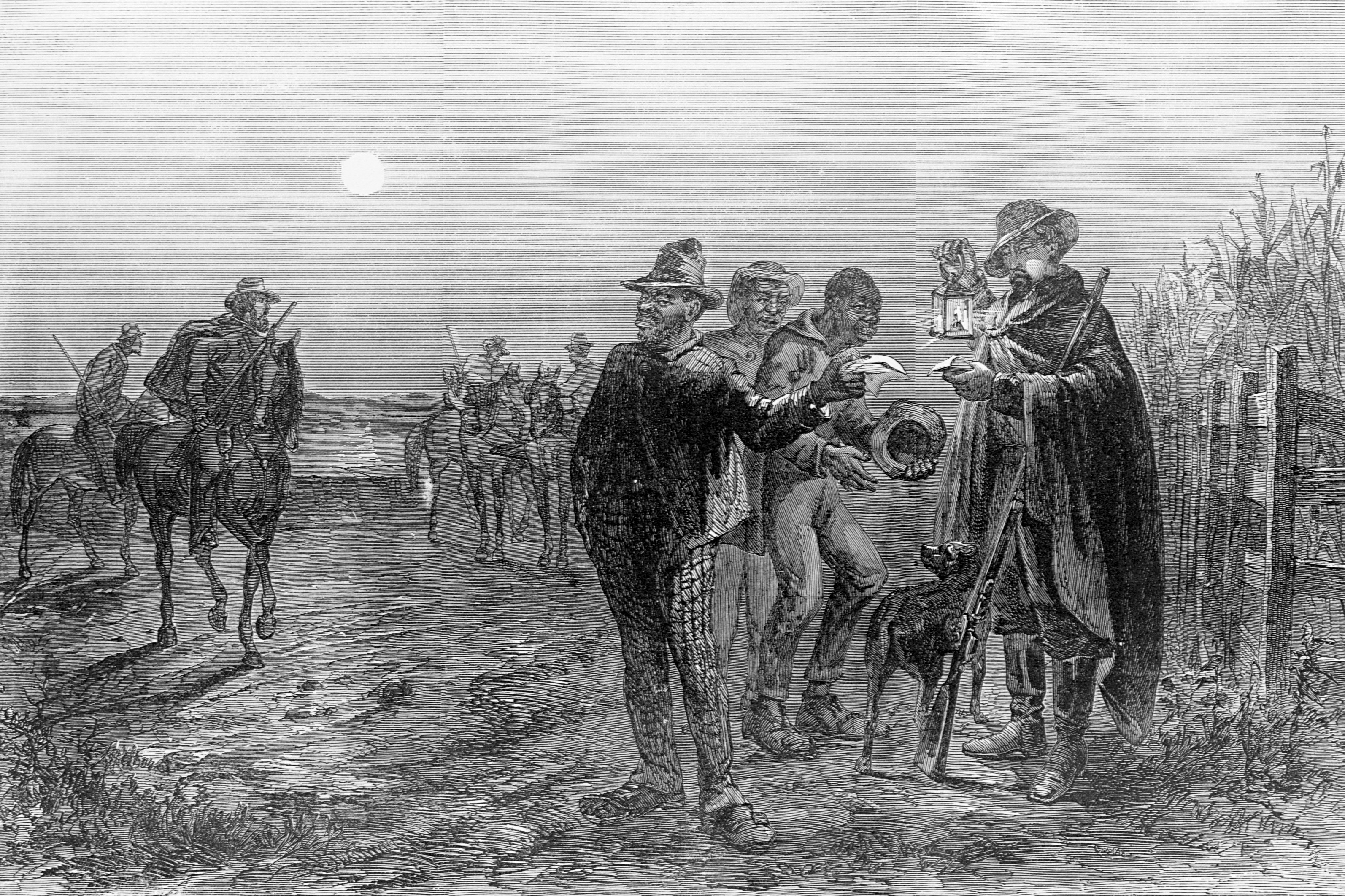
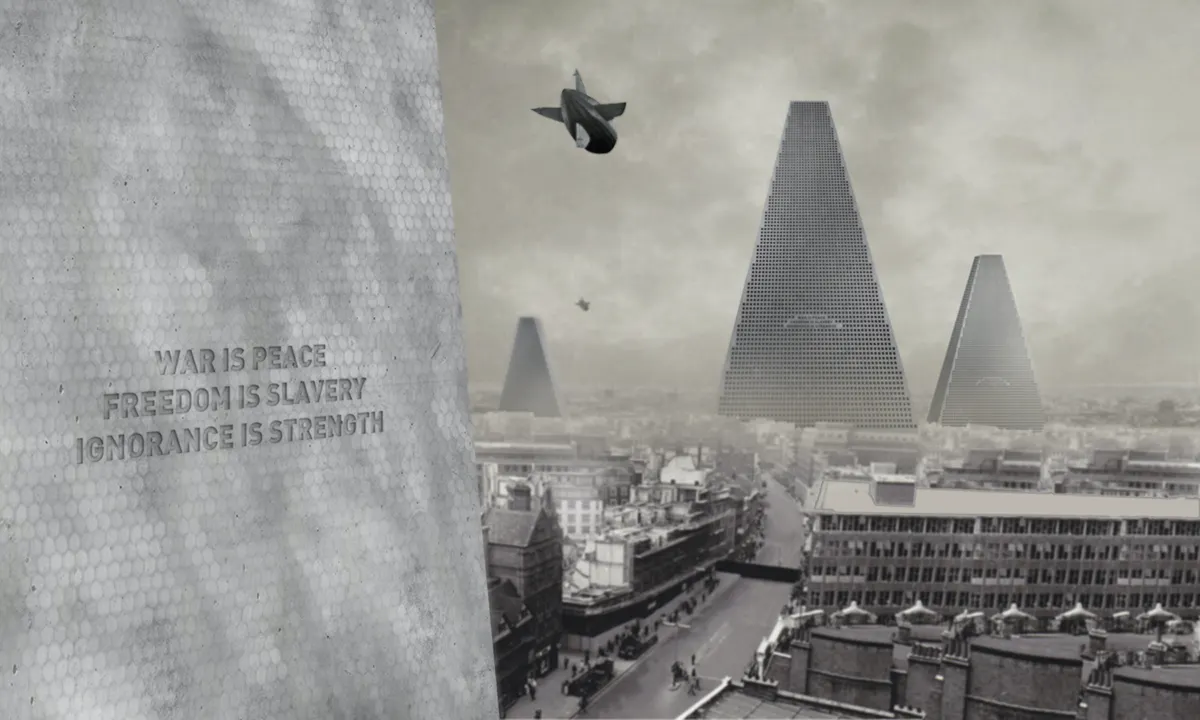

 freedom and reason