That there is a major labor uprising in Canada right now that is either ignored or maligned by progressives, who tell you they stand with working people, coupled with the fact that the left (and I mean here the so-called left) is not up in arms about the way labor is being portrayed (as racists and whatnot), tells you just about everything you need to know about the authenticity of the left today. The truth of today’s left is this: it is aligned with corporate power and the administrative state.
A crowd of protesters take part in the Freedom Convoy in Ottawa.
You should find remarkable that a party calling itself the Liberal Party could be so profoundly illiberal as to mandate that truckers self-isolate upon crossing the border. The demand is damned unscientific, too. The virus is in Canada. What do these politicians think they’re keeping out? Of course, unscientific thinking is characteristically illiberal, as well. What we are witnessing is why I am so particular about language. You cannot be this illiberal and still call yourself liberal. I’m not having it.
I explained this in my recent essay The Democratic Party is Not the Party of Liberal Politics, but I want to take another whack at it (and I am almost certain this won’t be my last whack). A liberal is an strong advocate of liberalism. Here we can trust the Internet: liberalism is “relating to or denoting a political and social philosophy that promotes individual rights, civil liberties, democracy, and free enterprise.” (We might qualify democracy as specifically republicanism, but this is basically it. I deal with the free enterprise question in my January 2017 essay The Contradiction in Liberalism. That something is internally contradicted does not make it relative.)
A politician’s stance with respect to censorship is a useful test of authenticity. Censorship is an illiberal desire or action. It indicates authoritarianism. By definition, a liberal wouldn’t support censorship. Free speech is quintessentially liberal. You cannot have an authoritarian attitude and be authentically liberal. There are many others tests of authoritarianism like this. If you believe in vaccines mandates, then you are not a liberal. If you believe in privileging some persons over others on the basis of skin color, then you are not a liberal. Justin Trudeau is not a liberal.
As I pointed out in the November essay, some folks say that liberalism changes like any political ideology. No, liberalism doesn’t change in that way. It evolves, sure. More importantly, it colonizes a person’s lifeworld and ethnical sensibilities—if the person welcomes it in. There were slave owners who expressed liberal views. Slavery obviously stands in contradiction to liberalism. If they quit slavery because of their liberal views, then they became more liberal. Principle and values don’t change because persons and parties change. If a person who claims to be liberal advocates or tolerates slavery, then the person is not fully liberal.
Think about it this way: Christianity is not what self-professing Christians say it is. A Christian is a defender of the faith. Those of you who are Christians know people who claim to be Christian but are not really. They wear the tag but not the commitment. This is not a perfect analogy since Christianity has different sects, doctrines, etc., whereas liberalism is a more monolithic set of principles, but I think the comparison still works to convey the point that it will not do to just say you are Christian if you reject the teachings of Jesus or the core Christian doctrine of salvation.
BLM’s mansion
It’s like the BLM leaders who talked proletarian lingo and then took the money and bought a mansion. They’re fakes. To be sure, their cause was fake, too. But that is beside the point. They weren’t even true to their own ideology.
We have to recognize that what a person says about himself is not the truth. People make all sorts of claims about themselves. People lie and deceive (sometimes they lie to and deceive themselves). People are ignorant. People are wrong. The truth has its own integrity. We judge authenticity based on commitment to the truth of the thing not personal convenience or whimsy. Justin Trudeau is one or more of these things. But he is not a liberal.
It’s not the liberal who’s the authoritarian thorn in our side. It’s the progressive. It’s politicians like Trudeau. Progressivism is the ideology of corporate statism, or the administrative state of the technocracy. Progressives do not believe in individual rights, civil liberties, democracy, or free enterprise. Progressives are illiberal. Liberals have a completely different view of government and corporate power.
So here’s my ask: stop calling progressives liberals. It’s not a benign misuse of language. It perpetuates a lie about the current order of things. It participates in the campaign of confusion the elites push. If you are really a liberal, then you will oppose lockdowns, mandates, and masks. You will defend the rights associated with a free state of existence.
It’s super cold outside. The sun is blasting through my dining room window. It’s a beautiful day to tell you all some good news. This Monday I saw my doctor for my post-COVID checkup. It’s as if COVID-19, which I had late November 2021, cured my diabetes and hypertension—this despite me having put on fifteen pounds and not walking daily (not waking at all, honestly). My cholesterol and triglyceride numbers are much improved. My kidney function is outstanding. My lungs are completely clear. No more inhaler for my asthma.
I’m going to get back to diet and exercise. I don’t like being fat. Not that I’m vain. Fat doesn’t look good and it’s not healthy. But I no longer feel the urgency to starve myself and pound the pavement that I felt before when my labs were poor. That I have acquired robust natural immunity to SARS-CoV-2 gives me added confidence. I have been exposed to omicron in the meantime and I had a stuffy nose for a day. Who knows what that was. Who cares? It’s time for the world to stop worrying and move on.
What was COVID-19 like? My bout was during the delta variant period and it wasn’t fun. I was sick for several days. Alongside what felt like a severe sinus infection, fatigue was the main symptom. For a few days I had what they call “COVID voice,” which means that my larynx was infected. Because of the protocol I followed (which I describe in a previous blog post), the only pharmaceutical I needed was a steroid inhaler. That was phoned in. I never entered a doctor’s office. I never missed a day of work. Sorry. Not sorry.
I know that others have had different experiences, and I feel bad for those families who lost loved ones to this disease, but my case is hardly exceptional and you need to know that. You need to hear the stories of all those who contracted this disease and survived because these are the stories of the vast majority of people and the corporate media isn’t going to tell you about them. Don’t let the exceptional cases hyped by the fear machine push you into a false reality. For most people who get COVID-19, the experience doesn’t rise to the severity of my situation, which was a really bad cold-like illness. I had a fever for maybe half a day.
I’m happy I didn’t die, mostly because being alive is fun (albeit I have no idea what it’s like being dead—or stupid). But I am also happy I didn’t die because, had I died, the mocking of my death would haunt my family. The main reason I’m even sharing my experience is to taunt the hateful progressive type who revels in the death of those who didn’t get the COVID shot. I’m still here, fucker.
I will be sixty years old this March. I have several comorbidities that put me at special risk. I was never as fearful of this virus as were so many of those around me. I did my research and knew what my chances were—I knew they were good. It is not as if I wasn’t worried about this virus. I knew masks didn’t work, so I avoided public spaces during peak periods. I didn’t want to catch it. But in the end I know I could not avoid it. My wife teaches at Head Start. My youngest son is a high school student. My odds weren’t good with respect to being exposed.
When my PCR test came back positive, and I was already sick, as was my wife, who would get her results later that day, it felt like being at the top of a rollercoaster. Sitting up in bed looking at my positive results, I told my wife, “Here we go. Now we get to find out what this is all about.” Honestly, I was relieved. I finally had it for sure and soon I would know for myself.
My message to you is simple: Don’t be scared. This is a virus among hundreds (at least). Those other viruses can kill you, too (I feel bad for all those families who have lost loved ones to influenza, etcetera). We must refuse to live in fear. As I said at the beginning of the mess, life is more than just existing. Life is about living. And living under the constant stress of panic is a very difficult thing to do.
The powers that be either grossly mishandled the situation or the COVID-19 pandemic is part of a grand agenda. Either way, the solution is obvious: we have to overthrow the status quo.
“The explanation of the relationship between the phenomenon of ‘mass formation’ and the production and circulation of ideologies must take into account both the social dimension as well as the intrapsychic structure of the ideological.”—Max Hernandez, The International Journal of Psychoanalysis (1988).
“Examples of illusions which have proved true are not easy to find, but the illusion of the alchemists that all metals can be turned into gold might be one of them.” —Sigmund Freud,The Future of an Illusion (1927).
“If men define situations as real, they are real in their consequences.” —W. I. Thomas, The Child in America (1928).
“If it seems to you that the rest of the world has gone mad, the truth is, yes they have.” —Robert Malone, inventor of the mRNA platform, on The Joe Rogan Experience (2021).
Dr. Anthony Fauci, chief White House medical advisor and chief practitioner of the “noble lie.”
In this essay, I elaborate on the phenomenon of mass formation psychosis (MFP) and its relationship to totalitarian monopoly capitalism (TMC). Recently, the topic of MFP was trending across social media thanks to the intrepid Dr. Robert Malone raising the matter in an interview with Joe Rogan on the latter’s popular podcast, The Joe Rogan Experience, and the ignorance of the establishment media of basic social psychological literature—and of course their function in running interference for the power elite. Surprising was how many psychologists seemed as ignorant as journalists about the phenomenon. Although I cannot know this for sure, the sense I got from reviewing remarks by those interviewed by various news outlets was feigned denial that assisted the media in marginalizing the concept of mass formation psychosis. Whether intentional or not, thanks to appeal to authority, the concept has been successfully marginalized and the media has moved on to other matters.
The concept of MFP finds its present formulation in the mind of Mattias Desmet, a Belgian clinical psychologist and statistician on the faculty of Ghent University. As indicated, he is not the first scholar to have identified the phenomenon. However, in attempting to prevent mass consciousness about the idea from developing, the establishment sicced its flying monkeys (the media) on a straw man. I will take up that matter first. Then, to deepen understanding of MFP and its antecedents, I synthesize work by, among others, Franz Neumann (Behemoth: The Practice and Structure of National Socialism), C. Wright Mills (The Power Elite), Sheldon Wolin (Democracy Incorporated: Managed Democracy and the Specter of Inverted Totalitarianism), as well as Erich Fromm (Escape from Freedom), Sigmund Freud (Group Psychology and the Analysis of the Ego and The Future of an Illusion), and the arguments of Peruvian psychoanalyst and historian Max Hernandez concerning mass formation and phenomenon of transference.
"Mass formation psychosis," an unfounded theory spreading online, suggests millions of people have been “hypnotized” into believing mainstream ideas to combat COVID-19. Psychology experts say the concept is not supported by evidence. Get the facts @AP. https://t.co/TT61pPFtwL
Before moving to an analysis of MFP, where I dispel the claims that, as defined and operationalized, MFP is not a valid theory, I must address the nature of the frenzy of press accounts claiming no such thing as mass formation psychosis exists—not just to defend those the establishment is attacking, but to expose the purpose of the attack, namely to keep the corporate state project going. A charitable and unbiased commentator, even if he disagreed with the concept of MFP, would have to acknowledge that Desmet’s terminology is essentially a specification of such well-understood social psychological concepts as mass psychogenic illness (MPI), mass hysteria, mass psychosis, and social contagion. Psychiatrist Mark McDonald, in his 2021 book United States of Fear, calls it “mass delusional psychosis” (the phrase is in the book’s subtitle).
Mark McDonald, author of United States of Fear: How America Fell Victim to a Mass Delusional Psychosis.
As elites and their propagandists would have it, because the psychologists they’ve selected for interviewing are unfamiliar or feign the same with Desmet’s exact phrasing, there’s no such thing as MFP. It’s hard to believe that this is an error. Indeed, many of those interviewed did not even bother to find out or at least tell readers from where Malone got the phrase, implying that he just made it up. The only reason I can think of why they would do such a thing is to mystify the very real phenomenon he is describing—and to scare others away from agreeing with him. I’m not scared. I have to speak up because I know too much about the phenomenon.
Let me be very clear about what happened here. This was a smear campaign to delegitimize the inventor of the mRNA platform currently being mass deployed in the form of COVID-19 vaccines because his criticisms of mass vaccination programs interferes with the elite project to impose upon western populations a comprehensive social credit system rooted in a biosecurity scheme. The project is real, and in this essay—in many essays on my blog—I will show readers how this is happening. Elite also have in their sights podcaster superstar Joe Rogan. Rogan uses his powerful platform to give voice to those who, usually excluded from mainstream forums, expose the machinations of the corporate state. In the weeks following the Malone interview, the attempt to push Spotify into dropping The Joe Rogan Experience for “misinformation” has even involved the White House.
The concept of MFP is an obvious threat to the elite agenda. The frenzy itself is compelling evidence of the agenda. If Rogan and Malone’s conversation didn’t potentially compromise the project, or there was no such project, the public would know nothing about Desmet’s argument. Elites are trying to thread the needle here. In having to confront the problem of mass formation psychosis, they have to deny the literature and ignore other voices. They have to marginalize the concept without arousing too much public curiosity. It appears they have been effective in this case.
The following is illustrative of the pattern of elite media disinformation. Jay Van Bavel, an associate professor of psychology at New York University, tells the Associated Press (AP) that “he had never encountered the phrase ‘mass formation psychosis’ in his years of research, nor could he find it in any peer-reviewed literature.” Bavel can’t be telling the truth. Either he knows what I am about to tell you and is lying about it—or he is lying about trying to find references in the peer-reviewed literature. It took me only a few seconds to find the article, “Group formation and Ideology,” by Max Hernandez, published in 1988 in the International Journal of Psychoanalysis (adapted from a paper presented at the 35th International Psychoanalytical Congress in Montreal, Canada, in 1987), where Hernandez, operating from a Freudian standpoint, emphasizes the importance of analyzing “[t]he relationship between the phenomenon of ‘mass formation’ (Massenbildung) and the production and circulation of ideologies.” Even a passing familiarity with Freud’s mature work would produce a more charitable comment than Bavel’s.
Bavel isn’t a nobody. He has an extensive publication record. His area of expertise is how group identities and political beliefs shape brain and behavior, so this should be his wheelhouse. Yet he makes no effort to help AP understand what Desmet is talking about. How is his ignorance not feigned and dishonest?
Representative of the posture of the corporate media in this affair, the AP accurately explains MFP while deploying the journalism’s favorite discrediting adjective, namely “unfounded.” You know, as in “unfounded claims of voter fraud.” It is a rather crude propaganda technique that makes the sentence assume what requires proving. The AP tells its audience that MFP, “an unfounded theory spreading online, suggests millions of people have been ‘hypnotized’ into believing mainstream ideas to combat COVID-19.” Indeed, that is the claim: that a mass of the population has become hysterical and, in their hysteria, is obeying rules that are not in their interests but in the interests of the elites who are oppressing them. Just leave out the adjective “unfounded” and you have it. Because that is what’s going on.
The AP, not wanting to look like they themselves are discrediting a scientific concept, asserts, “Psychology experts say the concept is not supported by evidence.” Really? As if Desmet, a trained psychologist with an extensive publication record, is not an expert, or that Malone, a physician and scientist, is incapable of understanding and explaining a well-established social psychological phenomenon—or that you, my brother, need to stop trusting your lying eyes.
Following the Snopes script, the AP (follow the linked url in the above tweet to read the entire mess) scoffs at a popular tweet from a non-expert: “I’m not a scientist but I’m pretty sure healthy people spending hours in line to get a virus test is mass formation psychosis in action.” Indeed, those longs lines are concrete instantiations of the phenomenon Desmet and Malone are talking about. How many of you have watched videos of lines stretching for blocks of people shivering in the cold and rain, possibly sick with a virus of some sort, and thought to yourself, “How can so many people be this delusional?” Mass formation psychosis, maybe? Nah. According to the AP, there’s no such thing. What’s the proof the AP is right? The entire establishment news apparatus joined them in lockstep calling the theory “debunked.” Debunked that quickly. The world only heard the term for the first time in January and scientists had already debunked it. Except they hadn’t.
The AP wants you to ask yourself why such a thought would even cross your mind. What’s wrong with you? Perhaps you’re the one suffering from a psychosis. You really should be better at crimestop, the habit of mind explained by Emmanuel Goldstein, despised author of the subversive pamphlet The Theory and Practice of Oligarchical Collectivism in George Orwell’s Nineteen Eight-Four as “the faculty of stopping short, as though by instinct, at the threshold of any dangerous thought.” Crimestop “includes the power of not grasping analogies, of failing to perceive logical errors, of misunderstanding the simplest arguments.” It’s the power to be “bored or repelled by any train of thought which is capable of leading in a heretical direction.” The establishment propagandists holding the line are among the most prolific practitioners of crimestop.
The AP ought to consider debunking another pop psychological concept, namely gaslighting, a form of manipulation occurring in abusive relationships where abusers manufacture false narratives in order to induce psychoses in their targets. That is precisely what the establishment media is doing here. You’re supported to forget that you ever knew about the power of hypnosis and suggestibility, of the astonishing effects of faith healing, of the millions giddy over Hitler (and the Beatles), that you never tapped your foot along with others in unison with the beat, a phenomenon scientists know as entrainment. This is the same establishment media that told you, among their many other lies, about weapons of mass destruction in Iraq and that Donald Trump was a Russian asset, and that you were the crazy one for doubting these lies.
Is it the establishment media’s contention that children at McMartin and dozens of other preschool across the United States and Canada during the 1980s really were the victims of Satanic ritual abuse? So there really were witches in the Middle Ages and that’s what prompted the Inquisition where mobs killed Homosexuals, Jews, women, and even animals (demons can possess animals, too) by burning them at the stake and crushing the beneath heavy stones? Why did all those hundreds of people drink cyanide-laced Kool-Aid at Jonestown? Have you read accounts of the lynch mobs in the Jim Crow South?
In psychology and sociology, we have a better explanation for what happened at McMartin Preschool, Massachusetts Bay Colony, the People’s Temple, and to Sam Hose. The phenomenon is known by many terms, among them mass hysteria, mass delusion, and mass psychosis. There is a vast literature on the subject. Dr. Malone is right, you’re not crazy. The establishment media is lying to you. And that’s the point. They want you to disbelieve the science because they’re using these techniques to manipulate you into suspending disbelief in their lies.
* * *
With the matter of media machinations somewhat squared away, let’s talk about the corporate state project to generates the conditions rendering a significant proportion of the population susceptible to mass psychosis. We will begin with the problem of managed democracy. As the reader will see, understanding managed democracy is crucial to grasp in order to understand MFP and why the establishment is so desperate to discredit the idea.
With the concept of managed democracy, Shelton Wolin, the late and sorely missed professor of politics at Princeton University, is describing a government that, while appearing democratic in form, for example, by holding regular elections, declared free and fair by establishment propagandists, functions in an essentially authoritarian manner. (He presents this argument in Democracy Incorporated: Managed Democracy and the Specter of Inverted Totalitarianism.)
A key element in producing the illusion of democracy under these conditions, Wolin contends, is the reconstruction of the citizen as consumer, replacing civil rights and civic responsibilities with consumer choice in apparently free markets. Wolin’s analysis resonates with Max Horkheimer and Theodor Adorno’s arguments presented in several independent and collaborative works, especially concerning the administrative state and the culture industry.
Common to Wolin’s work and that of Horkheimer and Adorno are Max Weber’s observations about the rationalization of society under industrial capitalist arrangements, with its emphasis on efficiency, uniformity, and hierarchy, and the effect that has on humanity. The social logic of bureaucratic control is the diametric opposite of that of democracy; as rationalization proceeds, freedom, which Weber defines as individually differentiated conduct, recede.
Managed democracy is an expression corporate statism, also known as corporatocracy, a juridical and political superstructure organized around primarily corporate interests, in contrast to a democratic republic emphasizing liberal values. The evolution of the corporate state is detailed by Richard Grossman, co-director of the Program on Corporations, Law and Democracy, in various speeches and essays, so I will send you there for details (see “Defining the Corporation, Defining Ourselves”; “Challenging Corporate Law and Lore”).
It will suffice here to explain that, under corporate state arrangements, regulatory agencies manage organized opposition to capitalist exploitation and its discontents, while propaganda and psychological operations, which appear as marketing and public relations campaigns, mislead and redirect an atomized public away from politics organized by their class and status interests, steering them instead towards a politics and sentiments subservient to elite interests (see Edward Bernays, Propaganda; Walter Lippmann, Public Opinion; Edward Herman and Noam Chomsky, Manufacturing Consent).
A chief empirical indicator of this state of affairs is the failure of government to make and enforce law and policy that function to serve the interests of the majority while protecting the rights of all (liberal democracy). In their 2014 article “Testing Theories of American Politics: Elites, Interest Groups, and Average Citizens,” published in Perspectives on Politics, wherein they evaluate four theoretical traditions in the study of American politics, namely majoritarian electoral democracy, economic-elite domination, majoritarian pluralism, and biased pluralism (two types of interest-group politics), Martin Gilens and Benjamin Page find substantial support for theories of economic-elite domination and biased pluralism but not for those theories that convey the narrative of the United States as a democratic society. (For this reason, the term “illiberal democracy” is often used to describe present-day United States.)
Gilens and Page’s study is powerful confirmation of C. Wright Mills’ thesis advanced in his 1956 The Power Elite. Gilens and Page write, “Despite the seemingly strong empirical support in previous studies for theories of majoritarian democracy, our analyses suggest that majorities of the American public actually have little influence over the policies our government adopts. Americans do enjoy many features central to democratic governance, such as regular elections, freedom of speech and association, and a widespread (if still contested) franchise. But we believe that if policymaking is dominated by powerful business organizations and a small number of affluent Americans, then America’s claims to being a democratic society are seriously threatened.” Were those previous studies out of date, i.e., have things changed, or were they wrongly specified? Either way, the current situation is one in which corporations and the wealthy dominate politics and policy-making.
Things have changed since Gilens and Page published their article. The situation is worse now. The central features central to democratic government the authors identify are now more ideal than real—an ideal in a vanishing subset of minds. In a short amount of time, democratic freedom, election integrity, and assembly, privacy, and speech rights have been compromised or sharply curtailed. Especially terrifying is that it appears as much of the public doesn’t care. Indeed, many are asking for more restrictions, more surveillance, and more censorship.
Under corporate state rule, those who challenge policy and criticize government power are depicted as “threats to democracy,” and are marginalized or neutralized in some fashion. The corporate state wages perpetual psychological warfare against the citizens of the republic, casting opposition and resistance to status quo power arrangements as “deplorables” and “insurgents.”
As we have seen with the US Department of Justice labeling parents at school board meetings speaking out against critical race theory and mask as “domestic terrorists,” difference of opinion is elevated to the level of threats to national security. One sees such tagging in the January 6 Commission organized by Democrats in Congress and in commemorations of the alleged coup, the putsch, to overthrow the United States government and save Donald Trump’s presidency, spectacles where the representatives of the people are delegitimized while the legitimacy of the establishment is ritually elevated.
We see this in the constant characterization of populist nationalism, with Steve Bannon as the boogieman of progressive nightmares, as “authoritarianism,” while the true authoritarian menace—the inverted totalitarianism of the corporate state—is portrayed as the democratic ideal made concrete. Democracy in the inversion is code for the established order of things—an Orwellian attempt to keep alive the illusions of democratic republicanism and liberal society. The inversion desires verticality.
Mattias Desmet, professor of clinical psychology
With these circumstances sketched, I now take up the matter of mass formation psychosis, which I have suggested is a reworking of large literature of established ideas. Inspired by the crowd psychology of Gustave Le Bon, Desmet sees MFP as a form of crowd hypnosis or mass trance, achieved by inducing psychosis in a significant proportion of the population.
If you don’t like Desmet’s term, then pick another. As I noted, there are many in the literature. I reiterate, whatever you call it, MFP is a well-known mass psychological phenomenon. What is less well known, however, is that it facilitates the entrenchment and perpetuation of the managed democracy I have just described. This is why the establishment media is so frenzied. It’s not that the facts of MFP are not obvious. It’s that the people are to have an explanation for those facts. The people experiencing MFP are being organized as the popular forces of corporate statism.
Desmet estimates the proportion of the population under the spell of MFP to be between 20-30 percent, a proportion large enough to carry significant societal effects. The obvious historical analogy is Germany under the Nazis. (This is the comparison that likely led to YouTube removing the Rogan-Malone interview for violating its “community standards,” as only certain persons and groups, principally those advancing the corporate state interests, are allowed to make Nazi comparisons. Only useful analogies, however false, are permitted.) The idea here is that, while not every German believed Nazi state propaganda, enough of them did. Combined with regime control over German institutions, this allowed the Nazis to take the population into catastrophic war and to carry out democide and genocide against various populations.
Max Hernandez, psychiatrist and historian
As noted earlier, the concept of mass formation appears in the work of Peruvian psychiatrist Max Hernandez. Although not a household name in the United States, Hernandez is celebrated around the world. Hernandez uses another of Freud’s concepts, namely transference. Transference provide us with a term to describe the mass psychic element useful for controlling populations.
Transference is a phenomenon in which a person unconsciously redirects his feelings from one person or source to another. There occurs a displacement of emotions in which the individual becomes highly vulnerable to suggestion. In Freud’s formulation, a mass forms when the individual puts the leader in place of his ego ideal (Ichideal), that is the inner image of oneself as he wishes to be or to become. Hernandez specifies this process.
Hernandez’s work is thus extremely important to understanding mass social phenomenon, so we might understand why the psychology experts consulted by AP and other media pretended as if this work doesn’t exist. If they are not familiar with Hernandez’s work, are we really supposed to trust their claims of expertise in the field?
Hernandez’s methodology works from Erich Fromm’s demand, inspired by Freud’s mature writings (see Freud’s Civilization and its Discontents), that interpretation involve the “continuous and constant comparison of the psychoanalytic viewpoint, which asserts the radical individuality of man, with that of sociology, which takes into account the totality of social relationships” (see Fromm’s 1966 Marxism, Psychoanalysis and Reality).
From this dialectical standpoint, Hernandez synthesizes Freud’s ideas on group psychology, incorporating definitions of ideology proposed by, among others, Paul Ricœur and Jürgen Habermas in order to explain mass formation. (If you are unfamiliar with these names, do an Internet search. Fromm, Ricœur, and Habermas are intellectual giants. The establishment media is attempting to wall off a vast store of philosophical and scientific knowledge.)
Hernandez explains that “the processes of idealization is vital to the understanding of the ideological in the same way that the understanding of vicissitudes of identification is crucial to gain insight into mass formation.” It was Freud and Fromm’s contention that mental disorders are usually related to disordered interpersonal and social arrangements. Hernandez tells his audience, “The understanding of mass psychology and ideology calls for an examination of social realities.” In understanding “[t]he relationship between the phenomenon of ‘mass formation’ (Massenbildung) and the production and circulation of ideologies,” Hernandez stresses, the explanation “must take into account both the social dimension as well as the intrapsychic structure of the ideological.”
This approach is not dissimilar from that advocated by the political sociologist C. Wright Mills, the empirical substantiation of his work noted earlier, where the analysis of the intersection of biography and history is crucial for the explanation of character and personality in light of social structure from which one derives an explanation of motive and action (in addition to The Power Elite, see C. Wright Mills 1940 essay “Situated Action and Vocabularies of Motives,” published in the American Sociological Review). Both approaches resist treating as causally independent inter-psychic conflict (or George Herbert Mead’s sociological psychology in Mills’ work) and social antagonisms and struggles.
I hope this review impressed upon the reader that the propaganda from the fact-checking exercises that are popping up in our newsfeeds that the phenomenon of mass formation is unfounded is designed to hide the fact that the phenomenon is well-founded and, moreover, that it explains our current circumstances. The foregoing—I hope—helps with understanding the mass formation piece of MFP and to dispel the disinformation being pumped out of the organs of the establishment attempting to discredit.
So what about the psychosis piece? A psychosis is a mental state in which normal cognitive and emotional functioning are so impaired that the subject loses touch with reality; a psychotic person has difficulty differentiating the real and the unreal. Symptoms of psychosis include delusions or false beliefs. Are we to deny this phenomenon as well? Are we to ignore the fact of mass hysteria, moral panic, and social contagion? We can’t. We know there are such things. McMartin and Salem happened. Those who ask you to deny that which you know exists is an attempt to gaslight you.
Enter the Associated Press again. According to that same “fact-check,” after correctly defining psychosis as “conditions that involve some disconnect from reality,” the article cites a National Institutes of Health estimate of “about 3% of people experience some form of psychosis at some time in their lives.” Really? A 2017 national survey of Americans by Gallup finds that, while 87 percent of respondents answer “Yes” to the question “Do you believe in God?”, 64 percent of respondents are convinced God exist. The actual percent of Americans who are conditioned to suffer some disconnect from reality is much greater than three percent.
The very reason the AP and others can’t wrap their mind around mass formation psychosis (and many of the rank-and-file propaganda workers genuinely believe there is no such thing) is because the level of abstraction of the phenomenon typically has it manifesting at an individual level. But the concept of psychosis has never ruled out its appearance as a mass phenomenon. Indeed, the existence of mass hysteria, moral panic, and social contagion (I could develop long and incontrovertible lists of all of these phenomena) testify to the reality that psychosis can manifest collectively, as well as individually. Perhaps the self-evident truth of this is so self-evident that it escapes the observer the way water escapes the fish that takes it for granted.
Sigmund Freud authors The Future of an Illusion a decade before his death in 1939.
I realize that my using religion as an example of mass psychosis will rub many readers the wrong way. But my using this example is not novel. Freud pursued this matter in his 1927 critique of religious faith, The Future of an Illusion. While Freud suggests we reserve the term delusion for the content of the individual psychotic’s mind and describe a system of belief in the improbable or probably impossible held by a mass of people as illusion, he hints here and there that this is a distinction without much of a difference, certainly concerning mass formation.
“What is characteristic of illusions is that they are derived from human wishes,” Freud writes, “In this respect they come near to psychiatric delusions. But they differ from them, too, apart from the more complicated structure of delusions. In the case of delusions, we emphasize as essential their being in contradiction with reality. Illusions need not necessarily be false—that is to say, unrealizable or in contradiction to reality. For instance, a middle-class girl may have the illusion that a prince will come and marry her. This is possible; and a few such cases have occurred. That the Messiah will come and found a golden age is much less likely.” In other words, religion is not necessarily in contradiction to reality (albeit, as we will see, he later suggests just that); religion is rather a nonfalsifiable proposition—it’s very design makes it impossible for refute definitively.
At least that’s the faithful’s safety belt. That Freud operates with a bit of sarcasm in his essay is difficult to miss. I suspect he knows he has to proceed in a way aware and cautious of his surroundings, i.e., life in a Christian society. But to be sure the reader gets his point, Freud adds this (which I included in the epigraphs to this essay): “Examples of illusions which have proved true are not easy to find, but the illusion of the alchemists that all metals can be turned into gold might be one of them.” By taking on religion, Freud is deconstructing the greatest mass formation psychosis in history. Of these faiths, he writes, “all of them are illusions and insusceptible of proof. No one can be compelled to think them true, to believe in them. Some of them are so improbable, so incompatible with everything we have laboriously discovered about the reality of the world, that we may compare them—if we pay proper regard to the psychological differences—to delusions.”
Freud is not saying anything new, of course. Ludwig Feuerbach and his admirer Karl Marx had told us in the mid-nineteenth century, explicitly adding a materialist dimension, that religion is an ideology, a belief system simultaneously rooted in and at odds with reality. It is therefore easy enough to expand the concept of delusion to cover any system of belief that refuses to align with objective reality. This makes the problem of delusion rather ordinary. In this way, the problem may be understood in collective terms.
This fact reveals how widely the NIH’s estimate misses the mark. Indeed, as I have demonstrated, history attests to the perennial character of mass psychosis. But, if we take them at their word, the psychologists the AP sought out for its purposes are bereft of any critical consciousness or even knowledge of the history of their own discipline and its context. Their denials are the expressions of the “organic intellectuals” Antonio Gramsci describes in his Prison Notebooks. Those who report their (what amount to) denials to you fall in the same camp.
Since psychological states are, at least in part, and really for the most part, related to the individual’s social environment (infants don’t worship God), even more so with mass psychological states and mass action, which are by definition collective phenomena, the conditions that give rise to mass psychosis must be identified. This is Hernandez’s point. This is the value of Desmet’s formulation, which I prepared with the discussion of managed democracy. So let’s now turn our attention to that matter. It should all make sense now.
Desmet finds that MFP obtains when large numbers of people become isolated from one another (emotionally, physically, socially), disconnected from reality by the culture industry and mass media, their common knowledge (viz. valid belief) disrupted, and their attention commandeered and concentrated on a singular threat, achieved via perpetual disruption of normal life and normal understanding (mass gaslighting), their trust redirected (transference) towards a single authority, although not necessary a personality. Under these circumstance, people are highly suggestible and effectively hypnotized, their cognition and emotions easily manipulated, made resistant to the evidence and reason that contradicts the illusion (or delusion) that enthralls them.
Those who have escaped the trance state, or who never fell for the con, and raise their voice against the illusion, who question the established or official narrative, are attacked, disregarded, or marginalized. It doesn’t matter if they are experts in their relevant subject areas. The truth that the earth orbits the sun is scandalous. Many do not speak up precisely because they fear attack, disregard, and marginalization. Those who do not suffer quietly (and this is no noble suffering in any case) adjust their consciousness to the content of the delusion or the contagion to avoid feelings of anxiety that come with cognitive dissonance and being branded a public enemy or insane. This dynamic is directly analogous to heretical opposition to religion faith. Some openly declare their apostasy and infidelity from faith-belief. Many more disbelieve but do not speak up for fear of ostracization. They are surrounded by zealots who speak the faith loudly enough to scare skepticism to the corners. Some believe but are not convinced. This is not actually analogous. It’s the thing itself. This is the problem of belief in belief. The antidote to mass delusion is mutual knowledge of the reality. The emperor is naked. The establishment media is his invisible clothing.
Thus mass formation psychosis depends on several social and cultural conditions having been established or having developed (if you are uncomfortable with the degree of human agency in the explanation) through a convergence of trends. National and popular consciousness is fractured, the population atomized and some even reorganized into tribes, establishing a cocooned existence with variable “truths,” the postmodern crisis disrupting the culture of the modern nation-state and the Enlightenment. The constant disruption of daily life—lockdowns and obsessive testing—produces generalized anxiety, which is in turn easily focused on selected threats, for example a virus. Widespread anger, frustration, and discontent is focused on particular humans given a status or stigma; the “unvaccinated” become vectors of disease and then disloyal citizens. They aren’t doing their part. Ordinary behavior such as coughing, sniffles, throat clearing, etc., are not incidental but signs of plague. The population is made neurotic and the neurotic are put in a highly suggestible place, susceptible to the temptations of the safetyism that marks progressive mentality, primed to submit to the dictates of the technocracy, to trust “official authorities” associated with the trustworthy tribe—all of which makes the trance state ever easier to induce and to entrench. They are entrained to the rhythm of totalitarianism.
I am covering a lot of ground here, so let’s be very specific. There are four key preconditions typically sufficient for producing a mass formation psychosis identified by Desmet: (1) disruption of associations or connections, what may also be described as the breaking or weakening of social bonds, achieved by physical and social distancing and isolation, for example lockdowns and quarantines, and persistent and sophisticated gaslighting; (2) disruption of ordinary understanding via distortion or loss of meaning or sense-making, what Émile Durkheim terms anomie, which is described as a collective state of normlessness (meaninglessness, purposelessness, senselessness); (3) generalized or free-floating anxiety (already well established considering the popularity of psychiatric drugs, such as benzodiazepines and SSRIs, as well as painkillers); and (4) widespread and free-floating discontent. By free-floating is meant that the sense of uneasiness clinically described as anxiety is not tied to any concrete or particular person, situation, or thing. In this way, anxiety, and well as discontent, may be channeled towards particular persons, situations, and things (as they say, fear sees a threat, anxiety imagines one).
A certain percentage of the population under these conditions will fall into a mass psychosis. They will become pathologically resistant to evidence and reason that contradicts or negate the illusion (or delusion) in which their emotions and cognitions are shaped, felt, and expressed. They will become irrational (Marx describes this psychosocial state as alienation; Weber describes it as depersonalization.) Some of them become dangerous, prepared to perpetrate violence on those who question the narrative. Their disconnectedness from reality is thus substituted with an intense devotion to an ideology. People resort to magical thinking and in-group/out-group thinking to make sense of and reorder the world. What is ritual but sense-making action when things don’t make sense, structured behavior to reduce uncertainty when certainty is nowhere to be found. Typifications fulfill the same need, to reduce the complexity and disorientation of a disordered world, made disordered by moral panic and mass hysteria, which is at the same time its expression. Trepidation is a contagion to which a focus is easily attached and to which the people are entrained. Anxiety becomes fear and fear seeks security. The corporate state, eager to establish its role as parens patria, is waiting with open arms.
In his Sacred Canopy, perhaps the master work on the sociology of religion, Peter Berger describes the state of normlessness Durkheim called anomie as the nightmare par excellence. Some individuals prefer death to anomie, he reports, and so suicides and other acts of self-harm will increase with growing normlessness. Those who do not escape their lives with death, cut themselves in search of the real. They seek to transform their bodies to release their soul in transcendence and transition. Many turn to drugs to feed the hunger of starving neural pathways (often suicide by other means). But most will seek the security of authoritarianism. They will, as Erich Fromm puts it, escape from freedom. A segment of the masses thus transfers its trust to the corporate state. Don’t be deceived. That the New Fascism lacks a cult of personality makes its control over the psychotic even more effective. The liberal businessman from New York City was portrayed as a fascist to distract the public from the real fascism that sought to and succeeded in removing populism from the White House.
In “We are Standing at the Gates of Authoritarian Hell,” I write that “the authoritarian personality is not only the possession of the tyrant. The authoritarian personality is the possession of all those who assent to tyranny. Authoritarian regimes depends on popular support.” “The authoritarian desires to make the state the parent,” I continue. “The state monopolizes the use of force in order to leave powerless the citizens who, in a republic, organize the state to represent and protect individual and familial liberty and rights and interests, [but under totalitarianism willingly become] cradle-to-grave dependent on the state for everything.” I observe that to want this is to want to be a slave. While the rank-and-file authoritarian (today’s rank-and-file progressive Democrat) “may be loud and obnoxious,” and indeed they often are, “their bravado betrays a truth: these are weak people who want to be told what to think, what to say, what to do, how to live.”
But are they weak? The intensity of bullying dissenters encounter suggests that I may not be quite right about that. Then again, bullies have often been exposed as cowardly. Perhaps I should have said that they are frightened—frightened by individuality, by freedom and democracy. At the very least they don’t trust other people with such things. But really they don’t trust themselves; they subject themselves to much of the same unfreedom as everybody else (they can afford a bit of comfort instead), purchasing a privilege here and there by subjecting themselves to state surveillance and scientific experimentation. The myopic focus on the virus, the obsession with it, settling for conditions that induce mass hypnosis, which indicate a desire for control. This sets up a vicious circle. Comfort to assuage working people to be unfree.
Have you wondered why they never doubt the narrative even when the narrative changes often, sometimes daily? Have you wondered why people demand a vaccine that does not confer immunity? How they will have two shots and a booster, get sick, and then thank the vaccine and demand others take it? In a hypnotic state, where the individual is in a permanent state of suggestibility, rational judgment is suspended or sharply diminished. In this condition, the anxiety the targets are experiencing is given a fetish (the virus), the discontent they are experiencing is given an enemy (the unvaccinated). The corporate state tells the people it will protect them and control the personified object of their fear (scapegoating) and so they flock to the shepherd. Once in his arms they offer up to the state ever more areas of their lives for control. They embrace the biometric ID. They even have it surgically implanted in their hand. They thank the corporate state for the convenience of a cashless economy. The corporate state becomes the lord and savior.
* * *
Today’s corporate state is a transformational force powered by global finance and the transnational corporation (TNC). (For more on the TNC, see David Korten’s prophetic When Corporations Rule the Earth. For the longue durée of this development, in addition to Grossman, see and Michael Tigar’s Law and the Rise of Capitalism.) The inverted totalitarianism of the corporate state society is in contrast to the open totalitarianism of the People’s Republic of China. Some distinguish these as “soft” verses “hard” totalitarianism. Whatever the terminology, both forms of totalitarianism are on a convergent path, which explains, for example, the rollout of CCP-style pandemic lockdowns across Europe and North America.
Conservatives and the political right err by mistaking TMC and corporate state arrangements for communism. Corporatists are not communists; however, the system that develops from the bureaucratic collectivism established by the corporate state is highly similar to the system established by the CCP. Alongside the lockdowns, COVID-19 is being used to implement a Chinese-style social credit system in the West (see Fascism Becoming Under Cover of COVID-19 Hysteria; Torches of Freedom, Vaccine Cards, and Our Civilian Lives; Biden’s Biofascist Regime; ). The European corporatist thinks much the same way as the Chinese communist because of parallel social logics.
What we are experiencing, then, is the merging of eastern and western style tyrannies into one global system. This fusion does not require communists (i.e., Chinese government operatives) in Western governments and institutions (although they are here); rather it is a product of the similarity in the social logics of bureaucratic collectivist systems. When democratic-republic governments are overthrown by corporate power (which I will argue in a pending essay occurs in the United States in the late 19th century), it is inevitable that the spirit of government will increasingly resemble that of a communist dictatorship as popularly understood.
Those culturally and politically inclined to identify as on the left don’t see it because it has clever labels, for example “progressivism” or “social democracy.” We might consider another soft label that conveys meaning more precisely, namely “friendly fascism” (albeit I am not endorsing Bertram Gross’s book of the same name).
Adding to the confusion on the right, as well as among disillusioned leftists, the character of the People’s Republic of China is not actually communistic at all, if by communism one means stateless, classless society, which we should if we wish words to remain meaningful and not propagandistic. Indeed, unlike the Soviet Union, China isn’t even state socialist in character. “Socialism with Chinese characteristics,” as CCP propagandists advertise their system, is really state capitalist in character.
The New York Times is reporting on an experiment that finds that providing poor mothers with cash stipends for the first year of their children’s lives appears to have changed the babies’ brain activity in ways associated with stronger cognitive development. This finding, the Times emphasizes, carries potential implications for safety net policy.
“This is a big scientific finding,” said Martha J. Farah, a neuroscientist at the University of Pennsylvania, who conducted a review of the study for the Proceedings of the National Academies of Sciences. “It’s proof that just giving the families more money, even a modest amount of more money, leads to better brain development.”
I have been telling students for a quarter-century that it is a well known fact that poverty is associated with poor brain development and lower intelligence across the life-course, with downstream effects on academic performance, initiative, resourcefulness, and a myriad of other life chances. It follows that cash support should ameliorate these effects of poverty—if that support is carefully monitored to make sure it goes towards the cognitive development of children.
I have no problem with making sure babies are taken care of. If a parent cannot provide the necessary support, then there is a role for government. For those who are disparaging of social welfare, consider that cash support can be a smart investment; babies with poor brain development become not merely a burden on society, with poor academic achievement and poor labor force attachment, but a menace, as low intelligence is associated with low frustration tolerance, juvenile delinquency, and adult criminal behavior.
At the same time, we need to have a serious conversation about why mothers are poor in the first place and why, while recognizing that there are absolutely more poor white mothers than black mothers, there are proportionally so many more poor black mothers than white mothers. Indeed, as we will see, that there are absolutely more poor white mothers than black mothers, but a much smaller percentage of white mothers who are poor relative to black mothers is a revealing fact, one that cannot be explained away by social class or racism.
Class effects are important to consider. Part of the explanation for poverty generally is the systematic generation of inequality inherent in the capitalist mode of production. This the result of capitalist accumulation, i.e., the exploitation of labor, and its discontents. But this does not explain all of it. There is a big difference in poverty rates between women who are married and women who not married. Having a man in the house reduces household poverty, even among low-wage working families. Thus the fact of poor mothers is substantially a function of the decline in marriage and the rise of its substitution: the welfare state, or, to capture its function, the custodial state.
Perhaps this was an unintended effect, but the custodial state incentivizes single-parent households. Social welfare means that a woman no longer needs to marry a man for financial support. Nor does she need to work herself. The state provides support for her children. Children born in neighborhoods with high rates of single-mother households have limited access to working adults as role models. From these circumstances, a culture of idleness emerges. The downside of cash support is the maintenance of conditions requiring cash support.
Because of racial disparities in poverty, black mothers are proportionately more likely than white mothers to need cash support for their babies. The dynamic of the custodial state thus disproportionately effects the fate of black women and their children. Social class cannot explain racial disparities; capitalism is not to blame for this development. Since systemic racism was dismantled alongside the rise of the custodial state, neither does racism explain the disparities. The fact of racial disparities does not explain itself.
We have to turn to culture and the role the custodial state plays in generating culture associated with poverty. It’s not only because of black overrepresentation in poverty areas that these disproportionalities exist. The proportion of out-of-wedlock births for blacks is more than 70 percent, whereas for whites less than 30 percent. In light of this, without a comprehensive program of restoring the black family, it’s hard to imagine cash support will help the situation of black children over the long haul. What alternatives to cash support might we pursue that can reduce child poverty?
How the black family became overrepresented among those families dependent upon the state is a complex question, one requiring a study of the history of segregation, internal migration patterns, the interaction of the split-labor market with the emergence of transnationalism, especially the off-shoring of low-wage manufacturing and the importation of cheap foreign labor. The historical record indicates that these developments are the result of measures largely advocated by Democrats, who have attempted to address the racially disparate outcomes of progressive policy with more progressive policy, in this case the custodial state. The custodial state established the conditions for the emergence of a culture associated with high rates of out-of-wedlock births. However, while blame is important to reckon, we need to focus now on how to unwind the mess Democrats and progressive policy have made of the black family. We need to get fathers back in the home and married to the mothers of their children.
The problem of the disintegration of the black family is not just child poverty and its effects on brain development. Father absence is associated with higher rates of conduct disorder, juvenile delinquency, and adult crime than we see in father-present households. So while it may be true that part of the reason for overrepresentation in crime by blacks is due to poor brain development caused by poverty (this may explain the differences we see in measurable intelligence on IQ tests between blacks and whites that in the past has been attributed to genetically-based racial differences), this cannot explain all of it. The absence of fathers is the absence of discipline and role models for boys. In the absence of fathers, boys seek solidarity in gangs and surrogate fathers in their leaders.
Small brains, low intelligence, rapid maturation, behavioral problems, inadequate moral development, differential associations—all these are associated with the decline in marriage and father-presence.
These effects have implications for one of our chief concerns: the problem of racial disparities in the American penitentiary system. I’m sure readers know by now that black men are overrepresented in prison compared to whites. There is a call from the social justice crowd to reform the system equitably, which means reducing the racial disproportionality in admissions and sentencing. This is a laudable goal.
However, as I have shown in numerous essays, racial disparities in imprisonment reflect racial disparities in serious criminal involvement and are not the result of a racially unjust criminal justice system. Thus calls for racial equity would result in practice in effective anti-white racism (according to the terms of antiracism) by involving, relatively speaking, punishing whites more harshly than blacks by punishing blacks less harshly. This absurd solution to the problem of racial disparities in crime is cover for the failure of progressive policy to address the problems confronting black Americans. (We might also consider whether those failures are functional to the perpetuation of progressive politics, something I have suggested in past essays.)
The solution to the problem of racial disproportionally in America’s prisons ultimately lies in solving the problem of racial disproportionality in involvement in serious criminal offending. Reducing racial disproportionality in criminal offending means fostering neighborhood conditions conducive to proper brain development and moral training. It is unlikely that cash support to poor mothers will foster these conditions. Indeed, it is likely that cash support will contribute to the problem of the culture of idleness that undermines initiative and the two-parent family by perpetuating the effects of the custodial state. These communities need investments, but these investments need to come in different forms. I could make a long list of investments, but the first of them would be jobs and work requirements.
Last year at this time, as Joe Biden was assuming office, I had a warning for my Facebook friends: “Getting rid of the filibuster—like getting rid of the electoral college—is a desire for tyranny of the majority. This is a republic. But I fear the people are losing their virtue. Without that, we are not a nation. We cannot—we must not—subject our destiny to the mob. Democracy is a local affair. The attempt to relocate collective decision-making to the administrative state is a totalitarian wish. It prepares the ground for world government on their terms. And that is an invitation to empire and feudalism and subjection. The federal government is meant to protect our rights and manage affairs with other nations.” I added, “People, you have got to know what time it is. There are do-or-die moments. This is an inflection point.”
The struggle for our republic is apparent in a lot of things, but perhaps no more so in the attempt by Democrats to nationalize the electoral process. In pursuing his goal of fundamentally transforming America, President Joe Biden compared Americans who disagreed with the plan to our past racists, segregationists, and slaveowners, absurdly asking whether lawmakers wanted to side with “Dr. King or George Wallace,” “John Lewis or Bull Connor” or “Abraham Lincoln or Jefferson Davis.” If that wasn’t offensive enough, House Speaker Nancy Pelosi worried out loud that the American public is too ignorant to appreciate Biden’s references (maybe she doesn’t appreciate them). Nobody knows who Bull Connor is,” she remarked. “You know, if we’re making the case to say, ‘We’re going to be with Martin Luther King or Bull Connor’—who’s that?” Vice President Kamala Harris defended the comparisons Thursday, calling them “apt.”
President Biden speaking about voting rights
NBC News usefully informs us of what’s in Democrats’ latest voting legislation, and what the bills do. Senate Democrats are pushing measures that advocates say would reverse some Republican-backed state laws. These are laws that were passed in the wake of 2020, in which Democrats rigged an election to remove Trump from office, effectively the culmination of a four-year coup. However, Democratic Senators Joe Manchin of West Virgina and Kyrsten Sinema of Arizona announced their opposition to changing the Senate rule that has long represented a powerful institutional safeguard and then followed through with their intention to protect the sixty-vote rule. Today, the filibuster remains in place and, without it, it is unlikely Democrats can take over state elections.
Kyrsten Sinema grasping the importance of institutional safeguards. This is the spirit of democratic-republicanism. https://t.co/35kmuLX3qw
This is indeed a great victory for American citizens. As I said in that Facebook post last year, the United States of America is a republic. A republic is not designed to run on majoritarian logic. A republic is designed to protect minority rights and prevent radical societal change. We now see that only two Democrat senators believe in the American republic. Maybe unknowingly, only two Democrats defended the American system against the total corporate state. Every other Democrat in the Senate voted for the corporatocracy, for the donor class to effectively take control of the federal election system. America dodged a bullet. But this is not the end of the corporate push to finalize elite rule over the people. We have to stay vigilant. The corporatocracy is in for the log haul.
We may then usefully specify what we mean by the tyranny of the majority. It may look like a desire for mob rule on the streets, but power resides not in the minions of the power elite. The supermajority rule is indeed a bulwark against the tyranny of the majority; however, Democrats are not really a majority. The party is owned by big financial and corporate power, including global finance and transnational corporate systems. When progressives talk about “the majority,” they’re talking about the “minority of the opulent” and the rainbow coalition of disaffected groups they have cobbled together (this is what drives the open borders policies of Democrats). The mob is not really a majority, either. Nor does control over the social construction and myth-making apparatus make real illusions. These groups are controlled in what Gramsci called a “historic bloc,” which the elite are having trouble finally establishing as the hegemonic force. The populist movement is a monkey wrench thrown into the machinery. The populists represent the majority—and they have no desire for tyranny.
With populist consciousness rising, Democrats and the corporate masters know they’re in for a shellacking come midterms. They manufacture a myth about the world then falsely appeal to the authority of civil rights, realized decades ago, to portray the Republican Party as antithetical to voting rights, motivated by anti-black prejudice, and thus open the process to a free-for-all they believe they can win. For Democrats, the principle is not count every valid, certifiable, chain-of-custody vote, which is the principle of integrity in elections. Rather it is every vote for Democrats counts. This is a party that wants non-citizens to vote. In fact, in New York City, they’re actually allowing non-citizens to vote. On a related note, have you ever wondered why Democrat push for drivers licenses for illegal aliens?
Democrats do everything they can to undermine election integrity because they have the street-level organization to cultivate the votes they need to carry elections. You would think with this level of organization they could get into the hands of every black person an adequate voter ID and a ride to the polls. Even feed (bribe) people before putting them in line. But this risks not generating all the votes necessary. So throw open the borders and incentivize human traffickers to deliver millions of new voters. Pave the path to citizenship for the eleven million (possibly more than twenty) illegal immigrants already in the United States. Democrats have no problem infantilizing black people (who will lose even more jobs to foreign labor) to achieve this end. The drive to undermine election integrity is to smuggle in under cover of night vans full of harvested votes.
Democrats admit upfront what they’re up to and the accuse those who object, those who demand election integrity, of voter suppression. In the run-up to 2020, Democrats and establishment media voice told us that, on election night, Trump would win but to wait—hold off on declaring the winner, they cautioned news organizations—because all through the early morning hours more votes would be found and counted and, in the end, Biden would win. And that’s what happened. But the 2020 outcome only got them the White House. The down-ticket results were not only disappointing, but exposed the fraud. But Democrats are bold. The power elite require centralization of governmental power to complete the project of integration with the transnational order, to centralize control over the 2022 election and beyond in order to fundamentally transform America.
There are elements of the voting rights bills I support. I have always supported a national holiday for voting. I have always supporting allowing felons to vote. In fact, I believe felons should be able to vote while in prison, for the simple fact that, in a republic, no law should be imposed on a citizen without the ability of that citizen to participate in the election of those officials who determine or appoint those who determine the law. But postal voting? Absentee voting should be strictly limited to those outside of the country or those who are too ill to go to the polls (2020 would have been a lot different had secretaries of state not exploited pandemic panic to arbitrarily change voting procedure). Chain of custody should be transparent. Any early voting should be brought under the logic of absentee voting criteria. Elections are for state governments to decide. There are many other things in these bills that are objectionable, but the general problem with the legislation is central state commandeering of a process that is expressly constitutionally left to the states. I cannot support the legislation. Obviously.
While Sinema stands strong on the institutions of our republic, she goes too far in supporting the substance of these bills. This is where party loyalty misleads her. And now they are delegitimizing her. The Arizona Democratic Party has censured her for her vote to protect the supermajority rule. This is not only about voting rights. For progressives, this is about stopping populism by ensuring a Democratic majority for years to come. Democrats are seeking to nationalize an intentionally federalized electoral system. They want to remove an obstacle to one-party rule. They want with a rule change what they cannot yet achieve at the ballot box: a filibuster-proof majority. That would be a disaster for our nation. This is about the future of the republic.
Every story I read about Meat Loaf’s death tells readers that it is unknown whether the singer was vaccinated. This includes a slew of stories that also say he was “anti-vax.” The media is obsessed with the question. Their obsession trumps any responsible journalism or just human decency to reflect on the life of a man who provided the soundtrack for so many lives, including mine. (See Meat Loaf has Died.)
This headline from British publication Express provides a good example of the general tone the media is taking with this story: “Scared Meat Loaf dies weeks after criticising masks and Covid curbs.” As if criticizing masks and COVID curbs is somehow causally related to the man’s demise. Rarely in these stories are readers told that Meat Loaf suffered from several health conditions that put him at risk for severe COVID, including asthma. They narrowly write their stories to diminish him while conveying a false impression that the man’s fate awaits all “anti-vaxxers.”
First, refusal to take a COVID-19 vaccine is not anti-vaccination. I don’t know very many people who are opposed to vaccines as a general rule. I know a lot of people who will not take this or that vaccine. I am not opposed to vaccines, but there are vaccines I won’t take. One cannot be anti-vaccination generally if one is selective in their opposition to vaccination.
Most years of my life I have opted not to get a flu vaccine. I have only had the flu shot twice in nearly six decades of life. The first shot likely gave me the autoimmune disorder Graves disease, which I struggled with for year. The second shot, recommended by the physician who diagnosed my Graves, did not prevent me from contracting one of the worst flu cases I have ever suffered. So enough flu shots for me until I have confidence that they are safe and effective. Nobody has ever called me anti-vaccine because I made that choice. It simply doesn’t follow.
Second, the specific accusation being leveled by the establishment media is that Meat Loaf was against vaccine mandates and, while true, opposition to vaccine mandates isn’t even in the same ballpark as anti-vaccination. It’s anti-mandate. One can oppose forcing any medical treatment on people and not be anti whatever that treatment is. For instance, I might not choose chemotherapy if I have cancer, but that doesn’t make me anti-chemotherapy. I am highly critical of chemotherapy. But that is not anti-chemotherapy, either.
Screenshot of Merriam-Webster’s definition of “anti-vaxxer.”
This term “anti-vaxxer” first appeared around 2008 (derived from the must older “anti-vaccinationist”). Above you will find a screenshot of Merriam-Webster’s definition of the term which has been revised from its 2018 definition that referred to “laws” instead of “regulations,” a revision to reflects the acceptance among elites of the substitution of democratic with technocratic rule. In a December 2019 article by Nicoletta Lanese, “‘Crazymothers’ Want You to Stop Calling Them ‘Anti-Vaxxers’,” LiveScience tells its readers, “An anti-vaccine group [calling themselves Crazymothers] wants to rebrand itself as ‘vaccine risk aware.’ Here’s why they can’t.” So why can’t they? The article doesn’t tell us. It just repeats pro-industry propaganda.
1930s cartoon variation on a theme
It is easy to show how the term “anti-vaxxer” is nothing more than a smear. I have already done so above. But let me do it some more for good measure. I support the right of a person to end his life through physician-assisted suicide. A person who is suffering from a terminal illness should have the option of ending his life. There are others who don’t think a person should have that option. They are anti-euthanasia.
Let’s suppose we get to a point where the government and corporations push for the necessity of euthanasia as part of standard public health strategy. Suppose the technocrats argue that the costs of keeping a terminally ill person alive is too much of a drain on society. They will even give it a humanitarian gloss and tells us about how they are saving the ill from terrible suffering. I will oppose a mandate to euthanize sick and suffering people. That does not mean I am anti-euthanasia. My opposition is anti-mandate, a qualitatively different position.
If you can’t get the difference between what is being opposed in this example, then that probably explains why you don’t see what’s going on with language. So I will tell you. What the establishment is doing by redefining anti-vaccination to include anti-mandate, and shamelessly exploiting Meat Loaf’s death to reinforce the redefinition, is to discredit the principle of medical autonomy, shame people into taking a shot, as well as build consensus around forced vaccination.
It would be one thing if a gaggle of busybodies stood over in the corner and wagged their finger at those who consider science before making a choice. But they don’t want people being able to make choices (or even to consider science). They want the government to force people to submit to vaccines. Forced vaccination can lead nowhere good. If the government can force you to take this vaccine, then it can force you to take a flu vaccine or any other vaccine. If it can do this, it can force any medical intervention on you. You will be the pet of the corporate state. This is preparation for serfdom in the coming neo-feudalist order of things.
They’re trying to change our brains by changing our language. The epithet “anti-vaxxer” plays the same role in our society as the term “conspiracy theorist.” It’s designed to diminish an argument by diminishing the person. It’s an ad hominem attack. Those who commit this fallacy are telling us that they Don’t really have a counterargument. They also mean for you to assume as proved that which requires proving. This is why the favorite word of today’s journalist are “baseless,” “unsupported,” and (more boldly) “debunked.” All these terms are intentionally obnoxious; they mean to get a rise out of their targets. Our role a responsible citizens in preserving the rational life is to be logical and not fall for corporate state propaganda. Don’t regurgitate their nouns and adjectives. Simple lifeforms reflex. You’re evolved. Act like it.
Of course, some very smart people evolve in a regressive fashion. In a January 2016 interview with Peter Openshaw, President of the British Society for Immunology, the doctor is asked, “What can you do to avoid getting colds?”
“You might be able to avoid a cold by wearing full protective equipment, but in the end the cold viruses will probably find a way to get you. There are so many viruses that have evolved to cause colds—perhaps 200 or more. It’s hard to see how we can ever defeat all of them.” (An example of one of the many cold viruses is the coronavirus family.)
“Why do kids get so many colds?”
“The immune system needs to learn: it needs to build up experience. Just like we go to school to learn facts, we also go there to pick up germs. Our immune system is very clever in that it has a built-in memory. For example, when it has come across a virus once, the immune system usually retains a ‘memory’ of how it got rid of that virus from the body. If it comes across the same virus later in life, the immune system can bring back this ‘memory’ and attack and defeat the virus before it makes you ill.”
“Does getting colds make the immune system stronger?”
“Yes, probably. Your immune system is designed to fight off infections and keep the body healthy; common infections put our immune system through its paces. In germ free environments, the immune system performs very poorly: it needs germs to keep in trim.”
“What can you do to boost the immune system?”
“If you could boost your immune system and it’s working well already, that might make you more ill. Immune overactivity is as dangerous as immune underactivity. For example, an overactive immune system (which attacks inappropriate substances such as pollen grains or your own body’s cells) causes conditions such as allergy and autoimmune diseases like rheumatoid arthritis. Living a healthy, balanced lifestyle is the best thing you can to do make sure your immune system can function optimally.”
I then found an interview Openshaw gave in October of last year.
If you listen to the man only five years ago he is championing natural immunity. To be sure, he advocates the flu vaccine for vulnerable populations. But in this interview it’s as if his brain has been wiped clean and a new program installed.https://t.co/e64p1LbJXu via @mattfrei
As I note in my tweet, it’s as if his brain has been wiped clean and a new program installed. He is now masks, vaccines, and boosters all the way. But as Lisa Boothe points out, was Openshaw is saying has been shown to be wildly off the mark.
We are going to look back on the past couple of years and realize that almost every policy decision on COVID was not only wrong, but caused harm. Almost everything we’ve been told was a lie. We don’t even know the full scope of the destruction gov’t has caused yet. It’s massive.
As for the irresponsible, I am hoping the people around me soon understand what I’ve understood for a very long time, which is well stated in the tweet shared above. I hope they lose the ideology and get back to basic scientific reasoning. I have to hope because I clearly have no power to persuade. But don’t worry over my pessimism. Resistance won’t stop me from trying. So might I suggest this redefinition of the term anti-vaccine:
If you favor vaccine passports, you are anti-vaccine, harming trust and confidence in vaccines.
If you are pro-vaccine, you should be against vaccine passports.
“Rest in peace my soul brother, soul music blood brother,” said Ted Nugent, who collaborated with Meat Loaf on the 1976 album Free-For-All album. “A great man, great American rock solid in the asset column of the American Dream,” Nugent continued, “The wonderful Meatloaf force of nature will be with us forever.”
If you haven’t heard the track “Hammerdown” from off the Free-for-All album, then get your ass somewhere where you can blast it. It’s one of the greatest heavy metal songs of all time (Nugent’s guitar solo is smoking). Check out the whole album. Meat Loaf wrote half of it.
Meatloaf in 1978
Meat Loaf’s career and legacy is there for all to see. I won’t cover that in this essay. As you might have guessed, they’re making a thing about Meat Loaf and COVID. Apparently that’s what got him. At this point, they’re “unsure of his vaccine status.” With these people, right now, everything must be wrapped in the COVID narrative.
Okay. Since it’s on the table. Let’s go down that road. For, as it happens, they have given freedom-lovers a platform to celebrate the spirit of life Meat Loaf exuded in the midst of a campaign to stop us from living. Who is “they”? The purveyors of pandemic. The authoritarians.
Meat Loaf recently shared Eric Clapton’s anti-lockdown song “Stand and Deliver.” They’ve worked hard to cancel Clapton and Meat Loaf wasn’t having any of it. Meat Loaf also came out against masks, saying they’re useless, which of course they are. In an interview with the Pittsburg Post-Gazette, Meat Loaf describes a situation at an airport where a “Nazi” (his word) screamed at him: “Get a mask on now!”
“They’re power-mad now,” Meat Loaf told the interviewer. After the interviewer replied, “Oh, God. We’re being controlled by everybody,” Meat Loaf responded, “Yeah, I know. But not me. If I die, I die,” adding, “I’m not going to be controlled.”
Was Meat Loaf afraid of COVID? At that age, given his health situation, he’d have to be. And he said as much. But a full life was more important to him. “I hug people in the middle of COVID,” he told the interviewer; “they cannot continue to stop life because of politics. And right now they’re stopping because of politics.”
That’s the spirit. Life is not merely existing. Life is about being alive—and being alive means not being controlled by irrational fear and corporate state policy.
I am not a member of the woke church. I neither accept its doctrines nor participate in its rituals. I am unconcerned about how many angels can dance on the head of a pin because that presumes angels exist and I am not required to presume such a thing or obliged to affirm or argue about it. You say angels are real to you. It doesn’t matter. I will not recite the woke scripture. I will not supplicate myself before the altar of wokeness. I will not chant woke prayers.
As a civil libertarian and an advocate of religious liberty, I defend the right of people to believe the doctrines and practice the rituals of wokeness just as they would any other religion. The dress, the jargon, the slogans, and all the rest of it are for their congregation. None of these things are for me unless I choose to take them up. These things cannot be an imposition. They cannot burden me without my consent.
Religion is freely chosen and freely exercised only when membership and participation are not compulsory. Once a religious faith becomes compulsory, those compelled to submit to it are no longer free and society has become theocratic. Theocracy is tyranny. When public school, the corporation, and the government take up, disseminate, and advocate any doctrine of the woke church, or any other church, when these institutions, secular by definition in a democratic republic, expect fealty from citizens to any aspect of that or any other faith, the First Amendment rights of citizens are violated.
The religion of the woke church is being taught in public schools in violation of the United States Bill of Rights. Demanding an end to the indoctrination of children in public schools is not curtailing the free speech rights of administrators, students, or teachers. As with any religion, individuals are free to think and practice their religion as long as it does not burden the liberty of others. On the contrary, demanding an end to the indoctrination of our children is respecting the free speech rights and the right to religious liberty for all citizens.
A religion is a particular set of beliefs, values, and practices, organized into a system of doctrine and rituals. Religion involves belief in and reverence for a supernatural entities and forces, powers regarded as creating and governing the universe in which the devtoee believes everybody exists. That the woke church is a religion cannot be reasonably disputed. It meets all the terms of the definition, right down to belief in absurd and impossible things.
I know I told readers I would be blogging about voting rights, mass formation psychosis, and progressivism, but Twitter fascinates me. The whole social media thing fascinates me. I have to get something off my chest. After a decade of existing on the platform, I have almost no followers on Twitter—even while my tweets and responses to tweets get likes and retweets. It’s not that people don’t follow my account. It’s just that the vast majority don’t stay followers for long. If everybody who has followed my profile for a little while wound up staying, I’d have a lot of followers. As of right now, I only have eighty-six followers. Sad, I know. I’m sure I’m not the only one who’s noticed.
This is me possibly having an egocentric moment.
I have been looking at the profiles of followers to understand why this is happening (I am a sociologist, so I am so inclined) and I have developed a working hypothesis. Let me know what you think (mean comments will be be deleted). I’m supposing at the moment that identity and orthodoxy explain the pattern: folks like a tweet, follow, detect a left-winger (which I am), and unfollow; others assume I’m a left-winger because I’m a sociologist and a teacher (fair assumptions), follow, hate the tweets, which they perceive as right-wing (which they aren’t), and then unfollow. Right-wingers don’t like the man behind the tweets, while left-wingers can’t stomach the heresy. (Right-wingers appear much better at detecting left-wingers than so-called left-wingers are, an appearance I address indirectly below.)
I have long suspected that the worst species of heterodox thinker in the world to be—especially in today’s political-ideological environment—is the principled left-libertarian. If you ask me what I am, this is what I will tell you. What does that mean? It means that I resemble Christopher Hitchens’ self-description as a Marxist who rejects socialism, which is to say that Marx’s materialist conception of history and his dialectical method forms his analytical system, but those concrete systems claiming to follow from Marxian thought are authoritarian and soul-crushing and must be rejected. This is why both Hitchens and I like Orwell so much. (Perhaps if I were anywhere close to being as good a writer or orator as Hitchens things might be different. But clearly I am not.)
There’s a version of this dynamic in media requests for interviews. You may have noticed that the media has a definite progressive bias. The assumption is that a sociologist at a university can be counted upon provide woke counterpoint to some conservative or right-wing opinion on an issue. Not this sociologist. During the BLM riots, particularly on the question of police shootings, I would give an opinion that would completely throw the interviewer. What I am supposed to do? If a particular truth has a right-wing bias from the standpoint of woke progressivism it’s not my fault. Lately, there’s nothing to put on my vita about media requests. They’ve stopped calling. At least somebody’s paying attention.
My WordPress blog, Freedom and Reason, which you are now scanning, gets thousands of views and visitors annually. These aren’t incidental hits; the statistics tell me there is engagement. Visitors stay and read content. However, I suspect that as soon as the right-wing visitor sees a reference to Marx or some other leftwing critical theory type figure (and it won’t take long before he stumbles upon one of those), there’s no way in hell he’s going to say, “Hey, there’s this dude who blogs at Freedom and Reason who makes this point. Blah, blah, woof, woof.” Heaven forbid he should forward a link to the blog. My heterodoxy thus explains, I think, why my insights and arguments, sometimes almost verbatim, are rehearsed in populist circles without attribution because who in hell in those circles is going to cite a left-libertarian using Marxist methodology? So instead of directing people to my blog, right-wingers take the ideas as arrows for their quiver, developing out their system of conceptual and theoretical weaponry for battle.
Who can blame them? Not me. They know dropping the name of an environmentalist, feminist, pro-gay, atheist critic of capitalism who refuses to rationalize the planetary descent into corporate new-feudalism as a Marxist cabal will delegitimize what are otherwise good and useful arguments—irrespective of right and left. For the most part, this is fine with me. Ideas are way more important than me. And my ideas aren’t that original. My blog is a synthesis of ideas drawn from political sociology, social psychology, radical historiography, and moral philosophy—you know that because I cite the source of my ideas. At the same time, I want more people to be exposed to those ideas and I have this notion that directing people to the source of the ideas might help more people to them. Then again, one’s audience would then know the source of the ideas. It’s too much to expect, I know. I can live with that.
On the other side, woke progressive types read my blog and are horrified by what they think are right-wing ideas. That is this happening is not in doubt. I have disappointed a lot of people. Nothing on Freedom and Reason is useful to them because none of it is recognizably left-wing to them—nor am I anymore. I can make left-wing arguments about racism, immigration, religion, the pandemic, and so on, and the self-identified left-winger is so lost he can’t recognize them for what they are. This is not unexpected; neither wokeness nor progressivism is an actual left-wing position. Both are projections of corporate statism. Awareness that the left has turned and not me is a reality very few people are prepared to accept.
I often wonder about those academics who, having cited me in the academic literature (thanks to the norm of citing the literature, one’s name will appear in references, even if one’s work is unread), after learning that I am not a woke progressive, wince at not being able to remove that particular citation from their paper. The more woke academia becomes, surely the more wincing there will be, a situation I might find humorous but for the curse of excessive empathy.
I wasn’t the only one who saw masks for what they were back in the spring of 2020. In the above video, an interview with Lisa Brousseau, ScD, expert on infectious diseases, University of Illinois at Chicago, conducted by Infectious Control Today, was conducted in April 2020, Brousseau tells the interviewer, “The idea that cloth masks will protect anybody from contracting COVID-19 is magical thinking.” Surgical masks won’t help, either. You need respirators if you want any real level of protection.
Dr. Brousseau understands that SARS-CoV-2 is aerosolized and very small. How small? At less than 100 nanometers, it cannot be seen with a light microscope at the highest possible power. While masks do not stop the spread of the virus, they do spread a false sense of security. People confident that they are protected are more likely be out and about contracting and sharing the viruses. This is not a problem for most people, since the viruses is really only dangerous to specific groups in the population. But to those for whom the virus does pose a significant risk, confidence in masks can be dangerous.
If masks are not protective, then why did the CDC push them? Why did so many governments mandate them? Dr. Brousseau answers the question in a roundabout way. In her view, we should have all stayed home. I don’t agree with that since a large portion of the population catching the virus early on would have brought the pandemic to an end sooner. However, you can see how everybody staying home would paralyze the economy. The lockdowns and panic were already bad enough economically-speaking. So to get people to go to work—especially essential workers—authorities told us masks would protect us. They lied in order to keep those workers considered expendable from staying home.
Did you uncritically share this meme?How about this one?
If you shared the first meme without criticism, then you have zero understanding of science. You should be embarrassed to have shared such a bad analogy. Don’t even begin to think you have the intellect to challenge other opinions on this subject if you are sharing memes like this. But the second illustration is hardly more useful. What are these numbers based on? They can’t possibly be based on scientific research. So where did they come from? Frankly, from the rectum of an authoritarian-minded meme-maker.
From a World Health Organization report issued December 2020: “A large randomized community-based trial in which 4862 healthy participants were divided into a group wearing medical/surgical masks and a control group found no difference in infection with SARS-CoV-2.” More science: “A recent systematic review found nine trials (of which eight were cluster-randomized controlled trials in which clusters of people, versus individuals, were randomized) comparing medical/surgical masks versus no masks to prevent the spread of viral respiratory illness. Two trials were with healthcare workers and seven in the community.” Conclusion: “The review concluded that wearing a mask may make little or no difference to the prevention of influenza-like illness.”
On my blog, I have shared the insights of industrial hygienists on the efficacy of masks (see my essay Masks and COVID-19: Are You Really Protected?) Wear two masks. Wear three. It doesn’t matter. Wearing a mask is magical thinking. It may reduce your anxiety, which is the function of rituals anyway, but it does not protect you or others from SARS-CoV-2. Nor will social distancing. You might as well wear an amulet blessed by a shaman around your neck.
Ritual masks
Which brings us to vaccines. We know vaccines spread the virus. This became obvious early on. As with masks, those who are vaccinated and believe themselves safe to self and others go out into the world where they catch and spread the virus. And because the vaccines offer some protection from severe illness, the infected can walk around spreading more virulent mutants. Because of the magical belief that the vaccine protects them, they go to work and school sick or infected but not knowing they are sick.
I don’t mean to embarrass folks even more, or to sound ethnocentric (a nonsense term created by academic and cosmopolitan types), but this is the same reason the shaman is out on the beach doing his crazy dance moves and uttering incomprehensible incantations while the fishers are fishing near the reef in choppy waters. If the fishers believe the sea demons who disturb the sea are kept calm by the shaman’s spells and rituals, then they will get in the boat and risk their health and lives to procure food for the village. Great But are they objectively safer? No.
The point of magic and ritual, its latent function, as sociologist Robert Merton put it, is to reduce the anxiety of uncertainty in high-stakes and stressful circumstances where there is a high risk of choking or running away in fear. To put this in stark terms, the corporate state has been running a vast psychological operations project on the masses. They first scare the wits out of them by constructing a mythology and then instruct them on ritual practices to ward off the contagion. And while one would have hoped the people had evolved beyond primitive fishers who need superstition and magic to get through life, it is clear they haven’t. This also explains the Inquisition-like attack on doctors and scientist, i.e., heretics, who challenge the narrative, i.e., doctrine.
* * *
Here’s another bit of irrational thinking. Cigarette smoking causes one of every five deaths in the United States each year. That’s roughly half a million deaths annually (eight million worldwide). That a far greater number of deaths than deaths associated with COVID-19. “But people choose to smoke.” Sure. And people choose not to be vaccinated or wear a mask or go to parties. Those are choices that endanger one’s own life. So let the people who choose not to be vaccinated, etc., risk their lives like those who choose to smoke cigarettes.
“What about me?” You’re vaccinated, right? “But you can still get COVID-19, if you are vaccinated.” Can you get it from another vaccinated person? “Yes.” Then what’s the point of vaccination? “A vaccinated person won’t get as sick.” Okay, so you changed the argument. Still, so? What does that have to do with the unvaccinated? “They take up hospital beds.” So do smokers. “But COVID-19 is driving up health care costs.” So are cigarettes. Why aren’t we banning smoking? Why aren’t we fining smokers? “We demand smokers not smoke around us.” But a vaccinated person with COVID-19 is blowing smoke in your face. Think about it, your workplace allows the vaccinated to be around you even though they may be sick and contagious. Infected people vaccinated or not shouldn’t be around other people.
The authoritarian argument makes no sense. If we punish people who don’t get vaccinated but not those who smoke cigarettes then the action is an arbitrary exercise of public and private power. Canada, Europe, Australia—all these countries are mandating vaccines. Some are locking people up. All these countries allow smoking. Why do they allow smoking? It’s deadlier than COVID-19—by millions. Smoking tobacco is a known risk factor for severe disease and death from many respiratory conditions and infections. Heart attack. Stroke. Do smokers have a better prognosis than nonsmokers if they contract COVID-19? Most people who have died from COVID-19 have comorbidities that, if not present, mean that the person likely would not have died. Many suffer from metabolic disorder caused by obesity. They are hypertensive, etc. Why aren’t we punishing people for what they eat and for not exercising? Why aren’t we regimenting ourselves in military fashion?
* * *
A new Heartland Institute and Rasmussen Reports national telephone and online survey shows us how pandemic panic is changing attitudes with respect to democracy and freedom along partisan lines. The survey shows how fascistic Democrats as a group have become. “Fifty-nine percent (59%) of Democratic voters would favor a government policy requiring that citizens remain confined to their homes at all times, except for emergencies, if they refuse to get a COVID-19 vaccine.” Such a measure is opposed by 79% of Republicans and 71% of unaffiliated voters. The poll also found that 78% of Democratic voters support the Biden administration’s COVID-19 vaccine mandate plan (only 22% of Republicans and 41% of unaffiliated voters support the vaccine mandate). “And many Democrats would support even harsher measures, including fines for Americans who won’t get the COVID-19 vaccine and criminal punishment for vaccine critics.”
I spend a lot of time on Freedom and Reason worrying about the negation of the Enlightenment. However, I am aware that the Enlightenment never got hold of a lot of people. This is especially true of some of the most arrogant and smartest people in the room. Unfortunately, they happen also to be the most powerful. And they are overrepresented in academia, the administrative state, corporate media, and the culture industry. Bizarrely, a disproportionate number of these authoritarians identify as on the political left. That the corporate state enjoys supporters with Stalinist attitudes does not make this a socialist moment. The label that applies here is fascism.




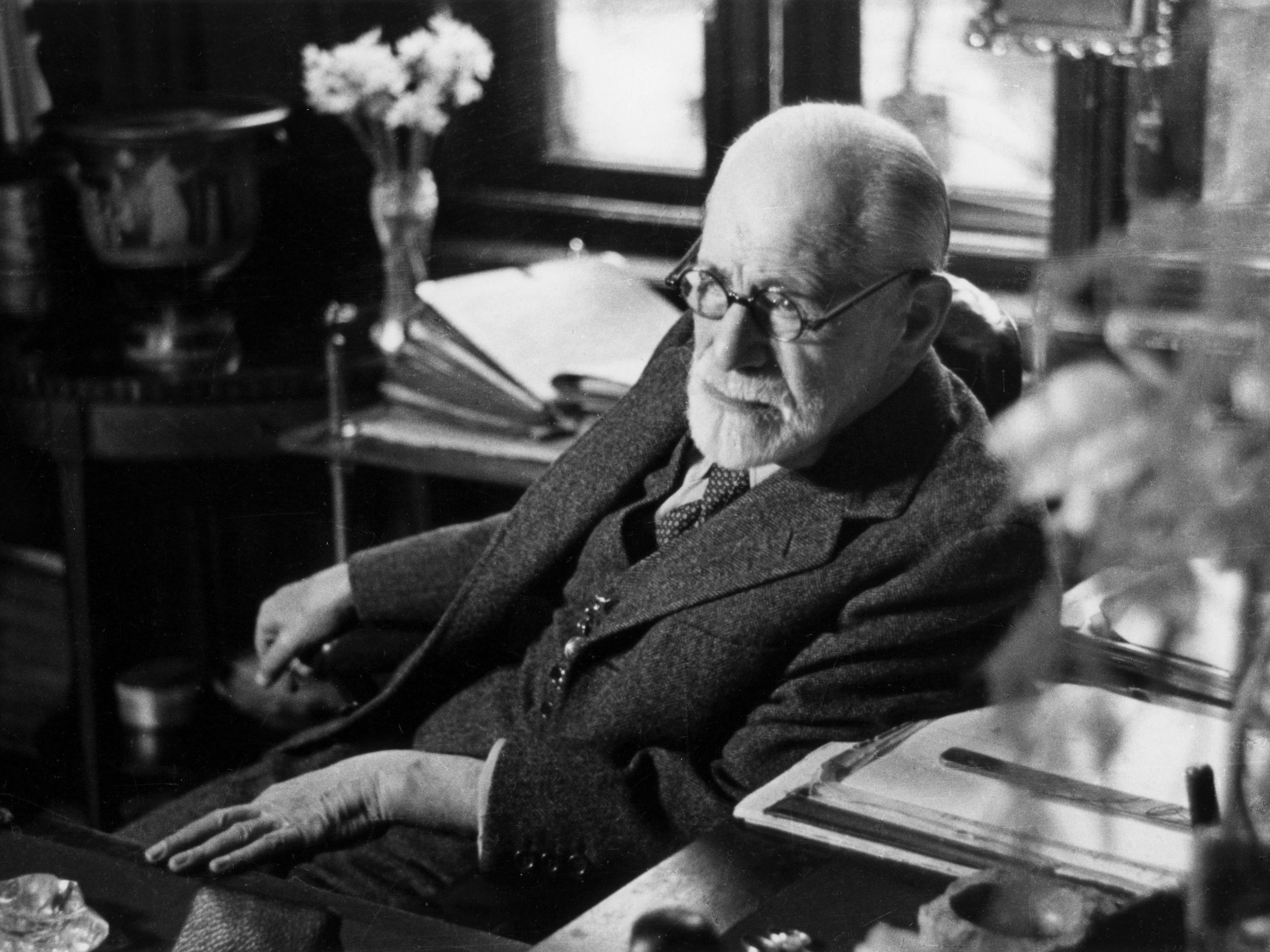


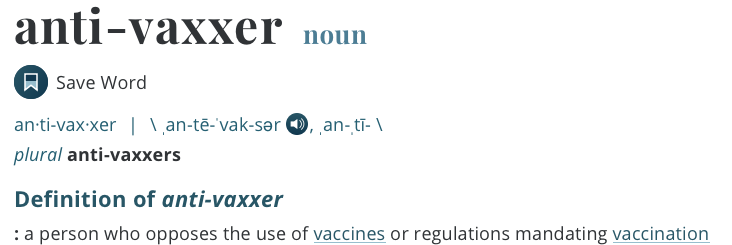

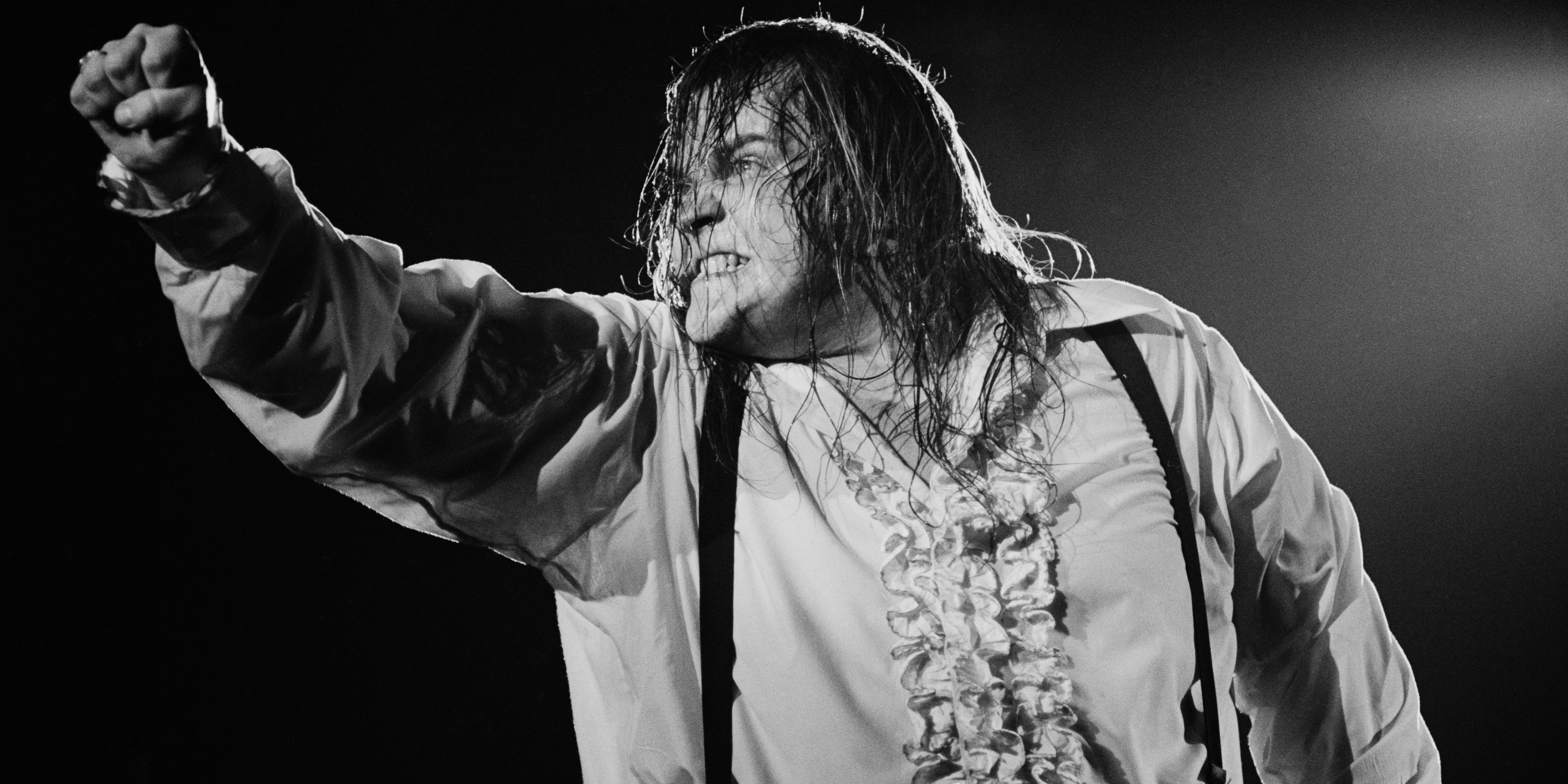
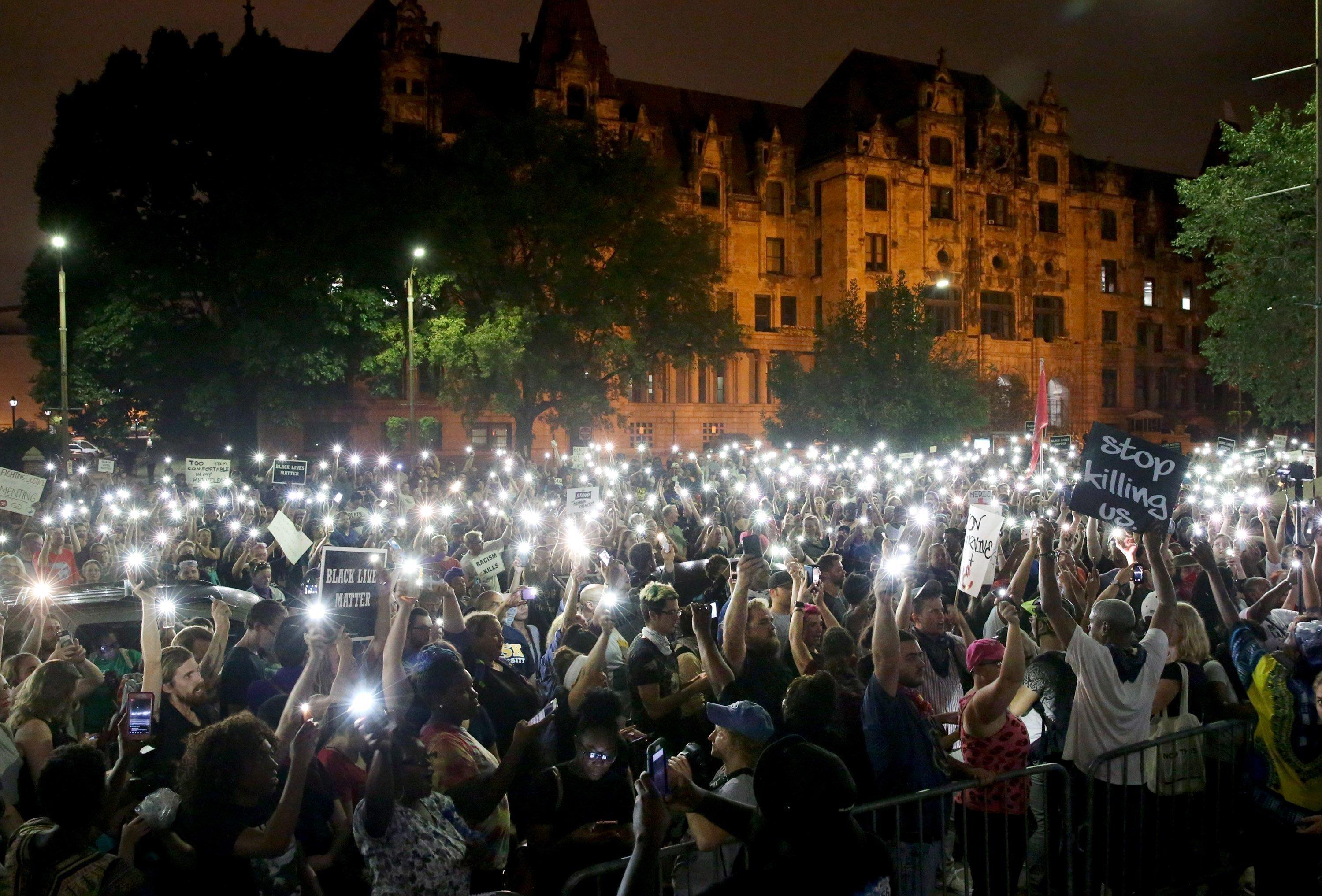


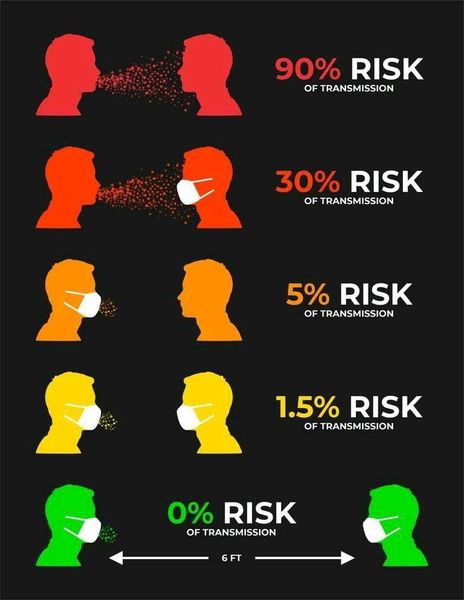

 freedom and reason