We hear this term “passive-aggressive” used a lot in conversation, but I rarely hear or see it used correctly except in the literature I receive from those organizations that assume that because I was once chair of my department I am an administrator—and of course in the organizational/industrial psychology literature. I receive tutorials every other day, informed by psychology, on how to deal with the “passive-aggressive employee.” I think you will find the actual meaning of the term interesting—and, I hope, maddening.
The concept emerges from the concept of “soldiering,” which has its origins in the work of early industrial psychologists, particularly Frederick Winslow Taylor, considered the father of scientific management (“Taylorism”). Taylor conducted studies on worker productivity and efficiency in factories during the late nineteenth and early twentieth centuries.
Taylor observed that some workers deliberately slow down their work pace or withhold effort to avoid being given more tasks and as a protest against what they perceived as unreasonable demands from management. They even encourage other workers to do the same, shaming those who work at a fast pace as “rate busters.” Taylor came up with the term “soldiering” to refer to this phenomenon, likening it to soldiers who would appear to be working diligently but who were actually avoiding exerting themselves fully.
Taylor’s observations were later redescribed and expanded by psychologists and psychiatrists in the mid-20th century using the concept of passive-aggressive behavior, which involves expressing negative feelings indirectly through actions such as intentional inefficiency, procrastination, quarrelsomeness, resentment, and stubbornness.
It was inevitable that psychiatrists and psychologists would explore how passive-aggressive behavior manifest in various contexts beyond the workplace to include everyday interactions and relationships. Thus, while Taylor’s original concept focused primarily on productivity in industrial settings, the shrinks expanded the notion to explain the motives of individuals who resist authority or express dissatisfaction in less overt ways.
Typical presentation of passive-aggressive behavior and other “pathologies”
Passive-aggressive continues not merely in its afterlife as a popular term. The notion of passive-aggressive behavior is still used by organizational psychologists to describe and explain interpersonal dynamics. The shrinks will tell you that it highlights the complexities of human behavior and the various ways individuals may respond to perceived pressures or conflicts in their social environments.
What you need to consider, then, is how psychologists in the service of the capitalist and managerial classes have effectively medicalized class conflict as a depoliticizing maneuver, delegitimizing the reason workers resist exploitation and oppressive control by psychologizing their motive, i.e., by dissimulating the social antagonisms that lie at the heart of the capitalist mode of production.
There is a disturbing parallel here in the work of nineteenth century physician Samuel Cartwright who identified a disorder he termed “dysaesthesia aethiopica,” previously known as “rascality,” which described a neurological disease that caused laziness and sluggishness among black people. (Cartwright also identified as disease he termed “drapetomania,” which he described as a mental illness characterized by the desire of slaves to escape captivity.)
I want to add that the dissimulation of exploitative and oppressive power—redescribed as authority based on assumed legitimacy or validity—is not just aimed at extracting more value from the labor of blue collar workers. The labor of the professional-managerial class has also been Taylorized and legitimized by depoliticizing the cause of resistance among those ranks.
We see this in the university system with the quantification of academic publishing, not just with numbers of publications, but also in attention to journal rankings and number of citations. Chairs, deans, provosts, and chancellors don’t actually read faculty scholarship. They review the metrics and make determinations on this basis. In this way, through calculability, bureaucratic logic undermines quality of scholarship by fetishizing quantity of publications. They want large numbers of pubs so they can brag about how productive their faculty is. Those who operate with academic freedom in mind become passive-aggressive.
There are many other rationalizations to explore here beyond efficiency regimes (productivity). There’s uniformity, credentialism, and so on, but I think I’ve given you enough to chew on for today.
To be sure, there are interesting things about gender, such as how genotype and phenotype work in tandem and the developmental malfunctions that can occur that dynamic. The anomalies are the proper subject of medical practice. Also, the cultural and historical variability of social roles associated with it, mass mediated stereotyping, and so on. This is the work anthropologists and sociologists do (although I’ve stopped lecturing on sex and gender in my introductory class out of a desire to narrow the lane of offense taking). But as a basic fact of plant and animal biology, like death, it’s one of those few incontrovertible truths. Only postmodernist nihilism “problematizes” gender as an excuse to transgress social boundaries and depathologize/normalize paraphilias—i.e., mainstream disruptive fetishes and kinks. To be sure, this has corrupted some scientists (and doctors, along with huge sums of money); but this only means they have abandoned their calling and have crossed over into ideology.
Judith Butler (AI-generated image)
The occasion of Jessica Bennett’s piece is Butler’s new book Who’s Afraid of Gender? Frankly, I have never fully understand why Butler garners so much attention. Yes, those whose desire to disorder society need arguments. But her work is unimpressive and often gibberish (Bennett describes her as “notorious esoteric philosopher turned pop celebrity”). Even her misrepresentations of what the opponents of queer theory are against in the interview lack sophistication. She feigns ignorance about the association of queer theory and pedophilia. “Some woman came at me with a big trolley and she was screaming about pedophilia. I could not understand why.” Then she says, “I figured out later that the way that the anti-gender ideology movement works is to say: If you break down the taboo against homosexuality, if you allow gay and lesbian marriage, if you allow sex reassignment, then you’ve departed from all the laws of nature that keep the laws of morality in tact—which means it’s a Pandora’s box; the whole panoply of perversions will emerge.”
The question of homosexuality and marriage equality, once essentially a settled question, is becoming problematic once more because of association with and tolerance for the fallacy of gender identity and the politics associated with it, politics rooted in sexual perversion. The perversions—pedophilia, transsexualism, etc.—come first, not after. In a recent essay on this blog, Fear and Loathing in the Village of Chamounix: Monstrosity and the Deceits of Trans Joy, I talk about the history of sexology, which clarifies the order of things (see also Thomas Szasz, Medical Freedom, and the Tyranny of Gender Ideology). Queer theory is indeed built upon the desire to transgress boundaries. But it is wrong to put gays and lesbians into Pandora’s box along with autogynephiles and the like. This is what Butler means by “gender,” namely trans-affirming, i.e., the project to normalize “sex reassignment surgery,” a medical euphemism for genital mutilation, and intentional endocrine disruption.
Once again, I give you Derrick Jenson on pedophilia, anarchism, and queer theory. Add knowledge about Cluster B and you now understand Trantifa.
Here's a clip of Jennifer Bilek on Steven Bannon s War Room today. I will share the link to the episode in which she appears in the comments. This is a much watch interview. https://t.co/weaTN0tRAa
In her interview with Steve Bannon on the War Room (the rest of the interview can be found here, time stamp starting 00:51.38, ending 01:13:48), Bilek tells us that women are being reduced to parts in the medical and corporate literature for a reason. Listen to the language. Women aren’t women anymore. One can by disciplined defining women scientifically, i.e., adult human female. It’s why we’re being told the lie that gender is neither binary nor immutable. Women are reduced to “cervix-havers,” “menstruators,” “birthing bodies,” “womb-havers,” “uterus-havers,” and other such Orwellian euphemisms (see Manipulating Reality by Manipulating Words). Women are being dehumanized in preparation for the comprehensive socialization of transhumanism. Because women are central to the reproduction process—bodies in which babies are grown—they’re reduced to parts for reproductive technology. This is what lies behind mass disassociation from sexed reality, as Bilek puts it.
Reproductive Transhumanism (AI generated)
The ideological conservative who thinks all this is communism or socialism is operating from an entirely false premise. The corporate state project to indoctrinate Western youth isn’t about making them communists or socialists. Communism and socialism are antithetical to capitalist accumulation. Rather, the progressive capture of our sense-making institutions is about installing in the mass of wetware (the collective consciousness) an ideology that produces obedient subjects for the emerging techno-feudal order, a near-future that includes reducing them to primary commodities for the mass production of augmented humans.
Why so many conservatives are confused about this because they believe we live in a capitalist world that still works in much the same way as the past capitalist world did. The corporate state of late capitalism is an obvious contradiction to free market capitalism, so it intuitively feels like communism or socialism. But we don’t live in a previously-known capitalist system. We live in the new reality of transnational corporate technocracy, where national boundaries are being erased and Western culture reorganized to meet the needs of corporate power. (See Communism: The Real and the Theoretical, and Why Nomenclature Matters.)
Ideological conservatives don’t have a model sufficient to theorize the circumstances in which they find themselves. They don’t have a language to generate valid conceptual definitions. Without valid conceptual definitions, there are no operational terms possible to inform effectual mass action against the corporate state. They don’t know what they are actually fighting because they do not have the tools to define what lies at the heart of their very real trepidation. When they decry communism and socialism, they’re easily made to appear foolish, since many of those outside the conservative bubble can see that what’s creeping up on us—if they see anything at all—isn’t communism or socialism. This is why the populist-nationalist movement—liberals, marxists, and rational conservatives coming together in coalition building—is so important to cultivate. Seeing Bilek on Bannon’s show was inspirational.
We have been here before in history. Over the first half of the twentieth century the emerging corporatist order took two basic forms: the soft corporatism of social democracy (called progressivism in the United States) and the hard corporatism of fascism. Both forms pursued identity politics. They had more in common than just identitarianism. Multiculturalism is the progressive version of ethnic and racial separatism. I’m confident my readers know that eugenics was central to progressive ideology. Eugenics was the study and practice controlling reproduction within a human population to achieve corporate state ends. (See The Selective Misanthropy and Essential Fascism of the Progressive Standpoint; Embedding Misogyny and the Progressive Mind.)
Ever wonder why there’s no talk about social class in woke progressivism? Where is the talk about economic justice? If it appears at all, it’s sublimated as racial justice and the goals changed from improving the standing of working class people to pitting blacks against whites and other other successful demographic categories. It’s all about identity now—ethnicity, race, religion, etc. (Not gender, since that category is being dismantled, as Bilek tells us). The elite aren’t atomizing us. They’ve reorganized us into identity groups that stand antithetical to one another in the pseudo-history/science they’ve manufactured, replete with necessary antagonisms, while denying the legacy of overcoming and actual progress.
This is why, while I am committed to social justice, I criticize social justice as it is popularly understood. What elites and the subalterns they have hoodwinked are portraying as social justice is its opposite. “Social justice” undermines social justice. How could it not when corporations rule the earth? The question of social justice is the subject of a forthcoming blog. Stay tuned.
While you wait, begin your journey down the rabbit hole by reading one of Bilek’s latest tweets:
Some of us want more than our basic rights. For me, those are crumbs. I want this entire system of deconstructing humanity for the market to be pulled out at the root and then burned to cinders. I will do what I can to assist in that process and help others to see what is… https://t.co/5yVByybrV9pic.twitter.com/cCPsHJSkmm
The House passed six appropriation bills a little while ago—a $1.2 trillion package—to avert a government shutdown. It funds the federal government until the end of the fiscal year on September 30. It includes defense, homeland security, financial services and general government, labor-HHS, the legislative branch, and state-foreign operations. The package essentially codifies the invasion of the country by criminal aliens. There is a lot of military spending and some truly goofy social engineering items in there. Understand that the threat of government shutdown is propaganda to force uncritical passage of a continuing budget. It now goes to the Senate.
Mike Johnson, Speaker of the US House of Representatives
Marjorie Taylor Greene has filed a motion to oust Speaker Johnson. It’s the motion to vacate Republicans used to remove McCarthy as Speaker. If you remember, McCarthy’s removal enjoyed bipartisan support. I expect the same for Johnson. Suffice it to say, I like the rules of accountability the populists negotiated when Republicans assumed the majority of the House. It is a periodic reminder than those who are handed the gavel are those prepared to do the bidding the establishment.
I find it interesting that leaders of the Republican Party otherwise loathed by Democrats enjoy a strange good will from progressives when rank-and-file Republicans turn on their leaders. The good will is manifest in a lack of joy at their removal (even while participating in it) and charges of party dysfunctionality, even though this is what democracy looks like. Democrats take pride in their lockstep approach to governance. They don’t eject leaders who do the bidding of the power elite. Democrats are fully integrated with the power elite.
Republican Robin Vos, Speaker of the Wisconsin Assembly
A case in point is the recall of Wisconsin’s Robin Vos, the 75th Speaker of the Assembly and the longest-serving speaker in the state’s history. If you’re not plugged into the populist-nationalist movement, you probably didn’t even know this was happening. If the Democrats were behind it you would. But it is rank-and-file Republicans who are. Vos’ argument against the recall petition is an ironic one. It depends on rationalizing the Wisconsin Supreme Court December ruling overturning GOP-drawn legislative maps. The Vos camp says in its challenge of the petition that a recall cannot occur in Vos’ district because it is not the same district.
Freedom and Reason will be watching both the motion to vacate and the Vos recall. Stay tuned.
Today was a bizarre day on the Supreme Court. Ketanji Brown-Jackson (remember the woman who doesn’t know what a woman is because she’s not a biologist?) expressed concern that the First Amendment gets in the way of the government censoring speech. She really doesn’t know the purpose of the First Amendment? It is literally to get in the way of the government censoring speech.
Supreme Court Justice Ketanji Brown-Jackson
The most frightening thing to hear in a free and open society are voices in positions of power specifying that whether one is free to express a thought depends on whether that thought harms the “public,” “national,” or “societal” interests. That is the meaning of “moderation”—it’s code for censorship.
Who determines the public interest? The people with the power to censor speech. Those aren’t the general interests, I assure you. Those are the specific interests of specific groups—the interests and the groups in power. If they can tell you what to say, then they have power over you.
Speech that supports the interests of groups in power is often a type of speech called “propaganda.” Free speech guarantees that individuals can openly challenge propaganda. Any claim an individual makes is subject to a counterclaim. If that is to be a free process, there can be no cost to the challenger.
There’s a word for the suppression of speech that harms the interests of powerful groups. It’s called totalitarianism.
Finally, beware of those who justify censorship in the name of protecting powerless groups. To be sure, there are situations where child safeguarding requires preventing speech that would sexualize or traumatize children. But in the realm of adults, individuals must expect in a free society to hear things they will disagree with or find offensive.
“Those who can make you believe absurdities can make you commit atrocities.” —Voltaire
Difficult truths uttered here. Truths that must be grappled with. Graham Linehan is correct. He sees it for what it is. We must learn again to see what we see. This requires rejection of the blindness of belief in belief. If you can’t see it, then your cognitive frame is warped.
Imagine trying to argue the pro side of Nazism and the Holocaust—the ghastly experiments and all the rest of it. The difficulty in doing so is thanks to denazification (Entnazifizierung) and the passage of time.
At one time, in Germany, a democratically-advanced scientifically-literate society, millions of people believed in Nazism and were involved in carrying out atrocities against Jews, Gypsies, homosexuals, and others. There were some eight million members of the Nazi Party (NSDAP), and many millions of Germans who had belonged to one or another Nazi organization.
In the end (at points using illiberal action), the presence of Nazism was diminished. But that doesn’t mean the lesson was learned.
German soldiers are forced by the Allies after World War II to watch a film about the atrocities at German concentration camps.
When people are in ideology’s bubble, when their livelihoods and reputations depend on toeing the line, even finding their identity and status in it, especially when the line has been drawn by hegemonic discursive formation such that it has become the social logic, the day’s common sense impression, it is very difficult to see things for what they are. Morality and justice are redefined: what is perceived as good and just become evil and destructive. You have to make the effort to put thing in the right position. You have to have the skills to know how.
But you also have to know what to look for. It might seem obvious to you and me that when doctors are experimenting on children it’s happening again. But when ideology tells you that it’s a good thing, you stop knowing what to look for.
This phenomenon is part of a cognitive error known as “cognitive dissonance.” Cognitive dissonance occurs when an individual experiences psychological discomfort or tension due to holding conflicting beliefs. In an effort to reduce this discomfort, people rationalize their conflicting beliefs or behaviors to align them more coherently.
For example, asked whether he thinks illegal aliens should vote in local elections, a Democrat says that this is a myth, that illegal aliens are not voting in local elections. Confronted with evidence that they are, the Democrat says that it’s a good thing they are because illegal aliens should have political representation.
The individual initially denies that aliens are voting in local elections because it contradicts his core belief that this shouldn’t happen. However, when confronted with evidence that contradicts his initial belief, he justifies the situation by adopting the belief that it’s a good thing because it aligns with his broader perspective on political representation. This behavior is a common way for individuals to maintain consistency in their beliefs and attitudes, even when faced with evidence that challenges them.
Name the Dynamic works. The individual arguing with @BillboardChris slides unmoved from "It's not happening" to "Its happening & its a good thing."
What is not good for the ☭ revolution is showing the dishonest tactic.
— Yuri Bezmenov's Ghost (@Ne_pas_couvrir) March 17, 2024
Above is a good example of cognitive dissonance from one of Billboard Chris’ street interviews (note that he is wearing a mask). This is one of many he has accumulated over several years. The individuals who do this are in denial. Deep down they are horrified that doctors are experimenting on children. They also believe in the cause of gender ideology and know that medical experiments involving children discredits the movement. So they deny it is happening. When they learn it is happening, they choose gender ideology over human rights.
How we make progress is not merely contradicting the individual’s claims; we use these moments to show his rationalization of contradiction to a larger audience, causing them to examine their own cognitive style to see if and when and where they engage in cognitive dissonance. People are often reluctant to change their opinion when directly confronted with it. But when they can see what that looks like from the third person perspective, it can influence them to work out their own position.
One tragic aspect of these moments—tragic because we are compassionate and humanist—is that the perpetrators of atrocities and the bystanders who support them, or fail to notice them for their evil and destructive character, will, even after the regime of horror is overthrown, feel compelled to believe they were doing good in whatever they were doing; the horror of their thoughts and behaviors now revealed for its truth is a terrible truth is to admit. How do people live with themselves when they have committed such evil? Yet they do.
The best we can accomplish with projects like denazification is make the thoughts and deeds of the Nazis and their analogs so shameful that those who wind out their remaining mortal coil will at least not continue their evil. After all, we can’t hang them all. (Maybe we shouldn’t hang any.)
That’s the best we can accomplish on that front. But there is a bigger front. This is something like the difference between specific versus general deterrence that you may have learned about in your criminal justice courses: preventing these moments from happening in the first place by socializing Enlightenment values: civil rights, humanism, individualism, liberalism (and that includes modern conservatism with respect for secularism), rationalism, and scientific materialism. These are the values and practices that reduce the problem of cognitive dissonance because they deter people from lying to themselves in a way that allows them to become caught up in harmful social movements.
I leave you with a panel discussion by people who used Enlightenment values and practices to learn to see what they see.
“The transsexual body is an unnatural body. It is the product of medical science. It is a technological construction. It is flesh torn apart and sewn together again in a shape other than that in which it was born. In these circumstances, I find a deep affinity between myself as a transsexual woman and the monster in Mary Shelley’s Frankenstein. Like the monster, I am too often perceived as less than fully human due to the means of my embodiment; like the monster’s as well, my exclusion from human community fuels a deep and abiding rage in me that I, like the monster, direct against the conditions in which I must struggle to exist.” —Susan Stryker (1994)
“They have to stick their instruments in. They have to leave their mark. They can’t just watch. They can’t just appreciate. They can’t just fit into the natural order. They have to make something unnatural happen.” —Michael Crichton (1990)
“What is natural cannot be immoral.” —Magnus Hirschfeld
Mia Hughes and Michael Shellenberger acquired internal documents from the World Professional Association for Transgender Health (WPATH) that expose the lack of medical and scientific foundations in the field of transgender medicine. Widely trusted by such organizations as the American Medical Association, the American Academy of Pediatrics, the Endocrine Society, and numerous global practitioners, WPATH is considered the foremost authority on gender medicine. However, internal WPATH documents reveal that its members are cognizant of the fact that their practices result in victims, among them a 10-year-old girl, a 13-year-old developmentally delayed adolescent, and individuals grappling with schizophrenia and other severe mental illnesses. The documented injuries detailed in the WPATH Files include sterilization, liver tumors, loss of sexual function, sterilization, and even death.
These harms were known well before the WPATH revelations. Watch this 2021 interview with psychiatrist Dr David Bell, who served as a staff governor at the Tavistock Trust (Bell is a former president of the British Psychoanalytic Society). He tells presenter Cathy Newman, “Children have been very seriously damaged” by NHS gender clinic. Bell wrote an internal report in 2018 raising the concerns brought to him by colleagues about the way the Gender Identity Development Service was treating patients. For this, he was disciplined.
In the summer of 2022, it was announced that the Tavistock transgender clinic was to be shut down by the NHS after a review found it unsafe for children. However, the health service scheduled young people who believe that they are trans to be moved into regional centers. It took the WPATH files to spook the NHS into making a more pronounced move towards child safeguarding, the service announcing just days ago that children will no longer be prescribed puberty blockers at gender identity clinics in the UK.
Hughes and Shellenberger emphasize that the revelations in the WPATH files underscore that gender medicine involves unregulated and pseudoscientific experiments on children, adolescents, and vulnerable adults. Indeed, as I have been arguing on Freedom and Reason, gender medicine represents one of the most egregious medical scandals in history (see, e.g., Thomas Szasz, Medical Freedom, and the Tyranny of Gender Ideology; The Exploitative Act of Removing Healthy Body Parts).
In the face of Nazi doctor level atrocities being carried out in gender clinics (I will spare you the nausea-inducing images), these developments has been met with hysteria concerning recent allegations that transgender individuals were targeted by Nazis during the Holocaust. This bit of problematic history is associated with concern for those who will be denied “lifesaving gender affirming health care,” or GAC, by states with Republican majorities.
GAC has never been about lifesaving medicine—or medicine at all, really, only the exploitation of medical technology to achieve movement ends. The misanthropic/misogynistic desire to transcend humanity and nature, to be something more or other than human, to deny biology for simulation, and the ideology that enables that desire to manifest in practice, lies in back of the destruction of childhood innocence and the erasure of girls and women.
Anti-/post-humanist pathologies reflect the rise of transhumanism, of which transgenderism is a subset (trans-speciesism is another). The longing for cyborgs and replicants, for technology to modify or replace some or all of our bodies (e.g., the brain-computer interface Neuralink), and for artificial intelligence to organize knowledge and practice (e.g., Google’s AI system Gemini), is the same desire that manifest in what Jennifer Bilek identifies as “synthetic sex identities,” or SSIs (see my essay Simulated Sexual Identities: Trans as Bad Copy.)
Frontispiece by Theodore Von Holst of the 1831 edition of Frankenstein.
Bilek’s construction is especially evocative in light of Mary Shelley’s Frankenstein; or, The Modern Prometheus. Published in 1818, Shelley’s epistolary novel explores a variety of themes, including the limits of human knowledge, the consequences of unchecked ambition, the nature of humanity, and the power of societal rejection. It is foremost a warning about the perils of biotechnology.
Victor Frankenstein, a young scientist obsessed with cheating death by unlocking the secret of reanimation, successfully creates through his experiments a living being assembled from body parts collected from charnel houses, dissecting rooms, and graveyards (in a scene from the 1931 Universal Pictures film starring Colin Clive and Boris Karloff, a corpse is cut down from the gallows). Horrified by his creation come to life, Frankenstein rejects the creature, who is left to navigate the world alone. The creature, abandoned, hideous, and isolated, descends into bitterness and revenge.
My public interpretation of Shelley’s novel, which I present in my first-year seminar Becoming Human: People, Machines, and Monsters, is that it primarily serves as a cautionary tale about the dangers of unchecked scientific ambition and the potential consequences of playing god. Frankenstein’s pursuit of knowledge without considering the ethical and moral implications of the results serves as a warning about the perils of scientific overreach.
To be sure, the perils include the personal. The novel explores themes of alienation and the consequences of societal rejection. The creature, initially innocent and longing for human connection, is shunned because it is hideous. This theme, it’s oft noted, reflects observations of social prejudice and the consequences of society’s tendency to judge individuals based on appearance.
At the same time, despite learned compassion for the disfigured and deformed, the monstrosity unbridled science created rightly provokes the reaction of those who come upon it. Their horror is justified because the thing is an abomination. Justified is their desire to prevent the manufacture of more things like it.
Susan Stryker
In 1994, Susan Stryker cribbed Shelley’s insight for his essay “My Words to Victor Frankenstein Above the Village of Chamounix: Performing Transgender Rage,” published in the Journal of Lesbian and Gay Studies. The piece was inspired by Stryker’s involvement in Transgender Nation, a militantly queer, direct action transsexual advocacy group. The year prior, Striker had been involved in disruption and protest at the American Psychiatric Association’s 1993 annual meeting in San Francisco.
Stryker was also reacting to Mary Daly’s 1978 book Gyn/Ecology: The Metaethics of Radical Feminism, in which Daly uses the metaphor of Frankenstein’s monster to describe transgender people, suggesting that they’re attempting to transcend their biological sex and create a monstrous hybrid of genders.
Leaning into the monster as self-description, and the interpretation of Shelley’s work as a treatment of social prejudice and the tendency of superficiality, eschewing concern for the problematic of monstrosity, Stryker draws parallels between the experiences of transgender individuals and Frankenstein’s creature.
Examining themes of embodiment, transformation, and societal rejection as they relate to both the creature and transgender individuals, Stryker argues that the creature’s journey can be understood as a metaphor for the experiences of transgender individuals who are often marginalized, misunderstood, and rejected by society.
Stryker emphasizes the idea of performative identity (see the work of Judith Butler) and how creatures such as himself must navigate the expectations and norms imposed by society. The creature’s attempts to conform to societal expectations and the ultimate rejection by society resonates with the experiences of transgender individuals who often face societal pressure to conform to gender norms.
Stryker also explores the theme of rage in both the creature and transgender experiences. The rage expressed by the creature is represented as a just response to the injustice and rejection it faces; that the creature is a frightener is not because it’s frightening but is rather the consequence and function of societal reaction. Like the creature, transgender individuals experience anger and frustration as a result of discrimination and prejudice.
Here we see the preparing of hurt and fury for the propaganda of the deed that inspires a generation of youth to “punch a TERF.” To be sure, trans violence is on those who perpetrate it; but, having normalized monstrosity, Stryker elevates the role of frightener to virtue.
In this essay, to trace the path that brings us to Frankenstein’s new laboratory, the gender clinic, I focus on the development of sexology, a scientistic field of ideological endeavor that manufactures knowledge and expertise for the development of medical approaches for handling sexuality and gender matters. Sexology is in its overgrowth the pseudoscience that underpins WPATH’s apparent legitimacy.
The ostensive goal of sexology, beyond providing basic knowledge about human sexuality, is to ensure that healthcare professionals are equipped to provide for those who suffer form sexual dysfunction—ostensive because a jargon has developed to justify transgender health care, promoted as a compassionate move to address the need of individuals realizing their “authentic selves.” This “need” has led to the establishment and proliferation of the gender clinic.
Programmatically, over its nearly century and a half development, the spirit behind sexology has evolved from an interest in human sexuality (scientia sexualis) to a religious-like worldview where ecstasy is sought and the sexed self problematized (ars erotica). What remains of sexology in the latter is an “afterlife” manifest in, as Joab Lubin and Jeanne Vaccaro put it in the pages of Social Text, “the recrudescence of sexological aesthetics, modes, styles, and logics in the ongoing present.”
In their essay “After Sexology,” the authors write, “In the post-WWII period in the United States, many of the epistemologies, methods, practices—and along with them, many of the disciplinary functions and discriminatory logics—of sexology were thoroughly institutionalized under many other names.” They identify the gender clinic as one of the principle sites. Other disciplinary sites: the welfare state, the prison-industrial complex, and the criminalization of sex work.
“We hold these sites to collectively limn the afterlives of sexology that animate the present,” they write. Their contention is not that ars erotica is a new space but that scientia sexualis supersedes and “rescripts its rituals and logics into a new program for systematizing social relations to sexuality.”
It is sexology’s afterlife that animates Andrea Long Chu’s argument in his New York Magazine piece, “Freedom of Sex: The Moral Case for Letting Trans Kids Change Their Bodies.” “We must be prepared to defend the idea that, in principle, everyone should have access to sex-changing medical care, regardless of age, gender identity, social environment, or psychiatric history,” he writes.
Chu criticizes the left for relying heavily on the concept of gender identity—borrowed from psychiatry and shaped by gender studies and the strategies of the marriage equality movement (“born this way”)—to advocate for trans rights. While this approach has led to some progress in social acceptance, he argues, it lacks a coherent ethical framework to justify the biological interventions involved in GAC. Critics rightly question why affirming someone’s gender identity requires altering their biology if gender is merely a social construct.
I will come to Robert Stoller’s work later in the essay, but social construct is not exactly what the psychiatrist had in mind when he introduced the concept of gender identity. Chu is nonetheless correct when he notes that advocates for GAC have fallen back on the clinical diagnosis of gender dysphoria, previously known as gender identity disorder, which defines distress stemming from the mismatch between gender identity and biological sex.
Chu’s criticism is that framing trans identity solely as a medical condition perpetuates the notion that trans individuals suffer from a mental illness, allowing psychiatrists to gate-keep access to GAC. By centering the debate on medical diagnosis, progressives have inadvertently reduced the issue of justice to a matter of who meets the criteria for a particular diagnosis, providing fodder for the anti-trans movement to pathologize trans youth systematically.
Against this, Chu asserts that acknowledging sex does not mean endorsing its constraints, as evidenced by children wishing to alter their sex, and implores his readers to defend these desires independently from the concept of gender. To truly advocate for transgender rights, Chu argues, we must recognize transgender individuals as full members of society who seek to change their sex, regardless of the origin of their desire to do so. Any attempt to explain the origin of transgender identity risks excluding those who do not fit within its framework. This is the essence of the critique of sexology’s afterlife.
For Chu, who came to his trans identity via the sissy porn route (as he tells it, sissy porn found him), transformation is about finding wisdom in giving into one’s sexual desires. Perhaps it isn’t about euphoria for Chu, who declared in a 2018 op-ed in the New York Times, “My New Vagina Won’t Make Me Happy.” But many young men believe it will.
To clarify the distinction between scientia sexualis and ars erotica, then, Michel Foucault, in the inaugural volume of his History of Sexuality, introduces the juxtaposition between the science of sexuality and the erotic arts. I want to make a couple of notes here that I hope make the point clearer (the reader can follow up). I will mention two pieces of scholarship in this area.
First, Sanjay Gautam, in Foucault and the Kamasutra (2016), explores the significance of Foucault’s assertion that, in scientia sexualis, truth and self assume authoritative roles, while, in ars erotica, pleasure takes precedence over truth and self, self understood as the self-reflecting ego.
Translating Gautam’s point into Freudian terms: in the latter, a man abandons the reality principle (along with the sublimations necessary for social existence) and hands over his agency to Eros, the pleasure principle, the amalgamation of life-preserving instincts manifests in various forms, including sublimated impulses. Using concrete cultural manifestations of ars erotica, Gautam explores Foucault’s crucial characterization of pleasure as an event of “desubjectivation,” entailing the loss of self-awareness.
Second, Gerald Doherty, in “Ars Erotica or Scientia Sexualis” (published in a 1996 issue of The Journal of Narrative Technique), notes Foucault’s observation that ars erotica is characteristic of certain societies, primarily those in the East (Rome being Foucault’s lone Western example). In these societies, truth is extracted directly from pleasure, encompassing its gradual durations, intensities, intricacies, liberating effects, and its connection to other realms of existence. Here the religious and transhumanist elements become obvious.
Doherty notes that this knowledge, essentially esoteric, is closely guarded and transmitted by a master who, through initiatory rituals, guides the disciple along the path to erotic enlightenment. The ultimate outcome for the disciple is, in Foucault’s words, “an absolute mastery of the body, a singular bliss, oblivious of time and limits, the exile of death and its threats.”
In this view, the death of sexology as a (attempted) science of human sexuality prepares the way for a sexual anarchism wrapped in quasi-religious sentiment—bliss—that rebels against the system of institutions and practices supposed to suppress sexual desire. The Ego is restrictive. The Superego is oppressive. Chu’s argument is that of a child finding arbitrary all constraints on his impulse. It is the voice of the Id.
The rebellion is manifest in the queer practice of boundary transgression, such as sex between adults and children, a taboo established to deny children the freedom of their bodies. This direction is obvious in the role that doctors and teachers have assumed as mentors in the project to sexualize children and put them on the path of transcending their gender identity, the very definition of which allows for the redescription of gender/sex as potentially incongruent with gender/sex.
This is what makes possible the Orwellian construction “sex assigned at birth,” a linguistic invention that abnomalizes as imposition of the medical gaze shaped by natural historical knowledge while normalizing the imposition of oppressive power in the hands of groomer dissimulated as such—and the medical-industrial complex that waits with open maw to consume the deluded. Being assigned a sex is something to rebel against.
Because of the gravitational pull of its subject matter, sexology pulled into its orbit many irregular moons—and there are not a few Frankensteins among them. In the transhumanist wish to transcend the limitation of the natural body, sexology, even when dismissed as afterlife by the advocates of depathologization, has emerged as a major player in normalizing and facilitating the creation of monsters. And, as it stands, hormonal and surgical alterations of bodies depend on the medical-industrial complex.
This balance of this essay sketches the history of the developments that lead us to the existence of WPATH.
* * *
Generalizing Ingolstadt: Medicalizing Human Sexuality; Manufacturing Gender Identities
Austrian psychiatrist Richard von Krafft- Ebing coined the term “sexology” in his book Psychopathia Sexualis, published in 1886.
Austrian psychiatrist Richard von Krafft-Ebing coined the term “sexology” in his book Psychopathia Sexualis, first published in 1886. Experts used Psychopathia Sexualis to diagnose and explain sexual deviancy. Krafft-Ebing organized the myriad of sexual perversion into three categories: anesthesia (absence of sexual instinct), hyperesthesia (exaggerated sexual instinct), and paraesthesia (perversion of sexual instinct).
“Claiming to speak the truth, it stirred up people’s fears,” said of the godfather of queer theory of the book in his The History of Sexuality. “Involuntarily naïve in the best of cases, more often intentionally mendacious, in complicity with what it denounced, haughty and coquettish, it established an entire pornography of the morbid, which was characteristic of the fin de siecle society.”
From Richard von Krafft-Ebing, the author of Psychopathia Sexualis
Sexology is defined as the study of human sexuality. Victorian sensibilities to the side, it sounds innocuous enough. Leveraging various academic and practical disciplines, such as anthropology, biology, medicine, psychology, and sociology, sexologists have since Krafft-Ebing’s time constructed a vast literature with a scientific appearance (scientism or ideology imbued with the beard of scientific authority), which is not say it is devoid of science but rather to suggest that it is, in its totality, pseudoscientific in character.
In practice, sexology has always been fraught with problems: ethical violations, ideological corruption, issues surrounding methodological rigor, the problem of the self-report (i.e., the problem of subjectivity), small samples sizes, unrepresentative samples, etc. Especially problematic is research involving children.
Gender identity in the field of sexology has been shaped by the contributions of several key figures. Magnus Hirschfeld stands out as an early advocate, establishing a theme in his seminal work Die Transvestiten. Harry Benjamin further advanced the field by establishing standards of care and introducing the Benjamin Scale, laying the groundwork for the medical and psychological aspects of transgender experience. John Money, whose work on gender identity, and the atrocity known as the David Reimer case, sparked discussions on the nature versus nurture aspects of gender. These are a few of the figures I discuss below.
There are others I won’t cover: In the 1970s, Virginia Prince expanded the discourse by socializing the term “transgender” and advocating for acceptance of these phenomenon beyond medical definitions. More recently, Julia Serano, in his 2007 Whipping Girl: A Transsexual Woman on Sexism and the Scapegoating of Femininity explores the intersections of gender, feminism, and transgender experiences. I note omissions to make the point that this essay is not intended to be a comprehensive review of the history of sexology, but rather is aimed at exposing the reader to the crackpot ideas behind GAC.
American biologist and professor of entomology at Indiana University, Alfred Kinsey (1894-1956) conducted extensive research on human sexuality including children and infants.
Alfred Kinsey, American biologist and professor of entomology (that’s the study of insects, by the way) at Indiana University, conducted extensive research on human sexuality and is, alongside Masters and Johnson (discussed in a moment), one of the most celebrated sexologist of the period. Indeed, he is often celebrated as the “father of the sexual revolution,” and credited with laying the groundwork for the gay rights movements of the 1960s and 1970s.
Kinsey’s research challenging prevailing societal beliefs about sexuality is lauded by progressives for helping demystify and destigmatize many aspects of human sexual behavior that were previously perceived as deviant. To be sure, the normalization of homosexuality is to be celebrated (because homosexuality is normal), but contributions to this end are often used to smuggle in the project to transgress the entire normative structure regulating sexual behavior, especially where children can be found.
In 1947, Indiana University, in collaboration with the Rockefeller Foundation, established the Institute for Sex Research, with Kinsey as its director. In the 1940s and 1950s, Kinsey and his research team conducted two large-scale studies popularly known as the “Kinsey Reports,” the first, Sexual Behavior in the Human Male, published in 1948, the second, Sexual Behavior in the Human Female, in 1953, both proving highly influential in shaping popular attitudes about human sexuality.
The Institute’s research included the study of sexual behavior and experiences across various subpopulations, including those in children. The reports purported to reveal a wide range of sexual experiences and orientations, including variations in behavior, desire, and orientation, that differed from the prevailing norms of the time. There was a complex subterranean system operating beneath mainstream society, a system closer the Id.
The Department of Sexology at Indiana University, 1952. Alfred Charles Kinsey is on the far right in the back row.
Controversy surrounded Kinsey’s work. There were accusations of biased research and unprofessional conduct, such as encouraging sexual activity among associates. Kinsey’s approach involved gathering information about experiences and sexual behaviors among minors, including information about erections and orgasms. Survey instruments asked explicit questions about sexual behaviors, the wording of which influenced participants’ responses and led to inaccurate or misleading data. There were concerns that some participants might not have fully understood the implications of the questions, especially children. Some of these data were obtained through interviews with individuals who reported their own childhood experiences, but, in other cases, through observation, as well as through interviews with parents, guardians, and other caregivers, data were gathered on children.
It is not as if Kinsey was operating at a time where ethical awareness was dim. The high-profile Nuremberg doctors’ trial began in December 1946 and was decided in August 1947 (see Robert Lifton’s The Nazi Doctors: Medical Killing and the Psychology of Genocide). Kinsey and his team were operating with full knowledge of the new ethical regime in the wake of the Holocaust. Nor was Kinsey laboring under the cover of darkness. Kinsey’s research was the stuff of popular as well as professional acclaim.
(To be sure, Kinsey’s groups were not the only researchers and physicians violating human ethics rules in the aftermath of World War II. The Tuskegee syphilis experiments, conducted on black sharecroppers, started in 1932, but ran until the federal government shut it down in October 1972, well after the Nuremberg, and was the subject of some sixteen published studies. The widespread adoption of psychotropic medications and advancements in psychiatric treatments led to a decline in the use of lobotomies by the 1960s. It has only been more recently that the procedure has come to be seen as discredited and considered ethically questionable due to its often irreversible and severe effects on patients’ cognitive and emotional functions. These examples are significant in light of GAC, which continues despite its recent setbacks.)
Kinsey observed and documented intimate interactions between men and women in various arrangements. More than this, he personally engaged in sexual relations with participants and even with members of his research team. So did his wife. There are allegations that he urged his research associates to participate in sexual activities with each other and exerted pressure on both students and team members to engage in such activities with him. Kinsey’s assistant, Clyde Martin, reportedly had sexual relationship with Kinsey’s wife.
Not only did Kinsey encourage his researchers to openly discuss their sexual histories and those of their spouses but, on one occasion, he arranged a sado-masochistic scenario involving two men. His researchers had to step aside occasionally as Kinsey entered to change blood-stained sheets. Kinsey went to the extent of documenting sexual encounters among subjects, assistants, and acquaintances through recorded videos and images, and he himself reportedly participated in some of these activities.
From Kinsey’s Sexual Behavior in the Human Male, published in 1948
Kinsey’s findings on child sexuality have been a particular area of controversy. Kinsey’s team relied on information that included individuals who had likely been involved in inappropriate or illegal activities, such as child rape.
The most scandalous accusation made against Kinsey is related to his involvement with child sexual abuse. These allegations claim that Kinsey may have condoned or supported such behavior through his research.
For example, it was revealed that Kinsey worked with a 63-year-old pedophile named Rex King who allegedly attempted to engage in inappropriate activities with boys aged 2 months to 15 years. Recent revelations indicate that this data on child sexuality originated from this man, contrary to Kinsey’s initial claim of multiple sources. The act of shielding King in this manner may have potentially facilitated his actions.
The controversies not withstanding, Kinsey’s influence on discussions of sexuality remains a powerful one. Significantly, Kinsey’s findings challenging prevailing societal norms and taboos around sexuality that exist to protect the interests of children is rarely part of the celebration of his work. (For a sympathetic account nonetheless supporting my critique of Kinsey, see Jonathan Gathorne-Hardy’s Kinsey: Sex the Measure of All Things.)
William Masters and Virginia Johnson
William Masters and Virginia Johnson (who never earned a university degree) were an American couple who conducted extensive research on human sexual response and functioning. They initiated their research within the Department of Obstetrics and Gynecology at Washington University in St. Louis, establishing a non-profit research institution established in St. Louis in 1964. Initially named the Reproductive Biology Research Foundation, it was later rebranded as the Masters and Johnson Institute in 1978 (the cult of personality around sexologists is typical).
Masters and Johnson pioneered the use of laboratory observation and physiological measurements to study sexual behavior. Their work, including their 1966 book Human Sexual Response, provided, among other things, insights into the physiological aspects of sexual arousal and orgasm. However, as with Kinsey’s work, their studies lacked proper controls, suffered from small sample sizes, and relied heavily on self-reported data, methodological limitations that bring into question the validity and generalizability of their findings.
Like Kinsey, Masters and Johnson were known for conducting observational studies involving participants engaging in sexual activities while being monitored by researchers. The approach compromised the privacy and dignity of participants, as well as violated informed consent. In some cases, participants were reportedly not fully informed about the specific procedures or the potential emotional and psychological effects of their participation. There were also allegations of unprofessional behavior and conflicts of interest within their clinic. The fact that many of their subjects were sex workers biased the research.
While normalizing paraphilia, Masters and Johnson excluded from their subject pool same-sex attracted individuals and, worse, endorsed conversion therapy. In 1979, the two released their “Homosexuality in Perspective” report addressing the clinical treatment of homosexuality. In the report, they documented the alleged successful transition to heterosexuality of several dozen homosexuals who, according to the researchers, aspired to lead heterosexual lives.
Collaborating with Robert C. Kolodny, the two also authored Crisis: Heterosexual Behavior in the Age of AIDS (1988), which contained scientific inaccuracies concerning HIV/AIDs that spread fear across populations. (See Paul Robinson’s The Modernization of Sex, as well as Janet Hyde and associates’ Understanding Human Sexuality, for more.)
New Zealand’s John Money was a psychologist who argued for gender being primarily a social construct.
John Money was a psychologist and sexologist who argued for gender being primarily a social construct and the result of social learning. He had more to do with transgenderism than perhaps any other figure. Key terms, such as “gender dysphoria” and “gender role,” are traced to Money’s work (others, such as “lovemaps” and “gendermaps,” have been less successful). Money is purported to have established the world’s inaugural gender clinic at John Hopkins University in 1966 (although, as we will see, Magnus Hirschfeld may hold that distinction).
It is important to note that anthropologists and sociologists had been exploring gender/sex roles and their cultural and social dimensions for decades before Money’s work gained prominence. Figures such as Ruth Benedict, Margaret Mead, Robert Merton, and Talcott Parsons, among others, had already made significant contributions to our understanding of how societies construct and perpetuate gender/sex roles. In this sense, Money made no new contribution to social scientific understanding of gender.
However, Money advocated for an interpretation, now a central assumption in the contemporary trans movement, albeit not universally accepted, that while humans may possess biologically determined sex characteristics at birth, these attributes do not dictate one’s gender. Money believed that, since gender was shaped by cultural and social factors, indeed determined by environmental factors, it could therefore be changed. On those grounds, the presumption being that gender is an imposition, Money advocated for a gender-neutral approach to raising children.
Money was also a proponent of sex reassignment surgery for individuals with gender dysphoria. He believed physically altering genitalia was necessary for complete realignment of gender identity. This is an odd belief in light of his thesis that gender is strictly a sociocultural phenomenon. Nonetheless, he thus played a major role in promoting the idea that sex reassignment could be an effective treatment for those suffering from incongruence between their internal sense of gender and their physical bodies.
Money formulated his perspectives on sex and gender through experiments conducted on intersex infants, i.e., babies born with ambiguous or indistinctive male or female sex characteristics, a very rare occurrence in the species. It was in this context that Money latched on to the term gender, conceptualized as roles tied to the presentation of individuals as masculine or feminine, particularly those whose genital organs, due to birth defects, were neither fully male nor fully female in appearance.
However, as reported in Salon, Money’s interests were not exclusively with intersex children; he soon developed an interest in the gender identity development of children possessing typical sex characteristics. Money’s intention was to extend his theory regarding the flexibility of gender to encompass all children. Testing his theory on infants with typical sexual development posed a challenge for Money.
What mother would willingly subject her healthy baby to the process of being guided into the opposite gender, involving numerous surgeries and extensive therapy sessions? Enter David Reimer.
David (right) and his brother
David’s story has been told many times, but it is important to recall it once more for our purposes here. If you have not before heard the story, prepare to have your conscience shocked.
Reimer was a boy who was surgically altered in the mid-1960s to appear as female and socialized to be a girl. Money was the doctor in charge of his case. The Reimer case is a paradigm of falsifying the thesis that gender is a social construct.
Born in 1965, initially given the name of Bruce, David was an identical twin. Both boys were normal. At seven months old, the mother noted that the boys were experiencing difficulties urinating, leading to a diagnosis of phimosis, a common condition typically resolved through circumcision. During the surgery, the doctor severely injured David’s penis. Reconstruction proved impossible. The consulting psychiatrist told the parents that David would never be able to engaging in normal heterosexual relations.
In December 1966, the parents watched a television program featuring Money discussing his work at the John Hopkins gender-identity clinic in which the doctor confidently asserted that a man could be transformed into a woman. The Reimers reached out to Money who found in David and his brother his ideal test subjects. He had a boy to experiment on with a control identical in every other way.
Money suggested to the parents that the twin be raised as a girl and hormonal therapy be given to feminize the boy’s body, as well as surgically refashioning his genitalia into a synthetic vagina in a procedure called a vaginoplasty, which involves a double orchiectomy (or castration, i.e., the removal of the boy’s testicles) and inversion of the penis, thus turning the boy into a eunuch (now recognized as a gender identity).
Against the advice of other doctors, the Reimers, swayed by Money’s persistence, agreed to the castration and construction of female-appearing genitalia for the then 22-month-old Reimer. Following Money’s guidance, Reimer’s parents raised David as if he were born a girl. As Brenda, he wore dresses and played with dolls and a sewing machine.
The intricate details of Reimer’s medical situation were kept secret from everyone outside the immediate family, including his twin brother, who believed David had always been a girl. The experiment was published in the 1972 book (co-authored with Anke Ehrhardt) Man & Woman, Boy & Girl: Gender Identity from Conception to Maturity and was widely publicized, a 1973 New York Times Book Review essay hailing it as “the most important volume in the social sciences to appear since the Kinsey reports.”
In reality, the twins suffered severe psychological distress at the hands of Money. As part of his research, Money exposed the twins during “counseling sessions” to sexually explicit material. Writing for spiked, Lauren Smith (“Dr John Money and the sinister origins of gender ideology”) reports that “they were questioned by Money on their sexual desires and preferences, and were shown naked pictures of other children and of adults having sex. He asked them to strip off their clothes and inspect each other’s genitals, sometimes with as many as five or six other colleagues observing. Sometimes, Money would take pictures.” “Most perverse of all,” Smith reports, “Money would often ask the young twins to ‘play at thrusting movements and copulation,’ pretending to have sex in various positions while he watched them. When the twins refused to do as he said, he would reportedly become irate and scream at them until they complied.”
As an adult, David publicly discouraged the medical practices that had been visited upon him. Suffering from severe depression, he committed suicide in his thirties. Like Victor Frankenstein, Money had created a monster, this one preceding him in death. This should have been the end of it. But, as is the practice of ideologues, when the experiment fails, restate the premise.
Today’s trans advocacy rarely drops Money’s name. However, the more audacious pedophiles celebrate his legacy. In an upcoming essay, I will examine the influence of pedophilia in the construction of gender ideology, but it is noteworthy for the present essay that Money believed that pedophilia could be practiced safely, that when done properly, the child would suffer no harm.
Hence, Money’s work is featured on the North American Man-Boy Love Association (NAMBLA) website. In the 1990s, Money provided interviews with Paidika, a psychology journal devoted to pedophilia. In one interview, Money is quoted as saying: “If I were to see the case of a boy aged ten or eleven who’s intensely erotically attracted toward a man in his twenties or thirties, if the relationship is totally mutual, and the bonding is genuinely totally mutual, then I would not call it pathological in any way.”
Robert Stoller in Papua New Guinea
Dr. Robert J. Stoller (1924–1991) was an American psychiatrist and psychoanalyst widely considered to have introduced the distinction between sex and gender into psychoanalysis, a distinction now taken as basic, however fallacious. Stoller’s work on gender identity emerged in the late 1960s and early 1970s and focused on understanding the development of gender identity and the experiences of individuals who experienced incongruence between their gender identity and their “assigned sex at birth.”
Money is often credited with Stoller’s ideas, but the latter’s work was significantly different in key ways. Stoller challenged prevailing theories that attributed gender solely to socialization and upbringing. He emphasized the role of internal psychological processes and the importance of recognizing and affirming an individual’s self-identified gender.
In Sex and Gender: On the Development of Masculinity and Femininity, published in 1968, Stoller introduced the term “gender identity.” He argues there that gender identity is a deeply ingrained sense of being male or female, which develops early in life and is distinct from an individual’s biological sex (a concept that gender ideologists insist is an attempt to negate the socially constructed nature of sex).
Stoller’s ideas on gender identity were influential in shaping subsequent research and clinical practices related to transgender and gender non-conforming individuals. The psychiatric category Gender Identity Disorder (GID) was included in the Diagnostic and Statistical Manual of Mental Disorders (DSM) starting with the DSM-III in 1980. It was categorized as a disorder that reflected distress due to an incongruence between one’s assigned gender at birth and their experienced or expressed gender identity. The DSM-IV, published in 1994, retained this classification. However, in the DSM-5, published in 2013, the diagnosis was renamed to “Gender Dysphoria” and underwent significant revisions. (More on the significance of this later.)
Stoller held several, let’s say, “interesting” opinions. It was his contention that sexual perversions are a form of emotional revenge for childhood wounds, a theme that resonates with those interested in what makes a serial killer or sexual predator (see Psycho). Stoller believed boys with feminine features who were attractive were more likely to identify as girls because others around them responded to them as if they were more female than male. He also believed in dream telepathy, the pseudoscientific idea that supposes a man can share dreams with other men unassisted by technology (see the science fiction movie Dreamscape for a treatment of this). (You can read more about this here: The Gender Hoax and the Betrayal of Children by the Adults in Their Lives.)
Harry Benjamin
Dr. Harry Benjamin (1885–1986) was a German-American endocrinologist and sexologist widely recognized as one of the pioneers in the medical treatment of transgender individuals. In the early 20th century, Benjamin began seeing individuals who sought his help with issues related to what would come to be called gender identity. Benjamin dedicated himself to remove the stigma reported by transgender individuals by mainstreaming their delusions.
In 1966, Benjamin published his seminal work, The Transsexual Phenomenon, which had a profound impact on the medical and psychological industries mainstreaming transgenderism. The book presented his observations and clinical experiences, providing a framework for rationalizing transgender identities and describing various treatment approaches, including hormone therapy and sex reassignment surgery. The Transsexual Phenomenon helped establish medical protocols for the treatment of transgender individuals, and his ideas influenced the emergence of specialized gender clinics worldwide.
Established in 1979, the Harry Benjamin International Gender Dysphoria Association (HBIGDA) was named in his honor. It is now known as the World Professional Association for Transgender Health (WPATH). The association provides guidelines and standards of care for transgender healthcare professionals. (You can down load a PDF copy of WPATH’s Standards of Care, Version 8 here.)
German sexologist and medical doctor Volkmar Sigusch.
A major piece of the depathologization of transgenderism involves pathologizing the normal through neologism. Testifying to the power of gender ideology in shaping social logic, the term “cisgender,” coined in the 1990s by a German sexologist and medical doctor named Volkmar Sigusch, has become common to the English language over the last several years.
The neologism is constructed from the Latin prefix “cis-” meaning “on this side of” or “not across.” It’s used to describe people whose gender identity matches the sex they were assigned at birth, thus subdividing the gender categories into trans (simulation) and cis (original). The term was later popularized in academic and activist circles as a way to describe and acknowledge the experiences of people who are not transgender, which one would think is accomplished simply by the absence of a trans identity.
The function of such terms is to problematize gender, a strategy used by postmodernists to disrupt ordinary understanding. This goes to queer theory’s praxis of transgression. It is hoped that, by doing this, an equivalency is manufactured that puts men and women on the sample plane as men and women who want to be the other gender—or no gender at all. Really, it’s not an equivalency but a new gender hierarchy where men mimicking women are more woman than actual women.
Paul Peace on X
Like Money, Sigusch has made controversial statements about pedophilia in the past, including suggesting that some children might have positive experiences with adult sexual partners. In a 2018 interview with the German newspaper Die Zeit, Sigusch stated that he does not consider all sexual relationships between adults and children to be abusive, and that there may be situations where children are, in his words, “the seducers.”
Magnus Hirschfeld (1868-1935) was a German physician and sexologist who is considered one of the pioneers of modern sexology.
Magnus Hirschfeld, a German physician, sexologist, and eugenicist founded the Scientific-Humanitarian Committee in 1897, an organization that advocated for the decriminalization of homosexuality (again, a laudable goal) and provided resources and support for sexual minorities. In addition to the Scientific-Humanitarian Committee, Hirschfeld had also established the Institute for Sexual Science (Deutsche Institut für Sexualwissenschaft) was renowned for its groundbreaking research on transgender issues and advocacy) in Berlin, which served as a center for research and education on sexuality and gender identity. Hirschfeld’s work is celebrated for contributing to the understanding of diverse sexual orientations and, in revisionist accounts, what are today considered transgender identities.
It is important to emphasize that the term “transgender” was not in use during Hirschfeld’s time (In 1965, psychiatrist and sexologist John Oliven proposed that the term transsexualism be replaced by the term transgenderism, later advocating expanding the term to cover transvestism). Hirschfeld referred to these men as transvestites, which is what they are, i.e., men dressing as women, which, in the push to make the simulation appear authentic, sometimes included body modification. Hirschfeld helped people who sought medical interventions, such as hormone therapy and surgeries, to align their physical appearance with their gender identity.
In the late nineteenth century, Hirschfeld was a frequent visitor to the Great Berlin Trade Exhibition (Große Berliner Gewerbeausstellung) which showcased exhibits known as “human zoos,” where individuals from German colonies in New Guinea and Africa were publicly displayed for visitors to observe. There, Hirschfeld would ask those on display personal questions about their sexual practices. This inspired his 1914 book The Homosexuality of Men and Women.
Hirschfeld came to believe not only that homosexuality is universal (it is) but that male homosexuals are naturally effeminate; gay people had the opposite sex’s brain or psyche (soul). They are women born in the wrong body. Hirschfeld also claimed that homosexuals were more likely to attempt or commit suicide than heterosexuals because society denied their legitimacy. Hirschfeld denied the gender binary, arguing that there were thousands of genders.
Hirschfeld’s institution provided a refuge for such individuals, surgically modifying them and providing employment opportunities, mainly as “maids,” i.e., house servants.
The Institute for Sexual Research in Berlin. Hirschfeld is on the fight wearing glasses.
Hirschfeld’s name has come up lately in the context of a narrative positing that transvestites were a dedicated target of the Nazis, this to draw a parallel between fascism and the various restrictions on GAC spreading across the trans-Atlantic space. As readers may have noted, we live in a political environment where opposition to the nihilism of gender ideology, as well as to mass immigration and DEI initiatives, are depicted as paralleling the völkisch nationalism said to underpin German national socialism.
The “truth” of the claim concerning Nazi persecution of transgender people was apparently established by a court decision in 2022, in which it was reported that transgender individuals faced systematic persecution under the Nazi regime. I put truth in scare quotes to indicate the inherent problem of legislatures and courts determining the truth of historical claims, but also because the court’s ruling is being misrepresented.
The Regional Court of Cologne is said to have ruled that denying that trans people were victims of the Nazis qualifies as “a denial of Nazi crimes.” In Germany, there are laws against denying Nazi war crimes and engaging in Holocaust denial. Specifically, Section 130 of the German Criminal Code (Strafgesetzbuch) criminalizes the incitement of hatred against segments of the population or against an individual on the basis of their race, religion, nationality, or ethnicity. This includes denying, trivializing, or justifying the Holocaust or other Nazi crimes against humanity. (Predictably, the ruling was followed a few months later by the Bundestag, Germany’s parliament, formally releasing a statement recognizing trans people as victims of fascism.)
The matter has garnered particular attention over the last few days because a J. K. Rowling tweet, activity by the author over which trans activists daily await, has provided an opening to once again accuse her of “stirring controversy” with “anti-trans” remarks on social media. In the offending tweet, she disputed the historical fact that Nazis burned books related to transgender healthcare and research.
Rowling’s critics highlighted a September 2023 Smithsonian Magazine article (“New Research Reveals How the Nazis Targeted Transgender People”) that claims that Adolf Hitler’s regime targeted various marginalized communities, including Jews, homosexuals, and transgender individuals, in its campaign to eliminate “lives unworthy of living” (Lebensunwertes Leben). This included the notorious burning of the Institute of Sexual Science’s library contents in 1933.
The Smithsonian Magazine article, authored by University of Washington historian Laurie Marhoefer (pronouns “he/they”), cites the case of Toni Simon, a transvestite whose permit to dress as a woman in public was revoked by the police in Essen, Germany (transvestites were required to obtain a permit in the Weimar Republic to be exempt from laws against the practice). Marhoefer also cites the case of H. Brode who often went out dressed as a woman and dated men. He had a transvestite certificate as well. The Nazis considered Brode to be male, Marhoefer writes, and determined that he was homosexual, and it was on the grounds that he was sent to the concentration camp.
Marhoefer, as readers might suspect, refers to Simon and Brode as “she” and assumes on this basis that Brode was not a gay man—even though he was in fact a man and preferred sex with men. The definition of homosexual is sexually or romantically attracted to people of one’s own sex. Confusion over language is how queer historians manufacture pseudo-history. Marhoefer tells his audience that the history was hidden because these victims were misgendered. In fact, they were gay men and this is the reason the Nazis persecuted them. That Liddy Bacroff, a gay male prostitute sent to the Mauthausen camp and killed, told police that his “sense of my sex is fully and completely that of a woman” didn’t change the fact that he was a gay man and the Nazis would have seen him that way. The Orwellian inversion of misgendering to mean its opposite was not in play then—and it is only at play now because of a trick of language. Marhoefer’s work is therefore ahistorical. Not a good look for a historian.
Putting right the language, then, none of this unexpected. Nazis rigidly adhered to traditional gender roles and norms, viewing deviation from these norms as a threat to the natural and social order of things. It is well known that homosexuals were persecuted and subjected to the brutal conditions of Nazi concentration camps; the homosexual community appropriated the pink triangles gay individuals were forced to wear. Marhoefer is giving us concrete cases of the practice while distorting the meaning of these events. This is the postmodernist attitude.
The Smithsonian Magazine had to make significant corrections to Marhoefer’s essay. The most important of these: “The court took expert statements from historians before issuing an opinion that essentially acknowledges that trans people were victimized by the Nazi regime.” The emphasis is mine to draw out the character of the change. The editor notes:“the story was edited in the third paragraph to more accurately reflect the decision of the German court.” The subtitle tells the reader that it is a possibility.
Since sterilization is a common outcome of GAC, that homosexuals were often forced to undergo sterilization as part of the Nazis’ eugenic policies should not be lost on the honest student of history. Nazis subjected homosexuals to hormone treatment, as well as surgical interventions, including castration and other genital surgeries. These procedures, carried out by regime doctors, were conducted without consent. Experiments were conducted without regard for the well-being or autonomy of the individuals involved and were often accompanied by extreme suffering and trauma. In the tangle of ideology, what is in front of people is easily missed.
Which brings us to the person of Erwin Gohrbandt. An associate of Hirschfeld, Gohrbandt’s involvement in sex reassignment surgery during the 1930s, particularly vaginoplasty procedures, pioneered effort in the field of transgender healthcare. Alongside Ludwig Levy-Lenz, Gohrbandt performed these surgeries on Hirschfeld’s transvestites.
Erwin Gohrbandt (1890-1965)
Among the patients who underwent sex reassignment surgery were Dora Richter and Lili Elbe. Dora Richter, a servant at the Institute for Sexology under Magnus Hirschfeld, underwent one of the earliest documented sex reassignment surgeries in 1931. Lili Elbe, a Danish artist, also went under Gohrbandt and Levy-Lenz’s knife during this time.
Later, Erwin Gohrbandt served in the Social Office of the Reich Youth Leader. This was a major leadership position in Hitler Youth (Hitlerjugend). In August 1939, he assumed the role of consultant surgeon for the army, and subsequently, in 1940, held the position of Inspector of Medical Services in the Luftwaffe. Later that same year, he took on the responsibilities of Head of the Surgical Department at the Municipal Robert Koch Hospital, concurrently serving as the Clinic Director of the Third Appointed Surgical University Clinic.
Most damaging of all, in 1944, Gohrbandt served as a member of the scientific advisory board under General Commissioner for the Sanitation and Health Service Karl Brandt. There, Gohrbandt contributed to the development of human experiments conducted on prisoners at the Dachau concentration camp. Nazi scientists appropriated the medical theories on sexuality advanced by Hirschfeld and Krafft-Ebing to justify the sterilization of gay men.
However, despite the Nazi regime’s clear antipathy towards homosexuality, there were instances of gay men being attracted to the party. (See Luke Goodwin’s Gay Emancipation: The Effort to Delete Paragraph 175.) In 1938, Hitler orchestrated the assassination of Ernst Röhm, leader of the SA, the predecessor to the SS, citing Röhm’s openly homosexual identity as justification. Prior to Hitler’s rise, Röhm had aligned himself with Friedrich Radszuweit, who founded the League for Human Rights (BfM), publicly acknowledging his homosexuality and influencing Radszuweit’s political views. Following Hitler’s ascent to power in 1933, Radszuweit attempted to reassure his followers by suggesting that the Nazis were merely targeting the socialist principles advocated by Hirschfeld, and that the Nazi Party would eventually repeal Paragraph 175, which criminalized homosexuality. However, Heinrich Himmler disproved this notion by establishing the Reich Office to Combat Homosexuality and Abortion in 1936.
Röhm was not the sole member of the gay rights movement to align with the Nazis. Gohrbandt was also a member of the Nazi Party.
Unlike Gohrbandt, Hirschfeld, a Jewish man, was targeted by the Nazis. He was also a socialist. In 1933, shortly after the Nazis came to power, the Nazis launched a campaign of book burnings targeting works they considered “un-German” or subversive. Hirschfeld’s Institute for Sexual Science was raided by the Nazi paramilitary organization, the SA, and its extensive library and archives were destroyed. Hirschfeld was forced into exile, fleeing Germany to escape persecution. He never returned to Germany, dying in France in 1935. (Levy-Lens likely faced a similar fate.)
Magnus Hirschfeld was a pioneering figure in the movement for sexual liberation. He made significant contributions to the advancement of gay rights through his activism, research, and advocacy. A vocal advocate for the rights of sexual minorities, Hirschfeld campaigned for the repeal of anti-gay laws and promoted tolerance and understanding of homosexuality. As a physician and pioneering sexologist, he conducted extensive research on human sexuality, challenging prevailing stereotypes and misconceptions about sexual minorities. He was actively involved in political efforts to reform laws that criminalized homosexuality. He was instrumental in organizing the first International Congress for Sexual Reform in 1921 and promoting international cooperation on issues related to sexual health and human rights.
As a life-long advocate for homosexual rights and bodily autonomy, much of this is work with which I agree. My aim in this critique is to alert readers to the fact that many of the articles of faith in queer politics—such notions as that homosexuals have the brains or psyches of the opposite sex and the necessity of sex reassignment procedures to relieve gender dysphoria—originate in Hirschfeld’s work, and the invention of the gender clinic lies in the intersection of politics and scientism.
* * *
Prometheus Unchained
Many medical professionals support the idea that individuals seeking transformative surgeries with disfiguring and sometimes monstrous outcomes should be granted the freedom to pursue them. In the United States, this type of surgery is already being conducted. Among the standard types of gender-affirmation surgery, San Francisco-based medical firm Align Surgical Associates Inc., backed by industrial groups such as the American Society of Plastic Surgeons, the American Medical Association, and the Aesthetic Society, specializes in a procedure known as “nullification.”
I wrote about this in September 2021 (see Disordering Bodies for Disordered Minds), but to remind readers, this surgery aims to create a “relatively smooth genital area” and a “mostly unbroken transition from the abdomen down,” catering to those who desire a physical appearance more aligned with their “internal sense of self.” The firm offers this service to individuals who wish to embody an external representation closer to their internal identity, even accommodating those who wish to have no genitals, albeit for a fee.
The transgender movement has conquered America life. In a new short film, I explain how the movement gained power and connect the dots between its key intellectuals, billionaire benefactor, and large-scale medical experiments in a Detroit ghetto.
— Christopher F. Rufo ⚔️ (@realchrisrufo) July 12, 2023
In July of last year, Christopher Rufo released a short video covering the history and purpose of transgender ideology. In the video, he identifies several key figures in the development of this phenomenon. He names the group of writers in the 1980s who organized the contemporary rhetoric of queer theory and transgender studies: Judith Butler, Gayle Rubin, Sandy Stone, and Susan Striker. Perhaps no figure epitomizes the pretentious nature of gender ideology as Striker, which is why this essay is wrapped in his self-celebrated transgressive monstrosity. Striker (strangely Rufo uses Striker’s preferred pronouns) identifies as a “lesbian trans woman,” which translates to heterosexual man. But what about the ideology’s enablers? Here Rufo makes a significant contribution.
Jennifer Pritzker has donated millions of dollars to advance queer theory and trans medical experiments.
In the video, Rufo talks about billionaire Jennifer Pritzker, born James, the brother of current Illinois governor JB Pritzker, who has poured millions to universities, schools, hospitals, and activist organizations, pushing queer theory and trans medical experiments. Meanwhile his brother signed legislation officially advancing gender ideology in the state’s educational curriculum, as well as directing Medicaid funds to pay for transgender hormone treatment and surgeries (I hear that California will soon be paying for illegal aliens to receive these treatments).
Rufo discusses the case of the Ruth Ellis Center in Hyde Park where large-scale medical experiments are performed on predominantly impoverished black youth. Rufo uses this case to illustrate the school-to-clinic pipeline that steers young people towards transgenderism to build an army to wage war against the normative structure of Western society and provide the world of proof of concept in the broken bodies of those who are sucked into the religion.
The weakness of Rufo contribution, and this is due to his superficial understanding of Marxism (a shallow grasp and agenda he shares with others rightwing activists like Jordan Peterson and James Lindsay), is in taking the propagandistic claims some gender ideologues make about Marxism as a serious indication that this twisted worldview is a manifestation of Marxian thought.
There is something crucially important revealed by all this, however: the desire expressed by Lee and others to transcend the limitations imposed by nature. This is transhumanist desire. Indeed, this is the point Striker wishes to make in his piece on transgender rage. Striker wants to transcend who he is. He wants to become something more than himself. Queer theory is a piece in the overarching intellectual attempt to justify the project. Gender ideologues appropriate Marxism to manufacture the appearance of leftwing bonafides.
I will cover queer theory in greater depth in a forthcoming essay, but to summarize the connection here, both sexology and queer theory challenge not merely traditional notions of gender and sexuality but scientific fact. Sexology, particularly in the works of pioneers like Hirschfeld, Money, and Stoller, aimed to study and understand diverse sexual behaviors and identities beyond the confines of societal norms. Queer theory, influenced and specified by thinkers like Foucault and Butler, critiques and questions established binaries and sexual norms related to gender and sexuality.
Both sexology and queer theory emphasize the social constructed nature of gender, and the phenomenological experience of it. Sexology in the service of transgressive practice takes an obvious fact—that societal factors that shape individual sexual experiences and identities—and uses it to deny natural history. Queer theory piles on, arguing that gender is not inherent or fixed in sex, but rather a socially constructed category that is fluid and subject to change. At the same time, both sexology and queer theory suggest that gender is an innate feature of the individual that can be incongruent with the sex of that person. On top of this, we are told that sex itself is not an objective thing but an imposition at birth.
Following Foucault, queer theorists see reality as a result of discursive formation. They invite us us to explore the ways in which the power through language determines gender and sexuality. Their work examines how power structures, such as medical and legal institutions, shape and regulate sexuality. At the same time, queer theorists celebrate the sexologists for opening up space and paths for gender nonconforming transgressives—for producing the medical technologies and the subjectivity that allow for extreme body modification.
One might therefore consider the power dynamics embedded in social institutions and norms, and how these impact the lived experiences of individuals with non-normative sexualities and genders, by considering the following questions: What is the character of the medical-industrial complex? What is its purpose? To make well the sick among its stakeholders? Or to generate large and sustainable returns on investments for its stockholders? What is the relationship of doctors and administrators to this industry? How are our knowledge-producing institutions situated with respect to the industry? (See Making Patients for the Medical-Industrial Complex; Feeding the Medical-Industrial Complex.)
Here’s the answer from the scientific standpoint of historical materialism (an analysis rightwing ideology precludes on reflex): The medical-industrial complex is made up of a network of corporations that ultimately determine what counts as disease or medical conditions, what causes these, what counts as treatments, and so forth.
These relations are determined by to the imperative to accumulate capital, to generate income for investors and stockholders. The health care companies are intertwined with health insurance companies, medical supply and biotechnology firms, pharmaceutical companies, and the corporate-captured regulatory bodies that legitimize the system by appearing to monitor it for benefit, efficacy, and safety. Administrators are bureaucrats of various rankings who run the hospitals and clinics for the network of corporations.
Doctors are highly paid employees of the complex. Alongside the scientists and engineers who work across the complex, doctors represent expert labor. As privileged employees in the professional sector, doctors do the bidding of their corporate masters, a bidding many are eager to do because of the compensation—at least the amount of money they’re paid assuages the guilt those with a working conscience might otherwise feel exploiting the masses. Recall Upton Sinclair’s observation during his 1935 gubernatorial run: “It is difficult to get a man to understand something when his salary depends on his not understanding it.”
The training doctors receive in accredited universities that dispense medical degrees is shaped by an ideology (“medical science” is today an instantiation of scientism) determined by the apparatus of the complex—all this for profit generation. The more doctors push (unnecessary and dangerous) drugs, (unnecessary and dangerous) surgeries, etc., the more income is generated for the investors and stockholders. At the behest of investors, administrators push doctors to push these things.
Because of the profit motive, health care companies are always on the prowl for more customers, and that means not only medicalizing more domains of human life, i.e., creating more diseases and conditions, but also by aggressively diagnosing and treating the diseases and conditions they manufacture.
For example, as noted above, introduced in the third edition, “gender identity disorder” (GID) was included as a diagnostic category in the Diagnostic and Statistical Manual of Mental Disorders (DSM-3). The DSM-5, published in 2013, introduced significant changes to the diagnostic criteria and terminology related to gender identity. In the DSM-5, the diagnosis of GID was replaced with “gender dysphoria,” or GD. The change from GID to GD depathologized gender identity and the focus shifted to the distress or discomfort individuals claimed to experience due to a mismatch between their gender identity and their birth sex.
What explains the introduction of gender identity disorder in the first place? According to the progressive narrative, during the 1970s, there was a growing recognition among mental health professionals that individuals who experienced distress or dissatisfaction with their “assigned sex” at birth and identified strongly with the opposite gender may benefit from specialized clinical attention.
It should not have surprised readers to have learned that this “recognition” was influenced by the emerging field of sexology, which advanced Money’s repurposing of gender roles and Stoller’s invention of gender identity—with modern-day Frankensteins Hirschfeld and Gohrbandt’s pioneering hormonal and surgical technology and technique in back of such ideas.
Trans activists agitated for the inclusion of gender identity in the DSM. If they could get their desire for hormones and surgery recognized as a psychiatric disorder, then doctors could prescribe hormones and conduct surgeries and insurance companies could pay for some or all of it. The inclusion of GID in the DSM-III was pitched as a progressive step toward acknowledging and providing a framework for addressing gender-related concerns within the mental health field.
Created demand opened a new area of profit generation. Once the transgender care pipeline had been established and normalized, GID was depathologized and gender dysphoria introduced. Now the activists are pushing for GAC with no objective justification at all. Transhumanist desire should be enough. Yet they depend on the medical tools to modify their bodies.
More patients are made this way and in many other ways and, in many cases, made this way for life because their disease is caused by the treatment; the treatment regime is a terminal one. This is especially true of GAC. The complex is vast and injuries, maims, and kills scores of people annually.
Both sexology and queer theory rationalize this as a progressive project to promote inclusivity and acceptance of diverse sexualities and genders dissimulating the reality of pain and suffering in carving fetishes into flesh with quasi-religious rhetoric of “authentic selves.” Sexology, by feigning research, seeks to provide a scientific veneer, or at least scientistic knowledge about sexual diversity in order to challenge the alleged oppressive structure of heteronormativity. Transgressive queer theory, rooted in postmodernist nihilism, when faced with limitations on the scientism that makes all this possible, redescribes science as the discursive power projection of white male heterosexism.
When the theory and practice of “transgender healthcare” is challenged, its defenders cite (albeit in a highly-selective manner) the voluminous literature and professional associations, including American Academy of Pediatrics (AAP), American College of Obstetricians and Gynecologists (ACOG), American Medical Association (AMA), Australian Professional Association for Trans Health (AusPATH), American Psychiatric Association (APA), American Psychological Association (APA), American Society of Plastic Surgeons (ASPS), Canadian Professional Association for Transgender Health (CPATH), Dutch Association for Gender Dysphoria Care (V&VN G&GZ), Dutch Association of Plastic Surgeons (NVPC), Dutch Professional Association for Transgender Health (NVSH), Dutch Society for Endocrinology (NVE), Endocrine Society, World Professional Association for Transgender Health (WPATH), Royal College of Physicians (UK), Royal College of Psychiatrists (UK)—just to name some of the associations advancing “gender-affirming care.”
Where these associations are longstanding and considered venerable, they have been corrupted by the profit-motive and by other corporations, for example pharmaceutical companies. Where they are new, they are contrivances functioning to falsely legitimize the practices they have established. They exist to provide a circular justification. In truth, WPATH, previously the Harry Benjamin International Gender Dysphoria Association (HBIGDA), has no more legitimacy than the Reiki Healing Association (RHA), established in 1995 to legitimize and advance the energy healing technique in which a Reiki master guides the flow of healthy energy (life-force energy) through the client’s body to reduce stress and promote healing. There is also the Reiki Alliance, an international community of Reiki Masters dedicated to the practice of Usui Shiki Ryoho, the Usui System of Natural Healing. Does the existence of professional associations make Reiki scientific?
Reiki is not well-supported by empirical evidence and is considered to be pseudoscience. The fundamental principles of Reiki, such as the existence of a universal life-force energy that can be manipulated and channeled, have not been demonstrated or validated through rigorous scientific investigations. The energy is analogous to the thetans of Dianetics fame, or the myriad of gender identities said to dwell in the dysphoria of a distressed child (see Step Away From the Crazy). Several studies examining the efficacy of Reiki show no significant difference compared to a placebo or sham treatment. Furthermore, the mechanisms proposed to explain how Reiki works, such as energy flow and balancing, are not consistent with our current understanding of biology, physics, and the functioning of the human body.
Neither does science find support for reflexology, a form of massage therapy that involves applying pressure to specific points on the foot said to affect the wellness of the entire body. The reflexologists have associations, too, for example the Reflexology Association of America (RAA), established in 1995. Like Reiki, the mechanisms proposed by reflexology, such as energy flow or stimulation of reflex zones, is not supported by scientific evidence. Some studies have reported improvements in relaxation, pain reduction, and subjective well-being. (Ever had a foot massage?) However, like Reiki, these findings are often based on self-reported measures and subjective experiences, which can be influenced by placebo effects and other biases.
Transgender health care cannot boast of a superior record. And neither Reiki nor reflexology nor the auditing necessary to bring out the thetan, the authentic self of the person, involve puberty blockers or cross-sex hormones or mastectomy or castration. While a man will waste his money on Scientology, he will likely not have his body wrecked in the process. Even if scientists were to demonstrate the validity of gender ideology, one would have sufficient cause to suspect those scientists have been captured by the industry. The COVID-19 and global warming hysterias make clear that scientists are easily corrupted by agendas that line their pockets with money and lend them prestige. When promotion and tenure determine the trajectory of one’s career, science can make fantasies appear real.
* * *
The Stryker essay I began with, “My Words to Victor Frankenstein above the Village of Chamounix: Performing Transgender Rage,” is an example of the new fascist ideology that passes for scholarship in today’s university. It celebrates the monsters of the Hirschfeld-Gohrbandt tendency as instantiations of queer liberation, while portraying the opponents of such atrocities as unenlightened reactionaries. Flipping language, the gender ideologue turns those who safeguard others, especially children, into the fascist.
There is something of value revealed here: it explicitly reveals the transhumanism that underpins transgenderism, the desire to deconstruct Western civilization and transform human relations into a cybernetic totalitarian utopia where humans are medically transitioned to machines and monsters at will. Destroying humanity and the foundation of Western civilization is necessary for establishing the post-human world the new fascists desire. (This explains the alliance of queers and Islamists, however one sided that alliance is in actuality.)
In many ways, Striker’s essay is an unintentional reimagining of Filippo Tommaso Emilio Marinetti’s 1909 Futurist Manifesto. In the line from Marinetti to Striker, the profoundly misogynistic desire that lies at the heart of fascistic thinking is palpable. For Marinetti it was realizing the dreamt-of metallization of the human body. For Stryker, it is the reconstruction of the body via the technology that makes that metallization possible. That Striker leverages Mary Shelley’s Frankenstein, an early 19th century prophecy of the modern Prometheus, could not put the problem transgenderism poses to humanity more plainly: this is a war against species-being (Gattungswesen). (To explore this with me further, see my essay The Selective Misanthropy and Essential Fascism of the Progressive Standpoint.)
Of course, the monster in Frankenstein did not step into his monstrosity. He was made that way by a scientist hellbent on transcending the inevitable fate of man (death) to produce a living thing that could only be, as it was unnatural, a monster—however natural were its parts. Shelley was making a point, the subtitle of the novel making that point even clearer, that biotechnology in the hands of the desire to transcend the body will only result in tragedy.
Shelley sought the empathy of the reader not to normalize the making of monsters but to show the world how wrong it is to create monsters. Shelley did not celebrate the monstrous but put it before us in all its pathetic and tragic being to warn us away from biotechnology, a warning cribbed by Michael Crichton in Jurassic Park when he writes about scientists that “they are focused on whether they can do something. They never stop to ask if they should do something.”
Stryker is not making this argument in “My Words to Victor Frankenstein.” Stryker understands that he has made a monster of himself, and he not only wants people to regard him the way he falsely believes Shelley’s readers regard Frankenstein’s creation, but that monstrosity serves the grand purpose of shedding nature, of laying the ground for a world without morality, a totalitarian world where people can ask doctors to make them into monsters and force other people to accept their monstrosity. It is the nihilistic desire for Friedrich Nietzsche’s Übermensch, the human who creates his own values based on his “authentic self” (see Thus Spoke Zarathustra).
While the sane and rational world awaits to see whether the restrictions on the madness take hold and expand, the new fascists will tell you about the old ones to scare you without revealing (or, for many, not knowing) what lies at the dark heart of fascism whatever form it takes: the desire to determine the truth of the world through unbridled power and lies. (See Anti-Minotaur: Reclaiming The Truth of Gender From the Labyrinth of Lies.)
Here is Roland Fryer talking about his 2017 paper, An Empirical Analysis of Racial Differences in Police Use of Force, published in 2018 in The Journal of Political Economy. The paper debunks the myth of racial bias in officer-related shootings. The focus of the clip is the reaction to his paper.
The paper was attacked for the following conclusion: “On the most extreme use of force—officer-involved shootings—we find no racial differences in either the raw data or when contextual factors are taken into account.” This was an unexpected finding in light of comprehensive studies by William Wilbanks in the 1980s, Robert Sampson and Janet Lauritsen in the 1990s, and Heather Mac Donald in the 2010s. The reaction story is scary, albeit also not unexpected. There are truths progressives don’t want to hear, and they have the power to punish those who speak them.
The integrity it takes in modern academia to go through with publishing this study and not fudging the numbers to make them conform with your initial hypothesis, is insane.
I am not trying to graft Fryer’s travails onto my own biography. I haven’t suffered anything like Fryer has for speaking truth to power. Rather, I associate his situation with my own because there are so many academics who can do the same (or could if they poked their heads up) and the reason why is very important for the public to understand.
Progressives see the academy as a church. The academic sees himself as a cleric whose job it is to uphold the sacred doctrine. In the progressive church, the sacred doctrine is that America is systemically racist and that police and prisons exist to perpetuate the racial order of things, which is whites on top and blacks on bottom. When a cleric checks the doctrine and finds that it’s false, and then talks about it, he becomes a heretic and risks facing both the wrath of the pitchforked mob and an inquisition conducted by his fellow clergymen.
Documentary on the persecution of Roland Fryer for his heresy by Claudine Gay and others.
We see this in other areas, as well. For example, when a cleric checks the doctrine that would have us believe that men can, through a series of incantations and rituals, become women and finds that this is untrue, he risks provoking the same mob and the same inquisitors. If he deviates from the ritual of denying objective reality by referring to people by their gender, he will not only face discipline but he may be at risk for excommunication. The professor-as-cleric is expected to believe and uphold the doctrine or act in bad faith and uphold the doctrine anyway.
This is the state of today’s universities. What was originally established as a space where intellectuals gather to bring light to darkness has become a place where darkness is redefined as light and the intellectual-as-cleric is expected to bear that false light as truth. The professor-as-cleric is expected to deceive those around him, including his students. Here’s is Heather Mac Donald explaining the situation.
The FBI’s Crime Data Explorer is a welcome addition to the crime statistics enterprise. But one won’t be in the system very long before he realizes that authorities in numerous states are withholding data. One might want to learn about the demographics of homicide for big cities like Los Angeles or New York City. These data are missing. And if one is curious about crime in 2023, the FBI has not published any of those data.
Source of image Kansas City Star
Several cities are sharing some crime data for 2022, however, so I can show readers the demographics of homicide for select cities. Homicide statistics for Milwaukee, Philadelphia, Baltimore, Chicago, and Detroit suggest a reason why authorities are reluctant to report out their crime data: the overrepresentation of black men in the most serious violent crime, namely homicide, represents an indictment of progressive urban policy.
Milwaukee, Wisconsin
Milwaukee police reported 214 homicides at the hands of 179 perpetrators in 2022. Eighty-six percent of homicide victims in that city were black. Eighty percent of perpetrators were black. Approximately 77 percent of victims and 83 percent of perpetrators were male where the sex of either could be determined. Less than 39 percent of Milwaukee’s population is black. Black males in Milwaukee are drastically overrepresented among murderers and murder victims.
FBI’s Crime Data Explorer 2022
Philadelphia, Pennsylvania
There were 512 homicides at the hands of 319 perpetrators in 2022 in Philadelphia, as reported by the city police. Seventy-nine percent of homicide victims in that city were black. Eighty percent of perpetrators were black. Around 88 percent of victims and 89 percent perpetrators were male where the sex of either had been confirmed. Blacks are less than 40 percent of Philadelphia’s population. As with Milwaukee, black males are drastically overrepresented among murderers and murder victims in Philadelphia. Pittsburgh did not release demographic data for 2022.
FBI’s Crime Data Explorer 2022
Philadelphia — Two black male suspects have been arrested over a mass shooting at a bus stop that injured eight children on March 6. Ahnile Buggs and Jamaal Tucker have been taken into custody but police say two other suspects remain at large. The mass shooting of school students… pic.twitter.com/b4S2sKLGCu
There were 287 homicides at the hands of 59 identified perpetrators in 2022 in Baltimore, as recorded by city police. Ninety percent of homicide victims in that city were black. Eighty-three percent of perpetrators were black. More than 90 percent of victims and perpetrators were male where the sex of either has been confirmed. Black males are drastically overrepresented among murderers and murder victims. Around 62 percent of Baltimore is black, so here the racial disproportionately is a less in this case than in the previous cases, but it’s still significant.
FBI’s Crime Data Explorer 2022
Chicago, Illinois
Chicago police reported 604 homicides at the hands of 437 perpetrators in 2022. Ninety percent of homicide victims and 83 percent of perpetuators in that city were black. Approximately 86 percent of victims and 70 percent of perpetrators were male where the sex of either had been confirmed (in around a quarter of cases, the perpetrator’s sex was unknown). Around 29 percent percent of Chicago’s population is black. Black males are drastically overrepresented among murderers and murder victims.
FBI’s Crime Data Explorer 2022
Detroit, Michigan
There were 308 homicides at the hands of 276 perpetrators in 2022 in Detroit, as recorded by city police. Ninety percent of homicide victims and 96 percent of perpetuators in that city were black. Approximately 83 percent of victims and perpetrators were male where the sex of either had been confirmed. Around 78 percent percent of Detroit’s population is black, so here the racial disproportionately is a less in the case than in the cases of Milwaukee, Philadelphia, Chicago. However, like Baltimore, it is still obvious.
FBI’s Crime Data Explorer 2022
Again, statistics for Milwaukee, Philadelphia, Baltimore, Chicago, and Detroit suggest a reason why authorities are reluctant to report out their crime data: the overrepresentation of black men in the most serious violent crime, namely homicide, indict progressive urban policy. With November rapidly approaching, Democrats are dragging their feet and appealing to antiracist principle to avoid drawing attention to the overrepresentation of black men in homicide. (They are doing the same with violence perpetrated by criminal aliens.) Progressive policies make America less safe for everybody, but especially for black men.
This was sent to me in X (Twitter) as a response to my note that gender and sex are synonyms. As the reader can see, steeped in queer theory and woke progressive ideology, generative AI repeats propaganda as fact. This is one of the great threats of AI: the routine and universal and reinforcing substitution of corporate state propaganda for actual science. It’s a testament to the power of gender ideology that it has made the pattern of data AI scrapes and amalgamates to form the opinions it passes off as truth the apparent social logic of the system. As Antonio Gramsci told us, one key of establishing ideological hegemony over a population is making the logic of the elites feel like the common sense of the epoch.
When I made this observation in my Facebook feed, I had a former student, whom I greatly admire and count as a friend, disagree with my position on gender ideology while agreeing with me about the threat generative AI poses. In my response, I stressed the need to challenge problematic assumptions in conversation. Whatever I think about deceptive mimicry and medical-industrial practice (and I have been very clear about this in my writings), as well as the right of individuals to freely express themselves in a myriad of ways, a central point in all of this is my insistence that we cannot be compelled to believe impossible things because some individuals desire to escape reality or to control our perception of reality.
Where one stands on the scientific question is therefore not irrelevant. I told my friend that I wasn’t trying to draw him out and get him in trouble. I know the crowd he runs with and he would be in a world of shit for failing to preface any agreement with me about this matter with a disclaimer. I totally get where he is coming from. However, I told him the importance of making sure people understand that my point isn’t just about AI thinking for us, but also about the assumptions that underpin the propaganda and the normalization of false premises via routine knowledge production. Generative AI is not remarkable in the dissemination of ideology as science. Colleges and universities across the West, as well as the medical-industrial complex, push the madness.
To reiterate, then, gender is a synonym for sex. It is not a subjective thing. Plants have gender, and to my knowledge plants are neither social in any sociological sense nor aware and conscious in any psychological sense. In contrast, gender (or sex) roles refer to behaviors, identities, etc. The concept of the social role is a very old one. Indeed, humans have performed social roles since before they were a species. Since gender roles are historical, culturally, geographically variable, one is compelled by fact of observation to admit that gender roles are not solely a function of natural history, albeit I find it difficult to believe there isn’t an evolutionary piece to all of it. (I used to think differently. See, e.g., my 2009 essay The Myth of Extraordinary Evil: A Challenge to Evolutionary Theories of Genocide and Xenophobia. I was a hardline biological egalitarian then.)
Whatever the evolutionary side to gender roles, rooting any social role mostly or solely in a biological construct, in this case, gender, is essentialist and reductive—and reactionary from a feminist standpoint. Again, it’s not that there is no biology dictating social roles, but the variability problem means they cannot be reduced in a lockstep way. What gender ideology does is force stereotypes into our understanding of natural history, which is why men claiming an innate gendered self that’s incongruent with their actual gender typically look like caricatures of the gender they mimic—porn stars and prostitutes (same thing, really). It explains the fetish for drag queens on the woke progressive left. They think men in clown suits is the essence of women personified.
Simulation is not reality. In the era of hyperreality, we must defend the integrity of the real and combat at every turn the attempt to confuse us over what is synthetic and what is authentic. Human freedom depends on a politics of truth. https://t.co/tmJnytGWwV
We have reached a critical moment in history when tens of millions of people believe mammals can change gender—with the state and law punishing those who know and say they can’t. AI is part of that structure of tyranny that means to force us to lie about the most fundamental of realities. As I noted above, simulation is not reality. In the era of hyperreality, we must defend the integrity of the real and combat at every turn the attempt to confuse us over what is synthetic and what is authentic. Human freedom depends on a politics of truth. Truth has its own integrity.
One last thing before I conclude this section. The student, who is a gay man (this was a public conversation on Facebook, so I’m not outing anybody), expressed an affinity with trans on that basis despite admitting that he hasn’t read a single thing on gender ideology or queer theory (his characterization). I told him I challenge the claim that there is or at least should be an automatic or natural affinity between gay and trans. They are entirely different things in so many respects. What’s particularly striking to me is the religious character of the gender ideology, especially the construct of gender identity. As I have noted before, the logic of gender identity is very similar to the thetan in Scientology, albeit in the extreme with much greater harm caused to those seeking the authentic self in the former. (See Dianetics in Our Schools; Step Away From the Crazy; Anti-Minotaur: Reclaiming The Truth of Gender From the Labyrinth of Lies.) On the other hands, like heterosexuality, homosexuality requires no mythology. There are no non-falsifiable entities. Homosexuality is a natural fact. We have observed it in nature.
* * *
“At the centre of sissy porn lies the asshole, a kind of universal vagina through which femaleness can always be accessed. Getting fucked makes you female because fucked is what a female is.” Charming.” —Andrea Long Chu, Female: A Concern (2019)
“A therapist with a suicidal client does not draw the bath and supply the razor. Take it from my father, a pediatrician, who once remarked to me that he would no sooner prescribe puberty blockers to a gender dysphoric child than he would give a distemper shot to someone who believed she was a dog.” —Andrea Long Chu, “My New Vagina Won’t Make me Happy,” The New York Times (2018)
This essay in Intelligencer, by Andrea Long Chu, “Freedom of Sex The moral case for letting trans kids change their bodies,” let’s know that the agenda is fully in the open now. “We must be prepared to defend the idea that, in principle, everyone should have access to sex-changing medical care, regardless of age, gender identity, social environment, or psychiatric history,” he tells us.
Andrea Long Chu, best know for his 2019 book Females
Chu tells his readers that “it should be clear by now that when members of the anti-trans movement argue that sex cannot change, what they really mean is that sex shouldn’t change except in accordance with social norms.” No, what critics of gender ideology mean is that hormones and surgeries cannot change the sex of a person. Nor can everybody deluding themselves or being forced to act in bad faith change the sex of a person. Sex is binary and immutable. The denial that sex can change is the expression of a reality-based worldview. What Andrea Long Chu is saying is not merely anti-truth; it is in practice destructive.
For more about Chu, see Lauren Smith’s May 2023 expose, “A pornified view of womanhood.” Chu is a practitioner of a genre of pornography known as “sissy.” Indeed, he puts it central to his trans identity. Sissy porn made him trans, he said. Not listening to his father certainly didn’t help. For the record, sissy porn is one of the major avenues of grooming children.
* * *
CNN published an article the other day presuming to explain to readers what diversity, equity, and inclusivity (DEI) are all about (What is DEI and why is it dividing America?). “Equity is treating everyone fairly and providing equal opportunities,” the cable news outlet explained. This is true. But that’s not what DEI does. Equity means treating people as individuals, not as members of groups. For example, if there are individual differences between criminal defendants, these differences are considered at trial (this is the equity principle in the neoclassical compromise between the classical and positive schools of criminology). But if the differences between individuals are group-based, for instance racial identity, then it would be patently unfair to treat an individual on the basis of demographics. Black men are drastically overrepresented in the perpetration of homicide. Should this difference make a difference at trial? I trust you can see the problem. (In case you can’t, see my 2018 piece Demographics and People.)
DEI is patently unfair because it privileges individuals on the basis of group identity. That’s discrimination. We should ask ourselves more frequently than we do, why we passed the 1964 Civil Rights Act. It would remind us of the reason: to stop the practice of discriminating against people on the basis of their race (and other immutable differences). Like affirmative action, which the Supreme Court nixed (see Ending Patronage and Co-optation: The Death of Affirmative Action is a Start), DEI treats individuals as personifications of abstract demographic categories. It presumes that every black individual is disadvantaged on the basis of the demographic fact that blacks as-a-group are not as successful as whites as-a-group.
Individuals are not abstractions. They’re concrete things. The effect of privileging every black individual on the basis of an abstraction (which every average fact is), means disadvantaging every white individual. That’s discriminatory—and racist according to the logic of the Kendis of the world. There are black individuals who grew up advantaged over many whites in every possible way. If they’re given privileges over whites on the basis of skin color—many of whom come from disadvantaged backgrounds—then whoever is making the judgment is discriminating against individuals not on the basis of fairness and providing equal opportunities but on the basis of race.
DEI is an unjust practice because it isn’t fair and deprives individuals of equal opportunities. DEI is literally the opposite of equality. It’s not inclusive, either, since it is clearly designed to marginalize individuals on the basis of their group identities. All this is for the sake of diversity, which is a euphemism for tokenism. (See DEI Has Got to Go. There are several urls in that essay you can follow to develop a comprehensive critique of this and other ideas related to antiracism.)

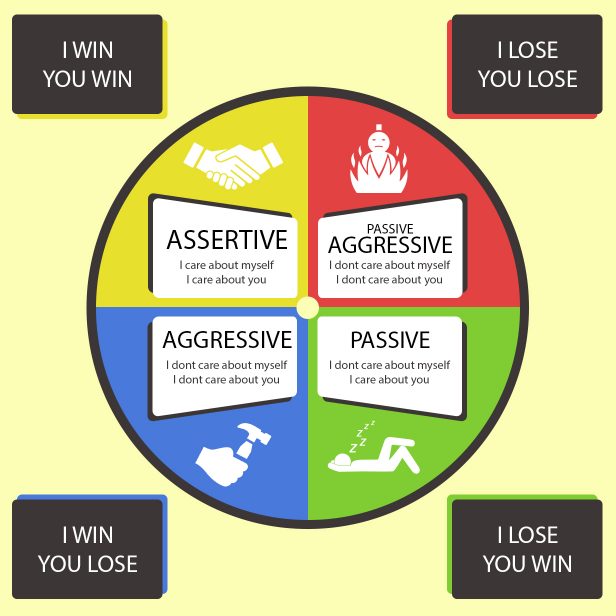







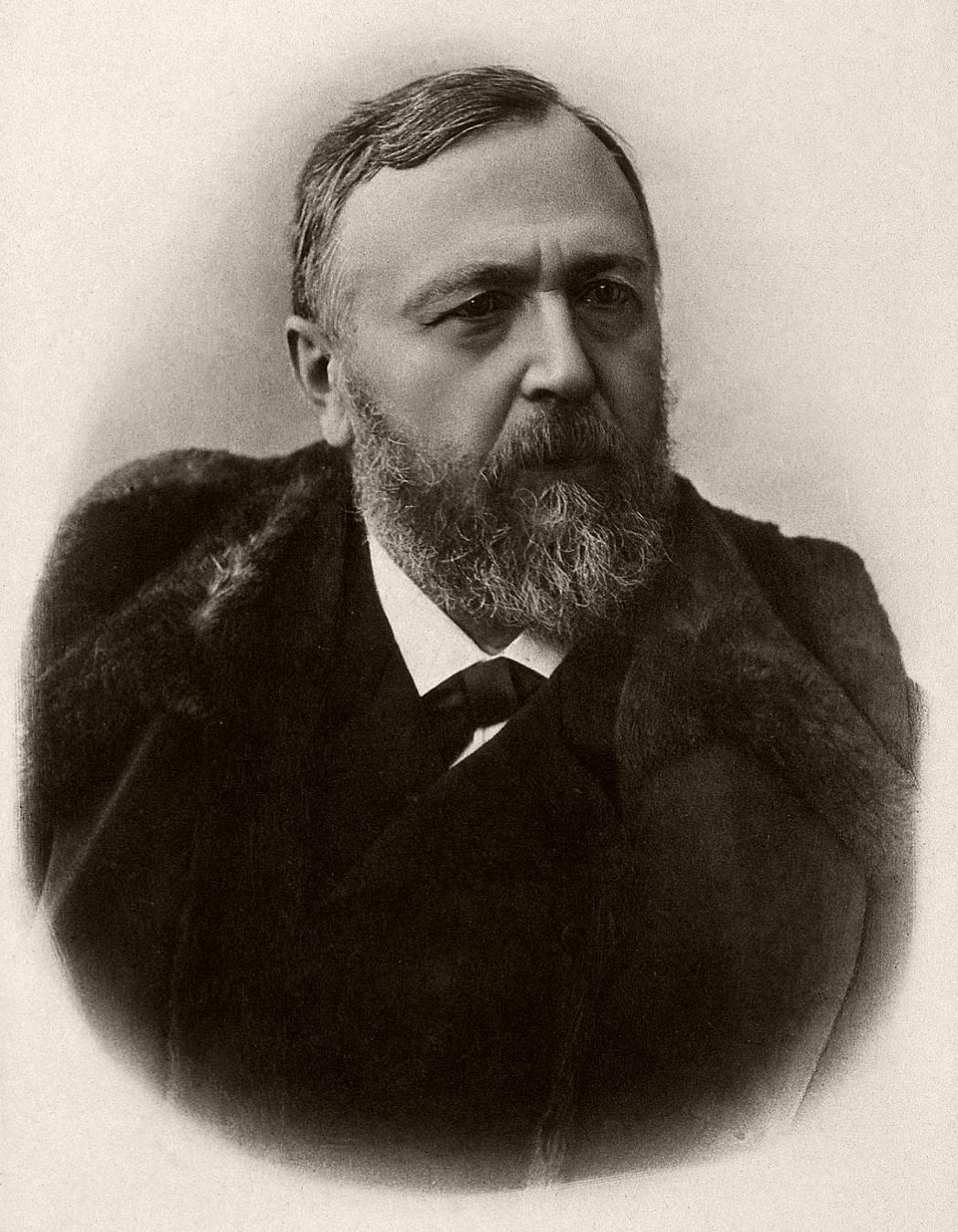





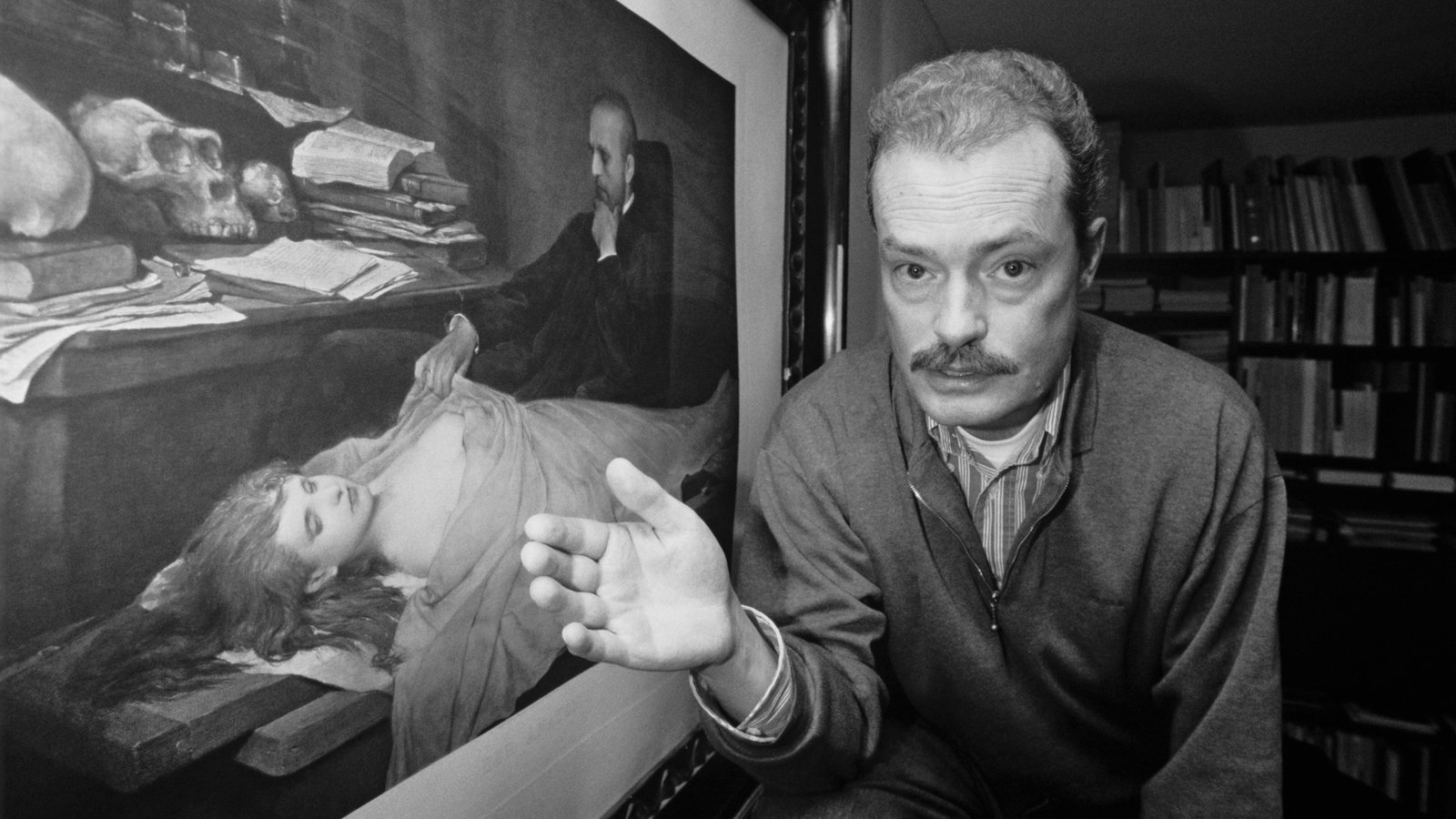
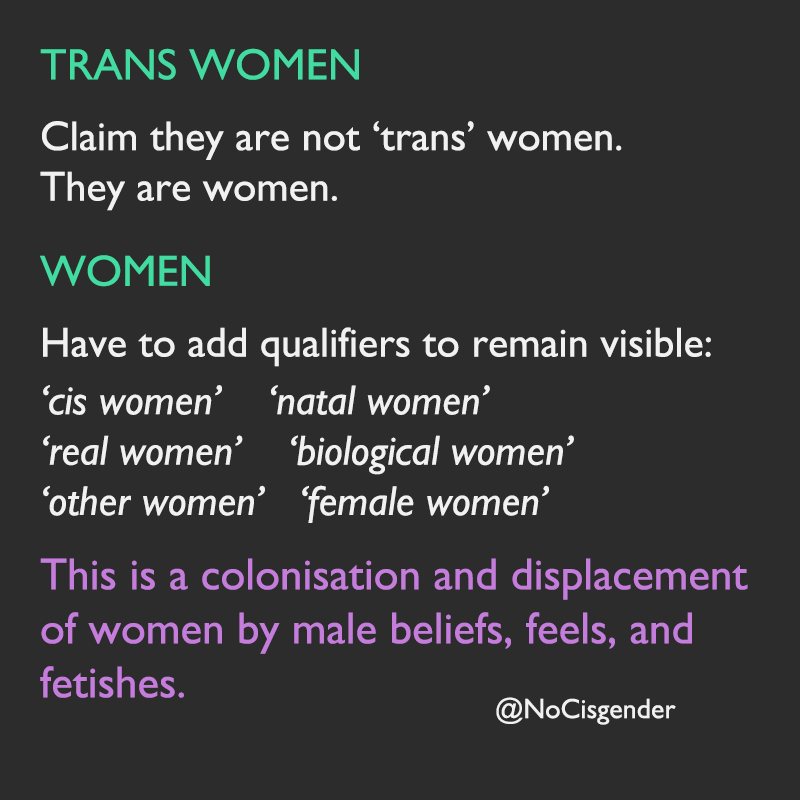











 freedom and reason