Have you ever stopped to consider that the wet dream of the cultural left is a BDSM clown world culture where the bottom—the majority—bends over and pleads to the top, “Govern me harder, Daddy. I’m unworthy of your love. Tell me what to believe and how to act. Please? Humiliate me. Make me feel shame. I’m so pathetic and stupid. I’ve been bad and need a good spanking. Harder. Boss me around. Put on the mask. Stick needles in my body. Please? Tell me who I’m allowed to see, where I am allowed to go, what I am allowed to say. I’m wretched. Make me your bitch. I’ll be a good dog. I promise.”
AI-generated interpretation of a BDSM humiliation & degradation clown
The wet dream is beyond palpable, it’s here, expressed in the symbolic imagery pushed by the cultural left. It’s all there. Deployment of emotional stress and psychological control. Discipline and restraint. Age play. Gender play. The drop. Except we are being forced into the munch. There’s no contract. No consent. No safe word. The play party is in our streets. It’s in our schools. It’s even in our churches. It’s in children’s books. Flags and standards and placards. Symbols and slogans. Public meetings where men do woman-face while reading to children delivered to them by parents desperate to virtue signal their devotion to inclusivity, in strip clubs where kinks are performed for children while the little ones stuff dollar bills in thongs, are guarded by TRAs dressed in fetish gear ready to use violence on the vanillas. These scenes are accompanied by grander scenes created by mask and vaccine mandates, lines of cars filled with ball-gagged bottoms waiting to be swabbed and jabbed. Children hormonally and surgically altered.
Masks, social distancing, and preemptive quarantining (lockdown) are crucial pieces in the mainstreamed BDSM project. Sensory deprivation is a BDSM practice that involves intentionally altering, eliminating, or sharply reducing one or more of the senses, such as hearing, sight, smell, taste, and touch. This leads to altered perceptions, which intensify the experience of other activities or dynamics. It focuses the body on the dictates of the top. Sensory deprivation creates an intense psychological and physical experience for participants. In BDSM culture proper, the ethic is that engaging in such activities should always be consensual and negotiated beforehand. But, as it is in struggle and torture sessions (reeducation camps, DEI training, etc.), it is not consensual or negotiated in its application at the mass societal level. Without the consensual and negotiated elements, BDSM is indistinguishable from the struggle or torture session.
There are several forms of sensory deprivation commonly practiced in BDSM including blindfolding, earplugs or noise-cancelling headphones, gags, restraints, and full-body encasement. It doesn’t take much imagination to see their parallels in clown world. It becomes obvious when you distill the principles from the comparative concrete realities. Keeping people from seeing or hearing what’s going on around them enhances the sense of anticipation and vulnerability. Not being able to know what’s going on around the individual puts submerges him into an altered state of consciousness where he is easily conditioned. Blocking out sounds or overloading the subject with information creates a sense of isolation and desire to withdrawal. Restricting the ability to speak leads to feelings of loss of control. Restricting movement, limiting the ability to move freely, boxing in or encasing the body—all of these things put individuals in altered states of consciousness in which they are easily controlled, conditioned, and manipulated.
Millions desperately cling to pandemic conditions
You might think that people would resist being treated this way, but those immersed in this culture are conditioned to seek more sensory deprivation to heighten their experience of being controlled. Under the right conditions fear can become a drug. People will seek out BDSM to feed their addiction. This is why it is vital to stress the importance of human dignity. And this is why the project to control the masses uses degradation and dehumanization to undermine self-regard. Sensory deprivation intensifies the power dynamics between participants and enhance the emotional and psychological aspects of BDSM play. It conditions the subject to develop an abnormal degree of trust between participants, as well as a clearer awareness of a person’s limits and comfort zones. It is a comprehensive system of control.
Who’s behind clown world? The corporate state. The big corporate conglomerates and transnational financial institutions, the administrative state and its technocratic apparatus, the education system, the mass media, the culture industry—the entire system dedicated to moving the population, already designated bottom, into every greater submission by destroying their confidence and filling their bodies with guilt and shame and the desire to be governed harder. The Pandemic—and they’re threatening to bring that wicked device back out—was a demonstration project of the BDSM culture the power elite mean to impose on the people. BLM and Pride Progress are the cultural spear tips of a comprehensive project to transform mass consciousness for the purposes of powerful political economic forces.
We need to pay attention to the question: For whom does the scientist work? If he is a traditional intellectual, then he is likely free to do his work in accordance with the objectives of science. His independence does not guarantee that he knows his art, but it greatly enhances his chances. If, on the other hand, he is an organic intellectual for capitalism, i.e., a scientist working for a corporation or university program/project directed by the business community, then he is likely doing the work of a capitalist firm or industry, which we can see in the areas of chemical manufacturing, energy production, the medical-industrial complex (which includes pharmaceuticals), and the military-industrial complex is performed for the sake of profits not enlightenment.
There are no exaggerations in this meme. It is literally true. All these insane positions are being advanced by elites with tens of millions of true believers falling in line. This should terrify you.
Science has been profoundly corrupted by profit and power. It has become a technocratic means of control and class domination. It is an ideological endeavor. Moreover, programs producing scientists are determined by the cultural, economic, and political needs of the elite. The degrees obtained from leading institutions are often without rigor or substance. It is well known that in many fields the majority of published studies—in peer-reviewed academic journals—cannot be replicated. Bad science is ubiquitous these days—and has been for years. Indeed, in many cases, nonscientists uncorrupted by corporate power or not left ignorant by ideological programming are much better equipped to think objectively and for the general population than are scientists corrupted and specialized.
Democratic-republicanism demands that the people shape policy through their elected representatives. So why are we asked to defer to experts and scientists? The desire that technocrats tell us what to do with our lives lives via the administrative route is a totalitarian desire. People who advocate for the latter are advancing not science but scientism, which is a religious-like ideology masquerading as science. The demand from these people is that we exhibit a faith-like belief in science. But science is the opposite of faith-belief. Science is about reason and evidence. That means that anybody who cares to learn to think in that manner and does the work can do science.
Yes, scientists are human and, as such, corruptible and fallible. But science as an enterprise is corrupted by the same forces that corrupt scientists—to the point where we can no longer trust the institution. (See The Cynical Appeal to Expertise.)
* * *
I expressed this opinion on the Facebook page of another users, which I rarely do. “You are free to believe what you want to believe,” was the response. Yes, of course. At least for now. But then again, are we sure? At any rate, the granting of my freedom was made by somebody who claims a science background. This was my response:
I have been a professional scientist now for almost three decades, a tenured professor for twenty-three years, with published articles (including an award winning paper), chapters, and essays in peer-reviewed journals, university press books, encyclopedia, and other venues. I have presented dozens of conference papers since 1993. Not only have I published empirical research, I’ve been teaching research methods since before my PhD program, and applying my research skills to practical areas, such as large-scale program assessment affecting the lives of thousands of people (the elderly, the addicted).
I told the person that I was only raising my background because she did. By her lights, I should therefore have something relevant to say. I know what I’m talking about—and would even without all those degrees and experience, of course, because I do my own research—and in my judgment she was expressing entirely too much faith in the enterprise. That’s how people get suckered, I noted: “they trust the experts” simply because they are experts (which experts) not because they, the faithful, actually take the time to study the matter under consideration. I stressed that one need not be a credentialed expert. But one needs to know how to do research and learn to tell the difference between “changing science” and an act of lying one’s way out of having been debunked.
As this impacts the lives of everyday people, we could not have had a better example of scientism than the COVID-19 pandemic, which was a disaster precisely because of scientific illiteracy (the technocracy means to keep the public ignorant and make them that way) and trust in experts. Progressive Democrats were especially subject to being fooled, as surveys of their knowledge of disease and death were widely off the mark. Comically so.
For example, on the question of masks, folks kept hearing about research from the medical journals. That’s the wrong field. The right field is industrial hygiene, which shows that masks don’t work (really, common sense could have told people that). Were populations more curious and self-reliant and less obedient—and had institutions not censored and de-platformed those who could have helped people know where to look for reliable information—that would have known that masks were about control not public health. And all the rest of it. We could have en masse debunked the prevailing “science” concerning COVID-19, resisted effectively, and saved countless lives and businesses. (See Masks and COVID-19: Are You Really Protected?)
I concluded my argument with an appeal to my life in scientific research to note that I have had a front row seat to a lot of crackpot nonsense passed off as science for years now. I noted that, presently, humankind are in an era of science denialism—and it’s scientists and the people who trust them who are leading the way out of the Enlightenment. Scientism has a definite politics, which I noted two paragraphs ago. It’s there folks ought to start looking if they want to chart a path back towards the light of truth.
The International Powerlifting Federation (IPF) said in an updated policy document: “For a transgender athlete to compete in the sport of powerlifting at any level, he/she must declare before competing that he/she is a transgender athlete. If an athlete fails to declare that he/she is a transgender and competes that violation leads to Disqualification of the result obtained in that Competition with all resulting Consequences, including forfeiture of any medals, points and prizes.”
This is being touted as a win for women’s sports. It’s not.
Anne Andres, a trans-identifying man, currently holds multiple powerlifting records in the women’s division
The change in policy was in response to Anne Andres—a trans-identifying man who openly mocks the women against whom he competes—blowing out his competition in Canada last weekend. Anne Andres, who currently holds multiple powerlifting records in the women’s division, set an all-time powerlifting record at the 2023 Western Canadian Championship, hosted by the Canadian Powerlifting Union. The total weight lifted in squat, bench, and deadlift resulted in a final score for Andres of 597.5 kilograms, which was over 200 kilograms more than the closest competitor, SuJan Gill, who finished at 387.5 kilograms.
This isn’t fair. It denies science. It tramples women’s rights. It has to change.
Last month, following other organizations previously (e.g., World Aquatics, World Athletics), a cycling race organization (Union Cycliste Internationale) changed its rules to state that individuals who were born female are only allowed to compete in the women’s category (see The Casual Use of Propagandistic Language Surrounding Sex and Gender). Even the International Chess Federation recently announced a ban on transgender women competing in the female category of the competition (to which Yosha Iglesias, a trans-identifying man, responded ridiculously: “If you want to help women in chess, fight sexist and sexual violence, give women in chess more visibility and more money, Don’t use trans women players as scapegoats. We contribute to the development of women in chess. We are women in chess.”)
But the IPF did not follow suit. Instead, that organization chose to deny the intrinsic difference between genotypes and instituted a rule that does nothing to prevent the violation of women’s sex-based rights. The updated IPF policy document states that trans gender athletes must abide by specific testosterone levels. “The athlete must demonstrate that her total testosterone level in serum has been equal or below 2.4 nanomoles per liter (nmol/L) and/or free testosterone equal or below 0.433 nmol/dL (or at or below the upper limit of normal of a particular laboratory reference) for at least 12 months prior to her first competition.” In other words, men can compete against women in powerlifting as long as they take hormones and steroids to artificially reduce their testosterone levels while allowing all the other physical differences remain in place. That’s right, if they dope they can compete.
Anne Andres (male who identifies and competes as a woman) doesn't understand why female powerlifters are so "bad" at bench press….well idk Anne, but maybe it's because you have 20 times more testosterone than them. Just a thought…. pic.twitter.com/klxd4WaoYc
Men are not women. Men cannot be women. Men have no place in women’s sports. Full stop. Testosterone production is irrelevant. Any organization that moves to address this problem that does not systematically ban men from competing in women’s sports is not addressing the problem. They are participating in a lie.
I was shocked to see Andres’ competitors applauding his ascent to the highest stage during the award of medals. Why do the women celebrate such a thing? Why aren’t they objecting to it instead? Are this many women so brainwashed as to believe a man can be a woman and compete in a female athletic event? Or are they afraid of what will happen to them if they resist the misogynistic project to destroy women’s sports and cancel women’s rights? Is that why so many people are so silent? They’re afraid?
Yes, that must be the case for many people. Because it cannot be that everybody who is silent thinks this is okay. I refuse to believe that that many people could be that confused about objective reality. The gender binary is as solid a fact as gravity. This is to say that the gender binary is among the most fundamental truths of the universe. Indeed, people are afraid. And if they’re afraid to speak the truth about something as fundamental as the gender binary, then what other truths are they afraid to speak up about?
When so many people are afraid to speak the truth, then we know that freedom is not what it should be. The only way to turn back from the journey to totalitarianism is to resist the big lies the totalitarians tell us. I am not trying to shame those who are afraid. I get it. I have been there. But I can’t be there anymore. What one finds living in truth is a very real peace with self. To live a lie is to live in conflict with self. It’s not a good place to be. It’s certainly not good for the girls and women in our lives. By an ally. Stand up for girls and women.
One man’s opinion is that men can be women. Another man’s opinion is that men cannot be women. Of course the second opinion is the correct opinion from a scientific standpoint. But this is no reason to prevent the first man from uttering a falsehood. This is his opinion and he has a right to it. An institution or organization may tell the second man that he is not allowed his opinion because it offends those men who believe they are women, that if he intends to articulate this opinion he will face consequences, which can range from suppression of his opinion in forums where his opinion is relevant and orderly, such as in a science classroom or library conference room, to disciplinary action including termination of employment, but any of these actions against him violate his fundamental rights as a free person, not only his right to his opinion, but his right to his conscience.
AI generated impression of free thought
Both men’s opinions are protected under the fundamental law of this country as codified by the First Amendment to the United States Constitution. Article One of the US Bill of Rights states: “Congress shall make no law respecting an establishment of religion, or prohibiting the free exercise thereof; or abridging the freedom of speech, or of the press; or the right of the people peaceably to assemble, and to petition the Government for a redress of grievances.” This article has been fully incorporated in the states by Supreme Court ruling. This article guarantees several fundamental rights: freedom of religion or conscience, freedom of speech and thought, freedom of the press, the right to assemble peacefully, and the right to petition the government for grievances. Implicit in these rights is also the freedom of association.
Both men’s opinions are further protected under the intentional system of human rights, the United Nations Universal Declaration of Human Rights (UDHR), Articles 18 and 19. Article 18 states “Everyone has the right to freedom of thought, conscience, and religion; this right includes freedom to change his religion or belief, and freedom, either alone or in community with others and in public or private, to manifest his religion or belief in teaching, practice, worship, and observance.” Article 19 states: “Everyone has the right to freedom of opinion and expression; this right includes freedom to hold opinions without interference and to seek, receive and impart information and ideas through any media and regardless of frontiers.”
In addition to the UDHR, the International Covenant on Civil and Political Rights (ICCPR) further elaborates these rights and provides a legally binding framework to ensure their protection on an international level. Article 18: “Everyone shall have the right to freedom of thought, conscience, and religion. This right shall include freedom to have or to adopt a religion or belief of his choice, and freedom, either individually or in community with others and in public or private, to manifest his religion or belief in worship, observance, practice, and teaching.” The article continues: “No one shall be subject to coercion which would impair his freedom to have or to adopt a religion or belief of his choice. Freedom to manifest one’s religion or beliefs may be subject only to such limitations as are prescribed by law and are necessary to protect public safety, order, health, or morals or the fundamental rights and freedoms of others.”
Article 19 of the ICCPR states: “Everyone shall have the right to hold opinions without interference. Everyone shall have the right to freedom of expression; this right shall include freedom to seek, receive and impart information and ideas of all kinds, regardless of frontiers, either orally, in writing or in print, in the form of art, or through any other media of his choice.” It clarifies that the exercise of the rights articulated in this article carries with it special duties and responsibilities. It may therefore be subject to certain restrictions, but these shall only be such as are provided by law and are necessary: (a) For respect of the rights or reputations of others; (b) For the protection of national security or of public order, or of public health or morals.”
By rights of others, the article means to clarify that one may not use actions or utterances to interfere with the right of others to freely express opinions in relevant and orderly forums. By reputations of others, the clarification is referencing the problems of libel and slander, a clarification that has been interpreted by many nation-states as applying also to abstractions, i.e., groups based on some shared characteristics, in addition to concrete persons or individuals. Fortunately, defamation laws in the United States pertain to false statements that harm an individual’s reputation. The law in this area focuses on protecting an individual’s reputation from false statements. The application of defamation laws is not directly tied to suspect categories as in the context of equal protection under civil rights law. Overcoming the problem of identity remains part of the struggle for individual liberty in many countries.
Limitations for the protection of national security, while necessary, has been abused severely (in the United States, the federal government classifies tens of millions of documents annually). Restrictions on speech for theprotection of public order is not particularly problematic if understood in terms of a greater appreciation for the freedom of individuals. Protecting the public order curtails the heckler’s veto, as well as allows the state to quell riots.
However, restrictions in the name of public health and public morals are problematic. If certain forms of expression or communication pose a clear and significant risk to public health, governments may argue that restrictions are necessary to prevent harm to individuals or the community at large. An example of this could be the spread of false health information that could lead to public harm. If certain content or communication provides misleading or dangerous advice about health treatments or medical procedures, it might be restricted to protect the health and safety of individuals who might act on that information.
However, the application of the exception is complicated by the corporate takeover and corruption of public health and the substitution of scientism, i.e., science as ideology, for actual science (scientific materialist epistemic). We saw this during the COVID-19 pandemic. The use of public health as a justification for restricting freedom of expression must be subject to scrutiny, which depends on a free republic that observes the rules of free thought and expression, as well as conscience. It’s important for governments to demonstrate that the restriction is proportionate, necessary, and based on genuine concerns, i.e., scientifically demonstrable reasons, for public health, rather than being used as a pretext to suppress dissent or unpopular opinions.
Finally, concerning the issue of public morals, if this pertains to child safeguarding or the protection of individuals used for such purposes, then restrictions on pornography represent an exception to the free speech rule. The classification and regulation of pornography can be influenced by cultural and societal perceptions of what is considered morally acceptable or unacceptable. Different countries and legal systems have varying standards when it comes to defining and regulating pornography. Some countries may view certain forms of pornography as contrary to their concept of public morals and thus subject to restrictions or regulations. These restrictions might be aimed at protecting what the society considers as moral values or preventing potential harm associated with explicit content. The classification and regulation of pornography is a complex and contentious matter, often involving debates about freedom of expression, artistic expression, personal autonomy, and societal values. The balance between protecting public morals and respecting individuals’ rights to expression and privacy can be challenging and varies from jurisdiction to jurisdiction.
A Swiss woman protesting the ban on full-face covering. In 2014, the European Human Rights Court upheld such bans giving governments broad discretion on limiting the display of religious symbols.
One interesting case is the French ban on full face veils, which includes the burqa and niqab (other European countries followed suit). The law was passed in 2010 and prohibits the wearing of full face coverings in public places. The rationale behind this law includes concerns about public security, gender equality, and the preservation of French secularism (laïcité). French authorities argue that the full-face veils hinder identification in public spaces, and the law is also seen by some as a response to cultural and religious tensions in the country. The question of striking a balance between individual rights, such as freedom of religion and expression, which in the case of the burqa and niqab also needs to consider the possibility that this is a coercive practice and not individual expression of conscience, and broader societal considerations, such as those cited by the French state, lies at the heart of the controversy. In addition to the morals question, the application of such laws point to the complex cultural and legal considerations that vary from country to country.
It is vital to recognize United States sovereignty and the integrity of its fundamental law because Article 20 of the ICCPR is more problematic than some of the clarifications to the UDHR offered in the previous two articles. First, Article 20 states: “Any propaganda for war shall be prohibited by law.” I appreciate the sentiment here and war propaganda (any propaganda) is troubling. War propaganda specifically refers to the dissemination of biased or misleading information with the intent to emotionally charge mass consciousness and shape public opinion towards war aims, thus promoting support for or participation in armed conflicts or wars. War propaganda may be employed by corporations, governments, or organizations (usually in tandem) to manipulate public sentiment, build nationalistic fervor, and demonize opponents to justify military actions (whether offensive or defensive).
There are several elements typical of war propaganda. Propagandists misrepresent facts, presenting exaggerated or false information about the causes, intentions, and motivations behind a conflict to manipulate public perception. Propaganda dehumanizes population by portraying the enemy as evil, monstrous, and subhuman to evoke strong negative emotions and justify aggressive actions. Demonization creates a negative and one-sided image of the enemy by focusing solely on selected actions or perceived and manufactured traits while ignoring any context or nuances. Appeals to patriotism, where narratives, slogans, and symbols that invoke a sense of national duty and pride are used to encourage citizens to support military actions for the greater good of the country. Eliciting strong emotional responses from the public through emotional stories, images, or videos that depict atrocities, heroism, sacrifice, and suffering with the aim of rallying support for the war effort is typical.
Obviously there is not free speech protection for governments to lie to their citizens. Governments have powers not rights. Moreover. a core part of war propaganda is censorship and suppression of dissent, which involves controlling or restricting the dissemination of opposing viewpoints, critical analyses, or information that challenges the official narrative of the conflict. Part of this involves official and self-censorship in the form of selective reporting, where incidents and information that align with the desired narrative are shared, while ignoring or downplaying information that contradicts it. It is here that the Article 20 (which moves articles 20 and 21 of the UDHR down the list, here concerning assembly and association) is consistent with Articles 18 and 19 of both the ICCPR and the UDHR. However, many elements of war propaganda are protected by Articles 18 and 19 when uttered by individuals. People alone or assembled have a fundamental right to express sentiments that built nationalistic fervor and demonize enemies to build support for military action. In many cases, such expressions should be condemned; however, outlawing them contradicts the preceding articles.
The same is true for this piece of Article 20: “Any advocacy of national, racial or religious hatred that constitutes incitement to discrimination, hostility or violence shall be prohibited by law.” Incitement to discrimination refers to actions or speech that encourage or stimulate prejudiced attitudes and practices against individuals or groups based on their national, racial, or religious characteristics. It involves promoting or fostering a climate of bias and inequality that can result in exclusion, harm to, or unequal treatment of targeted groups. This type of incitement goes beyond simply expressing personal beliefs or opinions. It involves actively encouraging or promoting discrimination against others, often by spreading misinformation about individuals or groups, negative stereotypes, or fueling hostile attitudes. The goal of incitement to discrimination is to create an environment where the targeted groups are unfairly treated or marginalized.
Expressing derogatory remarks or offensive language about a particular ethnicity, gender, nationality, race, or religion with the intention of demeaning or belittling members of that group is often coded as hate speech. Propagating harmful stereotypes about a certain group that can lead to prejudiced attitudes and discriminatory behavior is therefore potentially an offense under Article 20 of the ICCPR in countries without strong protections of conscience and speech.
Promoting actions or policies that intentionally exclude certain groups from participating in cultural, economic, political, or societal activities based on their national, racial, or religious identity, i.e., encouraging the separation or isolation of different groups in society based on their characteristics, leading to unequal treatment and opportunities, as well as urging others to engage in discriminatory practices, such as not hiring individuals from a specific ethnicity or religion, denying them access to certain services, or treating them unfairly in various contexts—all these are potentially legally actionable if Article 20 is enforced. It is in this understanding of fundamental law that many European countries, such as France and Germany, find the basis for passing hate speech laws.
Muslims have a right to express their heterosexist and intolerant views under these articles, as well. What Muslims do not have a right to are practices that oppress members of their group or individuals outside their group—nor do they have a right to laws that restrict the speech that may incite discrimination or hostility towards them. Discrimination in practice may be problematic, as we have seen with France’s restrictions on face coverings (I struggle with the ban on full face coverings), but discrimination in practice is a far cry from incitement to discrimination. The latter is subject to criticism and even condemnation, but it cannot be subject to criminal prosecution.
All that said, the legitimate relevance of the ICCPR and the UDHR to the fundamental law of the United States notwithstanding, international law, while demonstrating the universality of the basic premise of freedom of thought and conscience, at least among the rational nation-states (Muslim-majority countries rejected the UDHR for fear that it would undermine Sharia, i.e., Islamic law), the national sovereignty of the United States makes the First Amendment and the Supreme Court’s rulings concerning that article the final say on the meaning and scope of these rights, articulated there in their highest form, demonstrating the genius of the Founders of the United States Republic.
Sigmund Freud (1856-1939) was an Austrian neurologist and pioneering figure in the fields of psychology and psychiatry, renowned for his revolutionary theories that reshaped scientific and popular understanding of the human mind. Born in Freiberg, Moravia (now part of the Czech Republic), Freud’s innovative ideas and concepts, such as the interpretation of dreams, the structure of the unconscious mind, and psychosexual development have left an indelible mark on modern psychology and continue to influence the study of human behavior and emotion and the complexities of the psyche.
Sigmund Freud’s early career and his theory regarding the role of child sexual abuse in causing neuroses are crucial aspects of his development as a pioneering figure in the field of psychology. Freud’s ideas evolved significantly over time, and his later work diverged from initial notions. However, too little attention is paid to Freud’s early work and the reasons why he moved away from his theory concerning child sexual abuse during their period. In this brief essay, I explain why. Crucially, it was not because of the rational development of his thought. Rather, it was because of cultural and political pressure he endured in his surroundings and professional life in the late nineteenth century.
Sigmund Freud circa 1885
In the late nineteenth century, Freud was working as a neurologist and psychiatrist, exploring various topics related to the human mind. In the late 1890s, he began to consider the idea, which he developed from observation of patients under hypnosis, that repressed sexual experiences, particularly those from childhood, might play a significant role in the development of pathology, including neuroses. He theorized that repressed memories could resurface in the form of symptoms of psychological distress. The point of psychoanalysis was to bring these repressed memories to the awareness of the consciousness mind so that the patient could deal with them forthrightly.
Freud’s initial views on the causation of neuroses were centered around child sexual abuse as a potential trigger. In “The Neuro-Psychoses of Defense” (1894), Freud introduces the concept of defense mechanisms as a way individuals protect themselves from distressing thoughts and feelings. This becomes a cornerstone of Freud’s later psychoanalytic theory. However, it is also a key part of his early work on child sexual abuse. In an unpublished manuscript, penned some time around 1895, in what is sometimes referred to as “seduction theory,” Freud considers the possibility that his patients’ accounts of childhood sexual abuse were significant factors in the development of their neuroses. He proposes that experience plays a role in the formation of unconscious conflicts and symptoms.
In his 1896 paper “On the Aetiology of Hysteria,” Freud presents case studies of patients with the condition and proposes that their symptoms might be linked to unresolved sexual experiences from their past. He expresses his belief that patients’ reports of childhood sexual abuse experiences were key factors in understanding their mental health issues. In “Sexuality in the Aetiology of Neuroses” (1898), Freud continues to develop his thoughts on the role of early sexual experiences in the causation of neuroses. He discusses the complex interplay between sexual factors, traumatic events, and psychological symptoms.
These papers were met with skepticism in the psychiatric community. Indeed, his ideas became quite controversial. Obviously, one of the factors that led to the rejection of Freud’s early theory was the prevailing cultural and societal norms of the time. Discussing child sexual abuse was taboo. Freud’s seduction theory challenged these norms and thus were met with resistance from both colleagues and the wider society. He was a young professional and the controversy threatened to derail his career.
At the time, Krafft-Ebing (1840-1902) was an influential Austro-German psychiatrist and pioneering researcher in the field of psychology, renowned for his significant contributions to the study of human sexuality and mental disorders. Krafft-Ebing, who coined the term “sexology” (as well as “sadism” and “masochism”) focused his work on describing various sexual behaviors and paraphilias rather than on the developmental aspects of neuroses. His most famous work is the 1886 Psychopathia Sexualis which established him as the leading expert in the field. Krafft-Ebing shared the overall conservative attitudes of the psychiatric community of that era, which, combined with the societal taboos surrounding sexuality, contributed to Freud’s ideas being met with skepticism and rejection.
From Krafft-Ebing’s private photography collection
Due to the challenges and skepticism he faced regarding his initial theories, Freud underwent a significant reevaluation of his approach. He shifted the focus from external factors, such as childhood sexual abuse, to internal mental dynamics and conflicts. While he initially believed that women suffering from hysteria and neuroses had experienced sexual abuse, he later began to consider that these patients might have developed fantasies in the context of their early sexual development. These fantasies, even if not grounded in real events, could still generate unresolved intrapsychic conflicts. But the idea that they were so grounded faded from his work. This transition marked a pivotal point in Freud’s work, leading to the development of his psychoanalytic theory and its dissemination.
Freud indicated the shift in his thinking in “On the Aetiology of Hysteria.” There he proposed that certain neurotic symptoms in his patients might not necessarily be tied to actual experiences of sexual abuse, but could also be linked to unresolved psychological conflicts, fantasies, and unconscious desires related to sexual development. Freud continued to develop and refine these ideas in subsequent works, such as the 1905 collection of three essays “The Sexual Aberrations,” “Infantile Sexuality,” and “The Transformation of Puberty.” In these essays, he introduces the concept of infantile sexuality and suggests that all humans go through different stages of psychosexual development in childhood. (It is in these essays that Freud theorizes sexuality as a continuum ranging from heterosexuality to homosexuality.)
We now know that as many as one in five individuals worldwide has experienced some form of childhood sexual abuse. This can include a wide range of abuse, from unwanted sexual comments or touching to more severe forms, such as rape. Because childhood sexual abuse is underreported due to factors such as fear, shame, and stigma many cases go undisclosed, leading to an incomplete understanding of the true prevalence. Regardless of prevalence, it is well-established that childhood sexual abuse carries profound and lasting impacts on individuals’ mental, emotional, and physical well-being. These effects may extend into adulthood and may contribute to various psychological and interpersonal difficulties. (See my essay What is Grooming?)
Needlessness to say, on this point, Freud was not a profile in courage. At the same time, as we have seen up close in our own time, the consequences for telling the truth about matters the powers-that-be want people to lie about can be severe. The obvious example is gender ideology. Telling the truth about gender, that there are only two and that humans cannot change their’s (no mammal can), can result in cancellation, demotion, deplatforming, and disciplinary action. Forcing people, especially those who occupy places of authority, as Freud did as a prominent neurologist, to deny the truth and accept an obvious lie is a function of power. Had Freud stuck to his original conclusion that hysteria and neuroses often had child sexual abuse and child sexualization at its core, our understanding of these problems, as well as the problem of grooming, would be much further along. It might have carried a child protective function given Freud’s reputation. Then again, the man might never have had a reputation had he stuck to his guns.
The major work concerning Freud’s and his shift way from his original theory is The Assault on Truth: Freud’s Suppression of the Seduction Theory, penned by psychoanalyst Jeffrey Moussaieff Masson in 1984. Masson had a front row seat to Freud’s transformation, serving as Projects Director at the Sigmund Freud Archives, where he had access to several unpublished letters written by Freud. Masson contends that Freud intentionally withheld his early proposition (seduction theory) that hysteria stems from sexual abuse during childhood. Masson asserts that Freud suppressed the hypothesis due to his reluctance to accept that children could fall victim to sexual violence and abuse within their own families. Masson also argues that Freud worried that his seduction theory would lead to a reluctance in the field to accept his psychoanalytic theory and method. My contention is that Freud’s reluctance was, at least in part, due to his awareness of the consequences for advancing such a claim. Freud was rightly concerned for his career path and reputation.
Jeffrey Moussaieff Masson (1941-)
Masson himself felt cultural and political pressure for his argument. The book was met with unfavorable, even hostile reviews, with several critiques cloaking politics beneath a dismissal of Masson’s interpretation of psychoanalytic history. Within the field, reviewers categorizing the book as the latest installment in a series of assaults on psychoanalysis, emblematic of the prevailing reaction against Freudian. Notably, Masson’s conclusions found support among certain feminists. However, predictably, with the rise of gender ideology, which puts central to its politics the sexualization of children, a movement that has since become embedded in western institutions, Masson’s proposition that children possess inherent innocence and lack of sexuality was especially offensive—and potentially harmful to movement objectives. With child sexualization having become a major part of the sexual revolution, unfolding during the 1960s and 1970s, Masson was perceived as an organic intellectual for the reaction against the sexual revolution that marked the 1980s.
“Individuals need not believe all these mystifications, but they must behave as though they did, or they must at least tolerate them in silence, or get along well with those who work with them. For this reason, however, they must live within a lie. They need not accept the lie. It is enough for them to have accepted their life with it and in it. For by this very fact, individuals confirm the system, fulfill the system, make the system, are the system.” —Václav Havel
Hat tip to Wesley Yang @wesyang on X (formerly Twitter) for alerting me to this June 2018 Goggle business entry: “Adding ‘LGBTQ-friendly’ and ‘Transgender Safe Space’ attributes on Google My Business.” The entry gives a business owner a way to add woke slogans to his web site, actions that will ingratiate him not only to the woke subaltern, whose narcissism feeds on the obsequiousness of others, but to his superiors, the men who control the fate of his business and career. Before getting to the businessman’s superiors, let’s pay attention for a moment to the express intent of attaching to one’s business woke slogans and symbols.
“There’s little that compares to the feeling of walking into a place and being immediately comfortable—your shoulders loosen, your breathing slows, you physically relax, knowing you can be yourself. Finding those spaces has often been hard for the LGBTQ+ community. We want to help celebrate those spaces of belonging and make them easier to find,” the Google entry instructs its users. “One way to do this is with small businesses, which are an important part of any community. Business owners can mark their businesses as ‘LGBTQ-friendly’ and as a ‘Transgender Safe Space’ on their Google listing to let customers know they’re always welcome. These attributes appear on a business’ Google listing on Maps and Search.” The entry neatly appeals to the popularity of making this move into woke sloganeering: “Your business can join the more than 190,000 businesses globally that have already enabled the ‘LGBTQ-friendly’ and ‘Transgender Safe Space’ attribute.” (It is certainly many tens if not hundreds of thousands more since then.)
Why has everything gone woke these days? ESG scores.
Here is BlackRock CEO Larry Fink along with the CEO of AmEx explaining his desire to “force behaviors” (2017): pic.twitter.com/wCoeoJBD8x
I shared the tweet above in mu June 2023 essay The Politics and Purpose of Affirming the Person. The Chair of Asset Management and CEO of the transnational investment management and financial services firm BlackRock, Inc., Larry Fink, brags about establishing and his campaign to legitimize in the corporate world Chinese Community Party style social credit systems that compel corporations to conform to political-ideological agendas. BlackRock can do this because the firm manages eight trillion dollars in assets. In the clip, Fink touts the firm’s project to force behavioral change through financial reward and punishment.
The Corporate Equality Index, popularly known as the CEI-score, published by the Human Rights Campaign, the largest LGBTQ+ political lobbying group in the world, drives business to BlackRock which then concentrates wealth and power under its transnational governance structure. The CEI isn’t the only social media score used. The principle of ESG, or environmental and social governance, is another benchmarking construct used by BlackRock and other firms. These powerful firms demand from corporations who seek investment funds that they conform to the terms of these social credit systems they control and delegate.
The Human Rights Campaign is one of the organizations socializing the idea that business owners should be compelled to act in bad faith by punishing them for, among other things, failing to affirm the chosen gender identities of other persons. We see other projects in, for example, Black Lives Matter. “But it is not your responsibility to affirm anybody’s subjective identity,” I assert in The Politics and Purpose of Affirming the Person. If you are obligated to affirm the myth of systemic racism, then you know you do not live in a free society. “Rules that tell you must affirm or validate the subjective projections of others—that is, rules that punish you for refusing to participate in affirming the desires and delusions or others—are inherently tyrannical.”
In his 1978 essay “The Power of the Powerless,” Václav Havel, the Czech playwright, essayist, dissident, and statesman who played a pivotal role in the peaceful transition of Czechoslovakia from totalitarianism to democracy (such as it is), provides the template for understanding the postmodern character of oppressive power, a manifestation of power that operates by giving those under its thumb a way to adapt to tyranny while maintaining their dignity. Havel regards the need for dignity as an innate trait of human being. This trait is leveraged in compelling individuals to impose upon themselves and others the structure of power by supplying them with For the purpose of adding LGBTQ-friendly slogans and symbols to one’s business is not to make people feel welcome, but to signal one’s obedience to the power structure.
In this entry, save for a short concluding paragraphs, I share passages from Havel’s essay without further commentary. These passages are easily translatable to our current circumstances. If you remain unsure about why these passages apply to your situation living in the West, read more Freedom and Reason.
Václav Havel (1936–2011)
“A specter is haunting Eastern Europe: the specter of what in the West is called ‘dissent.’ This specter has not appeared out of thin air. It is a natural and inevitable consequence of the present historical phase of the system it is haunting. It was born at a time when this system, for a thousand reasons, can no longer base itself on the unadulterated, brutal, and arbitrary application of power, eliminating all expressions of nonconformity. What is more, the system has become so ossified politically that there is practically no way for such nonconformity to be implemented within its official structures.
…
“The manager of a fruit-and-vegetable shop places in his window, among the onions and carrots, the slogan: ‘Workers of the world, unite!’ Why does he do it? What is he trying to communicate to the world? Is he genuinely enthusiastic about the idea of unity among the workers of the world? Is his enthusiasm so great that he feels an irrepressible impulse to acquaint the public with his ideals? Has he really given more than a moment’s thought to how such a unification might occur and what it would mean?
“I think it can safely be assumed that the overwhelming majority of shopkeepers never think about the slogans they put in their windows, nor do they use them to express their real opinions. That poster was delivered to our greengrocer from the enterprise headquarters along with the onions and carrots. He put them all into the window simply because it has been done that way for years, because everyone does it, and because that is the way it has to be. If he were to refuse, there could be trouble. He could be reproached for not having the proper decoration in his window; someone might even accuse him of disloyalty. He does it because these things must be done if one is to get along in life. It is one of the thousands of details that guarantee him a relatively tranquil life ‘in harmony with society,’ as they say.
“Obviously the greengrocer is indifferent to the semantic content of the slogan on exhibit; he does not put the slogan in his window from any personal desire to acquaint the public with the ideal it expresses. This, of course, does not mean that his action has no motive or significance at all, or that the slogan communicates nothing to anyone. The slogan is really a sign, and as such it contains a subliminal but very definite message. Verbally, it might be expressed this way: ‘I, the greengrocer XY, live here and I know what I must do. I behave in the manner expected of me. I can be depended upon and am beyond reproach. I am obedient and therefore I have the right to be left in peace.’ This message, of course, has an addressee: it is directed above, to the greengrocer’s superior, and at the same time it is a shield that protects the greengrocer from potential informers. The slogan’s real meaning, therefore, is rooted firmly in the greengrocer’s existence. It reflects his vital interests. But what are those vital interests?
“Let us take note: if the greengrocer had been instructed to display the slogan ‘I am afraid and therefore unquestioningly obedient,’ he would not be nearly as indifferent to its semantics, even though the statement would reflect the truth. The greengrocer would be embarrassed and ashamed to put such an unequivocal statement of his own degradation in the shop window, and quite naturally so, for he is a human being and thus has a sense of his own dignity. To overcome this complication, his expression of loyalty must take the form of a sign which, at least on its textual surface, indicates a level of disinterested conviction. It must allow the greengrocer to say, ‘What’s wrong with the workers of the world uniting?’ Thus the sign helps the greengrocer to conceal from himself the low foundations of his obedience, at the same time concealing the low foundations of power. It hides them behind the facade of something high. And that something is ideology.
“Ideology is a specious way of relating to the world. It offers human beings the illusion of an identity, of dignity, and of morality while making it easier for them to part with them. As the repository of something suprapersonal and objective, it enables people to deceive their conscience and conceal their true position and their inglorious modus vivendi, both from the world and from themselves. It is a very pragmatic but, at the same time, an apparently dignified way of legitimizing what is above, below, and on either side. It is directed toward people and toward God. It is a veil behind which human beings can hide their own fallen existence, their trivialization, and their adaptation to the status quo. It is an excuse that everyone can use, from the greengrocer, who conceals his fear of losing his job behind an alleged interest in the unification of the workers of the world, to the highest functionary, whose interest in staying in power can be cloaked in phrases about service to the working class. The primary excusatory function of ideology, therefore, is to provide people, both as victims and pillars of the post-totalitarian system, with the illusion that the system is in harmony with the human order and the order of the universe.
“The smaller a dictatorship and the less stratified by modernization the society under it, the more directly the will of the dictator can be exercised. In other words, the dictator can employ more or less naked discipline, avoiding the complex processes of relating to the world and of self justification which ideology involves. But the more complex the mechanisms of power become, the larger and more stratified the society they embrace, and the longer they have operated historically, the more individuals must be connected to them from outside, and the greater the importance attached to the ideological excuse. It acts as a kind of bridge between the regime and the people, across which the regime approaches the people and the people approach the regime. This explains why ideology plays such an important role in the post-totalitarian system: that complex machinery of units, hierarchies, transmission belts, and indirect instruments of manipulation which ensure in countless ways the integrity of the regime, leaving nothing to chance, would be quite simply unthinkable without ideology acting as its all-embracing excuse and as the excuse for each of its parts.
…
“Ideology, in creating a bridge of excuses between the system and the individual, spans the abyss between the aims of the system and the aims of life. It pretends that the requirements of the system derive from the requirements of life. It is a world of appearances trying to pass for reality.
“The post-totalitarian system touches people at every step, but it does so with its ideological gloves on. This is why life in the system is so thoroughly permeated with hypocrisy and lies: government by bureaucracy is called popular government; the working class is enslaved in the name of the working class; the complete degradation of the individual is presented as his ultimate liberation; depriving people of information is called making it available; the use of power to manipulate is called the public control of power, and the arbitrary abuse of power is called observing the legal code; the repression of culture is called its development; the expansion of imperial influence is presented as support for the oppressed; the lack of free expression becomes the highest form of freedom; farcical elections become the highest form of democracy; banning independent thought becomes the most scientific of world views; military occupation becomes fraternal assistance. Because the regime is captive to its own lies, it must falsify everything. It falsifies the past. It falsifies the present, and it falsifies the future. It falsifies statistics. It pretends not to possess an omnipotent and unprincipled police apparatus. It pretends to respect human rights. It pretends to persecute no one. It pretends to fear nothing. It pretends to pretend nothing.
…
“We have seen that the real meaning of the greengrocer’s slogan has nothing to do with what the text of the slogan actually says. Even so, this real meaning is quite clear and generally comprehensible because the code is so familiar: the greengrocer declares his loyalty (and he can do no other if his declaration is to be accepted) in the only way the regime is capable of hearing; that is, by accepting the prescribed ritual, by accepting appearances as reality, by accepting the given rules of the game. In doing so, however, he has himself become a player in the game, thus making it possible for the game to go on, for it to exist in the first place.
“If ideology was originally a bridge between the system and the individual as an individual, then the moment he steps on to this bridge it becomes at the same time a bridge between the system and the individual as a component of the system. That is, if ideology originally facilitated (by acting outwardly) the constitution of power by serving as a psychological excuse, then from the moment that excuse is accepted, it constitutes power inwardly, becoming an active component of that power. It begins to function as the principal instrument of ritual communication within the system of power.
“The whole power structure (and we have already discussed its physical articulation) could not exist at all if there were not a certain metaphysical order binding all its components together, interconnecting them and subordinating them to a uniform method of accountability, supplying the combined operation of all these components with rules of the game, that is, with certain regulations, limitations, and legalities. This metaphysical order is fundamental to, and standard throughout, the entire power structure; it integrates its communication system and makes possible the internal exchange and transfer of information and instructions. It is rather like a collection of traffic signals and directional signs, giving the process shape and structure. This metaphysical order guarantees the inner coherence of the totalitarian power structure. It is the glue holding it together, its binding principle, the instrument of its discipline. Without this glue the structure as a totalitarian structure would vanish; it would disintegrate into individual atoms chaotically colliding with one another in their unregulated particular interests and inclinations. The entire pyramid of totalitarian power, deprived of the element that binds it together, would collapse in upon itself, as it were, in a kind of material implosion.
“As the interpretation of reality by the power structure, ideology is always subordinated ultimately to the interests of the structure. Therefore, it has a natural tendency to disengage itself from reality, to create a world of appearances, to become ritual. In societies where there is public competition for power and therefore public control of that power, there also exists quite naturally public control of the way that power legitimates itself ideologically. Consequently, in such conditions there are always certain correctives that effectively prevent ideology from abandoning reality altogether. Under totalitarianism, however, these correctives disappear, and thus there is nothing to prevent ideology from becoming more and more removed from reality, gradually turning into what it has already become in the post-totalitarian system: a world of appearances, a mere ritual, a formalized language deprived of semantic contact with reality and transformed into a system of ritual signs that replace reality with pseudo-reality.
…
“The profound crisis of human identity brought on by living within a lie, a crisis which in turn makes such a life possible, certainly possesses a moral dimension as well; it appears, among other things, as a deep moral crisis in society. A person who has been seduced by the consumer value system, whose identity is dissolved in an amalgam of the accouterments of mass civilization, and who has no roots in the order of being, no sense of responsibility for anything higher than his own personal survival, is a demoralized person. The system depends on this demoralization, deepens it, is in fact a projection of it into society.
“Living within the truth, as humanity’s revolt against an enforced position, is, on the contrary, an attempt to regain control over one’s own sense of responsibility. In other words, it is clearly a moral act, not only because one must pay so dearly for it, but principally because it is not self-serving: the risk may bring rewards in the form of a general amelioration in the situation, or it may not. In this regard…, it is an all-or-nothing gamble, and it is difficult to imagine a reasonable person embarking on such a course merely because he reckons that sacrifice today will bring rewards tomorrow, be it only in the form of general gratitude.”
…
When a state has as much power and control over a population as the corporate state currently possesses, nothing happens by accident. The application of power may feel arbitrary, the actions of leaders capricious, but the phenomena of experience are not accidental. Your task as a person who wishes to be free is to acquire a theory that will explain the structure and process of power as clearly and thoroughly as possible and wield it to show others power’s purpose. If freedom is not what you wish, then you’re part of the structure and process of power, however incidental to it. A person who does not desire freedom terminally is either a tyrant or a useless person, that is an idiot. The latter is of course not useless to the tyrant; the tyrant depends on the idiot. The idiot is useless to those whose struggle is against tyranny.
Just in case folks were thinking this teacher’s dismissal was unwarranted, Katie Rinderle, formerly an employee of Cobb County School Board in suburban Atlanta, released a statement through the Southern Poverty Law Center (SPLC), the disreputable organization that helped represent her, confirming the absolute necessity of jettisoning her from the classroom—and hopefully this occupation. (For more on the SPLC’s efforts to defend indoctrination in public schools, see my recent essay Southern Poverty Law Center Defames Parents Invested in Safeguarding Children.)
Cobb teacher Katie Rinderle, right, embraces a recent Harrison High School graduate, after a Cobb County school board meeting Thursday, Aug. 17, 2023 in Marietta, Georgia. The school board voted to fire Rinderle, who read a book about gender identity to fifth grade students.
“The district is sending a harmful message that not all students are worthy of affirmation in being their unapologetic and authentic selves,” Rinderle said in the statement. “This decision, based on intentionally vague policies, will result in more teachers self-censoring in fear of not knowing where the invisible line will be drawn.”
In March, Rinderle had read to the children of Due West Elementary School the picture book My Shadow Is Purple by Scott Stuart. The color purple is achieved by mixing blue and pink, colors representing the gender binary that gender ideology, rooted in postmodernist nonsense, denies. Stuart fallaciously claims that a person can be both or neither. Here’s the link to My Shadow Is Purple on Google books. Note the gender stereotypes. Gender ideology depends fundamentally on stereotypes. (See Simulated Sexual Identities: Trans as Bad Copy.)
The opening pages to Scott Stuart’s My Shadow Is Purple
Parents rightly complained. The board’s Republican faction of four members cast their votes in favor of terminating Rinderle. On the opposing side, three Democrats voted against her dismissal following an unsuccessful attempt to postpone the voting process. A panel of retired teachers had recommended against dismissal (no surprise there). Superintendent Chris Ragsdale had recommended termination.
“It’s impossible for a teacher to know what’s in the minds of parents when she starts her lesson,” her lawyer Craig Goodmark said. “For parents to be able, with a political agenda, to come in from outside the classroom and have a teacher fired is completely unfair. It’s not right. It’s terrible for Georgia’s education system.”
There is no invisible line. Rinderle, who must understand how impressionable children are (indeed, those who brainwash children depend on it), and furthermore must have understood what the point of Stuart’s book (or otherwise prove herself too stupid to be a teacher in the first place) sought to indoctrinate her students—other people’s children—in the perverse notion of gender fluidity. Goodmark raises the specter of an outside political agenda. He means the agenda of parents safeguarding their children from sexualization. Is that political? But Rinderle is self-evidently pushing an outside political agenda, namely that of gender ideology. (Linguistic Programming: A Tool of Tyrants.)
Why is the notion of gender fluidity perverse? Gender is a fact of natural history. One is either male or female. One cannot be both or neither. This is nothing more false than this claim. For many people, their god made children either a boy or a girl ( Sex and Gender are Interchangeable Terms). In the view of science, the gender binary is the result of mammalian evolution. The gender cult stands in opposition to both systems—as well as and for this reason to the interests of children. If a child feels he is moving between genders he may be on the path to being a gay man. Or perhaps he will be bisexual. Maybe he will be an effeminate heterosexual. To confuse the child by substituting the fallacious construct of gender identity for his expression of sexuality, or for the non-problem of gender nonconformity, is a violation of the boy’s human rights (see Neutralizing the Gender-Detection Brain Module; Denying Reality: The Tyranny of Gender-Inclusive Language; Why I am Not “Cisgendered”). It is not the job of the teacher to shape the sexuality of children.
“The district is pleased that this difficult issue has concluded; we are very serious about keeping our classrooms focused on teaching, learning, and opportunities for success for students. The board’s decision is reflective of that mission,” the Cobb County district said in a press release. That’s the job of a teacher in a public school: teaching, learning, and student success. In a free society, public education is not a system of reeducation camps. Rinderle believes it is. She acted intentionally to expose her students to a crackpot premise for the purpose of confusing them. She said it herself: she wants to teach “affirmation” in “authentic selves.”
To be sure, the notions of gender fluid and nonbinary identity are inauthentic for the reasons explained above. But it’s not the job of teachers to “affirm” children’s “authentic selves” any more than it’s the job of teachers to audit children help them find the thetan inside their bodies or to preach to them about Jesus to save their souls from eternal damnation (see Dianetics in Our Schools). Rinderle works from a crackpot ideology that has damaged the lives of countless young people, confusing them about nature, turning them against their parents, putting them on a path of hormone treatments and surgery, a vast and explicit scheme, pushed by the government, to transform them into permanent clients of the medical-industrial complex. (See Making Patients for the Medical-Industrial Complex; Disordering Bodies for Disordered Minds; Feeding the Medical-Industrial Complex.)
Teachers like Katie Rinderle are functionaries of an ideological project that not only delivers primary commodities to the contemporary equivalent of Nazi doctors (I’ve been calling for a Nuremberg 2.0), but is designed to disrupt the normal understanding of children as a step in undermining western civilization, which progressives believe is illegitimate (cisnormative, heteronormative, white supremacies, etc.), to allow backwards ideologies—Islam and a myriad of lesser indigenous belief systems, as well as fallacious notions of implicit race bias and systemic racism—to overwhelm rational systems of thought necessary for human rights and individual liberty. This is a political project as much as it is a profit opportunity. And for that reason, Rinderle lost her job. She was the one with the political agenda. Good riddance.
Want to know why they’re trying to discredit Robert F. Kennedy, Jr? Watch his interview with Tucker Carlson and you will understand. Kennedy’s analysis of the Russia-Ukraine war is spot on (see History and Sides-Taking in the Russo-Ukrainian War; The US is Not Provoking Russia—And Other Tall Tales). When he gets to the PATRIOT Act, Anthony Fauci, and bioweapons your head will blow up. The Power Elite don’t want you to know about all this. I talk about all this on Freedom and Reason. I even drew the attention of the Bush Administration with my chapter War Hawks and the Ugly American in the book Devastating Society: The Neo-Conservative Assault on Democracy and Justice (you can read a version of the essay here for free). A few others have talked about these things, as well. But RFK, Jr. gets the People to listen to him. So it matters a lot that the corporate state discredit him.
All the things RFK, Jr. tells Carlson in this interview will be known to many people as conspiracy theories. That’s either because they really do believe they’re conspiracies or they want you to believe they’re conspiracies, as if there no such things—except the Trump-led conspiracy to steal the 2020 election and Trump-Russia collusion and so on. But everything RFK, Jr. says is true. And when you stop and reflect on those things, it should trouble you to consider that you live in a country that’s run by a Deep State.
Yes, a Deep State. It exists. And for a lot of people the truth of the Deep State is so distressing they prefer to believe the things that could make them realize how manipulated and powerlessness they truly are are really wild conspiracy theories no rational person could believe. I know, one does get this helpless feeling when you realize the corporate state, which includes the mass media, the entire apparatus of power, is lying to you. But the way to deal with feelings of helplessness is to work through it, not convince yourself that the truth of reality is a lie, not to live in denial.
What are the chances that Russia comes up?
Hillary has been behind almost every false conspiracy theory of the last 25 years: Iraq/WMD; Iraq/Al-Qaeda alliance; Trump/Russia "collusion": Putin controlling the US through blackmail; Hunter laptop as "Russian disinformation," etc. https://t.co/MoPgAmccpF
Greenwald usefully differentiates between false conspiracy theory and conspiracy theory—because there are conspiracies. This is a distinction you will do well to remember and use yourself when thinking about the world. You have to do the work to know the difference between false and true conspiracy theories, of course. This is the purpose of Freedom and Reason, to provide nomenclature and analytical frameworks to make a path through late capitalism, as the tagline says.
Some of you probably already know this, and RFK, Jr. references this fact in his interview with Carlson, but the term “conspiracy theory” was socialized after the JFK assassination to pre-bunk claims that ran contrary to the official narrative of the lone gunman theory (the patsy Lee Harvey Oswald), a narrative developed by the Warren Commission, which was a cover-up of the CIA’s role in the assassination of the President, the commission actually run by recently deposed and inaugural CIA Director Allen Dulles. Kennedy had dismissed Dulles and was planning to reorganize the agency. With the publication of the Warren Commission report, the CIA sent out over the wire to the hundreds of senior editors and editors the agency controlled through its program to command the media, tagged Operation Mockingbird, instructions to label as conspiracy theory any questioning of the official narrative.
AI generated image
That’s right, the Deep State, which includes the Plans Division of the Central Intelligence Agency, renamed the National Clandestine Service (NCS) by George W. Bush, establishing the CIA as the hub of all human intelligence operations, including the Special Activities Division (SAD), runs a substantial portion of the mass media and uses its control of the communications apparatus to spread disinformation in order to manipulate the American public into supporting the goals of the Power Elite.
Recently, we were offered a window into how this works when Elon Musk took over Twitter, rebranded X (see Twitter Interfered in the 2020 Election). The Twitter Files represent what intelligence agencies call a “limited hangout,” where the public is given a peak into the world of Deep State control over the mass media system, in this case with the focus on the FBI, for the purposes of obscuring the reality that suppression of the Hunter Biden laptop story wasn’t exceptional but an ordinary matter (see New York Post Drops a Bombshell on the Biden Campaign). The Power Elite, represented primarily by the Democratic Party, with controlled opposition in tow, i.e., establishment Republicans, don’t believe in democracy. They don’t believe in republican government. They don’t believe in individual liberties and rights.
The ideological-political manifestation of this is progressivism, a fascistic philosophy of technocratic control. The left and the right believe it’s some sort of socialism. It’s not. It’s authoritarian corporatism. It’s the administration not of things but of people.
The corporate media and Power Elite functionaries like Hillary Clinton use the term “conspiracy theory” to delegitimize people like me who tell you the truth about the structure of power and our situation. So do a lot of the people you know—and perhaps you yourself—because they (you) have been conditioned to respond to accounts that go against the official narrative by dismissing the messenger as a conspiracy theorist, a paranoid, a whacko, etc. This testifies to the efficacy of the program of cognitive and emotional manipulation by the Deep State, the fact that so many smart people accuse those who tell the truth of spreading misinformation and disinformation.
We saw this in the COVID-19 pandemic. We obviously had in our midsts a bioweapon that had either been released or escaped from a Chinese lab in November of 2019 that quickly spread around the globe. To be sure, it could be deadly for the very elderly and those with multiple co-morbidities, but it was unremarkable for the vast majority of the population, as it had been engineered from a cold virus (the coronavirus). Nonetheless, governments forced the masses into lockdown, the wearing of masks, mandated vaccines, and lied about therapeutics that could treat the illness. They wildly inflated the the number of those who were killed by the virus. Even The New York Times admitted this past July that nearly a third of US deaths ascribed to COVID-19 were actually caused by something else, citing data from the CDC (and this still downplays the lie). I was reporting the scheme of inflation at least as early as May of 2020 (see More on the Unreasonableness of the COVID-19 hysteria; How Deaths are Classified, Good and Bad Comparisons, and Other COVID-19 Insanity). The same irrational scheme was rolled out throughout the transatlantic community. It was all an exercise in mass control. A big lie to terrify the masses and prepare them for even more a draconian control regimes. The COVID-19 pandemic was proof of concept. (See Biden’s Biofascist Regime; Eugenics 2.0.)
Some of us could see that during the summer of 2020 the government used the COVID-19 pandemic to change election rules, contrary to constitutional norms, and, under cover of chaos run a color revolution based on the lie of systemic racism in criminal justice, disrupt the normal functioning of society, all of which served the function of election rigging (see Color Revolution, Joe from Scranton, and PEDs). Some of us could see how they mopped up in the early morning hours of the day after the election when the scheme didn’t work as well as expected when massive numbers turned out on game day to vote to reelect Donald Trump. Some of us can see that they’re in the final mop-up phase of operation, where they are attempting to throw those who objected to the stolen election, including the former President, in prison.
A testament to the power of conditioning, which has the greatest effects on those who are politically progressive and highly intelligent (something Chomsky is pointed out years ago), my university a couple years ago had a campus theme all about the problem of conspiracy theory. If you look at the content of that theme, it has all the appearance of being organized by an Operation Mockingbird like operation. But it didn’t need to be. It only needed to be organized by those who have been successfully conditioned by Operation Mockingbird and other thought control programs. (See Refining the Art and Science of Propaganda in an Era of Popular Doubt and Questioning; Cognitive Autonomy and Our Freedom from Institutionalized Reflex.)
Safe spaces refer to physical or virtual environments where individuals from marginalized or vulnerable groups may be present and at liberty to express themselves and engage in discussions without fear of judgment or being offended. Of course, individuals should be free to express themselves and engage in discussions. Where the concept of the safe space breaks down is in the expectation that those present should be able to express ideas and opinions without being judged or offended. For one thing, who may be judged or offended in a safe space depends on group membership. A safe space is not a space where participants enjoy equality. For another, what’s wrong with judging or offending others in the first place?
Safe spaces are ostensibly designed to foster open dialogue and a sense of belonging for individuals who are represented as having faced systemic discrimination, oppression, or trauma. When not applied to spaces that exclude members of select racial or ethnic groups, such as when whites are not allowed into a space blacks have secured for members of their own group (affinity groups), safe spaces are said to welcome and support all identities. Such safe spaces may be signaled through stickers, such as the one you see below, diversity posters and flags (Black Lives Matter, Pride), brochures and pamphlets affirming select identities, and so forth. Such spaces, we are told, reflect an effort to create environments where individuals can engage in productive and respectful dialogue, enabling personal growth and education through the free exchange of ideas.
A sticker signaling the presence of a safe space or safe space advocate
The concept of safe spaces emerged within social justice activist circles as a response to the need for inclusive and respectful environments in a world marked by exclusion and systemic oppression. The worldview operating behind the safe space concept presumes an interlocking array of power hierarchies in which those presumed disadvantaged by the oppressive array enjoy an epistemic and moral privilege that allows them to criticize their presumed oppressors while being “safe” from the challenges of those who seek to perpetuate their oppression. (See The False Doctrine of “Weapons of the Weak”; Speech Acts as “Systemically Harmful”: More on the “Weapons of the Weak”.) The ostensive aim of safe spaces, found in various contexts, including educational institutions, online chatrooms, support groups, and workplaces, is to create an atmosphere where people can be their authentic selves, discuss sensitive topics, and learn from one another without the fear of facing prejudice or harm.
So what does it really mean to be “safe” in the context of a safe space? This is where we see the Orwellian character of the woke concept of the safe space (the same with trigger warnings, etc.; see Manipulating Reality by Manipulating Words). It doesn’t mean being physical safe, safe from violence, or safe from harassment and intimidation, what is what is normally meant by the term safe: to be protected from or not exposed to danger or risk; a situation where one is unlikely to be harmed or lost. When one asks you if you or some thing is safe, this is what he means. My wife’s care breaks down on the Southside of Chicago. She phones me to let them know her situation. It is probable that I will ask if she is safe or if there is somewhere she can go to be safe. I may ask her to call the police in addition to our insurance company. One should be free from danger, harassment, harm, and intimidation in all the spaces through which he moves, or he should know or at least consider the risks involved in spaces he enters. Sometimes one finds oneself in an unsafe situation. One of the safest places to be in the world is in a room at a corporation or university where opinions are expressed in a free and open manner.
So safety is not what the social justice activists have in mind. What they have in mind is censorship and thought control. The social justice activist or the administrator is talking about spaces where members of certain groups don’t have hear opinions they don’t like or sentiments that hurt their feelings. These individuals and their handlers are concerned not for their physical safety but for the integrity of their subjectivity of self-perceived victimhood, a state of mind they very much desire, since it privileges them in a myriad of ways, such as not hearing disagreeable opinions—which makes them ever more dependent on their handlers, those who actually benefit from the structure of diversity, inclusivity, and equity programming.
If you are white, then you know that you’re continually subject to anti-white prejudice that blames you for things you could not possibly have done or would never do—and you make the room unsafe when you resist accepting blame. You are a carrier of implicit race bias, a colonizer, a segregationist, a slave master, the reason BIPOC have it so bad. You are the living personification of systemic racism. It is inherent in you by virtue of your identity. You make the room unsafe when you correct a falsehood, for example exploding the myth that racial violence typically takes the form gangs of whites visiting violence upon black men by sharing statistics showing that racial violence in America is very much the inverse, with black gangs perpetrating violence against whites in most instances of interracial violence. Your opinion, factual and important as it is, disturbs and offends those in the room or, worse, might sway somebody in that room to reconsider his opinion, thus making the space unsafe. (See Offense-Taking: A Method of Social Control.)
Richard Bilkszto, 60, a former principal at the Toronto District School Board took his own life after filing a lawsuit against the district after he faced harassment for calling out an anti-racism instructor.
Richard Bilkszto, aged 60, formerly served as an interim principal within the Toronto District School Board. His reputation was damaged after he was unjustly labeled a supporter of white supremacy. This labeling occurred when he objected to a claim made by a black instructor during an anti-racism training session in 2021. The instructor claimed that Canada was more racist than the United States. Bilkszto disagreed. He hadn’t considered that in this space he was not allowed to utter opinions that offend a black person by publicly contradicting her. He was committing the act of undermining a black person’s (unearned) authority. She received his criticism as contempt. Bilkszto did not know this was a safe space for her opinions but not his. For this, his colleagues bullied him. Lisa Bildy, Bilkszto’s legal representative, issued a statement asserting that despite a Workplace Safety and Insurance Board investigation (WSIB) concluding that Bilkszto had indeed been a target of workplace bullying, the ramifications of this mistreatment ultimately led the man to tragically take his own life (a month ago today). The relentless stress and consequences stemming from these incidents haunted Richard, she reported.
I experienced the repercussions of not considering the classroom as a safe space. As readers of Freedom and Reason are aware, I have consistently expressed my critical viewpoints on Black Lives Matter (BLM) in my essays. I have highlighted that many of the central assertions made by BLM and other advocates of social justice, which attribute racial disparities in fatal encounters with the police and mass incarceration to implicit race bias and systemic racism, are in fact contradicted by scientific research. In my capacity as an expert in criminology, I discuss these contentious topics in my classes. Given the expectations students (and faculty) have that the classroom should be a safe space, I expected sooner or later that my students would challenge my critiques of BLM. I had hoped that these challenges would manifest in the form of healthy debates within the classroom. However, as anticipated, the students chose a different path and reported me to the administrators.
As I reported in The State of Cognitive Liberty at Today’s Universities, the administrator with whom I conversed was affable and assured me that my engagement in political activities as a private citizen within an open and free society was my prerogative, a sentiment I genuinely appreciated albeit seeing no reason why my First Amendment rights required affirming. It seemed a rather unnecessary gesture at a university. At any rate, he conveyed the students’ concerns that my speech seemed to diverge from the mission of the program in which I teach. He then noted that discordant expressions could potentially affect retention rates among BLM supporters. Why would the facts affect retention rates? Because my classroom would no longer be seen as a safe space.
During our discussion, the administrator inquired as to whether I engage in the role of Devil’s advocate during my classes. He elucidated that he adopts this approach in his literature classes, purposely arguing positions he may not endorse to stimulate discussions and debates, thereby challenging or scrutinizing the validity of specific arguments or concepts through alternate perspectives, irrespective of personal convictions. I clarified that I do not use this particular strategy. Instead, I rely on dismantling unfounded beliefs with factual evidence and scientific method. I emphasized that while I do present stronger versions of opposing arguments by steel-manning them (forming strongly falsifiable arguments), I do not consider this equivalent to playing Devil’s advocate, as I find the latter akin to a religious ritual (that is its origins). To me, it lacks the intellectual rigor to which I am accustomed.
Kike Ojo-Thompson holds anti-racisim training sessions for public and private organizations.
There is more to be said about this in the context of the present essays. Devil’s advocate is manipulative way of reinforcing a standpoint one wishes to impart by holding up against it a straw man then easily demolished through sophistry. Antiracist training sessions are clinics in sophistry. Bad analogies abound. Ad hominem are piled on to amens from the trainees. Red herrings tossed about. Intentional misrepresentation of fact and study. Sophistry is what the woman in charge of the struggle session that changed Richard Bilkszto’s world was doing. When the man resisted “the truth” he was reported and bullied by his colleagues. That his right to a space safe from harassment and intimidation was affirmed by the authoritative body in his domain was tragically not enough to undo the psychological effects of bullying.
DEI Trainer Robin DiAngelo
In the worldview of race hustlers like Robin DiAngelo, Bilkszto suffered from “white fragility.” Addressing white readers now, if you take issue with the claims those around you—including other whites—make about whites, you suffer from a condition marked by defensive reactions and emotional discomfort experienced when confronted with discussions about race privilege and structural inequality. You are an instantiation of the tendency of white people to become avoidant, defensive, and emotionally distressed when their racial biases and complicity in systemic racism are pointed out or discussed. Your fragility manifests as a range of reactions—anger, defensiveness, denial, disengagement, minimizing the impact of racism.
You have lived a life shielded from conversations about race. Moreover, you do not experience racial discrimination yourself. You lack the tools to engage in constructive dialogue about racism. And so you respond defensively when your privilege is challenged. You should instead express humility and show willingness to engage in critical self-examination. You need to be more self-aware. That’s what will make you a good ally. And if you don’t seek allyship, then you’re a racist for that, too. In fact, all your actions prove you’re a racist. If you speak frankly about race and crime, then you are a racist. If you say you are not racist, then you’re a racist in denial. If you resist the work of racial reconciliation, then you are a recalcitrant racist. If you agree that whites are racist, then you will have confessed to being one. You can’t win. Your attendance is required.
Safe spaces are echo chambers where individuals are exposed to viewpoints that align with their own or with what should be their own (and everybody knows that that is), inhibiting critical thinking and reinforcing existing beliefs. This results in confirmation bias, where people accept only information that supports their preconceptions, instead of engaging with diverse perspectives that might challenge or expand their understanding. To this, the controllers add condemnation of information that contradicts preconceptions in order to marginalize those who would challenge the narrative. The fear of offending or triggering others in safe spaces lead to self-censorship, where individuals refrain from expressing their genuine thoughts and ideas to avoid causing discomfort or conflict. There are very real consequences for speaking up, as Bilkszto could tell you if he were still alive.
The suppression of differing viewpoints hinders the open exchange of ideas and stifles intellectual exploration. Differing opinions, even if uncomfortable, are crucial for intellectual growth and the development of critical thinking skills. Without the challenge of engaging with diverse viewpoints, individuals become complacent and fail to fully examine and refine their own ideas. But these warning fall on deaf ears. One falsely presumes that the point of the exercise is growth and development. The point of the exercise is conditioning and indoctrinations.
The safe space can do youth no good from the standpoint of doing good for youth. Sheltered environments shield individuals from the complexities and disagreements that exist in the broader society. In the real world of suppressing opinion and the expression of sentiment, it is those for whom the safe space exists who become fragile. That a Muslim student would fall apart in an art history class because a depiction of Muhammad appeared testifies to fragility of adherents to that religion—that and how the community rallied around her (see The Islamists Make Another Move). The chair of the sociology department at Columbia department cancelled Jonathan Rieder’s class “Culture in America” because he quoted Eminem (The Power of the N-Word). Why? Because students complained about a word. He was told by students that because he was white he is not allowed to say certain words. And so his chair cancelled the class he was most proud of.
To say whites are fragile for denying their complicity in racism when in fact they couldn’t possibly have perpetrated segregation and slavery misuses that term. The pushback against anti-white bigotry does not exhibit the quality of persons easily broken or damaged. Quite the opposite. Crumbling in the face of irreligious criticism or at hearing anti-black prejudice in the facts about black crime in America—these are instantiations of fragility. Insulation from the truth prevents individuals from developing the skills—the resilience—needed to navigate real-world disagreements and conflicts, as well as address the critical needs of communities. Overly protective safe spaces hinder students’ ability to engage in rigorous academic inquiry and debate. Higher education should prepare students for a complex and diverse world—diverse in terms of ideas and opinions—by encouraging them to grapple with difficult and controversial topics. (See My Right to My Views is Your Right to Yours.)
Moreover, safe spaces are divisive. Organizing spaces so that members of certain groups are presumed to enjoy the privilege of freely expressing their thoughts while being immune from criticism by restricting the expression of other thoughts conveys the unequal relations established by the structure of those spaces. This contributes to societal fragmentation by organizing participation based on shared identities and beliefs, with one of those groups expected to serve as controlled opposition. In the case of safe spaces based on affinity, this encourages self-segregation, when a free and open society rooted in individual should foster assimilation and integration by emphasizing viewpoint diversity over identity. The latter circumstance hinders the potential for meaningful dialogue and collaboration among people from different backgrounds. By avoiding discussions that challenge their beliefs, individuals miss out on opportunities to develop empathy and gain a deeper understanding of the experiences and perspectives of others. Open and respectful dialogue, even if uncomfortable, is essential for building bridges of understanding. Thus, by its own professed lights, the safe space is counter productive. But, as I noted above, this is not the actual goal of the safe space. Those who organizing these spaces accomplish what they mean to accomplish. Safe spaces re counterproductive for a reason.
The reality is not merely that safe spaces may suppress free thought, speech, and mutual understanding. It is their purpose to accomplish these things. The existence of safe spaces, in DEI training or in the organization of a classroom, the materials, the pedagogy, the seating, the festooning, is to achieve these ends. To be sure, the trainer or instructor may believe this is the right thing to do, but that only exposes her incuriousness, ignorance (of fact and right), and shallowness of thought. Those who design these ideas and programs, on the other hand—they know the objective.
It is not that safe spaces are well-intentioned but inadvertently limit open discourse, hinder intellectual growth, and prevent meaningful interactions among diverse individuals; their design and function is to contain and frame discourse and model interaction in such a way as to reinforce the point of the exercise. The point of the exercise is to perpetuate the myth that western society is illegitimate because white people built and sustain it—and because it exists for them. Never mind that this would be said of no other people or culture. Whites are an exceptional evil. The myth of white supremacy, of whites as uniquely racist, is perpetuated because it provides the motive for dismantling the West for the benefit of the corporations that strive to run the world. The safe space is a demonstration of the social logic that westerners are supposed to assume structures our collective existence. The character of that false assumptions tells us something about what those who control us have in mind.
* * *
Jürgen Habermas, a German philosopher and social theorist, introduced the concept of the “ideal speech situation” as a key element of his theory of communicative action and his broader philosophy of communicative rationality. Habermas’ work is concerned with the nature of communication, understanding, and the potential for rational discourse in human interactions. The ideal speech situation is a theoretical construct that represents a set of conditions under which communication can occur in its most pure, rational, and undistorted form. It serves as a normative benchmark against which real-world communication situations can be evaluated.
In the ideal speech situation, participants engage in open, honest, and uncoerced dialogue, free from various forms of power dynamics and constraints that might hinder the free exchange of ideas. This concept aims to establish the conditions necessary for achieving genuine understanding and consensus in communication. Key features of the ideal speech situation include: Sincerity: Participants are genuinely committed to expressing their true beliefs and intentions. They refrain from manipulating or deceiving others. Truth: Participants strive to convey accurate and reliable information. Equality: Participants interact as equals, without any inherent power imbalances. Their contributions are valued based on the strength of their arguments rather than their identity and social status. Inclusivity: All relevant information and perspectives are available and considered. No relevant viewpoint is systematically excluded. Freedom: Participants engage voluntarily and without coercion. They are free to express their opinions and engage in discourse without fear of reprisal. Rationality: Arguments are based on reason and logical justification. Emotional appeals and fallacious reasoning are identified and diminished. Critique: Participants are open to critical examination of their positions and are willing to revise their views considering valid counterarguments.
Habermas introduced the concept of the ideal speech situation to emphasize the importance of communicative rationality in fostering genuine dialogue, understanding, and consensus formation in democratic societies. He argued that while real-world communication often falls short of the ideal, striving towards the conditions of the ideal speech situation can lead to improved discourse and more legitimate decision-making processes. Some have questioned the feasibility and practicality of achieving the ideal speech situation in complex and diverse societies. Others highlight the challenges posed by structural inequalities and power dynamics that can impede genuinely equal and open communication. This latter claim is precisely the argument proponents of safe spaces make. Juxtaposing Habermas’ ideal speech situation to the social justice advocacy of safe spaces provides the contrast that exposes the latter’s authoritarian desire.
A federal judge has ruled that Senate Bill 1100, an Idaho law banning transgender students from using the bathroom of their choice, would change the school-by-school status quo and temporarily blocked the bill from going into effect—right before many schools start in the fall. So, despite there having been a public discussion about this and the people having spoken through their elected representatives in an open democratic process, a single individual unilaterally decides that the people are wrong and blocks the law so boys can enter spaces where girls are at their most exposed and vulnerable.
“The court’s ruling will be a relief for transgender students in Idaho, who are entitled to basic dignity, safety, and respect at school. When school is back in session, they should be focusing on classes, friends, and activities like everyone else, rather than worrying about where they are allowed to use the restroom,” Lambda Legal Senior Counsel Peter Renn said (reported here). “No one’s return to school should be met with a return to discrimination.”
Except girls. They’re not entitled to basic dignity, safety, and respect at school. They aren’t allowed to focus on classes, friends, and activities like everybody else. They have to instead worry about where they are allowed to use the restroom where they won’t be in the presence of boys. There may be no such places now. When girls are developing UTIs because they are afraid to enter bathrooms where males are present this will be of no concern to the authorities whose task or is to protect them. It s all about affirming the trans identifying boy. His rights trump the girls’ rights to spaces free of the male gaze and presence.
Why do we have sex-segregated spaces? To discriminate against trans identifying males? Or to defend the basic dignity, safety, and respect of girls and women? Why does everybody have to bend to the small number of males who for whatever reason want access to female-only spaces? These are questions you’d better start asking yourself. The death of sex-based rights is rapidly approaching. (See Why Are There Sex-Segregated Spaces Anyway? Also NPR, State Propaganda Organ, Reveals Who and What have Captured the State Apparatus.)
In my state of Wisconsin, in the city where I live, in a closed-door meeting Thursday night between Green Bay school officials and parents concerned about a trans identifying male playing with their daughters, the parents were told that a boy will play for the girl’s team.
In the run up to the meeting parents told the media that their daughters will not be participating if the boy is allowed to be on the team. “They’re just not used to the ball coming at them that hard,” said Ryan Gusick, one of the parents. “A lot of these girls are specifically quitting this team because they’re concerned for their safety.” Parents are reporting that their daughters leaving with welts and bruises they’ve never received before.
After the meeting, Local 5 (CBS affiliate WFRV) interviewed Gusick who told them that the meeting was about fifteen minutes long and involved about forty parents, some district officials, and a lawyer who explained Title IX, which states, “No person in the United States shall, on the basis of sex, be excluded from participation in, be denied the benefits of, or be subjected to discrimination under any education program or activity receiving Federal financial assistance.”
Before the meeting, the Green Bay Area Public School District had declined to provide anyone for an interview with Fox 11 News, but instead sent a statement claiming that the district “cares about the well-being of every student. All decisions regarding a student’s ability to participate in co-curricular athletics/activities are made in accordance with Title IX law, Board policy, and WIAA regulations.” It was clear that this was a matter fait accompli. The meeting was to give the appearance of hearing the parents’ concerns.
The WIAA (Wisconsin Interscholastic Athletic Association) policy states that its goals are equity, physical safety, and competitive equity. That is a lie. The policy explains that “a male-to-female transgender student must have one calendar year of medically documented testosterone suppression therapy to be eligible to participate on a female team.” Suppressing testosterone is hardly sufficient to negate the differences between male and female bodies. Boys on average have physical advantages over girls even before puberty. Allowing males to compete against women is patently unfair—and dangerous.
WFRV reports that during the meeting a lawyer explained to the parents that, according to Title IX, “No person in the United States shall, on the basis of sex, be excluded from participation in, be denied the benefits of, or be subjected to discrimination under any education program or activity receiving Federal financial assistance.” If we are to take this framing literally, then how can there be sex-segregation in facilities or sex-based athletics? Clearly a girls team is established on the basis of sex and boys are as a matter of their sex excluded from participation on girls teams on the basis of their sex. That’s sexism, right?
Title IX of the Education Amendments of 1972 is a federal law in the United States that prohibits discrimination on the basis of sex in any education program or activity that receives federal financial assistance. While Title IX does promote gender equality in education and sports, it also recognizes exceptions and allows for sex-segregated facilities and sex-based athletics under certain circumstances. These exceptions are typically based on ensuring fair competition and maintaining privacy and safety considerations. These concerns resonate with WIAA’s stated goals (which are at odds with its policy).
Title IX allows for sex-segregated facilities, such as bathrooms, locker rooms, and dormitories, as long as the facilities provided for each sex are equal in quality and availability. The key principle is that any differences in facilities must be based on genuine physiological, privacy, or safety concerns, and not simply on discriminatory grounds. Title IX also allows for sex-based athletics, mandating that educational institutions provide equal athletic opportunities for both sexes. This means that institutions must offer equitable athletic programs and opportunities for male and female students. While there are separate teams for male and female athletes, they should receive equivalent resources, facilities, coaching, and support.
Given this, it should be an easy decision to exclude boys from girls spaces and sports teams. The charge that this is discriminatory is false on its face, albeit a dramatic one that conjures the specter of racial segregation. The fact of sexual dimorphism in the human species, i.e., that is the fact that male and female are distinct and unalterable genotypes (the meaning of the synonyms sex and gender), makes segregation by sex fundamentally different from racial segregation, where separate but equality facilities and activities are inherently discriminatory since there is no objective or rational reason for separating people on that basis.
Louder for the fools on the hill: Title IX recognizes that there may be inherent physiological differences between the sexes that could lead to disparities in athletic performance. As a result, in some cases, schools may establish separate teams for male and female athletes to ensure fair competition. These separate teams can be justified by the need to provide a level playing field and to accommodate the physiological differences that could affect performance. (See my essay Is Title IX Kaput? Or Was it Always Incomprehensible?)
Judges and school districts allowing males in female spaces and activities present communities with a hard paradox, one that they’re being asked to lie about in order to obscure that paradox. The lie is that there is a class of boys that constitutes a new type of woman, a trans woman, who can be classified with the other type of women, the cis woman. But the reality is that, if the team is girls only, then a trans identifying boy must be excluded since he is a boy. Female is an exclusive category. It is not excluding the boy from the girls only team that violates Title IX, but rather allowing the boy to play on the girls team that violates the rule, as well as the principle the rule expresses: that males in female competition creates an unequitable, unfair, and unsafe situation.
The only way out of the paradox it to either exclude the boy or end the girls only rule. Before the claims goes up that the boy is being denied participation in sports, the fact is that the boy can try out for the boys’ team. If he doesn’t make the team he will be one among others who did not make the team. Sometimes a boy isn’t good enough to make the team. The girls team is not a fall back position for the failed male athlete. (See The Thomas-UPenn Episode: A Textbook Case of Institutional Gaslighting.)
If sex-segregated sports is discriminatory because it excludes males on female teams, then it is irrelevant that the boy is trans identifying. Make it so that any boy can join any girls team, i.e., disband girls teams, since they are an establishment of sex-based rights which, under an interpretation of Title IX that abandons science and principle, is discriminatory. In other words, no more sex-based rights or sex-segregated spaces. Girls and boys (and men) can be in the same bathrooms, showers, and locker rooms together. Girls and boys can compete against each other in sports. To be sure, it will mean that girls will be violated, injured, and marginalized, but to hell with equity, safety, and fairness.
Can you see how all this is built upon a lie? The lie is intolerable and never should have been allowed to spread so far and wide that we actually find a significant proportion of the population who believe that a boy can be a girl. I apologize for my own role in perpetuating this. I hadn’t thought about the matter much before 2017. I thought keeping trans identifying males out of women’s bathrooms was discriminatory until I looked into the history of sex segregation and the consequences of dismantling the rules protecting women’s privacy, safety, and opportunities.
So let’s tell the truth about this. One doesn’t get to say he another gender and be another gender. Gender is not a subjective matter. Gender is an objective fact about the body. Roughly half of the human population is male (XY chromosomes and small gametes) and not one of these individuals can change this fact by taking substances that change his hormone levels or undergo surgeries that change the appearance of his bodies. He will remain male whatever he does. If you see him as female, then you are sharing in his delusion about himself (presuming he is deluded). Either boys are excluded from tryouts because the integrity of women’s sports must be defended, or women’s sports must come to an end because they exclude boys and men and are therefore discriminatory. (See The Casual Use of Propagandistic Language Surrounding Sex and Gender.)
In my state, there are two bills, Senate Bill 377 and Senate Bill 378, that would exclude trans identifying students in elementary, high schools, and public colleges and universities from participating in sports teams consistent with their identified gender. But the ACLU sees this as a bad thing. “Lawmakers should tackle the real issues with gender parity in sports, including unequal funding, resources, pay equity, and more,” Dr. Melinda Brennan, Executive Director of the ACLU of Wisconsin, said in a media release issued Thursday. “Promoting baseless fears about trans athletes does nothing to address those fundamental problems.”
The ACLU opposes the bills because, according to them, this is about what’s best for all kids, and research shows young people benefit from participating in athletics. But there is nothing preventing the boy in this case from trying out for the boy’s team. He is, after all, a boy. See how easily the ACLU slips in the false premise that the boys is in this case a girl who couldn’t be expected to try out for the boy’s team? Did you catch the red herring there about the “real issues with gender parity in sports”? (We heard this in the affirmative action debate when progressives kept asking about legacy admissions as if these have anything to do with race-based discrimination.)
The governor of my state, Tony Evers, has vowed to veto both bills. ACLU’s Advocacy Director Amanda Merkwae told Local 5 that the organization is confident Evers will follow through on his promise to veto, but they are concerned that the renewed debate will make transgender athletes targets. “The fight really isn’t about sports,” Merkwae said. “I think nationwide, we’ve seen this coordinated effort to erase trans people in all aspects of public life. Sports is just one of those examples. They’re trying to create solutions to problems that don’t really exist.”
This is why I resigned from the board of the Northeastern Wisconsin Chapter of the ACLU. The organization has abandoned reason—and girls and women. Nobody is trying to erase trans identifying individuals from all aspects of public life. All folks are saying is that there are males and females and males should not be allowed in female only spaces and activities. The ACLU is engaged in science denialism and at heart a resurgent misogyny in which the liberties and rights of women must bend and break to the desires of men. Either the ACLU defends women’s rights or it doesn’t. The same is true for all of us. I stand with girls and women.

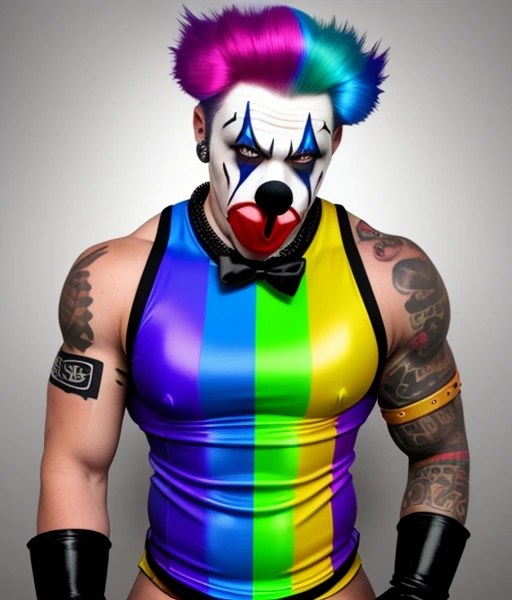



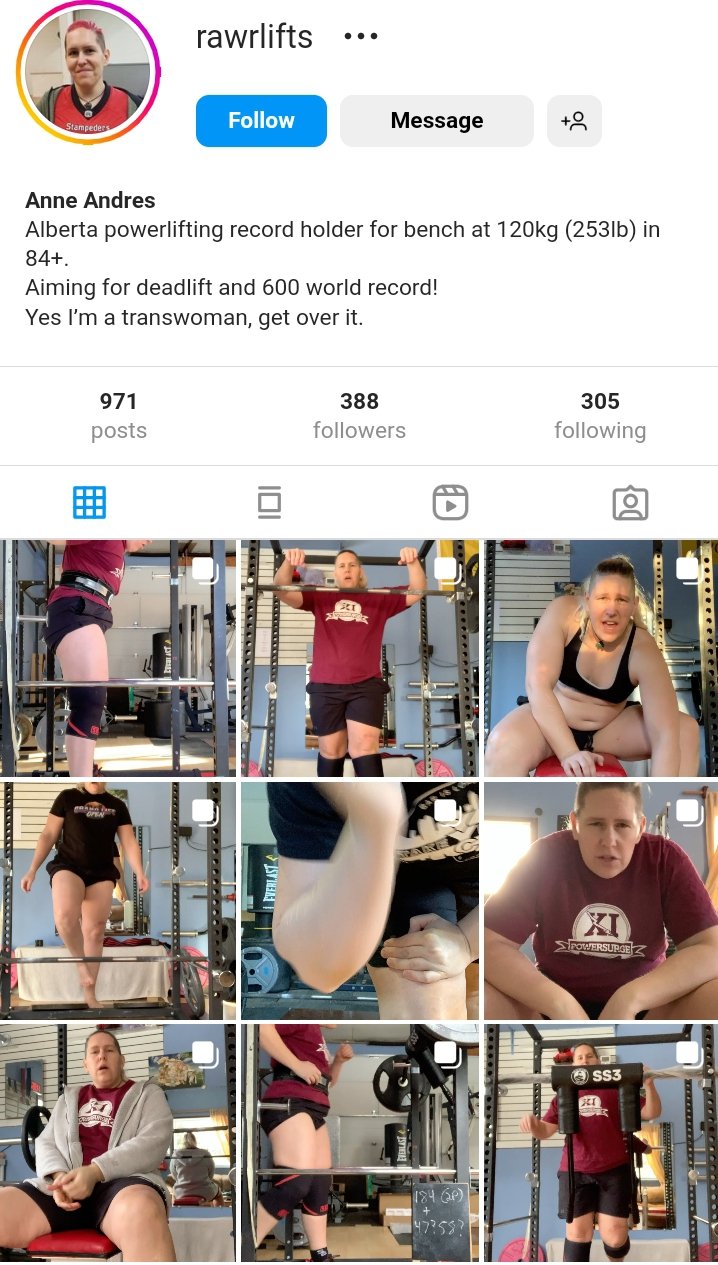
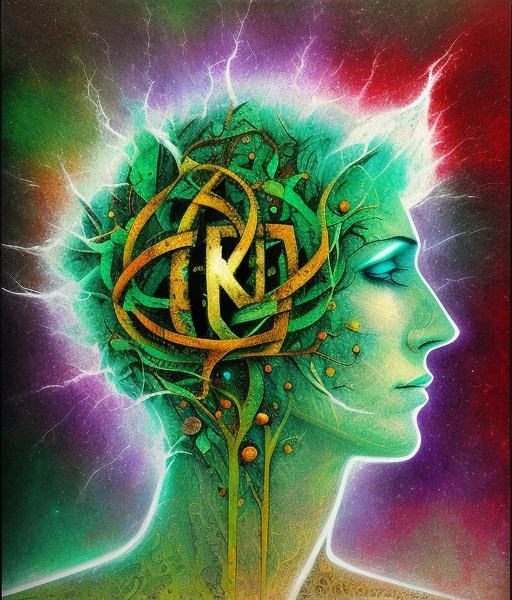

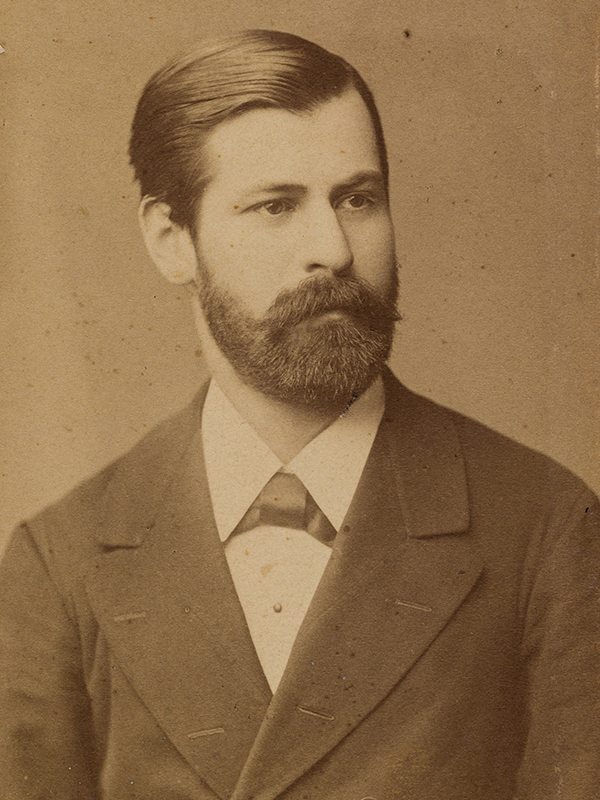
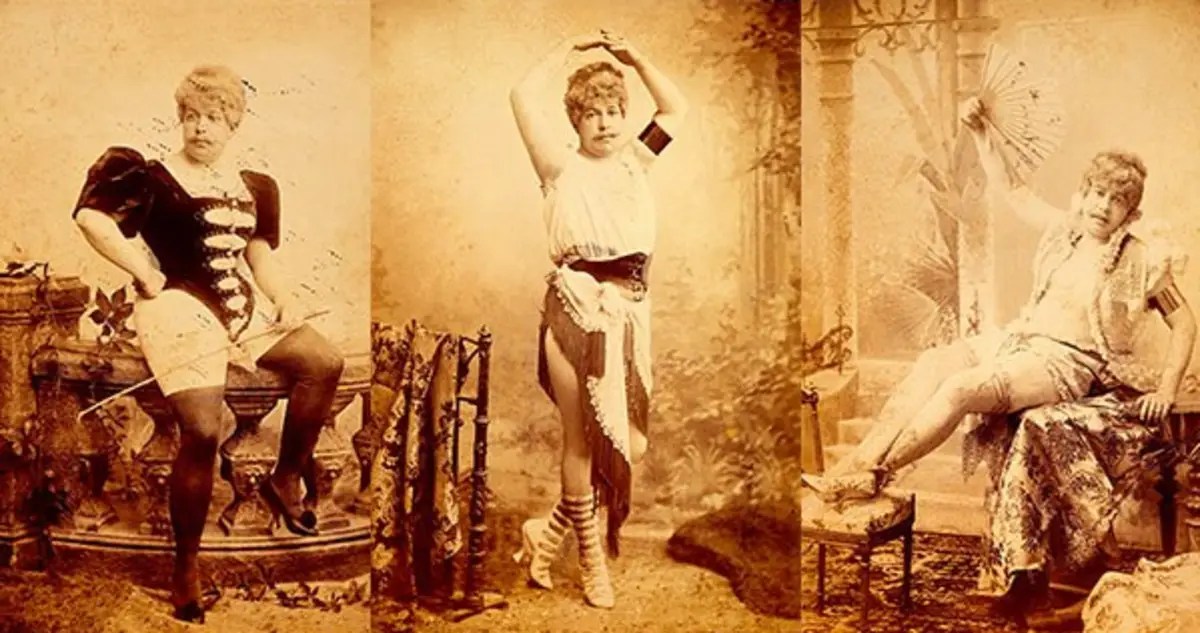
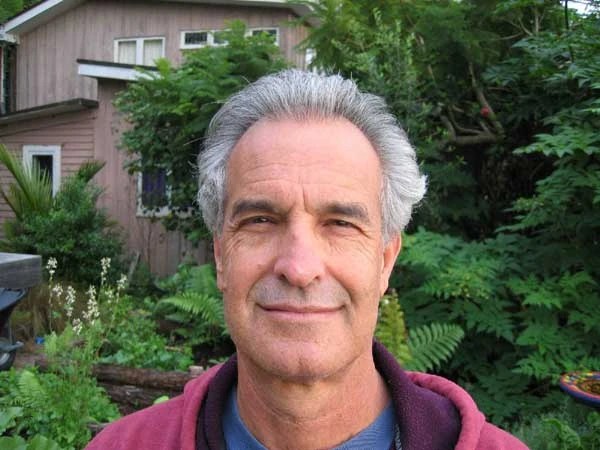
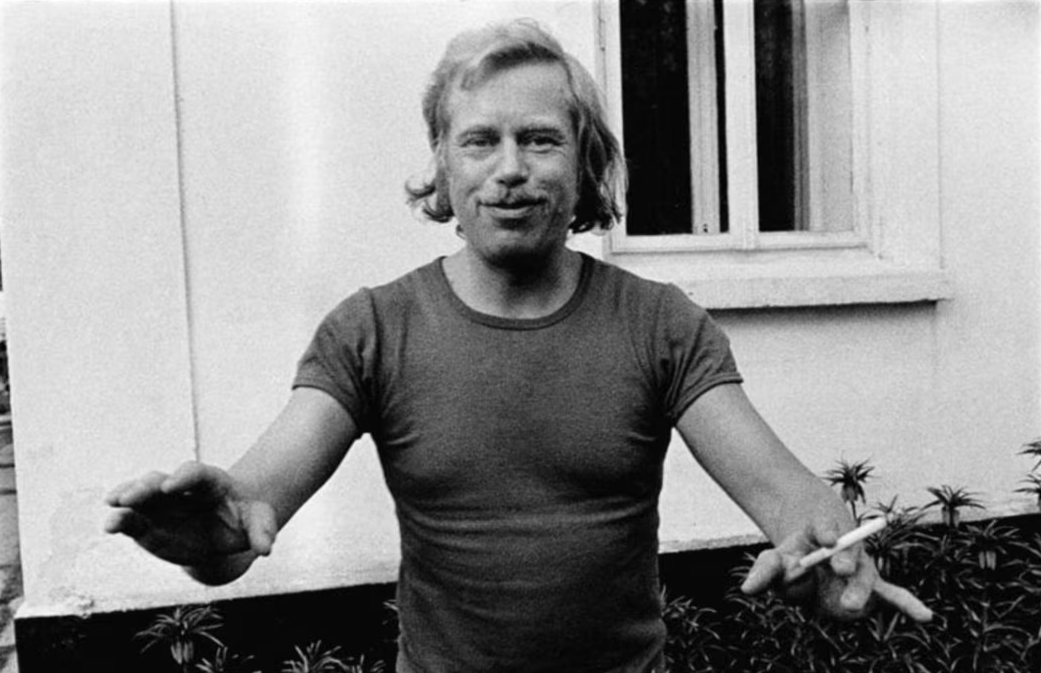


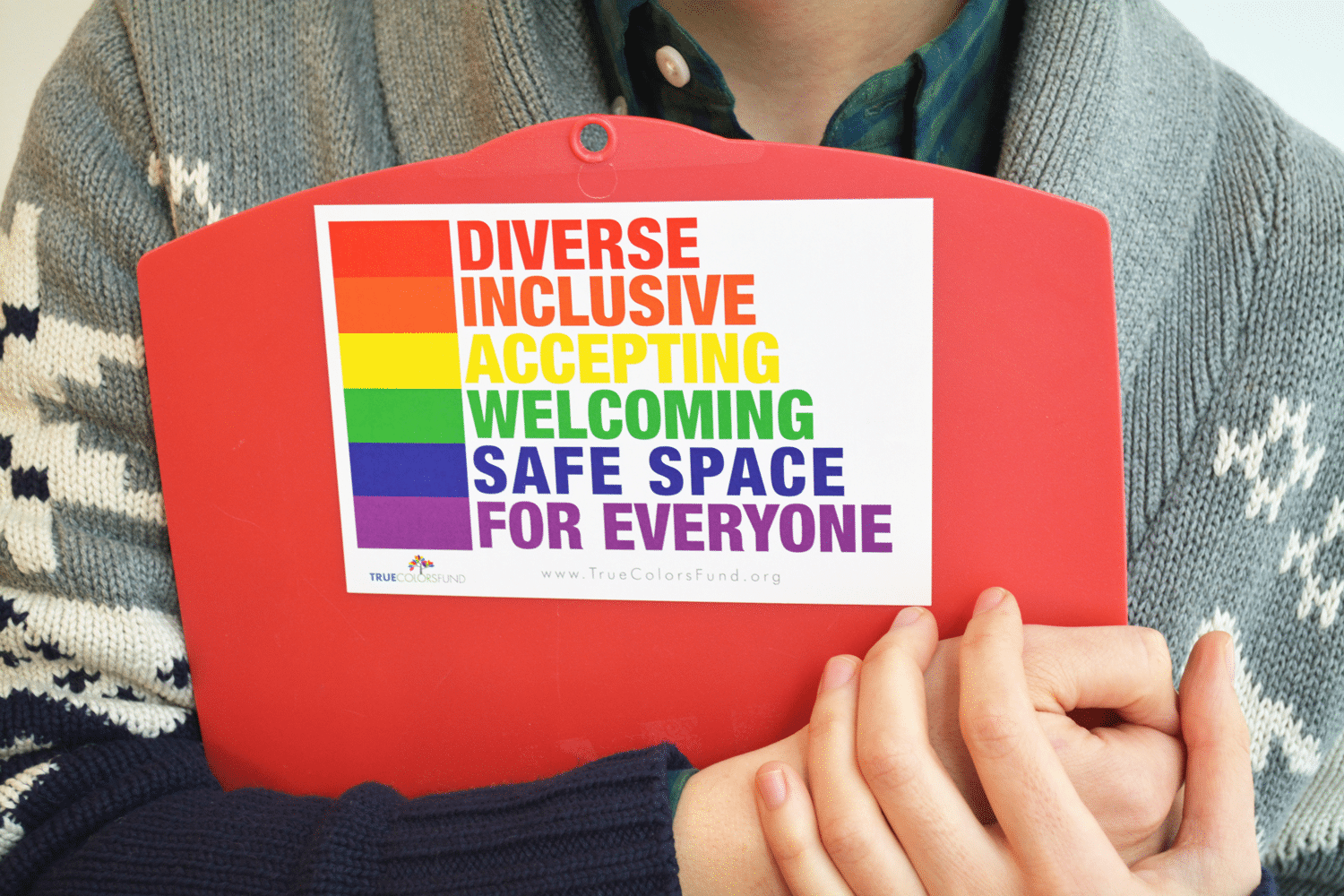

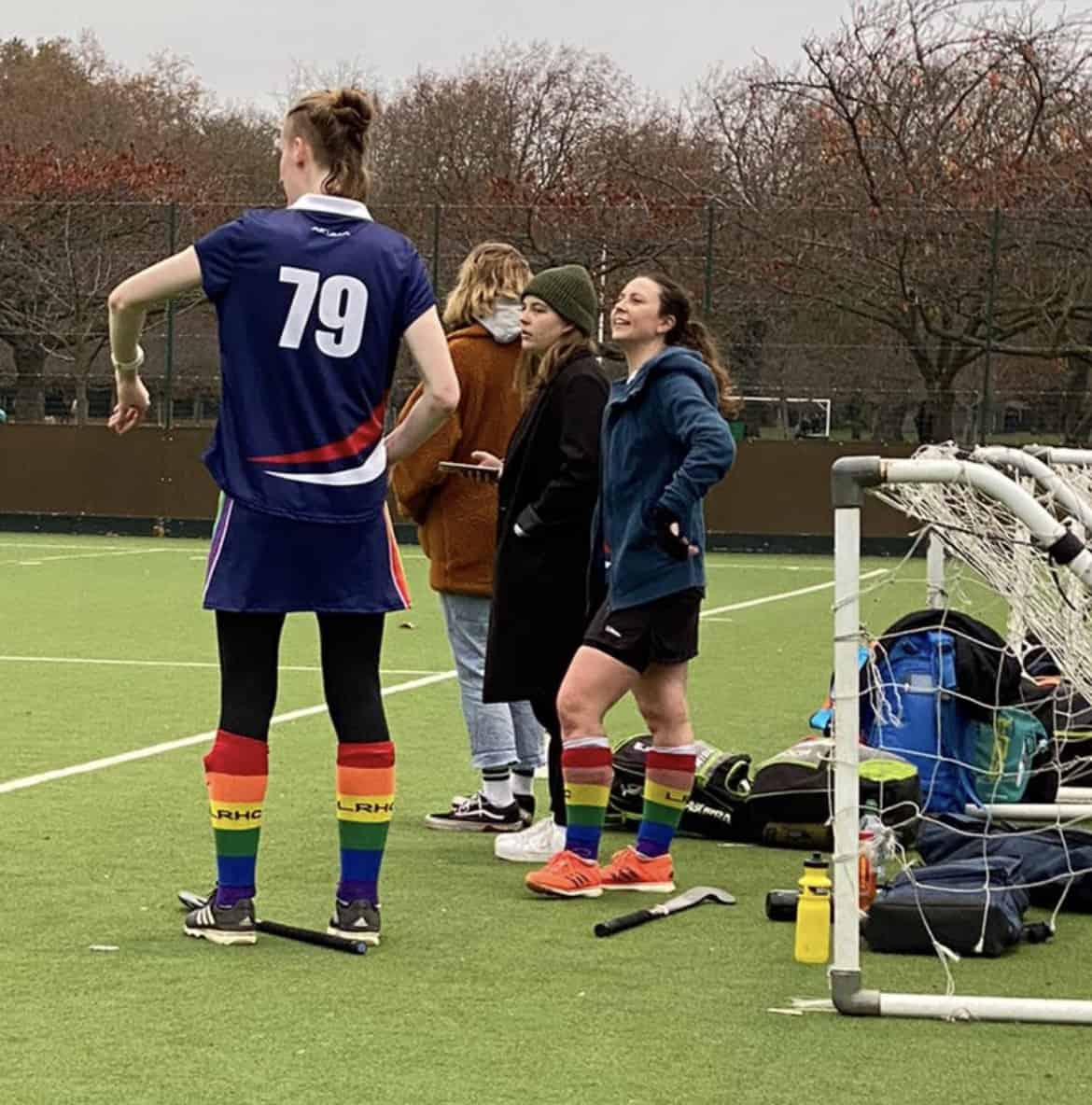

 freedom and reason