Several years ago, I read a paper by Martin Gilens and Benjamin Page about who gets what in American politics. I revisited that paper yesterday. It’s an interesting read. Here’s the source: Gilens, Martin, and Benjamin I. Page. “Testing Theories of American Politics: Elites, Interest Groups, and Average Citizens.” Perspectives on Politics 12, (3): 564–581. It’s a social science treatment, so it may take a moment to get acclimated to it, but its conclusions are clear enough. Perhaps it tells you something you already knew. But science papers sometimes come in handy when people demand sources for your claims.
Here’s what they did: The study evaluated several theories about the dynamics of political influence in the United States, analyzing more than 1700 policy decisions from 1981 to 2002 to test competing theories of how American democracy functions. “Each of four theoretical traditions in the study of American politics—which can be characterized as theories of Majoritarian Electoral Democracy, Economic-Elite Domination, and two types of interest-group pluralism, Majoritarian Pluralism and Biased Pluralism—offers different predictions about which sets of actors have how much influence over public policy: average citizens; economic elites; and organized interest groups, mass-based or business-oriented.”
Here’s the gist: The authors found that the preferences of average citizens have little or no independent impact on US government policy. However, economic elites and organized interest groups exert substantial and statistically significant influence. In other words, policies favored by the wealthy are far more likely to be enacted than those supported primarily by ordinary Americans, even when the latter represent a majority view. The authors concluded that the US operates more on “Biased Pluralism” or “Economic-Elite Domination.” Economic-elite domination is the corporate state and technocratic control I keep telling readers about.
Image by Sora
With Trump, the country is breaking out of this pattern of economic-elite domination. To be sure, Trump is a capitalist, but he is highly critical of the corporatist arrangements that are wrecking the nation. Ordinary Americans are finally getting the things they want—crime control and public safety, immigration restrictions and mass deportations, restructuring of the world economy to put America first (tariffs and all the rest of it), tax cuts, combating the woke progressive project to change culture and education, etc.
This is what the “No Kings” protests are about: a corporate-funded color revolution to return to the status quo Gilens and Page identify (“No Kings” Redux—There They Go Again). Corporate elites loathe populism, and so they are spending millions to create the illusion that the people are opposed to Donald Trump. It’s having some effect, but not nearly the effect the corporate-state media is telling you it’s having.
The “No Kings” project rests on the concept of an “authoritarian breakthrough” (sometimes called “autocratic breakthrough”), which originates with Steven Levitsky and Lucan A. Way in their 2010 book Competitive Authoritarianism: Hybrid Regimes after the Cold War, where the term denotes the process by which a competitive authoritarian regime transitions into a fully authoritarian one. In contrast to earlier notions of democratic breakdown or autocratic consolidation, Levitsky and Way use the term to describe a specific trajectory in which limited pluralism and formal democratic institutions are effectively eliminated, consolidating power entirely in the hands of incumbents. Before their work, the phrase had appeared only sporadically and without theoretical precision; it was Levitsky and Way who systematically incorporated it into a comparative framework for understanding regime evolution after the Cold War. Their formulation situates “authoritarian breakthrough” as one of several possible outcomes for “hybrid regimes,” alongside democratization, regime collapse, and continued competitive authoritarian stability.
Media talking heads are telling us that the antidote to autocratic breakthrough lies in the 3.5 percent theory of political change. This is the work of Erica Chenoweth and Maria Stephan on nonviolent movements, presented in their 2011 book Why Civil Resistance Works: The Strategic Logic of Nonviolent Conflict. The authors studied hundreds of campaigns for regime change over a century and found that, if 3.5 percent of a population actively participates in sustained, peaceful protest, major political change almost always succeeds. Sounds promising to those swept up in the mass hysteria surrounding Trump’s Presidency. They argue that nonviolent movements work well because they allow broad participation, disrupt economic and social systems, and weaken loyalty among elites and security forces.
We see this presently not only in the “No Kings” project, but in the Democratic shutdown, and calls for corporate elites and the military to turn on Trump. This nonviolence route must be pursued, according to Chenoweth and Stepham, because violence limits participation and strengthens government crackdowns. Hear that, Antifa and other assorted resisters? Chenoweth and Stepham are telling you to knock it off. You’re only making it worse.
While the emotionally dysregulated among Hoffer’s true believers are fighting law enforcement in the streets, the organizers of “No Kings”—Open Society Foundations (George Soros), the Tides Foundation, and the United Community Fund and the Justice and Education Fund (Neville Roy Singham)—are beavering away trying to get to the 3.5 percent mark. To reach 3.5 percent, the organizers will need around 11-12 million people marching in the streets of America. The organizers are already planning a third “No Kings” installment, October 18th’s protests having fallen far short of the goal, even by the mark of organizers’ absurd claim of 7 million (Cutting Through the Hype: How Did “No Kings 2.0” Do Saturday?). By exaggerating the numbers of the October event, the idea is to create the illusion of momentum in building the non-violent resistance movement against Trump. If the exaggeration becomes a belief, they hope to exaggerate the next one by even greater numbers. Unfortunately, Chenoweth and Stepham stress, illusory numbers won’t cut it. They need a hard 11-12 million. And that ain’t happening.
Understand what’s happening to the Democratic Party. They’ve become radical Jacobins.
Remember those dudes? Back in the French Revolution. They started out as republicans and secularists, but under the leadership of radicals like Maximilien Robespierre, they became increasingly extreme, paradoxically arguing that terror and “virtue” were necessary to protect the revolution from internal enemies.
Who were their enemies? Moderates and conservatives—you know: “reactionaries.”
Maximilien Robespierre
Doesn’t all this ring a bell?
Robespierre chaired the Committee of Public Safety (oh boy) and used that post to spread fear and suspicion across French society.
This was called the “Reign of Terror,” and the Jacobins relied on coercion and violence to prosecute a war on the clergy and political opponents.
The madness didn’t stop until reasonable Frenchmen stopped it and held unreasonable Frenchmen accountable—Robespierre and his closest allies were arrested without trial and guillotined. Extreme in itself, to be sure, but desperate times call for desperate measures.
Robespierre died on the same device he used on tens of thousands of his victims. Due process notwithstanding, there’s poetic justice here: Robespierre had made a rod for his own back.
Robespierre is sitting on the cart awaiting his turn
It is a legend that Henry Kissinger, or perhaps another US diplomat, and Zhou Enlai, the Chinese Premier under Mao Zedong, were discussing the French Revolution in the early 1970s. When asked about the effects of the French Revolution, Zhou reportedly said: “It’s too early to tell.”
Western observers took this as a sign of China’s long historical perspective—that Zhou viewed history over centuries and, having occurred only 180 years ago, the full consequences of the French Revolution were still unfolding. However, later research suggests that Zhou Enlai was probably referring not to the eighteenth-century French Revolution, but rather to the French student protests of 1968, which had happened just a few years earlier.
Even better. I have argued on this platform that the student protests in the West in the sixties were, at least in part, inspired by Mao’s Cultural Revolution. When they finally grew up, those radicals gravitated to the Democratic Party in America. They now teach our children using the curricula they developed. It’s all about how awful the West is, and men can be women.
Whichever moment in the history of French radicalism Zhou was assuming, he was right: it was too early to tell.
Today, the mainstream media routinely dismisses any discussion of a deep state as a conspiracy theory, a label meant to discredit the idea that entrenched elements within government operate with autonomy and secrecy. By “deep state,” I mean a network of covert operations and intelligence programs that functions outside the normal boundaries of democratic oversight, running covert operations against the American public in the same way intelligence services run covert operations against the populations of foreign countries. The Church Committee’s revelations of the mid-1970s, which I discuss below, showed that such activities are not the stuff of imagination but verifiable matters of record—if a government is so inclined to interrogate them. Yet modern journalists, once defenders of transparency, at least more so than now, treat any questioning of intelligence agencies as irrational or unpatriotic. This is an act of memory-holing what they know to be historical fact to obscure the contemporary fact that the deep state still exists.
When I was in middle school, in the 1970s, television brought the events of the nation straight into my den and bedroom—on the big color TV and my little black-and-white set. Information was much less censored in those days, and arguably less biased. To be sure, it was still corporate-state media, but there was a sense of integrity among journalists so scarce today. Moreover, postmodernist philosophy and its permutations had not yet fully corrupted the corporate intelligentsia—they still had one foot in reality and some commitment to truth-telling. Coverage of the Vietnam War was the most notable, and my parents would shoo my sister and me out of the room when the more graphic footage appeared on the screen. That coverage stood in stark contrast to CNN’s reporting of the Gulf Wars, prosecuted years later by George H.W. Bush and his son, George W. Bush.
Among the many historic moments I remember seeing unfold on TV were the Church Committee hearings, formally known as the Senate Select Committee to Study Governmental Operations with Respect to Intelligence Activities, chaired by Senator Frank Church of Idaho. The hearings were held from 1975 to 1976, beginning in the summer of 1975, when I was thirteen. I can still picture them vividly with my mind’s eye, memories clarified and reinforced years later by reviewing recordings and reports of the committee’s work (for those sessions not held in secret over classified materials).
The House of Representatives had its own oversight efforts, most notably through the House Select Committee on Intelligence (later the Pike Committee). The Pike Committee, like the Church Committee, examined intelligence activities and alleged abuses, though, unlike the Senate committee, President Gerald Ford’s administration blocked the publication of the Pike Committee report in 1976. I will leave readers to look into that. Perhaps it will suffice to say that Ford served as a commissioner on the Warren Commission that was charged with investigating the assassination of President John F. Kennedy. At the same time, the United States House Select Committee on Assassinations (HSCA) was established in 1976 to investigate the assassinations of Kennedy and Martin Luther King Jr. Its final report in 1979 concluded that Kennedy was probably assassinated as a result of a conspiracy. However, in that report, it said that it could not identify all the conspirators. Could not, or would not?
While much of its work was conducted in secret, the public Church Committee hearings were a spectacle. During the fall, winter, and spring, I would come home from school, turn on the television—back then, as my peers will recall, we had only the three major networks and PBS—and see senators questioning witnesses about the secret activities of the CIA, FBI, and NSA. The committee had been formed in 1975 to investigate abuses by US intelligence agencies, following revelations of assassination plots, illegal surveillance, and political interference. It was one of the most important congressional inquiries of the era, rivaling the Watergate hearings a few years earlier. I remember those as well (and am preparing to write about the removal of Nixon, one of America’s most popular Presidents, in the near future). I don’t recall a time when I wasn’t politically interested—looking back, that came naturally as my parents were politically engaged.
Frank Church holding a CIA poison dart gun with vice chairman John Tower, September 1975
Again, although many sessions of the Church Committee were held behind closed doors for security reasons, a number of the hearings were televised. Public sessions aired during the day, and the networks or PBS would replay them later or show highlights on the evening news. PBS, in particular, offered gavel-to-gavel coverage, giving Americans an unfiltered look at the proceedings. Americans across the nation would watch senators asking pointed questions, and witnesses—often high-ranking officials—having to answer for activities that, until then, had been shrouded in secrecy. One moment that became famous was when the committee displayed the CIA’s so-called “heart attack gun,” a weapon that could fire a toxin dart meant to leave almost no trace. But many other revelations shocked the conscience of any American concerned about his beloved republic.
The Church Committee devoted significant attention to COINTELPRO, the FBI’s secret counterintelligence program that targeted domestic political groups, ostensibly dismantled in 1971 when it was exposed. I have written about this program in an academic outlet (Encyclopedia of Social Deviance) and on my platform, Freedom and Reason (see, e.g., The Black Panthers: Black Radicalism and the New Left). I frequently show the documentary FBI’s War on Black America in my criminal justice classes. The hearings and reports revealed how the FBI had surveilled, infiltrated, and disrupted civil rights organizations, antiwar activists, and political figures, including Dr. Martin Luther King Jr. COINTELPRO not only targeted black civil rights organizations, but also targeted many other groups, including the American Indian Movement (AIM). For example, the FBI surveilled AIM during events like the 1973 Wounded Knee occupation, orchestrated internal conflict, and manipulated media coverage against them. These activities involved unauthorized wiretaps, mail openings, and smear campaigns.
The committee’s investigation of COINTELPRO exposed serious violations of civil liberties and helped prompt the establishment of permanent congressional oversight of intelligence agencies, including the Senate and House intelligence committees. One reform of significance was the Foreign Intelligence Surveillance Act (FISA) Court, established in 1978 to provide judicial oversight for government requests to conduct electronic surveillance and collect foreign intelligence within the US. The Act aimed to balance national security needs with constitutional protections. However, the FISA process has, over time, become susceptible to misuse, with courts rubber-stamping surveillance requests, undermining its original role as an independent check on administrative power. For example, Trump and his supporters have argued that surveillance programs under FISA were improperly used to monitor his 2016 campaign and associates. What is alleged, and there is considerable evidence to support the allegations, is that officials within the Obama-era Justice Department and FBI sought FISA warrants—particularly regarding Carter Page and Russia-related investigations—based on questionable or unverified evidence (see The Conspiracy to Overthrow an American President).
Fred Hampton of the Black Panther Party was a target of the FBI’s COINTELPRO covert operations
The committee also investigated the CIA’s relationships with journalists and media organizations, activities often associated later with Operation Mockingbird. The hearings documented that the CIA had cultivated ties with members of the American and foreign press, providing funding, guidance, or cover identities for operations. These revelations raised obvious concerns about press independence and the influence of intelligence agencies on public information. While not as central as the COINTELPRO findings, the committee’s work on media influence, historians of the period tell us, highlighted the need for greater transparency and limits on intelligence operations that intersect with civil society. However, Operation Mockingbird should be recognized as a major finding of the committee’s work, especially as we witnessed something very much like it at work during Trump’s 2020 campaign and after during the Biden years, when agents of intelligence services worked with social media corporations—Facebook, Twitter, etc.— to censor user content by various means.
Looking back, I realize how significant those televised hearings were, and how important it is to return their significance to the minds of the living. They helped ordinary citizens like you and me understand what our government’s intelligence agencies were doing in our name, and they led to crucial reforms—such as the creation of permanent Senate and House intelligence committees and the passage of FISA in 1978, however corrupted those institutions have become. At the time, I didn’t fully grasp how deeply those hearings would shape my understanding of government power and accountability. As debates about secrecy and oversight have continued, I have often thought back to the Church Committee and how it made me aware that, even in a democracy, power can expand quietly unless someone is willing to ask hard questions in public. I wouldn’t expect such an event to happen again, of course (instead, we get fake congressional hearings orchestrated for television like the January 6 Committee). But I do expect that people like me will ask those hard questions.
Remembering this period is essential, because it reminds us that democracy requires constant vigilance, and that secrecy, once—and still, in the minds of agents of these agencies—justified as “national security,” can quickly become a shield for abuse. Today, it’s justified by the appeal “defending democracy.” But, as I have shown on Freedom and Reason, these services, nor the media that runs interference for them, are not defending democracy or civil liberties but ensuring that technocratic control over the American populace continues unconstrained by the right of the people to be free from government surveillance and intimidation.
Here’s the takeaway: The Church Committee hearings demonstrate that covert power within the intelligence community can and does act independently of public accountability. The committee documented CIA assassination plots, FBI domestic surveillance programs like COINTELPRO, and secret operations to influence the press, all carried out without congressional approval or public knowledge. There was evidence, testimony, and sworn admissions. It’s all a matter of public record. These findings, televised for the nation to see and for anyone to revisit today, left little doubt that what we now call a deep state truly existed, no matter how hard the corporate-state media tries to gaslight the public about such matters.
The deep state is not a conspiracy theory—not in the sense that the media wishes to convey. To be sure, there were, and are, conspiracies. And, as I often say, a rational mind can and should develop theories about them. After all, conspiracy is a category in criminal law. But the conspiracies revealed by the Church Committee, and the myriad of conspiracies currently in operation, aren’t the products of paranoid minds. Indeed, paranoia is warranted given the revelations, not only of the Church Committee, but also of contemporary work exposing the machinations of today’s intelligence services. The corporate-state media’s job is to obscure the conspiracies presently at work shaping the destiny of the American Republic by making citizens concerned about being labeled “conspiracy theorists.” They do this work to advance the ambitions of the globalist project: the managed decline of the West—which is the grandest conspiracy of them all.
In Joel Bakan’s 2004 book The Corporation: The Pathological Pursuit of Profit (2004), a book I assign in my undergraduate course Freedom and Social Control, as well as the companion documentary by the same name, Bakan interviews Dr. Robert Hare, the renowned Canadian psychologist who developed the Psychopathy Checklist (PCL-R), a twenty-item diagnostic tool used to assess psychopathic traits in individuals. Bakan asks Hare to apply his checklist to modern corporations since corporations have, by law, been given the status of persons. In the documentary, Hare, in so many words, asks: If the corporation is a person, then what type of person is it?
When the corporation is analyzed in this way, Hare finds that it exhibits a textbook pattern of psychopathic behavior: callous disregard for the well-being of others, chronic irresponsibility, deceitfulness, incapacity for guilt or remorse, and a tendency to manipulate others for self-gain. Corporations, driven by the singular legal mandate to maximize shareholder profit, routinely externalize harm— deceiving consumers, exploiting labor, polluting the environment—while showing no empathy or moral restraint beyond what regulation or reputation requires. Hare concludes (although he later partially walks this back after receiving backlash from, presumably, corporations) that if such an entity were an actual human being, it would meet the clinical definition of a psychopath: glib, manipulative, remorseless, entirely self-interested—operating without conscience but ostensibly within the letter of the law.
Robert Hare discusses psychopathy
As I was writing this morning (as I do most mornings—thousands of words a day), I reflected on this approach to the study of the corporation and wondered if other organizations and institutions could be given a similar treatment. My mind immediately went here: what type of person would the Democratic Party be if it were a person? Given the party’s penchant for moving from crisis to crisis every week, I returned to my training in psychology and reviewed the inventory of personality disorders.
The diagnosis didn’t take long to form. In the APA’s DSM (the Diagnostic and Statistical Manual of Mental Disorders, published by the American Psychiatric Association), there is a category called “Cluster B,” which refers to a group of personality disorders characterized by dramatic, emotional, or erratic behavior.
Personality disorders are long-standing patterns of behaving, feeling, and thinking that deviate from cultural expectations and cause distress—not only for the afflicted but for those around them. There are four Cluster B personality disorders: antisocial, borderline, histrionic, and narcissistic. That last type immediately struck me as particularly relevant. It is associated with aggression, blame-shifting, manipulation, rage, and savoir complex. These are particularly manifest during what psychiatrists call narcissistic-driven crisis, also known as narcissistic collapse. Bingo.
Narcissistic-driven crisis behavior—and you probably know people like this (I know I do)—is a form of psychological control in which an individual attempts to maintain dominance and emotional centrality by keeping those around him in a state of perpetual upheaval. For the narcissistic personality, stability threatens his sense of importance and power. However fleeting the resolution, the crisis restores it. By framing conflict and setbacks as catastrophes or manufacturing emergencies out of small or imaginary problems, the narcissist ensures that attention, energy, and decision-making flow back to him to feed his ego. This constant state of “everything’s going wrong” keeps others dependent, emotionally off-balance, and reactive, conditions under which the narcissist deflects blame and reasserts control.
Image by Grok
Sound familiar? Think about the continual psychogenetic illness and endless protests, from “Pussy Hats” to “No Kings,” that Democrats have visited upon the American public. Hillary Clinton lost the election! How did feminists react? Trump is on track to win reelection in 2020! How did progressives react? Trump won in 2024! How did Democrats react? Trump enforces immigration law. Trump ends DEI. Trump recognizes only two genders. Trump renovates the White House. Trump makes peace around the world (he just secured yet another ceasefire today between Cambodia and Thailand). How does the left react to each of these? With panic, ridicule, refusal, and violence. Can you see the pattern? I cannot unsee it.
Beneath this pattern, in the individual, lies a fragile self-esteem that cannot tolerate being ignored or rendered marginal or unnecessary. And so we can observe this at scale. Democrats cannot tolerate feeling marginalized and powerless. They want total control over the situation. Crises serve as a stage on which the Party can act as the indispensable hero, savior, victim, or visionary surrounded by incompetence and existential threats. How do they portray Trump and MAGA? Backward, deplorable, and stupid. Trump and MAGA are none of these things, but the narcissist needs those around him to see them this way so he can exert control over them. And so deluded is this narcissist that has shut down the government while admitting this action hurts society’s most vunerable.
The crisis cycle the narcissist sets in motion is self-reinforcing: chaos produces the attention and validation he craves. Would anybody deny that the rank-and-file progressive craves attention? Even some of its elites do! The multicolored hair. The extreme body modification. The coming out rituals. Drag Queen Story Hour. The demand that others adopt the rituals of such delusional and contradictory thought-systems as antiracism and gender identity. These people can never not be in crisis. Moments of calm and progress provoke anxiety or boredom, leading them to stir conflict anew. Over time, many of those around such persons become fatigued, guilty, and uncertain, walking on eggshells to prevent the next eruption. These effects are intended by the narcissist’s actions. What looks like drama and misfortune from the outside is a desire to construct a controlled environment, a situation designed to preserve the narcissist’s sense of superiority and protect his fragile ego.
As I write this, I am reminded of Frederich Nietzsche’s remark, “Insanity in individuals is rare; but in groups, parties, nations, and epochs, it is the rule.” This is related to what is sometimes called “wolf pack syndrome,” or more clinically, mass psychogenic illness. Whatever it is called, it is the madness of crowds. Collective dynamics can amplify extreme emotions and erode individual accountability. We observe this tendency in the echo chambers of internet chat rooms, mob behavior on our streets, and the spread of social contagions. But I wonder whether the madness of the progressive individual is not so much the result of her or his tribal affiliation, but rather that the tribe is at scale mad because its constituents are mad themselves.
Considering who Democrats defend and represent, this seems likely to be the case. For many of those identifying as transgender, for instance, what I am describing in this essay is the personality type in operation, along with antisocial, borderline, and histrionic types. The antisocial type disregards and violates the rights of others. The histronic type is marked by a pattern of attention-seeking behavior, dramatic expression, and emotional dysregulation. So, too, is the borderline personality—and, moreover, that type is unpredictable and self-harming. This explains the constant cries of victimhood, the emotional blackmail, and the self-mutilation. Failure is rationalized as “oppression.” The inability to follow rules is rationalized as “resistance.” Acts of harassment, intimidation, and violence become forms of “justice.” Far from the gales of creative destruction (these aren’t genuine rebels and revolutionaries), destruction is sought for the sense of personal empowerment it conveys to a bent and fractured personality.
Is it not obvious that Antifa is largely composed of emotionally dysregulated youth who, anxious and bored, spend their days figuring out ways to create conflict and crisis? Is it not obvious that by behaving in ways and transforming themselves into bodies that don’t conform, while asserting their moral superiority and imagined deep understanding of the world around them, those who embrace the doctrine of gender identity are stepping into oppression? Accusing ordinary Americans of racism, sexism, and all the other labels progressives smear on people—do we not see this for what it is: narcissistic collapse? Democrats tell those concerned with chaos, disorder, and the transgression of boundaries and the destruction of guardrails to calm down. Antifa is “just an idea.” Your distressed teenager is just seeking her “authentic self.” The drag queen is “family-friendly.” Indeed, Democrats embrace these ideas. This is their politics. It’s the party’s personality.
The reasoning behind the government scheme of the American Republic was extensively debated during the Constitutional Convention of 1787 and in the Federalist Papers, authored by James Madison (who also authored the Constitution and the Bill of Rights), Alexander Hamilton, and John Jay. The framers designed a bicameral legislature and a distinct executive to balance representation, protect minority interests, and prevent tyranny. Members of the House of Representatives would be elected directly by the people to represent local districts. Senators, originally chosen by state legislatures to represent the states as sovereign entities, would provide a check on purely popular passions and preserve federalism (Senators are now popularly elected by the people of the respective states). The President, elected by the entire nation through the Electoral College, would represent the country as a whole, balancing regional interests while serving as a single, accountable executive.
The truth Democrats don’t want Americans to know is that President Donald Trump is fully exercising his Article II powers under the US Constitution as a single accountable executive elected by the whole of the people (at least those who choose to participate in democracy, but an outcome that binds us all). As I have shown in essays on this platform, the President is the Chief Executive Officer, Commander-in-Chief of the Armed Forces, and Chief Magistrate (top law enforcement officer). He did not claim these powers for himself. His office was bequeathed these powers by the Founders of the American Republic. The Constitution is the Supreme Law of the Land. And it is this law that prevents the emergence of a king or tyrant. (See Our Constitution and the Federal Authority to Quell Rebellion; Concerning the Powers of The US Constitution—And Those Defying Them)
Therefore, the claim that Donald Trump is an “authoritarian,” “fascist,” or “king” follows from this argument: the Founders of the American Republic established an authoritarian government or a monarchy. It’s not Trump who is a tyrant, but the American Republic that’s tyrannical; and it is only not so when the President defers to the administrative apparatus and corporate state built up over decades by progressives and financial and industrial power. In other words, not exercising the full authority of the office and allowing technocratic government to proceed unimpeded is the progressive definition of democracy.
Yet the Founders replaced the Articles of Confederation with a constitution to create a Unitary Executive vested with these awesome powers to protect and defend the nation and advance its interests internationally, not to empower bureaucrats and corporations (see For the Record: The President is Also the Chief Magistrate). Moreover, the main problem that brought the delegates from the various states to Independence Hall in Philadelphia, Pennsylvania, was the persistent problem of insurrection and rebellion against civil rule—the problem of the mob. The Founders envisioned a President capable and willing to use the Armed Forces to bring order and stability to the Republic and to protect its borders and internal security. Is it any wonder, then, that Democrats oppose Trump’s deployment of the Armed Forces to bring order and stability to America?
Tyranny by Sora
Democrats won’t admit this, but it is obvious in their myriad beliefs—and the fact that they decry a President effectively wielding the authority of his office—that they do not believe the American Republic is a legitimate entity. They wish it to be a dead letter. To be sure, they will cite the Constitution when they need an appeal to authority, but in truth, they loathe the document. You see this in their suppression of First Amendment rights, or in the partisan selectivity in their appeals to its clauses. You see it in the unrelenting diatribe about the United States as “founded in slavery” and “rooted in white supremacy”—this in the face of the historical and present-day fact that it is Democrats who were and are the party of race privileging. It was the Democrats who, in the nineteenth century, rejected the Constitution and broke away from the Union, founding their own government, the Confederate States of America (CSA), based on slavery. It is the Democrats who are now raising the specter of the CSA by defying the federal government using the language of neo-Confederacy. “Don’t tell us what to do with our blacks and immigrants!” is the effective cry of their resistance to federal authority. The mayor of Chicago, Brandon Johnson, just explicitly compared illegal immigrants to slaves.
Almost every week, the Democratic Party spins out a new hysteria in its war against the federal government. The failure of the “No Kings” protests of last Saturday and the planned third attempt to reach Chenoweth and Stepham’s 3.5 percent mark necessary for political change (I will explain Chenoweth and Stepham thesis in Tuesday’s essay on Freedom and Reason), has Party propagandists out with a new angle: Republican Party reference to “Divine Providence” signals their desire for a king. Boogeyman Steve Bannon, who frequently refers to Divine Providence, has become a particular target of progressive vitriol on this ground. Reporters are asking the Trump Administration if it is in contact with Bannon, as if there were something untoward ahout talking to a political genius.
You may recall that, during a Senate Foreign Relations Committee hearing, Democrat Senator Tim Kaine, of Virginia, criticized the idea that human rights come from God rather than government, calling it a “very, very troubling” notion. He compared this belief to the theocratic system in Iran, arguing that such a view aligns more with religious authoritarianism than with democratic principles. (How ironic that Kaine’s party is about to elect an Islamist as New York mayor.) Kaine contended that rights are given to man by the government. This is not ignorance about the founding ideas of the American Republic; Kaine does not believe in universal human rights. He believes in big government, and he wants to use government to achieve the ends of his party’s globalist ambitions—even if it means running roughshod over the God-given rights of American citizens. As I wrote in Tim Kaine and the Enemies of Liberty and Rights, this is a totalitarian impulse.
Party propagandists are following Kaine’s lead. The talk from patriotic Americans about Divine Providence signals their desire to elevate Trump to monarch. That’s the way the way supporters of monarchies talk, we’re told. No, that’s the way the Founders of the American Republic talked. The Declaration of Independence (we celebrate its 250th anniversary next year) concludes by describing the authority of “Free and Independent States,” which comprises “full Power to levy War, conclude Peace, contract Alliances, establish Commerce, and to do all other Acts and Things which Independent States may of right do,” before finishing with this flourish: “And for the support of this Declaration, with a firm reliance on the protection of divine Providence, we mutually pledge to each other our Lives, our Fortunes and our sacred Honor.”
The Father of the Constitution, James Madison, the man who authored the First Amendment and its Conscience Clause, often credited in public messages “the smiles of Heaven” and “Divine Providence” for the nation’s blessings. In the First Inaugural Address of the nation in 1789, George Washington explicitly thanked “that Almighty Being who rules over the universe” for his providence in guiding the Revolution and the founding of the nation: “No people can be bound to acknowledge and adore the Invisible Hand which conducts the affairs of men more than the people of the United States,” he wrote. Was Washington declaring himself a king? Of course not. Washington was the first President of an enlightened secular republic.
Benjamin Franklin, not known for his religious devotion, often spoke of Providence as a guiding and moral force. During the Constitutional Convention in 1787, he famously urged those assembled to pray, saying: “I have lived, Sir, a long time, and the longer I live, the more convincing proofs I see of this truth—that God governs in the affairs of men.” Famously, Thomas Jefferson, who in private, like Franklin, tended toward deism—believing in a Creator yet skeptical of divine intervention, nevertheless wrote in Notes on the State of Virginia (penned between 1781-1782): “I tremble for my country when I reflect that God is just: that his justice cannot sleep forever.”
Abraham Lincoln, the first Republican President, the man who defeated the Democrat insurrectionists on the battlefield (and who was assassinated by a Democrat terrorist for his troubles), spoke about Providence in deeply reflective terms—observing divine will in the Civil War’s suffering. “The Almighty has His own purposes,” he said in his Second Inaugural Address in 1865. Lincoln referred to Providence as a way of acknowledging moral order without presuming to know God’s intentions. Decades later, another Republican, Theodore Roosevelt, often invoked Providence as a moral guide for national purpose and duty. “In the long run,” Roosevelt wrote, “only those are happy who have sought and found how to serve the Lord and their fellow-men under the guidance of Providence.”
Even Democrats have referred to Divine Providence. Franklin Roosevelt, in wartime exhortations and prayers, asked for “the blessing of Almighty God” and “the favor of His Providence” upon the nation. Harry Truman often sought “the guidance of Almighty Providence.” John Kennedy, in his inaugural address, said, “With a good conscience our only sure reward, with history the final judge of our deeds, let us go forth to lead the land we love, asking His blessing and His help, but knowing that here on earth God’s work must truly be our own.” Even Barack Obama (although one rightly questions his sincerity) referred to Providence in historical context. “Providence has a way of reminding us that we are not the masters of our fate,” he once said.
So what is Providence? Providence refers to God’s active care, governance, or guidance in human affairs. It implies that events in the world are not random but occur under the direction or supervision of a divine power. Crucially, Providence in the mouths of the Founders served as a deistic and neutral term for God—the “Creator,” “Nature’s God,” the “Laws of Nature”—acknowledging divine oversight without invoking specific doctrines or miracles. To say something happened “by Providence” means it occurred through God’s power, will, or wisdom.
For the record, I write all this as an atheist. That “filthy little atheist” (as Edmund Burke called him) Thomas Paine referred to Divine Providence—and that’s good enough for me. In Common Sense (1776) and The American Crisis (1776–1783), he invoked Divine Providence to inspire Americans during the Revolutionary War, suggesting that a higher moral order guided the struggle for liberty. In The American Crisis, he famously begins with “These are the times that try men’s souls,” and frames the fight for independence as aligned with a providential purpose, implying that God—or the moral order of the universe—supports the cause of freedom.
But did not monarchies also appeal to Divine Providence? Yes, but the progressive propagandist leaves out a crucial distinction. The divine right of kings was a political and religious doctrine that held that monarchs derived their authority directly from God rather than from the consent of the people. According to this belief, the king was God’s appointed ruler on Earth and therefore answerable only to God, not to any church (an advance in that regard), parliament, or subjects. This idea was used to justify absolute monarchy, especially in Europe during the sixteenth and seventeenth centuries, and to discourage rebellion by portraying resistance to the king as disobedience to divine will. The key distinction between absolutism and republicanism lies in the source of authority: unlike kings, whose power is said to come directly from God, Presidents derive their authority from the consent of the governed. In the American Republic, Divine Providence is experienced not via concentrated power in a single ruler, but by empowering the people to ensure their representatives act responsibly in carrying out their duties, achieving this through regular elections, or under extraordinary circumstances, removal from office, reflecting a collective stewardship under the guidance of higher principles.
Democrats seek something very different, and they have, over many decades, managed to walk the nation substantially down their desired path. In the arrangements they seek, the state functions less as a forum for collective self-determination than as a network of administrative apparatuses—agencies, ostensibly neutral offices, and regulatory bodies—that execute the directives of concentrated corporate interests. While the trappings of a constitutional republic remain—elections, judicial review (a process that has become corrupt with the rise of the rogue judiciary)—they operate primarily as mechanisms of legitimation, giving citizens the sense of influence while substantive decisions are determined by technocratic elites in league with transnational capital. National sovereignty is subordinated to the logic of globalized markets, and policy is calibrated to optimize corporate and international financial priorities rather than the public good.
In one of his most memorable defenses of free speech Christopher Hitchens invokes a story about the great lexicographer Samuel Johnson to illustrate the hypocrisy and irony of censorship.
“When Dr. Samuel Johnson had finished his great lexicography, the first real English dictionary,” the late journalist tells his audience—prompting laughter—“he was visited by various delegations of people to congratulate him, including a delegation of London’s respectable womanhood who came to his parlor in Fleet Street and said, ‘Doctor, we congratulate you on your decision to exclude all indecent words from your dictionary.’ And he [Johnson] said, ‘Ladies, I congratulate you on your persistence in looking them up.’”
Dr. Samuel Johnson
The anecdote, almost certainly apocryphal, has long circulated as a testament to Johnson’s wit and disdain for prudery. Hitchens took liberty with the legend. The most common historical version goes like this: a “proper lady” praised Johnson for omitting “indelicate” terms from his 1755 Dictionary of the English Language. Johnson, ever the master of pointed irony, is said to have replied, “What, madam! Then you have been looking for them?” I like Hitchens’s rendition better.
Whether or not the exchange truly occurred, it captures Johnson’s—and Hitchens’s—view that moral pretension often conceals the curiosity it claims to suppress. It’s like the smut police looking for smut to look at it. But there’s something darker here. Consider Elon Musk’s reminder that the social media platform X allows users to mute specific words and phrases so they don’t appear in their timelines or notifications.
You can mute any specific words of your choice on 𝕏
I find it hard to imagine that many users would go to the trouble of identifying every word and phrase that offends them, and changing their settings to avoid ever suffering those ideas again. To do this, they would first have to use the very words they dislike—words they have already seen and thought about—in order to not see and risk thinking about them. That would hardly satisfy their impulse.
It’s not that they don’t want to see and think about the words and phrases per se. They think about them constantly. Like the proper lady who congratulated Dr. Johnson for excluding indecent words, the X user with this mentality doesn’t want others to see and think about them. He won’t go to the trouble of muting anything himself; he will instead complain that X fails to censor ideas he wishes others would not entertain.
He’s like those who want to restrict access to art and music. They know about the art and music they don’t want others to see and hear. If it were simply a matter of not personally looking at art or listening to music a man doesn’t like, the man would be content with looking or walking away, or turning down the volume, or changing the channel. No, the busybody’s aim is about something else: controlling what others see and hear. This is the mark of an authoritarian personality. And the busybody had an accomplice in Twitter’s previous owner.
When Twitter punished users for the thoughtcrime of “misgendering” (the act of correctly identifying the gender of a person), this was not merely to spare the man who thinks he’s a woman from having to be reminded of that fact—as if he enjoys in a free society the freedom to not be offended—but more importantly to change the way they talk and therefore think, by participating in the rituals demanded by gender identity doctrine, and disciplining them when they don’t. It was couched as “trust and safety,” but it was really about neurolinguistic programming.
Elon Musk saw through this impulse and gave the world a gift when he bought the platform and altered its algorithms to allow greater liberty in the exercise of free expression—to let people have their own minds, and thus the freedom to perceive and convey reality with accuracy and precision. That is the sign of a scientist and a civil libertarian. For this, America owes Musk a debt of gratitude.
A paragraph in this New York Times article, “Maine U.S. Senate Candidate Says He Covered Up Tattoo That Had Nazi Imagery,” caught my attention. I posted about this on Facebook on Wednesday morning, defending the man—not the Nazi tattoo, but something he posted on social media. Later in the day, I learned that the most interesting thing about this article and other reporting (e.g., CNN) is what is not being widely reported on, which the title of this essay announces. I will come to that later. It will suffice to say for the moment that some outlets are reporting on it now. But before getting to that, I want to discuss what moved me to share the NYTimes article. So, a little suspense.
Maine Gubernatorial candidate Troy Jackson (left), US Senator Bernie Sanders (center), and US Senatorial Candidate Graham Platner (right), Labor Day rally in Portland, Maine in September 2025.
The candidate is Graham Platner. He’s a Democrat vying for the US Senate in Maine. He’s a former Marine running against Governor Janet Mills, also a Democrat, for the party’s nomination. (You will remember Mills from February 2025, when she was humiliated by Trump after publicly defying the President’s executive order banning transgender athletes from female sports teams.) Platner is a star among progressives. Above is a photo of Platner with Maine Gubernatorial candidate Troy Jackson and US Senator Bernie Sanders, a self-described socialist, at a Labor Day rally. Platner has been endorsed by the United Auto Workers union and Sanders.
The subject of the initial controversy appeared on the podcast hosted by former Obama aides about a tattoo he got in 2007 in Croatia, which he has since covered. He and other Marines had chosen a “terrifying-looking skull and crossbones off the wall,” he explained, because “skulls and crossbones are a pretty standard military thing.” Turns out the tattoo is Nazi symbology. That figures since it was acquired in Croatia, which, like Ukraine, is a country teaming with Nazis. But did these Marines know that? A lot of progressives don’t know about Eastern Europe and the ubiquity of fascist and Nazi beliefs there. I’m sure readers are aware of the ubiquity of Ukrainian flags in social media bios on the left. Then again, maybe Platner did know what the tattoo represents; Democrats don’t seem to have an actual problem with fascism, given their supplication to corporate power, restrictive views on civil liberties, and support for political violence, as evidenced by their defense of Antifa.
But that’s not what grabbed my initial attention. From the NY Times story: “Among the posts that have drawn criticism was one from 2013 in which he responded to a thread asking users what questions they have for people of other races. Mr. Platner asked why Black [sic] people do not tip, something he said he observed while working as a bartender. On the podcast, Mr. Platner said he had been ‘legitimately asking the question,’ because he thought there might be a cultural explanation.”
People are free to criticize others for their views for whatever reasons, of course, but there’s a significant body of academic research that would support the premise that, on average, black Americans tip less in restaurant settings than white Americans. These differences persist even after controlling for education, income, and service quality. Perhaps it overstates the difference to say blacks “do not tip” (although this may have been Platner’s experience), but that they tip less on average is a documented fact. And since it is not due to several control factors, it’s reasonable to wonder if there might be a cultural explanation.
So why is that a problematic question? One hears such problematization in criticism of those asking why there is significant black overrepresentation in the most serious crimes. We know that this phenomenon is not attributable to poverty, since there are more poor whites than blacks, yet whites not only don’t murder or rob at the same rate as blacks, but half of all murders, and more than half of all robberies, are committed by blacks, overwhelmingly male. It is, therefore, entirely reasonable to ask whether there are cultural differences that explain this phenomenon. Yet one risks being accused of racism for asking.
Here’s another example: Suppose one were to ask why recent data show that students identified as Asian and non-Hispanic whites graduate at rates above the national average, while American Indian, black, and Hispanic students graduate at rates below the national average. The racial gap is especially pronounced between non-Hispanic whites and blacks. In Wisconsin, for example, the graduation gap between non-Hispanic whites and blacks is around 25 percentage points. The gap is largest for black males. It’s not that people don’t ask why this is the case; it’s that they demand that we only restrict the answer to “systemic” or “structural racism” or other pre-approved explanations. But is it cultural? Asking that question can get you into trouble.
Platner said of his question about tipping, “It was certainly not meant as a malicious thing.” I can’t know whether there was any malice in his asking the question, but I do know that there is no malice in my asking the question. Sociologists ask questions like this all the time—at least we used to. However, today, many are terrified to ask questions like this—even if they allow themselves to be curious about such things in their heads—because they know they may face criticisms if they do.
What is objectionable are other things Platner has written, posts that shine a light on affiliations that inspire his other posts, those disparaging police officers and calling white Americans living in rural areas (MAGA) racist and stupid—posts that the NY Times and other legacy media outlets don’t dwell on.
Investigative journalist Steve Robinson has found in newly uncovered social media posts that Platner instructs, among others, members of Maine’s Socialist Rifle Association (SRA) in paramilitary tactics. In an August 8, 2020, post, Platner brags about having provided advanced firearms instruction to the far-left paramilitary organization shortly after the Black Lives Matter riots erupted nationwide. Photos Robinson has uncovered show a group with the flag of the anarchist organization Industrial Workers of the World (IWW), another of a group with one member wearing a Transtifa shirt, the one with the Pride Progress flag with an AR-15 across the front, and a photo of pamphlets about anarchism, community defense (a euphemism for armed antigovernment resistance), and instructions on using burner phones.
According to Robinson, the SRA first drew national attention following the assassination of Christian activist Charlie Kirk, amid reports that the alleged shooter, Tyler Robinson, may have had ties to the group. The SRA claims to have more than 10,000 members and has faced media scrutiny over its alleged involvement in armed confrontations with law enforcement. Platner’s loathing of law enforcement and the deplorables is a central feature of progressive Democratic politics. So is supporting Ukraine in its war with Russia, noted above, which I have shown on this platform, was provoked and is prosecuted by an alliance of neo-Nazis and other Ukrainian ultranationalists funded by transnational corporate power and the Western intelligence apparatus.
Robinson isn’t the only investigative outlet plumbing the depths of the left’s affinity with domestic terrorists. While the legacy media dwells on the tattoo and questions about tipping, Axios has uncovered a 2020 comment in which Platner refers to having an “antifa supersoldier” label on his “armor,” a remark he now characterizes as a misguided joke. But it’s no joke, Jack; his affiliation with domestic terrorism is not just a remark. This and other revelations, Axios reports, have thrown his campaign—a progressive effort to unseat Republican Senator Susan Collins—into turmoil.
As noted, Platner’s bid for the Democratic nomination pits him against Governor Mills, the preferred candidate of party leaders and establishment donors. For progressives, Platner embodies the movement’s faux populist and alleged “outsider” energy; for the establishment, his candidacy threatens to hand Republicans ammunition in a crucial Senate race. More than this, it brings the Democrats’ affinity with left-wing domestic terrorism to the fore. Readers must consider whether the idea that there is a gulf between the moderate and progressive wings of the Democratic Party is a perception the Party has manufactured.
The stakes are high for Democrats: Collins remains one of the GOP’s most entrenched incumbents, and Democrats view Maine as a must-win seat in their effort to maintain Senate control via that body’s rules constraining the Republican majority (that’s how Democrats shut down the government). But Platner’s online history—spanning from leftist organizing forums to inflammatory political commentary—has complicated his image and provided fodder for Republican attack ads. It’s not just the “antifa supersoldier” label on his armor. In that same post, Platner encouraged Antifa to “Keep up the good fight.” It’s not the author of this essay associating Platner with Antifa. Platner associates himself with that organization. Platner is Antifa.
As readers know, Antifa has been designated a domestic terrorist organization. Following the assassination of Charlie Kirk, President Trump signed an executive order designating Antifa as such. Democrats dispute this, of course; to many progressives, Antifa is a decentralized, anti-fascist movement unfairly caricatured for political gain. Antifa is just “an idea.” The reality is dark and dangerous. Today’s Antifa is rooted in Antifaschistische Aktion, founded in 1932 in Germany. It was initiated by and under the command of the Communist Party of Germany (KPD). The KPD organized violent street action through Antifa. The constant denial of the true character of Antifa testifies to a progressive alliance not only with domestic terrorism but with an anarchist-communist organization determined to overthrow the liberal capitalist order. Among the things Bolsheviks and Nazis have in common is this objective.
Platner’s posts go far beyond the “shit posting” he claims he intended. As noted earlier, he promoted the SRA, a left-wing firearms group that encourages gun ownership as a means of “combating right-wing and exclusionary firearm culture.” In another forum, Platner described participating in his local SRA chapter, noting that many members were military veterans and firearms instructors. In a 2018 comment reported by Politico, Platner wrote that those who expect to “fight fascism without a good semi-automatic rifle” should “do some reading of history,” adding that “an armed working class is a requirement for economic justice.” This is the writing of a revolutionary. The Democratic Party, finding itself increasingly impotent at the ballot box, is turning to street-level violence and color revolution, as evidenced by the “No Kings” protests, which, as has been documented, are funded by the NGOs of the transnational elite. Observers could not have missed the “I am Antifa” shirts and signs worn by attendees at the last “No Kings” rallies.
The “I am Antifa” slogan was a feature at last Saturday’s “No Kings” rallies
“I’m not a socialist,” Platner said in a statement. “I’m a Marine Corps veteran.” His campaign declined to say whether he ever attended any Antifa-related events, but readers should be mindful in discussions of socialism. Progressivism is not a species of socialism. Bernie Sanders is not a democrastic socialist. Progressivism is an expression of corporate statism and globalism. (As I observed years ago, one knew Sanders and his ilk came over to that side when they flipped on the open borders questions.) Indeed, progressivism is a species of the same corporatist arrangements that underpinned Nazi Germany, a totalitarian monopoly system that, as I have shown, was neither nationalist nor socialist, but established by financial and industrial power to suppress democracy and liberal freedoms, thus denying the working class their right. Such arrangements are transnational in their ambitions. And they are, as Walter Benjamin explains in the epilogue to “Art in the Age of Mechanical Reproduction,” intrinsically warmongering.
Predictably, the true believers in the progressive movement have rallied to Platner’s defense. Representative Ro Khanna, a California Democrat, reaffirmed his endorsement, accusing the Democratic Senatorial Campaign Committee (DSCC) of engaging in “the politics of personal destruction” to boost Mills’ establishment-backed campaign. The perception being manufactured here is that Platner’s case highlights an ongoing struggle within the Democratic Party between its activist base and institutional leadership. For progressives, the backlash against Platner reflects a double standard—one that tolerates establishment missteps but punishes grassroots candidates for past mistakes. For moderates, the former Marine’s rhetoric embodies the political risks of nominating candidates who carry unvetted or radical baggage into general elections. What is really at issue is whether Democrats should openly embrace what the KPD embraced before them: open resistance to the republic they seek to overthrow in pursuit of a global corporatist order.
Are Democratic Party elites preparing to jettison Platner to conceal their ties to the left-wing paramilitary and domestic terrorist organizations attempting to disorder major US cities at the behest of globalists? It seems so. But they need to be careful. Since they can’t openly cut ties based on what Robinson and others have uncovered, the Inner Party appears prepared to throw under the bus a Democrat asking what progressives regard as racially insensitive questions (as well as some posts that appear based on reporting to downplay the problem of sexual assault). Democrats cannot walk back their support for Antifa. They are on the record on that score. But they can attempt to obscure what that support means.
The Trump Administration should make a big deal out of this. The Department of Homeland Security should follow up. For the rest of America, this is not a matter of whether Platner should leave the race to quieten the media about the issue. It is about exposing what the Democratic Party has in store for America if it ever makes its way back to power. As I have been arguing for years now, the political struggle is populist-nationalist versus progressive-globalist. Only one party represents the American Republic. The other party is prepared to use the same tactics to achieve those ends that elites used against Third World countries to secure the planet for transnational corporate power and profit.
This section was removed from the final version adopted on July 4, 1776, after delegates from Georgia and South Carolina objected. Jefferson is writing about the King (I have taken the liberty to copy-edit the text):
“He has waged cruel war against human nature itself, violating its most sacred rights of life and liberty in the persons of a distant people who never offended him, captivating and carrying them into slavery in another hemisphere, or to incur miserable death in their transportation thither. This piratical warfare, the opprobrium of infidel powers, is the warfare of the Christian King of Great Britain. Determined to keep open a market where men should be bought and sold, he has prostituted his negative for suppressing every legislative attempt to prohibit or to restrain this execrable commerce; and that this assemblage of horrors might want no fact of distinguished die, he is now exciting those very people to rise in arms among us, and to purchase that liberty of which he has deprived them, by murdering the people upon whom he also obtruded them; thus paying off former crimes committed against the liberties of one people with crimes which he urges them to commit against the lives of another.”
Image by Sora
After four days of debate, Jefferson himself is reported to have struck the passage he had authored to gain the consensus of the Second Continental Congress. No kings was the goal, and a compromise had to be made to advance the cause of a democratic republic.
Crucially, the Constitution—drafted without Jefferson’s involvement, as his fellow Virginian James Madison was tasked with that responsibility—was ratified in 1788 and included a clause (Article I, Section 9, Clause 1) prohibiting Congress from banning the importation of enslaved people before 1808. This effectively created a twenty-year moratorium on ending the transatlantic slave trade.
One might condemn such a provision, but in truth, it reflects the intent of many of the Founders to eliminate the trade Jefferson had so forcefully denounced in the excised passage from the Declaration.
This, too, was a compromise meant to secure support from Southern states whose economies depended on slavery. However, once that period expired, Congress exercised its new authority, and, on January 1, 1808 (many Southerners having resigned themselves to the trade’s fate, since the Constitution had been ratified with that understanding twenty years earlier), the Act Prohibiting Importation of Slaves took effect, officially ending the legal importation of enslaved Africans into the United States.
Thus, we see that the institution of slavery—imposed on the New World by Britain—was opposed by many of the colonists, and now Americans, including some who themselves owned slaves. This puts the lie to the claim that America established slavery rather than inherited it. The truth is that the global slave trade was the prevailing order before America took steps to abolish it. It is noteworthy that this action closely followed a similar measure by Britain—the Abolition of the Slave Trade Act—which took effect on March 25, 1807, less than a year before the US act did.
Let history record these facts, so often omitted from its teaching for ideological reasons: that the United States and Britain abolished their participation in the transatlantic slave trade within roughly the same year, reflecting a growing transatlantic movement against the trade and inspiring further efforts to abolish it everywhere in the Western world.
Slavery, unfortunately, continues in other parts of the world. Yet these regions are rarely the target of progressive condemnation. Instead, many ideologues seem more intent on erasing the United States’ role in ending the vile trade in human beings. It is an unfortunate reality that such ideologues have colonized our sense-making institutions and acquired the power of what has become, in effect, an Orwellian Ministry of Truth. The acts of a nation that should be credited with are used, through warping or omission, to tarnish a republic founded on the liberty of all individuals regardless of race.
I’ve been writing a lot about the Constitution lately, and the frenzy in the media on whether President Trump directed the Attorney General Pam Bondi to target James Comey, Tish James, and John Bolton for prosecution, a question that functions to socialize progressive presumptions about Executive Power, illustrates the importance of understanding the Constitution.
Image by Sora
As I have argued, rather than an authoritarian takeover of the federal government, Trump is returning the Republic to its rational foundation. To wit, in the original constitutional framework of the United States, the office of the President is conceived as a singular and unified executive authority, embodying multiple roles. I have written about them before, but in light of the “No Kings” nonsense out on our streets last weekend, it is worth reviewing the inventory. (See “No Kings” Redux—There They Go Again.)
The “Vesting Clause” of Article II of the Constitution grants all “executive Power” exclusively to the president, placing all executive branch officials under their direct control. This means that the framers intended the President to serve not only as Commander-in-Chief but also the Chief Executive Officer (CEO), charged with administrative matters and the faithful execution of the laws. More than this, as the preceding makes clear, the President is also the Chief Magistrate of the United States.
As Commander-in-Chief, the President holds supreme command over the armed forces. This provision ensures civilian control of the military while providing for a decisive and unified direction in times of conflict. Congress retains the powers to declare war and appropriate funds, but the actual conduct and leadership of the armed forces lies exclusively with the President.
In his role as CEO, the Constitution establishes the President as the central administrator of federal authority. All officers of the United States ultimately derive their authority from, and are answerable to, the President. This design reflects the framers’ rejection of the weak, fragmented executive model that had plagued the Articles of Confederation.
Equally important, and this is the crucial piece here, the President functions as a Chief Magistrate, that is, the head of the nation’s law enforcement and legal administration. The Judiciary Act of 1789 establishes the office of Attorney General, whose role is to serve as the President’s legal advisor and as his chief prosecutor. This is the reality the media obscures: the Attorney General serves at the pleasure of the President and operates under his authority and at his direction. Thus, the President stands at the apex of both civil administration and the enforcement of justice.
In our constitutional design, the presidency is meant to embody unity of action—a single executive, a principle known as the “Unitary Executive,” who leads the nation in war, administers its government, and stands as the chief magistrate, ensuring that the laws of the United States are faithfully executed. This upshot is that, whatever communications the President had with the Attorney General concerning Comey, James, Bolton, or anybody else, is likely not untoward.
Progressives don’t want the President to have, in principle, the power the Constitution gives him, illustrated in the historical case Christopher Hitchens provides in the above video clip from a talk he gives on his book about Thomas Jefferson. Had there been the rogue judiciary that we currently suffer, some judge somewhere would have interfered with Jefferson’s war to stop Muslims from enslaving his fellow countrymen.
I am not imagining this. Recall that a judge ordered President Donald Trump to turn deportation planes early in Trump’s second term. James Boasberg, Chief Judge of the US District Court for the District of Columbia, issued a temporary restraining order halting the deportation of Venezuelan nationals under the Alien Enemies Act of 1798. Despite his verbal directive to return any planes already in flight, the administration rightly proceeded with the deportations anyway. Of course, Boasberg had the advantage of a communication system that judges in Jefferson’s day did not enjoy. But had they, and had they in their brains the ideology that currently prevails in the courts, they almost surely would have demanded that Jefferson turn back the ships sent to stop the trade in humans.
The analogy Hitchens presents us with, therefore, could not be more apt for the present situation. The “No Kings” fools don’t want democracy. They seek technocracy and a judiciocracy, both under the command of the graduates of the woke university. Never mind that Trump is doing what he said he would do, that he was elected because he said he would do these things, that he won the popular vote, the electoral college, swept all swing states, and secured majorities in both the House and the Senate.
In truth, “No Kings” is an expression of a minority of Americans against the wisdom Americans expressed in November 2024. The throng substitutes protests for popular will, hoping that by documenting their presence in parks and streets, chanting slogans, holding signs, and pumping their fists in the air, a perception will be manufactured that a free and fair democratic moment was really an authoritarian moment. More than this, they wish to form in the public mind the belief that the President does not have the powers identified in this essay, clearly articulated in the Constitution of the United States.
Do the people have the right to assemble and protest? Of course. Assembly and protests are signs of a free and open society. Assembly and protests against the government are not allowed in authoritarian regimes or absolute monarchies. That they could assemble and protest tells us a great deal about the validity of the cause that brings them to march about. It also tells us that they are not defending the Constitution. The project they’ve allowed themselves to deceived into advancing is about subverting the American Republic. “No Kings” is an anti-American movement festooned in the symbols of American patriotism. However lame the attempt, it means to be a color revolution. These are the useful idiots of globalism.
The long-standing project to weaken the executive branch is part of the desire to entrench the unelected and unconstitutional fourth branch of government, what is known as the administrative state. Not just Boasberg, we see this also in the many actions taken by inferior courts in the US judiciary to usurp the power of the Executive. It’s a project to subvert the Constitution. Progressives—functionaries of the corporate state—are attempting to assume command of the Republic by undermining the Constitution. One strategy they use towards this end is confusing the public about the intent of the Framers.
Protestors march in the second No Kings protest on October 18 in Shelburne, Vermont
How did the organizers of the “No Kings 2.0” protests do? Let’s look closely at the rallies from October 18, 2025, and do a bit of observational, statistical, and analytical work. I have relied on OpenAI’s ChatGPT for reverse image searches, aggregation of estimates of attendees, and statistical calculations using Bayesian modeling.
Organizers have claimed the nationwide turnout was more than 7 million people at around 2,700 events. If taken at face value, that would make October 18 the single largest protest day in US history—bigger than the Women’s March in 2017 and peak Black Lives Matter demonstrations in 2020.
Keep in mind that similar large estimates for past protests were later revised downward. There are obvious reasons organizers inflate numbers, foremost among them, exaggerating turnout rewards participants and amplifies the protest’s perceived impact. The present exercise is important because these protests, like so many others, are propaganda exercises. We are to believe that the American masses have turned against Trump, believing he is an autocratic ruler. Since polling does not support this claim, organizer and media amplifications are used to manufacture the perception.
If one divides 7 million evenly across 2,700 events, that’s roughly 2,600 people per event. Of course, events are not evenly distributed. Most of the “No Kings 2.0” events were in towns and small and mid-sized cities. I reviewed numerous social media photos from smaller population sites: many show four or five people, a couple dozen, or perhaps a few hundred. One post explicitly notes that he was the lone demonstrator. This suggests that, to reach the millions claimed, turnout in major metropolitan areas would have to be enormous—hundreds of thousands across dozens of cities.
There are images of the larger protests, but what immediately strikes the objective observer is green foliage and other features inconsistent with October 18 in the Northeast and upper Midwest. Yes, it has been a long and warm summer, but skepticism is warranted. When those images are run through reverse-image tools or compared to known archives, many can be traced back to earlier protests. There have been claims that some media outlets used old video or misattributed images—if true, that distorts public perception about turnout.
Popular social media meme
A collage widely shared on social media labeled “NO KINGS 2.0” (shared above) shows large protest crowds across multiple cities, but reverse image searches show that several of these images are from the summer 2025 protests, or are repurposed from unrelated events, such as Black Lives Matter protests in 2020, Women’s Marches, or other large demonstrations. Additionally, some of the images are mislabeled. Whenever and wherever these images were taken, the combined estimates of crowd sizes from these ten cities on October 18, 2025, are around 750,000. Lower estimates put the number at fewer than 500,000.
Trump’s inauguration, January 20, 2017
Other social media memes are obvious fabrications. Consider the side-by-side of photos (see above) purportedly comparing Trump’s inauguration (left) to the “No Kings” protest (right) in Washington, DC. The right image has been darkened. Why? Because the original image is not from “No Kings” on Saturday, but Trump’s January 20, 2017, inauguration, a few hours later, after the crowd filled in. If you zoom in, you can see Trump’s face on the big screens. These screens were not there during “No Kings.” This propaganda image does double duty: it misrepresents crowd sizes at Trump’s first inauguration and misrepresents the size of the crowd on October 18, 2025 by using an irrelevant image. What drew my skepticism is that both images appear to be from the same fixed camera angle.
Enhanced and recycled images are used to distract from the weak turnout on Saturday in cities across the country. For example, estimates of the largest crowd during the Wisconsin Act 10 protests in Madison in early 2011 vary, but a commonly cited figure is around 100,000 people on Capitol Square and the surrounding area. I was there protesting against Act 10. The crowd was enormous. If it had not been so cold, the crowds would likely have been larger. The crowd on Saturday in Madison, in good weather, was significantly less, around 15,000.
If you feed the available data—past protest sizes and downward revisions, population distributions, and photographic evidence—into a prior probabilistic model (Bayesian statistical modeling), it finds that the 7-million claim is highly unlikely. A generous estimate might yield 2–4 million. A cautious, media-skeptical estimate could be 1–2 million. A conservative, lower-bound estimate might be several hundred thousand. Different biases and methods produce different answers, but the bottom line is that 7 million is statistically highly improbable.
Beyond headline counts, there are claims about paid protesters and organized staffing that raise questions. Some professional organizers receive steady funding and compensation; others are day laborers or people who respond to recruiting ads. One sees many of the same faces from “No Kings” at pro-Palestinian and anti-ICE protests. It is well documented that funding comes from NGOs provided by billionaires, such as George Soros and his Open Society Foundations and Neville Roy Singham, currently living in Shanghai and married to Jodie Evans, co-founder of the activist group Code Pink. Singham has funded or been linked to a network of nonprofits, NGOs, and media outlets that promote narratives aligned with the Chinese government (including pro-Beijing or anti-US/anti-Israel narratives).
Soros, Singham, and other wealthy donors are globalists. Of course, they are allowed to spend their money as they wish, but, by the same token, we are free to report on how they spend their money and what ends they seek. These ends are anti-American, technocratic, and transnationalist. The point is that, if thousands were paid to participate, and if protest materials were externally supplied, that would materially affect how we interpret the movement’s spontaneity and grassroots character. Admittedly, the exact numbers of paid protesters and the amount of externally-provided materials are hard to verify, but the fact of paid protestors and externally provided materials is well-documented. Also well-documented is the general ignorance of many in the audience about why they are even protesting. The mainstream media skirts these facts.
EXCLUSIVE: Yesterday in Chicago, on the perimeter of the NO KINGS rally, an activists speaking in front of a Progressive Labor Party sign exclaims, “You gotta grab a gun, we gotta turn around the guns on this fascist system. These ICE agents gotta get shot and wiped out. The same… pic.twitter.com/zKkiyVKe9J
Finally, while many No Kings events were peaceful and featured patriotic symbolism, there were also documented instances of violent rhetoric and extreme imagery at some rallies. There were protesters in the crowd cosplaying Charlie Kirk’s assassin. There were shirts and signs reading “86 47,” code for assassining the current White House occupant. There is video of Chicago teacher pantomining the Kirk’s execution. And there is video of a speak calling on the crowd to kill ICE agents (see above). These instances were documented on alternative media while mainstream outlets focused on the peaceful majority. That contrast in coverage influences how the events are perceived nationally.
At the very least, one should be skeptical of the headline “7 million” number, which the media admit is the number organizations have provided (the media should be one of skepticism not promotion). It’s prudent to assume a sizeable protest (the crowd in Chicago was quite large, albeit the marches were smartly channeled down streets), but to expect downward revisions as independent counts and photographic verification happen, and to recognize the incentive in exaggerating crowd sizes. Treat claims about recycled images and paid demonstrators as important investigative leads rather than settled facts—they change the interpretation dramatically if proven. Several of the images used have already been exposed as recycled. At the same time, a video of the protest in Boston may have been misidentified by Grok as having been shot during a 2017 protest.
Another thing that’s striking about the protest is how few minorities were present. It’s true that the majority of the US is white, but blacks are around 13 percent of the population, and I see almost no blacks in my review of hundreds of pictures taken of the protest. Granted, many of the pictures are from different angles of the same protests to make the crowds appear larger, but you’d think, given the rhetoric, that the protests were driven in major part by concerns of racism and ethnicism. One would expect to see more minorities. There are also few Hispanics in these pictures. To be sure, most Hispanics are white, and have many shades of skin tone, so I could be missing them in the sea of whites cosplaying civil rights marchers and Antifa members.
Also, while most color revolutions involve youth groups, the “No Kings” protests featured a great many elderly white people. This makes sense because the elderly have time on their hands and often seek community and reputational redemption, the latter since they feel the need to rehabilitate their tarnished image as “Boomers” responsible for the troubles of younger generations. I agree with many commentators that a significant proportion of the elderly were radicals from the 1960s and early 1970s trying to recapture their youthful idealism. Nothing wrong with that, I suppose.
However, that the obstacles faced by the younger generations have to do with progressive governance over the last several decades eludes those out on the streets with signs and symbols manufacturing the illusion that ordinary Americans (MAGA) and a liberal businessman from Queens who love their country are authoritarian is beside the point; this is not a rational expression of actual grievances but the rational deployment of irrational semiotics and symbology by elites to advance the project of managed decline for the sake of globalist ambition.
A big Halloween party is an apt way to describe the event. Remember when progressives mocked conservatives for wearing bandages on their ears in solidarity with their candidate whose life was nearly taken? Or the ridicule of tea baggers? (I’m guilty of that one, I must confess; I was highly critical of the Tea Party protests, even while I opposed Obama from the beginning.) However, those silly displays can’t hold a candle to what I see in the pictures from yesterday. That was maximum silliness—although I wouldn’t put it past progressives to eclipse October 18, 2025, in the future. Very powerful people have a lot riding on stifling Trump and the America First movement.
The premise of “No Kings” is, on its face, silly. Donald Trump is doing what he said he would do. He was elected because he said he would do these things. He won the popular vote, the electoral college, swept all swing states, and secured majorities in both the House and the Senate. How is that authoritarian? How is that monarchy? The premise of “No Kings” is an insult to the tens of millions of patriotic Americans who voted for Trump—and to the intellect of rational men.
In truth, “No Kings” is an expression of a minority of Americans, organized by elites, against the wisdom ordinary Americans expressed in November 2024. The throng substitutes protests for popular will. They hope that by documenting their presence in parks and streets, chanting slogans and pumping signs, amplified through the mainstream media, which has a well-documented anti-Trump bias, a perception will be manufactured that a free and fair democratic moment was in truth an authoritarian moment. This is a plainly false claim, but they do have the right to assemble and protest. Assembly and protests are signs of a free and open society. It is worth nothing then, then, that assembly and protests against the government are not allowed in authoritarian regimes or absolute monarchies.
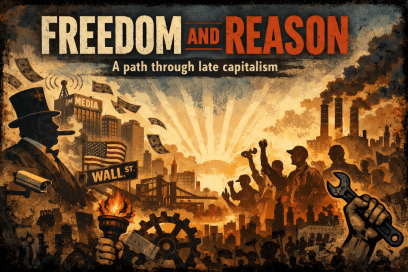

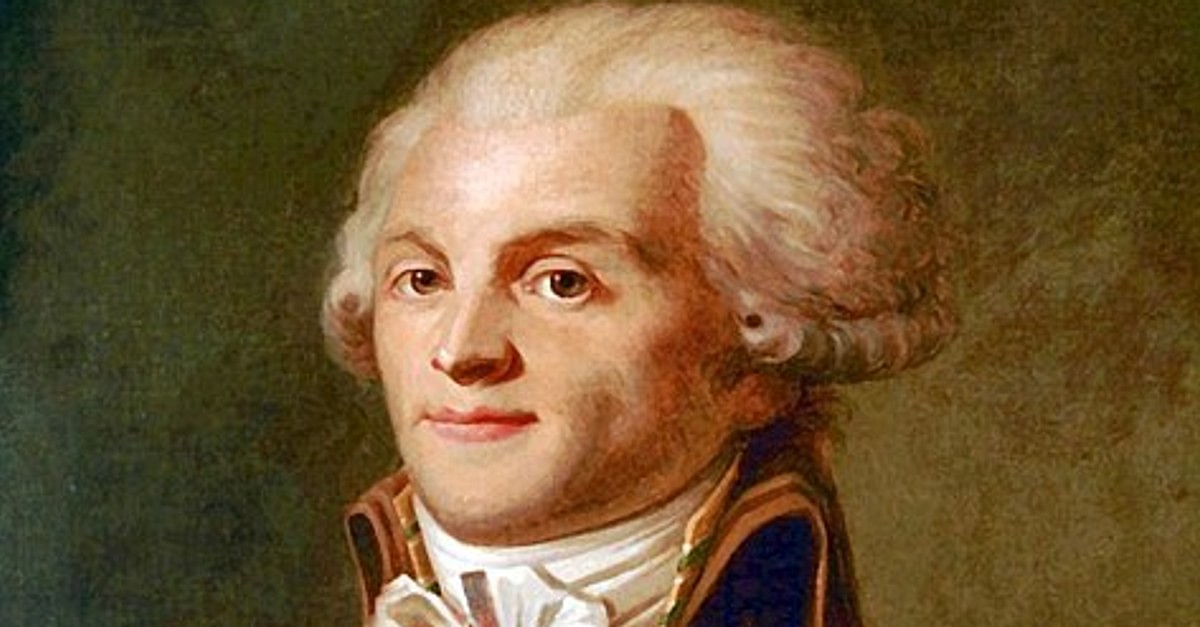


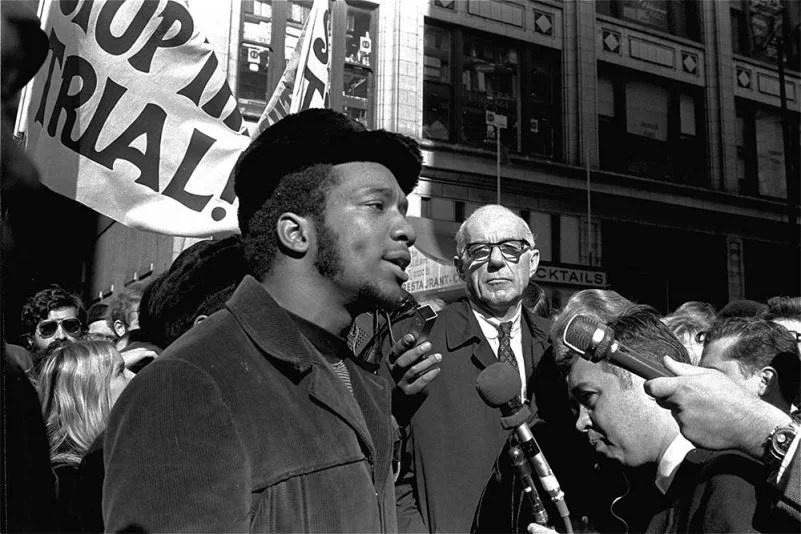


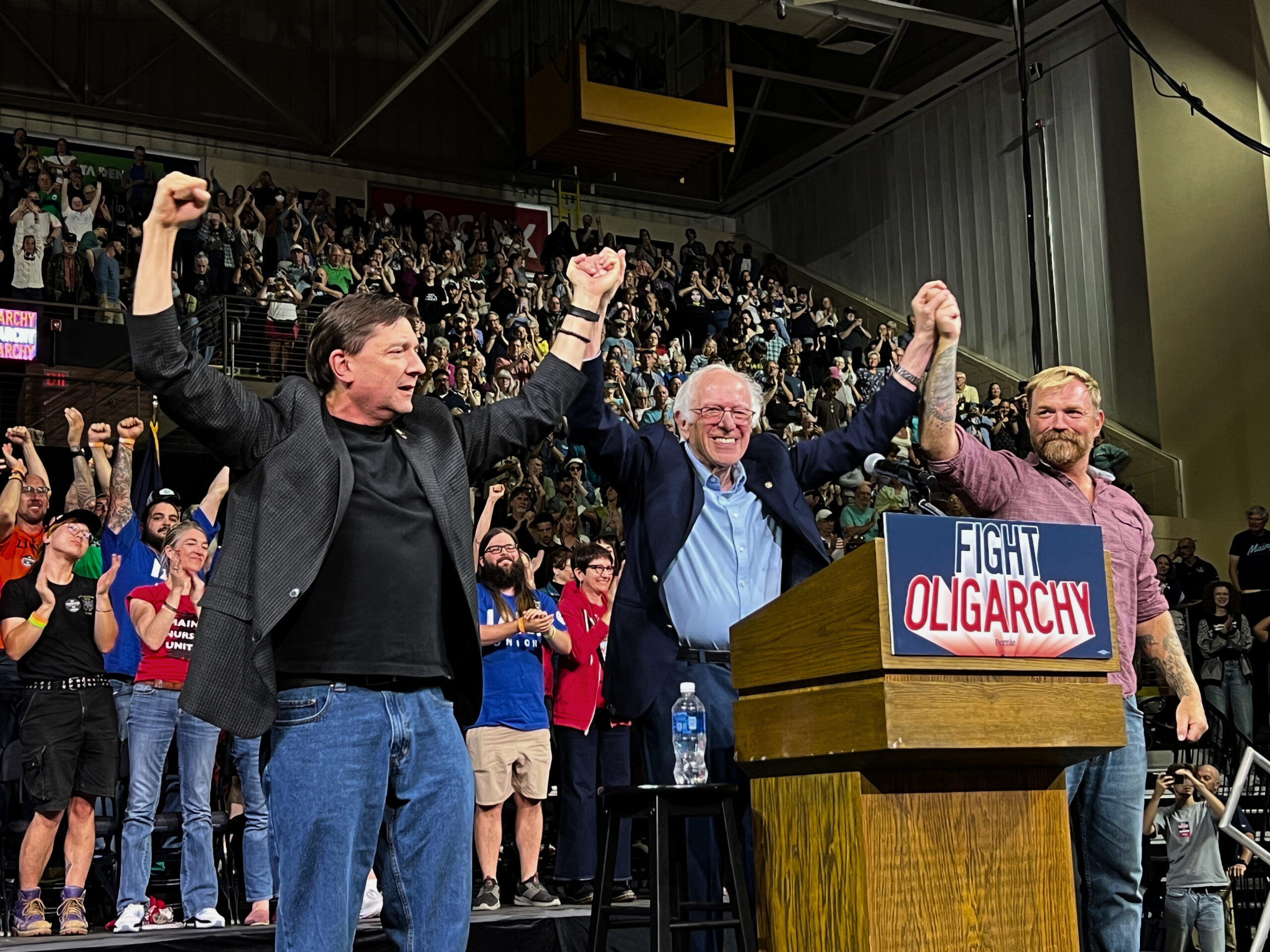

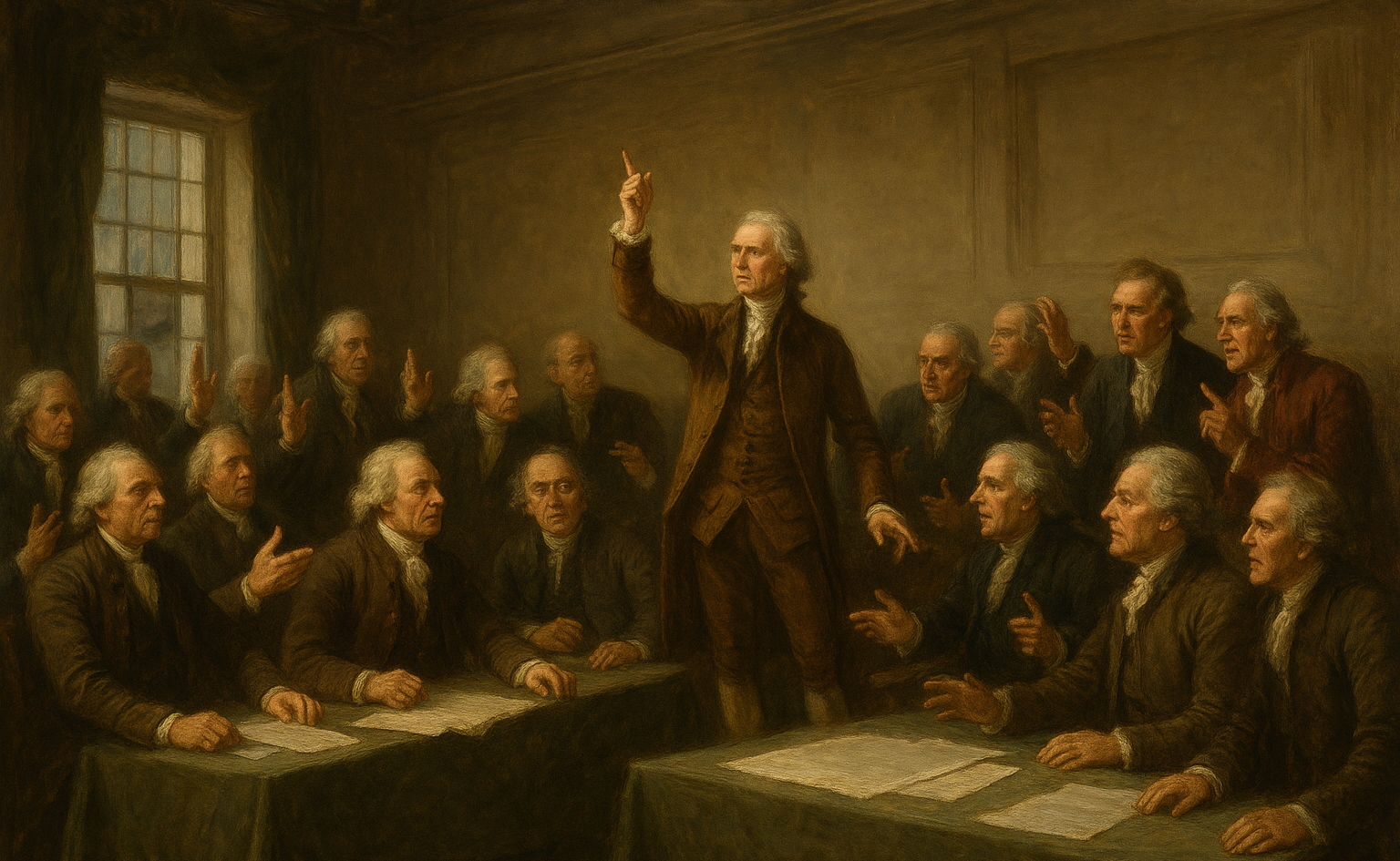

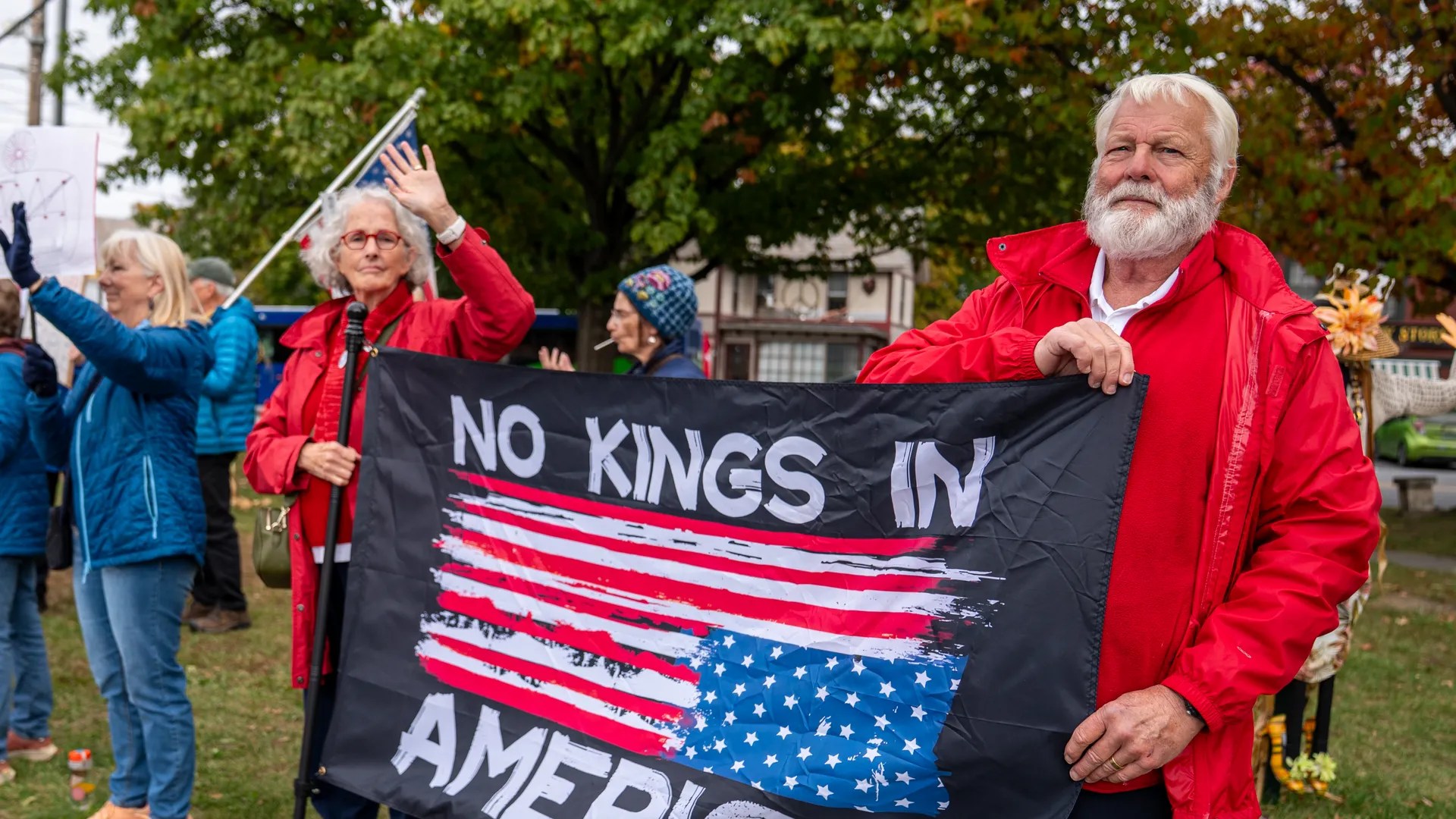
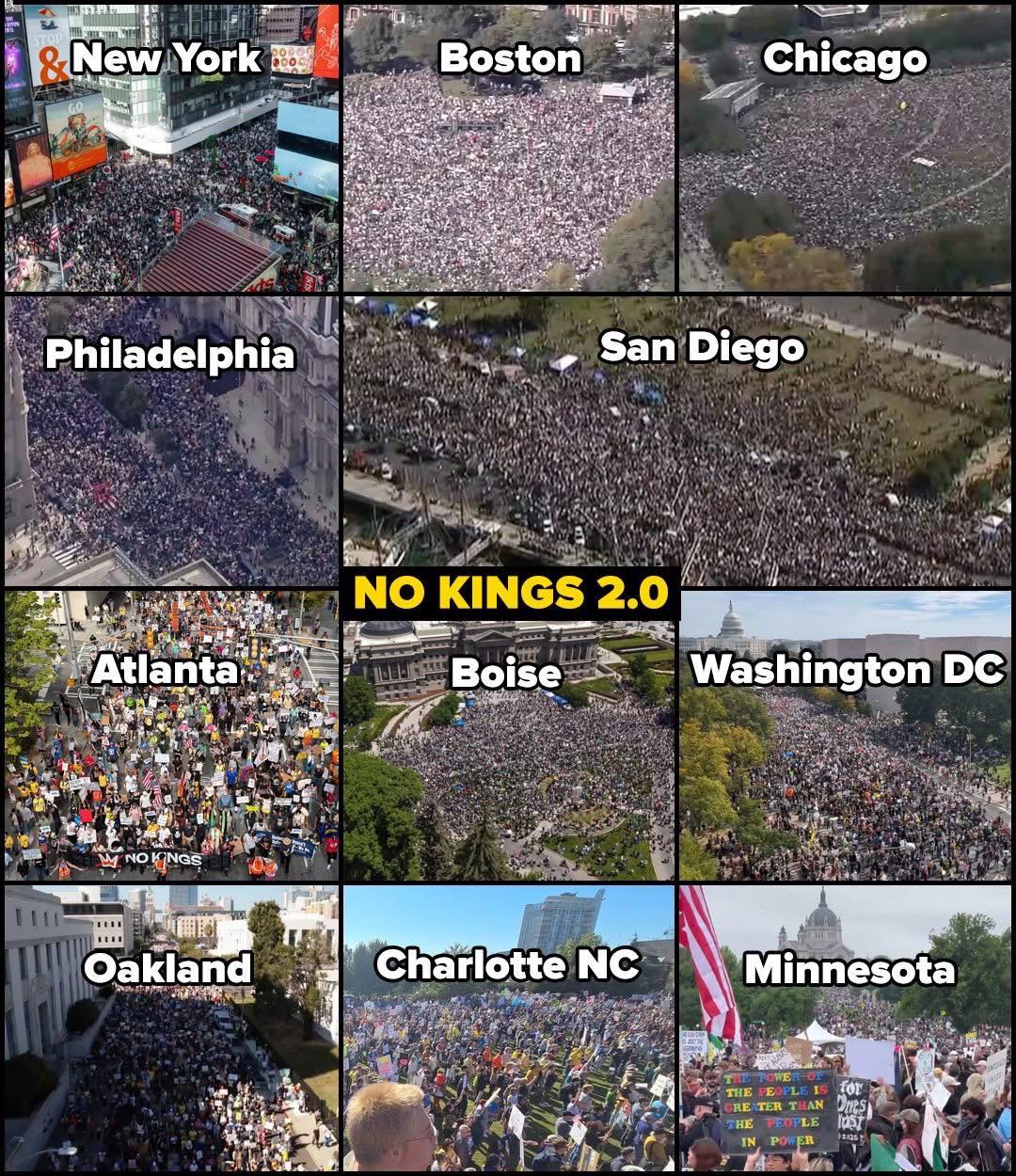
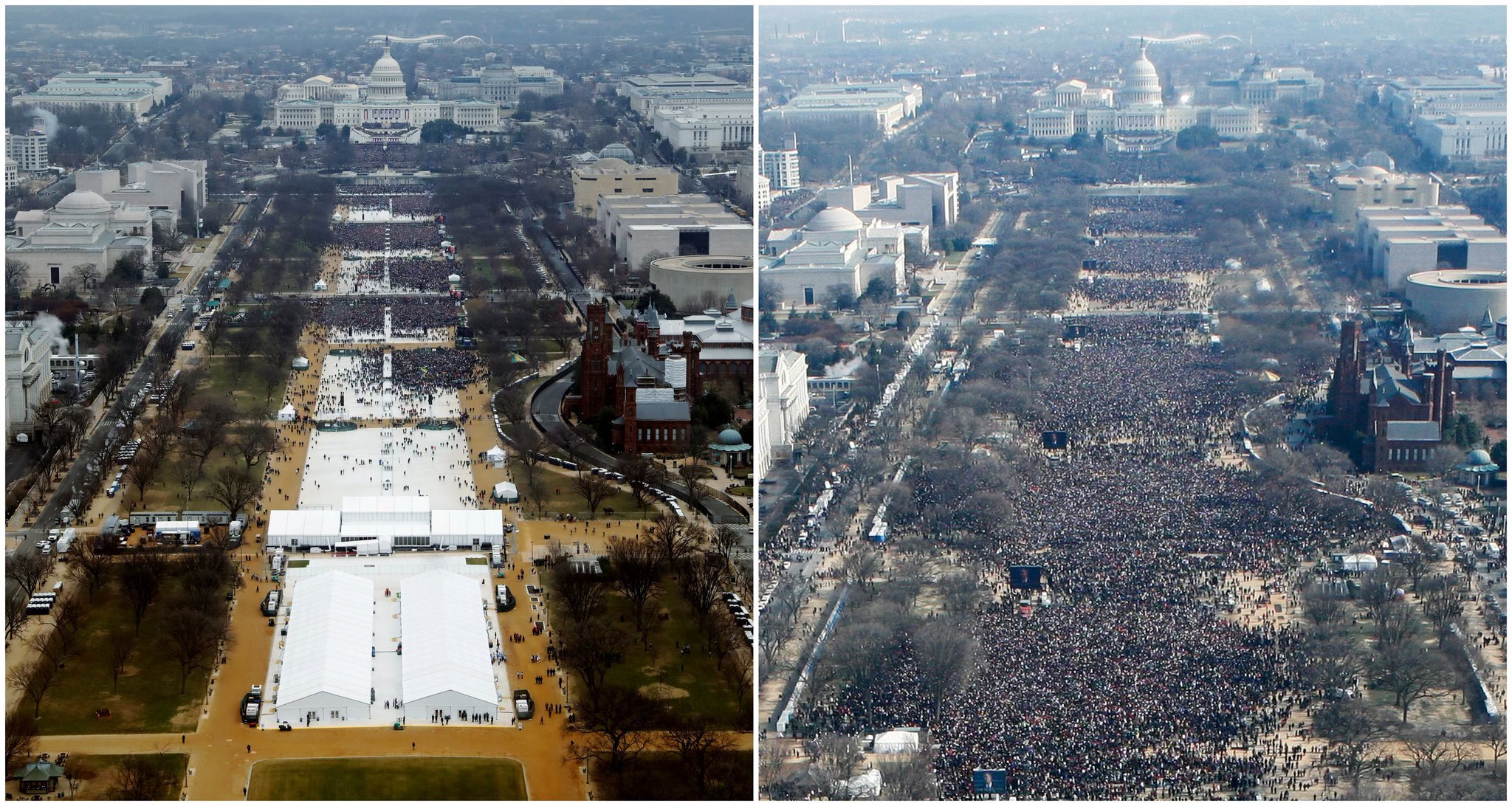
 freedom and reason