When Arrogance and Egoism Become Defined As Such

Among men (and women, perhaps to a lesser degree, but maybe not), there is a felt need for positioning in the hierarchy. You can see it in the jockeying for status in the pecking order, formal and informal. Hierarchies, when they are not pre-established, usually work themselves out in what appears to be a natural way, even if the antecedents and consequents are phases of social structuring. Most of the process is subconscious. However, using our sociological imagination, we can see it at work.

From Elizabeth Tibbetts et al, “The Establishment and Maintenance of Dominance Hierarchies,”  Philosophical Transactions of the Royal Society.

Some individuals feel the pressure of the game and resist it. Why? Different reasons. Some march to their own drummer. Some are stubborn individualists. (Perhaps those are the same thing. Remember being told that the opposite of courage is not cowardice but conformity?) Others are scared to belong. They may feel inadequate. They may be shy. Whatever the motivation, the resisters find themselves outside the structure to varying degrees and may—in commensurate degrees—experience hostility, even loathing towards them. And they may return the favor. These dynamics underpin bullying and other life difficulties. 

One mark of being outside the structure is whether one is allowed attitudes or to make observations that risk being characterized as arrogance or egoism. Those at the top of the structure are permitted self-assuredness and self-promotion even when these approach clinical narcissism. This is because such persons have been successful at hierarchy. Indeed, boasting and bragging are part of success in hierarchies, often with some disclaimer about false modesty. But not all of it. A lot of factors go into the ordering of dominance hierarchies, including probably body chemistry and animal instinct. Humans are after all mammals.

Those on the lower rungs of the hierarchy cower and demur in intensities reflecting their relative positions. Sometimes a subordinate might challenge someone over him, but those who keep their superior position do so by putting the subaltern in his place. Often jest and unctuousness are deployed to manage the tensions in all of this. There is a reward, of course: by being obsequious, one is never alone. The sycophant might even receive strokes of his own, if he is a good dog.

For those outside the structure, self-confidence and self-praise are treated as intolerable instantiations of conceit and hubris. Outsider status is conflated with a special designation of subordination, somebody who can be ignored and minimized—who can be talked over or asked to make an extra effort to be believed (and then disbelieved all the same). This is one of the aspects of human social organization that is so rough on people, as there is a basic human need to belong. I have always had a place in my life for people who are marginalized in this way. I call it the “Island of Misfit Toys.” Indeed, as a contrarian, I have often counted myself among those banished to this island. 

For the established hierarchies in which one must participate for survival, for example corporate bureaucracies, there are mechanisms for compelling those who occupy its positions to serve the interests of those above them. These are preferably endogenously-felt compulsions to achieve, often according to some arbitrary standard. For example the Protestant ethic (aka the Calvinist work ethic, aka the Puritan work ethic), a work ethic emphasizing efficiency, predictability (conformity and uniformity), and control all wrapped in self-discipline and determined by calculable metrics. Those over others want to have some rational account of their efforts in order to hold them to the arbitrary standard. Otherwise, it all looks subjective (which it is).

In the university, for example, the tenured professor, a professional position that ought to see the man who has achieved that title (often at the expense of his family and his personal health) determine his own work on his own time, is instead subject to the administrator’s desire to look good in order to aid the latter’s climb up the hierarchy. The administrator seeks credit for the grants brought in (emphasizing their dollar amounts), the number of articles published in peer-reviewed academic journals, and the rankings, and therefore the prestige, of those journals. The administrators are not concerned so much with the numbers of those who actually read those publications (they don’t read them themselves), but they are impressed by the number of times they are cited by those who often don’t read them. They tend not to be concerned with the quality of the scholarship unless (they are told that) the content deviates from doctrine or has offended some busybody somewhere. To be sure, gatekeepers are rather good at keeping out the work of heretics, but every once in a while something blunt gets through.

This is the way it works: the honorific titles that come with advancement in the formal hierarchy of the academy depend on spending more than a year getting papers past gatekeepers and juries, with all their biases at the ready, to be read by two or three other academics. If one is lucky. That the content doesn’t really matter is revealed by a cursory review of the quality of scholarship; much of it is crackpot challenges to the normal or pages full of empirical trivialities confirming the intuitive. Those who avoid all this, if they have tenure, are shamed as deadwood. If they don’t have tenure, their contracts aren’t renewed.

It hasn’t always been this way. An article in the Guardian a few years back noted that Peter Higgs would not find his boson in the “publish or perish” culture of today’s academy. Jim Al-Khalili writes that “in today’s climate of harsh realities and impact-obsessed purse-string holders, Higgs would have been unlikely to receive any funding to conduct his research—for he was something of a maverick who worked alone in an unfashionable area of speculative theoretical physics. While lip service is still paid to the importance of funding basic research that does not have any obvious or immediate application in industry or societal benefits, Higgs would struggle to hang on to his academic post today. You might think that someone like him really need publish only one or two papers of (eventually vindicated) Nobel-worthy research over his entire career, but in today’s ‘publish or perish’ climate, that would simply not cut it.” 

Higgs himself believes no university would employ him in today’s academy because he would not be considered “productive” enough. According to another Guardian article, “The emeritus professor at Edinburgh University, who says he has never sent an email, browsed the internet or even made a mobile phone call, published fewer than 10 papers after his groundbreaking work, which identified the mechanism by which subatomic material acquires mass, was published in 1964.”  He said: “It’s difficult to imagine how I would ever have enough peace and quiet in the present sort of climate to do what I did in 1964.” He told the Guardian that he would almost certainly have been sacked had he not been nominated for the Nobel in 1980. Higgs said he became “an embarrassment to the department when they did research assessment exercises.” A message would go around the department saying: “Please give a list of your recent publications.” Higgs said: “I would send back a statement: ‘None.’”

By the time Higgs retired in 1996, the new academic culture troubled him. “After I retired it was quite a long time before I went back to my department,” he said. “I thought I was well out of it. It wasn’t my way of doing things any more.” He then said this remarkable thing: “Today I wouldn’t get an academic job. It’s as simple as that. I don’t think I would be regarded as productive enough.” He’s right about that. And the implications of this observation should trouble all of us.

I was chair of my department for six years. My big accomplishment in that role (one of them anyway) was rebuilding the department, which had just gone through a name chance and the construction of a new curriculum (with which I had a lot to do), after a series of departures. We’re a small department and lost nearly all of our tenured faculty members to retirement and other institutions. I am telling you this because, even though I am no longer chair, I still receive Human Resources training notes and workshop invitations.

A common HR communication to appears in my inbox concerns dealing with the non-performing employee, how to document his lack of performance and what to do about it. As I am close to retirement and thus have entered the winding-down phase of my career, I think about myself as that non-performing employee. Not that I don’t teach my classes, read and write science, or serve the university and the greater community. However, after several years of publishing in books, journals, and encyclopedia, I have not secured a peer-reviewed publication in many years. And I only attend academic conferences here and there.

Another common HR communication concerns passive-aggressive behavior. We hear this term thrown around a lot and people get it wrong a lot. It is usually thought of as a habit or pattern of indirectly expressing negative feelings instead of openly addressing problems. Put another way, there is a disconnect between what the passive-aggressive person says and what he does. There’s something to that, but the Diagnostic Statistical Manual of the American Psychiatric Association (APA), the DSM, now in its fifth iteration, defines “passive-aggressive personality disorder” as a “pervasive pattern of negativistic attitudes and passive resistance to the demands for adequate performance in social and occupational situations.”

Among the usages of the word “soldiering” is the act of making a show of working in order to escape discipline or punishment. The worker only works at the expected levels when he is under the gaze of the manager or owner. Otherwise, he does enough to get by and earn his wage. Many workers justify soldiering by recognizing that expectations have in back of them the imperative to maximize the surplus value that will (hopefully) be translated to profit in the market. In other words, the worker does for others and not himself. Given this really, why should a worker work harder than he needs to? The answer: because he may lose his job if he doesn’t and he will certainly be scolded or shamed for being a “non-performing employee.” It is in this dynamic that the worker may develop and exhibit the demeanor that the APA will psychiatricize to avoid harsh-sounding terms like “deadwood” and “soldiering.”


Vice-President Biden and His handling of Classified Documents

UPDATE November 17, 2023: We’re hearing that special counsel Robert Hur is not expected to bring charges related to the mishandling of classified documents at sites linked to President Joe Biden. Instead, Hur and his team are in the process of crafting an extensive report based on their year-long investigation. The report is anticipated to be critical of Biden and his staff’s handling of sensitive materials, providing a thorough account of the special counsel’s findings. While the investigators have expressed their goal of completing the report by the year’s end to other Justice Department officials, there is a possibility of the timeline being subject to change. In anticipation of the obvious, that there is a double standard at play, as Trump is being prosecuted for his handing of classified documents, CNN and other mainstream news outlets are already spinning the news. I have shown that the Biden case is much more egregious. See Is There an Equivalency Between Biden and Trump’s Handling of Classified Documents?

UPDATE: A special counsel has been appointed in the Biden case, Robert Hur. Hur clerked for Chief Justice William Rehnquist of the Supreme Court and (Reagan appointee) Judge Alex Kozinski of the US Court of Appeals for the Ninth Circuit. From 2007 to 2014, he served as an Assistant US Attorney in the District of Maryland, where he prosecuted, among other things, white-collar crimes. This is promising. There is some concerned that he previously served as special assistant and counsel to Christopher Wray when the latter was Assistant Attorney General in charge of the Justice Department’s Criminal Division, but we will put that to the side for now. He seems like a serious guy. But I do not trust Merrick Garland at all.

We have finally learned that the other set of classified documents were found in Biden’s garage. And yet another classified document was found at a Biden’s residence. And this disturbing connections is starting to make the rounds: Hunter Biden asked for four extra sets of keys for his House of Sweden office in Georgetown. Among those keys, one for his father, one for his uncle, James, one for Jill Biden, and another for Chinese businessman Ye Jianming. He never picked up the keys because Swedish officials regarded Hunter as a security risk after he smuggled a young woman and a homeless friend into the Swedish embassy building in Washington DC. This was reported in the Swedish press in February 2021. Does Hunter Biden have any classified documents?

Who is Ye Jianming? He’s the founder and former chairman of CEFC China Energy Company Limited, a global energy and finance conglomerate that was placed under detention in China on charges of bribery in March 2018. He was a close associate of the Bidens, and an economic advisor to the Czech President Miloš Zeman. The US Justice Department has accused CEFC of offering bribes for oil rights and money laundering. Ye was detained and put under investigation in March 2018 on suspicion of economic crimes, and control of CEFC China Energy was subsequently taken over by Shanghai Guosheng Group. Prosecutors have also alleged that former Communist Party Secretary of Gansu province, Wang Sanyun, accepted bribes from Ye in 2011.

We know from Hunter Biden’s laptop that Biden not only used his father’s influence to enrich himself, and in extension also Joe Biden, but that Joe and his brother James are the ring leaders of the Biden crime family. They were in business with various Ukrainian and Chinese enterprises. Remember this bit of braggadocio?

Joe Biden bragging about withholding military aid to coerce the Ukraine to fire a prosecutor looking into foreign corruption, January 23, 2018

* * *

The Wall Street Journal runs a story about classified documents in Biden’s possession—top secret and compartmented no less, some from the time period (2013-2016) the Washington organized a color revolution to overthrow the Ukrainian government in order to establish a forward area post in the proxy war against Russia—with a picture of Trump on it.

Corporate state propagandists are downplaying the story, claiming that President Trump, who, unlike a Vice-President, actually has the power to declassify documents, committed the more egregious act in his removing classified documents to his estate at Mar-a-Lago, Florida.

However, Biden took compartmented top secret documents from their controlled space and stored them at the Penn Biden Center, Biden’s offices at the University of Pennsylvania. These are felonies of the most serious kind. Leaving with classified documents is a felony. Storing classified documents in an uncontrolled space is a felony. Moving classified documents is a felony.

To view compartmented top secret documents one has to enter what’s called a SCIF, the name the security state gives a secure room. SCIF stands for sensitive compartmented information facility. You have to enter the room under observation, and leave your phone and other electronic devices with the guards. Did Biden or an associate with his level security clearance sneak these documents from the SCIF? If not, how did Biden get his hands on them? He wasn’t the President. Obama was the President.

The admitted fact that the Vice-President removed the highest-level classified documents to the offices of Penn Biden Center without the authority is even more troubling given other facts. As we know from Hunter Biden’s laptop, Joe Biden is a corrupt and compromised figure, having made deals with several foreign governments and powerful associated private entities, including corporations tied to the Chinese Communist Party. It is no secret that Biden and China’s leader Xi Jinping have been close associates for many years.

So it might not surprise you to learn that the Penn Biden Center is bankrolled by the Chinese Communist Party. This corrupt and compromised politician illegally removed and kept top secret compartmented documents in a facility financed by the only foreign nation in the world that represents an existential threat to the United States of America.

Biden has turned on the legalese: “My lawyers have not suggested I ask what documents they were.” He knows what documents they were. His denials are lies.

The New York Post ran with a story by Isabel Vincent with this headline yesterday after the second batch of classified documents found at the Penn Biden Center: “Penn Biden Center where classified papers were found is a ‘dark money nightmare.'” From the same newspaper that brought you the Hunted Biden Laptop story. This is what happens when you keep pulling at a thread: the cloak unravels.

It has been revealed that the legal team for Joe Biden disclosed the existence of the first batch of documents several days before the 2022 midterm elections. Would this have affected the outcome of the election in which Republicans narrowly regained the House of Representatives?

Surveys indicate that a majority of Americans believe that the FBI and intelligence community deliberately kept the public in the dark by discouraging social media platforms from sharing information about the Hunter Biden laptop, which they labeled as “disinformation” from foreign sources. Many respondents believe that any potential collusion between high-ranking Democrats, the FBI, intelligence officials, and the Biden campaign to keep the story under wraps would have limited voters’ access to crucial information ahead of the election.

Furthermore, surveys reveal that a significant number of respondents believe they would have made a different voting decision if they had known that the information regarding Hunter Biden’s laptop was true. Both Republicans and Democrats appeared to have similar views on this question. A large majority of respondents believed that a truthful examination of the laptop issue could have influenced the outcome of the 2020 presidential election, in which Biden defeated Trump by a narrow margin.

Biden has said he wants to see the investigation of the removal and storage of compartmented top secret documents in an CCP-financed space wrapped up soon. It’s his appointed director of that agency, Merrick Garland, the man who has weaponized the DOJ against the opposition to the corporate state, who is in charge of the investigation. Did Biden just interfere with what is supposed to be independent investigation of his felonious conduct by communicating to Garland his desire that the investigation be concluded quickly while also saying he doesn’t know how the documents end up at the Penn Biden Center?

A detailed discussion of the situation took place yesterday evening on Steve Bannon’s War Room. You can listen to the Podcast here: Episode 2436: More Classified Documents Found.

All this comes as House Republicans voted as a bloc on Tuesday to establish a panel that will investigate the alleged abuse of power by the executive branch of the Biden Administration, giving them the authority to investigate a range of government agencies. The panel will investigate the collection of information on US citizens, and whether the executive branch engaged in “illegal, improper, unconstitutional or unethical activities” against US citizens. The scope of the panel appears to be broad, allowing House Republicans to use their subpoena power to access details of ongoing investigations.

Tom Cole of Oklahoma, who introduced the resolution to establish the panel, argued that the federal government has “abused its authority and violated the civil liberties of American citizens.” He cited examples such as the government’s role in “suppressing information” on Twitter, and the Department of Homeland Security’s plans to create a disinformation governance board. As I reported on Tuesday, the panel will be headed by Jim Jordan, who served as one of Trump’s leading defenders during his impeachment trials. Jordan described the panel as a safeguard to Americans’ constitutional rights, stating that it is about the First Amendment (as we will see, it’s also about Fourth Amendment). On the agenda is Hunter Biden’s laptop. And, surely, Biden’s handling of classified documents.

Predictably, Democrats criticized the panel, calling it a “monstrosity” that will “further empower extremists” and allow Republicans to shut down ongoing investigations into their own alleged wrongdoings—the very weaponization of which Republicans mean to get to the bottom.

As a preview of coming attractions, Ilhan Omar (D-MN), Adam Schiff (D-CA), and Eric Swalwell (D-CA) will be stripped of their committee appointments. Swalwell will loose his security clearance. These three cannot be trusted. Schiff pushed the big lie that Trump was a Russian asset. Swalwell slept with a Chinese spy. Why Omar is in Congress is a testament to the pernicious effects of immigration. Congress needs to investigate Omar for probable violation of immigration law. If this is proven true, then at least remove her from office. But deportation would be preferable.

Church 2.0

In its article, “Mutually assured obstruction: House GOP aims ’weaponization’ panel at DOJ,” Politico tells its readers, “Republican lawmakers are empowering themselves to look at any agency or program that they view as suspect. But DOJ is bound to safeguard its own investigations.”

The select panel will operate underneath the Judiciary Committee, and will be chaired by Rep. Jim Jordan.

Politico and other news organizations are preparing the ground for administrative state rationalization of noncooperation with the Church Committee 2.0 by framing it as “safeguarding investigations.”

The is a barely disguised subterfuge. Don’t fall for it. There is a way to squeeze the agencies if they don’t cooperate: Congress controls the pursestrings (it’s called “fencing”). Withholding money from these agencies has in the past forced agencies to release documents and testify more forthrightly.

Church 2.0 is absolutely necessary if we are to stand any chance of saving the republic and restoring protection of the fundamental rights of citizens.

The character of the weaponization of the DOJ involves surveillance and harassment of enemies of the Administrative state, what goes by the name “counterintelligence.” Nobody is safe—not even mothers speaking against the crackpot theories of woke progressives at school board meetings.

This is what Church 1.0 back in the 1970s was all about: exposing the operations of the deep state. If you are unfamiliar with the Church Committee hearings, go look it up. Allow yourself to slide down the rabbit hole. It will blow your mind.

When progressives mock you for using the term “deep state” and call you a “conspiracy theorist” they hope you don’t go look at the congressional record documenting the existence of the deep state and the conspiracies it ran out of its offices.

It’s a fact: the FBI and CIA ran numerous counterintelligence programs for decades, perhaps most famously the interagency war against the Black Panthers and other radical political organizations. The FBI even organized in assassinations of American citizens.

We cannot say for sure that the FBI was directly responsible for the assassinations of Malcolm X and Martin Luther King, Jr., but we do know the agency was for the assassination of Fred Hampton, the false imprisonment of Geronimo Pratt, several KKK bombings and killings, and a myriad of other disturbing actions.

And we know that the FBI had a plan to neutralize Malcolm X, MLK, and other black leaders that at the very least set them up for assassination. We know this because we have the documents.

I suspect some of those who know about all of this are particularly concerned that you might learn that Frank Church who headed up the committee was a Democrat and wonder why there are no more Democrats like him.

Church’s personal journey saw him begin his political career as a progressive and a supporter of the Vietnam War. He was a protege of Lyndon Johnson. But the war and his experiences with the fourth branch of government radicalized him. He turned against the war and against the deep state.

With no more Frank Churches in the Democratic Party, it’s the populist Republicans who are taking up the cause of liberty and justice. In the end, the Democrats could not stop the populists from taking the People’s House. Finally we see some movement.

For those of us who remember Church 1.0 and Frank Church there is probably some sadness in seeing how far Democrats have sunk into the slime of the swamp. Today’s Democratic Party is the party of neoliberal globalism and they use the deep state to carry out their agenda.

You have a front row seat to living history. Please take advantage of the opportunity to learn about the real structure of power. With any luck, the awokened will meet the awakened and we can begin to dismantle the administrative state and restore the greatest republic the world has known.

The Continuing Problem of Compelled Expression

A teacher at Hamline University in Saint Paul, Minnesota has been fired for showing a work of art depicting the founder of Islam (in conversation with the angel Gabriel). Journalist and essayist Douglas Murray shared the image on his Twitter feed:

That’s right, right here in the good old USA, with its First Amendment codifying the Enlightenment principles of religious and expressive liberty, at an institution of higher learning at the center of which lies the ethic of academic freedom, a teacher was fired from her job by sharing with students a classic of Persian art. (This article from ArtNet provides a detailed summary of the case.)

Islam prohibits graphic depictions of Muhammad. The practice is called aniconism. It is a general principle in Islamic aniconism that images of sentient beings is forbidden. This is an extension of the prohibition of idolatry found in ancient Judaism. Muslims have killed people for showing such depictions. Remember the mass murder of French cartoonists? In 2015, men raided the offices of the satirical weekly magazine Charlie Hebdo and killed a dozen people for publishing cartoons offensive to Muslims (Threat Minimization and Ecumenical Demobilization). It was the only time I ever featured the flag of another country on my Facebook profile.

Graphically depicting Muhammad if one is a Muslim may be a violation of religious faith (there is a disagreement over the nature and extent of aniconism in Islam, as the Quran is not explicit about this). But how does this limit the ability of a person who is not a Muslim to graphically depict Muhammad?

You may be a Christian (a lot of my readers are). If so, Islam is not your religion. Yet you are being told to live by the rules of a religion that is not only not your own but that denies key elements of your faith. While Muslims regard Jesus as a prophet in their tradition, they deny that he is the son of God. How can it be that you are required to obey the doctrine of a faith that denies your own?

This is a country with religious liberty. You have a right to your religion or to no religion at all. What about your rights? Muslims are going to come here and take away your rights? You’re going to let this happen? Hamline University president and shill for clerical fascism Fayneese Miller said that respect for Muslim students should supersede academic freedom. What makes Muslims any more special than members of any other religion—or no religion at all?

Hamline University president Fayneese Miller

Erika López Prater, the fired teacher, warned students on the syllabus that her class would contain images of holy figures, including Muhammad and the Buddha. Students were told they could contact her with any concerns about the course material. None of them did. Prater warned her students that a painting containing an image of Muhammad was going to be displayed a few minutes ahead of time, giving anyone who might be offended by such imagery an opportunity to leave the classroom. None of them did. All that amounts to consent.

Aram Wedatalla, the Muslim student who complained about the image.

Instead, senior Aram Wedatalla, a Muslim in Prater’s class and a member of the Muslim Student Association, complained about the image, said she was blindsided by the image. “I’m like, ‘This can’t be real’.” 

Why should a teacher go to such lengths to accommodate those who hold not only ridiculous beliefs but beliefs that are used to subordinate women and medically alter gay males to look like women? Wouldn’t that be unreal? Are we going to avoid showing pictures of Nazi propaganda glorifying Hitler in class because there might be Nazis in the room (not that they would complain)?

President Miller acknowledged in her letter that “academic freedom is very important,” but argued that “it does not have to come at the expense of care and decency toward others.” Actually, academic freedom does come at the expense of the sensibilities of others. That’s sort of the point.

This is where this absurd notion of inclusivity takes us. This is what lies at the end of woke progressive ideology. As I have stated repeatedly on Freedom and Reason, inclusivity is a form of intolerance that sacrifices the diversity of ideas for the diversity of identities. Inclusivity has teachers walking on eggshells and talking like 3rd-graders. What is accomplished via terrorism is also accomplished via inclusivity.

Here’s how we will deal with the problem. You’re a Muslim. Great. Whatever. You don’t like images of Muhammad? Then don’t look at them. One interpretation of aniconism is avoidance of images of sentient beings. Just take a break from your screen (this was an online class). But don’t tell me I can’t see the image and hear about its purpose. Why are you even enrolled in an art history class?

For those who don’t like America’s free and open culture, don’t come to America.

SADS. It’s Not What You Think It Is

There are a lot of great memes that cross my desk in the court of a day. But rarely do I see one this devastating:

Buffalo Bills football player, 24 years old, Damar Hamlin survived his cardiac event. He remains hospitalized and his prognosis is not clear. But he is alert and talking. We all hope he makes a full recovery (even if we don’t pray on it).

While the sharp increase in athletes collapsing on court and field baffles those who shape mass opinion, the public is being led to believe that Hamlin’s collapse was due to a hit he took on the field of play known as commotio cordis, which occurs when the subject experiences a trauma to his chest that causes additional waves of electricity to pass through the heart muscle, throwing off the heart’s rhythm (arrhythmia), resulting in cardia arrest.

Here is the event in question:

Damar Hamlin’s collapse on the field of play

This hit doesn’t look like commotio cordis. I’m not saying it wasn’t, it doesn’t look like somebody taking a projectile (like a baseball) directly over the precordial region. It does not appear to be a very hard hit at all. Those of us who follow professional football routinely see far more wicked hits. However, this does look a lot like what we are seeing around the world where athletes are collapsing on court and field.

Commotio cordis is extraordinarily rare. Of the millions of people who play contact sports every year, there are only about 10-20 incidences of commotio cordis, and almost all of them in children under the age of 18. Moreover, this has never before happened in the history of the NFL, either in a game or on the practice field.

Was Hamlin jabbed with the mRNA shot? If so, when? And how many jabs? How recent was his last one? In a recent tweet I said that the Bills were all vaccinated. I was wrong about that. Cole Beasley was fined for refusing the vaccine. Isaiah McKenzie was also fined for refusing the vaccine, as well, but he did in the end get jabbed. Wouldn’t we know if Hamlin weren’t? Look at the dust up over Green Bay Packers Aaron Rodgers’ vaccine status. For the record, vaccine take-up among NFL players is well over 90 percent.

It is useful to know whether Hamlin was jabbed because myocarditis, a type of injury to the heart muscle, is a common side effect of mRNA. Myocarditis is a major source of heart arrhythmia in young men and can result in death. My immediate family has been affected by mRNA-related myocarditis so this is not a phenomenon remote to my life. Many observers are wondering whether myocarditis played a role in this case.

Something unusual is certainly going on. Before the vaccine rollout in 2021, the average number of cardiac arrests in otherwise healthy athletes stood at twenty-nine year-to-year. After the vaccine roll out, the number of cardiac arrests has soared to more than fifteen hundred. Sixty-nine percent of such coronary events are fatal. Noting all this, however, is verboten. We’re supposed to “trust the science,” which, in this case, means trust the corporate state.

The question was immediately confronted with the predictable charge of “conspiracy theory.” RollingStone ran the headline: “Anti-Vaxxers Turn Damar Hamlin’s On-Field Collapse Into a ‘Vile’ Conspiracy Theory.” The author, Tomas Mier, writes, “As prayers for Damar Hamlin, the Buffalo Bills player who collapsed during a game Monday, began to roll in on social media after he received CPR on the field, so too did the inevitable conspiracy theories that somehow the cardiac arrest he suffered came from the COVID vaccine.”

Before getting to Mier’s deployment of this thought-stopping device, I can’t let slide Mier’s comment about prayers. We’re not supposed to ask questions about whether a player who suffers a coronary event was vaccinated, a relevant question in light of what we know about this vaccination, but we can engage in that act of magical thinking called prayer without being for a moment suspect of irrationalism.

At any rate, conspiracy, a category in law, a species of inchoate offense, is a clandestine plan by two or more individuals to do something unlawful. A theory is a scientific causal explanation for associated phenomena. You can therefore have theories about conspiracies. Indeed, this happens at trial when the prosecution makes an argument to convince judge and jury that a crime has occurred and that the defended perpetrated that crime.

Another predictable response was to attack contact sports generally. The New York Post reports “Joy Behar rips ‘heterosexual men’ for supporting tackle football.” The View co-host Joy Behar said “45 percent of Americans think that tackle football is appropriate. Heterosexual men voted the most support for kids doing football. And conservatives were more likely to support youth tackle football. Just saying.”

We should emphasize that this statistic (from a study conducted by The Ohio State University) concerns youth (Behar was clear). One would think that Behar and her colleagues at The View would be okay with youth consenting to harmful activities. Is it the heterosexuality piece that’s the problem? I’m surprised the term “toxic masculinity” was not uttered (maybe it was—I confess that I don’t watch The View). There are so many sports that risk injury. Baseball. Boxing. Hockey. Soccer. Volleyball.

Though they deny it, elites are aware that athletes (and others) across the West are collapsing in numbers much greater than in previous years. Sudden death has drastically increased since the rollout of the mRNA gene therapy falsely marketed as a vaccine against COVID-19, a weaponized strained of coronavirus manufactured in a laboratory in Wuhan China using US tax dollars to fund the work.

The freakout here looks all the world like sublimation, a type of defense mechanism in which socially unacceptable idealization (here, that the mRNA jab is neither safe nor effective) are transformed into socially acceptable actions or behavior (here, that masculinity is a toxic thing). Unconscious guilt infuses the sublimation here. Those who shamed people into taking the shot, which authorities admit damages the heart, suspect deep down that these deaths and injuries have something to do with heart damage and that their aggressive vaccine advocacy implicates them in those deaths and injuries. So they instead blame the deplorables—those working class men they love to loathe. Rather than blame a toxic product from Big Pharma, they turn to the mythology of toxic masculinity.

Again, we know that the mRNA jab can damage the heart. Sorry to sound like a broken record, but the FDA has admitted it what many of us were censored and cancelled for reporting. CDC analysis shows that the number of serious adverse events reported in less than two years for mRNA COVID-19 jab 5.5 times greater than all serious reports for vaccines given to adults in the US since 2009. The FDA has pulled many products that were less harmful than the mRNA jab. Why aren’t they pulling this product?

And the problem with mRNA is much greater than the picture these numbers paint. VAERS (Vaccine Adverse Event Reporting System) undercounts vaccine injuries for several reasons—and not by a little. There is a pronounced desire to protect the record of this particular product (mRNA technology promises big things to come). Remember, VAERS is a passive reporting system, meaning it relies on individuals to send in reports of their experiences (that fact is admitted by the Department of Health and Human Services—the agency from where I obtained it). Obviously, undercounting deaths and injuries is associated with the general ignorance in the population that such a thing as VAERS even exists. Moreover, even when there is some vague recognition of its existence, ignorance about how one goes about reporting something like that is expected—and the government doesn’t make reporting vaccine injuries easy. Many (like literally every progressive I know) have been convinced that vaccines are safe and thus attribute injuries to other things. I have observed this with Bell’s palsy cases, as well as with parents who makes their kids get shots denying that the rare conditions that follow, such as Guillain-Barre syndrome (GBS), have anything to do with the decision they made to vaccinate their children.

Why the effort to shame those who ask the obvious question? I think you know why. Maybe folks should ask themselves: “Why am I denying the relevance of the question of vaccine injury in this case?” Maybe we should encourage them to search their environment for the sources of conditioning—and their minds for the constellation of ideological points and personality traits that prepare their brains for indoctrination.

I want to briefly return to the question of conspiracy theory. Maybe that term is more diversionary than thought stopping. After all, the makers of the mRNA vaccine operate in the open. Moreover, they have admitted the vaccine damages the heart. They continue to sell the product to make money. At one level, it’s the result of what we call capitalism, a system that puts money over lives. But, at another level, the reluctance to release all the information concerning the development and testing of the product, and the organized effort to stifle questions about the mRNA shot, which is obviously in large measure the result of a well-indoctrinated population, feels like a conspiracy, the goal of which is to hide criminal responsibility. How do capitalists train up an army of apologists? Perhaps the same way religious institutions do. But a lot of collusion is suggested by the patterns of evidence.

Finally, we are hearing calls for easily available AEDs, or automated external defibrillators, to deal with all the cases of SADS, or sudden arrhythmic death syndrome. SADS occurs when someone dies suddenly and unexpectedly from a cardiac arrest, especially when the cause of the event is unknown. Since none of the events can be explained by mRNA jabs, we must for some unknown reason be expecting a sharp rise in the incidence of commotio cordis. Shall we have these AEDs distributed across the nation in churches, malls, and schools? Better to do this than remove the mRNA shot from the market. That way, the makers of AEDs also have a show at historic profits.

Child Sexual Abuse and Its Dissimulation in the Rhetoric of Diversity and Inclusion

On Tuesday, I published a blog, The Elite Obsession with Prepubescence, that expresses my dismay at the mainstreaming of child sexualization. I ended that blog by telling readers of Freedom and Reason that I would follow up with more blogs on the topic.

Reflecting on what I wrote there has moved me to follow up sooner than I anticipated. I have been moved in this way because I had hoped for decades that revelations about the extent and harm of child sexual abuse would encourage authorities to do something about it. Watching the way authorities and elites not only deny and obfuscate these crimes but are also often pushing these ideas under the cover of the rhetoric of “diversity” and “inclusivity” troubles me greatly. 

I have not been hoping for authorities to act and experts to tell the truth from the sidelines. I’ve been publishing and talking about the problem of child sexual abuse for decades now, showing in empirical study that child sexual abuse produces continuing trauma in adulthood and suggests a persistent situation of powerlessness across the life course.

You can read my writings for yourself. I published a peer-reviewed article in the Journal of Aggression, Maltreatment & Trauma in 2004 concerning the life-course effects of child sexual abuse. And I am the author of the lengthy entry “Child Sexual Abuse” in Sage’s Encyclopedia of Social Deviance, published in 2014. My opinions are therefore not lay opinion but expert.

I write in that Sage encyclopedia article that “the effects of childhood sexual abuse may take the form of psychological maladies and conduct disorders that obscure the initial trauma, often compounding with the unfolding of time.” What is more, I write, “Childhood sexual abuse is associated with continuity in sexual and other forms of victimization over the life course.”

I say other things in that entry I believe will help readers understand the problems with child sexual abuse. I encourage you to find the entry and read it. However, I will say a few things here that speak to the current circumstances.

We often think of child sexual abuse as involving some form of physical action involving a child’s body. This is certainly true. But child sexual abuse also involves sexualizing children or placing them in sexualized situations, what I identify as “sexually exploitative activities.”

One example is pornography. Federal law defines child pornography as any visual depiction of sexually explicit conduct involving a minor. Federal law prohibits the production, importation, distribution, reception, or possession of any image of child pornography. (See Citizen’s Guide to Federal Law on Child Pornography). Child pornographic images memorialize the sexual exploitation of children.

I write in the entry that exploitative exploitative activities “can either be a non-touching offense or touching offense depending on the circumstances.” I note that other acts included in the definition of child sexual abuse or exploitation are “indecent exposure, exposing a child to pornography, and facilitating sexual relations between minors.”

Crucially, research indicates that all of these situations can produce trauma. “The traumatic effects of childhood sexual abuse are recorded in a number of psychiatric conditions, such as anxiety, depression, post-traumatic stress disorder, eating disorders, and in various behavioral problems (many coded as conduct disorders) and institutional complications, such as withdrawal from social activity and frequent and intense associations with antisocial circles. These conditions can snowball into problems of substance abuse and juvenile delinquency.”

“Children often blame themselves for sexual abuse perpetrated on them, which not only makes it less likely that they will disclose the event, but makes it more likely that trauma remains unaddressed. Also, failure to address sexual victimization can perpetuate the patterns of interaction that contributed to the initial event. The literature suggests that the likelihood of future sexual victimization, even into adulthood, is greater among those who have abused in the past.” 

In 2007, the American Psychological Association published a report by its Task Force on the Sexualization of Girls. The examples the report gives are commonplace today. (I have removed citations and edited text for ease of read, so see the original report here: Report of the APA Task Force on the Sexualization of Girls.)

“Toy manufacturers produce dolls wearing black leather miniskirts, feather boas, and thigh-high boots and market them to 8- to 12- year-old girls; clothing stores sell thongs sized for 7– to 10-year-old girls, some printed with slogans such as ‘eye candy’ or ‘wink wink’; other thongs sized for women and late adolescent girls are imprinted with characters from Dr. Seuss and the Muppets children.”

The report continues: “In the world of child beauty pageants, 5-year-old girls wear fake teeth, hair extensions, and makeup and are encouraged to ‘flirt’ onstage by batting their long, false eyelashes. On prime-time television, girls can watch fashion shows in which models made to resemble little girls wear sexy lingerie (e.g., the CBS broadcast of Victoria’s Secret Fashion Show on December 6, 2005).” 

“Journalists, child advocacy organizations, parents, and psychologists have become alarmed,” the report notes, “arguing that the sexualization of girls is a broad and increasing problem and is harmful to girls.”

Nothing has changed in this. Moreover, we not avoid recognizing that sexualization affects boys, too. 

The task force defines sexualization: “sexualization occurs when a person’s value comes only from his or her sexual appeal or behavior, to the exclusion of other characteristics; a person is held to a standard that equates physical attractiveness (narrowly defined) with being sexy; a person is sexually objectified—that is, made into a thing for others’ sexual use, rather than seen as a person with the capacity for independent action and decision making; and/or sexuality is inappropriately imposed upon a person.”

“All four conditions need not be present; any one is an indication of sexualization,” the APA report clarifies. “Much of the evidence that we evaluate in this report is specific to the third condition— sexual objectification.The fourth condition (the inappropriate imposition of sexuality) is especially relevant to children.”

Pay close attention to this line: “Anyone (girls, boys, men, women) can be sexualized. But when children are imbued with adult sexuality, it is often imposed upon them rather than chosen by them.”

To be sure, as I discuss in The Elite Obsession with Prepubescence, there was that period in the 1970s when the culture industry presented children as sexual objects (Shields being the obvious example), but there wasn’t the degree of sexualization that we see with child beauty pageants and, more recently, parents taking their children to strip clubs and encouraging their children to participate in rituals formerly limited to adults.

Also disturbing is K-3 curriculum and public library programming across the country that exposes children to age-inappropriate and suspect ideas concerning sex and gender, ideas often conveyed using hyper-sexualized materials and presented by exaggerated personifications of gender stereotypes.

Let’s recall that line from the APA report: “when children are imbued with adult sexuality, it is often imposed upon them rather than chosen by them.”

Parents and community members need to understand the negative impact the sexualization of children has on the cognitive development of children. I know a lot of people are too young to remember the crisis of anorexia nervosa, a form of body dysmorphia, and the recognition that it is, at least in part, associated with the way women and girls are depicted in by the culture industry, as well as the social contagion aspect to this. Children are highly vulnerable to suggestion. 

The APA report refer to “models made to resemble little girls wearing sexy lingerie.” The infantilization of women in consumer culture is rampant. Feminists have long criticized this practice. I would ask whether it changes anything to have a man made to appear as a little girl wearing sexy lingerie performing in front of children. Because this is happening and it is being promoted as progressive political action on the cultural front.

Do people really not see the way the sexualization of children is today moving behind the cover of diversity and inclusion?  

I do not advocate the general censorship of ideas and expression. It think, however, that the culture industry and educational systems should be criticized for sexualizing human beings. And with respect to children, there is a government role to play, and Florida is leading the way on this.

The Elite Obsession with Prepubescence

“I had come across an article about families who had been trying to lodge complaints against the church for sexual abuse, and they were being silenced. Basically everything I had been raised to believe was a lie.” —Sinéad O’Connor

News and talk personality Barbara Walters is dead. The celebration of her life is deafening. But not every moment of her long career will be dwelled upon. Remember in 2013 when she accused child actor Corey Feldman of “damaging an entire industry” with pedophilia accusations? In case you don’t remember, here’s a clip:

Barbara Walters Says To Corey Feldman “You’re Damaging An Entire Industry”

The Sinéad O’Connor quote at the top of this blog is the artist explaining her thought process for the SNL performance that resulted in her being effectively banished from pop music. At the conclusion of her performance of Bob Marley’s “War,” she shredded a picture of Pope John Paul II (a photo she took herself and the only photo to hang on the wall of her home for years).

Feldman was shamed for coming forward. O’Connor was punished for telling the truth. Powerful cults don’t like it when people expose their paraphilias—and paraphilias appear to be common to powerful cults (and some obscure ones).

We have been hearing a lot lately about grooming and pedophilia. But the culture industry’s sexualization of children and rationalization of child molestation is not a new thing. (Nor is reputational murder, of course.) The erotic obsession with the prepubescent form of the human species—whether the boy or the girl—appears to be deep-seated in many of those who produce and participate in popular culture.

I have no reason to believe that this interest issues from the same evolved capacity that has us finding immature versions of our own (and many other animal species) cute and worthy of attention and care. There’s nothing untoward about that. Pedophilia is something dark and sinister. The desire for androgyny, for the child form stuck in a prepubescent state, is not a natural one. It’s pathological. Adults cannot serve as the guardian of childhood innocence at the same time sexualize them.

Remember the Brookes Shield’s coffee table book back in the 1970s? Remember Richard Prince’s photograph of her ten-year-old body that was widely circulated years ago, a photograph originally taken in 1975 by fashion photographer Garry Gross in 1975 for a Playboy publication titled Sugar and Spice?

In the Guardian’s words, Shield’s was photographed “oiled and glistening, naked and made-up, posing in a marble bathtub with a seductive danger that belies her years.” She has, the Guardian quotes Prince, “a body with two different sexes, maybe more, and a head that looks like it’s got a different birthday.”

Remember the advertising campaign for Calvin Klein Jeans in the late 1970s that featured a then 15-year-old Shields? Remember her lines? “You know what comes between me and my Calvins? Nothing!”

In 1981, Shields’ mother sued Gross on the grounds that his continuing sale of the photographs was damaging to her daughter’s reputation. Gross’ lawyers argued that his photographs could not damage Shields’ reputation because she had made a profitable career “as a young vamp and a harlot, a seasoned sexual veteran, a provocative child-woman, an erotic and sensual sex symbol, the Lolita of her generation.”

The judge in that case, state Supreme Court Justice Edward Greenfield, dismissed the attempt to prevent commercial distribution of those photos. “They have no erotic appeal except to possibly perverse minds,” he opined while scolding Teri Shields for exploiting her daughter sexuality. Shields was seeking to present her daughter as “sexually provocative and exciting while attempting to preserve her innocence,” Greenfield said. “She cannot have it both ways.”

What about the child?

All these years later, the culture industry is at it again (they never stopped). In photos for fashion company Balenciaga’s gift collection campaign, young children are photographed posing with teddy bears in BDSM gear. Beside them, a stack of papers: the Supreme Court’s 2008 United States v. Williams opinion upholding a federal law prohibiting child pornography in advertising. Hardly subtle. Balenciaga’s competitor Benetton soon came under fire, as well, for “sexualizing” children in their campaign portraying prepubescent boys and girls in sexualized fashion.

Obviously I am not sharing any of these pictures. They’re easily found on the Internet. As a free speech advocate, I am not necessarily suggesting censorship of crime scene photography (we are still able to see photographs of genocide and lynching). The focus should be on those who put children in these situations—wherever the situations—and on the perverse culture that enables the paraphilias associated with the desire to consume these images.

This question occurred to me in the late-1980s sitting in an abnormal psychology class: Why does paraphilia in all its manifestations appear so common among those in positions of authority? Are sexual disorders (or perversions) associated with other predictors of success in hierarchies? Or is their concentration among the elite the result of a great deal of effort on the part of child predators to insinuate themselves into positions of trust where they find birds of a feather?

Jeffrey Epstein and Ghislaine Maxwell in 2005.

Maybe this explains why, all these months after British socialite Ghislaine Maxwell was convicted on sex trafficking charges, not a single name from her elite client list has been publicly named. Or why her lover Jeffrey Epstein (they say) hung himself in prison.

Of course, the problem with paraphilia is not just about Hollywood and child actors, Catholic Priests and altar boys, or sex islands with children waiting for businessmen and politicians to arrive in lear jets. Denied or dissimulated there, it’s being mainstreamed elsewhere, the resistance smeared as bigotry. Soon it will be an identity (for some it already is). How far away are we from the time where we will be punished for refusing to refer to pedophiles as “minor attracted persons” or “MAPs”?

Most folks with don’t care about sexual fetishes. Whatever gets a person off—as long as it doesn’t hurt people. If men and women want to go to strip clubs and throw money at exaggerated personifications of gender stereotypes, whatever. It’s a free society. I’m not offended. Just leave children out of it.

I will have more to say about this topic in future blogs. I’m readying a piece on queer theory and its obsessions with child sexuality. I also have in development an essay on the sociology of sex and gender aimed at countering with science the postmodernist disruption of ordinary understanding about human nature.

Happy New Year, by the way. Thanks for reading Freedom and Reason.

The Myth of Institutional Racism

Institutional or systemic racism may in fact be happening, but not against black and brown people. Ironically, if it is happening, the main victims are whites (excepting many Hispanics) and those of east Asian descent. 

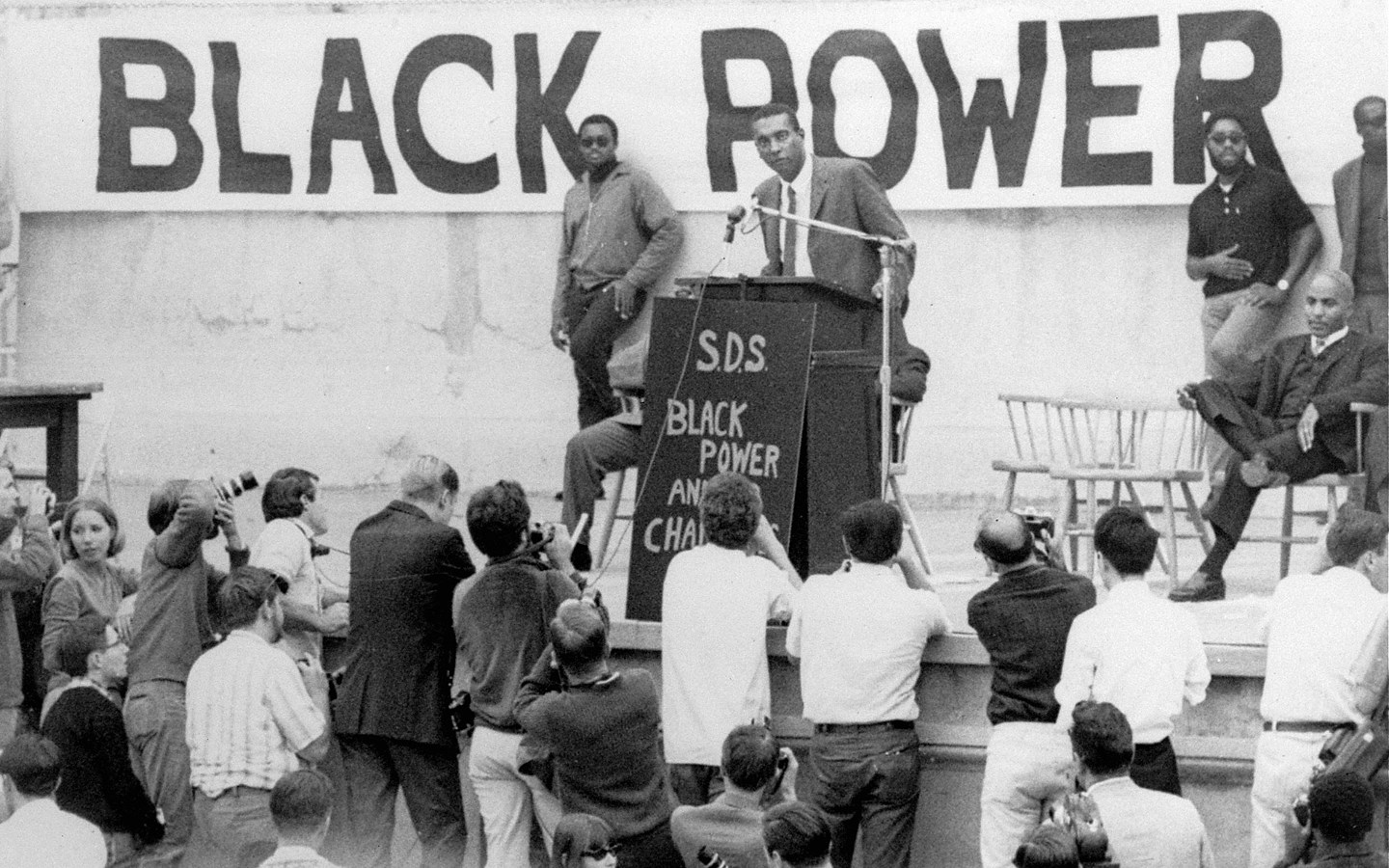
Stokely Carmichael calls for “Black Power!”

Definitions are important, so I will weave them into my comments here. 

First, what is racism? In (pseudoscientific) terms, racism, a term that appears in the early twentieth century (around the same time the term “racialism” appears), refers to theories (ideology) that assume as valid the divisioning of humans into racial types that predict grouped differences in aptitude (and appetites), behavior/conduct, character (and conscience), and intelligence, and then organizes these hierarchically.

While it is true that intuitive racial groupings map over populations genetics globally, there is no evidence that these groupings either constitute genotypes or are predictive of behavior, intelligence, or personality. Differences among racially defined groups are cultural and subcultural, not biological. Culture is not race. (Science only records two genotypes in our species, i.e., sex or gender, and this is true in all mammals and most other animals—and plants as well.) So, although it is possible to talk about phenotypic differences that mark racial groups (anthropologists have offered the term “clines” to replace race), they cannot be ranked. 

Relatedly, racism is the practice of stereotyping based on constellations of socially selected phenotypic characteristics (skin color, hair texture, eye shape) and (this is crucial) subsequent action based on those stereotypes.

For example, judging all whites to be guilty of thoughts and actions perpetrated by any individual identified as white (alive or dead) is racist. White privilege is an instantiation of stereotyping. If institutional actions are taken that deny any individual identified as white opportunities on the grounds that he (presumably) enjoys a racial advantage (which is what is meant by privilege), policy often organized and carried out on the name of “social justice,” i.e., rectifying historic social disparities (blood libel and collective and intergenerational guilt and responsibility), then racism is manifest.

This brings us to these notions of “institutional” and “system” racism. Flipping the words around is useful: racist institution(s) and system(s). 

What’s an institution? An organization founded upon and ordered around an educational, legal, political, religious, or social function/purpose. Racist institutions in America—except for affirmative action and other social justice policy—were dismantled in the 1960s. Not only were those institutions abolished, it is in fact illegal in the United States to discriminate against black Americans on the basis of their race.

A lot of people don’t know this, but the term “institutional racism” appears after the dismantling of racist institutions. The term was coined by black nationalist Stokely Carmichael in his book Black Power (published in the latter 1960s). The term “systemic racism” was also invented later, pushed by critical theorists in the academy in the 1990s. Academic publishers, the culture industry, and corporate media then began pushing out these terms obsessively starting around 2010, framing the manufactured claim that racism explains fatal police encounters, which in turn contributed to a rise in crime and violence (looting and rioting as primitive rebellion or street-level reparations). 

(In fact, white men are overrepresented in the fatal police encounters. One theory for this is that despite their drastic overrepresentation in crime and violence and threat posed to the officers, the police are reluctant to shoot black men for fear of being accused of racism. More research needs to be conducted to explain why officers are more likely to shoot and kill white men, who comprise half or more of the victims of police shooting each year, but the explanation is intuitive.)

What is a system? A constellation of things, in this case institutions, working together as parts of an interconnecting network, as well as a set of principles or procedures dictating how something is done accomplished—that is, an organized framework or methodology. Since racist institutions have been abolished and discrimination against blacks based on race made illegal, what would a racist system look like? 

If you say that disparities between racialized demographic categories is what it looks like, then you will have fallaciously substituted for an explanation of disparities the mere fact of disparities. That which needs explaining cannot be its own explanation. There are many reasons blacks as-a-group trails whites as-a-group (average age, family structure, geographical locations, occupational representation, educational outcomes). The evidence that these disparities are explained by institutional or systemic racism requires institutional and systemic racism. Again, these institutions and systems (save for affirmative action and other reparations type programs) were abolished more than half a century ago. 

Scientifically speaking, group-level differences are abstractions. They tell us nothing about individuals. For example, whereas blacks are in the aggregate more likely to be poor, there are more poor whites than poor blacks. There are, moreover, black capitalists who enjoy immense wealth and power, and many more blacks who enjoy affluence as experts, managers, and professionals. At the same time, there are tens of millions of poor whites, hungry and homeless. There are white employees who work under the thumb of black managers, workers whose fate rests in the hands of the persons over them.  

Of course, it shouldn’t matter that it’s a black man telling a white man to do all day at his play of employment. That’s not the way I think about it. Nor does it matter that a white man is telling a black man what to do all day at his place of work. Yet there are a lot of people who do think that race relations in this arrangement matter.

These people commit the fallacy of misplaced concreteness by treating individuals as personifications of abstract demographic categories. It’s no accident that the prevailing formulation of the fallacy works in one direction, namely that blacks can’t be racist (at least not against whites and apparently Asians).

One must assume systemic racism to make any of this work. It’s all based on circular logic. 

Entering the New Year with Rising Rates of Murder. What Lies Behind It?

Hot off the press. Milwaukee has shattered its homicide record for a third year in a row. Murder there is growing exponentially. In 2019, the city reported 97 homicides. As 2022 draws to a close, the city has recorded 214 people murdered—in a single year. (The below chart reflects statistics through 2021. I do not yet have the number for nonfatal shootings.)

This phenomenon affects black families far more than any other racial group in Milwaukee (and this is true in most major US cities), with young black men comprising most perpetrators, as well as most victims. See my recent blog, America’s Crime Problem and Why Progressives are to Blame for a deep dive into the problem (based on a talk I gave in the fall at an academic conference).

The root causes of the phenomenon of inner-city gun violence are well known: the effects of globalization, i.e., loss of low-skilled labor-intensive jobs to immigration and off-shoring, exacerbating the structural inequality endemic to American capitalism, physically deteriorating and socially-disorganized neighborhoods, and a corresponding situation of idleness reinforced by progressive welfare policy, accompanied by family disintegration and a culture of violence perpetuated in gang life. All this feeds a worldview that at once dehumanizes people while compelling them to find meaning in backwards tribalism and ritualized violence.

Washington spends a trillion dollars annually on the military-industrial complex. The president invites the world to come live with us. But “Black Lives Matter.” Really? Do any lives matter to these sociopaths beyond their own self-importance?

* * *

The first draft of this blog was a Facebook post. A friend pushed back against the argument, asking if we should close the borders, only employ citizens, kick out work visa and green card holders, and nationalize. He wondered where it ends before asking “Is that what we were founded on?”

The nation was indeed founded upon economic nationalism and a fashion of geopolitics that cultivated advantageous international relations in the context of the world capitalist economy. Nation-state have borders. Every country in the world regulates travel across its borders. The more the government sides with of citizens, the tighter restrictions on immigration—and the better the social conditions. 

What is government for if not to represent the interests of its citizens? Presently, the United States has the most lax immigration rules in the West. Was I have blogged about extensively, half a trillion dollars is transferred from the native working class to the capitalist every year because of immigration. That’s not representative government. That’s government for corporations—against the people. 

So, yes, we restrict immigration as we did in the 1920s, a policy change that played a key role in producing the golden age of US economic development—with growing union power, rising wages, improving working conditions, as well as greater national unity and assimilation/integration that focused labor on class issues and powered the civil rights movement. The US made the greatest progress in its history when it most sharply restricted immigration. Growing national unity is what made the golden age possible.

So, yes, we employ citizens. We stop sending hundreds of billions to military contractors and foreign governments and invest instead in education and training and community development in our central cities, employing the millions of Americans, disproportionately black and brown, who have been idled by globalization and progressive policy.

Of course, there are foreign workers who contribute to the economy. I’m married to an immigrant who is a model naturalized citizen. I have nothing against immigrants per se. But we have tens of million of American workers who need jobs. The elite don’t want to put them to work because this drives up wages (it also empowers citizens)—and this is the reason why elites push immigration. Supply and demand. Produce a surplus of workers and drive down the price of labor. We seek the opposite: put Americans to work and drive up wages. 

You have to think is terms of the totality of relations in a capitalist economy and the profit motive to understand why elites push immigration—in this case the transnational system constructed by globalizing elites. The effect of immigration restrictions and the concomitant growth of union power sharply reduced inequality in America.

One effect of this was a fall in the rate of profit, which was why Democrats and Republican allies opened borders in the 1960s—to weaken private sector unions, put native workers at a disadvantage, and decouple compensation from productivity. It worked. As a consequence, inequality skyrocketed, structural employment increased, union density plummeted, wages stagnated.

My friend came back with “As a nation we have always welcomed others to join us if they have a valid reason and agree to follow our laws.” At one point he suggested that corporate personhood its a “conservative” idea.

Both statements are factually wrong. From the early 1920s (and really before) to the late 1960s we welcomed almost no one to come to our country. Corporate personhood is not a “conservative” idea. Modern conservatism is largely republican (note the small “r”)—and Republicans were largely populist back then. It’s not a liberal idea, either. Corporate personhood is a product of big finance and industry assuming control in the period of Redemption.

The diminishment of quo warranto in the context of the administrative state means that corporations easily skirt the demands of the sovereign (the people in a republic). The regulatory apparatus was set up to service corporate interests not public interests. And where it might have served some public interest it experiences elite capture. Corporations run the government—most easily when Democrats are in charge.

Corporatist arrangements have proved remarkably effective in preventing the development of democratic socialism. That’s the genius of the welfare state.

Progressives are the handmaidens of the corporate state and run the administrative state (and dominate our academic and cultural institutions)—the same people who push mass immigration and cultural pluralism. (See the historical work of Richard Grossman or my many blogs on this topic.)

Today’s system is evolving towards global neofeudalism. Workers are becoming serfs—and will be when the guaranteed basic income and cashless economy is rolled out. The technocracy is already in back of it. 

That’s not just my expertise in political economy talking. I watched globalization fundamentally change my state of Tennessee. Now there are beggars everywhere. I saw firsthand how mass immigration wrecked major cities in Sweden. They, too, have beggars everywhere—when they didn’t before. Crime is out of control. In some neighborhoods, women are afraid to walk down the street. They’re harassed for their dress. And for walking their dogs. 

Civilization is hard. Some cultures make it a lot harder. Some make it impossible. Yet another reason to oppose mass immigration.

Finally, as for the fear mongering over Russia and China, which was also noted in a comment, the threat Russia presents to the US is not conventional military prowess but nuclear weapons. That’s the issue. The transnationalists are for NATO expansion and a proxy war ways through Ukraine, both actions that antagonize that nuclear power. And, to be sure, China’s is a problem. That fact only strengthens my critique of globalization. China built its power on precisely the globalization progressives tout. I am writing this on a device—a very recent iMac—that was manufactured in China.

The Staircase and What It Tells Us About the World We Live In

SEE UPDATE AT THE END!

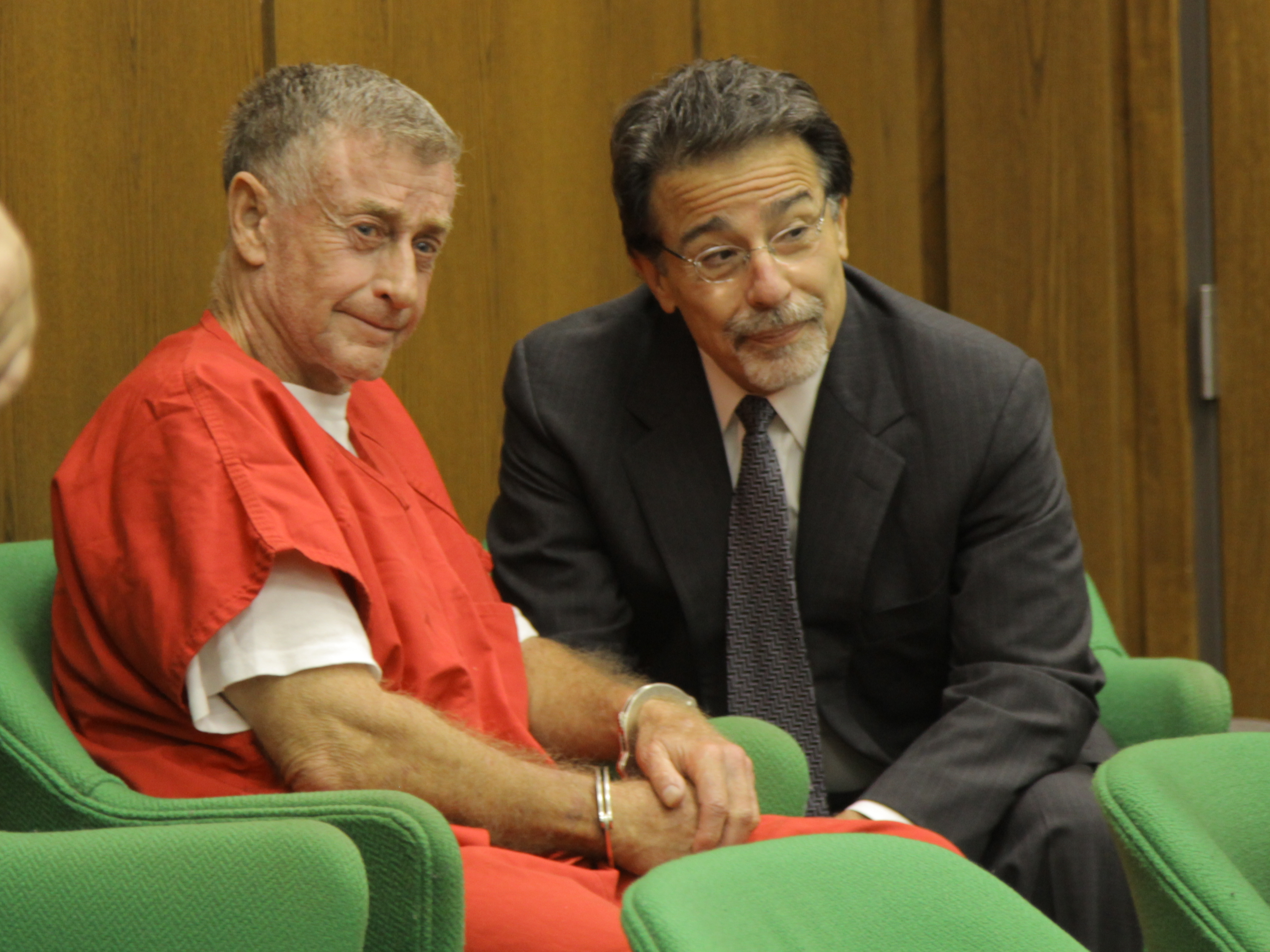
The Staircase, a serial documentary by director Jean-Xavier de Lestrade about the Michael Peterson murder case, may be the best documentary I’ve ever seen. Yeah, I think it is. (Why would anybody go to the trouble to watch a dramatization of this case when de Lestrade’s documentary exists?)

The Staircase

I’ve finished the tenth episode and will binge watch the last three episodes tonight. Mona, my lovely wife, has watched the series from the beginning. She’s enjoying it immensely in part because she did not know about this case before starting the series. I’m familiar with the case, but did—and will keep on doing—a great job of sequestering her from the facts. (So don’t go asshole on her in the comment section.)

I want to say some things to say about the case. So, if you want Mona’s experience, then get your ass away from this blog (come back to it later, after you have watched the series).

First, the prosecution’s theory of the case fails apart completely at the end of the first trial. Once the alleged murder weapon, the blow poke, is found in the corner of the garage unused for years, thus making it an impossible murder weapon, the state’s case collapses. They insisted that the lacerations to the back of Kathleen Peterson’s head had to have come from this instrument. They drove this into the jury’s mind in graphic detail. Live by the blow poke, die by the blow poke. 

Second, and relatedly, the prosecution’s use of a blow poke identical to the one found at the Peterson’s residence in order to plant in jury’s mind the blow poke as the death instrument in a murder (premeditated no less) they never actually proved beyond a reasonable doubt looks all the world to me like prosecutorial misconduct. The DA represents the state. The state is supposed to serve justice. You don’t stay with a clearly false theory of the case. 

Third, how did the cops not find the blow poke during their searches of the house? Did they know it was there unused for years and thus fail to report its presence? 

Fourth, the SBI blood spatter analyst, Duane Deaver, was so obviously incompetent and lying that my faith in the peer jury system has been severely shaken. The cross-examination of SBI’s Duane Deaver by Peterson’s defense attorney David Rudolf is devastating. How did the jury not see through Deaver? He’s a fraud. And a sociopath.

I had not watched the trial before (I only knew the outcome). I can now say that, had I sat on this jury, there is absolutely no way I would have allowed the other eleven jurors to talk me out of this conclusion: that the prosecution not only did not meet its burden, but that the case they brought against Peterson was a grave injustice. In other words, if I could not bring them to the reality of all this, I would have hung that jury.

Of course, as a criminologist and somebody who understands criminalistics and the law (not all criminologists do, for the record), I would never be allowed to sit on a jury in a murder case. My presence would make the affair more of a bench trial, wherein an honest expert would look at this evidence and come to a superior judgment than a jury of Peterson’s peers who know jack shit about science.

At the same time, in the end, the judge in this case, an official you would hope would be an honest and competent expert, needed to be beaten over the head with the obvious to make the correct ruling at the appeal that allowed Peterson to be put under house arrest (after spending nearly a decade in prison).

How that judge allowed the “evidence” of a similar accident in Germany and text messages concerning Peterson interest in male escorts and gay pornography is incredible to me. Watching the jury read those texts was difficult. How many homophobes were among them? Remember, this was the early 2000s.

(Folks have no idea how many married men are bisexual and engage in same-sex activities on the sly. The sociologists reading this post will know doubt know Laud Humphreys’ scandalous 1970 study Tearoom Trade.)

Finally, the DA, the police, the SBI—all state agencies—worked, if not in concert, in the pull of a convergence of interests they had no business pursuing in the manner in which they did, to misrepresent evidence and distort findings, even concealing exculpatory evidence and tests from the jury. It is horrifying to witness. 

But this is hardly a unique occurrence. The state works this way a great deal of the time. In fact, this was how Peterson got his retrial: some honest people stepped up and exposed Deaver and the SBI—folks who didn’t “trust the science.”

The state in the Peterson trial did all this not only in the name of “justice” but while waving the banner of science. The jury had no reason to disbelieve “the science.” After all, why would the state use the authority of science to deceive them? Why would the state put on the stand (what appeared to be) experts in their respective fields—charlatans in reality—to lock up a man, when honest and competent prosecutors (and judges) seeking justice would have to have known that the theory of the case failed utterly and, moreover, that the evidence did not support any conceivable theory of homicide? Yet the state did exactly that. 

* * *

I don’t meant to attack you personally, but this has to be said for the sake of the pursuit of the truth in science and in court: You are naive in the extreme if you believe the state isn’t doing to others what it did to people like Michael Peterson and his family. Not just in the field of the criminal law—in its warmongering (all the lies told in prosecuting the Vietnam war, in the Iraq war, in so many war, and now in the Ukrainian affair); in its suppression of political opposition (recall what was exposed at the Church Committee headings, FBI COINTELPRO efforts against the Black Panthers, and the current DHS persecution of members of the populist-nationalist movement); in the coup against a democratically-elected president (all the lies about Russian collusion, etc.).

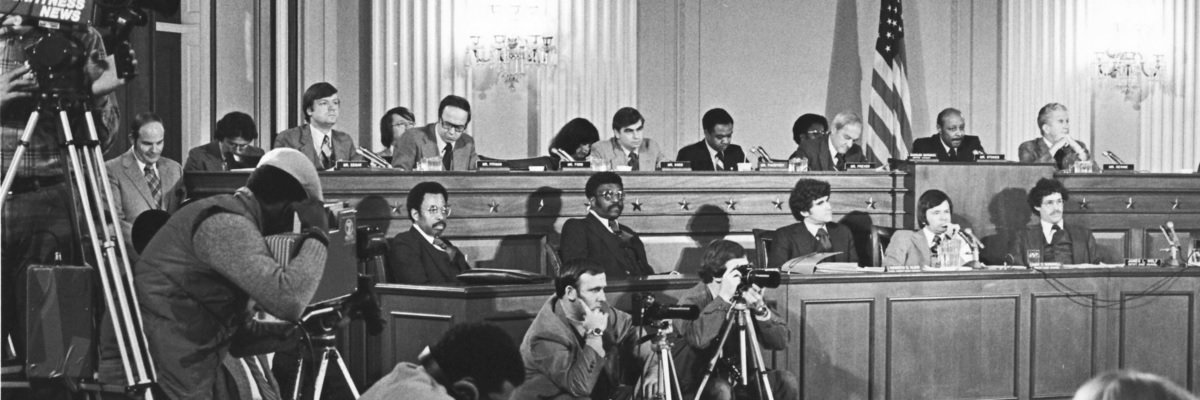
The Church Committee

This is the work the term “conspiracy theory” is meant to do: not to enlighten you about conspiracies (a legal category) and the theories about them (matters of science), but to flip meaning on its head to keep you from recognizing that state actors are lying to you—to keep you in the dark about what they may be doing to you. It’s a thought-stopping device. 

There is a moment in an episode where Peterson wonders aloud with his legal team about conspiracy. He must feel like he’s trapped in Kafka’s Der Process (Peterson is himself a writer). There were moments when members of the Black Panthers talked about the conspiracy against them (see Kathleen Cleaver’s remarks in Deb Ellis and Denis Mueller 1990 documentary The FBI’s War on Black America). “You’re paranoid.” “You’re ego tripping.” But the FBI, CIA, DoD, state and local law enforcement—they were all in on the conspiracy.  

Remember what anonymous said long ago: Just because you’re paranoid doesn’t mean they’re not out to get you—that they’re not watching you or interfering with your life.  

They want you to have faith in democracy. They tell you that the populists are “undermining public trust in elections,” that their criticisms “undermine faith in democracy.” (I actually know an academic who claims to be a critical thinker who nonetheless thinks free speech should be curtailed for those who question the integrity of our elections. He said this publicly to an audience nodding appreciatively.)

But democracy, justice, and science—these aren’t things in which one puts his faith. At least they shouldn’t be. These are action items, the pursuit of which must be transparent.

If you want to trust the results, don’t let other people do and think for you. Faith is for religious and quasi-religious doctrines like Critical Race Theory and other crackpot notions. The pursuit of truth requires something else entirely.

It will serve you well to keep in mind Karl Marx’s motto (borrowed from René Descartes perhaps): De Omnibus Dubitandum, Latin for “doubt everything” (sometime rendered “be suspicious of everything”). 

The Planet of the Apes (1968)

Also, remember this bit of dialogue from Planet of the Apes:

Taylor: “That’s the spirit. Keep ’em flying.”

Lucius: “What?”

Taylor: “The flags of discontent.”

* * *

(UPDATE!) I had scheduled this blog (which was based on a Facebook post) for this morning before Mona and I watched the final three episodes. Last night, we watched those episodes and it only reinforced the thoughts I expressed in my original post. Peterson taking the Alford plea was in a way tragic, of course, but it punctuated his and his attorney’s thoughts about the justice system in North Carolina, namely that it was unjust and corrupt. That they could not be sure of acquittal in a retrial given everything that was revealed over the course of those years is writ large in the growing distrust Americans express about their institutions.

I was reflecting on that this morning while listening to a discussion of the 2022 Arizona election on Steve Bannon’s War Room. At hand were the efforts by Kari Lake, the popular Republican candidate for governor of that red state, to get to the bottom of the 2022 election, a contest in which Katie Hobbs, the Democrat candidate for governor and then governor-elect and also secretary of state and therefore the chief election official, came from behind to win the election. Hobbs did not recuse herself nor did the state have any mechanisms for managing the obvious conflict of interest in this case.

Hobbs had won her position as state secretary in 2018 in a pattern highly similar to the one seen in Arizona and several states during 2020 election, where Trump won on election night only to see Biden chip away at his lead with overnight postal vote dumps. The same pattern was seen again in Hobbs’ 2022 win over Kari Lake. Lake enjoyed a consistent lead in the polling since mid-September and had pulled away several days out from election day (see below). Lake’s crowds were massive and enthusiastic. Hobbs, like Biden, ran a bunker-style campaign and refused to debate Lake. Hobbs was awkward in interviews and came across as peevish and petty—and she is obsessed with Donald Trump.

Had Hobbs been a Republican in a blue state, or were Arizona a third world country the West treated as antagonistic, accusations of a stolen election would have dominated the headlines. But, as it was, it was a Democrat victory in a blue state over a Trump-endorsed candidate. Kari Lake was clearly an “election denier,” a threat to democracy almost as great as Trump himself. This fed into the greater narrative that voters had rejected populism. How else given the conditions ripe for a red wave that the nation instead experienced a red puddle?

Given the polling, the crowds, and way the election was conducted, there’s no way Hobbs actually won the election, so I was thrilled when a judge agreed to hear Lake’s case, even if he only agreed to hear only two of her ten grievances. I watched in its entirely the trial and, despite clear evidence that official changed ballot-printer settings during the election and substantial disruption in the chain of custody for ballots in Maricopa County, the judge rejected her case on the grounds that it failed to provide clear and convincing evidence that these problems were intentional.

The judge worked from an impossible standard that rewards fraud and rigging by making criminal actions to appear accidental or as incompetence. The standard in an election should rather be about process and outcome, namely, did the actions of election officials, whether as a result of incompetence or criminality, (a) disenfranchise voters and (b) would chance the outcome of the election? If the answer to these questions is yes, then run another election. Moreover, do a full forensic audit of every voting precinct in Arizona. Hobbs and election officials in Maricopa stood in the way of every effort to get to the bottom of the case, even when that state’s attorney general demanded answers. At trial it was revealed that officials were still trying to figure out what happened. Yet Hobbs certified her own victory.

You may feel this is a digression, but it goes to the question of institutional integrity and public trust in our judicial system, which is precisely my point concerning the Peterson case. That the state in both cases, with its immense power and resources over against those who seek justice, is able to operate in a black box and effectively flip the burden to the aggrieved (who, in the Lake case, include the people of Arizona), should push citizens to demand reforms that breathe life back into the Bill of Rights and American Democracy.

At the end of the Peterson documentary, the judge who presided over the case, Orlando Hudson, finally, in a roundabout way, admitted to the documentarians that he should have allowed in neither the Germany case nor the evidence of Peterson’s homosexuality as, had these been excluded, reasonable doubt would have been likely established and Peterson acquitted or the jury hung. And although it was this judge who created the grounds for a retrial only after the SBI scandal had come to light, he did not throw out the case on the grounds of shoddy police work, fraudulent manipulation of evidence, or prosecutorial misconduct, but forced Peterson into the Alford plea.

I learned in those last three episodes that the blow poke had in fact been found by crime scene technicians Eric Campen and Dan George. Under the direction of Thomas Dew, who worked for the prosecution, the three, along with Deaver, accompanied the Durham police department to take measurements of the Peterson home pursuant to the search warrant. They found in the boiler room the blow poke, took the instrument outside and photographed it, then put it in the garage, where it was found a year later in the state as described in this blog. Both Dew and Deaver witnessed this. All this was hidden from defense counsel at trial and skirted in testimony. In other words, there was a conspiracy to convict Michael Peterson.

I also learned in those final episodes that no DNA tests were conducted by the state in this case and evidence from the case was kept in such a manner that cross-contamination of crucial items could not be ruled out. In fact, items from another case had been thrown into the same boxes and the Peterson case. The attempt to shame defense attorney Rudolf for his handling of evidence at trial (he was not wearing gloves) seemed to be an attempt to obscure the fact that proper testing of the evidence should have occurred before the original trial. Evidence is often handled in this way at trial. Indeed, we learned that certain test that was done had been kept from the court by state investigators (and perhaps prosecution). It is my opinion that it was only the incompetence of Peterson’s then-attorney Mary Jude Darrow that allowed the DA and judge to sidestep these issues.