On the eve of civil war, in 1860, the population of the United States was approximately 31 million people. Around 12 million, or roughly a third of the population lived in the South. There were approximately 4 million blacks in the United States at that time, 3.5 million of them slaves. Blacks thus comprised around 13 percent of the US population in total. Around 90 percent of blacks lived in the South. The proportion of the population in the Southern states that were slaves varied by state, but on average it was around 30 percent for the region. Of the majority white population, three quarters were engaged in agriculture in some capacity. Most others were self-employed in some trade or other endeavor. There was a growing proletariat, a small professional stratum, and an even smaller capitalist class.
The claim in the Disney cartoon that this country was built on slavery is false. The United States was founded on the capitalist mode of production. The majority of slave labor was used on plantations, primarily producing cotton and other agricultural crops. These commodities were sold to markets in Europe and in the US North. Cotton was in high demand for the production of textiles, and the South was able to produce large quantities of the crop. The profits from the sale of these goods helped to fuel the trans-Atlantic economy, and the southern aristocracy was dependent on the labor of enslaved people to sustain its way of life. In this sense slavery contributed to the economic development of the United States. However, as a primary commodity, most of the value added occurred at later stages of production (and mostly overseas), and thus the South remained an underdeveloped region in the capitalist world economy. The Civil War occurred in part for this reason.
Since the United States was more than 85 percent white, and because the majority was involved in agricultural production and a signifiant and growing proportion earning wages in industrial production, the Untied States was built in large measure by white labor. To be sure, black slaves contributed some to past development, but they comparatively made a much smaller contribution than did white labor. To be sure, slaves suffered from the conditions of their situation. But so did whites. Just as we must never forget the suffering of slaves, we must never forget the fact that capitalists built their wealth by exploiting the labor power of white proletarians, accumulating the value produced by their blood, sweat, and tears. To deny this is to deny the reality that lies at the core of the capitalist mode of production, the logic that makes capitalism what it is: the exploitation of wage labor. Slavery has been peripheral to the logic of capitalism since its emergence 800 years ago.
On what basis, then, are the descendants of slaves owed reparations? We are told it is because the wealth accumulated via their exploitation during the period of slavery created the modern day structures of economic inequality. But this is as true of the situation for whites in history. And even if you cite the exploitation of black labor since slavery, then so, too, has white labor been exploited in the same period and in the same way. Wealth inequality exists within the white demographic just as it does in the black demographic. There are black workers and there are black capitalists. There are a handful of wealthy white families and tens of millions of working class whites whose life chances are the result of capitalist exploitation of their ancestors, as well as the ongoing exploitation intrinsic to the capitalist mode of production.
Why aren’t the descendants of the white farmers and proletarians who have made up the majority of the population throughout the history of the United States owed reparations for the value that was appropriated from their toil? I am not arguing that they should be. The premise of reparations is irrational. But if we were to accept an irrational premise, why are blacks entitled to reparations and not whites? Does the irrationality also extend into the racist notion that whites should be denied the accumulated wealth extracted from the labor of their ancestors? We can put the matter this way: are reparations also a racist scheme?
Why do I say that reparations is an irrational premise? Because no person alive today is responsible for the choices men made in the distant past. Indeed, no person is responsible for the actions of another person. And certainly the white majority who comprises the substantial body of exploited labor is not the oppressor of the black minority who suffers the same fate. White workers are not capitalists. Moreover, to determine collective responsibility on the basis of race means to blame each individual member on the basis of skin color, which is racist.
I write this today because the reparations talk is once against building. We don’t know how reparations will appear finally, and it may vary from state to state, but it’s coming. It’s a deeply immoral course of action. And it’s dishonest. It’s hard to imagine it will be anything more than a neoliberal scheme to confiscate and redistribute the wealth of the working class upward into the hands of elites, who would then determine the distribution of some of those monies to various NGOs, who would then administer some of those monies to some of those determined to be the descendants of alleged victims of past discrimination. (It will work the same way globally (see Reparations and Open Borders; Totalitarian Monopoly Capitalism: Fascism Yesterday, Today, and Tomorrow).
One can imagine other monies going to city governments run by progressives, who would then make meager investments in disadvantaged neighborhoods that would reinforce the custodial apparatus that currently idles the millions of black Americans disemployed by mass immigration, offshoring, and the rationalization of production.
None of this will fix the situation of blacks as the cause of the situation is not merely misspecified but is the work of the very people who pretend to care about the situation of black people. This is to say that the misspecification is strategic. It’s yet another money grab in late capitalism.
The unlawful use of violence and intimidation against civilians in the pursuit of political aims is the standard, or at least the most common definition of terrorism. Domestic terrorism may then be understood as the commission of terroristic acts in the perpetrator’s own country against his fellow citizens.
However, there’s no such thing as domestic terrorism in federal statute. As my fellow criminologists and criminal law experts will agree, if there’s no statute, then there’s no crime. We even have a fancy latin phrase for this: nullum crimen sine lege—translation: “no crime without law.” We live in a democratic republic with the rule of law, not a Kafkaesque dystopia where Democrats invent criminal law categories on the fly.
On the substantive question, participants in the January 6 riots did not direct their hostilities at civilians, but rather the situation at points devolved into violent alterations with police officers. Indeed, at several points, actions by police appeared themselves riotous. There was destruction of property, as well, albeit property destruction is not universally included in definitions of terrorism.
However, using the typical definition of terrorism, Antifa and Black Lives matter violence occurring over the summer and into the fall of 2020 would likely constitute domestic terrorism if such a statue existed. The unlawful use of violence and intimidation by Antifa/BLM targeted civilians. Scores of citizens were killed, injured, and intimidated. If one wants to include property destruction in the definition, there was plenty of that, too.
Do I have to remind readers that Democrats celebrated the BLM riots? Or was the reverence for BLM and apologetics for Antifa by party members the result of violence and intimidation by those parties?
The Judiciary Committee subcommittee on the weaponization of government, chaired by Jim Jordan, R-Ohio, hearings has so far been highly revealing. It’s obvious that Democrats are all in with Big Tech and the deep state suppression of information on social media platforms.
When New York’s Hakeem Jeffries, minority leader of the House, condemns the hearings are not dealing with any of the issues Americans find important, he is admitting that Democrats do not find the First Amendment to have any relevance to the concerns of the citizens they feign to represent. Democrats on the committee apparently didn’t even know that Schenck v. US (1919)was effectively overturned by Brandenburg v. Ohio (1969).
The love affair between the Democratic Party and the FBI and other security agencies expressed in the dismissive tone of their questions only served to further reinforce the point of the hearings: to make obvious the role of the administrative state in advancing the political interests of the Democratic Party, which align with those of corporate America. One might think that these lawmakers would dissimulate their loyalties with the world watching. But they’re telegraphing to corporate power that they are ready, willing, and able to continue serving their interests.
Yesterday’s hearings also produce memorable exchanges. I liked this one in particular:
Twitter exec explains the medical training that qualified her to censor Harvard + Stanford MDs who questioned the official COVID narrative. pic.twitter.com/AiBoJx4JBM
In what WBAY (our local TV station here in Green Bay) characterizes as “disturbing” in the article, “Most University of Wisconsin students are afraid to share their opinions in class,” the survey progressive faculty and administrators in the Wisconsin system suppressed for months because they feared it would find that a majority of students hold their tongue because they’re afraid of what will happen to them if they don’t is finally out (the full report can be found here).
The survey, a joint effort by UW-Stout’s Menard Center for the Study of Institutions and Innovation and the Wisconsin Institute for Public Policy and Service, interviewed more than 10,000 University of Wisconsin System undergraduate students. Question covered such topics as the First Amendment, whether speech considered harmful should be reported, and whether speakers that some find offensive should be disinvited by campuses. The survey was originally scheduled to be administered in April 2022 but was delayed for months over opposition by administrators and faculty. UW-Whitewater interim chancellor Jim Henderson resigned in protest over the survey.
What did the survey find? Exactly what progressive teachers and administrators feared it would. “Fifty-seven percent reported they wanted to express views about contentious topics in class but opted to remain quiet out of fear of angering their peers or their instructor and getting a bad grade.”
If that wasn’t bad enough, there’s this: “A third said they felt pressured by an instructor to agree with a particular viewpoint.” You can see in the above chart that large majority of conservative students report feeling pressured to align their opinions with the ideology of the instructor. Compelled speech is antithetical not only to the foundation of free and open societies, but it’s contrary to the mission of higher education, which is to foster cognitive freedom and development, and maximize viewpoint diversity.
The breakdown by political leaning is very telling, as well as the use of the term “very liberal” to describe attitudes conveying the most authoritarian stance on the question. The second chart shared above indicates that, whereas conservative students expressed the most liberal attitudes, with only around seven percent of very conservative students saying that university administrators should ban the expression of views they feel cause harm, 40 percent of those identifying as very liberal said that administrators should ban the expression of speech. Overall, only around 53 percent said that should not happen—“only” because that number should be close to 100 percent in a free and open society.
Troubling as well is that roughly one-third of students overall expressed the view that offensive speakers should be disinvited from campus. Among students identifying as very liberal, 58 percent supported deplatforming speakers they believed were offensive. That nearly sixty percent of very liberal students in the Wisconsin system believe that they know what their peers should see and hear is very troubling. How did American youth come to desire the role of commissar of an authoritarian order where speech is censored and speakers cancelled based on their political ideology? This is a profound expression of authoritarianism.
On the question of whether students should Stasi-style report instructors to university administrators who say things they feel causes harm, the breakdown by various groups and persuasions confirms what I have been saying for years now: belief in the oppression hierarchy feeds censorious desire. Those who identify as humanity majors, gay, liberal, non-white, and transgender respond to this question in a highly illiberal and intolerant way. Almost half of students majoring in the field in which I teach, the social sciences, think students should report a teacher to school administers who say things they believe cause others harm.
Given that students with authoritarian attitudes are more likely to major in the humanities and the social sciences, the survey finds that illiberalism and intolerance is concentrated in disciplines one might expect to be the most open and tolerant. Teaching such subjects and race and ethnic relations or sex and gender without dressing these matters up in social justice jargon risks being reported to authorities who may very well put the offending teachers through struggle sessions known as sensitivity training.
And it’s not just the students who demand faculty align their speech with the jargon. Faculty in the humanities and social sciences are just as woke as the students. Diversity, equity, and inclusion (DEI) trainings are often required of faculty before complaints are raised. The purpose to create consistency in messaging. This tells us that the humanities and social sciences are no longer interested in education but in indoctrination.
In this blog, I explain what’s happening by connecting these patterns to the changing structure of social control in late capitalism under the corporate state. Since I will be relying on the survey results of mainstream polling organizations, it will be necessary to spend some time decoding the terminology used to describe political attitudes. That students identifying as conservative are the most tolerant and open minded students (this is my first-hand experience, as well), while those identifying as very liberal are the most intolerant and illiberal of the students surveyed (again, reflecting my experiences in the university and on social media), tells us that the terms we use to accurately convey political attitudes have been corrupted.
The illiberal machinations of progressives in higher education is a very serious problem, especially in the humanities and social sciences, where most faculty see their role in the university not as enlightening students by encouraging the widest degree of viewpoint diversity but as indoctrinating the youth of America in corporate state ideology composed of crackpot theories dressed in the jargon of postmodern and deconstructionist critique.
There’s a great deal of effort devoted to obscuring the preaching of these theories and especially how these theories are put into the heads of graduates of education programs to spread the corruption to 4k-12. But it isn’t hard to also find the propaganda of critical race theory and queer theory in the curriculum and pedagogical strategies deployed in public schools. (See the work of Christopher Rufo here if you want examples.)
It is vital to cut through the fog of ideological distortion; as a society, we must collectively resist and combat the warped claims woke progressives make about conservatives, feminists, and other groups whose beliefs are barriers to the rising authoritarian order. We need to make clear that the propaganda asserting that free speech is a means of publicly expressing bigotry, which progressives characterize as hate speech and violent speech, that speech and silence are forms of violence, and so on, i.e., that free speech is rightwing speech, are not merely fallacious but the thinking of a reactionary countermovement mobilized against the Enlightenment. The public needs to know that progressive students acquire their authoritarian personality from their progressive teachers—and that the indoctrination is initiated well before they come to college. Tens of millions of Americans (and Europeans, as well, where the corruption also exists) know this. But many don’t know others know this. Our work here is to create mutual knowledge.
I have had long conversations with conservative and liberal students who tell me they are terrified to speak up in class because of the climate of woke intimidation. The chilling effect has in recent years moved me to include in all my syllabi the following language: “I do not assess discussions or writings on ideology or politics, so all views are welcome. However, rational discourse requires reason, facts, and respect for others. Opinions must be informed opinions, and these must be relevant to the topic. Engage your fellow students in the spirit of open mindedness and tolerance.”
This is followed by a second paragraph: “For discussion, I have in mind Jürgen Habermas’ notion of the ‘ideal speech situation,’ in which interactions between individuals are governed by rational rules of discourse where participants evaluate each other’s claims and opinions based on evidence and reason in an environment free of social coercion. In an ideal speech situation, discussants are motivated by the desire to achieve a common understanding.” Nowhere in all the trainings that faculty are compelled to complete is there any discussion of such a model of free and open discourse.
Reflecting on all this the past few days, it occurred to me to encourage readers of Freedom and Reason to ask themselves how it came to pass that the smallest identifiable prominent political-ideological group in America, namely progressives, could play such an outsized role in academia, culture, mass media, and politics. The vast majority of the American population does not identify with progressives nor accept as reasonable the various crackpot theories they espouse.
According to Pew research, those openly identifying as “progressive left,” the woke crowd, comprise only around six percent of the US population. They’d have you believe that they dominate the humanities and social sciences, the administrative and student services offices, prominent positions in the media and culture industry, because they’re the smartest and most talented people in society and, moreover, their beliefs give them special insight into the truth of the world—what in truth is systematic denial of reality in favor of an ideological worldview. Like the elect of God, they believe they’ve been chosen to lead the people to Promise Land.
It’s no exaggeration to say university faculty and administrators see themselves as clergy in what has emerged as the Woke Church. Social justice is a religion to them. And they have been able to count on the classroom pews to fill with true believers. Those who deviate from doctrine are heretics. Deviant thoughts and attitudes are subject to public shaming, disciplinary action, and even dismissal. An inquisitorial atmosphere has taken hold over the last decade or so.
I came through graduate school in the 1990s and have been a professor throughout the 2000s. I’ve had a front row seat to the transition of the university from an institution of higher learning to a factory cranking out woke widgets.
“A few years ago, ‘diversity, equity, and inclusion’ (DEI) was another bureaucratic and academic buzzword,” a recent National Association of Scholars (NAS) study of DEI programs at UT Austin (Comprehensive Restructuring) notes. “Today it is found everywhere, between boardrooms and classrooms.” A few passages from the NAS report are worth sharing:
“To many, the term ‘diversity, equity, and inclusion’ might sound like a benign commitment to fairness—DEI offices often encourage this perception, couching their work in bureaucratic language that obscures any substantive or controversial elements. This creates the impression that no reasonable person would disagree with the edicts of a DEI office.” Indeed, DEI training assumes as proven that which requires proving, even that which enjoys no evidence or is contradicted by the facts. This is how rhetoric such as “systemic racism” becomes the automatic explanation for the overrepresentation of blacks in lethal police encounters or prisons without any need to explain demographic disparities. It’s how the fallacy of misplaced concreteness (reification) can be taught in courses advertised to the public as scientific. Indeed, sharing with one’s colleagues and students the substantial body of evidence that definitively refutes the claim, if not upsetting to the recipient, goes unacknowledged thanks to the tenacity of religious-like belief.
“The DEI initiatives at UT Austin, however, frequently espouse controversial political and social views, whether through mandatory training sessions, book groups and administrator-endorsed reading lists, or curriculum guidelines. Consistently, these initiatives prove to amplify, spread, and inculcate controversial claims about race, gender, oppression, and privilege.” I wish the report wasn’t so charitable. Much of the content of the trainings is not controversial from an objective standpoint. Critical race theory and queer theory are the equivalents of creationism and geocentrism, impositions on developing minds designed to produce a false view of the world. The report does recognize this late on: “Various university-sanctioned DEI training sessions embrace and disseminate highly contested political concepts. The university’s Council on Racial and Ethnic Equity and Diversity (CREED), for example, trained faculty and students in ‘critical race theory.’ Other training sessions encouraged participants to identify ‘microaggressions,’ ‘implicit bias,’ ‘systemic racism,’ and so-called ‘anti-racism.’”
In light of this, when, during discussions during the event in which the findings were presented, Franciska Coleman, a Harvard-trained UW-Madison assistant law professor with a focus on critical discourse analysis, which portrays language not as a means of accurately describing reality but as a tool for changing perceptions of reality, said that universities can do a better job of incorporating free speech principles into DEI training to teach students the effects of harmful speech while also clarifying that universities cannot ban it, my thought was, “I have a better idea: get rid of DEI training altogether.” DEI is inherently illiberal (see The Bureaucratic Tyranny of DEI). Teaching free speech principles in the context of DEI training can only produce an understanding of free speech that is its diametric opposite.
The real reason progressives are in a position to push crackpot ideas on students and facility is not because they’re the smartest or most creative people in the room (they’re not) or because they have the inside track on the truth (they don’t). It’s because they’re the organic intellectuals of the corporate state. As I will stress throughout the remainder of this blog, woke progressivism is not an exogenous force imposed on academia, business firms, the entertainment industry, and government. This is not, as conservatives would have it, the long march of cultural Marxism through our institutions. Wokism is an indigenous development in the evolution of social control associated with the rise of the corporate state.
Let me dig into this a bit, because to accurately convey the political dynamics in play I need to critique while citing the survey research on the matter. I rely here mainly on Pew’s typology (“Beyond Red vs. Blue”), which identifies among Democrats two groups of what Pew calls “liberal Democrats,” namely the aforementioned “progressive left” and “establishment liberals.” The progressive left would be the very liberal student in the UW survey.
To be clear, the Pew survey covers all Americans, not just students. The university and other institutions concentrate the corruption of progressive ideas on our society at large. The vast majority of the population does not subscribe to these ideas, but is forced to live under them. This is why organized resistance and confrontation is so important to revitalizing the American republic and western civilization.
The progressive left is the only majority white, non-Hispanic group of Democrats (presumably the group from where terms such as “Latinx” and “authentic self” originated). The progressive left have what Pew describes as “very liberal views on virtually every issue and support far-reaching changes to address racial injustice and expand the social safety net.” The desire expressed is the expansion and deepening of the custodial state where the lives of alleged victims of racial injustice are administered and managed.
Pew finds that establishment liberals are just as liberal in many ways as the progressive left but are less inclined to express the need for sweeping change. Putting this another way, what Pew is conceptualizing as establishment liberalism is a species of progressivism highly supportive of preserving the status quo—a status quo that is the result of more than a century of progressive restructuring of America to prepare its people for integration with the transnational system of corporate domination. As the progressive left pushes the system towards the authoritarian ends it seeks, the establishment liberals defend each successful stage of development.
Even the group Pew calls the “democratic mainstays,” the largest Democratic-oriented group, are depicted in the data as “unshakeable Democratic loyalists” who have a “moderate tilt on some issues,” which, again, means support for the established progressive order of things. But this is still a minority political standpoint in American society—and is declining. A recent Morning Consultpoll found that the share of the electorate identifying as “very liberal,” “liberal” or “somewhat liberal,” designations that encompass majorities of the groups Pew identifies, has dropped drastically over the past five years, from 34 percent to 27 percent.
(In light of the fact that progressives—woke or otherwise—have at best only represented around a third of the electorate for years now, how is it possible that Democrats have enjoyed so much success in federal elections? We’re told it couldn’t possibly be that our elections are rigged. So what explains it? Apathy?)
I want to stress that the survey findings are enlightening even though the persuasions in political-ideological typology are mislabeled. For example. greater intensities of progressivism are characterized as ever more strident “liberal” commitments. In point of fact, liberalism and progressivism are not synonymous but oppositional, with the former denoting commitment to the values as cognitive liberty, free speech and expression, freedom of assembly and association, and so on (today more characteristics of moderate and conservative thought), and the latter, representing one of the more authoritarian and illiberal forms of ideology in history, hostile to each and every one of these values.
Liberalism emphasizes personal liberty and equality, focusing on the protection of individual rights and the rule of law. This is the foundation of western-style justice. Progressivism inverts this, advocating groups rights and equity (redistribution of resources, which is actually cover for new modes of wealth appropriation), and subordinating individual rights to countermovements that decouple the rule of law from organically emergent normative structures (which progressives deny have any actual nature) and using the power of the state to restructure the social order according to the designs of corporate governance.
This is why, when progressives decry legislation passed in Ron DeSantis’ Florida constraining the indoctrination of school children, they appear so righteous: justice in their lexicon, socialized in dictionaries and encyclopedia, means indoctrinating children with critical theory and crowding out other viewpoints, as well as banning other viewpoints as racist and transphobic.
The propaganda work of conflating opposites to one side for the moment, we can understand what Pew means by the increasing intensity of liberal views when they find the following in the data: “Very liberal, highly educated and majority White [sic]; most say U.S. institutions need to be completely rebuilt because of racial bias.” We need only switch out the term liberal for progressive so we don’t miss the truth here: these are the zealots who dominate humanities and social science departments across the nation, as well as run the academic journals (hence the reason I don’t bother submitting articles anymore but instead bring my work directly here to you unfiltered by the rat race racking up of jargon-laden publications).
Crucially, Pew finds that nearly all of the progressive left, 98 percent in fact, either identify with or lean toward the Democratic Party. I didn’t need Pew to tell me this. Those around me are deeply involved in Democratic Party politics. If you doubt that the so-called progressive left does not carry in its heart the greatest love of the Democratic Party of all the persuasions in Pew’s typology (maybe because they feign speaking truth to power), consider this finding from the survey: “Although they are one of the smallest political typology groups, Progressive Left are the most politically engaged group in the Democratic coalition. No other group turned out to vote at a higher rate in the 2020 general election, and those who did nearly unanimously voted for Joe Biden. They donated money to campaigns in 2020 at a higher rate than any other Democratic-oriented group.” And this: “This group is also one of the most politically engaged typology groups: 86% of eligible Progressive Left voted in the 2020 election. Among typology groups, that is only rivaled by Faith and Flag Conservatives.”
Let’s make this very clear: Joe Biden is a pro-corporate state warmonger and devoted globalist with deep personal and financial ties to entities in the most authoritarian governments in the world (including China and Ukraine). All this was known before the 2020 election and the diehards in this survey are the most educated people in the United States. They know who they’re voting for—Biden is their candidate because Biden and his ilk personify the ideology that animates progressive politics.
When I say Biden is the personification of woke progressivism do I mean he actually believes the things he says, such as the science denialism necessary for an uncritical stance towards the medical-industrial complex? Maybe. For sure he doesn’t believe in America and its creed. No Democrats do. If they did, they wouldn’t be such stalwart defenders of the corporate state and the transnationalist agenda.
To be sure, the progressive left preferred Bernie Sanders and Elizabeth Warren in the 2020 primaries. But once the Democrats had finished engineering Biden’s nomination (with nary a peep from the congregation this time), the hardcore progressives went all in for the former vice-president and senator from Delaware.
All the Black Lives Matter rhetoric couldn’t stop them from voting for the politician who led the drive in the US Senate to push through President Bill Clinton’s 1994 Violent Crime Control and Law Enforcement Act. Biden was one of the lead sponsors of the bill in the Senate and worked tirelessly to garner support for its provisions, which included a large increase in funding for law enforcement, the expansion of the death penalty, and the creation of new mandatory minimum sentences for certain crimes.
Progressives voted for Biden not just to stop Trump (hatred of populist-nationalism was certainly a driver given the threat it poses to the globalist project); the survey finds that a large majority of this group approves of Biden’s job performance and majorities express confidence in his handling of issues.
The illiberal character of woke progressivism is indicated by many opinions expressed by those who identify as such. Pew finds that the so-called progressive left are the only typology group in which a majority says that success in life is largely outside of an individual’s control. Progressives believe this because they at the same time believe their special insight into the truth means that they’re the only people who can—and therefore should—manage the lives of the masses who in their worldview lack human agency. They thus steer society towards a self-fulling prophecy based on their belief that the masses are simple not smart enough for self-governance.
This is how technocratic and administrative state actors justify their positions and actions: if the people have no agency, then they cannot be expected to govern themselves, and therefore those who have special insight into the truth must organize their lives for them. But in reality the politics and policies of these elites disorganize the communities of those they claim to speak for (evidenced by the obscene rates of fatherless households and criminal violence in the neighborhoods under progressive direction).
Related to the statistic indicating the belief that the masses have little to no agency is the finding that three-quarters of progressives say there are other countries better than the United States, the highest share among typology groups. It’s not too hard to imagine which countries they have in mind—all of which are less free than America. They’re thinking about the social democracies of Europe, where children are born in systems with from the cradle to the grave they are embedded in extensive systems of social control, systems progressives mistakenly believe are socialist in character. Indeed, Pew finds that a majority of the progressive left “express positive views of political leaders who describe themselves as democratic socialists.”
The jargon here reflects the way the propaganda system twists terms to create mass confusion. There is nothing about progressive left ideology that’s socialist. The political philosophy is actually corporatist. Corporatism is type of capitalism where businesses and unions are in cahoots, working together with the government to establish policies purported to benefit the entire nation but are actually functional to advance the material interests of the corporate state. The progressive elite are globalist (hence the rhetoric of humanitarianism and multiculturalism) and so is contemporary corporatism. This is true for both the United States and European countries. Thus corporations, government, and unions work together to develop and implement policies that benefit the transnational corporate class and the professional-managerial strata—including university administrative, faculty, and staff—that serve it.
To elaborate the point, the purpose of cooperation between government, corporations, and labor unions is to supplant the inherent competition between capitalist and worker in the capitalist mode of production. Indeed, corporatism is an elite arrangement designed to derail the politics of class conflict by incorporating unions and other interest groups of civil society into the decision-making process to advance the mode of production over their objections by obscuring the character of material reality. By folding these groups into the logic of the system, they’re made allies rather than opponents—and the threat of class struggle is effectively neutralized. Under these arrangements, the government, captured by corporate power, mediates conflicts between different groups for the benefit of the rich and powerful.
The corporatist system can thus be contrasted with liberal capitalism, where individual economic interests and free market exchanges are given priority over policies that purport to be for the benefit of society as a whole. Progressivism is the religion of the corporatist system. The progressive academic is the organic intellectual of the corporate-captured university. Neoliberal arrangements function to replace the traditional intellectual with the organic intellectual (I discuss Gramsci’s concept of the organic intellectual in this recent blog).
If you did not understand this before, now that you do, can you now also understand why public employee unions are tied to the hip of the corporate state and private sector unions have all but disappeared after having been brought into the orbit of corporate governance?
Briefly, as of recently, the percentage of private sector workers who are unionized in the US is around six percent, falling from its mid-twenty century high of around one-third. In comparison, public sector unions enjoy a much higher rate of unionization, with around one-third percent of public sector workers being unionized as of recently.
The decline of private sector labor unions in the latter part of the twentieth century was driven by a number of factors, including globalization, technological changes that reduced the need for unskilled labor (automation, mechanization, scientific management), and a shift in public attitudes towards unions cultivated by corporate state propaganda. A big part of the war on labor was the fall in the rate of profit (for a detailed account of this, see my blog The Denationalization Project and the End of Capitalism).
Many industries adopted an anti-union stance and right-to-work laws in several states made it difficult for unions to organize and maintain their membership. The opposite trend was seen in public sector unions. A number of factors have driven the growth of public sector unions, including a favorable legal and political environment. Since the public sector is difficult to globalize, the need to pull public employees into the orbit of corporatist arrangements remains.
The political party mainly representing the transition of the United States from a democratic republic to a corporate state with neo-feudalist characteristics (more on this in a moment) has been the Democratic Party. As the party of the antebellum slavocracy, the Democratic Party is well suited to represents the corporate state where the proletariat is more akin serfs than wage workers. It is no accident, then, that progressivism is associated with the Democratic Party mainly, where as populism was the foundation of the Republican Party before it was swept up into the postbellum historic concentration of the means of production in the hands of a network of monopolies (as Marx and Engels predicted).
The establishment principally administered by the Democratic Party also includes many Republican Party officials also subservient to corporate power. This explains why establishment Republicans have done so little to combat progressivism in government and even worked (albeit tediously) to stymie the resurgence of population in the Republican Party.
The term democratic socialist as used by the progressive left, that is, as an Orwellian euphemism for corporatism, is a corruption of the term social democracy, itself cover for the governing logic of corporate governance described above. For what does democratic socialism actually mean? Democratic socialism is a politics that seeks to establish a political-economic system in which power and resources are shared among all members of society, rather than being concentrated in the hands of corporations or oligarchs. It uses democratic means to achieve socialist ends, such as through community ownership of key industries and worker-led cooperatives. But those in the Democratic Party who identify as democratic socialist are the same folks who want Big Tech oligarchs to control political discourse in America, who defend Big Pharma oligarchs and the medical-industrial complex, who advocate for a global order run by transnational corporations all dressed up in the wonders of globalism.
Even if we accept that this is social democracy, a politics purporting to create a more just society by providing for the basic needs of citizens, such as access to health care, government-provided social services, and public education, all without replacing capitalism with socialism, the question remains: Whose interests are served by such a politics? Isn’t this what we already have? Didn’t corporate elites dream up the idea of social democracy to counter socialism? Indeed. By covering some of the material needs of the masses without putting them in charge of history making, corporate elites and their academic mouthpiece obscure the reality of the class-based system of economic exploitation.
Through managed democracy, the elite steer the people while at the same time letting them feel as if they are actually participating in the system. In the end, this makes serfs of the proletariat. The public education system under these arrangements is organized to prepare our youth for a life in corporate bureaucracies.
The “New Liberalism” of the twentieth did this work, as well. Intellectuals realized that the brutality of industrial capitalism wasn’t going to work itself out—that immiseration was not a bug but a feature—and that an intellectual system in which alternatives to the status quo could be openly discussed and the proletariat potentially organized politically threatened capitalist accumulation.
The elite set out to, in their words, “reform liberalism” in the face of these economic and political challenges, advocating for a more active role for the state in addressing issues such as industrialization, inequality, and poverty through government intervention and regulation.
This idea was socialized alongside the development of mass propaganda and managed democracy, pioneered by progressive politicians, such as Woodrow Wilson and Franklin Roosevelt, and intellectuals, chief among them Horace Kallen, Edward Bernays, and Walter Lippmann (in Great Britain, the great spokesman for New Liberalism was the sociologist T. H. Marshal). The rhetoric of New Liberalism allowed elites to collapse in the public mind liberalism and progressivism. Once accomplished the New Liberalism label was discontinued.
Today, progressivism and liberalism are treated not only as synonyms, but progressives the terminal point of liberalism—precisely the point at which is become liberalism’s diametric opposite. The misuse of terms like “democratic” and “socialism” is thus designed to make technocrats appear as if they speak for the common man when in fact they are functionaries of corporate rule. To describe progressivism and all its euphemisms as a left wing form of thought really becomes impossible when you study what it actually is and what interests it serves. Progressives are neither liberal nor socialist.
Given this, how are progressives properly located on the left? What animates the left is emancipating individuals from the traditional and bureaucratic structures that constrain human agency and freedom. Classical liberalism and actual democratic socialism are only really at odds on the question of who should own and control the means of production. Liberalism holds up the individual freedom side, emphasizing equality and representative democracy. Its ideals are limited government, the rule of law, and individual rights, including freedom of speech, religion, and the press. In a liberal society, the role of government is to ensure these individual rights are protected and to provide a level playing field for competition in the market.
Democratic socialism only differs in advocacy of putting ownership and control of the means of production and distribution of goods and services in the hands of the people, with the goal of ensuring equal access to wealth and opportunities for all citizens. The ideas that resources and wealth should be distributed in a way that benefits everyone, rather than just a small group of people, concerns the fair distribution of the major means of production. Socialist arrangements under these terms expands the liberal freedoms.
For example, the concentration of the means of intellectual production and monopoly control over communication technology in a few hands is why the cultural and knowledge production projects the worldview of the capitalist and falsely conveys the exclusive interests of his class as the interests of society at large. By putting the means of communication in the hands of the people, the people are able to more freely communicate their ideas.
Consider a social media system where the governance of the system were not determined by the oligarchs who own it but open to everybody to access and express their opinions and share their arguments with others who were interested in engaging those arguments. By expanding democracy in this manner, such an arrangement would enhance the liberal values expressed in the First Amendment.
Progressivism is the antithesis of either side of that economic debate. So is fascism, which is why progressivism and fascism are both expressions of corporatism—and are becoming fused in the neofascist politics of the neo-feudal world order. To distract you from this fact, because of elite control over the means of communication, the democratic-republicanism driving the national-populist movements across the West is characterized as fascism, while black-clad street thugs assaulting citizens, burning police cars, and vandalizing churches are called the antifascists.
The inversion of reality is made possible by progressive control over the education system and mass media. All this reinforces the point that to accurately grasp what is happening one must operate from the standpoint of historical materialism and conceptually root power in the hands of the actual ruling class, namely the capitalist class. You must conceptually locate power there because is where power is.
The UW System survey offers us a glimmer of hope. If knowledge is power, and if mutual knowledge can help citizens organize for their interests, then a survey showing them that the system of higher education has been remade as the propaganda apparatus of the corporate state, and if they understand that this development is tied to a much greater development in world history, and furthermore that this is a bad thing, since it will make serfs of them, then we have at our disposal a tool (and there are many others) to begin to take our country and our world back from the elites. But we have to share this knowledge and organize politically around it. So push out the contents of the survey.
If you have ever been to a Democratic Party rally (I have been to several), then this is typically what you will see. Party members obtain tickets and are vetted at the entrance. The vetters confiscate any signs supporters might bring. Ushers hand out pre-approved signs and direct attendees to where they need them to stand. If attendees are non-white or wear a hijab or are festooned in rainbow gear or have pink or blue hair, then they will likely be moved up front and often up on stage to stand behind and to the sides of the candidate with their pre-approved sign. To fill up the space event planners strategically arrange potted trees and various structures and maybe bus in a high school marching band—preferably from a black-majority school named after a progressive leader—and lots of American flags (or one great big one).
A Biden campaign rally in 2020
The media, which I don’t have to tell readers are in the tank for the Party, position their camera to get shots that make the crowd look large. But every once in a while, some video gets out that reveals bits of the propagandistic contrivances. Or someone like me, who isn’t going to lie for the sake of my loyal Democrat friends, tells you about the experience.
I’m not writing this only because of my loathing of the corporatist, globalist, war mongering Democratic Party. To be sure, as if this weren’t already clear, that loathing is fierce. The Party is the public face of the managed decline of the American republic. And I’m a patriotic dude. What’s not to loathe? I am also writing this because, as a sociologist, and a massive fan of the brilliant theorist Erving Goffman, there is a sociological lesson to be had in how to seek out and honestly see the back regions of performances. Goffman called this “impression management.” Moreover, since my sociology is tied to political action, creating mutual knowledge helps raise consciousness about the deceptions of the corporate state. The emperor truly has no clothes—and I am that boy who can’t civilly inattend.
There are exceptions. Sanders drew large crowds. Obama’s crowds were even larger. Both Sanders and Obama, more authentically with the former than with the latter, used populist-nationalist rhetoric during their respective campaigns. Sanders has since betrayed his rhetoric. Obama never believed his. Closely aligned with the national security state and a probably CIA operative (as was his mother and other family members), Obama was a Manchurian candidate—only the enemy that pulled his strings was not a foreign power but the globalist elite. (See Jeremy Kuzmarov’s excellent Monthly Review article “A Company Family: The untold history of Obama and the CIA.” Kuzmarov is managing editor of Covert Action.) And not every Biden rally is
But their crowds were never routinely or spontaneously as big and enthusiastic as the crowds the authentically populist candidate Donald Trump drew—and he was (allegedly) the losing man! Trump would invite the cameras to scan the room to show the enormity and enthusiasm of his crowds. It makes you wonder how Trump lost against a candidate who hid in his basement because his handlers knew that he couldn’t draw crowds (and were unsure of whether he could actually get through a campaign speech). It certainly makes me wonder. (We saw the same thing with the recent Arizona gubernatorial contest between Kare Lake and Katie Hobbes.)
An average crowd at a Trump campaign rally
Trump draws tens (if not hundreds) of thousands of people on January 6, 2021
It’s rigged, folks. The corporate state runs the mass media apparatus and you see what they want you to see if your eyes stay trained on the screen. They engineer the polls to manipulate public perception. They work language in a way that manufactures a false understanding of reality. But not if you go around the filter and develop the critical tools to decode the propaganda. It is possible to see what’s happening. It’s only hidden in plain sight.
Increasingly, you don’t have to work that hard. The filter is falling from the lens, as Harvard’s Louis Menand laments in the pages of the New Yorker in his essay “When American Lost Faith in the News.” The headline carries the teaser: “Half a century ago, most of the public said they trusted the news media. Today, most say they don’t. What happened to the power of the press?”
“Trump waged war on the press, and he won, or nearly won,” Menand writes. “He persuaded millions of Americans not to believe anything they saw or heard in the non-Trumpified media, including, ultimately, the results of the 2020 Presidential election.” It’s not “Trumpified media.” But if what he says is true, this is arguably the Orange Man’s greatest accomplishment.
However, the emergence of the Internet and the ability of the public to get around the corporate media filter prepared the crisis of delegitimization of mass media. It’s not just the populist right that’s shaking the foundations of the mind control system. It’s the populist left, as well. Conservatives and liberals are coming together to mount a challenge to the progressive establishment. And much of it is organized.
This is not to say that there are no good points in this essay. But I can say this without taking Menand’s essay apart: the establishment media has had it too good for too long. The oligopoly established control not only over television and print media, but publishing broadly, control that extended even over the culture industry. And it’s still a powerful force, especially among progressive types who believe anything the media tells them as long as it comes at them wrapped in their worldview—which is generally all the time. Recall how the most well-educated swallowed all the corporate state lines cast into their pond: Russia-gate, the COVID-19 pandemic, the Ukraine situation. But half or more of the population has been able over the last several years to access alternative media that exposes not only the lies of the legacy media, but reveals the reality that legacy media has been lying to them all these years. And with the social media no longer able to effectively impose the woke progressive agenda on the public, the thing is coming apart. Not soon enough to save a lot of people. But better late than never.
When there were only a handful of private (corporate) and public (state-run) television and radio channels, the corporate state media could in the past run programming that opposed to the opinions the corporate state wished to socialize confederates who would do enough to give the appearance that matters had been discussed and thus satisfy a substantial proportion of audiences, who would then do the popular work of socializing the masses. But the strategy of managed opposition and the manufacture of consent became increasingly difficult with the emergence of the Internet. Even when cable television became widespread and public access channels were hijacked by the occasional oppositional voice, the bandwidth was narrow enough, and those who controlled the stations savvy enough, to effectively relegate to the margins and suppress alternative voices who, in any case, appeared marginal in the face of the engineered mainstream opinion. But the open character of the Internet (a feature not a bug that the ruling class surely regrets) allowed alternative voices and opinions to get around the corporate media filter and reach audiences directly, exposing them to content of which they were unaware.
The corporate state media lost control over the situation and could no longer present “both sides” in a propagandistic way. Both sides—indeed many sides—were now out there is an uncontrolled way. The managed opposition looked fake in light of real opposition. It has become obvious that the trick had been putting up straw men for mainstream journalists and pundits to pummel. And the public was not in the mood of suspend its disbelief. So elites turned to more crude methods of information suppression. The rhetoric of disinformation and misinformation became common parlance. At least they still had the power to “fact check” and surveil the opposition. However, in the new context, the suppression of alternative content by censoring inconvenient facts and opinion and deplatforming dissident voices only functioned to reinforce the growing awareness that corporate state control over information was a means to control the public mind to align mass opinion with the goals of the ruling class. If elites had nothing to hide, if they weren’t afraid of open debate, then why would work so hard to suppress dissident voices? Why would they fear opposition? Because elites have a lot to hide and a lot to fear.
Don’t fret. The relegation of the cathedral* to a building where services are no longer held is a good thing. You’re not supposed to have faith in anybody who tells you what to think and how to think about it anyway. A rational man thinks for himself. And thinking for yourself is knowing that the structure of knowledge production in a capitalist society is controlled by the ruling class—and what is projected by that structure is a worldview that serves the material interests of an elite minority, interests diametrically opposed to those of the working man and woman.
* The term “cathedral” to refer to mass media was first used by Neil Postman in his 1985 book Amusing Ourselves to Death: Public Discourse in the Age of Show Business. In that book, Postman critiques the impact of television on American culture and politics, arguing that television, by shifting the consumption of information from a typographic to an electronic mode of transmission, has fundamentally altered the way people communicate and understand the world by producing a culture prioritizing entertainment over information and reducing the public’s capacity to think critically. As Guy Debord argued decades earlier, in this situation, political discourse has been reduced to soundbite and spectacle. (A similar argument was advanced by Wesley Carr, an Anglican priest and former dean of Westminster, who either failed to cite or was unaware of Postman’s work. It was Carr’s contention that the media cathedral performed the same role as the medieval church in organizing hegemonic knowledge.)
Postman was inspired by Aldous Huxley’s early-1930s novel Brave New World,wherein Huxley envisioned a future where people are controlled through distraction and entertainment. Postman sees mass media as analogous to Huxley’s drug “soma,” which kept people subdued by happiness in Huxley’s dystopia.
I have a couple of book recommendations for you that may help you anticipate some things that are coming down the pike. With the medical-industrial complex gaining such popular purchase, the intersection of these interests with the national security apparatus portends frightening potentialities.
Edwin Black is known for his work on the association between corporations and the German state during the period of national socialism, the history of eugenics, and the use of technology for enslavement and mass extermination.
In this book, IBM and the Holocaust, Black investigates the role of IBM in facilitating and profiting from genocide. IBM supplied the technology, including the Hollerith punched card system, all of which had to be managed by IBM (there was no off the shelf software in those days), that the Nazis used to manage and track the Jewish population and other minority groups.
In his War Against the Weak: Eugenics and America’s Campaign to Create a Master Race, Black explores the history of eugenics in the United States and how it influenced similar programs in other countries, including Nazi Germany. For example, the Nuremberg laws were based on the California sterilization laws.
Corporations, especially those in big finance, industry, and technology, saw eugenics as a way to improve the genetic quality of the population. They funded eugenics research, financed eugenics organizations, and used the ideology behind eugenics to justify their business practices.
The medical-industrial complex, which includes biotech companies, has grown even more powerful in the interim. With mRNA, CRISPR, and other gene modifying technology, along with cybernetics and the development and implementation of bio-surveillance systems, humanity is at the threshold of eugenics 2.0.
Radical transformation of the human body and cognitive faculty are being socialized and normalized—and theories have been and are being contrived to rationalize what promises to yield hug profits.
All this, coupled with the accelerated evolution of AI technology, rationalized by trans-humanism, is far outpacing any ethical discussions of the potential for widespread societal harm that may result from the advancements.
Fascism, with futurism at the core of its impulses, has always sought to produce a new type of man, to fuse machine and man, to transcend the perceived weakness inherent in natural history through the application of science and technology to the human body.
I will have more recommendations for you and a lot more to say about this the months ahead. We have to start talking about in a serious way.
On January 18, 2016, in the hallway of the hotel where he was staying, Daniel Shaver, a white man, was fatally shot by Arizona police. Philip Mitchell Brailsford, the officer who killed Shaver, was acquitted of murder charges on December 7, 2017. The video is supplied by the Los Angeles Times. But if the media reported it at all, the story was soon sent down the memory hole.
Most people don’t know about the execution of this young man because his whiteness doesn’t fit the narrative. Even if they were in the room when it was reported, the lack of moral panic rendered the story mundane. But the truth is that far more white men are shot by the police than men any other race or ethnic group—including black men. For every black man killed by the police, cops kill two white men.
Have white cops internalized white self-loathing and this is what motivates violence against white civilians? Sounds absurd, I know. But progressives are arguing that the five police officers who killed black man Tyre Nichols, despite all being black themselves, are implicated in an act of white supremacy because they internalized black self-hatred.
Daniel Shaver was fatally shot by Arizona police in 2016.
Narratives are important. Progressives are shaming Tucker Carlson, who was expecting what everybody else was expecting, for the muted response. Imagine if five white cops had beat Nichols that way. Cities across the nation—maybe even in Europe—would be on fire. But even if five white cops had beaten Nichols, we’d still need evidence to show that racism was the motive. Empirical claims require empirical evidence.
Rev. Al Sharpton at Tyre Nichols’ funeral: “If that man had been white, you wouldn’t have beaten him like that on that night.”
Kelly Thomas died five days after being severely beaten by six members of the Fullerton Police Department on July 5, 2011. Kelly Thomas was white.
Woke progressivism doesn’t care about evidence because it is a religion. Its scriptures are certain in themselves because they are revealed truths. The supposed causal forces are non-falsifiable in the same way angels are. This is to say that it’s faith-based. And that’s why facts don’t matter. No matter how many times I show people the facts about lethal police shootings, they keep right on believing the myth.
See my latest podcast: “The Fallacy of Systemic Racism.”
Conservatives tell us that Marxists have colonized our institutions, especially the cultural and educational systems. As a Marxist, I confess that I know a handful of other Marxists in the university system, but there are very few (I believe I am the only one on my campus) and their ideas are fading.
It’s frustrating. Marx’s materialist conception of history should be the foundation of anthropology and sociology in the same way Darwin’s materialist conception of natural history is the foundation of life sciences. But it’s not. And so the social sciences remain pre paradigmatic in the Kuhnian sense.
What I do see a lot of in the university, their crackpot ideas pressed into 4k-12 curricula and pedagogy, are postmodernists and social constructionists. Remember that wonderful passage in Matthew? “Beware of false prophets, who come to you in sheep’s clothing, but inwardly they are ravenous wolves. You will know them by their fruits.” The attack on the republic and its creed represent the fruit of anarchist politics not Marxist. Marxism is not useful to the bourgeoisie. Marxism empowers workers. Anarchism disorganizes them.
Anarchism and the nihilism as its beating heart is a political and cultural tool to weaken the normative systems that sustain the nation’s institutional framework and values that legitimize its key institutions. Supranational forces are stepping up the project to dismantle democratic-republicanism. They’re portraying the Enlightenment as a projection of white supremacy. Science-denialism is rampant. Crackpot theories (critical race theory, queer theory, etc.) are ubiquitous. Public life is disordered by manufactured chaos and controversy.
Marx and Engels understood the threat anarchism posed to the establishment of a more free and just society; if the universities were indeed colonized by Marxist ideas, all the nonsense one encounters there would be missing. Instead, students would attend classes where they learned to do class analysis, critique the corporate state, and prepare to go out into the world and organize the organic interests of the proletariat. The 4k-12 teachers produced by a Marxist-run university system would stand as a bulwark against the crackpot theories embraced by the bourgeoisie.
The same absurd notions that prevail in our educational and cultural systems circulate in the boardrooms of corporations and in employee training sessions, where managers and professionals are instructed to take them up and use them to check others. That what appears as leftwing thought in our major institutions appears at all tells you that these are not the ideas of the left, but rather the ideas of the neoliberal order of things.
Sometimes I am astonished that this is not immediately apparent. Then I stop and remind myself of what I just said here: there are very few and increasingly fewer Marxists in the education system. Without the insights of Marxism, and instead the crush of bourgeois ideas, how will the youth of the West ever know what to look for, let alone recognize the truth of it when they see it?
The American political scientist Bernard Cohen observed in 1963 that the press “may not be successful much of the time in telling people what to think, but it is stunningly successful in telling its readers what to think about.” This, of course, “depending on the map that is drawn for them by writers, editors, and publishers of the paper they read.”
Host of Disney’s The View, Whoopi Goldberg, you will recall suspended a while back for debunking the false perception that the Holocaust was about race (I’m being sarcastic), asks “Do we need to see white people also get beaten before anybody will do anything?”
Whoopi Goldberg on police reform:
"Do we need to see white people also get beaten before anybody will do anything?" pic.twitter.com/fzg2tk1fl8
She quickly disclaimed, “I’m not suggesting that. So don’t write us and tell me what a racist I am.” This was a revealing disclaimer, as it indicates that she doesn’t know that white men are far more like to suffer death at the hands of police officers than are black men—as if there is a paucity of body and dash cam footage of officers shooting and beating white men to death.
Image from the “mostly peaceful protests” following the release of the Nichols video
It’s true: every year, cops kill twice as many white men as black men. In fact, half of those shot by the police are white. Year after year. (See Manufacturing the Illusion of White Supremacy.) So if you wonder if it would help the public get the problem of police brutality for the public to see white people being beaten, then show the body and dash cam footage of police beating white people.
Clearly Whoopi is talking about the white public since she raises the issue of identification in empathy production. So why not ask why the media won’t show video of cops beating and killing white people? She has a television show. She can’t show people the footage? Show them Tony Timpa’s deaths at the hands of cops—including black cops. I remember he was calling for his mother. Show the black officers at the scene taunting him. (I can’t watch the video again, frankly, but I will share it below.)
Tony Timpa’s death at the hands of Dale police officers
Whoopi won’t show the audience of The View because she doesn’t know that video exists. Again, she’s worried people are going to complain that she is suggesting cops beat white people as if they aren’t already. If she wasn’t ignorant of the truth, she would herself show the public videos of cops shooting, beating, suffocating white men. Since it happens more to whites than blacks, there is plenty of source material from which to choose.
Does it seem odd to you that the mainstream media of a hopelessly racist society, a society with white supremacy beating at the heart of its institutions, a nation so systemically racist that protesters are out in the street calling for dismantling it and starting over—does it seem weird that the mouthpiece of a societal order so shot through with racism would go as far out of its way as it possibly could to avoid showing you video of black cops—or any cops—beating and killing white men?
If police body cam footage show cops suffocating a white man and no media shows the footage, are white men actually suffocated by the police?
So now you know that over the last several years, the police have killed twice as many white men as they have black men. You should also know that controlling for situational factors (was the assailant threatening officers and civilians with violence?) and considering benchmarks (such as the rates of criminal violence in the vicinity), that there is no evidence of racial bias in lethal police encounters involving black civilians.
We’ve known from scholarly work going back at least to the 1980s that, while one can find instances of racial prejudice here and there (it’s probably a pipe dream to believe that we will completely eradicate race prejudice in our lifetimes), there is no evidence of systemic racism in the criminal justice system.
I have blogged about extensively. Here’s a summary of some of that scientific research on the subject (I apologize for the length of this paragraph): William Wilbanks, in The Myth of a Racist Criminal Justice System, published in 1987, produced a comprehensive survey of contemporary research studies, searching for evidence of discrimination by police, prosecutors, judges, and prison and parole officers and found that, although individual cases of racial prejudice and discrimination do occur in the system (of course), there is insufficient evidence to support the claim of systematic racism in American criminal justice. In a comprehensive review of studies of the criminal justice system, published in the pages of Crime and Justice in 1997, Robert Sampson and Janet Lauritsen find “little evidence that racial disparities result from systematic, overt bias.” Roland Fryer, in a paper published in the Journal of Political Economy in 2018, finds no racial differences in either the raw data or when contextual factors are taken into account when turning his attention to the most extreme use of force. Joseph Cesario and colleagues report in a 2018 issue of Social Psychological and Personality Science that, adjusting for benchmarks, no systematic evidence of anti-black disparities in fatal shootings, fatal shootings of unarmed citizens, or fatal shootings involving misidentification of harmless objects. In fact, when analyzing all shootings given crime rates, exposure to police accounts for the higher per capita rate of fatal police shootings for blacks. This is the “exposure hypothesis,” where serious criminal activity increases the likelihood of officer-civilian interaction and this influences the frequency of policing shootings. In a 2019 study published in Journal of Crime and Justice focusing on violent crime arrests or weapons offense arrests, Brandon Tregle and colleagues find that blacks appear less likely to be fatally shot by police officers.
What explains the finding in some of these studies that cops are more likely to shoot white assailants/suspects? We must be careful not to speculate as to why this is the case, but analyses suggest that police officers are more reticent to shoot black men than they are white men. Ponder that in light of the media coverage.
And may I note for the sake of reason that approximately ninety-five percent of those killed by the cops are men. Is that because cops are sexist? Or is there another reason why the vast majority of those who die at the hands of cops are men? If so, ask yourself why you didn’t jump to the conclusion that cops are sexist. Do you think Jordan Peterson thinks it’s sexist to point out that men are overrepresented in criminal violence? Then consider how you have been programmed to react without thinking. (See The Police are Sexist, too.)
In their 1957 American Sociological Reviewarticle on the techniques of neutralization, Gresham Sykes and David Matza elaborate Edwin Sutherland’s differential association theory which states that individuals learn criminal behavior through techniques of committing crimes, as well as enculturation in the motives, drives, rationalizations, and attitudes conducive to violations of the law. Neutralization is defined as a technique that allows a person to justify or rationalize criminal conduct.
There are five techniques of neutralization. Two of them directly pertain to this question. One is denial of responsibility. In this technique, the individual blames his conduct on forces beyond his control, for example his personal situation of poverty and joblessness. When segments of society constantly tell people that their situation is somebody else’s fault, they will feel justified in breaking the law. The other pertinent technique is denial of victim. In this technique, crime is viewed as a punishment or revenge towards a person who the perpetrator believes wronged him, thus redefining himself as a victim. “They deserve it,” the perpetrator tells himself as he separates a man from his money or ends his life.
There is a notorious illustration of neutralization techniques at work in the person of Eldridge Cleaver, a leader of the Black Panther Party in the late 1960s and 1970s. Cleaver rationalized his rape of white women as a political act. “Rape was an insurrectionary act,” he writes in his book Soul on Ice. He admits that he found it most satisfying “because I was very resentful over the historical fact of how the white man has used the black woman. I felt I was getting revenge.”
Of course, none of this means that all blacks are murderers or robbers or racist against white people (saying that would commit the fallacy of misplaced concreteness or stereotyping). But we might ask whether, if race prejudice motivates some whites to target blacks with violence, does race prejudice motivate some blacks to target whites with violence?
And we must ask why blacks are so drastically overrepresented in serious crime. Keep in mind that, with respect to murder, most victims of black perpetrators are other blacks. And if black lives matter, then why isn’t this problem high on the priority list of the antiracist?
These are important questions, but it seems a equally pressing question as to why the media is determined to convey the false perception that black overrepresentation in the criminal justice system is the work of racist police officers, prosecutors, and judges rather than the very clear evidence that this is really because blacks are overrepresented in serious crime. In order to move forward rationally, the public needs facts.
After all, the behavior of the media is very curious if the claim is true that the United States is systemically racist. We’re told that white supremacy is ubiquitous in American culture (which is probably why we have such a hard time seeing it). As a man trapped in the academy, I hear it all the time. White progressives weep in public over the white supremacist character of America. (See below and also Such a Beautiful Moment—The Self-Flagellating of White People; The Church of Woke: A Moment of Reckoning for White Christians?). This is an institutionally racist society, we’re told.
The media is one of the dominant institutions in America, is it not? The media, like the educational system, oversees the shaping of mass perception and opinion. If this were a racist society, one marked by a pervasive antiblackness, why is the media and the education system devoted to creating sympathy for black Americans while casting white people as collectively suffering blood guilt? Whites are all racist to some degree, we’re told. You don’t even know how racist you are thanks to the fact that your bias is subconscious. They teach this in college classrooms. Hell, they teach to 4k-12 students. They teach students that whites as a group enjoy a systemic privilege, that whites are collectively responsible for the intergenerational trauma that explains the situation of black people. This is critical race theory.
Think about it: that the media obscure that fact that white men are more often killed by the police than members of every other racial and ethnic group (and not by a little) disappears white victims of lethal police encounters (see Disappearing the White Victims of Lethal Police Violence). That doesn’t sound like the propaganda one expects from racist institutions rooted in white supremacy.
Wouldn’t a racist system hammer home every day the phenomenon of black cops—or self-loathing white officers—killing white civilians to provoke widespread fear and loathing among whites of black people? Maybe to spark white riots in the street? Why are there even black police officers in an institution shot through with antiblack racism? For that matter, why are there so many affluent black academics, businessmen, lawyers, politicians, scientists, etc. How does that happen in a systemically racist society?
Not only is it paradoxical for the institutions of a white supremacist nation to portray whites as perpetrators and blacks as victims but, like the myth of the racist criminal justice system, it’s not true. The system of institutional racism, Jim Crow segregation, was abolished in the 1960s. I was just a wee lad. Many of the people reading this blog weren’t even alive yet. Think about it: racial discrimination against black people was made illegal when this old man was only a few months beyond his second birthday.
Almost 60 years ago, all the institutions of US society were forbidden under penalty of criminal or civil consequence of practicing racism against black people. A year later, in 1965, Lyndon Johnson issued Executive Order 11246, requiring all government contractors and subcontractors to take affirmative action to expand job opportunities for minorities. In other words, where discrimination is allowed to exist in America, it’s against white (and white-adjacent, i.e., Chinese) people in the practice of affirmative action, or what Europeans are honest enough to call positive discrimination.
How is it possible for people to continue to argue that systemic racism against blacks in American society is a thing when the entire structure of the social system is designed to prevent racial discrimination against black people?
This doesn’t help us understand why the media is perpetuating the myth of systemic racism in criminal justice. It doesn’t explain why our educational system, basing its curriculum on various crackpot theories including critical race theory, is indoctrinating the youth of America in the myth of systemic racism. But the fact that they do and that this is entirely contrary to fact after fact should strike you as a curious thing. Indeed, it should should you suspicious.
Please respond in the comments. I am genuinely curious. Have you ever bothered to ask yourself this question? Maybe that’s too embarrassing to admit. But has this paradox never dawned on you? A sophisticated propaganda system would have you not only repeating the approved slogans, but it would also produce the character of mind to which much of the obvious would never even occur. Is that it? Is that you?
Ask yourself why the media is so clearly biased in its reporting on lethal police encounters. The police kill twice as many white men as black men every year in America. But elites and activists want you to believe that this is something that more often affects black men, and to “prove” it they select the most unusual cases to illustrate a “systemic problem.” They make the extraordinary ordinary. The reason why the Memphis case stands out is that is so rare in America for the police to do something like this.
Should we criticize the police for their wrongful behavior. Absolutely we should. I am highly critical of the police. Obviously. In my criminal justice class students read Samuel Walker’s texts on police accountability. The entire semester is a critique of the cops and the justice system. My complaint here does not flow from some pro-cop line. I’m a libertarian Marxist, for Christ’s sake.
My complaint is the way the media manufactures the perception that policing in America is shot through with racism and that black men are targeted by the state in a manner analogous to slave patrols or Lynch mobs (see Debunking Mythologies Surrounding the American Criminal Justice System). Such a construction is utterly false. It’s a big lie. Maybe the biggest lie. And those in high places who spread the lie know it’s a lie. This is a propaganda project designed to dissimulate class power and disorganize the proletariat by ginning up racial antagonism.
As I said, systemic racism was dismantled when I was a little boy. Today I am an old man. One of the greatest fears of this old man is that, if we tacitly accept this narrative, we will again find ourselves in a nation marked by widespread racism. Isn’t this what elites want? Isn’t this what Whoopi wants?
The task of the thinking man is not to pick a tribe, consume its propaganda, and regurgitate it on the daily, but to study the evidence and decide for himself what is really going on.
Since what has inspired this blog is the death of Tyre Nichol, I feel obligated to share with readers a key piece of my work with young people, which is devoted to keeping them safe during civilian-police interactions: Dealing with the Police.
So a bit of advice: What’s the point of resisting arrest? If it’s an unlawful arrest, then you will have plenty of time to file a complaint later. But you can’t file a complaint if you’re dead. Just let the officers make the arrest and sort it out. Police will use force sufficient to overcome your resistance. The more you resist the more force they will apply. It’s not about who’s to blame. It’s about staying alive.
Kayla Lemieux, the shop teacher with the Z-cup plastic breasts, is in the news again. Tightening the code on professional dress in the Halton School District is on the table because of Lemieux. The Halton District School Board Trustees unanimously passed a motion on January 3 ordering the education director to develop a policy to ensure “appropriate and professional standards of dress and decorum in the classroom.” Director of Education Curtis Ennis will have until March 1 to come up with a policy. It is unknown whether the policy will run afoul of Canada’s Human Rights laws (which at this point have become an absurdity).
The Oakville Trafalgar high school shop teacher Lemieux was also in the news for skydiving with porn actor Voodoo. Strapped to his body hurtling through the atmosphere was quite a sight (I share one of the many pictures above). Did Lemieux know what Voodoo does for a living? I suspect so. Voodoo claims Lemieux didn’t. But those fake mammalian protuberances are the sort of fetish gear one picks up at a porn shop—perhaps shipped in plain brown paper wrappers to the homes of less audacious autogynephilics. How could Lemieux not know one of the bigger stars of the industry? It’s possible, but unlikely.
The trial of the British Columbia nurse Amy Hamm is instructive here; the case of Kayla Lemieux, formerly Kerry Lemieux, was cited at her trial. Accused of transphobic behavior, Hamm is facing the possibility of losing her nursing license for expressing opinions on social media that amount to heresy in the quasi-religious system of gender ideology, especially queer theory. Hamm had said that there are only two sexes. She said that a woman is an adult human female. She said that boys and men do not belong in spaces reserved for girls and women. Today, among the woke, these are bigoted beliefs.
Several days into the disciplinary hearing, while under cross-examination by Lisa Bildy, legal counsel for Hamm, expert witness Dr. Greta Bauer, a professor of epidemiology and biostatistics at the Schulich School of Medicine and Dentistry, testified that, if a male teacher who wears large prosthetic breasts identifies as a woman, then he should be considered a woman and allowed access to female-only spaces. (I will try to find some time to blog about the situation in Scotland where men recognized as women are houses in women’s prisons where they can daily intimidate women with their physical size, deep voices, and male genitalia.)
Leaning on the work of Ray Blanchard, who in the 1980s coined the term “autogynephilia” to describe heterosexual men who are aroused by the thought of themselves as women, Bildy questioned Bauer about the existence of the two types of trans-identified males: on the one hand, the homosexual and effeminate type, who typically display gender dysphoria from a young age, i.e., homosexual transsexuals (HSTS); and, on the other hand, the autogynephilic type (AGP), who are typically heterosexual and masculine, and tend to transition later in life, often after having children. It is worth noting that when Blanchard first came up with his theory of autogynephilia, it was widely accepted in the field of gender medicine that erotic desire was the driving force behind a significant number of males identifying as women or presenting as one.
Assistant Secretary of Health Dr. Rachel Levine under Biden may be a useful example of the latter type. At a recent event, the former Pennsylvania health official expressed happiness at having transitioned after having children. Levine expressed this sentiment despite an aggressive stance concerning the transitioning of children. Effectively admitting that transitioning results for in the permanent loss of reproductive capacity, at least for some, Levine speculated that being a 15-year-old in today’s environment might have led to transitioning while still young before stating: “I have no regrets because if I had transitioned when I was young then I wouldn’t have my children. I can’t imagine a life without my children.” What is it about today’s environment that might have led Levine to transition while still young? Is this an acknowledgement of social contagion? Of social pressure?
At any rate, returning to Bildy’s cross-examination, Bauer stated that the term “autogynephilia,” a term coined by Ray Blanchard in the 1980s, is a “controversial hypothesis,” one that “doesn’t resonate with a lot of trans women.” Of course, it wouldn’t, given that there are two types and not all trans women are autogynephiles. Paradoxically, Bauer acknowledges the types in dismissing them, suggesting that the categories of HSTS and AGP amount to “outdated language.” Bauer skirts the typology in saying that the problem with the theory of AGP is that it says that “all trans women are sexual fetishists, which is not true.” That’s a straw man. How about for some trans women? Bauer pointed out that there are “trans women who are attracted to women,” which some trans women and their allies argue makes them lesbians.
I should probably briefly elaborate on the obvious paradox here. For some trans activists, the homosexual and effeminate type will become a heterosexual women upon transition, since “trans women are women” and, in this type, the attraction is to men. It is also believed by the same crowd that the autogynephilic type, attracted to women, will become upon transition a lesbian. The latter belief has caused controversy as trans women are entering lesbian spaces (night clubs, online dating services) accusing persons born with vaginas of bigotry for rejecting persons with penises or those who formally had one. (See Lesbians Don’t Like Penises, So Our Definitions Must Change.)
It was at this point that Bildy brought up the teacher in Oakville, Ontario who began identifying as a woman last year and showing up to work wearing a blond wig and large prosthetic breasts. Barbara Findlay, counsel for the BCCNM, objected at this point claiming not to know about this situation, so Bildy shared a photograph of the individual in the classroom wearing the fetish gear in question. Bildy then asked Bauer, “So somebody who is dressed in that fashion, and describes themselves as a woman, in your opinion, Dr Bauer, is that a woman?” The exchange illustrates why we never judge a person by what he says about himself but instead judge him based on what he is and what he does (if these thing affect others, of course, otherwise we don’t much care).
“If she identifies as a woman, then her gender identity is a woman,” Bauer replied.
“With full access to female spaces if that’s in fact what they identify as,” continued Bildy.
“As per the law,” Bauer replied.
At this point, Bildy concluded her cross-examination.
One of the problems with gender ideology is that it depends on the individual’s subjective claims, not on external and objective facts. People do not generally admit to things they believe make them look bad or that harm the movement with which they identify. Autogynephilia thus became taboo with the dawn of the modern trans rights movement because it very clearly undermined the argument, especially when the goal is for men to enter female-only spaces. However, the current movement to repackage kink as an identity may in the future allow the autogynephile to become comfortable with that identity. After all, pedophiles are being rebranded “minor attracted persons,” or MAPs, and the erotic attraction to children mainstreamed. (See “Kayla Lemieux and the cult of validation.”)
The rebranding is widespread. Texas recently fired a teacher for telling Texas students to call pedophiles ‘minor attracted Persons.’ Here’s an account from the Sacramento Bee. This teacher tells students to call pedophiles “MAPs” (“minor attracted persons”). She is recorded saying, “Don’t judge people just because they want to have sex with 5-year-olds.” The El Paso Independent School District’s board of trustees unanimously voted to fire Parker last fall. Board trustee Daniel Call initially said, citing a district spokesperson, that the teacher’s comments were taken out of context. Instead, Parker was “pretending to advocate a position she didn’t actually believe in (in) order to challenge the students in preparation for them reading playwright Arthur Miller’s 1953 ‘The Crucible.’” The play is a fictionalized account of the Salem witch trials (which occurred in the Massachusetts Bay Colony in the late seventeenth century) serving as an allegory for McCarthyism, the name given to a instantiation of the on-going red scare when the US government persecuted people accused of being communists. This could only be relevant to the question of pedophilia as the teacher urging students to see pedophiles as wrongly persecuted.
The public can no longer easily fine a TED talk (because it was taken down by TED, but here’s a story about it), in which pedophilia is described as a sexual orientation rooted in biology. The talk makes pedophilia out to be analogous to homosexuality. There is no evidence for this claim that I know of. It’s just asserted and assumed because, since it feels congenital to the person, it must be innate, an inborn feature of his constitution (almost all of pedophiles are male, for the record).
To be sure, there are pedophiles who do not act on their sexual preference and are not criminals. I agree. One can harbor a sexual desire for children and even openly discuss this without being a criminal. We can and should criticize them for it, of course, but there is no punishment for what a person thinks or says. At least there shouldn’t be. At the same time, it’s more than a bit troubling to hear arguments asserting the legitimacy or validity of a sexual impulse on the premise that it is innate and therefore a right. This is where biological essentialism takes you. Now mix with that some postmodernist relativism and identity politics and out pops a truly warped worldview. You can justify anything if you root it in biology and moral relativism. “Why did you kill him?” “Because I was born to kill. It’s what some people do. I can’t help it. Who are you to say my personal truth isn’t true? Are you me? No? You’re a bigot.” (I will soon post as blog entry on the pedophilic roots of queer theory so stay tuned.)
I have two responses. First, I judge people who want to have sex with five-year-olds. They are pedophiles. And however much one might compassionately excuse their desire as mental illness (what else would it be?), it does not excuse the behavior—and it is behavior that what we care about. Everybody should be honest about this: the rebranding “MAPs” is about normalizing pedophilia. This brings me to my second response. See a pattern? I do. They tell you slippery slope arguments are fallacious, but there is something that happens to one’s tent when you let the camel’s nose under it. Soon the camel will be in the tent and all sorts of problems flow from the presence of such a beast in this space.
What is going on here? How is it that the majority, whom the activists smear as “normies,” finds itself on its back foot over the fetishes of a small number of, let’s called them abnormies? Why are our major social institutions mainstreaming perverse ideologies and practices? Could there be some purpose in the effects this will have? None of this seems accidental to me. The slogans are everywhere the same. The proponents all use the same newspeak. They read from the same bullet points. They sound like Islamist extremists—except with Islam, we are allowed to disbelieve in the doctrine and even criticize it without losing our livelihoods and reputations.
Of course, the Islamists will still brand criticisms of Islam “Islamophobes.” And, as we saw recently, when s teacher at Hamline University in Saint Paul, Minnesota was dismissed for showing a work of art depicting the founder of Islam in conversation with the archangel Gabriel, this smear can have serious consequences. (I blog about this here and here.) At the same time, the American Association of University Professors (AAUP), an organization devoted to academic freedom, announced a few days ago that it is launching an inquiry into the actions of administrators at Hamline University. It’s hard to imagine the AAUP coming to the aid of a gender critical feminist.
It doesn’t seem like entering women’s spaces is the primary interests of Lemieux. It appears more likely that the space of interest is the shop class at the high school where Lemieux teaches. What better class to be around boys than subject matter that self-selects for boys given their interests in things? Pedophiles put themselves in positions to be around targets. And public schools are a target-rich environment. Lemieux’s choice of occupation and presentation of self is indicative of the particular fetish at play. This is an obvious paraphilia.
Frankly, I had wondered early on whether Lemieux was doing this to make a political point. You know, do something so obviously sexual in so obviously an inappropriate place and time in order to mock gender ideology and thus undermine it. “Surely,” he would have thought to himself, if this were his angle, “they won’t let this madness continue.” But they did. However, even if this were his goal, it is not okay to enlist minors in such a project. Whatever the motivation, the boys in these photos are being sexualized by an adult whose responsibility is not only to teach them, but to protect them. Lemieux’s actions and those of the school are profoundly unethical at the very least. These students have a right to be free from sexual exploitation and learn in a distraction-free environment. How are boys supposed to focus on the work at hand with a man dressed like this? This is not comparable to a woman suffering from macromastia. Those tits aren’t real. Fetish gear can be left at home.
That there are people who deny the obvious reality of this situation tell us three things about today’s situation. First, some have completely internalized an ideology that obscures the desire of those suffering from paraphilias to engage directly with boys in a sexualized manner. For the sake of that ideology, they not only allow minors to be subject to sexualized activities but celebrate the teacher, elevating paraphilias to identities. Second, there are those who are pushing an agenda designed to disrupt ordinary understanding of long-standing social norms in a project to undermine the family and radically change society. Third, there are millions of people who are so terrified of being smeared as bigots that they have resorted to civil inattention. They’re like the throng that couldn’t see that the emperor was naked.
None of this is really about compassion for people. Who in these efforts to mainstream pedophilia care about parents trying to safely raise their children and establish and maintain communities that serve the wellbeing of working families? Who in this movement cares about the eighty-year-old feminist who just wants to change into her bathing suit last the YMCA without having a man look at her body?
I have heard so many times that our public education system is not a system of indoctrination. It’s not supposed to be. But it is. I’m not stupid. But I am beginning to think a lot of people around me are—or they’re in on the agenda and playing dumb. What I see going under the tag “education” looks all the world like a program to prepare the youth of the West for incorporation into structures of power that depend on their inability to tell truth from lies in order to dissimulate the central force shaping their life chances: their social class location. Why would I think this? Because the programming in all its explicit specifics is coming from the technocracy run by progressives who are the front-line soldiers for the revolution from above—the revolution designed to finalize the establishment of the corporate state.
“You won. You won completely. I did not end up in the right place.” — Scott Adams
Remember Scott Adams, creator of the syndicated Dilbert comic strip, when he was aggressively pushing the vaccine and condemning people who were skeptical? He was arrogant and intolerant. Now he admits that all of his fancy analytics got him to the wrong place. Check it out:
Of course they did. You could see everybody who was pushing the vaccine going through a set of mental gymnastics to justify obedience to technocracy. They were were victims of scientism. And they still are.
Adams admits that the heuristics used by those who were skeptical of the vaccine got them to the right place. Of course they did. Working from the right heuristic pushes aside ideology and creates the possibility of striking the vein of truth.
Now Adams has to worry about what the shot will do to him over the next several years of his life. I feel bad for him, of course, but I’m still trying to wrap my mind around why anyone would be so adamant about taking an experimental mRNA gene therapy designed to modify their cells to produce a protein that produces systemic inflammation throughout the body. What else is the code modifying? Parents marched their children to clinics to get jabbed. I feel bad for them, too. But it’s not as if I didn’t warn people.
Scott Adams is the creator of the syndicated comic strip Dilbert.
What’s so brilliant about Scott Adams’ mea culpa is not that he has the integrity to admit he was wrong and I was right. That’s obvious. It’s that he is saying that I was right because I don’t trust the corporate state. It is never wrong to distrust the government and corporations, he says. This is true. Yet that is exactly what Adams did.
In 2016, just a year or so away from realize how wrong I was about the motivations behind demographic patterns in lethal civilian-police interactions, I became a rather visible proponent of the idea that racism was the cause of the overrepresentation of black men in lethal police encounters.
I had no evidence to make this argument. Instead, I rationalizes the fact of racial disproportionality to explain racial disproportionality. When I discovered the body of scientific literature that finds that, accounting for disproportionality using benchmarks and situational factors, police are likely to shoot white men, I had to make a mea culpa of my own. I had made my assertions to the contrary so often and so loudly, I felt a responsibility to publicly admit my error.
I first wrote about it on Freedom and Reason in several blogs (search my blog for lethal civilian-police encounters). I produced a podcast on the subject. Then, in the fall of 2022, I traveled to downtown Nashville to speak about race and police encounters at a professional conference. My paper was titled “Racial Bias in Civilian-Police Encounters: A Review of the Literature.” In my presentation, I reviewed the scientific literature on civilian-officer interactions, including those involving deadly force, to show that the evidence does not indicate pervasive racial bias in police encounters.
I didn’t go into why I made the error at the conference, but I will hear: it was because of my political commitments. They had biased me. Political commitments are clearly biasing others on the matter of lethal police encounters to the point where the five black Memphis police officers who killed another black man are being accused of harboring anti-black prejudice—that their actions are a projection of white supremacy. But theories that work from the implicit bias thesis have no demonstrated predictive validity even for white officers. Moreover, the statistics on lethal police shootings provide no inferential support for racial bias in the phenomenon at all. Racism in lethal civilian-police encounters is a myth. Those trying to rationalize five black cops killing a black man as racist have reached the end of woke progressivism. They should take a break and reassess. All their beliefs are suspect.
Although my political commitments did not cause me to suspect that the Memphis police officers were tools of white supremacy, I did without sufficient evidence suppose that racism was behind fatal police encounters. And this is likely not the last time I will make this type of error. Indeed, another mea culpa may be coming.
After a record of scholarship in the field of environmental sociology, where I made several claims about the coming climate crisis (see a recent talk here), a review of the evidence to date is very powerfully suggesting to me that I may have gotten that wrong, as well. Give this podcast with Glenn Loury and Steven Koonin a listen to get a sense of what I am talking about. Here’s a video of their discussion.
My point in this blog is to push Scott Adams’ observation (not original, of course) that it is never wrong to distrust the government and corporations. In fact, not trusting the government and corporations is the default position that allows one to avoid the fancy analytics constructed to distract you from the truth. It is not 100 percent foolproof. But it’s the necessary starting point. Those who trust the government and the corporation, their scientists and their experts, are at risk for getting everything wrong. “Trust the science,” by which they mean “trust the scientists we tell you to trust” is a thought-stopping device.
Never forget this:
Coronavirus: Jacinda Ardern dismisses rumours being spread on social media about COVID-19 https://t.co/n1Az1DQ7QC



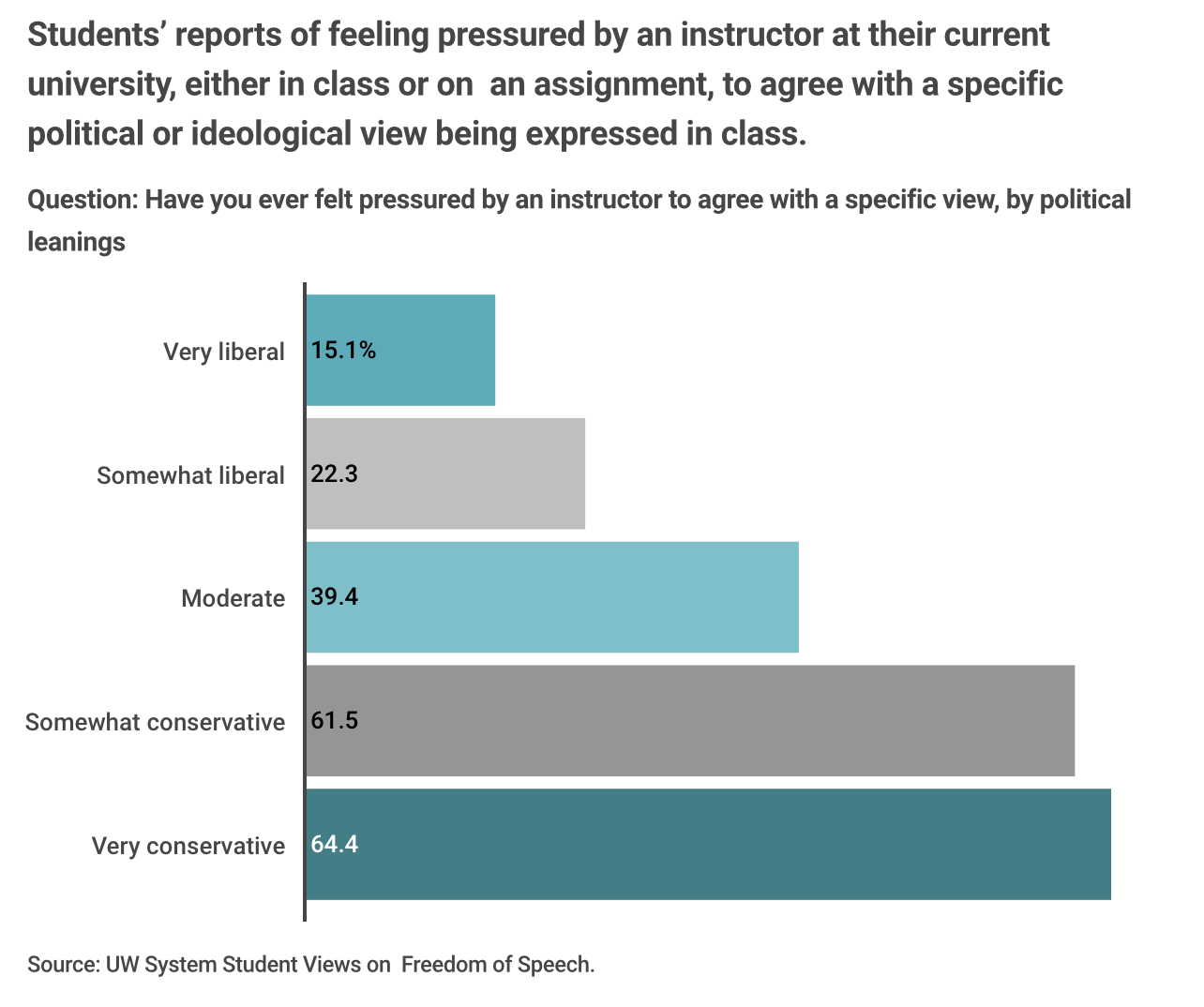
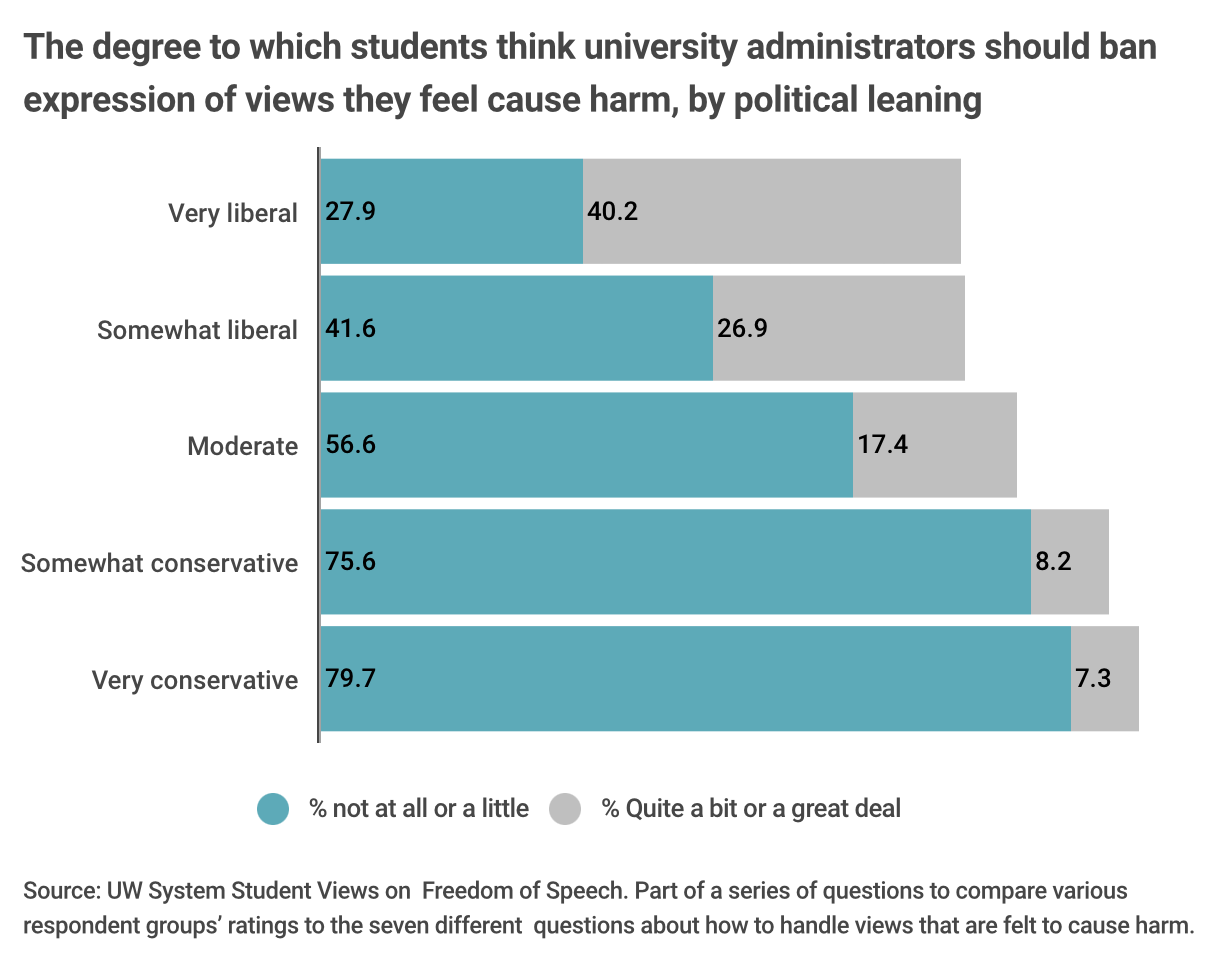
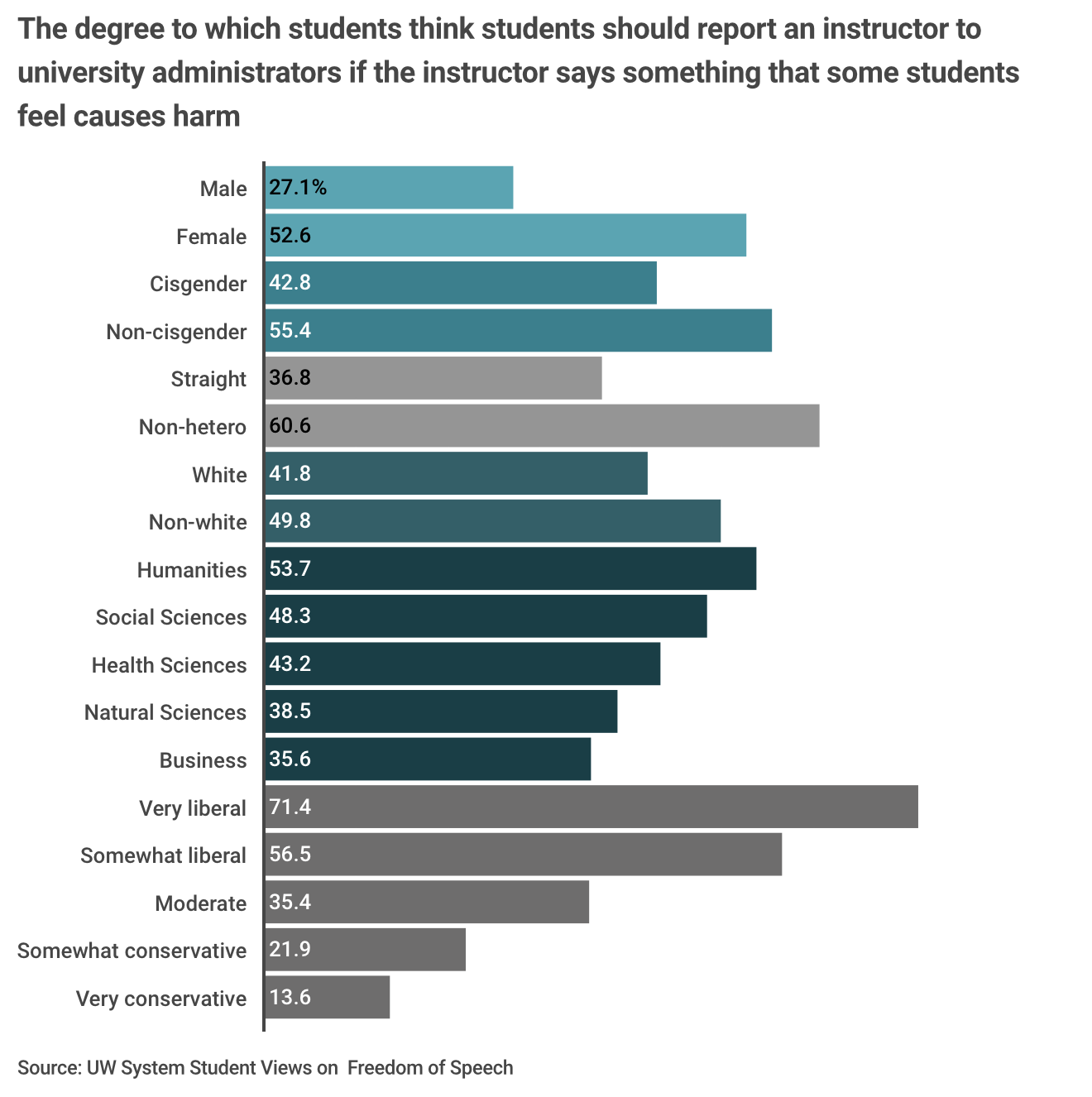


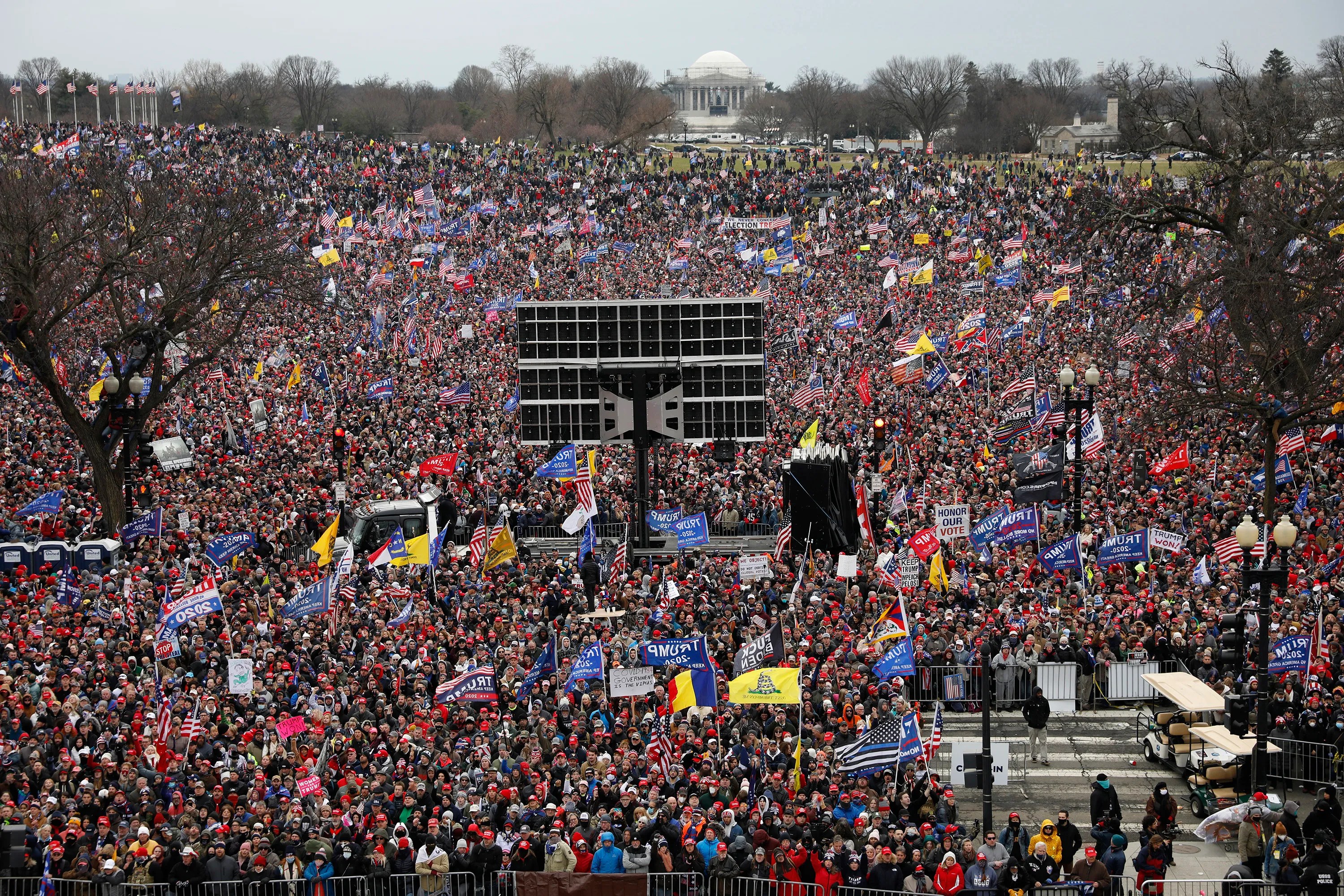
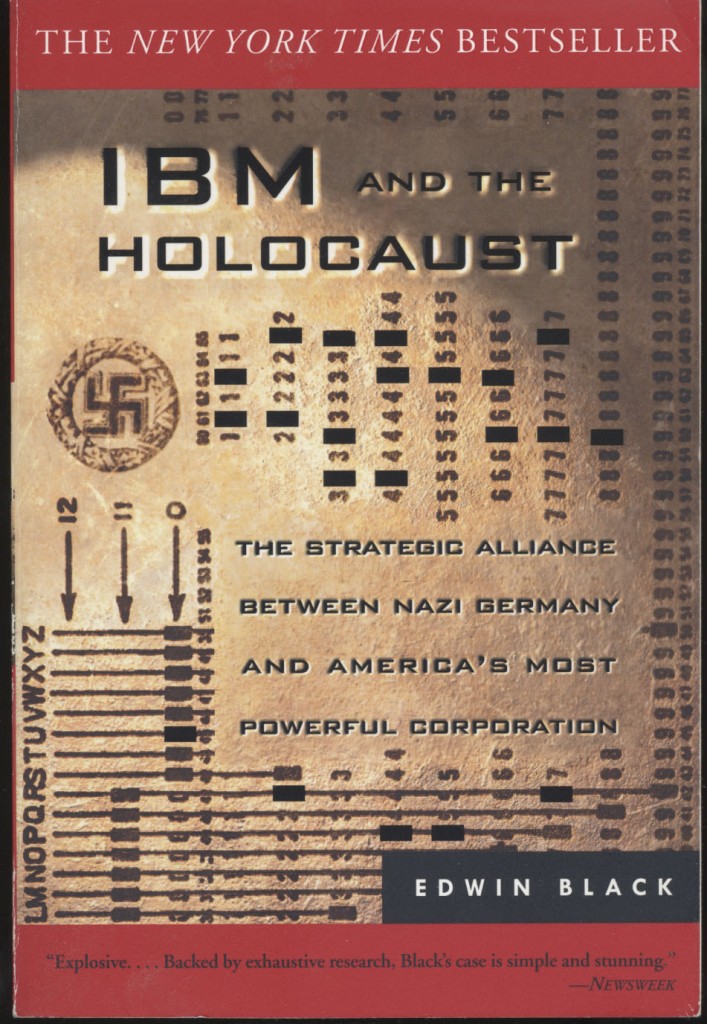


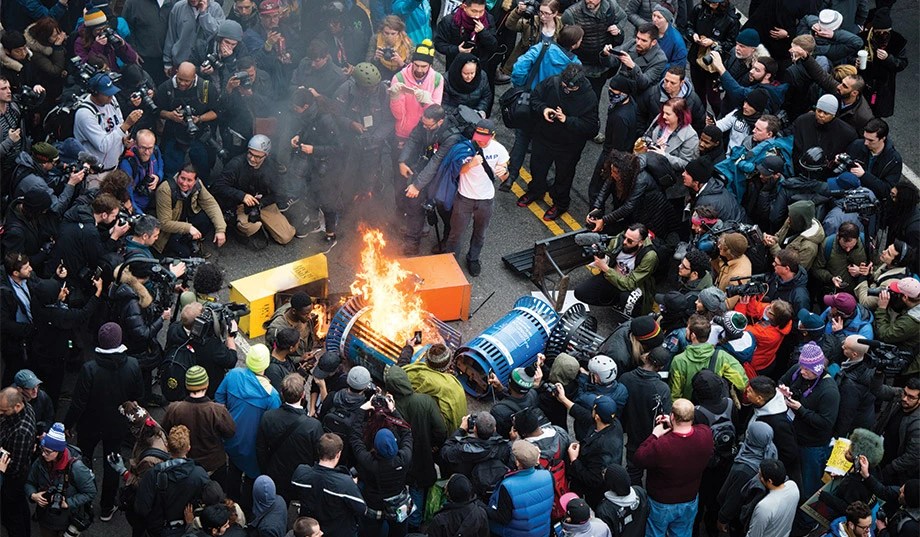

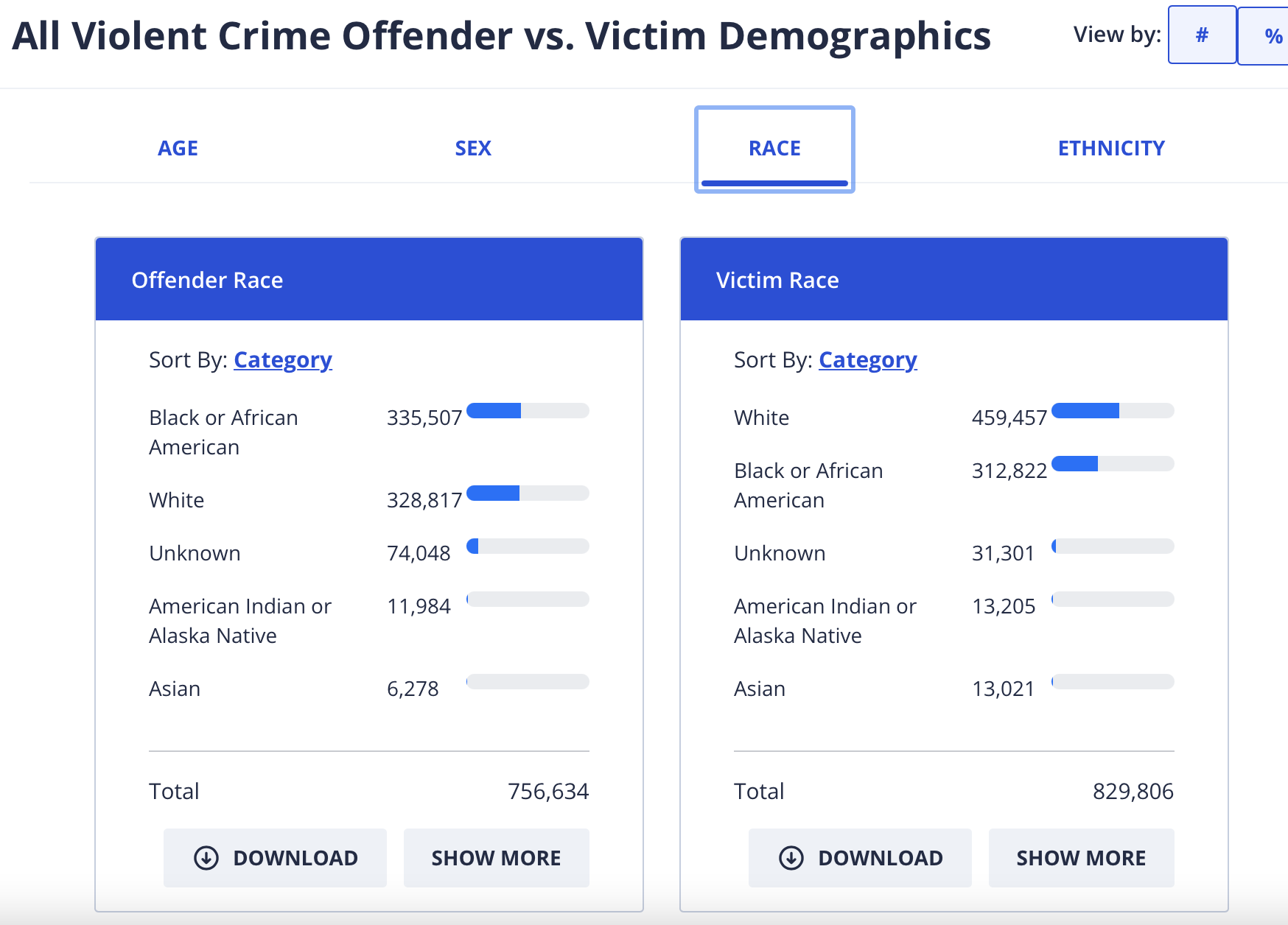


 freedom and reason