The media makes it sound like blacks continually suffer violence at white hands. At times, it sounds like the lynching days of old (Agency and Motive in Lynching and Genocide). Black people can’t leave the house without fear of facing white supremacist violence. Black fathers dread “the talk” with their black sons.
All this has got to be terrifying to black children—to be told that white people are out to get them, that they aren’t safe around white people. Moreover, just as a belief that black poverty is caused by white racism may justify robbing a white-owned store, a young black man may find in his outsized perception of the white threat justification for perpetrating violence against white people.
But the white threat isn’t real. It is an establishment myth. A myth that puts the lie to the claim that blacks suffer under white supremacy. For why would the white establishment lie to make white people look bad?
One quarter of lethal civilian-cop interactions result in the death of a black suspect. You wouldn’t know that a minority of those killed by police are black listening to CNN. The fact is that most of those killed by the police are white. (Disappearing the White Victims of Lethal Police Violence.) Why don’t you know this?
The theory of systemic racism predicts that the white establishment distorts the facts of police violence in such a way as to erase or obscure, in a collectively self-serving way, black people killed by the police. Instead, the establishment erases the white victims of police violence while dwelling on, in excruciating detail, the black victims of police shootings. How does this advance the cause of white supremacy? One might say that it doesn’t, except that white supremacy is a vanishing thing.
To be sure, blacks are overrepresented among those killed by police officers. But there is no evidence that this is because they are black (The Myth of Systemic Racism in Lethal Police-Civilian Encounters.). Black people are disproportionately poor. The dynamic at work in lethal civilian-police encounters is social class, not race. Just as blacks are 2.5 times more likely to be poor compared to whites, they are 2.5 times more likely to be shot by police. Moreover, blacks are overrepresented in the most serious crimes, which means that they are proportionately more likely to come into contact with police officers compared to other racial groups. Poverty plays a role here.
Perhaps systemic racism explains why blacks are overrepresented among the poor and violently criminal. However, there are lots of reasons for racial disparities across a range of variables that have nothing to do with present-day racism, which, again, is vanishing.
To explode yet another myth about race and policing, very few people killed by the police are unarmed (which doesn’t mean they weren’t a threat, of course). For the record, most unarmed victims of lethal police action are white.
What about civilian-on-civilian violence? Most homicides are committed by black men, an astonishing fact considering that black men are only around six percent of the population. Their victims are mostly black people. I need to emphasize this point: black people are more likely to be the victims of homicide and their perpetrators are almost always black. You should find the fact that most murder victims are black in a population that’s only around twelve percent of the population alarming. Black lives matter, after all.
Imagine if a significant portion of the thousands of black people killed every year in the United States were instead the victims of white perpetrators. Do you think the media would then tell us about the black victims of homicide?
Antiracist activist occupy restaurants and harass patrons
The inversion of racial significance is found elsewhere. For all these people saying that if it had been black people who had entered the Capitol building on January 6 instead of white people that the police would have treated the black people much more roughly, I would just remind them that for the entire summer and much of fall of 2020 across the United States black people burned down police stations and torched churches, terrorized residential neighborhoods, overturned police cars and assaulted police officers, defaced and toppled monuments, attacked and even killed civilians, looted stores and wrecked businesses—they even occupied parts of cities and surrounded the White Housing forcing the First Family into a bunker. Billions of dollars in property damage and more than a dozen dead, with hundreds if not thousands injured. Were these violent and sometimes armed rioters treated anywhere nearly as severely as those who entered the Capitol on January 6?
I don’t say these thing to make blacks people look bad. Most black people are not engaged in violent crime or riotous action. There is nothing in the nature of a black man that makes him criminally violent or rebel against imagine conditions of oppression. I say this because the media makes whites appear as violent racist oppressors. It is not true. We must ask ourselves: why does the media make things appear to be the opposite of what they actually are? Why, if America is a white supremacist country, would the media manufacture the perception that whites are the the chief perpetrators of serious violence in America?
[Nationalism] “does not necessarily mean loyalty to a government or a country, still less to one’s own country, and it is not even strictly necessary that the units in which it deals should actually exist.” —George Orwell, Note on Nationalism (1945)
“Remember this, take it to heart, live by it, die for it if necessary: that our patriotism is medieval, outworn, obsolete; that the modern patriotism, the true patriotism, the only rational patriotism, is loyalty to the Nation all the time, loyalty to the Government when it deserves it.” —Mark Twain, The Czar’s Soliloquy (1905)
The Happy Patriot, the Unhappy Nationalist, in The Atlantic, by Arthur C. Brooks, a professor of management practice at the Harvard Business School, is a bit dishonest, albeit not in a straightforward way. In fairness, Brooks is not alone in pulling quotes from George Orwell’s 1945 essay Notes on Nationalism and using them in the way he does. I do not think that he or others who use the essay in this way are being sloppy. Orwell announces his hedges throughout, clearly uncomfortable with his own argument.
I am a massive fan of Orwell’s work, but Notes on Nationalism is arguably his worst piece of writing. To wit: “Nationalism, in the extended sense in which I am using the word, includes such movements and tendencies as Communism, political Catholicism, Zionism, Antisemitism, Trotskyism and Pacifism.” His attempt to explain pacifism as nationalism is lazy at best. And this: “Jewry, Islam, Christendom, the Proletariat and the White Race are all of them objects of passionate nationalistic feeling: but their existence can be seriously questioned, and there is no definition of any one of them that would be universally accepted.” Odd for a socialist to suppose that the proletariat may rest upon a subjective basis, no? (Yes, Orwell was a socialist.)
Orwell makes clear in his essay that he is not using nationalism in the ordinary sense. Indeed. It would be helpful if those using his argument would be as honest as Orwell is about this. Rather, he explains that what he is after is an emotion that sometimes attaches to “what is called a nation—that is, a single race or a geographic area.” Since words are so important to Orwell, and since he has, however bad the essay, opened an important avenue of discussion, it is important as well that we get right the meaning of words. Clarification: I am not here to deconstruct Orwell’s essay. I am really after Brooks’ argument and the project he represents. However, getting the terminology right is key to understanding what’s wrong with Brook’s Atlantic piece, so please bear with me. As it will turn out, I won’t have much to say about Brooks’s piece, since correcting and updating Orwell makes the problem with Brooks rather plain.
By “race,” Orwell means what modern sociologists call ethnicity. Long before Orwell sat down to write his essay, race had become a biological construct referring to one’s genetic lineage and organized by a typology used to differentiate human populations. Obviously groups differ in other ways, such as culturally and linguistically. The construct of ethnic was developed only shortly before Orwell penned his piece and was soon being used to differentiate human populations without reference to race. Prior to this, cultural, linguistic, and even religious differences often came under the label “nation” or “nationality.” Long ago the concept of nation came to stand for a defined territory with a common state and system of law containing a body of people of one or more races. One’s nationality is determined by one’s birth in this territory and to its inhabitants (jus sanguinis) or, in some countries with the English common law tradition, one’s birth in this territory (jus soli). Given this, it is important to differentiate these words, with race referring to a biological entity, ethnicity to culture and language, nation to a juridical-political system with geographical boundaries, and nationality to one’s place of citizenship, either by birth or through naturalization.
With these distinctions in mind, there are two types of nationalism determined by the relationships between race, ethnicity, and nation. One type is found in a state that may be multiethnic or multiracial but where one or more ethnic or racial group is privileged in law, with other ethnic or racial groups existing in a lower status under that same law. Such a state is founded upon ethnonationalism or racial nationalism. Modern-day Israel, with its law reflecting the ideology of Zionism, officially recognizing Israel as a Jewish state, is an example of formal ethnonationalism. Arabs living in Israel have rights, but they are second-class citizens with respect to law and property. The other type of nationalism is civic or liberal nationalism, where different ethnicities and races stand equal before the law without respect to their ethnic or racial identities. This is accomplished by regarding citizens and residents as individuals first and as groups second (if at all and ideally only when group identity bears on individual liberty and rights). The United States is an example of a liberal nationalist country. In fact, it is the paradigm (which is why it is so great).
Orwell stresses throughout his essay that he is using the term because he cannot find another that expresses his point. We must therefore recognize that Orwell’s argument is already limited by his qualified use of a term that means in the ordinary sense the desire by a group of people who share a common sense of purpose, culture, and language to form an independent country. Moreover, nationalism is ordinarily understood as a feeling of pride in one’s country, an expression of patriotism, which can include a feeling that one’s country or region is better than others—what we might call chauvinism but for the popular understanding that chauvinism is characterized by aggressive and unreasonable belief in national superiority. (Some countries are better than others, so what may appear as chauvinism to those who regard one’s reasons as unreasonable may be warranted. For example, my bragging about the United States.)
Orwell was writing about nationalism of a particular sort in the wake of WWII—the experience of National Socialism and the attitude of putting nation, in this case explicitly associated with race, beyond decency. Orwell’s extraordinary use of nationalism was to attempt to describe a blind loyalty to a party appealing to such indecencies, especially ethnonationalism or racial nationalism.
Orwell distinguishes nationalism from patriotism, the latter defined as “devotion to a particular place and a particular way of life, which one believes to be the best in the world but has no wish to force on other people.” Orwell defines nationalism in contrast: “Nationalism is power hunger tempered by self-deception.” Patriotism is defensive. “Nationalism, on the other hand, is inseparable from the desire for power. The abiding purpose of every nationalist is to secure more power and more prestige, not for himself but for the nation or other unit in which he has chosen to sink his own individuality.” They appear as opposites, but Orwell’s definition of patriotism is nationalism in the ordinary sense. He twists into knots sentences to escape ordinary meaning. This essay was apparently written by the anti-Orwell.
I can understand Orwell’s claim that nationalism is power hungry given what Great Britain had just been through with Nazi Germany. But why would a term explicitly hedged from an emotional and time-trapped essay be the basis of a contemporary argument against nationalism? The Happy Patriot and the Unhappy Nationalist is propaganda work in the service of the globalism project. The give away is when Brooks writes, “Populism and demographic tribalism are on the rise worldwide.” This is true, but insinuating the two together means to taint the one with the other.
Populism is a political approach appealing to and organizing those ordinary people whose concerns and interests established power disregards. Only to the elite is organizing ordinary people to challenge the status quo in a truly democratic way seen as manipulating the rabble with demagoguery. We can understand this when we see that populism stands in contrast to progressivism and other elite approaches to shaping and steering popular desire and sentiment. Demographic tribalism occurs when a population is divided or divides into ethnic, gender, racial, and religious groups that operate as (apparently) politically-interested parties. That is certainly dangerous and it describes rather precisely what is presently threatening national integrity throughout the West.
I have read a fair bit of Brooks’ writing. He is a libertarian who served for many years as the president of the American Enterprise Institute before joining the faculty at Harvard. My interpretation of Brooks’ attitude, especially his understanding that populism is not a marginal movement but a major player in the culture war, is that he fears nationalism for its potentially constraining effects on free enterprise. In his mind, nationalism is closely aligned with statism.
What he is attempting to convey with this essay is that one should be patriotic about free market capitalism while opposing nationalism since it threatens his favored mode of production. He is a patriot for capitalism. At the same time, he is plugged into the sentiment that America should be fairer and more equitable. He strives to provide conservatives with moral arguments with which to defend capitalist foundations and encourages focus on neoliberal solutions to poverty. These arguments necessarily accept certain premises of corporatist ideology found in progressivism. Brooks is thus well situation in the Democratic-Republican Party establishment. And, today, that is globalist.
Brooks does not appear to grasp that the real threat to free market capitalism is not populist-nationalism but progressive corporatism (I will soon publish a lengthy blog on this subject, so stay tuned). Brooks’ essay is thus part of a campaign to delegitimize populist-nationalism by arguing that it is an expression of tribalism (racism, in particular), even while he is part of the established order that promotes demographic tribalism. In fact, populist-nationalism is the antidote to the demographic tribalism those managing the decline of the West organize and wield against the individual.
In 1949, George Orwell published his dystopian novel Nineteen Eight-Four. The book tells the story of a man named Winston Smith, a citizen of Airstrip One, and an employee of the Ministry of Truth, the organ of government in charge of an ever-changing historical narrative functional to the interests of the Party. The plot has Smith taken by an official named O’Brien to the Ministry of Love and rehabilitated for thought crimes. There, in Room 101, O’Brien explains to Smith that such truths as two and two makes four may be changed to fit the needs of the Party. Two and two may make five. Two and two may make three. Whatever the Party says. Of course, Smith knew this, as he was always changing history at the Ministry to Truth. But Smith became deviant because he failed at doublethink, the quality of mind that allows the subject to hold two contradictory ideas simultaneously.
In the end, Smith learned to love Big Brother. But coercion is not the only way to align one’s thought with the interests of the Party. Italian communist Antonio Gramsci argues in his prison notebooks that the elite control the masses not only through violence and economic (or structural) coercion, but also through culture and political ideology. Elites establish a common sense in which its interests are presented as ordinary social logic. Thus citizens are conditioned to accept elite interests as their own interests. Those so conditioned not only do not require discipline and punishment, but they often serve as social controllers for the elite on their own volition. Sometimes, they take up the duty with zeal.
Gramsci’s theory is concerned with identifying those institutions that function to bring the masses under hegemonic control, primarily by constructing a consensus reality that conceals or distorts objective reality and dissimulates power. Hegemony recreates Plato’s Cave without the prisoners feeling the weight of their chains or the dimness of their confines. What is undeveloped in Gramsci’s work is the social psychology that facilitates the process of hegemony. Unfortunately, man’s evolutionary history prepares him for elite manipulation.
In the early 1950s, social psychologist Solomon Asch found that people deny, ignore, and lie about reality even when the truth is in right in front of them and people can know they are lying. Some do this to conform to group expectations because they fear loss of solidarity. But others do this because they become unsure that what appears to their senses is actually what they should know it to be. For them, Ashe’s experiments were experienced as a gaslighting exercise.
Here’s what Asch did. He recruited eight male college students to participate in a “perceptual task.” But he actually only recruited one student. The other seven were confederates instructed to lie about task. The task involved the presentation of two cards, one with a line on it and another with three lines on it, each associated with a letter: A, B, and C. One line on the second card matched the length of the line on the first card. The other two were unmistakably different lengths. As the research went around the table, leaving the experimental subject last to respond, the confederates were unanimous in selecting a line that did not match.
Although most subjects resisted agreeing with the manufactured consensus, more than a third consistently conformed with the consensus reality. That was scary enough. However, in multiple trials, three-fourths of experimental subjects agreed with the incorrect answer in at least one of the trials. In debriefing, many subjects who aligned their answer to the false consensus reported knowing the group was wrong but did not want to be the dissenting voice. Again, scary enough. Others doubted their own ability to correctly determine reality. I don’t know which effect is more terrifying—not standing up for the truth or losing confidence in your ability to know an obvious one. Either way, the results troubled Asch. “That intelligent, well-meaning, young people are willing to call white black is a matter of concern,” he writes.
Indeed. Conforming to the consensus reality leads to terrible consequences. Hannah Arendt in her 1977 Eichmann in Jerusalem: A Report on the Banality of Evil describes the “banality of evil,” where mass murder in the twentieth century was not only a consequence of the dehumanizing effects of high modernity amid capitalist crisis, but also the result of the human tendency to go along with the herd. To obey the expectations of others. At the social psychological level, in a series of experiments performed a decade after those of Asch, Stanley Milgram confirmed Arendt’s assumptions by showing how ordinary people obey authority even when the task is unpleasant.
Add to the effects of peer pressure and obedience to authority to the deployment of coercion techniques. One need not turn to extremes of Winston Smith’s experience in Room 101. Consider what is nowadays being called “cancel culture.” In sociology, we have a term for this method of bringing about ideational and behavioral alignment in this way, namely social coercion. Bullying, gangstalking, gaslighting, mobbing—all of these are manifestations of social coercion tactics. Social coercion is mob action in which a false consensus about an issue is manufactured through intimidation, marginalization, ostracization, and even punishment. Those who are using social coercion tactics to control those around them often came willingly to false reality they play a role in manufacturing and perpetuating.
The remains of ten America Indian children who died more than one hundred years ago while attending Carlisle Indian Industrial School in Pennsylvania are being to their communities in Alaska and South Dakota, according to a notice from the Department of the Army, which oversees the cemetery.
The Carlisle Indian School student body circa 1885
Life expectancy in 1900 was around 45 years of age. If you lived to 60, your life expectancy going forward was at the beginning of the century comparable to what it would be at the end of the century. The low life expectancy was attributable in part to a high rate of child death. Children in orphanages, asylums, and other institutions for children suffered a particularly high rate of death.
The normal practice of the day was to bury the dead on the grounds of the institution. If we start digging up cemeteries, we are sure to find a lot of skeletons. If we do it selectively, then narrow claims may be manufactured. This is not to excuse the practice of removing American Indian children to industrial schools. Nobody alive today is responsible for that practice. It is to note sociological processes that manufacture social problems and the interested ways in which such manufactures happen.
Watch for moral panics useful for political agendas. We are living in a time where people use ghosts to extort the living. Ancestor worship and intergenerational trauma are primitive and irrational notions. The regressive demand that we act as if crimes are passed through our genes is part of the war on reason and justice waged by those who want stuff for nothing. Lots of stuff. For literally nothing. (See For the Good of Your Soul: Tribal Stigma and the God of Reparations; also A specter is haunting America—the specter of reparations.
Have you read Caroline Randall Williams’ June 26, 2020 essay on her “rape-colored skin”? Folks are sharing it again. In the essay, published by The New York Times, William’s offers her body as a monument. It is bad enough that she repeats the false claim that race is a biological reality; on that basis, she claims trauma from events that she could not possibly have experienced in order to insinuate that white people are guilty of crimes they could not possibly have committed. She writes as if she were a rape victim. Raped by history. Wearing rape-colored skin.
There is a very obvious psychological need here to draw attention to herself by claiming the mantle of martyrdom and the status of the victim—while politically reducing generations of white men to rapists. This way of thinking is simultaneously crazy and despicable. Why are we promoting crazy rather than treating it? Why are we tolerating the ideology that gives rise to racial hatred? (See The Endless Relitigating of the Past as a Postmodern Condition.)
* * *
Have you seen this circulating on Facebook?
A meme circulating on Facebook
I don’t believe in Jesus (I don’t think he was a real person). Why would I care if he waves my flag? But I should care when those who believe in Jesus or any other mythological figure try to tear down my country. Putting religion before country is not exactly the point of enshrining secularism in the First Amendment of US Bill of Rights. Indeed, the First Amendment was established precisely to counter the destructive notion that a people organize first on the basis of religion.
Why a destructive notion? In a theocracy, there is no freedom of conscience or freedom of thought. If the secular nation-state has any primary function, it is surely to protect the individual from forces that would deny his human rights to freedom of conscience and freedom of thought. The type of Christianity expressed in this sentiment is the political and moral equivalent of Islam. Very dangerous.
I remember quite clearly all of us folks on the left condemning conservative Christians for telling us what to think, how to organize our culture, how to live our lives. But there is another moral and political equivalent to Christian theocracy. And it hasn’t yet been reformed. The Woke crowd are the new religious fanatics. And anti-Enlightenment is the driving force behind their interventions in the world. Is it any wonder that the social justice warrior is so eager to defend Islam? (Islamic hostility to homosexuals and women may not signal a contradiction.)
I oppose organizing the world by the lights of Woke with the same enthusiasm as I do with any other theocratic endeavor. A diversity, equity, and inclusivity workshop is a come-to-Jesus meeting. Teaching children critical race theory in public schools is Bible study. Teaching it to soldiers is ideological indoctrination. Working it into law and policy violates the First Amendment. All this betrays the nation’s principles, which are humanist, rationalist, and secularist. Why are we allowing this to happen to our country?
I realize a lot of people disagree with me on my rejection of the systemic racism thesis. My rejection of the thesis (which is based on evidence and logic) is not the main reason I oppose teaching critical race theory to children. My objection there is not that it is wrong but that it is taught as if it were the truth. It is wrong to lie to children. So while I teach critical theory in my law courses, I do not teach it as gospel. However, opposition among conservatives to the teaching of critical theory is formed on the basis of a correct understanding of race relations in contemporary United States. I suspect that one of the reasons so much energy is spent mocking and ridiculing conservatives is the need to poison the well on this issue.
A Yahoo News/YouGov poll is out indicating an association between support for critical race theory being taught in public school and belief in the notion of systemic racism, with conservative respondents skeptical of the existence of the phenomenon and therefore less likely to support the public instruction of critical race theory. (See Are Teachers Really all in on Critical Race Theory?) Critical race theory, boiled down, is an academic theory developed in law school rooted in the assumption that racism is embedded in the US legal system and American institutions. (See Crenshaw Confesses: Critical Race Theory is About Racial Reckoning. Also State Media Defends Critical Theory.)
Buckner, Kentucky, June 28, 2021
One might look at American history and note that the system of de jure (that is legal) racism was dismantled more than half a century ago and wonder what the claim that racism is embedded in the legal system could mean. The response to incredulity is that racism is axiomatic and that, therefore, the absence of a race-conscious legal system and of race-conscious institutions and policies is the manifestation systemic racist. In other words, colorblindness, equal treatment, race-neutrality, etc., equals racism. The response is similar to the response I get when I ask a believer how he can believe in God when there is no evidence for God’s existence. The believer responds, “Just look around you. God is everywhere.” I have also been told that the greatest trick the Devil ever played is telling me that God is not real.
It’s a cute trick that I confess falling for at first. Not the God thing. The systemic racism thing. But the God thing compelled me to ask about evidence for the systemic racism thing. I have tried to live my life beyond faith-belief. It’s why I became a scientist. So I took a look and, to be sure, the facts indicate that blacks trail whites in every significant social category. Putting this in sociological terms, life chances for whites are on average better than they are for blacks. Whites as a group enjoy better health care outcomes and longer lives, higher levels of educational attainment, greater labor force participation rates, higher salaries and wages, nicer homes, less criminality and violence, and their children are more likely to live in two-parent homes. These and other group disparities are often cited in defending the claim that whites enjoy a racial privilege.
However, the distribution of situations and life chances internal to respective racial categories are more variable than average differences between groups on these factors and, moreover, whereas variability concerns individuals, statistical averages are abstractions. I can see, for example, that there are many more poor whites than blacks (three times more), whereas a greater percentage of blacks are poor relative to demographic proportion (see They Do You This Way). I agree that statistical aggregates are useful in predicting other statistical aggregates. But to draw assumptions about individuals based on abstractions commits both the ecological fallacy and the fallacy of misplaced concreteness (or reification). Even at the level of statistical abstraction, group disparities do not explain those facts. Unexplained variance is just that.
Social facts accepted, the western system of jurisprudence developed in the context of adjudicating disputes between actually-existing individuals and formal groups. Put another way, the common law developed to deal with the matters of concrete fact not statistical abstraction. Moreover, the burden of proof rests with the accusers, while the accused is presumed innocent. The court does not accept prima facie an accusation as correct until proven otherwise. This gets the burden wrong. First impressions are often incorrect or inaccurate. A disparity is not proof of an injustice. Effects are not their causes. Any claim made about causal forces must identify and specify them and show empirically that the outcomes in question result from them while ruling out other causes. The foundation of the democratic republic is secular and supernatural claims are walled off for this reason. Yet the advocates of critical race theory ask us to substitute for the absence of evidence for systemic racism in law and institution results of unidentified or unspecified processes that lie beyond the law.
After overcoming the false belief of systemic racism, I wondered why conservatives are immune to the fallacious manner of thinking that propels the myth of systemic racism and white privilege even while they admit that personal prejudice and discrimination exist and are wrong. Here’s what I think is going on.
A thought-stopping mechanisms was put in me from a very young age wherein, if I were to blame individuals for their situation, I would find myself blaming the victim if the individuals in question were black and feel ashamed. Asians and Jews, two groups who have historically suffered remarkable levels of racism (or, in the case of Jews, at least something very much like it), overcame their situation in the United States through the ethic of hard work. Asians and Jews emphasize the importance of family, community, initiative, and responsibility. One can say this in the present of progressives without much controversy if certain comparisons are not made. One may not ask the same questions about the disparities between blacks and whites.
One may note the failures and pathologies of whites. Did they have babies too young and too often? Is the father involved? Does the parent surprise and discipline her child? Does she emphasize educational achievement? Does she drink and drug? To be sure, there are other reasons why there are poor white people. Corporations shipped the factories overseas. Politicians opened the border to mass immigration. But the point is that we’re allowed to include everything in the analysis. For sure, we may not claim that the situation of poor whites is the result of systemic racism.
A conservative will tell you that everything I above identified played some role in creating and perpetuating white poverty. Globalization has made life difficult for the white working class. But members of that class have also often made life difficult for themselves. Not all poor white people were always or will always remain poor. That tells you a lot. Some change their lives for the better and they would take offense at the suggestion that they played no role in overcoming their circumstances. However, unlike the progressive, the conservative will also consider all these same possibilities with respect to the situation of a black person. He is open to explanations that rest on class and economics. But he is also open to cultural explanations. Too many children born out of wedlock? Fathers involved? Children supervised and disciplined?
The progressive cannot be open to cultural explanations with respect to blacks because he believes that to do so makes a man a racist. To be a good men, he must be the opposite of a racist. He must be the antithesis—the antiracist. The antiracist assumes group disparities, where those groups are differentiated by racial identity, are the result of injustices visited upon all members of the victim group. He has a priori excluded from all possible explanations the role of attitudes and behavior among those judged victims of circumstance. The progressive is still allowed to use the cultural explanation for groups not judged victims. He has no problem condemning the backward and ignorant whites who vote Republican and complain about critical race theory at meetings of their local school boards. In this instance, what a conservative believes is what explained his behavior. The white murderer chooses to pick up a gun and murder his victim. The black murderer kills because white supremacy put a gun in his hand.
Progressives believe in critical race theory being taught in public schools because they believe in a thing without evidence, indeed, a belief that flies in the face of the evidence, as well as defies logic because evidence and logic do not apply to faith-belief. Faith-belief is stood up on ideological ground. They also believe in teaching CRT to children because this makes them an antiracist and therefore a good person. In contrast, conservatives are immune from belief in systemic racism not because they are racist or bad people but because they neither reflexively nor selectively disallow cultural explanations for the outcomes progressives accept as prima facie evidence of systemic racism. Progressives want you to believe conservatives are backwards and ignorant. But, at least on this matter, they are thinking for themselves.
I am wondering if anybody can help me understand something. I am having trouble understanding why, if it is wrong to discipline or punish people for not adhering to religious beliefs others hold, for failing or refusing to take up a given religion’s doctrinal language, how can it be okay to discipline or punish people for not adhering to doctrinal language of critical race and gender theories? If I cannot be forced to believe in angels (or to not believe in angels), how can I be forced to believe that all whites enjoy racial privilege or that sex is not a biological reality or that 2+2=5 or that there are only four lights no matter how many lights they want me to see? Why is it not immediately grasped as the nightmare par excellence the act of forcing somebody to deny what they see before their eyes or know to be true or to believe something they neither see nor know? Or is the greater nightmare that some people find comfort and safety there?
When an employer requires an employee to attend a diversity workshop where he will be instructed to speak in a particular way and accept as true and good (or at least pretend that he has accepted some thing as true and good) things based on one theory among many about race or gender, why is that any different than requiring that employee to attend Bible studies and expect him to accept Jesus into his life? Doesn’t the Constitution protect individuals from having to accept the beliefs other people think are good and proper? Are we not as citizens of a constitutional republic based on Enlightenment principles of free thought and conscience with a bill of rights securing these protected from forced association and assembly and compelled speech around religion and political ideology? Critical race and gender theories are at least political (I argue they’re religious given references to impossible or at least supernatural things, but the status political is good enough).
A society that punishes people for words is a society that compels people to exist in bad faith. I am all for persuading people to take up or leave behind positions based on evidence and reason. I would be an unethical person if I were satisfied that others agreed with me because they didn’t want to hurt my feelings or because they were scared of what would happen to them if they didn’t. Imagine we live in a fascist society (we’re on our way). I am sure many of those reading this would be compelled by fear to participate in the indoctrination sessions necessary to bring the population around to the fascist point of view. Winston and Picard were stubborn men. Then again, they were fictional men. Can we regard those who live under fascism a free people? Can we regard any man who must believe and speak an ideology free? Wouldn’t an objective condition of freedom necessarily be that a man is never forced into the delusions of others?
If you want to understand why it is so important to religious or, more broadly, ideological zealots that you believe as they do, you must grasp this—that many of the things the zealot believes (or pretends he believes) exist only because he believes they exist. If too many people stop believing in them, the phantoms of his beliefs lose light and power. Skeptics are trouble. Apostates, heretics, and infidels. If the phantoms dim or evaporate, then that means the zealot loses you. But he wants you to live in his world so he can control you. He wants this so bad that he feels he needs it. If he didn’t want to control you, if he didn’t need to control you, then he would leave you alone. However, if he commands societal power, then he can make you live in his world. What’s wrong with him?
Remember Tinker Bell from Peter Pan? Remember how when her light is going out Peter Pan turns to the audience and in a dramatic display of emotional blackmail exhorts them to chant, “I do believe in fairies! I do! I do!” Millions of children have over the century been coerced by parents and peers to chant along with him, “I do believe in fairies! I do! I do!” Doesn’t that give the away the game? Isn’t Pan telling us that Tinker Bell only exists because you believe in her? How horrible it would be to let her light go out. What’s wrong with you?
Margaret Kerry in a scene from Disney’s Peter Pan (1953)
Pan (actually playwright J. M. Barrie) is telling us something essential. He is telling us that the fantasies of other people depend on our assisting them in upholding their voracity. When people tell us to affirm with them that some thing they believe is true, they are telling us that they aren’t sure it is, or that other people have doubted it, and they need us to help convince them and others that their delusions are not delusions, but that they are real. They need an “Amen.” Can I hear an “Amen”? The desire to compel other people to uphold one’s delusions is often unthinking, habitual, reflexive, sometimes even required. But sometimes it indicates a psychiatric disorder. And sometimes people who are mentally ill don’t want therapy. They want the rest of the world to join them in their madness.
In a revision to Barrie’s play, the invention of “fairy dust” was introduced. The fairy dust was necessary for the Wendy and her siblings to fly. Before, they could just fly without any special sauce. They could fly because they believed they could fly. But too many real-world children were jumping from beds and windows in an attempt to get to Neverland and its never-ending adventures. Some were badly injured. Without fairy dust, they were grounded. Sadly, it took a fiction to negate a fiction. Of course, they were children. What did they know?
I am 59 years old. I lived through the civil rights movement, the Vietnam War, and all the rest of it. I went to middle and high school in the 1970s (these schools were racially integrated, for the record). This was in the South, in Murfreesboro, Tennessee, right down the road from the Stones River National Battlefield. In that environment, I learned all about the history of colonization, genocide, slavery, and racism. I also learned about how the United States abolished the slave trade, fought a war to end slavery, and then passed the Civil Rights Act of 1964 that ended legal discrimination against black people in public facilities and businesses of accommodation. I learned about these things from my teachers and my textbooks and television shows. In 1977, the nation watched the miniseries based on Alex Haley’s 1976 book Roots.
Radical historian Howard Zinn’s intervention in A People’s History of the United States was not written to correct the “lies my teachers told me” (to riff off the title of a similar book by sociologist James Loewen), but to pump ideology into a system of progressive indoctrination. This style of conveying history tells folks what most Americans have long known as if it’s news. It’s a method of orchestrated forgetting and manufactured discovery. It makes the myth-maker appear as truth-teller. Alongside revisionism (what Zinn calls the other side of history), the progressive teacher prepares her student to hear the good stuff—if they hear it at all—as an exercise in bad faith.
From the programmer’s collection
Students come into my college classroom fresh out of high school recounting the horrors of America. A minority of conservative students sit, most of them, quietly, either having learned the futility of protest or self-censored by the harassment they have endured. The hip kids seem to be unaware that all that bad stuff they talk about no longer exists and hasn’t for a very long time. There is no progress in the history they learned. The arc of history was never bent because it was waiting for them to bend it. They are a special generation with special insight and a purpose. They have this peculiar quasi-religious/racialist way of thinking where timeless evil passes through our genes and they are its chosen exorcist. Rare is the teacher who fails to take up the progressive scriptures that prompt the congregation to say their “Amens.” Cancel culture works primarily by chilling the environment.
Why are historians and sociologists trying to make the younger generations think that nobody talked about this stuff until progressives came along and spoke truth to power? Why are teachers, administrators, and pundits acting as if critical race theory is merely the “accurate and honest teaching” of American history? (Have you see these memes?) It is acting. They know it’s not true. That’s why the schools hid the curriculum from parents for all these years, a deceit waiting to be exposed by the lockdowns that forced children to work from home (an unintended consequence, I assure you). Teachers and administrators warned the staff to be careful what they said online in case a parent happened to be walking by or wanted to involve herself in her daughter’s education. Teachers are taught to organize their lectures according to an Orwellian newspeak, the jargon of critical theory. It’s code. The deep assumptions, that all cultures are equal and no cultures are bad except Western culture, which is the expression of white settler colonialism, are smuggled in such concepts as “cultural relativism,” “cultural pluralism,” and “white privilege.” Opposition to the racist indoctrination of our youth is portrayed as the work of backwards gun-totting mouth-breathing knuckle-draggers trying to keep people in the dark about American history.
But who’s trying to keep people in the dark really? I have a PhD in sociology and hold tenure at a woke public university teaching in a program called Democracy and Justice Studies. I have been teaching college for more than a quarter of a century and have been a student for much longer. I’m an insider, educated during the moment when postmodernist epistemology was pressed into the social science curriculum. The agenda of the progressive left, which is to advance the interests of transnational corporate power, depends on those coming up looking at America and the West with disgust. Graduate students are trained to teach your children a history of Western civilization that makes their history and culture appear as awful as possible. Teachers learn to accomplish this by pretending as if the “real history” was never told and that the academic is the courageous light-bearer. That makes them mighty special. But the real history has been told. The adults in the room all know it.
The deception is rather obvious if you step back a bit. By pretending as if “real history” is concealed, progressive educators mean to indicate the presence of rightwing conspiracy to falsely portray America and the West as something about which citizens should be proud and eager to preserve. Chauvinism, nationalism, patriotism, and populism are very bad things. This ruse makes progressives—those who seek to deconstruct the nation-state, democratic-republic sympathies, and liberal freedoms and rights in order to clear the way for the entrenchment of corporate bureaucratic command and control—appear as brave and honest. They are the good people. They mean well. They seek justice. The work to straighten a crooked universe.
Slavery is shocking, to be sure. But this truth is so well understood that I hardly need to tell you why. You know why. You learned about it in school. However, when one learns that it was America that ended the slave trade almost two hundred years ago, and that only a few decades later sacrificed more than three-quarters of a million men to abolish chattel slavery itself (a system that existed in only one part of the country), that’s not very useful for those who for economic and political-ideological purposes need Americans to believe America is an awful country and for white people to apologize for things for which they feel guilty but couldn’t possibly have done. By orchestrating a forgetting of history by manufacturing the illusion of a fixed and eternal past that shines the worst possible light on white people, especially men (since, after all, white men have done a lot of good stuff—and no only for themselves), the propagandist makes the horrors of the past feel present and acute, offer the audience a corrupted world and polluting people in need of purification and redemption. He constructs quasi-religious myths as “white privilege” and “intergenerational trauma” and then proffers progressive doctrine as salvation.
What is being foisted on children is not history. It’s ideology. A new religion backed by corporate power. Parents are objecting not because they are trying to stop the truth from being told. They are objecting because they know lies are being told. They sense that a cult is trying to get their children, disrupt their common sense, and turn them against their families. Corporations have not only captured regulatory agencies. They’ve captured the public education system—k-12, the technical and community colleges, and the universities. And they’ve put to work advancing the agenda and legitimizing woke public education the media and culture industry they already own and control. Antiracism is corporate propaganda. It’s divide-and-conquer masquerading as “social justice.”
Earlier I wrote that they know what they’re doing. That was a bit of hyperbole. There are some elites so bubblized they actually believe the propaganda. They appear sincere on account of it. But many of them believe that you’re so stupid that you won’t see what going on. You ought to hear the way they talk about you. Sometimes they say the quiet parts out loud. You’ve heard it. But it’s the atmosphere inside the bubble. When you’re not so stupid (which is very often and also sooner or later), they try to cow you by smearing you as “racist” and “xenophobe.” They’re trying to shut you up and shut down your protesting because they mean to transform this nation from something they loath and despise into something you can’t love or cherish. Recrimination is an effective strategy. It worked to some extent on me. That and the atmosphere. I required some deprogramming. We are, after all, the ones who should be the most deeply indoctrinated.
I should have awakened to this in the 1990s. During my training as a graduate student I showed students in introductory sociology the film Manufacturing Consent, a 1992 documentary based on the 1988 book by Edward Herman and Noam Chomsky of the same name. In the film, Chomsky, a linguist at MIT, is asked about the claim he and Herman make in the book that “it’s the primary function of the mass media in the United States to mobilize public support for the special interests that dominate the government and the private sector.” “What are those interests?” asks the interviewer.
CHOMSKY: Well, if you want to understand the way any society works, ours or any other, the first place to look is who is in a position to make the decisions that determine the way the society functions. Societies differ, but in ours, the major decisions over what happens in the society—decisions over investment and production and distribution and so on—are in the hands of a relatively concentrated network of major corporations and conglomerates and investment firms. They are also the ones who staff the major executive positions in the government. They’re the ones who own the media and they’re the ones who have to be in a position to make the decisions. They have an overwhelmingly dominant role in the way life happens. You know, what’s done in the society. Within the economic system, by law and in principle, they dominate. The control over resources and the need to satisfy their interests imposes very sharp constraints on the political system and on the ideological system.
Chomsky is then asked, “When we talk about manufacturing of consent, whose consent is being manufactured?”
CHOMSKY: To start with, there are two different groups, we can get into more detail, but at the first level of approximation, there’s two targets for propaganda. One is what’s sometimes called the political class. There’s maybe twenty percent of the population which is relatively educated, more or less articulate, plays some kind of role in decision-making. They’re supposed to sort of participate in social life—either as managers, or cultural managers like teachers and writers and so on. They’re supposed to vote, they’re supposed to play some role in the way economic and political and cultural life goes on. Now their consent is crucial. So that’s one group that has to be deeply indoctrinated. Then there’s maybe eighty percent of the population whose main function is to follow orders and not think, and not to pay attention to anything — and they’re the ones who usually pay the costs.
For years, I didn’t internalize the truth of these observations—even though I knew as a student of Marx and Mills that they are true—until I left graduate school in 2000 and embarked on a journey of self-criticism. It dawned on me one day that Chomsky was talking about me. He was describing the world as apprehended by the methods of scientific materialism, only I forgot to put myself in that world and know myself in relation to it. I misheard my calling.
Think about these facts: The people of the United States abolished the slave trade, fought a war to end slavery, recognized the right of black people to participate in the political and cultural life of their country, and passed the Civil Rights Act of 1964 that ended legal discrimination against black people in public facilities and businesses of public accommodation. The people of the United States recognized the right of women to participate in political and cultural life, to control their bodies, and of gays and lesbians to marry. And even though progressives want to take these rights from you, this is a country where you can still speak your mind and peaceably assemble with others to collectively voice your common grievances.
This is not an oppressive society. But the left wants to turn it into one. Don’t be a spectator to a world on the tracks to totalitarianism. You are riding on that world. What is Howard Zinn’s clever turn of phrase? “You can’t be neutral on a moving train.” Indeed. Let’s turn that clever phrase back on radical historian’s project.
Violent crime is on the rise. The most recent upward trend started with the lockdown and the resurgence of Black Lives Matter in the wake of George Floyd’s death. The FBI will soon be reporting numbers from 2020 in its Uniform Crime Report. I want to prepare readers for that report by presenting a trend line historical data on violent criminal offenses from the government’s Crime Data Explorer. The media reports that violent crime is rising after a several decades of decline. This is true. We don’t see it yet on the chart, but we can see the past. See the chart below. The long-term downward trend in violent crime is truly historic, falling from a peak exceeding 750 offenses per 100,000, to a low of nearly 360 per 100,000 by 2014. The way the CDE constructs the chart downplays the magnitude of the decline. Violent crime was cut by more than half between the early 1990s and 2014.
What changed in 2014? Ferguson, Missouri. On August 9, 2014, Darren Wilson, a white police officer, shot and killed Michael Brown in self-defense. Brown, an unarmed black teenager, was violently assaulting him. What we see after the shooting of Brown, pushed out in outrage by the fabrication of what is known as the “Hands Up” myth, has come to know known as the “Ferguson Effect.” Heather Mac Donald analyzes the Ferguson Effect in her book The War on Cops, published in 2016 (see Demoralization and the Ferguson Effect; The Problematic Premise of Black Lives Matter). Her work would be followed by a spate of peer-reviewed empirical studies confirming her claim that there is no systemic racism in police shootings (see The Myth of Systemic Racism in Lethal Police-Civilian Encounters).
The nation enjoyed a return to the downward trend in violent crime during the Trump presidency, as the job market improved, especially for those minorities overrepresented in serious crime, and illegal immigration was sharply restricted. Then the COVID-19 pandemic hit and the establishment leveraged the pandemic and racial unrest (which it had prepared) to advance its color revolution and drive the populist president from office. (See Color Revolution, Joe from Scranton, and PEDs; The Campaign to Portray Ordinary America as Deviant and Dangerous. More on this in the second section of today’s entry.) See the chart below for the period covering the Obama and Trump’s presidencies.
What explains the decline in violent crime before “Hands Up” and BLM? It is explicable primarily by the vast expansion of the criminal justice apparatus during the 1990s—more cops, tougher courts, and longer prison sentences. I want to remind readers that I have for many years been highly critical of the approach the progressives took to dealing with criminal violence. (Folks bristle when I describe the New Democrats as “progressives,” but I remind them that the “third way” policies pursued by the Democratic Leadership Council were in fact developed by the Progressive Policy Institute.) The anti-crime measures that became law under Clinton, the 1994 Violent Crime Control and Law Enforcement Act, building upon the tough-on-crime approach of the 1980s, represented the largest and most expansive crime bill in the nation’s history. (See The Neoliberal Approach to Criminal Justice and Trump’s First Step Act; Joseph Biden, Mass-Incarcerator-in-Chief and Other Accomplishments)
I would rather not see an expansion of the criminal justice apparatus and the shift to crime control because of its effects on working class people, especially black and brown civilians. However, I no longer make my criticisms on the grounds of systemic racism. As I have blogged about a lot lately, there is no evidence of that, and, without evidence, an objective person cannot continue claiming that the criminal justice apparatus, is in any significant degree, designed to be racially oppressive (see, for example, The Myth of the Racist Criminal Justice System). I have confessed that my early thesis of racial caste effects in this period, advanced in my graduate work, does not hold up. (Thankfully, I never published my dissertation, even though it was in line with academic consensus then. That said, here is the most workable version of my original argument stripped of its critical race theory elements: Mapping the Junctures of Social Class and Racial Caste: An Analytical Model for Theorizing Crime and Punishment in US History.)
My criticism of progressives opting for a criminal justice response in place of a populist national economic strategy that aggressively pursues public infrastructure investments, reshores manufacturing, and restricts immigration continues. But this critique must recognize that globalization is the established project and it forces us to choose between less-than-optimal options. Globalization will require a populist-nationalist revolt to turn things around. In the meantime, working people need protection from the criminogenic results of globalization of production (offshoring and mass immigration) and the progressive idling of black Americans in disorganized inner-city urban areas. The antiracist racist tactics of delegitimizing policing and depolicing crime-ridden neighborhoods explains the rise in crime in Obama’s second term and the current crime wave, because it takes the handcuffs off of the criminogenic conditions of late capitalism. In light of this, the best option is to resist weakening of the criminal justice apparatus.
* * *
According to the CDC, “COVID-19 is caused by a coronavirus called SARS-CoV-2. Older adults and people who have severe underlying medical conditions like heart or lung disease or diabetes seem to be at higher risk for developing more serious complications from COVID-19 illness.” For this, the elites and the experts wrecked the world (see A Moral Panic. A Year Later). At least they wrecked it for ordinary people. Silicon Valley was at the same time enriched and strengthened its grip on humanity. Just as they did in the wake of the September 11, 2001 terror attacks on New York and Washington, the corporate security state pulled a lot of things off the shelf and the state policing apparatus was pushed deep into the order of things, its social logic elaborated and entrenched. (I will be dropping soon a lengthy essay on the new fascism.)
When I suggest that the lockdown was, among other things, part of the strategy to get Trump out of office, I am told that the lockdowns were worldwide. But the inference there presumes that anti-Trump sentiment was a uniquely American affair, that there was no a global desire to get Trump out of office. The Chinese Communist Party certainly wanted Trump out of (and Biden into) office. The CCP wanted not only a trusted ally in Washington (“Dear Hitler…” or Joe Biden is the Neville Chamberlain of Our Time) but also to hide the origins of the SARS-CoV-2 viruses, and we have just learned that researchers in Wuhan conspired with NIH officials to delete the record of the genetic sequencing of the virus early in the pandemic. Moreover, it was not only China who desired a change in the White House. Nor was Trump and the America First movement the only manifestation of populist-nationalism that needed suppressing. The European establishment have their own popular working class revolt to deal with.
On this high-tech wiping of fingerprints from the scene the crime (remember, the CCP also erased the wet market), US virologist Jesse Bloom of the Fred Hutchinson Cancer Research Center discovered the information scrubbed from the NIH database and reconstructed it (34 sequences). In a scientific paper released Tuesday, Bloom details the contents of “a data set containing SARS-CoV-2 sequences from early in the Wuhan epidemic that has been deleted from the NIH’s Sequence Read Archive.” The data cast doubt on the theory that the virus originated in a Wuhan wet market. “There is no plausible scientific reason for the deletion,” writes Bloom. “It therefore seems likely the sequences were deleted to obscure their existence.” You think? That this was a cover story was obvious from the git-go. How is it deniable now? (Yet the media is still trying.)
There is other evidence that the COVID-19 pandemic is a ruse to transform global economics and politics. A recent development gives us a compelling example. Recall that the FDA approved mRNA technology for emergency use. Crucial steps in vaccine development were suspended because of the emergency conditions. Now the Novavax vaccine is out and the early trials are impressive. It should get emergency use authorization, right? But we are told that it could be months before it appears on the market. Could it be that there is no emergency? (Take a look at the below chart and judge for yourself.) If so, then the emergency use authorizations should be terminated. Or could it be that Novavax is not mRNA technology?
Novavax data show similar efficacy against COVID-19 as mRNA (better—especially against variants) but with fewer and less severe side effects (both mRNA vaccines cause blood clotting and heart inflammation). The old technology works. It’s also a lot cheaper to make and less expensive to buy than the mRNA vaccine, which was developed from gene therapy technology. If nations switched from mRNA to Novavax, their governments would save money on vaccines, achieve better results, and spend less money compensating those injured and made sick by vaccines (which is a large and growing number). But that’s no good because Moderna and Pfizer, both market aggressive, secretive, and entangled with governmental elites, are making massive profits from the taxpayer subsidy and the consumer lure of “new and improved” technology. Big Pharma a long-term interest in replacing the old technology with the new and Moderna and Pfizer are at the forefront. As the stockbroker told us: “In devastation, there is opportunity.”
In an interview of MSNBC’s Joy Reid, Kimberlé Crenshaw, the legal scholar who coined the term “critical race theory,” and who plays a key role in the development of “intersectionality,” explicitly informs America that critical race theory advocates simply want the law to do for freed black people what it did for the slavers. Here’s a link to the image below.
Joe Reid interviews the founder of critical race theory Kimberlé Crenshaw
Let that sink in. What did the law do for the slavers? It allowed them to enslave black people. After that, the law allowed whites to enjoy racial privileges that denied blacks opportunities. But whites changed the law to free blacks from slavery (and died in the hundreds of thousands to achieve it—many more lost arms, eyes, and legs). And whites changed the law to end racial privileges more than half a century ago.
Crenshaw tells Reid that criticism of CRT (which the media is painting as entirely hailing from rightwing conservatives) is trying to stop the “racial reckoning.” Pay attention to language. What is a “reckoning”? According to the Oxford dictionary, it means “the avenging or punishing of past mistakes or misdeeds.” That’s what your thought it meant. Crenshaw has always sought to impose a racial reckoning. This is why she formulated critical race theory those many years ago.
What have I been telling you for years now? Critical race theory is not about realizing the Enlightenment goal of radical individualism and self-government. How could it be? Antiracism not about dismantling racism. Antiracism is about flipping racism around so that whites become the subordinate caste, so that whites become a pariah. Whites are the reason blacks as a group don’t do as well as average of other minority groups. Whites control everything, and they fix things to keep blacks down. Antiracism is about the boomerang—and now the inventor of the perspective openly confesses it.
Crenshaw at TEDWomen 2016
The goal of civil rights is to make the individuals of all skin colors sovereign and free from discrimination. Civil rights is about realizing fully the American Creed. The struggle against racism is about emancipating each of us from the confines of racial categories. Crenshaw says she only wants what Martin Luther King, Jr. wanted and what Frederick Douglas before King wanted. This is not true. CRT advocates believe discrimination in the past requires discrimination in the present. It seeks to replace negative discrimination with positive discrimination. It already has.
The past is history. It’s over and done. You can’t change it. My two boys aren’t responsible for what their ancestors may have done or failed to do. Whatever happened in the distant past cannot be justification for doing to people today what some did to others back then. It’s an irrational and primitive mode of justice. One might say, it’s biblical—Old Testament biblical. But reason tells us that if something is wrong one way around, it is just as wrong the other way around. Without the golden rule, there is no morality really. There is only the reckoning.
There is one truth uttered in this conversation: CRT is not Marxist. Not even close. CRT is a quasi-religious system. More than this, it is anti-working class. Long before this controversy broke, I was exposing all this on my blog Freedom and Reason. If you want to arm yourself, your friends, and your family against this insidious ideology, go back through my posts and find the arguments that reveal the darkness that lies at the core of this hateful standpoint. My goal in resurrecting Freedom and Reason was to create mutual knowledge and provide the words others may find useful in fighting against the authoritarian left.
In past blog posts about the problems with racial politics in the current moment, among other things, I have focused on the quasi religious character of demands for reparations. In “A specter is haunting America—the specter of reparations” I write that “[r]eparations emanates from a mythological worldview, a religious cosmology, from fantastic precepts, where the primitive constructs of collective and intergenerational guilt and responsibility dwell.” In “Reparations and Blood Guilt,” I riff on Coleman Hughes observation that the huge wealth gap between Jews and Protestants not only hardly seems to interest anybody, but if a person were to interested in the wealth gap between Jews and Protestants, then he would surely be viewed with suspicion. I ask, rhetorically of course, “Is there not at least a whiff of antisemitism when a Protestant is interested in why Jews as a group do so much better than Protestants do as a group?” Then I suggest the reader translate that the black-white problem. In “For the Good of Your Soul: Tribal Stigma and the God of Reparations,” I credit John McWhorter with the observation that antiracism rests on the construct of original sin and then criticize Ta-Nehisi Coates for pushing reparations.
In today’s blog entry I want to examine those arguments that appeal to legal principles of obligation and unjust enrichment as a justification for affirmative action and reparations, arguments that promote positive discrimination as a method for disrupting presumed patterns of white supremacy. The shorthand for these arguments is the word “equity.” The word is popping up everywhere and I wish to turn it against the antiracists. According to the Oxford Dictionary, equity is the quality of being fair and impartial. What is fair is the rub, of course. But the way equity is used by the progressive left would certainly not suggest impartiality. Quite the opposite. Advantaging or disadvantaging people on the basis of race is hardly an impartial practice. It is, indeed, discriminatory. The Cambridge Dictionary defines equity as the situation in which everyone is treated fairly and equally. But, according to progressives, treating everybody equally leads to disparate outcomes. As Hayek argued in his 1960 The Constitution of Liberty, individual freedom is a great source of inequality. So progressives want us to instead demand and equality of outcome, which of course requires partiality. So we are back there again. Merriam-Webster defines equity as freedom from bias or favoritism. Freedom from bias or favoritism suggests equal treatment. Yet progressives support affirmative action which institutionalizes the practice of racial bias.
What I will show is that, in Ptolemaic fashion, progressive legal scholars and policymakers construct a logic purporting to show that the failure to act in a biased manner is a form of systemic bias. This is the source of the claim that past discrimination justifies present discrimination lest we reproduce past discrimination into the future. It is rooted in an assumption that group disparities are the result of racial injustices and that groups are responsible to other groups for disparities. It’s not even inequalities between individuals (which comes with problems), but inequalities between groups that needs fixing. In this essay, I explore a rationalization in the service of obtaining unjust enrichment for those imagined to be unjustly impoverished.
* * *
Three major species of justice have been identified in the literature. I briefly take each in turn. Retributive justice concerns the application and administration of punishment. Distributive justice concerns appropriateness in the apportionment of burdens and benefits, addressing questions such as whether all people are entitled to the same protections under the law or whether a system of production is fair in its distribution of work and profit. Corrective justice concerns righting wrongs (not in the retributive sense) and repairing breaches caused by past, present, or future action. An example of corrective justice is reparations. Affirmative action is another example (affirmative action is really a part of a larger reparations package blacks have been receiving since the 1960s). For thorough treatment on these species of justice, see John Rawls, A Theory of Justice, Brian Barry, Theories of Justice, and Michael Walzer, Spheres of Justice.
In one sense, justice, according to University of Oklahoma philosophy professor Edward Sankowski, writing for The Oxford Companion to Philosophy, “is identical with the ethics of who should receive benefits and burdens, good or bad things of many sorts, given that others might receive these things.” This is distributive justice. Its standard formulation in Western civilization is thus: “A liberal political conception of justice will ascribe to all citizens familiar individual rights and liberties, such as rights of free expression, liberty of conscience, and free choice of occupation.” This formulation, according to Sankowski, assumes “sufficient means to make use of their basic liberties,” to which, he notes, “excessive inequalities of wealth and power” stifle access. I agree, and, as I argued in the my last blog post, in “A Note on Desegregation and the Cold War,” the crisis of the moment is the disjunctive departure from the liberal civil rights model that finds the New Left, albeit appealing to the dialectic, utterly incapable on account of race obsession of seizing the opportunity to overcome the contradiction Sankowski identifies by establishing democratic socialism while retaining the liberal political conception of justice. For without this conception of justice, left politics becomes authoritarian and reactionary.
In Sankowski’s view, a broad conception of justice does not take questions of benefit and burden apart from the concrete relations that constitute them. Nor does a broad conception of justice limit itself to legal conceptions of justice. Many are therefore keen to adopt a broader sense of justice, what is called social justice, which questions whether social systems or aspects of them are fair and equitable, that is whether they are materially or substantively just. By these lights, social justice would involve the development of legal strategies and policy regimes that would enlarge the ability of everybody to enjoy the rights and liberties recognized in the law. This bridges the gap between distributive and corrective rights. I am a proponent of social justice defined in this fashion. However, the race identitarianism has something different in mind when he demands social justice.
The social justice argument generally is that public discussions of justice wrongly elevate formal justice principles over substantive justice concerns. This is as theoretically important as it is ethically meaningful to this standpoint. To compare, formal justice concerns equality and impartiality in the application of principles, such as rules or set criteria. One finds these concerns in procedural justice or standards discourse, such as discussions around due process. This form of justice does not require that the principle in question be just or fair, only that the principle or standard is equally applied. Substantive justice, on the other hand, concerns the fairness of the principle or standard. Here is the concern with equity, as well as the relationship between fairness and impartiality. The affirmative action problem rests on this dichotomy and the understanding of this relationship.
Consider two individuals, one black, one white, take an entrance exam to get into college. Formal justice principles obliges ignorance of their skin color in evaluating their applications. However, proponents of affirmative action contend, while it may be formally just to treat them equally in this regard, America’s legacy of racial separation makes it likely that equal treatment will advantage the white person, thus leading to an inequitable outcome. This would be an injustice. The practice of formal equality forgets history or ignores prevailing social structure by assuming a priori two approximately equal parties and then regarding differential treatment as “unfair.” Affirmative action is therefore justified as an intervention to achieve the goal of corrective justice.
Rally for the American Dream, Boson, October 14, 2018
We see this in the Harvard College case currently before the Supreme Court. Seven years ago, Students for Fair Admissions filed a lawsuit against Harvard College alleging that the school’s consideration of race in undergraduate admissions was discriminatory against Asian-Americans. The evidence for discrimination is that Harvard consistently scores Asian-American applicants lower on factors such as “personality traits.” Some Asian-Americans have reporting feeling compelled to act in bad faith by attempting to appeal “less Asian” on their applications. In defending Harvard College affirmative action practices, progressives have argued that, whereas Asian-Americans are only around six percent of the US population, they represent more than one in five students at Harvard. The normalization of discrimination based on presumed group membership and a judgment about appropriate promotional representation of racial groups is the very problem I am tackling in this essay.
But let’s stay with the pro-affirmative action position for a bit longer because I want to steel man my position. The injustice of regarding approximate equality has two problems, according to proponents. First, as Stanley Fish puts it in Affirmative Action: Social Justice of Reverse Discrimination, “The word ‘unfair’ is hardly an adequate description of [the black] experience, and the belated gift of ‘fairness’ in the form of a resolution no longer to discriminate against them legally is hardly an adequate remedy for the deep disadvantages that the prior discrimination had produced.” Second, treating our hypothetical exam-takers equally will result in inequality because the advantages that the average white person enjoys—better schools, the appropriate cultural knowledge, and so forth—better equip whites as a group to perform well on college entrance exams. (Given the Harvard College case, one can substitute Asian-Americans for whites in the example. The point of limiting Asian-American enrollment in the school was to open space for black applicants.) Substantive justice therefore requires mechanisms that negate (systematic) white (or Asian-American) advantage. Race demagogues argue that, knowing this, insisting on the application of a formal equality principle reflects a desire to perpetuate white privilege. This is how opponents of affirmative action get the label of “racist.” Fear of being so labelled stifles criticism of the policy.
I will not argue in this essay that there is nothing to the problem of inequalities. Quite the contrary. The contradiction between formal and substantive justice is obvious in the political-economic machinery of capitalism and in the perpetuation of class differences. Because of the irreconcilable differences between political-legal equality and private property, the polity and the economy have been formally decoupled and are said to constitute independent spheres of activity. One finds this separation in the oft-articulated dichotomy of political versus civil society. It is a relatively easy task to demolish this political-legal construction on empirical and rational grounds by exposing the actual intrinsic relation between the two spheres and reducing the formal justice principle to its logical contradiction—that is that there is nothing unequal about inequality (this is Hayek’s point in The Constitution of Liberty). Indeed, strict adherence to formal justice requirement reproduces material injustice (for Hayek, this is proof of its goodness). Yet private property is enshrined in the US Bill of Rights alongside the other rights. The contradiction is skirted via the ideological and legal decoupling of the spheres. One of Marx’s main objectives in his work was to show how the political-legal and ideological superstructure produces a false consciousness about the exploitative character of the capitalist mode of production.
Such a decoupling is said to be manifest in the domain of race relations with the passage of the 1964 Civil Rights Act. Before the law, it was legal in parts of the United States to discriminate against individuals on the basis of race. Formal principles, such as equal and unhindered access to vote, the ability to bear witness in a criminal or civil trial, and access to educational institutions, even use of the same facilities, were all constrained or prohibited by the law. While passage of the law approximated formal racial equality, expressed in the liberal principle of “equality of opportunity,” the law had limited impact in reducing the level of material inequity in the United States. Centuries of racial economy had produced stubborn disparities between groups organized by race. Therefore, colorblind principles functioned to reproduce racial disparities in a (de facto) manner similar to the way equal treatment in class relations functions to reproduce economic disparities. Given that racial disparities include economic disparities, the argument can feign a degree of materiality.
Since US legal philosophy generally does not define racial discrimination in group terms (nor should it), the Civil Rights Act did not direct the dismantling of de facto racial segregation (and it is difficult to imagine how society would go about doing such a thing), only the abolition of laws requiring it (the de jure system of Jim Crow). In some of its features, the racial order entrenched. Richard Thompson Ford, in his excellent Harvard Law Review article, “The Boundaries of Race: Political Geography in Legal Analysis,” provides one of the more lucid explanations for how racial inequality is reproduced in the absence of de jure segregation. And Douglas Massey and Nancy Denton, in American Apartheid, show that, despite the Fair Housing Act of 1968, segregation continues today, in some urban areas to a degree they describe as “hypersegregation.” For this reason, according to critical race thinking, the current body of race-neutral policy, cloaked in colorblind rhetoric and formal justice principles, is in fact a racist program, one that can be detected in institutional practices and government policies. All this is masked by colorblindness. Neil Gotanda, in his 1991 Stanford Law Review article “A Critique of ‘Our Constitution is Color-Blind’,” writes that “the U.S. Supreme Court’s use of color-blind constitutionalism—a collection of legal themes functioning as a racial ideology — fosters white racial domination.” (See also Alan David Freeman’s 1978 “Legitimizing Racial Discrimination through Antidiscrimination Law: A Critical Review of Supreme Court Doctrine,” published in the Minnesota Law Review.)
Central to concerns of substantive justice is the legal concept of unjust enrichment, which is tied to the problem cumulative advantages and disadvantages along racial lines, one remedy for which is reparations. The principle of reparations, along with its sister restitution, grew out of a long standing principle in jurisprudence, part of the body of the law of obligation (see David Ibbetson, A Historical Introduction to the Law of Obligations). Several progressive scholars have explored this as it is expressed in a racist society and the obligations of those who have benefited from racism. (See, for example, Ian Ayers and Frederick E. Vars’ 1988 “When Does Private Discrimination Justice Public Affirmative Action?” Columbia Law Review, Theodore Cross’s 1984 The Black Power Imperative: Racial Inequality and the politics of Nonviolence, Richard Delgado 1996 The Coming Race War?, and Patricia Williams’ 1991 The Alchemy of Race and Rights. See also Dagan Hanokh’s 1997 Unjust Enrichment: A Study of Private Law and Public Values, István Vásárhelyi’s 1964 Restitution in International Law, Graham Virgo’s 1999 The Principles of the Law of Restitution, and Mari Matsuda’s “Looking to the Bottom: Critical Legal Studies and Reparations,” in Harvard Civil Liberties-Civil Rights Review).
While I understand the material contradiction that underpins class inequality, I have failed to show that racial categories exist on the same ontological plane (and this is not for lack of trying). Bourgeoisie and proletariat exist in objective relation to the means of production; their class categories root in material relations. Racial categories have no materiality in themselves. They are, as Barbara Fields keeps telling us, ideological. For this reason, (real) Marxists argue that the ideology and practice of racism harms all working people and that class unity depends on dismantling racism and abolishing its categories and liberating the individuals so defined by them from them (in much the same way that abolishing religion liberates individuals from religious categories). If white workers ever benefitted from racism it was only relatively and presently only in the realm of statistical abstraction. There are, after all, concretely more poor whites than poor blacks (about three times more, in fact). Yes, as a group, whites enjoy higher wages, nicer neighborhoods, better schools compared to blacks, but, again, these advantages are only as a group, i.e., in the abstract. It is not true for every white person. Not even close. (And the argument that skin color gives whites a psychological advantage over non-white groups has no bearing on the material circumstances, so we can dispense with that bit of rhetoric.)
The critical theory persuasion is keen on the problem of power. So am I. “Neutral principles are always an attempt to create a formal relationship that leaves out the power element in the real relationships,” argues critical legal scholar Morton J. Horwitz, in a 1997 interview with Kim Ann Savelson. “The Supreme Court established freedom of contract as the basis for interpreting the Fourteenth Amendment on the notion that to look at the actual economic power or coercive power of one or the other parties was not neutral. Neutrality required that you eliminate the power element and think of it only in terms of a formal relationship.” But what power? From where? There is certainly something to this in the realm of political economy, but Horwitz is claiming that colorblindness “has the same intellectual function that neutrality had in terms of economic power.” The analogy doesn’t hold up under scrutiny.
“Color blindness wishes to eliminate the history of power relations between the races, and assess how we feel about any particular policy, as if today can be a starting point, without looking at how we got here today. As if we don’t talk about the inequalities of entitlements that are given to one or another race, because to do so would be noncolor blind,” Horwitz contends. “It seems to be quite the opposite, that unless you look at the history of how you got to the particular starting point today, you can’t begin to assess what is in truth a color-blind situation, a situation that eliminates the prior benefits, illicit benefits that people got on the basis of race.”
Horwitz is here referring to the problem of cumulative or inherited disadvantages. This is an explanation of grouped racial inequities. But the fact that other racial and ethnic groups that have suffered legal discrimination and institutional exclusion have nonetheless been able to overcome this past to become successful at the group level. The experience of Asian and Jewish Americans, to take the two obvious examples, suggests that this is not, even putting aside the problem of holding individuals accountable for group disparities, complete enough of an explanation to form a cogent basis for legal or policy formulations. To suggest Asian-Americans didn’t suffer terribly in United States history on account of racism is to ignore history. But they overcame all that as a group and are now so successful Harvard College has figured out a way to exclude them. And it is unclear whether the Supreme Court will stop them.
Horwitz’s argument only works logically if class relations and race relations exist on the same ontological plane. Whereas each worker stands in an objective relation to the means of production in such as way as to occupy a common social location with the same material interests, a situation that rests upon an exploitative relationship with members of the capitalist class, where value used by the latter is extracted from the former, individuals do not stand in relation to one another with respect to racial categories in this way. Imagine I can show that Protestants as a group earn higher wages than Catholics. You might ask whether Catholics are the victims of discrimination (or whether Protestants, with that ethic, are better workers), but you would have no basis for confusing religion with economics (and this is not to deny Weber’s thesis). Protestants and Catholics are categories of an ideological system we call religion. In the same way, whites and blacks are categories in an ideological system we call racism. Capitalism is not an ideological system. Like an ecosystem, Capitalism is a system comprised of objective relations that exist beyond consciousness. A man may be alienated from self and nature in a Feuerbachian manner, but he is not falsely consciousness of his religious doctrine. This he embraces, even if he doesn’t understand it. But that same man is very likely falsely conscious of the fact of his exploitation at the hands of the capitalist.
One way to detect the problem in all this is the flip the model of what cuts across what. There are black capitalists who exploit the labor of white workers. Millions of white workers toil in firms where black managers hire and promote them and organize their work. No white worker can challenge his black manager on the basis of race. No white solider can contradict or refuse the orders of the black soldier who outranks him. Race is simply not an authority relation in American institutions. Race gives whites no institutional power over blacks. That black capitalists and black managers derive their incomes from the work of white proletarians points to the absurdity of the claim of white privilege (many other things also point to the absurdity of this claim). Whites do not have a right to assert their race in social relations in the way capitalists have to assert their right to property. A black man may be kept out of the board room. He may not be kept out of the men’s bathroom. As I have pointed out on Freedom and Reason, property rights are an example of actual privilege (see “Systemic Classism: An Actual System of Privilege”). Racial privilege depend entirely on a law recognizing special rights. There is no such law privileging whites. White privilege is a myth.
To approach anything resembling class power, whites would have to organize around race in the way capitalists organize around property. Given that there is nothing intrinsically organic about race as a social grouping that would find it standing outside of intersubjective understanding (race is not physical, natural, nor material), power of this sort would require an legal infrastructure to maintain it. (Barbara Fields does a find job explaining this in a talk delivered March 2001.) And while there was such an infrastructure in the past, it was dismantled more than half century ago. Even with such a political and legal infrastructure in place, whites did not have common interests in their race in the way the capitalist does in his property. White privilege then was a bourgeois weapon to subdue white workers. A new weapon has long since been forged. The argument for reparations falls apart when one considers the absurdity of a white man owing a black man something merely on the basis of demographic identity. There is no material relation that makes this possible. I wonder whether the ethereal and therefore nonfalsifiable character of all this is what explains the persistence of this flawed type of thinking.
The flawed thinking I am describing here lies in treating as objective aggregates of individuals based on socially-selected characteristics and substituting the situation of the aggregate for the situation of the individual. There are two fallacies at work: the fallacy of misplaced concreteness, or reification, and the ecological fallacy. Race is not an actual thing like social class or biological sex. Race exists in the mind of racism. It does not stand apart from the ideology that invented it. To treat race as a real thing is to engage in reification. To be sure, acting on the basis of an idea as real can have real world consequences. In the case of race, it can involve discriminating against individuals based on their group identity. But we have all agreed this is wrong, at least in a certain direction. And that agreement is now the law of the land. However, against the principle of the law, affirmative action flips discrimination on its head, doubling down on the reification. The ecological fallacy is at work when supposing that every individual in an aggregate is identical to the statistical average, which is ever only an abstraction. The aforementioned fact of the great number of poor whites and a smaller but significant number of rich and powerful blacks tells us that we cannot substitute the abstraction for the concrete.
If an institution is designing practices that intentionally or purposively select individuals based on race or some other identity category, which necessarily excludes others on that same basis, rather than on their talents and accomplishments, then individuals are not being treated equally (or equitably, as it is defined) and discrimination is occurring. What progressives really mean by equity is positive discrimination, in this case discrimination based on race, and we have already determined that discrimination based on race is unjust. It’s one thing to accommodate an individual on the basis of a disability. Wheelchair ramps, for example, are about equal access. Or to recognize innate sex differences that put women at a disadvantage to men. Men cannot have babies and there is a certain liberty that comes with that. It’s another thing to decide that a qualified Asian-American is not fit for college because there are too many qualified Asian-Americans. The Asian-America is concretely an individual. Why is he being treated in terms of an abstraction? Why is racism acceptable in some instances and not in others? Shouldn’t it always be unacceptable?
* * *
I want to close with some remarks about standards. Affirmative action is a way to get around standards. But there is a movement afoot to change or do away with standards altogether. John McWhorter, writing for the Atlantic, argues in a recent Ideas column that “[b]y ending a requirement that classics majors learn Green or Latin, Princeton risks amplifying racism instead of curing it.” The title of the piece is instructive: “The Problem With Dropping Standards in the Name of Racial Equity.” I will have more to say about the rejection of standards in the face of failure (or, rationalized, for the sake of justice) in a later blog post, but I want to shorthand the problem here with a few notes about the problem of beauty.
The problem with beauty comes from a recognition that what a culture find attractive provides advantages for those who fit or come close to the beauty ideal. Those who do not fit the ideal are keenly aware of what affects some lives in a positive way negatively affects theirs. In other words, beauty, like intelligence and talent, is a type of hierarchy or inequality. One way of approaching a hierarchy is to work harder at trying to reach something approximating the cultural ideal. Culture provides many ways of accomplishing this. Another way to deal with falling short of the standard is to accept one’s lot in life. It’s not as if beauty ideals have been radically variable across time and space, so if one doesn’t want to work at it or can’t achieve it, he can always lower his expectations and suffer the pains of hierarchy. That’s the way it has been for much of human history. Yet another way is to demand culture change its ideals so that those who fall short of them don’t have to change anything about themselves or not have to feel bad about themselves. This is the pipe dream that everybody can be beautiful or that a society will come to an agreement that beauty should not matter.
The pipe dream is an uphill battle. But it is also not a very attractive one. It wears envy on its sleeve. And it’s unfair to others. A person who is beautiful, whether he comes by that naturally or through hard work, and it’s the same with intelligence and talent, doesn’t deserve to be diminished on account of it. Nor is the pipe dream impossible. Soviet-style brutalist architecture was not a society coming to an agreement that beauty shouldn’t matter but arrived there in any case. No pipe dream; it was a nightmare. A totalitarian situation in which the state decided what beauty was. And while corporations shape the standard in the West (albeit too thin), they have at least commodified some of the best cultural ideals (corporations remain destructive in other ways, however).
The critical theory version of equity lies behind the beauty resentment phenomenon—the smashing of standards. Resentment is a destructive force. Kurt Vonnegut’s Harrison Bergeron waits around the corner, just up ahead. We can choose a different path.



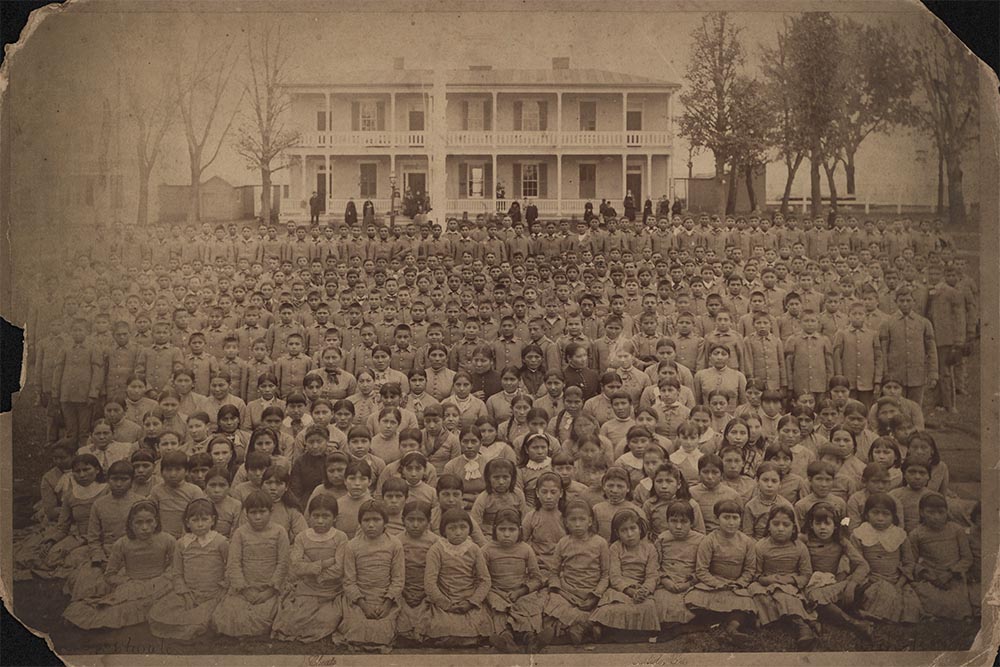




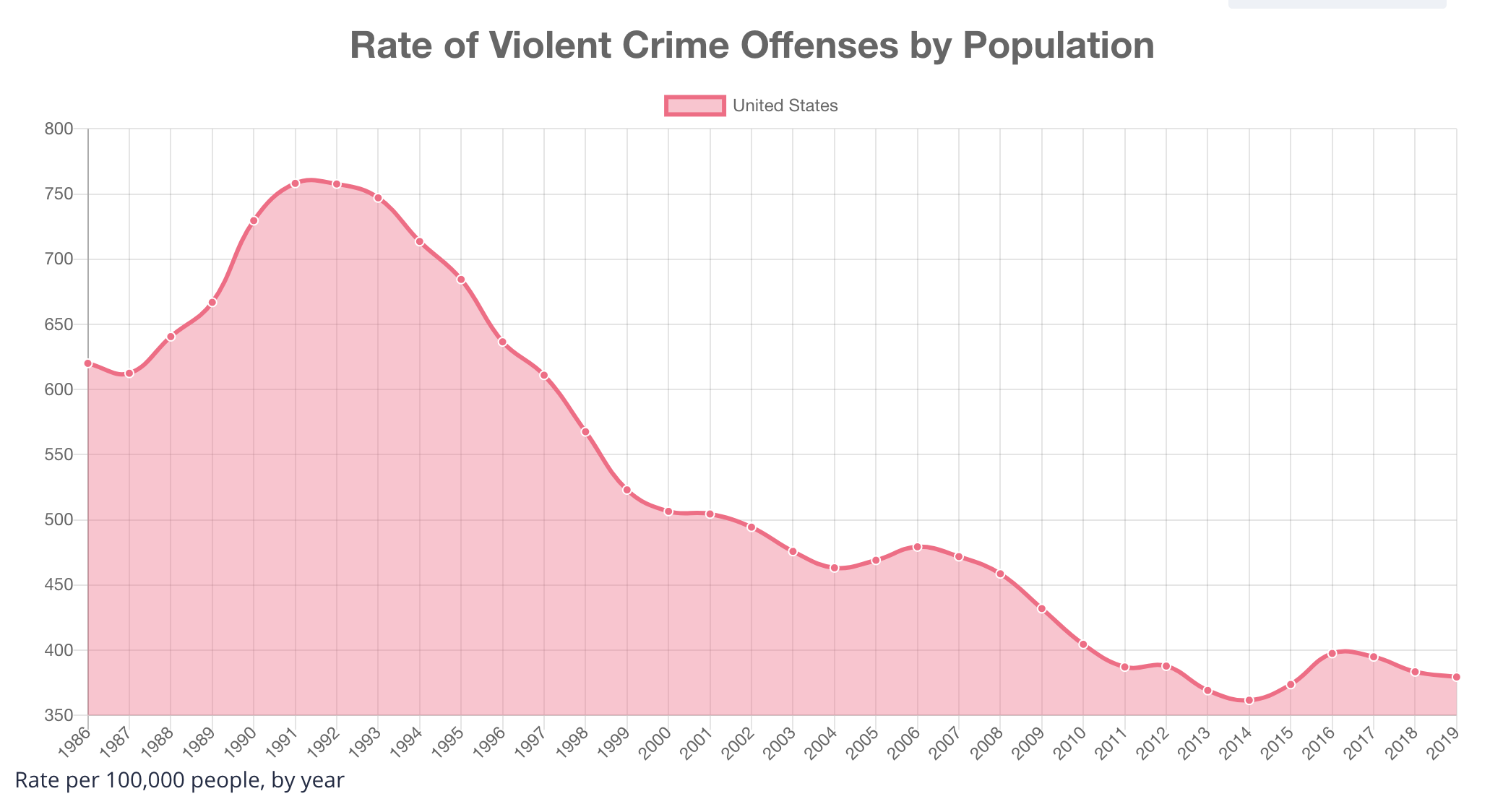


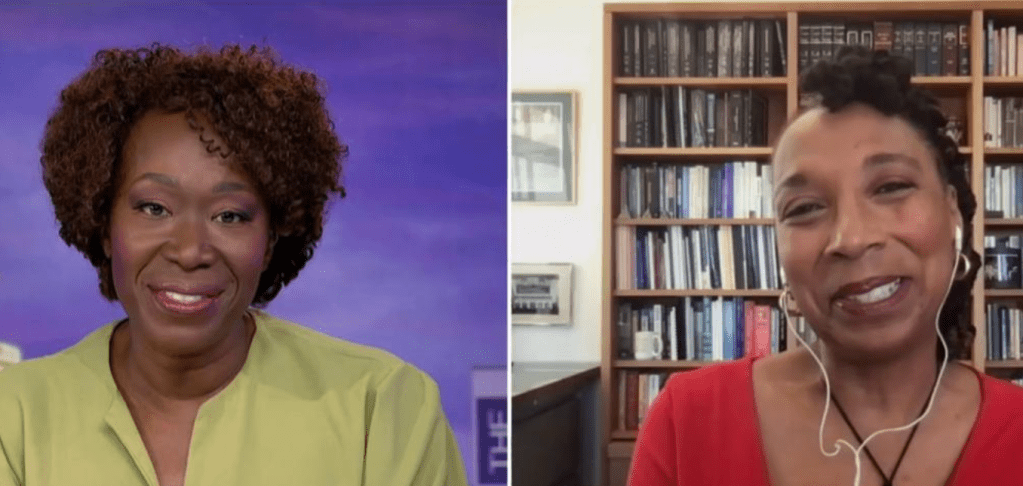
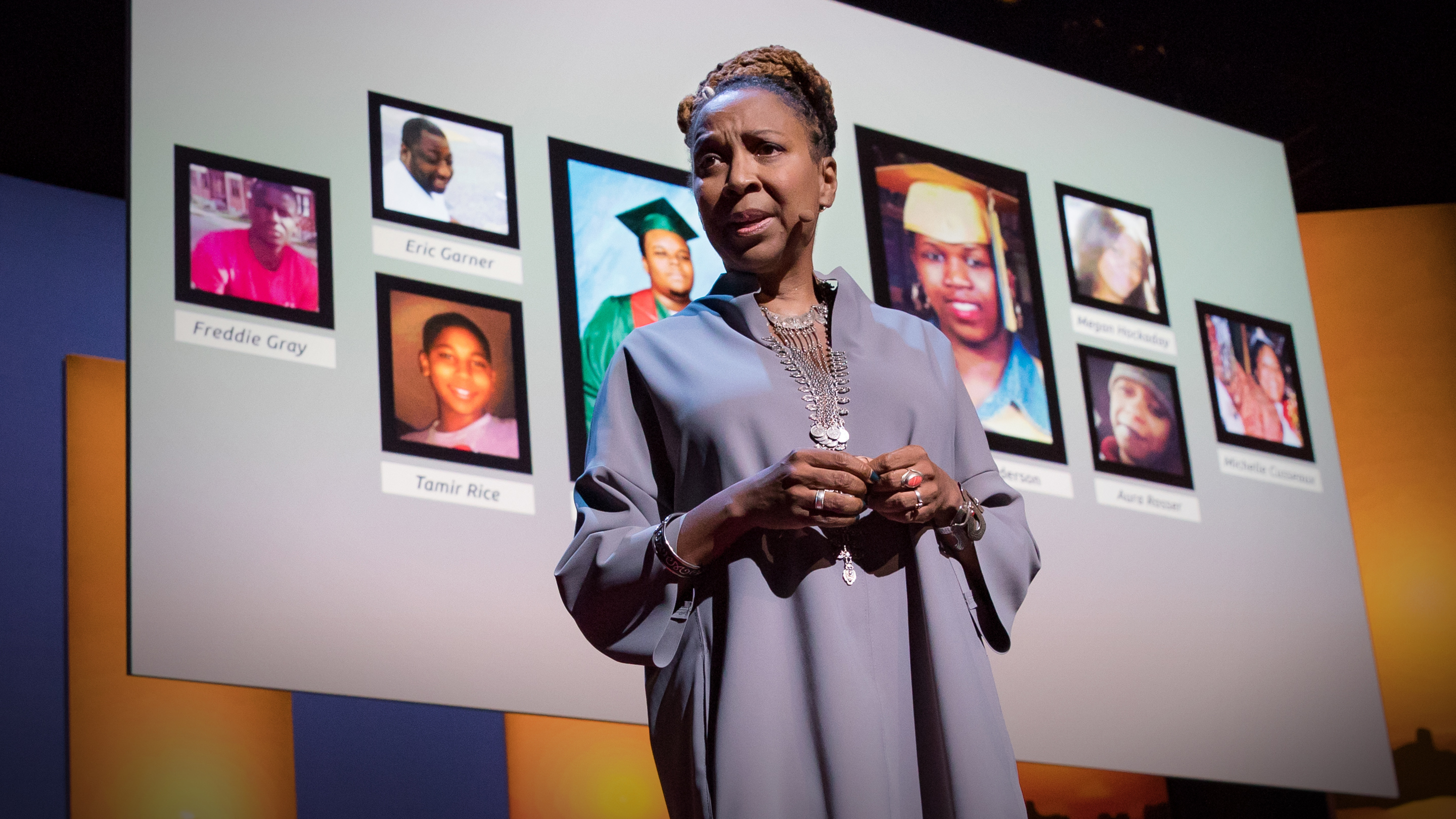
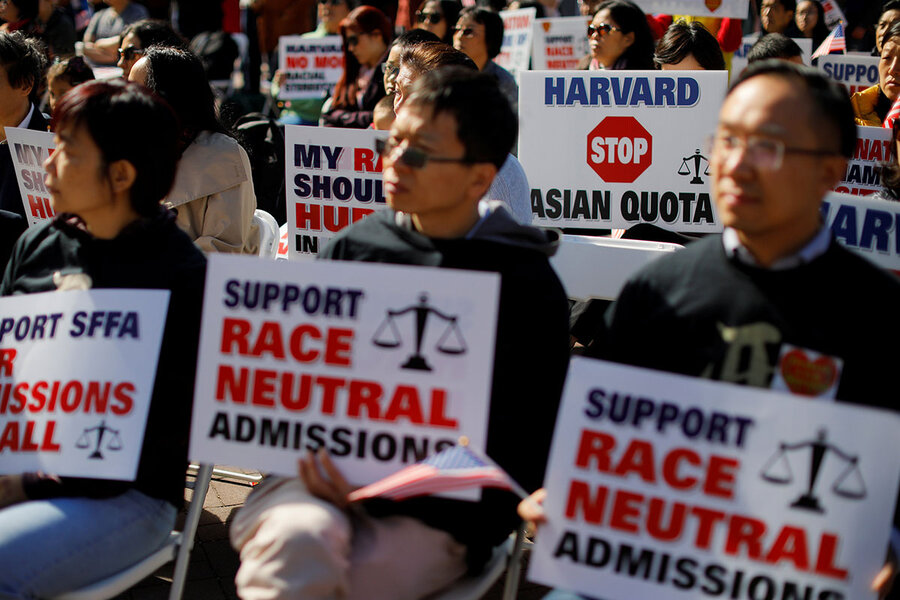
 freedom and reason