
“This passing fad for what is miscalled ‘transsexualism’ has led to the most tragic betrayal of human expectation in which medicine and modern endocrinology and surgery have ever engaged. In the name of gender transmutation they have led people to believe that alchemy was possible, thus fostering in individuals and in our whole culture conscious and unconscious neurotogenic fantasies whose only possible outcome is an intensification of the neurotic fantasies which underlie their expectation and ultimate psychosis.” — Lawrence Kubie (1974)
“In the old days, when I was a medical student, if a man wanted to have his penis amputated, my psychology professors said that he suffered from schizophrenia, locked him up in an asylum and threw away the key. Now that I am a professor, my colleagues in psychiatry say that he is a ‘transsexual,’ my colleagues in urology refashion his penis into a perineal cavity they call a vagina, and Time magazine puts him on its cover and calls him ‘her.’ Anyone who doubts that this is progress is considered to be ignorant of the discoveries of modern psychiatric sexology, and a political reactionary, a sexual bigot, or something equally unflattering.” —Thomas Szasz (1979)
“I don’t change men into women. I transform male genitals into genitals that have a female aspect. All the rest is in the patient’s mind.” —a Casablanca surgeon who operated on hundreds of American men interviewed by Janice Raymond in the late 1970s
According to Helen Lewis, writing for The Atlantic, in her August column, “The Gender War is Over in Britain.” The subtitle sketches the piece albeit inaccurately the situation: “While upholding trans rights, the Labour Party disassociates itself from radical postmodern theories.” Exactly how is the gender war over if the propaganda of trans rights is upheld? What are those rights if they are not the same as everybody else’s? How does one uphold a major tenet of the most radical species of postmodernist thought, namely queer theory, while disassociating oneself from radical postmodern theories?
Labour’s shift is hardly good enough even if it amounts to anything. Perhaps this is the start of the Labour Party’s journey back to sanity on this issue; it’d be understandable that Labour believes it can’t all at once go home to the truth of gender given the zealotry of trans rights activists (TRAs). Maybe Labour means to remain half-crazy. Maybe this is a strategic step backward to secure the footing necessary to take more steps forward.
“When Keir Starmer wanted to change the Labour Party’s stance on sex and gender,” Lewis usefully notes, “he didn’t give a set-piece speech or hold a press conference. Instead, the leader of Britain’s main opposition party stayed in the background, leaving Anneliese Dodds, a shadow minister with a low public profile, to announce the shift in a short opinion column in The Guardian.” In her column, Dodds assures the public, “We will modernize, simplify and reform gender recognition law. Our policies won’t please everyone but we will do what’s right.”
Lewis summarizes Dodds op-ed: “In just over 800 words, [Dodds] made three big declarations. One was that ‘sex and gender are different.’ Another was that, although Labour continues to believe in the right to change one’s legal gender, safeguards are needed to ‘protect women and girls from predators who might abuse the system.’ Finally, Labour was therefore dropping its commitment to self-ID—the idea that a simple online declaration is enough to change someone’s legal gender for all purposes—and would retain the current requirement of a medical diagnosis of gender dysphoria.”
The first point—that “sex and gender are different”—is demonstrably false. In my essay Sex and Gender are Interchangeable Terms, I document that these words are synonyms and have been so since entering the English language centuries ago. Separating gender from sex is the work of sexologists in the 1960s. The word “gender” as indicating something other than sex was rarely used in social science and feminist politics before the mid-1970s. Gender as referring exclusively to the cultural-social continuum of femininity and masculinity was introduced into sociology in 1972 with Ann Oakley’s Sex, Gender, and Society. Much of Oakley’s work was informed by medical sociology and a concern for women’s health, wrapped in a Marxist feminist analytical frame; where the distinction appears elsewhere, it’s more often rendered by critical theorists corrupted by the postmodernist epistemic.
I have a lengthy essay documenting the development of gender ideology in history coming out in the near future, but it will suffice to say here that the fact that those promoting the false distinction between sex and gender so effectively socialized the falsehood testifies to the corrupting influence of postmodernism on western institutions. The Labour Party will have to jettison this false distinction if ever it intends to align its politics with history and science. Given that Labour has made the distinction part of the platform, how could anybody rationally expect that to happen? To be sure, the abandonment of self-ID is a major step in returning to the real world. Hopefully it will inform the practice of medicine in that country. There are so many broken bodies there. How many more will it take before people realize the horror of gender affirming care (GAC)?
As for defending girls and women from predators, on the Labour Party’s delcarations, it’s shocking that it could ever have been thought appropriate to allow men into female-only spaces. It not as if no voices have been raised against forcing girls women to defecate, urinate, and shower around boys and men they don’t know or would want to. The gender critical standpoint (GCS) emphasizes the importance of recognizing and preserving sex-based rights, particularly in areas such as corrections, healthcare, private spaces (bathrooms, locker rooms, women’s shelters, etc.), as well as in sports. Advocates believe that these rights were established for a reason and are essential for ensuring the equitable treatment of women in society and, moreover, their safety and their well-being. Gender critical feminists worry not only that men compromise female-only spaces, but also that the broader adoption of gender identity ideology will, by reifying traditional gender roles and obscuring the material reality of sex-based oppression, undermine the historic gains feminists have made in the face of determined opposition.
TRAs characterize the GCS as trans-exclusionary radical feminism, smearing its advocates as TERFs (trans exclusionary radical feminists)—and worse, assaulting feminists and lesbians gathered in public spaces to collectively defend women’s rights, as well as homosexual enjoyment of the same rights available to every other citizen, rights and access that required decades of struggle to achieve. TRAs argue that every person not only has the right to enter the spaces of the opposite gender, but also has a right to GAC. To deny these rights is the work of transphobia, as if disagreement were akin to a pathological fear and loathing of trans identifying people, an alleged hatred exacerbating the suicidal ideations common to those suffering from gender dysphoria, a symptom among several GAC is purported to relieve. TRAs argue that transphobia warrants harassing those who voice opposition to their views, even inflicting violence on peaceful protestors. (See Self-Castration and TERF-Punching: Trans Rights are What Sort of Rights? Anarchists and Corrupting the Three Arrows; From Delusion to Illusion: Transitioning Disordered Personalities into Valid Identities; Trans Day of Vengeance Cancelled Due to Genocide.)
I begin this essay referencing the British situation because this nation is finally addressing concerns raised by the experience with gender ideology, an experience shared by European countries (cf EngSoc—Jail Time for Gendering in the UK?). While some progress is being made in the United States on this issue, especially in growing awareness of what gender ideology is and the deleterious effects it’s having on children, the for-profit medical-industrial complex represents a major obstacle to save children from the maw of the corporate Moloch. (See Making Patients for the Medical-Industrial Complex; Feeding the Medical-Industrial Complex.)
I argue in this essay that gender affirming care (GAC) can be understood as a form of psychosurgery, like lobotomy or cingulotomy, the former described above, the latter involving the destruction or lesioning of a portion of the cingulate gyrus, a region involved in emotional and pain regulation, used in the past to treat obsessive-compulsive disorder (OCD) and, again, suicidal ideations. Gender dysphoria, what used to be known as gender identity disorder (GID), is the medical theory behind GAC. At the same time, GAC is increasingly being sought as one might seek other forms of body modification as a means of self-expression, with a large and growing body of young people seeking transcendent experiences believing that changing genders is a path to ecstatic joy, which is what Labour is pushing back on, but which doesn’t address the fundamental problem: the party’s irrational faith in medicine. Labour wants to keep the diagnosis and pursue the matter via the medical model. Perhaps somebody at the Home Office calculated how much it would cost the NHS to perform GAC on every individual who requested it.
The Horrors of Psychosurgery and the Fallacy of Gender Identity
There were roughly 60,000 lobotomies performed in the United States and Europe in the two decades after the procedure was introduced in the mid-1930s before authorities finally quit that barbaric practice. At the height of the practice doctors performing the procedure were treated as celebrities. To applause, American neurologist Walter Freeman could disconnect the pre-frontal cortex from the rest of a patient’s brain in a mere five minutes. So-called sex-change operations (so called because mammals can’t change sex) have been occurring for many more decades than this despite questionable efficacy and ethics. Janice Raymond interviewed for her 1979 book Transsexual Empire: the Making of the She-Male a Casablanca surgeon who confessed to mutilating the genitals of hundreds of American men.

The belief that radically altering the body through hormonal and surgical procedures—in the case of GAC puberty blockers, cross-sex hormones, orchiectomy, mastectomy, phalloplasty, vaginoplasty—as a way to address nonconformity or to relieve psychological distress is not unlike the belief that deviance and psychological distress can be addressed by lobotomy. Indeed, in the era of the lobotomy, if such individuals has existed, one can imagine counting TRAs among those advocating for the procedure, condemning opponents of lobotomy as oppressors who, for reasons of hate and prejudice, wish to prevent the afflicted from obtaining a procedure that will make them happy and well. They would join the voices of medical personnel who, even when the efficacy and adverse effects of the procedure had become obvious, insisted that lobotomies could provide relief for patients with severe mental illnesses (and put money in their bank accounts). Those who profited from the practice argued that lobotomies reduces psychiatric symptoms, including suicidal ideations, leading to improved behavior and functioning in the afflicted. The American Psychiatric Association (APA) endorsed the procedure. Today, the APA endorses GAC.
Beyond defending GAC, TRAs argue that the GCS is exclusionary and harmful to transgender individuals by denying their gender identity and reinforcing cisnormative views. Cisnormativity is a neologism that means to convey that perception of self in accord with the objective facts of the body is a constellation of attitudes, expectations, and societal norms that assume and prioritize gender identities that align with sex assigned at birth. Gender ideologues condemn cisnormativity as the societal belief that being cisgender is the default or normal way of being. Cisnormativity is therefore oppressive since, according to this view, there is no default or normal way of being, which negates the possibility that deviations in this area can be characterized as abnormal psychology or psychopathology. The goal is to manufacture a term that resonates the way heteronormativity does for the fate of homosexuals (just as the slur transphobia leans on the phenomenon of homophobia).
A crucial question is missing in all of this: Who is applying the constellation of substantially culturally and historically bounded attitudes, expectations, and societal norms that mark gender? If a man is effeminate, having qualities or behaviors associated with being feminine in western culture in this era, often represented in a stereotypical way, it is suggested to him not that men vary in the degree of masculine and feminine qualities, that there is no one way to be a man, but rather that the abundance of feminine qualities he possesses suggest an incongruence between the sex of his body and the authentic gender identity trapped inside. Rather than allowing the boy with effeminate qualities to grow up to be a gay man, his authentic self, which is that of a woman, must be released via the procedures of GAC. This, we are told, is not a form of conversion therapy, but instead gender affirming care. A crooked body must be straightened. It would be conversion therapy to tell a boy that he is a boy and work with a psychotherapist to help him negotiate the social problem of gender stereotyping—and change society to tolerate gender nonconformity.
More generally, the rejection of the normal/abnormal dichotomy obvious in all this is part and parcel of the rejection of the concept of binary opposition in structuralism that defines the postmodern standpoint. This is why Lewis gets ahead of Labour when she announces that the party has disassociated itself from radical postmodern theories. Where gender ideologues fallaciously distinguish between sex and gender, they also falsely treat gender identity as possessing the same status as sexual orientation. This is how the acronym LGBTQ becomes possible. But gender identity and homosexuality are not only qualitatively different concepts, the former an ideological construct, the former a natural fact, they are for this very reason diametrically opposed, with gender identity serving as a weapon in the patriarchal project to erase the existence of gays and lesbians. It’s happening in Iran by force (see Since it is Not Possible to Change the Soul, the Body Must be Changed—Manifestations of Clerical Fascism). In the West, it happens through indoctrination. Same end, different means—albeit medicalization of the problem occurs in both contexts. Just as Iranian clerics reject science, gender ideology would be impossible without the postmodernist rejection of materialism. (See Why I am Not “Cisgendered”.)
To guide me the rest of the way through this essay, I rely on the framework of Thomas Szasz, a renowned psychiatrist and prolific author who made indelible contributions to the field of psychiatry by challenging prevailing paradigms and questioning the very foundations upon which the discipline stood. Born in 1920 in Budapest, Hungary, dying just over a decade ago, Szasz’s long life spanned a tumultuous period of medical history, marked by significant shifts in psychiatric practices and societal attitudes. Szasz’s seminal works, such as The Myth of Mental Illness (1961) and The Manufacture of madness (1971), reflect his unyielding belief in individual autonomy and personal responsibility. Szasz’s exploration of homosexuality and gender identity stands as a testament to his iconoclastic approach, as he provocatively contests conventional psychiatric theories that pathologized homosexuality. At the same time, he is highly critical of the concept of gender identity, to which the passage quoted at the outset of this essay testifies. In examining Szasz’s work on these topics, we gain insight not only into his critique of psychiatry’s power dynamics and diagnostic frameworks but also into his broader vision of a society that respects human rights, personal liberty, and moves on the basis of materialist science.
The Szaszian Critique of Gender Ideology and the Medicalization of Personal and Social Problems
Johann Weyer (1515-1588) was a Dutch demonologist, occultist, and physician known for his work in challenging the beliefs in witchcraft and demons during the time of the witch trials. In his influential book De Praestigiis Daemonum (On the Tricks of Demons), published in 1563, Weyer argued against the persecution of witches and questioned the reality of witchcraft. The book was groundbreaking in its time and contributed to a more rational approach to the understanding of supposed witchcraft and demonology; his work challenged the prevailing beliefs of the era and paved the way for more enlightened perspectives on the topic. At the same time, he provided an estimate of the total number of demons, which he claimed was 7,405,926. Such is the power of Weltanschauung.

In his 1970 book Manufacture of Madness: A Comparative Study of the Inquisition and the Mental Health Movement, psychiatrist Thomas Szasz presents a critical examination of the modern mental health system, drawing parallels between the historical Inquisition and what Szasz sees as the contemporary “mental health movement.” A reformer much like Weyer, Szasz became a well-known advocate for individual autonomy and personal responsibility, believing that mental illnesses are not objective medical conditions but rather social constructs used to control and stigmatize certain behaviors that society deems undesirable. Unlike Weyer, Szasz does not imagine impossible things. (See also Szasz’s 1980 Sex by Prescription: The Startling Truth about Today’s Sex Therapy and 1984 The Therapeutic State.)
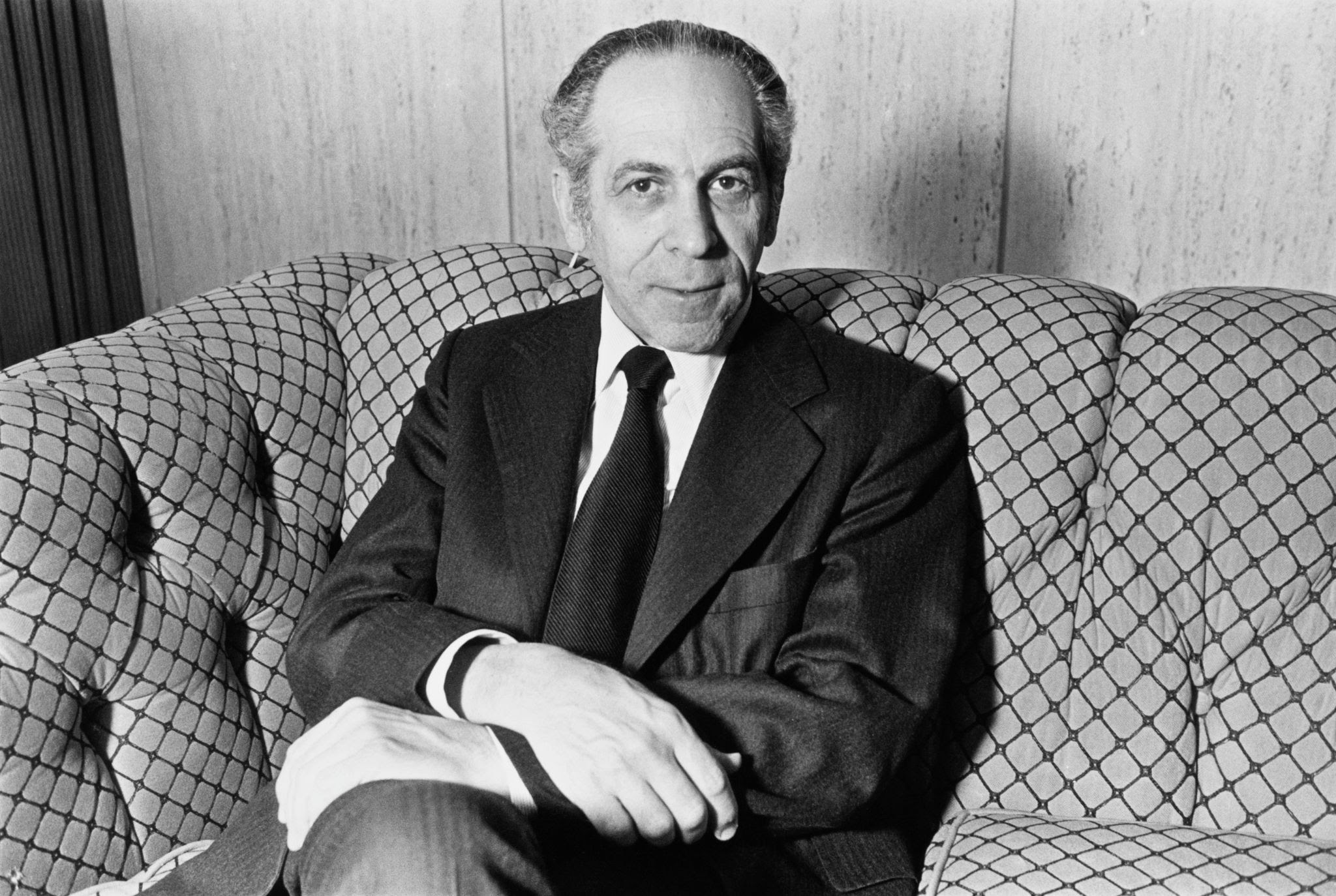
Manufacture of Madness argues that, with few exceptions, the concept of mental illness is used as a tool of social control, just as the Inquisition was used to control dissent and enforce religious orthodoxy. Szasz criticizes the psychiatric profession for its reliance on forced treatment, involuntary commitment, and the medicalization of human behavior and emotion, arguing that psychiatric labeling and the use of involuntary psychiatric interventions violate human rights and individual freedom, depriving people of their autonomy and subject them to potentially harmful treatments. Throughout the book, Szasz challenges the medical model of mental illness and calls for a radical reevaluation of the mental health system. He advocates for a shift away from coercion and paternalism towards a model based on informed consent and voluntary cooperation between individuals and mental health professionals.

In his 1979 essay “Male and Female Created He Them,” a New York Times review of Janice Raymond’s landmark Transsexual Empire: the Making of the She-Male, Szasz writes, “Like much of the medical‐psychiatric mendacity characteristic of our day, the official definition ‘transsexualism’ as a disease comes down to the strategic abuse of language—epitomized by confusing and equating biological phenomena with social roles.” Here Szasz appears to accept the distinction between sex and gender, but it should be noted that this is in the context of the reintroduction of gender in academic literature. Szasz writes, “Because ‘transsexualism’ involves, is indeed virtually synonymous with, extensive surgical alterations of the ‘normal’ human body, we might ask what would happen, say, to a man who went to an orthopedic surgeon, told him that he felt like a right‐handed person trapped in an ambidextrous body and asked the doctor to cut off his perfectly healthy left arm? What would happen to a man who went to a urologist, told him that he felt like a Christian trapped in a Jewish body, and asked him to re‐cover the glans of his penis with foreskin?” Szasz would be horrified to learn of the growing acceptance of limb amputation. But his point remains: faux-foreskin isn’t foreskin. Once the organ is lost, it lost forever. (I oppose circumcision for this reason.)
Raymond scrutinizes the role of transsexualism, particularly the psychological and surgical approaches, in perpetuating conventional gender stereotypes. The work critiques the medical-psychiatric complex for pathologizing “gender identity,” an invention of Robert Stoller (which I details in an upcoming essay) and explores the socio-political context contributing to the normalization of transsexual treatment and surgery as conventional medical practices. Raymond contends that transsexualism is rooted in “patriarchal myths,” such as “male mothering,” and the “making of woman according to man’s image.” She argues that these myths serve to colonize feminist identification, culture, politics, and sexuality. Moreover, transsexuals, by transforming the female form into an artifact, effectively violate women’s bodies. Raymond suggests that transsexuals, by undergoing surgery, merely eliminate the most overt means of intruding upon women, presenting themselves as non-invasive. (See Raymond’s other work, e.g., Doublethink: A Feminist Challenge to Transgenderism; Trafficking in the United States: Links Between International and Domestic Sex Industries; Women in the International Migration Process: Patterns, Profiles and Health Consequences of Sexual Exploitation.)
“Isn’t it—in the grandly deceptive phrase of the American psychiatric establishment used to characterize all ‘mental diseases’—‘just like any other illness’? No, it is not,” Szasz asks and answers. He elaborates: “The transsexual male is indistinguishable from other males, save by his desire to be a woman. (‘He is a woman trapped in a man’s body’ is the standard rhetorical form of this claim.) If such a desire qualifies as a disease, transforming the desiring agent into a ‘transsexual,’ then the old person who wants to be young is a ‘transchronological,’ the poor person who wants to be rich is a ‘transeconomical,’ and so on. Such hypothetical claims and the requests for ‘therapy’ based on them (together with our cognitive and medical responses to them) frame, in my opinion, the proper background against which our contemporary beliefs and practices concerning ‘transsexualism’ and transsexual ‘therapy’ ought to be viewed.” (See my recent essay Simulated Sexual Identities: Trans as Bad Copy for a discussion of the Orwellian transition in language from “transsexual healthcare” or “transsexual medical care” to “transgender health care” and “gender affirming care.”)
Szasz finds “flawless” Raymond’s thesis (much maligned then and now). “Arguing that ‘medicine and psychology . . . function as secular religions in the area of transsexualism,’ she demonstrates that this ‘condition’ is now accepted as a disease because advances in the technology of sex‐conversion surgery have made certain alterations in the human genitals possible and because such operations reiterate and reinforce traditional patriarchal sex‐role expectations and stereotypes. Ostensibly, the ‘transsexers’ (from psychologists to urologists) are curing a disease; actually, they engage in the religious and political shaping and controlling of ‘masculine’ and ‘feminine’ behavior.” Szasz writes, “The claim that males can be transformed, by means of hormones and surgery, into females, and vice versa, is, of course, a lie. (‘She‐males’ are fabricated in much greater numbers than ‘he‐females.’) Chromosomal sex is fixed. And so are one’s historical experiences of growing up and living as boy or girl, man or woman.” (Note: the first epigraph to this essay is from Lawrence Kubie’s critique “The Drive to Become Both Sexes,” published in a 1974 issue of The Psychoanalytic Quarterly. See also Barry Reay’s 2014 critique “The Transsexual Phenomenon: A Counter-History,” in the Journal of Social History.)
“What, then, can be achieved by means of ‘transsexual therapy’?” Szasz asks. “The language in which the reply is framed is crucial—and can never be neutral. The transsexual propagandists claim to transform ‘women trapped in men’s bodies’ into ‘real’ women and want then to be accepted socially as females (say, in professional tennis). Critics of transsexualism contend that such a person is a ‘male‐to‐constructed‐female’ (Miss Raymond’s term), or a fake female, or a castrated male transvestite who wears not only feminine clothing but also feminine‐looking body parts.” Here Szasz is referencing Renée Richards, the male tennis player, endorsed by Billie Jean King as a “real woman,” accepted by the authorities monitoring women’s professional tennis as a “real woman,” who competed against women in the US Open in 1976. Szasz notes that this authentication of a “constructed female” as a real female stands in contrast to the standard rules of Olympic competition in which the athletes’ appearance counts for nothing; their sexual identity is based solely on their chromosomal makeup.

The Renée Richards case is revealing in many ways. Renée, formerly Richard, underwent gender reassignment surgery in 1975. Shortly afterward, he expressed his desire to compete in the women’s tennis circuit. In 1976, the United States Tennis Association (USTA) initially denied Richards the right to compete in the women’s singles division of the US Open. The USTA cited a policy that required female players to be born female. In response, Richards filed a lawsuit against the USTA, arguing that his exclusion from women’s tennis was a violation of his rights under New York state law, which prohibited discrimination on the basis of sex. The case, Richards v USTA, went to trial in 1977. Judge Alfred M. Ascione ruled in the face of the most basic science: “This person is now a female,” and held that requiring Richards to pass the Barr body test (to determine sex chromosomes) was “grossly unfair, discriminatory and inequitable, and a violation of her rights.”
The court’s decision has long been celebrated as groundbreaking for transgender rights, what were at the time referred to as transsexual rights, an early victory in the struggle. Despite the marking of Richard’s being allowed to compete against women in tennis as a grand moment for social justice, what is rarely remarked upon is his acknowledgment upon reflection a change of mind regarding men in women’s sports. “I know if I’d had surgery at the age of 22, and then at 24 went on the tour, no genetic woman in the world would have been able to come close to me,” he said. “And so I’ve reconsidered my opinion.” (“Genetic women.” This is like the construct “biological women.” Is there any other kind?)
Szasz’s views on coercive psychiatry are intertwined with his broader skepticism about the concept of mental illness. He lays out these arguments in several books. In addition to his landmark 1961 Myth of Mental Illness, Szasz argues in his 2008 Psychiatry: The Science of Lies that psychiatric coercion is incompatible with the principles of a free society and that psychiatry should be based on voluntary relationships and informed consent. He repeats his thesis that mental illnesses are not real medical conditions but rather metaphorical expressions of various forms of human suffering and social deviance. According to Szasz, labeling someone as mentally ill is used to control nonconformity, silence dissent, and justify the exercise of coercive power in the name of treatment. In an earlier work, Law, Liberty, and Psychiatry: An Inquiry into the Social Uses of Mental Health Practices (1963), Szasz examines the legal and ethical implications of coercive psychiatry and questions the legal justifications for involuntary psychiatric interventions. He discusses how the medicalization of behavior and the expansion of psychiatric power is used by authorities to suppress individual freedoms.
There has been a significant shift in the treatment approach for gender dysphoria over the years, moving away from traditional psychoanalysis and towards GAC, a shift that may lead the causal observer to think Szasz would have supported gender ideology as he did in his arguments against the medicalization of homosexuality. As the psychiatric profession underwent significant changes in their understanding and attitudes toward homosexuality, Szasz became increasingly critical of psychiatric labeling and the use of mental illness as a way to pathologize and control certain behaviors and identities. In the 1970s, during the gay rights movement and the removal of homosexuality as a mental disorder from the DSM, Szasz argued that homosexuality was not a mental illness and should not be treated or stigmatized as such. Szasz believed that homosexuality was a personal choice and expression of individual autonomy. He defended the rights of individuals to engage in consensual sexual relationships of their choosing without interference from medical or psychiatric authorities. In his 1994 work, Cruel Compassion: Psychiatric Control of Society’s Unwanted, Szasz takes a stronger position against the pathologization of diverse sexual orientations and argued for the decriminalization and destigmatization of homosexuality.
Gender Angels, Problematizing Puberty, and Medical Freedom
The old psychiatric category of GID was defined by the American Psychiatric Association (APA) in its Diagnostic and Statistical Manual of Mental Disorders, Fourth Edition (DSM-IV), published in 1994. GID is characterized by a persistent and strong cross-gender identification and discomfort with one’s sex at birth. This identification is often manifested through cross-dressing, adopting the behaviors and mannerisms of the opposite gender, and a preference for playmates and activities stereotypically associated with the opposite gender, as well as significant distress or discomfort with their reproductive anatomy, i.e., genitalia or secondary sexual characteristics. The category was changed with the DSM-5, published in 2013, to reflect a shift in understanding, acknowledging that the distress experienced by individuals was not inherent to their gender identity itself but rather due to the incongruence between their gender identity and assigned sex.
It might be useful, in light of the ideas that gender identities are actually-existing things, to consider the problem of the existence of gendered souls, which is what it seems to me to mean when saying that gender identity exists independently of the sexualized body that is the source of the distress if incongruent with stereotype (see Step Away From the Crazy; Resisting the Imposition of Non-Existing Things). The problem here is in part how one conceptualizes the relation of the mind to the body. There is a dualism suggested in all of this, often associated with philosopher René Descartes, positing that the mind and body are separate substances with distinct properties. To the extent that we might argue that the mind is something that is not there in the beginning, but that it is an emergent property, as is the position of, for example, symbolic interactionism, then it is a matter of developing the self and, with that, the gendered self, the social self, and so on (see George Herbert Mead, William James, and so forth).
There is certainly something to socialization in the production of the self; however, the suggestion that there is no fundamental relation between the body and the self, and that the later is entirely cultural, as sexologist John Money theorized, attempting and failing miserably to raise a child to be the gender he wasn’t, is obviously fallacious (I will take up the problem of sexology in a future essay). It denies the axioms of materialist science. Gender is not something in the head, but the result of natural history. To be sure, custom and circumstance shape the gendered self, but gender is of the body—as is the mind. The reason sex and gender are treated as distinct phenomenon in queer theory is to confuse the audience on this point.
Szasz’s argument regarding the mind-body relationship is rooted in his philosophical stance of libertarianism and his rejection of the traditional medical model of mental illness. The Szazian view is that mental illnesses are not equivalent to physical diseases and that the mind should not be treated as an object that can be medically diagnosed and treated like a physical ailment. Szasz argues that many so-called mental disorders were socially constructed concepts and therefore not of the same quality as genuine medical diseases. By applying medical language and concepts to behavioral and emotional issues, labeling them as illnesses needing medical intervention, Szasz contends that authorities and practitioners obscure the true nature of the human condition.
The medicalization of certain behaviors allows authorities to exert control over individuals who deviate from societal norms. This is most dramatically instantiated today in the hormonal and surgical correcting of bodies whose owners and their guardians believe don’t fit the stereotype of the gender they believe they are. Szasz is critical of the psychiatric profession’s tendency to label unconventional beliefs and behaviors as pathological conditions, arguing that these practice unjustly stigmatize and marginalize individuals. This is not so much dualism but Szasz insistence on cognitive liberty, free will, human dignity, and individual freedom. Szasz often emphasizes the importance of autonomy and personal responsibility in dealing with emotional and psychological struggles. He criticizes the practice of involuntary psychiatric treatment, asserting that it violates individual rights and reinforced societal control over nonconformist behavior.
Based on this ethic, Szasz argues that such psychiatric treatments as lobotomies violate individual autonomy and fundamental rights. He considers the lobotomy to be a symbol of the medicalization of human behavior and the overreach of psychiatric authority. He criticizes the medical establishment’s reliance on invasive procedures like lobotomies as a means of controlling and normalizing individuals who did not conform to societal norms. As noted, Szasz famously challenges prevailing notions of homosexuality on these grounds and the medicalization of sexual orientation; less well known is his critique of the emerging notion of gender identity during a pivotal period of societal transformation in the 1970s. Just as he opposed the medicalization of homosexuality, so he opposed the medicalization of those who wished to present in gender nonconformist ways.
The Szazian views is that supposing deviations from gender stereotypes reflect a mental disorder is an act of medicalizing gender nonconformity. The discomfort one would feel from being a girl who acts in a manner contrary to the stereotype of girls at a particular place and time is not experienced because the person is in the wrong body, a construct that amounts to a religious doctrine, but rather due to the stress resulting from the expectations of others that the girl behave in a gender conforming manner. It’s an act of societal oppression to expect the girl to behave according to the cultural rules concerning gender. If he were alive today, I have little doubt that Szasz would argue that it’s not the girl’s body but the society around her that needs changing. (See Embedding Misogyny and the Progressive Mind.) Knowing this she can develop the strength of character to live as she would like without having the experience the stress of societal reaction to her failure to meet expectations is empowering and indicates the role of a good therapist. Whether defining gender dysphoria as a mental illness or as a religious-like desire to transcend one’s sex, the solution is not GAC but psychoanalysis and social change.
As a libertarian, Szasz does not support arbitrary restrictions on how individuals wish to present themselves. For example, transvestism, the act of dressing in the clothing typically associated with the opposite sex, often accompanied by autogynephilia, and today reconceptualized as exploration of gender identity, has been historically pathologized and labeled as a mental disorder in diagnostic systems. Given Szasz’s emphasis on individual liberty and personal autonomy, it can be assumed that he would have been critical of pathologizing transvestism or any form of non-conforming gender expression. He would have argued against using medical or psychiatric interventions to control or regulate individual choices related to clothing or gender identity. The problem with gender ideology is the work of the medical-industrial complex and other powerful entities to drug and operate on individuals on the basis of gender identity, a concept he obviously rejected based on the foregoing.
Informed consent and medical freedom are crucial ethical principles in any free society that requires medical professionals to inform patients about the nature of their proposed treatment, the potential risks and benefits, and any available alternatives. The patient must have the capacity to understand this information and make a voluntary and informed decision about their healthcare. Szasz is a strong proponent of medical ethics, and his views on this matter are closely related to his broader emphasis on individual autonomy and personal responsibility. He argues that patients should have the right to make their own decisions about their treatment, including the right to refuse treatment if they wish.
Szasz is highly critical of coercive practices that violate the principle of informed consent. He strongly opposes involuntary hospitalization, forced medication, and other forms of coercive treatment that take away an individual’s right to make decisions about their own mental health. Szasz’s position on informed consent is particularly relevant to his critique of the mental health system and the use of psychiatric power to control individuals deemed mentally ill. He believes that psychiatric coercion, which often bypasses the principle of informed consent, was a violation of personal liberty and human rights.
This is especially true when it comes to children. The evidence of psychiatric coercion is clearly evident in the rapid gender transitioning of children and at earlier and earlier ages. Szasz critical views on the use of psychiatric medications, including those prescribed to children, for conditions like ADHD, for example, are well known. Szasz is a vocal critic of what he sees as the excessive medicalization of behavioral and emotional issues and the over-reliance on psychiatric drugs to address complex human problems.
Specifically concerning pediatric use of medications, Szasz’s work raises a concern about the use of puberty blockers. Many childhood behaviors that get labeled as psychiatric disorders are often just variations of normal behavior. Szasz argues that pathologizing these behaviors and prescribing medications for them was a way of medicalizing ordinary aspects of human development. That children find puberty to be a stressful stage in the development of their person is something true across space and time. Puberty as optional has never be a consideration in human history—until now. This is the work of gender ideology and the medical-industrial complex.
* * *
Update (November 15): What do you know, gender is binary.


 freedom and reason