Ibram X Kendi and his ilk are trying to make criticizing anti-white prejudice a form of white supremacy. You know how they tell you that whites can’t be victims of racism because of the power formula. It’s nonsense. The old antiracism we knew as the civil rights movement—that’s the struggle for equality before the law—won the fight. De jure segregation has been abolished and discrimination in businesses of public accommodation and in applications and admissions to colleges and universities and in employment—at least for nonwhite minorities (with the exception of those of Asian descent deemed “white adjacent”)—has been illegal since the 1960s. In contrast, the new antiracism, what Kendi is pushing, what inspired Darrell Brooks. Jr. to drive his SUV through a Christmas parade in Waukesha, is an expression of anti-white prejudice.` It racist.
Kendi presses his case in “The Mantra of White Supremacy,” published in The Atlantic, carrying the subtitle: “The idea that anti-racist is a code word for ‘anti-white’ is the claim of avowed extremists.” I invite you to read his piece. But the essay you are about to read by me concerns the old antiracism and how we let public policy warp that achievement almost as soon as the ink on President Johnson’s signature had dried. The crazy moves quick with this Kendi fellow and stories about him can get away from you. I want to take up the thing he did prior to this, when, if you remember, he quickly deleted his tweet sharing a news story about whites applying as minority students to gain advantage in the university application process. He did that because he knew he had fucked up by sharing that story. He didn’t merely jeopardize his own “antiracism” project with it; his tweet exposed the race hucksterism that has for decades produced hucksters like him who guilt and shame whites into supporting positive discrimination. Here’s a screenshot of the tweet:
So successful is the hustle that it moves white parents to support a system that disadvantages their children in the name of “racial justice,” an ideology that treats individuals not as such but as personifications of abstract demographic categories. This ideology represents such a barrier to self-actualization that white youth are moved to lie on their college applications to skirt the associated injustice. So we can make it about Kendi. Kendi makes it easy to make it about him. But let’s not bury the lede: affirmative action discriminates against white people by granting black people racial privilege (see Equity and Social Justice: Rationalizing Unjust Enrichment). Whites are not privileged in America. That hasn’t been true for decades.
The argument for affirmative action is not that it grants an artificial privilege for minorities but that it checks the natural privilege enjoyed by whites. Affirmative action is pitched as a moderate policy that strengthens equality of opportunity. It’s no imposition really. Affirmative action is rationalized as a remedial attempt to equalize the playing field in a society marked by social inequality rooted in racism. It’s the least we can do, we’re told to fix an historical wrong. That formulation assumes an awful lot while claiming to do very little. But in reality it does an awful lot or else white kids wouldn’t lie and say they are nonwhite to avoid the disadvantage affirmative actions imposes on them. To be sure, there are racial disparities. But disparities don’t explain themselves (see What Explains—and Doesn’t Explain—Inequality). And explanations given provide no remedy if justice matters; you can’t hold individuals accountable without establishing their responsibility. To hold persons accountable for the supposed actions of others, part of present, is contrary to the ethic of individualism. When it’s based on race, then it’s racism. The new antiracism isn’t just about prejudice. It’s also about discrimination.
The counterargument is that racism is structural, that it’s woven into the fabric of America; the natural workings of our institutions are governed by a master social logic guided by white supremacy. But a system privileging nonwhites over whites blows up the premise of white supremacy. How could a system be racist in a manner that systemically advantages whites while systematically disadvantaging them to the extent that they feel compelled lie on college application forms to get ahead? Why would a white establishment establish rules that are contrary to dominant group interests? Why would the institutions of a white supremacist society design policy that limited the ambitions of white people? To put the matter simply, given the depth of racism in America, how can something like affirmative action even happen? Clearly the problem has been misspecified.
Affirmative action is strategic culturally and politically. The goals of diversity, equity, and inclusion comprise an ideology that cosmetically covers economic inequality, integrating minorities into capitalist hegemony, while perpetuating the ideology of racial ordering. By making everything about “racial justice,” racial ideology obscures the real inequality: the system of social class (It’s Not a Racist System). This is why proportional representation is demanded in those areas of life where it does not obtain—but only in a certain direction. This is why a person’s skin color or some other identity marker is treated as if it is itself an accomplishment. “She is the first this.” “He is the first that.” “They lie at the intersection of firsts.” The establishment can point to the diverse appearance of its institutions and claim to have achieved equity while keeping the structures that produce inequality firmly in place. This is a different kind of racism. It’s racism that brands itself “antiracism.”
Ibram X. Kendi, Professor in the Department of History in the College of Arts & Sciences and founder/director of Boston University’s Center for Antiracist Research.
We need to be clear about this question of unearned wealth and status and cumulative disadvantage. The new antiracist rhetoric makes it sound like black people built this country all by themselves. To be sure, this country was built with black people’s labor. But it was also built with white people’s labor. In fact, most of the labor that built this country was white. Centering race obscures social class. It conceals poverty in America. There are two to three times more poor whites as poor blacks in this country (They Do You This Way). You would never know that listening to the culture industry. The prevailing narrative tells a tale of stolen Indian land and exploited black labor, as if all white people are members of the colonizing, slave-owning bourgeoisie. The truth is that most white people are working class men and women who own very little except mountains of debt. Today, most working class people are white men and women. So as long as we’re focusing on race (I’d rather not but the race hustlers are making me), we have to acknowledge the first-rate magicians in the house. They made hundreds of millions of people vanish in thin air. But we know how the trick works. It’s time to end privilege based on race.
The World Health Organization (WHO), led by the Maoist Tedros Adhanom Ghebreyesus, of Ethiopia’s Tigray People’s Liberation Front, a wing of the ruling communist Ethiopian People’s Revolutionary Democratic Front, is in charge of naming SARS-CoV-2 variants. The name next in line was Nu, to be followed by Xi.
Xi Jinping, General Secretary of the Chinese Communist Party (CCP), Chairman of th Central Military Commission, and President of the People’s Republic of China since 2013.
In naming the new variant of SARS-CoV-2 Omicron, the WHO skipped over Nu and Xi at once to avoid obviously skipping over Xi when WHO got to it, which it inevitably would since viruses mutate. Xi is the name of the Chinese communist dictator Xi Jinping and repeatedly referring to the Xi variant would keep in mind the questions we should be asking: from where and under what circumstances did this virus originate and spread? Tedros didn’t want to make it look obvious when The Who avoided the communist dictator’s name Xi in naming the virus.
Tedros Adhanom Ghebreyesus, Director-General of the World Health Organization
The highly probable answers are the questions we should be asking are not unknown. SARS-CoV-2 is very likely the result of gain-of-function research organized by Dr. Anthony Fauci, decades-long director of the National Institute of Allergy and Infectious Diseases at the National Institutes of Health, and the People’s Liberation Army in a bioweapons facility in Wuhan, China, the Wuhan Institute of Virology. The virus either escaped or was released, resulting in the infection of thousands of people who were then put on planes and flown to major cities around the world.
Dr. Anthony Fauci, Director of the National Institute of Allergy and Infectious Diseases
Frankly, Xi should have been the virus’s inaugural name. This is the CCP virus. And the man who played a central role in creating it tells you that it’s too soon to know whether you will be locked in your house and forced to receive mRNA jabs.
Peter Daszak, President of EcoHealth Alliance, with Shi Zhengli of the Wuhan Institute of Virology
Remember, it was Tedros who tapped EcoHealth’s Alliance Peter Daszak, an associate of Dr. Anthony Fauci, who runs the money laundering operation behind the gain-of-function research, to not coverup the Wuhan lab leak, but also to obscure the fact that Fauci restarted gain-of-function research, which President Obama had halted, without notifying President Trump.
The EcoHealth Alliance and the Wuhan Institute of Virology looking for pathogens in bats in China.
The fetish for expertise in narrow disciplinary scientific divisioning, a fragmented knowledge system that appears totalistic, reflects a desire for a priesthood (The Cynical Appeal to Expertise). For this is a chief marker of scientism. Scientism is not be confused with science. I write in my previous blog (Biden’s Biofascist Regime), “Science is comprised of rigorous methods of producing knowledge that proceeds objectively in the context of free and open inquiry. Scientism, in contrast, is an ideology that pulls about itself scientific jargon to conceal its quasi-religious spirit.” Scientism does not tolerate criticism of its “findings.” It relies on state power and corporate governance to establish its conclusions as official truth. I further write, “We see this in the manufacture of COVID-19 policy and the cult of personality surrounding Dr. Anthony Fauci. We see it in social media platforms censoring and deplatforming those skeptical of corporate power and product. We also see it in the elevation of critical race theory.” The priesthood tells you that you can’t understand the things it purports to know. You’re supposed to proclaim your ignorance and practice cerebral hygiene. Keep your thoughts clean of apparent contradiction (to miss the real ones). Practice ritual gullibility.
Elites use this attitude to sanction technocratic control over the masses. It’s a fundamentally anti-democratic doctrine, profoundly destructive to liberty, especially cognitive liberty. People stop thinking for themselves. Not thinking for oneself invites tyranny. The corporate state’s response to COVID-19, to take a pressing case, is not a rational response to SARS-CoV-2, but rather a strategy for building in totalitarian control of society. Control depends on a mass subjectivity for legitimation, for transforming corporate power into authority, and that subjectivity is the attitude of scientism. It’s a faith-based doctrine. A new religion. Moreover, it’s fascistic.
Circumstances have handed me an illustration. Every year, typical of universities across the nation, the institution where I teach adopts a common theme and organizes classes, curricula, and events around it. This year, the College of Arts, Humanities, and Social Sciences, or CAHSS (cleverly pronounced “cause”), is rolling out its annual “Common CAHSS” with the theme “Truth: Information, Misinformation, and Democracy.” As you will see, Common CAHSS 2021-22 reeks of progressive angst over the rise of the popular voice and the concomitant decline in the faith in the academic priesthood.
Here is the theme description:
The public’s ability to distinguish truth from falsehood seems to have deteriorated significantly in recent years. There is a widespread deficit in the ability to recognize subject expertise, critically evaluate sources, and synthesize ideas. The very notion that facts exist has been called into question through phrases like “alternative facts.” This deficit has proven catastrophic during the Covid-19 health crisis, where conspiracy theories and YouTube health “experts” have carried more weight for some than the Center for Disease Control and Prevention. Meanwhile, unproven and debunked claims about widespread election fraud threaten to undermine our democracy. While these problems can be explained in part by technologies that allow for the rapid spread of information regardless of quality, intentional efforts to misinform the public have resulted in frequent questioning of the existence of scientific truths like climate change, racial and sexual discrimination, and the health benefits of masks and vaccinations. Common CAHSS 21-22 will explore the role of the modern university in supporting the “continual and fearless sifting and winnowing by which alone truth can be found,” which has been part of the University of Wisconsin identity for over a century. In an era where information—both true and false–can be readily accessed from our phones, the function of higher educational institutions must include not only generating and sharing high-quality information but also teaching the critical information literacy skills required to navigate a complex terrain. Such skills are essential to democracy and to making progress on the key issues of our time, including human rights, racial justice, and sustainability.
It concerns me that the persons organizing the theme this year, while almost assuredly the same persons who make a fetish of demographic diversity (what often becomes, to lean on Musa al-Gharbi concept of “curated diversity,” an exercise of white progressives fixing the standpoints of the other groups for whom they claim to make room and give voice), do not appear to be committed to the viewpoint diversity that is an essential element in any valid system of knowledge production. Posing the problem of knowledge in terms of how to immunize consensus or official claims against challenges presumed to be illegitimate gives away the game. In the mind of the authors of the theme description, the problem is not the crisis of science brought on by technocratic government and the corporate imperative of shareholder profits, but by the dissent of conservatives, socialists, and others from corporate state control that threatens the legitimacy corporate governance and thus imperils the status upon which academics depend for reputational promotion and occupational climbing. Insecurity lies at the heart of condescension.
Christopher Freeman, philosophy professor at William and Mary College, opines in his Inside Higher Education article “In Defense of Viewpoint Diversity,” “we have good reason to think that the teaching and research missions of higher educational institutions are better served when those institutions welcome dissenting opinions.” That good reason should be obvious, but it’s not, and it’s that blindness that speaks to the crisis of higher education. “Truth is a process, not just an end-state,” writes social psychologist Jonathan Haidt. In his book, The Righteous Mind, Haidt identifies “obstacles to that process, such as confirmation bias, motivated reasoning, tribalism, and the worship of sacred values.” These are manifest in demands (identified in “The Coddling of the American Mind Haidt published in The Atlantic) for “safe spaces,” “trigger warnings,” and administrative mechanisms for disciplining “microaggressions.” The fact that microaggressions (an Orwellian euphemism for the faux pas) are so real to the academic that administrators will assign mandatory training on the matter shows just how deeply tribalism has corrupted the endeavor. Such training is required at my institution and almost certainly the authors of the text in question are in full support of such mandatory training. Just as they are for mask and vaccine mandates.
While I am reluctant to deconstruct the work of colleagues whom I regard as friends, the theme description shared above is a paradigm of the problem we are facing in higher education. The Common CAHSS 2021-22 theme description is a clinic not only in these obstacles, but in the way academics expertly couch the obstacles in a rhetoric that presumes to bear the truth. In the case of Common CAHSS 2021-22, that rhetoric is drawn from corporate media propaganda. In this blog, in what will appear as something like Karl Marx’s 1875 critique of the program of the Social Democratic Workers’ Party of Germany (Critique of the Gotha Program), I focus on the text and its relationship to ideology and power. Methodologically, I deconstruct the description’s rhetoric in light of critical media and propaganda studies, as well as the logic of institutional analysis, relevant fields of study of which—given the parroting of corporate media characterizations throughout description, and the absence of any mention of the problem of corporate governance, power, and profit—its authors appear unaware.
Media studies has its roots in the work of American pragmatists, such as George Herbert Mead, the founder of symbolic interactionism (a term coined by his student Herbert Blumer), who argued that democratic society requires forms of communication that allow individuals not merely to be exposed to, but to appreciate the opinions of others, especially from those unlike themselves, as well as develop empathy towards others with whom they disagree. In agreement with his friend and fellow pragmatist John Dewey, Mead saw open and deliberative communicative forms as essential to arriving at genuine consensus and authentic community. Media and propaganda studies formally appears at the New School in New York in the early twentieth century and becomes a central focus of the Frankfurt School, where critical theory is applied to mass communications and propaganda. A contemporary instantiation of work in this area is the work Mickey Huff and his colleagues carry out over at Project Censored.
If one is interested in accessible examples of how to pursue critical institutional analysis, I recommend two documentaries, both by Zeitgeist Films: Mark Achbar and Peter Wintonick’s Manufacturing Consent: Noam Chomsky and the Media and Mark Achbar, Jennifer Abbott, and Joel Bakan’s The Corporation, the latter based on Bakan’s book by the same name. I show these documentaries in two courses I teach: Freedom and Social Control and Power and Change in America. In Freedom and Social Control, the semester project involves students producing an institutional analysis of a student-selected for-profit corporation or industry. Pharmaceutical corporations and related areas of the medical-industrial complex are always popular topics. Is it the opinion of authors of the theme description that I should criticize students whose findings contradict the edicts of the CDC and FDA?
As will become apparent, the description of Common CAHSS 2021-22 theme is an expression of the same technocratic desire that animates Silicon Valley’s Big Tech oligarchs, a desire captured well by the great propaganda and public relations men of early twentieth century United States, principally Edward Bernays and Walter Lippmann, and the concept of “engineering consent” or “manufacturing consent.” From this standpoint, the goal of apparent intellectual activity is not to interrogate claims but to indoctrinate the public, including deploying strategies to exclude arguments that increasingly resemble what George Orwell in Nineteen Eighty-Four described as a “thoughtcrime,” aimed at controlling politically unorthodox thoughts that contradict the dominant ideology. Orwell detailed a list of terms associated with the official language of his dystopian world Oceania called “Newspeak,” among them “crimethink,” which refers to politically-wrong thoughts and actions.
In the 1920s, Harold Lasswell, a student of the work of Mead and Dewey’s, as well as Freud, defined propaganda “in the broadest sense is the technique of influencing human action by the manipulation of representations. These representations may take spoken, written, pictorial or musical form.” The Institute for Propaganda Analysis (1937-1942), a think tank founded by a group of historians, journalists, and social scientists, announced its purpose this way: “To teach people how to think rather than what to think.” I am sure many of your have heard that before. That is what should be occurring at the university—not telling people to accept the claims that the 2020 election was the most secure election in the nation’s history, that masks and vaccines are the best way to deal with a pandemic, that blacks are the victims of systemic racism, or that global climate change is caused by human action. The IPA defined propaganda as “expression of opinion or action by individuals or groups deliberately designed to influence opinion or actions of other individuals or groups with reference to predetermined ends.” Almost everything about the theme description speaks to the desire to seek predetermined ends without facts and reason. Only one of the four claims listed in this paragraph highlighted by the theme description enjoys empirical support sufficient to warrant belief, and that is the problem of global climate change.
The concept of manufactured consent appears also in the work of Italian Antonio Gramsci in his Prison Notebooks, so named because the notes were written from a prison cell where fascist dictator Benito Mussolini threw Gramsci for crimethink, where it is referred to as ideological hegemony. Gramsci argues that the ruling class governs in two ways: control over the means of violence (the iron fist) and control over the means of ideological production (the velvet glove). Governing a people requires suppressing opposition and leading a majority of the rest. In other words, rule is established through coercion and consensus. Gramsci’s theory is concerned with identifying those institutions that function to bring the masses under hegemonic control, primarily by constructing a consensus reality that conceals or distorts objective reality and dissimulates power. Gramsci understands that economic (or structural) coercion and culture provide an essential context for the work of violence and manipulation. Elites establish a social logic in which its interests are presented as common sense. Thus citizens are conditioned to accept elite interests as their own interests, to accept elite opinion as correct opinion. Those so conditioned not only do not require discipline and punishment, but they often serve as social controllers for the elite on their own volition. Sometimes, they take up the duty with zeal. Oftentimes, in fact.
Antonio Gramsci, author of the Prison Notebooks
The consensus Gramsci describes is not finding common understanding in the manner pragmatists propose. Rather it is a manufactured consensus in the sense that enough people are swayed by versions of reality constructed by societal institutions under the control of the ruling class. The significant institutions in modern society are the corporation, the state and its administrative officers and regulatory agencies, the organized media (owned by the corporations), including book and journals, established educational institutions, and major religious organizations. The latter two have often been marked historically as institutions where traditional intellectuals work to some degree outside hegemonic power. This changed over the course of the twentieth century. Gramsci could see that early on.
(For those interested in research deploying Gramscian insights, I use a Gramscian framework in my analysis of anti-environmentalism in my award-winning article “Advancing Accumulation and Managing its Discontents.” published in 2002 in the Sociological Spectrum. This work is relevant to the subject of the present blog. In that paper, I apply Gramsci to the study of corporate-funded climate research largely lying outside the university framework. Crucially, hegemonic production proceeds both inside and outside the university. Maybe some day I will blog about what happened to me when I critiqued anti-environmentalism inside my university.)
I emphasize that my argument is not that there is no objective method for determining the validity and soundness of truth claims. Quite the contrary. Not all arguments that examine the intersection of knowledge and power are postmodernist in character. My argument is that scientific practice, which has a normative basis that I detail below, one that derives from the materialist standpoint, is corrupted by money-power. For this reason, I do not argue for the neutrality of science. Crucially, as philosopher of science professor Sandra Harding noted, objectivity and neutrality are not synonymous. The desire to weed out corrupting influences degrading objectivity in science cannot be a neutral endeavor since it requires identifying forces that bias the scientist.
In his 1942 essay “The Normative Structure of Science,” sociologist Robert Merton, a founder of the sociology of science, developed what has been called “The Merton Thesis,” captured in the acronym CUDOS, composed of four principles of normative science: communism, universalism, disinterestedness, and organized skepticism. I will detail each of these in the next three paragraphs, where it will become obvious to many of you why the problem posted by Common CAHSS is misspecified. Communism here does not refer to the social system envisioned by Karl Marx, but is rather used, according to Merton, “in the nontechnical and extended sense of common ownership of goods,” specifically scientific goods, to represent an ethic wherein discoveries become the common property of the scientific community and society at large. Proprietary control over scientific method and results by corporations corrupts the ethic of communalism in science. Science is the property of humankind.
Universalism means that truth claims are evaluated not on the basis of abstract demographic or ideological categories (class, gender, nationality, race, religion) but on transcultural and transhistorical grounds, that is on the basis of objective and universally accessible methods. Identitarian and postmodernist epistemology corrupts the ethic of universalism. The ethic of disinterestedness follows from the ethics of communism and universalism: the researcher’s work should neither be one of self-interestedness nor one constrained by the narrow group interests that may direct his work. Like corporate power, tribalism corrupts disinterestedness.
Finally, organized skepticism means ideas must be subject to community or popular scrutiny. When the claims elites and intellectuals make are met with doubt and skepticism, when the people lose faith in their institutions, and academics find this unwelcome, and corporations censor and deplatform speech and speakers, indeed when intellectuals and elites smear the skeptical community as “backwards,” “racist,” and so on, we have clear indication that the institution of science has been captured by a subjectivity generated by money-power that dictates practices (for the most part without direct orders) working at odds with the ethos of science.
Robert K. Merton, who wrote about the sociology of science
Merton provides a powerful example of the contradiction between the ethos and practice of science in his observation that a handful of scientists receive a lion’s shared of awards, coveted positions, and grants. This has at least as much to do with the strategic distribution of the means to achieve these than it does with talent. Merton saw the problem early on as a student in the 1930s in his study of the influence of the military on scientific research In his studies of character and social structure with Hans Gerth, and on his own, in such works and White Collar and, especially, The Power Elite, sociologist C. Wright Mills documents the effects of bureaucratic organization on shaping human action and attitude in line with Merton’s concerns (see also see Paul Diesing’s 1992 How Does Social Science Work?). (For those of you who know a bit about sociology, you will already have detected that this work is as much animated by Max Weber’s ghost as it is by Marx’s.)
There was a time when these concerns reached the highest office in the land. In his Farewell Address in 1960, in addition to his trepidations regarding the “military-industrial complex,” President Dwight Eisenhower expresses concern that, because of the control over scientific research by the corporate state, “public policy could itself become the captive of a scientific-technological elite.” He worries aloud that “the free university, historically the fountainhead of free ideas and scientific discovery, has experienced a revolution in the conduct of research,” wherein corporate state funding, and the direction that comes with it, “becomes virtually a substitute for intellectual curiosity.” Eisenhower feared the “prospect of domination of the nation’s scholars,” of elite control over “project allocations” by the ever-present “power of money.” These problems, he warned, are to be “gravely regarded.” The present conditions fulfill the prediction Eisenhower’s trepidations imply. The neoliberal university is captured by corporate power. Indeed, that the very descriptor “neoliberal” is a common one tells us that the corruption of higher education is well understood. We can say, in Gramscian terms, that the status of intellectual is no longer a traditional but an organic one.
A point of clarification: when I say “deconstruction,” I do not mean in the Derridian sense that language is indeterminable or irreducibly complex. I mean in the critical media and propaganda sense of connecting language to institutional and moneyed power. Again, this is not an exercise in postmodernism, but rather one of historical materialism, where it is recognized that those who control the material means of production (a fact objectively determinable) also control the means of ideological production. As Marx and Engels famously put the matter, in its simplest formulation, “The ruling ideas of any age are the ideas of the ruling class.”
Finally, before turning to the task of deconstructing the target, I want to say that, no, I don’t think the theme was organized with me in mind (although I know my colleagues read my work and, because my arguments fall on the opposite side on almost every item specified in the description, are troubled by me). Rather, I confidently believe the theme was organized with people like me in mind. I am not alone in my criticism of technocracy and corporate propaganda; my criticism is shared by tens of millions of people across the nation (and judging by the private messages I receive, some of my colleagues are reluctant to speak up precisely because of the attitude expressed in the description—they fear ridicule and marginalization). As my writings on Freedom and Reason make clear, I resemble the problem facing the modern university from the standpoint of Common CAHSS 2021-22, namely the problem of popular refusal to accept the progressive doctrine pitched as truth that has corrupted science. Based on missives and rumors, I have apparently become a right-winger on account of this refusal. I hate to disappoint (not really), but I remain a man of the left. Frankly, if people actually understood politics, then I wouldn’t need to say that. But they don’t. So I do.
* * *
Turning directly now to Common CAHSS 2021-22 theme description, the text opens with, “The public’s ability to distinguish truth from falsehood seems to have deteriorated significantly in recent years. There is a widespread deficit in the ability to recognize subject expertise, critically evaluate sources, and synthesize ideas.”
Bracketing “truth” and “falsehood,” the fact that, today, according to scientific polling, more than eight out of every ten Americans believes in human evolution suggest that the public’s ability to distinguish fact from faith has not significantly deteriorated. What has actually happened over the last several years, thanks in major part to the anarchy of the Internet (the unintended consequence of making public a system designed for military purposes), is that alternative sources of information have emerged that function to weaken the hegemony of the corporate owned and controlled legacy media and challenge the legitimacy of the corporate-captured regulatory apparatus and the administrative state. Major social media platforms have been unable to effectively suppress the popular voice and new social media platforms are proliferating in the wake of their attempts. This is a good thing. It challenges power. Which is why from another standpoint it is a bad thing.
Increasing numbers of people are no longer accepting as truth the propaganda of the state corporate apparatus, which includes not only regulatory bodies and the media, but also academia and the culture industry. Contrary to the theme description’s claim, the popular voice hasn’t lost its ability to distinguish truth from falsehood (to be sure, this is a strategic mischaracterization—and a rather obnoxious one). Instead, the people have lost their faith. In some cases, they are immune from the infectious and pathological character of propaganda. The people no longer accept as given that their interpretations of the world are false in the face of prevailing ideological claims of truth. They are thinking for themselves. Again, from another standpoint, this is a dangerous development.
In the 1970s, German sociologist Jürgen Habermas described this problem as a “legitimation crisis,” wherein corporate state actors lose or suffer diminishment of the steering capacity to shape outcomes conducive to realizing their fractional interests. The anxiety academics and cultural managers are experiencing stems from the sense of loss of control over their ability to determine the truth of such matters. The angst is sublimated as an agenda. Social coercion around masks and vaccines represent an attempt to prop up the authority of the medical-industrial complex and its representatives. Organic intellectuals, in the service of corporate governance and profits, shame those who, in the face of considerable evidence have good reason to doubt the efficacy of these measures, dissent from the agenda. The parade of dissenters at school board meetings across the country demanding critical race theory, which has as much valid science in it as intelligent design, be removed from the curriculum is another indication of the crisis of legitimacy.
What is popularly known as “Trump Derangement Syndrome,” or TDS, is a manifestation of this elite anxiety. Progressive elites were horrified by the revolt of the working class Trump’s election signaled. Progressives revile populism in part because it challenges the legitimacy of technocracy and thus their authority. They fear displacement by the popular voice, by the bewildered herd. How dare the deplorables think they can know more that the experts. Progressives regard any attempt to challenge their authority with contempt. I have on occasion had students tell me that, despite their teachers’ assurances that they would be allowed to freely voice their opinions, doing so resulted in ridicule and shaming and, sometimes, ejection from class.
In the minds of most academics, it is not in the realm of possibility that they could be wrong. When they see a fellow academic change his mind, it is not an opportunity to celebrate the way the process of truth is supposed to go, but a reason to think a man has lost his way—maybe his mind. In any case, how can we now trust his judgment? He admits he is wrong! It follows that those who question the opinions of those who are certainly right must be backwards, deluded, stupid, or dangerous. Think of the universities distributed throughout the country as colonies of the elite snobs who dominate the coasts of our nation and you will have a pretty good understanding of what students face when they come to campus. Given how focused the academy is on marginalizing white men, could this be why so many young white men are not bothering to attend college? (For the the record, the Department of Education is not interested in explaining the phenomenon.)
“The very notion that facts exist has been called into question through phrases like ‘alternative facts,’” bemoan the authors, as if there can be only one set of “true facts” or that facts speak for themselves. Facts can be manufactured and presented in a manipulative manner to achieve a desired end—including those facts that face alternatives. I always tell my students, “Facts do not speak for themselves. People purport to speak facts. The default position with respect to such utterances is skepticism.” Demonstrating the importance of skepticism, the COVID-19 pandemic has been a clinic in manipulated fact and interpretation. This is why it is imperative to recognize that the science of propaganda is a technology for manufacturing consent around managed sets of alleged facts to further the interests of cultural, economic, and political elites.
If the complaint here is a lament over the loss of the traditional intellectual who works through some process like that identified by Thomas Kuhn in his The Structure of Scientific Revolution, where disciplinary matrices come together scientifically and establish themselves as knowledge (valid and verified information) to be overthrown by new discoveries and theoretically-organized (re)interpretations of extant knowledge, then the author(s) of description might ask why so many academic have become organic intellectual for corporate state power big and small professing to speak the truth while actually serving as functionaries for money-power and narrow political interests. How can it be that one theory among many about race relations, and, frankly, the least valid and sound among the myriad, can become the foundation for required training in diversity, equity, and inclusivity? This betrays a religious sensibility.
“This deficit [sic] has proven catastrophic during the Covid-19 health crisis, where conspiracy theories and YouTube health ‘experts’ have carried more weight for some than the Center for Disease Control and Prevention.” This bit is so cribbed from legacy media propaganda as to be embarrassing. I will come to “conspiracy theories” in a moment, but “YouTube health ‘experts’”? Like an inventor of the mRNA platform Dr. Robert Malone who warns about leaky vaccines and antibody-dependent enhancement driving mutations and disease? Or perhaps Yale’s Dr. Harvey Risch who demonstrated long ago the efficacy of hydroxychloroquine in saving lives? I understand such experts to be all the experts who are not Dr. Anthony Fauci of NIAID or WHO director Dr Tedros Adhanom Ghebreyesus and those others whom they anoint with the authority to speak on the matter (although Tedros’s days as an authority are limited if he continues to express skepticism over mRNA boosters).
The use of the construct “conspiracy theory” to characterize other interpretations of the facts, interpretations organized from positions critical of governmental and corporate power (what you might think would be encouraged at our institutions of higher education), is a classic propaganda tactic to manipulate people into dismissing undesirable interpretations out of hand. One cannot defend a conspiracy theory without become a conspiracist. The term “conspiracy theory” functions as a thought-stopping device preventing the recipient of propaganda from considering that there are conspiracies (which is why the legal category exists) and that one can have theories about them. Of course, what they mean by the term is any theory that disrupts the authorized or official narrative; but the charge is effective is marginalizing other viewpoints. (See Science and Conspiracy: COVID-19 and the New Religion.)
The author(s) appear to suffer some ignorance about the history of the CDC, an organization, along with the FDA and the USDA, long ago captured by corporate power. It explains the naïveté with respect to power.Is regulatory capture a conspiracy theory? Given history, how could anybody think such a thing? It’s not a difficult thing to know. The web site Investopedia has a solid definition of the phenomenon: “Regulatory capture is an economic theory that regulatory agencies may come to be dominated by the interests they regulate and not by the public interest. The result is that the agency instead acts in ways that benefit the interests it is supposed to be regulating.” (For those interested in the evidence and history of regulatory capture, there are several talk available on the Internet of Richard Grossman, director of Program on Corporations, Law, and Democracy, covering the matter in-depth: “Defining the Corporation, Defining Ourselves” and “Challenging Corporate Law and Lore.”)
“Meanwhile, unproven and debunked claims about widespread election fraud threaten to undermine our democracy.” Another bit of redirection cribbed from legacy media propaganda. The phrase “unproven and debunked claims” assumes what requires investigation to know, such as a forensic audit of the elections, if not in all the states, at least in key states: Arizona (where one is underway), Georgia, Michigan, Pennsylvania, and Wisconsin. The claim that claims about widespread election fraud are “debunked” amounts to disinformation (which would have been nice to have included in the theme’s title). If truth matters, then the claim that some claim has been debunked when it hasn’t is revealing—especially when it is repeated ad nauseam. There is overwhelming evidence of election irregularities that point to a rigged election (see Peter Navarro’s three-part report). If what went down in November 2020 had gone down in a Third World country with a regime the US wished to see stay in power, you’d hear all about it.
The claim that accusations of widespread election fraud undermine democracy is an opinion that feels wrong in light of the importance of ensuring election integrity in building public confidence in the electoral process. This is why we audit elections, something that, before Joseph Biden’s election (or installation) in the White House, progressives were adamant about. Of course, progressives are right to challenge election results that smell funny. That’s what democracy looks like. Except when conservatives do it. Then they’re undermining our democracy.
Here’s a fact we might acknowledge if the people matter: a large proportion of the population believes something went wrong with our elections in 2020 and they want to know why. One third of all voters and fifty-six percent of Republican voters in a June survey expressed their belief that Biden won the White House because of voter fraud. One might argue that this shows that Republicans live in a bubble operating on “alternative facts.” But most of the more than eight of ten Democrats who believe Biden won the election legitimately do not bother to base their opinion on evidence. I have yet to have a conversation with a progressive who will even look at the evidence. That’s anecdotal, of course, but don’t forget that more than four of every ten Democrats believe that half of all those who contract SARS-CoV-2 wind up in the hospital.
Leaving doubters in doubt surely undermines democracy more than investigating claims of election fraud—which not investigating exacerbates. If this were the other way around, does anybody really believe that those who wrote this description would not be demanding an investigation into the election in the spirit of “continual and fearless sifting and winnowing by which alone the truth can be found”? I am confident that the authors believe the Russian collusion and Ukrainian phone call controversies where valid bases on which to overturn a democratic election. The Steele dossier was treated as the Gospel truth in my suite.
The propaganda here means to impress people with the “truth” of a disputed claim, that the 2020 election was the most secure election in our nation’s history. On the face of it, the claim is unbecoming of a university that states the pursuit of truth as its raison d’être. That the theme description treats the matter as a foregone conclusion betrays its pretense to objective inquiry.
“While these problems can be explained in part by technologies that allow for the rapid spread of information regardless of quality, intentional efforts to misinform the public have resulted in frequent questioning of the existence of scientific truths like climate change, racial and sexual discrimination, and the health benefits of masks and vaccinations.” This is a lament over the rapid spread of information with which the authors disagree. What is more, in keeping with the rest of the description of the theme, this sentence assumes as scientific truth that which has not been demonstrated as such.
Is climate change “scientific truth”? To be sure, climate change is a consensus position among those with expertise in this area. It happens to be a consensus of which I am a part (having published papers and given talks on the matter, I am convinced climate change is a problem), but is it “truth”? If by truth one means a fact or belief that is accepted as true, then, yes, it is true for a majority of those trained in this area. Should we listen to those who challenge that consensus? I do. I have learned a lot from those who call into question the certainty—and self-righteousness—with which those who make arguments concerning the causes and effects of climate change express their position. Assuming the fact of climate change, the matters or theory and policy are still very much contested terrain.
What about racial discrimination? Is this a scientific truth? Take the claim of systemic racism in the US criminal justice system. There is arguably no better example of debunking that the large scientific literature demolishing the claims of systemic racism. Every major scientific study produced over the last several decades has failed to find evidence of systemic racism in, for example, lethal civilian-police encounters. Recall that the description bemoans the disregard of subject expertise. Well, I am an expert on the subject of the criminal justice system and I can testify to the fact that my expertise has been entirely disregarded in the formulation of every position and action taken on the question of systemic racism at my university, action that has put the debunked claims regard systemic racism in lethal civilian-police encounters at the center of consternation. Why? Clearly not because of any concern for the truth. If people understand that the claim that lies at the core of the Black Lives Matter movement is utterly false, then the progressive agenda will receive a shattering blow. I have the wrong opinion, however expert and informed it is.
I have already touched on this matter of claims about the health benefits of masks and vaccinations. These have always been subject to dispute. And for good reason. There is little science behind the efficacy of masks. The discipline of industrial hygiene tells us that attempting to stop a virus with a mask is analogous to trying to keep mosquitos out of one’s yard by installing a chainlink fence. State corporate propaganda regarding vaccination has imploded in light of the real world facts concerning its efficacy and safety. Public policy around COVID-19 has been a total shit show. I need not say any more about this.
“Common CAHSS 21-22 will explore the role of the modern university in supporting the ‘continual and fearless sifting and winnowing by which alone the truth can be found,’ which has been part of the University of Wisconsin identity for over a century.” This is the “Wisconsin Idea,” which I fought to keep in the System’s mission statements. I hedge on possibility of finally knowing the truth, but I do not hesitate to pursue it. Given the things assumed as true in the description about which there is no established truth, how could Common CAHSS 21-22 be an exploration of the role of the modern university in this task? Again, what lies behind the description is not really an expression of scientific desire, but an expression of scientism, an ideology gathering about itself scientific pretense. A scientist searches for the truth. He does not assert it. A science welcomes challenges. He does not reject them out of hand. Science is not religion.
“In an era where information—both true and false—can be readily accessed from our phones, the function of higher educational institutions must include not only generating and sharing high-quality information but also teaching the critical information literacy skills required to navigate a complex terrain.” In context, “critical information literacy” sounds like an Orwellian euphemism befitting the Ministry of Truth my colleagues want the university to be. For those of you who are unfamiliar with the term, its origins are found in the society of radical librarians. The Association of College and Research Libraries defines information literacy as “the set of integrated abilities encompassing the reflective discovery of information, the understanding of how information is produced and valued, and the use of information in creating new knowledge and participating ethically in communities of learning.” The critical side of information literacy demands that practice make explicit the role of power in shaping the production of knowledge.
However much critical information literacy may sound like the approach I am using to critique the theme description, critical information literacy is really a cover for the type of woke approach Haidt, Merton, and others correctly see as corrupting reason and science. One detects this in the work American University recommends for the practice: “In Pursuit of Antiracist Social Justice: Denaturalizing Whiteness in the Academic Library” (Library Trends, 2015), “Neutrality is Polite Oppression” (keynote presentation at Critical Librarianship and Pedagogy Symposium, University of Arizona 2018), and “That Which Cannot be Named: The Absence of Race in the Framework for Information Literacy for Higher Education (The Journal of Radical Librarianship, 2019). These titles are dripping with what Brown University economics professor Glenn Loury calls “identitarian epistemology.”
The description concludes with: “Such skills are essential to democracy and to making progress on the key issues of our time, including human rights, racial justice, and sustainability.” Yes, albeit not as defined by and administered as policy by progressives. If we really wanted to make progress on these issues (racial justice is in the bank, but the others are in play), then we would open up the discourse to everybody, not just confine it to those who claim expertise in repeating propaganda lines. However, the framing of Common CAHSS 2021-22 suggests another cause, to (a) marginalize those students and faculty who do not accept as truth the assumptions of the description (each of which could be couched in neutral language), assumed (probably correctly) to be the consensus of most faculty and administrators on campus, and (b) strategize better methods of presenting as true state corporate propaganda. In sum, the task at hand is to assert a priori knowledge of the truth and then figure out ways to stop people from challenging it.
* * *
I want to conclude by returning to the matter of expertise. I am a criminologist. I am the only criminologist at the campus where I teach. I have a special responsibility to present the range of criminological perspectives. Are all criminologists in lockstep theoretically? Are there no disputes in that discipline? Hell no. Criminology is one of the most theoretically-diverse fields in the social sciences. Suppose the criminologists we believed were the ones the corporate state told us to believe and, furthermore, that you could not know any different because you were not one. That’s what’s happening. That and this: the university does not proceed in an interdisciplinary fashion (it used to, see here: Notes on Problem-Focused Interdisciplinary Education.) Paul Baran and Paul Sweezy write about this in their 1967 Monopoly Capital (you can read the introduction here). Mills writes about this in his 1959 Sociological Imagination. Noam Chomsky makes similar arguments. What these authors share is a broad understanding of scientific production beyond their expertise. Chomsky is a linguist. He denies there is a relationship between linguistics and his analysis of power. I think there is, but should we ignore Chomsky’s analysis of power because that’s not his area of expertise?
When my labor union passed a resolution condemning systemic racism in lethal civilian-police encounters, not a single member contacted me to find out if the premise were true. It was as if my institution had no criminologist in its employ. The result was a public position taken based on a demonstrably false premise. Would it have mattered if I had intervened? No. It would only have confirmed something had happened to me. If one disagrees with Black Lives Matter it’s not because BLM and its supporters are wrong; it’s because the dissenter’s politics are right in a partisan sense. The resolution was never concerned with accuracy or facts. Its purpose was virtue signaling to a particular audience. Experiences like this testify to the power of ideology. If objections to my arguments were for some other reason than ideological, then productive conversations might ensue. But they’re not.
If I told you that you must believe what I say about criminology or political economy because you do not have a PhD in sociology and I do, then I hope that you would call me on my arrogance. Many don’t—at least not when they don’t need my expertise to legitimize their own arguments. You have probably noticed that, for most people, what they believe is what their side believes, and they appeal to expertise only on that side, telling others to listen to the experts. Their experts. As if they could know by the lights of their own arguments. It’s like this slogan “follow the science.” What they really mean is that you should follow the scientists who agree with them. And they are frustrated when you don’t. You will get called names for it.
Here’s an idea: How about we practice science? The university, like the other institutions of Western society, have been captured by corporate power. The ideas expressed in the theme description are the ruling ideas. As Marx and Engels put it in The German Ideology, and I will reproduce the quote once more, “The ruling ideas of any age are the ideas of the ruling class.” The ruling ideas appear everywhere. If “Black Lives Matter” appears as a corporate decal or a city street’s name, then you know that it is not a revolutionary slogan. In Gramscian terms, with respect to university faculty, part of the white collar strata, the new middle classes, the traditional intellectual has become the organic intellectual. He no longer represents the general interests. He instead represents the corporate class—even if he thinks he represents the marginal and oppressed.
Noam Chomsky famously observed (see the documentary Manufacturing Consent) that at the level of first approximation there are two targets of propaganda. There is the eighty percent of the population who must be made to be disinterested in how the world works. Then there is the twenty percent of the population who must be deeply indoctrinated, for it is their role to define reality for the other eighty percent. He calls the twenty percent “cultural managers,” and among them he finds the academic to be especially influential in misdirecting and misleading the public.
One can agree or disagree with the goals of OSFs and its benefactor. But progressives want to scuttle disagreement by blocking discussion of the sources of funding for their causes. The tactic they use is a rather crude one, one you’d think would be obvious to everyone. Yet it is effective, especially among the simple-minded. It involves appealing to Soros’ ethnicity in order to manufacture accusations of anti-Semitism. “Why do people loath George Soros?” The answer: “Because he’s a Jew.”Are there people who believe Soros lies at the heart of a Jewish cabal to rule the world? Yes, for sure. There are people who believe the world is run by lizards. What does that have to with the fact that Soros is effectively installing DAs around the country who are “reforming” the criminal justice system in a manner that puts vulnerable communities at risk? We deal in facts here on Freedom and Reason. And we don’t flinch.
In the summer of 2016, the rightwing anti-Semitic publication Politico published an article by Scott Bland carrying the scandalous title, “George Soros’ quiet overhaul of the U.S. justice system.” In his article, Bland doesn’t just make it appear as if the billionaire financier, George Soros, who is Jewish, is behind the cabal to change the way the United States criminal justice system operates. He comes right out and says it: “Progressives have zeroed in on electing prosecutors as an avenue for criminal justice reform, and the billionaire financier is providing the cash to make it happen.”
Bland is relentless in pursuing this thread. “While America’s political kingmakers inject their millions into high-profile presidential and congressional contests, Democratic mega-donor George Soros has directed his wealth into an under-the-radar 2016 campaign to advance one of the progressive movement’s core goals—reshaping the American justice system.” That was the year Donald Trump won the White House and the big freak out began.
Fast-forward to November 24, 2001, in the aftermath of a massacre in Waukesha, Wisconsin, I tweet this:
Politico’s foray into anti-Semitism went unnoticed. At least the story has not been retracted. But when Newt Gingrich came on Fox News in September 2020 talking about Soros’ activities, he immediately drew the ire of the hosts of a Fox News television show. The topic was, as Gingrich put it, “Verboten.” (Watch the clip. The ladies are horrified. If they didn’t know how to react, you can be certain there were commands barking in their in-ear monitors. Soros is off limits. Why?) Gingrich anticipated this in a tweet posted several days before his appearance (The Times of Israel in covering the story noted that “Soros has funded progressive candidates for district attorney across the country”):
Why are some in the left so afraid of our mentioning George Soros’ name that they scream anti-semitic? It IS his name. He IS funding pro-criminal,anti police district attorneys. Why is the left afraid of the facts?
Both Politico, a center-left publication, and Gingrich, a conservative pundit and former Republican congressman, were over the target (the opening paragraph to this essay was sarcasm; I don’t believe Politico is anti-Semitic, nor do I believe Newt Gingrich is). Soros’ project is real and it has yielded tangible results. It was Soros-funded Wisconsin district attorney John Chisholm who eliminated cash bail in the county, a change that granted Darrell Brooks, Jr. the liberty to drive his SUV through a Christmas Parade in Waukesha, killing six people (so far) and injuring dozens of others. Brooks, a man with a decades-long criminal record, had been released just two days earlier. Posted bail was only $500. (See Rittenhouse’s Real Crime and Corporate State Promotion of Extremism; Waukesha is Scheduled to be Memory Holed.)
Chisholm is not a one-off. Another Soros acolyte, Chesa Boudin, is facing a recall election next year over the rise in San Francisco crime rates. “It’s my perception that Chesa lacks a desire to actually and effectively prosecute crime, in any fashion,” Brooke Jenkins, a homicide prosecutor, told the New York Times in June 2021. “While he ran on a platform of being progressive and reform-focused, his methodology to achieving that is simply to release individuals early or to offer very lenient plea deals.”
Chisholm and Boudin are just two of many DAs Soros has backed. Soros is getting his money’s worth. We’re in the middle of the greatest increase in violent crime in two decades. Last year’s violent crime rate grew by 30 percent over the previous year, the largest single-year percentage growth in criminal violence in American history.
Billionaire and backer of progressive causes, financier George Soros
For those who don’t know who George Soros is, he is a multibillionaire and philanthropist who funds the Open Society Foundations (formerly the Open Society Institute). He has funded the OSFs to the tune of billion of dollars. The OSFs is in turn a major funder of the racial justice movement, as well as pro-immigration causes. In other words, Soros financially backs black nationalism and open borders, causes lying at the heart of the social disorganization in American cities that fuels criminogenic conditions.
“It is inspiring and powerful to experience this transformational moment in the racial justice movement,” said OSFs president Patrick Gaspard in July 2020 of the organization’s support for Black Lives Matter. “We are honored to be able to carry on the vital work of fighting for rights, dignity, and equity for oppressed people the world over started by our founder and chair, George Soros.”
One can agree or disagree with the goals of OSFs and its benefactor. But progressives want to scuttle disagreement by blocking discussion of the sources of funding for their causes. The tactic they use is a rather crude one, one you’d think would be obvious to everyone. Yet it is effective, especially among the simple-minded. It involves appealing to Soros’ ethnicity in order to manufacture accusations of anti-Semitism. “Why do people loath George Soros?” The answer: “Because he’s a Jew.”
To gain some perspective, compare the characterization of criticisms of Soros with progressive complaints about the Koch brothers, Charles and the late David Koch, two billionaires who fund conservative political causes. Their father, Fred Koch, was the son of a Dutch immigrant. You might ask what that has to do with anything. Good question. What does George Soros’ ethnicity have to do with anything? George Soros is no more the personification of world Jewry than Fred Koch was the leader of a Dutch cabal to change American attitudes towards the fossil fuel industry. Moreover, if you know anything about Jewish politics and opinion, you’d know that Soros doesn’t speak for world Jewry. Indeed, a great many Jews do not like George Soros.
Are there people who believe Soros lies at the heart of a Jewish cabal to rule the world? Yes, for sure. There are people who believe the world is run by lizard people. What does that have to with the fact that Soros is effectively installing DAs around the country who are “reforming” the criminal justice system in a manner that puts vulnerable communities at risk? We deal in facts here on Freedom and Reason.
Progressive Democrats cynically leverage Soros’ ethnicity to marginalize and silence those who draw attention to the billions of dollars that are being invested in a political movement orchestrating the managed decline of the American republic and, more broadly, the enlightened West. For example, when Soros backed opponents of Brexit, and proponents of the movement to extricate the United Kingdom from the European Union criticized him for it, the way for the power elite to draw attention away from the money-power behind the transnationalist effort to erase national borders was to accuse critics of anti-Semitism.
The tactic is effective not only in stifling those who speak up, but carries a chilling effect on those who might. Being called an “anti-Semite” when you criticize Open Society Foundations has the same effect of being called a “racist” when you criticize Black Lives Matter. People don’t like to be called names and name calling can shut them up. This tactic is especially effective today since progressives, who administer the academy, culture industry, and media corporations, reject liberal values of free speech, debate, and dialogue.
This is the tactic being used to draw attention away from the money-power behind efforts to undermine the American criminal justice system, portrayed as “reform,” as if black nationalism and open borders could represent reform working in tandem with the interests of the American working class. Most Americans are unaware of Soros’ effort to transform American criminal justice despite Politico and others reporting on it years ago. Criminal justice “reform” is just one facet of what Soros and his fellow globalists seek.
Nicolas Guilhot, Professor at New York University
In 2007, Nicolas Guilhot, senior research associate of French National Center for Scientific Research (CNRS), in his article, “Reforming the World: George Soros, Global Capitalism and the Philanthropic Management of the Social Sciences,” published in Critical Sociology (no rightwing journal, I assure you), argues that OSFs serve to the same function as the Rockefeller Foundation: moving from the standpoint of globalism and modernization, these progressive organizations enlist intellectuals to legitimize the entrenchment of corporate and financial control over the world economy. One of the ways Soros has achieved this is by controlling the social sciences, whose depoliticized findings are pushed out by media firms and political groups.
Karl Marx and Frederich Engels write in The German Ideology (1845): “The ideas of the ruling class are in every epoch the ruling ideas, i.e., the class which is the ruling material force of society, is at the same time its ruling intellectual force. The class which has the means of material production at its disposal, has control at the same time over the means of mental production, so that thereby, generally speaking, the ideas of those who lack the means of mental production are subject to it. The ruling ideas are nothing more than the ideal expression of the dominant material relationships, the dominant material relationships grasped as ideas; hence of the relationships which make the one class the ruling one, therefore, the ideas of its dominance.” Sitting in Mussolini’s prison, Marxist Antonio Gramsci worked out the machinery of intellectual control in his theory of ideological hegemony.
Guilhot writes, “Philanthropic practices allow the dominant classes to generate knowledge about society and regulatory prescriptions, in particular by promoting the development of the social sciences. The 19th century industrialists had often invested their resources in the definition and treatment of relevant social issues, in order to institutionalize the new form of capitalism they represented. In the late 20th century, the new transnationalized social strata representing the hegemony of financial capital, whose power depends on their capacity to perpetuate the new socioeconomic order, used similar strategies. Philanthropy offers a privileged strategy for generating new forms of ‘policy knowledge’ convergent with the interests of their promoters.”
Focusing on the Central European University founded by Soros, Guilhot argues that “far from seeking to curb the excesses of economic globalization, such efforts are actually institutionalizing it by laying the foundations of its own regulatory order.”
Years earlier, in 1999, in noting another facet of Soros’ power, Nobel Prize winning economist Paul Krugman criticized Soros’s effect on financial markets.
[N]obody who has read a business magazine in the last few years can be unaware that these days there really are investors who not only move money in anticipation of a currency crisis, but actually do their best to trigger that crisis for fun and profit. These new actors on the scene do not yet have a standard name; my proposed term is “Soroi”.
The accidental theorist: and other dispatches from the dismal science. New York: W.W. Norton & Company. p. 160.
Are these quotes from a nest of anti-Semites? Of course not. The charge of anti-Semitism is an attempt to keep people away from the truth.
Beyond a cheap thought-stopping trick by progressives Democrats to poison the well of their opponents, there is a genuine failure to understand transnationalization and the power actors transforming the global economy and with it the Westphalian system of nation-states and international law, with the long-range goal of fixing the problem of late capitalism (fall of the rate of profit, overshoot and collapse, and all the rest of it) by replacing it with a global system of corporate state neofeudalism—this in order to protect their power and privilege. Such aims are detrimental to the interests of the working classes of the West. Liberal values and republican virtue will be smothered by the New Fascism of the corporate state. Democracy will be replaced by technocracy. So the educator must be educated.
Diane Stone writes about this ignorance of globalization in her article “Global Public Policy, Transnational Policy,” published in 2008 in The Policy Studies Journal. “Trapped by methodological nationalism and an intellectual agoraphobia of globalization,” Stone writes, “public policy scholars have yet to examine fully global policy processes and new managerial modes of transnational public administration.” These observations are echoed in the William Carrol and Jean Philippe Sapinski’s 2015 article, “Transnational Alternative Policy Groups in Global Civil Society: Enablers of Post-Capitalist Alternatives or Carriers of NGOization,” published in Critical Sociology.
Perhaps it is true that public policy scholars had yet to examine fully global policy processes and new managerial modes of transnational public administration in 2008. But radical international political economists had well before that. For example, William I. Robinson, in his Promoting Polyarchy: Globalization, US Intervention, and Hegemony, published in 1996 by Cambridge University Press, deploys a Gramscian analytical frame to lay bare the policy machinery that lie at the heart of the transformation of democracy and international affairs amid the dynamic of globalization, a transformation led by the transnational corporation (TNC). See also David Korten’s 1995 When Corporations Rule. (I studied under Robinson at the University of Tennessee.)
Joel Kotkin, Urban Studies Fellow, Chapman University in Orange, California.
When one steps back from Soros, what one sees is a network of capitalist elites who are transforming the world economy in the way I have described on the pages of Freedom and Reason. A key word in my essays is neo-feudalism. One increasingly encounters this word. It is Joel Kotkin’s The Coming Age of Neo-Feudalism, who warns the world of this development in a manner resonate with a classical Marxist interpretation, who moved me to adopt it in my arguments. Kotkin’s earlier book, The New Class Conflict sees the rise of an oligarchy founded upon the high technological revolution, supported by the corporate state, academia, and media, a force I describe, following critical theory conventions, as the administrative state and the culture industry. In The Coming Age of Neo-Feudalism, Kotkin identifies three estates in the new world order.
The First Estate is comprised of the oligarchs who have amassed great fortunes, celebrated as “disrupters,” pioneers of a new and glorious future. They are like the robber barons of the Gilded Age who built the great factories and the transnational railroads. The Second Estate are the bureaucrats, consultants, public intellectuals, scientists, teachers, and other members of the professional-managerial strata—the administrators and cultural managers who support the First Estate. They’re the ones who preach multiculturalism and progressivism, who frame the political and societal narratives. Kotkin writes, “Many of the people in these growing sectors are well positioned to exert a disproportionate influence on public attitudes, and on policy as well—that is, to act as cultural legitimizers.”
The Second Estate are the folks who promulgate the rhetoric of “systemic racism” and “white privilege,” not to help those the rhetoric claims suffer on account of racism, but to orchestrate hegemonic devotion to the machinations of the First Estate, thus allowing the First Estate to get richer and more power, which, in turn, finances the lifestyles or the Second Estate functionaries. The university system is the mechanism that prepares functionaries for this role.
As Marxist Adolph Reed, Jr, has noted, identity politics and antiracism are central elements in the corporatist neoliberal project. Reed tells us in his article “Antiracism: a neoliberal alternative to a left” that “antiracism is not a different sort of egalitarian alternative to a class politics but is a class politics itself: the politics of a strain of the professional-managerial class whose worldview and material interests are rooted within a political economy of race and ascriptive identity-group relations.”
Antiracism is corporatist neoliberal doctrine rationalizing capitalism. He writes that “although it often comes with a garnish of disparaging but empty references to neoliberalism as a generic sign of bad things, antiracist politics is in fact the left wing of neoliberalism in that its sole metric of social justice is opposition to disparity in the distribution of goods and bads in the society, an ideal that naturalizes the outcomes of capitalist market forces so long as they are equitable along racial (and other identitarian) lines.”
Kotkin describes the Third Estate as comprised of those who believe in the liberal values of modernity. That’s us—the working class and the populist resistance. Thus we have the progressive attitude, accepting the legitimacy of corporate governance (“Defining the Corporation, Defining Ourselves”; “Challenging Corporate Law and Lore”), standing in stark contrast to the populist nationalist movement defending Western civilization, the defenders of modernity. It is this resistance that Soros and his ilk mean to break. A true working class movement is opposed to what the globalists desire.
Make no mistake, Kotkin’s Second Estate is a powerful force in the West. The practice of organizing individuals into groups based on skin color and then promoting or punishing people on the basis of identity is the more insidious manifestation of neoliberalism. This thinking has invaded our institutions, public and private, and is now treated as the ground upon which other assumptions are founded.
Embracing the neo-Maoist Black Lives Matter agenda, universities across the country are rolling out reeducation camps for staff and students under the banned of “diversity, equity, and inclusion.” Intellectuals are being conscripted into the globalist corporatist project to prepare America for completely incorporation into it. On the ground, people claiming to express leftwing politics eschew the capacity for rational judgment. They just want to burn shit down.
The next time you hear deflection of criticisms of George Soros by appealing to his ethnicity and accusing critics of anti-Semitism, understand that what motivates this cynical move is a effort to keep from popular consciousness the work of global elites in transforming the interactional system of nation-states into a global neo-feudalist order. It has nothing to do with a Jewish cabal or anti-Semitism. Those are thought-stopping devices. This is about power and privilege—and those need neither ethnic nor racial inputs. This is about class struggle.
In a recent essay, If We Allow This, We are Over, I discuss the case of Klaus Schwab and the World Economic Forum (WEF). The WEF is the hub of world planning by the transnational elite and its functionaries. To make the problem about George Soros one Klaus Schwab risks distracting readers from the reality that this is a network of elites who use their immense wealth and privilege to fund and influence global policymaking. This is why I have written so little about Klaus Schwab and never before (until now) George Soros.
History-making is more complex than personalty. At the same time, we are talking about individuals with immense money-power and global reach. Human agency matters. The debate between instrumentalism and structuralism, most famously carried out by Ralph Miliband and Nicos Poulantzas on the pages of New Left Review in the late-60s and early-70s, finds its resolution in work published decades easier, in C. Wright Mills’ The Power Elite (1956) and, before that, in Gramsci’s Prison Notebooks, written in the earl twentieth century. This is the analytical ground on which I pursue these questions.
Moreover, the assumption that there are no conservatives or right wingers to be found among world Jewry betrays a profound ignorance of the political and ideological diversity among those sharing this identity (see, e.g., the essay “The Great Reset and Klaus Schwab” published in The Jewish Voice). Read my essay. Read David Solway’s essay. Understand what’s at stake. Push out this content. Do not be afraid of smears. Those wielding false smears operate in bad faith.
One tragic aspect of the atonement discourse is the indoctrination of young people to experience trauma over past events they could not possibly have experienced themselves. They would find it difficult or impossible to know anybody who did experience the trauma they are asked to share in.
When people talk about intergenerational trauma they are describing the same problem as memory implantation. The same cognitive process that underpins memory implantation lies at the heart of intergenerational trauma. In memory implantation experiments, researchers have been been able to make people believe that they remember an event that actually never happened. A concern is that, in therapy, what is thought to be repressed or recovered memories, are actually false memories that are implanted in the client’s mind by the therapist. If this implantation occurs early enough, the person will remember something that never happened for the rest of his life and be affected by it.
This is a big problem with antiracism teachings and trainings. The indoctrinators take otherwise emotionally and psychologically well-adjusted children and adults and socialize them to believe they are victims of wrongdoings that occurred decades and even centuries before they were born and then point the finger at other children and adults and mark them as the perpetrators of the wrongdoings that they could not possibly have perpetrated. Manufacturing trauma around past events is a technique of control that furthers political ends. This is a rampant practice in public schools that works under cover of social and emotional learning, or SEL. It will not have escaped you whose political agenda is at work here in these teachings.
A dramatic illustration of the practice of guilting the living
The establishment media is busy today trying to establish a National Day of Mourning (CNN, NPR). They’re telling about the “real story of Thanksgiving” (NBC). This is a day of “truth-seeking” and “accountability-building” (Anchorage Daily News). Thanksgiving is not about bringing relatives around a table to strengthen the family bond, but a ceremonial marking another year of surviving colonialism. Robert Jensen’s suggestion that Thanksgiving should be a National Day of Atonement marked by self-reflective collective fasting is just more woke virtue signaling.
Atonement means to make reparations for a wrong or injury. In its religious sense it means confession of a sin. Those who will be asked to atone will be asked to atone for things done by other people a long time ago. In other words, it will be a ritual exercise for the woke religion. They ask us to atone for an original sin, namely the founding of the United States of America. As such, a National Day of Atonement would be a gesture to supernatural thinking that has no place in a rational and secular society.
Thanksgiving is about the living. It’s not about corpses—except for the recently departed we remember together. Thanksgiving is about joining with family and friends and observing the value of those associations and relations that live in our lives. Those who want everybody to dwell in a narrative of collective guilt have way too much influence in today’s world. We need to be more forceful in our insistence that they sit the fuck down.
Jury in the Arbery case got it right, as did the jury in Rittenhouse case. Jurors (average Americans) had the intelligence and honesty to make the right decision based on evidence—not race or politics. This undermines the ‘woke’ narrative that Americans are stupid and racists.
A short while ago, the jury in the Ahmaud Arbery death case, a murder that occurred on February 23, 2020 in Satilla Shores, a neighborhood near Brunswick in Glynn County, Georgia, reached its verdict. Travis McMichael, who shot fatally shot Arbery, was convicted on all nine charges, including malice murder and four counts of felony murder. McMichael’s father, Gregory McMichael, was found not guilty of malice murder, but was convicted on the remaining charges, including the felony murder counts. The McMichael’s neighbor, William Bryan, was found guilty of two of the felony murder counts and a charge of criminal intent to commit a felony. The killers were white. Their victim was black. The general view will be that justice was served in this case, although I suspect there are some who believed a different outcome would be more useful for their political purposes.
Travis McMichael, who shot fatally shot Arbery, stands to face the jury to hear whether he is guilt of the murder Ahmaud Arbery.
As was the case in the trial of Kyle Rittenhouse, the jury being able to see video evidence makes a hell of a difference. You might have wondered why, then, with facts and reason demanding Kyle Rittenhouse’s acquittal on all charges, the establishment still refuses to acknowledge that justice was obtained in this case.
Context matters. Kyle Rittenhouse’s crime was standing up to the mob that the corporate state and the progressive rank-and-file had enabled. The criminals who assaulted him that night were doing the bidding of the establishment. Their task was disordering the community of Kenosha, as they had disordered so many other communities in the weeks following George Floyd’s murder under the weight of Minneapolis police officer Derek Chauvin in May of 2020. The establishment can’t try Rittenhouse for interfering with a color revolution. They can only defame him for doing a noble thing. And so they did. And so they continue to.
This is how corporate state propagandists portrayed Rittenhouse upon his arrest:
How ideologically deranged does one has to be to find something untoward about Blue Lives Matter imagery and possessing Armalite rifles? As if supporting the police and the Second Amendment are indicative of a terrorist mentality instead of a young patriotic man who embraces the ethics of public safety and self-defense. Of course, patriotism, public safety, and self-defense are the problems. Patriotism is anathema to transnationalist desire. Public order is the antithesis of the disorganized community those who thrive on chaos seek. The right to self-defense presumes the ethic of individual autonomy, a moral barrier to serfdom.
Rittenhouse was guilty from day one and no fact was going to change that narrative. And so it didn’t. In a November 19 publication, the American Civil Liberties Union complained that “Rittenhouse was not held accountable,” presuming a guilty verdict was appropriate in that case. The author of the essays, Leah Watson, a staff attorney, writes that “Kyle Rittenhouse didn’t act alone.” Who else was in on it? The mob that was burning, looting, and vandalizing the city? No, law enforcement was Rittenhouse’s accomplice. Watson claims that the actions and inaction of the Kenosha Police Department and the Kenosha Sheriff’s Department played a critical role in the tragic events that took place. Indeed, it was the inaction of law enforcement and emergency services that caused Kyle Rittenhouse and other young men to step up to the task of putting out fires and administering first aid. But Watson didn’t mean that.
Misrepresenting the shooting of Jacob Blake, Watson writes, “Faced with this latest manifestation of law enforcement’s systemic mistreatment and disregard for the lives of Black and Brown people, people took to the streets of Kenosha.” On August 23, 2020, police were dispatched to the scene of a domestic disturbance (the 911 call indicated a very serious situation) whereupon they discovered the man they were detaining had a warrant for criminal trespass and sexual assault with domestic abuse as modifiers. Attempting to affect an arrest, which became physical and saw the deployment of a Taser, Blake, armed with a knife, wrestled free and was moving with purpose to a vehicle that may or may not have been his. There were kids in that car. Black was either reaching for a gun in his car or trying to leave the scene with those children when he was shot. Blake survived his gunshot wounds (the media routinely report the shooting as a killing). The police did the right thing. But that’s not how the media reported it.
“Make no mistake,” Watson opines, without the benefit of supporting evidence, “the shooting of Jacob Blake and the related protests and fatalities stem from the deep-seated white supremacy that pervades our criminal legal system.” Aware that there is no evidence supporting the claim, Watson appeals to a false historical narrative “that recalls the origin of American police in slave patrols” (see The Line from Slave Patrols to Modern Policing and Other Myths). “These patrols sought to capture and return formerly enslaved people to the violence of enslavement and their later connections to white supremacist agitation during the Civil Rights movement are echoed in the violence seen in Kenosha.” Whether true or not, what does this have to do with Kenosha? According to the ACLU, contrary to what it known about the night, “white people brandishing weapons of war are given the benefit of the doubt and even encouraged by officers of those same police agencies.” This is what The Daily Beast sees in Blue Lives Matter imagery and Armalite rifles. They need only to see a young white man who believes in the rule of law to fill in the rest. This is the logic of identity politics. It’s not what you do. It’s who you are.
Watson applies a normative claim to a misrepresented situation: “Law enforcement should play no role in protests, unless it is to protect our First Amendment rights, and they should not use violence to control the crowd or silence those they disagree with.” Arson, destruction of property, looting, vandalism, and assault are not First Amendment expressions. They are criminal acts. Law enforcement has a duty to act under those circumstances. Members of the mob were armed, as well—and they were the aggressors. They came to Kenosha to commits acts of destruction and violence. It’s what Antifa and Black Lives Matter do. Rittenhouse and those like him were in Kenosha that night because inaction by public authorities green-lit violent political action. Rittenhouse was attacked because he was preventing little fires from becoming big fires and removing hateful slogans from buildings. The ACLU exists in a space safe from reality.
As you can see in the video below, Joseph Rosenbaum, the first man to attack Rittenhouse, became enraged when a member of the group Rittenhouse was with, armed with a fire extinguisher, put out a fire in a dumpster that Rosenbaum had lit. Rosenbaum and the mob was pushing the burning dumpster towards police cars down the street. “Why did you do that?” Rosenbaum demanded to know of the individual who thwarted their action. Because the police were standing down and citizens have a duty to defend their community. Watson tells an entirely different story, which you can read here. (For the record, I recently resigned from the board of the Northeastern chapter of the ACLU in protest of the organization’s abandonment of its traditional concern for civil liberties and rights. The ACLU has only gotten worse since then.)
The mob attempting to assault Kenosha police officers with a burning dumpster
Those who support the mob see Rittenhouse as a bad actor for putting out fires. In a blatant expression of victim blaming, they agree with those who attacked him that he should not have acted to diminish the impact of mob action. Who are these people who seek to maximize the destruction of the mob for political purpose? I have already identified them. They represent the corporate state and the progressive establishment. Academic, cultural, media, and political elites encourage the mob. They declare the mob righteous. Kyle Rittenhouse is the antithesis of the mob, the living personification of their ideological enemy. He is guilty because of who he is and what he represents. Working class white males are oppressors. Oppressors forfeit their rights. (See The Establishment Project to Demonize Conservative White Males. What’s This All About?)
As I argued in yesterday’s blog (Waukesha is Scheduled to be Memory Holed), the power elite are conditioning the masses to assess threats to their safety in ways that serve the interests of the corporate state. Although the character of racism has changed since the nineteenth century, shifting from anti-black to anti-white, this is not true for the character of classism; the working class remains the dangerous class. Mapping the shift in racism on top of classism we now have the problem of the white working class. This has been in the making for quite some time. Long-time readers of my blog will remember my essays on the problem of Islam and the efforts of progressives to downplay the significance of Islamic terrorism while promoting the Islamization of the West. This effort has involved denigrating white Christians, who are routinely portrayed a bigots for expressing concerns about Islam’s treatment of women and children. There is a common political economic interest underpinning the rationalization of the threat of black nationalism and rationalization of the threat of Islamism. Promoting Islam and black nationalism are part of a long-standing project of weaponizing minorities against the white working class Christian majority.
I write this as a life-long atheist, a religious pluralist, and an advocate of racial equality. I have no interest in Christianity being the dominant religious force in the West beyond a concern for what will fill the vacuum left by its marginalization (and that includes not just other recognized religions but such quasi-religions as antiracism). As for whiteness, I desire to live in a world were race doesn’t matter. But anti-white racism has become a hammer in the corporate-state toolbox. As I have said before, I don’t want to talk about race and religion, but others make me. As a man designated white at birth, anti-white racism represents a risk to the health, safety, and well-being of my family. It’s personal. I have to speak up.
Understanding the corporate-state project of anti-white racism helps us explain a lot of things. The promotion of anti-white racism is how the goals of assimilation and integration get redefined as racism and replaced by such divisive practices as diversity and equity. This is how Muslims become a race and the terroristic acts of black nationalists denied and downplayed. This is not a conspiracy. Those who say this mean to confuse the public. The project is open and in our faces. Today, it’s mainstream policy and practice. Organizations require workers to attend struggle sessions, euphemized as workshops and training in diversity, equity, and inclusion, where they are shamed for their whiteness. The assumption we are all supposed to make fundamental to our cognitive and moral processing is that whites are the bearers of white supremacy who enjoy a race privilege at the expense of black people for whom riots are the language of the unheard. Critical race theory explicitly makes this argument. We’re told that systemic racism is a real thing, that it is everywhere, and that white people uphold it in their defense of the Enlightenment, exposed as the racist project of white people. They’re teaching children this. When you object you confirm the truth of the accusation. If you object at a school board meeting, you are a domestic terrorist.
Eric Garner’s son has condemned a Black Lives Matter leader Hawk Newsome for threatening “riots,” “fire” and “bloodshed” if Mayor-elect Eric Adams resurrects the NYPD’s anti-crime efforts—calling it “an insult to my family and the movement at large.” “Hawk Newsome threatening to burn down our city in response to Mayor-Elect Eric Adams’s proposal of bringing back the anti-crime unit in plain clothes is an insult to injury to my family and the movement at large,” Garner said. Garner’s remarks, while I am sure are heartfelt, reflects an attempt to rein in Black Lives Matter for public relations purposes. But it’s the movement itself that is the problem. It is a racist anti-working class movement organized and bankrolled by corporate power. Black Lives Matter’s explicit reasons for existing are based on falsehoods that slander and libel criminal justice professionals and white people.
A moment ago I dropped the word “terrorism.” The meaning of that term may feel slippery to many readers. In criminology, however, definitions enjoy precision. As it happens, I know a lot about this. Terrorism is the subnational use of violence or the threat of violence, especially against civilians, in the pursuit of political ends. A terrorist is a person who resorts to such means and methods to produce a state of fear or submission. Examples of terrorism: (1) a black nationalist driving his car into a Christmas parade and swerving to hit civilians; (2) a black nationalist threatening to burn down New York City if the mayor gets tough on crime; (3) black nationalists threatening jurors with bodily harm if they return a verdict of not guilty in the case of white defendants claiming self-defense in the shooting of a black man.
Dozens of Black Lives Matter and New Black Panther Party members gathered outside of the Glynn Country Courthouse while the jury deliberated in the Arbery case. They were armed and carried with them a coffin.
With (3), I do not mean to imply that the presence of Black Lives Matter and the New Black Panther Party outside the Glynn Country Courthouse produced the desired verdicts. It was the intent of their presence. I also do not mean to imply any new limitations to the First Amendment. True threats are not protected by the First Amendment. A true threat is a symbolic action meant to cause one or more specific persons to believe they will be seriously harmed by those intending to engender that belief. The purpose of a true threat is to frighten or intimidate one or more specified persons into acting in a manner desired by the frightener. This is the point of terrorism (see above).
We are hearing quite a lot about white nationalism these days. In covering for Buzzfeed News the civil trial in Charlottesville where a jury just ordered white nationalists to pay 25 million dollars to victims of the “United the Right” rally, Christopher Miller writes, “The verdict in the landmark trial comes amid a resurgence of far-right domestic violent extremism and the mainstreaming of these ideologies, ushered in by Donald Trump. The former president’s hyperpolarizing populism, nationalism, and racist rhetoric has enabled his followers—and some elected Republicans—to endorse violence, including an attack on the US Capitol in January.” I am tempted to explain why everything Miller writes in his essay is exaggerated, false, and misleading, but I have been over the ground many times before. There’s a more pressing matter today—the clear and present danger of black nationalism.
Black nationalism is at least every bit as dangerous as white nationalism. Indeed, while the white nationalist threat is overblown, black nationalism is in ascendency. It just killed and injured scores of people in Waukesha, Wisconsin only a few days after Rittenhouse was acquitted on murder charges. It wasn’t white nationalism that led the destructive and deadly political violence occurring throughout the summer and fall months of 2020. Political violence through May 26-June 8 alone is estimated to cost at least two billion dollars. Where is the trial ordering black nationalists to pay for that destruction? Worse, more than two dozen people were killed over those months of mob violence, violence that wasn’t condemned by the establishment but celebrated and encouraged. Where are the high profile criminal trials holding the perpetrators responsible? The media is asking former Vice-President Joe Biden whether he wishes to take back his characterization of Kyle Rittenhouse as a “white supremacist.” When will the media ask Biden if he takes back his characterization of months of mob violence as “peaceful protest”? As noted in yesterday’s blog, “If you can’t see the massive double standard, then you’ve poked out your eyes.” Ideology will do that to you.
If I replace black nationalist with white nationalist in the examples I give above, one has has no trouble seeing the terrorism. I have written about white nationalist terrorism. In many cases, hate crime charges are brought instead of terrorist charges. Progressives are horrified by the reluctance of authority to charge violent white nationalists with terrorism. They rightly wonder (in light of their perception), Why dark skinned Muslims but light skinned Christians? But changing the color or the religion of the nationalist or supremacist doesn’t change the definition of terrorism. We have the establishment eager to attach the label of domestic terrorism to parents complaining at school boards about what their kids are being taught while authorities rule out terrorism almost as soon as they capture to the man who drove his car into a Christmas parade and intentionally swerved to maximize the death toll—this contradiction determined by racial politics.
Americans of all races, ethnicities, and religions have for too long tolerated these forms of extremism, as well as the elite attitude that promotes them. For too long Americans have put up with a double standard that has in back of it project to defame those who extol American values. If we do not rise to speak the truth and confront the lies and expose the double standard, then we will lose our country. The West is in peril, and the forces behind its pending demise are transnational in scope and corporate in character. There’s a New Fascism on the horizon and it’s rapidly approaching. The ordinary America is its target.
Update: A sixth person has died. Jackson Sparks, 8, succumbed to his injuries shortly after Darrell Brooks, Jr. drove his SUV through a Christmas Parade. Brooks is facing an additional charge of first-degree intentional homicide.
From the Milwaukee Journal Sentinel: “Police expect to refer five counts of first-degree intentional homicide and additional charges to prosecutors.” More charges will be forthcoming. The defendant, Darrell Brooks Jr., drove his 2010 maroon Ford Escape through a Christmas parade in Waukesha, Wisconsin. Witnesses report Brooks swerving side to side targeting people. They describe his actions as intentional. At least fifty people were injured, many of them children, some in critical condition. A majority of the dead are elderly: Virginia Sorenson, 79; LeAnna Owen, 71; Tamara Durand, 52; Jane Kulich, 52; and Wilhelm Hospel, 81.
Darrell Brooks, Jr., aka MathBoi Fly, drove his SUV into a Christmas Parade in Waukesha, Wisconsin
As they always do, police officers, politicians, and pundits condemned the “senseless violence.” But you can’t say violence is senseless until you rule out meaning and purpose. I loath that cliché. Most of the time violence is meaningful and purposeful.
Waukesha Police Chief Dan Thompson said there was no sign the event was an act of domestic terrorism. In fact, they have already ruled this out. Black nationalist rhetoric, antipolice vitriol, pro BLM, pro Black Panther Party, and much, much more graced the social media pages of Darrell Brooks, Jr., aka MathBoi Fly. I’d share links but the pages have been scrubbed. The police presumably have access to all this information.
Chief indicators of terrorist action are the identity of the victims and the action taken against them. The victims were white. Brooks was trying to hit them. Imagine if Darrell Brooks Jr. had been a white man who espoused white nationalist rhetoric, had shot at people, had run over a woman at a gas station, and all the rest of it (his record is extensive going back decades). We can pretty sure all that would go to motive. You’d be called a racist for doubting his white supremacist bonafides.
How exactly is there a double standard that works this way in a society governed by white supremacy? I’m having a lot of trouble understanding this because it makes no sense. (I say this knowing why this double standard exists. It makes no sense from the standpoint of critical race theory.)
If a white nationalist drove a truck into a crowd of black people following a highly politicized verdict that ran contrary to his politics, there’d be hysteria. They’d tie it January 6 and President Trump. We’d be inundated with memes about white supremacists. They’re everywhere, we’d be told. The killer’s social media pages would be the stuff of news stories and talk shows for days. Experts would be brought in to explain the ideology and the organization behind it all. Full-blown moral panic.
Look at what they made January 6 out to be. They tell us that January 6 was the worst domestic attack since the Civil War, forgetting Pearl Harbor and al-Qaeda’s attacks on New York City and Washington, DC, where thousands were killed. The only person killed was an unarmed protestors who was nowhere near the officer who shot her in the chest. Property damage was minor. Some police officers were roughed up.
If a white nationalist in a truck ran over fifty black people at a parade there’d be a social media clamp down on conservative and right wing speech like you’ve never seen. They’re still lying about what Trump said in response to Charlottesville. (He condemned white supremacy, for the record.) They continue to lie about what Trump said about white supremacy during his presidency (he condemned it more than all other presidents combined). They deplatformed the President of the United States of America, for Christ’s sake. They’re still investigating him and those who support him. The FBI and DHS are harassing parents who are speaking out at school board meetings, characterizing their grievances as domestic terrorism.
Take a look at how the media and the Democrats portrayed the political violence of summer and fall 2020. Billions of dollars in property damage. Arson. Looting. Vandalism. Hundreds of people assaulted. Dozens killed. All at the hands of violent mobs they encouraged. How did they characterize the mob? Where are the memorials for its victims? Did the media ever tell Americans that the Black Lives matter movement rests on claims debunked by justice and social science? Where were the fact checkers on that? Where are they now?
Can you imagine the media characterizing months-long white nationalist mob violence as “mostly peaceful” protest? I can’t. But I can imagine the government declaring martial law.
If you can’t see the massive double standard, then you’ve poked out your eyes. Exactly how does such a double standard exist in such a thoroughgoing white supremacist country? You’d expect what’s downplayed to be played up and what’s up-played to be played down. The claim of ubiquitous white supremacy falls apart here. It’s a lie.
Even without such an event, even without much white supremacy at all, the media won’t stop talking about white supremacy. But the media will stop talking about Waukesha.
* * *
I have have been writing about the problem of terrorism for quite awhile. I teach a section on terrorism in my criminology class. In this essay, from June 2016, I write, “As a criminologist, I would probably classify it [the Dylann Roof case] as a case of lone wolf terrorism. In the Anders Breivik case in Norway, with similarities to the Roof case that are missing in the [Omar] Mateen case, the prosecution settled on terrorism charges (after considering crimes against humanity and treason). Breivik is considered exemplary of lone wolf terrorism.” To be clear, I classify the Mateen case as terrorism.
If you were one of those who believed the Emanuel African Methodist Episcopal Church shooting that occurred on June 17, 2015 was terrorism, then you cannot rule out classifying Darrell Brooks Jr.’s actions in Waukesha as terrorism. Ruling out terrorism in this case is a blatant political-ideological move that we should all find very troubling. We are living in a time when the establishment is not merely reluctant to classify black nationalist violence as terrorism but inclined to shine a favorable light on black nationalism. The notion that black nationalism and white nationalism are not comparable rests on a bad theory of power. It’s the same bad theory that claims black people can’t be racist. They can. As the citizens of Waukesha know too well.
We abolished systemic racism in the 1950s and 1960s. Except for affirmative action, discrimination on the basis of race is illegal. That’s old news. I am old enough to remember when it happened (I will be sixty years of age in a few months).
The grievances we hear today about race are based on phantoms. Consider the core Black Lives Matter claims concerning the criminal justice system. A wealth of empirical studies fails to find evidence of racism in police shootings. As for prisons, the racial profile of the carceral system reflects the racial profile of crime in America. To be sure, the police kill too many civilians and states lock up too many people, but this is not due to racism.
There are racial disparities. Conveyed in reductionistic statistical terms, blacks trails whites in every significant social category. But it is to mystify the causes of these disparities to suggest abstractions for which there is no empirical evidence. We can’t hide the fact of the nonexistence of systemic racism by claiming it’s “implicit” in our actions or that sociological theory and academic jargon are required to see it.
The state of theory in the academy today is like theology—its incantations call into existence constituents in a spirit world. The purpose of the riots is something else. Yes, of course, there are those who believe the ideology and feel they’re doing good work. We see this in almost every religion. But enough people know the grievances are false or misspecified to figure out the ulterior motive.
If we want to solve the problems of working people, then we will have to confront economic power. We have to put ideology aside and confront the real source of inequality in the West: the system of social class.
This system isn’t built to hold white supremacists accountable. It’s why Black and brown folks are brutalized and put in cages while white supremacist murderers walk free.
“The judge. The jury. The defendant. It’s white supremacy in action,” Cori Bush (D-MO) declared following the Kyle Rittenhouse acquittal. “This system isn’t built to hold white supremacists accountable. It’s why Black and brown folks are brutalized and put in cages while white supremacist murderers walk free. I’m hurt. I’m angry. I’m heartbroken.” She is also delusional. The world Cori Bush and her fellow progressives live in isn’t real. Kyle Rittenhouse is not a white supremacist murderer. The system not only holds white supremacists accountable, it abolished white supremacy over half a century ago.
Here’s a partial compilation of the deranged hot takes coming from progressive Democrats following the verdict. The remarks demonstrate how deranged the left has become in America. They truly live in an alternative universe.
The far-left lost their minds and went on unhinged rantings after Kyle Rittenhouse was found not guilty. https://t.co/vLSl7vhye6
Those of us who love liberty and understand the law are spending a lot of time correcting progressive Democrats about the facts and the law. Kyle Rittenhouse didn’t cross state lines with an AR-15 he was not allowed to possess in a car driven by his mother, Wendy Rittenhouse, to enter a far-away foreign city to shoot black people peacefully protesting the police shooting of a black man. None of this is true.
Kenosha was not foreign to Rittenhouse. Rittenhouse, seventeen at the time, was a lifeguard in Kenosha. His father and several relatives live in Kenosha. Kenosha is approximately 21 miles from Antioch where Rittenhouse’s mother lives. The AR-15 was in Wisconsin, in the possession of Rittenhouse’s friend Dominick Black, whose father lived in Kenosha. Rittenhouse is allowed to carry an AR-15 in Wisconsin (which means they charged the kid with a misdemeanor gun crime that doesn’t exist). All the men Rittenhouse shot were white. The protests were not peaceful. This was political violence that had turned Kenosha into a war zone. The man police shot, Jacob Blake, was armed with a knife. Police were arresting Blake on a warrant for sexual assault. He was leaving the scene with three small children in the backseat of his car. Rittenhouse was in Kenosha to clean graffiti off walls, administer first aid, put out fires, and show solidarity for the small business owners who property was being destroyed.
At the scene, Rittenhouse was the target of an unprovoked attack by a serial child rapist named Joseph Rosenbaum, who had earlier threatened to kill Rittenhouse if he got him alone. Rosenbaum was white. Rosenbaum was with a man named Joshua Ziminski, a man with an extensive criminal record, who appeared to instigate the attack and then fired his gun in the air to increase the threat perception. Ziminski was white (his firearm was conveniently stolen shortly afterwards). Thus Rittenhouse was threatened by two men, one of whom was armed, the other having threatened to kill him and who was chasing him. Attempting to turn himself into the police after neutralizing the threat Rosenbaum posed, Rittenhouse was attacked by three other men, one of whom broke off the attack after Rittenhouse fired in his direction (we think we know who this was, and, if so, he has a criminal record); another, Anthony Huber, a white man with a criminal record who was beating Rittenhouse over the head with a skateboard, Rittenhouse shot through the heart; a third, Gaige Grosskreutz, a white man with a criminal record, armed with a 9mm Glock 19 handgun, which he pointed at Rittenhouse’s head, was shot in the arm. Rittenhouse, as every other person, has a natural right to defend himself from aggressors. The force he used was proportional to the threat he faced. The extensive criminal records of his assailants testify to the threat he faced.
The Independent falsely reports that the men Rittenhouse shot were black after the verdict is handed down.
None of these facts matter to progressives and the establishment. From the standpoint of the contemporary left in America, the killings are racist because of who Rittenhouse is, not what he did. Progressives have centered race and see the world through that lens. Kyle Rittenhouse is guilty of being a conservative white male. That makes him a racist. So was the judge, Bruce Schroeder, a white supremacist. Rittenhouse was defended by two former prosecutors, Mark Richards and Corey Chirafisi. They, too, were white supremacists. So were the jury, twelve citizens who listened intently throughout the trial held in Kenosha County Circuit Court and deliberated for four days, carefully reviewing the evidence, in the face of a campaign to intimidate them. The prosecution, led by Thomas Binger, a Kenosha County assistant district attorney, a Democratic Party donor, despite engaging in apparent misconduct during the trial, including what appear to be evidence and witness tampering, despite recklessly handling an AR-15 in the courtroom, despite grossly misrepresenting basic facts and the law to the jury, received little criticism in the press. Nor did the press report on jury intimidation. Rittenhouse was guilty and a racist by virtue of being who he was. Racists have no right to self-defense. His assailants became heroes and martyrs for the cause of Black Lives Matter despite who they were and what they did.
To understand why facts don’t matter, one needs to understand prevailing politics in America. There are two basic worldviews in operation here. On one side are the populists, who are in the process of reclaiming the Republican Party from the globalist establishment. The Republican Party was founded as an abolitionist party. In the Civil War, Republicans were the righteous force fighting to emancipate blacks from slavery. During the Jim Crow Era, Dwight Eisenhower federalized the national guard to integrate public schools on the order of the Supreme Court. During the Civil Rights Era, Republicans in Congress overwhelmingly supported the abolition of Jim Crow (Democrats filibustered the legislation). Today, Republicans advocate for equality before the law regardless of one’s racial classification. The populists uphold civil liberties, including equality before the law (colorblindness), individual rights, including the rights to free speech and self-defense, and limited government. These are foundational republican ideals that emerge from the Enlightenment. The populists immediately understood what happened in Kenosha that night. Had the jury returned a guilty verdict, populists would have rightly criticized the decision as corrupted by ideology and intimidation.
Progressives think this placard effectively conveys their grievances. In fact, it’s a testament to the validity of the American creed that Rittenhouse was acquitted. The verdict demonstrated that the system is indeed working.
On the other side are the progressives who have long comprised the core of the Democratic Party. Progressive Democrats are advocates of mass immigration, multiculturalism, transnationalism, and corporate governance. Progressivism is the ideology of the administrative state and technocratic order it manages. Historically, the Democrats have been the party of racism, serving in the nineteenth century as the party of chattel slavery, in the twentieth century as the party of racial segregation, and in the twenty-first century as the party advocating what John McWhorter calls “woke racism.” Today’s Democrats, just as Democrats of yesterday, base their politics on identity groups and racial politics. They see individuals as personification of abstract categories. They use race strategically to divide the working class to secure their rule.
As the party of the slavocracy and Jim Crow, Democrats have always seen individuals in grouped racial terms. This is same ideology that lies behind the party’s decades-long advocacy of cultural pluralism, what today we call multiculturalism, and mass immigration. Long ago progressives declared that assimilation, which is the integration of individuals into a shared national consciousness and culture without regard to race and ethnicity, is racist. Using the language of “diversity” and “inclusion,” Progressives argue instead for the integrity of racial and ethnic groups and the subordination of whites to the goals and results of “antiracism.” This is a disorganizing tactic. It obscures social class. Progressives do not believe in equality before the law regardless of race, but rather advocate “equity,” the redistribution of alleged privileges based on group membership that has a back of it a cracked theory of systemic (institutional or structural) racism, in which whites are collectively depicted as oppressors who enjoy race privilege and operate from a “perpetrator’s perspective,” while blacks are portrayed as the oppressed victims of a pervasive white supremacy—the white supremacy that, according to the left, lets racist killers go free.
Why was Kyle Rittenhouse even charged? There’s a phrase we use in criminal justice studies (I am a professor of crime and criminal justice), “the process is the punishment.” The phrase was made famous by Malcolm Feeley in his 1979 book The Process is the Punishment. The phrase means that, even if the person put through the criminal court process has a favorable outcome, he is still punished by the process in its arduousness. The process thus becomes an effective deterrent to engaging in conduct that will likely be found in the end to have not been criminal. Rittenhouse was charged with first-degree reckless homicide against Rosenbaum, punishable by imprisonment of up to 65 years, first-degree reckless endangerment of Richard McGinnis (a reporter at the scene), punishable by imprisonment for up to 17 years, first-degree intentional homicide against Anthony Huber, punishable by a mandatory life sentence without the possibility of parole, attempted first-degree intentional homicide against against Gaige Grosskreutz, punishable by imprisonment of up to 65 years, and first-degree reckless endangerment of an unknown male, punishable by imprisonment of up to 17 years. Rittenhouse, already daily reliving the trauma of having to save his own life that night by killing people he did not want to kill, had to experience of the monumental stress of possibly never living freely in society again.
This is the problem with the state pursuing a case against Rittenhouse. Even if found not guilty (which he was on all counts), those seeing what was put through (and it won’t be over with the verdict) will be wary of arming themselves in self defense despite that being their right. This problem is the point of prosecuting this case: to affirm the progressive belief that conservative white men have no right to self-defense.
Everything Amber Ruffin says in the above clip is wrong. This is where the left is today, dwelling in a thorough unreality. At least they want you to wander lost on that terrain. For the record, most murders in America are committed by black males. Black males comprise only six percent of the population. When are we going to confront the horror of that? These murders mostly occur in American cities run by progressive Democrats. Without a radical change in the character of urban politics, the death toll in black-majority neighborhoods will continue to mount. The problem is not just intraracial homicide. Black males kill more whites than whites kill blacks. The three assailants Rittenhouse shot were all white. Rittenhouse did not cross state lines with a gun. Rittenhouse did not break Wisconsin gun laws. There was no peaceful protest in Kenosha. There was political violence instigated by a false narrative about a criminal named Jacob Blake.
The disconnect is not accidental. Ruffin’s words are more than wrong. They’re lies conveyed through faked emotion designed to dispossess the listener of the capacity to reason. Ruffin is an entertainer. Joy Reid, another entertainer, mocks Rittenhouse for his “white tears.” The media finds white tears to be those of crocodiles. The lies and dramatic sentiment are coordinated. They’re portraying white people as the enemies of a just society. They’re demonizing conservative white males. This is racist and sinister.
The moment Kyle Rittenhouse shoots Gaige Grosskreutz in the right bicep. Note the gun in Grosskeutz’s right hand. The man in the background is Anthony Huber who lays dying from a bullet through his heart.
The man standing over the kid on the ground is holding a gun in his right hand that he illegally possesses. He is aiming the gun at the kid’s head. The kid, who is being chased by a mob, is attempting to reach police officers. He is in a comprised position and facing almost certain death. He has already fought off three assailants—all with criminal records. He fires his weapon, which he is legally carrying, striking the armed assailant, thus neutralizing the threat. Textbook self-defense. If you couldn’t get this one right it goes to your judgment generally. If you can’t see this for what it plainly is, then I hope to God that you never sit on a jury. But those jurors in the Rittenhouse case? They tell us that justice is not lost. Not yet. America still has a fighting chance.
I leave you with authentic tears of joy. I was deeply moved by this moment. It reaffirmed my faith in American justice.
The state of Wisconsin is attempting to remove a person from society for defending himself. This is terrifying. Equally terrifying is how many people can’t see this for what it is. But we know why they can’t see it, and this gives us a fighting chance to turn back to freedom.
As Erich Fromm explains in Escape from Freedom, written in the context of fascistic terror, the authoritarian personality is not only the possession of the tyrant. The authoritarian personality is the possession of all those who assent to tyranny. Authoritarian regimes depends on popular support.
Title page of Erich Fromm’s 1941 Escape from Freedom
It will not have escaped readers of this blog this reality—that those who believe Rittenhouse had no right to defend himself from aggression are mostly the same people who believe you have no right to refuse vaccination free of any consequence other than putting yourself at statistically greater likelihood of more severe illness. This is an appeal to the exclusive power of the state to defend you from harm, whether from personal aggression or from a virus.
These are largely the same group of people who believe that children should be able to make decisions about their bodies not only without parental consent but without the parents even knowing what their children are doing with respect to the most intimate aspects of their lives, decisions that could permanently alter them, harmful and damaging decisions made with the immature and reckless mind of a child.
The authoritarian desires to make the state the parent. The state monopolizes the use of force in order to leave powerless the citizens who, in a republic, organize the state to represent and protect individual and familial liberty and rights and interests, in order to make the individual from cradle-to-grave dependent on the state for everything.
To want this is to want to be a slave. As Fromm put it, it is an impulse to escape from freedom. They may be loud and obnoxious, but their bravado betrays a truth: these are weak people who want to be told what to think, what to say, what to do, how to live.
These are the same people who believe parents have no right to stop the indoctrination of their children in preachments that presume all white people are in possession of a privilege deriving from pervasive white supremacy, a supposed privilege that presumes without evidence, or by defining into appearance, the existence of systemic racism.
It is characteristic of the authoritarian personality to suppose unseen forces controlling the fate of people, forces from which the state claims to defend and save the individual in order to justify its control over the population.
We are at a conjectural moment in history. This is an inflection point. Either we save the republic for all of humanity or we cross the threshold into authoritarian hell and lose everything.


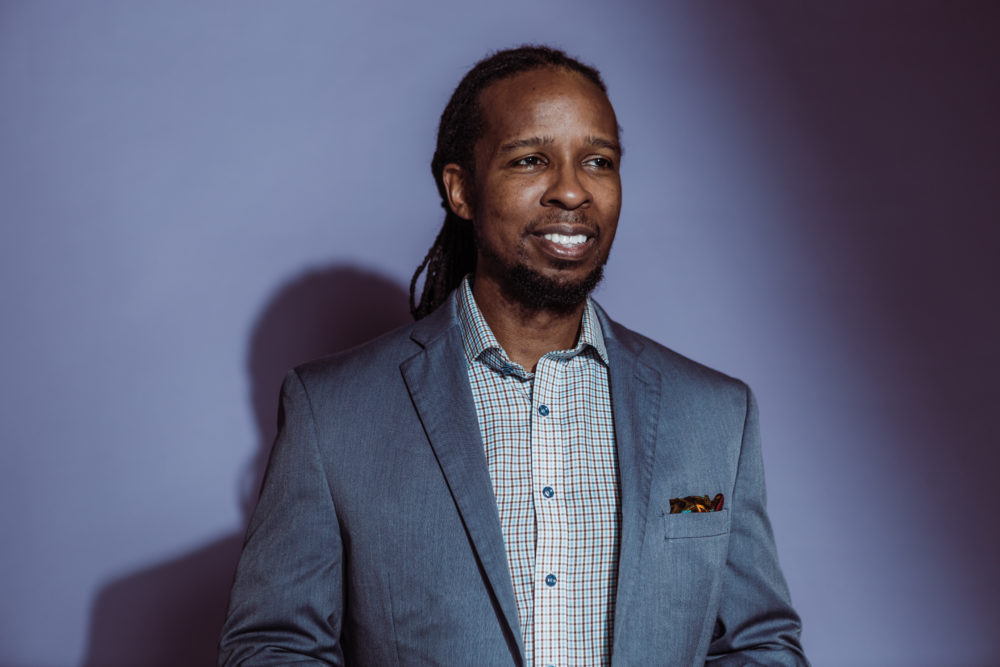




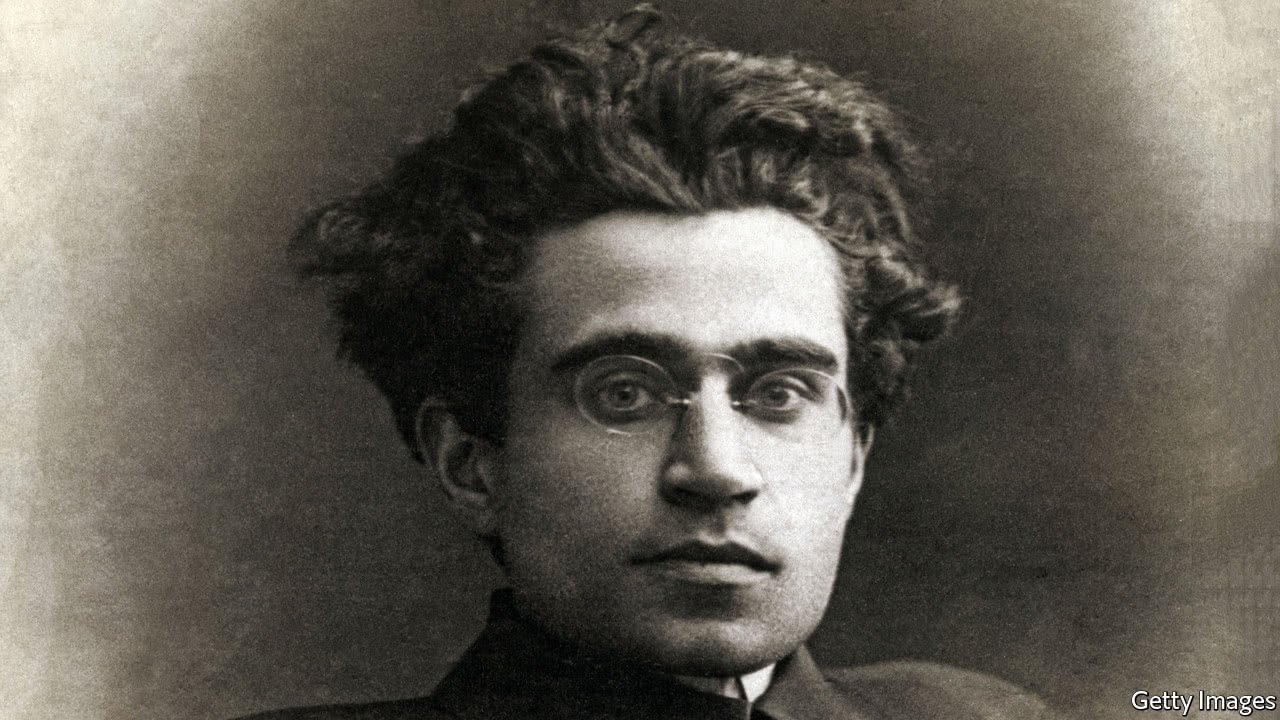
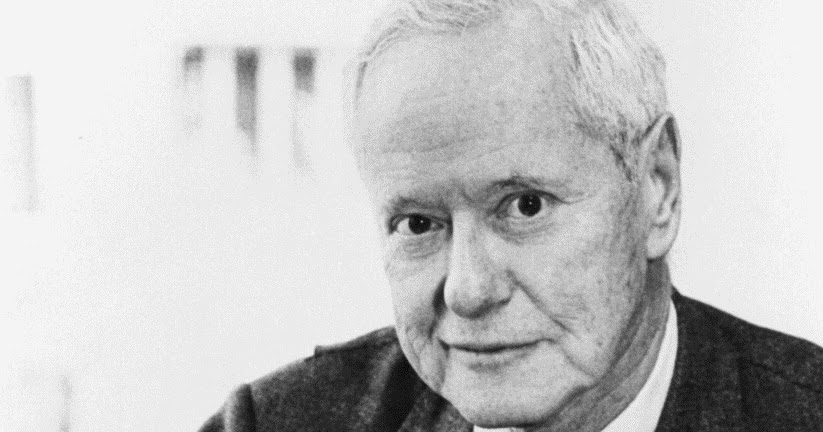
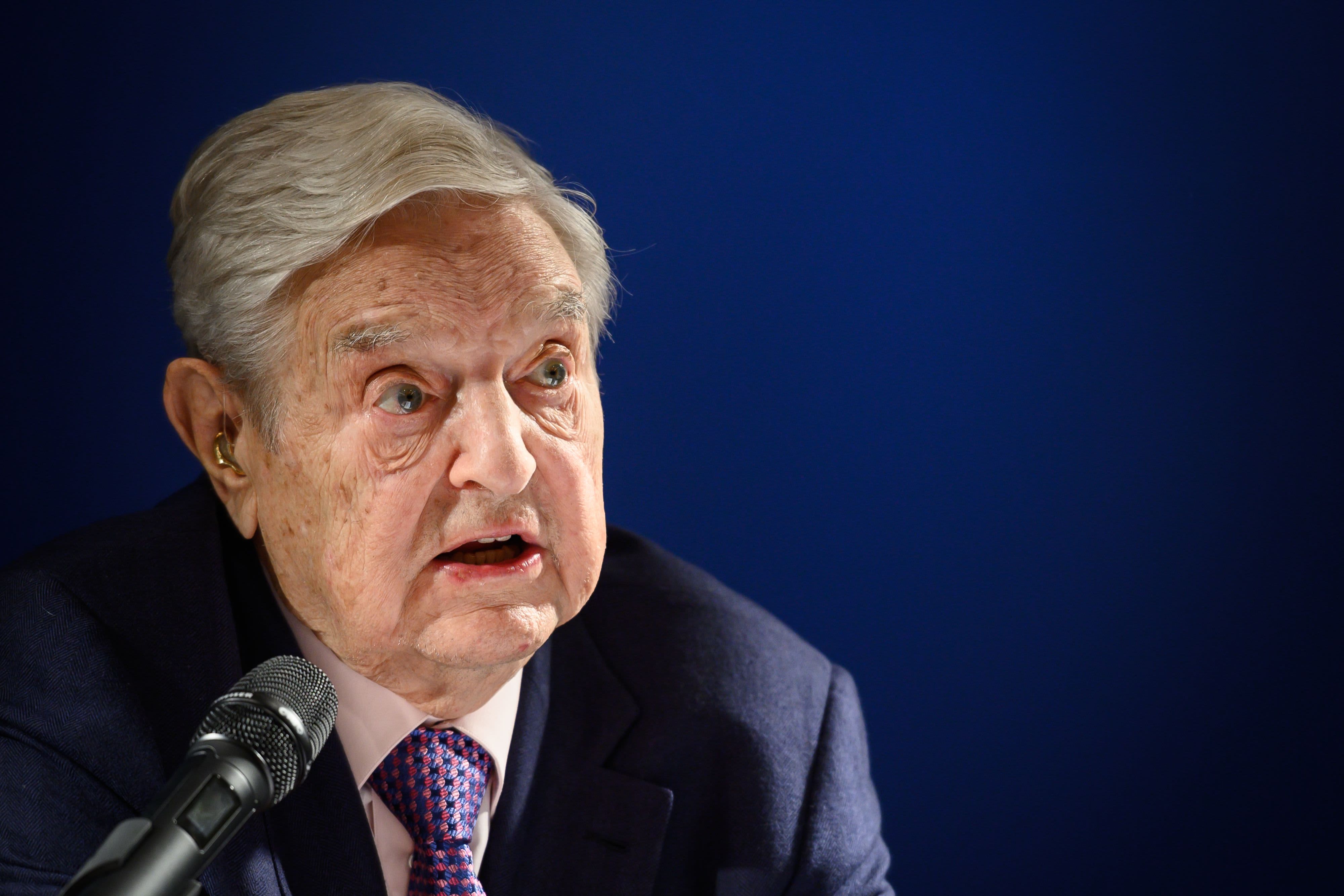


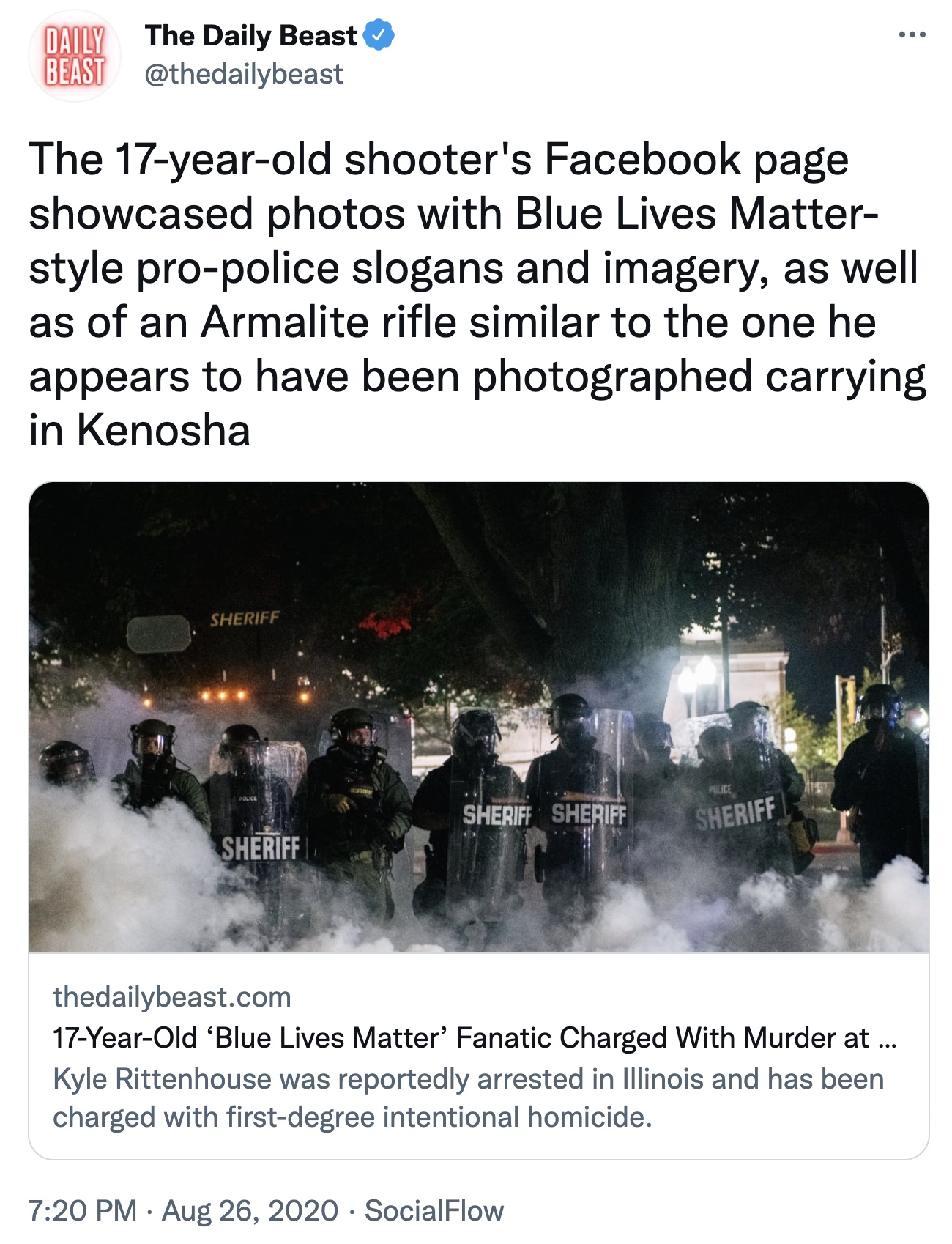


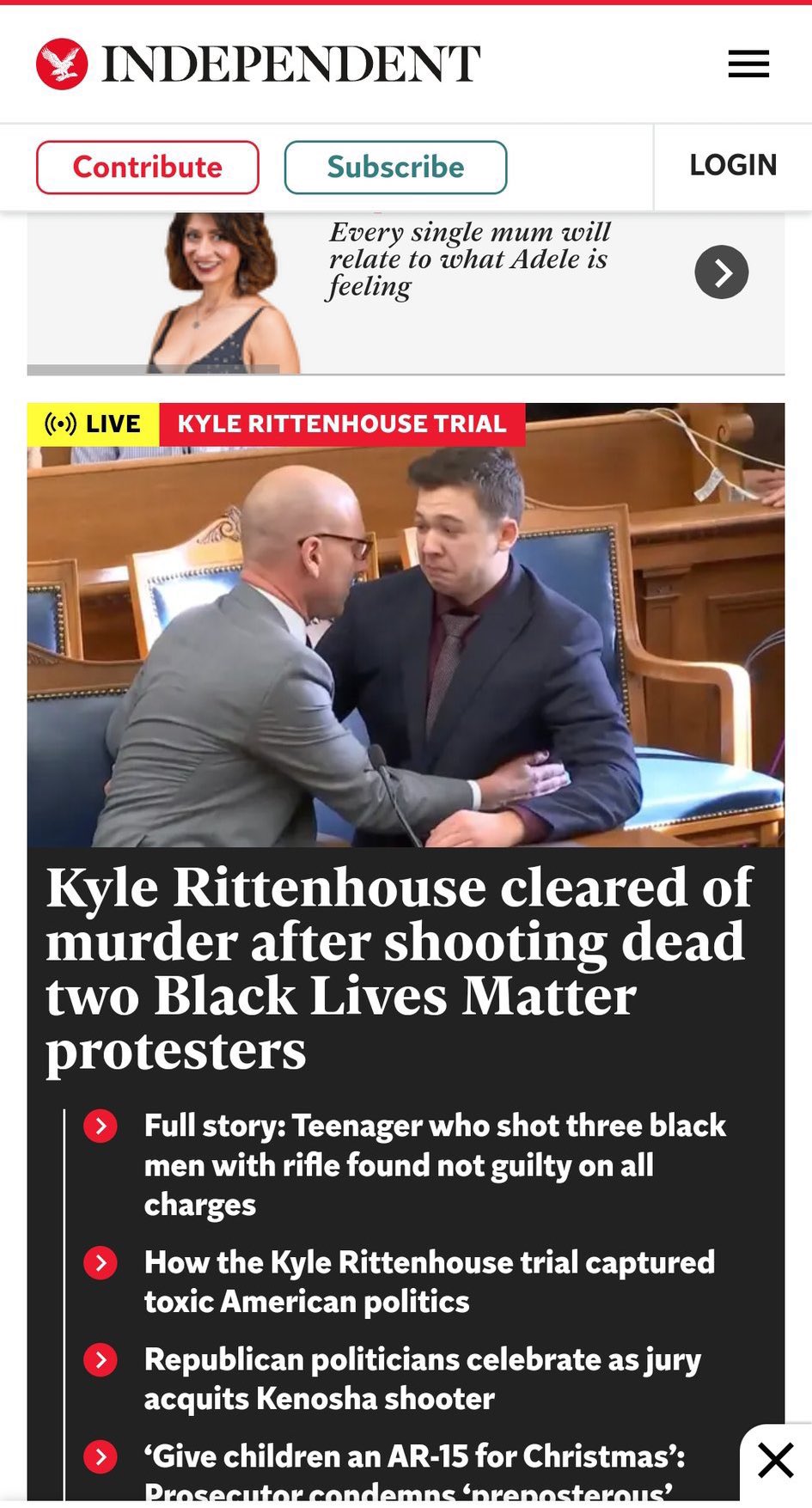
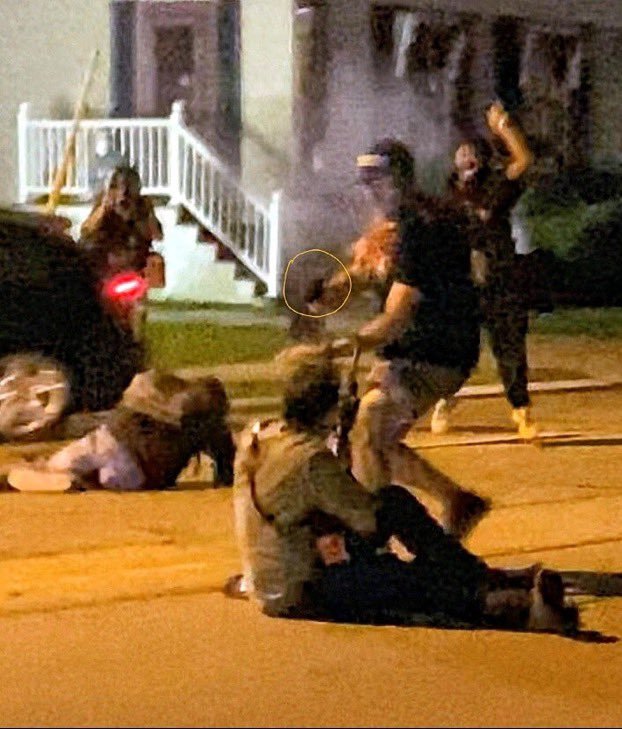

 freedom and reason