“Converting to Islam has become the latest trend on TikTok. Purple-haired influencers, including one who identifies as a ‘leftist queer gremlin,’ are donning the hijab in the wake of the Israel-Hamas war,” writes Julie Burchill for Spᴉked. Some of this fascination with Islam is attributable to the viral video of a TikTok influencer declaring an existential crisis after reading mass murderer Osama bin Laden’s “Letter to America,” which garnered over 14 million views on the social media platform before TikTok acted to remove them. The Guardian likewise scrubbed the letter from its platform, which had been the major source of the document. But mass receptivity to a superficial rant by the long deceased al-Qaeda leader comes in the context of a growing fascination among Western youth with a clerical fascism that dovetails with their secular one. Censoring the writings of bin Laden and other Islamists won’t stem the disturbing trend the moment highlights. Indeed, censorship will only make the kids more curious. We need a better solution to the problem.
Over the past 24 hours, thousands of TikToks (at least) have been posted where people share how they just read Bin Laden’s infamous "Letter to America," in which he explained why he attacked the United States.
The trend did draw some attention in legacy and social media in the United States, but a consensus quickly formed that doing so would feed the trend, so the coverage was light or the trend was repurposed. The latter was the case over at Salon, where Amanda Marcotte exploited the phenomenon to pivot to the desired moral panic over Christian nationalism, telling her readers to worry less about TikTokers and bin Laden and “fret more than Mike Johnson shares the terrorist’s views.” The governor of New York, Kathy Hochul, used the opportunity to vow action against social media companies while announcing new strategies to prevent young people from having their “minds polluted by the venom that is being spewed on these sites.” She ordered the director of Division of Homeland Security and Emergency Services to develop “media literacy tools” for k-12 in public schools to teach students and teachers to “understand how to spot conspiracies, theories and misinformation, disinformation and online hate.” Readers of Freedom and Reason know the focus of such literacy tools will be much less on the problem of clerical fascism and much more concerned with portraying conservative Christians and populist and patriotic Americas as “domestic terrorists.” (I have written about this extensively. See, e.g., The Establishment Project to Demonize Conservative White Males. What’s This All About?)
What lies behind this fascination with Osama bin Laden and Islamism and the conversion of young Westerners to Islam? Burchill quotes Lorenzo Vidino, director of the Program on Extremism at George Washington University, who theorizes that this trend symbolizes the ultimate form of youthful rebellion. “At this point, what’s more rebellious, what’s more anti-Western and anti-capitalism and anti-establishment, than a conversion to Islam?” Describing the result as “a sort of collage that makes very little sense,” he notes that the desire for rebellion moves youth to pick and choose among “different aspects of different extremist ideologies that are completely incompatible with one another.” This is correct albeit superficial and reductionistic. It won’t do as an explanation to chalk this up to youthful desire to rebel against authority and tradition. The sociological question is why Western youth desire rebellion and why they choose Islam.
As for media analysis, it tends to stay focused on the superficial. Burchill writes in her Spᴉked piece, “One does wonder what strange psychological kink would make someone feel this way—to worship people who would hurt them. We see it most clearly with our short-sighted chums, ‘Queers for Palestine’.” Later in the essay, we find Burchill getting close to something: “Perhaps the worst kind of magical thinking is what I call Commie Colonialism—the left’s insistence that all non-white people are, at heart, liberal or woke.” She correctly observes, “When someone is in the grip of this delusion, there are no limits on the outlandish things they might say.” Reaching for an example, she quotes Susan Sarandon who suggested that fearful jews are “getting a taste of what it feels like to be a Muslim in this country.” (For her suggestion, Sarandon’s talent agency dropped her, a move with which I disagree.) But, again, what is the source of the delusion? (Also, as an aside, why do the folks over at Spᴉked consistently mislabel progressivism—and themselves? The first thing that should strike one when reading that publication is how liberal it is.)
These deluded young leftists—deluded by socialization in an institutional web organized by corporatist logic and the obsession with diversity—see Islam as the non-white religion and therefore the good religion. White and nonwhite youth hate whiteness, with whites loathing their race assigned at birth. Unlike their gender, which they are encouraged to deny, they are told that race is an inescapable caste relations, and so Islam becomes the way to escape from freedom. Islam allows for virtue signaling around racial self-loathing. Of course, Islam is not a good religion. Of the Jewish-based traditions, Islam is the worst. But there’s a bad premise in all of this: While there are Muslims who are nonwhite, Islam is not a non-white religion. Arabs are white.
But the ignorance of Western youth doesn’t end there. What about the hundreds of millions of non-whites counted among the 2.4 billion Christians in the world? Christianity is far and away the largest religious faith in the world, its congregation represent a third of all humans on the planet. Christians outnumber Muslims globally by several hundred million people—people of all races and ethnicities found throughout the world. There are tens of millions of Christians in sub-Saharan Africa. Most black Americans are Christian (nearly 80 percent). The brown people of Central and South America (albeit still caucasian) are Christian. And there is an untold number of Chinese Christians not counted because the totalitarian People’s Republic of China won’t allow them to freely practice or acknowledge the extent of their existence.
Western youth have been made so dumb by the educational system that they don’t know even the most basic things about the world. Yet the rest of us are supposed to cater to their (ironic) fear of progress and pathological need to have impossible things affirmed as real and righteous. To be sure, the deluded youth are victims of a mass indoctrination program designed to turn them against the West to facilitate the transnational corporate restructuring of the world capitalist economy. But the offspring of any mammalian species possesses the same inherent capacities as its parents, a fact to which tens of millions of young Westerners who haven’t succumbed to the madness testify. Hope lies with them. Still, the elite amplify the voices of the deluded and use the loudness to crowd out reason and cow the sensible. There’s plenty of blame to go around.
All this makes it all the more important that those of us who have the courage to speak the truth never lose our confidence to do so. “Courage is contagious,” as Billy Graham was fond of saying. If Graham’s explicit devotion to Christianity troubles you, remember what probable-atheist Winston Churchill told us (and Steve Bannon garbles): “Courage is the most important of all the virtues, because without courage you can’t practice any other virtue consistently.” To be sure, many of our youth eschew virtue (choosing instead worship of the self), but there is enough of us still standing, religious and nonreligious, to reclaim Western Civilization. But we need to move quickly and forcefully.
It’s Thanksgiving. Media sources are reporting that the al-Harir US military base in Kurdistan, Iraq, has been attacked for the third time. The Islamic Resistance Group in Iraq issued a statement yesterday, confirming that they utilized drones to directly strike the base. The group stated that the attack was a response to the Israeli occupation’s alleged crimes against Palestinians in Gaza. This development follows a Reuters report, indicating that the US army conducted “precise” strikes on two facilities in Iraq in retaliation for what it claimed were attacks on its forces in the region.
According to several sources (see, e.g., “Islamic Resistance in Iraq appears to be responsible for attacks in the country and there’s no end in sight,” Atlantic Council) US military bases in Iraq and Syria have faced continuous attacks since mid-last month, stemming from a show of solidarity with what the Islamist consider the resistance in Gaza and opposition to the US backing of Israel’s effort to defeat Hamas and affiliated terrorist organizations there.
On November 13, a series of missile and drone strikes targeted US occupation bases in Syria as a response to recent defensive US airstrikes. On November 17, the Islamic Resistance in Iraq declared that its forces had launched attacks on three US bases situated in Syria and Iraq. In retaliation for what they deemed as crimes against their people in Gaza, the Mujahideen of the Islamic Resistance in Iraq utilized two drones to strike the American occupation base, Tal Baidar, located west of the Syrian city of Hasakah. Prior to this announcement, the coalition had already disclosed the targeting of two additional bases in Iraq: the Harir base and the Ain al-Assad base.
AI generated
As of last week, the Pentagon has disclosed more than sixty attacks on US bases in Iraq and Syria since the previous month. The statement noted that 59 US soldiers had been injured. There are reports of deaths with subsequent Islamist actions. The Islamic Resistance in Iraq, a coalition of various Iraqi resistance groups with ties to Iran’s Islamic Revolutionary Guard Corps (IRGC), was established last month to express solidarity with the Palestinian resistance. Naim Qassem, the Deputy Secretary-General of Lebanon’s Hezbollah, emphasized in a recent interview with El-Mundo that attacking US positions in West Asia is essential to halt the mass killings of Palestinians in Gaza. He argued that US military intervention aligns with the violent Israeli reaction and aims to safeguard what he termed as a “monstrosity.”
Historians will backdate the start of WWIII, but it appears to be underway. This time it’s the West against the clerical fascist, the new Nazis, who are in many ways more brutal than the old ones. This is not a time for a weak president. Yet the elite have installed the weakest and most unAmerican president we’ve ever had (at least in my lifetime). Worse, our young men have been brought up to be less than enthusiastic about their country and the Western way of life that spoiled them. Biden and NATO’s timing in provoking Russia into entering Ukraine will be judged poor in hindsight. Of course, the Islamist pick their spots. They have struck because the West is weak and overextended. We cannot know this for sure, since we cannot rerun history, but it seems highly unlikely any of this would be happening if Trump were president.
A map of every “far right” or “far left” government in Europe. The right governments are in red (source).
On the plus side of the ledger, populist-nationalism is on the move across the West. Argentina on choose on Sunday libertarian Javier Milei as its new president. The way the corporate media tells it, the nation took a gamble on an outsider with unconventional views to address an economy grappling with triple-digit inflation, an imminent recession, and escalating poverty. Riding the tide of voter frustration with the political establishment, Milei secured victory with a larger-than-anticipated margin, garnering approximately 56 percent of the vote, surpassing his rival, Peronist Economy Minister Sergio Massa, who admitted defeat with just over 44 percent of the votes.
In the Netherlands, Geert Wilders is expressing his ambition to become the next prime minister after securing a significant victory in a landmark election. His primary focus, he stated, will be controlling immigration. His election win serves as a warning to mainstream political parties throughout Europe that the issues at the forefront—immigration, the cost of living, and climate change—may turn them out of office. They need no more evidence than the right-wing coalition government in Sweden, which has announced that it’s exploring legislation to enhance requirements for migrants entering the country. The law may include requiring as a condition of residency adherence to fundamental standards of integrity: any foreigner who does not adhere to an “honorable lifestyle” and respects Sweden’s “fundamental values” will be deported.
I hope I never have a day in my life when I won’t or can’t be thankful for living in the greatest republic that ever existed—the United States of America. Although I am not responsible for the actions of those now dead and gone, I can be thankful for my ancestors who founded and built and defended this great nation. I worry about the future, though, not only because of the threats abroad, but the rot inside. The enemies of America are in charge of the machinery of the republic. I’m not religious, but I know many of you are and will pray for America. I’m thankful for that, too. We need more than prayers, though. We need action.
The Nation has just published a piece by John Nichols wondering why, if Marianne Williamson is polling just as well against Biden as Nikki Haley is against Trump, the media is obsessed with Haley and ignoring Williamson. This isn’t obvious? Unfortunately, Nichols doesn’t provide the comprehensive explanation needed. So I will do that in today’s blog.
With Ron DeSantis not ready for primetime, Nikki Haley is rising in the polls—and in the eyes of the establishment
Despite being well behind Donald Trump in polling (as are all Republican hopefuls), Nikki Haley, former governor of South Carolina and US ambassador to the United Nations, signals that she will serve as a pliant functionary for the permanent political class, She is rapidly become the darling of the donor class, the billionaire hedge fund managers, etc., who own the leadership of the Senate on both sides of the aisle. Haley is the authoritarian and warmonger they love to love. Although Haley walked backed her demand that social media ban anonymous accounts after massive pushback, her emphatic advocacy of the position signaled the desired illiberal personality type, and her commitment to funding Ukraine to perpetuate Biden and NATO’s disastrous proxy war with Russia has garnered support across the military-industrial establishment. Nikki Haley would therefore be the worst possible president—if the metrics are democracy, freedom, and peace. But those aren’t the metrics, are they.
The other piece of this is the media’s pathological obsession with Donald Trump. Trump is a clear and present danger to corporate governance and the globalist agenda. The establishment drove Trump out of office and they’re determined to prevent his return. The resort to lawfare, with states attempting to take Trump off the ballot (failing in Colorado, but several more suits are ready to go) and jurisdictions hitting him with all manner of criminal charges, with one court even trying to take from him his business empire, tells us what the end goal is, to prevent Trump from running, with Haley the last Republican standing. We’ve all seen the polls. If they hold, and there’s no reason to think they won’t, Trump will be the next president. That’s why the establishment is in total meltdown. With DeSantis clearly not ready for primetime, Haley is their gal.
Marianne Williamson has also been rising in the polls—with no help from the establishment media
As for Williamson, she’s a crackpot. But that’s not why the elite don’t want her. Nicholes tells his readers that “Williamson proposes deep cuts in Pentagon spending, and a new approach to international relations that focuses on diplomacy and peacemaking.” That’s certainly part of the explanation. “Polls indicate that Williamson’s strongest support comes from young Democrats and Democratic-leaning independents, who have been particularly critical of Biden’s approach to the conflict between Israel and Palestine, and who have been supportive of more ambitious responses to economic inequality, racial injustice and the climate crisis.” For some of the same reasons, the establishment doesn’t want Robert Kennedy, either; but they couldn’t ignore him, so they discredited him instead. Now that he is no longer a candidate for the Democratic Party, the establishment media is giving Kennedy the Williamson treatment. But if Williamson continues to rise in the polls, the establishment will give her the Kennedy treatment.
The establishment needs a functionary like Gavin Newsom or Hillary Clinton to be their president. These figures can promise the elite to not be our president. Newson and Clinton can be counted on to continue the globalist agenda, promoting off-shoring of production and defending mass immigration—i.e., the super-exploitation of foreign labor at home and abroad—starting more wars and deepen those in which the US is already involved, expand the national security apparatus, and continue the woke agenda in our schools. Put simply, what is needed from both parties are establishment operatives who will push the transnational project of managed decline of America and the West.
What terrifies elites is the populist-nationalist movement that promises to restore the American Republic—that right, the bipartisan movement to put America first and make her great again by going back to first principles. We see how terrified elites are in their reaction not only to Trump but also to Kennedy. Trump and Kennedy are populist-nationalists committed to democratic-republicanism and classical liberal ideals. We see this also in the attack on Supreme Court justices. Progressives are desperate to portray conservative justices (especially Clarence Thomas) as corrupt to delegitimize their liberal approach and originalist legal philosophy. Constitutionalism, nationalism, and populism are diametrically opposed to illiberal and collectivist praxis of progressivism and globalism, and so those who represent these things must be destroyed.
It feels good to have one’s argument validated by somebody like Yascha Mounk, even if I disagree with him about the implications of populism to liberal democracy (in my view he has misunderstood the anti-establishment impulse of the movement). Mounk is a German-born Jewish political scientist associated with Harvard University and Johns Hopkins University. Mounk is also a Senior Fellow at the German Marshall Fund. He is known for his work on issues related to democracy, populism, and political theory. See, for example, his 2018 book The People vs. Democracy: Why Our Freedom Is in Danger and How to Save It, where he makes the point with which I disagree.
Yascha Mounk is a German-born Jewish political scientist associated with Harvard University, Johns Hopkins University, and the German Marshall Fund
I haven’t red Mounk’s new book, The Identity Trap: A Story of Ideas and Power in Our Time, but I was fortunate to catch his interview with Glenn Lowry (see below). Nearly everything Mounk says about woke ideology in this interview I have been saying on my blog Freedom and Reason for years. In the interview, Mounk reflects on a significant transformation in the beliefs of his social circle over the past decade, noting a substantial shift in left-wing ideologies in America. In 2023, the understanding of being left-wing is markedly different from that of 2005 or 2010. This change is attributed to the proliferation of new ideas, often termed “woke” (Mounk doesn’t like the word) or linked with identity politics, though Mounk prefers the term “identity synthesis” to encapsulate the nuanced evolution. Acknowledging historical instances of white identity politics, Mounk argues that the current left’s ideology is distinctive, rooted in influences such as postmodernism, post-colonialism, and critical race theory. Key intellectual figures like Michel Foucault, Edward Said, and Gayatri Spivak have significantly shaped the discourse on power, identity, and oppression.
I have written about this, but it bears repeating: one of the difficult things to deal with in light of the rapid shift in left-wing sensibilities is that I remained stubbornly resistant to the ideas that currently corrupt left-wing thought, which alienated a lot of colleagues and friends (even family). Unaware that it is in fact those around me who have changed, many people came to perceive me as the one who has changed; they see themselves as on the left, so the perception was that I had moved to the right. To be sure, I have changed in some ways; but that change has come about by recognizing that there was programming during my graduate school experience that put into my epistemic system ideas from post-colonial studies and critical race theory, a system that was not yet sophisticated enough to exclude bad ideas. The new millennium found me reviewing and reassessing my understanding of the world and the myriad ways thinkers attempt to grasp it and purging from the system the worst of those ideas I found there.
I have also taken great pains to emphasize that woke is not Marxist. This is one of the most satisfying moments of this interview is Mounk explaining why woke progressive ideology—critical race theory, inter sectionalism, post colonial studies, race essentialism—is not is not Marxist, neo-Marxist, or cultural Marxism, or any of those other labels that both the left and the right attempt to attach to progressive ideology. Today’s progressivism is postmodernist. Whatever monsters one wishes to credit to Karl Marx, the man is not the creator of this one.
Lowry asks Mounk to trace the intellectual and political history of the identity synthesis. Mounk begins with Foucault, who rejected grand narratives and grand theoretical attempts to structure our comprehension of the world and history, attempts that encompassing both philosophical liberalism and Marxism. Foucault’s skepticism extends to the notion of societal progress, especially concerning the treatment of the mentally ill, criminals, and sexual minorities. Departing from conventional perspectives, Foucault redefines power, rejecting the naive top-down view associated with laws, bureaucratic states, and enforcing police forces, and focusing instead on power as deeply embedded in our discourses, evident in conversations and audience engagement, where the framing of ideas becomes an exercise of power. This intellectual solvent effectively enables critiques of democratic institutions, as well as post-war France’s limitations, albeit lacking a distinctly activist stance, positing that any set of discourses could be as oppressive as the next, leaving no definitive ground for refusal.
In the subsequent phase, post-colonial thinkers are drawn to these ideas, seeking to reconstruct their newly independent countries without adopting Western ideologies like liberalism or Marxism. Recognizing the need for more than critique, they endeavor to infuse politics into postmodernism. Edward Said emerges as a pioneer in this field, utilizing Foucault’s discourse concept as a primary tool. Said goes beyond exposing discourses, employing them as a form of political power. In works such as Orientalism, Said endeavors not only to reveal how the West’s representation of the East justified colonial rule but also to invert the discourse, providing a means to resist. This marks the genesis of discourse critique as a political tool, a politicized form of discourse critique that is observable in contemporary politics. We see the fruit of Said’s labor in the mob on the street. We also see these ideas in contemporary feminist politics, where engagements range from advocating for abortion rights to scrutinizing and critiquing cultural artifacts like the Barbie movie.
Another significant contributor to this trajectory is Gayatri Spivak, an Indian literary theorist. Spivak accepts the critique of stable identity categories presented by figures like Foucault. Acknowledging the limitations of essentialist understandings of identity, she introduces the concept of “strategic essentialism.” While recognizing the philosophical flaws in essentialist notions, Spivak argues that, for practical purposes, identity categories are essential to advocate for the most oppressed individuals in places like Kolkata who may lack a voice. This results in a paradoxical term, acknowledging the philosophical discrepancy while asserting the strategic necessity of essentialism; Spivak underscores the paradoxical need for identity categories despite critiquing essentialist notions. The narrative further explores the popularization of these ideas, including the concept of intersectionality, in social justice movements.
Mounk puts all this together for Lowry. The movement gleans from Foucault the rejection of neutral forms of truth, embracing a perspective that challenges the idea of objective truths. Although he leaves this out in the interview, it is from Said that activists derive their fetish for marginalized and peripheral people. Spivak contributes a politicized form of discourse analysis to the intellectual toolkit, offering a lens through which activists assume control over the political dimensions of language. Enter critical race theory. From Kimberlé Crenshaw, activists adopt the popularized iteration of intersectionality, a concept that has taken on a life of its own in contemporary social justice movements. We can add to Mounk’s list queer theory and the work of individuals such as Judith Butler. This amalgamation of ideas serves as a comprehensive framework for understanding and engaging with the complexities of modern social justice activism.
Beyond intellectual history, Mounk scrutinizes the transformation of these ideas into a dominant political and cultural force, particularly evident in 2020 with the riots surrounding George Floyd’s death. In light of the protests on our streets, The Identity Trap could not have landed at a better time. Mounk also touches on the concept of the “successor ideology,” distinct from but related to “wokeism” (see my recent post The Threat of Successor Ideology). This ideology, championed by the administrative state and the technocratic elite, encompasses a set of ideas that justifies the moral norms enforced by the woke. The subsequent political economy analysis reveals how this ideology, once marginal, became the prevailing moral orthodoxy in major American institutions. Mounk highlights the paradoxes within the successor ideology, including the privileged background of many proponents and its extreme self-denunciation, where individuals are expected not only to accept guilt but to affirm it.
These intellectual currents underpin the destructive ideology pushed throughout the education system and pressed into the brains of Western youth, from k-12 through colleges and universities, by administrators, counselors, teachers, and staff. Mounk tells us how this happened. In the page of Freedom and Reason, I tell you why this is happening. This is not a communist takeover of the trans-Atlantic system. It’s the fascist destruction of Western Civilization—which is why elites in the West promote the clerical fascism of the Islamists—with a new world order as the end goal (this is what Mounk misunderstands about populism). Of course, not all of today’s youth seeks totalitarianism. But too many of them do.
So what is to be done? In The Identity Trap, Mounk argues for the restoration of liberalism in the democratic sense, advocating for core values like free speech, due process, and open inquiry. Mounk challenges the illiberal tendencies within the successor ideology and calls for a return to the Enlightenment principles that underpin a multiracial democracy. As readers of my blog know, this is my argument, as well. I look forward to getting my hands on The Identity Trap. Readers of this blog should grab a copy, too. We need more voices like Yascha Mounk.
People are always telling me that big organized events can’t possibility be the result of government or elite conspiracy because somebody would say something somewhere at some time. Then, when a man says something lots of places and lots of times, the government and media cover for him, presenting as a harmless well-meaning sad sack a central player in the conspiracy. Several years later, as the truth starts to come into focus (a truth I knew all along, for the record, documented on the pages of Freedom and Reason), the government charges the man with a misdemeanor, he cops a plea, and disappears.
Ray Epps imploring people to breach the Capitol on January 6, Washington DC, 2021
Check out the first paragraph of this News 1 story on his guilty plea and marvel as the sheer beauty of top-notch propaganda: “Ray Epps, a onetime Donald Trump supporter who was the target of a right-wing conspiracy theory about the Jan. 6, 2021, attack that forced him into hiding, pleaded guilty on Wednesday to a misdemeanor charge for his role in the US Capitol riot.” I need to translate: “one-time,” i.e., the role he performed as a Trump supporter in organizing the riot to be blamed on Trump; “target of right-wing conspiracy theory,” i.e., called out by people who believe their lying eyes; “forced into hiding,” i.e., making Epps unavailable for questioning.
The Deep State chose poorly when they selected Ray Epps to be among the federal agents and contractors who organized the January 6, 2021 riots in Washington DC. He was prone to braggadocio. The Deep State is desperate to distract the public from learning about the appearance of new video and audio of Epps bragging about his role in January 6. This evidence joins the a voluminous record to leave no doubt who Epps was. Indeed, the video of Epps is so ubiquitous that it exposes for all to see the function of the January 6 Committee and the corporate media apparatus.
The first time Ray Epps approached @bakedalaska and told him to go into the Capitol, Baked Alaska left to an area far away from him.
Epps then followed him, repeating his calls for protesters to enter the Capitol.
Ray Epps tried to incite the riots at the Capitol, but we are learning this is all on Pelosi as she is responsible for the insurrection. Thanks to Speaker Johnson for releasing the J6 tapes! pic.twitter.com/wdt0IGSkNT
Epp is not the only one who spilled the beans. Look up a cat named John Earl Sullivan. Ray and John even appear together. You won’t hear much about Sullivan in the news, but the District of Columbia Attorney’s Office announced the following on November 16, 2023 (yep, two days ago): “A Utah man was convicted today by a jury in the District of Columbia of five felonies and two misdemeanor charges related to his conduct during the Jan. 6, 2021, breach of the US Capitol. His actions and the actions of others disrupted a joint session of the US Congress convened to ascertain and count the electoral votes related to the 2020 presidential election.” Assisting DC Attorney’s Office in Sullivan’s prosecution was the Department of Justice National Security Division’s Counterterrorism Section. Noting the respective race of the two men, the cynical might wonder whether Epps got off easy and Sullivan had the book thrown at him; however, the vast majority of those the government threw in prison are white men.
To clarify the Attorney’s Office memo, the purpose of the Capitol breach was to prevent the process of making legal challenges and reviewing vote certifications under the 1887 Electoral Count Act (ECA), a process Democrats had used in previous elections to challenge Republican victors. Several of the state certificates were fraudulent and the Administrative State needed a mechanism for thwarting what would have almost certainly been a successful challenge of the 2020 election. Trump supporters had no interest in preventing the process from going forward by rioting. That’s why Trump held a rally and implored them to peacefully and patriotically make their voices: to steel the spines of Republican lawmakers Trump had also requested National Guard troops to police the event four days before the riots.
In case readers missed it, Congress changed the ECA in a stealth reform, i.e., the Electoral Count Reform Act (ECRA), tucked away in an omnibus appropriations legislation passed on December 2022. They did this to obstinately, to use the language from the talking points memo, “reform and modernize the outdated 1887 Electoral Count Act to ensure that electoral votes tallied by Congress accurately reflect each state’s public vote for President.” Another translation is necessary: “accurately reflect each state’s public vote for President,” i.e., make it all-but-impossible to challenge a state certification on future January 6 joint sessions.
Why was Epps scouting Baked Alaska in the weeks before January 6?
FED? @laralogan has exposed the fact that Ray Epps had been scouting Baked Alaska weeks before J6. Ray claims he wasn’t working with the Feds so who was he working with? We need hearings @mtgreenee. pic.twitter.com/o8FQpJSpFZ
There’s more. The first two busses of “insurrectionists” to arrive that day were ghost vehicles full of FBI and other government agents.
#J6 was a setup. Ghost busses, tapes not released, coordinated media coverage, Ray Epps, Ukrainian Spy, hidden data from the head of capital police, Intel officer getting cushy payoff with a job at Berkley .. its clear as day what was going on at this point. pic.twitter.com/uxe8DvHUjh
The questions I ask are rhetorical. This was a fedsurrection. The reason the Washington DC and House Speaker Nancy Pelosi declined Trump’s request to bring in the National Guard was that the riot was planned. The Deep State knew Republicans were going to challenge state certificates and that their actions were warranted. The reason the Denver judge ruled late last night that Trump incited the violence on January 6 but declined to remove him from the Colorado ballot is a thing called “discovery.” Kash Patel’s testimony blew up everything. Which is why you haven’t seen it. Go find it. Watch it.
For more, I direct you to Darren Beattie’s Revolver News. I have to go rake leaves on this beautiful fall day.
Woke “Critical Whiteness” lecture at the University of Denver teaches students that white people are inherently guilty of racism. pic.twitter.com/ls0SE5Ma17
This University of Denver teacher just told students that critical race theory is a religion. This is the analogy I have used for years (see for example my June 3, 2020 essay Such a Beautiful Moment—The Self-Flagellating of White People). CRT is a religion that appeals to supernatural entities and forces and rests on the notion of original sin, blood guilt, intergenerational and collective responsibility—all based on race. It’s a paradigm of Erving Goffman’s “tribal stigma.”
There are those whom the gods of social justice keep immaculate (it wasn’t that Mary was a virgin but that her vaginal canal was cleansed by the Holy Spirit). In the CRT religion, blacks are sacred in this way. Living fetishes and totems.
There’s a version of this in critical feminism. A man is an oppressor because patriarchy. But if he performs the role of a woman (don’t get mad at me, that’s Judith Butler talking), if he steps into oppression by making himself a minority (trans), then he leaves that sin behind and becomes a protected class. He becomes a fetish in the religious sense. Trans is not just a move from the dysphoric to the euphoric. Gender ideology is a salvation cult.
But there’s one big difference: race is caste. You can’t wriggle out of it (Rachel Dolezal tried and look what happened to her). At best, no matter how many feet they wash, whites can only be allies; they’re always sinners. They must repent, of course, but remain permanently fallen. They must apologize for themselves and go to the back of the line.
Whatever the differences, it’s all primitive superstition and crack pot academic theory. All of it. CRT. Queer Theory. Islamism. It’s crap. Yet these crappy ideas have colonized our institutions. We’re being required to adopt the doctrines, recite the scriptures, engage the rituals. Diversity, Equity, and Inclusion is the manifestation of these atavisms in corporate boardrooms and educational institutions. We’re forced to act in bad faith. It’s corrupting history, fiction, art, and music. It’s corrupting everything.
The Woke are waging war on civilization. Resist it while you can. The rational know what this is. It’s totalitarianism.
Archbishop: “There's a secular belief system that is its own religion—it has infallible dogmas it’s forcing on the populace, it punishes dissenters, it has its rituals & its saints and martyrs—so it has these markings of a religion and it's allowing no space for other beliefs.”
— Independent Truths with Dr. Scott Atlas (@ScottAtlas_IT) September 4, 2023
The archbishop is on to something. I’ve been telling readers of my blog for years now that woke progressivism is a religion—an imperialistic religion at that. Strategically, to keep it from protecting itself behind the shield of freedom of conscience, let’s call it a quasi-religion, but let’s also capitalize it—like we capitalize National Socialism. Those who push it suspend the principle of disestablishment and use the doctrines of Woke to push out other religious faith—except Islam, which is its sister totalitarianism—and take control over the individual, selectively negating his fundamental rights to conscience, speech, assembly, association, etc. The Woke are a colonizing army that has marched across the West and captured its institutions. It’s inquisitions abound.
Muslim America (AI generated image)
I know people are concerned about Christian nationalism. So am I. But I suspect there is a high degree of correlation between those who express this concern and those who advocate woke progressivism. However, the only people who can validly express fear of Christian nationalism—that is, moving from the ground of secularism—are those who also stand against Woke and Islam and every other form of illiberal religion, ideology, ritual, and practice. Who are the people who have that ground to stand on? Those would be the liberals.
Central to liberalism is secularism. Secularism is not non-religious. A man can be a Christian and be a secularist. I know several such men. Secularism means the disestablishment of religion. Secularism emancipates religion from state sanction. It’s up to individuals to emancipate themselves from religion. The ideology of the Christian Nationalist is antidisestablishmentarianism. Yeah, it’s a mouthful, but I learned it as a kid, back when people were talking about the problem in a rational way. It’s time to talk about the problem again. Frankly, the concern is not Christians frustrated with American secularism. The threat to our liberties and freedoms is the imperial religion of Islam—the sharia supremacist movement—and the quasi-religion of Woke. That these totalitarianisms have become allied amplifies the threat.
“This passing fad for what is miscalled ‘transsexualism’ has led to the most tragic betrayal of human expectation in which medicine and modern endocrinology and surgery have ever engaged. In the name of gender transmutation they have led people to believe that alchemy was possible, thus fostering in individuals and in our whole culture conscious and unconscious neurotogenic fantasies whose only possible outcome is an intensification of the neurotic fantasies which underlie their expectation and ultimate psychosis.” — Lawrence Kubie (1974)
“In the old days, when I was a medical student, if a man wanted to have his penis amputated, my psychology professors said that he suffered from schizophrenia, locked him up in an asylum and threw away the key. Now that I am a professor, my colleagues in psychiatry say that he is a ‘transsexual,’ my colleagues in urology refashion his penis into a perineal cavity they call a vagina, and Time magazine puts him on its cover and calls him ‘her.’ Anyone who doubts that this is progress is considered to be ignorant of the discoveries of modern psychiatric sexology, and a political reactionary, a sexual bigot, or something equally unflattering.” —Thomas Szasz (1979)
“I don’t change men into women. I transform male genitals into genitals that have a female aspect. All the rest is in the patient’s mind.” —a Casablanca surgeon who operated on hundreds of American men interviewed by Janice Raymond in the late 1970s
According to Helen Lewis, writing for The Atlantic, in her August column, “The Gender War is Over in Britain.” The subtitle sketches the piece albeit inaccurately the situation: “While upholding trans rights, the Labour Party disassociates itself from radical postmodern theories.” Exactly how is the gender war over if the propaganda of trans rights is upheld? What are those rights if they are not the same as everybody else’s? How does one uphold a major tenet of the most radical species of postmodernist thought, namely queer theory, while disassociating oneself from radical postmodern theories?
Labour’s shift is hardly good enough even if it amounts to anything. Perhaps this is the start of the Labour Party’s journey back to sanity on this issue; it’d be understandable that Labour believes it can’t all at once go home to the truth of gender given the zealotry of trans rights activists (TRAs). Maybe Labour means to remain half-crazy. Maybe this is a strategic step backward to secure the footing necessary to take more steps forward.
“When Keir Starmer wanted to change the Labour Party’s stance on sex and gender,” Lewis usefully notes, “he didn’t give a set-piece speech or hold a press conference. Instead, the leader of Britain’s main opposition party stayed in the background, leaving Anneliese Dodds, a shadow minister with a low public profile, to announce the shift in a short opinion column in The Guardian.” In her column, Dodds assures the public, “We will modernize, simplify and reform gender recognition law. Our policies won’t please everyone but we will do what’s right.”
Lewis summarizes Dodds op-ed: “In just over 800 words, [Dodds] made three big declarations. One was that ‘sex and gender are different.’ Another was that, although Labour continues to believe in the right to change one’s legal gender, safeguards are needed to ‘protect women and girls from predators who might abuse the system.’ Finally, Labour was therefore dropping its commitment to self-ID—the idea that a simple online declaration is enough to change someone’s legal gender for all purposes—and would retain the current requirement of a medical diagnosis of gender dysphoria.”
The first point—that “sex and gender are different”—is demonstrably false. In my essay Sex and Gender are Interchangeable Terms, I document that these words are synonyms and have been so since entering the English language centuries ago. Separating gender from sex is the work of sexologists in the 1960s. The word “gender” as indicating something other than sex was rarely used in social science and feminist politics before the mid-1970s. Gender as referring exclusively to the cultural-social continuum of femininity and masculinity was introduced into sociology in 1972 with Ann Oakley’s Sex, Gender, and Society. Much of Oakley’s work was informed by medical sociology and a concern for women’s health, wrapped in a Marxist feminist analytical frame; where the distinction appears elsewhere, it’s more often rendered by critical theorists corrupted by the postmodernist epistemic.
I have a lengthy essay documenting the development of gender ideology in history coming out in the near future, but it will suffice to say here that the fact that those promoting the false distinction between sex and gender so effectively socialized the falsehood testifies to the corrupting influence of postmodernism on western institutions. The Labour Party will have to jettison this false distinction if ever it intends to align its politics with history and science. Given that Labour has made the distinction part of the platform, how could anybody rationally expect that to happen? To be sure, the abandonment of self-ID is a major step in returning to the real world. Hopefully it will inform the practice of medicine in that country. There are so many broken bodies there. How many more will it take before people realize the horror of gender affirming care (GAC)?
As for defending girls and women from predators, on the Labour Party’s delcarations, it’s shocking that it could ever have been thought appropriate to allow men into female-only spaces. It not as if no voices have been raised against forcing girls women to defecate, urinate, and shower around boys and men they don’t know or would want to. The gender critical standpoint (GCS) emphasizes the importance of recognizing and preserving sex-based rights, particularly in areas such as corrections, healthcare, private spaces (bathrooms, locker rooms, women’s shelters, etc.), as well as in sports. Advocates believe that these rights were established for a reason and are essential for ensuring the equitable treatment of women in society and, moreover, their safety and their well-being. Gender critical feminists worry not only that men compromise female-only spaces, but also that the broader adoption of gender identity ideology will, by reifying traditional gender roles and obscuring the material reality of sex-based oppression, undermine the historic gains feminists have made in the face of determined opposition.
TRAs characterize the GCS as trans-exclusionary radical feminism, smearing its advocates as TERFs (trans exclusionary radical feminists)—and worse, assaulting feminists and lesbians gathered in public spaces to collectively defend women’s rights, as well as homosexual enjoyment of the same rights available to every other citizen, rights and access that required decades of struggle to achieve. TRAs argue that every person not only has the right to enter the spaces of the opposite gender, but also has a right to GAC. To deny these rights is the work of transphobia, as if disagreement were akin to a pathological fear and loathing of trans identifying people, an alleged hatred exacerbating the suicidal ideations common to those suffering from gender dysphoria, a symptom among several GAC is purported to relieve. TRAs argue that transphobia warrants harassing those who voice opposition to their views, even inflicting violence on peaceful protestors. (See Self-Castration and TERF-Punching: Trans Rights are What Sort of Rights?Anarchists and Corrupting the Three Arrows; From Delusion to Illusion: Transitioning Disordered Personalities into Valid Identities; Trans Day of Vengeance Cancelled Due to Genocide.)
I begin this essay referencing the British situation because this nation is finally addressing concerns raised by the experience with gender ideology, an experience shared by European countries (cf EngSoc—Jail Time for Gendering in the UK?). While some progress is being made in the United States on this issue, especially in growing awareness of what gender ideology is and the deleterious effects it’s having on children, the for-profit medical-industrial complex represents a major obstacle to save children from the maw of the corporate Moloch. (See Making Patients for the Medical-Industrial Complex; Feeding the Medical-Industrial Complex.)
I argue in this essay that gender affirming care (GAC) can be understood as a form of psychosurgery, like lobotomy or cingulotomy, the former described above, the latter involving the destruction or lesioning of a portion of the cingulate gyrus, a region involved in emotional and pain regulation, used in the past to treat obsessive-compulsive disorder (OCD) and, again, suicidal ideations. Gender dysphoria, what used to be known as gender identity disorder (GID), is the medical theory behind GAC. At the same time, GAC is increasingly being sought as one might seek other forms of body modification as a means of self-expression, with a large and growing body of young people seeking transcendent experiences believing that changing genders is a path to ecstatic joy, which is what Labour is pushing back on, but which doesn’t address the fundamental problem: the party’s irrational faith in medicine. Labour wants to keep the diagnosis and pursue the matter via the medical model. Perhaps somebody at the Home Office calculated how much it would cost the NHS to perform GAC on every individual who requested it.
The Horrors of Psychosurgery and the Fallacy of Gender Identity
There were roughly 60,000 lobotomies performed in the United States and Europe in the two decades after the procedure was introduced in the mid-1930s before authorities finally quit that barbaric practice. At the height of the practice doctors performing the procedure were treated as celebrities. To applause, American neurologist Walter Freeman could disconnect the pre-frontal cortex from the rest of a patient’s brain in a mere five minutes. So-called sex-change operations (so called because mammals can’t change sex) have been occurring for many more decades than this despite questionable efficacy and ethics. Janice Raymond interviewed for her 1979 book Transsexual Empire: the Making of the She-Male a Casablanca surgeon who confessed to mutilating the genitals of hundreds of American men.
Neurologist Walter Freeman photographed driving an ice pick-like instrument into a juvenile’s brain through his eye sockets.
The belief that radically altering the body through hormonal and surgical procedures—in the case of GAC puberty blockers, cross-sex hormones, orchiectomy, mastectomy, phalloplasty, vaginoplasty—as a way to address nonconformity or to relieve psychological distress is not unlike the belief that deviance and psychological distress can be addressed by lobotomy. Indeed, in the era of the lobotomy, if such individuals has existed, one can imagine counting TRAs among those advocating for the procedure, condemning opponents of lobotomy as oppressors who, for reasons of hate and prejudice, wish to prevent the afflicted from obtaining a procedure that will make them happy and well. They would join the voices of medical personnel who, even when the efficacy and adverse effects of the procedure had become obvious, insisted that lobotomies could provide relief for patients with severe mental illnesses (and put money in their bank accounts). Those who profited from the practice argued that lobotomies reduces psychiatric symptoms, including suicidal ideations, leading to improved behavior and functioning in the afflicted. The American Psychiatric Association (APA) endorsed the procedure. Today, the APA endorses GAC.
Beyond defending GAC, TRAs argue that the GCS is exclusionary and harmful to transgender individuals by denying their gender identity and reinforcing cisnormative views. Cisnormativity is a neologism that means to convey that perception of self in accord with the objective facts of the body is a constellation of attitudes, expectations, and societal norms that assume and prioritize gender identities that align with sex assigned at birth. Gender ideologues condemn cisnormativity as the societal belief that being cisgender is the default or normal way of being. Cisnormativity is therefore oppressive since, according to this view, there is no default or normal way of being, which negates the possibility that deviations in this area can be characterized as abnormal psychology or psychopathology. The goal is to manufacture a term that resonates the way heteronormativity does for the fate of homosexuals (just as the slur transphobia leans on the phenomenon of homophobia).
A crucial question is missing in all of this: Who is applying the constellation of substantially culturally and historically bounded attitudes, expectations, and societal norms that mark gender? If a man is effeminate, having qualities or behaviors associated with being feminine in western culture in this era, often represented in a stereotypical way, it is suggested to him not that men vary in the degree of masculine and feminine qualities, that there is no one way to be a man, but rather that the abundance of feminine qualities he possesses suggest an incongruence between the sex of his body and the authentic gender identity trapped inside. Rather than allowing the boy with effeminate qualities to grow up to be a gay man, his authentic self, which is that of a woman, must be released via the procedures of GAC. This, we are told, is not a form of conversion therapy, but instead gender affirming care. A crooked body must be straightened. It would be conversion therapy to tell a boy that he is a boy and work with a psychotherapist to help him negotiate the social problem of gender stereotyping—and change society to tolerate gender nonconformity.
More generally, the rejection of the normal/abnormal dichotomy obvious in all this is part and parcel of the rejection of the concept of binary opposition in structuralism that defines the postmodern standpoint. This is why Lewis gets ahead of Labour when she announces that the party has disassociated itself from radical postmodern theories. Where gender ideologues fallaciously distinguish between sex and gender, they also falsely treat gender identity as possessing the same status as sexual orientation. This is how the acronym LGBTQ becomes possible. But gender identity and homosexuality are not only qualitatively different concepts, the former an ideological construct, the former a natural fact, they are for this very reason diametrically opposed, with gender identity serving as a weapon in the patriarchal project to erase the existence of gays and lesbians. It’s happening in Iran by force (see Since it is Not Possible to Change the Soul, the Body Must be Changed—Manifestations of Clerical Fascism). In the West, it happens through indoctrination. Same end, different means—albeit medicalization of the problem occurs in both contexts. Just as Iranian clerics reject science, gender ideology would be impossible without the postmodernist rejection of materialism. (See Why I am Not “Cisgendered”.)
To guide me the rest of the way through this essay, I rely on the framework of Thomas Szasz, a renowned psychiatrist and prolific author who made indelible contributions to the field of psychiatry by challenging prevailing paradigms and questioning the very foundations upon which the discipline stood. Born in 1920 in Budapest, Hungary, dying just over a decade ago, Szasz’s long life spanned a tumultuous period of medical history, marked by significant shifts in psychiatric practices and societal attitudes. Szasz’s seminal works, such as The Myth of Mental Illness (1961) and The Manufacture of madness (1971), reflect his unyielding belief in individual autonomy and personal responsibility. Szasz’s exploration of homosexuality and gender identity stands as a testament to his iconoclastic approach, as he provocatively contests conventional psychiatric theories that pathologized homosexuality. At the same time, he is highly critical of the concept of gender identity, to which the passage quoted at the outset of this essay testifies. In examining Szasz’s work on these topics, we gain insight not only into his critique of psychiatry’s power dynamics and diagnostic frameworks but also into his broader vision of a society that respects human rights, personal liberty, and moves on the basis of materialist science.
The Szaszian Critique of Gender Ideology and the Medicalization of Personal and Social Problems
Johann Weyer (1515-1588) was a Dutch demonologist, occultist, and physician known for his work in challenging the beliefs in witchcraft and demons during the time of the witch trials. In his influential book De Praestigiis Daemonum (On the Tricks of Demons), published in 1563, Weyer argued against the persecution of witches and questioned the reality of witchcraft. The book was groundbreaking in its time and contributed to a more rational approach to the understanding of supposed witchcraft and demonology; his work challenged the prevailing beliefs of the era and paved the way for more enlightened perspectives on the topic. At the same time, he provided an estimate of the total number of demons, which he claimed was 7,405,926. Such is the power of Weltanschauung.
Johann Weyer (1515-1588)
In his 1970 book Manufacture of Madness: A Comparative Study of the Inquisition and the Mental Health Movement, psychiatrist Thomas Szasz presents a critical examination of the modern mental health system, drawing parallels between the historical Inquisition and what Szasz sees as the contemporary “mental health movement.” A reformer much like Weyer, Szasz became a well-known advocate for individual autonomy and personal responsibility, believing that mental illnesses are not objective medical conditions but rather social constructs used to control and stigmatize certain behaviors that society deems undesirable. Unlike Weyer, Szasz does not imagine impossible things. (See also Szasz’s 1980 Sex by Prescription: The Startling Truth about Today’s Sex Therapy and 1984 The Therapeutic State.)
Thomas Szasz (1920-2012)
Manufacture of Madness argues that, with few exceptions, the concept of mental illness is used as a tool of social control, just as the Inquisition was used to control dissent and enforce religious orthodoxy. Szasz criticizes the psychiatric profession for its reliance on forced treatment, involuntary commitment, and the medicalization of human behavior and emotion, arguing that psychiatric labeling and the use of involuntary psychiatric interventions violate human rights and individual freedom, depriving people of their autonomy and subject them to potentially harmful treatments. Throughout the book, Szasz challenges the medical model of mental illness and calls for a radical reevaluation of the mental health system. He advocates for a shift away from coercion and paternalism towards a model based on informed consent and voluntary cooperation between individuals and mental health professionals.
Janice Raymond’s most notable work, Transsexual Empire (1979)
In his 1979 essay “Male and Female Created He Them,” a New York Times review of Janice Raymond’s landmark Transsexual Empire: the Making of the She-Male, Szasz writes, “Like much of the medical‐psychiatric mendacity characteristic of our day, the official definition ‘transsexualism’ as a disease comes down to the strategic abuse of language—epitomized by confusing and equating biological phenomena with social roles.” Here Szasz appears to accept the distinction between sex and gender, but it should be noted that this is in the context of the reintroduction of gender in academic literature. Szasz writes, “Because ‘transsexualism’ involves, is indeed virtually synonymous with, extensive surgical alterations of the ‘normal’ human body, we might ask what would happen, say, to a man who went to an orthopedic surgeon, told him that he felt like a right‐handed person trapped in an ambidextrous body and asked the doctor to cut off his perfectly healthy left arm? What would happen to a man who went to a urologist, told him that he felt like a Christian trapped in a Jewish body, and asked him to re‐cover the glans of his penis with foreskin?” Szasz would be horrified to learn of the growing acceptance of limb amputation. But his point remains: faux-foreskin isn’t foreskin. Once the organ is lost, it lost forever. (I oppose circumcision for this reason.)
Raymond scrutinizes the role of transsexualism, particularly the psychological and surgical approaches, in perpetuating conventional gender stereotypes. The work critiques the medical-psychiatric complex for pathologizing “gender identity,” an invention of Robert Stoller (which I details in an upcoming essay) and explores the socio-political context contributing to the normalization of transsexual treatment and surgery as conventional medical practices. Raymond contends that transsexualism is rooted in “patriarchal myths,” such as “male mothering,” and the “making of woman according to man’s image.” She argues that these myths serve to colonize feminist identification, culture, politics, and sexuality. Moreover, transsexuals, by transforming the female form into an artifact, effectively violate women’s bodies. Raymond suggests that transsexuals, by undergoing surgery, merely eliminate the most overt means of intruding upon women, presenting themselves as non-invasive. (See Raymond’s other work, e.g., Doublethink: A Feminist Challenge to Transgenderism; Trafficking in the United States: Links Between International and Domestic Sex Industries; Women in the International Migration Process: Patterns, Profiles and Health Consequences of Sexual Exploitation.)
“Isn’t it—in the grandly deceptive phrase of the American psychiatric establishment used to characterize all ‘mental diseases’—‘just like any other illness’? No, it is not,” Szasz asks and answers. He elaborates: “The transsexual male is indistinguishable from other males, save by his desire to be a woman. (‘He is a woman trapped in a man’s body’ is the standard rhetorical form of this claim.) If such a desire qualifies as a disease, transforming the desiring agent into a ‘transsexual,’ then the old person who wants to be young is a ‘transchronological,’ the poor person who wants to be rich is a ‘transeconomical,’ and so on. Such hypothetical claims and the requests for ‘therapy’ based on them (together with our cognitive and medical responses to them) frame, in my opinion, the proper background against which our contemporary beliefs and practices concerning ‘transsexualism’ and transsexual ‘therapy’ ought to be viewed.” (See my recent essay Simulated Sexual Identities: Trans as Bad Copy for a discussion of the Orwellian transition in language from “transsexual healthcare” or “transsexual medical care” to “transgender health care” and “gender affirming care.”)
Szasz finds “flawless” Raymond’s thesis (much maligned then and now). “Arguing that ‘medicine and psychology . . . function as secular religions in the area of transsexualism,’ she demonstrates that this ‘condition’ is now accepted as a disease because advances in the technology of sex‐conversion surgery have made certain alterations in the human genitals possible and because such operations reiterate and reinforce traditional patriarchal sex‐role expectations and stereotypes. Ostensibly, the ‘transsexers’ (from psychologists to urologists) are curing a disease; actually, they engage in the religious and political shaping and controlling of ‘masculine’ and ‘feminine’ behavior.” Szasz writes, “The claim that males can be transformed, by means of hormones and surgery, into females, and vice versa, is, of course, a lie. (‘She‐males’ are fabricated in much greater numbers than ‘he‐females.’) Chromosomal sex is fixed. And so are one’s historical experiences of growing up and living as boy or girl, man or woman.” (Note: the first epigraph to this essay is from Lawrence Kubie’s critique “The Drive to Become Both Sexes,” published in a 1974 issue of The Psychoanalytic Quarterly. See also Barry Reay’s 2014 critique “The Transsexual Phenomenon: A Counter-History,” in the Journal of Social History.)
“What, then, can be achieved by means of ‘transsexual therapy’?” Szasz asks. “The language in which the reply is framed is crucial—and can never be neutral. The transsexual propagandists claim to transform ‘women trapped in men’s bodies’ into ‘real’ women and want then to be accepted socially as females (say, in professional tennis). Critics of transsexualism contend that such a person is a ‘male‐to‐constructed‐female’ (Miss Raymond’s term), or a fake female, or a castrated male transvestite who wears not only feminine clothing but also feminine‐looking body parts.” Here Szasz is referencing Renée Richards, the male tennis player, endorsed by Billie Jean King as a “real woman,” accepted by the authorities monitoring women’s professional tennis as a “real woman,” who competed against women in the US Open in 1976. Szasz notes that this authentication of a “constructed female” as a real female stands in contrast to the standard rules of Olympic competition in which the athletes’ appearance counts for nothing; their sexual identity is based solely on their chromosomal makeup.
Renee Richards
The Renée Richards case is revealing in many ways. Renée, formerly Richard, underwent gender reassignment surgery in 1975. Shortly afterward, he expressed his desire to compete in the women’s tennis circuit. In 1976, the United States Tennis Association (USTA) initially denied Richards the right to compete in the women’s singles division of the US Open. The USTA cited a policy that required female players to be born female. In response, Richards filed a lawsuit against the USTA, arguing that his exclusion from women’s tennis was a violation of his rights under New York state law, which prohibited discrimination on the basis of sex. The case, Richards v USTA, went to trial in 1977. Judge Alfred M. Ascione ruled in the face of the most basic science: “This person is now a female,” and held that requiring Richards to pass the Barr body test (to determine sex chromosomes) was “grossly unfair, discriminatory and inequitable, and a violation of her rights.”
The court’s decision has long been celebrated as groundbreaking for transgender rights, what were at the time referred to as transsexual rights, an early victory in the struggle. Despite the marking of Richard’s being allowed to compete against women in tennis as a grand moment for social justice, what is rarely remarked upon is his acknowledgment upon reflection a change of mind regarding men in women’s sports. “I know if I’d had surgery at the age of 22, and then at 24 went on the tour, no genetic woman in the world would have been able to come close to me,” he said. “And so I’ve reconsidered my opinion.” (“Genetic women.” This is like the construct “biological women.” Is there any other kind?)
Szasz’s views on coercive psychiatry are intertwined with his broader skepticism about the concept of mental illness. He lays out these arguments in several books. In addition to his landmark 1961 Myth of Mental Illness, Szasz argues in his 2008 Psychiatry: The Science of Lies that psychiatric coercion is incompatible with the principles of a free society and that psychiatry should be based on voluntary relationships and informed consent. He repeats his thesis that mental illnesses are not real medical conditions but rather metaphorical expressions of various forms of human suffering and social deviance. According to Szasz, labeling someone as mentally ill is used to control nonconformity, silence dissent, and justify the exercise of coercive power in the name of treatment. In an earlier work, Law, Liberty, and Psychiatry: An Inquiry into the Social Uses of Mental Health Practices (1963), Szasz examines the legal and ethical implications of coercive psychiatry and questions the legal justifications for involuntary psychiatric interventions. He discusses how the medicalization of behavior and the expansion of psychiatric power is used by authorities to suppress individual freedoms.
There has been a significant shift in the treatment approach for gender dysphoria over the years, moving away from traditional psychoanalysis and towards GAC, a shift that may lead the causal observer to think Szasz would have supported gender ideology as he did in his arguments against the medicalization of homosexuality. As the psychiatric profession underwent significant changes in their understanding and attitudes toward homosexuality, Szasz became increasingly critical of psychiatric labeling and the use of mental illness as a way to pathologize and control certain behaviors and identities. In the 1970s, during the gay rights movement and the removal of homosexuality as a mental disorder from the DSM, Szasz argued that homosexuality was not a mental illness and should not be treated or stigmatized as such. Szasz believed that homosexuality was a personal choice and expression of individual autonomy. He defended the rights of individuals to engage in consensual sexual relationships of their choosing without interference from medical or psychiatric authorities. In his 1994 work, Cruel Compassion: Psychiatric Control of Society’s Unwanted, Szasz takes a stronger position against the pathologization of diverse sexual orientations and argued for the decriminalization and destigmatization of homosexuality.
Gender Angels, Problematizing Puberty, and Medical Freedom
The old psychiatric category of GID was defined by the American Psychiatric Association (APA) in its Diagnostic and Statistical Manual of Mental Disorders, Fourth Edition (DSM-IV), published in 1994. GID is characterized by a persistent and strong cross-gender identification and discomfort with one’s sex at birth. This identification is often manifested through cross-dressing, adopting the behaviors and mannerisms of the opposite gender, and a preference for playmates and activities stereotypically associated with the opposite gender, as well as significant distress or discomfort with their reproductive anatomy, i.e., genitalia or secondary sexual characteristics. The category was changed with the DSM-5, published in 2013, to reflect a shift in understanding, acknowledging that the distress experienced by individuals was not inherent to their gender identity itself but rather due to the incongruence between their gender identity and assigned sex.
It might be useful, in light of the ideas that gender identities are actually-existing things, to consider the problem of the existence of gendered souls, which is what it seems to me to mean when saying that gender identity exists independently of the sexualized body that is the source of the distress if incongruent with stereotype (see Step Away From the Crazy; Resisting the Imposition of Non-Existing Things). The problem here is in part how one conceptualizes the relation of the mind to the body. There is a dualism suggested in all of this, often associated with philosopher René Descartes, positing that the mind and body are separate substances with distinct properties. To the extent that we might argue that the mind is something that is not there in the beginning, but that it is an emergent property, as is the position of, for example, symbolic interactionism, then it is a matter of developing the self and, with that, the gendered self, the social self, and so on (see George Herbert Mead, William James, and so forth).
There is certainly something to socialization in the production of the self; however, the suggestion that there is no fundamental relation between the body and the self, and that the later is entirely cultural, as sexologist John Money theorized, attempting and failing miserably to raise a child to be the gender he wasn’t, is obviously fallacious (I will take up the problem of sexology in a future essay). It denies the axioms of materialist science. Gender is not something in the head, but the result of natural history. To be sure, custom and circumstance shape the gendered self, but gender is of the body—as is the mind. The reason sex and gender are treated as distinct phenomenon in queer theory is to confuse the audience on this point.
Szasz’s argument regarding the mind-body relationship is rooted in his philosophical stance of libertarianism and his rejection of the traditional medical model of mental illness. The Szazian view is that mental illnesses are not equivalent to physical diseases and that the mind should not be treated as an object that can be medically diagnosed and treated like a physical ailment. Szasz argues that many so-called mental disorders were socially constructed concepts and therefore not of the same quality as genuine medical diseases. By applying medical language and concepts to behavioral and emotional issues, labeling them as illnesses needing medical intervention, Szasz contends that authorities and practitioners obscure the true nature of the human condition.
The medicalization of certain behaviors allows authorities to exert control over individuals who deviate from societal norms. This is most dramatically instantiated today in the hormonal and surgical correcting of bodies whose owners and their guardians believe don’t fit the stereotype of the gender they believe they are. Szasz is critical of the psychiatric profession’s tendency to label unconventional beliefs and behaviors as pathological conditions, arguing that these practice unjustly stigmatize and marginalize individuals. This is not so much dualism but Szasz insistence on cognitive liberty, free will, human dignity, and individual freedom. Szasz often emphasizes the importance of autonomy and personal responsibility in dealing with emotional and psychological struggles. He criticizes the practice of involuntary psychiatric treatment, asserting that it violates individual rights and reinforced societal control over nonconformist behavior.
Based on this ethic, Szasz argues that such psychiatric treatments as lobotomies violate individual autonomy and fundamental rights. He considers the lobotomy to be a symbol of the medicalization of human behavior and the overreach of psychiatric authority. He criticizes the medical establishment’s reliance on invasive procedures like lobotomies as a means of controlling and normalizing individuals who did not conform to societal norms. As noted, Szasz famously challenges prevailing notions of homosexuality on these grounds and the medicalization of sexual orientation; less well known is his critique of the emerging notion of gender identity during a pivotal period of societal transformation in the 1970s. Just as he opposed the medicalization of homosexuality, so he opposed the medicalization of those who wished to present in gender nonconformist ways.
The Szazian views is that supposing deviations from gender stereotypes reflect a mental disorder is an act of medicalizing gender nonconformity. The discomfort one would feel from being a girl who acts in a manner contrary to the stereotype of girls at a particular place and time is not experienced because the person is in the wrong body, a construct that amounts to a religious doctrine, but rather due to the stress resulting from the expectations of others that the girl behave in a gender conforming manner. It’s an act of societal oppression to expect the girl to behave according to the cultural rules concerning gender. If he were alive today, I have little doubt that Szasz would argue that it’s not the girl’s body but the society around her that needs changing. (See Embedding Misogyny and the Progressive Mind.) Knowing this she can develop the strength of character to live as she would like without having the experience the stress of societal reaction to her failure to meet expectations is empowering and indicates the role of a good therapist. Whether defining gender dysphoria as a mental illness or as a religious-like desire to transcend one’s sex, the solution is not GAC but psychoanalysis and social change.
As a libertarian, Szasz does not support arbitrary restrictions on how individuals wish to present themselves. For example, transvestism, the act of dressing in the clothing typically associated with the opposite sex, often accompanied by autogynephilia, and today reconceptualized as exploration of gender identity, has been historically pathologized and labeled as a mental disorder in diagnostic systems. Given Szasz’s emphasis on individual liberty and personal autonomy, it can be assumed that he would have been critical of pathologizing transvestism or any form of non-conforming gender expression. He would have argued against using medical or psychiatric interventions to control or regulate individual choices related to clothing or gender identity. The problem with gender ideology is the work of the medical-industrial complex and other powerful entities to drug and operate on individuals on the basis of gender identity, a concept he obviously rejected based on the foregoing.
Informed consent and medical freedom are crucial ethical principles in any free society that requires medical professionals to inform patients about the nature of their proposed treatment, the potential risks and benefits, and any available alternatives. The patient must have the capacity to understand this information and make a voluntary and informed decision about their healthcare. Szasz is a strong proponent of medical ethics, and his views on this matter are closely related to his broader emphasis on individual autonomy and personal responsibility. He argues that patients should have the right to make their own decisions about their treatment, including the right to refuse treatment if they wish.
Szasz is highly critical of coercive practices that violate the principle of informed consent. He strongly opposes involuntary hospitalization, forced medication, and other forms of coercive treatment that take away an individual’s right to make decisions about their own mental health. Szasz’s position on informed consent is particularly relevant to his critique of the mental health system and the use of psychiatric power to control individuals deemed mentally ill. He believes that psychiatric coercion, which often bypasses the principle of informed consent, was a violation of personal liberty and human rights.
This is especially true when it comes to children. The evidence of psychiatric coercion is clearly evident in the rapid gender transitioning of children and at earlier and earlier ages. Szasz critical views on the use of psychiatric medications, including those prescribed to children, for conditions like ADHD, for example, are well known. Szasz is a vocal critic of what he sees as the excessive medicalization of behavioral and emotional issues and the over-reliance on psychiatric drugs to address complex human problems.
Specifically concerning pediatric use of medications, Szasz’s work raises a concern about the use of puberty blockers. Many childhood behaviors that get labeled as psychiatric disorders are often just variations of normal behavior. Szasz argues that pathologizing these behaviors and prescribing medications for them was a way of medicalizing ordinary aspects of human development. That children find puberty to be a stressful stage in the development of their person is something true across space and time. Puberty as optional has never be a consideration in human history—until now. This is the work of gender ideology and the medical-industrial complex.
* * *
Update (November 15): What do you know, gender is binary.
I explained to a Facebook friend that, for centuries, for millennia, the Jews have had land stolen from them, their territories occupied by foreign powers. Colonized and conquered by Egyptians, Romans, Arabs, to name a few, Jews have been forced into exile, taken captive, enslaved, and exterminated. The Jews are so loathed by so many that many don’t believe they have any claim to land they have continually inhabited for 3500 years despite all that has befallen them as a people.
My friend insisted that the conflict is caused by the behavior of the Israeli state. But nothing Israel has ever done justifies October 7. October 7 is justified by those who perpetrated the act—and those who celebrate it and support the cause of the perpetrators—by one thing: Jew-hatred. The rest is rationalization. She objected that it is typical of the defenders of Israel to smear its critics as antisemites, when in truth they are only anti-Zionist. I noted that antisemitism has a long history of being coded that way.
She then wanted to assure me that Muslims helped Jews during the Holocaust. I responded that Arabs and Muslims are not monolithic groups. Yes, a small number of Muslims sheltered Jews (a few dozen Albanian Muslims, for example). But that doesn’t negate the fact of widespread Jew-hatred in the Arab-Muslim world. In fact, the evidence for eliminationist antisemitism among Arab-Muslims populations is well documented.
Remember when the Grand Mufti of Jerusalem, Hajj Amin al-Husseini, visited Hitler in Berlin in November 1941? He sought the Axis powers public approval for an Arab state and the end of the proposed Jewish homeland in the region then called Palestine. He wanted this approval as a condition for the uprising in the Arab world allied with the Axis powers. Hitler was sympathetic, but declined to give al-Husseini the public approval he sought. We know what they discussed because we have the transcripts of the meeting.
The Grand Mufti of Jerusalem, Hajj Amin al-Husseini, meets with Adolf Hitler in Berlin, November 1941
(I will be referencing the official German record of the meeting between Hitler and al-Husseini, on November 28, 1941, at the Reich Chancellory in Berlin. Here is the full transcript.)
Amin al-Husseini began first by conveying to Hitler that the dictator was “admired by the entire Arab world,” and thanked him for “the sympathy which he had always shown for the Arab and especially the Palestinian cause, and to which he had given clear expression in his public speeches.” He then declared that the Nazis and the Arabs shared the same enemies: “the English, the Jews, and the Communists.” The belief held at the time, by Nazis and Arabs alike, was that both the British Empire and the Bolsheviks were instantiations of the Jewish control over the world. “Therefore they were prepared to cooperate with Germany with all their hearts and stood ready to participate in the war, not only negatively by the commission of acts of sabotage and the instigation of revolutions, but also positively by the formation of an Arab Legion.”
al-Husseini proposed an Arab revolt across the Middle East to fight the Jews, as well as the English, who governed Palestine and controlled Iraq and Egypt, and the French, who controlled Syria and Lebanon. al-Husseini explicitly expressed his eagerness to stop the reestablishment of the Jewish state, which was the likely outcome of the British having secured a mandate for Palestine at the Paris peace conference in 1919. Indeed, throughout the conversation, it was recognized by both parties that Palestine, so named in the second century AD by the Roman Empire (Syria-Palestine), was the Jewish homeland. al-Husseini asked Hitler to declare publicly, as the German government had privately, that it favored “the elimination of the Jewish national home” in Palestine.
Hitler told al-Husseini that Germany stood for “uncompromising war against the Jews.” Hitler told al-Husseini that Germany was presently engaged in “a life and death struggle with two citadels of Jewish power: Great Britain and Soviet Russia.” He argued that this “naturally included active opposition to the Jewish national home in Palestine, which was nothing other than a center, in the form of a state, for the exercise of destructive influence by Jewish interests.” He insisted that, while England was capitalist and Russia communist, “Jews in both countries were pursuing a common goal.” Ideologically, “the war was a struggle between National Socialism and the Jews”—the struggle echoed by the Arab world; in that case, National Socialism’s analog was the clerical fascism of Islam. What al-Husseini wanted from Hitler, which Hitler did not agree to, was permission to launch a revolt against the colonial powers in the Middle East to eliminate the Jewish population in Palestine. In due time, Hitler assured him.
“The Fuhrer then made the following statement to the Mufti, enjoining him to lock it in the uttermost depths of his heart:
1. He (the Fuhrer) would carry on the battle to the total destruction of the Judeo-Communist empire in Europe. 2. At some moment which was impossible to set exactly today but which in any event was not distant, the German armies would in the course of this struggle reach the southern exit from Caucasia. 3. As soon as this had happened, the Fuhrer would on his own give the Arab world the assurance that its hour of liberation had arrived. Germany’s objective would then be solely the destruction of the Jewish element residing in the Arab sphere under the protection of British power. In that hour the Mufti would be the most authoritative spokesman for the Arab world. It would then be his task to set off the Arab operations, which he had secretly prepared. When that time had come, Germany could also be indifferent to French reaction to such a declaration.”
The Jews have been conquered and oppressed for centuries—the Assyrians, Babylonians, Persians, Alexander the Great, the Seleucids, the Roman Empire. During the rise of Islam, a plagiarism of Old and New Testaments, Jews living in the Arabian Peninsula were massacred and driven out. Since, Persian Jews have been driven out of Iran, the country with the largest proportion of Jews in the region outside of Israel. There was an exodus of Jews from Iran in the 1950s, and then another wave of out-migration during and after the Iranian Revolution of 1979. The Jewish population had been reduced to approximately 80,000 prior to the Revolution. During the Revolution, the number dropped to fewer than 20,000. That this is the largest population of Jews anywhere in the Middle East and Central Asia will give you a good sense of how inhospitable that part of the world is to the Jews.
What explains the pervasive antisemitism? Jews are hated because they have been a remarkably successful people despite continual persecution and outsider status. Successful ethic groups are envied and resented by emotionally stunted cultures and subcultures (see, for example, in black American hatred of and violence towards Asians). The Arab-Muslim world remains backwards, fraught with primitivisms. In addition to Jew hatred, Muslims are profoundly misogynistic and heterosexist. Jews are also hated because they are westernized. Islam hates the West because it’s liberal and secular. Muslims hate the West also because their first attempt to colonize Europe was thwarted by Christendom. Their second attempt to Islamize the West is proving much more successful, as western nation-states have invited the barbarians to reside inside the city walls. But that’s for another thread.
Are you starting to understand that this is not actually about the Palestinians? pic.twitter.com/5thbben3Qw
What motivates Hamas is the desire to build an Islamic world. Hamas is an instantiations of the sharia supremacist movement. What also motivates Hamas is Jew hatred. They seek the elimination of Jews from those territories they control or seek to control. This was Hitler’s motivations: build a global national socialist world and eradicate all Jews in it.
As I have shown, the motivations of the Islamist have been recoded as a struggle for justice under cover of an academic pretense, namely postcolonial studies and related fields. But Israel’s struggle against Islamism is not to be understood, as Barack Obama wishes it were, as a result of Israel’s treatment of Palestinians. There is a lot to criticize there, but it is irrelevant to what Hamas is doing. This is not a struggle over land. This is a struggle for the type of government people in Israel—and the world—will live under. Will Israel be a free state or will it be a totalitarian one? That is the question. Hamas could care less about Palestinian or any other lives. Hamas is an expression of clerical fascism.
Israel is not only defending herself today, but defending tomorrow for the West. Israel’s struggle is our struggle. To be sure, many the students on campus and the mob on the streets don’t understand this, but it doesn’t matter; they hate the West. Even if they understood the struggle, they would still side with Hamas—and many of them because they understand what this is about. They think they want this. Moreover, whether they grasp this or not, they have become a conduit through which the latent antisemitism that runs through Western culture is manifest (itself the legacy of the same force that saved the West from Islam, namely Christendom). The indoctrination centers that go under the label “education” prepared them to be ethicists and racists whose hatred and loathing is already trained, with Jews, whites, and Asians in the crosshairs.
What they don’t understand was well put by my friend Kevin Bobout: “The blind side of their hatred of our current system is they will be slaughtered by the same hands they empower.”
Ayaan Hirsch Ali on Christianity: “That legacy consists of an elaborate set of ideas and institutions designed to safeguard human life, freedom and dignity—from the nation state and the rule of law to the institutions of science, health and learning. As Tom Holland has shown in his marvelous book Dominion, all sorts of apparently secular freedoms—of the market, of conscience and of the press—find their roots in Christianity”
Bill Maher thinks progressives are liberals when he calls out the contradiction between the values he supposes they hold and the fact that they’re out in the streets supporting the Party of God. But progressives are not liberals. There is no contradiction. Progressives have always been illiberal.
Progressivism articulates the soft fascism of corporate governance, a system that emerged in the late nineteenth century in which an administrative state, subservient to corporate power, directs the masses for the benefit of the master it serves. With this development, technocratic rule is recoded as democracy. But it’s really a species of authoritarianism.
Under technocratic rule, all the rights Maher identifies that liberalism brought the world—the result of Western Civilization and European culture and the global spread of capitalism—become subject to the determination of administrators and regulators. They are in effect negated as rights and become functionally arbitrary.
In Europe, the analog to progressivism is social democracy. In the UK, the analog to the US Democratic Party is the Labour Party. These parties are not working class parties, but elite organizations representing the interests of the professional-managerial strata that directs the working class for the benefit of the corporate elite. Programs such as diversity, equity, and inclusion (DEI) reflect the work of progressive thought. DEI and its analogs represent the antithesis of liberal freedom. They are regressive and tribal. Yet Maher stands with the Democrats.
The education of Bill Maher (AI generated image)
Maher also forgets to mention, or perhaps in his case his atheism makes it impossible to see or tells him to omit, the source of these principles: the Judeo-Christian tradition, especially after the Protestant Reformation. The idea of the individualism that emerges from this worldview is a game changer. From this follows human rights and religious liberty.
Maher’s dig at Republicans is especially noteworthy given the trajectory of his political-ideological transformation. His performance here appears to be an act of self-suppression. He has had quite a few of these in recent years. He must know that it’s the populist Republicans who represent his values, while the Democrats represents the soft fascism (and sometimes the hard fascism) of corporate governance. But because Republicans are committed Christians, Maher can’t bring himself to admit it. So while he’s getting more things correct as he walks this path, he seems unsure of where the path leads.
Ayaan Hirsi Ali, whom I have for years appreciated, and appreciate no less for her conversion, albeit I find it surprising and unnecessary, has become a Christian. It’s surprising because emancipation from faith belief for many is caused by and causes a radical shift in cognitive style. I had thought this was the case with Ali. To believe again in the supernatural after leaving a faith seems difficult for this reason. Indeed, it’s usually the true believer who can hop from one set of incredible beliefs to another. I don’t for a second believe Ali is a true believer. I thought perhaps her move was a show of solidarity with the West, but she argues that atheism can’t equip us for civilizational war. I don’t agree with that. I do agree that we are in a civilizational war, and in that war we must count among our comrades Christians and Jews.
And so I have come to realise that Russell and my atheist friends failed to see the wood for the trees. The wood is the civilisation built on the Judeo-Christian tradition; it is the story of the West, warts and all.
The Russell Ali is referring to in the tweet is Bertrand Russell who, in a 1927 lecture, “Why I am Not a Christian,” touches various philosophical and theological issues in critiquing the rationality and validity of Christian beliefs. Expressing skepticism about the existence of God, Russell argues that there’s insufficient evidence to support the belief in a deity. He addresses historical aspects of Christianity, questioning the authenticity of biblical narratives and highlighting what he sees as inconsistencies in the biblical accounts of Jesus’ life and teachings. He discusses moral and ethical issues, suggesting that the moral teachings of Jesus, while often admirable, were not unique to Christianity and could be found in various philosophical traditions. He raises the classic philosophical problem of evil (theodicy), questioning how the existence of evil and suffering in the world could be reconciled with the idea of an all-powerful and benevolent God.
All these are solid points to make. But what Russell does not address sufficiently is the logic of Christianity that allowed for the development of the Enlightenment and Modernity—humanism, individualism, liberalism, rationalism, and secularism. That the supernatural elements of Christianity are irrational does not render inert the rational elements of the faith. It’s difficult to see outside of Judaism, other religious logic enshrining Christian values. Moreover, as we see with Islam, basing a religion on Judaism doesn’t mean its logic is carried over. And not all forms of Christian carry over this logic. As Max Weber rightly notes in his his most work, The Protestant Ethic and the Spirit of Capitalism, capitalism emerges in the places where Protestantism takes hold. The only other source of those values is Judaism, which Protestantism allowed Christians to behave like.
Weber tells us in a series of religious essays written during World War I (the ending of which today we commemorate) that included—really centered—ancient Judaism, “For the Jew, the social order of the world was conceived to have been turned into the opposite of the one promised for the future, but in the future it was to be overturned so that Jewry could be once again dominant. The world was conceived as neither eternal nor unchangeable, but rather as being created. Its present structure was a product of man’s actions, above all those of the Jews, and of God’s reaction to them. Hence the world was a historical product designed to give way to the truly God-ordained order.”
Weber continues: “There existed in addition a highly rational religious ethic of social conduct; it was free of magic and all forms of irrational quest for salvation; it was inwardly worlds apart from the path of salvation offered by Asiatic religions. This ethic still largely underlies contemporary Middle Eastern and European ethics. World-historical interest in Jewry rests upon this fact.” His conclusion is dramatic and prophetic: “Thus, in considering the conditions of Jewry’s evolution, we stand at a turning point of the whole cultural development of the West and the Middle East.” Except of the Island that is Israel, the Middle East has lost these ethics. It is now overrun by clerical fascists.
The German-American sociologist Reinhard Bendix, in summarizing Weber thesis, writes, “Free of magic and esoteric speculations, devoted to the study of law, vigilant in the effort to do what was right in the eyes of the Lord in the hope of a better future, the prophets established a religion of faith that subjected man’s daily life to the imperatives of a divinely ordained moral law. In this way, ancient Judaism helped create the moral rationalism of Western civilization.”
In an early essay, Karl Marx also remarked upon these qualities of Judaism and how they crossed over into Protestantism in a manner like Weber thesis. “Judaism reaches its highest point with the perfection of civil society, but it is only in the Christian world that civil society attains perfection. Only under the dominance of Christianity, which makes all national, natural, moral, and theoretical conditions extrinsic to man, could civil society separate itself completely from the life of the state, sever all the species-ties of man, put egoism and selfish need in the place of these species-ties, and dissolve the human world into a world of atomistic individuals who are inimically opposed to one another.” One sees here that while Marx is highly critical of the egoistic and selfish attributes of individualism he nonetheless recognizing this as a form of emancipation of man from automatic embeddedness in societal institutions. Marx concludes that, “From the outset the Christian was the theorizing Jew, the Jew is, therefore, the practical Christian, and the practical Christian has become a Jew again.”
This is why the Christian West must stand with the Jew in his struggle against the forces of irrationalism, the sharia-supremacist drive pursued by the Party of God—the Islamist. This is why the Islamist hates the Jew and the Christian West. And this is why the woke progressive marching in the street finds affinity with the Islamist. He, too, hates the Christian and the Jew. Our struggle is therefore not just an external one. The enemy is within. And he e joins the barbarian inside the city walls.
Ali could never entertain these arguments because she is, as a right-wing intellectual, is a sworn enemy of Marxism. If she possessed what cognitive style I attributed to her, perhaps she would benefit from understanding this argument, one that would allow her to throw in with the Christian without adopting his faith. But this is the problem with intellectuals like Ali—and commentators like Maher; blocking avenues of possible thought constrains one’s choice of comrades. In Maher’s case, it means he will continue to vote for candidates from the Democratic Party while taking potshots at the Republicans who are defending Western Civilization. At least Ali is on the right side.





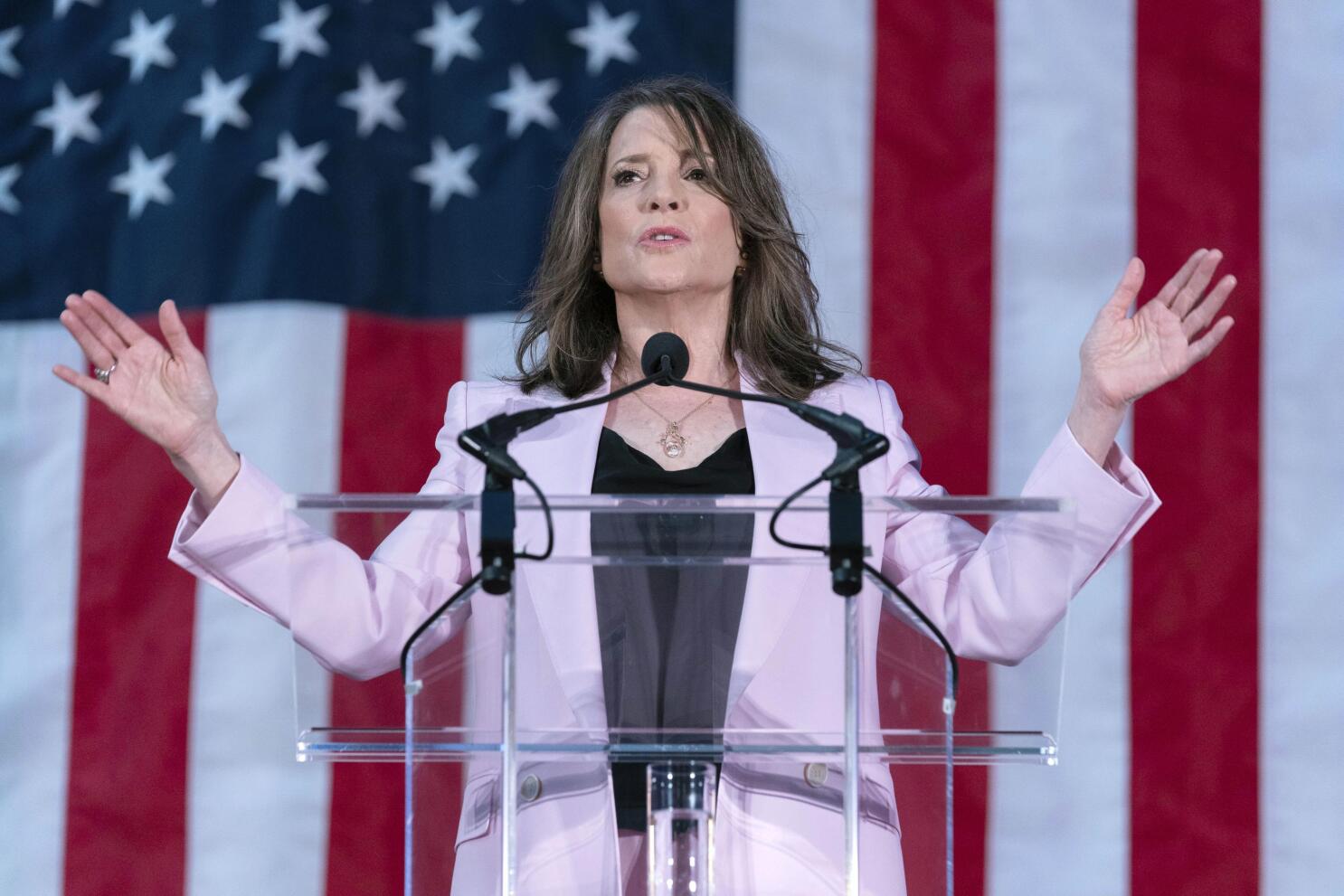
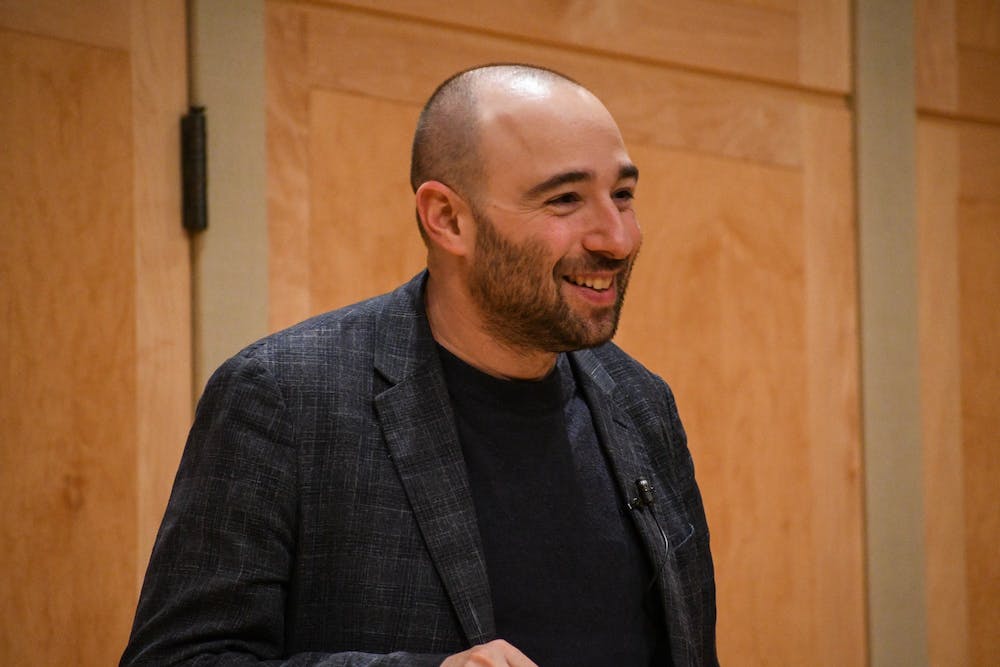






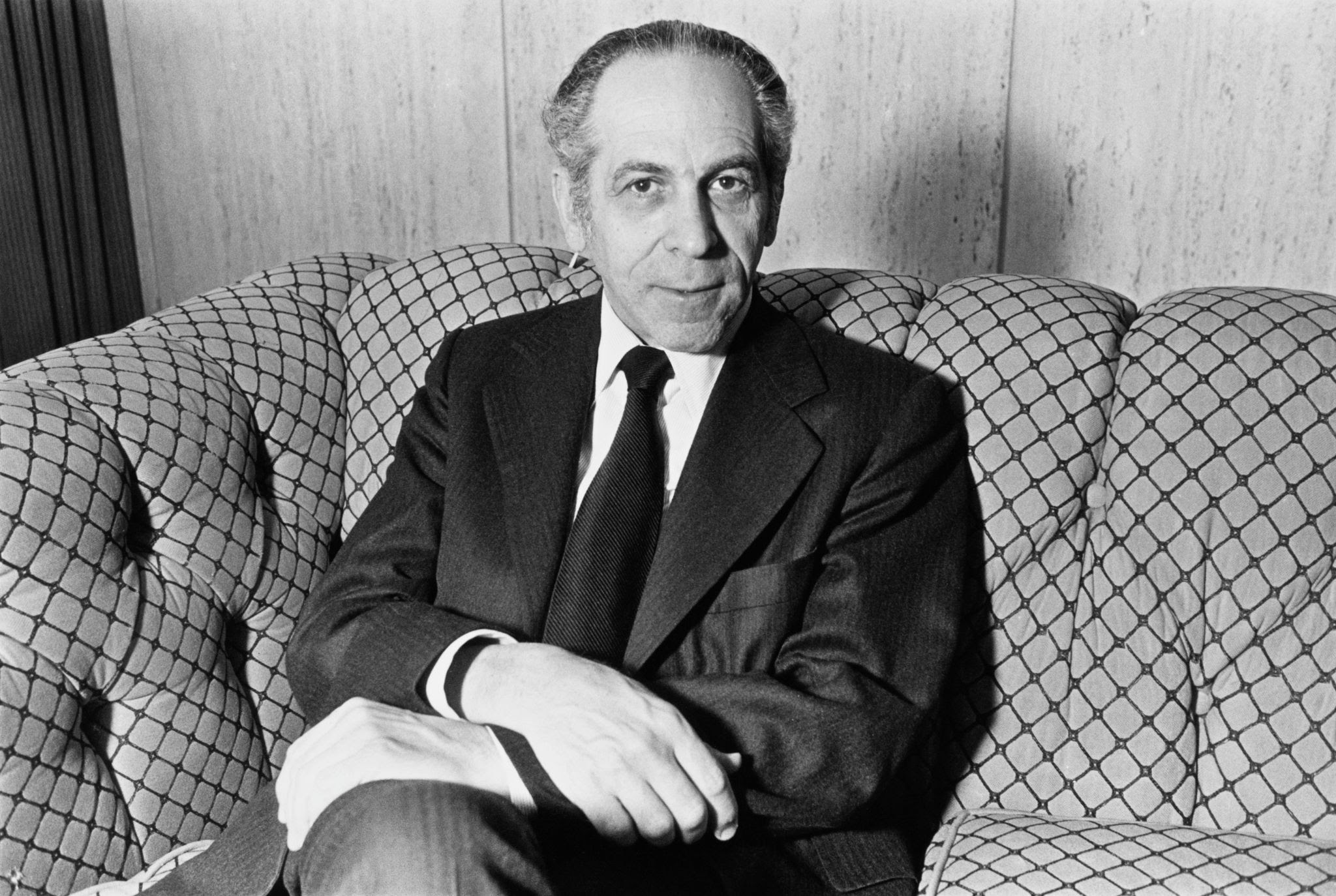



 freedom and reason