“The smart way to keep people passive and obedient is to strictly limit the spectrum of acceptable opinion, but allow very lively debate within that spectrum. That gives people the sense that there’s free thinking going on, while all the time the presuppositions of the system are being reinforced by the limits put on the range of the debate.” —Noam Chomsky
Narrowing the range of acceptable opinion and debate (beyond what is needed for the protection of the dialectic) is a crucial feature of the system of cognitive control that lies at the heart of the system of domination. We see this with religious systems, where thought that lies outside the doctrinal parameters is punished as blasphemy and heresy. But we also see this thought-control tactic in today’s public university, where speech that lies outside the doctrinal parameters of DEI is punished as “Islamophobic,” “transphobic,” and other secular euphemisms for blasphemy and heresy.
This is the problem with the progressive conception of inclusion that lies at the heart of DEI programming: any ideological system that promotes itself as a desirable and comfortable space for those it clamors to include (this for the purpose of establishing political hegemony) must at the same time be exclusive of those speech acts that are supposed to make the desired targets uncomfortable, a determination made by the commissar. Thus those who dissent from the doctrinal parameters must be disciplined or excluded in some fashion. We see this in the proliferation of safe spaces and affinity groups.
The rules of inclusion are okay for private clubs where affinity is protected by right to associational freedom. A mosque doesn’t have to allow infidels into the building. It may also sex-segregate its spaces based upon the terms of its doctrine. That’s religious liberty. It is not however okay for public spaces or private spaces that provide public accommodation to practice inclusion based upon ideological prescription or proscription. These spaces must remain open to all individuals regardless of their opinions.
A private club for lesbians may exclude men. This is the same right as a church that precludes women from the role of cleric or that refuses to marry same-sex couples. This does not prevent anyone from criticizing these practices; however, the freedom of association permits individuals to make private spaces based on affinity and set the rules of those spaces. However, a club open to the public, i.e., an establishment of public accommodations, cannot impose such rules, as these would constitute civil rights violations. The only basis upon which public accommodations can be segregated are biological ones, such as exclusion based on age and sex—rationally justified, of course.
One of the reasons this is proving so difficult for so many people to understand is the decades-long socialization of an ideologically determined conception of diversity, the result of the effectively exclusive control over public spaces enjoyed by progressives. Progressive ideology is antithetical to the liberalism that established the free republic. The irony is not lost on me that liberal tolerance for diversity of opinion is part of the reason progressive ideology could have this effect; however, liberals have done a poor job in defending the principles of a free society. Part of the trick played by progressives involved conflating progressivism and liberalism (a similar trick has been played with the acronym LGBT), but that is no reason to fight against the tyranny of narrowing the range of acceptable opinion.
For progressives, who articulate a type corporatist philosophy, diversity in public spaces is achieved when a space includes representatives of the various tribes that exist on the grounds of gender, race, or other categories—real or invented. According to rules established by superficial pluralism, progressives determine which tribes are recognized, as well as the rules of who counts as tribal members. (For example, Dylan Mulvaney, a man who says he is a woman, can be woman, whereas Rachel Doleful, a white woman who says she is black, cannot be a black woman.)
In contrast to progressives, liberals understand diversity in terms of freedom of opinion, with public spaces, including those private places of public accommodations, existing as spaces that foster the maximization of the heterogeneity of thought by eschewing—indeed by outlawing ideological parameters. Liberals do not engage in the reductive act of seeing people as tribal representatives but rather treat individuals as existing under a singular rule of law and judged by ethical rules that exist universally. Neutrality in public spaces is necessary for the free exercise of our fundamental rights.
If there is an emergent tribal diversity in a public space, the liberal, the true pluralist, tolerates this, of course; at the same time, it must be acknowledged, that, if diversity of opinion is prioritized, then there is a risk that some individuals will avoid those spaces because they find the opinions expressed there disagreeable or offensive.
To be sure, this is the problem of the avoidant; the intolerant are wont to avoid spaces where their intolerance cannot be imposed on others. However, this risk is not merely an acceptable one—it’s the reason free spaces exist; those who do not wish to hear opinions with which they disagree or find offensive don’t have to enter those spaces. They have no right to impose their sensitivities on others, but rather enjoy the right to remove themselves from the presence of disagreeable or offensive speech.
This is sometimes posed as a dilemma, as if there are competing rights to speak freely and not hear objectionable things. But there is no right to be free from objectionable utterances if they are not harassing or intimidating, which are to be determined objectively not subjectively. Everybody has a choice to tolerate opinions they find disagreeable or offensive. If you are offended by something somebody says, that it is your responsibility.
For a liberal, a safe space is a space where any opinion can be safety expressed. This is essence of the free speech right. When I cannot be disciplined or punished for my utterances, then I enjoy a safe space. For progressives, a safe space is a space in which the range of opinion is constrained. Utterances that stray beyond the parameters of acceptable opinion are disciplined or punished. For the liberal, such spaces are unsafe spaces. Indeed, such spaces are potentially unsafe spaces for anybody depending on what speech parameters are emplaced.
Finally, the progressive conception of speech is a license for violence. If an utterance is offensive, and one has a right to be safe from offensive utterances, those who insist on making offensive speech threaten the safety of those who are offended by their utterances. In defending one’s safety, extreme measures are justifiable, including the resort to physical violence. We see this in such slogans “Speech is violence” and “Punch a TERF.”
Where can those who mean to punish people who make such utterances find their prey? In the First Amendment Zone. But remember, comrades, you also have a right to self-defense. You, too, can get physical.
USA Today ran a story yesterday, Can Congress overturn presidential election results? Here are changes since Jan. 6, 2021, authored by Riley Beggin, about changes made to the Electoral Count Act of 1887 after what Biden called the “Trump’s mob” “broke into the US Capitol building as Congress convened to help formalize the results of the 2020 presidential election, interrupting the proceedings for hours even as some Republican lawmakers moved to reject the election results in key swing states.” Interesting how the possibility that the riot was instigated to stop the rejection of election results in swing states escapes Beggin. Of does it? The wording “even as some Republican lawmakers moved to reject the election results” suggests otherwise.
Vice-President Mike Pence announces that President-elect Joe Biden had won the presidency after Congress completes the counting of the Electoral College votes.
The changes made to federal election law got little fanfare at the time, but the “serious threat challenges to state certifications present” prompted an effort among lawmakers to address what they characterized as “ambiguities” and “uncertainties” surrounding the electoral count process. Subsequently, legislation was crafted to bring “clarity” to the system, with the ostensive aim of preventing a recurrence of the chaos witnessed on January 6, 2021—that is, to prevent the challenging of what Beggin refers to throughout as “valid election results.” Valid according to whom? The establishment and the corporate media, of course. That the change in the law was meant to make it harder for Congress to challenge election rigging and fraud should be obvious to everybody who grasps the nature of power and propaganda in the epoch of the corporate state.
The legislative changes were smuggled through Congress to the President’s desk in the year-end spending bill Biden signed in December 2022. Three elements of the new law are important for readers to know about (there’s a fourth concerning alternative slates of electors, but that gets us too far into the weeds, so I may take that up on another day).
First, a revision to the law “clarifies” the “ceremonial role” of the Vice-President in the process. “Clarification” is a way of changing the Vice-President’s role without debating that the character of the authority the Vice-President may have had at the time. It fixes history by building into the law the presumption of a ceremonial role. Second, the law creates an expedited court review process for electoral challenges from presidential candidates. If the review process continues as it has, i.e., dismissing cases for lack of standing, then expediting the process allows the establishment to more quickly establish a headwind against doubts about the integrity of an election. Third, the law raises the threshold to object to a state’s election results from one senator and one representative to one-fifth of both the House and the Senate, a change that effectively negates the point of the 1887 law. This is a step towards dismantling the Electoral College. as well as towards effective federal assumption of state and local elections.
Beggin notes that the “experts” (i.e., anti-Trump academics Beggin reached out to) acknowledge that the implemented changes have significantly reduced the risk of Congress or the Vice President overturning valid election results. “It is much better than it was; it was totally arcane. This reform really does provide a lot of important clarification and takes away some of the risks that we saw unfold on January 6,” said Rebecca Green, an election law professor at the College of William and Mary. “There are grave risks, but I think they’re a bit different than the risks that we faced in 2020,” notes Matthew Seligman, a legal scholar at Stanford University.
What are these grave risks? Beggin notes that, since 2021, Trump’s influence within the Republican party has strengthened, and a significant portion of his supporters express skepticism about the accuracy of election results. The decentralization of the electoral system and the intensified grip of Trump on the Republican party raise concerns about potential challenges to valid election outcomes in the upcoming years. Because the law effectively negates the role of Congress and the Vice President, the experts Beggin talked worry that efforts to influence election outcomes will concentrate more on state and local elections. The decentralized nature of the electoral system creates numerous potential points for legal disputes. Given how deep the tentacles of the establishment go, it is doubtful they will have much to worry about, but the desire for centralized authority is obvious—and antithetical to the federalized system the Founders established.
Beggin writes that the events of January 6 marked a pivotal moment in US history, prompting legislative changes aimed at fortifying the electoral process. However, as the nation heads into another election year, she warns, the uncertainties persist, and the spotlight shifts to potential vulnerabilities at the state and local levels. The irony is that the vulnerabilities at the state and local levels have been the focus on grassroots Republicans trying to shore up the electoral system, and Republicans have been thwarted in their efforts by state and local officials, including by establishment Republicans. The systems is rigged.
Biden has given his second major speech treating half the nation as fascists and thugs (it’s a long-standing project; see my January 30, 2021 essay Cancelling Half the Nation: Progressives Reach for One-Party Rule). This time the President eschewed a setting befitting a Leni Riefenstahl production, but kept that spirit in words. His told the audience that Trump is the ringleader of an unpatriotic and violent mob bent on destroying the Republic. He’s talking about tens of millions of America.
President Joe Biden speaks at Montgomery County Community College January 5, 2024 in Blue Bell, Pennsylvania.
By “trying to rewrite the facts” of January 6, Trump is “trying to steal history the same way he tried to steal the election,” the President stormed. “Trump’s mob wasn’t a peaceful protest; it was a violent assault,” he insisted. “They were insurrectionists, not patriots. They weren’t there to uphold the Constitution; they were there to destroy the Constitution.”
Everything Biden said yesterday is part of the Big Lie. Trump’s speech delivered on the Ellipse on January 6, wherein he encouraged his supporters to “peacefully and patriotically” march to the Capitol to give words of encouragement to the representatives who intended to challenge the certification of the November presidential election results, a statement in which Trump enumerated numerous grievances, was a textbook example of a man and the citizens around him properly exercising the First Amendment to the US Constitution.
President Donald Trump speaks to supporters from the Ellipse, near the White House, on January 6
Here’s a convenient reminder of the First Amendment with the relevant clauses highlighted: “Congress shall make no law respecting an establishment of religion, or prohibiting the free exercise thereof; or abridging the freedom of speech, or of the press, or the right of the people peaceably to assemble, and to petition the Government for a redress of grievances.” I would like to think I didn’t need to share this text with readers, but given how widespread the ignorance is about the fundamental law of this nation, I have to.
As did Congress when it impeached Trump for exercising his First Amendment rights, Biden is telling you that the First Amendment is a threat to democracy—unless those who wield it (and then some) are allied with Biden and the Democrats (see the riots of 2020). Never forget that Biden’s administration works with Big Tech companies to censor speech. Never forget that its Biden’s national security apparatus that harnesses and intimidates citizens for their political and religious beliefs.
As for the riot, as I wrote in my December 22, 2023 essay The Continuing Campaign to Unperson Donald Trump, “Tossing into the crowd flash bang grenades, and firing upon the throng with rubber bullets and canisters of tear gas, the police instigated the violence outside the Capitol, while officers on the other side of the building invited protestors inside, where they milled about admiring the place and mostly staying within the velvet roped queue. Officers even invited the protestors into the chambers where legislators debate and vote—protestors adorned in patriotic garb and paraphernalia. Elsewhere, a Capitol police officer murdered a veteran.”
I continue in that essay: “Whatever the details, that the police instigated a riot at the Capitol that day does not make the political rally that occurred in Washington DC earlier that day an insurrection. However you define the thing, Trump didn’t cause it. He insisted to the assembled that they ‘peacefully and patriotically make [their] voices heard.’ He invoked the people’s right to petition the government when he said moments before, ‘We have come to demand that Congress do the right thing and only count the electors who have been lawfully slated, lawfully slated.’”
If you believe Trump perpetrated an insurrection, then you have convinced yourself of something far outside of any reasonable interpretation of the evidence. But let’s assume, as ridiculous as the insurrection clap-trap is, that everything Biden said in his speech is true. Does anybody really believe that Trump remains in office after January 20, 2021? How do an unarmed people with a small rabble among them keep the Capitol they never took? Assume they had taken the Capitol, do people really believe Trump doesn’t order the military to take back the Capitol? Assume military personnel risk their careers and protect the rabble, do people actually believe the military continues doing so after January 20 when Biden assumes the Office of the Presidency?
For your convenience, here’s the oath our soldiers take upon enlisting: “I [state your full name], Do solemnly swear (or affirm) that I will support and defend the Constitution of the United States against all enemies, foreign and domestic; that I will bear true faith and allegiance to the same; and that I will obey the orders of the President of the United States and the orders of the officers appointed over me, according to regulations and the Uniform Code of Military Justice. So help me God (optional).”
Upon entering office on January 20th, having been certified President on January 6, and swearing his oath to the Constitution, Biden becomes the Commander-and-Chief of the armed services. Do people really believe that his order to the military—the first order of his presidency—to remove the rabble from the Capitol will go unheeded?
A coup does not happen with a dozen or so people smashing windows at the Capitol and maybe a thousand people milling about inside their Capitol, people “armed” with flags and standards and patriotic swag. A coup doesn’t involve sending back to a few states certifications that appear to be the result of widespread election rigging and fraud. For more than a hundred years, Presidents didn’t assume office until March 4 (this date remained in effect until the passage of the Twentieth Amendment in 1933). Democracy is not lost while Georgia checks its certification. On the contrary, democracy is lost when Georgia doesn’t check its certification (see Is There Evidence Joe Biden Won the 2020 Election?).
There was no insurrection. Trump did not incite a riot. The President voluntarily left office on January 20, 2021. There was a peaceful transfer of power. At any point along this chain of incontrovertible facts in asserting he contrary Biden and the Democrats look like complete fools. Assuming for the sake of argument that some of what Biden said is true, in its totality, granting the wild scenarios that must be assumed for the narrative to have any power at all, the propagandistic intent is so obvious as to alert a reasonable man to the possibility that the moral panic over January 6 and the persecution of those peacefully present at the Capitol that day is noise to distract the people from the fact that the republic is already lost—or that it will be if Democrats prevail in 2024.
President Biden delivers a prime-time speech at the Independence National Historical Park on September 1, 2022 in Philadelphia.
“Whether democracy is still America’s sacred cause is what the 2024 election is all about,” Biden said in his speech. “The choice is clear. Donald Trump’s campaign is about him, not America, not you. Donald Trump’s campaign is obsessed with the past, not the future. He’s willing to sacrifice our democracy to put himself in power. Our campaign is different.”
Here Biden’s speech writers are unaware that they said the quiet part out loud and thus put the lie to punch line. For Democrats, Donald Trump’s campaign is about him. Democrats want the public to obsess over the past because they desperately need the public to not see the future the Party has in store for them. Democrats are terrified of Trump in power because they won’t be. They will be unable to stop investigations into November 3, 2020 and January 6, 2021. They will be unable to prevent the deconstruction of the permanent political stratum in Washington. A Trump presidency risks the power elite losing control of the military-industrial complex and the forever wars they monger. Even the national security state is at risk. It means the invasion of our country by military-age foreign males will, potentially dashing their plans for the disorder they need to finally establish a one-party corporate state.
In a very real sense, everything is at stake on November 5, 2024. For Democrats, political control over the corporate state apparatus they depend on for the managed decline of the Republic and for advancing the transnational agenda, as well as for their personal enrichment, is at risk if the democrats lose the election. For the rest of us, the greatest republic in the history of mankind is put in peril.
What follows is a summary of election fraud in five swing states in the 2020 Presidential Election. The states are Georgia, Wisconsin, Pennsylvania, Arizona, and Michigan. This information comes from the Trump campaign (here’s the source document). I’m not going to put this in my own words, but rather will share images from the document Kanekoa the Great’s text extractions, which I am lifting from his X (Twitter) feed, links to which I will share above each section. There are many ways to view this material; I want to post it here for posterity and because I get asked all the time whether I think the 2020 presidential election was stolen.
Lead Stories put a fact-check label on my Facebook post about the report
I am also putting this on Freedom and Reason because I know some people aren’t on X (Twitter) and don’t want to be on X, and, if they are on X, might find navigating these threads cumbersome. Furthermore, I shared it on Facebook yesterday, but, as I predicted, Lead Stories put a face-check label on it. I’m not placing quotes around the material, so assume that everything after this paragraph is verbatim from the Trump campaign document and Kanekoa the Great’s text extractions. Do visit the thread on X to read the conversation.
* * *
Introduction: It has often been repeated there is “no evidence” of fraud in the 2020 Election. In actuality, there is no evidence Joe Biden won.
Ongoing investigations in the Swing States reveal hundreds of thousands of votes were altered and/or not lawfully cast in the Presidential Election. Joe Biden needed them. On Election Night Nov. 3, 2020, President Donald J. Trump was sailing to reelection with landslide leads in numerous battlegrounds. In Georgia, President Trump was up by 12 points, and over 335,000 votes, with 56 percent of the vote in at 10:17 p.m. In Wisconsin, President Trump was leading by 121,380 votes and 5 points at 12:12 a.m., which Fox News anchor Bret Baier noted was “not a small margin.” In Pennsylvania, President Trump was leading by 659,145 votes at 12:38 a.m., a full 15 points. In Michigan, President Trump was leading by 293,052 votes and 10 points.
The election was over. However, precincts in Atlanta, Detroit, Philadelphia, Phoenix, and Milwaukee kept counting until the results reached the desired outcome, which was the opposite of the will of the voters. Georgia went from having a total of 4.7 million votes, already a record for the state, according to Brad Raffensperger’s count on Nov. 4, to certifying almost 5 million. This was 300,000 more votes than what the top elections official claimed were cast in the Election.
Getting to this result in Georgia, and other states, created an irredeemably compromised Election, filled with violations of the Constitution, unlawful ballots, widespread broken chain of custody, electronic manipulation, and missing and corrupted election files that made it uncertifiable—and impossible to recreate the results.
President Trump was right to voice his objections to what had unfolded before the country’s eyes. Republican poll watchers were denied access to the counting in multiple jurisdictions and ballots were counted in secret in the middle of the night without media or observers present. Countless irregularities emerged, including reports of ineligible voters, voting machine anomalies, “water main breaks,” improbable percentages of ballots for Biden, and more.
Since, investigations across the country have uncovered an avalanche of irregularities, unlawful activity, manipulation of election records, destruction of evidence, and fraud. The findings, which are outcome determinative, are detailed in the summaries of the Swing States.
GEORGIA
🚨JUST IN – President Trump Releases Summary of Election Fraud in the 2020 Presidential Election in the Swing States
Introduction: It has often been repeated there is “no evidence” of fraud in the 2020 Election. In actuality, there is no evidence Joe Biden won.
• Fulton County, Georgia, the most populous county in the state, has no digital record of all in person votes cast in its original results.
• Not a single ballot purportedly cast during early in-person voting was witnessed to and signed off by poll managers, as required by Georgia election rules. Seals were broken and memory cards removed from tabulators for the results of these 315,000 votes, which were printed out on different machines than the ones that tabulated them. This prevented the reconciliation of how many votes were cast on each machine.
• The ballot images of these votes, along with the rest of in-person ballots cast on Election Day, were destroyed.
• The vote in Georgia was counted three times: the original machine count, a statewide hand recount, and a second machine count. Each time the state, and Fulton County, reported three different results.
• Fulton County did not count the same ballots during the original count and the machine recount. There are 19,541 distinct ballots that appear in one machine count but not the other.
• Thousands of fraudulent “presidential only” ballots were injected into the second machine count, with huge margins favoring Joe Biden. Ballots that are blank except for the presidential contest were counted in batches together, with the pattern appearing in at least eight counties, including Fulton. This means Georgia did not have the votes to justify its original Election “results.”
• The second machine count was over 17,000 votes “short.” Fulton County was instructed to “reconcile” the results by the Secretary of State, and recertified its results without divulging the extent of the vote deficiency to members of the Fulton County Board of Registrations and Elections.
• “Thousands of bogus votes” were ultimately added into the Election results via the second machine count. This includes 20,977 unsubstantiated votes of unknown origin. The results were missing 17,852 ballot images, and included 3,125 duplicate ballot images that were counted twice.
• At least 2,871 ballots were counted two or three times in the second machine count, totaling 6,118 questionable votes.
• Eighty-eight percent of Fulton County’s precincts reported a different total number of votes between the first and second machine count.
• The only electronic votes that survived from the first count were the mail-in ballots, since they were tabulated on the high speed scanner their ballot images were automatically uploaded to the election server.
• Ninety percent of these approximately 148,000 absentee ballots cast in Fulton County cannot be authenticated. Ballot images for 132,284 mail-in votes have no .SHA file, which is created automatically when a ballot is scanned and used to authenticate the digital image of the vote, lacking evidence they were scanned and tabulated properly, or even cast by a real voter.
• 104,994 ballot image files of these mail-in ballots from the original count contained identical modified time stamps, suggesting electronic manipulation.
• Fulton County does not know “how many voters cast votes” and its “lack of basic accounting controls make it impossible to determine who really won” in 2020, according to Philip Stark, a University of California, Berkeley professor who invented risk-limiting audits. Stark noted, “The electronic records of the election are not intact.”
• 376,863 ballot images are missing from the first machine count, which includes all in-person votes in Fulton County.
• None of the 315,000 votes cast during early voting in Fulton County were witnessed to and signed by the poll manager and two poll workers, as required by state election rules. The closing tapes for these votes are all unsigned, showed more tabulated votes than the tabulators had recorded as scanning in their protective counters, and recorded improbably low percentages for President Trump. For example, President Trump received only 0.9 percent, 2.4 percent, 3.7 percent from some of the tabulators, as if he was a third party candidate, or in a third world country. The anomalies indicate ballots were not scanned on the tabulators that printed the closing tapes, making the closing tapes fraudulent.
• Tabulators used in Fulton County during early voting had their seals broken, and memory cards were reprogrammed and inserted into different scanners to count absentee ballots, in violation of election rules. This made it impossible to reconcile the true number of votes tabulated on the machines from the start of the Election to the end of counting.
• 235,000 absentee ballots were requested and accepted too early, prior to the lawful date 180 days before the 2020 Election, which was May 6, 2020. These votes should have never been counted in the 2020 Election.
• 4,081 false votes for Joe Biden were included in the hand count audit results for Fulton County. The false votes were the result of 36 accounting errors, which were confirmed by Governor Brian Kemp’s office and investigators working for Secretary Brad Raffensperger, yet they have never been removed from the official hand count results. These errors alone would reduce the margin to 7,698 votes.
• The hand count audit included 3,935 unaccounted for votes due to 11 missing batch sheets in Fulton County. Differences from the original count to the hand audit total at least 15,690 votes, which is more than the entire election margin alone. This includes the 4,081 false Biden votes, plus “missing” votes discovered in Gwinett (1,642), Fayette (2,755), Floyd (2,700), Douglas (293), and Walton (284) counties that were likely due to machine counting errors.
• Thousands of “pristine,” unfolded absentee ballots were counted during the hand count audit in Fulton County, according to at least six witnesses, which is the subject of ongoing litigation. These absentee ballots had no folds, and went 98 percent to Joe Biden, had “been added in a fraudulent manner,” witnesses said.
• Fulton County certified 59,143 in-person votes on Election Day, despite the fact that only 14,152 people had voted as of 5 p.m. on Nov. 3, 2020. Evidence suggests the in-person vote total on Election Day was inflated by approximately 37,000 votes, as records show no rush to the polls during the final two hours of voting, and a screenshot of the in-person Election Day results shared by a government contractor showed only 21,843 people voted at the polls in Fulton County on Nov. 3.
• Fulton County ordered over 1 million absentee ballots days before the 2020 Election, without any envelopes and the time necessary to mail. There were only 808,680 active voters in Fulton County as of Nov. 1, 2020, meaning the county had more blank mail-in ballots than the number of registered voters, and ordered them after the vast majority of mail-in ballot requests had already been sent to voters by Runbeck Election Services.
• An estimated 30,000 to 92,670 illicit votes were trafficked in Georgia, as part of a massive ballot trafficking operation discovered by True the Vote. The group identified 242 traffickers in Georgia who engaged in 5,662 ballot drops into drop boxes, making an average of runs per trafficker. Over 40 percent of the illicit drops that were captured on camera were recorded between the non-voting hours of midnight and 5 a.m.
• There were over 364,000 ineligible voter registrations on the rolls during the 2020 Election and likely 67,284 votes were cast from voters with invalid residency.
• Massive manipulation of the Georgia voter rolls surrounding the 2020 Election has been uncovered. This includes 1,500 Voter IDs that received credit for voting in 2020, but were not on any voter rolls from 2020, some appearing for the first time on the voter rolls on Nov. 4, 2021, a year after the Election. Other findings include manipulation of inactive voters to cast ballots, “gifting” Nov. 3 votes up to 2 years after the Election, and casting votes on ballots previously rejected, cancelled, or not even turned in.
• In 2020, there were absentee ballots issued to “Bangkok Thailand, Ga.,” “Denver, Ga.,” “Detroit, Ga.,” “Los Angeles, Ga.,” and other fraudulent addresses that do not exist. Ballots were fraudulently cast in 2020 from addresses listed as “Bronx, Ga.,” “Hilton Head, Ga.,” “Louisville, Ga.,” “San Diego, Ga.,” “New Orleans, Ga.,” “French Creek, Ga.,” “Virginia Beach, Ga.,” “Vicksburg, Ga.,” “Baltimore, Ga.,” “New York, Ga.,” and “Sarasota, Ga.,” all with zip codes out of state.
• 43,907 drop box ballots violated chain of custody requirements in DeKalb County.
• 59,000 of the 79,460 drop box ballots in Fulton County were not immediately transported to the election registrar, in violation of State Election Board rules.
• An estimated 355,000 ballot transfer forms for drop box ballots are missing statewide.
• Over 100,000 tally sheets for Fulton County were missing from the hand count audit, and remained missing for months after the Election.
• In early January 2021, Ruby Freeman asked for an attorney because she wanted to “go live on every platform” to divulge information about how “the USB ports” were used in the 2020 Election. The expert cyber report by Professor J. Alex Halderman explained how external USB ports with election-changing malware can be inserted into Dominion machines by anyone with access, including election workers.
• The presence of a “QR code mismatch” error within the Dominion tabulators that systematically undercounts votes was found in 65 out of 67 Georgia counties where records were available. The error was present in system log files for tabulators used in elections in 2020, 2021, and 2022.
• The election results in Georgia in 2020 are not only unreliable, but were electronically altered, and are unsupported by the state’s own election records. The appearance of tens of thousands of unconfirmed ballots in subsequent hand and machine counts suggest reconciliation happened after the Election, meaning after it was clear what margins were needed to win.
• Fulton County election officials admitted in early 2021 they do not engage in any reconciliation until weeks after Election Day. This means the number of voters showing up at the polls during each day of voting is not checked with the number of ballots tabulated each day, a basic process to ensure the number of ballots and voters match, and cannot be manipulated later.
• “We can’t start reconciling that until usually a couple days before certification,” said then-Fulton County Elections Director Richard Barron, during a January 2021 Board meeting. “Because we have to get that report from KnowInk. I think KnowInk sends those to the state or KnowInk sends those directly to us. But those aren’t compiled then, on Election night. So we don’t have any way to balance those then. That’s like the post-election process that we do.”
* * *
WISCONSIN
JUST IN – President Trump Releases Summary of Election Fraud in the 2020 Presidential Election in the Swing States
WISCONSIN🚨
• Wisconsin was called by 20,682 votes.
• The Wisconsin Supreme Court ruled drop boxes are illegal under Wisconsin law, in a 4-3 decision issued in… pic.twitter.com/w8PBPKItlu
• The Wisconsin Supreme Court ruled drop boxes are illegal under Wisconsin law, in a 4-3 decision issued in July 2022.
• Wisconsin Election Commissioner Meagan Wolfe unilaterally declared ballot drop boxes could be used to vote in 2020 elections, even though “WEC’s commissioners never voted to adopt this memo.”
• Ahead of the November 2020 Election, Wolfe encouraged clerks to use “creative solutions” to deploy drop boxes, that she said could be “unstaffed.” There were 528 drop boxes used in the General Election, and a total of 1,969,274 absentee votes cast, including 1,346,731 votes cast by mail, and 653,236 in-person.
• In a concurring opinion to the ruling finding drop boxes to be unlawful, Justice Rebecca Bradley writes, “If the right to vote is to have any meaning at all, elections must be conducted according to law. Throughout history, tyrants have claimed electoral victory via elections conducted in violation of governing law… in Wisconsin elected officials “deriv[e] their just powers from the consent of the governed.”
• “The right to vote presupposes the rule of law governs elections. If elections are conducted outside of the law, the people have not conferred their consent on the government. Such elections are unlawful and their results are illegitimate.”
• Justice Bradley concluded “thousands of votes have been cast via this unlawful method,” using drop boxes, “thereby directly harming the Wisconsin voters.”
• “The illegality of these drop boxes weakens the people’s faith that the election produced an outcome reflective of their will,” Justice Bradley writes. “The Wisconsin voters, and all lawful voters, are injured when the institution charged with administering Wisconsin elections does not follow the law, leaving the results in question…Electoral outcomes obtained by unlawful procedures corrupt the institution of voting, degrading the very foundation of free government. Unlawful votes do not dilute lawful votes so much as they pollute them, which in turn pollutes the integrity of the results.”
• In the city of Milwaukee, nearly half of all its votes were cast by mail, totaling 217,424 ballots. The city deployed 15 drop boxes, with election officials claiming the drop boxes would be “under 24-hour surveillance.” However, after the election, not a single municipality in the county produced video surveillance of drop boxes in response to open records requests. Various responses included, “No records exist for your request,” “No video from requested time frame,” “No such records exist,” and “No security camera.”
• The election integrity group True the Vote identified 107 ballot traffickers in Milwaukee County between Oct. 20 and Nov. 3, 2020, who each made 20 or more visits to drop boxes. Each trafficker made an average 26 visits, and as many as 15 in one day, and made multiple visits to non-governmental organizations.
• The 107 traffickers made a total of 2,824 trips to drop boxes during the 2020 Election, with a majority of visits occurring after 8:00 p.m.
• In 2020 there was a surge of “indefinitely confined” votes in Wisconsin, resulting in 220,404 votes cast from individuals who were exempted from showing voter ID. This surge of suspect votes was due to Democrat election clerks giving advice that was deemed illegal after the election, instructing voters to identify themselves as disabled during the COVID pandemic to avoid voter ID laws.
• Indefinitely confined voters, who are supposed to be physically unable to go to the polls due to age, disability, or illness, increased by an astounding 393 percent in Dane County from 2016 to 2020; 492 percent in Racine County; 281 percent in Milwaukee County; and 287 percent in the state overall.
• There were just 56,978 indefinitely confined votes in 2016, and roughly 70,000 43 in 2019. In 2020, however, there were 220,404 votes cast using indefinite confinement status. Over 77 percent of these individuals had never been listed as indefinitely confined before. The Wisconsin Legislative Audit Bureau identified 48,554 people who voted as indefinitely confined in November 2020 who had never provided photo identification or did not have photo identifications on file with clerks, which is more than twice the vote margin of 20,682.
• Scott McDonell, the Democrat clerk of Dane County, which encompasses the area of Madison, told all residents they could identify themselves as indefinitely confined because of COVID, specifically citing it as a way to get around the Voter ID law.
• McDonell previously blamed Wisconsin’s voter ID law for President Trump’s victory in 2016, claiming in a 2018 Twitter post that “thousands of voters [were] deterred from voting due to [the] ID law.”
• In 2020, McDonell urged all voters to declare themselves indefinitely confined in order to obtain an absentee ballot and “skip the step of uploading an ID” in the April 2020 primary election. Once a voter is identified as indefinitely confined, they continue to receive absentee ballots automatically for subsequent elections. “I urge all voters who request a ballot and have trouble presenting a valid ID to indicate that they are indefinitely confined,” McDonell said in a Facebook post.
• The Wisconsin Supreme Court ruled in December 2020 that the pandemic “did not render all Wisconsin electors ‘indefinitely confined,’ thereby obviating the requirement of a valid photo identification to obtain an absentee ballot,” and the clerks’ “interpretation of Wisconsin election laws was erroneous.”
• The Wisconsin Election Commission ordered nursing homes to violate the law by not allowing Special Voting Deputies (SVDs) inside their facilities, which led to election fraud where incapacitated elderly residents had votes cast in their name with the assistance of nursing home staff.
• An investigation by the Racine County Sheriff found the Wisconsin Elections Commission “shattered” state election laws. Nursing homes saw an “unusual surge in voting activity,” and at least 8 cases of felony voter fraud were found in one nursing home, accounting for nearly 1 in 5 families of residents.
• The Wisconsin Election Commission admitted it was “essentially telling the clerks to break the law” by ordering the sending of absentee ballots to nursing homes and barring Special Voting Deputies inside the facilities.
• An interim report released by Special Counsel Michael J. Gableman raised “serious and legitimate questions that the certification of Wisconsin’s election results may have been undertaken in an unlawful and unconstitutional manner.”
• Gableman claimed “Democracy in the Park” events in Madison involved numerous possible violations of the law, “calling into question the validity of over 17,000 absentee ballots.”
• These outdoor events to collect mail-in ballots were the subject of numerous complaints, and it is “not clear that all of the workers at those events were properly deputized and trained, swore and filed the mandatory oath of office, or documents related to absentee ballots were properly handled.”
• The Office of the Special Counsel also claimed evidence of “undue influence by well-funded private groups, who leveraged large grants to certain Wisconsin cities in order to co-opt our election apparatus to their benefit.”
• The report confirms at least 17.5 percent of election clerks “were not properly trained,” and that “exploitation of elders” occurred in nursing homes.
• In one example, Maryl Barrett, who was 104 years old and did not recognize her own children, had a ballot cast in her name in the 2020 Presidential Election.
• The Office of Special Counsel’s second interim report found nursing homes in Milwaukee, Dane, and Racine counties with 100 percent turnout due to the Wisconsin Election Commission’s order.
• The special counsel said it possessed evidence of nursing home facility staff and directors who “assisted residents in completing ballots; assisted residents in obtaining absentee ballots; pressured residents to vote; collected completed ballots from residents; forged signatures of residents; illegally returned residents’ ballots to the municipal clerks by mail, by placing the ballots in drop boxes, and/ or delivering them directly to the clerks; pressured and/or assisted incompetent persons to complete and cast ballots in the November 2020 election, up to and including persons who have had their right to vote take away by court order due to mental incompetence.”
• The second interim report also detailed an $8.8 million “election bribery scheme” involving Mark Zuckerberg’s Center for Tech and Civic Life and the cities of Milwaukee, Madison, Racine, Kenosha, and Green Bay. “In the agreement, the Cities took CTCL’s money to facilitate in-person and absentee voting within their respective city.”
• The “Wisconsin Safe Voting Plan” developed for CTCL facilitated grants to major Wisconsin cities to deploy drop boxes for mail-in ballots, including $50,000 to Green Bay, $40,000 to Kenosha, $50,000 to Madison, $58,500 to Milwaukee, and $18,000 to Racine.
• Whitney May, the director of government services for CTCL, posted numerous anti-Trump posts on social media, including telling people “don’t vote for Trump” in 2016.
• Internal emails from election officials in Green Bay revealed Michael SpitzerRubenstein, a former Democratic Party operative, served as a “de facto elections administrator and had access to Green Bay’s absentee ballots days before the election.”
• The Office of the Special Counsel referenced this case, and has evidence that this grantee, which was funded by CTCL, was “directly involved in all aspects of management of election officials, was entrusted with the only sets of physical keys to the city’s central count location, managed the transportation of ballots, and instructed the counting of unlawful ballots that had arrived at the central count location beyond the lawful time window.”
PENNSYLVANIA
JUST IN – President Trump Releases Summary of Election Fraud in the 2020 Presidential Election in the Swing States
PENNSYLVANIA🚨
• Pennsylvania was called by 80,555 votes.
• Months after the election, there were 121,240 more votes than voters, according to the Pennsylvania… pic.twitter.com/QFo5azJ9iE
• Months after the election, there were 121,240 more votes than voters, according to the Pennsylvania Department of State. By law, Pennsylvania cannot certify an election with this type of discrepancy.
• Republican lawmakers, led by State Representative Frank Ryan, were tracking the vote discrepancy in real time in the Statewide Uniform Registry of Electors (SURE) system. Ryan, a certified public accountant, initially reported that there were 170,830 more votes than voters in the Presidential race, more than twice the margin in Pennsylvania. “These numbers just don’t add up, and the alleged certification of Pennsylvania’s presidential election results was absolutely premature, unconfirmed, and in error,” the lawmakers said.
• The Pennsylvania Department of State’s office called this “obvious misinformation,” while admitting the “only way to determine the number of voters who voted in November from the SURE system is through the vote histories,” which they said Philadelphia, Allegheny, and other counties had still not completed — an admission the election was certified without ensuring the number of voters and votes matched in the SURE system. The election was certified on Nov. 24, 2020, and the Department of State’s statement came on Dec. 29, 2020.
• The SURE system was checked and downloaded weekly with updated voter histories from the general Election until all the counties uploaded their vote histories, which was not completed until February 2021. At this time there were still over 121,000 votes that did not have a corresponding voter in the SURE system.
• The statement by the Department of State “that the voting would reconcile, once the counties completed their SURE uploads, was incorrect,” according to Verity Vote. “When the final county finished uploading their voter histories and closed the election in SURE, it was February 1, 2021, which was the same day that [Secretary of State Kathy] Boockvar announced her resignation. At the time that Philadelphia closed the election in SURE, the voter histories showed that the county accepted at least 7,944 ballots that could not be associated with a registered voter.”
• Pennsylvania credited 71,893 people for voting who returned mail-in ballots after Election Day, and these individuals were included in the voter history files. This includes 50,285 received between Nov. 4 and Nov. 6; 11,570 received between Nov. 7 and Nov. 11; and 10,038 that were received on or after Nov. 12. Boockvar claimed only 10,000 ballots were received between the close of the polls on Election Day and Nov. 6.
• While 71,893 people received credit for voting by mail, these votes purportedly did not count. Even while including these voters in the total number of who participated in the Election, Pennsylvania still came up 121,240 voters short.
• According to the Department of State data, there were 7,035,746 ballots cast in the 2020 Presidential Election, including all write-in votes, over-votes, and under-votes. “After all counties closed the election in SURE, only 6,914,556 voters were credited with participation in the 2020 General Election. This reveals a voter deficit of 121,240.”
• In Philadelphia, hundreds of thousands of mail-in ballots were unlawfully counted in secret, in defiance of a court order, while Republican poll watchers were thrown out of buildings where voting took place.
• U.S. Attorney Bill McSwain was told to stand down and not investigate election irregularities by Attorney General Bill Barr. McSwain said he was instructed to not discuss the allegations of voter fraud he received, and to pass any “serious” investigations along to then-State Attorney General Josh Shapiro, a Democrat who promised days before the election that President Trump “is going to lose.”
• Mark Zuckerberg of Facebook poured over $25 million into the administration of the election in Pennsylvania in 2020. Over $10 million went to the Democrat-controlled jurisdiction of Philadelphia, which included $5.5 million on “ballot processing equipment” and $552,000 for drop boxes.
• A lawsuit filed in Delaware County revealed video evidence of election officials discussing destroying election evidence from the November 2020 Election. “It’s a felony,” one official says after talking about the need to “get rid” of voting “pads and second scanners.” Sources involved in the litigation alleged the Delaware County officials violated numerous election laws and that the destruction of records was “done to ensure records eventually provided actually matched the election results that were reported in Nov. 2020.”
• Delaware County received $2.2 million from Zuckerberg’s Center for Tech and Civic Life (CTCL), which it spent on “recruiting and training a sufficient number of poll workers; setting up drop box locations for voters to return ballots,” and other Get Out the Vote efforts.
• The election integrity group True the Vote said Philadelphia was the worst offender it witnessed when investigating the widespread ballot trafficking scheme operating across multiple Swing States in 2020. They identified 1,155 ballot traffickers who each visited at least 10 drop boxes and five non-governmental organizations. Some ballot traffickers made hundreds of trips to drop boxes.
ARIZONA
JUST IN – President Trump Releases Summary of Election Fraud in the 2020 Presidential Election in the Swing States
ARIZONA🚨
• Arizona was called by a margin of 10,457 votes. • Maricopa County accepted 20,500 mail-in ballots after Election Day 2020, including 18,000 – more… pic.twitter.com/wf0JrcqV6C
• Arizona was called by a margin of 10,457 votes. • Maricopa County accepted 20,500 mail-in ballots after Election Day 2020, including 18,000 – more than the entire election margin – on Nov. 4 picked up from the U.S. Postal Service. By law, ballots must be received no later than 7 p.m. on Election Day, which was Nov. 3.
• “The 20,000 ballots recorded as incoming from the USPS on and after November 4 were of sufficient quantity to change the result of the 2020 General Election in Arizona,” according to Verity Vote.
• The findings were based on Maricopa County’s official Elections Department records, which were withheld from a public records request for nearly seven months. The records showed 18,000 mail-in ballots received on Nov. 4; 1,000 received on Nov. 5; and 1,500 received on Nov. 6.
• The 18,000 mail-in ballots received on Nov. 4 and subsequently counted represented a significant spike in ballots received, higher than every single day total since Oct. 29, 2020. The receipt of mail-in ballots had steadily declined from 14,500 ballots on Oct. 29 to 10,500 on Oct. 30; 6,000 on Oct. 31; 1,500 on Nov. 1; 1,000 on Nov. 2; and 2,500 on Nov. 3.
• In the 2020 General Election, 420,987 ballots failed signature verification standards, “thus the election was openly vulnerable to fraud,” according to an ongoing analysis conducted by We the People Arizona Alliance and presented to the state legislature.
• The initial analysis of 380,976 ballots, using official state records and official signature verification training techniques, identified 181,378 ballots that should not have been counted, or nearly half of all reviewed.
• This includes: 1,870 blank envelopes, some of which were approved on Nov. 5 and Nov. 8; 542 with a signature other than the voter; 2,104 scribbles; 128 duplicate voters processed; 48,117 unreasonably different control signatures; 1,875 where the signature did not match until after the election; 36,034 control signatures that do not match the voter; 4,433 unusable control signatures; 47,366 that failed Secretary of State standards; and 38,909 egregious signature mismatches, where not one point of a signature matched any on file.
• In the case of the 1,875 votes, the ballot envelopes did not have a signature match on Election Day, but “matching” signatures were later put on file for the voter on either Jan. 28, 2021, Feb. 3, 2021, or Feb. 8, 2021. There were 783 signatures digitally inserted on Feb. 3, 2021 alone.
• Since the findings were presented to the Arizona State Legislature, the number of egregious mismatches found has increased to 76,354, over seven times the election margin. This is an error rate of 9.30 percent of ballot envelopes reviewed.
• Throughout the signature verification analysis, which remains ongoing, analysts have consistently found 20 percent do not meet the Secretary of State’s standards, and 9 percent are egregious violations. Extrapolated to all 1.9 million mail-in ballots in 2020, 176,700 ballots “should have been rejected for improper signature verification due to egregious signature mismatches.”
• Maricopa County has no documented chain of custody for 740,000 ballots from the 2020 Election.
• Out of the 923,000 early vote ballots accepted at vote centers or drop boxes, only 183,406 ballots are accounted for on ballot transport forms. More than 80 percent of the ballot transport forms have no ballot counts.
• Without proper documentation of how many votes were cast at the time they were cast, it is impossible to verify the origin and true total of ballots in a given election. “Without this count, there is no way to determine if the transport staff retrieved one ballot or one thousand ballots,” according to Verity Vote. “Keeping a proper chain of custody is more than a best practice – it is essential to encouraging trust in our democracy,” according to the Election Assistance Commission.
• Of the 1,895 early vote ballot transport forms, 48 did not have the required two witness signatures attesting to the ballot transfer, including some with no witness signatures at all. “As a result, the public is not assured that both parties witnessed the transfer of ballots,” as required.
• Millions of files of 2020 General Election data and security logs were deleted from the Elections Management Server and purged on critical days, including the day before the Arizona audit of the 2020 Election began on Feb. 2, 2021.
• The Maricopa County Board of Supervisors admitted they purged the system and moved election data after they received a subpoena, in testimony before the U.S. House of Representatives.
• Two precincts in Pima County had over 100 percent turnout for mail-in ballots, and 40 precincts had over 97 percent returned.
• The national mail-in ballot return rate was 71 percent, but in Pima County the mail-in ballot return rate was 15 percent higher, and 19 percent higher than all the counties combined in the entire state of Arizona. One precinct with 99.5 percent mail-in turnout had 9,812 ballots counted. Another precinct with 100.6 percent turnout had 2,182 ballots returned, but only 2,170 mail-ins were ever sent. These two precincts total 11,994 ballots, which alone is more than the margin needed to alter the outcome of the Presidential Election.
• In all, there were 264,000 votes from precincts in Pima County with over 92 percent turnout for mail-in ballots.
• Significant anomalies were discovered for mail-in ballot returns in Pima County. In precincts with anomalous high turnout of over 92 percent in Pima County, mail-in ballots started flipping from 6 percent Republican for Biden to 40 percent of Republicans voting for Biden.
• The election integrity group True the Vote identified more than 202 ballot traffickers in Maricopa County who made 4,282 individual drop box visits during the 2020 General Election.
• Two individuals were charged and plead guilty for ballot harvesting in Yuma County, Arizona during the 2020 primary election.
• A computer scientist testified that an algorithm similar to what is used in cruise control or self-driving cars was present affecting the early votes in Pima and Maricopa counties in the 2020 General Election, with the ability to “reach and maintain a predetermined setpoint (outcome) despite unplanned disturbances.”
• Walter C. Daugherity, a senior lecturer emeritus in the Department of Computer Science and Engineering at Texas A&M University who developed courses in artificial intelligence, expert systems, programming and software design, analyzed the Cast Vote Records, finding, “ballots in Maricopa County and Pima County were artificially processed through the tabulators tracking a ProportionalIntegral-Derivative (PID) type control function in a closed-loop feedback system.”
• Daugherity, who has received over $2.8 million in grant funding and was previously consulted as a computer expert by the New York Times, Washington Post, IBM Federal Systems Division, the Texas Department of Agriculture, U.S. Customs Service, as well as classified work, discovered “significant and systematic decline in the cumulative ratio as counting progresses,” in the early mail-in and in-person votes for the Presidential Election results in Maricopa County and Pima County.
• For example, the “first block of ballots being 75 [percent] for a candidate, the next block of ballots being 74 [percent] for a candidate, the next block of ballots being 73 [percent] for a candidate, and so on, systematically declining all the way to Election Day.”
• Daugherity’s expert opinion is that the downward sloping line in the sequence that votes were recorded indicated a strong control. The cumulative ratio of Biden to Trump votes for all cast vote records before Election Day in recorded order for Pima County declines from over 300 percent to 157 percent by Election Day.
• “Such a uniform and predictable pattern is so statistically implausible that it would not occur without artificial manipulation,” according to Daugherity. The data’s lack of independence cannot be explained by the preference of Democrats voting earlier than Republicans.
MICHIGAN
JUST IN – President Trump Releases Summary of Election Fraud in the 2020 Presidential Election in the Swing States
MICHIGAN🚨
• Michigan was called by 154,188 votes.
• A record 5,579,317 votes were cast and certified in Michigan in the 2020 General Election, the highest… pic.twitter.com/atOCKOpyEq
• A record 5,579,317 votes were cast and certified in Michigan in the 2020 General Election, the highest turnout in 60 years. To date, Michigan has never shown 5,579,317 voters listed for the 2020 Election in its Qualified Voter File, the state’s database for all voter registration records.
• As of December 2023, Michigan has 271,566 more votes than the number of voters listed in its Qualified Voter File for Nov. 3, 2020, more than one and a half times the Election margin.
• In data obtained from the Secretary of State’s office on nearly a monthly basis since the Election, the most voters ever recorded in the Qualified Voter File was 5,511,303 voters in April 2021. This means Michigan’s own election records showed 68,014 more votes than voters. However, the number of voters listed in the Qualified Voter File has been in flux ever since December 2020, and always short of the voters needed to reconcile the total votes cast. A complete list of voters from 2020 has never been provided.
• The number of voter IDs listed as voting in 2020 has steadily declined since February 2022. As of December 2023, there was a total of 5,307,751 voters listed as voting on Nov. 3, 2020 in the Qualified Voter File. Voter history files continue to be removed from the record, resulting in 271,566 less vote history records than necessary to reconcile the results.
• Each month voter histories from the 2020 Election are being manipulated. Thousands of unique votes are removed from the voter history files, and other unique votes added. Since December 2020, 270,559 voter histories for 2020 have been removed, while 103,128 have been added.
• Individual voter histories are constantly changing, including the history of the state’s Democrat Governor Gretchen Whitmer, whose voting history is missing votes throughout 2020.
• A complete list of voters was requested via a Freedom of Information Act request in December 2021 and took nine months for the state to fulfill. Two datasets were provided, and neither matched. The first dataset fell 22,146 voters short, while the second dataset was 120,883 absentee ballots short.
• Democrats threatened Republicans on the Wayne County Board of Canvassers and doxxed children in order to certify the 2020 results. Monica Palmer, then the chair of the Wayne County Board of Supervisors, cited the fact that 70 percent of Detroit’s mail-in ballot counts were still “out of balance and unexplained” from the August primary as a reason why she initially voted against certifying the 2020 Election results. Palmer was “bullied and threatened” and “feared for her safety” due to threats she received for voting no. A Democrat Michigan State representative-elect attacked Palmer over her certification vote, and revealed where her children went to school, saying, “I want you to think about what that means for your kids.”
• Officials in Detroit illegally blocked Republican poll challengers’ access, covered the windows, called the cops, and denied lawful challenges in order to count ballots in secret.
• Affidavits and video evidence revealed thousands of ballots were delivered through a back door of the TCF center, the central counting facility in Detroit, at 3:30 a.m. on Election night.
• A report seeking to “debunk” issues of fraud released by the Michigan State Senate Oversight Committee confirmed a “large volume” of ballots were delivered to the TCF center with no chain of custody in the middle of the night.
• An estimated 289,866 absentee ballots were identified as sent to people who never requested them, “something that would be illegal,” according to the senate committee.
• Mark Zuckerberg gave Michigan $16.8 million through his nonprofit Center for Tech and Civic Life.
• Detroit received $7.4 million to “dramatically” expand the vote for Democrats. The grants financed drop boxes “to facilitate the return of absentee ballots,” like the ones that came in the TCF center after midnight.
• The election integrity group True the Vote uncovered the same pattern of widespread ballot trafficking between NGOs and ballot drop boxes in Michigan. Numerous instances of ballot stuffing were caught on camera in Detroit, including video where a woman can be seen going to a drop box, and abruptly returning to her car after realizing the stack had no signatures. The woman then signs the ballots, and deposits the illicit ballots she had just signed into the drop box.
• Secretary Jocelyn Benson made unlawful changes to signature verification rules for absentee ballots, ordering election workers to presume all were legitimate. A judge ruled Benson’s order was invalid, but not until months following the election, and just 0.1 percent of mail-in ballots were rejected in the November 2020 Election for all signature issues. The rejection rate for mismatching signatures was just 0.04 percent, as only 1,400 out of 3.4 million ballots were rejected.
• Secretary Benson has lost in court six times for issues related to the 2020 Election.
• A fraudulent voter registration scheme was discovered in October 2020 and documented in a police report in Muskegon County and hidden for nearly 3 years after the 2020 Election.
• A city clerk in Muskegon witnessed a woman drop off between 8,000 and 10,000 voter registrations at the clerk office on Oct. 8, 2020, many appearing to be fraudulent. The incident was reported it to the Muskegon Police Department one week later. Eight thousand new voter registrations in Muskegon would amount to over 20 percent of the city’s population of only 38,000 residents.
• An ensuing investigation confirmed thousands of voter registrations in the same handwriting and many invalid or non-existent addresses. The suspect told Michigan State Police that she was being paid $1,150 per week to “find unregistered voters and provide them with a form so they can get registered to vote or obtain their absentee ballot.” The police found “dozens of new phones” and “hundreds of pre-paid payment cards” during the investigation.
• A Department of State analyst consulted in the investigation confirmed a quantity of voter applications were “clearly fraudulent” and others were “highly suspicious having either erroneous or are missing key pieces of information.” Others appeared to be legitimate.
• The organization behind the scheme was GBI Strategies, a firm hired by numerous Democrat campaigns. GBI Strategies was funded by a super PAC called “Black PAC,” which paid the firm $11,254,919 to register voters for Joe Biden in 2020. Employees of GBI Strategies were paid $15 an hour or $120 a day, according to the police report.
• GBI Strategies was believed to be operating not just in Muskegon, but throughout Michigan and in other Swing States.
• Democrat Attorney General Dana Nessel’s office contacted the Muskegon Police Department and asked Michigan State Police to assist with a joint investigation. The Michigan police then turned their investigation over to the FBI.
• Andrew Kloster, deputy general counsel at the United States Office of Personnel Management during the Trump Administration, said he was made aware of the investigation into GBI Strategies before the 2020 Election and attempted to raise the issue for further investigation. He was informed there were “standing orders not to deal with election matters” in the offices of the White House counsel office and Attorney General Bill Barr.
• The investigation was not made public until 2023, after the police reports were obtained through a Michigan Freedom of Information Act request.
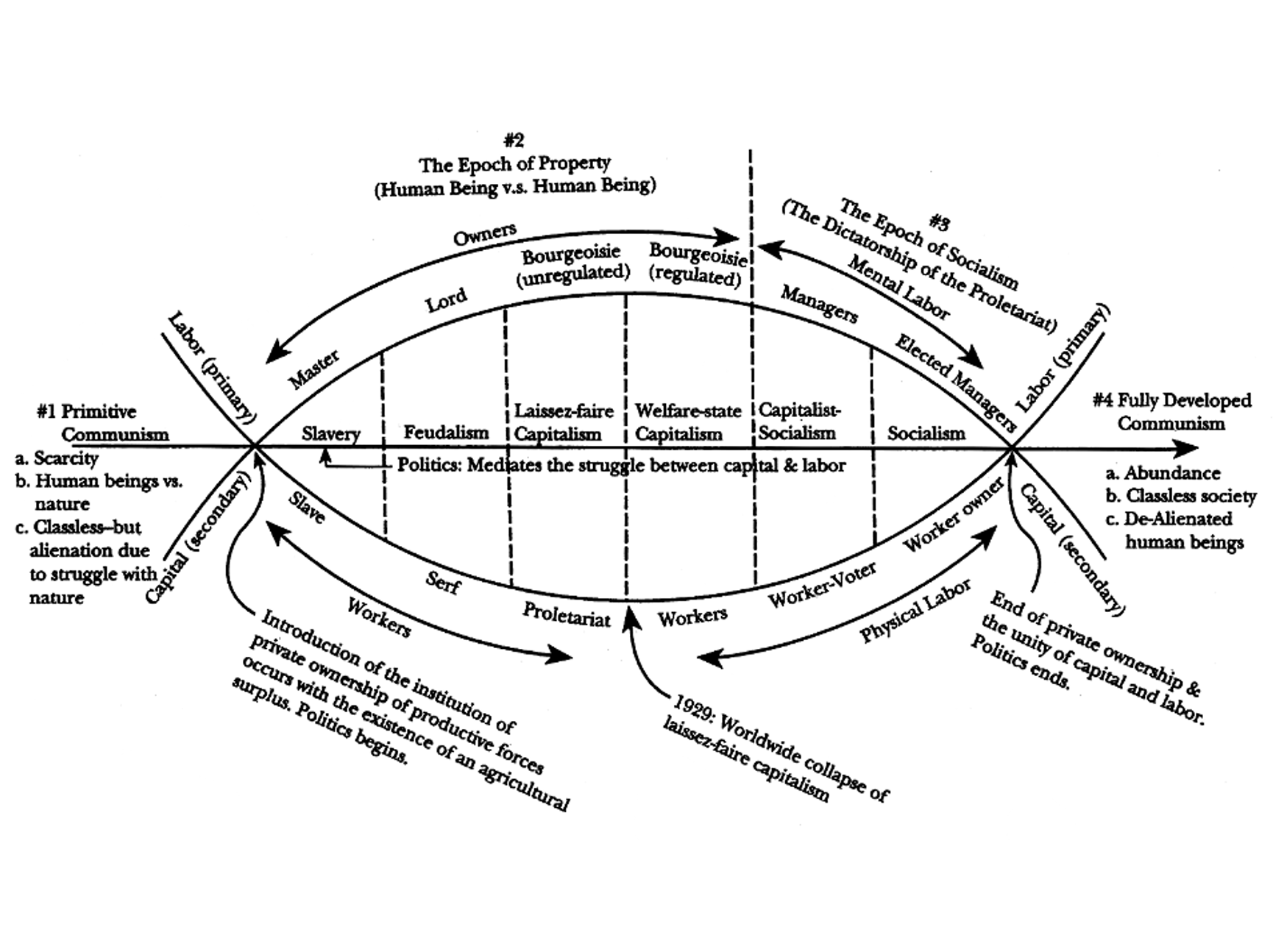
Somebody asked me whether what progressives are trying to accomplish with their social programs was communism. No. Corporatism. Totalitarian monopoly capitalism. It’s the new fascism. Corporatism = corporate power + administrative state + technocratic apparatus + public unions.
The hi-tech surveillance state (AI generated)
In my last essay I talked about the custodial state of the inner-city neighborhood of America. Managing the redundant black population is the long-standing pilot program. Democrats have created a strata that votes for a living (instead of works for a living) and knitted together a rainbow coalition conditioned to hate whites and the West. That’s the political/social angle of mass migration and multiculturalism.
It’s the way the monarch manages the tribes. It’s a Third World wet dream.
Next pieces to emplace: digital currency, social credit scheme, universal basic income. Make people dependent on government. You will own nothing and be happy. The executives will use your living room for meetings. Better keep it clean. You know the thing.
It’s a neo-feudalism model. The working class will become the new serfs managed by a hi-tech custodial/surveillance state apparatus. It will have some appearance of state socialism; but instead of an administrative elite, the ultimate source of power and control will be transnational corporate class (TNCs) and big finance.
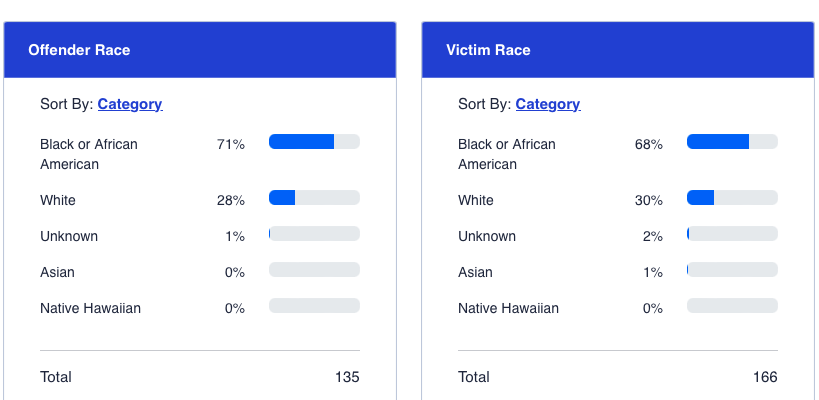
What are progressive Democrats trying to accomplish by depolicing crime-ridden inner cities? This policy has resulted in, or is at least associated with, the deaths of thousands of blacks, disproportionately young men (see the work of Roland Fryer and Rafael Mangual). Such casualties are preventable when there are adequate police force levels in high-risk communities. What is the actual goal of what Randall Kennedy called “racially selective underprotection” in his 1997 Race, Crime, and the Law when deliberately practiced in these neighborhoods?
An American ghetto
What are progressives trying to accomplish when they remove standards in college admissions and employment opportunities? What is the goal of recruiting individuals on the basis of their skin color instead of on the basis of their accomplishments and talents? What do you think progressive Democrats are trying to accomplish by establishing a custodial state in which around 80 percent of black children are born out of wedlock and in poverty, two of the major factors in the relative lack of merit and talent in this demographic? Why would progressive Democrats create and perpetuate the criminogenic conditions that result in the grim reality that five percent of the population perpetrates more than half of the homicides and robberies in America?
What do you think progressive Democrats are trying to accomplish by opening the southern border and inviting millions of mostly young military-age men to cross over, and then busing and flying them to cities all over the country, setting them up with room-and-board? And what of the tens of thousands of unaccompanied children authorities have lost track of? Why do Democrats want to extend the franchise to those who enter the country illegally or overstay their visas? Do progressive Democrats really want cheap foreign labor to drive down the wages for the workers they claim to represent? Of course they do. They want this and all the rest of it. Yet, according to exist polls, 87 percent of black Americans voted for Joe Biden in 2020.
For most of my life I labored under the false belief that, of the two major political parties, the Democrats were better for blacks than were the Republicans. This was because I was born into a Democrat family, and the career path I chose, the academic path, was a path of structured reinforcement in partisan attitude. I awakened in steps—not nearly as fast as I should have—to see that the corporate state progressives have sought since the late-nineteenth century, and institutionalized in the 1930s, was assembled from the remnants of the slaveocracy the Democratic Party had represented before and during the Civil War. This was the same party that maintained the urban ghettos and established the custodial arrangements there that oversee millions of warehoused and redundant workers, now disproportionately black and brown, the promise of melting pot upended by Kallen’s salad bowl.
Progressives go one about racist Republicans, but Republicans don’t run the inner-city neighborhoods where black men kill each other on a daily basis. Conservatives aren’t responsible for the conditions that give rise to such pathologies. Indeed, their communities remain orderly and safe. While it is true that I only voted for a Democrat for president twice in the past thirty years, I had for much longer than this enjoyed conditions largely governed by Republican politicians without supporting that party at all.
Reflecting on my political choices, I seek a political party that will stop spending money on forever wars, secure the southern border and deport those who illegally enter the country, oppose multiculturalism and promote colorblind individualism (equality before the law), abolish policies and programs rooted in identitarian politics, end government surveillance of citizens, stop interfering with the people’s rights to free conscience, speech, assembly, and association, safeguard children from unscrupulous doctors and those who seek to indoctrinate them, defend and preserve women’s spaces and sex-based rights, defend the right of the people to be armed and to defend their persons and property, secure elections in which only citizens vote, deconstruct the permanent political class (the administrative state), dismantle the technocratic (regulatory) apparatus, and restore in the federal government the balance of powers identified in the Constitution.
The Republican Party is far from perfect, and the establishment—the donor and permanent political classes—remains a powerful force in party politics, but the party is changing in the right direction, especially in the House. However, no political party could be more antithetical to the political wants I have identified above than the Democratic Party. Whomever I vote for in 2024, it won’t be a Democrat. A big reason for this is because black lives matter. Not as a slogan. As a moral imperative.
A note before beginning. Today is New Year’s Day 2024. In years past, I have resolved on the eve of this day to be more obnoxious in my criticisms of religion and in my defense of free conscience and thought. This year I am resolving once again to be more obnoxious in these areas; for one thing, by sharpening my focus on the subject area of the neo-religion of transgenderism. To be sure, 2023 already found me walking this path, but I intend to deepen my footprints as I continue to trod upon it.
Here’s the type of impression I mean to leave by years end, this one inspired by Helen Joyce’s observation that the assertion “Trans women are women” functions to mystify the category women. Joyce is referring to what is called a “hypnotic” or “power” phrase, trance-inducing incantations with thought-stopping power. Joyce here cites the work of Robert Lifton who, in Thought Reform and the Psychology of Totalism, writes, “The language of the totalist environment is characterized by the thought-terminating cliché. The most far-reaching and complex of human problems are compressed into brief, highly reductive, definitive-sounding phrases, easily memorized and easily expressed.” It’s an oppressive application of the logic behind cognitive-behavioral therapy, in the oppressive case a mantra to help people manage intrusive ideations that undermine their faith in gender identity and everything that flows from it.
The phrase “Trans women are women” is not meant to be true, but designed to prevent reflection on the colonization of women’s spaces by men. The effect of chanting the opposite of the truth—“War is peace,” etc.—is an instantiation of what George Orwell calls “crimestop” in Nineteen Eighty-Four, his dystopian novel exploring the character of totalitarian society. Crimestop is the necessary mental discipline for being a good party member. It marks one’s subordination to the system of control. It’s the commandment in the New Testament to never blaspheme the Holy Spirit; open doubting reveals the heretic (hence the unpardonable sin).
A Facebook friend noted yesterday morning that, if the phrase were true, why must it be qualified? It’s like saying red is blue and that they are the same. “If two things are indeed the same,” he asked rhetorically, “shouldn’t both be called the same thing without qualification?” Exactly. That’s why the woke propagandist created the term “cis gender”: the trans woman becomes a subset of women, as do cis women, whose essentialism is denied and therefore also their sex-based rights. It’s why trans activists are so triggered by adjectives such as “biological” and “real.”
Regular readers of Freedom and Reason will recall that I object to the construct “biological woman” because it’s redundant or tautological. But we have to differentiate real women from simulations of them (which is almost always obvious if one doesn’t suspend his disbelief). Unlike light, which is a spectrum, the two gender (or sex) categories comprise a binary. This diagram locates trans women in the correct category.
Adapted from a meme found on the Internet
In truth, “trans woman” is a subset of male paraphilial (AGP, etc.) or cultural (e.g. drag) expression. A trans woman in the women’s bathroom is really a man in the women’s bathroom. You’re not suppose to think about that, of course, hence the magic phrase. If the spell doesn’t work, you’re a bigot.
Again, the assertion doesn’t need to make sense. Its purpose is to cause people to ignore the senselessness—the irrationalism—of the new arrangements imposed on the people by the elite who govern them and interpreted by the clerics assigned to the task. Indeed, the existence of spells that function to obscure the irrationalism of religious-type belief is a chief indicator that such a belief is present. This is the subject of today’s essay.
Internet meme asserting the transhistorical existence of trans people
As the number of young people asserting the LGBTQ+ identity surges amid growing skepticism that gender identity in the subjective sense represents something real and scientific, gender ideologues have taken to asserting that trans people are a natural occurrence, a supposed corollary of the unremarkable anthropological fact that what today are referred to as trans people are a social-historical phenomenon—not the content of the belief system but the existence of belief system that supposes such content.
The core problematic is the notion of “gender identity,” a concept invented by psychiatrist and sexologist Robert Stoller in the last 1960s and picked up by queer theorists to legitimize the trans gender movement. Gender identity refers to an individual’s deeply-felt internal experience and understanding of his own gender. It’s what a person perceives himself to be in terms of gender. The argument is that gender identity may or may not align with the sex “assigned” to someone at birth. Moreover, while gender (or sex) is often understood in binary terms (man/woman, male/female), gender identity is a deeply personal and individual aspect of identity that exists on a spectrum. More than this, one can declare their emancipation from the spectrum and be no gender at all.
One finds an analog in the case in Rachael Dolezal, who identifies as trans racial, in her case a woman assigned the race of white at birth but whose racial identity is black. Racial identity refers to an individual’s deeply-felt internal experience and understanding of her own race. Although we may think we know Dolezal’s race (Dolezal passes well enough to fool a lot of observers), Rachel is in the best position to know her true racial identity. Although Dolezal’s racial identity is not subject to falsification, since it is a deeply personal and individual aspect of her identity, i.e., it is subjective, it is for those reasons her authentic self.
If you’re wondering whether my analogy is sarcasm, you are on to something. As I have documented on Freedom and Reason, Dolezal and others like her have been brutally mocked for identifying as trans racial. She has even been labeled mentally deranged. Trans identifying individuals and their allies have attacked me for suggesting that there is a parallel between trans racialism and trans genderism, but I have yet to hear a reason why they are not. If anything, given that racial categories are not genotypic in the way gender is, trans racialism is the easier of the two trans types.
The various types of trans identification, including what are today called “furries,” or therianthropes, are not novel phenomena. Anthropologists and mythologists have documented the existence of such liminal characters and personas across cultures and throughout time. “Liminal” refers to a state of being in-between or on the threshold, often describing a transitional or intermediate phase. The term comes from the Latin word limen, meaning “threshold.” In various contexts, liminality is associated with ambiguity, transformation, or transition, a sense of being neither here nor there, this or that.
In anthropological studies, liminality is connected to rites of passage and rituals. It describes the phase during a ritual where individuals are neither in their previous status nor yet in their transformed state. This period is marked by ambiguity, the individual across from what he wants to or will be (the literal means of “trans”) and can be a time of psychological and social transformation. In psychology, the concept is applied to transitional phases in personal development, where individuals may experience uncertainty and ambiguity as they navigate changes in identity, relationships, or life circumstances. The term is also used in cultural and literary studies to describe moments or situations that blur, challenge, or transgress boundaries, creating a sense of ambiguity or suspension/violation of normal rules.
In sum, liminality is a concept that highlights the dynamic and fluid character of certain experiences, moments, or spaces, these often made to be as such. It should be obvious now to readers that the transgressive method of queering people and spaces is an anthropological phenomenon.
In Greek mythology, Hermaphroditus, a child ofAphrodite and Hermes, and a member of the Erotes, a species of winged entities associated with fornication, was, at the request of a prominent Naiad (nymph), fused with her body to produce a deity that was both genders/sexes simultaneously. It’s no surprise, then, that gender ideologues have taken to sharing images of representations of Hermaphroditus to claim that such beings existed in history.
The act of hypostatizing simulacra is called “euhemerism” or “euhemerization.” Euhemerism is a theory or approach that interprets mythology or legends as having historical origins, particularly by suggesting that mythological accounts are distorted or embellished records of actual historical events and figures. The term is derived from the ancient Greek writer Euhemerus, who proposed the idea that the gods worshiped in his time were once mortal rulers and heroes whose deeds and accomplishments were later mythologized and deified.
Richard Carrier has argued that the function of euhemerization is to make the mythic real by locating in space-time that which never existed or is impossible (Jean Baudrillard would locate such simulacra later in the precession). Similarly, shamans and ritual fetishes and totems across cultures and throughout history have often occupied a space betwixt-and-in-between categories mythic and real. There are many ancient stories of beings neither here nor there or one thing or the other.
In Sumerian mythology, Inanna (Ishtar to the Assyrians), the ancient Mesopotamian goddess of fertility, love, and war, is sometimes depicted as having wings and bird’s talons. In ancient Celtic and Gallo-Roman myth Cernunnos is a man with antlers and sometimes an ungulate bottom. There are many examples. Half wo/man/half beast, half woman/half man, half Erotes/half Naiad and so on, are attempts to realize the power of myth in ritual action by manifesting the divine—the ethereal, the transcendent—in the corporeal or concrete world, represented in costumery and simulacra—all of which require suspension of disbelief and an ideology to sustain it.
As I have written about on Freedom and Reason, the religious character of gender ideology is undeniable. All the boxes in the checklist are ticked: beliefs and doctrine, customs and traditions, events and celebrations, leadership and rules, myth and supernatural things, ritual practices, sacred objects, places, and writings, and signs and symbols. Pride Progress and the trans flags (as well as the Black Lives Matter flag) are the same as the Christian nationalist flag.
The angry response to those who doubt the trans doctrine is also an indicator of the presence of religious sentiment, in this case the immature emotional response typical of adherents to a new religion. When the religion’s construct of gender identity is denied, a cry goes up claiming that trans people are being erased. I’m sure you have heard this claim. But those who deny trans doctrine recognize that there are adherents to the queer religion just as they understand that there are Christians, Mormons, Muslims, and so on. Nobody doubts Scientologists exist. What is disputed there is that the thetan is a real thing that exists in persons to be revealed through auditing.
It’s the same logic as with gender ideology. When somebody says that nobody is trans they mean that nobody really has a gender soul that entered the wrong body. That they don’t believe the central doctrine of the religion does not erase the faithful. It just means that congregation hasn’t yet converted everybody to its religion. However, the anger is understandable. The religion is very young, in historical terms in its infancy, and thus, like a lot of young and immature religions, desperate to convince itself of the doctrine it sets before the world by making others bow down to it.
Christopher Hitchens made this observation about Islam. Islamists hate it that people reject Islam and blaspheme Allah because they are still an insecure faith. They have created a term for those who are critical of Islam: “Islamophobes.” Islamists even perpetrate violence against the infidel to at the very least silence the critics of Islam. Trans ideology and activism has this exact character. Those who disbelieve are “transphobes” worthy of having violence visited upon them (“Punch a TERF”). Moreover, like Islam, more than managing their common insecurity, the queer church seeks obedience because it is a proselytizing force, one with clear imperialist ambition.
The difference between the trans doctrine and Islam in the West is that gender ideology is being installed in the institutional structure of the modern nation-state. It’s becoming the state religion in the way Islam has become the state religion across the Arab world (and even beyond). The West is entering a new theocratic phase of history. This is why we must speak out. Our human rights to free conscience and thought depend on defending the secular character of the modern nation-state.
I want to emphasize that it is normal and natural for humans to ritualize uncertainty and transition in an attempt to reign in forces that move beyond their control. Magical thinking is at least as old at the artifacts indicating it. We see the management of anxiety/stress associated with liminality in status elevation/degradation ceremonies, where the transformation of a person into the thing he or others want him to be, a martyr for example (he may not wish to be the things people want for him, e.g., a felon or a witch—or a martyr), or what he will inevitably become.
Becoming can be a very real event, for instance in a boy facing natural process of puberty, his transition to a man ritualized to manage the apprehension that comes with drastic change or undesired fate. Taking on the latter example, the postmodernist subjectification of objective biological processes has been used to justify the management of anxiety of sexual development through the medical-industrial practice of blocking puberty using potions (dangerous chemicals), redefining a necessary stage of child development as arbitrary, something that others mean to force on the dysphoric individual, a denial of reality requiring at least the elaboration of myth, with euphoria (“trans joy”) the alternative end sought. This is only one of the ways gender ideology is harmful to those who have been inducted into the religion.
Internet meme asserting the natural-historical character of transness.
The trend to naturalize a subjective phenomenon is a desperate one, indicating an awareness that the establishment of a theocratic order based in gender ideology is meeting with significant resistance. X (Twitter) over the last few days feels like November is already here—indeed, we might expect November to be for all of 2024. The reaction is paradoxical in that it becomes ever more explicit in its religious character in its attempts to rationalize its contradictions.
If we suppose Hermaphroditus—pronouns he/him, by the way—is representative of an intersex condition, i.e., the sublimation of an observed phenomenon, an extraordinarily rare anomaly in the sexual development of mammals, gender ideologues are still left with the reality that transgenderism is something entirely different.
I explore this problem in my response to this tweet by a person who has convinced himself that he’s clever. To save you a trip to X (Twitter) (although you may wish to see a clearly image of Katy’s shit cartoon), this is what I wrote: “Because he is a boy. That’s the difference. It’s an objective difference. The point of the cartoon fails utterly. Thinking you’re a boy when you’re not, if you genuinely believe you are a boy, is not knowing you’re a girl. It’s the literal opposite of knowing what you are. Of course, a girl likely knows she is a girl yet wants to be a boy. But wishes can’t override the impossible. She cannot be what she isn’t. It’s like ‘knowing’ you’re a different species of animal or an angel, something you cannot be or something that doesn’t exist. Subjectivity in action can only change some things. It can’t change essential things or conjure impossible things. If a girl could become a boy then there would be no demand for affirmation because bad faith would be unnecessary. How would a girl know she’s a boy if she isn’t one? Etcetera. Arguments from gender identity are entirely fallacious. A cartoon can’t fix that.”
Because he is a boy. That’s the difference. It’s an objective difference. The point of the cartoon fails utterly.
Thinking you’re a boy when you’re not, if you genuinely believe you are a boy, is not knowing you’re a girl. It’s the literal opposite of knowing what you are.
Aware of this problem, one act in the attempted naturalization of subjective phenomena is the claim that science confirms the existence of brains oriented towards one gender or another despite the sex of the individual. We’ve been told that gender is a social construction, but the existence of gendered brains admits that gender is rooted in the brain.
I will come to the problem of social construction later in the essay, but what would be the relevance of brain scans to transgender policy, even supposing that brains are gendered in this way? Should professionals determine whether people are trans based on brain scans? Should this determination be part of gender affirming care (GAC)? If they don’t have the right brains, then no trans for them?
If trans is real because brains and (and the rest of) bodies can be incongruent, then brain scans must matter for determining policy, and in diagnosing the condition and prescribing the care. If they don’t matter for CAG, then what is the relevance of brain scans? It’s hard to believe that those in the transgender movement would limit transing to those with the correct brain scans. They have the standard definition to gender identity to fall back on, namely that the nonfalsifiable construct, that is, the faith piece of the belief system. Indeed, as this 2018 article in ThinkProgress warns “Research on transgender brains may not be as helpful as you think.” Why? Because “Transgender health care has a troubled history of gatekeeping.”
However contrary its myth and ritual are to the typical format, gender ideology, like other religions, confuses myth with reality. It collapses ontology into epistemology where reality is what we know it to be. Put another way, the way we know the world makes the world we know. That’s why early in its development queer theory explicitly states that gender is a “performance,” announcing its ritual character, at once denying gender is a natural historical phenomenon, while in its sexological sense remaining an an innate and authentic thing.
Gender ideology is a paradigm instantiation of postmodern regression to the primitive, a neo-religion with ancient analogs. That millions of people march to the paradox—and that the medical-industrial complex justifies its profiteering by appealing to the authority of the various associations that have grown up around it—testifies to its religious character.
I have thrown in the fact that trans people are real in this sense. To be sure, this religion exists, as do its congregants; but, like all religious substance, the content is imaginary and irrational, and the congregants are mistaken about what they are and can be; so, we are asked to suspend our disbelief along with them—or at least act in bad faith or remain quiet about the truth. Moreover, like other religions, the faithful are there to be taken advantage of.
Not only does this religion exist, but it’s also growing. An article in the Advocate, an American LGBT magazine established in 1967 that has long monitored and promoted the expansion of the LGBT community, announced that the “LGBTQ+ Population in the US Grows by Over 2 Million.” This is the largest it has ever been in recorded US history. According to the article, referencing a study by the Williams Institute at UC Los Angeles, 13.9 million adults in the US identify as LGBTQ+, accounting for 5.5 percent of the country’s total population. “That’s up one whole percentage point—and over 2 million people—from their 2020 report, which found the LGBTQ+ population accounted for 4.5 percent of the population at 11.3 million adults,” the article celebrates. History will record trans identification as one of the more remarkable instances of social contagion.
Radical double mastectomies on girls are not a product of their so called “mental illness,” but are a product of social indoctrination.
But what’s a “LGBTQ+” person? It’s an abstraction constructed by clustering radically different and often manufactured identities to engineer the appearance of a large and growing minority used for various purposes. The “LGB” piece refers to sexual orientation. The “T” to gender identity. Thus, while lesbian, gay, and bisexual orientations concern sexual attraction and behavior, an objective feature of the mammalian class, gender identity is defined as a person’s innate sense of their gender, an entirely subjective claim. Trans is a simulation, an act of feigning gender through simulation, often a very poor (and toxic) mimicry of the thing it seeks to represent. None of this is a result of the natural history of our species.
Trans is a simulation, an act of feigning gender through simulation, often a very poor mimicry of the thing it seeks to represent. None of this is a result of the natural history of our species.
When I have these discussions the concept of social construction often comes up, so let me turn to this matter briefly. This concept is used in cultural studies and social sciences to analyze how societies collectively create and assign meaning to various aspects of their shared reality. In other words, a social construction refers to those aspects of the world that are created and defined by society rather than being inherent or natural; these aspects are products of human interaction and interpretation rather than objective, pre-existing realities.
Examples of social constructions include aspects of gender, language, race, etc., although these have natural historical features, as well (which is why Dylan Mulvaney can’t be a woman any more than Rachael Dolezal can be black). The socially constructed character of things isn’t fixed or universal but shaped and given meaning by the cultural, historical, and social context in which they exist. This observation, while true, can also distort the natural historical character of things, especially when interpretations are politically weaponized.
Cultural studies and social science, the latter colonized by the former, have historically used the concept of social construction differentially; however, over the last several decades, the former, working from the postmodernist epistemic, its method known as deconstruction, has corrupted the latter. So, while understanding social constructions can help reveal the ways in which cultural, political, and social forces shape our perceptions and interpretations of the world, in the postmodernist turn it has become an academic gloss for political-ideological agendas mean not to analyze the world but to transform it. This is the meaning of the “Q” in “LGBTQ”: queering is a praxis of transgression—a slur has rehabilitated as a methodology.
In light of this, gender critical thinkers need to highlight the fact that aspects of reality that are socially constructed, including even material elements (housing, for example), and use this fact to debunk gender ideology. Sex (or gender) roles are indeed significantly socially constructed, which explains why they are to some extent culturally and historically variable. This explains why, when men cosplay women, they don culturally familiar stereotypes (fashion, mannerisms, etc.). For example, almost all women wear pants most of the time. Yet trans women wear dresses. And because men in dresses rarely pass, they seek accessories seeking liminality, such as neon-colored hair, clownish makeup, and facial piercings.
However the attempt to escape their gender manifests, its socially constructed character does not obviate the natural historical reality that the human species, like all mammalian species, is genotypically and substantially phenotypically dimorphic and immutable despite hormonal and cosmetic intervention. Putting the matter bluntly, men are not women and cannot be. Aa woman is more than a stereotype or a sex role. She is more than a social construction. A woman is a result of natural history. The “accusation of misgendering” from this standpoint assumes as true the opposite of what is true.
Theseus slays the Minotaur
In his 1976 book, The Dialectic of Ideology and Technology: The Origins, Grammar, and Future of Ideology, sociologist Alvin Gouldner advances a critique of Max Weber’s demand for a value-free sociology. Gouldner invokes a Greek myth of the Minotaur to produce a metaphorical device that captures the essence of the critique. Weber argues for the idea that sociologists should aim to separate their personal values and beliefs from their scientific analysis of society. (Robert Merton famously explored the value of disinterestedness in his 1942 Scientific Monthly essay “The Normative Structure of Science.”) Gouldner criticized Weber’s admonition, arguing instead that complete value neutrality is impossible, and that the pursuit of such neutrality can lead to a lack of engagement with social issues.
Since this essay concerns the problem of mythology, and since Gouldner uses the myth as a metaphor in identifying the problem, I will digress for a moment and tell readers about the Minotaur. It’s an incredible story in both meanings of that word.
In Greek mythology, was a creature with the head of a bull and the body of a man. According to the myth, King Minos asked Poseidon for a beautiful white bull as a sign of his favor. However, Minos did not sacrifice the bull as he had promised. As a punishment, Poseidon caused Minos’ wife, Queen Pasiphaë (the goddess of sorcery and witchcraft), to fall in love with the bull. Pasiphaë sought the help of the craftsman Daedalus, who constructed a wooden cow for her. Inside this wooden contraption, Pasiphaë hid and mated with the bull, resulting in the birth of the Minotaur.
The Minotaur was confined to the Labyrinth, a maze-like structure designed by Daedalus (helped by his apprentice son Icarus), located in the palace of King Minos. The Athenians, as part of the tribute they were required to pay to Crete, sent young men and women to be sacrificed to the Minotaur. Theseus, the Athenian hero, eventually slew the Minotaur with the help of Ariadne, King Minos’ daughter, who provided him with a thread to navigate the Labyrinth.
Gouldner uses the situation of the Minotaur, who in the Labyrinth was isolated and detached from society, to convey the problem were sociologists to strictly adhere to Weber’s concept of value neutrality—to wit, the problem of detachment from the social realities under study. The “Anti-Minotaur” thus represents the opposite approach, one emphasizing engagement with the social world.
Gouldner’s call for sociologists to actively acknowledge their own values and biases (an idea Sandra Harding picked up years later in her essay “After the Neutrality Ideal: Science, Politics, and ‘Strong Objectivity,’” in a 1992 issue of Science and Politics) is a methodological point tied to the broader goal of equipping observers with a reflexive lens to critically examine power relations and social injustices. By acknowledging and grappling with their own standpoints, sociologists can better understand how their positions and perspectives might influence their research, a self-awareness that may, in turn, enhance the ability to critically analyze social dynamics, developing a more nuanced and critical understanding of the social issues they study.
* * *
My point in the present essay is a call to recognize the political power play and political economy that gender affirming care represents and the ideology that justifies it by recognize how the sociologist’s embeddedness in woke ideology prevents him from resisting the progressive naturalization of what an interested objective standpoint would easily identify as atrocities and oppressive arrangements.
Much of the world outside of sociology is already aware of these problems. On the way home from visiting family the day before yesterday, I listened to a conversation involving satirist Andrew Doyle, a gay man, on the podcast Triggernometry. Doyle recounted the experience of a friend, also gay, who was convinced by doctors that his same-sex attraction indicated a woman trapped in a man’s body. The friend was in a vulnerable place at the time and believed the doctors—even though what they told him is an impossibility. Doyle’s friend now realizes that but no longer has genitals because the doctors removed them.
The industry doesn’t remove genitals for free. Doctors don’t mutilate bodies because they’re sadists—although it cost this man and men like him much more than money. There’s no money in homosexuality. GAC is a billion dollar industry. The victims of these atrocities often require life-long treatment.
Legislatures across the United States are trying to protect at least children from this exploitative practice (I argue that these practices should be banned). Judges, listening to the experts and substituting themselves for the wisdom and will of the people, are stopping them. Just as judges are striking down bans on propaganda in public schools and libraries used to groom and sexualize children. Judges are accepting on faith the neo-religion of transness and using their authority to aid the corporate state project to legitimize an emerging theocratic order.
I recently urged an individual who attempted to explain why the appeal to experts was not the same as the fallacy of appealing to authority to watch a few trials. I told him that if he did he would see experts on both sides. The jury makes up its mind on fact and reason or it’s lazy, biased, or intimidated. To be sure, judges could theoretically weigh the facts and apply logic, but, as we have seen, something else appears to be at work.
As I have noted in other writings, reflexology has its experts and associations. So do chemical manufacturers. Medical science is no different. Trans is a billion dollar industry. Whenever people resort to experts they’re appealing to authority. They can’t make the argument, so WPATH, etcetera. Name dropping—which is not the same as citing one’s sources—is like name calling.
The archaeological record, cultural ethnography, and historiography provide ample evidence of humans pretending to be other animals, gender and genderless beings and states, supernatural entities, etc. Liminality and ceremonial practices and roles are universal in our species. Perhaps this indicates something about our evolutionary psychology. But that this tendency may be inherent in the genome doesn’t mean the characters and personas conjured by myths and rituals are actually-existing things.
Gender identity remains a mythic projection, one constructed by crackpots during the Sexual Revolution, an element in the elite-led countercultural movement to undermine the functional normative structures that protect individuals from commercial and religious exploitation. The project is to shift from the ontological standpoint of truth to a consequentialist one—the terms and values of which elites define.
To be sure, there are millions on the side of the transgressive push of consumerism and narrative, a development falsely but intentionally and transparently sublimating itself as emancipatory and virtuous (e.g., in the rhetoric of social justice). Some people more easily suspend disbelief than others (this, too, may be a variable expression of the genome); but viewed rationally the effort to suspend disbelief indicates that there are things to be disbelieved. That men can be women is at the top of the list of things to be disbelieved if we mean to reclaim the truth of gender.
So let us resolve on this New Years Day to trod harder the path to collective sanity by speaking the truth in the face of the lie, by using our words to differentiate the real from the mythic, and by clearing from the institutions of law and science the overgrowth of ideology that obscures reason.
“Our constitution was made only for a moral and religious people. It is wholly inadequate to the government of any other.” —John Adams, 1798
“Government is instituted to protect property of every sort; as well that which lies in the various rights of individuals, as that which the term particularly expresses. This being the end of government, that alone is a just government, which impartially secures to every man, whatever is his own. According to this standard of merit, the praise of affording a just securing to property, should be sparingly bestowed on a government which, however scrupulously guarding the possessions of individuals, does not protect them in the enjoyment and communication of their opinions, in which they have an equal, and in the estimation of some, a more valuable property.
“More sparingly should this praise be allowed to a government, where a man’s religious rights are violated by penalties, or fettered by tests, or taxed by a hierarchy. Conscience is the most sacred of all property; other property depending in part on positive law, the exercise of that, being a natural and unalienable right. To guard a man’s house as his castle, to pay public and enforce private debts with the most exact faith, can give no title to invade a man’s conscience which is more sacred than his castle, or to withhold from it that debt of protection, for which the public faith is pledged, by the very nature and original conditions of the social pact.” —James Madison, 1792
Before I turn to the substance of this essay, which concerns the establishment of a secular constitutional republic whose creed tolerates religious belief while permitting the absence of such beliefs in the lives of its citizens, with the specter of Christian Nationalism as one of the present concerns regarding the future of this arrangement, I want to say a few things about the anthropological-sociological view of religion. In addition to my duties in my tenure home of Democracy and Justice Studies at the University of Wisconsin-Green Bay, I am also on the faculty of the Sociology and Anthropology program. My training is in sociology (also psychology and anthropology), and I have published and lectured in the sociology of religion for many years. More broadly, my overall approach is political sociology, which involves the study of ideological systems.
Recently, on X (Twitter), I have been engaged in a debate about the religious character of gender ideology. The doctrine of the authentic self, the non-falsifiable construct of gender identity, the ritual of physical transitioning from one gender to another, objectively an impossible transformation, and much more, require gender ideology’s classification as a religious faith (see my recent Affirmation, the Authentic Self Doctrine, and Rule by Assumption). As the reader will see, the classification is accomplished by straightforwardly applying the social science standpoint, but also the standard definition of religion to the ideology in question. However, as I have pointed out in previous essays, this is a religious faith that enjoys the backing of governments and corporations, powerful entities that impose the beliefs and practices of gender ideology regardless of whether persons subscribe to the religion (see, e.g., See NIH and the Tyranny of Compelled Speech).
The imposition of gender ideology, seen in the requirement that people avoid “deadnaming” those who have “transitioned” to their “authentic self,” as well as the use of pronouns incongruent with and thus denying the gender of the congregant, in general the compelled involvement of every citizen in the “affirmation” of the individual in his delusion, or his community’s illusion, to use Freud’s observation in his The Future of an Illusion, is a clear violation of the rights of individuals in the United States to be free from impositions of conscience, thought, speech, and association, rights articulated in the First Amendment, as well as in international law. This violation of our fundamental rights can occur because of the political-ideological denial that gender ideology is a religion but is instead a valid scientific system (which is plainly not).
What is religion, then? The term originates from the Latin words religio, which means respect for what is sacred, and religare, which means “to bind.” Thus the term at its core indicates an obligation to the sacred; in practice, religion encompasses diverse systems of belief and practice that revolve around what social groups consider sacred or spiritual. The French sociologist Émile Durkheim captures the essence of such systems in The Elementary Forms of the Religious Life, published in 1915, when he defines religion as “a unified system of beliefs and practices relative to sacred things.” These systems “set apart” people and things from others, and in doing so “unite into a single moral community, called a church, all those who adhere to them.” For Durkheim, religion is about community; binding people together (social cohesion), prescribing and proscribing speech and action (social control), and providing meaning and motive (social purpose) for people during transitions and tragedies .
By applying the methods of science to the study of society, Durkheim shows that the source of religious morality refracts the collective conscience of society and that the cohesive bonds of the social order result from common values in a society (this was Ludwig Feuerbach’s insight in his 1841 book The Essence of Christianity, the catalyst for Karl Marx in developing his materialist conception of history). Durkheim understands that these values need to be maintained to secure dependable and enduring social stability—at the same time he understands that the religious pluralism of Western civilization poses a problem for social solidarity. In his 1893 The Division of Labor in Society, Durkheim argues that a cohesive set of cultural beliefs and moral values is crucial for societal integration and solidarity; throughout his career, he expresses concerns about the potential for decreased social solidarity in diverse, modern societies. Durkheim observes that as societies become more complex, with increased divisioning and specialization, traditional sources of moral unity weaken.
To return for a moment to the problem of gender ideology, those who resist the obvious religious designation often do so because of a stereotypical view of what religion is. They do not see in their beliefs appeal to a god or gods—and they miss seeing the angels as such (see my essays Resisting the Imposition of Non-Existing Things and Step Away from the Crazy). Thus, the scope of religious formation is reduced to a cartoonish singularity, typically signaled by adherence to those religions descended from the Jewish faith (although Islam, because of its third world status, finds a special place in the their hearts, hence the slogan “Queers for Palestine”). Admitting the scope of religion produces a different conclusion. For some, religion is associated with places of worship with a god at the focus; for others, it involves practices like meditation; others view it as a guiding concept in their daily lives, such as the concepts of dharma. Despite these varied perspectives, there is a common understanding that religion encompasses a system of beliefs, values, and practices centered around what an individual deems sacred or spiritually significant. One should not allow appeals to atheism to fool them. There are many self-proclaimed atheists who possess profoundly religious personalities.
Throughout history and across the planet, figures have employed religious narratives, symbols, and traditions to impart greater meaning to life, explore the mysteries of the universe, and lead people to certain ends, often ends that are quite profitable for spiritual leader. Nearly every known culture embraces some form of religion, typically practiced openly within a community. Religious practices can encompass various elements such as feasts and festivals, worship of one or more deities, marriage and funeral ceremonies, expressions of music and art, initiatory and meditative rites, acts of sacrifice or service, and other cultural facets. Anthropologists and sociologists thus conceptualize religion as a structured and cohesive system encompassing actions, beliefs, and norms that revolve around fundamental social needs and values. Religion is recognized as a cultural phenomenon present to some degree in all human society and down through time.
One of chief features of religious systems is the ritualization of the transitioning of persons from one status to another, a liminality marked by a ceremony that often makes reference to the divine, that is, to supernatural or transcendent things, which are, from a scientific standpoint, impossible or unknowable things. Humans are enchanted by such things, using them to sublimate vulgar features of their animality or giving themselves a higher purpose. Marriage is an obvious example. To be sure, there are individuals who simply obtain a marriage certificate from their town’s courthouse and have it witnessed by a justice of the peace, but we all recognize that, for many others, there’s an obligation to participate in an elaborate rite of passage, known in the literature as the “status elevation ceremony,” which is consecrated by appeal to transcendent entities or forces. Funeral rites constitute another example. The specific customs vary between cultures and even within different religious affiliations, but despite variation, certain common elements persist in ceremonies marking an individual’s death: the announcement of passing, the handling of the body, the final disposition, and the inclusion of specific ceremonies or rituals throughout the process.
In our studies of religion, we anthropologists and sociologists recognize that religious experience is accompanied by a profound conviction or sensation of being connected to a divine entity. Religious beliefs encompass the specific ideas deemed true by members of a particular faith, such as the doctrine of salvation in Christianity, reincarnation in Buddhism and Hinduism, the presence of the thetan in the human body in Scientology, or the doctrine of the authentic gendered self in gender ideology. Religious rituals involve actions and practices expected or mandated within a specific group. Here individuals are forbidden to speak about certain things and required to speak in certain ways.
One hallmark of religion is the singling out of those who resist doctrine, ritual, and scripture, marking them off from the group as apostates (those who leave the religion), heretics (those who challenge the religion), and infidels (those who do not subscribe to the religion). Those who utter forbidden speech are labeled as blasphemers. These indicators of religious force are often coded in other labels, seen in references to “bigots,” “fascists,” “racists,” and so forth. Sometimes the code reveals its religious character by referencing the faith in some way, e.g., “Islamophobe” or “transphobe.” Punishing the non-adherent is a central feature of religious belief, which is why it is so vital to remind people of the importance of the secular foundation of the US republic.
In summary, religion has four elements: beliefs, mythology, practices, and social organization. Beliefs are the ideas and values the make up the doctrine and its motivations. Mythology concerns the sacred stories, including etiological tales. Practices are the rituals and rites of passage, the status elevation (and degradation) ceremonies, and speech requirements. Social organization is not only the community of congregants but also the institutional frame in which the religion is legitimized and sustained. Successive generations are socialized in the institutional frame. Now onto the substance of today’s essay.
* * *
A few days ago, a Baphomet statue, a Satanic Temple display, installed at the Iowa Capitol in Des Moines, was vandalized. Michael Cassidy, a former US Navy fighter pilot, recently defeated in a Mississippi statehouse election, is accused of causing the damage. He was arrested, charged with fourth-degree criminal mischief, and released. According to a Facebook post by the Satanic Temple on Thursday, the Baphomet statue was “destroyed beyond repair,” although remnants of the installation still exist.
The incident sent Christian zealots seeking an argument that would allow them to celebrate Cassidy’s actions without betraying their devotion to the constitutional republic to which they’d loudly sworn allegiance—not to mention risking negating their complaints about Antifa/BLM defacing monuments and toppling statues. Criticism from conservatives including presidential candidate Ron DeSantis (whose campaign has really been a disappointment, I must interject). Matt Walsh’s crack at the problem (I rather like Walsh, so his monologue on that day was disappointing) was to perpetrate the same fallacy he so effectively condemned with his “What is a woman?” question. “Good is good and bad is bad,” he said. What are those things? He never says, offering only elaborations that spiraled down into ever greater depths of circularity.
Others, beside themselves, found the December 2021 Harvard Law Reviewnote “Blasphemy and the Original Meaning of the First Amendment.” “Until well into the twentieth century, American law recognized blasphemy as proscribable speech,” the note begins. “The blackletter rule was clear. Constitutional liberty entailed a right to articulate views on religion, but not a right to commit blasphemy— the offense of ‘maliciously reviling God,’ which encompassed ‘profane ridicule of Christ.’” (There’s goes Monty Python’s The Life of Brian.)
English common law had indeed punished blasphemy. But did the Founders carry over everything from the Motherland? Apparently even this. “Looking to this precedent, nineteenth-century American appellate courts consistently upheld proscriptions on blasphemy, drawing a line between punishable blasphemy and protected religious speech.” “At the close of the nineteenth century,” the note continues, “the US Supreme Court still assumed that the First Amendment did not ‘permit the publication of … blasphemous … articles.’ … Even on the eve of American entry into World War II, the Tenth Circuit upheld an anti-blasphemy ordinance against a facial First Amendment challenge.”
The note then announces the great free speech awakening of the post-WWII period, the period that delivered civil rights for blacks and women and homosexuals: “Only in the postwar period did the doctrine promulgated by appellate courts begin to shift. In Joseph Burstyn, Inc. v. Wilson, the US Supreme Court invoked the Free Speech Clause to invalidate a prior restraint on ‘sacrilegious’ films. Burstyn did not directly hold anti-blasphemy laws unconstitutional, but its obiter dicta gave aid and comfort to the laws’ enemies. And although two state appellate courts sustained blasphemy proscriptions after Burstyn, a third struck down a state anti-blasphemy law under the First Amendment’s Religion Clauses. Most recently, a federal district court invalidated a state blasphemy statute under the Free Speech Clause and the Establishment Clause.”
“Present-day scholars often assume that anti-blasphemy laws are unconstitutional, celebrating the absence of such laws as a core First Amendment principle.” Given the tone and structure of argument, it feels like the next sentence should be: “It is not so.” But the note is wrong because its premise is wrong. It’s not that the post-WWII era discovered a right to religious liberty that protected the right of individuals to engage in speech acts the majority found objectionable; that right, as I will show, is inherent in the foundational law of the nation. Indeed, it’s hard to believe that it took more than a century and a half to realize the promise of religious liberty and free thought in prevailing precedent (which is to suggest how fragile that realization is).
Given this, how is it that there are Christians who profess their allegiance to the American Republic who oppose this? This is what we should be celebrating: standing at the threshold of breaking the chains on our minds that blasphemy represents—not the criminal action of some bigot who won’t instead insist that the public square remove all religious symbols (and we know he wouldn’t make such an insistence because he picked the Baphomet installation to vandalize and not the Nativity—that is, he is a self-appointed censor). But no. They like it that at least one or a small committee for lawyers find that “none of the constitutional clauses currently thought to make anti-blasphemy laws unconstitutional—Free Exercise, Free Speech, Establishment—originally prohibited blasphemy prosecutions. In other words, the original public meaning of the First Amendment, whether in 1791 or in 1868, allowed for criminalizing blasphemy.”
Curiously, smartly perhaps, the zealots typical quote those suspect in their commitment to Christianity. They focus on George Washington, James Madison, and John Adams—while avoiding Thomas Jefferson, dismissing Thomas Paine, and ignoring Benjamin Franklin, in an attempt to show the Christian bona fides of the most important of the Founders. This finds the first president, Washington, a modern-day instantiation of the Roman statesman and military leader Lucius Quinctius Cincinnatus, and the fourth president, Madison, the principal author of the Constitution and its Bill of Rights, as the most virtuous fathers, with the second president, John Adams, enjoying a quote.
You will see in a moment the problem with the Adams quote (and it is a problem of his religious affiliation), but more broadly, the attitude expressed betrays the doubt zealots have that the Christians figures they single out share with them the same vision. What the focus on the recalcitrant and the skeptic and the Unitarian does is distract from the obvious fact that most of the Founders were not only Christian, but that they went along with the establishment of a secular republic. There is an important lesson in all of this (and it would behoove the gender ideologues to pay attention here): one can enjoy his faith while leaving others out of it.
Among those who who signed the Declaration of Independence were Congregationalists, Anglicans (Church of England), Presbyterians, and those of the Dutch Reformed and Lutheran traditions. Deists Jefferson and Franklin are notable among the major players. Adams played a major role, too. These were the big three. Maryland’s Charles Carroll was the sole Catholic among the signers. Also notable: there were no Quaker signers (this owing to pacifist principles which precluded answering or agreeing to a call to arms such as the Declaration of Independence expressed). As for the Constitution, there were Episcopalians, Congregationalists, Presbyterians, and Lutherans among the signers. This time a Quaker was present: John Dickinson.
Recalling the epigraph at the top, it’s good that Adams, could separate his opinion concerning the religious character of those worthy of our constitution from the constitution he swore an oath to defend as president, a constitution that explicitly eschews requiring any declaration of faith (which I prove below), the first amendment to which segregates church and state. Others will never mind about that, of course. This quote by Adams, they will tell you, is definitive proof that ours is a “Christian nation.” These are the Christian nationalists, and they pose a growing threat to the future of this great American Experiment.
Christian Nationalism (AI generated)
But to whom was Adams’ statement addressed and when was it formed? It was to the Officers of the First Brigade, Third Division of the Militia of Massachusetts in the context of the Quasi War against the French, a formative moment in the Republic’s history, the letter penned on October 11, 1798. These are remarks of encouragement to a god-fearing people. It was not uncommon for political figures then (and to some extent today) to dress their troop rallying in the language of God and Providence and Whatnot. Oftentimes men need something above themselves to fight for.
None other than that “filthy little atheist” (President Teddy Roosevelt’s characterization of), America’s greatest pamphleteer, Thomas Paine, wrote in The American Crisis, “I have as little superstition in me as any man living, but my secret opinion has ever been, and still is, that God Almighty will not give up a people to military destruction, or leave them unsupportedly to perish, who have so earnestly and so repeatedly sought to avoid the calamities of war, by every decent method which wisdom could invent. Neither have I so much of the infidel in me, as to suppose that He has relinquished the government of the world, and given us up to the care of devils; and as I do not, I cannot see on what grounds the king of Britain can look up to heaven for help against us: a common murderer, a highwayman, or a house-breaker, has as good a pretence as he.”
George Washington had Paine’s words read aloud to his soldiers at McConkey’s Ferry on the Delaware River (among them were John Marshall, Alexander Hamilton, James Monroe, and Aaron Burr). Whatever an admitted infidel’s faith in God Almighty could possibly be (see the man’s scandalous Age of Reason), Paine could not have had any in the reality of devils. His appeal to such supernatural forces was meant to inspire not proselytize, as his words in fact did: Washington’s troops powered through the Christmas Day Nor’easter and routed the Hessian garrison at Trenton.
However you wish to take them, Adams’ words do no violence to the truths that Trenton and other battles won, and the Constitution and Bill of Rights that established the American Republic, were for religious and irreligious men alike. To be sure, many of those who put down on paper the fundamental laws of the republic were Christian (mostly Protestants of various sects), but there were also deists and atheists among them—likely more than would admit it. Franklin was almost certainly an atheist, at most a deist who oozed Paine-level skepticism. He thought religion useful if it promoted virtue; but jettisoned theological belief. Several denied the divinity of Jesus and the miracles he allegedly performed.
One also has to read between the lines with the Founders, as their audiences were often a bit less enlightened Tham they were—much like the Christian nationalists who have taken to social media of late. As an atheist navigating the Christian world in the buckle of the Bible Belt, I know the pressure to modulate one’s tone about such matters. But the fact that some of the founders rejected the supernatural and the divinity of Christ (Jefferson cut from the Bible all references to miracles), as well as the sublimation of human rights in such terms as “Creator” and “Nature’s God,” rhetorical sterilizations betrayed by the more direct “Laws of Nature” (referencing here the Declaration, penned by Jefferson), tell us they were pragmatically atheist.
That’s why, after the supreme law of the Constitution requiring all federal and state legislators and officers to swear or affirm to support the Constitution, Article VI specifies that “no religious Test shall ever be required as a Qualification to any Office or public Trust under the United States.” Even then, not content with the explicitly secular character of the Constitution (there is no mention of God or Christianity anywhere in the document), the people demanded a bill of rights to protect them from the federal government and from governments closer to them. Madison and crew gave them one, the first article of which explicitly protects religious liberty, a right that necessarily includes the nonbeliever: “Congress shall make no law respecting an establishment of religion, or prohibiting the free exercise thereof; or abridging the freedom of speech, or of the press; or the right of the people peaceably to assemble, and to petition the Government for a redress of grievances.”
The idea that the Founders were thinking, “We don’t care what religion you believe as long as you believe in one” is so absurd as to require no further comment except for the Christian nationalist spin that the First Amendment actually prohibits the government from choosing any one Christian sect to be the state church not that it allows for religious expression beyond what James Madison declared to the “the best and purist [sic] religion,” namely Christianity.
When this was put to me on X (Twitter), my off-the-cuff remark was, You mean that same man who ensured the Virginia Declaration of Rights did not elevate any faith over all others by changing the language from “fullest toleration” of religion to the “free exercise of religion”? The same man who said, “The religion then of every man must be left to the conviction and conscience of every man.” That man? But, again, to whom was this statement addressed and when was it formed? Moreover, as you can see by the sic erat scriptum note, the quote is not even accurate?
This oft-botched quote is taken from the conclusion of a letter that Madison wrote to Reverend Jasper Adams in response to a request for his opinion on the reverend’s sermon “The Relation of Christianity to Civil Government in the United States.” It was penned September 1833—long after the Constitution became operative in 1789. Madison was eighty-three years old. In the letter, Madison observes that religious desire appears, despite exceptions here and there, as something common to man. He then quickly moves to “the simple question to be decided”: “whether a support of the best & finest religion, the Christian Religion itself ought not, so far at least as pecuniary means are involved, to be provided by the Government, rather than be left to the voluntary provision of those who profess it.” As, is often the case, context changes everything. Madison point: Should the government provide for the financing of religion. Or should religion finance itself. I don’t think I have to tell how the principal author of the US Constitution and its Bill of Rights comes down on the question, but I will anyway: religion shall finance itself.
But let’s not leave the letter yet, because Madison shows the reverend his work and, in doing so, definitively settles the matter. “And in this question,” he writes, “experience will be an admitted umpire the more adequate as the connexion between Government & Religion, has existed in such various degrees & forms, & now can be compared with examples where the connexion has been entirely dissolved.” Madison then provides a historical-comparative analysis of the connection, noting the motherland’s fraught relationship with religious entanglement and how “[i]t remained for North America to bring the great & interesting subject to a fair, & finally, to a decisive test.”
He saw the American Republic as a great experiment; the religion question was the central question. “It is true that the New England States have not discontinued establishments of Religion formed under very peculiar circumstances,” he explains; “but they have by Successive relaxations, advanced towards the prevailing example; & without any evidence of disadvantage, either to Religion, or to good government.” See here that Madison has in mind the ideal: progressive and ultimately final disentanglement of church and state. “But the existing character, distinguished as it is by its religious features, & this lapse of time, now more than fifty years, since the legal support of Religion was withdrawn, sufficiently prove, that it does not need the support of Government. And it will scarcely be contended that Government has suffered by the exemption of Religion from its cognizance, or its pecuniary aid.” Put another way, government has not suffered by removing religion not only from its laws and operations but even from its awareness.
Madison employs the principle of charity in argumentation that the Christian nationalist misconstrues in his zealousness as affirmation of the reverend’s argument, but it is not so. “Whilst I thus frankly express my view of the subject presented in your sermon, I must do you the justice to observe, that you have very ably maintained yours.” He continues in this vein. “I must admit, moreover, that it may not be easy, in every possible case, to trace the line of separation, between the rights of Religion & the Civil authority, with such distinctness, as to avoid collisions & doubts on unessential points.” He then lowers the boom: “The tendency to a usurpation on one side, or the other, or to a corrupting coalition or alliance between them, will be best guarded against by an entire abstinence of the Government from interference, in any way whatever, beyond the necessity of preserving public order, & protecting each sect against trespasses on its legal rights by others.”
That Madison finds Christianity to be “the best & finest religion” is an expression of opinion, one that as an atheist I happen to share (if we’re talking about the secular spirit of Protestantism), has nothing to do with his insistence as both a representative in Virginia and for the federal government that, as his comrade Thomas Jefferson put so well in his letter to the Danbury Baptist church (which I will discuss a moment; see also The Virginia Statute for Religious Freedom), that government and religion become and remain disentangled. Moreover, in the letter offered as proof of Christian nationalism, Madison clearly takes the side in opposition to that form of nationalism. Madison’s nationalism is a civic and secular one.
The myth of “Christian America” moreover neglects the sociological facts at the Founding. As Rodney Stark and Roger Finke’s show in their careful empirical study of America’s relationship with Christianity, The Churching of America, far from a righteous nation falling away from God, as the zealots claim, America has been a country increasingly governed by religious sentiment; the United States wasn’t as nearly as religious in the early years of its history as commonly believed. In addition to the godless Constitution and the First Amendment, Stark and Finke note that, in 1796, Thomas Jefferson, Secretary of State under President George Washington, negotiated the Treaty of Tripoli between the United States of America and modern-day Libya. Article 11 of the treaty states that “the Government of the United States of America is not, in any sense, founded on the Christian religion.” The treaty was ratified by a unanimous vote of the Senate in 1797, and signed by President John Adams. Reread that so you catch it. It’s a big deal.
In his aforementioned letter to the Danbury Baptists of Connecticut, on account of their concern for the dominance of the Congregationalist Church of Connecticut, Thomas Jefferson, then president, wrote, “Believing with you that religion is a matter which lies solely between Man & his God, that he owes account to none other for his faith or his worship, that the legitimate powers of government reach actions only, & not opinions, I contemplate with sovereign reverence that act of the whole American people which declared that their legislature should ‘make no law respecting an establishment of religion, or prohibiting the free exercise thereof,’ thus building a wall of separation between Church & State. Adhering to this expression of the supreme will of the nation in behalf of the rights of conscience, I shall see with sincere satisfaction the progress of those sentiments which tend to restore to man all his natural rights, convinced he has no natural right in opposition to his social duties.”
I want to stress that Stark and Finke find that religious vitality increased in the United States during the nineteenth century rather than at its founding. The authors contend that the competitive religious environment in America, with various religious groups vying for followers, contributed to the growth and vitality of religion in the country. Over time, a significant shift occurred. It’s noteworthy here that the initial version of the pledge of allegiance lacked the expression “under God.” In 1954, prompted by President Eisenhower, Congress passed a law incorporating “under God” into the Pledge. This addition, readers might be surprised to learn, stemmed from a Catholic tradition, particularly the Knights of Columbus, and later became widespread. Upon approving the legislation, Eisenhower remarked, “From this point onward, millions of our school children will daily declare, in every city, town, village, and rural schoolhouse, the dedication of our nation and our people to the Almighty.” He emphasized the reaffirmation of religious faith’s transcendence in America’s heritage and future.
Historian Kevin Kruse suggests that beneath the decision to modify the Pledge was an attempt to associate Christianity with capitalism. America, a capitalist nation, seeking to contrast itself with the “godless communism” of the Soviet Union, positioning itself as a Christian nation against the atheism of the Soviet Union. This influence would extend beyond the pledge, as the motto “In God We Trust,” which replaced “E pluribus unum” in 1956, became a mandatory inscription on paper money in 1957. The religious right gained momentum during the 1970s and 1980s. America today remains a profoundly religious country. If you are an atheist or an unaffiliated believer, you can thank the Founders for establishing the principle of secularism that keeps you free of most religious imposition, gender ideology presently excepted (which needs to change, obviously).
Jefferson and Madison’s attitude is the liberal attitude. Yes, Virginia, liberals founded this country. Some of them were Christians. Others were atheists and deists. The meaning of the First Amendment hasn’t changed in principle. Rather it was fully realized over time as the Court incorporated the states. The Harvard note is wrong. Blasphemy laws have always violated the First Amendment in principle. That states proscribed speech in the past only means state and local power was not properly constrained by the fundamental rights articulated by the US Bill of Rights. This has largely been rectified.
John Adams son, John Quincy, took his oath for president on a secular law book—not the Bible. He, like his father, was a Unitarian. Unitarianism, for those who don’t know, is a non-creedal, non-doctrinal religion that affirms the individual’s freedom of belief. The joke in the Christian community is that unitarianism is essentially a euphemism for atheist or deist. This is what the First Amendment protects: freedom of conscience. When Adams said what the Christian nationalist amplifies he was talking about virtue among men of conscience. Deism is important to the founding because, by locating rights in “Nature’s God,” the founders put our fundamental rights beyond the control of man thus making them unalienable. This forces the government to defend our rights.
One of the rights government is compelled to defend is religious freedom, which by definition requires freedom from religion, since, obviously, a man cannot be free to practice his faith or no faith at all if he is not free from the demands of the faiths of others. (This is so basic it’s concerning that it even needs saying.) This is why Islam is incompatible with freedom: it believes political and juridical authority comes from Allah to be administered by religious clerics. America is founded on an entirely different premise. So central is secularism to the United States Republic that the Constitution explicitly states that no office holder can be required to swear allegiance to any god (hence John Quincy taking his oath on a book of secular law), Article VI stating that “no religious Test shall ever be required as a Qualification to any Office or public Trust under the United States.” The Constitution is the supreme law of the country. It is a secular constitution for a secular nation.
* * *
You haven’t read Thomas Paine’s The Age of Reason? If he believed in a god at all it was nature’s god, not Abraham’s. “But Paine asked to be buried in a Quaker cemetery!” Yes, but he was buried on his farm in New Rochelle. His request to be buried on Quaker ground was for this reason: his father was a Quaker. But because the Quakers were already suspected of deism, they denied Paine’s request to avoid confirming those suspicions.
This is for sure: the Founders were liberal men of the Enlightenment who founded a secular republic set down in documents that reduced god to nature (which god could only be—that and a social construction), forbid the requirement of religious oaths, and disentangled religion and government. To argue otherwise is to reject the foundation of the republic. Folks are free to do that, of course, but they can’t have their cake and eat it, too. “In proscribing blasphemy, nineteenth-century Americans did not flout constitutional guarantees of free speech, free exercise, and non-establishment. Rather, they conceptualized those guarantees in a way that permitted anti-blasphemy laws.” Wrong.
These Christian nationalists, if they really want to make a claim on patriotism, need to get their heads on straight about the secular character of the American Republic. To be sure, Protestantism played a role in the development of the Enlightenment, and the Republic is the result of the Enlightenment, but this is not a Christian nation. It’s bad enough that we have to fight clerical fascist (the Islamist) abroad. Now we have to fight clerical fascist (the Christian nationalist) at home.
On Tuesday evening, in a 4-3 decision, the Colorado Supreme Court took the unprecedented step to exclude former President Donald Trump from the state’s 2024 presidential Republican primary ballot. The court also prohibited the counting of any write-in votes for Trump, citing a violation of Section 3 of the Fourteenth Amendment. In Establishing the One-Party State (see also The Unprecedented Resort to Lawfare—Is it Desperation or Provocation?), I discuss the tactic of waging lawfare against one’s political enemies and review the many court cases against Trump. The Colorado Supreme Court’s actions are part of the lawfare strategy. Let’s take a look at it and what it means.
Section 3 of the Fourteenth Amendment, adopted in the aftermath of the American Civil War and ratified on July 9, 1868, states, “No person shall be a Senator or Representative in Congress, or elector of President and Vice-President, or hold any office, civil or military, under the United States, or under any State, who, having previously taken an oath, as a member of Congress, or as an officer of the United States, or as a member of any State legislature, or as an executive or judicial officer of any State, to support the Constitution of the United States, shall have engaged in insurrection or rebellion against the same, or given aid or comfort to the enemies thereof. But Congress may by a vote of two-thirds of each House, remove such disability.”
The historical context of the Fourteenth Amendment is the Reconstruction era, a period following the Civil War during which the United States sought to address the aftermath of the conflict, rebuild the Southern states that had seceded, and redefine the status of newly freed slaves. The Fourteenth Amendment itself was a significant addition to the Constitution, designed to secure the civil rights of newly emancipated slaves and provide a constitutional foundation for the principle of equal protection under the law. Section 3 addressed issues related to individuals who had participated in insurrection or rebellion against the United States. For more on this, listen to the first several minutes of this podcast:
The primary purpose of Section 3 was to address concerns about the potential reentry into government positions of individuals who had actively participated in the Confederate rebellion during the Civil War. It targeted those who had taken an oath to support the US Constitution but had later engaged in insurrection or rebellion against the United States. In other words, it concerned traitors to the Union. The section aimed to prevent those with Confederate sympathies from holding public office unless Congress, by a two-thirds majority vote in both the House of Representatives and the Senate, chose to lift the disqualification.
In the Colorado decision, expected to be appealed by Trump’s legal team, the majority asserted that the former president had “engaged in insurrection” on January 6, 2021. As bizarre as this assertion is, the repetition of it has led to a growing sense that January 6 actually was actually such a thing, a false accusation that redefines the crime. This is coupled with the suggestion that acts the establishment dislikes “hide behind” the First Amendment. But Trump didn’t hide behind anything on January 6, 2021. Alongside tens of thousands of his fellow Americans, the President exercised his First Amendment rights of conscience, speech, assembly, and petition. The right to petition is one of the fundamental freedoms of all Americans. The people have the right to appeal to government in favor of or against processes/decisions/policies that affect them or in which they feel strongly.
Here’s the text of the First Amendment for your convenience: “Congress shall make no law respecting an establishment of religion, or prohibiting the free exercise thereof; or abridging the freedom of speech, or of the press; or the right of the people peaceably to assemble, and to petition the Government for a redress of grievances.” The Fourteenth Amendment in no fashion abrogates this right, and Trump did nothing on January 6 that stood outside the scope of fundamental law.
What is more, January 6 was a police riot. Tossing into the crowd flash bang grenades, and firing upon the throng with rubber bullets and canisters of tear gas, the police instigated the violence outside the Capitol, while officers on the other side of the building invited protestors inside, where they milled about admiring the place and mostly staying within the velvet roped queue. Officers even invited the protestors into the chambers where legislators debate and vote—protestors adorned in patriotic garb and paraphernalia. Elsewhere, they murdered a veteran. Evidence is accumulating that these events were, at least in part, orchestrated by deep state elements of the US government. We know for a fact that Trump, through Kash Patel, chief of staff to acting Defense Secretary Christopher Miller, requested National Guard troops to protect the Capitol four days before the supposed insurrection but was turned down but met resistance from then-House Speaker Nancy Pelosi and the mayor of Washington DC Muriel Bowser. Patel has not been charged with perjury.
Whatever the details, that the police instigated a riot at the Capitol that day does not make the political rally that occurred in Washington DC earlier that day an insurrection. However you define the thing, Trump didn’t cause it. He insisted to the assembled that they “peacefully and patriotically make [their] voices heard.” He invoked the people’s right to petition the government when he said moments before, “We have come to demand that Congress do the right thing and only count the electors who have been lawfully slated, lawfully slated.”
Donald Trump on January 6, 2021
Chapman University’s Pete Simi, a sociologist who specializes in the study of far-right extremism, testified on Tuesday that, in the aftermath of President Joe Biden’s victory in the 2020 election, Trump spearheaded through the use of coded language an initiative to sway violent extremist factions, culminating in the assault on the Capitol. He highlighted, for example, the recurrent use of the term “1776” by Trump supporters leading up to January 6. According to Simi, such references constitute a “violent call for revolution” and exemplify the “doublespeak” employed by extremist groups and their associates to advocate for violence while maintaining plausible deniability. “Outsiders would perceive it with a certain meaning,” Simi explained, “but insiders would understand and interpret that word differently.” An abstract academic theory from an ideological worldview obsessed with right-wing politics now stands in place of fact.
During testimony, Simi was asked to examine various instances of Trump’s inflammatory rhetoric over the years. These instances included Trump’s assertion that there were “very fine people on both sides” of the clash between white supremacists and counter-protesters in Charlottesville, Virginia, in 2017; his encouragement of the “roughing up” of protesters at his campaign rallies; his alleged directive to the Proud Boys, an extremist group, to “stand back and stand by” during a 2020 presidential debate; a social media post urging supporters to assemble in DC on Jan. 6, which Trump predicted would be a “wild” event (he got that right). That the Charlottesville canard was given as an example betrays the objectivity of the Court’s expert witness. This is one of many canards promulgated by the corporate state media.
Recall that Charlottesville had already made the decision to remove the statue of Lee, following the democratic process through its city council. Protestors assembled to let their objection of the council’s actions be known. Counterprotestors, led by Antifa, assembled also, their goal to disrupt the First Amendment event (as they are wont to do). On the Monday before Trump’s press conference, demonstrators in Durham, NC, chose a more direct approach; they placed a rope around the neck of a Confederate soldier statue and toppled it. This was the context.
At that August 15, 2017 press conference, after condemning neo-Nazis (which the President had done numerous times before and continues to do), Trump correctly observed that not all the people as Charlottesville were white supremacists. The people had gathered “to protest the taking down of a statue of Robert E. Lee.” Many of my Tennessee friends and family are good people who object to the progressive erasure of history. We debate the removal of Confederate era statues, but they’re not bad people because we disagree. “So this week it’s Robert E. Lee. I noticed that Stonewall Jackson is coming down,” Trump noted. “I wonder, is it George Washington next week? And is it Thomas Jefferson the week after? You know, you really do have to ask yourself, where does it stop?”
The President noted the presence of Antifa, who came to the rally with clubs and other weapons and instigated the violence. A reporter objected, trying to distract from Antifa action: “You said there was hatred, there was violence on both sides.” “Yes,” Trump responded, “If you look at both sides—I think there’s blame on both sides. And I have no doubt about it, and you don’t have any doubt about it either. And if you reported it accurately, you would say.” As if the mere presence of neo-Nazis justified the violence actions of Antifa, a reporter shouted: “The neo-Nazis started this. They showed up in Charlottesville to protest.”
This is when Trump said, “Excuse me, excuse me. They didn’t put themselves—and you had some very bad people in that group, but you also had people that were very fine people, on both sides. You had people in that group. Excuse me, excuse me. I saw the same pictures as you did. You had people in that group that were there to protest the taking down of, to them, a very, very important statue and the renaming of a park from Robert E. Lee to another name.” Across the media, Trump’s words were taken out of context to distort their meaning.
A reporter then said, rather ignorantly, “George Washington and Robert E. Lee are not the same,” whereupon Trump educated him: “George Washington was a slave owner. Was George Washington a slave owner? So will George Washington now lose his status? Are we going to take down—excuse me, are we going to take down statues to George Washington? How about Thomas Jefferson? What do you think of Thomas Jefferson? You like him?”
Trump on August 15, 2017
The Colorado District Court’s ruling, which arbitrarily aligned with several arguments presented by those opposing Trump’s eligibility under Section 3, is being reported as having dealt a significant blow to Trump’s campaign. Notably, this case represents the first successful disqualification challenge against Trump in court. In dissent, the minority of the Colorado Supreme Court objected on procedural grounds, echoing the reasons cited by other courts that have dismissed Fourteenth Amendment challenges, mostly over the lack of due process, i.e., when was Trump convicted of insurrection?
Over nine such challenges have failed nationwide due to procedural inconsistencies, but also over about the judiciary’s authority to enforce the ban. Those keen on disqualifying Trump are quick to note that in none of these cases has the rejection of the plaintiffs’ case been on the basis that the former president did not incite or engage in insurrection. David Becker, the director and founder of the Center for Election Innovation and Research, insisted, “The three minority Justices of the Colorado Supreme Court didn’t make any ruling with regard to the insurrection.“
If you’re wondering why Democrats are in such a frenzy to stop Trump by extra-electoral means, it’s because they know he’s the front runner and if he wins (again) he will do several things that may very likely end the establishment’s globalist project of managed decline. He is almost sure to launch an investigation into the 2020 election, as well as the 2022 election, the finds of which may result in massive delegitimization of the hegemonic system. Couple this with an investigation of January 6, 2021 and you can see the writing on the wall.
Trump will also end forever wars and pull the United States out of WHO, NATO, and other entanglements with elements of the international system. The military-industrial complex, the medical-industrial complex, and the rest of the web of corporate power stands to loose not billions but trillions of dollars. He will deconstruct the administrative state and its technocratic apparatus, and sharply curtail the permanent political class that currently runs the government without democratic input (the Heritage Foundation has a plan ready to go; see Project 2025). The deep state (DHS, ATF, FBI, CIA, etc.) is in real trouble. He will sharply curtail immigration, which will in turn sharply curtail the corporate strategy of superexploitation of cheap foreign labor and the use of that labor to drive down the wages of native workers, as well as disrupt the electoral strategy of tilting demography towards support for the Democratic Party.
There is more in store for the establishment if Trump is reelected. But there’s one thing that truly terrifies them: the disruption of the pseudo-history they have constructed over the several decades since assuming control over the means of intellectual production. Trump already put the elites on notice with the President’s Advisory 1776 Commission, dissolved by Biden by executive order on his first day in office. What Trump sought to accomplish with this commission, established early November 2020, was a more accurate and objective history curriculum. The progressive tactic of historical revision clearly troubling him.
Trumps could see in the historical revisionism of, for example, the 1619 Project, parallels with George Orwell’s warning in Nineteen Eighty-Four, spoken through the character of Syme, a colleague of the protagonist Winston. Syme works on the development of the Newspeak language, which is used by the totalitarian regime in the novel to control thought and eliminate dissent. He warns of a relentless process wherein “every book has been rewritten, every picture has been repainted, every statue and street and building has been renamed, every date has been altered.”He emphasizes the ongoing nature of this transformation, stating, “And that process is continuing day by day and minute by minute. History has stopped.”
The question Trump raises is this: Is this the path a free people follow? Orwell’s wisdom suggests that Trump was astute in raising concerns about the trajectory of these changes. As president, asking Americans to reflect on the consequences of upending our cultural foundation and altering historical narratives, Trump exposed the revisionism: “You are changing history, you’re changing culture.” We all know who the revisionists are. And some of us know what ends they seek.
Is it any wonder elites are inviting the worst possible outcome for the man they despise by alluding to the fate of Julius Caesar ? Tim Elliot, in a November 2020 article for Politico warned: “America Is Eerily Retracing Rome’s Steps to a Fall. Will It Turn Around Before It’s Too Late?” Never mind that Trump sought and seeks the opposite of what Caesar represented, tagged by Elliot a “dangerous populist.” Focus on the fact that Caesar was assassinated on the Ides of March (March 15), 44 BCE, in the Theatre of Pompey in Rome, by a group of Roman senators, led by Gaius Cassius Longinus and Marcus Junius Brutus. Focus on the fact that the assassination of Caesar played a pivotal role in the downfall of the Roman Republic and the rise of the Roman Empire. Now remember how, night after night, in New York City’s Public Theater production of William Shakespeare’s play Julius Caesar in Central Park, the conspirators stabbed to death Donald Trump in effigy.
So far, with everything they have thrown at the man, dragging him through show trials in a federal and multi-state coordinated constellation of lawfare actions, now removing him from Colorado state ballot (with other states exploring the same), Trump continues rising in the polls. I’m worried. American history is not unblemished by assassination.
On the night of April 14, 1865, while Lincoln was attending a play at Ford’s Theatre, John Wilkes Booth, a Democrat, entered the president’s private theater box and shot him in the back of the head. Booth’s goal was to remove an obstacle to the reconstitution of the Slavocracy, which was resurrected as the Corporate State only a few decades later. There have been other assassination, as well, Jack and Bobby Kennedy, who represented threats to the deep state, being the most notable in the Twentieth Century. My barber suspects the hesitancy in the present case is that the man is not merely seeking the presidency but is the leader of a social moment, in which case extreme action risks making a martyr. I suspect he’s right.
The construct “authentic self” betrays the religious character of queer ideology. In the queer religion, the authentic self refers to the notion of a gendered soul. According to queer doctrine, during ensoulment, which occurs at some point in utero, the authentic self may enter the wrong body, i.e, a body that will be assigned at birth a sex incongruent with that of the authentic self. Upon discovering the error, the congregant himself, or his parents, teachers, counselors, or other congregants, seek out a cleric (a doctor of some sort), and, through a ritual process, often involving powerful potions and sharp knives, release the authentic self.
This religion is particularly aggressive in its expectations of others who are, even if not adherents of it, expected to accept its doctrines and embrace its rituals—or at least act in bad faith and remain silent. This religion is furthermore unique among religions, at least in the West, in that it enjoys a considerable degree of state support and, by extension, corporate buy-in. In this way, the governments and corporations of the West have become theocratic in character, the queer religion supplying the scriptural content. Those who are skeptical or resist the queer religion are a special kind of heretic called a “transphobe.” In some places, when discovered, the queer church delivers the witch to the secular arm of the state, or, under corporatist arrangements, to the human resources department, where he is admonished, disciplined, reformed, or purged.
All this is to reassure the authentic self that he is a brave and beautiful angel. This is called “affirmation.”
I am introducing a term to describe this situation that I haven’t found anywhere: “rule by assumption.” It’s based loosely on the idea behind the concept of the “law of assumption,” which states that, by believing the thing you want already exists in your life, you manifest it into existence, as well as the slogan “the long march through the institutions” coined by student activist Rudi Dutschke in the 1960s to describe a strategy to implement radical change in government by becoming part of it.
In rule by assumption, political actors, expecting opposition to their agenda, insinuate themselves into positions of power and quietly implement the agenda without the input of those affected by it. In other words, others are assumed as part of an emergent organic state of affairs to which any decent and normal person would accede. Already ensnared in a web of assumption, objectors and resisters are then portrayed as lying outside the manufactured norms, justifiably branded heretics and witches and subject to the consequences described above.