Bobby Blarns and Islamic Terrorism

The following account is fictional.

A devoted Christian man, Bobby Blarns, pledging allegiance to the Ku Klux Klan, a Protestant sect determined to restore traditional Christian values to American society, perpetrated a mass murder at an black community center. Forty-nine black people are dead.

You might suppose that his allegiance to the KKK tells us something about the motive behind the shooting or that, at least, we might consider the possibility. But we are told by politicians and pundits that, on the contrary, we must resist wondering whether belief and association had anything to do with the shootings. The media decries “Christophobia” at the suggestion that the shooter’s ideological commitments had anything to do with his crime. There is nothing in the Judeo-Christian tradition, the politicians tell us, that would cause anybody to kill members of another group. Indeed, Christianity is a “religion of peace.” And, although the KKK claimed responsibility for the attack, it’s unclear whether Blarns was really associated with that organization.

Make nothing of the shooting of blacks at an office party last year by a devoted Christian couple. Or that time when Christians knocked down those skyscrapers killing nearly 3,000 people. Or that time a Christian shot up military recruitment facility killing four recruiters. Or that time a Christian soldier killed 13 people and wounded 30 others at an Army base while shouting: “Jesus is the way and the truth and the light!” Or all the abortion clinic bombings and shootings at the hands of Christians. Only to Christophobes do these events suggest pattern and cause. Tolerant and reasonable people know better.

Back to the real world.

We should be thankful that Christians in the United States are not shooting up gay bars and knocking down skyscrapers. At the same time, we should acknowledge what lies behind abortion clinic bombings: religious zealotry. We must recognize that Christian terrorism does exist. But we also must recognize that it pales in comparison to Islamic terrorism.

But I have to wonder: if Christian terrorism were on the scale of Islamic terrorism, would anyone doubt for a moment that progressives would be out in force calling it what it is and rightly condemning it?

Since 1990, there have been eleven fatalities in attacks on abortion clinics or abortion doctors, attacks clearly motivated by the Christian teaching that abortion is murder. Progressives had no problem identifying the problem: Christian zealotry. Muslims Syed Farook and Tashfeed Malik killed fourteen people at an office party last year. Muslim Omar Mateen killed 49 people at a gay bar this year. Both attacks were motivated by Islamist teachings. Yet we are told to avoid blaming their belief system for these attacks.

When I was out there naming Christian doctrine as a motive in the abortion clinic attacks, nobody complained. Nobody around me was going on about my “Christophobia.” I didn’t once hear that accusation. But when Muslims motivated by Islam six times more people in just the last two years (and since 1990, the toll from Muslim terrorism exceeds 3000 persons—and that’s just in the United States) those who identify a motive are accused of “Islamophobia” for suggesting that an ideology is playing a role in terrorist violence.

These are the same people who believe a New York Businessman taking about restricting immigration from countries with a history of terrorism is “fascism,” but bombing the actual fuck out of Muslim countries in Yemen, Libya, and Syria represents the work of a “successful and scandal-free president.” The same people who claim to stand up for women, homosexuals, and other oppressed groups, but who then wear the symbol of oppressive modesty in solidarity with a totalitarian culture.

I am a person of the left, a socialist who believes in gender and racial equality and who opposes religious oppression. It’s a lonely place to be these days.

No Muslim Ever Called Me Faggot and Other Nonsense

I don’t know anybody who was killed in Orlando, but they were fellow Americans, most of them were gay, and they were systematically murdered by a Muslim man professing jihad and allegiance to a terrorist organization that orders itself in a strictly Koranic fashion, which took credit for the massacre. I don’t know any of the people who were killed by Muslims in San Bernardino, either, but they were fellow human beings, and they deserve to have the cause of their deaths honestly identified without the truth-tellers suffering charges of scapegoating and bigotry. And New York City. I count as a personal friend not a single one of the nearly 3,000 persons who died because of Muslim terrorists hijacked plans and flew them into buildings on 9-11. I did not know them. But I know they had friends. Because humans do. And they had family. Children. Dreams unfulfilled.

So you have not been directly affected by a Muslim (that you are aware of). No Muslim ever called you faggot (I have heard this rationalization). But you can no longer be safe because you don’t live in a Muslim country where you would face the death penalty for being gay. Muslim attacks on US soil mean that you can no longer count on a vast ocean to protect you from Islam in action. It’s here now. The barbarians are inside the gates.

I had somebody ask me, “Are you this passionate about the queer people who get killed by white people every day?” White people? How did race get into the conversation? “White Christians have tried to pass over 200 anti-gay/trans laws in my country.” Homophobia is a real problem in the black Christian community, too, pushed by the black Churches. But not just black Christians. Black Muslims push homophobia, as well.  That a discussion concerning the religious oppression of and violence towards homosexuals gets turned to a discussion about race tells us that there is an ideological barrier to having honest and rational discussions about the problem of hateful and divisive ideology. Why say “white Christians”? Why not just say Christians have tried to pass anti-gay/trans laws? And you do know that the majority of Muslims in the United States are white? 

Please tell me about the time a Christian man walked into a gay bar in the United States and killed 49 people while shouting “God is great!” When did Christians for religious reasons hurl gay men from towers on a regular basis in the United States? That hasn’t happened in my life time. The notion that there is a reasonable equivalency at present is strained. I grew up in the South. In the Church of Christ. My atheism was difficult for those around me to process. That made life somewhat uncomfortable. My father and mother’s work in the civil rights struggle did not sit right with the white Christian nationalists at all (and here whiteness is relevant). So we were kicked out of the church. And out of the preacher’s house. Into a rain storm.

The horror of 9-11 is incomparable to those experiences. I would think myself far too important if I believed that my suffering – the childhood trauma of being ejected from the only home I had ever known by a gang of angry Christian men with crewcuts and ax handles – could compare to knowing that one’s escape from death was blocked by the fiery wreckage of a passenger plane flown by men who, as they made their heroic contribution to jihad, shouted, in Islam’s sacred tongue, “God is great!” Your only options to burn to death or jump to your demise. Maybe somebody would hold your hand on the way down.

Christians have bombed abortion clinics and shot doctors and others. It’s true. It’s also true that their motives came from Christian teachings about the “horrors” of abortion. But adding up all the victims of Christianism over the last two decades only gets us one-fifth of the way to the total number slain by Omar Mateen in a single night. In a single gay bar in Orlando. Does Christian homophobia excuse Islamic homophobia? I condemn laws spawned by Judeo-Christian ideology. But we are talking about Islam, an ideology that criminalizes homosexuality and prescribes the death penalty for it. Not in ancient times. Now.

If you are not prepared to identify Islam’s contribution to homophobia among its followers, how will you be able to identify the source of homophobia among Christians who kill gays? This double standard is not merely annoying. It’s deadly. Where is the sense of proportion? The awareness of world and history? Despite the large percentage of Christians in the United States, the country still managed to win gay marriage in all 50 states. I have friends and relatives and colleagues who can get married now – and many of them have! Were the United States governed by sharia, even partly influenced by it, does anybody seriously believe gay marriage could happen? Do readers know the percentage of Muslims in Islamic countries who believe homosexuality is moral? At best 1-2 percent. How about Muslims living in Britain? A scientific poll could not find a single British Muslim who believes homosexuality is moral. Religious belief is something one carries around with him. In contrast, more than half of Christians in the US believe homosexuality is morally acceptable.

Christianity has progressed on this issue. Islam hasn’t. Islam abhors homosexuality. Islamic law recommends death for gays. Islam is the source of homophobia in the Muslim world and Muslim communities across the West. Islamic belief licenses ISIS to throw gay men from towers.

I don’t know any of ISIS’s gay victims. But they’re human beings and I mourn for them. I must tell the truth about what and who murdered them.

Orlando and Religion

Mohammed A. Malik, who attended the same mosque with Omar Mateen, reported him to the FBI. The FBI dropped the ball. Malik met Mateen at a Iftar dinner. He watched Mateen break his Ramadan fast with a protein shake. They became friends.

In 2014, a man from their Mosque, Moner Mohammad Abu-Salha, became the first American-born suicide bomber, driving a truck full of explosives into a government office in Syria. Abu-Salsa was a happy person, so nobody thought he would be a terrorist. Mateen had the dark outlook, but Malik still didn’t believe he was capable of violence.

Abu-Salsa was a fan of the lectures of Anwar al-Awlaki, the same Yemen-based imam who influenced the Fort Hood shooter. In 2009, Nidal Hasan perpetrated what apologists describe as a case of “work place violence.”

Mateen also watched the video lectures and told Malik that they were “powerful.” This was why Malik turned him in to the FBI.

In an op-ed for The Washington Post, Malik wants people to know that his community abhors hate. The imam at the mosque where he, Mateen, and Abu-Salsa studied Islam did not preach violence or hatred, he assures his readers.

But there is a deeper question we need to address. What did Mateen and Abu-Salsa learn in that mosque, in their community, in their culture, that provided the context in which the videos of Anwar al-Awlaki were circulated? What is in the environment that made watching them such a powerful experience that two members of community would go on to commit horrific acts of terrorism? Ideas don’t drop out of the sky. Why don’t al-Awlaki’s videos move me? Why do they scare me instead?

German antisemitism created a context in which Nazism could thrive. Without a fertile ground of Christian conservative-nationalist ideology, with its hateful attitudes towards gays and Jews and women, it would not have been possible for Nazism to take hold of so many people. The same is true for white supremacy and Christianity in the United States.

When people grow up in a culture rooted in warped conceptions of justice, morality, sexuality, gender relations, etc., they are more susceptible to extremist outgrowths of the underlying ideology. It is not only easier to groom them for terrorist operations, but they are at a greater risk of “self-radicalizing,” an unfortunate term for a very real phenomenon.

We saw this with Dylann Roof, who shot several people at a black church in South Carolina. The phenomenon is not exclusive to the Muslim world. Extremism and terrorism are not random or happenstance. They are the result of the availability of extremist directions associated with mainstream religious, conservative, and nationalist ideologies in a person’s environment.

We can draw a least two conclusions from Malik’s testimonial, the release of the transcripts from the night of the shooting (finally released unredacted), and the many other facts in this case. First, we can put to bed the question of whether the shooter was motivated by Islamic belief. Omar Mateen’s motive is clear. He was an Islamic soldier in the project to establish a caliphate. The Islamic State has declared war on the West and Malik answered the call. To be sure, Bush and Obama (and Clinton as Secretary of State) helped create the power vacuum that allowed this poisonous ideology to spread (and maybe that is what they wanted), but getting hung up about the past isn’t going to protect women, homosexuals, atheists, and other despised groups today and tomorrow. The West is going to have to take serious steps to defend its security and its ideals and these steps are going to have to reckon with the ideology of Islam.

Second, we can see the importance of advancing the critique of religion generally and of Islam particularly. Extremist notions do not occur without the support of deeper and more fundamental notions of right and wrong. Islam creates and supports profoundly immoral and unjust system of social relations. Islamic law codes and penalties are barbaric. There is nothing in any religion that necessarily provides the basis for an adequate morality.  Religion exists – like white supremacy – to divide the population and provide justifications or short-circuiting universal moral actions. Islam is the religious ideology that is at present causing the most trouble in the world.

It is not just that we can no longer allow a hateful ideology to hide behind religion. We have to understand that this is what religion is: a system that gives people the motive to divide, hate, and oppress. Religious people who act violently are not appealing to religion to cover for actions spawned by some other cause. Religion causes their actions. It is not just violence that makes religious thought a problem. We can get distracted by extremism. It’s the normal character of the religion itself that is most objectionable.

Opposition to Islam on Principle not Bigotry

A lot of opposition to Islam comes from a religious place. For many Christians, Islam is the rival religion. Christians who see it this way don’t really care about the basic moral character of Islam because their beliefs have the same essence: the subordination of women, fear and loathing of homosexuals, the promise of eternal live for slavish devotion to a deity, and the threat of eternal damnation for denying the truth of myth. What they care about is that there is a competitor horning in on their business. They fear sharia not because theocracy is against their beliefs, but because sharia means law based on Islamic value and not on Biblical values.

It is crucial to differentiate between opposition to Islam from religious corners and opposition to Islam from a principled stance against oppressive and divisive ideologies. My opposition to Islam flows not from any religious point of view (I am an atheist), but from my opposition to any ideology with the political and “moral” character of Islam. From the standpoint of secular humanism, a moral person opposes patriarchy, misogyny, homophobia and heterosexism. And reason demands that any ideology that promises eternal life for slavish devotion to a deity or eternal damnation for denying the truth of a lie should be condemned. Any human progress made while wearing the chains of irrational belief can only be accidental. And history proves these shackles retard the development of a just society. Freedom and democracy thrive where these views and views like them have been suppressed.

We need to speak about this matter frankly. Religious ideology does not get a pass because of the appeal to the spiritual and claims about the supernatural. This rationalization obscures the essence of theism and tricks people into supporting truly vile beliefs. Islam falls within the category of ideologies that includes Nazism – and not merely in general form. Indeed, some of the statements about Jews in the Koran foreshadow the antisemitism that would later burn through Europe. For example, passage 4.161 of Koran, “…their taking usury though indeed they were forbidden it and their devouring the property of people falsely, and We have prepared for the unbelievers from among them a painful chastisement” casts Jews as materialists not unlike that characterization of Jews made by Hitler in Mein Kampf. Elsewhere in the Koran, in a fashion similar to the Catholic Church, Jews are condemned for not recognizing the Messiah (Jesus or Isa in the Muslim faith) and the last prophet (Muhammad). And, generally, Islam is like Nazism in the desire to establish a New Order based on idealist notions under which all people shall exist and be of the same mind and spirit.

Throughout my life, I have been more critical of the Judeo-Christian tradition than I have been of Islam. The imbalance in criticisms of Islam and of Christianity has been the product of my experiences. For most of my life, Islam had no impact on me and I did not really know about the situation of women and homosexuals under Islamic rule. The consequences of religion in my world were exclusively the result of Christian teachings and attitudes. I never hesitated to pin the blame for abortion clinic bombings and the murder of physicians and staff providing abortion services on the Christian teaching that abortion involves the murder of innocent life (still don’t). I recognized that anti-homosexual sentiment in my culture is largely the product of Judeo-Christian teachings that homosexuality is sinful. My desire is to see Christianity ideology chucked onto the same scrapheap as the other defunct religious systems (although the myths are interesting, so we should keep the good stories as we did with Greek and Norse mythology).

In the meantime, I have learned much about the world, and ideas and practices from other parts of the world have been increasingly affecting me and those around me. I have learned about the situation of women and gays in the Islamic world. I am horrified by what I have learned. Islam’s view of gender and sexual relations is seriously warped. And the problem of violence in the name of Islam is now at my doorstep. I was in denial following 9-11, when Islamic terrorists murdered more than 3,000 people, focusing on the behavior of the United States and other Western powers in creating the context in which Islamism could spread and thrive (still true), instead of fully recognizing the proselytizing character of Islam and the political ambitions of Islamists, who represents a significant proportion of the Muslim population. Moreover, whereas most Muslims are not involved in jihadism, I am completely unconvinced that most would resist the Islamization of the political system in which they live. Most Muslim-majority countries adopt various aspects of sharia already, ranging from some to all. Some is intolerable. All is tyranny. Some of these countries even incorporate hudud crimes, where the penalty (stoning, beheading, amputation, flogging) is fixed by Islamic law.

I would be a hypocrite if I did not carry the same capacity for judgment to Islam that I have carried to Christianity. That would make me prejudiced towards Christianity. I would be dishonest if I failed to admit that, at this point in world history, Islam is much worse than Christianity in violating civil and human rights. The progress that, first the Jews, and then the Christians have made over many centuries in appreciating secular values and civil rule (condemned as materialism by idealists and spiritualists) has largely escaped the Muslim world. Indeed, much of the Muslim world has been regressing. To be sure, there is still a long ways to go for Christianity. Too many Christians stubbornly cling to anti-homosexual sentiment and the desire to subordinate of women. But to deny progress in one and regression in the other would be to ignore history. And to fail to say these things out of some misguided notion of tolerance or ecumenical desire would be irresponsible.

At a dinner party several years ago, in a discussion about the Murfreesboro Islamic Culture Center (i.e. mosque), I argued that the appearance of mosques in America is a good thing because it helped break up Christian hegemony. That argument was in error. The appearance of Islam in America has not weakened Christianity but has turned up the ecumenical spirit that contribute to the persistence of religious influence in my life. Rather than tolerating oppressive and divisive ideology, a secular country should strive to diminish and eliminate the sources of religious sentiment, both in marginalizing the institution of religion itself and by ameliorating the conditions that cause people to turn to superstition and the supernatural. But the idea that this critique is an example of religious bigotry is absurd. The critique does not hail from a religious standpoint. Moreover, the notion that criticizing and even condemning hateful, divisive, or oppressive ideology is any form of bigotry would mean that opposition to Nazism would be a form of bigotry. That is obviously preposterous on its face.

Not all Hate Crime is Terrorism

Some have been wondering why Dylann Roof was charged with hate crimes instead of terrorism for his action in a black church in South Carolina. While he was motivated by a hateful ideology, he had not pledged allegiance to any terrorist group nor did any terrorist group claim responsibility for his actions (several hate groups did publicly agree with his motive while denouncing his actions). Rather than going to court with a problematic terrorism charge, prosecutors pursued hate crime charges. They went with the slam dunk case.

Dylann Roof killed nine people during a Bible study at Emanuel African Methodist Episcopal Church, June 17, 2015. 

The Roof case could have gone either way. As a criminologist, I would probably classify it as a case of lone wolf terrorism. In the Anders Breivik case in Norway, with similarities to the Roof case that are missing in the Mateen case, the prosecution settled on terrorism charges (after considering crimes against humanity and treason). Breivik is considered exemplary of lone wolf terrorism. However, many other mass murders by young white men are missing the elements found in the Roof and Breivik cases and are not cases of terrorism and only some of them are hate crimes. 

Throwing up pictures of young white men, some with obvious mental health issues, most unaffiliated with terrorist organizations and instead motivated by idiosyncratic reasons, and then claiming there is a double standard in how the media and law enforcement treat Islamic terrorism over against other forms of mass murder, will not do as an argument against the practice of properly identifying Islamic terrorism. Both Roof and Breivik’s crimes were motivated by a hateful and divisive ideology. Any attempt to reduce the likelihood of future crimes based on these ideologies that do not confront the ideologies themselves are not part of a comprehensive program to responsibly deal with the threat. This is how we must think about Islamic terrorism. 

Governments generally define terrorism as the use of violence and intimidation in the pursuit of political aims by subnational groups (some criminologists include states in that definition). The massacre in Orlando was an act of terrorism because Mateen pledged allegiance to ISIS and ISIS claimed responsibility for Mateen’s action.

Some have been wondering why Dylann Roof was charged with hate crimes instead of terrorism for his action in a black church in South Carolina. While he was motivated by a hateful ideology, he had not pledged allegiance to any terrorist group nor did any terrorist group claim responsibility for his actions (several hate groups did publicly agree with his motive while denouncing his method). Roof pledged allegiance to an idea not an organization. Rather than going to court with a problematic terrorism charge, prosecutors pursued hate crime charges. They went with the slam dunk case. Now the question is whether Roof will spend his life in prison or be executed. 

Anders Breivik he killed eight people by detonating a a bomb at Regjeringkvartalet in Oslo and then killed 69 participants of a Worker’s Youth League summer camp on the island of Utøya, July 2011.

The Roof case could have gone either way. As a criminologist, I would probably classify it as a case of lone wolf terrorism. In the Anders Breivik case in Norway, with similarities to the Roof case that are missing in the Mateen case, the prosecution settled on terrorism charges (after considering crimes against humanity and treason). Breivik is considered exemplary of lone wolf terrorism. However, many other mass murders by young white men are missing the elements found in the Roof and Breivik cases and are not cases of terrorism and only some of them are hate crimes. 

Throwing up pictures of young white men, some with obvious mental health issues, most unaffiliated with terrorist organizations and instead motivated by idiosyncratic reasons, and then claiming there is a double standard in how the media and law enforcement treat Islamic terrorism over against other forms of mass murder, will not do as an argument against the practice of properly identifying Islamic terrorism. Both Roof and Breivik’s crimes were motivated by a hateful and divisive ideology. Any attempt to reduce the likelihood of future crimes based on these ideologies that do not confront the ideologies themselves are not part of a comprehensive program to responsibly deal with the threat. This is how we must think about Islamic terrorism. 

Obstacles to Understanding Orlando

Xenophobia (irrational fear and loathing of foreigners/others), homophobia (irrational fear and loathing of gays and lesbians), negrophobia (irrational fear and loathing of blacks), and other analogous psychological-level phenomena are not randomly, naturally, or universally occurring phenomena. They are the result of socialization and indoctrination in systems of beliefs and institutional arrangements with a particular historical and cultural character.

The teacher of negrophobia is the ideology of white supremacy, a system of beliefs and institutional arrangements that sort people into superior and inferior races, with whites on top and blacks on bottom. No child is born negrophobic. The child is taught to fear and loathe black people. Sometimes a child even learns the abstract content of the ideological system and embraces the institutional arrangements that taught him to be negrophobic.

We have been dealing with the problem of negrophobia not by mystifying its causes, but by criticizing and, in some cases, eliminating the ideology and institutions that create and sustain it. We have made a lot of progress in this area by dealing with the problem forthrightly and rationally.

Those who have been socialized to believe that criticism of religion is analogous to racial and other prejudices have tried to deal with the reality of the Orlando massacre by denying its cause. In a textbook example of cognitive dissonance, they desperately seek to disassociate the shooter’s homophobia from its source, namely Islam. The problem, they rationalize, is not Islam, but homophobia. For some it is more than that. Black Lives Matter release a statement: “Despite the media’s framing of this as a terrorist attack, we are very clear that this terror is completely homegrown, born from the anti-Black white supremacy, patriarchy and homophobia of the conservative right and of those who would use religious extremism as a weapon to gain power for the few and take power from the rest.” BLM explained the shooting as “the product of a long history of colonialism, including state and vigilante violence.” Warning that forces were conspiring to “blame Muslim communities,” BLM identified the enemy as “the four threats of white supremacy, patriarchy, capitalism, and militarism.” Everything but religion. 

This rhetoric mystifies the cause. But here is the scientific path to understanding the situation: Ideas people have about the world come from systems of ideas and prevailing institutions they encounter. To explain homophobia, we have to ask ourselves, “What is the ideology and institution that sorts people by sexual orientation and judges some righteous and others wicked?” Islam sorts people by sexual orientation and judges some types of activities and relationships righteous and others wicked.

When it is objected that there are Christian homophobes, this only strengthens the point I am making, as well as exposes political correctness as selective. It also, hopefully, suggests that, with a bit more work, the truth may be within grasp. Indeed, the Judeo-Christian tradition also sorts people by sexual orientation and judges them righteous or wicked. Homophobia has its source in more than one religious tradition. Unfortunately these religious traditions include two of the most widespread in the world.

Just as we have been dealing with the phenomenon of negrophobia by identifying its sources and relentlessly criticizing and condemning them, we should deal with homophobia by identifying its sources and relentlessly criticizing an condemning them. Unlike white supremacy, however, religion is given a special status among ideologies. Religion is a form of ideology that – if accepted as valid – becomes classified with things that are not analogous to it at all, things like race and gender. This leads to a paradox: criticism of an ideology that preaches homophobia is itself a form of prejudice: “Islamophobia.” This is a clever device developed by those spreading hateful ideology to shut down its critics.

Thus we have two hurdles to overcome in seeking justice, freedom, and security for gay people: the ideological-institutional sources of homophobia and the ideology of political correctness that seeks to mask the ideological-institutional sources of homophobia.

The Table-Makers

I’m sharing a talk I gave tonight at the event “What is Socialism?” held at the University of Wisconsin-Green Bay. The event was organized by the Critical Left.

It helps in answering the question “What is Socialism?” to compare it to what it will replace, namely capitalism. To introduce the distinction between capitalism and socialism, and make that distinction accessible, I reduce the respective political economic dynamics to the level of contrasting business firms.

Imagine a small company selling tables, each table has a $1000 price tag. Raw materials, equipment wear, energy costs, advertising, rent, and so forth comes to $200 per table. These are the constant (or fixed) capital inputs (or costs). The other $800 of the price comes from the value of labor expended, what in technical terms economists call value added. This is the variable capital component. It is termed “variable” because it adds more value that it takes to reproduce it, whereas constant capital is used up in production and only transfers the value contained in it. Out of it, $160 goes to the carpenter in wages. The working day is eight hours long, so the carpenter makes $20/hour. He makes a table per day. The remainder of the value added – $640 dollars – goes to the person who owns the company. Let’s say his name is Bob Fortner.

If Bob pays the carpenter the difference between what the table sells for and what it costs to reproduce the constant capital inputs, then Bob will have nothing at the end of the day. Bob is in business to make money. To make a profit, Bob must pay the carpenter less than the full amount of the value added in production. The larger the portion of value added is paid in wages, the less profit there is for Bob. Bob can reduce labor costs, and thus make more profit, either by paying lower wages or by increasing worker productivity. All this depends on Bob’s tables selling. Let’s assume that they are.

Let’s assume further that Bob employs ten carpenters and they produce ten tables/day. The daily constant capital inputs are $2,000. The daily variable capital costs are $1600. The value added by labor is $8,000. The company subtracts the $1600 a day in wages and banks $6,400 daily. By the end of the week, at $20/hour, each worker will have earned $800 in wages. The owner, earning $800/hour (what each worker makes in a day), will have earned $32,000 in the week. Annually, before taxes, the worker will have earned $41,600. However, Bob will have made $1,664,000 that year. By taking 75% of the value added in production, Bob makes 40 times what each worker makes in a year. Bob becomes a millionaire without making any tables.

Heres the math: Daily constant capital inputs: $2,000 = $200 X 10 tables. Daily variable capital inputs: $1600 = $160 X 10 tables. Daily value added: $8,000 = $800 X 10 tables. Daily surplus value: $6,400 = ($640 X 10 tables).

This is the basic premise of capitalism. The state and law protect Bob’s right to own a business in order to derive an unearned income from the labor of others, individuals who rent themselves to capitalists like Bob in order to obtain the resources they need to live. The prevailing ideology celebrates this arrangement as virtuous. Bob is a “risk taker,” a “job creator,” and the carpenters are expected to be grateful and industrious while he tells them what to do all day.

The capitalist scheme has some variability culturally and historically. In some societies/sectors, workers toil at the will of owners and accept the wages capitalists like Bob provide (it’s better than going hungry). In other societies/ sectors, workers have protections (e.g. no dismissal without cause) and can collectively bargain for wages and benefits (if there are unions). Such a society might even allow for popular elections and provide social welfare, universal healthcare, and public education to all its people. However much these improve the social situation, none of these features change the essence of the economic relationship: Bob appropriates the value of the carpenters’ labor.

Now, imagine a society in which the carpenters collectively own the company that produces the tables. The carpenters keep the value added in production, or $800 a day for each worker instead of the $160/day salary. At this rate, each worker will earn $208,000 a year, a salary that puts the carpenter in the top 2 percent of income earners in the state of Wisconsin.  This is the basic premise of a socialist society. Under these arrangements, the state and law protect and promote the carpenters’ right to collectively own the means of production and to derive their income from their labor efforts and prevent situations in which persons have to give up most of the value added in work to people like Bob who do not add value.

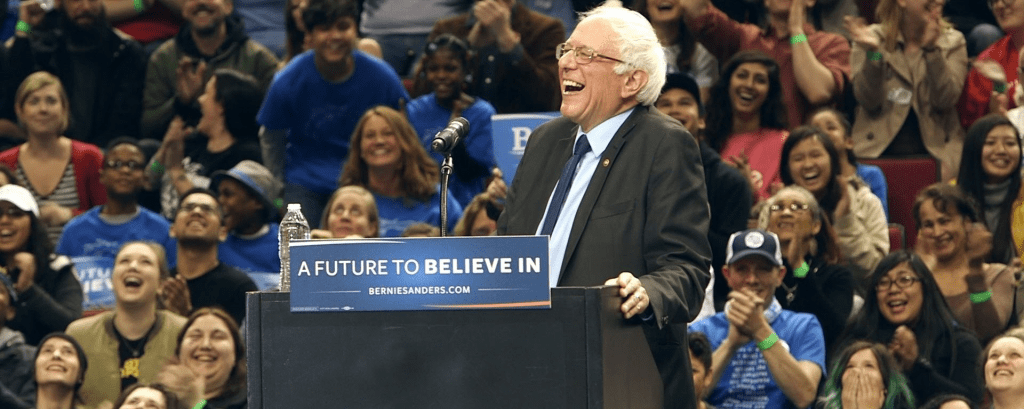
As with capitalism, the character of socialism is also variable. A socialist society might allow for popular elections, as well as provide for social welfare, universal healthcare, and public education. This is what would properly be termed “democratic socialism,” a term we are hearing quite a lot in the current political campaign (which I think it is misapplied in the case of Bernie Sanders, who is really a social democrat). Such a society may even decide to divide the social surplus among the population based on need rather than productive output, what Karl Marx called communism. However, a socialist society may instead be governed by an authoritarian state apparatus. Of course, authoritarianism is also a possibility in capitalist societies, and there are plenty of historical examples of authoritarian state capitalism, for example, Nazi Germany.

Since I am here to advocate, as well as define and explain, I want to note three possible benefits of socialism:

  • Since control over the means of production is the locus of power that shapes other forms of power, a more equitable distribution of economic power carries with it the potential for deepening democratic culture.
  • Whereas a capitalist uses labor-saving technology – robotics and automation – to generate more profits for a small number of families and enlarge the population of redundant and impoverished labor, a socialist might instead use labor-saving technology to reduce the amount of necessary labor performed by members of society, in turn using those productivity gains to create more free time for individuals, time that could be spent on friends and families and creative activities of their choosing.
  • Capitalism’s imperative is to grow, and the more freely it is allowed the grow, the more destructive it is to humans and their environment. Tightly regulated capitalist countries, such as those in Scandinavia, have better living conditions and have a smaller ecological footprint than less well-regulated capitalist countries. However, production in the more democratic capitalist countries is still motivated by the growth imperative. By deepening democratic culture and raising the standard of living for everyone through the socialism I am describing, it is possible to devise systems of production based on renewable resources that sharply reduces our ecological footprint.

Okay, so let’s take the parable of the table-makers to the real economy. The Bureau Census routinely collects data on economic activity in the United States in its Survey of Manufacturers. If we take a look at the data from the manufacturing sector, we find that manufacturing workers earn on average $22.15/hour. That’s $886 a week or a before-tax annual income of $46,072. In 2014, the median family income in the United States was $53,657. A household earning the average manufacturing wage needs two income earners to have a chance of reaching the median household income. However, the hourly value added by a manufacturing worker is $151.50. This value is free and clear of the constant or fixed capital costs. Subtracting the wage paid to the worker, the surplus value is $129.35/hr. This means that the amount of value produced by the worker appropriated by capitalist firm is nearly six times greater than the wage the worker earns. Is it any wonder that the top wealthiest 1% of the US population possess 40% of the nation’s wealth, while the bottom 80% can claim only 7%?

Now imagine if the manufacturing worker owned the firm collectively with her fellow workers and they were able to keep the full value of their labor. Assuming the averages that we have been discussing. Under these arrangements, each worker would earn $6,060 a week, or $315,120 a year. This would put them in the top 1% of wage earners. This is the truth that capitalists don’t want you to know or to act upon. Because if you did, it would surely bring an end to the gravy train they’re riding – at your expense. They’re living off your labor, comrade.

More on Religious Freedom

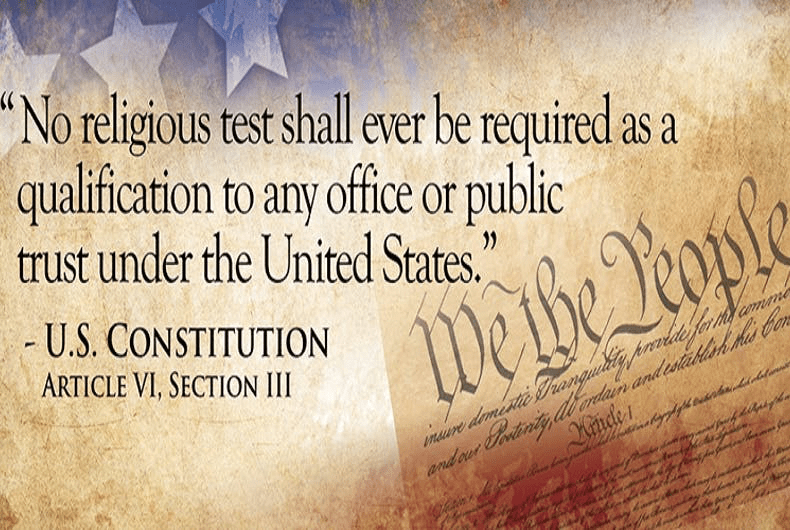
For those appealing to the religious freedom part of the US Constitution, a few reminders. Religion is specifically referenced in the US Constitution: “…no religious test shall ever be required as a qualification to any office or public trust under the United States.” That means that you can be President, dog catcher, whatever, if you believe in a god or gods—whichever god/s you believe in, it doesn’t matter—or if don’t believe in a god or gods at all. You can thank the founding fathers for this, as they were secularists who wanted to prevent the government from becoming an administration of religious doctrine.

Swearing on the Bible is a custom It is not a requirement. There’s no problem swearing on the Quran or a stack of law books or Spiderman comics. By definition, in the government’s eyes, you are a citizen of the republic first and a religious person second.

The First Amendment (found in the US Bill of Rights attached to the US Constitution) refers specifically to religion: “Congress shall make no law respecting an establishment of religion, or prohibiting the free exercise thereof….” This means that, while you are free to exercise your religion (within reason), you are not free to use the public authority to establish religious institutions or further religious doctrines—and, in fact, the latter is circumscribed by the former.

In other words, you are free to set up an establishment of religion, but you cannot expect the government to respect that establishment, and that also means not everything your religion tells you to do is allowable. Is human sacrifice is part of your religious doctrine? Sorry. You are not being persecuted because the government will not protect your religious practice of ritual killing. Same goes for ritual rape. The same should go for mutilating the genitals of children, but clearly we have some work to do in areas.

So can we please get this straight? If you want to sit in a big elaborately decorated room listening to a man in a funny hat speak at you in Latin and put wafters on your tongue while incense smoke spirals around you, have at it, Hoss. But if you want the state to deny marriage to a lesbian couple because you think your holy book says that’s wrong, then you are living in the wrong country. You are certainly welcome here, but only if you follow the rules. And if you want to be president with the idea that you will impose religious doctrine on the public, then this is disqualifying.

Heather Mac Donald’s Red Herrings

Update (May 1, 2021): I have in subsequent blogs on Freedom and Reason walked back the argument made in this blog and the associated TruthOut op-ed published in 2016. I am pictured holding Mac Donald’s 2016 book, The War on Cops, which I should have read before writing my op-ed. In my defense, I was responding to her op-ed in the Wall Street Journal. Moreover, there was a string of research that came out after I wrote my op-ed that confirmed Mac Donald’s thesis (see links at the end of the paragraph). Nonetheless, the book is chockfull of statistics that anticipate that body of scholarly research and attention to her arguments would likely have at least moved me to write a more nuanced critique of her work. (See Demoralization and the Ferguson Effect: What the Left and Right Get Right (and Wrong) About Crime and Violence; The Problematic Premise of Black Lives Matter; The Myth of Systemic Racism in Lethal Police-Civilian Encounters; “If They Cared.” Confronting the Denial of Crime and Violence in American Cities.)

Heather Mac Donald’s The War on Cops

In her essay, “The Myths of Black Lives Matter,” published in The Wall Street Journal, Heather Mac Donald writes that “fatal police shootings make up a much larger proportion of white and Hispanic homicide deaths than black homicide deaths.” Citing The Washington Post database of police shootings, Mac Donald reports that “officers killed 662 whites and Hispanics and 258 blacks” in 2015. That means that 28 percent of those killed by the police in 2015 were Black. But blacks are only around 12 percent of the US population.

When Black Lives Matter (BLM) spokespersons say that black lives are at greater risk than white lives to be killed by the police, the evidence Mac Donald uses in her essay supports the movement’s claim. Demographically speaking, black Americans were more than twice as likely to be killed by the police than whites and Latinos combined in 2015. Yet Mac Donald concludes that black overrepresentation in police shootings is a myth. Moreover, Mac Donald’s lumping of whites and Latinos hides the disproportionate number of police shootings of Latinos compared to non-Hispanic whites.

Mac Donald next turns to the FBI’s 2014 homicide numbers to claim that the white and Latino victims of police shootings make up 12 percent of all white and Latino homicide deaths, a statistic that is three times the proportion of black deaths that result from police shootings. She claims that the lower proportion for black deaths is due to the significant black-on-black homicide rate. This is a red herring. The BLM protest is not about black-on-black crime, but about racial disparities in death by cop. Decrying black-on-black homicide after every high-profile killing of a civilian by a cop has become cliché for conservative pundits (and almost obligatory for liberals who want to be taken seriously). But it is entirely beside the point.

Mac Donald attempts to justify police shootings by claiming that officers are killed by black people at a rate 2.5 times higher than the rate at which black people are killed by police. She claims that 40 percent of assailants in cop killings are black. Mac Donald doesn’t specify a time frame, only that these are data the FBI has been collecting for some time. If we look at the FBI figures from 2014 (the latest available), which suits Mac Donald’s analysis better, we find that 22 percent of assailants were black.

That figure, while considerably lower than the figure she uses, still indicates overrepresentation of black Americans in the killing of cops. But what is this comparison supposed to tell us? Forty-two cops were killed by guns in 2015. Using Mac Donald’s percentage of 40 percent, that means 17 cops died at the hands of black assailants (almost twice as many as the FBI’s 2014 figure indicates). If the point is one of comparison, then the number of black people killed by police in the time frame Mac Donald is using is more than 15 times greater than the number of cops killed by black people (almost 30 times greater using the 2014 figures).

Finally, the statistic about white officers being less prone to threat misperception is yet another red herring. Again, BLM is primarily interested in the race of the victim, not the race of the perpetrator per se (although the movement does call for ethnic and racial proportionality in law enforcement to match neighborhood composition). Moreover, Mac Donald’s point rests on the false assumption that racially biased practices must necessarily match the race of the perpetrators. Black officers take up racially biased practices in training and expectation, racially biased practices that put black lives in danger.

“The Black Lives Matter movement has been stunningly successful in changing the subject from the realities of violent crime,” Mac Donald concludes her essay. But who is changing the subject?

As noted, the trend in the number of law enforcement fatalities is lower today than any time since the 1940s. This is due mainly to two facts: violent crime is at historic lows in the United States and gun control. This also means lower levels of fatalities from interpersonal violence generally. Gun ownership has declined sharply over the last half century. America is a much less violent place than it used to be – if by violence we mean civilian-on-civilian violence. 

Yet police killing of civilians is at historically high levels. The year 2015 wasn’t remarkable. In 2014, police killed more than a thousand civilians. For every civilians killed (by gun, vehicle, Taser, beating, suffocation etc.), there are hundreds more injured (brain damaged, paralyzed, traumatized) and thousands more left with their rights violated. The vast majority of victims of police brutality and homicide are unarmed civilians who are in principle innocent until proven guilty in a court of law and, in any case, have done nothing serious even if there is some underlying crime in the situation. They vast majority 0f civilians killed and injured represented no realistic threat to police. Many are elderly, disabled, and mentally ill persons.

Those of us who work in the field of criminal justice have recognized this problem for a long time. So have governments. And experts have long known the reasons this problem exists, persists, and has grown worse. Yet, even when they admit to the problem, governments won’t address the problem with any significant reform agenda. On the contrary, many governments are moving to make it easier to kill and maim civilians without consequence.

Meanwhile, taxpayers are paying out millions of dollars to victims who bring successful law suits against the police, while most other victims remain uncompensated for their injuries and their lost loved ones. Of course, nothing can replace the loss of somebody you love. But there must be accountability, and as long as the police are literally allowed to get away with murder and assault, then taxpayers will continue to bear the cost of an institution out of control.

The solutions to the problem are obvious (or should be): drastically reduce force levels (we have too many cops); end the war on drugs and public order offenses; end confrontational practices of broken windows, stop-and-frisk, checkpoints, and roadblocks; demilitarize the police (no more armored personnel carriers and tanks on our city streets); use SWAT only in live shooter situations; disarm most officers (including Tasers, which have killed hundreds of people and injured hundreds more); train officers in conflict resolution and peacemaking (soldiers are better at this than cops); have high standards in recruiting, keep those with low IQs or abnormal psych profiles off the force (policing it not a good space for bullies); Have every act of force by a police officer reviewed in the same way that any other act of force by any other citizen against another citizen is review; and end the practice of indoctrinating cops by showing them a video of a one-time situation in which a cop runs around in circles begging for his life while a right-wing gun fanatic shoots him multiple times.

“Our officers just want to go home their families.” So do we all. The vast majority of officers go home to their families and eventually retire (early) with their lives and their pensions intact.

See also: Changing the Subject from the Realities of Death by Cop, TruthOut, July 20, 2016.