
Yesterday’s essay, Moral Authority Without Foundations: Progressivism, Utilitarianism, and the Eclipse of Argument, my 316th publication of the year, capped off Freedom and Reason’s most successful year to date, surpassing last year’s record, which had previously been my best. The platform saw a 170 percent increase in visitors and a 90 percent increase in views compared to 2024. Since 2020—the year my blog gained traction as people sought reliable information on the pandemic amid widespread censorship and deplatforming on Facebook, Twitter, and YouTube—Freedom and Reason has experienced a 2,198 percent increase in views and a 2,180 percent increase in visitors.
I noted that yesterday’s essay was meant to cap off the year. However, with Zohran Mamdani set to be sworn in as New York City mayor on January 1st, taking the oath of office on the Qur’an, surrounded by progressives, in the shadow of occupied Europe, something must be said about the coming year and the specter of Islam. When I put the problem this way, Islamophiles will suggest a parallel to antisemitism in Europe (ironic in light of the virulent antisemitism on the left and among their Muslim comrades). They will accuse me of “Islamophobia.” When patriots urge mass deportation of Muslims, they accuse them of advocating “ethinc cleansing.” But the parallels are false, and readers need to armed for the New Year to confront these lies. So, I will cap off the year with a demographic comparison between Jews and Muslims and a note about its significance to the future of your family and your nation.
Jews represent an outsize threat to the Red-Green Alliance. These two planets orbit around a Jewish star—and they hate its light, wishing instead for a shroud of darkness. They seem to hate Jews more than they hate Christians. Their common mass delusion flies in the face of a historically unique demographic position, both in absolute size and in relation to political sovereignty. This is as true today as it was when Hitler was in power in Germany. At its historical peak, on the eve of World War II, the worldwide Jewish population is estimated at approximately 16-17 million people. At that time, the world population stood at roughly 2.3 billion. This figure represents the highest proportional share Jews have ever held in recorded history. Even at this peak, Jews remained a very small global minority, well under one percent of the world’s population (about 0.7 percent of humanity). And they had no country, their homeland controlled by foreign powers.
German national socialism murdered millions of them in the European diaspora. The Holocaust did not merely reduce the Jewish population in absolute terms; it ensured that Jews would never regain their former demographic position relative to the rest of the world. Today, the global Jewish population is estimated at approximately 14-15 million, while the world population exceeds 8 billion. As a result, Jews now make up roughly 0.17-0.19 percent of humanity—less than one-fifth of one percent. This represents not only an absolute shortfall compared to 1939, but a dramatic relative decline caused by the explosive growth of the global population in the postwar era.
This demographic reality is inseparable from the political fact that there is only one Jewish-majority country in the modern world: the State of Israel, first and noblely recognized by the United States of America. Since its founding in 1948, Israel has been—and remains—the sole sovereign nation-state in which Jews constitute a majority of the population. In the modern international system, there has never been more than one Jewish-majority country. This fact stands in stark contrast to most peoples, including far smaller ethnic or national groups, who often possess multiple states or enjoy majority status across contiguous regions.
Historically, Jewish-majority polities did exist in antiquity. There were the biblical kingdoms of Israel and Judah, and later the Hasmonean kingdom. However, these entities were pre-modern, small in population, and embedded in the imperial systems that organized the world before the rise of sovereign nation-states in the modern period. They were not contemporaneous in a way that would amount to multiple Jewish countries as the term is understood today. Thus, even across millennia of history, the combination of extreme demographic minority status and political singularity remains consistent. This fact puts Jews in a perpetual state of danger. This is why the perennial problem of antisemitism must constantly be surveilled and checked.
Taken together, these facts underscore the unusual position of the Jewish people, a civilization with continuous culture, identity, and religious tradition spanning thousands of years—the tradition that underpins Christianity, the faith that gave the world the Enlightenment, deontological liberalism, i.e., human rights, individualism, natural law, and a return to the species-being lost with the rise of social segmentation and submission to gods and kings—comprising a vanishingly small share of humanity, possessing exactly one majority state in a universe of 193 sovereign nations, yet seen by progressives and Muslims as a problem to be confronted. Understanding this demographic context is essential for making sense of Jewish history, modern Jewish political thought, and the disproportionate symbolic and political weight that questions surrounding Israel continue to carry in global discourse. One might suppose that those who loathe the West loathe the Jews in particular, since Western system of law and justice roots in Jewish doctrine. Max Weber was right when he observed that ancient Judaism is the historical hinge between East and West.
The global Muslim population presents a demographic profile that’s the mirror opposite of that of the Jewish people, both historically and in the contemporary world. Around 1939—the moment of the historical peak of the Jewish population—the number of Muslims worldwide is estimated at approximately 550–600 million, meaning Muslims constituted about 24–26 percent of humanity. Even before the mid-twentieth century, Islam was already one of the largest global religious communities, spanning vast geographic regions across Africa, the Middle East, South Asia, and Southeast Asia. Unlike the Jewish population, the Muslim population experienced no comparable demographic rupture in the twentieth century. Instead, it expanded rapidly due to high fertility rates, population growth in the Global South, and the absence of a single catastrophic event comparable to the Holocaust. It was, for the most part, spared the horrors of WWII. Today, the global Muslim population is estimated at approximately two billion people, placing Muslims at roughly the same percent of the global population as Muslims enjoyed in 1939.
However, although Muslims constituted roughly the same share of the world’s population on the eve of World War II as they do today, this continuity in percentage obscures the extraordinary growth of Islam in absolute terms. Maintaining a quarter of humanity across a period of unprecedented global population expansion—driven especially by explosive growth in Africa and Asia—means that Islam added well over a billion adherents in less than a century. Relative to Christianity, whose global share has declined as European populations aged and fertility rates fell, Islam’s growth has been sustained by higher fertility, younger age structures, and rapid population increases in the Global South, making absolute population growth the more accurate measure of Islam’s demographic expansion than percentage share alone.
The political implications of this demographic scale are striking. In contrast to Jews—who, as I noted, have exactly one Jewish-majority country—Muslims form the majority population in more than 45 sovereign states today. These range from large, populous nations such as Bangladesh, Egypt, Indonesia, Pakistan, and Turkey to smaller states in Africa, Central Asia, and the Middle East. Many now Muslim-majority nations used to be majority Christian. Crucially, Islam is not merely a global religion; it is a civilizational system embedded in legal traditions and political cultures. These traditions and cultures are intrinsically totalitarian. Muslims are hardly the vulnerable minority Westerners are told they are; Islam is an aggressive political project with two billion adherents. Islam is on the march. Jihad is here.
One need to speculate about the future. Shakespiere told us in the The Tempest, “What’s past is proloque.” The Islamic political project is a very old one with a clear record of aggression. Muslim-majority polities have existed continuously since the seventh century, beginning with the early caliphates and later empires such as the Abbasid, Mughal, Ottoman, Safavid, and Umayyad empires. While these were pre-modern entities, they governed immense populations and territories and were often dominant global powers. Unlike the Jewish case, Muslim political sovereignty has been expansive, overlapping, and enduring across centuries, even as specific empires rose and fell. One may appreciate Islam’s tenacity; one must also appreciate why this tenacity represents an existential threat to freedom and reason.
Taken together, these facts and this history highlight a profound demographic and political asymmetry. At the time when Jews constituted less than one percent of humanity at their historical peak, Muslims already represented roughly a quarter of the world’s population. Today, that proportional share remains largely intact, with Muslims comprising nearly one in four human beings on Earth and possessing dozens of the planet’s majority states. This contrast is not a neutral demographic reality, nor should it be rationalized away through appeals to religious liberty; the contrast is essential to consider for any serious comparative discussion of politics and power in the modern world.
In 1939, Europe was overwhelmingly Christian and religiously homogeneous, with Islam present only in marginal numbers, largely confined to small communities in southeastern Europe (such as Albania, Bosnia, and parts of the Balkans) and colonial-era diplomats, sailors, and students in major cities. Muslims made up well under one percent of Europe’s population then, and Islam was not perceived as a permanent or growing presence within European societies. Europe at that time was young demographically, with relatively high fertility rates, and it was a net exporter of people through emigration rather than a destination for large-scale immigration.
Today, Europe’s demographic landscape has changed profoundly. Islam has become the continent’s fastest-growing religion, driven by post–World War II labor migration, refugee flows, and higher fertility rates among Muslim populations compared to native European populations. Muslims now constitute roughly 5–8 percent of Europe’s population overall, with much higher concentrations in countries such as Belgium, France, Germany, the Netherlands, the United Kingdom, and Sweden, especially in the cities. At the same time, Europe’s indigenous populations have experienced aging, low fertility, and, in many cases, population decline, while Muslim communities remain significantly younger on average. As a result, Islam has shifted from a marginal presence in 1939 to a visible and structurally embedded component of European society today, reshaping the continent’s religious, cultural, and demographic future in ways that have no historical precedent in modern European history.
Why are young people in the West pathologically obsessed with the State of Israel, wishing to see an indigenous people driven out of its ancestral homeland, while embracing the Islamization of the West? Why are social democrats in Europe and progressives in America defending the Muslim takeover of Western cities and communities? Why is Christianity and cultural integrity among European populations seen as bigoted and racist, while Islam and the refusal of Muslims to assimilate to Western culture celebrated? Why would gay advocates embrace an ideology that kills or otherwise marginalizes homosexuals? Why would feminists embrace an ideology that subjugates women and reduces them to second-class citizenship? Why would Democrats import millions of Muslims into the United States and establish for them at taxpayer expense religious enclaves?
Why aren’t Christians rising against the Islamization of their homelands as they did centuries ago? As I noted in my recent essay, Trump and the Battle for Western Civilization, it was Christians, including militant monks, who repelled with violence the Muslim barbarians, drove them from Europe, and secured the future for Christianity. Had they not acted when they did, I argued, there would be no Europe. No Europe, no America. No Enlightenment. No human rights. Only clerical fascism. If Christians fail to act now, there will be no Europe, no America, no Enlightenment, no human rights—only clerical fascism. Our civilization will be destroyed and our history erased. Don’t feel relieved by the unrest in Iran today. Islam has experienced unrest before. Islam can only be contained by men of the West.
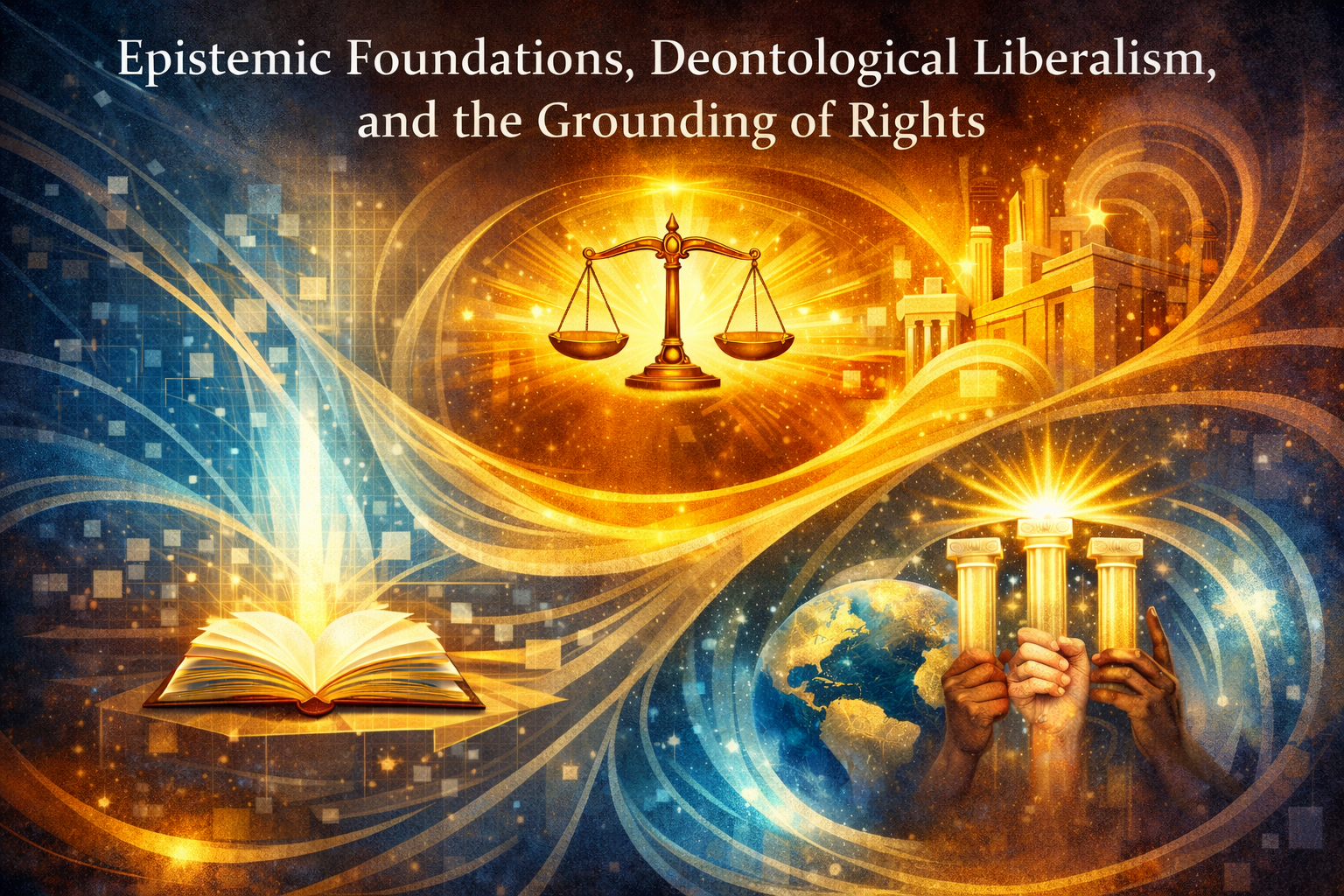
Where are those men? They’ve been emasculated. Western nation states have been corrupted by leftwing cultural self-loathing organized by corporate state power seeking a new world order in which the workings people of the world are to be managed on high-tech neo-feudalist estates. The barbarians are inside the gates of our cities, and those who let them in and keep them here are our own citizens. Civilizational destruction is wrapped in the language of empathy and humanitarianism. As I explain in my most recent essays—The Problem of Empathy and the Pathology of “Be Kind”; Epistemic Foundations, Deontological Liberalism, and the Grounding of Rights; Moral Authority Without Foundations: Progressivism, Utilitarianism, and the Eclipse of Argument—this is a fake human rights rhetoric, one that conceals the work of instrumental reason sans deontological commitments in the service of transnational power. Those who govern the West have abandoned the democratic-republic tradition and classical liberal values for a reason.
For more of my writings on the Islamic problem, see: Is the Red-Green Alliance Ideologically Coherent?; The Decivilization Process: The Islamization of Western Societies; The Law of Allah is Coming for Your Freedom; Woke Progressivism and the Party of God; Corporatism and Islam: The Twin Towers of Totalitarianism; Whose Time Has Come?; The Islamophilia Problem; Immigration, Colonialization, and the Struggle to Save the West; “Free, Free Palestine!”; Antisemitism Drives Anti-Israel Sentiment; Revisiting the Paradox of Tolerating Intolerance—The Occasion: The Election of Zohran Mamdani; Defensive Intolerance: Confronting the Existential Threat of Enlightenment’s Antithesis; What Islamization Looks Like; The Islamization Project on US College Campuses; The Decivilization Process: The Islamization of Western Societies; Selective Condemnation of Cultural Integrity: The Asymmetry of Anti-Colonial Thought; Indigenous English Rise Against Modern-Day Colonialism
Not a happy note to end on, I know. But if we are to make 2026 a happier year, then we need to know the lay of the land. Knowledge is power, but only if it is mutually possessed. For my leftwing comrades, know that you cannot hope for democratic socialism when the future world won’t even have the capitalist tools to work with, but instead suffer elite control via corporatist arrangments—managed democracy and inverted totalitarianism (to borrow Sheldon Wolin’s terms). We already live in a world where these controls affect our daily lives. What open eyes can see coming is already substantially present. See what you see.
I appreciate your patience regarding the limitations of WordPress, particularly the table of contents function. Due to the sheer volume of essays, I have been unable to update the table of contents since my September 15 essay, The Fool Has Come Down Off The Hill. But Who Called on Antifa to Terrorize the Village? That essay followed up on Charlie Kirk’s Killer is in Custody and the Specter of Antifa, which was picked up by Real Clear Politics, and became the most viewed essay in the history of this platform. This exposure elevated my profile and is the primary reason this year has been so successful. WordPress has explained that the table of contents cannot accommodate the sheer number of essays. While I have removed most pre-2018 titles from the contents, the problem persists. This is not a criticism of WordPress, just an explanation to readers why this is the case.
In light of these limitations, I am grateful to my readers for visiting, reading, and sharing the platform. As 2025 draws to a close, it has been a momentous year—one I have chronicled extensively. In 2026, I plan to continue producing content, including the revival of the FAR Podcast. I discontinued the podcast on YouTube years ago due to severe deboosting (I did not want to lose the platform, as I used it for online teaching). However, with Rumble gaining traction and YouTube relaxing its rules, I am preparing to relaunch. The studio is under construction, and you will be the first to know when it goes live. Approaching retirement, I do not intend to stop teaching and writing. Readers can expect a series of essays and podcasts drawing on my knowledge of sociology, anthropology, and psychology, offering polemical lectures on topics ranging from crime and punishment to the corrupting influence of postmodernist ideology. I’m just getting started!
I would like to close with a request—not for money; as a salaried state employee, I feel obligated to do the people’s work. Instead, I want to encourage you to share this platform with others. Despite its growth, Freedom and Reason remains a relatively low-traffic platform. If you find these ideas valuable, it is likely others will, too. So let family and friends know about my work.
Happy New Year, everybody!











 freedom and reason