Christian hate for the Jews—not all Christians, but an alarming number of them—is rising again in the West. Antisemitism among Christians strives to disconnect Jewish law from Christian ethics. It supposes that, more than a paradigm shift from a practical religion to a salvation faith, Jesus represents a clean break from Judaism. Even more than this, Judaism is oppositional to the gospel of Jesus. The Jew becomes the enemy of the Christian. One must wonder why Christians include the Old Testament at all if it is Jewish law. What is one to make of the fact that, if Jesus were a historical person, he was a Jewish person?
The New Testament traditionally attributes 13 letters, or epistles, to Paul. His contributions are to be taken seriously. Christians are indebted to his vision and works. According to Paul, Gentiles who became followers of Jesus were not required to take on the full obligations of the Jewish law, for example, the practice of circumcision, to belong to God’s people. Paul argued that people are made right with God through faith in Jesus Christ rather than through “works of the law.” He pointed to the example of Abraham, who was counted as righteous because of faith before the giving of the law.
In those letters, Paul insists that requiring Gentile believers to become Jews would undermine the significance of Christ’s work. Paul describes Jesus as existing “in the form of God,” taking on “the form of a servant” and becoming human, with the power to perform miracles and open the path to salvation. According to Paul, Christ is the “image of the invisible God,” the one in whom “all the fullness of God was pleased to dwell.” This is high Christology, emphasizing divine presence in Christ. Paul’s position became a defining feature of the Christian movement, opening the faith to non-Jewish converts without requiring full adherence to the Mosaic covenant.
If the Jewish question weren’t so important to the early Church fathers, then they would never have debated whether Christians should follow Jewish law, such as the dietary rules, or whether Christians should circumcise their male children, and so on. The clear meaning of the New Testament is that Jesus’s purpose was to pour God’s love into the world, and that meant accepting Gentiles, as well as Jews, the descendants of Abraham, whom God commanded to settle the Promised Land. After all, God created the first man and woman, from whom we are all descended. For Christians, people come to the understanding willingly. And they may leave the faith without Earthly penalty. The Creator permits free will.
There are different kinds of law in the Old Testament. The faithful need to understand which laws a Christian is obligated to follow. In Judaism, the “law” generally refers to the commandments of the Torah, which divides into several overlapping categories: moral laws (ethical commands such as prohibitions against dishonest, murder, and theft), ceremonial laws (regulations concerning dietrary rules, festivals, ritual purity, sacrifices, and worship), and civil or judicial laws (rules governing community life in ancient Israel, such as penalities and property disputes).
In Christian teaching, believers are not considered bound to the full Mosaic Law as a covenantal system. Instead, Christians are taught to follow the “law of Christ,” understood as living by faith, guided by the Holy Spirit. Many Christians hold that moral teachings of the Old Testament remain relevant insofar as they are reaffirmed or fulfilled in Jesus, while ceremonial and civil requirements tied to Israel’s temple-based covenant are not binding on Gentiles.
Plainly, Gentiles are not Jews. However, the moral code set down by God is the Christian path. The practical side of Judaism is affirmed in the Protestant faith (more on this in a moment). Historically, Catholics and Orthodox Christians do not affirm Judaism in this way. Most of the Jew-hatred we see today emanates from the latter. This is not to say all Catholics or Orthodox Christians are antisemites, only that the unreformed are more likely to take up this hatred.
Jesus in debate with the Pharisees
All Christians would do well to remember what Jesus told the Pharisees. The stories of Jesus interacting with the Pharisees are told primarily in the four Gospels of the New Testament, which come after Paul’s epistles. Jesus told the Pharisees that he had not come to abolish the law but to fulfill it. Christianity is thus the salvation phase of Jewish prophecy. One can read the Old Testament differently, to be sure. Most Jews don’t accept Jesus as the fulfillment of prophecy. But from a Christian standpoint, Jesus is the fulfillment, and the Old Testament is included in the Christian Bible across all the divisions I earlier noted. Put another way, Jesus does not negate the law; he makes the law possible for anyone prepared to accept it.
Those who doubt the centrality of Judaism to Christianity would also do well to read Max Weber’s two works, Ancient Judaism and the Protestant Ethic and the Spirit of Capitalism, which I have written about extensively on this platform. It suggests that Protestantism liberates Judaism by allowing Christians to engage in this-worldly (Earthly) endeavors, albeit works imbued with an other-worldly purpose. As I have noted numerous times in these essays, a young Karl Marx anticipates Weber’s thesis by several decades (see Anticipating Weber: Revisiting Marx and the “Jewish Question”).
Don’t let the mention of Marx’s name put you off. Weber was not a follower of Marx. However, the young Marx was a liberal and a republican. His ideas influenced those who formed the Republican Party, which Abraham Lincoln led through the crisis of Southern secession and the Civil War initiated by the Democratic Party. Kneejerk anticommunism has made it impossible for reactionaries to consider what Marx said on the matter, and thus robbed them of the insight that Protestantism is the logic underpinning world capitalism, which has, in turn, brought Catholics and Orthodox Christians into modernity. (I do not spare Marx in my criticism; see Marx’s Misstep: Human Nature and the Limits of Class Reductionism.)
As a result, antisemitism has, for most Christians, fallen away. This explains why the antisemitism we see today on the far right is marked by criticism of the Protestant faith. The reactionary rejects reformation because of its Jewish character. This leads him also to reject the liberal foundations of American civilization. It has misshapen some so badly that they can no longer tell the difference between liberalism and socialism. (See The Left-Far Right Convergence and Notes on the Fourth Political Theory.)
Marx’s 1843 essay “On the Jewish Question,” a response to Bruno Bauer, does more than anticipate Weber. The main point of the essay concerns who should be included in the sphere of citizenship, a debate occurring in Prussia at the time. I cover this matter in other essays on Freedom and Reason (see, e.g., A Humanist Take on Marx’s Irreligious Criticism). However, it is relevant here. To briefly summarize, Bauer had argued that Jews could not be fully emancipated in Germany unless they abandoned Judaism. To make this personal for Christians, he argued the same for them. In his view, a truly secular state required citizens to give up religious identities in the public sphere. By contrast, Marx argued that political emancipation does not require individuals to renounce their faith or deny their identity.
Marx pointed to countries such as the United States, where citizens could enjoy political rights while remaining religious, to illustrate the principle of religious liberty. Rather than demanding that Jews cease to be Jews, Marx argued that the state itself should cease to be confessional altogether—that is, it should no longer be a specifically Christian state. As a matter of civil liberties, then, individuals enjoy a right to their religious beliefs. Far from calling for the end of Christianity, Marx affirms the stance of the founding fathers of the American Republic. So impressed was Marx with Lincoln that he wrote to the President to praise him for pursuing war against the Southern slaveowners. For Marx, the fate of the working man was bound up in that righteous war. (See The FAR Podcast Episode # 21 Marx and Americanism: From One Revolutionary to Another.)
The Christians who portray the Jews as the enemy of Christians have not merely forgotten their Bible, but they have forgotten the history and animating spirit of the American Republic. Perversely, turning against Jews, they have expressed an affinity with Muslims, who, along with them, loathe Jews and the Enlightenment. They appear oblivious to the fact that Muslims came long after the Resurrection and plagiarized the Bible for their own political aspirations. Are they unaware that Muslims deny the divinity of Jesus? In allying with Islam, they also reject the principle that a man who comes to God on his own accord can freely leave Christianity. A patriotic Christian cannot find affinity with such people. Yet we see far-right influencers hitching their wagon to the Islamist cause.
I can hear the objection that Jews deny that Jesus was the Son of God. This objection is terribly misguided. The reluctance of Jews to see in Jesus the fulfillment of the prophecy God delivered to them is very different from the Islamic denial of Jesus as divine. In Judaism, Jesus is generally not accepted as the fulfillment of prophecy because Jewish expectations of the Messiah—such as restoring Israel, fully reestablishing Davidic rule, and bringing universal peace—were not seen as accomplished in his lifetime; therefore, his role is not recognized as divinely definitive within Jewish interpretation of the Hebrew Scriptures.
In contrast, Islam, while explicitly affirming Jesus as a major prophet and messianic figure, rejects the Passion as central to salvation history; God does not become incarnate or share divinity with any human being. Jews do not deny God’s power, but do not see the fulfillment of prophecy in Jesus. Muslims claim to know what God can and cannot do. Islam admits that God is manmade. Yet it pretends to be a transcendent faith. While Judaism’s hesitation is primarily about whether Jesus fulfills specific prophetic criteria, Islam’s rejection of divinity is rooted in a broader doctrinal principle about the nature of God and prophecy itself.
Islam rewrites the scriptures of Judaism and Christianity and projects the Muslim faith backwards onto all of history. Islam teaches that earlier scriptures—the Torah, Psalms, and the Gospel—have been corrupted. Corrupted by whom is not clearly articulated, but it is not difficult to guess who Muslims think was behind it. Revision history clears the path for Islam as the one true religion. Muslims portray the Qur’an as the final and integral revelation that confirms earlier truths while correcting what they claim are deviations in previous scriptures.
Despite these obvious facts, the far right finds affinity with Muslims while rejecting Jews, the very people whose religion forms the foundation of Christianity. Rejecting history, far-right Christians share with Muslims an antipathy towards Jews. However, while anti-Jewish sentiment is inherent in Islam, it is not intrinsic to Christianity. The far-right antisemite is a man corrupted by a hatred foreign to Christianity. He loses his authority to speak as a Christian.
As I have stated many times on this platform, I am not a Christian. I do not subscribe to any religion. This is not about me. This is about professed believers. Whether one is a believer or not, the correct position on such matters is discernible to anybody with a brain and a clear and honest mind. Christianity is rooted in Judaism. The earliest Christian movement was almost entirely Jewish in origin. Jesus himself was Jewish, as were his first disciples, and the first community in Jerusalem described in Acts was made up of Jews who believed Jesus was the promised Messiah. These early believers continued to worship in the Temple and observe many Jewish practices while also teaching that Jesus’ death and resurrection marked the fulfillment of God’s promise.
Those who established the Islamic movement were obviously not Jews. Nor did they regard Jews as friends. Jews were “tolerated” as long as they subjected themselves to their Muslim masters. The many conflicts between the early Muslim community and Jewish tribes in seventh-century Arabia testify to this fact. Jewish tribes who defended their autonomy were expelled from Medina. The men of tribes not expelled were beheaded, and the women and children were enslaved and dispersed among the Muslims. I know that some will point to instances in the Old Testament where similar patterns appear; however, the matter of one’s choice of comrades forces one to contextualize what is presented as a one-to-one correspondence. Christianity makes clear appropriate comradeship. Moreover, no civilized person subscribes to ancient practices. Muslims do, however, subscribe to ancient practices. Following the model of Muhammad yields very different results than appealing to Jesus as one’s guide.
Paradoxically, Catholicism and Orthodox Christianity (especially Eastern Orthodoxy) may appear to be generally closer to Judaism than most forms of Protestantism—emphasizing a communal, ritualized, and liturgical form of worship, with fasting cycles, set prayers, sacred calendars, and strong continuity of tradition. Yet, as noted, rigid rituals were not required of early Christians; Christianity began as a Jewish movement with a reduced legal requirement for Gentiles. Over time, it evolved into a distinct religion with its own set of rituals and institutional forms—different in content, but sometimes sociologically similar in structure to Jewish communal life.
What is most relevant here is Christianity’s relationship to antisemitism. I discussed Orthodox Christianity in this regard in a previous essay. It will suffice to say here that many on the far right are enamoured by this church. I will now note that Catholicism has the longest and most institutionally embedded historical association with antisemitic structures in Europe. Whatever antisemitism was carried forward after the Reformation, the Protestant movement moved toward stronger philo-Semitic views, particularly in modern times. To be sure, some of the Founding Fathers were not Christian; however, the ethical system that guided their actions is rooted in the Protestant faith. Defending the American Republic requires recognition of the path these men trod to establish the greatest country in world history and reaffirming a commitment to keep it.
The far-right Christian is on the wrong side of the faith to which he feigns loyalty, even if he is convinced of his righteousness. This betrayal concerns me as an atheist, because modernity is rooted in Christian ethics and practical Judaism. I don’t have to be religious to recognize the importance of the practical side of Judaism and Protestantism to the Enlightenment and the liberal principles Western men derived from development and legacy. If I were a religious man, I would take to heart the history that finds obstacles thrown into the path of Jews with the expectation that they overcome such dialectical moments to rise to a higher positional unity. Christians should open the Old Testament and reconsider what they read there in those terms. Then they might understand that the story of Jesus is also a dialectical moment in which elements of Judaism are retained to produce a higher unity, one that makes Jews comrades instead of enemies.
Does this make me a Christian Zionist? Of course not. I am not a Christian. But I am a man of the West. I regret that some Catholics and Orthodox Christians will take offense at this critique. I mean no offense. These churches are part of the West. But there is no room in the West for antisemitism. As I stressed earlier, most Orthodox Christians and Catholics are not antisemites. But some are, and the congregants of these churches who are reviving that ancient hatred must push this corruption from their hearts and minds. This is the point of my intervention. And this: there is no room for Islam here. For the life of me, I don’t see a path for reformation for this religion. It should remain in the East. (See Defensive Intolerance: Confronting the Existential Threat of Enlightenment’s Antithesis; Epic City and The Muslim Problem: Confronting the Presence of Exceptional Doctrine in American Society.)
Democrats are doing the class warfare thing on Elon Musk. Never forget that this is the party that censored social media. Musk liberated the social media space. Even on Facebook, posts that appear in your timeline today would have been removed yesterday. Free speech has value in part because it’s a means to good ends. Democrats are authoritarians who seek to shut down free thought and innovation, while expanding and entrenching administrative control over the population. Bureaucrats in the private sector exist to ensure the endeavor progresses rationally. Government bureaucrats seek power to determine the lives of others. This is why the left is still upset over DOGE.
Elon Musk becomes the world’s first trillionaire
The recent announcement that Elon Musk has become the world’s first trillionaire has triggered a predictable and revealing response from the progressive left. Numerous Democratic politicians have taken to social media to decry the milestone, using it as a rallying cry for higher taxes on the wealthy. They present themselves as speaking for the tens of millions whom they have impoverished. This reaction exposes a deep ideological commitment to wealth redistribution, an approach that leads to economic stagnation and decline rather than prosperity. The evidence of this is all around us.
The same man who cut children’s cancer research is now a trillionaire. https://t.co/mtLeHpCQDf
At its core, the left’s outrage is not so much rooted in the belief that government can more effectively advance frontier technologies like artificial intelligence, autonomous vehicles, or reusable rockets, as it stems from a desire to seize private capital to fund expansive social programs—healthcare, housing, and other forms of public assistance, as well as support for illegal immigrants. These are the very areas where progressive policies have created dependency and inefficiency.
Inefficiency is inherent in government bureaucracies. Dependency builds party loyalty among those who have been idled by progressive policy. Thus, the deeper underlying impulse is to redistribute resources from those who generate value through innovation to address the downstream consequences of prior government interventions and keep a devoted class of voters.
Musk and other entrepreneurs assume enormous financial and personal risks in pursuit of ambitious goals, such as making humanity multi-planetary. Taxpayers, by contrast, bear no such direct accountability when government ventures fail. But they do bear the costs.
Democratic Party rhetoric serves a familiar political purpose: stoking class resentment against bold entrepreneurs. Entrepreneurs like Musk are the driving force behind the technologies that have dramatically improved our quality of life—advances in communication, computing, energy, and transportation. While no technology is without downsides, and reasonable regulation is warranted in certain cases, free markets reward those willing to invest capital, intellect, and time at the frontiers of science. The left loathes the entrepreneur because it lights the path to autonomy and self-actualization. It also demonstrates good government.
Taxing away profits that these individuals reinvest into further breakthroughs reduces the resources available for innovation. Money in the hands of visionary private actors, guided by market signals and personal stake, is far more likely to yield productive outcomes than money funneled through government bureaucracies. It’s no secret that the modern administrative state is not populated by the “best and brightest.”
There was a time, in the mid-twentieth century, when large-scale government projects—like the Apollo moon landings—represented the pinnacle of national ambition. The twenty-first century is different. Today, private entrepreneurs backed by substantial capital can pursue massive endeavors without the waste, fraud, and abuse that frequently plague public spending. Even the casual observer can see that the US government has transformed into a bloated welfare and administrative state, far removed from the limited republic envisioned by the Founders. Elevation of the private sector is written into the language of the Constitution.
Government has legitimate and critical roles, to be sure: providing for the common defense, enforcing laws, securing borders through effective immigration and customs enforcement, and investing in core infrastructure and public utilities. It should not, however, be tasked—or task itself—with managing the endless fallout from decades of progressive policies.
Globalization that exported American jobs, combined with the importation of cheap labor across both labor-intensive and high-skill sectors, has created economic and social pressures that the government now administers at enormous cost. The result is an inefficient, controlling apparatus that crowds out private initiative and burdens taxpayers. By contrast, entrepreneurial capitalism, when allowed to function, channels human ingenuity and capital into solving humanity’s greatest challenges. Punitive taxation aimed at redistribution undermines this engine of progress.
Rather than penalizing success, policymakers should foster an environment where risk-takers can continue pushing boundaries. The alternative—ever-greater government control over wealth and innovation—risks repeating the historical pattern of decline that accompanies centralized economic planning. A return to first principles is, therefore, essential. We must demand limited government and unchain the creative powers of those who move beyond the logic of government bureaucracy.
The left’s reaction to Musk’s achievement is not merely about one man’s fortune; it is a window into a philosophy that prioritizes redistribution over creation, and envy over aspiration. America’s future depends on rejecting that path and recommitting to the principles of free enterprise and limited government.
Musk is solving many world problems while firing the imaginations of our youth—those who resist indoctrination. It is much better to have that work occur in the private sector and tame the government’s penchant for taxing capital and spending the revenue on welfare and expanding the administrative state. The government is bloated, debt-ridden, and a drag on growth. Better that capital remain in the private sector and let entrepreneurs and the crowd take the risk. This space draws the brightest minds.
Ever heard the saying: “Good enough for government work”? We used to say that while noting in frustration the years of road repair. That’s the logic of public bureaucracy. There is no incentive to be productive when one’s paycheck comes from the taxpayer. Taxpayers deserve better than that.
It’s not greed that drives Elon Musk and people like him. He’s not walking around with all that money, blowing it on luxuries, or funding anti-American/West NGOs organizing the rabble on our streets, undermining the Republic. He’s reinvesting it in frontier technologies and advancing the scientific enterprise through practical action. Ambition and the spirit of discovery fuel individuals like Musk. These are the fuels that propel civilization.
Surely you’ve heard about “ZOG.” It stands for “Zionist occupied government.” Hysteria over ZOG is a hallmark of ziophobia. Central to ziophobia are the “three Ds”: demonization, double standards, and delegitimization. But there’s more to it than that. We need to know what lies behind ziophobia. The reason Israel must be delegitimized is that the Jews are occupying the governments of the West. That’s what ZOG really stands for: “Jewish occupied government.” Admittedly, “JOG” doesn’t have the same ring to it. ZOG sounds like a dark mythological beast that’s crawled up from the depths of hell, creeping about the world at night, snatching and eating babies, and that’s way scarier.
Winston Churchill depicted as Jewish Octopus
Propaganda imagery has long portrayed Jews as inhuman creatures. Depicted as a spider or an octopus in the imagery, Jews have their legs or tentacles wrapped around the globe. The British Prime Minister Winston Churchill is famously depicted in the image shared above as an honorary member of the Jewish species of Cephalopoda. This explains why the revisionists rehabilitating Hitler in long-form conversations on various podcasts tell us that the real warmonger during WWII was Churchill. The United Kingdom has long been a ZOG. According to antisemites, the United States is a ZOG, too. More than having obtained control of Washington D.C., the Zionists command the world financial system and the sense-making institutions of America—academia, Hollywood, and mass media. Jews engineer electoral outcomes in places like Kentucky and South Carolina. They are all powerful.
Before continuing with this essay, I need to say something about Kentucky and South Carolina, since I brought them up. After Thomas Massie’s blowout defeat to family farmer and war fighter Ed Gallrein in the Kentucky Republican Primary, I penned a postmortem (see The United States of Israel: A Farmer and War Fighter Crushes Kentucky’s Libertarian. I determined that Massie lost because the good people of that state desired not a Congressman critical of Israel. Gallrein campaigned as an “America First” conservative, emphasizing border security, deregulation, and tax cuts. In his concession speech, Massie took a dig at Gallrein’s purported relationship to Israel, saying, “I would’ve come out sooner, but I had to call my opponent and concede. And it took a while to find Ed Gallrein in Tel Aviv.”
Graham easily won the Republican Senate Primary in South Carolina on Tuesday
This past Tuesday, Lindsey Graham, loathed by many on the right (including Steven Bannon, whom I otherwise admire), dominated South Carolina’s Republican Senate Primary. At the very least, five other contenders sought to force a run-off with Graham. Yet, all combined, they barely made it past 43 percent. Graham blew them away just as Gallrein did Massie only a few weeks earlier. Predictably, the far-right who rushed to tell us that Gallrein could only win because Jews bought the seat for him—declaring that the nation had become the “United States of Israel” (ZOG!)—so it was the case with Graham. I asked one of them if there was some Jew-tech implanted in the brains of conservatives that directed their vote. He pivoted to avoid confirming his ziophobia.
One can read all about the logic of ZOG in The Protocols of the Elders of Zion, a fabricated antisemitic text purporting to reveal a Jewish plan for global domination. First published in the early twentieth century in the Russian Empire, it is cited by Hamas as an authoritative text in its 1988 charter: “Their plan is embodied in the ‘Protocols of the Elders of Zion,’ and their present conduct is the best proof of what we are saying.” The Protocols have had an unusually persistent presence in parts of the Middle East and Muslim-majority societies, especially in the context of the Arab–Israeli conflict and anti-Zionist polemics. The forgery has been published, sold in bookstores, referenced by some political and religious figures, and even adapted into television dramas. It’s almost as if antisemitism is endemic to that part of the world. (See Jew-Hatred in the Arab-Muslim World: An Ancient and Persistent Hatred.) However, the so-called “Jewish Peril” was popular across the transatlantic space, as well. As we can see, it is again popular.
The “Jewish Peril”
Presuming this claim about the Jews is true (it’s not), it’s perplexing that antisemitism would be amplified by our sense-making institutions, if not overtly, then by failing to aggressively debunk the Jewish cabal theory. Surely ZOG sees the mob on the streets boosting Islam and many other things antisemitic. Don’t they possess and wield the Hamsa? Since Jews command the world financial system and control the thought-control apparatus, where is the pushback? Where is the economic pressure to suppress antisemitism? Why aren’t the Zionists pumping out pro-Jewish propaganda from the sense-making institutions they presumably control? I remember when antisemitic speech put you outside of polite society. It is now endemic to the West. If Jews run the world, they aren’t very good at it. Their tentacles must be shriveled.
How is it that the major transnationalist governmental organization, the UN, appears to be under the control of, or significantly influenced by, not by Jews but by Third Worlders notorious for their anti-Semitism and loathing of the West? Presumably, if Jews run everything, they wouldn’t have ceded the UN to their mortal enemies. Why would the Jews set that part of the world upon which they depend for Israel’s security against their interests? European states stand down in the face of the greatest threat to Israel, an apocalyptic Islamic Republic that aspires to develop nuclear weapons and possesses the ballistic missiles to deliver them as soon as they are realized. Are European states not ZOGs, too?
It’s not that the West isn’t being denationalized and brought under the control of a small class of world elites, as the ZOG thesis claims. It is. The world is being transformed to meet the needs of transnational corporate power. Anybody with eyes that see knows that. The tactics of Islamization and demographic transformation, and the enabling ideology of multiculturalism, remain very much in force. Globalization is proceeding at a rapid pace—expanding and entrenching its agenda almost everywhere—despite Trump’s attempts to contain it. Established elites in Europe are doing their damnedest to suppress nationalism and patriotism in the countries under their control, those sentiments that defend native populations and preserve the Peace of Westphalia.
I suppose one might think the Jews were behind this if not for the rise of coordinated action rooted in antisemitism. The theory would still be untrue (it is ridiculous on its face, and I hesitate to dignify the conspiracy by calling it a “theory”). But at least the obvious contradiction would be missing. Given coordinated antisemitism, isn’t it obvious that the Jews don’t run the West? Jews would not create a situation that threatens Jews everywhere. The premise makes little sense. What does make sense is that the transnational elite is not Jewish in character. It has no ethnic or national character. This is why it doesn’t care about the populations of the West. And it only feigned concern for non-Westerners. It is loyal to nothing but power, privilege, and power. One shouldn’t expect such a thing of world Jewry, since the assumption behind the theory is that Jews collectively comprise a hive-mind. But the global elite do seem to see in antisemitism a weapon to advance the globalist agenda. Why else would it allow it to fester and spread?
How does antisemitism help the global elite? We can see the answer to this question in how it divides the proletariat in the transnational space on both the left and the right, a subject about which I have penned several essays (see The Enemies of Freedom; The Woke Reich and the Enemy Within; The Left-Far Right Convergence and Notes on the Fourth Political Theory). One has to twist oneself into knots to find in that Jewish subterfuge. But then, antisemitism is an ancient and irrational hatred that has an astonishingly elastic capacity to rationalize every contradiction in terms of the negative heuristic that lies at its core. This penchant for rationalization eclipses recognition of the actual source of the new world ordering.
As I have noted before on this platform, contradiction is no problem for those who proceed from motivated reasoning. Nor is posting to social media fake quotes, antisemitic cartoons, and all the rest of it. Numerous groups and profiles have colonized the social media terrain of late (Facebook, X, etc.), each enjoying hundreds of thousands of followers. Confronting the content posted there becomes an overwhelming task. One man can’t push back against it. Given its stubbornness, an army of men couldn’t push back against it. But doesn’t the fact that these groups exist and are free to flood the zone with this ancient hatred admit the Big Lie? A conspiracy so vast as the one the ziophobes supposed must have evidence indicating it. Where’s the evidence? Again, how are these groups even able to survive, given alleged Jewish control over the media? We know why billionaires permit their existence. Engagement equals money. Perhaps it is more than that, though. The relish with which the corporate media condemns Israel and the preemptive war against the Islamic Republic of Iran suggests a very different cabal at work.
“That rifle hanging on the wall of the working-class flat or laborer’s cottage is the symbol of democracy. It is our job to see that it stays there.” —George Orwell, “Don’t Let Colonel Blimp Ruin the Home Guard,”The Evening Standard (1941)
“By ‘patriotism’ I mean devotion to a particular place and a particular way of life, which one believes to be the best in the world but has no wish to force on other people. Patriotism is of its nature defensive, both militarily and culturally.” —George Orwell, “Notes on Nationalism,”Polemic (1945)
“For these dangerous and divisive elements the legislation proposed in the Race Relations Bill is the very pabulum they need to flourish. Here is the means of showing that the immigrant communities can organise to consolidate their members, to agitate and campaign against their fellow citizens, and to overawe and dominate the rest with the legal weapons which the ignorant and the ill-informed have provided. As I look ahead, I am filled with foreboding; like the Roman, I seem to see ‘the River Tiber foaming with much blood.’” —Enoch Powell, speech delivered to a Conservative Association meeting in Birmingham, April 20, 1968
US Navy intelligence officer and Editor-in-Chief of Human Events, Jack Posobiec, nailed it on Steve Bannon’s War Room this morning. Why is it only the Christian West that must accept barbarians from around the world into its countries? Why must it kick open wide the city gates to such rabble? Why is this demand never made of non-Western countries—China, etc.? Why are Western men “racists” for wanting national integrity and safe communities? Why must they be suppressed for defending heritage and homeland?
The answer to Jack’s question is obvious: global elites are deconstructing the West. It’s not merely about importing cheap labor to drive down the wages of native workers (many of the arrivals aren’t even working but instead defrauding and sponging off taxpayers). It’s not reparations for “Western imperialism.” Put to one side all the good things Western intervention brought to the primitive world; there was no public referendum asking Westerners if they wished to be subjected to such an irrational demand. Rather, at its core, it’s about decomposing the white majority, since global elites recognize that it’s the native peoples of the West who represent the greatest obstacle to the transnational corporate world order they seek to establish.
Mass coordinated public policy is never accidental. By definition, it has a purpose. You don’t need a policy document to know this. You only need to see patterns and admit to what they indicate. You just need a working brain. Did Hitler have a master plan to liquidate the Jews? Duh. Are we stupid? Deconstructing the West is not an unintended consequence of humanitarianism. Nor is defending the project “antifascist.” In many ways, it is fascist in character. Why can’t the Englishman complain? Why is he hauled off to jail for waving St. George’s Cross on the pretense that he’s “causing a public disturbance”?
There are two sides in this struggle. The sides are mutually exclusive; a man has to make his choice of comrades. On one side are those people who riot because a thug died of a fentanyl overdose on the streets of Minneapolis while the police were trying to effect a lawful arrest. This is the same side that interferes with the lawful enforcement of US immigration law. The screws-up-inside-the-head-loose crowd thinks law enforcement officers are the thugs. On the other side are those who take to the streets in protest because a barbarian who shouldn’t be in Belfast tried to take the head of one of their own in the middle of the street.
The media and political classes across the West celebrated the George Floyd riots. They were “mostly peaceful,” their audiences were told—while patrol cars and police precincts burned in the background. The riots were, in any case, warranted. “Who said protests were supposed to be peaceful?” I recall a talking head saying. The same elites and functionaries who people these classes condemn Irish citizens for rising up against the demographic transformation of their beloved country. The patriots, they tell us, are victims of “white genocide conspiracy theory” brainwashing. What else could explain it? Patriotism is a nasty sentiment, unbecoming of the postmodern man.
Orwell in the Evening Standard (1941)
I wondered aloud recently when men of the West were finally going to stand up and defend their homelands. There has to be a limit to their patience, I wrote (see “No Kings!” The Art of Turning Americans Against Their Country). Well, I think I can report today that their patience has finally reached its limit. At least in Belfast. May that historic city be a bellwether.
So, the author defends violence? What, the left doesn’t? Brian Thompson? Charlie Kirk? The left makes heroes of their assassins. For those who escape attempts on their lives, the complaint goes up: “If only their aim were a little better.”
Rather than respond to the grievance and undo the evil he and his colleagues have wrought, as any good politician would, what does Kier Starmer do instead? He condemns the patriot who loves his people, after footnoting the attempted beheading. “My thoughts are first and foremost with the victim, and I thank the first responders, including members of the public who intervened” doesn’t cut it when there’s an immediate shift to condemning popular anger. Starmer betrays the “first and foremost.” The Home Office reports that the attacker, a Sudanese man, was on leave to remain in the UK until 2028. He entered the UK in 2023 and was granted refugee status the same year. “The individual claims to have entered the UK via the Common Travel Area,” a spokesperson said. “Common Travel Area”? An Orwellian euphemism for Open Borders.
If these politicians were any good, this would never have happened in the first place. So what did we expect of Starmer? Of course the technocrat diminishes the victim and instead turns public attention to those who are outraged by what is happening to their country. This is “anti-immigrant sentiment!” the media cries. Indeed, it is. What’s wrong with that?
Remember when Enoch Powell warned of “rivers of blood”? (See Indigenous English Rise Against Modern-Day Colonialism.) That was a long time ago. Powell told Britain what was coming. But did they listen? No, they sacked him and branded him a racist. They did that to keep the project going. Are they listening now? They might want to revisit Powell’s speech and note that it was, before the propaganda machine lurched into gear, quite well-received. The propaganda machine isn’t quite what it used to be. Perhaps, then, readers of this platform should revisit that speech as well. You will find it here: Enoch Powell’s “Rivers of Blood” speech.
Trump signs DHS funding
This is coming to America, comrades. Mass deportations will head it off. But remigration needs to happen sooner rather than later. Patience is wearing thin. Just in time, President Trump signed the Secure America Act this morning, a 70-billion-dollar funding package devoted to immigration enforcement. The legislation specifically funds ICE through 2029. Get those “thugs” back out there, Mr. President, and secure America.
Karmelo Anthony, 19, was convicted yesterday of first-degree murder in the fatal stabbing of 17-year-old Austin Metcalf. It took the jury three hours to reach a verdict. The jury then sentenced Anthony to 35 years in the penitentiary (juries determine sentencing in Texas). The felon will be in his mid-fifties by the time he gets out of prison (unless authorities release him earlier, which they should not do). Social media is alive with the right black voices condemning the verdict. A great injustice was done to Anthony. Metcaff’s corpse be damned.
Murderer Karmelo Anthony (left) and his victim Austin Metcalf (right)
The headline of a Dallas Morning News op-ed, by Anna Offit, the morning of the day that witnessed a just verdict, blared: “Karmelo Anthony Trial: Legitimacy of the jury is in doubt.” For whom is the legitimacy of the jury in doubt? Offit tells the reader: “Justice needs juries that reflect diverse communities.” So there were no black jurors. But do juries need to reflect diverse communities? Wouldn’t diversity politicize the process? Certainly, that is what Offit desires. And she is not alone.
“As a law professor who has spent the past decade studying prosecutorial strategy and the jury system in different regions of the United States, I have learned that many prosecutors are wary of empaneling certain professionals—teachers, social workers, psychologists—who might be sympathetic to a young defendant,” she writes. Offit wants to weaponize the justice system by empaneling those whom she believes are more likely to empathize with the defendant. This is a woman who sees the world in tribal lines. But don’t worry about that, Offit hastens to add: “Of course, the ‘reasonable person’ is a legal fiction.”
“In the Anthony trial, the situation is particularly stark: a jury without a single Black [sic] juror will determine what constitutes an objective standard for reasonableness—one that should apply to a Black [sic] teenager—based on their personal experiences and beliefs.” Yet she just told us that there is no such thing as a “reasonable person.” (Yes, I know she means by that.) How does the racial identities of the jurors “determine what constitutes an objective standard for reasonableness”? To be sure, the jury trial is not a perfect process and is often flawed. So let’s make it worse by racializing the jury pool. This is the left today.
She continues her rationalizations: “The legitimacy of the jury trial hinges on broad and inclusive lay participation. After all, only juries that reflect their diverse communities can instill a sense of confidence that justice has truly been served.” So it’s not about facts and reason but believability for the sake of the tribe, its disbelief in American justice manufactured by the ideology of antiracism. Of course, diversity does not get us to the truth. However, it may pacify the mob if outcomes are engineered in such a way that might satisfy them. Is justice a moral endeavor? Or is it theater?
No, Anna Offit, it seems obvious that you wanted blacks on the jury because you wanted an acquittal or a hung jury. You sympathize with Anthony because he is black, and for you, blacks are the terminal victims of white supremacy. You need this construction to present yourself as a white savior. You think that affinity and sympathy on those terms should determine the outcome of cases, not the force of argument or evidence.
This op-ed is forever.
Offit speaks for the left. When justice is reduced to race, then facts don’t matter. Even stabbing a teenager in the heart doesn’t matter. A black man is presumed not guilty because he is black. He is not responsible for what he did. Whether the victim is black or white, the real perpetrator is always white supremacy. It is hoped, at least, that his conviction will prove useful to the furtherance of the myth that American justice is racist. In this way, if identity is allowed to affect the process, justice is transformed into injustice and propaganda. It already often is.
The same is true for gender. We hear this in the “believe all women” rhetoric. The casualties of #MeToo were too many. A modern-day witch hunt, that was. No real proof is required for a witch to be guilty of whatever makes the village anxious. All that is required is for the villagers to believe that witches are present. Those who dismiss the claim for lack of evidence are immediately accused of defending witchcraft. Maybe they dabble in it themselves. And so the town’s more rational keep their skepticism to themselves. This is how bad things happen.
Progressives are on social media constantly calling Trump a “rapist.” Yet he has never even been criminally charged with rape, let alone convicted of the crime in a criminal trial. That fact doesn’t matter to them. What matters is that women have claimed he raped them. “Why would women say he raped them if it were not true?” Maybe because he has deep pockets? (What was that E. Jean Carroll all about?) But that’s not really a question I have to concern myself with. I am concerned with evidence. We hear this, too, in the charge that Trump is a pedophile. Any evidence of this? “The Epstein files!” What about them? Did I miss something?
My default position is to not believe anyone when they make a claim that requires evidence. “You stole my stereo speakers!” Prove it. “I know you did.” Not good enough. “I was abducted by aliens!” I don’t believe you. “But it happened!” Prove it. At least show me some evidence. “I am really a woman.” Well, Bob, I don’t believe you. “But it’s true!” Big or little gametes, Bob? A Y chromosome in there? “I don’t have to provide any evidence for that!” Then go peddle your claim to the gullible and indoctrinated. And this: “Are you calling me a liar?” You may be a liar. What I am saying is that I require evidence to believe that what you have claimed is true. Don’t turn this back on me. You made the claim.
Rape does occur. There are around 40–45 rapes per 100,000 population according to FBI statistics (keep in mind that 85–90 percent of rape victims are female). The NCVS (National Crime Victimization Survey) finds the rate of rape/sexual assault victimization to be about 1-2 per 1,000 persons. If we change the population unit for comparative purposes, then the FBI numbers are 0.40 to 0.45 rapes per 1,000 population. The NCVS figure is likely more accurate. However, the adjudication of such claims is properly handled in a court of law. The point is that, however we confront the problem that such statistics indicate, determination from identity in the administration of individual justice is always an irrational standard. This is why the CDC statistics don’t carry any sway if the law is the standard. Is it a rigid standard? For sure. And it should be.
“If it were your wife who said she was raped, what then?” I trust my wife. I would believe her. But there would still need to be probable cause to arrest and evidence to convict the alleged attacker. There are other women I trust enough to believe them, too. And if they are lying, then I won’t trust them anymore. But all women? No. I don’t believe all women.
I am sure Anthony’s parents trust their son. The father insisted that his son is a “good kid” who was provoked to violence. “Everyone has already made their assumptions about my son, but he’s not what they’re making him out to be.” The jury thought otherwise. Should I have believed Anthony when he said he acted in self-defense? Not based on what I knew about the case. The moment his attorneys mounted such a defense, they shifted the burden of proof. And they could not meet that burden.
Remember the Duke Lacrosse case from 2006? The local district attorney, Mike Nifong, aggressively pursued the case and made numerous public statements suggesting the players were guilty. In 2024, the “victim” Crystal Mangum publicly admitted that she had fabricated the rape allegation. “I testified falsely against them by saying that they raped me when they didn’t.” I am leaving out the names of the real victims in this case. The young men did not deserve what happened to them. The perpetrator’s name and the district attorney who believed her—their names shall live in infamy.
Two of those young men were suspended from the university after their indictments (the other had already graduated). An indictment is not a conviction. The men were presumed innocent. The university did not extend that presumption to them. Instead, they canceled the Duke men’s lacrosse season and fired the coach. All this over an accusation. Attorney General Roy Cooper stated that there was “no credible evidence” that the alleged attack had occurred. He called the three men “innocent,” not simply that the evidence was insufficient to obtain a conviction.
Due process protections exist for a reason, especially when accusations carry life-altering consequences. These three men were arrested, publicly accused, two of them suspended from school, and endured intense national scrutiny. They were later fully exonerated but had to rebuild their lives. The experience had major personal and reputational consequences that followed them long after the charges were dismissed. There is no office where a man can go and get back his reputation.
Anthony enjoyed due process. Had he been acquitted, however, it is unlikely that he would have suffered any reputational harm from being accused of a killing that scores of people witnessed (and will never forget). Such are the presumptions of identitarianism. Before his conviction, he was permitted to finish high school. He spent a brief initial period in custody before posting his bond, initially set at one million dollars but reduced to 250,000 dollars, allowing him to stay at home in his gated community pending the trial.
One of the injustices about the Duke lacrosse case is that Crystal Mangum was never criminally charged with filing a false police report, perjury, or obstruction of justice. After the North Carolina Attorney General dismissed the case and declared the players innocent in 2007, prosecutors chose not to pursue charges against her arising from the false allegations. Mangum confessed to these crimes. She should be in prison.
As for Trump being a “convicted rapist,” a belief I considered might be troubling some readers, given what I earlier wrote, he was found liable—not guilty—in a civil court for sexual abuse—not assault or rape—and defamation (for denying the validity of Carroll’s accusation). The case is bizarre, as I said on numerous occasions. But the more important point is that a civil court is not a criminal court. The standard in civil trials is not “beyond a reasonable doubt,” but “more likely than not,” or “preponderance of the evidence.” This is not an appropriate venue for adjudicating criminal matters.
(As an aside, the actions of the university in the Duke lacrosse case illustrate why I have always maintained that accusations of sexual assault should never be handled by a company or a school. Those accused of a crime should be presumed innocent, and nothing should happen to them unless and until they have been convicted of the charges in a court of law. Accusations of criminal activity are properly handled by the criminal justice system.)
What especially drives me up the wall about identity is that whether an accuser is believed depends on whether he or she is a member of the tribe. Remember when Christopher Hitchens insisted that Bill Clinton had committed rape in the case of Juanita Broaddrick? Despite a strong case (he does make a compelling argument in a dedicated chapter in the paperback edition of his 2000 book, No One Left to Lie To: The Triangulations of William Jefferson Clinton, titled “Is There a Rapist in the Oval Office?”), those on the political left who admired Clinton flatly rejected the allegation.
Even progressives don’t really “believe all women.” It depends on whether the woman’s accusation advances the agenda—and that in turn depends on her politics. Hence, Trump is a rapist and a pedophile with no evidence to back up these accusations because he is on the wrong side. The same is true with black people. “Black Lives Matter!” Except if you’re an “Uncle Tom.” Then you betrayed the tribe. As the wiseman Joe Biden told Charlemane tha God, “If you have a problem figuring out whether you’re for me or Trump, then you ain’t black.”
When I first read The Lord of the Rings as a teenager, my immediate impression was that it must be an allegory for the Second World War. It seemed obvious enough. Sauron represented Hitler, with National Socialism and the German war machine personifying his wickedness, and the peoples of the West stood for the Allies and the goodness of the West. In sum, the struggle against Mordor mirrored the struggle of free people against the evil of totalitarianism. Given that J.R.R. Tolkien lived through the turmoil of the twentieth century and experienced the bombing of Britain, it was tempting to read his great work as a personal meditation on that conflict.
Tolkien, however, I later learned, repeatedly denied that The Lord of the Rings was an allegory. With the benefit of age and after years of studying political economy and international relations (an expertise in my PhD), I have come to believe that his denial was sincere. Not simply because I appreciate the man’s sincerity, but because, returning to the books this spring and immersing myself in his legendarium, I see a much larger struggle across those three volumes, as well as in his other works. The story is not about one war or one dictator. Instead, it appears to be a meditation on a much older and deeper conflict: the clash of civilizations and the rise of instrumental rationality. The fight for Middle-earth is an allegory for the struggle for the integrity of the West and for the preservation of good. It is the struggle of free people against the evil of totalitarianism across time.
Image by Grok
Political scientist Samuel Huntington caused quite a stir when he wrote about a “clash of civilizations.” In his influential article (1993) and later book (1996), The Clash of Civilizations and the Remaking of World Order, he divided the world into major civilizations—Hindu, Islamic, Orthodox, Sinic, and Western—and suggested that tensions along the boundaries between these civilizations would become the main drivers of international politics in the aftermath of the Cold War. Huntington believed that deep-rooted differences in history, identity, religion, and values were more enduring than political ideologies. The theory has been widely criticized for oversimplifying cultures, treating civilizations as internally uniform. Under the influence of neo-Marxism during my PhD studies (1996-2000), I subscribed to this critique. Professors and graduate students alike saw the book as reactionary. I no longer do, and Tolkien helped me to understand why.
While Tolkien’s work predates Huntington by decades, the geography and imagery of Middle-earth suggest a similar concern. The free peoples occupy the West and Northwest: Gondor, Rivendell, Rohan, and the Shire. They represent a world of continuity, beauty, and rootedness. The Shire symbolized homeliness. On the moral compass, the people of these lands, and the other beings associated with the West—dwarves, elves, and hobbits—are good. By contrast, evil rises in the East and Southeast. The armies of Harad (South) and Rhûn (East) march from distant lands with exotic beasts and strange customs. Nearby lie Mordor and Isengard, centers not merely of military power but of corruption and domination. The East and the South are allied with Sauron, the Dark Lord, who resides in Mordor. The corrupt wizard sitting in Isengard, Sarumon, is his lieutenant. They are evil because the good eludes them; it is displaced by power for power’s sake.
Tolkien’s division is not simply racial or geographical (although it is certainly those things). It is civilizational and moral. The West in Tolkien’s imagination is characterized by harmony with nature. The beings dwelling there see God in Earthly beauty. Hobbits delight in gardens, meals, and pipe-weed (or leaf). Elves cultivate beauty and preserve memory. They also reason. The architecture of Gondor reflects elegance, order, and permanence. Societies are governed by fidelity, honor, and sacrifice. Leaders understand that there are some things worth dying for and some things that must never be done, even in the pursuit of victory. Their artifacts and structures are classical, with an emphasis on gold, silver, and whiteness, integrated with the colors and textures of nature. History is embedded in a living world. And that world is intrinsically good—albeit corruptible—and worth dying for.
In the philosophical terms I have been using on this platform of late in my explorations of Christian ethics and the Enlightenment, the free peoples of Middle-earth operate according to a moral ontology that reflects the Creator’s intentions, even if He rarely intervenes in earthly affairs. It is the obligation of His creation to preserve the world and keep its virtues. Thus, there is a transcendent order that informs terrestrial action and ethics. Means are constrained by this end: to keep the world good. The beings of the West recognize that noble purposes cannot be pursued through ignoble methods. Morality is not a tool, but an objective reality. Those who move in its name are accountable to it. They do what is right for its own sake. For the most part. Those who don’t meet terrible fates.
Tolkien’s tale of the Númenóreans is vital to understanding the men of the West and the corruptibility of man’s nature. The Númenóreans were a race of men in Tolkien’s legendarium, rewarded by the Valar after helping defeat Morgoth at the end of the First Age with the gift of the island kingdom of Númenor, located between Middle-earth and the Undying Lands. There, they developed into a highly advanced civilization renowned for its craftsmanship, enlightenment, and seafaring. Known for their long lifespans, they were nonetheless mortal.
Over time, however, many Númenóreans grew resentful of their mortality and turned away from the Valar under the influence of Sauron. They attempted to invade the Undying Lands to obtain immortality. This led to the catastrophic downfall of Númenor. The city-state was destroyed and sank beneath the sea. A faithful minority, those who resisted Sauron, led by figures such as Elendil and his sons, escaped to Middle-earth and founded the kingdoms of Arnor and Gondor.
In Tolkien’s history, the Númenóreans represent both the highest achievements of humanity and the dangers of pride, ambition, and the desire to escape death. To be sure, the longing for immorality is common among men. However, for the Númenóreans, natural longing became a consuming ambition that inspired offensive war. Those who survived the downfall of Númenor thus bore their sin. Their descendants, represented by Aragorn in the novel, organized their ethical system around the need to contain destructive ambition. They were mindful of the error of their forebearers. They did not abandon war. Their warriors were great men of renown. Rather, organized violence was a means to defend the good that their ancestors had abandoned. Good confronted evil for the sake of good. They fought to keep the world right and open, not straight and narrow.
The powers of darkness, by contrast, embody instrumentalism. For Sauron and his lieutenant Saruman, power itself is the highest “good.” Any means are acceptable if they advance domination over nature and its creatures. Betrayal, coercion, deception, and terror are merely techniques. Nothing but power possesses intrinsic value—not beauty, not forests, not traditions, and certainly not individuals. The architecture is brutalist, the emphasis on blackness, a blackness that stands apart from nature, at the same time, corrupting it. Sauron’s lair of Barad-dûr was dark and forbidding, its gates black. Orthanc, in Isengard, where Saruman perched, was black and bladed. The abode of the Witch-king of Angmar, Minas Morgul, is an exception only because this city was originally Minas Ithil (“Tower of the Moon”) and belonged to Gondor. Captured by the Nazgûl, its beauty was replaced by an unnatural, corpse-like glow. The good was pushed out, and wickedness rushed into the vacuum.
We have to leave the events of TheLord of the Rings and travel back in time, to the First Age, to understand how central these concerns are in Tolkien’s moral universe. Morgoth—originally Melkor—was the most powerful of the Ainur (angelic beings) created by Eru Ilúvatar (the God of Middle-earth). Melkor became the first Dark Lord through pride and a desire to impose his own will upon creation. He rebelled against God and the Ainur. So he became Morgoth. Over time, Morgoth poured his native power into the physical world itself, becoming increasingly bound to it.
His lieutenant and later successor, Sauron, originally a Maia (wizard) of great stature who first served Aulë, the Valor of craft and smithing (the Valar are those among the Ainur who governed the created world), before being seduced by Morgoth’s promise of control and efficiency. Sauron helped organize Morgoth’s forces, forge weapons, and spread corruption among elves and men. There are also in the West the orcs, who are corrupted beings of some sort. After Morgoth’s defeat and expulsion into the Void at the end of the First Age, Sauron emerged as the new Dark Lord in Middle-earth, especially in the Second and Third Ages, seeking dominion through cunning, deception, and the forging of the One Ring—the ring to rule them all.
Nowhere is the contrast between good and evil in the events of The Lord of the Rings clearer than in Isengard. Saruman, like Gandalf, a Maia, a lesser being to the Ainur but nonetheless very powerful, possessing the art of magic, was once wise. He was the greatest of wizards of his day. However, he abandoned his reverence for creation in favor of mastery over it. He tears down forests to feed furnaces to manufacture the Uruk-hai, a breed of stronger, more disciplined orcs in Tolkien’s legendarium.
Under Saruman’s designs, nature becomes raw material. His realm is one of wheels, smoke, and terrible machines—and of industrial efficiency. The Uruk-hai themselves are Promethean products rather than the natural results of inheritance—a kind of grotesque parody of creation. Saruman, like Victor Frankenstein, makes monsters. These are not nurtured beings, but abominations engineered by destructive ambition. The technocracy of Isengard stands near Fangorn Forest, and it is this forest that Saruman exploits to feed his machine, eventually incurring the wrath of the tree-like beings that live there, the Ents.
To put this in the terms I have been writing about on Freedom and Reason, Saruman represents a nightmare vision of technocracy: the reduction of life to process, production, and utility bereft of aesthetics. The organic world is sacrificed to mechanism. Human beings become resources to be manipulated rather than souls to be cultivated. Natural design is replaced by synthetic substitutes, evil because they defy God’s creation.
Long before contemporary discussions about technological domination and transhumanism, Tolkien sensed the danger of a civilization that worships efficiency while forgetting wisdom—that replaces the natural with the artificial (in this way, his insights resonate with those of Walter Benjamin in his essay “Art in the Age of Mechanical Reproduction”). The orcs are not merely a sinister force against which Tolkien’s heroes battle; the orcs symbolize corruption rather than authentic creation. Although Tolkien wrestled throughout his life with their origins, he consistently emphasized that evil cannot truly create. It can only distort and mutilate what already exists. Evil is parasitic. It produces counterfeits. Against this darkness stand ordinary people, humble and noble.
One of the most remarkable features of The Lord of the Rings is that salvation does not come through overwhelming force alone. Our heroes are often outnumbered. On the brink of catastrophe, tides miraculously turn. The eagles are not merely an instance of the literary device of deus ex machina, which seems to many a contrivance, but are representative of what Tolkien meant by his coined term eucatastrophe, the opposite of catastrophe. He wondered: can’t dramatic twists be of good fortune? No, salvation comes because the cause is honorable: it defends the good of the world, whatever the cost in blood and treasure (although, admittedly, the dwarves are stubborn on that last point).
Crucially, the West does not seek to wield the One Ring to defeat Sauron. Instead, it seeks to destroy the weapon entirely, thus thwarting Sauron’s ambition. Without the Ring, he cannot rule them all (indeed, the personal power he fused with the ring at its forging proves lethal). The temptation to use evil for good must be rejected by our heroes. But the heroes are flawed, and some among them succumb to temptation. Boromir of Gondor, his kingdom’s proximity to and struggle against Sauron far less abstract and remote than the others of the Fellowship, moves him to claim the ring. Even if we regard his reasoning as noble, we admit that he is also prideful and reckless. And this is his undoing.
This is perhaps the deepest moral lesson of the story. Boromir illustrates the tragedy of noble intentions corrupted by pride. He loves Gondor and genuinely wishes to save his people, yet he falls prey to the Ring’s promise of power. His flaw is not wickedness but grandiosity. He believes that strength can be trusted in the hands of the righteous, but his loyalty is to Gondor at the exclusion of the greater good. For Tolkien, power itself corrupts. The war is not for Gondor alone. And, in any case, the One Ring cannot aid in the greater struggle. It therefore must be destroyed. The mission to destroy it is for the sake of the West and all that is good in the world. And, so, the task falls to the smallest among those dwelling in the West, those with the least ambition of all beings, the least interested in power, the Hobbits.
Boromir’s father is also beset by narrow concern. Aragorn, the heir of Isildur, son of Elendil, the man who cut the One Ring from Sauron’s hand in the Second Age in the Battle of the Last Alliance (but failed to cast it into the fires of Mount Doom), is destined to be king and restore integrity to Middle-earth. Boromir’s father, Denethor II, the ruling Steward of Gondor, does not wish for the return of the king. It is a threat to his power. He is moreover in possession of a palantír. Like others who use this technology, he draws the wrong conclusion from its visions across distance and time. He believes the war is lost and, thus, his power. Death is preferable to such an end.
In Tolkien’s world, bad deeds are punished. Boromir dies at the hands of the Uruk-hai near the borders of the northern realm of Rohan, in the region of Amon Hen, on the western shore of the Great River Anduin. Denethor self-immolates at Minas Tirith, the great fortified capital of Gondor, during the siege of the city in the Battle of the Pelennor Fields. Likewise, good deeds are rewarded. Denethor’s younger son, Faramir, by contrast, embodies wisdom. He loves his brother and mourns his death, yet he understands what destroyed him.
Unlike Boromir, Faramir recognizes that some victories are too costly. When Frodo and Sam come into his hands, he refuses to seize the Ring and allows the hobbits to continue their seemingly hopeless mission. Faramir’s greatness lies not in conquest but in restraint (he is a lesser warrior in the shadow of his older brother). Faramir possesses the strength to take the Ring and the humility not to. He is perhaps the finest example of Tolkien’s ideal of nobility: a man governed by honor rather than ambition. Aragorn makes Faramir the Prince of Gondor after the enemy is defeated and the heir of Isildur returns to the throne. Faramir and his bride, Éowyn, the niece of Rohan’s king, live happily ever after.
This same spirit prevails throughout the free peoples. Aragorn, of the Dúnedain, the noble descendants of the Númenóreans, accepts burdens rather than privileges. He dwells in the wilderness among the remnants of his race as a ranger until he is called to action. Freed from Saruman’s spell, King Théoden of Rohan rides to almost certain death for the sake of others. Sam remains loyal to Frodo and the quest when hope itself has vanished because he must believe there is good in the world. The men of the West march upon the Black Gate not because they expect victory but because duty demands it. They are willing to lay down their lives so that others may live free.
The Lord of the Rings speaks directly to our present age. Sauron, the Dark Lord whose shadow spreads from Mordor, embodies the instrumental spirit of technocratic globalism and transnational corporate power. The One Ring is not merely a weapon but the promise of total control: addictive and corrosive to all who grasp it. This manifests as the fusion of financialized capital and supranational institutions, enabled by Big Tech algorithmic governance and surveillance architecture, that seek to remake humanity and nature alike into raw material for optimization, prediction, and profit. The Eye of Sauron watches from digital panopticons, reducing persons to data profiles. His power reduces societies to nodes in a global supply chain. Computer terminals are palantír from which users draw mistaken conclusions.
Beauty, memory, and moral limits are obstacles. They are also opportunities to be monetized, transcended, or twisted. The architecture of the New Mordor is brutalist and black: server farms consuming energy and devouring landscapes, sterile glass towers of Davos and Silicon Valley, and a culture of inversion where the inherited and natural are pathologized, while the artificial and transgressive are elevated—and celebrated. The bodies of men are modified to escape their natural form.
In my reading, Saruman stands for the internal betrayal within the West itself. Sitting at the southern end of the valley called Nan Curunír, in the western part of Rohan’s neighborhood, Isengard is part of the geography of the West. Once a steward of order and wisdom, Saurman turns Isengard into a forge of machines, fells the ancient trees of Fangorn, and breeds the Uruk-hai as disposable shock troops of offensive warfare. One might say that Isengard goes south. Today, Saruman is plural—the globalist technocrats and managerial elites who have hollowed out Western institutions from within. They tear down the cultural forests, so to speak—the inherited norms of family, faith, nation, and local community—to fuel the furnaces of growth and the destruction of nature. The traditional ways of life are scheduled for liquidation.
Amid the rise of the corporate state and technocracy, the organic bonds of civilizational inheritance are replaced by synthetic constructs: bureaucratic process, engineered demographics, and financial abstraction. Like Saruman and the power over him, these forces ally with the darkness beyond the West, importing or empowering the barbarians of the South and East (Huntington’s civilizational fault lines), not out of genuine universalism (however much they peddle the ideology of multiculturalism), but because these populations serve as both cheap labor and a battering ram against the true universalism of the West, its virtues standing as the embodiment of good. The resulting clash is not abstract; it is the collision of rooted, morally ordered civilization with rootless, power-oriented instrumentalism.
The corruption of the West by corporatocracy and globalism mirrors the fall of Númenor and the tragic flaws of Boromir and Denethor. At least if evil is allowed to prevail. Many of the descendants of the faithful who escaped the Downfall—those who should steward the best of Judeo-Christian ethics, Enlightenment reason tempered by natural limits, and republican self-government—have grown prideful and shortsighted. Those who know better are consumed by personal ambition. Some men, like Denethor, gazing into the palantír, see decline as inevitable. Others grasp at the ring of technological power, believing they can wield it for “good” outcomes. They wrap their designs in the language of “progress.”
The faithful remnant of Númenor’s spirit before the corruption of the desire for immortality—Aragorn’s line, Faramir’s wisdom—appears today in those who refuse the Ring entirely: cultural conservatives, decentralizers, localists, and ordinary citizens who resist mass surveillance and transhumanist futures, who reject the sacrifice of sovereignty on the altar of efficiency and profit. They understand that some powers are too great for mortal hands, no matter how righteous the cause appears. They seek not to destroy technology altogether. Science brings many conveniences. Rather, they seek to limit its reach and power by wrapping it in an ethical system that puts man and nature first.
Like our heroes, we can see other enemies. The peoples of the East and South, mobilized or drawn into Sauron’s orbit, represent the external civilizational pressures Huntington identified. Not every individual from those regions is an orc, any more than every Westerner is noble; Tolkien’s world is nuanced. Yet the alliance of instrumental technocracy with mass movements from incompatible civilizational zones produces the same pattern: waves of disruption that weaken the West’s capacity for self-defense, while the Dark Tower grows stronger. Harad and Rhûn march not always with conscious malice toward the West’s soul, but their differing demographic vitality and cultural and religious systems are weaponized by Saruman’s calculus of power. In the great scheme of things, this makes the Haradrim and the Easterlings evil by default because the West is good, and the barbarians seek to subdue it.
Meanwhile, the free peoples—the Shire’s hobbits tending their gardens, the Riders of Rohan defending their hearths, the men of Gondor bracing the walls—are the citizens of the West who still value beauty, continuity, restraint, and transcendent accountability. Their strength lies not in matching the enemy’s brutality or adopting its tools without limit, but in refusing to become like the enemy. They march to the Black Gate not because victory is assured by material superiority, but because duty to good demands it.
Patriotic men of the West, who seek restoration of the sovereign nation-state and all the rights that sovereignty entails, grasp that there are no entitlements without duties. They are subservient not to instrumental rationality, but to their peoples and their great works. They recognize that defending their nations and their virtues requires alliances among other peoples of like mind and sometimes war to secure their future. Thus, a warrior class remains battle-ready and vigilant. Great stories are spun commemorating their deeds. They are made models of courage and valor.
Civilization endures not through superior technique or by out-maneuvering the forces of domination with their own methods, but through the moral refusal to let the world be reduced to a resource. The West’s renewal cannot come from demographic replacement, endless economic globalization, or ever more sophisticated systems of control. It can only happen despite these things (for these things portend its doom): from a humble recommitment to the moral ontology that lies at the heart of Western civilization, that is the belief that the created world is intrinsically good, that humans are accountable to a transcendent order, and that some things—the beauty of inherited landscapes and cultures, the dignity of the person, the integrity of the family and polity—must never be forsaken.
The greatest victories belong to those like Sam, who carry the burden through darkness because they remember the stars and the Shire, to Faramir and the decision to see the ring destroyed rather than brought to Gondor, and to Aragorn, who accepts kingship as a burdensome duty rather than personal apotheosis. In this reading, The Lord of the Rings is far from an exercise in escapism. It is a call to defend what remains of the West against the gathering shadow of technocratic Mordor and its allies, with hope rooted not in power, but in fidelity to the good.
In the end, The Lord of the Rings is not simply a fantasy novel, nor is it merely a disguised retelling of World War II. It is a profound reflection on the perennial struggle between two visions of existence. One vision sees the world as something to be inherited, loved, and protected. It prizes beauty, loyalty, memory, and moral limits. The other sees the world as material to be dominated and manipulated. It exalts efficiency above virtue and power above wisdom. Tolkien’s enduring message is that civilization survives not because good is stronger than evil in a material sense, but because there remain men who refuse to surrender their souls to destructive ambition. The greatest victory is not the conquest of one’s enemies, but the refusal to become like them.
* * *
For much of my career as a professional sociologist (more than thirty years now), I have principally relied on a methodology derived from Marxist historiography and its anthropological framing. The materialist conception of history provides a compelling account of the rise of capitalism and industrialism in the context of feudal social relations.
The Lord of the Rings echoes this transformation with the rise of Isengard and the peril it brings to the inhabitants of the West. The obvious difference is that the extreme resource exploitation under industrialization and the warping of social relations associated with it are defeated in the book, and the characters live happily ever after (except for the elf-maiden Arwen, who, having forsaken immortality, dies of grief after Aragorn’s death). In the real world, industrialization has triumphed, and the character of the social relations Tolkien valued has been degraded. In this sense, the tale of the One Ring is a reimagining of modernity’s trajectory, obvious in the author’s day. This, I think, is what makes the book so timeless. The reader cannot help but wish to return to the values of our heroes.
However, the materialist conception of history is not the only sociological frame Tolkien’s tale brings to mind for somebody who has dedicated half of his life to the discipline. Striking also is the relevance of the sociologies of Émile Durkheim and Max Weber, the other two founders of the discipline in the nineteenth century. Another body of social theory that also stands out in this regard is the work of Theodor Adorno and the Frankfurt School. Known as Critical Theory (a boogeyman for the political right), this work synthesizes Marx and Weber along with the psychodynamic approach developed by Sigmund Freud to form a critique of instrumental rationality and the total transformation of social life. I will deal with each in turn in this section.
In Durkheim’s account, the transition in the character of social solidarity from mechanical (face-to-face communal relations) to organic (impersonal cosmopolitan relations) brought immense gains in productivity and social complexity. At the same time, it weakened the shared moral consciousness that had once bound communities together. As social life became increasingly differentiated and specialized—inherent tendencies in bureaucratic and industrial logic—occurring alongside the emergence of individualism, individuals were integrated less by common beliefs and shared values than by functional interdependence.
Tolkien’s lament for the destruction wrought by Saruman’s “mind of metal and wheels” mirrors Durkheim’s concern that social development can outpace moral integration. The uprooting of traditional communities, the subordination of inherited ways of life to economic efficiency, and the resulting condition of anomie—Durkheim’s term for the loss of meaning in normative structures—find echoes in Tolkien’s portrayal of a world in which ancient bonds between people, place, and memory are progressively eroded by the demands of production and power.
Weber’s analysis complements this theme by describing the triumph of instrumental rationality and bureaucratic organization. The Protestant ethic, which once invested economic activity with transcendent meaning (“the calling”), paradoxically gave rise to a system that no longer required the religious convictions that had animated it. What remained was the “spirit of capitalism” stripped of its religious foundations, leaving individuals trapped in what Weber famously called an “iron cage” of rational calculation and administrative efficiency.
Tolkien’s distrust of machinery was never merely a rejection of technology itself, but of the mentality that reduces forests to timber, landscapes to resources, and creatures to objects of utility. Saruman exemplifies precisely this kind of disenchanted rationality: brilliant, efficient, and technically sophisticated, yet blind to the intrinsic value of the natural world and ultimately destructive of the very order he seeks to master. This is the paradox of the irrationalism of rationality. Personality and enchantment have always been central to human thriving, yet, from the standpoint of capitalism, especially in its corporate form, depersonalization and disenchantment are necessary to a rational and secular world. In this sense, Weber’s diagnosis of modernity illuminates Tolkien’s concern that the means of control and organization can come to dominate the ends they were originally intended to serve. Tolkien’s elves elevated reason, yet they never abandoned nature and tradition.
In his synthesis of Marx, Weber, and Freud, Adorno, a contemporary of Tolkien, deepened this critique by arguing that modern societies increasingly become “administered worlds,” in which bureaucratic and technological systems penetrate every sphere of life and subordinate human purposes to the imperatives of organization, efficiency, and control. Under such conditions, reason itself becomes instrumental, losing its capacity for reflection and moral judgment. Nature, culture, and even persons are transformed into objects to be exploited and managed.
Tolkien’s vision resonates profoundly with this concern. The devastation of Isengard and the scouring of the Shire (in the movie, only a vision in the Mirror of Galadriel of what may come to pass) depict not simply environmental destruction but the spread of an ethos in which everything is under the command of Saruman’s instrumental rationality. Against this tendency stands Tolkien’s insistence upon beauty, memory, stewardship, and tradition—values that resist quantification and refuse to subordinate the created world entirely to human purposes.
In this way, the applicability of Tolkien’s work to the present age lies not in any one-to-one correspondence with contemporary events, but in its capacity to disclose the moral and spiritual costs of a civilization increasingly organized according to the logic of administration and the domination of man and nature.
* * *
I worked on this essay all of last week. I kept poring over the draft from fear that I had read too much into Tolkien. Last night, rather than trudging back through the vast body of Tolkien’s work and the scholarship surrounding it, I returned to the extended DVDs I have been watching for the last few weeks. The set contains six appendices containing twenty-plus hours of material, including, crucially, the life and works of J.R.R. Tolkien with commentary by experts. There, I learned I was not off the mark, that the concerns I have for the world Tolkien also shared, even if he did not live to see the last several decades of world history.
Commentators made a distinction between allegory and applicability that I find essential for understanding the message of The Lord of the Rings. I do not reject allegory; far from it. One of the most influential books in my life is George Orwell’s Animal Farm, a powerful allegory for the perils of state socialism. We know to whom Orwell is referring in this work. Tolkien famously disliked allegory, and he was adamant that his novel was not one. He felt the practice imposed the author’s intended meaning on readers, believing instead that readers should be free to find their own connections between the story and real life. Still, Tolkien worked from a moral standpoint, and this standpoint guides his writing. The themes of corruption, death, hope, mercy, providence, and sacrifice are present throughout the work.
Tolkien’s position was not that stories should be meaningless or lack symbolism. Rather, he believed symbolism should remain rich and open-ended, not reduced to a fixed code where elements correspond to a single real-world counterpart. That said, there are recurring patterns in Tolkien’s work that readers must take to heart: the imagery of growth, decay, and restoration; his affection for forests, rivers, and unspoiled landscapes; a suspicion of factories, machines, and industrial domination; consideration of the moral weight given to stewardship versus domination; and the trauma of oppression and war. His pitting of industrialization against nature can be read as a moral framing of domination over creation, the corruption of good (for Tolkien, evil is the absence of good), the blunting of ecological sensitivity, and nostalgia for pre-industrial England.
Even more than pre-industrial nostalgia, Tolkien appears to have pined for an English history unalterated by French ideas. His admiration for Anglo-Saxon heroic culture is obvious. His depiction of Rohan. Love of the Old English language and its poetry. Fascination with Germanic mythology. His sensitivity to cultural layering in English vocabulary. These lay at the heart of his interest in linguistics and moved him to invent a mythology, suggesting what might have developed but for events such as the Normandy invasion (significantly, after 1066, French became the language of the ruling class in England). Tolkien lamented the absence of English mythology comparable to that of the Greeks and the Norse. But now I stray beyond the scope of the present essay.
At any rate, the result of Tolkien’s work was a mythology—presented as if found history—with applicability to the times we now endure. It seems unlikely that an English mythology would have yielded stories that bear so powerfully on the present. The tales were informed by a world not so remote from our time. Tolkien’s myths are a warning. He could see the trajectory of the West. We experience the results. But myth also gives us hope that we are not locked into present circumstances. Tolkien avoids inevitabilities. Meant to be unsure of the outcome, the reader nonetheless begins the journey expecting a happy ending. Perhaps this is why, for the entirety of the twentieth century, only the Bible was read more often than The Lord of the Rings. The twenty-first century will surely find it as often read.
As I explained in a previous essay (History Matters, and On Matters of History, Israel Wins the Debate), the Roman Empire, which emerged between the penultimate and final centuries BC, punished the Jews, whom the Romans had subjugated during expansion, by renaming Jewish land “Syria Palestina.” Those the Romans punished were identified as Jews after Judea, the kingdom that survived the Babylonian exile circa the sixth century BC. Before they were known as Jews, they were Israelites.
The Romans derived “Palestina” from the Greek name for the Philistines (Παλαιστίνη, transliterated as Palaistī́nē), a seafaring people who colonized a strip of the Levantine coast during the Late Bronze Age around the twelfth century BC. The likely origin of the Philistines was the Aegean world, possibly including Crete and other regions of the eastern Mediterranean. They settled along the southern coastal plain of Canaan and established a confederation of five city-states: Ashdod, Ashkelon, Ekron, Gath, and Gaza.
This occurred during the period when the Israelites were consolidating their hegemony over Canaan. The story of Israel’s emergence in Canaan can be understood as a long process of migration, settlement, population growth, conflict, and state formation. This history intersects with the arrival and subsequent conflicts between Jews and Philistines and other tribes that existed in the territory.
Before the reader assumes that the Philistines have any relation to the Arabs who today assert that this territory is their own, calling themselves “Palestinians” after the Roman renaming of this land, and thus that the present-day conflict between Arabs and Jews is rooted in ancient history, the Philistines had disappeared as a people long before Arabization. The conflict between Jews and Philistines is unrelated to the conflict between Jews and so-called Palestinians that obsesses today’s antisemite.
In fact, Arabs did not exist during this time. The Arab culture and language would not exist for many centuries. To be sure, there are genetic traces of the ancient peoples of Canaan in modern-day Arabs living in the region, but this is typical of the colonial dynamic, which typically involves admixture. Genetic traces do not obviate the fact that Arab culture and language are not indigenous to Canaan any more than genetic traces of the Amerindians who preceded them make the white descendants of white Europeans indigenous to North America. Arabs are indigenous to the Arabian Peninsula, which lies Southeast of Canaan. This is a crucial fact to keep in mind. The land colonized by Arabs was the homeland of those we today call the Jews and had been for millennia.
* * *
Abraham on the threshold of Canaan (Image by Grok)
According to biblical tradition, Abram, who became Abraham, was a Semitic migrant from the region of Ur in Mesopotamia who responded to a divine call to leave his homeland and travel to Canaan. There, God established a covenant with him, promising that his descendants would become a great nation and inherit the land stretching “from the river of Egypt [the Nile] to the great river, the Euphrates” (Genesis 15:18, the promise repeated later in that book, as well as in Deuteronomy and Joshua).
Abraham’s family line continued through his son Isaac and grandson Jacob, who was later renamed Israel. Living among the Canaanite city-states of the Middle Bronze Age—a period marked by trade and urban development in the Levant—Jacob’s descendants formed the twelve tribes of Israel. This was a long time ago. The best estimates are that Abraham lived somewhere between 2200 and 1800 BC. Biblical accounts describe the eventual oppression of Jews by Egypt, followed by the Exodus under Moses and entry into Canaan under Joshua in the late thirteenth or early twelfth century BC. The people who would become Philistines began arriving shortly thereafter.
It is not the purpose of this essay to provide a detailed history of the Jewish people, only to establish major facts to make the argument. The Biblical account simplifies things, but the history is corroborated by other sources. Archaeological evidence suggests a complex process, but it does not undermine the legitimacy of the Jews’ claim to this land. Indeed, it confirms it. Thus, we need not dwell on this, as the history is well-established. But some facts need to be stated.
The earliest known reference to a people called “Israel” appears on the Merneptah Stele, dated to approximately 1207 BC, indicating that an identifiable Israelite population was already present in Canaan by the end of the Late Bronze Age. The Bible is, to be sure, part mythology. However, for the most part, it is historically accurate. Rather than resulting from a single military conquest, Israel’s emergence involved a combination of incoming groups, alongside gradual settlement in the central highlands and interaction with local Canaanite populations. These populations were the indigenous peoples of this land. They were assimilated and became Israelites.
As noted above, the Philistines arrived as part of the broader movements associated with the “Sea Peoples” (Phoenicia is another instance of a seafaring people who colonized the Levantine coast, north of the Philistine confederation). Compared with the largely village-based highland Israelites, the Philistines were more militarized and urbanized and appear to have possessed certain technological advantages, including early expertise in ironworking. Even with these advanced technologies, they could not in the end subdue the Israelites.
Biblical traditions portray repeated conflicts between the Philistines and the Israelite tribes during the period of the Judges. Philistine pressure on the highland tribes is often viewed as one of the major factors contributing to the eventual formation of an Israelite monarchy. Control of key trade routes and fertile lowland regions gave the Philistines considerable influence and made them a persistent challenge to Israelite autonomy. Under Saul, traditionally regarded as Israel’s first king, the tribes began to unite in response to external threats. His successor, David, is credited with achieving major victories over the Philistines, expanding Israelite influence, and establishing Jerusalem as the kingdom’s capital. Solomon further consolidated the state, constructing the Temple and presiding over a period of prosperity and stability.
Following Solomon’s death, the united monarchy divided into the northern Kingdom of Israel and the southern Kingdom of Judah. These kingdoms, rooted in traditions tracing their ancestry to Abraham, developed distinct political histories while maintaining a shared cultural and religious identity. Over time, the Philistines declined as an independent power, eventually disappearing as a distinct people through assimilation, conquest, and the successive dominance of larger empires. Long before the Islamic conquest of Canaan, the Philistines had ceased to exist as a people, and Israel had become an established civilization.
The development of Arab identity belongs to a much later historical period. Arab peoples emerged in the Arabian Peninsula among both nomadic and settled Semitic-speaking tribes. References to “Arabs” appear in Assyrian and other Near Eastern records as early as the ninth and eighth centuries BC, typically describing tribal groups inhabiting desert regions. They are an ancient people. But they are not as ancient as the people we today know as the Jews.
* * *
In studying history, one must be mindful of the timeline. The identification of a people called Arabs occurred centuries after Israel and Judea had been established as kingdoms of the Jewish people. Moreover, the broader and more cohesive Arab ethnic and cultural identity we know today only occurred with the rise of Islam in the seventh century AD under Muhammad. It was during the early Islamic centuries that Arab identity became closely associated with the Arabic language, Islamic civilization, and the ruling elites of the rapidly expanding Muslim states. As Islamic rule spread across the Middle East and North Africa, many local populations adopted Arabic culture and language. These populations thus underwent varying degrees of Arabization, transforming Arab identity from a primarily tribal and regional designation into a much broader cultural and linguistic community.
To summarize the timeline, the Philistines had disappeared as a people a millennium before the Muslim conquest of Canaan. Muslims would colonize that territory 1,500 years after Israel’s emergence. This reconstruction combines biblical tradition—accepting Abraham’s historicity for the narrative’s purpose—with archaeological and historical evidence. It presents Israel as a society that emerged largely within Canaan through a combination of local development and external influences, while highlighting the significant role played by groups such as the Aegean-derived Philistines to clarify who those people were. It clarifies that the formation of Arab identity represents a later phase in the long and complex history of the Near East.
* * *
It might be said that Palestinians are those people residing in Palestine, the name given to Judea by the Romans, as shown above. However, if one agrees to this convention, then that means that the Jews are the true Palestinians, since they subdued these lands long before the Arabs were even a people. The Arabs claiming to be Palestinians trace their origins to Semitic peoples living southeast of Israel, ending up in Canaan because of the history of Islamic conquest. One might object that, following from my argument that ghosts have no claim to land (The Ghosts of Conquest), having conquered that land, it belongs to the Arabs. But by the same token, having been reconquered by the Jews, the indigenous peoples of that territory, that land now belongs to the Jews. Therefore, the history I am telling—supported by archeology and historiography—must be relevant to those who appeal to it, and the truth of history falsifies their claim to the land.
For its part, Israel is inclusive of Arabs living in its nation—but only if Arabs follow the laws of Israel. This is true of any nation that prioritizes survival. Many Arabs have signed on to the social contract and live and prosper in Israel. Those Arabs seeking the overthrow of Israel do not follow the law, obviously, and this makes them a threat to Israel’s existence. The Arabs have no organic justification for defying the law; they are not an indigenous population struggling against foreign colonizers. The pro-Palestinian frame inverts the logic of resistance. The Jews are not colonizers. They are native to this land. Obscurantists who say there are Jews descended from European populations—the Ashkenazi, Sephardic, etc.—know that those returning to their homeland in the Middle East carry the genetic heritage of Israel in their blood. Genetic studies find that Ashkenazi, Sephardic, and many other Jewish groups share substantial ancestry tracing back to ancient populations of the Levant. History records that Muslims once controlled the territory. This is not disputed. That same history records that Muslims lost the territory on the field of battle after having initiated a series of wars against the Jews in the twentieth century.
Considering this history, the two-state solution begins to appear nonsensical. Indeed, the scheme should be abandoned, and Israelis should consolidate the land now occupied by Muslims. Those who wish to become part of Israel can stay. But they must agree to follow Israel’s laws. Those who do not agree to the social contract have dozens of Muslim-majority Arab states in which they can dwell. Yes, I know that many of those states resist welcoming so-called Palestinians into their midst. One might ask why this is so.
Arab governments have been reluctant to permanently resettle large numbers of Palestinians for a combination of reasons—demographic, economic, historical, and political, as well as a matter of national security. There are economic concerns—employment and the costs of education, healthcare, and housing. The common experience of Islamic terrorism is another. Chief among these, however, is that permanent resettlement could weaken claims that this is an Arab homeland and reduce pressure for a political resolution of the conflict. Many Arab governments maintain that the long-term solution should involve a political settlement that addresses Palestinian national aspirations. Thus, opposition to a greater Israel is about weakening Israel as a nation.
* * *
I titled this essay “The Myth of the Palestinian People.” This title needs clarification, so I am glad the reader made it this far. If by Palestinians, one means the Arabs who arrived in that territory long after the Romans renamed it Palestine, then the claim that the Palestinian people are the indigenous people of that land is a myth. Indeed, once one knows the true history of the territory, it is the Jews who are the native people of Palestine, since Palestine is simply the name the Romans gave the Jews to punish them for resisting Roman imperialism.
If I were a Christian, there is only one term that would make intelligible the character of this development: Satanic. Yet it is the Jews whom antisemites perceive as Satanic. For the haters, the so-called “Epstein class” is a vast network of Jews and those they have corrupted who prey on children, even eat them (see The Dark Heart of Antisemitism: Separating the Haters from the Critics). This invention is but one facet of a grand cabal by Jews to run the world. How they do not see this as the work of the Great Deceiver, in which many of them believe with all their heart, testifies to the depths of their depravity. They have allowed their own construction of evil to devour them.
I had a person close to me reach out in a panic about the Russia-Ukraine and US-Iran wars. I see panic all day. Panic and propaganda. It’s difficult to see people one loves swept away by it. Behind the panic is the corporate state media (CBS, CNN, MS NOW, NPR, PBS) and progressive social media circles.
The Democratic Party and the Deep State feed the propaganda machine. Behind it all is the imperative of transnationalism to denationalize the West. It is also difficult to see the faculties of intelligent people derailed by motivated reasoning. So desperate are they to cling to affinity, they draw conclusions that do not follow from the evidence they must see with their own eyes.
They are, moreover, misled. The authoritative and official voices the public is expected to regard as trustworthy are not telling the truth about what is happening. These voices are in the fold. This is why the propaganda apparatus works as it does. The obsession is over Trump and the portrayal of the President as reckless and authoritarian. The narrative is so obviously designed to delegitimize a sitting president—in a time of war—that one is easily frustrated when others fail to put the pieces together to form sound opinions.
There are things the public does not know or fails to see as significant. Those who know they are significant tell their audiences that they are not. I find few people who know that Barack Obama and the CIA conspired with oligarchs to overthrow the government of Ukraine and install a dictatorship (see History and Sides-Taking in the Russo-Ukrainian War; The US is Not Provoking Russia—And Other Tall Tales; Neo-Nazis, Ukraine, and Deep State PSYOPs). Volodymyr Zelensky is the current puppet of the regime serving the interests of the transnationalist elite, as well as the oligarchs who stand behind the dictatorship. Yet those on the left see Zelensky as a champion of democracy. In Russia, they see evil. They have it backwards. At least on this front.
With the help of the CIA and neo-Nazis, Zelensky has terrorized ethnic Russians in the Donbas and other areas that have declared their independence from Ukraine. These are ethnic Russians who fell on the wrong side of the disputed border drawn after the Soviet Union fell. Vladimir Putin is sworn to defend the Russian people and never again allow the Nazis to enter Russian space or threaten them in the disputed territories. I support Russia in its defense of the homeland and its people. Do I like Putin? No. The situation is not about personalities. It is about power. Support for Ukraine is left-wing fashion. Ukraine flag emojis are still flying on social media profiles.
In addition to the US Deep State, the European Union and NATO are major players. When the Soviet Union fell, the deal was that NATO would not expand into the territories controlled by the Soviet Union. During negotiations over German reunification in 1990, Western leaders, including US Secretary of State James Baker, made verbal assurances to Soviet officials that NATO would not expand eastward. Baker notably used the phrase “not one inch eastward.” We are told the promise was never written down, and therefore is not a promise. Put another way, Russia cannot take NATO at its word.
NATO is now at Russia’s doorstep. This was entirely expected. Western leaders captured by the transnationalist agenda cannot be trusted. NATO’s ambitions cannot be ignored. After all, what is NATO but the realization of Hitler’s dream of a pan-European military force and a subjugated continent dominated by the Greater Germanic Reich?
Hitler’s strategy relied on military conquest, resource exploitation, and integration with National Socialism, which, at its core, is totalitarian monopoly capitalism. The EU was organized by many of the same industrialists and financiers who were behind Nazism in Germany. Germany lies at the core of the arrangement. (Will WWIII Begin in Eurasia?) Remember when NATO bombed Serbia in 1999? (The US and NATO in the Balkans). Putin saw this coming as he was ascending to power. And he grew up under capitalist encirclement.
It’s worth noting that Joe Biden, vice president under Obama and then installed as president in 2021, was a key player in consolidating power in Ukraine and leashing it to US control. This was why they impeached Trump (the first time): because the President knew about Biden’s dealings in Ukraine, and the deep state needed to flip the perception and make Trump appear as the villain. What Trump knew was that Ukrainian oligarchs were paying the Biden family millions to conduct their business in Washington. Unraveling the criminal conspiracy threatened to unravel the greater plan to control the region. (See The Conspiracy to Overthrow an American President.)
* * *
That’s one front: Russia against the regional aggressor from the West. Ukraine is a proxy for NATO in the same way Gaza and Lebanon are proxies for the Islamic Republic of Iran’s war against Israel and the Jews.
Then there is the second front in the war: Iran. Preemptive war with Iran was triggered by Iran’s belligerence and its developing capacity to wage total war on its neighbors. The Islamic Republic now possesses long-range ballistic missiles that can reach every country in the Middle East and Central Asia. More than this, their missiles can reach European cities, and the failure of European countries to ally with the United States and Israel is an indication of the depth to which those nations have sunk in the quicksand of globalism.
European leaders cannot be moved to defend the people they claim to represent from the threat of a nuclear Iran. No doubt that their intelligence services have told them how far down the road Iran is to possessing fissile material sufficient for the bomb. With their ballistic missiles, they have the means to deliver it. There was no more time to wait. But Europe opposes Trump’s preemptive war. What gives?
Europe’s failure to ally with the US and Israel is mirrored by the opposition of Democrats to Trump’s actions. It has been the position of every administration going back to the early twenty-first century that Iran cannot have nuclear weapons. Democratic administrations were among them. Yet nothing they did fundamentally changed Iran’s pursuit of nuclear weapons. The Obama deal was not a good deal.
Trump has finally moved to neutralize Iran’s nuclear project. Rather than get behind the President, Democrats boost the anti-Israel crowd, the Red-Green Alliance, and those on the right who have abandoned America First.
It’s not just ballistic missiles with nuclear warheads atop them that should concern them. The Islamic Republic of Iran has been waging a proxy war against America’s allies in the Middle East for years, most notably Hamas and Islamic Jihad in Gaza and Hezbollah in Lebanon. They also wield Ansar Allah in Yemen (allied with the Houthis), and Kataib-Hezbollah, Asaib Ahl al-Haq, and Harakat al-Nujaba in Iraq. They not only have Israel surrounded, but they are launching attacks on Arab countries. And they are responsible for American deaths. They have moreover killed Europeans. The Islamic Republic has assassinated dissidents, journalists, and political opponents in Europe, as well as carried out bombings and state-sponsored terror operations on European soil.
* * *
The West has been at war with Iran for 47 years. The Islamic Republic is the aggressor. And it always will be. To understand why, one must understand what the leaders of Iran believe, namely, Twelver Shi’a Islam, the largest branch of Shi’a Islam.
In Twelver Shi’a Islam, it is believed that a line of twelve divinely guided Imams succeeded Muhammad. The twelfth Imam, Muhammad al-Mahdi, is believed to have entered a state of occultation (hiddenness) in the ninth century and remains alive but concealed by God. Shi’a tradition teaches that he will reappear as the Mahdi at the end of times to establish justice and righteousness throughout the world. This is an apocalyptic movement.
This belief in the “Hidden Imam” is a central theological concept in Twelver Shi’ism. It determines religious thought, leadership structures, and views of legitimate political authority. Iran’s ruling clerical system derives its religious rationale from the idea that its actions must help guide the community during the Imam’s absence and bring about the Imam’s return. This is the same belief system held by New York City Mayor Zohran Mamdani. It is troubling enough that New Yorkers would elect a Muslim as their mayor; with their votes, they exposed their city to the most extreme version of Islam. (See Defensive Intolerance: Confronting the Existential Threat of Enlightenment’s Antithesis; Whose Time Has Come?)
One tactic used by both the left and the right to undermine the legitimacy of preemptive war is denying the threat. We hear this when they raise the matter of the Ayatollah’s fatwa. In the 1990s, Ali Khamenei issued a ruling declaring that the production, stockpiling, and use of nuclear weapons are prohibited under Islamic law. Yet this claim collides with reality: if nuclear weapons are truly forbidden, why is Iran enriching uranium to weapons-grade levels? The fatwa functions less as a genuine religious constraint and more as a convenient rhetorical shield—a diplomatic prop used by a rogue regime to slow international pressure while it advances its nuclear ambitions.
Those who prioritize America First interests have no reason to trust such a declaration or treat it as a meaningful restraint. Taking it at face value demands either willful naivety about the nature of the Iranian regime or quiet acceptance of its nuclear goals. (See Iran, Israel, and the Possession of Nuclear Weapons.)
The fatwa is a deception. The Islamic Republic of Iran is attempting to bring on Armageddon. They believe that, in the aftermath of the apocalypse, Islam will become a totalitarian world order.
* * *
Image by Grok
I am rewatching The Lord of the Rings, and the parallels between J.R.R. Tolkien’s epic and the current situation are striking. Westerners are the Shirefolk and other good peoples of the West. The Ayatollah is Sauron, the Dark Lord, who has mastered the arts of deception and domination. He crafted the One Ring, a weapon to rule them all. The Democratic Party is Saruman, the wizard whom Sauron has corrupted. Hamas, Hezbollah, and the other terrorist organizations across the Middle East, and those in the West who have been put under the wizard’s spell, are the orcs and goblin-men and wicked men. The mission is to bring the world of men to its knees.
I believe Trump understands the stakes. After all, he did take action. But I am concerned that Trump is not going hard enough. He listens too much to public opinion, I fear. He knows that the corporate state media advances the globalist line, represented politically by the Democratic Party (and in Europe by labor and the social democrats), yet he lets the apparatus affect him. And it is not just the Democratic Party thwarting a robust response to the threats confronting the nation (there are many), but members of his own party. They are entangled with the corporate state.
Thus, the question we must answer is why the media and the Washington establishment would effectively defend Iran over the interests of the United States. The answer seems clear enough. Defeating Iran weakens China, and a strong China is central to the goals of globalism, not only because of its massive cheap labor force, but also because Chinese social programming and technocracy are models for the transnational elites’ design for a post-liberal society.
The post-liberal world order is fast approaching. Artificial intelligence is coming, and the worker of the West is scheduled for redundancy. Already, millions have been displaced by automation, robotization, offshoring, and mass immigration. AI will spare no sector. Capitalism will be negated, since its circuits cannot be completed, and the profit rate, already falling, will collapse. A new mode of social control will take its place. Elites have been speaking openly about this for years. What follows is transhumanism, the integration of dwindling humanity into the machine. We already feel its effects. The singularity awaits.
One cannot exaggerate the situation confronting us. We are in a battle for Western Civilization and the rights that inhere in it—free conscience, speech, and publishing, the freedom of women and homosexuals from patriarchal repression, and all the rest of it. We’re in a battle for humanity. Iran is the obvious threat. But creeping around us is the corrupting force of Islam. The West is being Islamized, and it is our own leaders who are enabling the transition to the post-liberal world. Diversity and multiculturalism are the ideological weapons of choice. These doctrines have prepared the transatlantic space to open its gates to the barbarian. Against the Western patriot stand not only the EU, NATO, and China, but antisemites and like regressive forces in our own sphere, primarily on the left, but increasingly on the right.
The hour is late, but the struggle is not yet lost. Trump has reasserted the doctrine of Manifest Destiny and strengthened the Western Hemisphere; there are patriots on the move in Europe; and we have allies in the Middle East, Israel being the most stalwart. However, the hour’s lateness compels us to move quickly. Daylight is burning, and Trump is moving too slowly. The Democrats, the Deep State, and the corporate media are sowing doubt and dissent. Western leaders are breaking the Peace of Westphalia. They see in preemptive war not a chance to finally subdue Iran, but as an opportunity to force a legitimation crisis.
For my entire life, there has never been a moment like this. My father was just an infant when the world was at war. What happens over the next few years will determine the fate of Western Civilization. The forces of freedom and reason defeated fascism in its secular form in the previous century. Will we defeat fascism in its clerical form? That is the question to be answered. If we retreat from the world, then we will surely lose. Dark days ahead. And we mustn’t aid the enemy.
The term “incel,” short for “involuntary celibate,” refers to a subculture, largely consisting of heterosexual men, who perceive themselves as unable to secure romantic or sexual partners. Incel communities are characterized by misogynistic beliefs, hostility toward women, and narratives of sexual entitlement.
Have readers heard of the “black pill”? This is a belief that certain negative aspects of life—especially things like attractiveness, social status, or success—are fixed and unchangeable. It represents a deeply pessimistic, even fatalistic outlook, often concluding that effort won’t meaningfully improve outcomes.
The term is most commonly associated with parts of the “manosphere” and incel communities. It can also appear more broadly to describe any worldview that things are hopeless and cannot be improved. The manosphere and the broader mass sentiment of hopelessness and inevitability are part of the same social problem.
In sociology, a social problem is a behavior, condition, or situation that a significant number of people view as harmful or otherwise undesirable, and in need of change because it negatively affects individuals, groups, or society as a whole. Central to the change piece is explaining and understanding (in Max Weber’s sense of Verstehen) what lies behind the problem.
Social problems are not simply personal troubles. A man may be involuntarily celibate without joining a subculture that amplifies his grievance. Beneath a social problem are broader social causes, the consequences of which are at scale. Thus, sociologists study how cultural norms, inequalities, institutions, and social structures contribute to these problems.
Crucially, an explanation is not a justification. However, many perceive attempts to explain and understand a social problem as a defense of, and even support for, a problematic standpoint. Yet, in sociology, a standpoint is a person’s social position and lived experiences, which shape how they understand and interpret the world, which can be grasped without endorsement. How is one to address a social problem if one is deterred from explaining situations that underpin a given standpoint?
In this essay, I sketch the situation that gives rise to the incel subculture. I suggest an explanation that aids in understanding why young men are attracted to misogynistic beliefs, hostility toward women, and narratives of sexual entitlement. One may condemn the subculture, but without an explanation, it is difficult to address the problem. Understanding a worldview aids in explaining it. Worldviews are emergent from the intersection of natural and social history.
It is well understood that across culture and history, women prefer men with higher status, resources, or social standing. This creates competition among men for a smaller pool of desirable partners. This preference is an evolved tendency to seek partners who can provide access to resources, security, and stability. Status is not limited to social class or wealth; it also includes age, influence, prestige, and talent. Men may achieve attractiveness through a variety of pathways, not just good looks. Indeed, good looks don’t guarantee mate attainment. High income and prestige can make the average-looking man attractive to women.
In modern societies, women have greater access to economic and educational opportunities than in the past, allowing many to achieve high economic and social status independently. This complicates matters. It does not change the underlying tendency. Modern women prefer partners who are at least their equals in education, income, or occupational prestige. This creates challenges when highly educated or successful women seek partners who meet or exceed their own status level, particularly as traditional pathways for men to attain stable employment and social standing have weakened in some sectors of the economy.
Offshoring, mass immigration, and other developments have severely hampered men’s ability to achieve the status necessary to attract desirable mates. The declines in manufacturing jobs, reduced participation in civic institutions, and growing economic inequality converge to diminish opportunities for males to acquire the kinds of status valued in the mating market.
For this reason, the concept of hypergamy—the tendency to marry or partner up in status—is receiving renewed attention in the social media space. A decade ago, I would have been inclined to disregard the matter, but my politics have evolved, and it is becoming painfully clear that there is a problem. Women can marry upward, while fewer men can achieve high status. As a result, an increasing number of men are crowded out of the mating pool. This is the situation from which the manosphere arises.
Complicating this situation for young men is technological development. Social geographers have noted the phenomenon of time-space compression—the process by which advances in communication, information, and technology make interactions instantaneous and shrink distances. As technology advances, goods, money, and people move easily across time and space, including and especially virtually, making the world feel more interconnected and smaller. The number of potential interpersonal connections grows. In the past, women would settle for men in their community. The Internet has given them access to men beyond those confines, complicating the competition dynamic. Mate selection has thus shifted from local to regional and even global.
Reducing the worldview to essentialist notions reimagined by feminist politics, progressives not only mock those identified as incels, but also focus on this subculture to signal male threat. But the situation of young men is real, however odious the culture that has emerged from it. The internet allows men to find other men in their situation. The economic situation creates idle time to dwell on grievances that develop in an alienated state; technology allows those affected by macrosociological conditions to dwell on their situation together. This builds solidarity around a lay theory.
What is the evidence that the situation is real? Online dating data indicate that the female gaze is concentrated on a relatively small group of highly desirable men. No one reading this essay is oblivious to the fact that our lives are becoming ever more virtual. It is no longer the case that, for the most part, men meet women at clubs or house parties. Young men are abandoning social spaces where face-to-face interactions occur. Their economic situation makes it hard to have a social life. And social life itself has become less local. Thus, young men confront avenues that sharply restrict their opportunities to find suitable mates.
Given the situation, Jordan Peterson’s advice to young men to focus on improving aspects of their lives within their control before trying to change society or blaming external forces for their problems has limited utility. A man’s social situation matters, and achieving high status has become difficult amid globalization, the changing social structure, and new technologies. These facts have alienated many young men. Again, this is not an excuse but an explanation, and the situation is not entirely addressed by instructing young men to clear their rooms. (which they should, of course).
The natural history piece mustn’t be ignored. Gender roles are irreducible to culture. They are not social constructs. For men, sexual intimacy is less rooted in the transactional than it is for women. Males are driven by passion. In the past, humans built worlds around their essential nature. This provided social relations conducive to successful familial and communal life. Today, a world is being made that denies human essentialism. To be sure, social history matters. However, just as it is naïve to deny the relevance of social history, it is just as naïve to deny the relevance of the species-being. A world has emerged that is incompatible with male thriving.
Giving up on dating and marriage is associated with giving up in other areas of life. The situation strikes at the heart of self-actualization. We risk losing a generation of young men. Rebuilding the local community lies at the heart of the solution, but the obstacles to communal restoration presented by the social forces disrupting communities seem insurmountable. We know what is required: restoring pathways to status elevation by creating meaningful work and purpose; however, without a program of economic nationalism that blunts globalization, it’s hard to see how society restores these pathways.
Whatever the macrosociological challenges, understanding the dynamic helps us understand why we see so much frustration among young men in the West. This does not mean excusing misogynistic beliefs, hostility toward women, and narratives of sexual entitlement, but rather understanding the source of the standpoint to consider potential solutions to the problem. Established worldviews rooted in real conditions are resistant to ridicule, since the experiences associated with those conditions are acutely felt. Indeed, ridiculing such black pill subcultures risks confirming suspicions and hardening standpoints. Understanding worldviews does not mean validating them. It means specifying what underpins them and, if we can, changing those conditions. If we cannot change those conditions, it should not be from a lack of trying.
In August, 2024, in The Problem of Immigrant Crime and Its Apologists, I noted that one of the arguments that those defending mass immigration are fond of making is that immigrants commit less crime than the native-born. My central point in that essay was that, conceding the claim, if those immigrants weren’t in the United States, then there would be that much less crime. In late December of last year, John R. Lott Jr., president of the Crime Prevention Research Center, penned a piece in The New York Post reinforcing my point by examining the situation in New York. I want to amplify Lott’s findings in this essay and provide commentary.
The Elmira Correctional Facility—“The Hill”—in Elmira, New York.
Addressing the crowd that opposes deportations, wielding the claim that immigrants commit less crime than native-born Americans (illegal and legal immigrations are lumped together to create the ruse we’re supposed to take as relevant), Lott contends that recently released data from New York suggests otherwise, finding that illegal aliens are represented in the state’s prison and jail population at a rate significantly higher than their share of the overall population. In other words, the opposite is true: illegal immigrants are overrepresented in serious crime. Of course, illegal immigrants are already a crime, since they broke the law entering the United States without permission. Here we are talking about crimes committed after they illegally enter the country. (Many illegal aliens are criminals before they invade the nation.)
According to Department of Homeland Security data cited in the article, 7,113 undocumented immigrants are currently incarcerated in New York correctional facilities for offenses including aggravated assault, burglary, drug crimes, homicide, robbery, and sexual offenses. Lott also notes that thousands of illegal aliens with criminal records have been released because New York authorities did not honor federal immigration detainer requests. Why would New York and other blue cities refuse to cooperate with the federal government, that body that is charged with defending the nation’s borders and its internal security? I will answer that question in the conclusion of this essay.
Lott compares the estimated illegal alien population in New York—between 676,000 and 825,000 people, or roughly 3.4 percent to 4.15 percent of the state’s population—to their reported 14 percent share of the incarcerated population. Based on this comparison, Lott estimates that undocumented immigrants are overrepresented in New York’s correctional system by more than three times their population share. He further argues that this estimate may actually understate criminality among illegal aliens because some are deported before completing prison sentences or are removed before entering the prison system at all. Moreover, state policies that limit immigration enforcement in and around courthouses as factors affecting the available data.
Beyond crime rates, Lott argues that incarcerating undocumented immigrants places a substantial financial burden on taxpayers, estimating that annual incarceration costs in New York exceed a billion dollars. That is one city. Adding up the costs around the nation would likely find many billions of taxpayer dollars being spent on the illegal aliens in lockup. Deporting these criminals would free up billions of dollars that could be spent on education and infrastructure, reducing debt, or reducing taxes.
Lott cites federal data indicating that hundreds of thousands of undocumented immigrants in the United States have criminal records and links increased illegal immigration during the Biden administration to rising violent crime rates. He notes that immigration enforcement efforts under President Trump are contributing to declining crime rates, but as I have shown on this platform, progressives are fighting him all the way. (See also Crime, Immigration, and the Economy; What is the Relationship of Immigration to Crime?)
Returning to the question of why New York and other blue cities refuse to cooperate with the federal government, the answer is obvious. Democrats do not care about American citizens. The party led the way in ghettoizing blacks and offshoring the jobs of black and white workers. The public is not the party’s master, as it should be in a representative democratic republic. Their master is the globalist engineering the denationalization of the West.
Crime and disorder disorganize communities, disrupting culture and family, and corrupting the rule of law. What is beautiful is made ugly. Classical architecture becomes tacky, a canvas for graffiti, and a target for vandals. Brutalism prevails in its stead. Defining down deviance normalizes pathology and redirects the public to see those reclaiming the streets as reactionary. Over time, the native population is demoralized.
In this way, patriotism is delegitimized, and many patriots are shamed for demanding national integrity. This puts a chill in the air. Changing a country’s demographic composition disempowers the citizenry. It, moreover, provides bodies Democrats need for money and votes.
Securing political command of the nation for the project of managed decline requires a compliant political party, and Democrats are eager to perform that function.
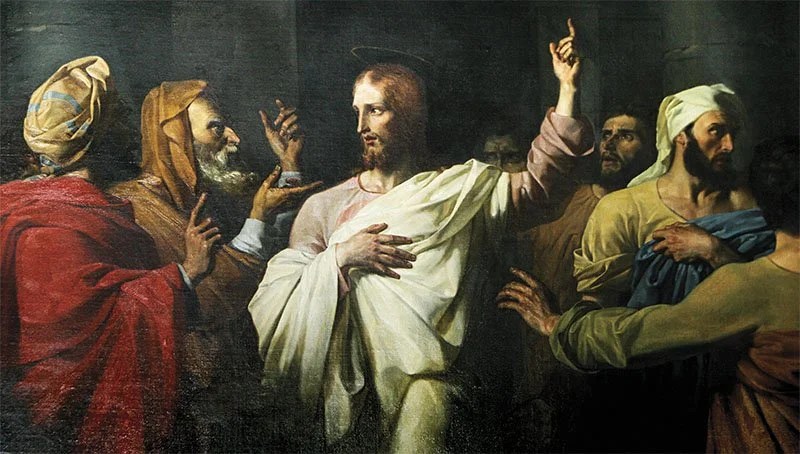

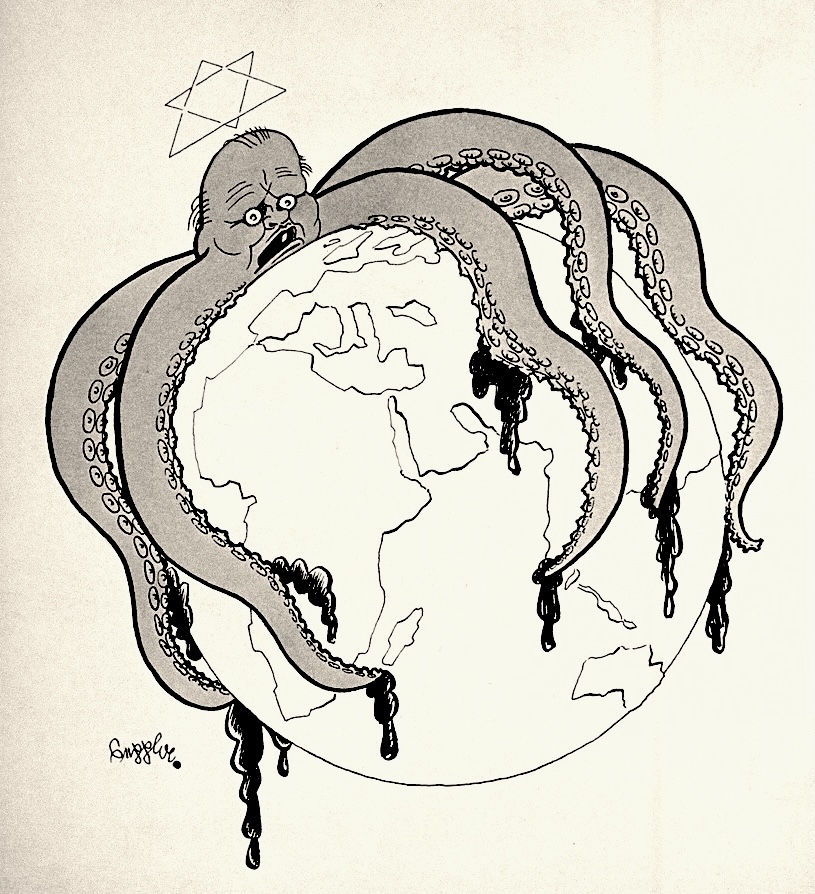

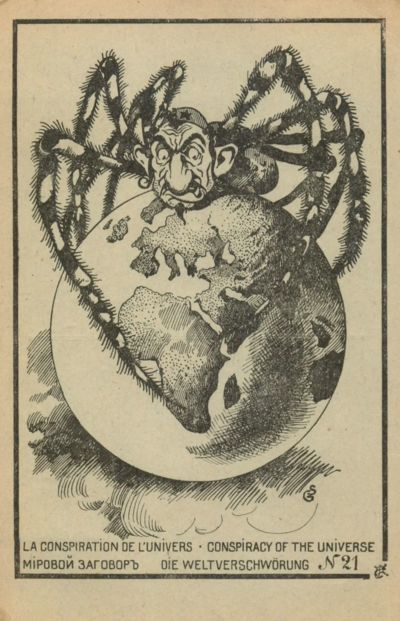


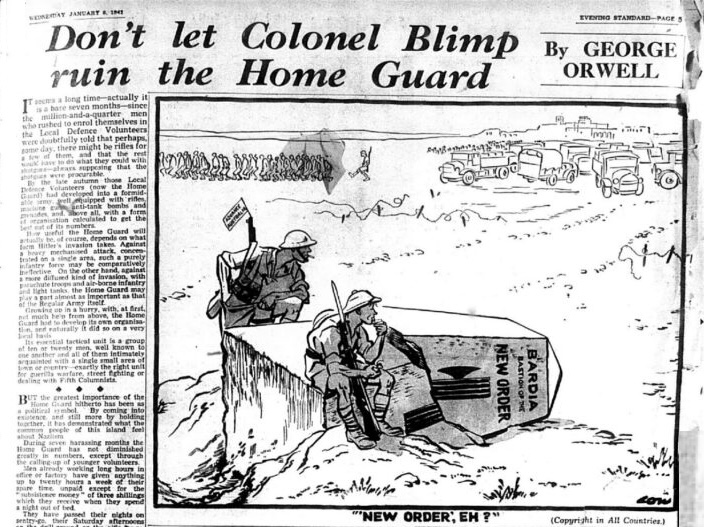




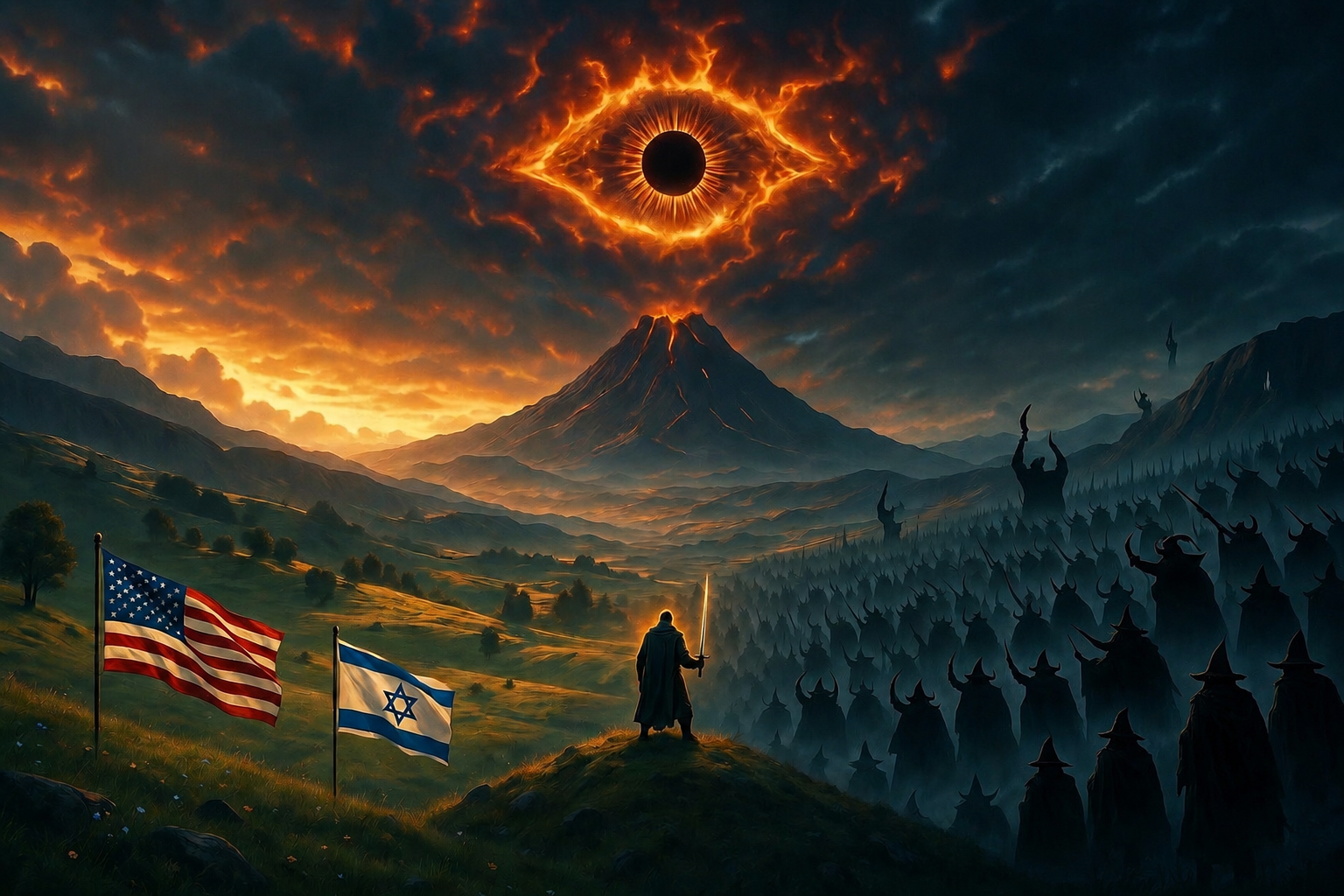

 freedom and reason