From the same publications that led with would-be cop killer Renee Good’s beach-and-sky pregnancy photo, here’s People magazine’s obituary for Scott Adams.
Victoria Edel penned it. She triggered a firestorm. People magazine apparently just changed the authorship of the obit from Edel to “People Staff.” Edel has locked her X account. People are rightly upset at her. Adams meant a lot to a lot of people.
To be sure, Edel wrote these words, but it was People magazine who signed off on the obit. They’ve not taken it down (yet). So this is how People magazine wants you to remember Adams: the “disgraced Dilbert creator.”
From a universe of good and useful deeds, the magazine took a few minutes of Adams openly and honestly expressing shock at the fact that, in the context of surging black-on-white crime under the Biden regime, nearly half of all blacks surveyed by Rasmussen said that it was not okay or were not sure whether it was okay to be white, and made that the headline. Adams was connecting action with opinion, inferring that white people are not as safe as they might have felt they were. The public isn’t supposed to make connections like that, so Adams must be forever remembered as “disgraced.”
That’s not the only reason the establishment cancelled Adams, of course. The establishment used Adams’ remarks that day as an excuse to punish him for supporting Donald Trump—the same way they used a tweet by Roseanne Barr to cancel her show (see Canceling Roseanne Barr; see also Democrats’ Closing Argument: Comedians We Don’t Like are Racists). Had Adam’s occasional deviations from official narratives mattered, they would have cancelled him for asking how the Holocaust narrative settled on the number it did. Even emphasizing that he didn’t doubt the Holocaust happened, asking about the number is usually enough to get a person tossed out of polite society. At least one woke scold rushed to the comment section, encouraging readers to look into Adams’ alleged “Holocaust denialism.”
Progressives still insist that cancelling is not a real thing. But Scott Adams was literally cancelled. His Dilbert cartoons were pulled from syndication for his sin of political incorrectness. Roseanne Barr was literally cancelled because she was politically incorrect. They not only deplatformed Barr on Twitter (this was before Elon Musk saved free speech by purchasing the platform), but also cancelled her television show. The establishment disgraced them both (and many others) because they had opinions that ran afoul of the elite-appointed commissars.
If the public didn’t like Adams’ observation, they didn’t have to read Dilbert. If the public didn’t like Barr’s tweets, they didn’t have to watch her show. But we know that they would have continued reading Adams and watching Barr because the majority not only like a good laugh (which is why late-night television is moribund and surely going away soon), but also because they share Adams and Barr’s sentiments, even if they are afraid to say them out loud, their speech constrained by the woke scolds surrounding them. Figures like Adams and Barr spoke for those who are afraid to speak for themselves in public (Barr still does, but on a much smaller platform).
Adams and Barr’s sin is that they expanded the scope of mutual knowledge. And for that, corporate power is prepared to give up millions of dollars in revenue in the same way they’re prepared to lose money on the hack comedians they put before the public of late-night TV (Kimmel, Fallon, Colbert). Censor the voice of the people; amplify the voice of the establishment—that’s the formula of hegemony. Thankfully, it’s losing efficacy, in part because people like Scott Adams and Elon Musk have made themselves useful.
Scott Adams left the world with parting words, which I share below. Some will find his conversion to Christianity to be the most significant. For me, his charge to “be useful” is the takeaway. Usefulness is not just about helping other people. Since I decided to be useful, I’ve been much happier. Adams sacrificed a great deal to be useful. You can tell that he believed it was worth it. It was for me; Adams was an inspiration. I appreciate that he changed his mind last summer and decided to hang on for a while longer. I will miss his coffee talks. I will miss him.
Scott Adams left the world with these parting words. Some will find his conversion to Christianity to be the most significant. For me, "be useful" is the takeaway. Usefulness is not just about helping other people. Since I decided to be useful, I’ve been much happier. Adams… https://t.co/07Tnd0mf26
“The media may not always be able to tell us what to think, but they are strikingly successful in telling us what to think about.” —Michael Parenti, Inventing Reality
“The law should be like death, which spares no one.” —Montesquieu, The Spirit of the Laws
We have to address the double standard that’s in play on the progressive left—and in the media that organizes the corporate state narrative. There is a constant barrage of propaganda from progressive leaders, including those in public office, that ICE is coming into communities, taking illegal aliens into custody, and breaking up families. It’s ugly, these leaders note, and the mass media is supporting the narrative by highlighting its ugliness. Behind this is a double standard that deceives the public about law enforcement activities and family separation.
I warned you that when Trump came into office and started enforcing immigration law as promised (why the public returned Trump to the White House in a landslide), it would be ugly. How could it not be? People are taken into custody against their will. There’s a great deal of crying. Screaming. Going ragdoll. Sometimes those taken into custody resist, and force is used. Sometimes people get hurt.
However, when a citizen breaks the law, if he is apprehended, he is taken into custody and, if charged and convicted, often sent to jail or prison. Here, too, is drama. The drama happens every day in America—hundreds and thousands of times a day. Sending parents to prison breaks up families. Loss of liberty and family separation are consequences of breaking the law. They are an inherent part of the criminal justice process. It’s the decision of the lawbreaker that causes his loss of liberty and separation from family. The alternative would be not to enforce the law.
One could never grasp the extent of family separation among the citizen population from watching the media. But, from a statistical standpoint, family separation caused by the US criminal justice system dwarfs that caused by immigration enforcement. Each year, police make roughly 7.5 million arrests, and about 1.9 million people—overwhelmingly citizens—are incarcerated at any given time, routinely separating parents from children through arrest, pretrial detention, and imprisonment.
By contrast, ICE arrests are on the order of around 150,000 per year, with tens of thousands in immigration detention at a time. Even accounting for large numbers of border “family unit encounters” (which Trump effectively stopped with his border control measures), immigration enforcement operates at a vastly smaller scale.
Ordinary Americans can’t know this because, while family separation is a common and normalized consequence of criminal law enforcement for citizens, it receives no media or political coverage. Instead, they are bombarded today, every day, all day, with linear and social media images and reels of the ugliness of immigration enforcement.
“If the press cannot mold our every opinion,” writes Michael Parenti in his 1986 Inventing Reality, “it can frame the perceptual reality around which our opinions take shape.” This is a significant observation: “Here may lie the most important effect of the news media: they set the issue agenda for the rest of us, choosing what to emphasize and what to ignore or suppress, in effect, organizing much of our political world for us.”
Beneath the mediated perceptions, the same principle is in operation in both instances: there are consequences to breaking the law, and family separation is a potential consequence. If one works from principle, then either he believes that all civilians, whether citizen or immigrant, should be held accountable for lawbreaking, or he believes that no civilian, regardless of immigration status, should be held accountable for lawbreaking. There is no choice from the established principled position. It is an either/or. Which is it?
If you assert a principle I am unaware of, and believe there should be a double standard, that citizens should be held accountable but not immigrants, then the question you must answer is why immigrants should be granted immunity from the consequences of breaking the law, while citizens should be denied such immunity. Why would you believe this? What explains the double standard you advocate? What is the principle in operation? The principle needs to be announced and explained, and the public needs to agree that the principle makes sense, before it can be allowed to determine policy. This is a democracy operating under the rule of law. So why should the rule of law be suspended for immigrants?
To all those who support immigration enforcement in the abstract but are troubled by the ugliness of law enforcement action, ask yourselves: if you were to see a glut of media reports showing the ugliness of citizens being taken into custody and families separated, then would you conclude that we should stop all law enforcement? To be sure, there are those on the fringe who advocate for the abolition of policing in principle, but that’s probably not you.
If you say “no,” which I think most of you would, then you mustn’t let emotions carry you away when you see illegal immigrants taken into custody. Progressive leaders and the mass media have selectively weaponized empathy to lead you away from principle. They are programming you to react emotionally and not logically. You have already agreed that lawbreakers should be held accountable. Work from the rational part of your brain, not the emotional part. This does not mean that you shouldn’t have compassion and sympathy for the plight of people taken into custody. It means you put principle over reaction.
If you say “yes” after a gut check, then you don’t really believe in immigration law even in the abstract, because you don’t believe in policing generally. You’re a functional anarchist who is putting the safety of his own family in jeopardy, since the certain result of leaving illegal aliens to reside in the United States will be an increase in crime and violence in your neighborhood. And it you move to depolice at scale, then your neighborhood will descend into anarchy.
Expect the rationalization from progressives that citizens have a higher rate of crime than immigrants. You might ask whether that comparison is between citizens and illegal aliens, not immigrants overall. However the fact is specified, even if it were true, it is immaterial to public safety, since it is certain that a percentage of immigrants will break the law, and that means that more immigrants will increase the volume of crime.
Moreover, many illegal immigrants are, by definition, criminals. Under federal law, Title 8 USC § 1325, it is a misdemeanor to enter or attempt to enter the United States at an undesignated place or time, to elude immigration inspection, or to enter by false or misleading statements. Title 8 USC § 1326 makes it a felony for a person who has previously been removed or deported to reenter, attempt to reenter, or be found in the United States without authorization, with penalties that increase based on prior criminal history. That covers a great many illegal aliens.
To be sure, mere unlawful presence, such as overstaying a visa, is generally a civil violation rather than a crime, though related conduct may be criminalized under other statutes, including 8 USC § 1324 (harboring or transporting undocumented persons), 8 USC. § 1306 (failure to register), and 18 USC §§ 911 and 1546 (false claims to US citizenship and immigration document fraud), but violation of civil law is still illegal conduct. Just because an action is not criminal does not make it legal.
To close the loop on this, although unlawful presence may be a civil matter if no criminal activity is present, the law is still enforced by ICE, authorized by the Immigration and Nationality Act, codified in the same title: 8 of the US Code. 8 U.S.C. § 1227(a)(1)(B) provides that any noncitizen present in the US in violation of law is deportable, forming the principal basis for civil removal proceedings initiated by ICE.
It doesn’t stop there. Title 8 USC § 1182(a)(9)(B) imposes civil consequences for accrued unlawful presence by rendering a noncitizen inadmissible for three or ten years after departure, depending on the length of unlawful presence. DHS’s authority to inspect and determine admissibility derives from 8 USC § 1225, while the procedures governing civil removal proceedings are outlined in 8 USC § 1229a. ICE’s authority to arrest and detain noncitizens pending removal is provided by 8 USC § 1226, and related civil registration requirements appear in 8 USC §§ 1302–1304, all of which operate within a civil, not criminal, enforcement framework, but nonetheless fall under ICE’s purview.
Another rationalization one hears is that ICE officers are glorified mall cops, or, alternatively, private contractors. ICE agents receive their foundational training primarily at the Federal Law Enforcement Training Centers (FLETC) in Glynco, Georgia, which serves as the main academy for other federal law enforcement agencies.
Training differs depending on the agent’s role. Enforcement and Removal Operations (ERO) officers, who handle immigration arrests and removals, complete an eight-week program that covers immigration law, constitutional protections, de-escalation techniques, firearms safety and qualification, defensive tactics, emergency driving, and physical readiness. Homeland Security Investigations (HSI) special agents, who focus on criminal investigations such as human trafficking and smuggling, undergo a longer pipeline that combines the Criminal Investigator Training Program at FLETC (around 12 weeks) with agency-specific HSI training (around 13 weeks), providing more in-depth instruction in investigative techniques.
Across all programs, ICE training emphasizes constitutional and statutory law, investigative skills, firearms and defensive tactics, fitness and physical readiness, and de-escalation strategies. After academy graduation, officers enter a supervised field training phase and continue receiving ongoing education, refresher courses, and specialized instruction throughout their careers. So, not mall cops or private contractors. Federal law enforcement officers.
There’s no way to rationalize one’s way out of this. If you are an alien who is not authorized to be in the United States, your illegal presence is subject to law enforcement action. Any attempt to interfere with law enforcement action is criminal, as I showed in yesterday’s essay, Loretta and Richard: The Renee Good Shooting and Correct Attribution of Blame. And be aware that they use real bullets.
Those separating ICE from other law enforcement bodies are arguing from a false dichotomy. They’re assuming or demanding a double standard without a principled reason for their demand. So, the next time you are arguing with progressives, demand from them the principle in operation. If they have one, then tell them to elect representatives who will codify the double standard. Until then, hitting the streets to interfere with ICE operations is the same as interfering with any other law enforcement activity. It’s a crime. Those doing the interfering should be rolled up with the illegal aliens with whom they ally—personal liberty and family separation be damned. Actions have consequences.
Imagine a scenario in which a woman, let’s call her Loretta, wearing a red MAGA hat, her dog Skeeter in the back of the truck, and her husband, Richard, in the passenger seat, parks a truck perpendicular to traffic, blocking the road, to interfere with a permitted gay pride parade, which police officers are protecting with their presence.
Loretta and Richard don’t like gay people. They’re part of a small group of conservative activists who drive around disrupting gay pride parades. The police have been given the heads up about Loretta and Richard and their little group of disrupters.
While Loretta dances to country music in her truck, Richard gets out to record the situation with his cell phone, which the couple will later post on their social media accounts for clicks. They mean to fuel a wider movement against the LGBT community with their content.
One cop, Bob Jennings, circles the truck on foot to assess the situation, videoing the interaction for the record. He passes by Loretta, who, with a smirk on her face, says, “I’m not mad at you, bro.”
Jennings moves to the back of the truck, where Richard awaits to taunt him. Richard continues to harangue Jennings as the officer walks along the passenger’s side, Skeeter looking on cluelessly with his tongue hanging out of his mouth.
While this is happening, other officers arrive at the driver’s side and order Loretta out of the truck, pulling on the locked door handle.
As Jennings walks around to the front of the truck, completing his 360° survey, Richard smacks the side of the truck and yells, “Drive, Loretta! Drive! Drive!” Loretta guns it and strikes Jennings in the hip. Only a few months before, Jennings had been dragged several hundred feet by a suspect fleeing in a car, the officer’s arm trapped in the window. It took 33 stitches to close the wound on one of his legs.
Simultaneously with the truck’s acceleration, Jennings reacts in a split second and discharges his weapon. Three shots ring out, one or more of the bullets striking Loretta. Loretta is dead, foot still on the accelerator, her truck careens into parked cars down the street.
Jennings, in shock at just having to kill a woman, exclaims, “Fucking bitch.”
If you ask me whether this was an appropriate exercise of lethal force, I would, without hesitation, say yes. I would have to say this because the facts are plainly in front of my face. The fact that I disagree with Loretta and Richard’s actions—I’m pro-gay, and they’re assholes, for the record—must be entirely put aside if I am to be objective in my assessment. The officer did what he was trained to do—what he had to do. It is not only that the MAGA couple were wrong for trying to kill a law enforcement officer; they had no business being parked perpendicular in the street in an attempt to interfere with a permitted gay pride parade. Loretta and Richard put Loretta in that situation,
Would anybody out protesting today over the Renée Good shooting give two shits about Loretta (and whatever happened to Skeeter)? Would they condemn Jennings for enforcing the law so that a permitted gay pride parade could proceed over the objections of anti-LGBT activists?
We all know they wouldn’t. We all know they would say Loretta had it coming. And they would demand Richard be held to account for the attempted murder of a police officer. After all, Richard gave the command for Loretta to gun a locked-and-loaded pre-positioned two-and-a-half-ton truck at a law enforcement officer. Some, if not most, of them would even argue that the goal in that moment was to run over the cop.
But they would arrive at this assessment not because they’re exercising objective judgment but because Loretta and Richard are not members of their tribe—they’re members of the enemy tribe. The cop justifiably killed Loretta because she was protesting a gay rights parade. The homophobe deserved it. Fucking transphobe. Loretta’s actions affirm the progressive characterization of MAGA as the worst people on the face of the planet. It was a righteous kill.
How would MAGA respond? Would they be out on the streets of American cities with bullhorns blocking traffic? Or do you think they would wonder why Loretta and Richard fucked with law enforcement that day? Would Loretta even get a candlelight vigil? I can see conservatives heckling a gay pride parade as it passed by their houses. But that’s free speech. Interfering with the parade? Maybe. I can’t speak for MAGA. I can tell you what I think, though: Loretta had it coming. Not because I support gay rights (which I remind you that I do), but because Loretta tried to kill a police officer, or at the very least put herself in a position where death was a likely outcome. And Richard gave the command. (The police need to arrest and charge Richard.)
Folks shouldn’t be blocking traffic—whoever they are. Folks shouldn’t try to run over police officers—whoever they are. What Loretta and Richard did was objectively illegal. Loretta and Richard put Loretta’s life in danger. If I am to claim to be a rational person, I have to call it as it is.
A day or so ago, on the X platform (find me and follow me on @andrewwaustin), where my follower count has been dropping (I suspect) due to my defense of ICE operations in Minneapolis, I was asked whether I am capable of analyzing the officer’s use of lethal force in Minneapolis without prejudice.
I responded that I am not sure any human is entirely free of prejudice. I’m a left-liberal who believes in limited government, including constitutional constraints on policing. I’ve taught criminal justice courses for thirty years—not from a criminal justice administration perspective, but from the standpoint of critical criminology. So yes, I have biases, if we choose to call them that.
I left the conversation there, but, to clarify, I view these biases more as a normative framework than in the usual sense of the word, but I am happy to call them prejudices for the sake of discussion. These prejudices predispose me to prioritize civil liberties and critique state power.
Reflecting on this, it surprises me that anyone could read my posts as representing anything else. While I have evolved on certain issues, I have never departed from my core liberal values, which I have held my entire life. In fact, my recent evolution has been toward an even greater degree of liberalism. It is my liberalism that prevented me from being absorbed into the progressive worldview that enveloped me during my years in graduate school and as a college teacher.
That said, my commitment to civil liberties and skepticism of state power does not prevent me from recognizing that what happened to Renée Good is a textbook example of appropriate use of lethal force. I think I just demonstrated that in the hypothetical scenario I provided above.
I have also been asked on X, in my capacity as a criminologist, whether I am familiar with the Department of Justice’s policy on lethal force in situations like this. Yes, I am, and I am happy to clarify it now: The DoJ generally prohibits firing at a moving vehicle unless all of the following conditions are met: (1) the vehicle is being used in a way that poses an imminent threat of death or serious bodily injury; (2) the threat cannot reasonably be mitigated by other means (for example, moving out of the vehicle’s path); and (3) deadly force is necessary to stop the threat.
I can also clarify the law governing those who interfere with federal law enforcement action: 18 USC § 111 makes it a federal crime to forcibly assault, impede, interfere with, intimidate, oppose, or resist federal officers performing their official duties, with penalties varying from fines/imprisonment (up to 1 year for simple assault) to more severe penalties (up to 3 years or 10 years if a dangerous weapon or bodily injury is involved).
I have reviewed the video from every available angle. The video the struck officer, Jonathan Ross, records during his investigation is the clearest video of the event, as it provides a 360° view. The video is easily reviewable on the Internet. Ross walks in front of the car, moving to Good’s left, continues past Good on the driver’s side, and around to the back of the vehicle, where he is taunted by the other woman outside the car, Becca Good, Renée’s wife. The taunting continues on the passenger side. At the same time, another officer approaches the driver’s side door, which is locked, although the window is down, and commands Good to exit the vehicle. Good then puts the car in reverse, backs up, and turns the wheel toward the officer as he starts to cross back in front of Good, completing his 360° tour of the vehicle. When Ross is in front of the vehicle, Becca repeatedly shouts, “Drive, Baby! Drive! Drive!” Good accelerates on Becca’s command. The officer does not have time to move out of the vehicle’s path and, in the split second he has to react, discharges his weapon as he is struck.
This is the exact same fact pattern in my hypothetical scenario at the top of this essay. Only the ideological identity of the actors was swapped.
I should not have to repeatedly walk readers through this sequence of events. They can just watch the officer’s video for themselves and determine whether they can see what happened for what it is, or whether they’re guided by motivated reasoning, which results from their prejudices warping their perception.
Motivated reasoning is the cognitive process in which a person forms or favors conclusions based on their beliefs, desires, or emotions rather than on objective evidence. Sometimes this is unconscious. They really do see something other than what a reasonable person sees. Without deprogramming, it is impossible to persuade such a person. Other times, a person can see where the facts take him but rationalizes them to save the viewpoint he feels compelled by tribalism to preserve. Such a person may be just as impossible to reach with logic and facts and the truely deluded believer.
One sees rationalization in the act of dissembling, where the person disguises his own recognition of the facts by arguing that the officer should not have walked in front of a vehicle. Perhaps there is an opening here to reason. While police officers are generally trained to avoid standing directly in front of a vehicle whenever possible, in real-world situations, officers often must move around vehicles to perform duties like arrests, documentation, providing aid, and a myriad of other reasons, which can and often do place them in dangerous positions.
Training emphasizes minimizing risk, but it cannot eliminate every potential threat, and a second of objective thinking would guide a person to that understanding. Ross was performing a 360° survey of the situation. How could he have anticipated that Good would attempt to run him over? Can one really fault him for assuming initially that she had no homicidal intent? He was returning to the passenger side when she accelerated, deliberately positioning her vehicle to interrupt his path. He had begun to draw his weapon a moment before, finally seeing intent in her eyes. Whether he should have been there is largely immaterial; what matters is that she chose to rapidly accelerate toward him (had the wheels not spun on the frozen pavement, she would have run over him).
We hear other rationalizations, as well, such as shooting out tires. This is similar to the shoot them in the legs fallacy, only more absurd. Even supposing he was in a position to do that, does anybody believe that a flat tire would stop an SUV from traveling the short distance needed to run over the officer?
In the end, none of the rationalizations one can dream up are relevant to the question of lethal force justifications. The only relevant matter is the criteria I earlier stated.
From the vantage point of this video and the known context, an objective assessment of the fact pattern and context cannot see the incident as anything other than a legitimate instance of justified lethal force. I regret that Good was killed—not only because of the loss of life, but because her death is being used to further a political agenda that is destructive to the republic.
We have to tell the truth if we want to save lives and the republic: Good’s death was the consequence of the choices she made that day. Her wife may have culpability (I think she does), but no one outside the dyad does—at least not criminally. However, others are indirectly responsible for Good’s demise, chiefly the Democratic Party. Party rhetoric endangers the lives of its followers by telling them to confront and resist law enforcement (see Wokedom and the Problem of Lethal Altruism).
Those who demand that Officer Ross be tried for the murder of Renée Good are entitled to their opinion—but they are not entitled to riot in an attempt to coerce the state into prosecuting a crime that did not occur. This is a case of justifiable homicide. Nor are those who oppose ICE operations entitled to interfere with those operations. It is a federal crime to do so.
Beyond the fact pattern and correct attribution of blame, we must make something very clear: every individual has the right to self-defense, including law enforcement. Officers and soldiers do not forfeit this right because they are serving in the cause of public safety or national security (in the case of ICE, it is both). Society should internalize this principle: civilians must avoid behaving in ways that officers could reasonably interpret as a threat. Parents should teach this to their children.
At the same time, progressives should refrain from teaching young people that police are inherently classist or racist. This goes for clergy, journalists, politicians, and teachers, too. While critiques of policing as a system are valid (I do it all the time in my classroom), the individual officer is a working person, just like the majority of civilians. Moreover, whatever the critique of police as an institution and the function it serves, the evidence for the following claim is irrefutable: without public safety, the lives of working people would be more degraded than they already are.
I have now watched a great many videos of progressives committing federal crimes across social media platforms over the last several days. Not nearly enough of them are being arrested. My hope is that the patience of federal officers will wear thin and they will start hauling these insurrectionists to jail. Democrats should be a responsible party and inform their followers about the law and the potential consequences for violating it. That Democrats are encouraging their followers to rebel against law enforcement is a deeply troubling development. Why they are doing this should be front and center in all of our minds. We have to ask this question because the corporate state media won’t.
That’s what these so-called protests are: insurrection. As I have shown in several essays on this platform, the US Constitution is largely a response to the problem of insurrection in early America, the Articles of Confederation providing the national government with insufficient authority to address the problem of mob violence. The Founders gave the federal government the authority to deal with the problem. The Trump Administration now must act on that authority. (See Our Constitution and the Federal Authority to Quell Rebellion; Concerning the Powers of The US Constitution—And Those Defying Them.)
A surprising number of authoritarian leaders and psychopaths (serial killers in the extreme case) were poets. Did you know that? Josef Stalin was a poet. (You probably already knew Adolf Hitler was a landscape painter.) Stalin’s poetry was well-regarded in Georgian literary circles. The overlap in such cases typically reflects ideological performance and self-mythologizing egoism rather than genuine artistic humility. Not difficult psychoanalytical work. This is not to say that all or even most poets are psychopaths, just that poet and monster are not mutually exclusive categories.
What about mothers? Isabel Perón, the Argentine political figure noted by identitarians for being the first woman in the world to serve as president, while not a mother, manufactured a motherly image, which her regime weaponized to manipulate the masses. Her regime repeatedly used emergency powers, suspended civil liberties, censored the media, and pursued political repression against opponents. Her regime tolerated and enabled street-level violence.
Renée Nicole Good was a poet and a mother of three. Certainly, you know this by now. The ubiquitous picture of her was taken during one of her pregnancies, standing against a beautiful backdrop of beach and sky. She won an award for a poem she wrote. Almost every corporate state media story leads with the woman’s bona fides—as if they matter.
People magazine put this image on the cover of their story about Renée Good
Progressives work from emotion, not reason. To be sure, the emotional manipulation is selective; they use it to humanize their side, while dehumanizing their opponents, dulling the emotional response to victims on the other side. But it’s emotional manipulation nonetheless.
This is how Democrats control their ranks: the rational manipulation of irrational signals, signs, and symbols. It’s why Democrats substitute sophistry for logical argumentation. It’s why they teach the art of fallacy-making in colleges and universities rather than the finer points of logic and critical thinking. It’s why feelings and movement ideology are invited to corrupt science and medicine.
The reality is that poets and mothers are quite capable of doing bad things, even killing people—children, husbands, and, yes, law enforcement. Those with such wonderful qualities (presuming the poet mother was good at these) are quite capable of possessing authoritarian personalities and psychopathic tendencies.
We’re often lectured about the problem of the state as father. Granted. But the state as mother is not equivalent? Aren’t they both parens patriae? Might the latter be even worse? What is the ubiquity of an image of a woman with a swollen belly meant to make us pine for? Surely it’s not natalism. How is the womb’s security any better than the authoritarian desire seeking father-rule? Is this the “warmth of collectivism” Mamdani is promising New Yorkers? He did tell his followers that “rugged individualism” is “frigid” and needs to be replaced. Replaced with what? Mutterrecht?
Department of Homeland Secretary Kristi Noam
It couldn’t be that. Assertive women on the right are stripped of motherly attributions, their outward appearance mocked. DHS Secretary Kristi Noam has three children, too. She’s “ICE Barbie.” Don Trump Jr.’s now ex-fiancée, Kimberly Guilfoyle, is (not really) a “dominatrix” (which is fine as long as you’re a drag queen reading books to children at a public school library). And why wouldn’t they be mocked? Progressives think cosplaying porn stars and prostitutes makes a man a woman. Their ideal mother is the antithesis of Columbia, the republican icon devoted to rearing virtuous citizens prepared to defend constitutional democracy.
That’s the profound propagandistic utility of selectively elevating art and motherhood to symbols of political efficacy. More immediately, poetry and motherhood are elegant (i.e., crude) distractions from the relevant question: What radicalized Renée Good? What turned her into an attempted cop killer?
That’s a rhetorical question, of course, which is why progressives are selective in their pretentious wonderment over poetry and motherhood: the question answers itself. The depth of ideological distortion compels me to answer the question anyway.
Remember that scene from Conan the Barbarian (1982), in which the cult leader Thulsa Doom (played by James Earl Jones), portrayed as a charismatic figure with absolute power over his followers, silently gestures to one of his female devotees, who immediately steps off a cliff to her death without hesitation?
The moment powerfully illustrates the extent of his control and the total devotion of the cult members. It is a cinematic example of what French sociologist Émile Durkheim described as altruistic suicide, where an individual’s identity and will are completely absorbed by the group, and death is embraced as an act of loyalty, obedience, or sacrifice rather than personal despair.
I want to leave a sociological note here to emphasize the horror of what Democrats are doing in seducing true believers into putting their lives at risk by interfering with law enforcement.
Émile Durkheim
For Durkheim, suicide is any death resulting directly or indirectly from a positive or negative act of the victim, which the victim knows may produce that result. He includes not only a woman who explicitly takes her own life, but also a woman who knowingly places herself in circumstances where death is a likely outcome. The latter case is also suicide.
For example, when a woman interfering with ongoing law enforcement operations is told by authorities to get out of her vehicle, but instead backs up, points it at a police officer, and steps on the gas, she does so with the knowledge that her actions are likely to provoke a police response that may result in her death.
It’s like when a man who wants to die points a gun at a police officer. Even if he does not intend to shoot the officer, he knows that pointing the gun at him will likely result in the officer shooting him in self-defense. He will have committed suicide as surely as if he had put his own gun to his head. (Bonus: the BLM cult can claim that systemic racism killed another black man.) (See Suicide by Cop and Victim-Precipitated Homicide; Death by Cop Redux: Trying to Save the Narrative in the Era of Trump.)
Perhaps the man who provoked the police into shooting him is suffering from one of the other types of suicide Durkheim identified. The pertinent one in the Minneapolis case is altruistic suicide, which occurs, as depicted in the scene from Conan, when an individual is excessively integrated into a social group and places the group’s interests above her own life. Conan is fantasy, to be sure, but altruistic suicide is a very real phenomenon.
According to Durkheim, in such contexts, personal identity is absorbed by collective duties, expectations, and values, such that the individual feels morally obligated to die for the group. We see this not only in this case, but in a video dropped yesterday where a woman is begging ICE officers to shoot her. She does this for moral reasons, which she states explicitly.
This is the psychology of martyrdom, which is then used by political or religious movements (and woke progressivism is both) to advance the cause. We see this in Islam, and it helps us understand why the progressive left allies with Islamism in the Red-Green movement. The woke see in Islam the collectivist totality they desperately want to control their lives.
Erich Fromm characterized this phenomenon as the “escape from freedom.” It’s a core feature of the authoritarian personality. People feel lost in an open society where they are expected to chart their own path through life as autonomous persons; so they seek the warm comfort of collectivism (as the mayor of New York City would have it). They want an authority to tell them what to do so they don’t have to think about it. They stop thinking for themselves and obey the commands of the group.
The abandonment of autonomy and reason, which in itself appears a pitiful choice, is sublimated as a greater cause beyond the individual. Ideology gives freedom’s escape transcendent meaning and purpose. From this standpoint, suicide is not seen as a personal tragedy but as an honorable or necessary act, one tied to strong norms of duty, loyalty, or sacrifice. Thus, the escapee wraps about herself the cloak of nobility and moral superiority. This is why virtue signalling is so highly prized among woke progressives—and why those external to the tribe are depicted as evil.
There are many historical examples of this across time and space: ritual suicides, soldiers who die willingly for their country, or, as in the case of Renee Good, individuals who sacrifice themselves to uphold pathological subcultural ideals, such as the notion of social justice.
Durkheim argued that this type of suicide results from too much social integration, where individual autonomy is minimal and social pressure to conform is overwhelming. Erich Fromm roots this phenomenon in a personality type that prepares some individuals to lose themselves in the mob—not in a situational sense (most of us are frighteningly susceptible to this), but as a way of life. Eric Hoffer calls this type the “true believer.” Look at the left today. A synthesis of these views completely describes them.
Woke progressivism has indeed become a cult. There are several signs of this, such as in the irrational religious-like gibberish we see in critical race theory, queer theory, etc. As if that weren’t dark enough, members of the Democratic Party groom emotionally weak individuals whose strength of autonomy is such that they are easily absorbed into the group, and have them behave as zombies for a cause they have convinced them is worthy of sacrificing their lives. Many true believers are manufactured in the assembly lines of public schools, including colleges and universities. As adults, the Party uses the finished commodities as weapons of political warfare.
At this stage in the development of the machine, millions have been ensnared in a mass psychogenic illness with increasing probability that some of them will put themselves in situations that are likely to result in death, which the Democratic Party exploits as propaganda to push its project of managed decline of the American Republic. The more the true believers put themselves in harm’s way, the more instances Party leaders can use as proof of the authoritarianism and violence they project onto the defenders of the American Republic, those who promote the wicked doctrine of rugged individualism.
Altruistic suicide is not the only pathology associated with the Democratic Party’s political method. We see a similar pathology with the Party’s advocacy of so-called gender affirming care, which destroys the lives of emotionally dysregulated and psychologically vulnerable youth, a destruction they invert as “trans joy.” We see another among inner-city blacks who have been idled and made dependent on welfare. Indeed, the high death rate associated with gang violence is characteristic of altruistic suicide, with a healthy dose of another type of suicide Durkheim identified, namely fatalism.
“You know, you don’t want people to die in law enforcement situations or otherwise. But it strikes me that we are undergoing an epidemic of political vigilantism right now. Why are people showing up in vehicles, in convoys, not just in Minneapolis, but all over the country, in an effort to obstruct lawful federal law enforcement activities? This is not an isolated incident. We have had hundreds of car rammings against ICE agents all over the country. According to DHS, this lady in this car today, along with other vehicles, had been tracking ICE agents around.
“Why are people believing that they can drive their car into a federal law enforcement situation, and that [this] is an appropriate thing to do?
“I understand they don’t like the fact that these agents are enforcing existing immigration law. But that’s not how we change laws in this country. If you don’t like a law, you talk to the politicians. You don’t drive your car into the middle of a building or a law enforcement situation that’s being occupied by the people who are simply there to enforce the law. If I don’t like how much the IRS is charging me in taxes, I don’t drive my car into the Treasury Department, try to run somebody over. I call my congressman.
“Political vigilantism is being encouraged by Democratic officials, like the lieutenant governor of Minnesota, Peggy Flanagan, who earlier this year told people to ‘put your bodies on the line,’ and Tim Walz calling these guys Gestapo all year. What do you think happens when you radicalize a base of people about this?”
—Scott Jennings, CNN
I am not here to talk in any great depth about the Minneapolis case, except to say that it is not a Rorschach (but it is a test). This is not an instance of motivated reasoning on two sides—“if you’re on the left, then you see it one way; if you’re on the right, then you see it another way.” There’s only one way to see the thing, and if you don’t see it that way, then you’re on the left. If you see the thing itself, then you’re everybody else. It will suffice to here quote from George Orwell’s Ninety Eighty-Four: “The Party told you to reject the evidence of your eyes and ears. It was their final, most essential command.”
But it’s not just about the forensics of the thing. The woman who tried to run over the ICE agent in Minneapolis was an “ICE Watch Warrior.” These are professional agitators trained to target and disrupt ICE agents and operations. They use their cars and bodies to block ICE vehicles. Body cam from the struck officer dropped today tells us what the two women were there to do: interfere with law enforcement in their official duties. This was not merely a “poet dropping off her kid at school.” (If you have time, check out that school. It tells you a lot about the subcultural space the woman occupied.)
And the two people shot in Portland by ICE the next day? One of them, the driver, Luis David Nico Moncada, was an illegal alien from Venezuela affiliated with the Tren de Aragua transnational gang and tied to a recent shooting in Portland. An agent fired on the vehicle after the driver attempted to run over officers (search videos of what happens to officers who let people run them over). Both aliens were wounded, fled the scene, and then called the Portland police for help (criminal aliens know who their friends are). Progressives will tell this story without these details. The woke scolds leave out background and context to manufacture sympathy for criminals to weaponize emotionally dysregulated individuals against the Republic.
Image by Sora
Rather, I’m here on a Friday afternoon to explore what underpins the madness. And it is madness. I begin by asking readers to imagine conservatives—MAGA types—out in the streets attacking law enforcement. Not an occasional incident here or there, but in the thousands, in cities across the United States, burning cars and structures and openly assaulting civilians and police. Imagine the MAGA types, joined by the mass media, calling a Democratic president a “Nazi” or a “fascist” at massive rallies and urging Americans to “rise up” against the government, invoking slogans like “no kings” (a clear reference to the French Revolution that brings to mind the swoosh of the guillotine).
Democrats obsess over the events of January 6, 2021, at the Capitol—what is, to avoid getting into the darkness behind it (not MAGA), charitably described as a police riot—as if it were the worst thing that ever happened to America. As if it were on par with Pearl Harbor. As if it were worse than 9/11—if they even remember that day and what was behind it. Yet, those same Democrats were fully supportive of Black Lives Matter. Remember that? Members of Congress wore African kente cloth and took a knee in solidarity with a movement built on lies about law enforcement. Joe Biden’s running mate, Kamala Harris, openly said the chaos should continue until the mob got its way. Leaders in Portland, Minneapolis, and other blue cities stood down their police, allowed rioters to cordon off neighborhoods, establishing so-called “autonomous zones” to claim independence from the US government. Imagine if conservatives had done anything like that. We all know what Democrats would call them. Even when conservatives don’t do that, they’re smeared as “insurrectionists.”
When Charlie Kirk was assassinated, there were no riots. People weren’t flooding the streets, burning police cars or police stations, looting stores, or storming restaurants, harassing patrons, and forcing them to repeat political slogans like “Charlie Kirk is a saint.” They met peacefully to remember his life and works, while progressives took to social media in droves to celebrate his death. Yet the coercion and violence that didn’t happen in the wake of Kirk’s assassination happened in spades during the Black Lives Matter riots. People were compelled to affirm the slogan “Black Lives Matter.” There was arson, assault, burning, looting, and desecration of monuments. Billions of dollars worth of chaos, dozens of deaths, and untold numbers of injuries. Progressives supported it all the way. Hell, they lead it.
There was an election in November 2024. Remember that? Trump ran on immigration enforcement. We call that democracy. It means that our side won. It’s our turn to govern. Yet, one of the two major political parties is either directly or effectively telling its followers to do whatever they can to disrupt the democracy that they tell us we are losing. Law enforcement is doing its job as prescribed, and progressives are calling on the rank-and-file to interfere with lawful operations.
If the Democratic Party were standing up for American values and national unity, if it cared about public safety, it would be telling its supporters something very different. It would be saying: There are law enforcement actions underway that the people voted for. You may not like it, but this is, after all, a democracy, which we have told you time and again is a precious thing. So stay away from those areas. The Party would urge people to stay away because police operations are dangerous, and people could get hurt. And because rule of law. It would tell its publics that interfering with police activity is not a legitimate protest—it’s criminal behavior. And, for heaven’s sake, don’t attack police officers! Instead, the Democratic Party is telling its followers the opposite, egging on violent street-level action.
Does this make any sense on its face? What if progressives didn’t think police should roll up gangbangers and threw their bodies between cops and gangs to stop them? Imagine mobs of leftists interfering with drug busts. Would Democrats encourage this? Are Democrats close to encouraging this? I can imagine it now. Can’t you? Democrats are encouraging the rank-and-file to interfere with immigration enforcement. Why not public safety generally? Why not overthrow the government? Isn’t that what they want?
Scott Jennings put the matter quite well in that CNN segment. Why are Democrats organizing their public to fight with law enforcement in the first place? Has the Party become a communist insurgency? One weirdly tied to corporate power? Sounds more like fascism to me. Maybe you didn’t see it before (maybe you didn’t believe me at first), but can you now see the role Antifa was destined to play? Just an idea, they said. This weekend, we will watch together while an idea burns down Minneapolis. Maybe Portland, too.
When I look at the protesters and rioters in the streets, I see a lot of emotionally dysregulated people. I also see what Eric Hoffer described as “true believers.” They are always there waiting for the signal to be on the move. Five years after the 2020 riots, they’ve been signalled once more—just in time for the election season. In both cases (and the several in between), the riots were ginned up by the Democratic Party, advanced in the name of progressivism, the corporate state heart of Party ideology. One would have to deny what is plainly before his face to not see that these actions are aimed at not merely delegitimizing the current President but the American Republic itself—just as he would have to in order to see what happened on January 7 in Minneapolis as anything other than a legitimate act of self-defense.
Imagine if conservatives drove cars into the middle of active law enforcement operations under conditions of escalating violence. These are extremely dangerous situations for citizens to insert themselves into. It seemed inconceivable only a decade ago that a responsible political party would encourage people to interfere with police actions—whether those actions involved immigration enforcement or pursuing corporate and white-collar crime to protect criminals. And yet, Democrats are either explicitly encouraging or tacitly supporting exactly that kind of interference when it comes to immigration enforcement. There is no difference in principle between law enforcement dealing with drug gangs and illegal aliens. What happened to the rule of law? For Democrats, it now depends.
You may disagree with current immigration policy (although it’s the same policy as Barack Obama’s—so what gives?), but that’s why we have elections. If you don’t like a policy, work harder, win elections, and put different people in office to change it. Are elections all we need? No, but for the love of Pete, save direct action for worthy causes. This is not the civil rights movement of the 1950s and 1960s, where black and white Americans came together to stand against clearly racist Jim Crow laws, largely through peaceful protest and limited civil disobedience. Even then, violence was widely condemned, with liberal Democrats—LBJ and Hubert Humphrey—leading the way. They opposed arson, attacks on police officers, and riots. They condemned lawlessness. What happened to those Democrats? Looking at the long history of the Party (Secession and the Civil War come to mind), those Democrats may very well have just been a fashion.
What is the great social injustice today that would justify this level of violence, violence far worse than what occurred during most of the civil rights era? Seriously, what comparable injustice exists now? The protection of illegal aliens and criminal aliens in the United States? Protecting them for whom? What about the citizens and legal residents of this country? Don’t they need protecting? What did Democrats do to people to make them prioritize illegal aliens over their fellow citizens? This is a pattern. Look at who the Democratic Party and progressives are siding with in these endless and branded protest actions. They side with Hamas against Israel. They side with a Venezuelan dictator who was rolled up on narcoterrorism charges. They demand the return of a man involved in human trafficking who was expelled from the country. These are just a few examples from a universe of madness. Is there any bad actor they don’t support?
When you step back and look at it honestly, you have to ask: of the two major political parties that once disagreed within constitutional limits about the country’s direction, which one is now willing to burn everything down for power? Which one routinely characterizes the president of the United States as a second Hitler and his supporters as brownshirts, yet supports movements whose extralegal actions are destructive to civil peace? Do Democrats not understand that we can see their hands up the backsides of the puppets who do their bidding? Do they also not understand that we can see who has their hand up the backsides of Democrats?
The question for you is simple: On which side do you stand? Do you stand with the globalists? Or with America?
I have been thinking about why progressives seem so incapable of seeing the Israeli–Gaza conflict through the same historical and moral framework that they apply to World War II, particularly the struggle between the Allied and Axis powers in Europe. The relevant historical touchstone is Nazi Germany. Under Hitler, the Nazis pursued the elimination of the Jews from Europe—a process that culminated in systematic extermination. At that time, the Jews were uniquely vulnerable. They had no capacity for collective self-defense, no army, no sovereign nation. Their survival depended entirely on the eventual intervention and victory of the Allied powers. Liberation came from the outside. That fact alone is terrifying. Now that Jews have the capacity for collective self-defense, they are condemned when they use it to collectively defend themselves, as the world witnessed in the war following the October 7, 2023 pogrom against Jewish citizens in Israel carried out by Hamas, the Islamist government of Gaza.
An often-overlooked but historically significant part of this story of World War II involves Haj Amin al-Husseini, the Grand Mufti of Jerusalem, who rose to prominence during the British Mandate period. During World War II, al-Husseini fled to Nazi Germany, where he lived from roughly 1941 to 1945 and collaborated with the Nazi regime. He became a propagandist, recruiter, and ideological ally to Hitler’s regime. Al-Husseini was deeply antisemitic and militantly opposed to Zionism, or Jewish nationalism. In November 1941, he personally met with Adolf Hitler in Berlin. Surviving German diplomatic records make clear that their conversation concerned the “Jewish question,” particularly its future extension beyond Europe. Many Muslims in the Middle East were eager to eliminate Jews from the terrorities under the thumb of Islam. (See Jew-Hatred in the Arab-Muslim World: An Ancient and Persistent Hatred.)
It is important to be precise here. Neither Hitler nor the Mufti spoke in the blunt language of “extermination” or “genocide” as we would frame it today. Nazi discourse habitually relied on euphemisms—destruction, elimination, removal, solution—language that deliberately obscured intent while authorizing violence. This rhetorical indirection was characteristic of Hitler’s leadership style and of the bureaucratic culture of the Nazi regime. By late 1941, these euphemisms had already acquired a lethal meaning in practice. Mass shootings by Einsatzgruppen, Schutzstaffel (SS) paramilitary death squads, were underway, and extermination was transitioning from improvised killing to systematic policy.
Within that context, Hitler told the Mufti that Germany’s objective was the elimination of the Jewish element not only in Europe but eventually in the Arab sphere as well. He explained that Germany could not act in Palestine, historically Judea before the Roman Empire renamed it as punishment for the third and final Jewish-Roman War (second century AD), until Britain—then the mandatory power—was defeated. Once that obstacle was removed, the Jewish problem there would be “solved.” The Mufti welcomed this logic. He fully endorsed Nazi antisemitismand the Holocaust in Europe and sought to extend its application to Palestine and the broader Muslim world. He later acted on this alignment by broadcasting Arabic-language Nazi propaganda, recruiting Muslims into Waffen-SS units, and repeatedly intervening to block Jewish escape routes from Europe, including efforts to rescue Jewish children.
As history records, Germany lost the war. The Allies liberated the Jews. And, in the aftermath of that catastrophe, the State of Israel was created. For the first time in nearly two thousand years, Jews possessed a sovereign nation and, crucially, a military. The lesson drawn from history was unmistakable: never again would Jews wait defenseless for salvation from outside powers. If genocidal movements arose again, Jews would be capable of resisting them directly.
That lesson now collides with another ideological tradition—one rooted in politicized Islam, which is distinct from secular Arab nationalism. Arab nationalism, while often hostile to Israel, is not inherently fascist (no nationalism is). But movements such as the Muslim Brotherhood and especially Hamas represent something different. Drawing on Christopher Hitchens’s terminology, this tendency can be described as clerical fascism: an authoritarian, totalizing ideology grounded in religious absolutism, animated by conspiratorial antisemitism, and explicitly genocidal in aspiration. Hamas fits this description. Its founding documents, rhetoric, and genocidal and terroristic behavior make clear that its goal is not coexistence with the Jews, but their elimination in the land they inhabit. “From the river to the sea.”
On October 7, 2023, Hamas launched a mass attack on Israeli civilians. This was not merely an act of resistance or retaliation; it was an assault animated by genocidal ideology. As noted, the crucial difference from the 1940s is that Israel now exists and can defend itself. The Jewish nation need not wait for external liberation. It can respond directly. And it did. With overwhelming force. Israel’s goal in the wake of October 7 was to annihilate Hamas and liberate Gaza from clerical fascist rule. Only an international push to broker a ceasefire deterred Israel from its goal. I am adamantly opposed to a ceasefire, and have been highly critical of the Trump Administration’s leading role in securing it.
As I noted in The Danger of Missing the Point: Historical Analogies and the Israel-Gaza Conflict, when images of devastation in Gaza circulate—civilian casualties, destroyed neighborhoods, rubble—the dominant narrative in many political and media spaces portrays Israel as the villain and Palestinians as the victims. I argued in that essay that the historical parallel between Germany’s and Hamas’ wars against Jews is rarely acknowledged. During World War II, Allied bombing campaigns devastated German cities—Dresden, Hamburg, Berlin, Cologne, Frankfurt. Estimates suggest between 350,000–500,000 German civilians were killed in Allied bombing campaigns and ground offensives. In Operation Gomorrah alone, carried out in 1943 against Hamburg, as many as 40,000 civilians were killed. Yet no serious moral framework treats Nazi Germany as the victim of Allied aggression, nor are Roosevelt or Churchill remembered as war criminals for prosecuting the war to defeat fascism.
This is where symbolism and historical archetypes exert extraordinary power. Before Hitler, history had its monsters—Attila the Hun, for example, for a thousand years was the human embodiment of evil—but in the decades after WWII, Hitler became the archetype of genocidal evil. A person is ethically suspect merely for donning the dictator as a costume. And those whom the left despise are smeared with his name (Trump is the latest target). The swastika and other Nazi imagery carry a unique moral charge. That is why public displays of Nazi symbols are banned in many European countries and why marches under Nazi banners would provoke universal condemnation, even when the marches involve only a handful of emotionally dysregulated misfits. By contrast, other symbols associated with mass death and totalitarianism, more notably the Soviet hammer and sickle—often provoke little reaction. Indeed, today, mass marches in the streets of America proudly display the communist emblem. Hitler, not Stalin, has become the universal icon of wickedness. Correspondingly, in this context, Jews became the archetypal victims of genocidal ideology.
Something strange has happened since the creation of Israel. Now that Jews have a nation, an army, and a nationalist ideology—Zionism, or Jewish self-determination—they are cast, particularly on the political left, as the new archetypal villains. Israel is accused of apartheid, genocide, and unique moral depravity, while far worse regimes around the world receive comparatively little attention. This occurs despite the continuous Jewish presence in the land for over three millennia and despite Israel facing enemies who openly articulate genocidal aims.
This is a fact with which we must grapple: when Hamas commits atrocities, and Israel responds militarily, the moral framework is inverted. Hamas—the aggressor, animated by clerical fascism—is treated as the victim. Gaza’s population and leadership are framed analogously to the Jews of Europe, while Israel is implicitly cast in the role once occupied by Nazi Germany. Israeli leaders are labeled war criminals for defending their country, while Allied leaders who destroyed German cities to defeat fascism are rarely subjected to comparable moral judgment. This inversion collapses historical memory, ignores ideology and intent, and erases the lesson that led to Israel’s existence in the first place: that Jews must never again be defenseless in the face of genocidal movements—whether secular fascism or clerical fascism.
When I see images of devastation in Gaza, I cannot help but also think of the bombed-out cities of Germany. The suffering is real and tragic, but it is morally intelligible within a framework in which defeating genocidal regimes sometimes requires devastating force. That is the parallel I am drawing. And the reason I believe the dominant narrative so profoundly misunderstands what is happening? Antisemitism on the left. (See Antisemitism Drives Anti-Israel Sentiment; Israel’s Blockade of Gaza and the Noise of Leftwing Antisemitism.)
* * *
There is a valid and historically grounded way to understand Hamas not merely as a reactive militant organization, but as the latest institutional expression of an ideological lineage of Jew-hatred that predates the creation of Israel. This lineage is not organizational in the narrow sense—there is no unbroken chain of command or formal inheritance, albeit there are direct linkages as I have established—but rather at its core it is conceptual, rhetorical, and theological. It consists of recurring assumptions about Jews, power, and violence that emerged in the early twentieth century and were radicalized through contact with European fascism. To be sure, its origins are much older than this; Jew-hatred is thousands of years old. But, for this essay, I am focused on the twentieth century.
The Grand Mufti of Jerusalem represents a fusion point in the genealogy between antisemitism and fascism. Al-Husseini combined religious authority with modern political antisemitism and explicitly aligned himself with Nazi ideology during Hitler’s Judeocide. While al-Husseini did not originate genocidal antisemitism, he absorbed and endorsed its most radical implications, including the legitimacy of eliminating Jews as a collective. What he took from Nazism—what he was primed to accept given the depth of Jew-hatred in the Islamic world—was not merely hostility to Zionism, but a conspiratorial worldview in which Jews were seen as a civilizational, indeed metaphysical threat whose removal was both necessary and therefore justified. No means were ruled out of bounds to achieve this end: the eradication of Jews from Muslim territories.
The Muslim Brotherhood functioned as the principal transmission belt for this worldview after the war. Founded before World War II but transformed during and after it, the Brotherhood integrated European antisemitic tropes, for example, the Protocols of the Elders of Zion, a forged antisemitic conspiracy document produced in the Russian Empire around 1902–1903 by members of the Tsarist secret police (Okhrana) or their collaborators, into Islamist political theology and preserved them long after the defeat of Nazism. In Brotherhood literature and preaching, Jews were no longer treated simply as religious rivals or political adversaries, but as cosmic enemies embedded in a global conspiracy against Islam. Violence against Jews was sacralized, framed not as contingent resistance but as an enduring religious obligation.
Hamas emerges from this intellectual environment as a more explicit and operationalized embodiment of the same ideological framework. As an offshoot of the Muslim Brotherhood, it did not need to invent a new antisemitic worldview; it inherited one already fused with political militancy and religious absolutism. What distinguishes Hamas from earlier figures like the Mufti is not greater extremism of intent, but rather greater capacity for implementation. It is the Nazi project brought to Gaza to effectuate anti-Jewish hatred embedded in Islamic ideology. Hamas institutionalized clerical fascism in its founding documents, governing structure, and a military apparatus, openly articulating the goal of eliminating Jews rather than merely opposing Israeli policies.
We can thus show a direct ideological lineage, even in the absence of formal organizational continuity. The continuity lies in the fusion of conspiratorial antisemitism, religious authority, and the moral legitimization of total violence. Hamas does not represent a historical anomaly or a purely situational response to modern events; it represents the maturation of a line of thinking that originated in the interwar period, was shaped by collaboration with European fascism, transmitted through Islamist movements, and adapted to contemporary conditions.
* * *
Jew-hatred is not only a problem in the Islamic world, as should be obvious to readers given the prevalence of the inverted perpetrator-victim narrative I’m describing in this essay. The inversion has been taken up by the left in the West. At the end of last year, I analyzed this phenomenon in Is the Red-Green Alliance Ideologically Coherent? There, I note that, academically, Islamist violence is best understood as a distinct form of religious extremism rather than being forced into Western left–right political categories, even though it shares traits with far-right authoritarianism. Rightwing or not, Islamism’s theocratic goals and rejection of liberal values should set it apart from Western secular ideologies.
Yet the “Red-Green” alliance, an alliance between segments of the left and Islamist movements, is driven less by ideological coherence than by shared hostility toward deontological liberalism, Western power, and the State of Israel, expressed through anti-capitalist, anti-imperialist, and identity-based narratives, as we see in rhetoric conflating religion with ethnicity, such as in the adoption of the Islamist propaganda term “Islamophobia” or the condemnaton of “white” conservative Christianity. I argue in that essay that this alliance is pragmatic and historically temporary, not because the left wishes it to be so, but because Islamists will ultimately sideline their leftist partners once power is secured. (Is all that coming undone in Iran?)
The crucial point I was making in that essay is that labeling Islamism as right-wing extremism, which I am very much inclined to do given its characteristics, masks a broader convergence of leftist, Islamist, and corporate forces that collectively challenge the free and open society. In this monstrosity, contradictions don’t matter because they serve to advance the respective agendas. This challenge will remain as long as these threats are tolerated in the West—freedom and openness will disappear from the face of the Earth, no matter which of them prevails in the end. However, although we are moving rapidly towards a one-world order governed by corporate power, presently hampered by a resurgence of populism in the West, the latter possibility of a global Caliphate is very real. (See last year’s final essay, 2025: The Year in Review and Notes on the West’s Islamic Problem.)
The point of the present essay was to explore a double standard to show that the ideological glue that holds the Red-Green Alliance together is eliminationist antisemitism combined with anti-capitalist, anti-Christian, and anti-Enlightenment sentiment. This is what determines the shifting perpetrator-victim narrative—the archtypical evil of Nazism today, the wickedness of the Judeocide testifying to that fact; the archtypical evil of Hitler’s victims tomorrow, the wickedness of Jews demonstrated by their state’s response to a genocidal death cult at its border. Indeed, when not smearing populists and nationalists with Nazi symbology, the conflation of opposites makes Zionism appear as the paradigm of modern-day fascism, obscuring the reality that Hamas, and Islamism more broadly, is not only a fascist threat in the Middle East, but a fascist threat worldwide. This is why global corporate power—the other fascist threat—is using Islam to undermine the West. Today’s left supplies the project with an endless stream of useful idiots.
That such a small proportion of the world’s population, the most persecuted people in history, with only a tiny nation in a very large and dangerous world to defend the collective security interests of its people, should loom so largely in the minds of the left testifies to the presence of a mass psychogenic illness in our midsts. The left has been made susceptible to this madness over decades of progressive politics and the destruction of reason in the West’s primary sense-making institutions. If the left hates the Jew, then it must love the Jew’s supposed victims—the Muslim. Hence, the outpouring of support for the Somalis in the Midwest, even while this population, enabled by the Democratic Party, drains public resources and defauds the taxpayer.
As I write this, leftist mobs are marching in the streets of Minneapolis, attacking federal officers enforcing immigration law and uncovering corruption. The mobs are attacking local police who are trying to contain an insurrection (whether the police know it or not). Offering up a martyr for the cause, a woman was shot yesterday while attempting to run over an ICE agent. Every attempt at reestablishing order today is warped into proof of the authoritarianism inherent in the rule of law. In this frame, self-defense against domestic terrorism becomes itself a terroristic act. The cause that yields martyrs? Cancelling the American Republic.
Such madness knows no reason. It only knows violence. And it should be met with violence. What America needs now is an overwhelming show of force wherever the useful idiots show up with destructive and violent intent.
In recent essays, I have explored deontological liberalism through an epistemic framework that grounds rights and morality in natural law, which I argue aligns closely with Christian theism. This alignment suggests that Christian ethics serve as a valid moral system, even if one disagrees with—or proves incorrect (were that possible)—the ontological foundation of Christian theism itself. In essence, Christians arrive at correct moral principles based on an ontology that, in reality, emerges from the facts of hominid evolution and natural history, and thus natural law, sublimated at Christian theism. Other religions don’t mirror natural history in this way. This is why the recognition of universial human rights develops in the Christian world and nowhere else.
While I reserve a deeper dive into this argument for a later essay (as promised at the end of last year), the argument I am building underscores the potential for moral convergence across seemingly divergent foundations. For the present essay, the key observation I wish to make is that progressives have cultivated a widespread perception of holding the moral high ground, largely through their dominance over sense-making institutions, when, in truth, the progressive reference to an ethical foundation, even when articulated, is illusory, as progressivism is fundamentally anchored in consequentualism and utilitarianism—pseudoethical approaches that ultimately devolve into subjective preferences shaped by political ideology and enforced through institutional power. Woke progressivism is organized nihilism rationalized by postmodernist babble and the force of the state.
A prime illustration of organized nihilism is the institutional endorsement of medical interventions for children, such as puberty blockers, cross-sex hormones, and surgeries, treating puberty as an optional condition and gender as malleable and subject to voluntarism (see, e.g., Orbiting Planet Madness: Consenting to Puberty and Other Absurdities). Of course, “gender affirming care” does not alter an individual’s gender; gender is an unalterable binary. But the understanding and science and truth are easily perverted by ideology, especially among the highly indoctrinated segments of the population, and those suffering from emotional dysregulation and psychiatric maladies. As I have shown in numerous essays, the rise of woke progressivism is associated with an effectively post-truth worldview.
To circumvent material reality, queer activists, drawing on the postmodernist epistemology to give the madness the gloss of intellectual legitimacy, repurposed “gender” to detach medical and moral concepts from material science and natural history, positing instead that reality is constructed through “discursive formation,” a construction suggesting that humans call things into existence with words. They further held that the social power constituted by discourse determines the definition of words, their meanings, and usages. Reality is not, as material science would have it, an external, mind-independent thing potentially grasped with accurate and precise language; reality, such as it is, is observer-dependent and, therefore, truth is plural. The assumption of the multiplicity of truths allowed queer theories to recast gender as an internal and fluid subjective state.
Discursive approaches yield no objective morality, reducing everything to ideology, politics, preferences, and power. What about religion? Christianity gets us closer to an objective morality than any other discourse; however, as I argue in an upcoming essay, God, as an axiom, can simply be a term denoting the objective structure of the universe, including biological truths. Resolved in this way, we observe that we are not under divine command but rather the command of natural history, which has made us human, with brains capable of sublimating nature into ethereal forms. On this ground, which readers might recognize as the Feuerbachian method (wisdom is human, imagined as divine), I advocate for rooting rights in an ontology of natural law, as conveyed to the ethical system of deontological liberalism, akin to the US Founding Fathers’ vision. In this view, puberty is not a medical ailment but a natural life stage, gender is not a subjective internal identity but an immutable binary, and “transitioning” merely simulates a sexual identity, thus making “gender affirming care” not only unethical but destructive.
It is not just gender that postmodernist thinking has “problematized”; the postmodernist project reflects a broader ideological and political strategy to establish a system in which plural truth is dictated by language manipulation and social power rather than by empirical observation or an objective moral foundation. We see the project at work in the language of “systemic racism,” which manufactures the illusion of white supremacy and roots moral action in the social justice frame of “perpetrator” and “victim.” Fallacies such as that of misplaced concreteness and unjust legal practices of collective and intergenerational punishment become possible when logic is abandoned and replaced with sophistry, and when progressives command the state.
This brings me to the problem of this essay: the false perception that progressives occupy the moral high ground. Commanding the moral high ground is useful for manufacturing consent around progressive administration of society. One of the most striking features of contemporary political debate is the asymmetry of moral confidence between progressives, on the one side, and their conservative or classical liberal critics on the other. Progressives routinely claim the moral high ground, even while operating from an ethical framework that lacks stable deontological commitments. Hence, those who appeal to rule-based moral systems—constitutional restraints, duty-bound ethics, natural rights—are frequently dismissed not through argument but through moral labeling: “chauvinist,” “racist,” and so forth. These labels function less as substantive critiques than as mechanisms of exclusion, foreclosing debate rather than engaging it. The puzzle is how such moral authority came to be established in the absence of a shared epistemic foundation. I have put the pieces together, but I wish to elaborate it here.
As I argued in my previous essays, traditionally, Western moral and political thought rested on deontological frameworks (see Epistemic Foundations, Deontological Liberalism, and the Grounding of Rights; Moral Authority Without Foundations: Progressivism, Utilitarianism, and the Eclipse of Argument). As noted, this is the foundation upon which the American Republic is erected. Whether grounded in divine command or natural law, moral claims are here justified by reference to constraints and duties that bound all actors equally. Even fierce disagreements assume a shared expectation of argument: that moral claims require reasons, that means matter independently of ends, and that one’s opponent is owed charity and fairness. This framework does not eliminate moral conflict; rather, it structured it, thus avoiding nihilism or at least instrumental reason shorn of moral precepts.
Progressive moral discourse largely departs from this tradition. As I showed in the essays cited above, its ethical orientation is broadly utilitarian, though often implicitly so, emphasizing outcomes—happiness, well-being—rather than principles. Moral weight is assigned through the lens of disparity, group vulnerability, or harm reduction, rather than through inviolable rights and universal duties. This is the style of social justice. Crucially, in the current period, utilitarianism is no longer really even philosophical in the Benthamite sense but postmodernist and sociological in the vein of Saint-Simon’s positivism and the desire for technocracy wrapped in the pretense of morality: legitimacy is conferred by alignment with narratives of historical injustice and oppressive power structures organized around identity.
It follows that analyses hailing from this standpoint—critical race theory and its ilk—define outcomes such as income inequality as definitionally racist and so forth, as if the outcome is its own cause. The moral unit is no longer the individual bound by duty, or guaranteed equality before the law, but the group defined by status. There is no need to show how outcomes are the result of racist structures; they are, on their face, racist because the system is assumed as white supremacist; therefore, equality defined as equality of outcome is warranted; any person who defends the system or is opposed to equity so defined is by definition a racist.
Within this framework, disagreement predictably becomes morally suspect. Indeed, if an argument is said to “cause harm” or “reinforce oppression,” then it is not merely incorrect but immoral. As a result, moral condemnation replaces rebuttal. Labels such as “bigoted” or “racist” do not function as falsifiable claims but as status judgments that expel the speaker from the moral community. Once expelled, deontological arguments no longer merit engagement; they allow the consequentialist to dismiss the argument, and morality along with it, out of hand.
This is not an accidental degeneration of discourse; it is a rational strategy within a self-proclaimed moral system that lacks deontological constraints on means, which then allows means to serve ends selected based on preference, imposed by power—not just institutional, but personal, hence the notion that arguments and opinions are violence to be met with violence. Academia, the culture industry, and mass media elevate progressivism as a moral standard while portraying classical liberals and conservatives as standing against the moral order. Violence on the left becomes extraordinary but justified. The inversion is not a swapping of moral alternatives, since the morality of the classical liberal and the conservative rests on a reasoned moral foundation, whereas progressivism does not and cannot. Again, this inversion becomes possible because of progressive and social democratic command of the West’s sensemaking apparatus.
The absence of constraints undermines democracy and liberty. This is why classical liberals and conservatives have to fight to reclaim the moral foundation of the West. Deontological ethics impose limits on means independent of desired ends. Utilitarian-progressive ethics recognize no such inherent limits. If the goal—protecting the vulnerable groups or reducing harm they define and identify—is sufficiently moralized, then institutional suppression, rhetorical exclusion, or reputational destruction becomes not only permissible but obligatory. Moral seriousness is demonstrated not by restraint, but by zeal. Without a real moral foundation, progressivism easily leads to authoritarianism and political extremism, which we witnessed during the COVID-19 pandemic. The evidence of this is ample (COVID-19 is just one example among many, including the organizational enforcement of preferred pronouns and the diminishment of women’s rights), but it follows theoretically; it is the predictable result of abandoning deontological liberalism, an abandonment that represents a precondition for the corporate state to govern the masses.
Ironically, this dynamic leaves those who operate from principled moral frameworks at a rhetorical disadvantage. Deontological ethics require tolerance of disagreement, good-faith engagement, procedural fairness, and the presentation of facts, not presupposition. These ethics prohibit treating dissent as evidence of moral depravity, even when those dissenting are moral depraved. In a pseudomoral environment that rewards denunciation and punishes restraint, this commitment is mistaken for guilt or weakness. The very virtues that once defined moral seriousness—humility, rational justification, and restraint—are recast as complicity. The liberty of those judged guilty are thus rightly constrained.
We see this when an empirical finding inconvenient to a progressive position is dismissed or rejected, not on a rational basis, but to sustain a standpoint. The charge is that facts will be misused by the other side, which it has no moral right to do, and therefore antiwoke voices have no right to the facts. For example, Johanna Olson-Kennedy, the lead researcher on a large, federally funded study on puberty blockers and mental health outcomes in transgender and gender-diverse youth, found no clear mental health benefit from puberty blockers. Rather than release the findings, Olson-Kennedy withheld publication of key results for years because she said she did not want the findings to be “weaponized” by critics of gender-affirming care or used in legal and political fights over treatment for transgender youth. The absense of a moral foundation in Olson-Kennedy’s suppression of research contradicting her opinion is astounding—but not at all exceptional. The fact that Olson-Kennedy’s actions are generally unknown by the public illustrates the power of captured institutions to memory hole research.
Does the reader now see how progressives came to occupy the moral high ground so convincingly? The answer lies in the purposeful collapse of shared metaphysical foundations. As classical liberal moral philosophy, natural law reasoning, and religious authority lost cultural legitimacy, the result of decades of progressive command of Western institutions, moral justification migrated from principles to identities. Standing with the oppressed became a surrogate for moral grounding itself. In this context, questioning the framework is no longer philosophical dissent but moral transgression. The framework immunizes itself against critique by redefining critique as harm. The result is a political culture in which moral authority is asserted rather than argued, and in which ethical language is weaponized to silence rather than persuade.
This is the essence of contemporary totalitarianism. It moves society from individualism towards collectivism via the rhetoric of identity that parallels past hierarchical arrangements, but with their presumed victims in nominal control and alleged perpetrators becoming subjects worthy of controlling. All the while, the corporate state is in back of all this, the presumed victims managed by valorizing their grievances and elevating them to the status of totems of white and other manufactured guilts. Collectivism lies at the core of ostensibly very different systems, namely communism and fascism, both appealing to the rhetoric of socialism. Widespread confusion among conservatives over terms notwithstanding, the contemporary case is state corporatist and therefore an expression of soft fascism, albeit becoming hardened in many European states and under the Biden regime.
This does not mean that progressive concerns about injustice are necessarily illegitimate; classical liberals and conservatives are also concerned about injustices. Nor does it mean that deontological frameworks are beyond criticism, which is the point of this critique. It does mean, however, that a self-proclaimed moral system unwilling to subject itself to argument forfeits the very authority it claims; moral high ground that cannot explain itself without condemnation is not moral reasoning—it’s an illegitimate exercise of presummed moral power, which can be made into mass perception via political power.
To recover genuine moral discourse requires more than civility. It requires a renewed commitment to principles that bind all parties equally, including rules on how moral disagreement is conducted, and these rules must be grounded in a common ontology if it is to be universally obligatory, and that common ontology must rests on objective grounds. Until then, the paradox will persist: those most committed to moral foundations will be treated as morally suspect, while those least constrained by moral rules will speak with the loudest moral certainty. We see the effects of this in strategic language and, sometimes, bad faith, where people convince themselves of untruths to survive. To break out of the loop, classical liberals and conservatives have to assert themselves and not allow moral entrepeneurs to bully them.
“If you’re not careful, the newspapers will have you hating the people who are being oppressed, and loving the people who are doing the oppressing.” —Malcolm X
The Guardian yesterday published an article, “European leaders appear torn in face of new world order after Venezuela attack,” is exemplary of a revealing propaganda frame. In a crude, Orwellian inversion of reality, the British propaganda organ advancing a transnational corporate agenda explains the design of the nascent “new world order,” a system in which transnational corporate state power (TCSP) decides which leaders are to be deposed not sovereign nation states based on national self interests and concern for the human rights of those suffering under the thumb of dictatorial regimes.
A clear instance of TCSP action in this spirit is Viktor Yanukovych, the Ukrainian president, ousted in 2014 during the engineered “Revolution of Dignity,” a coup, in this case, a revolution-from-above, ultimately leading to the dictatorship of Volodymyr Zelensky, a leader subservient to TCSP (see History and Sides-Taking in the Russo-Ukrainian War). Another example is the long-running effort to remove an American president, Donald Trump, from power and replace him with a leader similarly subservient to TCSP (see The Conspiracy to Overthrow an American President).
TCSP action contrasts with the old world order—that is, the existing world order being held together by Trump (and Putin)—in which sovereign states, exercising authority (i.e., legitimate power), make decisions about deposing foreign leaders based on collective self-defense and the rights of people. The TCSP position rejects these principles, asserting that nation-states do not possess such authority because they are not truly sovereign. This assumption underlies the outrage over Russia’s actions in Ukraine. It is this view—not Trump’s actions in Venezuela—that actually constitutes the so-called “new world order.”
See how propaganda works? The framing presumes the prior existence of a new world order in which the United States no longer has the authority—no longer possesses legitimate power—to depose rogue leaders whose actions harm US interests and the interests of the people in their respective countries. This is analogous to presuming a social order in which sovereign (free) individuals no longer possess the right to defend themselves against others who threaten them.
In the “new world order” presupposed by The Guardian and other corporate state media, there is no right to collective self-defense. This mirrors the erosion of individual self-defense rights within states subservient to the transnational corporate order, as seen in governments systematically disarming their populations, as well as in suppressing the right of indigenous populations to protect their homelands from barbarians sent by TCSP to undermine their nations (the replacement project).
Put another way, The Guardian shifts perception by portraying what remains essential to national sovereignty—namely, the collective right to self-defense and shaping the context in which conflict may be avoided—as a radical “new world order,” rather than recognizing it for what it is: the existing world order as upheld by the defenders of Western civilization. In anticipation of TCSP subverting that right for all sovereign nation-states, the propaganda frame recasts collective self-defense against rogue regimes as something novel. The subversion has not yet been fully achieved, which is precisely why voters chose to return Trump to power: as a protective measure against the loss of sovereignty. But The Guardian asks its readers to presume the transnational order is given.
Somewhere between Venezuela and New York
Critics of Trump’s actions invoke the concept of “national sovereignty” without defining it. Propagandists have reduced the term to a glittering generality, selectively deployed to advance the TCSP agenda. (See Will They Break the Peace of Westphalia or Will We Save National Sovereignty for the Sake of the People?) Properly defined, sovereignty refers to authority, independence, and supreme power—whether of a self-governing nation or of an individual’s ultimate control over his own life. Sovereignty carries inherent rights, among the most fundamental of which is the right to collective self-defense.
While Venezuelans are out in the streets of their country celebrating the removal of Maduro from power, the progressive mob—the same mob that claims to protest against fascists and kings and calls for Jews to be driven from their homes in “Palestine” into the sea—is on the streets of America decrying collective self-defense and demanding a dictator be returned to power. Why? For the same reason that they protest against the deportation of Mara Salvatrucha. Because they stand with the TCSP agenda to deconstruct the sovereign nation-state. Progressives are the street gang of the new world order.
The propagandists flip meanings and say that Trump violated the sovereignty of Venezuela, which is like saying that a police officer taking into custody a criminal suspect, or ICE detaining an illegal alien, is violating the sovereignty of the suspect/alien, as if there were no legitimate reason for law enforcement to enforce the law against those who have abdicated their sovereignty by acting beyond human decency and moral boundaries.
Let’s recall the wisdom of Christopher Hitchens. Hitchens noted that sovereignty is derived from the people, the nation, not inherent in a regime. A government’s claim to sovereignty depends on its fulfilling the basic obligations of a state—protecting its population and respecting their rights. When a regime becomes the primary threat to its own people and to those in other nations, it voids the moral basis of its claims to sovereignty. Claimed sovereignty can thus be legitimately overridden when a state commits or enables systematic mass repression or engages in aggressive wars or terror sponsorship. Isn’t this what Democrats have been saying about the Maduro regime for years?
Trump did not “invade a sovereign nation.” His administration arrested the leader of an illegitimate regime and liberated the Venezuelan people from a dictatorship. Maduro will now stand trial in a court of justice. This is legal. But, more importantly, it is moral. This is what makes the legal piece legitimate. Venezuelans were killed in the action. Whose fault is this? Trump gave Madura every opportunity to step down. He was even prepared to allow Maduro exile to Turkey. Madura chose to stay. The blood is on his hands.
Progressives festoon their social media profiles with Ukrainian and Palestinian flags, and are now (predictably) out in the streets calling for the return of a dictator to power in a foreign country. The foreign flags and anti-American/Russia/Israel chants represent affronts to national sovereignty, which is precisely why progressives wave flags and chant slogans; this because progressives are an affront to the morality of national sovereignty. Progressives stand with TCSP, so naturally they will oppose the US bringing to justice those who oppress people.
* * *
One of my favorite takes on the Maduro arrest is that the action was carried out to distract from the Epstein files. This is one of the reasons for opposing it. It was “Wag the Dog.” “Justice for Epstein’s victims!” the chant goes up. “Stay focused on the thing!” That the thing itself is a distraction is beside the point. There is no principle operating here. Trump must be derailed for the sake of TCSP.
Of course, this presumes Trump had something to do with Epstein’s crimes—or at least the distraction wants the public to presume this. Nothing Trump does can be good, so distracting from the good the President does is imperative. To demonstrate the hollowness of the claim, when Clinton’s name comes up over and over again in the files, Democrats become an orchestra of crickets.
Remember in 1998 when, during the Lewinsky scandal, Clinton sent cruise missiles into Afghanistan and the Sudan following the US embassy bombings in Kenya and Tanzania earlier that month? There was no opposition to Clinton’s actions coming from Democrats. That was not “Wag the Dog.” Nor was there Democrat opposition to Clinton 1999 bombing Belgrade (see The US and NATO in the Balkans, my first published article in New Interventions).
I, too, denied that Clinton’s action in Afghanistan and Sudan was a “Wag the Dog” moment. But not for the same reason Democrats did. I was no fan of Clinton’s. I knew that the Clinton administration had substantial evidence that al-Qaeda was behind the US embassy bombings. Osama bin Laden had publicly declared war on the United States in 1996 and again in 1998 (the “World Islamic Front” fatwa), explicitly calling for attacks on Americans. Bin Laden made good on the fatwa, not only by bombing US diplomats in Africa, but, while the Bush Administration pretended to be asleep at the switch, on September 11, 2001.
Why is Trump’s action in Venezuela not “Wag the Dog”? Trump told the world from the beginning of his second term that he was reestablishing US hegemony over the Western Hemisphere because of the threat posed to the United States by Chinese and Russian presence in the Americas. That’s what the Panama Canal intervention was about. This is why Trump talks about Greenland. Venezuela is part of a piece. (See my January 9, 2025 essay Monroe Doctrine 2.0.)
🚨 BREAKING: Chuck Schumer was just CAUGHT in MASSIVE hypocrisy, slamming Trump in 2020 for NOT OUSTING Maduro…
…but in 2026, ACTIVELY FIGHTING to thwart Trump's actions.
"He brags about Venezuela policy?! GIVE US A BREAK! He hasn't brought an end to the Maduro regime!"… pic.twitter.com/GiqDpDZLGw
Democrats have been talking about the threat the Madura regime presented to US national security for years. Yet they did nothing about it. Trump did something about it. Now it’s “Wag the Dog.”
The United States was founded neither on Christian theism nor on divine command doctrine. Nor is it founded on the utilitarianism that guides progressive immorality. The American republic is grounded in Christian ethics, democratic republicanism, and deontological liberalism rooted in natural law. Individualism is the great achievement of the West. That great achievement is imperiled by the Red-Green Alliance and the Democratic Party.
Sharia is incompatible with Christian ethics because it is based on divine command doctrine and the rejection of individualism. Islamic culture is incompatible with American values because it is anti-Enlightenment and illiberal. It represents an authoritarian and totalitarian vision of the future—and it’s already substantially present in the West. We’ve let down our guard, with considerable help from enemies within—progressives and social democrats.
Progressives hyperventilate over “Christian nationalism,” yet they show no concern about Islamization. They speak endlessly of justice and liberation, but their actual project is to place all people under the authority of the corporate state. They seek administrative rule and technocratic control of every societal institution according to the principles of corporate statism. Democracy will die in the darkness that brings.
This is the core of the Red-Green Alliance. What progressives and Islamists share is a loathing of the West and an embrace of subjection. The alliance was symbolically affirmed yesterday, sworn in on a Qur’an, by a mayor who now governs arguably the most important city on the planet—the financial hub of the global capitalist economy. Progressives backed this outcome every step of the way. In both New York City and London, progressives and social democrats have elevated Islam to positions of global political power.
The future of freedom is on the ballot this November. If Republicans lose, the beacon of freedom and democracy will be extinguished. Progressives will usher in a new Dark Age. We will be dispossessed, and our daughters will wear the veil.
You think this is hyperbole? Study history. Islam is not a religion of peace; it is an ideology of war. Nor is collectivism the path to liberty. Collectivism is liberty’s antithesis. The historical record is clear. Wherever Muslims take power, freedom and democracy are replaced by tyranny and violence. Christian ethics point toward individual autonomy and liberty. Sharia leads to subjection. This is what “Islam” means—literally: submission and surrender. And wherever collectivism holds sway, the people are not free.
Why did we fight national socialism and Soviet communism? Were we merely waiting for the Red-Green Alliance? Nazism and Stalinism were evil, but corporate statism and Mohammadism are acceptable? There are enough of us who see what is happening, who love freedom and hate tyranny. Now we must turn that understanding into action.

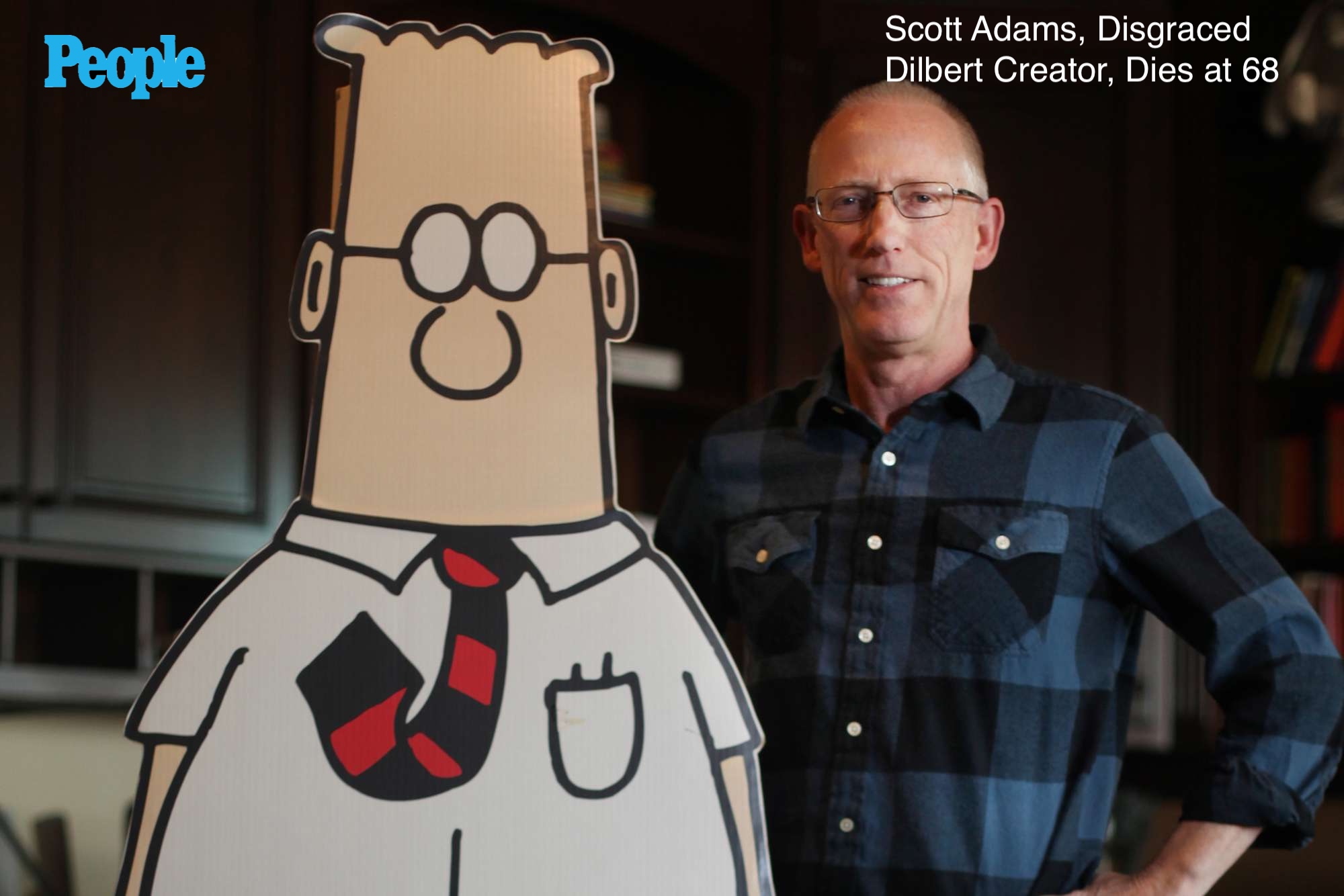
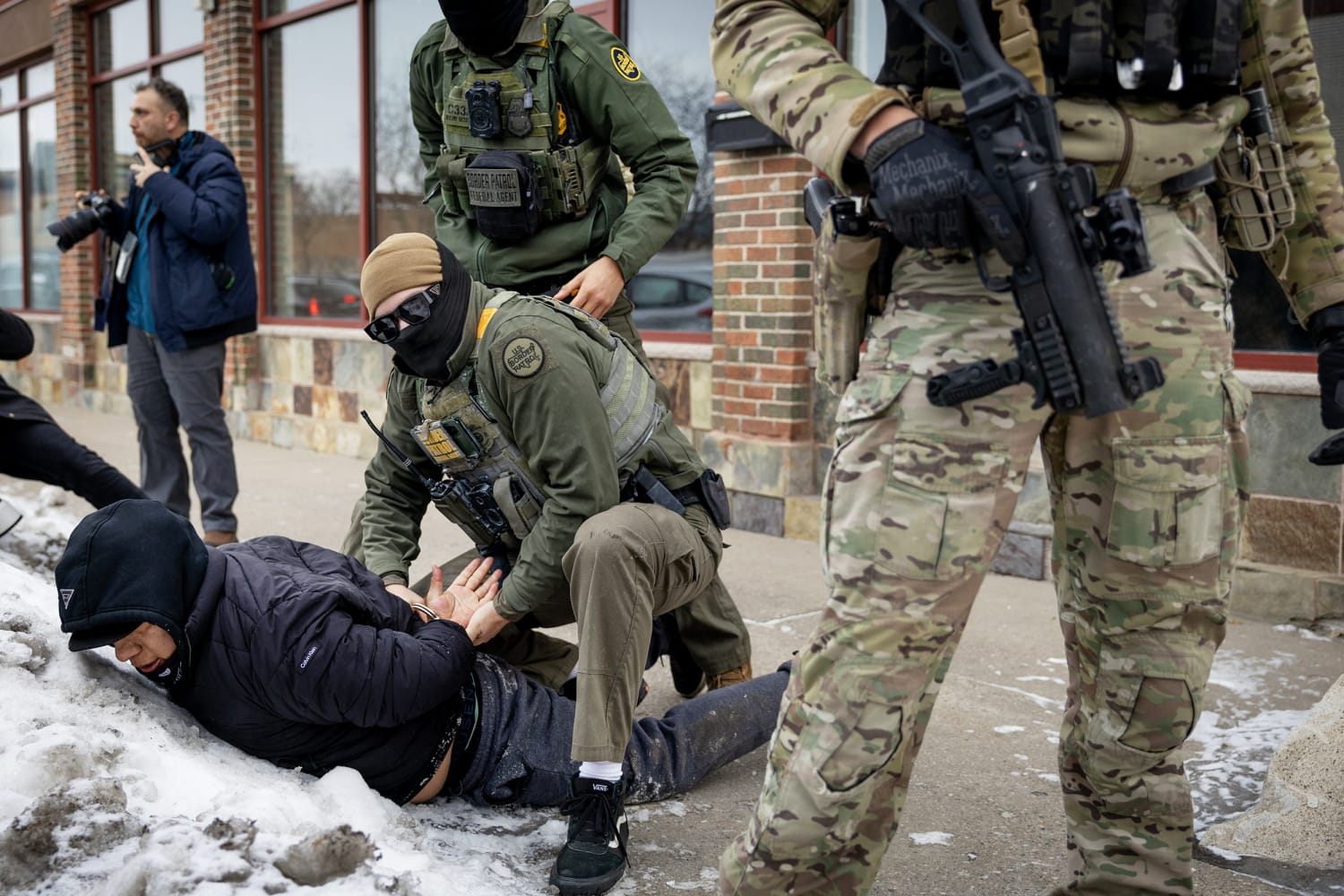



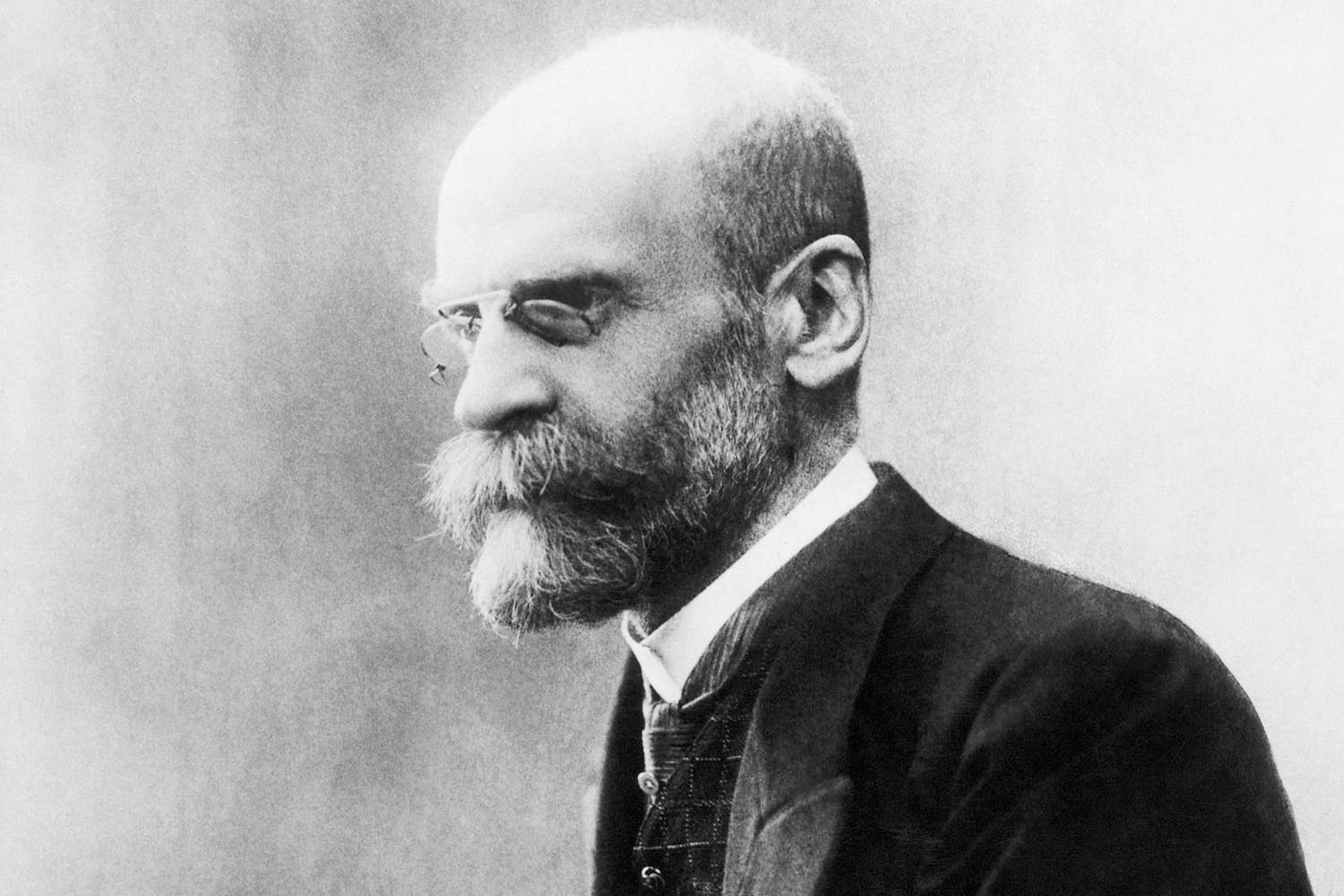

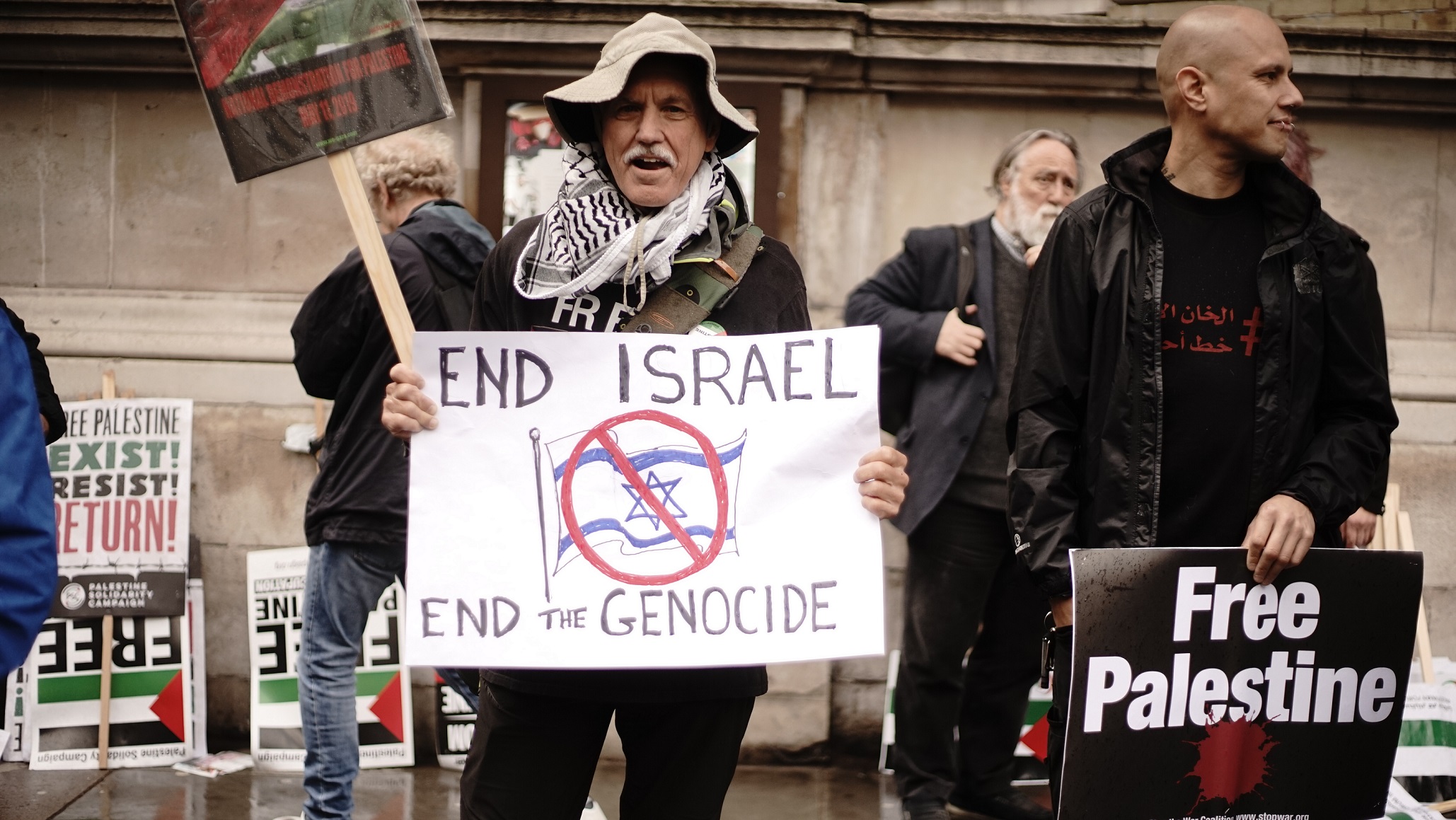

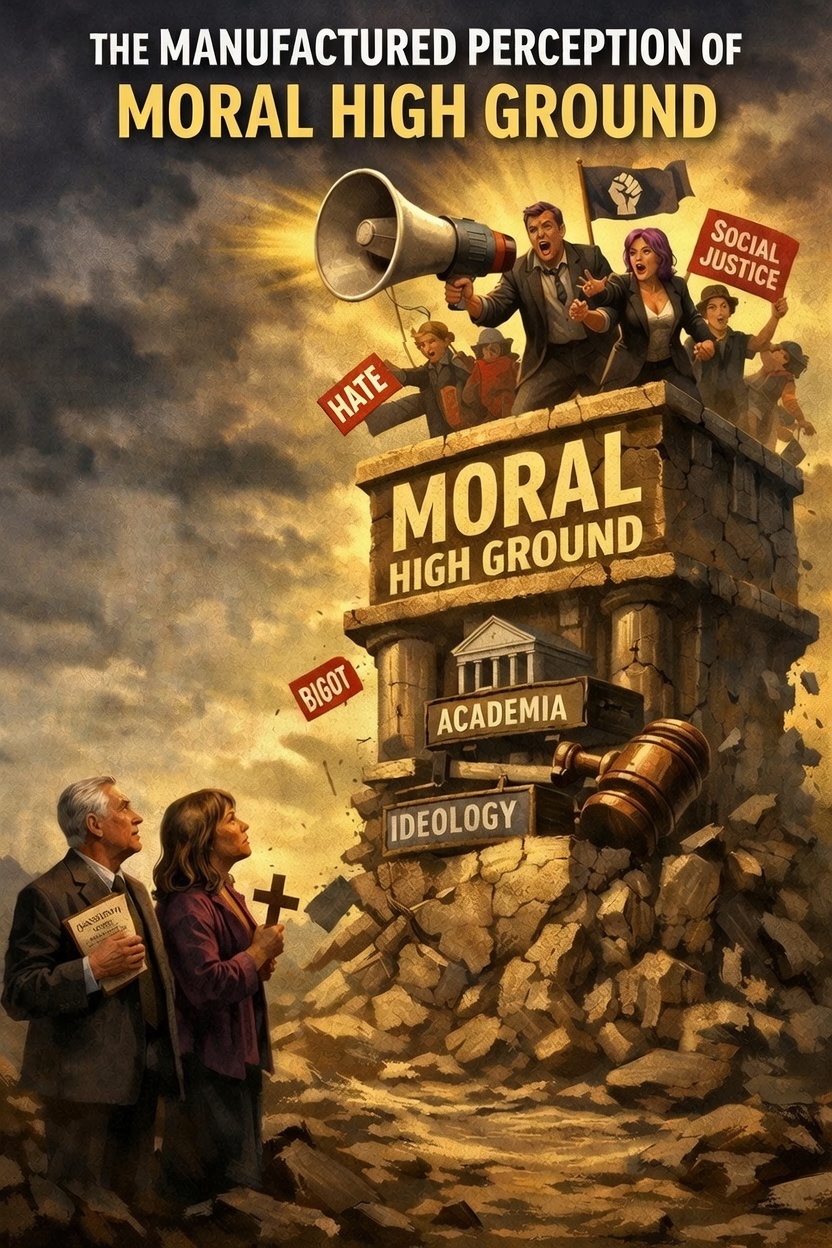
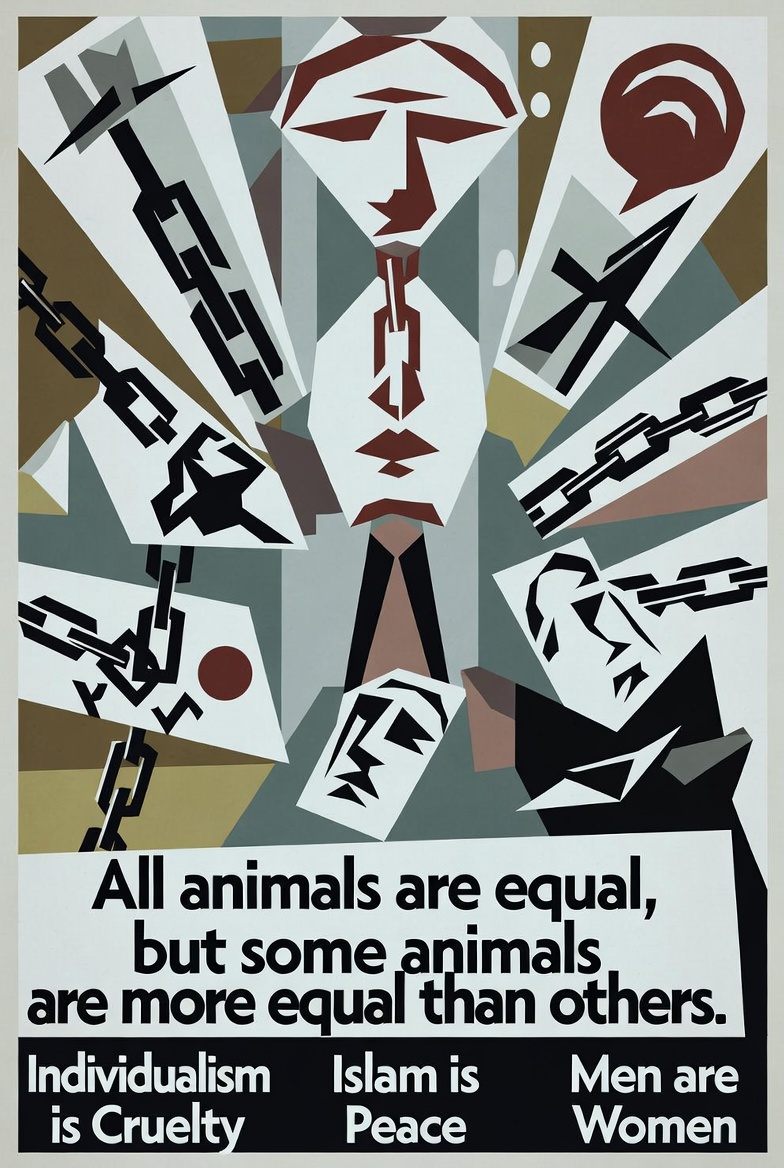
 freedom and reason