According to Newsweek, “The trouble began when a subset of students at the school began to lash out against the event, tearing down some of the signs and banners, or defacing them with ‘inappropriate’ stickers, These students also allegedly menaced other students and staff with glares and chants that included things like, ‘U.S.A. are my pronouns.’ Some taking part in the protest also wore red, white, and blue clothing and face paint, suggesting a level of coordination.” Oh, the horror of it all.
A bunch of middle schoolers at @BurlMASchools protested the pride celebrations at school. They wore red, white, and blue clothing instead of rainbow clothes, chanted “USA are my pronouns”, and took down pride flags. pic.twitter.com/Na3FmqWIDG
People are pushing back against the agenda. Now even the kids are pushing back. What did progressives expect? That the kids were going to sit there day after day while their school shoveled propaganda down their throats? Kids have a free speech right to protest. The Supreme Court upheld that right. The have a right to chant “U.S.A. are my pronouns.” They have a right to wear red, white, and blue clothing and face paint. They even have a right to coordinate their actions. All of this if protected by the First Amendment.
The kids wearing Pride were intimidated, according to reports (I suspect these accounts are exaggerated). How do administrators and teachers think the other kids feel? It’s intimidating to have administrators and teachers propagandize you all day long, telling you that you’re a bigot if you disagree. Folks are terrified to speak up against the agenda. I talk to people all the time who want to speak up but are afraid to. Progressives have put a massive chill in the air. That’s their goal. That’s intimidation.
Marshall Simonds Middle School a site of protest and resistance
These kids are brave even if they got a little carried away. Good for them. After the summer of 2020, I don’t think progressives have much room to whine about young people getting carried away. They politicize these kids and then expect them not to react politically. They’re not supposed to have their own mind. Progressives want sheep. But on this day they got something else. They want kids to be happy recruits to the cause of DEI. Public schools have created a toxic situation.
Schools should not be indoctrination centers. Take down the propaganda. Stop telling students what to think about issues that have nothing to do with why they’re there. They’re there for how many hours a day? Respect that. They’re a captive audience. Teach them how to think and be creative. Don’t divide them. Don’t sexualize them. Don’t teach them to resent each other.
There are charts one can find on the Internet with later endpoints, but the chart I share below is clean and high quality. All the charts show the same pattern, anyway. Would it surprise readers to know that the ratio between doctors and administrators is even greater now? I am sharing this to encourage you to think about a few questions: What is the relationship of doctors to the medical-industrial complex? What is the role of administrators? What is the medical-industrial complex?
A chart grabbed from the Internet. There are lots of these and the show they same pattern
What I putting down here this evening is something of a follow up to my blog from a few months ago Making Patients for the Medical-Industrial Complex (see also my Disordering Bodies for Disordered Minds). This is also preview from an upcoming blog I’ve been working on concerning the intersection of queer theory and sexology, an ideology that is used to justify what the complex called “gender affirming care.” That blog is a lengthy one and what you will read here is some of a section that pulls things together towards the end. However, it stands alone as an analysis of that premise is known.
I ask in that forthcoming piece how one might consider the power dynamics embedded in social institutions and norms, and how these impact the lived experiences of individuals with non-normative sexualities and genders, by considering the following questions from above, repeated here for your convenience: What is the relationship of doctors to the medical-industrial complex? What is the medical-industrial complex? What is the role of administrators in this complex? In contrast to the postmodernists, who eschew objective analysis, I will answer the question from the scientific standpoint of historical materialism or critical political economy.
The medical-industrial complex is made up of a network of corporations that ultimately determines what counts as disease or medical conditions, what causes disease or medical conditions, what counts as treatments, and so forth. These are determined according to the imperative to accumulate capital, to generate income for investors and stockholders. The network of health care companies are intertwined with the network of health insurance companies, medical supply and technology firms, pharmaceutical companies, and the corporate-captured regulatory bodies that legitimize the system by appearing to monitor the behavior of the system for its benefits, efficacy, and safety. The health care industry generates somewhere in the range a trillion dollar annually. Two-thirds of the industry’s revenue comes from patient care. This makes generating more patients a lucrative business.
Administrators are bureaucrats of various rankings who run the hospitals and clinics for the network of corporations. Doctors are highly paid employees of the complex who, while appearing to have a significant degree of autonomy, are governed by the bureaucrats, their work rationalized by their schemes. Along with the engineers and scientists who work across the complex, doctors represent expert labor, with some in an expert management position. As employees and managers, doctors do the bidding of their corporate masters, a bidding many are eager to do because of the compensation—at least the amount of money they’re paid assuages the guilt those with a working conscience might otherwise feel exploiting the masses. The training they receive in accredited universities that dispense medical degrees is shaped by an ideology (“medical science”) determined by the apparatus of the complex—all this for profit generation. The more doctors push (unnecessary and dangerous) drugs, (unnecessary and dangerous) surgeries, and so forth, the more income is generated for the investors and stockholders. And so administrators push doctors to push these things.
As noted, because of the profit motive, health care companies are always on the prowl for more customers, and that means not only medicalizing more domains of human life, i.e., creating more diseases and conditions, but also aggressively diagnosing and treating the diseases and conditions they manufacture (the subject of the previous blog I reference above). For example, introduced in 1980 in the third edition, “gender identity disorder” (GID) was included as a diagnostic category in the Diagnostic and Statistical Manual of Mental Disorders (DSM-3), which legitimized a new frontier for the complex. The DSM-5, published in 2013, introduced significant changes to the diagnostic criteria and terminology related to gender identity. In fact, the diagnosis of GID was replaced with “gender dysphoria,” or GD. The change from GID to GD depathologized gender identity and the focus was shifted to the distress or discomfort individuals claimed to experience due to a mismatch between their gender identity and their birth sex.
But what explains the introduction of gender identity disorder in the first place? According to the progressive narrative, during the 1970s, there was a growing recognition among mental health professionals that individuals who experienced distress or dissatisfaction with their assigned sex at birth and identified strongly with the opposite gender may benefit from specialized clinical attention—and the mental health industry could benefit financially from finding more patients with this condition. This recognition was influenced by the field of sexology, which advanced John Money’s invention of “gender identity” (this is the subject of the upcoming blog). Trans activists agitated for the inclusion of gender identity in the DSM: if they could get their desire to transition recognized as a psychiatric disorder, then doctors could prescribe hormones and conduct surgeries and insurance companies could pay for some or all of it. The inclusion of GID in the DSM-III was pitched as a progressive step toward acknowledging and providing a framework for addressing gender-related concerns within the mental health field. In reality, it opened a new area of profit generation for the complex. Once the transgender care pipeline had been established and normalized, GID was depathologized and gender dysphoria introduced, which came with more benefits for the complex. (Again, all this is dealt with in much greater detail in the upcoming blog.)
The point is that more patients are made this way and in many other ways and, in many cases, made patients for life because disease or conditions are caused by the treatment, and the treatment regime is a terminal one. This is especially true of so-called gender affirming care. More generally, the complex is vast and injures and kills millions of people annually (estimates indicate that, depending on how you define medical error, 250 to 500 thousand people are killed every year from medical error alone, and many times that are injured). Both sexology and queer theory rationalize as a progressive project to promote inclusivity and acceptance of diverse sexualities and genders the generation of corporate profits, and they do this by dissimulating the reality of pain and suffering in the practice of carving fetishes into flesh with quasi-religious rhetoric of “authentic selves.” Psychiatry have created many more paths to profit than this, as readers probably already know. Tranquilizers minor and major, anti-depressants, anti-psychotics, etc. I have only scratched the surface. The revenue generated by the greater system is much greater that the trillion dollars hauled in by the health care industry.
I will be writing more about this in the future, but this seems the necessary starting point for readers to better understand my past blogs concerning the rise of the New Fascism: a brief account of the transformation of the Roman Republic into the Roman Empire and the perversions that followed, with comparisons points to the deformation of the American Republic. While, after a long period of human suffering in Europe, the fall of the Roman Empire paved the way to modernity, a difficult path to be sure, modernity is now here and the regressive forces of progressivism and technocracy have imperiled it. Thus new perversions threaten the aspiration of our species for a superlative and lasting form of self-government. America is rapidly tumbling into dictatorships. Many of its signs are already here. The people must confront this.
Rome is the necessary starting point because of the lesson it provides for those of us who live in these tumultuous times and because, as many of you know, the founders of the American Republic drew inspiration from the Roman Republic when designing the framework of the American government, as well as the nation’s creed, which emphasizes democracy, equality, individualism, liberty, pluralism, and self-reliance, a list of ideals that, in practice, however imperfectly executed, has made America the greatest instantiation of democracy and freedom in world history.
Cicero Denounces Catiline, painting by Cesare Maccari, 1888
References to Roman history, philosophy, and political figures can be found in various writings of the founders. The Roman statesman and political philosopher Cicero, known for his defense of republican values, was frequently quoted and cited by the founders. The Roman Republic and Roman statesmen weren’t their only inspiration, of course. They also drew from other political philosophers and historical examples, such as the Greek city-states, and, crucially, Enlightenment thinkers such as John Locke and Montesquieu, the source of America’s humanist, liberal, and secular character. Nonetheless, it was the example of the Roman Republic that gave them the plan for a form of government that made the emergence of a dictator unlikely—or at least more difficult to achieve.
The founders admired in particular these aspects of the Roman Republic: the concept of civic virtue, divided government, or separation of powers, and its system of checks and balances. The founders sought to incorporate these principles into the new American system to prevent the concentration of power and protect individual liberties. Again, the promise was to prevent the rise of a dictatorship. Tragically, historical developments portend the breaking of this promise—if that promise has not already been broken.
One notable influence on the founders’ plans was the Roman concept of the mixed government or mixed constitution, which involved a balance of power between different branches or orders. The Roman Republic had three main branches of government: the consuls, the popular assemblies, and the Senate. The founders of the American Republic sought to emulate this balance by dividing powers among the executive, legislative, and judicial branches. For example, the founders envisioned the United States Senate as a deliberative body akin to the Roman Senate, which represented the interests of the states, a place where the experienced and the knowledgeable deliberate on legislation, (This was the reason the states appointed the Senators in the original constitution.)
Additionally, the concept of civic virtue, derived from the Roman ideal of the virtuous citizen engaged in public affairs, was seen as vital for the success of the American Republic. The founders believed that a virtuous and educated citizenry would help ensure the stability and longevity of the republic. This is why, despite the fact that the founders were a mix of devout Christians and deists, and likely a few atheists, as well, they recognized the importance of those Christian values compatible with a secular framework.
Thomas Paine, the author of several notable works, including Common Sense and The Age of Reason was a deist and a freethinker. In his writings, Thomas Jefferson extracted the moral teachings of Jesus while omitting the Bible’s supernatural elements. Benjamin Franklin expressed skepticism about organized religion but emphasized the importance of morality and virtue. George Washington, an Anglican Episcopalian, referenced God in his public speeches and private correspondence but abstained from taking communion during services. John Adams was a Unitarian and frequently referred to his faith in his writings. These are religious persuasions compatible with secular government while providing blueprints for virtuous lives. (One must not in the telling of American history neglect the fact that Protestantism plays a major role in the emergence and evolution of the modern West.)
However, tragically, like the Roman Republic, the America Republic has been overtaken by Empire, which has allowed for the emergence of a dictatorship of the corporate state analogous to the undemocratic governing structures in the Roman Empire. The democratic-republican process established by the founders has been corrupted by a permanent political establishment, the administrative state, with a deep state that plays a role much like the Praetorian Guard in the Roman Empire. Moreover, like the Roman Empire, the American Empire is a military state devoted to world adventurism.
All this portends doom for the American project. It is therefore useful to understand the story of the perversion of Rome by the authoritarians who took it over from within, actions leading to its downfall and the submersion of Europe in the Dark Ages, a darkness that would only be cracked centuries later, first by the Renaissance, then by the Age of Reason and the Enlightenment, which benefited greatly from the Protestant Reformation breaking the religious monopoly of the Catholic Church. Obviously, a comprehensive history of this matter is one for a book-length treatment. However, a sketch should suffice to get my main point across.
* * *
The Roman Republic was a period of ancient Roman history that lasted from 509 BC to 27 AD. It marked the early form of Roman government, characterized, as noted earlier, by a system of checks and balances, representative assemblies, and the shared power of elected officials. During this time, Rome grew from a city-state to a dominant power in the Mediterranean region, which improved the region by civilizing the surrounding tribes, effectively putting the region on a course towards detribalization.
In the early years of the Roman Republic, political power was vested in two annually elected officials called consuls, who served as the highest authority in the state. They were responsible for leading the military, presiding over the Senate, and executing the laws of Rome. The Senate played a significant role in advising the consuls and shaping policies. The Republic also had a popular assembly called the Comitia Centuriata, which represented Roman citizens and had the power to pass laws and elect officials. Like the United States and modern European countries, underpinned by the capitalist mode of production, a class-based system, political power in the Roman Republic was organized on the basis of social class and wealth, with the wealthier citizens having greater influence.
However, over time, internal conflicts, struggles for power, and external threats posed by rival states and military conquests contributed to the transformation of the Roman Republic. As Rome expanded, power and wealth became concentrated in the hands of an ever fewer families and individuals, creating economic disparities and social antagonisms. This led to political tensions and unrest. Additionally, powerful generals emerged and sought to extend their personal influence and control over the political apparatus.
The Course of Empire: Destruction painting by Thomas Cole, 1836
The transition from the Roman Republic to the Roman Empire took place in the first century BC. It was marked by a series of civil wars and political upheavals. Julius Caesar emerged as a prominent figure and, after a period of conflict, established himself as dictator for life. His reforms aimed to address social and economic issues and enhance his personal power. His assassination in 44 BC led to another power struggle, with his adopted heir Octavian, later known as Augustus, emerging as the dominant figure. Augustus consolidated power and established a new political system that effectively marked the end of the Roman Republic and the beginning of the Roman Empire. In 27 BC, Augustus established the Praetorian Guard, also known as the Praetorians, an elite military unit serving as the personal bodyguard of Roman emperors in ancient Rome. The transition from the Roman Republic to the Roman Empire represented a significant transformation in Rome’s political structure and governance, shifting from a republican system to a centralized imperial rule under the authority of emperors.
The Praetorian Guard played a significant role in the politics and power dynamics of the Roman Empire. Initially, the primary purpose of the Praetorian Guard, stationed in a fortified camp, the Castra Praetoria, located in Rome, was to protect the emperor and the imperial family. Over time, the size and composition of the Praetorian Guard grew and changed and its influence expanded beyond its original role. The Praetorian Guard’s proximity to the emperor granted the apparatus significant political influence and leverage. It became involved in imperial succession, often playing a decisive role in the appointment and removal of emperors. The Guard had the power to support or overthrow an emperor, as its loyalty could shift based on its own interests or the promises and bribes of aspiring emperors. Emperors who enjoyed the support of the Praetorian Guard could rely on its loyalty, but at the same time, they needed to maintain the favor of the Guard to ensure their own safety and authority.
The Praetorian Guard left a lasting impact on the Roman Empire, serving as a symbol of the military’s influence in politics and highlighting the potential dangers of a powerful and politically motivated military force lying at the center of government. This history demonstrates the complex relationship between military power and political authority within the Roman Empire, a demonstration useful for understanding the situation of America today as it degenerates into a New Fascism under the controlling influence of progressive ideology.
* * *
Comparing the rise of empire in the Roman situation and the rise of empire in the American situation provides crucial insights into the nature of power and the role of institutions. To be sure, there are significant differences between the cases, not least of which is the dissimilarity between ancient economic systems and the advanced capitalist mode of production; but even as analogy, drawing a parallel between the Praetorian Guard in the Roman case and the administrative state in the American case offers a way to explore the dynamics of centralized authority and the potential risks and challenges that come with it.
The Deep State choosing Rome’s next leader
As we have seen, the Praetorian Guard was an elite military unit initially tasked with protecting the Roman emperor and maintaining order in the capital city of Rome. However, over time, in a paradigm of mission creep, the Praetorian Guard gained significant political influence and became a powerful force within the Roman Empire. It often played a role in the elevation or removal of emperors and other officials through its ability to depose or support them. The Praetorian Guard’s power and political influence made it a potential threat to the stability of the empire but more crucially, it represented a major obstacle to the restoration of the Roman Republic and its democratic processes.
The administrative state refers to the various government agencies and bureaucracies responsible for implementing laws, regulations, and policies. This permanent political class lies at the heart of the executive branch, which has in the United States grown significantly over time, with numerous agencies and departments involved in various aspects of governance, public administration, and regulation. This permanent class wield substantial power in the implementation and enforcement of laws and regulations. The administrative state’s expanding scope and influence raise concerns about accountability, regulatory overreach, and the potential for unelected bureaucrats to wield significant power without sufficient democratic oversight. The administrative state is powerful, prone to abuses of power, while at the same time subject to regulatory capture with the rise of corporate power. The military-industrial complex and the national security state apparatus play an outsized role in shaping the trajectory of American history and the fate of the people.
C. Wright Mills, professor of sociology at Columbia University, best known for his book The Power Elite, published in 1956, which examines the nature of power and its concentration among corporate, military, and political elites in the United States, helps observers analytically organize the evidence of power in their lives. In that book, Mills argues that power in modern societies is concentrated in the hands of a small group of individuals who occupy key positions in dominant institutions. These three institutional spheres are interconnected and form a cohesive power structure that dominate and shapes American society. Mills argues that this power elite consists of individuals from upper-class backgrounds who have the resources, influence, and access to decision-making positions. The elite share similar backgrounds, educational paths, and social networks, which enable them to perpetuate their power and maintain their privileged position in society. Crucially, this elite operate in ways that are largely independent of formal democratic processes and institutions.
In The Power Elite, Mills criticizes the increasing influence of the power elite in shaping public policy and the overall direction of society. He argues that the interests and values of the power elite diverge from those of the general population, leading to what David Held, in his 1995 book Democracy and the Global Order: From the Modern State to Cosmopolitan Governance, referred to as a “democracy deficit.” Mills expresses concerns about the potential erosion of democracy and the concentration of power in the hands of a few, a concern given an update for the new millennium by Sheldon Wolin, a political philosopher at Princeton University, in his 2008 Democracy, Inc.: Managed Democracy and the Specter of Inverted Totalitarianism. Wolin characterized the situation as “inverted totalitarianism.” Inverted totalitarianism represents a shift from the traditional notion of totalitarianism, which is characterized by an overt authoritarian rule, to a more subtle and less visible form of control.
Wolin contends that inverted totalitarianism is marked by the growing influence of large corporations and the power of the economic elite over political processes. He argues that the concentration of economic power in the hands of corporations has led to the erosion of democratic principles and practices, as economic interests increasingly shape political decisions. Wolin highlights the role of what he calls “managed democracy” in maintaining the illusion of popular participation and political choice. He suggests that the electoral process and political campaigns have become heavily influenced by corporate money, leading to a narrowing of political options, and limiting genuine democratic participation. Wolin argues that political parties, which he refers to as “the twin-party system,” have become increasingly similar in their policies and allegiance to corporate interests. This is what I and others refer to as “the establishment.”
The establishment works through the administrative state. Within the administrative state there is a deep state apparatus that ensures that the establishment obtains the leadership it desires. (Sometimes this fails, as in the case of Donald Trump in 2016. But this is rare and unlikely to happen again unless there is mass resistance to the current situation.) To control the domestic and external environment for the sake of corporate elites, the United States has established various agencies and organizations dedicated to national security. Two prominent agencies in this regard are the Federal Bureau of Investigation (FBI), established in 1908 and repurposed by J. Edgar Hoover in the 1920s, and the Central Intelligence Agency (CIA), established by the National Security Act of 1947 by President Truman. These and other agencies have over the last several decades been weaponized by the administrative state. (For more details on these agencies see Jon Stewart: Corporate State Stooge.)
The FBI is a federal law enforcement agency operating under the jurisdiction of the Department of Justice. Its ostensive role is to investigate federal crimes, protect national security, and enforce federal laws. While the FBI’s jurisdiction extends internationally, it primarily focuses on domestic security within the United States. The FBI collaborates with various federal, state, and local law enforcement agencies to push administrative state control deep into the American governing apparatus and civil society. The FBI accomplishes this by leveraging its charge, a wide range of responsibilities including counterintelligence, counterterrorism, and cybercrime investigations. The CIA is an international intelligence agency that operates under the authority of the executive branch. Its primary mission is to collect and analyze intelligence information, conduct covert operations, and provide assessments to inform policy decisions related to national security. The CIA’s focus extends beyond domestic security to global intelligence gathering and analysis. But it is also involved in domestic politics, as we recently saw with the Hunter Biden laptop scandal. The work of these agencies is integrated with tat of the Department of Homeland Security (see MDM is the New WMD: DHS Issues a New NTAS Bulletin; The Weaponization of the Government; The “Control of Misinformation” and the Deterioration of the Integral State; Twitter Interfered in the 2020 Election).
Drawing a comparison between the Praetorian Guard and the administrative state highlights the potential risks associated with concentrated power and the need for appropriate checks and balances. The growing power of both indicate the shift from republic to empire. In both cases, the centralization of power introduces challenges to governance, including corruption, lack of accountability, and threats to democratic processes. Analyzing these parallels contributes to a broader understanding of the complexities and dynamics of empire-building and the management of centralized authority. Today, the American Praetorian Guard, i.e., the deep state, selects our presidents, the installation of the Biden regime only the most obvious instance. The deep state means to determine the outcome of 2024 election, as well (see Democrats Have Crossed the Rubicon). Thus these types of analyses are vital to America’s future as a model republic—at this point to the restoration of the American Republic so that it can serve as such a model—and so you can expect more.
Cheryl Hines, the wife of presidential candidate Robert F. Kennedy, Jr., shares that the one Kennedy’s statement that drove Kennedy to propose the separation announcement to shield her from abuse was Kennedy’s comparison between the Holocaust and CDC leader Anthony Fauci’s efforts to vaccinate Americans against COVID. Shortly after criticisms arose, Hines took to Twitter and tweeted the following: “My husband’s reference to Anne Frank at a mandate rally in D.C. was reprehensible and insensitive. The atrocities that millions endured during the Holocaust should never be compared to anyone or anything. His opinions are not a reflection of my own.’” Kennedy explained his intention and apologized in this tweet:
I apologize for my reference to Anne Frank, especially to families that suffered the Holocaust horrors. My intention was to use examples of past barbarism to show the perils from new technologies of control. To the extent my remarks caused hurt, I am truly and deeply sorry.
Roger Waters, formerly of Pink Floyd, author of arguably the greatest rock opera in the history of that genre, The Wall, was also recently attacked for using Anne Frank as a comparison point. The attack was fierce and indicated that the Israel lobby is still alive and kicking, a presence quickly denied by corporate media. But there is a lobby and it is trying to silence Waters. Why? Because he talks about the situation of Palestinians in Gaza and the West Bank with moral clarity. More than this, elites of many stripes are desperate to censor his act because it draws attention to the authoritarianism world elites are seeking to impose on the global population—a world of war and want. Shamefully, the Biden Administration has affirmed the lobby’s propaganda. Here is Waters defending himself in a lengthy interview:
I understand why Hines said this, and my comments that follow are not a criticism of Hines. I am not implicating her in anything, albeit her words were quite harsh to her husband. (The attack on Waters is a different matter altogether. I will probably write more on this in the future.) But it does remind me that something needs to be said about using the Holocaust in historical comparison precisely because it has become a reflex among many people who are trying to be good people but don’t understand the importance of comparison in historical and scientific study.
I wrote about this years ago when defending William Robinson, professor of sociology at the University of California-Santa Barbara, who got into trouble for making such a comparison. There I wrote, beware the argument that one can never use the Holocaust (or anything else) as a comparison point for understanding the manifestation of evil. History is full of authoritarian actions for which the Holocaust is representative. History is full of genocidal killing, again, for which the Holocaust is representative. No historical event is the same. To be sure, each have their own idiographic character. At the same time, however, historical events share commonalities just as they share differences, and they must be compared to sort all this out.
Roger Waters at a recent performance in Germany recreating a scene from The Wall
The basis for all rational scientific work is the comparison of similar things. Consider that each person is a case, unique in his individuality, but at the same time also similar in many ways to other persons. There are, moreover, groups differences. This is why we use samples from the population with the ability to draw inferences about the larger population and the groups that comprise it. It is same for historical and social analysis using historical case studies. Historical events, e.g., the French Revolution, the American Revolution, the Bolshevik Revolution, etc., are the cases we use in multivariate analysis of the nature of revolution generally. What’s similar? What’s different? That’s why we compare. We’re trying to ascertain nomothetic principles that explain why revolutions happen—and why they don’t happen, or why they’re not successful, and so on. We are also trying to determine if there are nomothetic principle at all in historical and social events and trends.
Understanding the Holocaust specifically requires understanding the problem of authoritarianism and genocide generally, and we do this for a practical reason: to stop authoritarianism and genocide before these horrors happen or early in their development. Indeed, this is a moral imperative. We have clearly not taken the lessons of history to heart, because we can see these things rising again (some of us can, anyway)—and popular understanding of the character of fascism is terrifyingly impoverished.
To say that we cannot compare what the Nazis did in the early period of the development of the nationalist socialist nightmare to today’s situation with authoritarianism and war on a vast scale, i.e., the administrative state and the technocratic apparatus of global corporatism, is to say that we should blind ourselves to fascism. Who would think such a thing? It suggests that somebody doesn’t want us to make those comparisons. Why? Because it interferes with their agenda?
But we said “Never again” in the aftermath of the Holocaust. I thought we meant it. We have to mean it. And that means that no historical case is transcendent, cordoned off from examination, however horrific. Indeed, the more horrific the event or development, the more important it becomes as a point of historical comparison. So beware those who tell you to not think about the things you must think about if we are to make a better world for subsequent generations.
In a significant development, Paula Scanlan, a whistleblower and former teammate of Lia Thomas, the UPenn swimmer, has come forward to shed light on the injustices she faced as a female Division 1 (D1) swimmer. Scanlan bravely shares her personal experience of being silenced by both the NCAA and her Ivy League university when she raised concerns regarding the inclusion of a transgender athlete on their team. Joining forces with Riley Gaines, she now actively advocates for the protection of women’s sports.
Transgender swimmers Iszac Henig and Lia Thomas fist bumping. Henig made the decision to forgo masculinizing hormone therapy, like testosterone, in order to maintain eligibility for participation on the women’s team in swimming.
Scanlan tells her story in the below powerful video (the Daily Wire’s production team is top-notch). Her account is corroborated by others. Quite obviously, Thomas, despite being a man, was permitted to compete against women on the swim team. Scanlan is interviewed in the 2022 Matt Walsh documentary What is a Woman. She talks to Walsh from the shadows, her voice electronically masked. She is now coming forward. I share the Walsh interview at the end of this blog.
UPenn swimmer, Lia Thomas’ teammate and What is a Women whistleblower Paula Scanlan tells her personal story of being silenced by the NCAA and her Ivy League university when she dared to question the decision to put a transgender athlete on her team. Now, she joins Riley Gaines in the fight to protect women’s sports.
“You will regret this” is obviously a threat. This was an email sent by the UPenn athletic department to the women on the UPenn swimming team. This is chilling and wrong. But perhaps the more terrifying piece of this story is the weaponization of UPenn’s psychological counseling services to make the women “okay” with competing against Thomas. This is textbook gaslighting. Gaslighting is a psychological manipulation tactic in which one person or group of persons makes another person or group of persons question their own judgment or sanity.
Characteristics of gaslighting are distorting and twisting information; presenting false narratives to create confusion and undermine the target’s trust in her own judgment; belittling the target’s emotions, opinions, or thoughts, making her feel foolish or overly sensitive; shifting responsibility for actions taken onto the target, making the target feel guilty or responsible for a situation she did not choose; isolating the target from sources of support, further amplifying control over the target and making it harder for the target to explore her doubts or confirm her experiences and suspicions.
In the UPenn case, the women swimmers were being made to feel as if they suffered from a psychiatric malady because they didn’t want to compete with a man who identifies as a woman on the women’s team.
It is a mark of authoritarianism for an educational institution to silence students with threats or gaslight them. The logic of authoritarianism is inherent in the logic of DEI programming (diversity, equity, and inclusion), ideological weaponry designed by corporate state elites and technocrats to control the minds of professionals, students, and workers. DEI programs transgress fundamental human rights, including freedom of association, conscience, speech, and thought. As such, DEI is diametrically opposed to the principles of equality and fairness.
Central to the American Creed is the principle of equality of opportunity. This type of equality emphasizes providing equal access to education, employment, and other resources, enabling individuals to compete on a level playing field and pursue their goals based on their abilities and efforts. In its ordinary meaning, “equity” refers to an approach that seeks to address systemic inequalities and create fair and just outcomes for all individuals. In practice, equity goals recognize that different individuals may face disadvantages or systemic biases that hinder their access to opportunities and resources they need to be successful. The principles of fairness and justice therefore require providing opportunities, resources, and support to individuals based on their unique needs and circumstances.
In two cases, grouped and objective difference across our species require those differences to be taken into account in order to ensure equality of opportunity or equity. These cases are age and sex. Because men and women represent two distinct genotypes in our species, with men possessing physical and physiological characteristics that give them significant advantages over women in athletic competition, achieving equity required the creation of men and women’s sports (as well as sports segregated by age). Within those broad divisions, there is sometimes further segregation, such as the division of boxing into weight classes. Note that we do not segregate sports by ethnicity, religion, or race. This is because these are either not clearly objective categories or are obviously cultural groupings not produced by natural history.
Therefore, unlike strict equality, which focuses on treating everyone the same despite their differences, equity recognizes that individuals may require different levels of assistance or accommodations based on those differences in order to achieve true equality, which is the possibility of success at a given endeavor in light of the requisite dedication and talent to succeed. This is why equity goals focus on addressing systemic barriers that perpetuate disadvantage or marginalization. The fact that girls and women are at a distinct disadvantage in athletic competition with boys and men explains the marginalization of girls and women in sports. In order to address disadvantage and marginalization, girls and women are rationally segregated from boys and men.
It is vital to achieving the goals of equity to ensure that the groups so segregated are objectively-existing and not the result of subjective perception or abstract categories without clear referents in concrete reality. Thomas was permitted to compete against women despite being a man because Thomas’ claims the gender identity of womanhood. However, this is an entirely subjective claim. By definition, gender identity refers to an individual’s deeply-held sense of his own gender, which may or may not align with his sex. In other words, it is an internal and personal understanding of one’s gender. Gender identity is therefore distinct from biological sex, which is determined by objective anatomical and physiological characteristics. Gender identity is a result of self-identification not objective determination. In contrast, the women on the UPenn team are women because of their genotype, an objectively-existing thing common and exclusive to them. UPenn’s actions sacrificed the principle of equity, i.e., true equality, for the politics of inclusion, putting women at a distinct disadvantage.
DEI programming, particularly in academic or corporate settings, also stifles free speech and limits ideological diversity. By promoting certain viewpoints or restricting others in the name of creating inclusive environments, DEI does more than simply impede open dialogue and hinder the free exchange of ideas; it systematically violates the individual’s right to freedom of assembly, association, conscience, privacy, speech, and thought. Scanlan was also a victim of these oppressions. She describes how an editorial she wrote for the campus paper was accepted and published only to be removed within a matter of a few hours. She and her colleagues also had their freedoms of association and privacy violated by being forced to associate with a man in a woman’s only space, a situation in which the man could see naked women while exposing them to his naked body.
It is no exaggeration to say that the assault on sex-based rights is one of the great struggles of our age. It is moreover a defining struggle; if society cannot determine what a woman is on the basis of objective criteria and move to protect women as a group based on those criteria, then we cannot be a fair and justice society. The claim that inclusion requires trans women to be included in women’s sports rest upon a deceitful claim, that trans women are women. But as adult human males, trans woman are by definition men. Once this lie is exposed—and it is exposed simply by affirming the truth that men are not women—it is obvious that women’s rights are being assaulted. There is no rational argument for the inclusion of men in women’s sports.
Moreover, Scanlan is right about how this struggle is part of a much larger struggle for the future of liberty. Those who oppose sex-based rights are trying to impose an ideology on society by silencing the defenders of those rights. This not how a free societies operate. This is not how a society that proclaims women’s rights operates. This is in fact how totalitarianism and misogyny work. The totalitarians and misogynists wrap their authoritarian programs in the language of social justice, but the destruction of women’s rights is anything but just social or otherwise.
A teammate of Lia Thomas appeared in What Is A Woman anonymously. A few days ago she came to us and said she is ready to come out publicly and tell her story. I had a longer conversation with Paula where she revealed a number of details that weren't covered in the film. Watch: pic.twitter.com/wlknGmslJC
A grand jury has indicted President Donald Trump for his alleged mishandling of classified documents. Trump is facing seven charges, including false statements and conspiracy to obstruct justice. The investigation into Trump’s handling of classified documents is being conducted by special counsel Jack Smith, and a separate grand jury in Florida is overseeing the proceedings, distinct from the one convened in Washington, DC. The inquiry was initiated after the FBI was notified by the National Archives that classified documents were found among those returned by Trump following his departure from office. Here’s the indictment.
President Donald Trump speaks at the National Rifle Association Convention in Indianapolis, on April 14, 2023.
I discuss the matter of Trump’s handling of classified documents and compare it to Biden’s handling of classified documents here: Is There an Equivalency Between Biden and Trump’s Handling of Classified Documents? I conclude that there is no case here. In fact, the raid on Trump’s home was an abuse of power. So why is this happening? This is lawfare. Lawfare involves the use of legal actions and strategies as a means of achieving political or ideological objectives. It refers to the exploitation and manipulation of legal systems, processes, or principles to gain a strategic advantage or undermine opponents. Lawfare can take various forms, including lawsuits, investigations, harassing and intimidating opponents, and leveraging legal frameworks to shape public opinion or policy debates. There are a few reasons why the establishment is using lawfare against the President of the United States.
First, the administrative state seeks to retrieve all documents related to Crossfire Hurricane. From July 31, 2016, to May 17, 2017, the Federal Bureau of Investigation (FBI) conducted a counterintelligence investigation known as Crossfire Hurricane. Its objective was to explore numerous connections between individuals associated with Donald Trump’s presidential campaign and Russian officials and spies. The investigation aimed to determine whether these associates were knowingly or unknowingly coordinating with the Russian government’s interference efforts in the 2016 US presidential election. In reality, Crossfire Hurricane was a conspiracy by the deep state in cahoots with the Democratic Party, aided by legacy and social media companies, to overthrow a duly elected president. Elites suspect Trump may be in possession of documents that expose this plot and they want to documents back. (See The Conspiracy to Overthrow an American President.)
Second, President Trump is the clear front funner in the 2024 presidential election. Because Trump is not a part of the establishment but instead represents the populist-nationalist movement to restore the republic and the principles of democratic-republicanism and liberal freedoms, his reelection is viewed as severely detrimental to the globalist project to dismantle the republican machinery and incorporate the American population into the transnational corporate state system. He must be stopped in order to save and advance the project. Thus we see the same frenzy that sought to overthrow his presidency during 2016-2020 in the present movement. Trump derangement syndrome is very real. But it is not a mental disorder (however mentally disorders those who suffer from it are). It is a project to derail populist-nationalism.
The 2019 impeachment was related to the events surrounding Ukraine and is commonly referred to as the “Ukrainian phone call” or the “Ukrainian scandal.” A whistleblower alleged that President Trump had engaged in improper conduct during a phone call with Ukrainian President Volodymyr Zelensky on July 25, 2019. The complaint suggested that Trump had solicited foreign interference in the upcoming 2020 US presidential election and had also withheld military aid to Zelensky to force his cooperation. Trump calls it the “perfect phone call.” He calls it that because it was. It’s the president’s job to determine whether high ranking government officials are involved in scheme of international corruption, especially when they bear on matters of national security. Trump was aware that the Biden family was involved in business relations with several foreign countries, including Ukraine and China. Whether Trump understood that the establishment was planning to instigate a proxy war with Russia is unknown, but this likely plays into the scenario.
The second impeachment took place in January 2021 and was related to the events surrounding the Capitol riot on January 6, 2021. The impeachment charged Trump with “incitement of insurrection.” The impeachment process began after a violent mob, consisting of Trump supporters, stormed the US Capitol in an ostensive attempt to disrupt the certification of the Electoral College results, which purportedly confirmed Joe Biden as the winner of the 2020 presidential election. The charge was irrational in that the president, who was exercising his First Amendment rights, specifically told the audience to be peaceful and law-abiding. His comments were recorded and they were entirely unambiguous. (“A republic, if you can keep it”; “He Summoned a Mob to Washington.” The Selective Application of the First Amendment; A Peaceful Transition of Political Power.)
Justice and reason prevailed and Trump was acquitted of all charges in the Senate. However, if it weren’t for the fact that he had become the heart of the Republican Party, and convicting him would have disillusioned the Republican base, Trump would have likely been convicted. Trump’s popularity puts establishment Republicans in a difficult position. They secretly think like Liz Chaney, who helped lead the January 6 committee farce in the House. But they have to publicly support him because he will be the next president—if the establishment doesn’t throw him in jail.
MUST WATCH: Mark Levin absolutely shreds Joe Biden, Merrick Garland and Jack Smith over the corrupt gestapo tactics that they're using to interfere in the 2024 election. pic.twitter.com/adOt9yO2Yw
Finally, Joe Biden is the most corrupt president in American history and the conspiracy to install him as president and keep him in power is vast. I have written quite a lot on this (see Vice-President Biden and His handling of Classified Documents). You should note that Trump’s indictment comes down at the same time House Republicans have intensified their criticism of President Joe Biden and his family following their confidential review of an FBI document the agency has been desperate to keep from them.
After examining the FD-1023 form presented by the FBI within the secure confines of the Capitol Hill SCIF, members of the House Oversight Committee became more confident in their allegations of bribery and corruption. The evidence indicates Biden’s involvement in a bribery scheme with a foreign individual during his time as vice president involving millions of dollars. Emphasizing its credibility and legitimacy, House Republicans have revealed that the informant had been a paid FBI source for multiple years. Representative Anna Paulina Luna of Florida went as far as to assert that Biden is unequivocally guilty of bribery.
Daring Republicans to come after him, like a killer asking his accusers to produce a body, Biden quipped “Where’s the money?” when asked by a reporter for his response to Rep. Nancy Mace, a member of the House Oversight Committee, who had said earlier in the day that the allegations are “worse than has been reported so far.” Much worse. Keep in mind this is one case. Hunter Biden’s laptop is chockfull of evidence of corruption (see New York Post Drops a Bombshell on the Biden Campaign). The indictment dropped to distract the public from Biden family corruption. See Nancy Mace on the War Room here.
See my latest FAR Podcast concerning the election rigging network. Progressives are waging full spectrum war against the American People.
* * *
BREAKING UPDATE: @SoCalAntifa member Erik James Boyd, the Chad Loder associate who was arrested at the brawl in Glendale, Calif. against Armenian-American parents, has a prior arrest related to felony child sex crimes & assault with a deadly weapon. The charges related to sexual… https://t.co/7mcZKtcDgEpic.twitter.com/FKuUiwldEp
Why are so many Antifa also pedophiles? And why do progressives heroize them? Remember when Kyle Rittenhouse shot a pedophile called Joseph Rosenbaum in self-defense and progressives turned Rosenbaum into a hero and made Rittenhouse out to be the bad guy? Tucker Carlson nailed it in his second Twitter program. Progressives are rationalizing pedophilia. What’s up with that?
I will be posting a blog soon showing that both anarchism and queer theory are obsessed with children. Their obsession is single-mindedly sexual. They’re so desperate to talk to children about sex and to sexualize them that they riot when parents intervene. The overlap between anarchism and gender ideology is organic. We might be able to separate these ideologies and practices analytically, but in the concrete it’s the same countermovement. I say countermovement because these people stand against all the progress society has made in safeguarding children.
Why these people are obsessed with children is obvious: it’s a sickness. Why progressives are mainstreaming the sickness is because the ideology operates on the praxis of “transgression.” I will show in the forthcoming blog that transgressive action disrupts social boundaries and rules and disorders collective consciousness, and this effect creates the state of confusion functional to the reorganization of society into a transnational corporate state. Progressives are waging a culture war against normal Americans—and normal Europeans, as well. This is why it was just announced that Biden will create a new position in the Department of Education to combat attempts at “book banning” at the state level. “Book banning” is the Orwellian euphemism for keeping pornographic materials in public schools libraries for the purposes of sexualizing children.
This has been going on a very long time, but it is only recently that a majority of Americans have began to detect that the managed decline of the West is just that: managed. Daniel Patrick Moynihan got a whiff that something was going on and recorded it in his 1993 essay “Defining Deviancy Down,” published in the American Scholar and covered by several news outlets at the time. Moynihan was an American sociologist, politician, and diplomat who served as a United States Senator from New York. In the essay, Moynihan argued that American society had reached a point where it was redefining deviant behavior as normal in order to cope with an increase in social problems and the breakdown of traditional social institutions. He suggested that society had become desensitized to deviant behavior and was lowering its standards and expectations in order to accommodate it.
Moynihan believed that this trend was detrimental to society, as it diminished the sense of moral responsibility and allowed harmful behaviors to persist without appropriate intervention. He argued that it was important for society to reestablish clear standards of behavior and to confront and address deviant behavior rather than simply accepting it as a new norm. This is the argument Tucker takes up in his Twitter video. However, Tucker has a better sense than Moynihan that what is happening here is intentional nor emergent. Matt Walsh is another voice who recognizes that this is part of a project to undermine Western morality.
This is going to horrify Justin Trudeau. All of these proponents of childhood mastectomies and penectomies are officially on notice. The minority communities that have propped up your governments have finally had enough. pic.twitter.com/pLVMUsQ5XU
And now the world is waking up. The above video is from a protest in Canada today where parents are confronting the lobby that is sexualizing children. These protests are happening across America, as well. See my recent blog Southern Poverty Law Center Defames Parents Invested in Safeguarding Children for videos from California and Maryland.
The Stuart Smally clip shared above is funny and enlightening—prophetic even (so is the one shared at the end of this blog). What happened to Al Franken in real life isn’t funny, though. It was a harbinger of things to come. You may recall that Franken was an early victim of the #MeToo moral panic, one in a string of mass hysterias that have plagued the western landscape of late. You may also remember from that hysteria the slogan “Believe women.”
However, what you may not have understood is that this was a propaganda project aimed at (or at least functional to) conditioning the masses to believe the subjective projection of individuals elites find useful for undermining the public’s grasp of reality, an essential part of perpetuating systems that serve their interests over against yours. We saw a similar thing with the slogan “Believe children” during the Satanic Panic of the 1980s and 1990s, where impossible things believed by children were supposed to be taken on faith, not on evidence (as if evidence of demons were something that could ever be produced). We are being asked today to believe children when they believe impossible things.
Ask me about my pronouns buttons are asking others to affirm a self-image rather than a material fact
What I am about to say is obvious, but we often have call attention to the obvious to build mutual knowledge about it. The politics and purpose of “affirming the person” is a similar technique to the “believe the victim” technique. Both are designed to undermine your grasp of reality and your obligation of truth. It constructs a religious-like worldview and eventually demands you to live in it.
When a person asks you for your opinion of him, he is often not asking you to be honest and truthful with him. There is a popular joke about this. The wife asks you, “Does my butt look fat in these jeans?” You know how you’d better answer that question if your marriage is important you. (Seinfeld made a memorable episode about an ugly baby to note this phenomenon. “The Hamptons,” season 5, episode 21.) The man is asking you to affirm the way he wishes to think of himself and how he wishes others to think of him. He is asking you to validate his desired self-image. He wants you to participate in his desire—in his delusion. This is why, for some people, failure to affirm their fanciful image of self is akin to insulting them. If they are consumed by their self-image, they risk feeling erased when the answer returned is not validating. And they will let you know if that happens. Because it is your fault if it does.
.@lizzo is obviously morbidly obese. This is a fact that comes up often because she brings it up herself. She built an entire career off of it.
In spite of that, she now says she doesn't want anyone talking about the one thing that she's always talking about. pic.twitter.com/wnpy5OoJDU
— The Matt Walsh Show (@MattWalshShow) June 5, 2023
Matt Walsh makes an observation on his podcast recently about the rapper Lizzo that was helpful in understanding what is going on here. Lizzo wears revealing clothing that accentuate her body, as well as writes and sings about her body. She puts herself out there for comment. As Walsh points out, when a person says “look at me,” she is asking for a response. Lately, Lizzo has been angered by some of the responses she has been receiving. You can guess which ones. She wanted people to affirm her belief that she is attractive and healthy. But some people disagree that she is either of these things.
Those who disagree with Lizzo’s self-assessment—or fail to affirm her obesity as attractive and healthy—are bigots. They’re condemned as “fatphobic.” This same thing happens to those who disagree with those who declare themselves to be another gender and then demand others affirm that self-declaration. If you do not affirm the person’s chosen gender identity, then you are a bigot. You’re condemned as “transphobic.” In other words, you’re indirectly blamed for an uncomfortable truth another person is trying to rationalize. Lizzo needs your help in rationalizing her uncomfortable truth and you’re not helping. Why aren’t you helping? What’s wrong with you? You must be a bad person. Lizzo is threatening to quit the music business and it’s your fault if she does because you did not affirm her self-image. It’s a case of emotional blackmail.
Here’s a case of what happens when somebody refuses to affirm the delusions of others and rejects the ideology that rationalizes these delusions. Ray Shelton is accused on this program of being hateful for refusing to deny the facts of biology. Worse, must worse, he has now been suspended from his job as an award-winning teacher for claiming that transgenderism is harmful. (I have appended the end of this blog with more details about Shelton’s case.)
This is my client, Ray Shelton, an award-winning 5th grade teacher in Glendale (yes, that Glendale), CA who was removed from his class for exercising his First Amendment rights. Please help support our legal case against the school (link in tweet below).pic.twitter.com/0lPQvKWMcihttps://t.co/UU0C6qSb5a
Have you picked up on the fact yet that “affirmation” (Al Franken was ahead of the curve in mocking this idea) is the new word for “validation”? Remember years ago when a consensus emerged telling us that we shouldn’t rely on others to validate our feelings? Demanding validation from others marks an unhealthy relationship, what in therapeutic jargon is often called a “codependent” relationship. You are not responsible for other people’s feelings. A man who wants to make you responsible for his feelings is a man who wants to control you for his own sake. If we want to be free and autonomy individuals, the only feelings any man should have control over are his own. (If he doesn’t, then he has work to do.)
In other words, in a free society, people are emotionally responsible for their own feelings. When it becomes the business of governments and other institutions to make people emotionally responsible for the feelings of others, a situation of tyranny develops because persons in positions of power must decide for everybody which feelings are valid and must be respected, and which are not valid and can be discounted. When we are scolded for invalidating a person’s beliefs or feelings, we are being told that our actions send the message that a person’s subjective emotional experience is inaccurate, insignificant, or unacceptable. But maybe the person’s subjective emotional experience are these things! Shouldn’t truth decide and not some person empowered by state and law who would make us deny the truth and act in bad faith? You may tell the parents of an ugly baby that their baby is cute. But you shouldn’t be forced to.
When a desire or delusion is exposed as self-serving and controlling, and the majority pushes back against it, those who wish to keep the desire or delusion going find other words to use. This evolution of language works for ideological projects, as well, which is why developing a working knowledge of propaganda is vital for understanding the mind control tricks people play on us. As Orwell pointed out in his essay “Politics and the English Language,” propaganda often works through euphemism. And so we are not being told to validate those whose emotions and perceptions are unjustified or imagined; we are instead told to affirm those emotions and perceptions or else we are bad people who are hurting and even erasing others. But it is the same thing.
Orwell exposes euphemistic language as a tool employed by politicians and propagandists to conceal or distort the true nature of their actions and projects. Euphemisms mask the true nature and consequences of the actions they describe. Euphemistic language allows politicians to repackage morally questionable, personally injurious, and socially harmful practices in a more palatable and acceptable commodity. By substituting terms for other terms, the propagandist manipulate public perception and reduces resistance to the program. Orwell argues that the use of euphemisms not only obscures the truth but also corrupts the language itself, eroding the capacity for clear thinking and critical analysis. For Orwell, clear and honest communication is essential for preserving democratic principles and fostering meaningful public discourse. Indeed.
Sometimes, elites become so confident that they eschew euphemisms and say the quiet part aloud. Today, everything is ideological, and conformity to that ideology is effected through the punishing logic of the bureaucratic machinery, increasingly in a frank manner. They come to you in employee handbooks. You don’t have a choice if you want to thrive. But you won’t thrive. That’s not the goal of the program.
Why has everything gone woke these days? ESG scores.
Here is BlackRock CEO Larry Fink along with the CEO of AmEx explaining his desire to “force behaviors” (2017): pic.twitter.com/wCoeoJBD8x
Consider the above video in which the chair of asset management and CEO of the transnational investment management and financial services firms BlackRock, Inc., Larry Fink, brags about establish and his campaign to legitimize in the corporate world CCP-style social credit systems that compel corporations to conform to political-ideological agendas. BlackRock can do this because the firm manages 8 trillion dollars in assets.
The Corporate Equality Index, the CEI-score, published by the Human Rights Campaign, the largest LGBTQ+ political lobbying group in the world, drives business to BlackRock. CEI isn’t the only social media score used. ESG, or environmental and social governance, is another benchmarking project. BlackRock in turn demands from corporations who want investment funds driven to them that they conform to the terms of these social credit systems. In the clip, Fink touts BlackRock’s project to force behavioral change through financial reward and punishment.
The Human Rights Campaign is one of the organizations socializing the idea that individuals should be compelled to act in bad faith by punishing them for failing to affirm the chosen gender identities of other persons. These are the organizations that also push the ideology that gender identity is not chosen. But it is not your responsibility to affirm anybody’s subjective identity. You may wish to judge a person by what the person says about himself. But if you wish to live in truth and not in the delusions of others, you judge a person by what he is and what he does. Rules that tell you must affirm or validate the subjective projections of others—that is, rules that punish you for refusing to participate in affirming the desires and delusions or others—are inherently tyrannical.
* * *
Ray Shelton is a gay man. He teaches—or used to teach—at Mark Keppel Elementary School. He has been named the Glendale school district’s “Teacher of the Year” twice and earlier this year won the PTA’s Golden Oak Award. After 25 years teaching elementary school, his employment was terminated for saying the following at a school board meeting:
“Two plus two equals four. The world is not flat. Boys have penises; girls have vaginas. Gender is binary and cannot be changed. Biology is not bigotry. Heterosexuality is not hate. Gender confusion and gender delusion are deep psychological disorders. No caring professional or loving parent would ever support the chemical poisoning or surgical mutilation of a child’s genitalia. Transgender ideology is anti-gay, it is anti-woman, and it is anti-human. It wants to take away women’s sports, women’s rights, women’s achievements—it is misogyny writ large. And I can also say this as a gay man, the gay people—”
At this point, someone muted Shelton’s microphone and a board member informed the teacher that his time was up.
A fellow teacher, Alicia Harris, filed a formal complaint against Shelton claiming that he was “showing off a swastika” during the school board meeting. Shelton says during the board meeting he held up four “Progress Pride” flags arranged in a pattern to form a swastika. He did this because this is a familiar meme on social media meant to criticize progressives by arguing that authoritarian measures to compel speech are fascist.
USA Today ran this headline yesterday: “‘Parents’ rights’ groups labeled extremist: SPLC lists a key Florida group as anti-government.” The article uses SPLC’s designation of the Moms for Liberty as “extremist.” Note the use of scare quotes around parents’ rights in the headline. In fact, Moms for Liberty is a parents’ rights group. USA Today is using scare quotes to imply that the group, or any group like it, isn’t really about parents’ rights, but about right-wing ideology. Conservatives don’t really care about children. They only use them as pawns in the culture war. You know, that sort of impression.
Is this the Ministry of Truth? No, it’s Southern Poverty Law Center’s headquarters in Montgomery, Alabama
The Southern Poverty Law Center’s loathing of the ordinary American and the populist movement is palpable. What is the explanation for designating Moms for Liberty an “antigovernment group” and “extremist”? “Moms for Liberty is primarily aimed at not wanting to include our hard history, topics of racism, and a very strong push against teaching anything having to do with LGBTQ topics in schools,” SPLC Intelligence Project Director Susan Corke Corke said. “We saw this as a very deliberate strategy to go to the local level.” The SPLC concludes in its report that the group is part of a broader “antigovernment movement“ focused on local politics that sprung up during the pandemic.
“Antigovernment.” What does that even mean? Does it refers to having a stance or perspective that opposes or criticizes the actions, policies, or existence of a government or governmental authority? Presumably Moms for Liberty is not an anarchist organization. In fact, anarchist groups are not on SPLC’s list of antigovernment groups (which you can download here as an Microsoft Excel spreadsheet: SPLC’s 2022 list of antigovernment groups).
I asked ChatGPT to tell me what an antigovernment person might look like. It told me that antigovernment people are not people who want no government but rather those who “may object to specific policies, laws, or actions undertaken by the government. They might believe that certain policies infringe upon personal freedoms, violate human rights, or are ineffective or unjust.” Sounds like a healthy democracy to me. Was Martin Luther King, Jr. antigovernment?
“Some individuals may be anti-government due to a general distrust of concentrated power and authority. They may be concerned about the potential for corruption, abuse of power, or the erosion of civil liberties when too much authority is vested in a central government.” Hey, I possess a general distrust of concentrated power and authority. I, too, am concerned about corruption, abuse of power, and erosion of civil liberties when too much authority is vested in a central government. Am I antigovernment?
“Many proponents of limited government believe that the role of the state should be minimal, primarily focused on protecting individual rights and maintaining essential functions like defense and justice. They may view an expansive government as intrusive, inefficient, or prone to overreach.” Ah, so libertarians are antigovernment. I’m a libertarian, a classically liberal sort of fellow. I view an expansive government as intrusive and prone to overreach. It’s looking like I’m antigovernment, alright.
“Being anti-government can also extend to opposing specific forms of governance, such as autocracy, dictatorship, or totalitarianism. Individuals who oppose these systems may advocate for more democratic or decentralized alternatives.” I oppose fascism. Yep. I’m antigovernment.
Just to make sure, I asked ChatGPT, “Would you change the definition of antigovernment from what you wrote above? Or are you satisfied with your answer?” It responded: “I believe the definition I provided accurately reflects the general understanding of what it means to be ‘anti-government.’ However, if there are specific aspects or nuances you would like me to address or clarify, please let me know, and I’ll be happy to provide further information or modify my response accordingly.”
ChatGPT’s invitation sounds enticing, but to stay focused on the matter at hand, does SPLC have a definition of antigovernment? That might be more relevant. And it turns out that they do and it’s nothing like what ChatGPT generated—albeit it does read like something ChatGPT might hallucinate if I had asked it for some nuance:
“An antigovernment group is an organization or collection of individuals that—based on its official statements or principles, the statements of its leaders, or its activities—believes the federal government is tyrannical and traffics in conspiracy theories about an illegitimate government of leftist elites seeking a ‘New World Order.’ In the past this movement was referred to as the ‘Patriot’ movement by adherents and critics. Although many elements of the movement were originally rooted in white supremacy and antisemitism, the movement has attempted to distance itself from these ties since the mid-1990s, following the Oklahoma City bombing. In recent years, however, antisemitic and anti-Muslim sentiments have permeated the movement’s conspiracy theories.”
Moms for Liberty founders Tiffany Justice and Tina Descovich present the Liberty Sword to Governor Ron DeSantis before he speaks during the inaugural Moms For Liberty Summit July 15, 2022 in Tampa, Florida.
According to SPLC, Moms for Liberty is a “far-right organization that engages in anti-student inclusion activities and self-identifies as part of the modern parental rights movement. The group grew out of opposition to public health regulations for COVID-19, opposes LGBTQ+ and racially inclusive school curriculum, and has advocated books bans.” It continues: “Moms for Liberty and its nationwide chapters combat what they consider the ‘woke indoctrination’ of children by advocating for book bans in school libraries and endorsing candidates for public office that align with the group’s views. They also use their multiple social media platforms to target teachers and school officials, advocate for the abolition of the Department of Education, advance a conspiracy propaganda, and spread hateful imagery and rhetoric against the LGBTQ community.”
As is standard with SPLC’s profiles, the organization provides quotes by Moms for Liberty leaders and members. It’s a long list, but this quote is representative: “I raise my children. The government does not. We do not co-parent with the government. And there are certain sensitive subjects that we would like to be directing the conversation around for our children,” said co-founder Tiffany Justice in a C-SPAN2 About Books interview. “Parents are very concerned about this idea about gender identity that was never discussed in our public schools, and it is now taking a front row seat in our children’s education. And it is affecting everything they do, including for many of our girls, how safe they feel in the bathrooms at their school.” Sounds like a concerned parent invested in the wellbeing of children in public schools. This is antigovernment? This is extremist?
The worst quote I could find was from Melissa Bosch of the Lonoke County, Arkansas chapter. Bosch is a fireplug, for sure. SPLC reports that she was indicted for “terroristic threatening” directed towards the faculty and staff of Cabot School district. That’d be bad if it were true. But it’s not true. According to the incident report, “Sgt. Baugh obtained the copy of the recording from the Mom of Liberty meeting. Dr. Thurman stated that Melissa Bosch has been very outspoken at school board meetings. Due to her conduct, he was concerned about the comment on the recording. After listening to the full recording, the individual identified as Melissa Bosch did in fact make the statement ‘If I had any mental issues they would all be plowed down with a gun by now’. However this statement was not made in the context of a threat. Sgt. Baugh spoke to Dr. Tony Thurman as well as to Melissa and informed her that she would not be charged in this case.”
In March of this year, on The View, Jane Fonda said pro-life politicians should be murdered. I could not find Fonda’s name on the SPLC web site. I am sure that’s an oversight. Or maybe the organization took Fonda’s word for it when she later clarified that comments were “obviously made in jest.” Rep. Anna Paulina Luna, R-Fla., reported Jane Fonda to Capitol Police “for threatening public officials.” The police in this case didn’t take any of this seriously, either. There’s no way Bosch’s words could be taken that way. After all, the recording is muffled so it is hard to hear her intent.
If SPLC doesn’t designate Antifa an antigovernment group (I checked, I doesn’t), then how is Moms for Liberty an antigovernment group? The answer lies in what SPLC is all about. It’s not actually against extremism or hate. It depends on who the extremist is and who or what is hated. For SPLC, any group that does not repeat the slogans of the progressive establishment is antigovernment. SPLC does not want an America where there are different opinions, where competing ideas are contested, where democracy happens—especially at the local level. Grassroots politics is scary. But not really. It’s not local politics that concerns SPLC. It’s the ideological content of the politics that exercises the organization. Blacks Lives Matter. Mostly peaceful. Moms for Liberty? Right up there with the KKK.
If you object to teaching children to regard each other through the lens of racial resentment, you are antigovernment in SPLC’s eyes. You might ask whether the government should actually ban teaching children to regard each other through the lens of racial resentment. Isn’t that racist programming? No, because you are an antigovernment extremist. If you don’t think that children should be sexualized in school by reading books with pornographic content or having provocative and searching conversations about sex and gender with their teachers, or if you don’t want Pride flags in the classrooms and hallways, you are antigovernment. What if administrators and teachers put up Christian Nationalist flags? Wouldn’t SPLC condemn that? Of course it would. It would be horrified if that happened. Because that’s the wrong flag.
For SPLC and the worldview it expresses, the mindset of the progressive establishment, it’s not the principle that classrooms should be ideologically-free spaces that should concern parents. Classrooms should be centers of ideological indoctrination. But it’s got to be the right ideology. And the content of that ideology can be understood by who SPLC defames.
However, one wonders how SPLC will respond to Muslim parents who object to woke indoctrination of their children. Here’s a rally in Montgomery County, Maryland yesterday. It is loud and enthusiastic. Antigovernment? Extremist?
The #WokeArmy is dealt a lethal blow. The battlefront: Montgomery County, Maryland. TODAY. The hard-left came after the kids and Muslim parents aren’t having it. 🧵
Montgomery County Public Schools recently refused to allow parents to opt out of indoctrination that relates to… pic.twitter.com/KIMTI1fAIM
What about these Armenians who object to the woke indoctrination of their children in Glendale, California? They are being attacked by the trans activist organization Antifa. Remember, Antifa is not an extremist organization because it attacks antigovernment types. But Armenians? They’re antigovernment?
Glendale (CA) police rush in and save #Antifa & far-left protesters during a fight against Armenian-Americans outside a school board meeting. Many parents of immigrant background disapprove of the schools celebrating pride events. pic.twitter.com/i1L2P1aBxt
Andrew Doyle’s monologue is one of the more important I’ve heard in my life. I did know all of this. He’s telling the truth. Women and homosexuals are being pressed from all sides. Sex-based rights are under siege. I’m frustrated by the fact that so many people around me not only don’t understand this, but couldn’t understand it if I attempted to explain it to them—and would call me names if I actually tried. I can’t speak like Doyle. Doyle speaks for many. The least I thought I cold do is share his speech. So I did. Let’s see if I get in trouble for it.
In recognition of Pride month, the mayor of Green Bay, Eric Genrich, has raised a Pride Progress flag outside City Hall
In recognition of Pride month, the mayor of Green Bay, Eric Genrich, has raised a pride flag outside City Hall, showcasing his support for the LBGTQ+ community. Positioned just below the American flag, this pride flag serves as a symbol of acceptance and inclusivity, according to the mayor (the same mayor who bugged City Hall). Governor Tony Evers has raised a pride flag in Madison, as well. However, the flag flying beneath the American flag over at City Hall is not the Pride flag but the flag Doyle suggests folks discard—the gender ideology flag. Evers also raised the Pride Progress flag. Of course, had they not, they would have had to endure the hysterics and risk violence from trans activists. But this is not why they hoisted Pride Progress instead of the Pride flag.
Earlier this year, Genrich vetoed a proposed city flag policy, breaking a tied vote of 6-6 in the Common Council. The proposed policy aimed to limit the flags displayed on city flagpoles to the national, state, city, and POW/MIA flags. I don’t think any seat of government should fly any flag but those common to us all. We are all citizens of the nation and residents in our state. These flags represent the people and symbolize the principle of collective self-government. I do not accept gender ideology, nor does gender ideology accept me, so why is that flag flying over over my city and state? That’s not an inclusive act. It is, in fact, exclusive, as Doyle explains in his monologue. And it is divisive, asking me to salute a flag that denies women and homosexuals are really existing personalities.
A patriotic take on Pride
Of course, I love seeing the rainbow flapping on poles in my neighborhood. There’s one flapping near me now that many conservatives would find sacrilegious because it conjures Old Glory. It’s the one I have shared above. I think it’s lovely. If the mayor is going to fly a movement flag on common ground, I’d rather it be the flag of gay liberation and not the one that represents those who call lesbians bigots for refusing to have sex with persons with penises.
* * *
From the Daily Signal: “The Associated Press directs journalists to abide by transgender ideology while denying that such an ideology exists.” The new directive is a clear indication of an agenda to dissimulate the ideological character of a political movement through the systematic control of language. This is Orwellian as hell. As I reported recent, NIH recently rolled out its compelled speech agenda (see NIH and the Tyranny of Compelled Speech) and the APs compelled speech agenda looks highly similar.
This is part of a greater epistemic project to manufacture the false perception that claims requiring proof have been proven and are no longer subject to mention, let alone debate. This is a propaganda technique I have tagged “strange alchemy,” inspired by Jeffrey Reiman passage in The Rich Get Richer and the Poor Get Prison: “A strange alchemy takes place when people accept uncritically the legitimacy of their institutions: What needs justification becomes proof of justification.” This is the work of the Cathedral, where faith-based claims are taken as true by appealing to authority (power + legitimacy), reinforced by penance and excommunication.
Gender ideology is most definitely an ideology. Given the supernatural claims its proponents make, I classify it as a religious ideology. At the very least it is quasi-religious and antiscientific. An example of this is found in the demand that AP journalists accept and convey the assumption that sex is “assigned at birth.” Sex is neither socially ascribed nor achieved. Sex is identified or recognized at birth (and that determination is rarely in error). It is therefore not “assigned.”
As for the religious character of gender ideology, consider the doctrine that a “gender identity,” recognized by attitudes and behaviors in a child that appear to align with culturally and historically specific sex roles and stereotypes, can at some point during gestation become trapped in an opposite-sexed body, a condition with a diagnosis prescribing a medical-industrial ritual that seeks to release (“affirm”) the gender identity through hormones and surgeries, hypostatizing the stereotype, personifying an abstract concept, giving it substance and treating it as a distinct and tangible thing, thus transforming the person into a living simulacrum of an abstraction. This is what the AP demands its journalists frame as “gender affirming care.” Journalists may not called this “mutilation.”
One wonders what AP journalists are expected to call the cultural and religious practice of cutting off a girls labia and clitoral hood, and sometimes the clitoris itself, in backwards cultures around the world. After all, female genital mutilation affirms that the girl has become a woman, a set of role expectations that does not include sexual enjoyment or bodily integrity. (See The Problem with Parental Rights.)
“Justice is the end of government. It is the end of civil society. It ever has been and ever will be pursued until it be obtained, or until liberty be lost in the pursuit.” —James Madison Federalist No. 51
You’ve heard the slogan. “America is not a democracy. It is a constitutional republic.” I ran across a tweet with this slogan the other day (I have shared the tweet below). The tweet is from Turning Point Action. Turning Point Action is a 501(c)(4) nonprofit organization based in the United States affiliated with Turning Point USA, a conservative student organization founded by Charlie Kirk in 2012. Turning Point Action aims to engage and educate young Americans on conservative principles, free markets, individual liberties, and limited government. A note to the attachment the organization shared on twitter falsely characterizes democracy as “mob rule.” Mob rule is actually a failure of democracy.
I responded to this tweet with this comment: “This is kind of a fake issue. A constitutional republic is a type of democracy. Madison was warning against tyranny of the majority when he criticized democracy. Obviously he meant majority rule. If the people have a say in their government via popular vote, that’s democracy.” I want to break out of the constraints on Twitter and elaborate my point in this blog. Twitter has aggressively de-boosted my tweets and replies for years now, so if I want to get wide play for my arguments, I need to blog them.
James Madison (1751-1836) was one of the Founding Fathers of the United States, principal architect of the US Constitution and the Bill of Rights, and fourth President of the United States during 1809-1817. He is arguably the true father of the republic.
A Virginian, James Madison was one of the Founding Fathers of the United States and a principal architect of the US Constitution and the Bill of Rights. He was highly critical of democracy in his writings. But he did not reject democracy. On the contrary, he argued for a type of representative democracy called a constitutional republic. He did so because he saw in majority rule the potential for the suppression of minority rights. He proposed a constitutional republic to prevent the tyranny of the majority and protect minority and individual rights. He was especially concerned to protect the “minority of the opulent,” a term he used to refer to those in possession of large tracts of land producing various primarily commodities for the world capitalist economy.
James Madison made his arguments in favor of a constitutional republic in “The Federalist Papers,” published between 1787 and 1788. The essays were written by James Madison, Alexander Hamilton, and John Jay under the pseudonym “Publius” to promote the ratification of the United States Constitution. Published in various newspapers throughout the states during that time, these papers provided arguments and explanations about the structure and benefits of the proposed constitution. If we want to know what Madison thought about this issue, we will find it there.
Madison’s specific critiques of democracy can be found in Federalist No. 10 and No. 51. In No. 10, Madison discusses the dangers of factionalism in a democracy. He defines a faction as a group of citizens who are united by a common interest but whose actions may be dangerous or harmful to the rights of other citizens or the overall public good. Madison argues that factions are inevitable in a free society but worries that majority factions, with their potentially overpowering influence, could threaten minority rights and the stability of the government. He suggests that a large and diverse republic would be better equipped to mitigate the adverse effects of factions compared to a small, homogeneous democracy.
“From this view of the subject it may be concluded that a pure democracy, by which I mean a society consisting of a small number of citizens, who assemble and administer the government in person, can admit of no cure for the mischiefs of faction,” Madison writes. “A common passion or interest will, in almost every case, be felt by a majority of the whole; a communication and concert result from the form of government itself; and there is nothing to check the inducements to sacrifice the weaker party or an obnoxious individual. Hence it is that such democracies have ever been spectacles of turbulence and contention; have ever been found incompatible with personal security or the rights of property; and have in general been as short in their lives as they have been violent in their deaths.” In contrast, a republic “opens a different prospect, and promises the cure for which we are seeking.”
“The influence of factious leaders may kindle a flame within their particular States,” Madison anticipates, “but will be unable to spread a general conflagration through the other States.” He then provides several examples of the problems that a republican form of democracy can check: “A rage for paper money, for an abolition of debts, for an equal division of property, or for any other improper or wicked project, will be less apt to pervade the whole body of the Union than a particular member of it.” He also expresses concern about the dangers of a religious sect becoming a political faction and seeking power through government. This concerns is what inspires the religious liberty clause in the First Amendment.
In Federalist No. 51, which revolves around the federal principle, or federalism, Madison discusses the importance of separation of powers and checks and balances within the government. He argues that the structure of the government should be designed in a way that enables different branches to check and balance each other, thereby preventing any one branch from becoming too powerful. Madison highlights the necessity of this arrangement to protect individual rights and prevent the concentration of power. The republican form of government is vital to the pursuit of justice, he notes, which is the goal of government.
“In a society under the forms of which the stronger faction can readily unite and oppress the weaker, anarchy may as truly be said to reign as in a state of nature, where the weaker individual is not secured against the violence of the stronger,” he writes; “and as, in the latter state, even the stronger individuals are prompted, by the uncertainty of their condition, to submit to a government which may protect the weak as well as themselves; so, in the former state, will the more powerful factions or parties be gradually induced, by a like motive, to wish for a government which will protect all parties, the weaker as well as the more powerful.”
Even if Madison did not define his terms, it would be uncharitable to his argument to conclude that he means to conclude that a constitutional republic eschews democratic processes. Democracy refers to a system of government where power resides with the people. It is characterized by direct or representative participation in decision-making processes. In a direct (or pure) democracy, citizens directly participate in making laws and governing the state. This was the idea Madison was criticizing. A constitutional republic is a system of government that combines elements of democracy with a written constitution that limits the powers of the government. In a constitutional republic, the rule of law is paramount, and the rights of individuals and minority groups are protected from the whims of the majority. The constitution acts as a framework that defines the structure of government and outlines the rights and freedoms of the people. This is no less of a form of democracy.
Conservatives emphasize the distinction between a democracy and a constitutional republic to underscore the importance of constitutional limits on the powers of the government. They argue that the United States’ system was intentionally designed to prevent unchecked majority rule and to protect individual liberties. This is true. But that does not make the United States undemocratic or the American Creed antidemocratic. Madison believed that with its checks and balances and protection of individual rights a constitutional republic would provide stability and prevent the abuses that could arise from unchecked majority rule, while allowing collective self-government. Indeed, the point of the American Revolution was establishing a system for orderly and collective self-government. This is the essence of democracy.
The philosophy of American government is what we call democratic-republicanism. Democratic-republicanism is a political philosophy that combines the idea of popular sovereignty, where the people hold ultimate power, with a system of representative government and the rule of law. The dynamic of self-government in the America system is the living practice of enlarging democratic participation where it does not interfere with the inherent rights of individuals—and limiting democratic participating where it does. Democratic-republicanism is rooted in the idea of popular sovereignty, where ultimate power rests with the people. Democratic-republicanism emphasizes the participation of citizens in the political process and the protection of individual rights and liberties.
The philosophy of democratic-republicanism draws inspiration from the classical republican tradition, which values civic virtue, the common good, and public participation. It also incorporates democratic principles, such as majority rule and equal representation. Democratic-republicanism encompasses a political philosophy that values democracy, popular sovereignty, the protection of individual rights, and republican ideals. It seeks to strike a balance between majority rule and the preservation of individual liberties, with the aim of creating a just and stable society.
The US Constitution, with its checks and balances, separation of powers, and protection of individual rights, embodies democratic-republican ideals. The system of representative government in the United States, where citizens elect representatives to make decisions on their behalf, is an example of democratic-republican governance. Democratic-republicanism promotes the idea that political power should be dispersed among different branches of government, with each branch having checks on the others. It recognizes the importance of respecting individual rights and liberties, even in the face of majority rule. The philosophy encourages active civic engagement and responsible governance.
It is therefore curious that conservatives insist on denying the democratic character of the government of the United States. It is certainly not because they don’t seek and, when they obtain power, practice majority rule. Conservatives don’t have a problem in denying the liberty of individuals—women in their reproductive freedom, gays and lesbians and their desire to marry—when it suits their ideology. Our curiosity is satisfied when we recognize that the slogan only pertains to those instances when people seek to use the democratic machinery to advance interests conservatives oppose. The slogan is not a testable claim about American democracy; it’s rhetorical cudgel to limit democracy for one’s enemies by distorting the character of our republic.



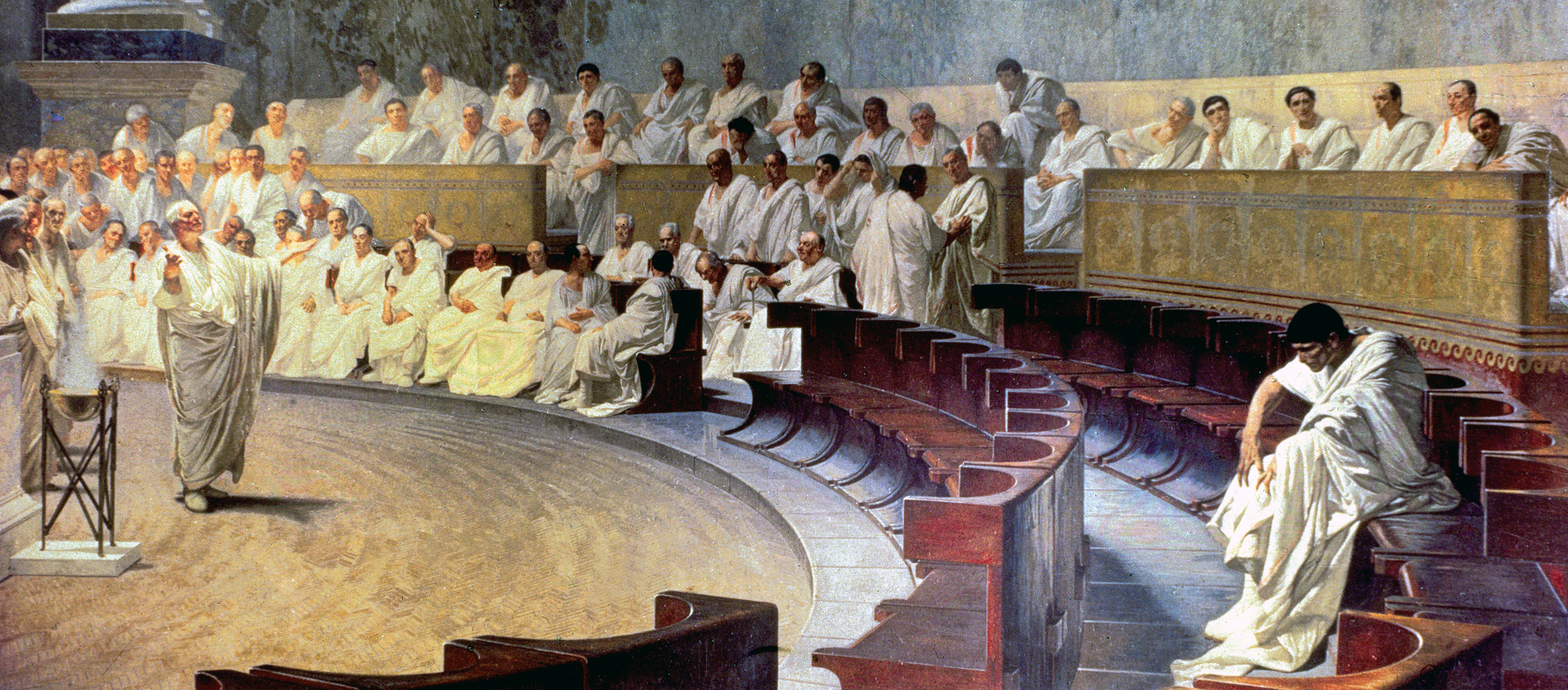






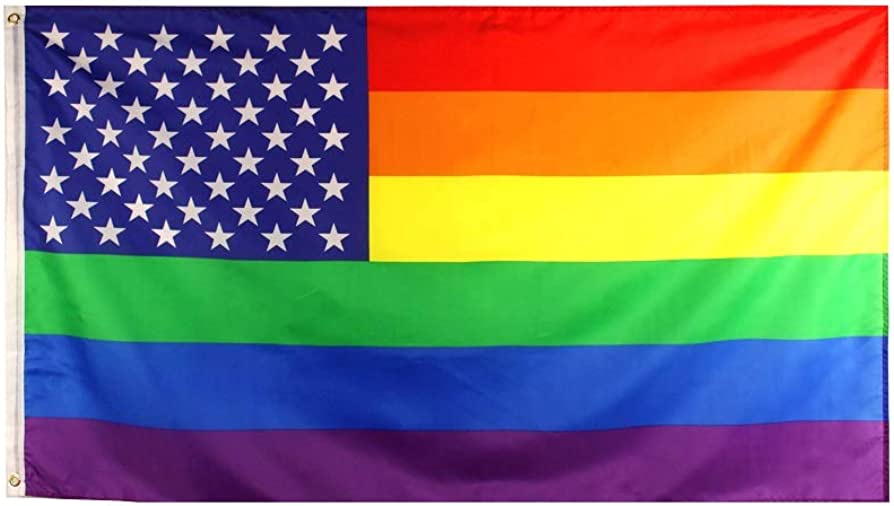

 freedom and reason