Freedom and Reason was originally launched on Blogger (a Google product) in 2006. Due to frustration with that platform functionality and sporadic activity due to my duties as chair of my department, which at the time involved a bottom up revision of the program, program review, and rebuilding the faculty, Freedom and Reason languished. I was spurred to regularly blog again after witnessing firsthand the results of the migrant crisis in Sweden in the summer of 2018 while on a research expedition to study the criminal justice systems of Norway and Sweden. Upon returning from Scandinavia, I moved Freedom and Reason to WordPress, a much superior application. The site now enjoys thousands of visitors annually.
Your’s Truly
I started Freedom and Reason in 2006 because I came to believe that it was important to make my ideas available to audiences beyond academic outlets and the classrooms. This is known in my field as public sociology. Public sociology seeks to engage with a broader audience beyond academia. It involves the application of sociological insights to address public issues, influence policy, and foster public debate. Public sociologists aim to make their work accessible and relevant to the general public, by participating in public discourse and advocating for social change. This approach contrasts with more traditional forms of sociology, which may prioritize theoretical development or empirical research within academic circles. In 2018, I recommitted myself to this idea.
Public sociology is rooted in the idea that sociologists have a responsibility to contribute to society by making their findings useful and actionable. This can involve addressing inequality, social justice issues, and other pressing social problems. The practice often requires sociologists to communicate in a way that is understandable and meaningful to non-specialists, bridging the gap between academic knowledge and everyday social concerns. Public sociology can also be seen as a way of democratizing knowledge, as it seeks to involve a wider range of voices in sociological debates and to bring academic insights into public conversations.
Please subscribe to Freedom and Reason and share it with others to help me reach more people with my critical analyses and opinions on issues like authoritarianism, censorship, class, crime, culture, economics, gender, media, politics, race, and religion.
This analysis doesn’t have anything to do with the substance of the respective tickets. The Democrats play optics, and it looks like the Harris-Walz campaign got Trump good by manufacturing an AI-enhanced or generated photo scandal. This is the photo that suckered him.
What appears to be an AI-enhanced or generated photo of a Harris-Walz campaign stop in Detroit
Here’s what I think happened. On August 7, Harry Sisson, a social media influencer, shared on X an image of a Harris-Walz rally in Detroit Metro Airport that looks weird. It appears to be AI-enhanced or generated. I put it through three AI-generate image detectors: Maybe’s AI Art Detector, AI Image Detector, and Advance AI Image Detector. All three reported a 54-55% chance that the image is artificial (others social media users have reported higher percentages). Maybe Sisson was given the image to share. Maybe he saw it and shared it without considering that it might look AI-enhanced or generated (he’s not very bright, so a happy accident is not beyond the realm of possibility). Whatever the case, Trump took the bait and walked right into what may have been a trap. The Harris-Walz campaign was waiting in the wings with many pics and vids from the event that look to be authentic. Predictably, the media is having a field day.
The polls have the horse race neck-and-neck. But it feels like the Harris-Walz campaign has momentum. If the Trump-Vance campaign doesn’t recalibrate, it’s going to have a tough row to hoe to November. Vance is doing okay. But Trump needs to lay off the personality stuff and stop going off half-cocked and instead start talking about Biden-Harris record, the situation of America (crime, foreign entanglements, gender madness, immigration, inflation), and tell Americans what he will do for them in his second term. So far, he has given the mass media plenty of material to distract Americans with (e.g., the question of Harris’ race and ethnicity).
If Trump pivots to a disciplined campaign of seriousness and statesmanship, it would be even more dramatic in light of his reputation for being a loose cannon and penchant for insulting his opponents. He needs to quit obsessing over crowd size. He draws massive crowds. Moreover, if he gets out of his own way, the respective records of Harris and Walz become more visible. No candidate would wish to run on their records in this climate. Trump is stepping on his own campaign because he is too confident for his own good. To be sure, the man’s confidence has carried him far in life (his net worth is $6.5 billion), but he’s up against a well-funded campaign with the vast hegemonic apparatus at its back—and ballot harvesting, postal voting, voting machines, etc.
Trump needs to pivot to substance and stop trying to garner the mainstream media’s attention. It’s well known that he covets the attention the corporate media lavishes on establishment candidates. He believes there’s a legitimacy there that’s really illusory. This is from his decades as a media star. But there’s now a vast alternative media apparatus he can use. Tonight, for example, he sits down with Elon Musk on X, as Trump rejoins that social media platform. That’s a good start. He needs to pick up the phone and call Joe Rogan. If he works the alternative circuit, this will not only get his message out but he will pick up street cred among those who are sick of the system and are looking for a maverick to take charge. Trump cannot depends on MAGA alone. He can’t afford to alienate those voters attracted to RJK, Jr. He needs a big tent. Americans are tired of woke progressivism. Trump just needs to stop alienating them.
Update Friday, 8.16.2024. This clip of Douglas Murray.
This is a MUST watch.
"The desire to tar anyone who has not got a voice, and is wanting to make their voice heard, as a violent far-right neo-Nazi seems to me to be a big error by Keir Starmer."@DouglasKMurray nails it 🔥 pic.twitter.com/qddKEESvrm
“In Moulmein, in lower Burma, I was hated by large numbers of people – the only time in my life that I have been important enough for this to happen to me. I was sub-divisional police officer of the town, and in an aimless, petty kind of way anti-European feeling was very bitter. No one had the guts to raise a riot, but if a European woman went through the bazaars alone somebody would probably spit betel juice over her dress. As a police officer I was an obvious target and was baited whenever it seemed safe to do so.” —George Orwell, “Shooting an Elephant” (1936)
“As I look ahead, I am filled with foreboding; like the Roman, I seem to see ‘the River Tiber foaming with much blood.’ That tragic and intractable phenomenon which we watch with horror on the other side of the Atlantic but which there is interwoven with the history and existence of the States itself, is coming upon us here by our own volition and our own neglect.” —Enoch Powell, “The Birmingham Speech” (1968)
The dynamics of colonialism (and imperialism) can be understood as the incorporation of external areas into a global system of capitalist exploitation. In this dynamic, these regions are transformed into the periphery, or the Third World or Global South, where social surplus—in the form of cheap commodities appropriated through the exploitation (and superexploitation) of labor—is extracted to benefit the core, particularly the capitalist class and the managerial and professional strata that administer the corporate state.
In this global mode of production, the elite of the core countries, through their command of advanced industrial capabilities and military power, impose their dominance over peripheral regions. The periphery is systematically exploited, its resources drained to fuel the ceaseless capitalist accumulation that privilege a few at the expense of the many. This extraction process is often facilitated by local elites, or “colonial collaborators,” enriching themselves at the expense of their fellows. Thus, the local elites are co-opted into the colonial system, ensuring that the flow of resources to the core remains uninterrupted.
This dynamic also occurs internal to nation-states in the core. “Internal colonialism” refers to the systemic and often institutionalized exploitation of marginalized or minority groups within a dominant nation-state. Unlike external colonialism, where a foreign power imposes control over another region or people, internal colonialism manifests through the cultural, economic, and political subjugation of groups within a country’s borders. This involves the marginalization of indigenous cultures and the imposition of the dominant group’s language, social norms, and values. Internal colonialism often perpetuates socio-economic inequalities, where the dominant group benefits from the labor and resources of the oppressed communities, reinforcing a hierarchical structure that mirrors the dynamics of traditional colonialism.
Historically, religious ideology, particularly Christianity during the emergence and development of the capitalist mode of production, has been employed as a tool of ideological domination. The process of Christianization legitimized colonial rule and pacified colonized populations. Missionaries played a role in this process, promoting the colonial agenda under the guise of a “civilizing mission.” This ideological control mechanism complemented economic exploitation, embedding the colonial system more deeply into the social fabric of the periphery.
Through these mechanisms, colonialism reconfigured the mode of production in peripheral regions, subordinating it to the needs of the core. This system of exploitation and accumulation persists today, with the legacy of colonialism continuing to shape the economic and social realities of former colonies, maintaining their dependency and underdevelopment in the face of a dominant and thriving core. The wealth generated in the periphery is siphoned off, enriching the capitalist class and reinforcing the global hierarchy—a dynamic now often referred to as “globalism” or “globalization.” Globalization is marked by the offshoring of production and the importation of cheap foreign labor.
In the post-World War II period, advanced capitalist economies experienced a significant fall in the rate of profit, driven by rising labor costs, increasing competition, and the exhaustion of earlier waves of technological innovation. This decline posed a challenge to capitalists, who sought to restore profitability through various strategies. One approach was relocating production to lower-wage regions, especially in the Global South, where cheap labor could be exploited to reduce costs. Capitalists also pushed for deregulation and neoliberal economic policies, including tax cuts, the weakening of labor unions, and the privatization of public assets, to create more favorable conditions for profit-making. Financialization played a critical role as capital increasingly flowed into speculative activities and financial markets rather than productive investment. These efforts, while temporarily restoring profit rates, contributed to rising inequality, economic instability, and the entrenchment of a global capitalist system marked by deep structural imbalances.
China’s integration into the global economy represents a crucial development in the last several decades. After years of isolation, China embarked on a capitalist path in the late twentieth century, strategically aligning itself with global markets. By leveraging its vast labor force and adopting a state-capitalist model, China transformed into a central player in the global supply chain. While this allowed China to accumulate significant wealth and influence, it also entrenched the existing global economic order, concentrating power and capital in the hands of a few, as China itself became a formidable force within this hierarchy.
China’s rise as a global economic power was significantly fueled by the influx of foreign Western investment, which sought to exploit the country’s vast reserves of cheap labor. In the late twentieth and early twenty-first centuries, multinational and transnational corporations from the traditional capitalist core—historically the beneficiaries of colonialist and imperialist adventure and exploitation—shifted significant portions of their capital and technology to China. This migration was driven by the desire to maximize profits through lower production costs, enabled by China’s state-controlled labor market and favorable investment policies.
As a result, China became the world’s manufacturing hub, absorbing not only foreign capital but also advanced technologies that had previously been concentrated in the core. This transfer of resources and knowledge, while accelerating China’s development, also reconfigured global power dynamics, allowing China to emerge as a central player in the global capitalist system, even as the exploitation of its labor force mirrored the patterns of inequality established in earlier phases of capitalist expansion. Moreover, China’s vast apparatus of population control through censorship, surveillance, and social credit system provides a model for Western states in their ambition to control their populations. The United Kingdom is leading the way in the West.
Core areas of the West have undergone significant socioeconomic transformation amid these developments. Deindustrialization and economic stagnation have led to widespread poverty and social discontent, making these regions vulnerable to becoming the new periphery. The flow of cheap foreign labor into the capitalist core is reproducing the conditions of the Third World in the developed West. This shift is orchestrated by a transnational capitalist class that is reconfiguring capitalist flows and global labor, drawing populations from formerly colonized regions into the Western core. Migrants from externally colonized regions are integrated into the Western workforce (but not assimilated into the national culture with the doctrine of multiculturalism), often occupying low-wage and precarious jobs essential for sustaining the profits of the transnational capitalist class.
The West, thus, has become a new kind of periphery within its own borders, mapped onto the previous system, providing a reservoir of cheap labor and new market opportunities. This shift blurs the geographical distinctions between core and periphery while retaining the exploitative dynamics of colonialism. This is a new type of internal colonialism where the indigenous populations of the core are subordinated to colonial control now posed as globalism. These are the circumstances that native English, Irish, Scottish, and Welch find themselves in today.
The tools of ideological control have adapted to this new context. Islamization, through its strategic utilization by the transnational capitalist class, becomes a significant force in shaping social and cultural dynamics in the Western core. Capitalists leverage Islam to create divisions and maintain control over a fragmented workforce. The spread of Islam in the modern period is complemented by the rise of woke progressivism, an internal quasi-religious force serving corporate interests by promoting the doctrine of diversity, equity, and inclusion.
This dual ideological framework ensures that the new periphery within the West remains fragmented and focused on cultural conflicts rather than economic exploitation. This is not to say that the indigenous should not focus on the threat to cultural integrity and ethnic marginalization. It is to say that they must pay attention to what lies are the core of the fragmentation: the appropriation of the social surplus at their expense. The transnational capitalist class maintains its dominance, leveraging both external and internal forces to perpetuate a system of capital accumulation and labor exploitation. This perpetuates a cycle of dependency and underdevelopment, external and internal to the major nation-states of the international order, reinforcing the global hierarchy and sustaining the power and privilege of the capitalist class.
* * *
“That rifle hanging on the wall of the working-class flat or laborer’s cottage is the symbol of democracy. It is our job to see that it stays there.” —George Orwell
Enoch Powell, a member of the British Conservative Party, delivered his infamous “Birmingham Speech” on April 20, 1968. In that speech, later dubbed “Rivers of Blood” for its for its reference Virgil’s Aeneid, Powell expressed opposition to immigration and warned of dire consequences if immigration policies were not altered. He famously predicted that unchecked immigration would lead to community fragmentation, racial conflict, and social unrest. The speech was met with outrage because it evoked an apocalyptic vision of the future, suggesting that mass immigration would lead to racial conflict and bloodshed in Britain. Powell’s use of the phrase “foaming with much blood” and his comparison to the violent racial tensions in the United States were seen as racially divisive, inflaming racial prejudices.
Enoch Powell
Nearly sixty years later, Powell’s prophecy fulfilled, the United Kingdom is experiencing another type of outrage: widespread resistance to colonization by the indigenous people there, primarily ethnic English. The English people, marginalized and overwhelmed by an influx of foreigners, disproportionately Muslims, and suffering a rash of criminal violence and terrorist attacks by them, have taken to the streets in a series of demonstrations, protests, and riots, echoing the struggles of indigenous populations across the periphery of the world system who resisted Western colonization in the past. However, the organic intellectuals of the corporate class don’t hear that echo. At least they pretend not to. And they are determined to make sure the people are either oblivious to it or don’t act on it if they’re not.
Academics, activists, politicians, and pundits, especially those on the left, have long celebrated anti-colonial resistance. These voices depict the history of Third World resistance to colonialism using terms that emphasize liberation, resistance, and self-determination. To highlight the struggle for freedom from colonial rule and oppressive regimes, opposition to domestic authoritarianism and external control, the right of peoples to govern themselves and make their own political decisions, they describe these struggles variously as “anti-colonial movements,” “liberation movements,” “resistance movements,” and “struggles for self-determination.”
The United Nations has consistently supported anti-colonial and post-colonial struggles, advocating for the rights of colonized peoples to independence, self-determination, and sovereignty. This stance became particularly prominent after World War II, during the wave of decolonization that swept through Africa, Asia, and the Caribbean. The UN’s commitment to these principles was solidified in 1960 with the adoption of the Declaration on the Granting of Independence to Colonial Countries and Peoples, which asserted that all people have the right to self-determination and that colonialism should be brought to a speedy and unconditional end. The declaration emphasized the illegitimacy of colonial domination and the need for immediate action to support the transition to independence.
In addition to advocating for the end of colonial rule, the UN also recognized the right of colonized peoples to resist oppression, including the right to self-defense against colonial powers. This recognition was rooted in the broader framework of human rights and international law, which the UN sought to promote and uphold. The organization provided a platform for colonized nations and liberation movements to voice their demands for independence and to gain international support for their struggles. Throughout much of its history, the UN has maintained a clear commitment to the principles of anti-colonialism and self-determination, viewing the struggles of colonized peoples as an integral part of the broader quest for global equality and justice. This commitment has influenced international law and policy, reinforcing the rights of nations to pursue their own paths free from external control. Those in the West might ask whether they are free from external control.
One justifications given for Third World peoples colonizing Europe is that Europe colonized the Third World. Beyond the irrationality of original sin, the colonization of Europe is organized by the same capitalist mode of production that colonized the rest of the world.
These terms noted above used to describe these actions are intended to put colonial uprisings in a positive light, as well they should, focusing on the ideals of freedom, justice, and national sovereignty. UN and other international policies reinforcing the right of peoples to self-defense and self-determination are righteous. But if one were to use those same terms and same frame, and apply the same principles to explain, understand, and address the current situation in the United Kingdom, where the indigenous peoples of that island are rising up against the mass influx of foreigners organized by the transnational capitalist class and its colonial collaborators, colonization of the West by non-westerners, one would be marginalized and smeared. Without being able to explain why in a rational manner—without resort to original sin, blood guilt, and collective revenge—one would simply be told that the comparison is absurd. This would be accompanied by a lot of scoffing. The political economic development presented in the first section of this essay would be denied, since these facts identify and admit to the process by which the world population has proletarianized.
I want to emphasize that the point I am making is not analogical. The comparison occurs in the same world system, here in its late phase (hence the subtitle to this blog). And the double standard becomes even more obnoxious the more reality is described. For example, the movements and uprisings in the Third World were nationalist and populist in character, seeking to establish or maintain sovereign and independent nation-states, an obvious response to colonial domination, foreign intervention, and internal oppression. Third World nationalism is rooted in anti-colonial struggles where the indigenous fought to end colonial rule and achieve independence and self-determination. Nationalist movements sought to address economic inequalities by advocating for control over national resources and economic policies that prioritize the interests of the local population. But when nationalism and populism propel resistance to colonization and globalization in the core, those engaged in resistance are smeared as “bigots,” “fascists,” “nativists,” “racists,” and “xenophobes.”
The double standard is a blatant as the two-tiered justice system in the UK that I will come to in a moment. The UK demonstrations have been marked by fierce clashes with authorities, reflecting the deep-seated frustration of a population fighting to preserve its cultural identity and way of life. The imagery is like the uprisings seen in places like Algeria, India, and Zimbabwe, where indigenous peoples revolted against foreign domination (albeit more subdued). The sentiment on the ground is one of reclaiming sovereignty and pushing back against policies undermining the material interests of the indigenous English population. One of the flashpoints is the Islamization of the United Kingdom (and Europe more generally).
“National differences and antagonisms between peoples are daily more and more vanishing, owing to the development of the bourgeoisie, to freedom of commerce, to the world market, to uniformity in the mode of production and in the conditions of life corresponding thereto.” —Karl Marx and Friedrich Engels (1848)
Marx and Engels famously declared in The Communist Manifesto that “the working men have no country.” By this, they meant that the working class are estranged from their organic nationalistic interests; the true ruling power in any capitalist society is not the state or the nation, but the capitalist class. The state serves primarily to protect and advance the interests of capital, often at the expense of the working class, regardless of national borders. This exploitation is not confined to any one country; it is a global phenomenon, inherent to the capitalist mode of production. When Marx and Engels said that the proletariat has first to defeat the national bourgeois, they were referring to the idea that the working class could only truly claim a nation or a state as their own through revolutionary struggle. By overthrowing the capitalist class, the proletariat could create a society where the state serves the interests of the many rather than the few.
I am not advocating for international socialism. What I am borrowing from Marx and Engels’ analysis is the insight that the working class is alienated from its national identity. The power structure estranges workers from self-rule and reduces them to mere instruments of capitalist production, disconnected from any genuine sense of national belonging. While Marx and Engels saw the solution in socialism and international solidarity, another interpretation can be drawn, particularly when considering indigenous populations and other culturally distinct groups under global capitalism. It was, after all, not the goal of anti-colonial resistance to force a world socialist system (this was the goal of the Soviet Union and Communist Chine) but to reclaim for the people control over their culture and local economies.
Whether in the geographical periphery or within internal colonial contexts, working people are similarly estranged from self-rule by the overarching power of global capitalism. Yet, unlike the cosmopolitan nature of the capitalist class, these communities retain a strong sense of cultural identity, ethnicity, and nationhood. For them, the concept of having “no country” is not just about economic exploitation but also about the erosion of their cultural and political sovereignty by global capitalist forces that prioritize profit over people. The problem with global capitalism is its tendency to homogenize and commodify cultures, erasing the distinctiveness of national and ethnic identities in favor of a global market system that serves the interests of a transnational capitalist elite—even while a strategy of multiculturalism is pursued to keep immigrants from assimilating with their host cultures. This system undermines the autonomy and cultural integrity of communities around the world, reducing diverse cultures to mere resources to be exploited or markets to be conquered.
The solution, therefore, lies not in a socialist revolution but in a return to a national system of producers, where the focus is on preserving and respecting the cultural integrity of all peoples in their homelands. This means recognizing and supporting the right of every ethnic group, indigenous community, or nation to govern themselves according to their own needs, traditions, and values free from the dictates of global capital. In this vision, national integrity is not about isolationism or antagonism between different groups but about mutual respect for the distinct cultural heritage of each nation.
Just as we respect the cultural integrity of ethnic groups in Africa or Asia, we should equally respect the autonomy and cultural distinctiveness of all peoples, whether they are cultural communities, indigenous populations, or national minorities within larger states—including European peoples. Why wouldn’t we if believed in equal treatment for everybody? This approach promises a world where the diversity of cultures is celebrated and protected, and where economic systems are aligned with the values and needs of the people they serve, rather than subordinated to the imperatives of global capital. Are the indigenous peoples of the First World not also entitled to this?
There is nothing in this vision that precludes any people from adopting the superior elements of the cultural systems of other national groups, for example the Enlightenment principles such as feminism, liberalism, rationalism, science, and secularism found in the First World. One might suppose that Enlightenment values should be coercively imposed on non-Westerners, but however much the globetrotting capitalists have claimed that this was their goal (“modernization,” they called it), what they were really after was the value of the labor there and the natural wealth embedded in its territory. But what should be vigorously resisted is the introduction of backward cultural elements from the Third World and the destruction of Enlightenment principles in the West.
Why are the indigenous peoples of Africa and Asia admired for their populism and nationalism, encouraged to pursue anti-colonial resistance, their right to struggle recognized by the United Nations recognized, even celebrated, but when Europeans do the same, they are smeared and suppressed? It’s cannot be because Europeans were once the colonizers. This obscures the dynamic of world capitalism. The English didn’t colonize India—the English capitalists did. It also supposes a quasi religious doctrine in which the living are responsible for the evil deeds of their ancestors, a modern-day version of original sin that prompts blood guilt to be settled through collective violence against the indigenous peoples of Europe. The double standard is founded upon anti-White racism.
* * *
“I think that we’ve got to see that a riot is the language of the unheard.” —Martin Luther King, Jr. (1967)
As the streets of Birmingham, London, Birmingham, and other major cities in the United Kingdom are filled with impassioned citizens rallying against the new form of colonization, those who extolled the virtues of colonial resistance by the indigenous peoples of the colonized lands now turn against the colonial resisters at home. These are the colonial collaborators I spoke of earlier. And, from the capitalist standpoint, a better clique of them of them is now in charge. The Labour Party is the party of the transnational corporate elite. The pivot to authoritarianism after the election on July 4, 2024, has been swift and comprehensive.
During the George Floyd protests in 2020, marked by significant property damage and interpersonal violence, the government and many political leaders employed the rhetoric of “social justice,” emphasizing the importance of addressing systemic racism and supporting peaceful protests. More recently, following the October 7, 2023 Hamas terrorist attacks targeting Jews, pro-Palestinian protests in the UK, particularly in London, were massive and often violent. The police response was one of restraint, with the Metropolitan Police making arrests here and there and forming cordons around the protests to manage the crowd and maintain public order. In stark contrast, the indigenous revolt against the new colonialism, tagged as “far right,” “neo-Nazi,” etc., has been violently suppressed by the same political figures.
This disparity in framing reveals how the government addresses different forms of social unrest for political purposes—to advance the new colonial project. The George Floyd and pro-Palestinian protests, aligning with progressive social justice causes, received and continue to receive a sympathetic, often encouraging framing, while the current protests, which challenge immigration policies and highlight concerns of national identity, are quickly dismissed as extremist.
The reality is that the UK government, as many of is European counterparts, has been facilitating immigration to the country through various policies and programs aimed at attracting workers and seeking refugees (see Culture Matters: Western Exceptionalism and Socialist Possibility). Immigration has been a significant and contentious issue in the UK, with policies ostensibly aimed at addressing labor shortages, fulfilling international humanitarian obligations, and promoting diversity and economic growth, but which drive down wages, disorganize communities, enlarge the welfare rolls, and increase criminal violence. The facilitation of colonization has led to debates and tensions around national identity, resource allocation, and social cohesion. The current protests reflect a segment of the population’s dissatisfaction with these policies. The influx of immigrants threatens their cultural heritage, economic opportunities, and national integrity.
* * *
“For it is the condition of his rule that he shall spend his life trying to impress the ‘natives’ and so in every crisis he has got to do what the ‘natives’ expect of him.” —George Orwell, “Shooting an Elephant” (1936)
George Orwell discusses his experiences in the colonial police in his 1936 essay “Shooting an Elephant.” This essay reflects on his time as a police officer in Burma (now Myanmar) during the British colonial period. In the essay, Orwell recounts a specific incident where he felt compelled to shoot an elephant to maintain his authority and the expectations of the local population, despite his personal reluctance. The piece is a powerful commentary on the complexities and moral dilemmas of colonial rule and the impact it had on both the colonizers and the colonized. (Orwell’s 1934 novel Burmese Days offers further insights into his perspectives on colonialism and his experiences in Burma. This novel draws upon Orwell’s experiences as a colonial police officer, providing a critical portrayal of British imperialism and the effects of colonial rule.)
The colonial police were central to maintaining the grip of colonial powers over their territories. Their role was primarily to enforce order and uphold the colonial laws, which were often designed to benefit the colonizers and suppress the local population. These police forces operated with a mandate to prevent any form of dissent or resistance. They were the enforcers of a system that prioritized the extraction of resources and the maintenance of colonial dominance. The police acted as the visible arm of colonial authority, monitoring gatherings, patrolling streets, and swiftly quelling uprisings and protests. They were instrumental in implementing policies that restricted the movement and freedoms of the colonized, using intimidation and violence to ensure compliance. Their presence served as a deterrent to rebellion and as a means to protect the interests of the colonial elite. The police were not just enforcers of law, but also symbols of oppression. They embodied the colonial state’s authority, their actions reinforcing the hierarchical structure that kept the colonized subjugated and the colonizers in power.
The police in the United Kingdom are now opening their press conferences with Islamic greetings.
Today, the role of the “colonial” police is transformed but retains its essence of control and suppression. In this new context, where the West becomes the new periphery within its own borders, the function of the police is reimagined to suit the needs of the transnational capitalist class. The police are tasked with ensuring the stability of a system characterized by economic inequality and social tension. In this time, the police serve to enforce the new status quo. They manage the discontent arising from deindustrialization and economic stagnation, where a significant portion of the population finds itself in precarious, low-wage sectors. Crucially, the enforcement of order involves not only traditional policing activities but also the suppression of protests and movements that challenge the economic and social disparities perpetuated by the transnational capitalist class.
In the 2014 Guardian article “Chief constable warns against ‘drift towards police state,’” we can see concerns for the police state date at least as far back as a decade (of course, they date further back that than). Sir Peter Fahy, chief constable of Greater Manchester, warned, that in the battle against “extremism,” officers were being turned into “thought police.” He said police were being left to decide what is acceptable free speech in the state’s efforts to combat against “radicalization.” But he was not saying that the police should not have a role in suppressing speech. It’s the academics, politicians, and others in civil society who have to define what counts as extremist ideas, he said. Indeed, he stressed that he supported new counter-terrorism measures recently unveiled by the government, including bans on alleged extremist speakers from colleges. But the lines need to be made clear or it would be decided by the security establishment, so-called “securocrats,” including the police and security services.
* * *
“There was of course no way of knowing whether you were being watched at any given moment. How often, or on what system, the Thought Police plugged in on any individual wire was guesswork.” —George Orwell, Nineteen Eighty-Four
The UK’s surveillance system is one of the most extensive and sophisticated in the world. This system, ostensibly designed to ensure public order and national security, encompasses a vast network of CCTV cameras, data collection, and digital monitoring. However, its implementation and effects have raised concerns about a two-tiered justice system that treat different populations unequally. The UK’s surveillance network includes millions of CCTV cameras, which monitor public spaces around the clock. This infrastructure is supplemented by digital surveillance tools, including the monitoring of online activities, social media, and telecommunications. The stated goal is to prevent crime, terrorism, and maintain public safety. Yet, the surveillance disproportionately targets certain groups and enforces a biased administration of justice.
Police and a surveillance cameraThe UK deploys facial recognition technology.
A notable aspect of this perceived two-tiered system is the differential treatment of native-born populations and immigrant communities. Native-born individuals who express concerns about immigration or critique policies associated with it often find themselves under scrutiny. In some cases, they face legal consequences for speech deemed “discriminatory” and “hateful.” Online platforms, monitored by authorities, are quick to censor and punish individuals for content considered offensive or inflammatory, particularly if it critiques immigration policies or multiculturalism. In contrast, immigrant populations, especially those from marginalized or minority backgrounds, enjoy a different level of response from the state. Protests and even riots led by these communities are met with leniency and a more restrained approach by law enforcement. This disparity is said to be attributed to various factors, including the desire to avoid accusations of racism, maintain social cohesion, and uphold a commitment to diversity and inclusion—in other words the hegemony of the corporate state.
Thus the state’s differential response to dissent is shaped by broader ideological commitments to multiculturalism and anti-racism (i.e., anti-white bigotry). While these commitments are ostensibly said to protect vulnerable communities and promote social harmony, the rhetoric is designed to obscure the double standard. Native-born populations rightly come to feel that their grievances are disregarded or unfairly punished. This functions to deepen the sense of alienation and resentment by those whose concerns and needs are marginalized in favor of accommodating immigrant communities. In this context, the surveillance system becomes a tool not just for maintaining public order but for enforcing a particular social order.
Diversity of opinion and temperate speech are values sorely lacking in the USA. Thank goodness the UK police commissioner is holding Americans accountable for any speech offending alien immigrants.
I will close with this. Powell’s speech led to his dismissal from the Conservative frontbench. Many viewed his rhetoric as alarmist and xenophobic. To be sure, some supported his views (probably more than would admit it), arguing that he was highlighting real concerns about integration and social cohesion. But others condemned him for fear-mongering and promoting racism and on their judgment the country took no action. With the unfolding of history, the world can see that Powell’s concerns were valid. Millions of indigenous peoples on the island Powell called home can see it everyday. Better that he was never proven right. But the past cannot be altered (except through Orwellian means). So the question now is what to do about. Electing a Labour government was certainly not a wise choice.
I missed this when it happened. Apparently this happened last year. Minneapolis changed the noise ordinance to allow the call to prayer (adhan) to be broadcast from the rooftops of mosques five times a day everyday. The residents of Minneapolis have to put up with this racket throughout the day now. Why? For the sake of religious freedom as understood by woke progressives. You know, the doctrine of “inclusion.” But that’s not what’s really going on. Progressives could give a shit about the religious liberty of the majority of the American population. This is an ideological project.
Doesn’t religious liberty necessarily entail freedom from the imposition of religion? Yes, it does. Assumed in the First Amendment is not just the freedom to believe, say, and write what one will, which includes the right to receive the beliefs, utterances, and writings of others, but also the freedom to not believe, speak, or write what one won’t—or hear or read what one won’t in the privacy of his home. If you’re in my house and I find your speech annoying or offensive I will ask you to stop talking or leave my house because you have no right to compel me to hear what I do not wish to hear. If you don’t leave, then I can have you removed. And I will. If you have a sign where you falsely claim to believe in science in your yard (you know “This house believes…”), I don’t have to look at it. If you put that sign in my yard, then there’s going to be trouble.
Ahmed Jamal, the mu’adhin of Dar Al-Hijrah Mosque, delivers the adhan from the roof in the Cedar-Riverside mosque
Religious tolerance only obliges me to allow you your beliefs and rituals as long as they don’t interfere with my liberty. This is the way freedom works. Believe what you will, but don’t force me to have to endure your beliefs.
Religious liberty means that a people are free from zealots shouting their calls for prayers at captive populations, which is the residents of this blue city are: a captives. How can the people enjoy their right to religious liberty when a religious call to prayer invades their spaces five times a day everyday? Is it not enough to suffer the mosques everywhere? To step around the ever growing number of supplicants on prayer cloths in school hallways, sidewalks, and roads? Can’t Muslims put an app on their phone that notifies them when it’s time to pray and then find some space to do it so that the rest of humanity doesn’t have to participate in their religious rituals? (What’s next? Arrows pointing to Mecca on every ceiling?) No, because then they wouldn’t get to pump their ideology into every home and business and every ear in Minneapolis.
Eventually this will be in your city. This is what the Islamization project looks like. This isn’t religious liberty. It’s religious imperialism. And your politicians will make it possible. Care to guess which party is the party that will make this happen in your city? Do I have to tell you? You know.
“Oh, but what about church bells?” You mean the melodious sound heard on the first Black Sabbath record? Like the sleepy sound of a distance train in the rain? You mean the sound of traditional Western culture that only occasionally appears on the aural landscape and then only locally and then only briefly? You know, the sound we don’t have to hear five times a day everyday through amplified systems broadcast to every ear in the city telling us that our culture is disintegrating? That sound? Spare me the false equivalencies.
“There’s no guarantee to free speech on misinformation or hate speech, and especially around our democracy.” —Minnesota Governor Tim, December, 2022
When Walz used a fake story about Vance during the first speech as a vice-presidential candidate, I knew he was not to be trusted. (Of course, I knew before then. The way he handled the George Floyd riots in Minneapolis is disqualifying.) Walz himself had been the victim of a fake news story himself, yet he used a fake story to mock Vance, a fellow veteran, all to further the Democratic Party line about “weird”—this coming from the party of ball gags, drag queens, puppy play, and transing children. (It was Walz who came up with the idea to call Vance weird.)
A man saying he served in war when he didn’t is not “misspeaking.” It’s a deliberate misrepresentation of one’s biography and military service record. This is what the Harris campaign wants the public to think, that Walz “misspoke” about his military rank and exploits. People know whether they served in war or not. Walz was deployed to Italy in a support position of active military forces in Afghanistan and Iraq in 2003. He never served in Afghanistan or Iraq. He therefore cannot say he served in Operation Enduring Freedom (OEF) or Operation Iraqi Freedom (OIF). This is stolen valor.
Kamala Harris and Walz are running for President and Vice-President on the Democratic Party ticket
Unaware of Walz’s penchant for misrepresenting his record, the Harris-Walz campaign posted a (now removed) video of Walz, a hunter, speaking about his decision to change his position and support an assault weapons ban following the 2018 Parkland shooting. In the video, Walz states, “We can make sure that those weapons of war, that I carried in war, is the only place where those weapons are at.” Walz did not carry weapons in war. (That the Harris-Walz campaign seeks to ban so-called assault weapons, i.e., certain semi-automatic rifles, it itself disqualifying.)
People also know what rank they’ve achieved. Walz claimed for years that he was a retired Command Sergeant Major, the highest rank possible for an enlisted man, but he always knew that this wasn’t true. Walz retired before completing coursework at the US Army Sergeants Major Academy, along with other requirements associated with his promotion. Walz in fact retired at the rank of Master Sergeant. To give you sense of the stretch, a Master Sergeant claiming to be a Command Sergeant Major would be like a Colonel claiming to be a General.
Which brings us to another misrepresentation: the timing of his retirement. According to the Guard, Walz retired from military service in May of 2005. In August 2005, the Army issued a mobilization order for Walz’s unit. The unit mobilized in October of that year before deploying to Iraq in March 2006. We’re told that Walz retired before the mobilization order. But Walz knew the mobilization order was pending. We know he knew this because, as he ramped up for a congressional bid in 2005, his campaign issued a statement in March saying he still planned to run despite a pending mobilization of Minnesota National Guard soldiers to the theater of operations. The media desperately wants to spin this, but Walz knew the order was imminent and he bailed. Others went in his place. His unit suffered casualties.
Walz leans into his biography for political purposes, so he has no excuses. I’ve now watched numerous videos of Walz misrepresenting his record or failing to correct his record when others misrepresent his biography. They misrepresent his record because the bio they’re sent by his staff provides facts about his record—facts that are false. Media elites trust Walz because they’re fellow progressives (this is why the Harris team did not properly vet Walz). They are therefore also to blame for building Walz into something he is not. Of course, Walz is the most deserving of blame here because he misrepresented himself. But he could not have gotten away with it for so long if the media hadn’t covered for him.
Combine these misrepresentations with his numerous extreme positions on matters of freedom and democracy—lockdowns, mandatory vaccination, parental rights, transing children—and he is beyond the pale. This is a man who has openly expressed his hostility towards free speech. In December 2022, Walz went on MSNBC to support censorship and deplatforming, declaring, “There’s no guarantee to free speech on misinformation or hate speech, and especially around our democracy.” This is a man whose biggest applause line is to tell everyone to “mind your own business,” yet set up a hotline in Minnesota for citizens to report residents who violated COVID-19 mandates. This is the Stasi mentality, and it is fundamentally un-American. A man who lies about his biography who presumes to tell other people what’s true and what’s false is a threat to democracy.
(Update (4:04pm) Confirming what we already knew. Khelif’s Trainer Confirms “Problem With Chromosomes.” The next move for those who denied this is to say that it shouldn’t matter that Khelif is a male. Inclusion is more important than fairness. This is the progressive two-step. It’s a reflex. “They aren’t amputating the healthy breasts of 14 year olds.” Actually they are. “Good. They should.” They will never admit they’re wrong. They will only reveal what they thought about it the whole time they were dragging the red herring across the truth path.
Update (12:19pm, August 11): We learned yesterday that Bach is stepping down. Good. He’s either a coward or an incompetent. He should not have been in charge of the Olympics, albeit there are others who repeat the same absurdities.
Update (2:56pm): Taiwan’s Lin Yu-ting has won the gold medal in the featherweight division (57kg or 126lbs) against Poland’s Julia Szeremeta (who will take the silver). The Taiwanese fighter won every round on all judges score cards. Lin Yu-ting is 5’9.” Like Imane Khelif, judges awarded Lin Yu-ting every round of every bout.
The International Olympic Committee (IOC) has developed a propaganda manual on how to obscure the presence of males in female sports while delegitimizing those who criticize and challenge IOC policy. Everyone associated with the Olympic Games is supposed to use the manual’s words and style when talking about policy and practice. It’s a real world instantiation of what George Orwell called “Newspeak.” The Portrayal Guidelines is based on definitions sex and gender incubated in postmodernist literary and philosophical studies (largely originating in France during the 1960s) known as “queer theory” and disseminated by the corporate-captured sense-making institutions—academia, the culture industry, mass media, etc. (See Judith Butler’s Gender Gibberish.)
Page 28 from the IOC’s Portrayal Guidelines
Postmodernism is a political-ideological project to deny that knowledge (valid belief) is possible because the world is constructed by a grand narrative privileged by power presumed unjust (just because) and therefore warranting resistance. Resisting the narrative requires deconstructing it from the standpoint of those who deny reality, because reality limits what is possible (this is the source of transhumanist seeking), and who desire to transgress the boundaries that safeguard children and women. By embracing the totalitarian vision of postmodernist world (dis)ordering, the IOC has shown itself to be a throughly corrupt and ideologically-captured institution. But it’s only one of the many transnational organizations dis/reorganizing our language to dis/reorder our thoughts on a mass scale.
IOC president Thomas Bach recently said there is no scientific way to determine sex, but that he is sure sex chromosomes don’t anymore (“International Olympic Committee President Says Chromosomes Don’t Determine Sex: ‘Not True Anymore’”). From a scientific standpoint, this is false. A woman is an adult female human, which is determinable by karyotype, gamete size, and reproductive anatomy. Sex (or gender) is binary and immutable. But there’s a trick of language here because the IOC and other organizations and institutions do not accept science since they operate within the postmodernist frame that denies science as a master narrative, a fact proven by the Portrayal Guidelines in the IOC’s case (and there are lots of such guidelines out there, see for example, NIH and the Tyranny of Compelled Speech). What Bach is really saying is that there can be no scientific way to determine gender because science is not a valid way of knowing—and there are no valid ways of knowing because all narratives are constructed by power, which is tautologically constituted by discursive formations.
In postmodernist thought, truth is not fact and reason but power. Power will tell you what truth is. It follows, then, that who is in power matters very much to your freedom. To be sure, we should pay attention to this. This is the truth of totalitarian systems.
But since science is only one of many narratives, scientific claims are irrelevant—if you accept the premise of queer theory. Get it? 2+2=5 because the Party said so. The New Zealand government is your sole source of truth. Social media will tell you what is or is not disinformation. Fauci is omnipotent. Mask up. Vax up. Lock down. This is all happening right in front of your eyes. Don’t be gaslit. You’re not crazy. They are. (See The Project to Gaslight the Masses is Massive and Comprehensive.)
These crackpot ideas are projections of the corporate power that stands in back of postmodernism. Or, in China, the CCP. Or, in North Korea, the Dear Leader. But science does not derive its power from the corporate state, but from fact and reason. Science is a means to truth. Destroy science and everything reverts to myth, to stories projected by power, stories that may feign science (or indigenous knowledge and so on), but that conceal, deny, or sublimate truth. The postmodernists seek to undermine the authority of science to obscure the truth and then put in its place their ideological vision of the world, which is the corporatist vision.
This is why the tyrants are at war with free conscience, speech, press, association, and assembly. This is why they want to remove effective weaponry from the homes of citizens scheduled for serfdom. This is why they invade our privacy. This is why they deplatform us and debank us and unperson us. This is why they have organized a culture of snitches to report thought-crimes to the authorities. There is no conspiracy here. One need only report the facts—and not deny them—to see. Don’t legitimize their thought-stoping cliches.
This tyranny is known by several names. In America, it’s known progressivism and represented by the Democratic Party (with some Republicans in tow). In the UK it’s the Labour Party (with some Tories in tow). In back of these and other political parties is the corporate state and its attendant technocracy that defines science—if it bothers to define it at all—in ways that advance and entrench the “authority” of the transnational power elite, which is a very real and identifiable apparatus. This is what modern-day totalitarianism looks like.
Another mark of tyranny is the misogynistic denial of women’s rights and equity in sports. The IOC abandoned genetic gender testing in 1999. They have stubbornly refused to reinstitute testing because “every person has the right to practice sport without discrimination.” Does that “every person” include girls and women? If so, then why are males allowed to compete in women’s sports? The reason sports are gender segregated is because males as group have a distinct natural advantage over women in athletic competition. Allowing males to compete against women discriminates against women. So the IOC does not in fact believe “every person has the right to practice sport without discrimination.”
IOC President Thomas Bach, essentially validating the IBA’s findings, said, “It is not as easy as some may now want to portray it—that XX or XY is the clear distinction between men and women. This is scientifically not true anymore.” It is absolutely still scientifically true. The Y is the sex-determining chromosome in mammals. The IOC has embraced the pseudoscience of queer theory. The IOC doesn’t believe in science. It believes in male privilege.
When I post on this subject on social media, I am attacked as a bigot who wants to discriminate against trans and intersex people (both false constructs since a mammal cannot change gender and nobody is between or both sexes). We need to make obvious the assumption behind the smear. The assumption is that trans women are women and therefore they belong in women’s spaces and should be allowed to participate in women’s activities. But trans women are not women, therefore they do not belong in women’s spaces and should not be allowed to participate in women’s activities. Moreover, males with DSD should not be allowed to participate in female sports because they are males. Once the assumption is made obvious, that males are females, an absurdity, an obvious question emerges: Why are progressives so triggered by the defense of women’s rights? Shouldn’t they be first in line to defend these rights given their self-proclaimed feminism?
* * *
As many of you know, Algerian boxer Imane Khelif has won the gold medal at welterweight (66kg or 145lbs) in women’s boxing. Khelif won every round on every scorecard in the three matches that went the distance. Standing 5’10”, Khelif is a male with an XY karyotype suffering DSD and likely a 5-ARD case (similar to South African middle-distance runner Caster Semenya), meaning that there is endogenous testosterone production (internal testes). Khelif has gone through male puberty. IOC rules against doping diminish the likelihood that androgen analogs were used to produce Khelif’s adult male body. The International Boxing Association (IBA) has confirmed that Khelif is male, and the results were forwarded to Khelif.
Khelif was one of two boxers ruled ineligible for competition in women’s boxing, the other, Lin Yu-ting of Taiwan, fights for the gold in the featherweight division this afternoon. Lin Yu-ting was also forwarded his test results. While confidentiality rules preclude the IBA from revealing the specific results themselves, both boxers could themselves release these results. Until they do or are retested by a reputable independent body their participation in the Summer Olympic Games will always carry an asterisk in the minds of millions of people across the planet. The IBA raised this issue because the IOC refused to consider the facts in determining eligibility for inclusion in women’s boxing.
Finally, the case of Nikki Hiltz has been used by social media commentators to challenge my position concerning Khelif. Nikki Hiltz is an American middle-distance runner who specializes in the 1500 meters. Since 2021, Hiltz had identified as “transgender” and “nonbinary” and goes by “them/they” pronouns. In addition to being a prominent athlete, Hiltz is an advocate for LGBTQ+ rights. Like all mammals, humans have a gender, so the identity “nonbinary” is a nonsensical construct. But that aside, Hiltz is female and competes against other females, so there is no controversy here. Hiltz has said that she wants to take testosterone and make other changes to her body, but since the IOC will not allow this, she will have to wait. However, even with testosterone, Hiltz could never compete with elite male runners. The natural advantages males enjoy in track and field are for female athletes insurmountable.
Michel Brown Sr. stands by a memorial for his son on Canfield Drive in Ferguson, MO, Wednesday, August 7, 2024
Ferguson is part of the Greater St. Louis metropolitan area. Per the 2020 census, the population was 18,527, predominantly black. Ferguson is where BLM really took off. It’s the origin of the “hands up” meme, based on mythic circumstances. Now public safety is a concern in Ferguson because of depolicing. Residents know that the police are unlikely to pull them over, so they flaunt traffic laws, the AP tells us. But that ignores the worst of it. Crime—violent and nonviolent—is much higher after the Ferguson riots than before. Moreover, the demographic pattern is alarming. One in five residents in Ferguson is white, yet only six percent of violent crimes and four percent of property crimes were perpetrated by whites in 2022. No whites are identified as perpetrators of either homicide or robberies. One hundred percent of all homicide victims in Ferguson that year were black.
Source: FBI Crime Data Explorer, 2022
In 2022, using the St. Louis Post-DispatchHomicide Tracker, the Greater St. Louis metropolitan area, which includes both St. Louis City and St. Louis County, reported at least 360 homicides. This figure places the area among the highest in the United States for homicide rates. The two charts form the FBI’s Crime Data Explorer presented below, St. Louis Police Department and the St. Louis County Police Department, give the reader a sense of the drastic overrepresentation of blacks in homicide. There were a total of 231 homicide victims and 177 perpetrators that year. Whites comprise 77 percent of the population in the Greater St. Louis metropolitan area, according to the 2020 census.
St. Louis Police DepartmentSt Louis County Police
Police presence is the single greatest deterrent to crime. The reason crime is up around the nation is explained in part by depolicing (see John Lott’s recent article “The Truth about the Crime Explosion,” in National Review). Public safety is a human right, so the progressive left’s influence over policing policies has made communities much less safe, especially for black people. The United States enjoyed a long period of declining crime rates after the mid-1990s. This was because of expanded police present and mass incarceration. Unfortunately, police and prisons are necessary because of the conditions of black-majority neighborhoods, the result of progressive urban policy, foremost the destruction of the black family, caused by the idling of the black proletariat and public assistance. Democrats have transformed the cities under their control into danger zones. (See America’s Crime Problem and Why Progressives are to Blame.)
From the AP story: “Brown’s death catalyzed massive change in Ferguson. In 2014, every city leader was white in the majority-Black city. Today, the mayor, police chief, city attorney and other leaders are Black. The mostly-white police force of a decade ago now has more officers that are Black than white.” One might wonder why it matters what race the mayor, police chief, city attorney, and most police officers are. The response would be that the majority of the city is black, so the government should reflect this fact. That the crime situation is so much worse now than before is not a consideration. I am not saying that whites would do a better job (if they are progressive whites, then they won’t, as the crime problem in the Greater St. Louis metropolitan area attests to); I am questioning a metric of progress based on racial identity and not lower crime rates.
Before concluding this essay, note that “Black” is capitalized throughout the story whereas “white” is not. Have you noticed this trend in reporting? Look for it the next time you read a mainstream news story. I capitalize neither, since neither are proper nouns; they are racial categories. Why would AP capitalize one and not the other? Do you think there is a politics in back of this? As these organizations explain it, “Black” is capitalized to honor it as a specific cultural identity with a shared experiences, heritage, and history among people of African descent. This capitalization trend gained traction with the rise of movements like Black Lives Matter as a way to affirm the dignity and significance of Black identity. “White” is often left lowercase because it is viewed as a racial category rather than a unified cultural identity with the same shared heritage and history.
Editorial guidelines from organizations like the AP have adopted these practices to better reflect the distinct social and political meanings attached to these terms. This is what they claim. But who are organizations like the AP to determine the distinct social and political meanings attached to these terms? I teach race and ethnicity as part of my duties as a sociologist, and I have published numerous articles and essays on the topic (race relations lies at the heart of my dissertation Caste, Class, and Justice: Segregation, Accumulation, and Criminalization in the United States), and I can think of only one reason to reduce white people to a racial category and elevate black people to the status of a significant cultural identity, and that is to reify the myth of the racial hierarchy based on white supremacy and then flip it in the public minds for social justice’s sake. So, yes, it’s political.
“[T]he female category in elite sport has no raison d’être apart from the biological sex differences that lead to sex differences in performance and the gap between the top male and female athletes. The suggestion that we could choose to rationalize the category differently—for instance, on the basis of self-declared gender identity—or that we could make increasingly numerous exceptions in the interests of inclusion (as the IOC seems to have done to allow Khelif and Lin to compete in Paris) has no legs outside of certain progressive enclaves.” —Doriane Coleman, Professor of Law, Duke University, writing for Quillette.
“In the end the Party would announce that two and two made five, and you would have to believe it. It was inevitable that they should make that claim sooner or later: the logic of their position demanded it. Not merely the validity of experience, but the very existence of external reality was tacitly denied by their philosophy. The heresy of heresies was common sense. And what was terrifying was not that they would kill you for thinking otherwise, but that they might be right. For, after all, how do we know that two and two make four? Or that the force of gravity works? Or that the past is unchangeable? If both the past and the external world exist only in the mind, and if the mind itself is controllable—what then?” —Winston, from his diary.
“How many fingers am I holding up, Winston?” From the 1984 film 1984.
Aside from the obvious truth of point Coleman is making, I am happy to see mention of “certain progressive enclaves.” One of the things the progressive left perceives about itself is that it represents a large proportion of the population. In fact, according to Pew Research, the progressive left makes up only around six percent of the public and seven percent of the electorate in the United States. They are a distinct minority of voters even if we expand the definition (there are self-described liberals who are actually progressives). Another thing the progressive left perceives about itself is its righteousness. Progressives elevate themselves to the position of moral arbiter of justice and morality—asserting as just and moral a system that contradicts the tents of Western Civilization.
Why, then, are progressive left views so amplified? How did such a small group come to make others so fearful that they keep quiet about so many things? Because left progressivism is useful to the power elite who control the sense-making institutions—the administrative state, the culture industry, the educational system, and the mass media. Left progressivism is a major piece of the corporate agenda. Why? At the heart of left progressivism is the postmodernist project to undermine common sense and obviate normal pattern recognition systems—even artificial ones. The gender detection module, essential for reproduction of the species and maintaining safeguarding norms, is the primary target for disordering; if common understanding of something so basic and natural can be disrupted, then the population will be conditioned to accept whatever the Party tells it.
The gender project is the equivalent of the demand O’Brien makes of Winston in George Orwell’s Nineteen Eighty-Four: the falsehood “two and two equals five.” During his struggle session in the Ministry of Love, after insisting on giving the true answer to the number of fingers O’Brien holds up, which is four, Winton finally tells O’Brien what he wants to hear. O’Brien tells Winston that this isn’t good enough. “No, Winston, that is no use. You are lying. You still think there are four. How many fingers, please?” Winston again gives the false answer. “You are a slow learner, Winston.” Broken, Winston asks O’Brien for help. “How can I help it?” He pleads. “How can I help but see what is in front of my eyes? Two and two make four.” O’Brien responds, “Sometimes, Winston. Sometimes they are five. Sometimes they are three. Sometimes they are all of them at once. You must try harder. It is not easy to become sane.”
“Sometimes, Winston, a man is a woman. Sometimes a woman is a man. Sometimes an individual is both man and woman at once. Sometimes the person is neither of them. You must try harder. It is not easy to become sane.”
PBS: “Olympic boxer Imane Khelif says misconceptions about her gender ‘harms human dignity.’” Saying that the criticisms of the inclusion of males in women’s boxing is “something that harms human dignity,” Khelif said in Arabic, “I send a message to all the people of the world to uphold the Olympic principles and the Olympic Charter, to refrain from bullying all athletes, because this has effects, massive effects.” He continued: “It can destroy people, it can kill people’s thoughts, spirit and mind. It can divide people. And because of that, I ask them to refrain from bullying.”
(Note, I use pronouns based on gender, which is a synonym for sex. The male of our species, and every other mammalian species, is referenced in the English language using “he/him” pronouns. The demand that society use pronouns corresponding to the gender an individual prefers to be, rather than using the pronouns that refer to the person’s gender, is a project to rewire our native understanding of gender. See Manipulating Reality by Manipulating Words; Linguistic Programming: A Tool of Tyrants; Neutralizing the Gender-Detection Brain Module. There is no controversy concerning the accurate gendering of other mammals. For example, if one uses “she/her” pronouns in reference to a dog (not a bitch), the owner will likely correct you. Admittedly, I struggle a bit in these cases because it may be the case that these individuals were raised as female. I do sympathize with a person who discovered they are not the gender they thought they were.)
But the question of dignity lies in the opposite direction. Keeping males out of women’s sports may hurt their feelings, but it does not harm their dignity. However, allowing males to compete in women’s sports does harm the dignity of girls and women. You can have sympathy for individuals who suffer from a disorder, and you can accommodate them—as long as doing so does not violate the liberties and rights of others.
In the context of sex-based rights, dignity for girls and women involves recognizing and upholding our respect and their inherent worth by ensuring they live free from discrimination, exploitation, and violence. It encompasses providing them with equal access to meaningful and rewarding opportunities, while also ensuring their voices are heard and valued in decision-making processes. Upholding dignity means acknowledging the contributions of girls and women and fostering an environment where they can thrive without fear of harm or prejudice.
Angela Carini of Italy quits after just 46 seconds in her bout with Imane Khelif of Algeria
Equitable conditions are essential in this regard, as they involve recognizing and addressing the differences between females and males to achieve substantive or true equality. This means acknowledging that, while all individuals deserve equal respect and opportunities, their unique experiences and needs—shaped by biological, cultural, and social factors—require class-based approaches. Such approaches include combating gender-based discrimination and violence. By considering these differences and providing the necessary framework for securing opportunities, the dignity of girls and women is upheld by ensuring everyone has the conditions they need to thrive, reflecting both their specific circumstances and their worth as persons. (See Sacrificing Equity Upon the Altar of Exclusive Inclusivity.)
The practice of allowing males to compete against girls and women in sports violates the sex-based rights that modern societies have instituted to make sure that, in light of the vast differences between female and male bodies, girls and women enjoy equitable conditions in which they may thrive and realize their potential. Sex-segregation where it does not harm girls and women, that is where it does not impede their liberties and rights, is established to ensure that girls and women are not treated as second class citizens in a historically patriarchal world with a natural history of substantial sexual dimorphism, but as equal and full members of society.
Contrary to Khelif’s claim, criticizing the practice of allowing males to trespass upon girls’ and women’s activities is not harmful—it is not bullying—but rather it affirms the demand for and righteousness of human dignity. Indeed, to know one is male, with all the natural advantages that entails, and continue to step into the ring with females suggests an act of bullying. It is to elevate one’s own selfish interests over the collective interests of an entire class of people in a way that violates the principle of fairness in an act of physical domination. In reality, the harm Khelif claims is the harm that critique causes his argument, which is in substance that girls and women have no absolute sex-based rights, which is the argument made when the demand is that trans identifying males or males with DSD conditions should be allowed to compete against girls and women in athletic competition.
The belief that gender identity is an internal sense of one’s gender and that this supposed identity should be allowed to trump the material interests of girls and women is to assert as universal criteria the specific and suspect belief of an ideological system. Objectively, the identity of something is what that thing is in-itself not what it thinks it is (which most things have no capacity to do). Gender identity in the ideological sense is subjective and cannot meet objective criteria. Boxing is physical. It is not imaginary. Saying or believing oneself to be female does not make one female. Femaleness is not a subjective category. It is a natural or biological category. The claim that gender identity in the subjective sense entitles anybody to anything beyond tolerance is identical to the claim that because the child is Muslim, no children at the school shall eat pork.
Khelif declined to answer reporters when asked whether there were tests given other than doping tests. We know that there was. There was a test that determined that Khelif has XY chromosomes. Moreover, the DSD condition in this case, if we accept the claim that this is a DSD case (and photographs seem to indicate that Khelif was raised as a girl), is either of the type that allows for significant natural testosterone production, or androgens were given to produce or enhance male puberty.
Khelif was given an opportunity to appeal the IBA decision but dropped the appeal (the other boxer, Lin Yu-ting, never sought one). This was strategic, as both camps knew it would allow their athletes to compete in the Olympics in the women’s division (they would have never made it into the men’s division). The IOC does not test for gender eligibility (it drop genetic testing decades ago), rather accepting sex designation on passports, which is not a valid objective determination of sex for obvious reasons.
If one believes in equity and fairness, which I do, then all athletes, in addition to subjecting themselves to doping tests, must also subject themselves to tests determining whether they meet sex-based criteria for eligibility based on objective evidence, chromosome test being the most useful since, unlike hormonal tests, karyotyping determines the overall degree of physical advantage an athlete has over other athletes belonging to the specific class in which that athlete seeks to compete. Because of the myriad of advantages males enjoy over women as a class, XY karyotype is disqualifying. These individuals should never have been allowed to compete in the Olympics.
I have compassion for males who were misgendered at birth and raised as females. I have compassion for anybody with a disorder. Khelif recently asserted that he is female and that he will stay female. Perhaps he did not know he was male and it determined to now allow a test change his perception of himself. However, it is not the burden of girls and women to sacrifice their aspirations and put their health and safety at risk because of somebody else’s disorder or situation. Moreover, it violates the ethics of competition to fail to guarantee as best as can be a level playing field for athletes in light of significant group-based differences.
As a society, we have worked very hard to create opportunities for girls and women in athletic competition. We must not go backwards in this area—or any involving girls and women. Girls and women have a right to expect an equitable treatment so that they have the same opportunities as boys and men. Justice demands this.
I do this periodically to help people understand the underpinning of my standpoint. I do it because political thought today is organized by partisan ideological and propagandistic frameworks that confuse terminology and distort the relationships between ideas. The misuse of the word “liberal” to convey progressivism especially irks me, as regular readers of Freedom and Reason well know (and probably wish I would quit complaining). Depictions of populism and nationalism as indicating the presence of authoritarianism and racism are other examples of political-ideological distortions. So I feel the need to clarify matters now and again not only so people will understand me, but also so they will have a reasonable chance at entertaining ideas they may wish to take up and advance or at least defend. Moreover, I do it to clarify matters for myself: Freedom and Reason is a project of sharpening the resolution of my perception.
My political stance reflects a blend of democratic-republicanism, classical liberalism, populism, and nationalism—all hailing from what has traditionally been described as left wing. At its core, my standpoint values the principles of democratic self-governance and individual liberties, emphasizing the importance of a government that is accountable to the people but protective of individual and natural group rights. Examples of natural groups are gender (or sex) and family (child safeguarding, inheritance, and parental rights). These commitments align with classical liberal ideals of free markets, limited government, and personal freedom. These ideals wrapped in a secular humanist ethic focused on self-actualization. My populist inclinations express a desire that our institutions represent the interests and will of the people over again excessive elite and corporate influences that undermine democratic processes and individual liberty. I am skeptical of administrative rule, corporatist arrangements, and technocratic control.
Nationalism in my view emphasizes a strong sense of national identity and sovereignty, promoting policies that prioritize the nation’s interests and unity. More than this, it is the view that a people should be governed by the rule of law, with a common culture and language, in a state system with clear separation of powers—executive, judicial, and legislative—preventing the leveraging of the democratic machinery to establish tyrannies of the majority or the minority. It is in the context of a secular nation-states founded on constitutional republicanism (which avoids the problems of parliamentary democracy and technocracy) that we exist as citizens rather than serfs, slaves, or subjects. Together, these elements form a political philosophy that seeks to establish and perpetuate a system of government resistant to corporatist influences, ensuring that governance remains rooted in the values of equality, liberty, and popular sovereignty.
I often refer to myself as a Marxist. I recently wrote about this, but I want to restate my position because I know the term is off-putting. I describe myself as a Marxist in the social scientific sense, which expresses an adherence to Marx’s analytical framework for understanding societal structures and dynamics and historical development. Much like a Darwinist who uses Darwin’s theory to explain natural history, I utilize Marx’s theory to analyze class structures, economic systems, and social relations, as well as a critique of ideology, without necessarily endorsing the political regimes or policies that have historically claimed Marxism as their foundation. Indeed, I am highly critical of societies claiming to be founded on Marxist ideas, declaring that I am not a socialist in the pages of Freedom and Reason. The Marxist approach, which is sometimes referred to as the “materialist conception of history,” or just “historical materialism,” focuses on the critical examination of capitalism, the role of labor, and the interplay between economic base and superstructure in shaping society, while maintaining a distinction from the political implementations seen in places like Cuba or China.
My approach to Marxism offers a distinct advantage by allowing me to critique capitalism while also explaining its developments from a comprehensive analytical-theoretical framework. By utilizing Marx’s analytical framework, I can differentiate between a Marxist critique of capitalism and the realities of societies that claim to be Marxist, thereby critiquing both. This perspective enables me to highlight the incoherence of right-wing attributions of Marxism to corporatism and progressivism, arguing that these are manifestations of corporate statism rather than societies rooted in worker ownership and control over the means of production. This nuanced understanding allows for a more precise critique of contemporary capitalist societies and the various political and economic systems that arise within them.
Marxism in sociology focuses on the analysis of class struggles, and economic systems, and social relations, emphasizing how economic factors and material conditions shape societal structures and historical developments. In contrast, the Durkheimian framework, after Emile Durkheim, from which structural functionalism emerges, views society as a complex system of interrelated parts that work together to maintain stability and social order, emphasizing the importance of social norms, values, and institutions. Symbolic interactionism, stemming from the work of George Herbert Mead, centers on the subjective aspects of social life, focusing on how individuals create and interpret meanings through social interactions and how these meanings shape their actions and societal roles. The Weberian framework, derived from Max Weber’s theories, emphasizes the role of beliefs, ideas, and values in shaping social action and institutions, highlighting the importance of understanding the subjective meanings individuals attach to their actions and the influence of bureaucracy and rationalization in modern society.
Karl Marx and Sigmund Freud
Marx’s and Sigmund Freud’s systems are similar in that both provide comprehensive frameworks for understanding human behavior and societal structures by examining underlying, often hidden forces. I would describe myself as a Freudian thinker on psychological matters (see Erich Fromm’s 1966 Marxism, Psychoanalysis and Reality). Marx’s analysis focuses on economic structures, class relations, and material conditions as the driving forces behind societal dynamics, positing that the economic base shapes the superstructure, including culture, politics, and ideology. Freud, on the other hand, delves into the psyche, exploring how unconscious conflicts and desires influence individual behavior and mental health. Both Marx and Freud emphasize the importance of uncovering these hidden forces—economic exploitation in Marx’s case, repressed desires and unconscious conflicts in Freud’s—to achieve a deeper understanding and potential liberation. Additionally, both theories suggest that individuals are often unaware of the true sources of their behavior and suffering, whether it be false consciousness in Marxism or unconscious repression in Freudian psychoanalysis.

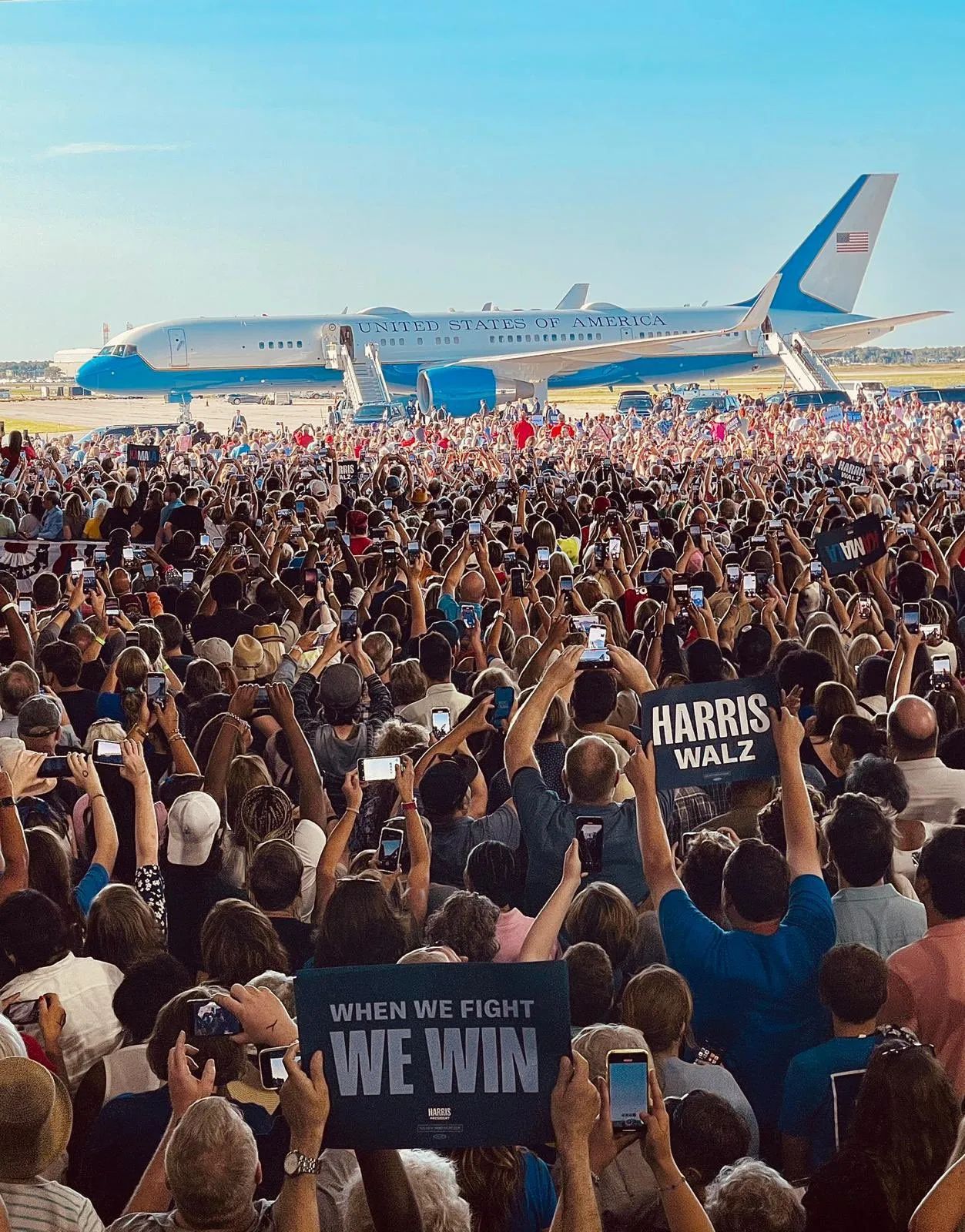
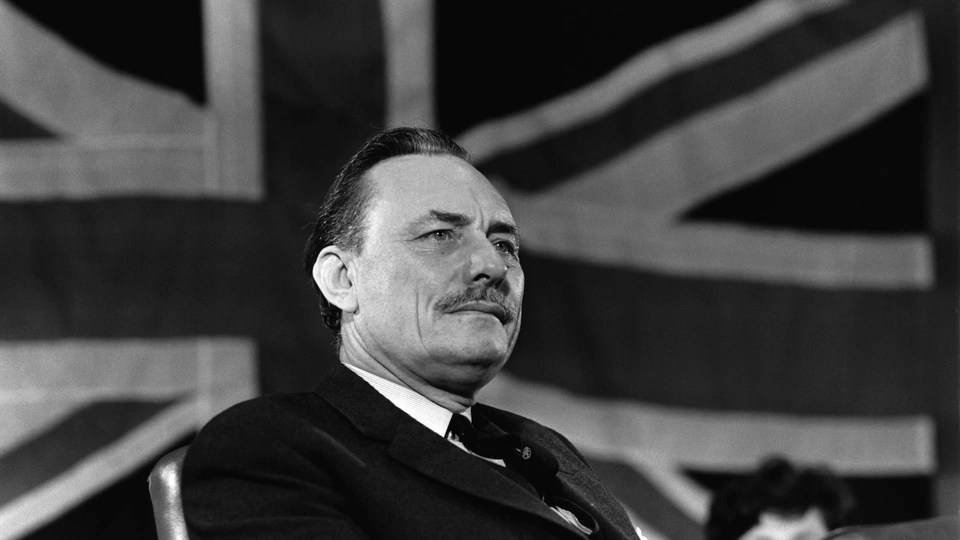
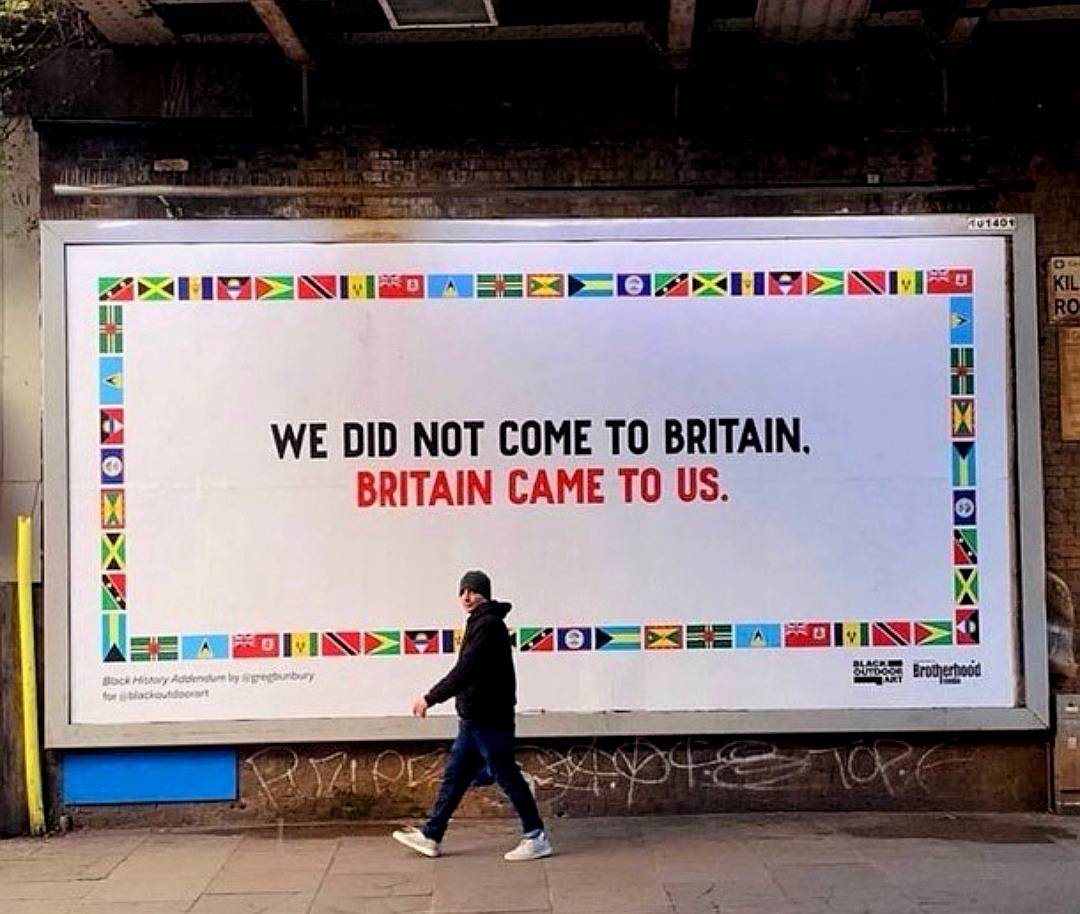
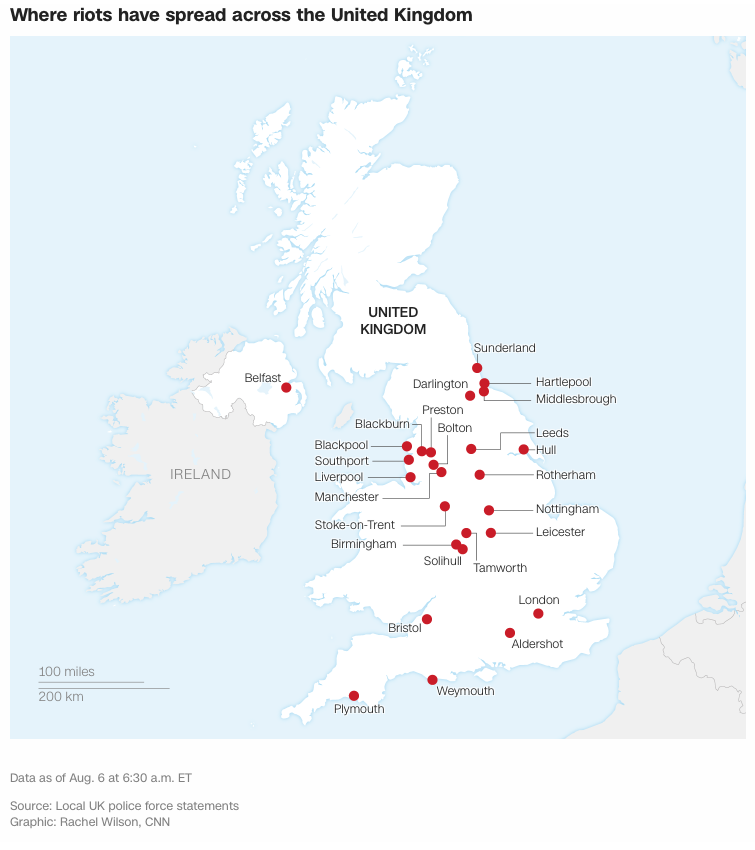
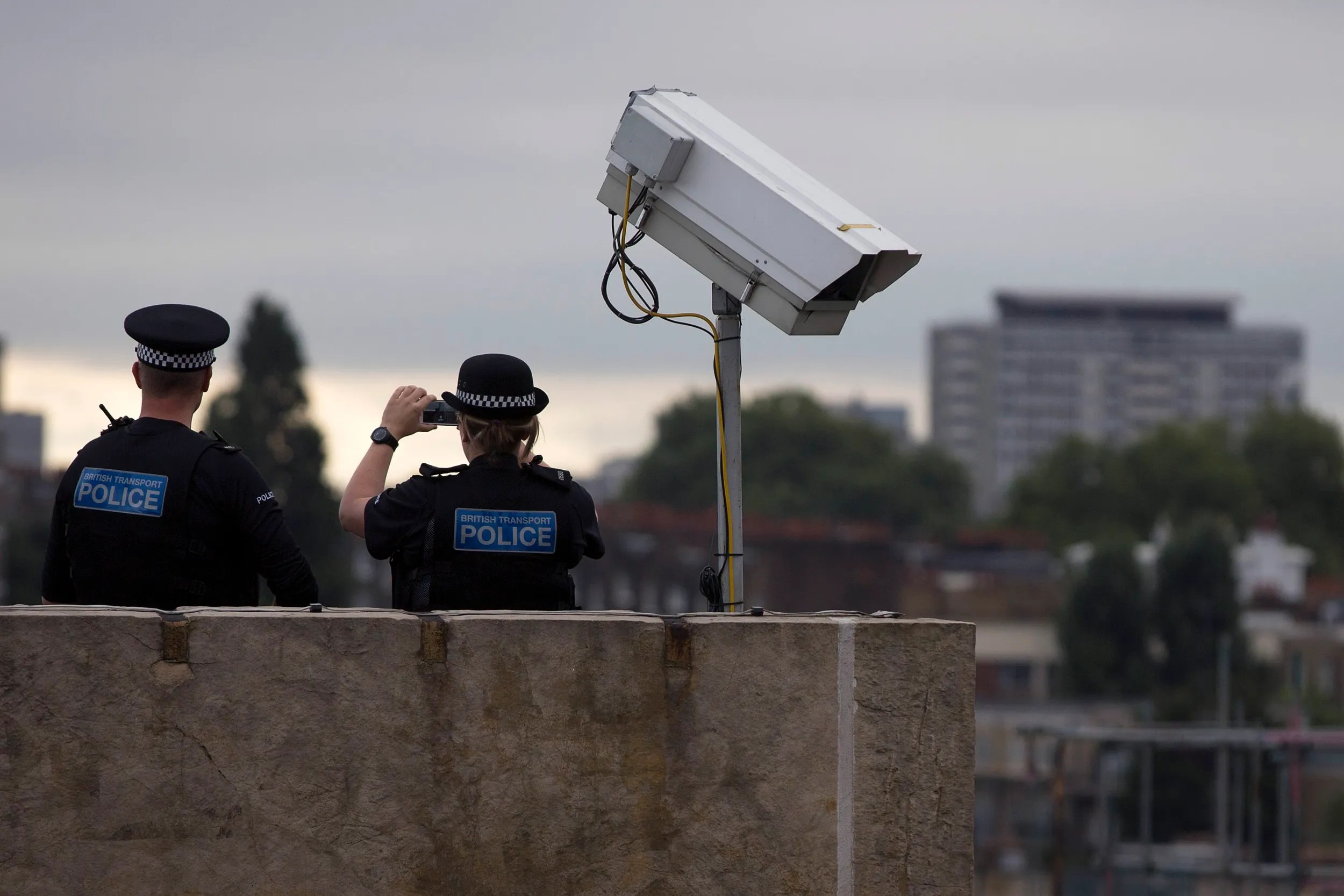
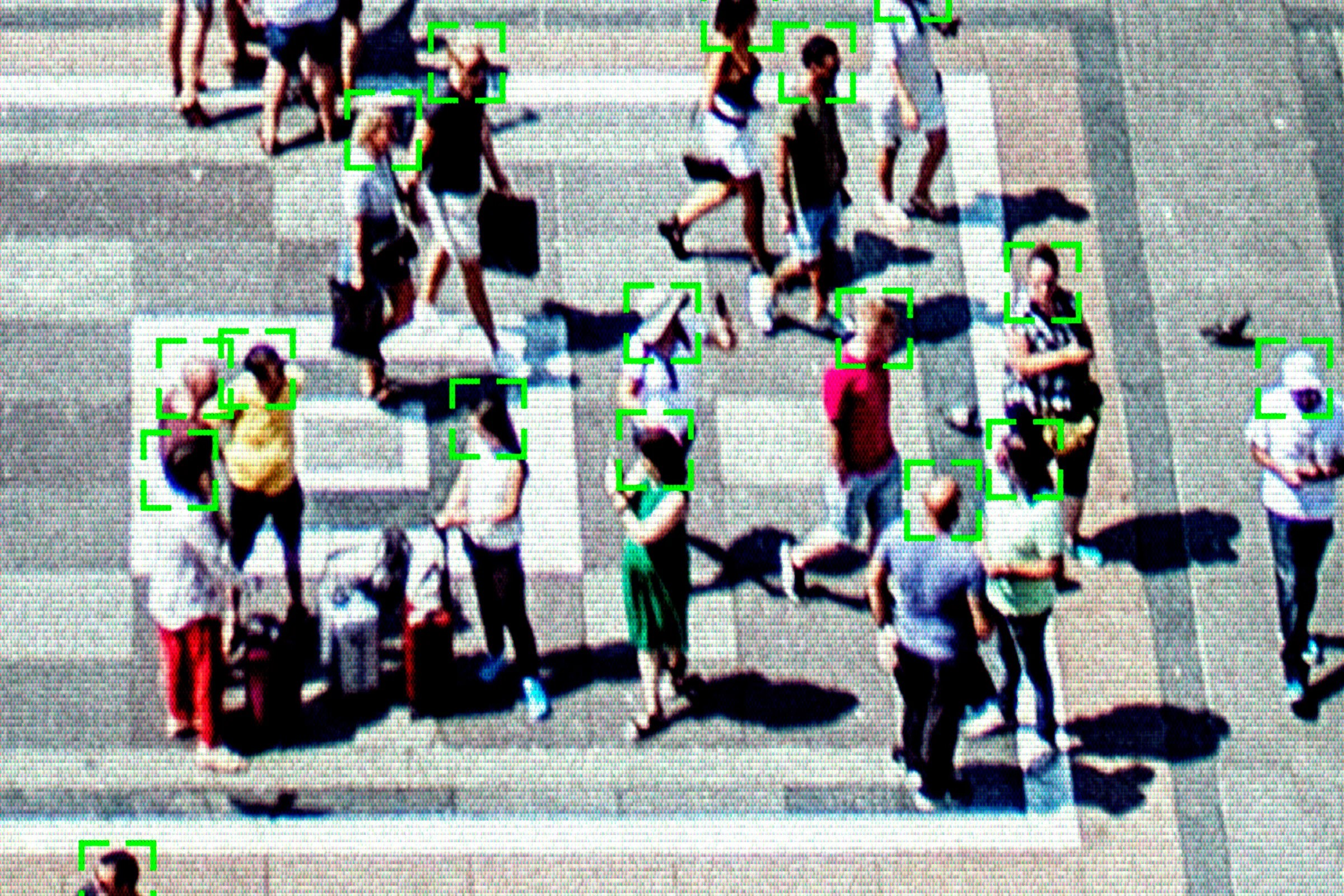
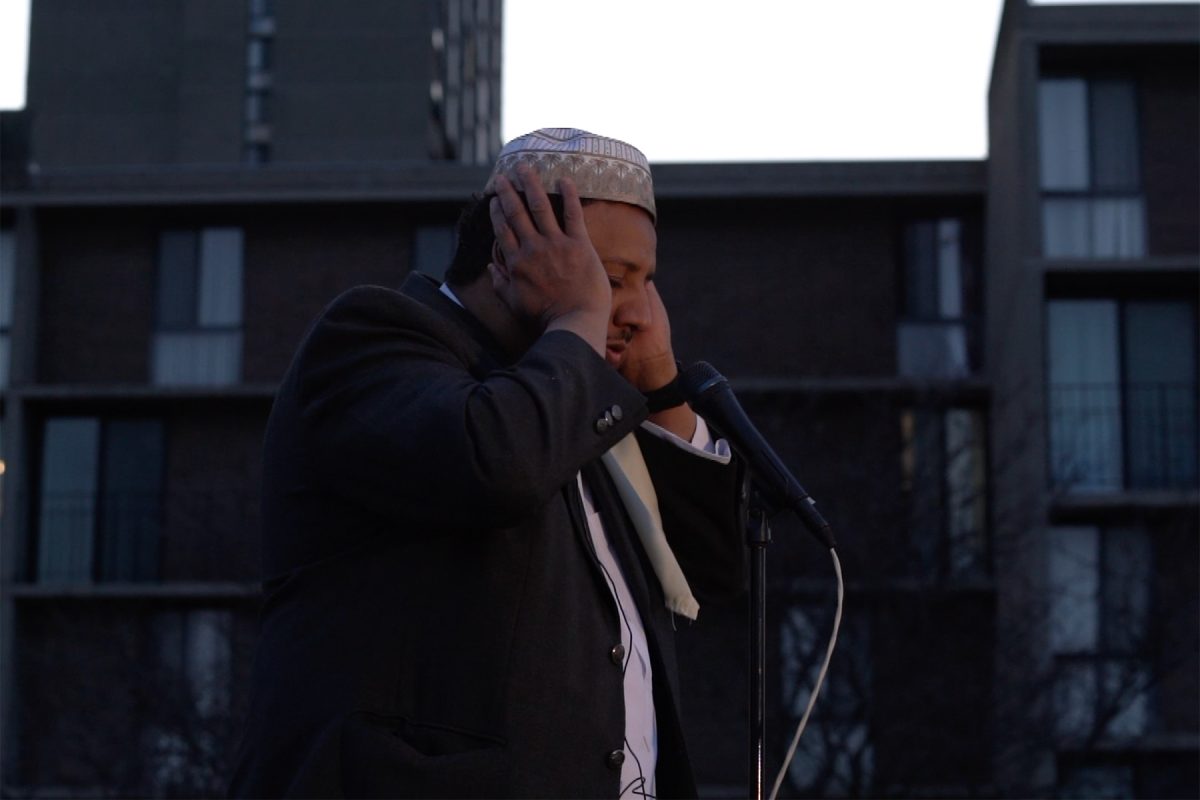
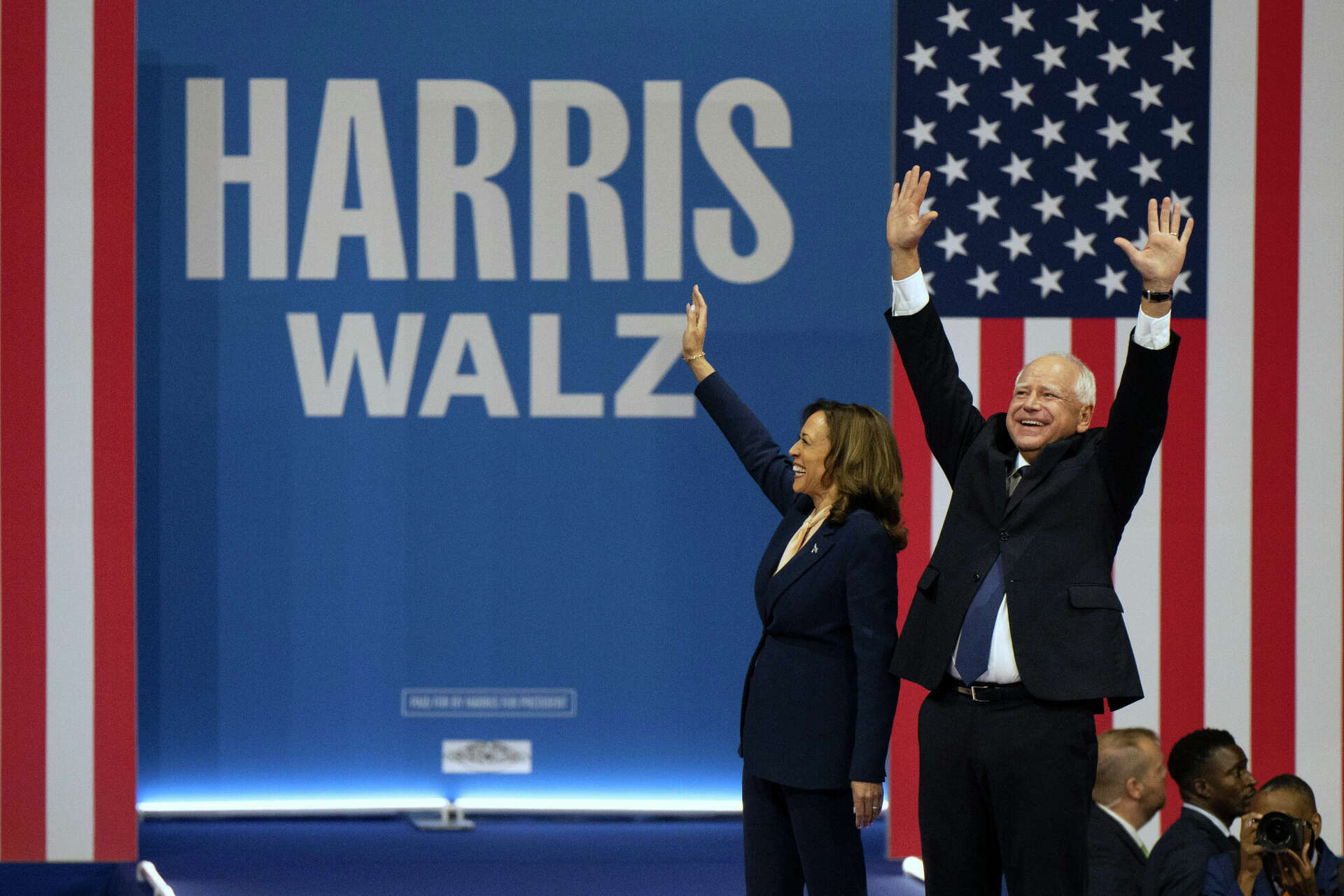

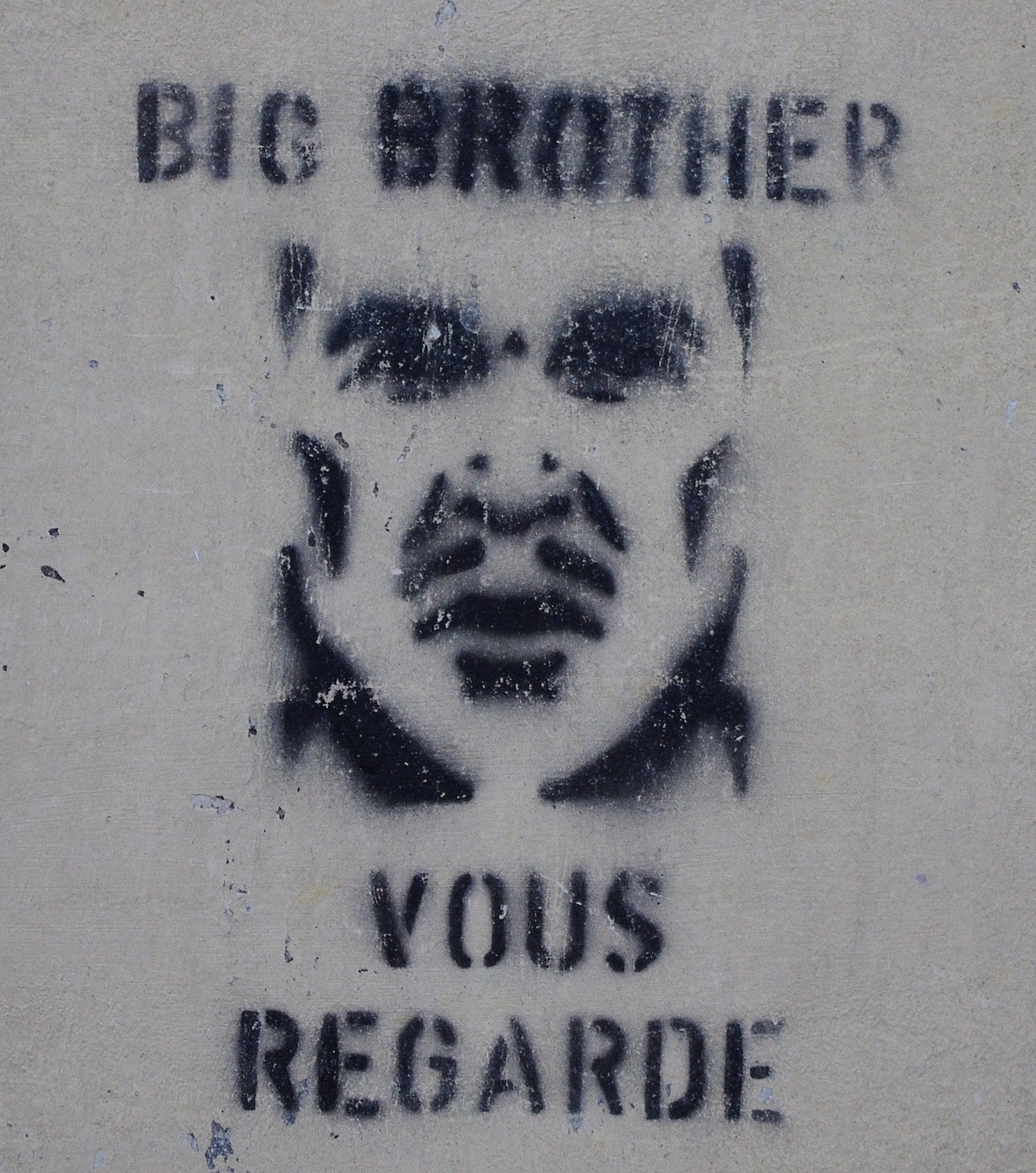
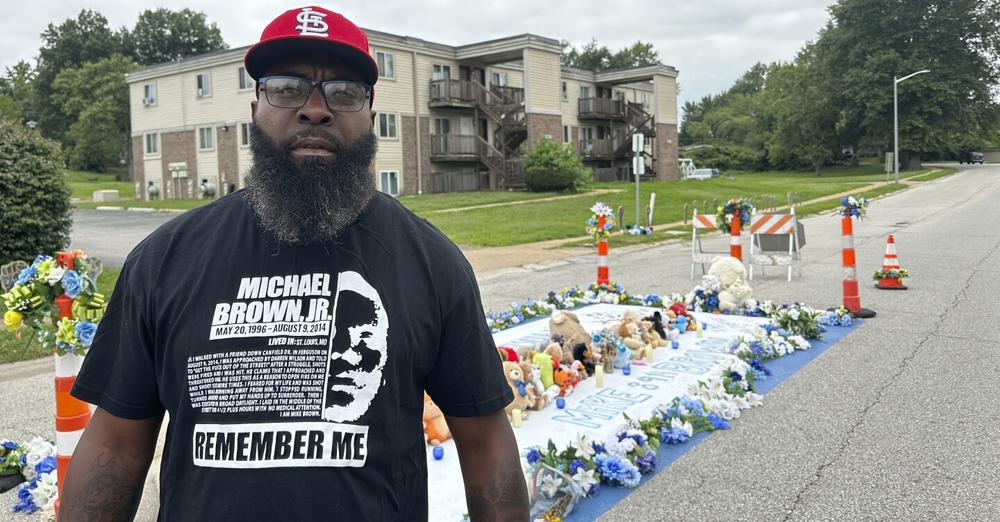


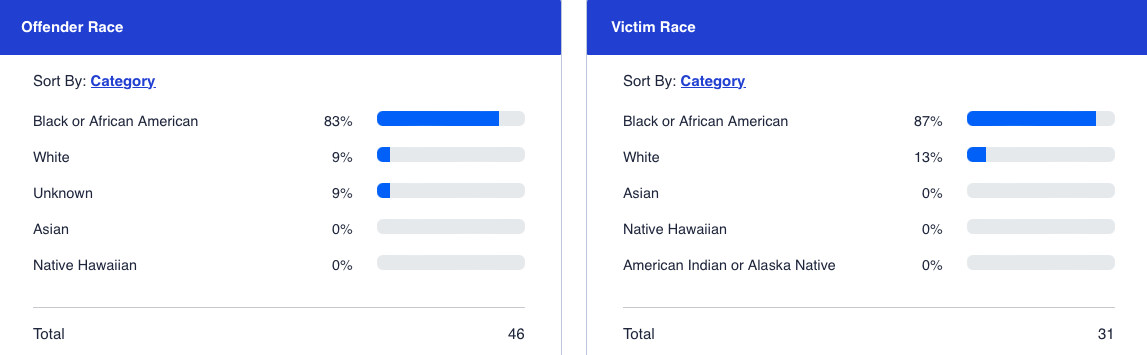
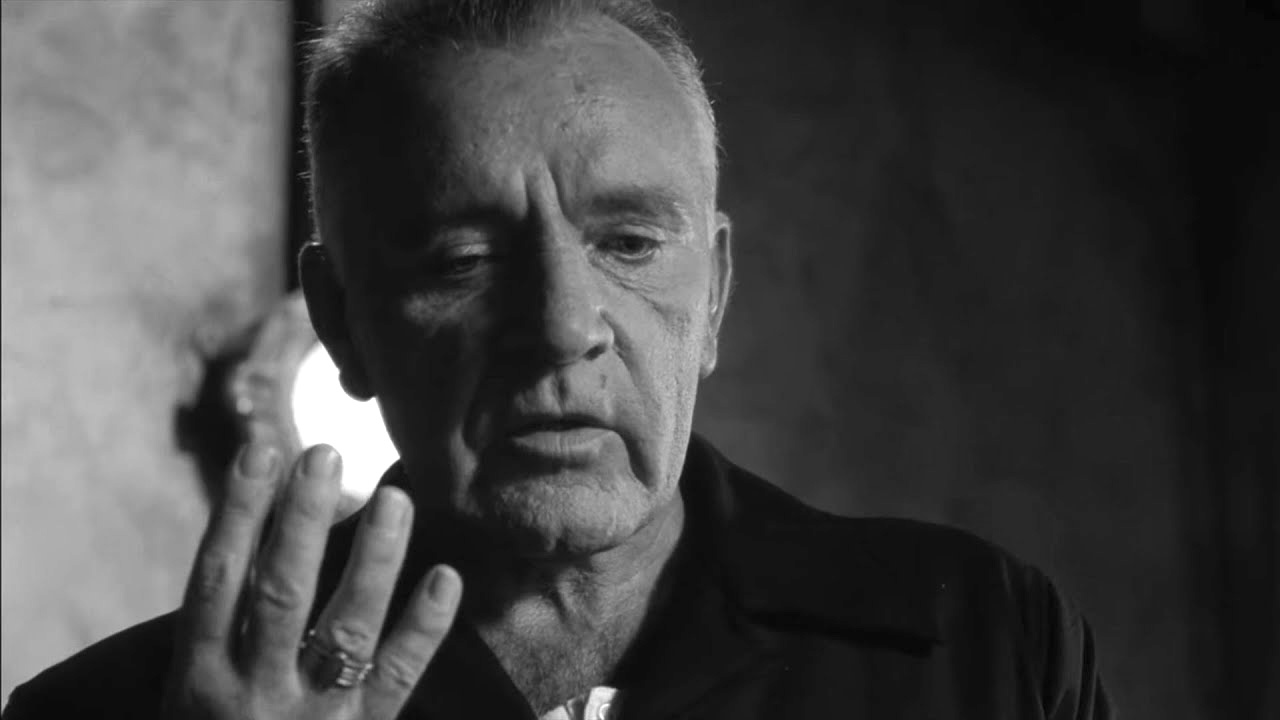
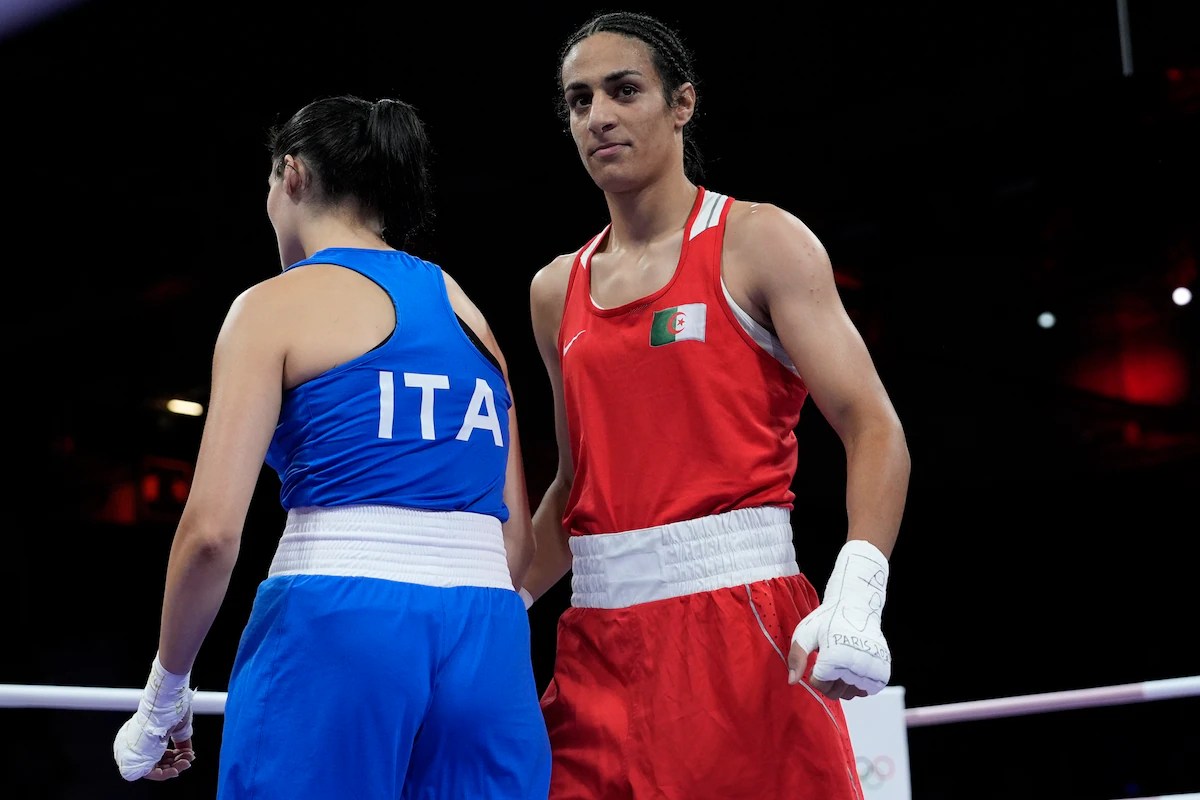
 freedom and reason