The Right to Think Differently

I want to begin by making it clear that my intention is not to offend my Christian friends and family. If you listen carefully, I believe what I am about to say should not offend you. Indeed, I would hope it will flatter you. I see you as an ally. For the woke progressive who reads this, not so much. This essay is about him. I’m using Christianity as the comparison point. We need more of that attitude.

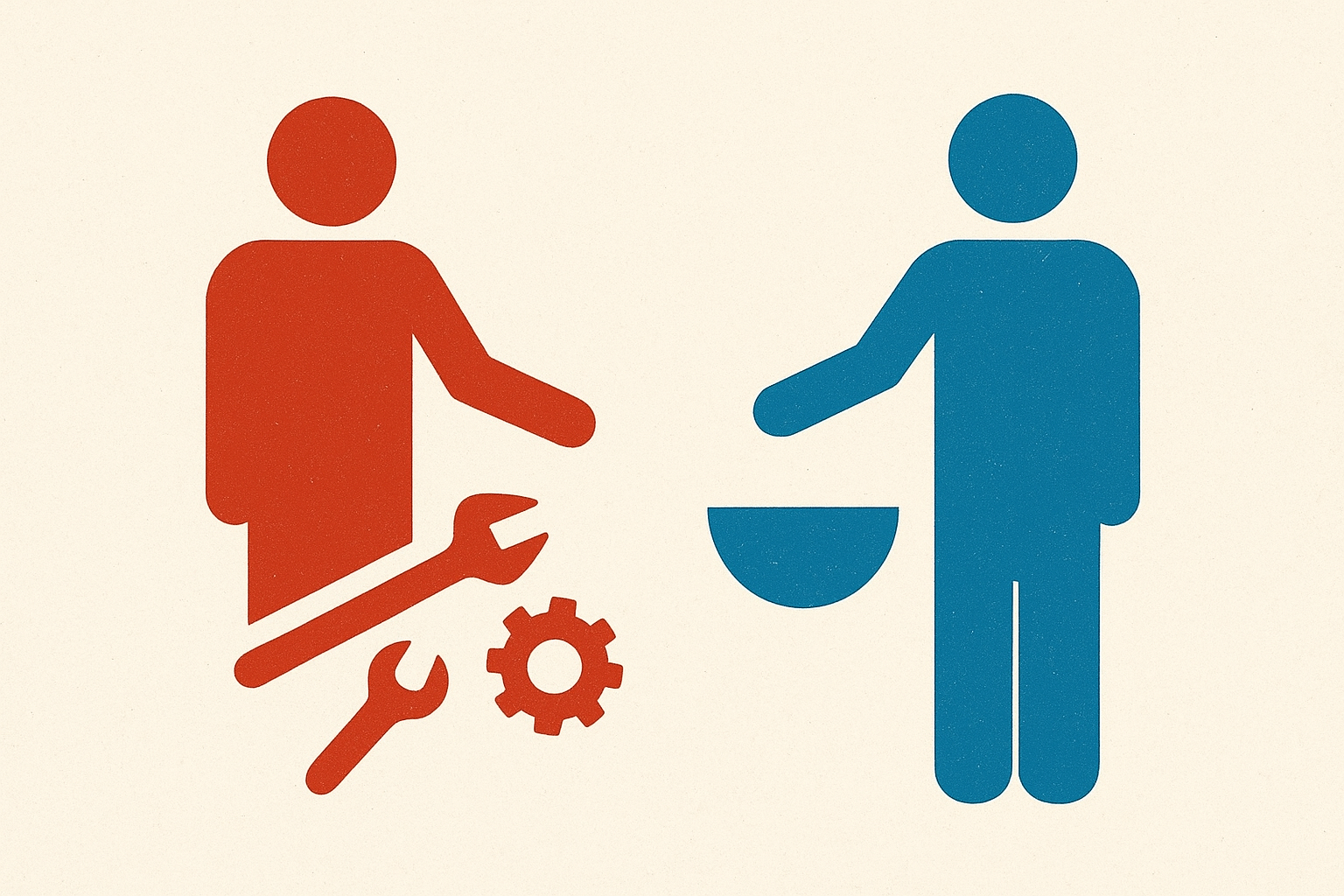
Image by Sora

Growing up, I was an atheist—and I have remained one. Yet almost everyone around me believed in God, angels, and devils. I was often the only person in the room who did not share those beliefs. Others took these things on faith, for such things cannot be demonstrated empirically. But they did not demand that I do the same. I could disbelieve without fear of reprisal. People could hold their faith, and I could reject it, and we all managed to coexist peacefully.

Today, however, disagreement feels very different. It feels that way because different beliefs are not tolerated by certain groups, and these groups wield considerable power. We are living in a climate where political ideology—particularly on the progressive left—demands the same kind of unquestioning faith once reserved for religion and demands it of everyone under the threat of reputational, material, and even physical harm.

One may like to imagine that I’m exaggerating, but people are harassed, intimidated, and even assaulted for refusing to believe in progressive doctrine and mythology, such as the myth of gender identity. Progressives hold those who defy woke doctrine “accountable” for their deviation. Today is the big memorial service for Charlie Kirk, a young conservative influencer who was held “accountable” for refusing to fall in line with gender identity doctrine.

Think about that. A man murdered another because he refused to believe that a man can be or become a woman. This would be like a Christian assassinating an atheist for refusing to believe that Jesus was the son of God. And the murderous actions of the progressive zealot are being praised by millions, many of whom are prepared to risk their livelihoods to voice that praise.

Progressives insist that authoritarianism characterizes the Republican Party, that Trump is a fascist, and that democracy is on the verge of collapse. There is no evidence for these claims. Like religious dogma, such claims must be accepted not through reason but through faith. If people want to take such things on faith, they are welcome to it. But can they behave like Christians, who don’t make other people’s lives miserable by pressing their faith on them? Could progressives go to their place of worship and voice their beliefs and practice their rituals without trying to impose them on the rest of us? Can we ensure that their beliefs don’t scale the Wall of Separation? Can we all agree that we enjoy a Bill of Rights that leaves matters of conscience to the individual? Apparently not.

I don’t care if a man wears women’s clothes. But why do I have to affirm the lie that women’s clothes—or women’s makeup, silicone breast implants, a surgically crafted neovagina—makes a man a woman? Why should women endure men who think or say they’re women in their female-only spaces? Why must progressives behave like zealous Muslims, praying loudly in the streets, hassling disbelievers, and threatening violence? Why do they insist on taking control of government and imposing their faith-based doctrines on a free society of individuals who are trying to live by rational rules and evidence-based policies constrained only by necessary ethical guardrails? Christians aren’t doing that—even if progressive mythology, which centers false claims of oppression and persecution in its doctrine, imagines otherwise.

Thus, the crucial difference between Christianity and progressivism lies in their respective consequences. The Christian faith that surrounded me growing up, that still surrounds me, was and is not dangerous. It didn’t and doesn’t threaten my safety. It didn’t and doesn’t silence me—though I confess I was often silent because I was outnumbered, and because I asked myself: what would it matter anyway? Was I going to talk people out of a faith belief? Especially since their faith afforded me the right to my own beliefs? Christianity allowed for disagreement and coexistence.

Progressivism doesn’t tolerate me and my beliefs. This ideology resembles Islam and other authoritarian belief systems. These belief systems are not content to let others live differently; they demand conformity. They suppress speech, punish dissent, and justify hostility toward those who resist.

This is where fear enters the picture. For the first time in my life, I must worry about whether others—specifically progressives—will harm me because of my beliefs. I never worried about that with Christians. Whatever my disagreements with their faith, I felt safe around them—and I still do. Their beliefs did not threaten my freedom or safety. The same cannot be said of today’s woke progressivism. You see the proof of that everywhere.

For almost thirty years now, nearly every fall and spring, I’ve walked into a classroom and lectured about Karl Marx. I always tell my students that to truly understand Marx, one must see how he arrived at his brilliant insight about the power of ideology. You can’t discuss Marx’s theory of false consciousness without first discussing Ludwig Feuerbach and his rejection of the divinity of Christ in the mid-nineteenth century.

I’ve given that lecture year after year, always knowing that in every class there are Christians—many of them conservative, many on the political right. But not once have I feared they posed a danger to me. They listen. They don’t complain. They don’t report me. They don’t try to have me fired.

Yet if I were to speak about gender as binary and immutable, I know what would happen—because it has happened elsewhere. I would receive complaints. Hell, I don’t even bring that subject up in class, and still a petition was circulated demanding my removal. The same thing has happened when I’ve presented crime statistics truthfully, exactly as the data show: there is no anti-black racism in civilian-police encounters. Students went to the dean and complained that I wasn’t “in line” with Black Lives Matter. As if I had to align my lessons with BLM propaganda. That’s the equivalent of Christian students running to the administration and insisting that I wasn’t “in line” with Christianity—yet that has never happened.

This contrast reveals something important: how differently Christians and progressives respond to intellectual challenges. Christians may disagree profoundly, but they tolerate the discussion. Tolerance is central to Christian teachings. Rational Christianity is a major source of Enlightened values. This is why I often say that Christians are allies in the cause of defending the American Republic. Progressives, by contrast, react like intolerant religious fundamentalists—any challenge to their ideology is treated as an offense worthy of escalation, whether through administrative channels or organized campaigns to silence the “infidel.”

The comparison highlights something important about ideologies: they are not created equal. Christianity, whatever one may believe about its truth claims, is built on the example of Jesus, who gave his life for others out of love. Islam, by contrast, has historically promoted a posture of hostility toward those who are different, insisting that outsiders must either conform or be cast out. When Christians ask, “What would Jesus do?” this does not cause one to worry that his head may be detached from his body. It is the spirit of intolerance in zealous religious belief that the progressive left mirrors: either one adopts their ideology, or one risks marginalization, silencing, or even violence.

For those wondering why progressives ally with Islamists, why they share their hostility toward Jews and the modern state of Israel, the answer lies in part here. The vast majority of modern Jews do not live strictly by the Old Testament. Jewish thought today is largely secular and aligns more closely with rational Christianity in the modern period than it did long ago. As Karl Marx and Max Weber, in careful independent analyses separated by a generation, showed, Christianity itself drew heavily from Judaism’s rational elements, transforming them into a framework that helped form the very foundations of civil society: freedom of thought, freedom of speech, freedom of the press, and the separation of church and state. Progressivism, like Islam, rejects that foundation.

My only problem with Christianity is that I cannot believe in what I have no evidence for. But that is no problem for Christians. And Christians have no problem with me. So—no problem. As long as Christians don’t impose their beliefs on me, and I don’t try to strip their beliefs from them, we remain friends and family.

Progressives, however, don’t want that arrangement. And so I confess: I do not feel safe in their presence. Christianity’s faith may be empirically unprovable, but it does not endanger me. Progressivism’s faith, however, threatens my freedom and security—because it insists not only on belief among its members but also on the obedience of society to woke progressive doctrine. This attitude threatens democracy and human freedom.

Ted Cruz Compares the FCC to the Mob—But Who’s the Real Mob?

Some conservatives—Ted Cruz, most notably—worry that Jimmy Kimmel’s potential removal from late-night broadcast television (Disney has indefinitely suspended Jimmy Kimmel Live! but not yet fired him) sets a dangerous precedent: If Democrats regain power, Cruz and others warn, they will use the same tactic against conservative figures.

This warning calls to mind the words of Christopher Hitchens, who, speaking at the University of Toronto’s Hart House Debating Club, said, “Bear in mind, ladies and gentlemen, that every time you violate or propose to violate the free speech of someone else, you are—in potentia—making a rod for your own back.” I have often appealed to Hitchens’ warning. But I also realize that it doesn’t matter how tolerant conservatives and liberals are of the excesses of the left. When progressives have power, they come after their enemies no holds barred. Out of power, they resort to guerrilla warfare.

Cruz’s concern rests—and perpetuates—a misunderstanding. As I explained in yesterday’s essay (Progressives Flipping Like Flags on a Pole: The Cancellation of Jimmy Kimmel and the Real Threat to Free Speech), the FCC never pressured Disney to act but rather reasserted the purview of the agency. Disney anticipated the cultural climate and political winds and made a decision. The company has always exercised its own judgment regarding employees. (Recall Gina Carano’s removal from The Mandalorian after she compared being a Republican today to being a Jew during the Holocaust, or ABC canceling Bill Maher’s Politically Incorrect for a remark about the September 11 terrorist attacks.)

Misunderstanding aside, the Texas Senator appears to believe that showing tolerance toward opponents’ speech—I shall in a moment come to who that opponent is—will inspire progressives to respond in kind. That expectation is naïve. On what grounds should conservatives and liberals expect grace from a movement and a power that treats offensive speech as justification for censorship, deplatforming, termination, or—in more extreme rhetoric and action—eradication?

No matter what stance the FCC takes—whether invoking its “public interest” mandate or ignoring it, as it often does—progressives will continue canceling, deplatforming, and targeting conservatives. It’s what progressives do. We don’t have to speculate. We already have years of experience with their tactics. There is no goodwill to be found on that side. That’s because the two sides in this struggle represent irreconcilable standpoints on liberty and justice. One side (comprised of conservatives and liberals) believes in dialogue. The other side is authoritarian.

Image by Sora

Conservatives assume that the free speech tenet of liberalism is a universal value, that rational people accept the guardrails of constructive dialogue—principles enshrined at the birth of the Republic—voiced in the first article of the US Bill of Rights—and upheld as civic ideals and enforced by legal protections ever since. The woke progressive stance, by contrast, is illiberal. It embraces a militant conception of speech as violence. For many on that side, even silence is violence.

From this perspective, offensive or “harmful” speech is not an idea to counter through dialogue but an act inflicting real damage, thus demanding resistance. The “marketplace of ideas,” long central to liberal thought, is rejected. Certain expressions—especially those labeled “dehumanizing,” “hateful,” or “oppressive”—are treated as instruments of domination that reinforce “systemic injustice.” Speech, in this framework, is never neutral but always entangled in power (this nihilistic expression owes a lot to the Fench postmodernist epistemic, but it is ultimately a popular reflection of corporate power). To tolerate harmful discourse is to perpetuate harm. Words are like sticks and stones for the woke progressive: they injure. Even silence wounds.

The moral justification for this stance ostensibly rests on a supposed ethic of harm prevention and self-defense. If words create fear or reinforce oppression, suppressing or punishing them becomes framed not as censorship but as justice (see The Noisy and Destructive Children of Herbert Marcuse; also, We’ve Been Here Before: Student Radicalism and Their Apologists). From this vantage point, harassment, intimidation, or even violence against offensive speech is rationalized as protective action. That the claims of harm may be exaggerated—or imagined—is irrelevant. The core assumption is that all disagreement is harmful, oppressive, and intolerable. The result: their side is so right that the other side must either submit or suffer reputational, material, and even physical consequences.

Critical theorist Herbert Marcuse, in a 1968 postscript to his 1965 essay calling for the suppression of the free speech rights of conservatives, writes, “I suggested in ‘Repressive Tolerance’ the practice of discriminating tolerance in an inverse direction, as a means of shifting the balance between Right and Left by restraining the liberty of the Right, thus counteracting the pervasive inequality of freedom (unequal opportunity of access to the means of democratic persuasion) and strengthening the oppressed against the oppressed. Tolerance would be restricted with respect to movements of a demonstrably aggressive or destructive character.” Angela Davis’ mentor called on the left to “fight against an ideology of tolerance which, in reality, favors and fortifies the conservation of the status quo of inequality and discrimination.”

This is not a rational position. It’s irrational, and irrationalism legitimizes violence under the guise of collective and righteous self-defense—without any purchase in morality. In a word, it’s authoritarianism. Authoritarians necessarily oppose liberalism because it threatens their assertions by opening challenges to them; irrationalism is rationalism’s antithesis. There is no synthesis to be found in this dialectic; the former is the negation of the latter—the consequences are destructive. The individual who rejects dialogue as inadequate or complicit in “injustice,” as defined by the “oppressor-victim ideology” (critical race theory, queer theory, postcolonial theory, whatever) inevitably embraces action—often violent action—as the only path to “justice.”

Harassment, intimidation, and coercion are rebranded as morally necessary, framed as defenses of dignity, equality, and “safety.” Safety in this perverse worldview is secured by making the conditions of others unsafe. Dialogue itself is judged dangerous, since it allegedly sustains the harms it fails to eradicate. Disagreeable opinions must therefore be destroyed by force. Justice is flipped on its head and recast as “social justice.” In this formulation, freedom becomes slavery—to adopt the Orwellian slogan from Nineteen Eighty-Four.

From this formulation follows a profoundly detrimental consequence: truth becomes a casualty of social justice. When truth contradicts the narrative of the righteous victim, it is recast as hateful and oppressive. Victimhood falsely confers an epistemic privilege that, if accepted, renders universal standards of reason impossible. Compromise cannot occur in a framework where concession is a priori treated as complicity in oppression. Dialogue is betrayal, negotiation is surrender, and violence for one side only becomes virtue.

This illiberal posture mirrors traits of a narcissistic personality. Narcissists exhibit grandiosity, hypersensitivity to criticism, fragile self-concepts masked by aggression, and an inability to recognize other perspectives as legitimate. Narcissists interpret disagreement not as an honest difference but as personal attacks or betrayals. Both the social justice warrior and the narcissist claim superiority while adopting a victim identity that demands special protections, skirting paradox, and freeing them from moral constraints against harming others. For both, dialogue is not truth-seeking but domination. Any challenge to the ego invites deflection, hostility, and aggression. The result is a worldview where compromise is impossible, criticism intolerable, and coercion recast as justified.

Recall Friedrich Nietzsche’s quote about insanity in his 1886 Beyond Good and Evil: Prelude to a Philosophy of the Future: “In individuals, insanity is rare; but in groups, parties, nations and epochs, it is the rule.” The progressive left embodies Nietzsche’s observation—collective madness appears throughout human societies and history, and our present society and history are in the grip of a collective madness. That madness is woke progressivism.

Given these irreconcilable standpoints, neither conservative nor liberal should expect reciprocity from the left if they bend over backwards to tolerate progressives’ behavior. On the contrary, those compelled to forge this coalition should expect the worst. The assassination of Charlie Kirk is not a one-off. His murder punctuates the moment we’re enduring.

Does this mean conservatives and liberals should mirror the irrationalism of the left? No. It’s not in the constitution of our respective sides (which have more in common than not). We do what we have always done: use government, law, and policy to preserve the Republic and its constitutional foundations. What we don’t do is deceive ourselves into believing that inaction will pacify the left. We act where we can, and this requires holding corporations accountable to the public interest.

This is where Cruz misses the mark. The Republican Senator fails to acknowledge that the corporations that use the public airwaves agree, when given an FCC license, to serve the common good of the nation, not push an ideological or one-sided party standpoint. A Media Research Center (MRC) analysis of Trump’s second term, focusing on ABC/CBS/NBC evening newscasts, found that greater that ninety percent of coverage was negative, despite Trump’s popularity in the polls. Other studies find the same thing. We must hold corporate power to the standard of fairness if we permit them to reach into our living rooms night after night. Those who abuse the American System of free enterprise must face accountability for their actions. Cruz has identified the wrong mob.

Corporations are not people, after all, however much Supreme Court judges have leaned on the presumption that a past Court decision established as much. There is no such precedent. The phrase “corporations are people” can be traced to the 1886 case Santa Clara County v Southern Pacific Railroad Co. But the actual opinion did not rule that corporations have Constitutional rights. The confusion stems from the court reporter’s headnote, which stated that the Court did not wish to hear argument on whether the “Equal Protection Clause” of the Fourteenth Amendment (written to address the badges of slavery—overturning Dred Scott v Sandford by guaranteeing birthright citizenship to black Americans) applied to corporations, since “we are all of the opinion that it does.” Headnotes, however, are not law—they are summaries and not binding precedent. Over time, courts and lawyers treated the reporter’s statement as if it reflected the Court’s holding. Thus, myth has determined law and collective fate.

There is nothing in the foundational law that prevents governments from restricting corporate behavior, and what is in the law that prevents this is invalid from a constitutional perspective. Indeed, the principle that corporations fall under the rule of law is a necessary condition for a free society. In the age of absolutism, the sovereign’s authority was rooted in the natural law legitimized by its divine character. Corporations were material enterprises subject to that entity naturally entitled to express, interpret, and enforce that law. The sovereign’s power went by the Latin Quo Warranto—“by what authority?”—meaning that corporations are answerable to the sovereign.

America’s hard-fought independence from the British monarchy did not cede this authority to corporations, but rather transferred that authority from the sovereign in personal form (the king) to the sovereign in the corpus of the People (no kings). The Declaration of Independence and the Constitution establish that the American People are the sovereign, and corporations answer to the People through their elected representatives in a republican system that derives its just powers from the consent of the governed (I am here effectively quoting the founding documents). (I have written about this in several essays: Richard Grossman on Corporate Law and Lore; Progressivism Hasn’t Been Betrayed—It’s Been Installed; The Selective Misanthropy and Essential Fascism of the Progressive Standpoint.)

Tolerating progressive excesses in the service of corporate power compromises our values and hurts Americans. And that is what progressivism is—an expression of corporate governance and extralegal excess. When the government acts to advance the illegitimate regime of the corporate state, it is acting against the national interests. During and after the 2020 election, when the Biden administration and allied agencies repeatedly communicated with social media companies about what they deemed disinformation or foreign influence operations, flagging posts it considered “problematic,” including COVID-19 and vaccine content, pressuring firms to downrank or remove such material, it was advancing the interests of powerful corporations over the interests of the People the Republic was established to protect and defend.

Never forget what progressives did to you in 2020. During the Presidential election, social media companies suppressed the Hunter Biden laptop story, influenced by warnings from federal agencies and former intelligence officers about the machinations of foreign disinformation—a claim that those persons and entities knew was false. Executives later claimed that they were not directly ordered to do so by government officials, but their moderation policies clearly indicated external pressure. Why did they suppress the laptop story? Because they were determined to install Biden as President. Why Biden? Because the Democratic Party represents the interests of transnational corporate power. The suppression of the laptop story had its intended effect. Polling indicates that had the public known about the contents of the laptop, enough of them would have changed their vote to affect the outcome of the 2020 election.

The corporate state must be the target of conservatives and liberals concerned with preserving the American Republic. Inside Twitter (before it was acquired by Elon Musk) and other platforms, decision-makers with prior government and intelligence ties shaped the community standards that censored American citizens on platforms that were designed to provide the common man the means to express his opinion. Crucially, the censorship regime of social media reflected (it still does) not only institutional pressure but also a broader progressive outlook—one that prioritized combating misinformation, protecting public health messaging, and safeguarding election integrity, at the cost of restricting legitimate speech, for the purposes of perpetuating the corporate state.

The progressive panic over Jimmy Kimmel is a propaganda campaign manufactured to confuse Americans about the role of government in bringing corporations to heel for the sake of public interest. Progressives appeal to free speech (when convenient) to obscure their function as agents in entrenching and expanding corporate power—big media companies, the culture industry, and the administrative state.

The contest over speech in America is thus not merely a clash of policy preferences; it’s a deeper battle between two incompatible worldviews—and irreconcilable governmental frames. One side seeks to preserve a liberal order grounded in constitutional principle, open dialogue, and reason governed by republican virtue; the other redefines disagreement as harm, dissent as violence, and suppression as justice to establish a totalitarian corporate state. The latter works from a double standard, where their speech is portrayed as virtuous and actions justified, while like responses from the other side in defense of liberty are denied to them. It is no exaggeration to say that we are in the fight of our lives. We’re winning, but that’s when the left becomes most dangerous.

Conservatives and liberals who expect reciprocal tolerance misjudge the nature of this divide. The left’s illiberal posture, amplified through corporate actors, cultural and media institutions, and captured government agencies—indeed advancing those elite interests—has already demonstrated its willingness to curtail speech in pursuit of ideological goals. Kirk is not the only casualty of leftwing aggression, but rather an extreme and increasingly common manifestation of it. To respond with passivity to this existential threat to the Republic is to invite further erosion of liberty and our capacity to defend our nation. To be blunt, passivity in the face of extremism is suicidal empathy. You may feel sorry for the narcissist, but you don’t allow him to manipulate and mistreat you (to be sure, some do, but that indicates a mental illness in itself).

So what am I recommending? I have indicated the path forward above: bring corporations to heel using government and law. In recommending this, I want to stress that taking this path must not imitate progressive authoritarianism, but rather defend and reaffirm the principles of free expression, institutional accountability, and the rule of law. Only by holding corporations, cultural gatekeepers, and policymakers to the standards of a free republic can conservatives and liberals protect the American system from those who would dismantle it under the guise of justice. That is not suppression of speech but the liberation of speech from corporate power and street-level violence.

Ted Cruz fears that if progressives regain power, they will weaponize institutions to punish conservatives; that by tolerating this climate, conservatives will have ceded the very principle needed to defend themselves. But dialogue presumes two parties willing to engage the dialectic in good faith. Experience shows a consistent pattern: the left has little interest in mutual exchange or maintaining the rational guardrails that foster civil dialogue. There is no reservoir of goodwill to be found there, because progressives, on one side, and conservatives and liberals on the other, hold incommensurable positions on liberty and justice. Of course, one side is right, and the Constitution provides the means for making good on the promise of the Declaration of Independence. But Republicans need to assert that power.

We need to clearly identify the mob. It is not the government and its law. It is the corporation and its foot soldiers. There is a clear choice before us: either we have a free market capitalist system under the rule of law that works for the public interest, or a corporate sovereign that exists in a state of nature pursuing the narrow interests of rich and powerful elites. The former arrangement requires a constitutional republic established by men who recognize that our rights are derived from nature and not from man—and that government derives its just power from We the People. The latter is, in a word, fascism.

The role of propagandists is to manufacture the illusion of consensus between incommensurable standpoints when the resolution portends the negation of the other. The woke left rejects what binds us together. As I have argued in this essay, the thesis and the antithesis in this dialectic cannot result in a synthesis. I would remind people that this is not the first time in our nation’s history that we have been here.

Progressives Flipping Like Flags on a Pole: The Cancellation of Jimmy Kimmel and the Real Threat to Free Speech

In his opening monologue on Monday, Jimmy Kimmel addressed the killing of conservative Charlie Kirk, saying: “We hit some new lows over the weekend with the MAGA gang desperately trying to characterize this kid who murdered Charlie Kirk as anything other than one of them, and doing everything they can to score political points from it.” At the time, it was already widely known that the shooter was an Antifa terrorist. What political points was the “MAGA gang” supposedly trying to score—raising the alarm about left-wing political violence? Kimmel’s line was a deliberate distortion, designed to mislead his audience and sustain a narrative that shields left-wing extremism.

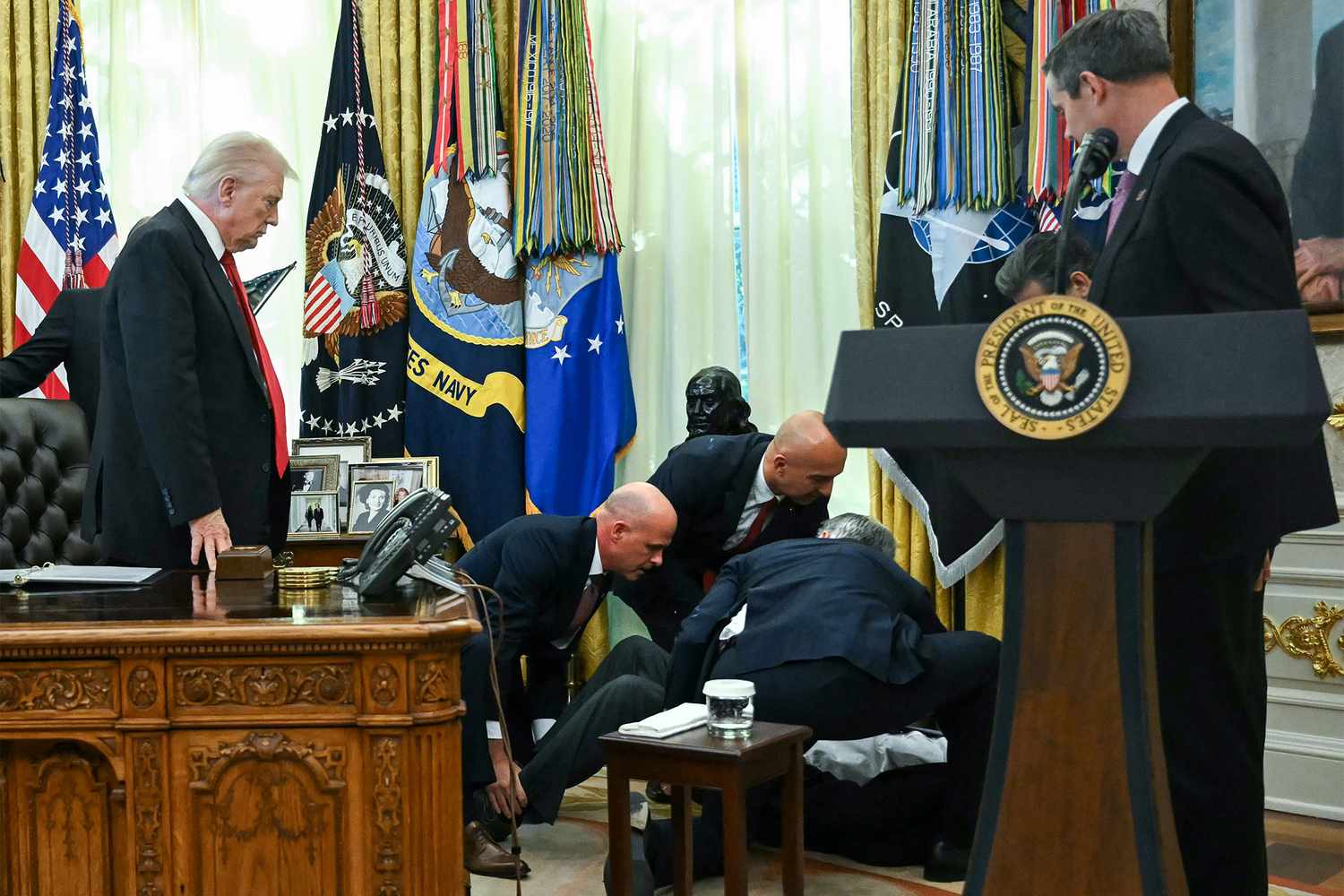
Source of image: ABC News

On Thursday, one of the most virulent propagandists in network television history was suspended indefinitely. The falsehood about who killed Kirk was not Kimmel’s first foray into extremist messaging. He is the same host who openly wished death on those who used Ivermectin, suggesting they should be denied healthcare. In a notorious segment, he mocked “Wheezy,” saying: “Vaccinated person having a heart attack? Yes, come right in. We’ll take care of you. Unvaccinated guy who gobbled horse goo? Rest in peace, Wheezy.” Wheezy could have been your father or grandfather. Perhaps he was. This came just months after Stephen Colbert humiliated himself dancing with syringes on The Late Show.

How did Kimmel survive this? Because he said this in the midst of the medical-industrial complex propaganda campaign to foist mRNA technology manufactured by Pfizer-BioNTech (Comirnaty) and Moderna (Spikevax) on the American public, while smearing doctors and patients who used Ivermectin. After only a few seconds of research, I found that, in 2021, Big Pharma, with Pfizer and Moderna dominating the market, spent 6.88 billion dollars on direct-to-consumer advertising across all media. Linear TV (broadcast and cable) accounted for about 70 percent of Pharma TV ad spend. “Vaccine awareness campaigns” were a big part of this. Kimmel was a shill for the mRNA gene therapy campaign.

In an attempt to pin Kimmel’s suspension on President Donald Trump, CNBC misrepresented FCC Chair Brendan Carr’s remarks in the headline: “Carr says ‘we’re not done yet’ after Jimmy Kimmel suspension by ABC.” Who is “we”? Carr was clearly referring not to the government but to broadcast television as a business ecosystem. He spoke of Nexstar’s decision to preempt Kimmel’s program and described the resulting changes in the “media ecosystem” as a healthy market adjustment. Carr emphasized the broader trend: a historic shift in audience preferences away from progressive ideology, reflected in the ratings collapse now affecting linear television.

Feeling they have an opportunity to shift attention away from leftwing violence, progressives decry ABC severing ties with arguably the most loathsome cretin in broadcast history as an affront to free speech, finding yet another contrived way to depict the President as authoritarian while deflecting the actual affront to free speech: killing a human being for his words. But that’s not the only horror Kimmel’s script was designed to obscure. Kimmel’s line was also designed to disrupt his audience’s awareness that Kirk was assassinated by a killer motivated by left-wing progressive ideology manufactured by transnational corporate power, in particular that Tyler Robinson was an assassin for the doctrine of gender identity.

In mass media framing, to tie Trump to Kimmel’s cancellation, Trump is noted as having celebrated the suspension of Kimmel from the airwaves. Having called on Trump to lower the temperature, while at the same time blaming conservatives for political violence, progressives portray the President as persecuting those mocking Kirk’s death. I confess: I, too, celebrate Kimmel’s suspension. A major propagandist of the progressive corporate order is off the air. Good riddance. It’s a win for truth and reason when corporations eat their own. The President and yours truly can’t have an opinion without tying this to the specter of authoritarianism?

Disney understands the situation: Kimmel’s propaganda function was destroyed by the callousness of the television program in question. He was no longer worth the millions Disney was losing to keep him on the air. What’s the point of throwing money away if a Disney employee is no longer effective in his assigned role? As of 2025, Jimmy Kimmel’s contract with ABC is valued at 48 million dollars, with an estimated annual salary ranging between 15 and 20 million. Given this, expect more progressive television commentators to be handed pink slips.

Watch the above video of FCC Chairman Brendan Carr explaining the situation. He is clear about the role of the FCC in all this. There’s a lesson in this: you cannot trust media pundits to let Carr’s words speak for themselves in a contrived headline. You have to listen to the man’s words unfiltered. The rational default position when consuming media content is this: go to the source.

Why did viewers flipping through the channels have to suffer Kimmel for so long? This question is answered by what I’ve said already. Why were they subjected to this man in the first place? Same answer. You might otherwise wonder what executive would think Jimmy Kimmel Live! would make a good replacement for Bill Maher’s Politically Incorrect. Did you forget about that? Kimmel was brought in after Disney/ABC canceled Maher. Why did Disney cancel Maher? Because ABC affiliates pulled support from the program. They preempted it. Why would they drop Politically Incorrect? Maher criticized US foreign policy and elevated the reputations of the Islamic terrorists who attacked New York City and Washington, DC on September 11, 2001. He was bad for the military-industrial complex. That’s what happened to Kimmel: affiliates pulled support. Maher picked himself up and carried on. Can Kimmel?

Check this out. NBC was owned by GE at this time. This only aired once. I show this in my course, Freedom and Social Control, during the Mass Media and Propaganda unit. It explains a lot (the content is factually accurate):

For the record, the FCC can fine and restrict broadcast television for indecency, obscenity, and profanity. Outside of these categories, political or controversial viewpoints remain protected under the First Amendment. But that is beside the point. Kimmel’s suspension was ABC’s decision—he had simply become a liability.

As for Carr, he was stating a straightforward fact: Kimmel “appeared to directly mislead the American public” regarding the circumstances of Charlie Kirk’s killing. “Appeared” is a charitable way of putting the matter. That is exactly what Kimmel did—he misled the public. Carr took issue with Kimmel’s suggestion that the alleged killer was part of the “MAGA gang.” More charity. Kimmel went further than suggestion; he claimed that “the MAGA gang [was] desperately trying to characterize this kid who murdered Charlie Kirk as anything other than one of them.”

Carr reminded broadcasters that because they have licenses granted by the FCC, they have obligations to operate in the public interest. Carr has, as have his predecessors, repeatedly invoked broad principles like public interest, obligations of licensed broadcasters, and community values. This is standard regulatory language the FCC uses to define what broadcasters should do across many situations. Carr didn’t announce any specific enforcement, immediate penalty, or even that the FCC was filing paperwork.

The reality is that, in the United States, no private individual or corporation owns the airwaves. By law, and under the oversight of a democratically elected government, the airwaves are a public resource, held collectively by the American people. Carr is rightly concerned that those licensed by the FCC—and therefore accountable to the public—serve the public interest. That is the FCC’s core function. The agency has a long history of raising concerns about “public interest” or “community standards” in broadcasting. Indeed, ensuring these standards is, and has always been, the FCC’s mission.

For progressives, Kimmel has become a free speech martyr. In their telling, Trump fired him. That’s not what happened. Nexstar merely set the chain in motion. Sinclair, the nation’s largest ABC affiliate group, followed suit, stating it will not air Kimmel’s show—even if ABC decides to bring it back—unless “appropriate steps” are taken. That is their prerogative as a private media company. Sinclair has, for example, called on Kimmel to apologize. In the meantime, the affiliate will air a tribute to Kirk in Kimmel’s time slot on Friday. Prediction: Kimmel won’t be back. He is no longer a propagandist worth the tens of millions of dollars his show costs annually.

Why are progressives outraged? It cannot be about principle. Recall when Fox canceled Tucker Carlson—progressives celebrated. Couldn’t have happened to a nicer guy, AOC clucked. Kimmel gleefully announced it to a cheering audience. Remember when NBC cancelled Megyn Kelly because she asked a discussion question about woke Halloween costume policy on college campuses? Pretext for NBC wriggling out of a 69 million dollar contract. Remember Roseanne Barr in 2018? ABC canceled Roseanne over a single tweet, then launched the spinoff The Conners, continuing the storyline with the other characters Barr created. The network even killed off her character, a Trump supporter, via drug overdose. Media outlets, commentators, and civil rights organizations hailed the cancellation as appropriate accountability. And yet, canceling Kimmel is a fascist move?

Why was Barr really canceled? As I suggested above: the show incorporated her political stance into the storyline. This was woven into her character’s working-class, Midwestern background, highlighting the political divides that can exist within a family. The political angle was deliberately provocative, sparking debates among fans. Critics argued that the storyline was polarizing and glamorized support for Trump. Those waiting to cancel the show were lying in wait, and Barr’s tweet provided the pretext. The show was commercially successful, yet ideology ultimately took precedence. This is the same ideology that puts conservative lives in danger.

Progressives defend the commercial interests of corporations that use the public airwaves to propagate messages—so long as those messages serve corporate elites and their progressive functionaries. The moment a pro-Trump perspective is broadcast—even in the context of exploring political polarization within a family, as in a dramatic comedy—a justification for cancellation can be found, no matter the show’s popularity. All in the Family was tolerated because Archie Bunker’s bigotry was presented as part of his character: an uneducated, working-class man. His humanization was designed to obscure Norman Lear’s—and Carroll O’Connor’s—intent to mock Nixon supporters. Nixon was portrayed as an authoritarian, too, but progressives in the 1970s had not yet become completely untethered to reality.

This isn’t the first time Kimmel has been canceled. Comedy Central cancelled Kimmel and The Man Show in 2004—but for the opposite reason. The show, hosted by Kimmel and Adam Carolla, featured humor centered on stereotypical “male” behavior. Comedy Central was shifting toward more “socially conscious” programming. Carolla left the show in 2003 because the show was becoming increasingly tailored to match the progressive turn in corporate politics. But Kimmel couldn’t meet the demands of the emerging woke hegemony, so Comedy Central cancelled him. Presumably, progressives supported Kimmel’s cancellation then.

Were Kimmel’s free speech rights violated when The Man Show was cancelled? Were Norm McDonald’s free speech rights violated when he was fired from Saturday Night Live for talking about O.J. Simpson? As progressives told us during COVID, corporations are not obligated to uphold the free speech rights of citizens. Kimmel and McDonald are employees. Cancelling them is accountability culture.

Certainly Kimmel supports cancelling programming with which he disagrees:

In light of their record on free speech, progressives should sit this one out. Did any of them cry “fascism” when Twitter deplatformed Trump and The New York Post or Facebook booted Alex Jones off the social media giant? All those users who were cancelled for “misgendering” deluded men who think they’re women? Those who questioned Fauci’s “science”? No. Progressives applauded all that. They demanded it. They participated in it. They doxxed and reported social media users. The social media companies they used took directives from the Biden Regime (and deep state embeds). The worst thing to ever happen was Elon Musk buying Twitter and opening it up to diverse viewpoints.

We don’t need a bunch of authoritarians lecturing us on free speech. Their angle on this is obnoxiously disingenuous.

I can hear the objections: What about the right-wing complaint about social media censorship and deplatforming? There’s no hypocrisy here. There is a distinction between linear television and social media platforms. Broadcast television operates under licenses granted by the federal government and is subject to FCC oversight. Because broadcasters use the public airwaves, they bear editorial responsibility for what is aired. Who holds them accountable? We do through our elected representatives. Cable television functions similarly in that it also exerts clear editorial discretion, much like a magazine or newspaper that decides what content to publish. In both cases, the law treats these outlets as publishers, and they are accountable for their editorial choices.

Social media platforms, by contrast, enjoy a special legal status under Section 230 of the Communications Decency Act of 1996. The law shields them from liability for user-generated content by declaring that they are not to be treated as the publishers or speakers of material posted by their users. The content belongs to the users of the service. The justification for this immunity is that these platforms are akin to digital bulletin boards. They are not exercising—at least they are not supposed to exercise— editorial oversight in the way traditional media did; rather, they are merely providing a space built by the taxpayer for ordinary citizens to express their opinions and exchange information.

In reality, in violation of Section 230, social media companies, while benefiting from this legal immunity, exercise significant editorial control. They establish and enforce “community guidelines,” an Orwellian euphemism for editorial control, removing posts, suspending accounts, and deploying algorithms that prioritize certain kinds of content over others. This means that social media functions like publishers, despite legal claims to neutrality. Defenders of the current system—progressives and the Tech Lords—point out that Section 230 explicitly allows platforms to moderate objectionable content without forfeiting immunity. So what’s their complaint? I already told you. 

Today’s Rasmussen Reports daily Presidential Tracking Poll shows that 53 percent of Likely US Voters approve of President Trump’s job performance. Progressives have managed to give Trump a ten-point swing in his negativity rating in only a handful of days. Once exposed, progressives are their own worst enemies. Just get out of their way? Give ’em the rope that they’ll hang themselves with? Sure, but keep hammering, too. It’s the hammering that has exposed them.

This is what’s really freaked out progressives: the media ecosystem has shifted under their feet. There is a seismic quake in popular sentiment. It has shifted because America has moved away from progressivism and towards democratic republicanism. Progressives have lost the culture war, their empire is crumbling, and they’re turning, not only to more extreme rhetoric, but also to political violence. This is why America is a more dangerous place for conservatives and liberals today. Violence is increasingly the progressives’ only recourse. In the end, violence will be all they have. That’s the real threat to free speech. The “free speech” hysteria on the left is nonsense. Just another self-inflicted wound. 

The ever-opportunistic Democratic Minority Leader Chuck Schumer couldn’t let Kimmel’s cancellation slide. The controversy helped Schumer get back on the “Trump’s a fascist” train. Schumer just had to swap out dictators. Now Trump is “just like Xi.” Minnesota Governor Tim Walz describes the situation as “North Korea-style stuff.” That’s rich coming from the man who said what he said in the above clip. Comparing Trump to Hitler once more needs a little space and time. They’ll get back around to it. They already are: “Hitler’s Clampdown on Free Speech and Its Lessons for Trump after Jimmy Kimmel Firing.”

Wait until RFK, Jr gets rid of pharmaceutical ads. “Corporations are people, too!”

The Struggle for Western Civilization on the Modern Political Landscape

Recent polling conducted by Mark Mitchell of Rasmussen (presented yesterday on Steve Bannon’s War Room) reveals a striking reality: a vast majority of Americans are concerned about the rise of political violence. Their concern is not unfounded. Across the Western world—from the United Kingdom to continental Europe and the United States—citizens who value their cultural traditions, historical norms, and the legacy of Western civilization are increasingly defending those principles. Yet they face determined resistance from ideological and political movements on the left, which have become ever more desperate in perpetuating what is at heart an elitist transnational corporate effort to dismantle the West. 

In the United States, this resistance is visible in blue states led by governors such as JB Pritzker and Gavin Newsom, who have adopted a neoconfederate approach (see On the Road to Civil War: The Democratic Party’s Regression into Neoconfederacy; Concerning the Powers of The US Constitution—And Those Defying Them; Posse Comitatus and the Ghosts of Redemption). These leaders defy the federal government while advancing radical cultural and political agendas within their states. Part of their strategy is to allow Antifa and other violent actors to openly fight law enforcement on the streets of American cities.

While activists on the left resort to political violence, much of the public remains patient, placing hope in Donald Trump and the MAGA movement to restore stability. Yet the challenges to democratic republicanism may exceed the capacity of any single leader to resolve. I confess a concern for civil war.

A similar dynamic is unfolding in Europe, where governments often suppress nationalist parties and voices seeking to defend Western identity and traditions. In both Europe and the United States, powerful institutions—the administrative state, mass media, academia, and the culture industry—actively oppose popular efforts to restore traditional norms.

These institutions resist any return to the center, to normalcy: a revival of values rooted in individual rights, constitutional government, and the Enlightenment principles that made Western civilization unique—tolerant, forward-thinking, science-driven, and dedicated to life, liberty, and the pursuit of happiness.

In America, the Democratic Party and the technocracy it represents play a central role in progressive resistance to the return to democracy. Despite declining popularity among broad segments of the electorate, Democrats continue—with the support of allied elites in key institutions—to resist shifts back toward centrist, liberal, and traditional values.

From a pragmatic standpoint, this resistance seems irrational. Embracing moderation could strengthen not only the nation but also the Democratic Party’s own long-term prospects. Yet its rigidity is better explained by the deeper forces shaping progressive ideology—specifically, the influence of transnational corporate power. These global elites seek to weaken Western civilization in pursuit of a globalized, hi-tech quasi-feudal order.

Image by Sora

The conflict, then, is neither merely partisan nor national. It is a global struggle between ordinary people—often caricatured by the left as “fascist”—and a transnational corporate order. Progressive movements, including those centered on “social justice,” serve as instruments of that order, obstructing national restoration and cultural renewal.

Even if many Americans do not fully understand the political-economic underpinnings of this struggle, they feel its consequences. Cultural dislocation, political violence, and social instability are not isolated incidents; they are symptoms of a larger battle. The purpose of this platform is to raise consciousness about this situation.

Mass immigration has become one of the clearest flashpoints. The large-scale influx of migrants from the developing world has disrupted traditional social norms and strained local resources in many Western communities. To many citizens, this illustrates elite disregard for the well-being of native-born populations. Growing support for mass deportation reflects that frustration.

More Americans are beginning to see that defending democracy and freedom requires concrete government action—for example, designating extremist groups like Antifa as domestic terrorist organizations and investigating their ties to transnational power structures. Leaders such as Donald Trump can play a crucial role in this effort, but only if they adopt a more assertive posture.

Trump’s announcement this morning that he is designating the far-left “anti-fascism” movement Antifa as a terrorist organization on his Truth Social platform is a promising start. Objections by mainstream media propagandists following the President’s announcement adumbrate the elite forces that stand behind domestic terrorism.

Crucially, restoring Western civilization requires action at the local level: reclaiming city councils, school boards, and other institutions from ideological capture. It demands direct confrontation with radical movements and the intellectual frameworks that legitimize them—whether Black Lives Matter, transgender activism, Antifa, or the academic doctrines of critical race theory, queer theory, and postcolonial studies. Citizens must speak out against these crackpot ideas. Parents must demand that public schools quit indoctrination and return to education.

Mark Mitchell’s analysis of digital platforms such as Reddit and Discord, also presented on the War Room yesterday, highlights the urgency of this fight. Controlled by elites and worth billions of dollars, these platforms have been deliberately designed to radicalize young Americans—to foster alienation and self-hatred. They exemplify the cultural battlegrounds that any future administration committed to national renewal must directly confront. They must, of course, do this in a way that does not compromise the free speech rights of any American, but they have to take decisive action.

Today’s political crisis is not simply a matter of partisan rivalry or cultural disputes. It is part of a broader confrontation between the people of the West and transnational forces seeking to reshape the global order. While polling shows many remain hopeful—especially through the leadership of figures like Trump—the persistence of political violence underscores the depth of the struggle. Only through both strong national leadership and grassroots engagement can Western civilization defend its heritage and secure its future as a free and sovereign community of democratic republics.

Mamdani, DSA, and Child Mutilation

I checked: Zohran Mamdani is a member of the Democratic Socialists of America (DSA) and has been endorsed by NYC-DSA.

Zohran Mamdani: Ugandan-born politician seeking to become New York mayor

This checks out, too: The DSA explicitly supports “transgender rights” and access to “gender-affirming health care,” including for minors.

In official statements, DSA opposes legislative efforts to block transgender youth from receiving medical care and affirms “unrestricted access to reproductive, gender transition and mental/behavioral healthcare” for “LGBTQIA+ people.”

To be clear: this means DSA supports allowing minors to access forms of gender-affirming treatment such as puberty blockers, hormones, and surgeries for children, and rejects political attempts to restrict that “care.”

Children, beware this logo

Will journalists question Mamdani about this? Will New Yorkers help their fellow residents understand the gravity of the situation?

Should the largest city in America and a hub of the world economy be subjected to a politician whose views are beyond the pale of human decency?

How did New York City get here less than a quarter-century after 9/11?

(See: The Working Class Agenda; “Free, Free Palestine!”)

Did Reagan Say This? Clarifying a Popular Internet Meme

A popular Internet meme

This is the full quote attributed to Reagan:

“You know, someone very profoundly once said many years ago that if fascism ever comes to America, it will come in name of liberalism. And what is fascism? Fascism is private ownership, private enterprise, but total government control and regulation. Well, isn’t this the liberal philosophy? The conservative so-called, is the one that says less government, get off my back, get out of my pocket, and let me have more control of my own destiny.”

If Reagan said this (and I’m not getting into all the research concerning whether he did), he would have only put it this way because, at the time, the Democratic Party, having been taken over by progressive ideology, redefined the word “liberalism” to dissimulate its illiberal ambitions. This occurred during the Presidency of Franklin Roosevelt.

The description of fascism attributed to Reagan is accurate: “private ownership, private enterprise, but total government control and regulation.” And Reagan is right that this is the situation progressives seek to establish.

Fascism is rooted in the idea that individual rights must yield to the authority and goals of the state. In contrast, liberalism upholds civil rights, personal liberty, and viewpoint diversity.

For purposes of this essay, it doesn’t really matter whether Reagan said this or not. This quote, or some version of this, has been circulating for years. Therefore, it is crucial to clarify terms, meanings, and usages so there is no confusion about the intent of the quote. If one substitutes the word “progressive” for “liberal” in the alleged quote, if Reagan did indeed say this, then he is correct. And it would make sense that he would say this. It is very much in the spirit of Frederick Hayek and his most famous work, The Road to Serfdom.

Moreover, again, if the quote is accurate and rightly attributed, Reagan seems to understand that, when he says “so-called,” conservatism is, in fact, liberalism or in harmony with it. After all, the point of the Constitution and the Bill of Rights, written by Enlightenment liberals, is limited government and individual control over one’s destiny.

Understanding Antifa: Eric Hoffer, the True Believer, and the Footsoldiers of the Authoritarian Left

Many participants in Antifa function as what we might call “useful idiots.” This dynamic was studied decades ago by Eric Hoffer, an autodidact longshoreman who closely examined the psychology of mass movements. In 1951, Hoffer published The True Believer, an exploration of the types of individuals drawn to political and social movements—much like those we see active today. I have cited Hoffer’s work on this platform before (see A Fact-Proof Screen: Black Lives Matter and Hoffer’s True Believer). His insights have profoundly shaped my thinking. Readers should get this book and study it.

Eric Hoffer, author of The True Believer

In The True Believer, Hoffer argues that people often join mass movements not because they deeply understand the ideology, but because they are dissatisfied with their lives, searching for identity, longing for belonging, and for meaning in their lives. Such individuals—“true believers”—are willing to give themselves over to collective causes, often with self-sacrifice and, sometimes, lethal zeal. In doing so, they become instruments of elites who channel their energy and conviction toward broader agendas. While Hoffer did not use the phrase “useful idiot,” the concept flows naturally from his analysis.

What makes Hoffer’s work powerful is that he avoids simplistic moral judgments. Instead, he identifies the psychological needs that make mass movements attractive, showing how alienated people who might otherwise feel lost may suddenly acquire purpose when absorbed into a collective struggle. Hoffer himself valued rational judgment and individuality, and his writing reflects a concern for those who surrender their individuality to the pull of group identity.

Applying Hoffer’s insights to the present, we can see how movements such as Antifa and the contemporary trans movement recruit individuals who are socially alienated and psychologically adrift. As I have explained on this platform, this and other irrationalities correlates with traits linked to cluster B personality and other psychiatric disorders, which helps explain why such individuals so readily become ardent foot soldiers for causes that disrupt social stability (see Never Again, and Yet Again: How Medicine Abandoned Science for Gender Ideology; Explaining the Rise in Mental Illness in the West; Transitioning Disordered Personalities into Valid IdentitiesRDS and the Demand for AffirmationLiving at the Borderline—You are Free to Repeat After MeFrom Delusion to Illusion: Disordering Bodies for Disordered Minds; Is Pathological Demand Avoidance Real or Just Another Case of the Medicalization of Oppression?)

In this way, disordered and emotionally dysregulated individuals are mobilized in service of the managed decline of the American Republic—and, more broadly, the West. They despise America and the West precisely because they do not feel they belong, and they displace their feelings of isolation onto those they see as marginalizing them. Their rhetoric, supplied by elites and their functionaries—academics, pundits, and teachers—reflects this bitterness. Indeed, they are told they don’t belong and to lash out against those who mistreat them. The same people who tell them this also identify the source of their troubles: the Christian, the conservative, the white man. This is why you hear disordered personalities chanting postmodernist jargon within the familiar “oppressor–victim” framework. All this is fed by critical race theory, queer theory, and related critical theories. Academic gloss gives these ideologies the feel of legitimacy.

For this reason, Antifa and its Transtifa wing should be designated as domestic terrorist organizations. Such a step would allow investigations to uncover the networks of influence behind these movements, tracing connections between grassroots activists and the elite actors and institutions that shape and direct their energy. Once exposed, those actors must be held accountable and their organizations dismantled. Without such structures, the true believers who orbit them lose their organizing center and fall into disarray.

At the core of Hoffer’s argument lies the recognition that without a mass movement, many “true believers” are simply failed individuals—disconnected, dissatisfied, and without direction. Stripped of their cause, some may find their way into normal and productive lives, often with the help of therapy (though psychology itself must be reformed to eliminate ideological corruption). It is these manufactured movements that offer disordered people a sense of meaning, even when they cannot fully articulate the ideology they are defending. This dynamic explains the intensity with which they propagate beliefs—regardless of rational coherence—and helps us confront the enduring problem of the true believer.

The trans movement, in particular, is irrational on its face. Its central doctrine claims that gender is a spectrum and that an individual’s “gender identity” can diverge from biological sex. What little in this doctrine is not wholly irrational is contradicted by science. Yet the irrationality itself serves a rational purpose for elites, who deploy it to destabilize cultural norms and consolidate power. As Michael Parenti has observed, this is the “rational use of irrationalism”—a hallmark of authoritarian and fascist systems. (See Why the Woke Hate the West; The Terrorist Embodies the Ideology in Reality; Totalitarian Monopoly Capitalism: Fascism Yesterday, Today, and Tomorrow.)

MAGA Attacked Pennsylvania’s Governor’s Mansion? That Didn’t Happen

Why are progressives saying that the firebombing of the governor’s mansion in Pennsylvania was perpetrated by a Trump supporter?

A reporter assumed this in a question put to the president at Trump’s signing of an executive order to send troops into the crime-ridden city of Memphis yesterday.

This is more than trying to show that the violence is on “both sides.” The facts indict the left. This was one of theirs.

The aftermath of the bombing of Pennsylvania governor’s mansion

The facts:

In April 2025, Pennsylvania Governor Josh Shapiro and his family narrowly escaped injury when an assailant set fire to the Governor’s residence in Harrisburg.

The attacker, identified as 38-year-old Cody Balmer, scaled a security fence and hurled Molotov cocktails into the building.

The fires damaged several rooms, including areas where the Shapiro family had just celebrated the first night of Passover. Thankfully no one was hurt.

Balmer was arrested and charged with multiple counts, including attempted homicide and arson.

Cody Balmer, domestic terrorist

According to police and court documents, he admitted to harboring hatred toward Shapiro, telling investigators he would have attacked the governor with a hammer if given the chance.

Why?

In a 911 call made after the attack, Balmer referenced Shapiro’s “plans for what he wants to do to the Palestinian people.”

So, the foreign policy views and Shapiro’s Jewish identity motivated the assault? Antisemitism and pro-Palestinian sympathies? What does that sound like?

Balmer’s political affiliation? He is not a member of a major party, listed in public records as having “no affiliation.”

Trump supporter?

Bullshit.

No wonder the story faded away so quickly.

When you see this on the list of “MAGA” violence, call it that: bullshit.

Popular Support for Violence Against Disagreeable Opinions is Illiberal and a Threat to the Republic

Scott Jennings is a star. This is an excellent point. Charlie Kirk was a mainstream conservative; his views were far from extreme. Millions of Americans shared his opposition to affirmative action and DEI. One need not be conservative to believe that hiring and promotion should be based on merit rather than race.

The Constitution itself—the most liberal document of its time—is colorblind. It enshrines the principle that every individual is equal under the law. Slavery was a legacy institution inconsistent with that principle, and it had to be abolished so the promise of equality could be realized. But that does not mean race was written into the Constitution. In fact, white people also labored in conditions of involuntary servitude at the time. Nothing in the Constitution distinguishes between races in that regard. It was only after the Civil War, through the Thirteenth Amendment, that involuntary servitude was explicitly prohibited—except as punishment for a crime. Even then, this was not racial in nature: white and black prisoners alike were required to work.

This is the liberal position: the government cannot favor one race over another. By definition, liberalism rejects racial discrimination. To embrace discrimination is to abandon liberalism. That is why modern progressivism, which endorses racial preferences, is not liberal but illiberal. Ironically, on issues such as race, free speech, and freedom of thought, conservatism now occupies the liberal ground.

Kirk was also a Bible-believing Christian. You may disagree with his interpretation, but millions of Americans share it. The First Amendment guarantees that the government has no authority to impose one religious interpretation over another. Matters of conscience belong to the individual.

Image by Sora

When people claim Kirk “deserved to die” for his beliefs, they are in effect declaring that millions of Americans deserve the same fate for holding similar views. This is not only morally abhorrent but profoundly dangerous. A recent YouGov poll, conducted after Kirk’s assassination, found that roughly a quarter of self-identified “very liberal” respondents believed political violence is justified to achieve political goals. That is alarming. For liberals, political violence is never taken lightly; it can only be justified in the context of overthrowing genuine tyranny. No such tyranny exists today. Indeed, the political violence we see now is not resisting oppression—it is advancing it. The way to stop this is not through violence, but through the Constitution.

To clarify, in polling, “very liberal” is often shorthand for “progressive.” This linguistic sleight of hand allows elites to blur distinctions and sow confusion. I call myself liberal, precisely because I oppose racial discrimination and defend freedom of conscience. If you believe Kirk deserved what happened to him, you’re not a liberal. It’s that simple. Liberalism, since John Locke, has insisted on religious tolerance precisely because intolerance produces disorder and violates the unalienable rights of conscience. Any ideology that sanctions violence against dissenters is fundamentally illiberal.

What other worldview endorses violence against people for their political or religious beliefs? Islam. This is why the Islamization of the West is such a terrible thing—it creates an environment of religious intolerance and violence. Islam is incapable of tolerating other religions. Even when Muslims become a significant minority of the population, they begin to interfere with the religious and secular liberties of others, while appealing to the principle of religious tolerance.

Governments in the West are allowing millions of Muslims into the West and permitting them to intrude on the religious and secular liberties of all those around them. This is the progressive and social democratic turn in Western institutions. We have to stop and reverse this tendency.

Islam is a colonizing force. It seeks a world in which there’s only one religion, its own. In Muslim-majority countries, Jews and Christians are marginalized and either expelled or compelled to leave because of religious oppression. Islam is a totalitarian ideology.

Like Islam, which uses religious violence to achieve its aims, progressives use violence to achieve the ends they seek. And the ends both seek are the same: the destruction of the Enlightenment and the institutions that operate according to liberal principles.

The affinity between progressivism and Islam thus reflects a deeper totalitarian impulse in the West: a shared hatred of liberalism, secularism, Christianity, and Judaism. This is why we see the affinity between Islam and progressivism. Both seek to establish a culture that is incompatible with the core values of religious tolerance and freedom of speech and thought.

While we tolerate the speech and thought of others, even those who hold totalitarian notions, we do not tolerate violence except in self-defense—and not the absurd postmodernist construction of self-defense that endorses violence as a means for dealing with disagreeable opinions. Self-defense is justified when the actions of others oppress us.

Liberalism does not mean tolerating violence. We may tolerate speech we dislike—even speech that rejects tolerance itself—but violence crosses the line. Speech is not violence. Silence is not violence. As Jefferson reminded the Danbury Baptists, government has power only over action, not opinion. And when individuals commit violence or incite it, the government has the duty to respond.

This is why I am deeply concerned about the spread of totalitarian impulses—whether in the form of militant progressivism or authoritarian religious movements. Both share a disdain for liberal principles. Both seek to silence dissent, enforce conformity, and dismantle the institutions of free thought and free expression. This is the New Fascism.

Distorting Demography: Popular Confusion of Categories in Discussions About Violence

I’ve been trying to help people understand demography on X. It’s not easy.

One of the hardest concepts to convey is the difference between abstraction and concreteness. I have written about this problem many times: Equity and Social Justice: Rationalizing Unjust Enrichment; Awakening to the Problem of the Awokening: Unreasonableness and Quasi-religious Standards; The Myth of Institutional Racism; Why the Rhetoric of “White Privilege” is Anti-White Prejudice and Racism; The Myth of Systemic Racism in Lethal Police-Civilian Encounters; Staying Focused on the Problem with Critical Race Theory; Such a Beautiful Moment—The Self-Flagellating of White People; Policy Presuming “White Privilege” Violates Equal Protection Under the Law; The Behemoth Returns: The Nazis Racialized Everything. So Do CRTs.

As my previous essays make clear, this difficulty is not unique to X users; it extends to academics as well. Many academics, especially those who push the social justice narrative (what Thomas Sowell calls the “unconstrained” vision), routinely commit the fallacy of misplaced concreteness, treating living individuals as though they were nothing more than statistical abstractions (this is how one gets absurd notions like “white privilege”).

Another problem I’ve run into, in trying to clarify basic social science, is the lack of distinction between different kinds of demographic categories: natural, ascribed, achieved, identity-based, and so on. This is not unrelated to the first problem.

When we talk about demographic classifications, it is important to recognize that not all categories are of the same type. The classifications are designed by demographers or pollsters to capture different aspects of human life, some rooted in biology, others in society, and still others in belief or ideology. A clear typology helps us avoid conflating things that are fundamentally distinct, while also highlighting the ways categories are constructed, chosen, or imposed—whether by nature or by law.

Putting on my sociology hat, here’s a brief primer before getting to the point of the present essay:

The most fundamental demographic category is the natural type. This type captures attributes rooted in biological or physical facts about human beings. Age and sex are paradigmatic: they are empirically observable and not subject to belief or choice. One cannot opt out of being a certain age or having been born male or female, even if these realities can be misunderstood or misdescribed. Natural categories are, in this sense, immutable—permanent and unchangeable.

Some traits—such as race—are often treated as natural but depend on social interpretation. For that reason, they blur the line between natural and ascribed classification. Ascribed categories are social positions assigned at birth or imposed involuntarily, regardless of personal agency. Caste, ethnicity, and race (if one subscribes to the social construction thesis) are examples. In many societies, even religion can function as an ascribed category when one’s identity is determined by birth into a family or community (this is typical of Jews and in some communities Muslims). The defining feature of ascribed categories is that they are socially enforced rather than individually chosen or naturally given, although they can often feel natural.

In contrast, achieved categories are those attained through action, attainment, or performance. Education, income, marital status, and occupation all fall under this heading. These categories mark outcomes of agency, though they remain shaped by larger social structural factors. For example, completing a college degree is an achieved rather than an ascribed status. Achieved, unlike natural or ascribed categories, describe what people do rather than what they are.

Image by Sora

A fourth type, increasingly prominent in contemporary discourse, is the identity-based or ideological category. These are grounded in belief systems or self-identification/understanding rather than natural or immutable characteristics. Gender identity, political ideology, and religious conversion all illustrate this type. Someone may believe he was “born in the wrong body,” just as another may believe he is “born again” in a spiritual sense. These categories are powerful in shaping behavior (and that’s the point we’re coming to), but they belong to the realm of self-conception rather than the realm of natural fact. They are, in this sense, adopted rather than observed.

There are also relational or situational categories, which only exist in relation to others or within particular contexts. Being a colonizer, an immigrant, or a minority is not a permanent feature of an individual, but positions that depend on the social or political environment. A person may be a minority in one country but part of the majority in another. These categories are thus contingent, arising from the relational dynamics of populations.

Finally, administrative/legal categories are defined and maintained by institutions and states. Citizenship, disability status, residency, and veteran status are classifications dependent on formal recognition and legal authority, even if they are sometimes rooted in natural fact. They may also overlap with achieved or ascribed statuses, but they are distinct in that they exist at the level of policy and enforcement. One is a citizen not because of nature or belief but because a legal system says so, even if citizenship is ultimately natural or organic (such as in jus sanguinis).

These different demographic classifications represent how demographers group and understand human populations. Some categories describe immutable facts, others reflect social impositions, others depend on individual agency, and others rest on belief or institutional authority. Clarity about which type we are dealing with is essential to making sense of demographic data, interpreting social patterns, or asking meaningful questions about human behavior. This is what X users have so much difficulty understanding.

So, with all that in mind, here’s why I’m talking about this: I suggested on X, since there have been trans identifying people killing children and a man sympathetic to the trans cause assassinating a youth leader, we should ask why a trans-identifying individual—or an ally of that community—might commit an act of violence, such as killing children or assassinating a political leader. (See my most recent essays: Charlie Kirk’s Killer is in Custody and the Specter of Antifa; The Fool Has Come Down Off The Hill. But Who Called on Antifa to Terrorize the Village?)

This suggestion was met with a familiar objection: “Most mass shootings are committed by white heterosexual males.” I could have simply replied, “So?” But I didn’t, because I saw a teachable moment (though in hindsight I assumed too much from my audience). Not only is the claim factually misleading (in fact, black heterosexual males commit more mass shootings), but it also reflects a deeper conceptual confusion. The categories being compared—race, sexuality, gender, and transgender identity—are not of the same type.

As I noted above, gender, race, and sexuality are natural categories—although perhaps race is better treated as ascribed (although I am leaning towards the opinion that it’s both, since the attributes are immutable). Gender and sexuality, however, are not “assigned.” They are natural facts, empirically observed. This is why the popular phrase “assigned male at birth” is so grating: it suggests arbitrariness where there is, in reality, none. Gender is observed, sometimes mistakenly, but observed nonetheless. Upon closer examination, one will always be found to be either a male or a female. There is no in between. Nor does one stand outside the binary.

By contrast, gender identity (“cis” vs. “trans”) is a qualitatively different kind of category. It is not a natural or immutable characteristic but an ideological, belief-based identity claim, closer to political or religious ideology than to gender or race (really, gender identity is both those things). No one is literally “born in the wrong body.” Ideology can lead a boy to believe he is a girl in a boy’s body, just as a religion can lead someone to believe there is an immortal soul or that he will reach paradise after death. These are beliefs—powerful and consequential, to be sure—not natural facts. Can we treat them as demographic categories? Sure. But we cannot change their type. They necessarily fall into the identity-based or ideological classification.

This distinction matters when we ask causal questions—that is, when we ask why something happened. If a white heterosexual male who embraces fascism commits political violence, the explanation is not that he is white, heterosexual, or male. It is his fascist beliefs that motivated his actions. Categories like gender and race do not possess agency; people do. And people act because of ideas, commitments, and cultural conditioning. Here, identity and ideology are decisive.

The same logic applies to disparities in violence between groups. Black heterosexual males are disproportionately represented among perpetrators of mass shootings. But the explanation cannot be reduced to “being black” or “being male.” Instead, we must ask about the cultural, ideological, and social environments shaping behavior: What beliefs, values, and experiences make violence seem like an available or meaningful option? The demographic disparity compels us to explain why disparities are statistically significant, but the category itself explains nothing. It possesses no agency.

The same applies when examining trans-identifying individuals. If some commit acts of violence, the root cause cannot be reduced to their observed gender. Most trans shooters are male; they can be lumped in with other male mass shooters progressives like to talk about—but that’s not an explanation. The relevant causal domain lies in belief: identity claims, ideology, and cultural narratives. Here, the distinction between natural demographic categories (immutable facts such as gender or race) and constructed demographic categories (belief-based identities such as gender identity or religion) becomes crucial.

In short, natural categories describe what people are, whereas constructed categories describe what people believe. The former are observed; the latter are adopted. The former have no agency. Personalities have agency, and personalities are moved by their beliefs. And if we want to understand violence—or any form of human behavior—our explanations must look not to what people are but to what they believe, what they do, and how they do it.

The problem of trans shooters cannot be sidestepped by pointing to the fact of white heterosexual male shooters. The trans shooter, like the Islamic terrorist, is moved by the same ideology that determines his identity—an identity self or other imposed but not natural. The white heterosexual male, by contrast, is simply an intersection of demographic classes organized around observed attributes. Reference to the latter cannot be a causal explanation.

For the record, the US Census does not (presently) include a question about gender identity. It only asks about gender, with response options “Male” or “Female.” Makes sense, since that is all there is. So, sure, gender identity can be a demographic category, and there is polling on the question (which indicates a social contagion; see Why Aren’t We Talking More About Social Contagion? Luring Children to the Edge: The Panic Over Lost Opportunities). But so also can those who live in reality, with such attributes as “Roundearthers” or “Flatearthers. There’s polling on that question, too. It doesn’t mean it should be a demographic category in a government census. And so it isn’t.