Houstonians gathered Sunday in the Third Ward to pray for the family of George Floyd and beg forgiveness for racism. The prayer was followed up by black in attendance accepting the apology and joining them in prayer. The organization of bodies in physical space was telling: blacks stood on a platform, elevated over whites, while whites prostrated on the ground, weeping and moaning. The scene was captured on video:
But unlike baptism making salvation available (even if you are always a sinner), always being white means always being broken with no chance of absolution. That’s because the individual is completely disappeared into race in antiracist thinking. Whites cannot remove the skin covering that heralds their eternal damnation. By virtue of their phenotypic surface, they are unfixable. Their children will inherit the sin and all whites should forever self-loathe and self-flagellate.
Antiracism is, in this sense, a superior religion. Being unfixable means always being subjected shame. It is also a superior religion in that it brings into the religious mode of thought and action those who aren’t particularly religious. It may be that those inclined to seek the transcendent in a secular society, but are reticent to adopt a theology, are drawn to antiracism for greater meaning and purpose. At any rate, religious-like tribalism is prone to zealotry.
The white privilege/white fragility rhetoric is hectoring and, ultimately, racist. Antiracists demands whites to self-loathe, gaslighting them, while obnoxiously pandering to blacks. The recorded scene is a pathological expression of extreme virtue signaling through self-flagellation—a type of masochism. It’s also a manifestation of narcissism in attention-seeking behavior. The white privilege/white fragility paradigm rejects equality and instead seeks the resurrection and inversion of a hierarchy long ago abolished. Men and women are not to be seen as individuals but as members of racialized groups that must exchange places in the hierarchy. The Old Civil Rights movement was about overcoming racism. The New Civil Rights movement is about entrenching racism, restoring the social logic of race relations at the center of political and social life. You are not allowed to be nonracist anymore. Logically, the white privilege/white fragility argument doesn’t work. It commits a fundamental error called the fallacy of misplaced concreteness, or reification—that is, treating an abstraction as a concrete thing. (See Race, Ethnicity, Religion, and the Problem of Conceptual Conflation and Inflation. The Origin and Character of Antiracist Politics. Race-Based Discrimination as a Model for Social Justice. Kenan Malik: Assimilation, Multiculturalism, and Immigration. “This Goes On”: Did Arbery Die to Perpetuate a False Narrative About Contemporary American Society?) This conceptualization substitutes for flesh and blood individuals abstract demographic categories, categories with at best questionable validity, judging individuals in terms of identity not character. Operationalized and put in practice, the concept become malignant.
Antiracist practice must assume some objectivity about race as a mind-independent reality, which we know, from science anyway, is a false assumption. But the argument, moving as it does on the postmodern terrain of truth, doesn’t care about the science of all this. It insists, instead, on a different truth, one that epistemically privileges emotion and ideology over facts and reason, where, because I was designated white on my birth certificate (not my choice), I am racist and privileged. If I deny these allegations, then I am fragile and in denial—and doubly racist. I get get better if I don’t admit I am sick. But, then, I always will be sick. The obvious fact is that neither allegations are necessarily true. Some whites are racist. Some whites are privileged. At the same time, some blacks are racist. Some blacks are privileged. That should be obvious anyway.
* * *
Antiracism is a new religion with a very old message. It considers certain people on the basis of skin color fallen by virtue of a tribal stigma—skin color. A white person is a sick person who must confess his sins and beg to be healed. Alas, this is a sin from which he can never be absolved. This will always be the white man’s burden—to be an albatross around the society’s neck. He is the product of intergenerational guilt, an unfixable creature in need fixing, a broken machine that cannot be repaired. Racism is his nature.
The rhetoric puts people so stigmatized in an impossible situation. Whites are blameworthy merely on this basis: they had white parents. Whites prove the truth of the accusation by defending themselves against the charge. Whites wear their guilt as a “perpetrator” on their bodies. They’re wrapped in it. Whiteness heralds their condemnation, a condemnation they must own to approximate any sort of legitimacy in the realm of justice. Whites would be guilty until proven innocent, except that they will always be white. Every black person is a “victim” of white people even though individual whites could never meet most of the black people they’re accused of oppressing.
The white privilege/white fragility argument assumes things about people it cannot know and does so based on skin color. This practice has a name—it’s called racial stereotyping. This is what we are trying to rid our society of. The antiracist insists on keeping it and elevates it to a virtue. But the crimes of the father do not transfer to his children. My sons are as blameless with respect to racism as I am. They have never harmed a black person. Nor have I. And that claim is not simply the resistance of a privileged white person to taking responsibility for his whiteness. It is empirically true by every conceivable metric—eschewing ethereal ones. Neither my sons nor their father can be guilty of an offense simply by being, by merely existing. To suggest they are is to falsely accuse them, to bear false witness. In some circles, this is itself sinful. This is racism. And the rebuttal that racism depends on power is just one more fallacious manifestation of the postmodern attitude.
This is a deranged way of looking at the world. It’s false and wrong and it put lives at risk by giving people a reason to hate and ruin. People who never wronged a black person are being beaten and killed on the streets of America today because they are white. These are hate crimes. Meanwhile, the majority of victims of lethal police violence are forgotten because they are white. Most of the poor are forgotten because they are white—or because they possess privileges they obvious don’t. Because of this ideology, only some lives matter. It’s a profoundly racist way of looking at the world.
Once more, we find ourselves enduring symbolism over substance. This moment in Houston is emblematic of the problem. Rather than tackle the issue of police brutality in our communities, we see people perpetuating a false narrative about America. This false narrative is not benign. It distracts from the actual issue and undercuts the building of working class solidarity required to build a mass movement to reform policing, not just in America, but throughout the trans-Atlantic world.
* * *
I want to close with a few observations about our present and likely future and how antiracism keeps us from the task at hand. For there is a nice symmetry to open borders, globalists exporting jobs and importing foreign labor and building up China, and Mexican drug cartels importing fentanyl from China to distribute to disemployed and low wage American workers in despair, addicted or overdosing in neglected parks and dilapidated cars. These are the conditions that prepare the fire that the police slaying of black men ignites.
Here’s another symmetry, this one in part coincidental: everybody wearing masks just in time to anonymously loot stores and assault the people finally allowed to go back to their lives after an unpredicted lockdown. This is enabled by a racially divisive ideology that selects the targets of violence on the basis of race, and the politicians and journalists who conflate protests and anarchy and shame law enforcement from doing their job. This former is the result of decades of work to construct and entrench a mythology about the West, one designed to delegitimize Western civilization and prepare it for its integration into the global capitalist order. This connects this symmetry to the previous one noted.
“Lockdown” is a term used to describe the control of rioting prisoners. In this new world order we lock down the law abiding citizen and stand down law enforcement for those who break it. This new normal indicates something working class Americans need to pay attention to. There is an explanation for their despair. Western civilization is in decline because global capitalists and their functionaries are selling out their countries—and the people of the West are losing confidence in themselves. The saddest piece is the self-loathing and self-flagellation that indicates this. It’s like the dying bargaining with death. We are witnessing the managed decline of the American republic. If we lose the West, the future is a boot stamping on a human face forever.
This blog is about the death of Tony Timpa and what his example may tell us about police tactics. Also, what it tells us about racial politics in America. Tony died at the hands of officers of the Dallas Police Department. He was held down for 14 minutes. A cop put a knee in Tony’s back. It took three years for attorneys to drag out the DPD the officer’s body cam footage. The video is disturbing to watch. Tony begs the officers to stop holding him down. He struggles to breathe. Then he dies.
Erik Heipt, a Seattle lawyer who specializes in cases of in-custody deaths, said this about Tony’s case: “It’s just basic science: People can be essentially suffocated to death when they’re lying on their stomachs in a prone position and there’s weight on their backs compressing their chest and diaphragm.” Perhaps Timpa’s obesity put him as risk for positional asphyxia. While his death was ruled a homicide, medical examiners cannot even say for sure what killed him. But his death nonetheless sparked no riots.
Media coverage of police killings would leave you with the distinct impression that there are no Tony Timpas. The truth is there most victims of lethal police action are white men. Is that why there was so little public outcry about the Timpa killing? It’s not that the media didn’t cover it. The officers mocked Timpa as he died and that made it newsworthy. “Tony, we bought you new shoes for the first day of school,” one officer can be heard saying. There was talk of waffles as encouragement for him to wake up. The police later rationalized their talk as a “tactic.” But the media coverage soon died away.
I know we’re not supposed to think about this, let alone say it, but the problem of cops killing men is not a race thing. At least not usually. Almost never, really. While most men killed by the cops are white, controlling for the level of neighborhood crime and violence, white men are not proportionally more likely to be killed by the cops. The media agenda is to reinforce a myth that black men are disproportionately killed by cops and always for racist reasons. A white corpse is inconvenient to that narrative. But to say that some corpses weigh more on the scales of justice than others sacrifices morality on the altar of politics.
Riots are commonplace in American history. When we hear the word “riot” people of my generation and my parents’ generation reflexively think of the period 1960-1969—Watts, the “long hot summer” of 1967, MLK Jr.’s assassination in 1968. But the decade that followed was also quite riotous. There was a downside. Nixon used social disorder to win reelection in a landslide. The effective neutralization of the Black Panthers by the FBI’s COINTELPRO saw inner-city black communities regress back to criminal gangs. Disorder and criminal violence fueled a several decades-long war on crime and drugs. After a relatively quiet 1980s, the LA riots, in 1992, sparked by the acquittal of officers who beat a black motorist, stand out for Americans. A couple of years later, the federal government put the hammer down on crime, locking up hundreds of thousands of mostly young men, disproportionately black (the current Democratic nominee was an author of the law). To be sure, riots are not only an expression of black American rage. But, for living memory, that perception is not without warrant.
Protestors in front of a burning liquor store in Minneapolis
Like many other rhythms in the social animal, riots come and go. We need to do some thinking about the conditions from which riots emerge and the character of the events triggering them. The oft-heard metaphor is that a fire requires preparation and a spark for ignition. What or who prepares the fire? What or who ignites it? In sociology, we talk about structure and agency, with structure referring to persistent constellations of social relations, abstractly obtained through theoretical means, and agency, referring to concrete social action and, more subjectively, consciousness, at an individual or small group level.
If we stand back and look at the matter abstractly, riots, or what some prefer to call rebellions, do appear to grow out of the conditions. Criminologists often say this thing about crime being caused by privation: society prepares the crime and the criminal commits it. It’s something of a slogan. There does seem to be something to it. At the same time, most poor people don’t serious crime or riot. It’s a probability. Poverty may be a source of crime and riot, but it is not a cause of these phenomena (poverty is neither a cause nor a source of white collar offenses). If poverty did cause crime and riot, given the fact that poor people are mostly white, then we should see the overrepresentation of whites in these phenomena. But we don’t. (For the record, of the 38 million poor people in America, more than three-quarters of them are white.)
The difference, it may be suggested, is the unique situation black people encounter, an experience shaped by racism. It’s not just privation. It’s the compounding effect of economic and racial inequality. The problem, we are often told by those who suggest this, is “institutional racism.” Accepting institutional racism as a fact in black lives, we are to share a story of black male agency directed by institutional forces. These factors compels black males to steal and vandalize property and hurt people. You might ask whether every person has a moral responsibility to obey just laws and respect the lives of others. Don’t black males also have agency? Not really, it seems. Structure denies agency. But why some and not others? The denial of moral agency to one side, the explanation remains an unsatisfactory sociological account.
Moreover, the thesis rests on a false narrative about American history. We might ask whether there is a difference between yesterday’s America, organized in part by institutional racism, manifest in the structure of Jim Crow segregation established in the wake of Reconstruction, which one would expect would prepare riots, and today’s America, in which, for more than fifty years now, institutional racism has been absent. Despite the rhetoric about “systemic racism,” the fact is that racial segregation was dismantled by the courts, legislatures, and executives in the post WWII- period. Today, there are no institutions accessible to whites that are not also accessible and on equal terms to blacks. This is a very different America from the one into which many of us were born. Tens of millions of Americans, black and white, those born after us, were and are born to a world without institutional racism. For every person in America today, there are no institutional or legal barriers preventing a person from getting an education, a job, a home, or any of the number of things that make life good. There is, of course, the inequality of social class—which is obscured by constant race-talk. But there is also a lot of personal failure. People waste their lives on their own accord. And there is language and culture. And the politics of division and resentment.
This is where agency becomes super relevant to the conversation. Appreciating our history as the story of a nation overcoming racism produces a very different set of assumptions, a fundamentally different frame for action, than embracing a narrative that sees no progress in American history. The United States was forged in a world where slavery and racism were commonplace. The United States freed itself from the British Empire and abolished the slave trade. The British Empire followed suit. Much of the world did not. In the 1860s, the United States fought a civil war to free people from bondage and preserve democratic-republicanism. Three-quarters of a million American men, the vast majority of them white, died so that black people could have rights. While men killed white men for the sake of human freedom. Following WWII, the civil rights movement saw black Americans come into those rights. This is a story of progress. America led the way for the world. However, if people are taught to believe that the United States is no different today than it was when Jim Crow prevailed, or worse, no better than the days when blacks were chattel, then the interpretation of selectively presented facts shaped by that framing comes out wrong and potentially destructive. Privation may lend this feeling energy, but it is the interpretation of American history that is malignant. Ideas matter.
If people in this situation do not know, for example, that most victims of lethal police action are white men, and that white men are not disproportionately killed by police relative to their population—that is, if the situation of lethal police action is falsely portrayed as cops targeting and killing black men exclusively or even disproportionately (and the sophistication to check the accuracy of this portrayal is lacking), then a portion of the population is prepared to be provoked into action with a particular character. The facts matter. Ronald G. Fryer, in “An Empirical Analysis of Racial Differences in Police Use of Force,” published in the Journal of Political Economy in 2016, who, when turning his attention to the most extreme use of force—officer-involved shootings—found no racial differences in either the raw data or when contextual factors are taken into account. Joseph Cesario and colleagues, in “Is There Evidence of Racial Disparity in Police Use of Deadly Force? Analyses of Officer-Involved Fatal Shootings in 2015–2016,” published in Social Psychological and Personality Science, in 2018, found, adjusting for crime, no systematic evidence of anti-Black disparities in fatal shootings, fatal shootings of unarmed citizens, or fatal shootings involving misidentification of harmless objects. They conclude that, when analyzing all shootings, exposure to police given crime rate differences likely accounts for the higher per capita rate of fatal police shootings for blacks. In another study, “Disparity does not mean bias: making sense of observed racial disparities in fatal officer-involved shootings with multiple benchmarks,” published in the Journal of Crime and Justice in 2019, Richard K. Moule Jr. and Bryanna Fox found that, when focused on violent crime arrests or weapons offense arrests, black citizens appear less likely to be fatally shot by police officers. Charles E. Menifield and colleagues, in “Do White Law Enforcement Officers Target Minority Suspects?” published in Public Administration Review, in 2018, found that, although minority suspects are disproportionately killed by police, white officers appear to be no more likely to use lethal force against minorities than nonwhite officers. This is what science tells us. But what does the corporate media tell us? In other words, if enough people under similar circumstances see the world in a similar way, even if that worldview is the product of false consciousness, then the coil of collective violence is tightly winding. An event—a Michael Brown, a Trayvon Martin, a George Floyd—might release the spring. It doesn’t matter that everybody got the facts in the Brown and Martin case wrong. They couldn’t in the George Floyd case. All it took was seeing the first amateur shot video of a police beating to burn down south-central LA.
Thus a crucial principle to observe is that the decisions people make about how they will act under given circumstances is shaped by the way they think about the world around them. There is a pressing need to study the ideas that have colonized the lifeworlds of course citizens. Language, culture, and ideology are particularly important factors to consider. In light of this, I encourage people, particularly academics and journalists, those with the power to shape thought, to think about how they talk about America history and race relations. Stop proceeding on what you were told was truth and start working with the truth in mind. We have made immense progress since the 1960s, but if knowledge of that progress is unknown, denied, or suppressed, and especially if an alternative history is taught in our schools and on our streets, then the people’s lifeworld becomes shaped by ideology not reality. The paradigm of academic misdirection is Howard Zinn’s A People’s History of the United States, which came to dominate social studies curriculum (it is often the only history book our youth will ever read), a one-sided sledgehammer depicting American history as the story of oppression upon oppression, oppression in intersecting layers. It feels as times in this book that the sovereign people aren’t America at all, but rather are her slaves and subjects. But Zinn’s ideologically-driven history is part of the Maoist-inspired antiracist / postcolonialist project taken up by the New Left in the 1960s (by way of the French intellectual sweet on totalitarianism and Islam) that early on corrupted the civil rights movement, turning the struggle for equality, which promised class solidarity, to the tokenism of identity, with a new corporatist rhetoric of justice—diversity, equity, and inclusion—and white people as folk devils. And with it a drive the smash the democratic-republican machinery the working class need to peacefully transform society.
If a young person is told that America is a deeply racist nation, that all whites are privileged and racist, that they are victims of oppression, intergenerationally traumatized, then a riot is being prepared. A riot is engineered with lies designed to engage people already frustrated by their life chances, the alternative paths out of frustration cut off by those who control their neighborhoods. Have you ever noticed that the poorest communities are led by the most progressive politicians? The likelihood that my interpretation is correct is quite high given the fact that the reasons given for the riots, while enjoying popular support in some political circles, enjoy little empirical support among objective ones. The claim that America is a country shaped by systemic racism cannot be rationally sustained. It is, however, a country where progressives, operating a vast culture industry, have brainwashed Americans into believing that the core values that define the West—enlightenment, humanism, liberalism, rationalism, secularism—are deeply problematic, and were very probably designed to benefit the white man at the expense of everybody else. At least, they claim, these values function this way, as one can plainly see in the racial disparities that distinguish America, thereby substituting for an explanation of inequality a definition: racism is racial inequality. With the certainty of this tautology at their backs, and the intrinsic evil of white people, America is subjected to a constant degradation of the history and the culture of European civilization—the culture that gave the world common law, human rights, civil liberties, and political freedom, not to mention the highest standard of living of any social formation in world history. Alas, these, too, are problematic in the same way. Paradoxically, for those who fetishize otherness (which is synonymous with constructing others), the things that prove its worth—liberty and democracy, civil and human rights, feminism, gay and lesbian rights, religious pluralism, scientific and technological advancements—are the things that condemn Western civilization.
Those who worry about the impression the mob leaves tell us that we should probably separate protesters from rioters. The rioters are a numerical minority. They are also not a monolithic bunch. Many are, if folks are honest, thugs who take advantage of the situation, under cover of chaos, to molest, steal, and vandalize. Again, since most poor people don’t do this, we can really only say that deprivation is a source of this behavior, not a cause of it. For sure we know that crime is more likely to occur when social control is loosened. It follows that depolicing communities, which progressives are advocating, will almost certainly worsen the crime problem. The crime problem is one that we should take seriously, since, while poor people are not destined to be criminals, they are more likely to be the victims of those who do. It is unjust to expose the vulnerable to disorder and predation. Harvard professor Randall Kennedy coined a useful term for this phenomenon—racially-selective underprotection. Others belong to the terrorist countermovement Antifa and its ilk, white youth who believe that anarchy by propaganda of the deed is an effective mode of societal transformation. Transformation into what? Nothing. They are nihilists. But, while most of the protestors are not either sort of rioter, they operate on the basis of the false consciousness we mistakenly attribute to the rioters. What moves the protestors is the belief that the police are targeting members of their community on the basis of race because America is a racist nation. Objectively, on the basis of this false narrative, they work against the community by demanding the police stand down. So, while protesting lethal police action is legitimate, the current protests are not.
Morons
This false narrative is not benign. The call for depolicing is a call to abandon the black community to criminal violence, to disorder and despair. It refuses to admit that half of all homicide victims in this country are black men and that their murders come mostly at the hands of other black men. This past weekend in Chicago, more than eighty people were shot and nineteen killed in the worst weekend of violence for 2020 so far. Black men are less than six percent of the population, yet they account for half of all the murderers in our society. There is a moral crisis in black America. Black children sleep in bathtubs to avoid the stray bullets whizzing through the walls of their homes. Walking to school—of which they have largely been spared by the lunacy of the COVID-19 hysteria—can be a terrifying experience. The situation is unacceptable to those who genuinely care about equality and justice. A truly righteous protestor doesn’t leave people to such a fate, especially on the basis of race. ACAB is a bullshit slogan.
There is an elitism at work here, one that see black people as not being able to help themselves. As if they are savages with no agency, no capacity for moral responsibility. It is an anti-humanist ideology. The fact that the media only focuses on black victims of police violence devalues the lives of other victims and perpetuates a false narrative about policing and about America. What is more, among the majority of Americans, there will be many who will not see police violence as a problem since it does not affect their community. But if we are going to do something about it, then we need to see to it that they do. There is strength in numbers. Antagonizing white people by telling them that they’re racist for not buying into a false narrative that degrades them and the country of which they are also a part only alienates them. Is this stupidity or by design?
The BLM approach is counterproductive if the goal is reducing police violence. But, frankly, the goal does not appear to seek to raise awareness about police violence. Folks would not attack those who ask America to look at the other victims of crime and police violence if it were otherwise. What about Tony Timpa and all the white victims of lethal police action? Watch it or you will be accused of being an ALM racist, because apparently not all lives matter (that’s why the other victims of police violence escape our attention or soon slide down the memory hole for lack of it). No, the goal appears to be about creating and perpetuating resentment and prejudice towards the white people of a nation that dismantled institutional racism more than fifty years ago and widely instituted reparations shortly afterwards. The BLM approach, embraced by the corporate media, denies and distorts history and delegitimizes the institutions of our republic. It is functional for the few and politically paralyzing for the many. And these effects appear to be by design. This is a political project decades in the making. The riot does not organically emergent from the conditions of black America. It is prepared by the elites in the service of corporate power.
Those of us who study social phenomena must reckon the power of ideology. Don’t let people don’t tell you that language and culture don’t matter. They don’t believe that themselves. Beliefs organize action. Power organizes belief. The power of the culture industry is demonstrated by the ubiquity of a false narrative that has set ablaze the first southern city to desegregate its lunch counters. My city of Nashville is on fire because progressives run down America constantly. They preach racial division and resentment. Stripped of its academic pretense, “white privilege” is a variation on “kill the white man.” It’s that old “white devil” rhetoric. It’s hateful and racist. If you don’t believe me, listen to the rhetoric on the streets of America right now. You will hear recycled slogans culled from old news reels. They should stay there. Progressives wring their hands over hate speech and incitement to racial violence. They need to look in the mirror. They own this. At the level of electoral politics, the Democrats own this.
I want to make my position crystal clear because I expect people will want to make it less so. When I am criticizing mob violence in our cities today I am not saying that there is no problem with police violence or the people have no reason to protest. I have been a critic of police violence and an advocate for civil liberties for my entire life. It’s what I do. There is a problem with police violence and the people have the right to protest it and they should protest it. What I have a problem with is the character of the protests. They have been racialized. The problem with racializing the problem is this: if progressives are correct that whites don’t care about police violence because they don’t think black lives matter, then it is counterproductive to insist that not all lives matter in the same way. Since more whites are killed by police than blacks—a lot more—then it behooves those who oppose police violence to make whites aware that members of their community die in greater numbers at the hands of the police than do blacks. You won’t do that by telling white people that they’re all racist or that the best they can be is an ally. I’m not racist (I don’t know many white people who are) and the demand that I be an ally is to demand that I stand peripheral to a cause that is part of my life. I will not stand with any movement that subordinates me to any other person. I hear white people being told to shut up and listen. If somebody ever talks to you in that tone of voice, you tell them to fuck off.
Why haven’t the leaders and participants in this movement figured this out yet? I am continually astonished by the attempt to create a mass movement against police violence that at the same time strives to blind the public to the greatest number of victims of police violence while smearing white people as racist. Given how smart these folks are, does this not suggests that BLM is not actually a civil rights movement devoted to ending police violence but a grievance industry to heighten and entrench racial antagonisms? Looks like it to me. It doesn’t seek popular unity and class solidarity. It seeks racial division. Would Marx advocate such a thing? No, he would ask you to ask yourself, whose interests does this serve? Not the interests of black Americans. Except, of course, the handful of the black misleadership strata. Not the interests of the proletariat. this benefits the capitalist class. They are playing you.
I would be out there protesting police violence myself, but I cannot as long as the protests proceed on a basis of racial exclusivity/subordination or the glorification of anarchy and mob violence. I refuse to participate in racially divisive political action. I will not stand with protesters who erase the victims of police violence. I will protest when the protests expand to address the actual problem: police violence against the people. Moreover, I will not stand with those who advocate abolishing the police or depolicing communities. Crime is a serious problem and black Americans are disproportionately subjected to the fallout. I oppose the practice of racially selective underprotection of populations. We need to reform policing, not abolish it. Finally, I cannot stand with any movement that fails to condemn antifascism. Antifascism is the mirror image of fascism not its negation. Antifa is a terroristic countermovement rooted in nihilistic derangement. They are the extreme expression of postmodernism. Everything well short of that extreme is bad enough. So you won’t see me out on the streets.
This MSNBC segment “Early Facebook investor: Zuckerberg has ‘lost the plot’” is surreal. Not because of a needlessly masked journalist (it’s Ali Velshi in there) editorializing in front of the burned out remains of a city block in Minneapolis. To be sure, that scene is absurd. Pestilence and rampage in the same shot. What is more disturbing is how the normality of contempt for democracy and liberty in a free and open society is just assumed as given. The segment is organized around anti-human sentiment, corporatist propaganda of the highest order, perfectly illustrating the shift to the corporate state from the republican government established by our forefathers, without any dissimulation of power. That is surreal.
Have you watched the clip yet? Here are three ideologues complaining about the United States president going around the corporate media and using social media to speak directly to the public. Imagine complaining about radio stations bringing FDR’s Fireside Chats to millions of Americans in a time of crisis. The social media, the audience is told, must censor and label the president’s speech. What took them so long? How dare the one government official elected by all the people speak directly to the people about matters of urgent concern. Corporations should interpret for the people what their president says, not the people themselves. Corporate elites and their functionaries have decided that this president has no legitimacy—nor do those who support him—and for the good of the order of things the people must have no inherent right to hear their president unfiltered or unframed. Rights are conditional in the postmodern view of the world, distributed on the basis of institutional power and political correctness. Donald Trump is politically incorrect. And it’s not just the president who needs censoring. Everything progressives disagree with—what they characterize as “hate speech,” “disinformation,” and “conspiracy theory”—needs censoring and labeling.
Roosevelt’s use of the radio to directly reach the US population is instructive. Radio emerged in the 1920s and there was a debate about whether it should be a public utility or commercially owned. The compromise was national control over bandwidth, reserving the 88–92 megahertz band for non-profit and educational programming, formally without advertising (although corporations sponsor and thus control content), and licensing the rest to commercial enterprises. Television broadcasting followed this scheme. And there is public access television narrowcast through cable. There are rules and regulations, but these are developed and administered by government. In the case of the Internet, which is also regulated by government, the danger is the enclosure of the commons established at its inception. Thus the Internet faces the same challenges as radio and television but in the era of near total corporate governance. See my article “Defending the Digital Commons: A Left-Libertarian Critique of Speech and Censorship in the Virtual Public Square.”
The call being made in this MSNBC segment, for corporations to establish networks of commissars and gatekeepers, to develop and position propagandists, real and robotic, charged and programmed with and for political education and organization, with the express purpose to control and shape what people think and say, is an expression of totalitarian desire. By omitting the fact of government regulation, the piece leaves the impression that corporations have an inherent right to censor and label. Beyond the assumption of right, corporate elites and functionaries aren’t hiding the agenda anymore. They are up in our grill with it, openly advocating the end of democracy and describing as progress and justice its replacement with systems analogous to those operated by the Chinese Communist Party. This is the Orwellian nightmare world depicted in Nineteen Eighty-Four made concrete, albeit technological elevated and dressed in more fashionable Huxleyan garments. It’s Debord’s Spectacular Society. I talk about this as if it is coming, but these systems already exists and we are now seeing powerful corporations going to war with our republic. And because they control the airwaves, the corporations are reporting the war from their side of the battlefield. Their enemy is the sovereign people and their republic. They are using Trump to legitimize their claim to virtue.
It’s not the institutions of republic government that needs smashing. Workers need that machinery for advancing the struggle to control their destiny. It’s corporate power that needs its collective head dashed upon the rocks. The corporation is our enemy. When they win, what I am writing at this moment will vanish into the ether, assuming I am even allowed to have a WordPress account.
All you folks on the left comparing the rioting now occurring in US cities to the Boston Tea Party, understand that you are equating mob violence with a effective propaganda step made towards overthrowing monarchy and creating an independent nation. I am going to presume, then, that you celebrate today’s mob as an insurrection—a revolutionary step in the overthrow of the United States government.
I want you to understand where I stand on this. I am a patriotic citizen of the United States of America and an advocate for our democratic-republican system, a system that has, over the course of its perfecting, in a world where such forms of oppression and exploitation are commonplace, liberated people from religion, slavery, the patriarchy, and compulsory heterosexuality. Today we live in a country where institutional racism and sexism has been abolished and discrimination based on race and sex are illegal.
Social justice has been achieved to such an extent that those seeking to undermine the paradigm of democratic-republicanism resort to a vast corporate-controlled culture industry that manufactures grievances without roots in material facts. They do this at the expense of class consciousness. Threatening the sovereign people, powerful corporations are now openly censoring elected government officials.
From its inception, the people of the United States have enjoyed freedom of speech and the right to peaceably assemble and to petition the Government for a redress of grievances. These principles, embodied in the First Amendment to the United States Constitution, are the tools with which peaceful social change is pursued. History is the record of the success of the tools in action.
The people also have in principle the right to overthrow unjust government. But unlike those rights protected by government identified in the First Amendment, the revolutionary principle found in the Declaration of Independence depends on facts supporting beyond a reasonable doubt a claim that the prevailing form of government no longer secures our unalienable rights—these being life, liberty, indeed—that is, that the form of government has become destructive of these ends. Only then is it the right of the people to alter or to abolish it and to institute new government legitimate.
We have a form of government that secures our unalienable rights. The gears of the machinery of our constitutional republic may grind slowly, but our history testifies to their efficacy. Therefore the threshold for acting on the revolutionary principle has not been met and thus the insurrection unfolding across America is illegitimate.
We are in a fight to preserve the democratic machinery of the republic in order to effectively confront the real threats to human freedom: corporatism, globalism, progressivism, and technocracy. These are the forces that are undermining democratic-republicanism and replacing it with world serfdom. These are the forces that constitute the outstanding features of the managed decline of Western civilization, the destruction of the culture that bequeathed to the people humanism, liberalism, and secularism, those values the US Bill of Right and the Universal Declaration of Human Rights embody. We give up our ability to fight the forces destructive to our rights and liberties by overthrowing the institutions and practices that secure these rights and liberties.
Article I Section 8 of United States Constitution empowers Congress to, among other things, call forth the militia to suppress insurrections. Is Congress drafting legislation to move to defend the republic from the current one? Congress must act. Crossing state lines to foment violence is a federal crime. The federal government must step in with decisive action. This insurrection must be suppressed for the sake of the republic.
To my Marxist comrades, the insurrectionists are not representative of the proletarian struggle for socialism. These are race identitarians who are doing the work of the corporate elites and cultural managers who have been for decades undermining trust in democratic institutions and maligning Western values. Their loathing of the republic machinery comes in response to its success in advancing the interests of working people. They are denationalizing us to disempower us.
“I am heartbroken,” George Floyd’s girlfriend Courteney Ross told the Star Tribune. “Waking up this morning to see Minneapolis on fire would be something that would devastate Floyd.”
Former United States Labor Secretary and current UC Berkeley professor weighs in on the Minneapolis riots with one of many bad comparisons widely shared on social media
Armed protestors in Michigan’s capitol building in Lansing on April 30, 2020 protesting Governor Gretchen Whitmer’s request to extend emergency powers
Bob, I have to ask, were those MAGA protestors throwing bricks and molotov cocktails, burning down buildings, looting stores, and physically assaulting people in Lansing? They look rather laid back in the picture above. Pictures can be deceiving. But I can assure you that the protestors were peaceful. Nobody was hurt. I also know that it is not illegal to carry guns in the capitol building in Lansing, Michigan.
When, on May 2 1967, two dozen armed members of the Black Panther Party entered the state Capitol in Sacramento, California, did you freak out, Bob? The Black Panthers entered the capitol to protest the Mulford Act, a measure that repealed the law allowing public carrying of loaded firearms. Unlike the MAGA protestors who were carrying guns to protest extreme government measures, the Panthers were carrying guns to protest for the right to carry guns in public—in order to challenge police officers patrolling black-majority neighborhoods (what the Panthers called “Copwatching”).
Tell us, Bob, what did the police do in Sacramento on May 2, 1967? Did they fire tear gas canisters at the Panthers? No. After they escorted the Panthers from the capitol building, they gave them back their guns. The Mulford Act had yet to be signed into law. The situation was peacefully resolved.
Armed Black Panthers enter California’s capitol building in Sacramento in 1967 to protest the Mulford Act, which repealed the law allowing public carrying of loaded firearms
Armed protestors gathered in the Michigan capitol yesterday, too. But this time they weren’t white. They were members of a political organization calling itself Legally Armed in Detroit. They were mostly black and armed with AR-15s (this was not the first time armed black men appeared in Michigan’s capitol). They were not tear gassed, either. Why not? Because they were breaking no laws. Their protest, like the MAGA protests, like the Black Panther protests, were peaceful.
Armed protestors at the Michigan capitol, Thursday May 28, 2020
The police exist to secure public order. To be sure, it is a capitalist order. But it’s an order nonetheless, one that an overwhelming majority of Americans support. Securing the public order protects people. The Michigan protestors—white or black—were orderly. The Minnesota rioters are not. This explains the differential police response. It would have been bizarre to see the police in full riot control mode for a riot that never occurred—just as bizarre as it is to see the police stand down in the face of an actually-existing riot, which is what they are doing in Minneapolis.
Riots erupt in Minneapolis over the police killing of George Floyd
This is how utterly messed up the progressive establishment is in today’s America. Here is the essence of their argument: White men with guns peacefully protesting an order that quarantines healthy people in their homes represent a grave threat to democracy and should be roughly dealt with by the police. White males are privileged. What would they have to protest about? They’re protests are illegitimate. The looting of stores, setting cars and buildings on fire, and physically assaulting people, on the other hand, should be watched by the police from a distance. That’s legitimate protest. The people are angry so let them have at it. As the police chief told a local news station in Minneapolis, he told his officers to stand down for their own protection.
Of course, this can’t go on forever. Minneapolis Mayor Jacob Frey announced yesterday that he had asked Governor Walz to activate the national guard to help local law enforcement. But he also excused the rioters: “The emotion-ridden conflict over last night is the result of so much built-up anger and sadness. Anger and sadness that has been ingrained in our black community, not just because of 5 minutes of horror, but 400 years.” How living human beings on the basis of skin color carry with them the anger of generations they never experienced is never explained in this type of rhetoric. As I have noted in previous blogs, the tone here is biblical. The fatalism of supposing that hundreds of years of anger and sadness have been genetically ingrained in people is, however, likely to produce undesirable outcomes.
Whites are said to have things ingrained in them, as well: racism and race privilege. Frey didn’t have to say it. Others said it for him. Tucker Carlson provides several examples:
Tucker Carlson on the situation in Minneapolis
Make no mistake, what the police did to George Floyd was wrong. The protests are appropriate. It was just as wrong when the police killed Dylan Noble and all the other men they have unjustly killed before and after Black Lives Matter became a hashtag. Techniques such as the one used by the police in this incident should be banned. The police kill far too many black and white men. But it is of some significance that whites don’t protest the killing of white people by the police. Perhaps it’s because the media doesn’t report facts like, in 2015, the year after Ferguson, police killed nearly twice as many white people than they did black people. Thus the potential for mass protests of police violence is redirected by the practice of racializing that violence.
Riots erupt in Minneapolis over the police killing of George Floyd
I want to make it clear that the extraordinary crime and violence in Minneapolis is largely being perpetrated by a few individuals who are taking advantage of the opportunity to loot and vandalize under the cover of rage. I have watched numerous videos and those participating in criminal activities appear more interested in theft and vandalism than in making a political statement. Cracking safes is not legitimate protest action. It is certainly counterproductive to positive social change.
To be sure, the desire to loot and pillage is driven, at least in part, by the alienating conditions of capitalism. Crime of this sort is what Marxists have called “primitive rebellion.” Engels, in The Conditions of the Working Class in England (1845), argues that the degrading working conditions prevailing under industrial capitalism demoralize the proletariat, leading to a loss of social control among workers and their children. The discontents of capitalism provide workers with the temptation to engage in deviant behavior and wear down their moral capacity to withstand the temptation to take what they believe they should have. Capitalism thus generates the social conditions that motivate some members of the working class to behave in criminal ways. Engels characterizes “primitive rebellion” as the “earliest, crudest, and least fruitful kind,” which, because of its expression at an individual level, is not only suppressed by the state but also condemned by the working class. For this reason, Marx and Engels are skeptical that working class criminals could be of much use to their revolutionary goals (which might explain why progressives applaud rioting). Indeed, Marx and Engels write in the Communist Manifesto that the conditions of capitalist society make more probable that working class rogues will play “the part of a bribed tool of reactionary intrigue.” Marx and Engels don’t mince words, describing street criminals as “lumpenproletariat,” “social scum, that passively rotting mass thrown off by the lowest layers of the old society.”
All people have a moral obligation to desist from unjustified violence—even if agent provocateurs get the ball rolling (an apparently white man in black clothing smashing windows at an AutoZone in Minneapolis has lit up the internet). And if I were in the streets of Minneapolis protesting excessive force by police I would be troubled by those standing with me lumping our protests with looters and vandals. But the justification for crime and violence as the consequence of white privilege by the US media and progressive activists licenses more of it. Rioting is almost expected in this context. Perhaps even useful. Now that the reality of the COVID-19 hysteria is dawning on people, those in the service of corporate power desperately need a new propaganda wedge to distract the public from the reality of the world elites have made—and the potential for class solidarity threatening those arrangements. Reinforcing the divisive narrative of black victimization and white privilege, Black Lives Matter was a successful propaganda project. It is not unexpected that progressives would return to it. My Facebook feed is overflowing with virtue signaling and self-loathing from woke white crowd (the same crowd that praises the Peoples Republic of China as a forward-looking entity). The white progressive wants the black man to know she’s no Karen.
Make no mistake about it, racial politics will be used against Trump in the upcoming election. Indeed, hysteria over the upcoming election is feeding the narrative in Minneapolis. But the strategy may backfire. Crime and violence demand law and order in the eyes of many, and not just in the heartland. Trump wasted no time talking tough, taking to Twitter to wax belligerent. His apparent threat to shoot looters was over-the-top but nonetheless strategic [see note below]. The president knows how to cut through the noise—even if much of his rhetoric is noise—with a powerful signal to his base. As Nixon showed us, law and order rhetoric stirs the silent majority to action. A little historical reminder is in order: Nixon won reelection in 1972 with 96.7% of the electoral votes, while his opponent, the George McGovern, 3.2%. Nixon would have one more had a Republican elector not switched his vote for the candidate for the Libertarian Party. Nixon received 60.7% of the popular vote.
I have supported this argument in the past by citing the work of Ronald G. Fryer, in “An Empirical Analysis of Racial Differences in Police Use of Force,” published in the Journal of Political Economy in 2016, who, when turning his attention to the most extreme use of force—officer-involved shootings—found no racial differences in either the raw data or when contextual factors are taken into account. For those who may feel that one study is insufficient to determine the claim, I want to add some studies to the review. First, Joseph Cesario, David J. Johnson, and William Terrill, in “Is There Evidence of Racial Disparity in Police Use of Deadly Force? Analyses of Officer-Involved Fatal Shootings in 2015–2016,” published in Social Psychological and Personality Science, in 2018, found, adjusting for crime, no systematic evidence of anti-Black disparities in fatal shootings, fatal shootings of unarmed citizens, or fatal shootings involving misidentification of harmless objects. They conclude that, when analyzing all shootings, exposure to police given crime rate differences likely accounts for the higher per capita rate of fatal police shootings for blacks. This is the argument I made in my blog entry Mapping the Junctures of Social Class and Racial Caste, where I marshaled facts to show that black men are overrepresented in the crimes of violence that increase the likelihood that they will come into contact with the police and that, therefore, police actions must be understood in light of the patterns of violent crime officers confront. In another study, “Disparity does not mean bias: making sense of observed racial disparities in fatal officer-involved shootings with multiple benchmarks,” published in the Journal of Crime and Justice in 2019, Richard K. Moule Jr. and Bryanna Fox found that, when focused on violent crime arrests or weapons offense arrests, black citizens appear less likely to be fatally shot by police officers. Finally, Charles E. Menifield, Geiguen Shin, and Logan Strother, in “Do White Law Enforcement Officers Target Minority Suspects?” published in Public Administration Review, in 2018, found that, although minority suspects are disproportionately killed by police, white officers appear to be no more likely to use lethal force against minorities than nonwhite officers. These are all rigorous studies published in peer-review scientific journals.
For another way to understand how race-craft constructs false realities, see Everything Progressives Say About Mass Shootings is Wrong…and Racist. Here I disprove the claim that whites are overrepresented in mass shootings. For those who think my arguments are pro-police, please see There are No Blue Lives and Let the Jury Do the Wrong Thing. I am neither pro- nor anti-police. I am pro-justice and pro-truth. Street crime and violence is no method for solving systemic problems. It should be suppressed for the sake of the working class.
That black males are neither subject disproportionately to police killings or to white-on-black killings was not a conclusion I had expected based on the politics in which I have long been immersed. I used to identify as an anti-racist and on a number of occasions repeated slogans that committed both the ecological fallacy and the fallacy of reification, that is, substituting for concrete individuals aggregate statistics and abstract demographic designations. I even flirted with the new civil rights ideology of white privilege. But stubborn devotion to facts and reason compelled me to pull back from the precipice and change my understanding of the situation. After a long time studying the problem, I came to the conclusion that America has never been less racist than it is today. And then I came to see hi-tech race-baiting are too effective of a weapon in diverting the working people of this country from the solidarity necessary to rise up together and restore democratic-republican government and an economy that works for all the people to let it sit on the shelf. So once more I have to confront a false narrative promulgated by the corporate media and progressive activists. It isn’t easy sharing the good news. People get mad at you.
There is a terrible consequence to the identitarian rhetoric in which progressive activists partake: people are given permission to rationalize crime and violence in the name of justice that has already been achieved. While we can disagree with tactics pursued in addressing it, the collective anger that erupted in protests and rebellion in the 1950s-1960s when institutionalized racism was the order of the day is understandable, maybe even necessary. But that order was abolished more than fifty years ago. Not only is institutional racism a thing of the past, but the administrative state and business firms have designed and implemented policies that pay special attention to the situation of blacks in educational and occupational institutions. The frustration people feel regarding their personal situation is due to individual failure and the workings of the class system (there is agency and there is structure). The workings of the class system call for worker solidarity and mass democratic action. However, this frustration the conditions generate is redirected into race resentment. Race resentment cripples the worker movement. Woke progressivism and its fetish for violence gets in the way of justice.
Here’s another bad comparison in the spirit of Robert Reich. The framing here is particularly obnoxious. Friedman says that Trump supporters are storming state houses. They are doing so because they “dislike” something.
The left is getting this one wrong. Fact and principle are not with them. First, the comparisons are false. The police do not treat equivalent protect action in a differential way based on race. Second, the claim of ongoing institutional racism is a myth. The United States abolished institutional racism over fifty years ago. Third, living people do not carry historic oppression in their beings. Trauma from one era does not carry over to the next era except by indoctrination. Those who preach intergenerational trauma constitute the source of trauma. Fourth, mounting evidence contradicts the specific claim of racial disparate police shootings. Police kill far more white males than black males. And if white Hispanics are included, even more than that. What the victims of police killings have in common is their proletarian status. This means that protests against police violence should not be couched in racial terms but in class terms. Fifth, criminal violence in the streets of Minneapolis does not constitute legitimate protest of police violence. Moreover, primitive rebellion is not a useful strategy for social change. It is wrong to egg on street crime. It is anti-working class to lump criminals with the cause of combating police violence.
Do the right thing. Call for nonviolent protests of police violence. Condemn criminality. Stop glorifying violence.
* * *
Note: I may have erred in suggesting that Trump was advocating the shooting of looters. He may have been making an observation. Calvin L. Horton Jr. , was fatally shot outside a pawnshop Wednesday night in Minneapolis. The shooter, who owns Cadillac Jewelry, was arrested and remains jailed ahead of possible murder charges. The storefront suffered significant damage and was looted. Does anybody believe Trump knew Miami’s police chief, Walter Headley, used this phrase in 1967?
Working class politics do not really fit in today’s left verses right frame. That frame artificially divides the people. Nor are our politics white verses black. The politics of race is a centuries-old lie to fracture the masses. It’s time we were on to all that. Here are the relevant dynamics: nationalism verses globalism, populism verses progressivism, democracy verses technocracy, republicanism verses corporatism. These are the actual bifurcation points.
Transnational elites, through globalization and regionalization (for example, the European Union), are denationalizing the world and replacing the Westphalian system with a world order defined by corporate feudalism and run by progressive technocrats. The globalists occupy the institutions of free and open societies, subverting their freedom and openness. In the plan of the transnational elite, the citizens of free societies are destined to become serfs of the corporate state, docile consumers managed by the administrative state and a vast culture industry. Actions to bring about this plan have been pursued for decades. We are now quite a ways down the road to serfdom.
This is not a conspiracy. The project operates in the open. We see it in the global financial system, international monetary systems, trade relations, and foreign direct investment. We see it in the off-shoring of production and the importation of cheap foreign labor into the West, resulting in hundreds of billions of dollars of lost income among native-born workers. We see it in the vast corporate communications apparatus operating an Orwellian Ministry of Truth against the interests of the working class. The hegemony of transnational corporate power is becoming total, legitimized in the grassroots by progressive “movements” preaching a divisive religion of resentment and victimhood.
The new world order grows out the business class war on labor and the left in an effort to restore high rates of profit and concentrate capital in the hands of the minority of the opulent. The fall in the rate of profit resulted from rising organic composition of capital and unprecedented union density. High growth rates and falling poverty set in motion by technological development, national unity, and labor peace were sacrificed on the altars of power and wealth.
The war on democratic-republicanism was kicked off in the 1960s by Kennedy and Johnson’s policies of tax cuts for corporations and wealthy individuals to free up capital for foreign investment, and the elimination of immigration quotas to draw cheap labor into the United States, moves decoupling productivity from compensation and the destruction of the post-WWII Bretton Woods in the early 1970s and the establishment of Bretton Woods II which, over time, shifted the capitalist periphery from Europe and Japan to Asia, particularly China, which became a vast export processing zone from the standpoint of the West, but an avenue for global expansion for the Chinese Communist Party, which rivaled the US in foreign direct investment prior to the Trump Administration.
Today, the Democratic Party, occupied by the progressive corporate establishment, embodies the globalist project in the United States. Those of their ilk occupy higher education and the mass media, key institutions of ideological hegemonic production. Their allies in the Republican Party are dwindling, a positive development that would likely be reversed if the populist turn were successfully suppressed.
Imagine elements in the United States government and powerful Western corporations and influential institutions allied with Nazi Germany or the Soviet Union in the open manner in which Democrats ally with the Chinese Communist Party today. Imagine a politician in the United States Senate pushing a resolution, joined by more than two dozen of her Democratic colleagues, to condemn references to the Holocaust or the Gulag as “anti-German” or “anti-Russian” bigotry. Imagine the Democratic candidate for the presidency of the United States, at the forefront of pushing for open trade with Nazis and Bolsheviks, bragging about 25 hours of private dinners with Hitler or Stalin and then entombing the content of those conversations in the University of Delaware archives. Yet this is where we find ourselves today.
All this is why the international populist movement is so vital to the promise of restoring democratic-republicanism and the international system—it is disrupting the corporatist globalist project. The election of Modi in India, Brexit in the United Kingdom, the election of Trump in the United States, the election of the conservatives in the UK, with Johnson as prime minister—whether you agree with particular ideological or moral points, these popular shifts are stifling the transformation of the system of nation-states into a one world order, an order dominated by corporations and administered by an unaccountable cadre of technocrats.
The media dwells on the right-wing character of current populism. What we are not supposed to see is that the populist movement represents a democratic-republican challenge to state corporate tyranny. We are supposed to see a popular democratic and nationalist uprising as nativist, racist, and xenophobic. But this is not an expansionist fascistic movement. Rather it is a response to the inverted totalitarianism of the corporatist project that represents the actual authoritarian threat to human freedom. Even with their near total control of the apparatus of ideological production, the elite are met by working people demanding back the keys to their respective countries. Their inability to contain populism terrifies elites. We see them growing shriller day by day as desperation sets in. They thought they had a chance with the COVID-19 pandemic. They were wrong.
When it organizes the world in real terms, sees the control apparatus for what it is, and rededicates itself to the democratic-republican principles of civic nationalism, the working class will see the task before it. The liberal will no longer be able to utter such idiocies as “blue no matter who.” Every conservative will see the Bush family for what it is. The deceits of progressivism and social democracy will be exposed. This is the paradigm shift that will forge a new popular mass movement against the elite. The neoliberals and the neoconservatives are losing their grip on the governing institutions of free societies. It’s high time.
* * *
Note (late afternoon): I’m going to hijack my own blog entry to bring some news. Donald Trump signed today an Executive Order on Preventing Online Censorship calling out Twitter and other social media platform for the practice of editorializing by censoring and labeling user content, actions that violate the neutrality required for these companies to enjoy immunity from liability created by section 230(c) of the Communications Decency Act (section 230(c)). 47 U.S.C. 230(c). By censoring and labeling content, Twitter and other social media platforms are providing content, which is inappropriate for a communications platform designed with user-generated content in mind, platforms that are, as I pointed out in the article in Project Censored, “Defending the Digital Commons: A Left-Libertarian Critique of Speech and Censorship in the Virtual Public Square,” public utilities. Fact checking is editorializing and that means that social media is not a neutral platform.
Trump advises that the law circumscribes immunity such that it should not extend beyond its text and purpose to provide protection for those who purport to provide users a forum for free and open speech and prevents the abuse of power these companies have over a vital means of communication to engage in “deceptive or pretextual actions stifling free and open debate by censoring certain viewpoints.” The demand for viewpoint neutrality is thus central to the function of social media platforms. Trump is using his office to call these companies before the sovereign people to answer for their violations of the principle of free speech. Trump cites court decisions holding that, if an online platform restricts access to some content posted by others, it becomes a “publisher” of all the content posted on its site for purposes of torts such as defamation. Trump notes that Congress sought to provide protections for online platforms that attempted to protect minors from harmful content and intended to ensure that such providers would not be discouraged from taking down harmful material, but that this protection was not intended to allow for the censoring and labeling of political speech. Indeed, as Trump points out, the provision was intended to further the express vision of the Congress that the internet is a “forum for a true diversity of political discourse.” The order states: “The limited protections provided by the statute should be construed with these purposes in mind.”
Trump is absolutely right. A communications platform cannot be a neutral platform and editorialize. Either it stays neutral and enjoys immunity or it provides content and loses immunity. It can’t have both. The bias is clear and the executive order details examples. “At the same time online platforms are invoking inconsistent, irrational, and groundless justifications to censor or otherwise restrict Americans’ speech here at home,” quoting from the order, “several online platforms are profiting from and promoting the aggression and disinformation spread by foreign governments like China. One United States company, for example, created a search engine for the Chinese Communist Party that would have blacklisted searches for ‘human rights,’ hid data unfavorable to the Chinese Communist Party, and tracked users determined appropriate for surveillance. It also established research partnerships in China that provide direct benefits to the Chinese military. Other companies have accepted advertisements paid for by the Chinese government that spread false information about China’s mass imprisonment of religious minorities, thereby enabling these abuses of human rights. They have also amplified China’s propaganda abroad, including by allowing Chinese government officials to use their platforms to spread misinformation regarding the origins of the COVID-19 pandemic, and to undermine pro-democracy protests in Hong Kong.”
Social media platforms are projecting corporate state hegemony by censoring and labeling content. The sovereign people have the right to regulate social media platforms and it is imperative that it does so in defense of liberty and democracy. I’ve been waiting for Trump to drop the hammer on this for a long time. He has been too patient for too long. Americans don’t need social media platforms telling them what’s true and what’s not, what they should trust or what they should doubt. As I wrote in my Project Censored article, having Facebook inform viewers as to their opinion about whether something is false or misleading is like AT&T listening to your phone calls and intruding to tell the person on the other end whether what you’re saying is in their opinion false or misleading. This is Big Brother.
The notion of a corporate entity presuming to check facts is absurdity. And given the bias of the communications establishment presently, dangerous. Social media platforms don’t have a special position from which to be the arbiters of truth. They’re bias entities with an agenda. As the order states, “Twitter now selectively decides to place a warning label on certain tweets in a manner that clearly reflects political bias. As has been reported, Twitter seems never to have placed such a label on another politician’s tweet. As recently as last week, Representative Adam Schiff was continuing to mislead his followers by peddling the long-disproved Russian Collusion Hoax, and Twitter did not flag those tweets. Unsurprisingly, its officer in charge of so-called ‘Site Integrity’ has flaunted his political bias in his own tweets.” On War Room Pandemic Yesterday, Congressman Matt Gaatz put it succinctly: “They [social media platforms] are trying to define the nature of truth and change the way in which we have discussions.”
Facebook is as egregious as Twitter in labeling and censoring. “Zuckerberg Says Politicians Can’t Say Whatever They Want on Facebook After Criticizing Twitter For Trump Fact-CheckFacebook,” reads the headline in a Newsweek story today. Zuckerberg: “Just because we don’t want to be determining what is true and false, doesn’t mean that politicians or anyone else can just say whatever they want.” (Zuckerberg said this in an appearance on CNBC Thursday). He said the social networking company’s policies are “grounded in trying to give people as much a voice as possible,” but if it involves harm, violence or false information, Facebook will “take that down no matter who says that.” Taking down a post for false information is by definition determining what is true and false. We cannot have social media employees making such determinations.
I was recently a victim of Facebook labeling:
The FAR Podcas Episode #18: Humans as Disease Vectors
This was not my first run in with the Facebook censors. I discuss another act of Facebook censorship in this blog from a couple of years ago: Art in the Age of the Mechanical Enforcement of Political Correctness. This time my post was removed. I appealed to no avail. It’s time the sovereign people did something about corporate tyranny. I applaud President Trump’s actions. He is giving the people a voice.
A question was recently posed on Facebook: “What’s the big deal with wearing masks?” The person posing the question prefaced it by agreeing with those opposing mandatory vaccination programs and cited the Nuremberg code as justification for this position. The Nuremberg code lays out the rules for the use of human subjects in experiments in the field of medicine. It emerged in the wake of the revelations of the horrors of Nazism. But the questioner could not understand opposition to mandatory mask wearing.
The assumption in the question, which the questioner conformed, is that, while vaccination programs are medical interventions, which are essentially experiments conducted on large populations every year, mask wearing isn’t. This is a bad assumption. I pointed out that voluntary consent and the ability to withdraw from an experiment are two planks in the Nuremberg code. Mask wearing therefore falls under the code.
I do not consent to wearing a mask because it is a medical intervention for which I find insufficient reason to participate. Authorities would violate the code by compelling me to wear one. If people want to wear masks of their own volition, then this is okay. But if governments or businesses of public accommodations mandate masks (with the obvious exceptions of hospitals and nursing homes), then this is not okay.
I initially answered the question with the empirical justification in mind. In the light of facts, mask wearing falls in in the same category as compulsory vaccination. The idea behind mandatory vaccination is that, presuming immunity acquired by jabs, having been inoculated practically excludes you as a disease vector. Wearing a mask also presumes practically eliminating the chance of spreading a pathogen by containing respiratory droplets ejected through exhalation. I do not find the evidence compelling in either case. Moreover, mask wearing is not benign.
Masks provide a false sense of security; the practice does not approach optimum efficacy in limiting community spread. The failure of masks to protect oneself or others from disease transmission is particularly true of cloth masks. Habitual wearing of cloth masks create moist environments conductive to bacteria and viral growth. But even those wearing moisture-resistant surgical masks are emitting viruses from the sides of the mask. And those wearing N95 masks, which are reasonably effective in transmitting viruses, are often ignorant of how to properly wear them. For all masks, extended wear is associated with excessive face touching which in turn increases risk of infection. Falsely confident, mask wearing substitutes for other more effective practices, such as social distancing and hand washing. (All these practices presume that the best way to confront a virus is by not transmitting it, thus interfering with the development of herd immunity.)
As noted above, there are circumstances in which wearing a mask—a N95 mask—may afford the wearer and those around him some protection, but as a dependable prophylaxis, the evidence just isn’t there. Given that it is not obvious that one should either wear a mask or receive a jab, any law forcing a person to wear a mask is in effect the same as any law forcing a person to receive a jab. Even if we were to refuse masks on principle in the face of facts, a law mandating masks forces the compliant to do something without adequate cause.
Mask wearing is not about the science. It is a political symbol. Wearing a mask signals enlightenment and virtue. Dr. Anthony Fauci, an infectious disease expert who has become the face of the pandemic in America, has stated that he wears a mask “to make it be a symbol for people to see that that’s the kind of thing you should be doing,” He admits that it is not “100 percent effective,” but that people should wear masks to show “respect for another person.” Before the CDC changed its position on mask wearing, Fauci said, “There’s no reason to be walking around with a mask. When you’re in the middle of an outbreak, wearing a mask might make people feel a little bit better and it might even block a droplet, but it’s not providing the perfect protection that people think that it is. And, often, there are unintended consequences—people keep fiddling with the mask and they keep touching their face.” Thus Fauci’s mask wearing is symbolic of a moral claim not a scientific one.
Mask wearing also signals political and moral opposition to the bad orange man in the White House. If Trump opposes the mask because of what it signals about the safety of America reopening (he’s right—masks indicate pestilence where there is none), then wearing a mask when it is not needed is an expression of fear and loathing for the president. It reflects a broader anxiety in the population. Journalists wear the mask to spread the perception and reinforce fear of disease. Even in the presence of the virus, there is no reason for a journalist to appear before a camera with a mask on. As soon as the shot is over, the journalist removes the mask. They aren’t wearing masks off-camera.
MSNBC: What is wrong with these people not wearing masks? Do they not care about their own safety?
REPORTER: "Nobody is wearing them."
HERO MAN: "Including the cameraman! Half your crew is not wearing [masks]."https://t.co/5lEtllOtfR
This is a moral panic. This is theater. The media is gas lighting the public. And we know what their agenda is: to turn citizens of a free republic into docile bodies of the corporate state.
Given the symbolic character of mask wearing, there is an analog found in the modesty dress in religious traditions secured via government force. The hijab, a head covering required in many Muslim-majority countries and communities, and the more extensive burqa and niqab, are intended as prophylaxis against sexual desire, which the Abrahamic religions drape in metaphors indicating pathologies. Women are seen as seductresses from whom men must be protected. In this view, women are analogous to disease vectors, exposed hair and skin contagions.
It may be that the hijab keeps some men from being seduced by women. But not all men are deterred by the hijab. They succumb to seduction even when women are covered. Moreover, the hijab poses some risk to the wearer in that some men find the hijab seductive in itself—for some men forcing women to cover their bodies is a fetish. So we should find the hijab’s purpose suspect. But, more importantly, a rule forcing women to wear the hijab is the mark of a totalitarian society. You cannot justify laws forcing women to wear the hijab based on evidence that it reduces fornication and infidelity.
The state forcing people to wear masks for the sake of public health is highly similar to the state forcing women to wear hijab for the sake of male lust, a problem determined by a tiny elite of clerics. In a free society, the state’s role is to protect individuals from the oppression of ideology, whether it moves under the guide of science or whether it is religion.
We have good reasons to oppose mandatory mask wearing. Masks provide a false sense of security and may actually make us sick. Laws mandating masks violate personal sovereignty and bodily integrity. Masks are symbolic of a new normal insinuating itself into the moral order. Nor should maintaining social distance, while courteous, be mandated by law. Nor should house confinement of the healthy be required.
I am within six feet of people all the time and I don’t wear a mask. Neither do the people are within six feet of me. Soon, hardly anybody will be wearing a mask because they will realize that it doesn’t really change anything. At least I hope so. If people are ever uncomfortable with me then they can tell me to back up. I can respect that. But I am not going to validate fear of the normal by donning a mask outside of a setting where an at risk person has no opportunity to avoid me.
Finally, while I appreciate the appeal to the Nuremberg code, one does not need the code to see how wrong it is for the state to pass a law or a governor to issue a rule mandating mask wearing. The principle that underpins the justification to be free from such edicts is found in universal human rights.
As readers of my blog know, I bring a lot of psychological concepts into my analysis of contemporary situations. My masters and doctorate are in social psychology and sociology respectively, and I have a bachelors degree in psychology. Psychology fascinates me, especially in the development of the methods of those who move the levers of political and social power to make their moves ever easier and more efficacious. I am thinking here of the powerful technology developed by propagandists like Edward Bernays, who developed his techniques using the ideas of Sigmund Freud and the psychoanalysts. These ideas form the ideology of modern advertising, put in practice by an army of persuaders who have weaponized psychology.
Faceless mask-wearing diversity
In my blogs on the COVID-19 panic I have so far focused on the tactics of fear production and the war metaphor. I have also discussed the accusation, from those who want us to stay shut down forever, that those pining for a return to normal life are selfish. “We can never go back to a normal life,” they say. For them, COVID-19 changes everything. It is a virus in a class of its own. It is, the insist, extraordinarily contagious and lethal. Only the altruistic and compliant can have any legitimacy in the face of such an existential threat. Those who disagree with the dominant narrative are not merely wrong—they are bad and dangerous people. Those who don’t wear masks threaten health and safety, while those who do are the good and righteous people. They post their masked selfies on social media, shame those who refuse masks, and get lots of strokes. They would do well in a social credit system. They are wrong scientifically, but their politics are ideological, so the science doesn’t matter.
In this essay, I want to make explicit a technique that causes me great consternation, what psychologists call “priming.” I teach this concept in my course Freedom and Social Control in covering the unit “Ideology and Propaganda.” The dictionary definition of the term pretty much captures the meaning: a primer is “a substance that prepares something for use or action.” We only need to add “someone” to the definition so that it reads “priming prepares something or someone for use or action.” Wikipedia has a concise definition (since mine tend to get longwinded): “Priming is a phenomenon whereby exposure to one stimulus influences a response to a subsequent stimulus, without conscious guidance or intention.” I am moved to blog about priming after reading a blog entry by Tom Nikkola “What if we’ve all been primed?” If my Aunt Betty had not shared it on her Facebook page I would never have seen it. Nikkola identifies several priming slogans: “We’re all in this together.” “Stay home. Stay safe.” “We’ll get through this.” “It’s our new normal.” I will discuss some of these slogans in this blog entry, but I encourage you to read Nikkola’s blog (his is a more popular treatment) and I appreciate him raising the issue.
Priming, associated with automaticity (automatic response pattern or habit), is a phenomenon and a technique in which a person’s actions with respect to a constellation of stimuli can be directed and shaped by conditioning their responses to a stimulus underpinned and reinforced by normative and moral frameworks. I have worked into my explanation here the ideas of Norbert Elias presented in his 1939 The Civilizing Process: Sociogenetic and Psychogenetic Investigations, especially the ideas from those chapters were he explores how elites pushed the values of foresight and self-constraint (similar to the Freudian superego) down into the common people and spread among them habits of shame and repugnance. Overall, Elias provides a historical account of the development and entrenchment of the European habitus, a constellations of habituated behaviors that become “second nature,” psychic structures shaped and directed by sociocultural values and attitudes. The habitus is a system of social regulation.
These frameworks are highly partisan in the United States and knowing this allows persuaders to manipulate the levers of norm following and status seeking. In other words, implicit social norms are repurposed by associating them with known desire. If priming works, people make decisions automatically and take actions habitually in a direction beneficial to the persuaders even when detrimental to the actors themselves. If, for example, I am told that I have to do something for the good of others, when it comes at great sacrifice to me, I need to find a deeper sentiment or, more accurately, that sentiment is a target for manipulation, to find the motivation to do what I otherwise wouldn’t. I discussed this in a recent entry The New Equity Principle: Healthy People Must Forfeit Their Dreams and Freedoms for the Sake of the Infirm. Shaming is part of social regulation, where the desire for social status is redirected by peer pressure. By appealing to the desire people have for doing good and their impulses to manage others impressions of them, persuaders can move the public to embrace that which they would otherwise have resisted.
Think about the slogans we’re being subjected to during the COVID-19 pandemic. The obvious one is the “new normal.” It seems everybody in a leadership role is saying this. Dr. Anthony Fauci says this when he envisions a new world in which we can no longer shake hands and parents can no longer feel safe sending their kids to school unless there is a vaccine. When a person accepts that they live in a “new normal,” they are easily persuaded to think about and act towards things that were heretofore objectionable, such as failing to help a person in distress because they may be infected. Since people have accepted that they live in a “new normal,” they accept those things that come with the new normal. They will rely on those—the “experts”— who told them about the new normal to do the things that come with it. Of course, who said we have to live in a new normal? The goal is to prevent that question from occurring to people. “Trust the experts.” Which experts? The ones the authorities tell the people to listen to. Repetition of slogans works assumptions into the populace. Soon everybody is saying it. How do they know it? Because they hear it all the time. They assume everybody else believes it, too, so when somebody doesn’t they recoil in horror. The tactic suppresses opposition to things, for example mask wearing, while enlisting people in the project to make these things automatic and habitual.
Another example of priming is “Stay home. Stay safe” and its variant “Stay home. Save lives.” Remember hearing as a kid “Better safe than sorry”? I bet many of you have said this. The proverb is designed to constrain action by playing on fear and regret. “Stay home. Stay safe” is an updating of “Better safe than sorry.” The variant “Stay home. Save lives” operates on the different level. This slogan functions to prepare people to accept confinement for the sake of others who will die if the person doesn’t stay home. At the beginning of April, Google, master of priming, put out the doodle: “Stay home. Save lives.” In any other circumstance people are likely to understand confinement to be something that only applies to those who are sick or those who are wrongdoers. “Why are we quarantining health people? We’ve never done that before.” because, in the “new normal,” you will kill people if you don’t “stay home.” Moreover, you will endanger your own life, so “stay home and stay safe.”
Saving the lives of others by limiting personal freedom is reinforced by the slogan “We’re in this together.” This is classic in-group/out-group formation and manipulation. This priming technique makes people think they’re in solidarity with those who seek to place them under house arrest. Exploiting the human tendency to want to be a part of something, it generates false belonging. It adds members to an imagined community. Again, to be effective these slogans have to be repeated ad nauseam. And, as I am sure my readers are aware, they are. Think of these slogans as talking points for the masses to help them stay on message.
Progressives, while making little effort to actually create the conditions for social justice, are especially vulnerable to the virtue of manufacturing symbolic virtue. It saves them the time and effort of actually doing something. Mask wearing is exemplary of do-nothing busybodyism. Wearing masks is no burden to those who don’t mind being told what to do by those they follow since it asks nothing else of them but to put on a mask, take a selfie, and scold others, which is something that love doing. Narcism makes trend mongering easy with this crowd. They’re always on the hunt for the next slogan that makes them appear “woke.” Those who have a problem with being compelled to engage in an irrational action that interferes with their freedom become the targets of progressive wrath, the raw materials for virtue production.
Fear is not always irrational. But it always works on an emotional level. Operating on the basis typifications or cognitive stereotypes, ideologies, unconscious motivations and feelings, priming works on sentiments. The insider effect of “we’re in this together” means that there are those on the outside who are the “enemy.” Consider the protests in Lansing, Michigan. Progressives were prepared to throw the Bill of Rights out the window to punish those they perceived as conservatives for protesting their Constitutional rights and liberties. Progressives have demanded that those who refuse to wear masks should be forced to wear masks even when the facts suggest that wearing masks to protect oneself or others is not well-supported by the facts and, moreover, is not benign. Reflexive belief not only denies facts but resists considering them.
The argument that we should all wear masks has been a particularly effective example of priming. Some of those in my circle of friends who should know better find themselves asking “What’s the big deal?” More on that in tomorrow’s blog.
After listening to dozens of podcasts by Steven K. Bannon in his War Room Pandemic series, I realize why the propagandists for the corporate state portray a straightforward republican and nationalist as a racist and antisemite—to prevent people from investing any time in the arguments he is making by making him a pariah. The campaign of delegitimization extends to the rank and file of the working class who identify as conservative and patriotic. The elite marginalize those who listen to Bannon by describing them as “deplorable,” a term Hillary Clinton used to smear Trump supporters and advocates. Remember? “A basket full of deplorables”? Bannon openly embraces the deplorables, both in the United States and in China, the lao baixing, or “old hundred names.” These are “the people.” The “commoners.”
Progressives may dismiss Bannon, but elites are listening. I understand why. The man is a savant. I feel like I’m in a college course focused not on preparing docile bodies and cultural managers for the smooth hegemonic functioning of corporate capitalism, but on informing students about what is really going on. Almost every day, Bannon offers up puzzle pieces that lock into place and fill in the picture. I am learning things about China that every American should know—and that every Chinese already knows. Every weekend, in his “Descent into Hell” programs, Bannon gives Chinese dissidents access to his broadcasting machinery to tell the world about the terror of Chinese communism—a boot stamping on the face of humanity. I confess that I had operated under the assumption that China’s turn to capitalism signaled a betrayal of communism, not a strategy to expand the reach of bureaucratic collectivism. Now I see totalitarianism with a Chinese character, a character that dovetails with the interests of the globalist West—suppressing personal freedom and dismantling republican government.
Perhaps paradoxically for a Christian nationalist, Bannon’s interpretation of the world is Marxian-like in its grasp of the totality and commitment to critically interrogating facts across a range of interpenetrating structures. He even speaks the language of dialectics. Sometimes explicitly. Bannon brings on to his show theorists and analysts from a constellation of intellectual networks ignored and marginalized by corporate propaganda services such as CNN. His team—Raheem Kassam, Jack Maxey, and Jason Miller—provide insights along the way. I listen to a lot of podcasts, but this is the one I most look forward to each day.
Do I agree with everything Bannon says? Of course not. I listen to him in part because I learn from those with whom I disagree. I am not a Christian nationalist. But I am an atheist and a nationalist. His populist nationalism is not my type of populist nationalism. Bannon does not, apart from strong pronouncements of faith, let his theological views cloud his thinking about material things. He likes facts and metrics. I think SARS-CoV-2 is not so deadly. But I don’t need to agree with Bannon’s assessment of this virus to agree with him that we are in this situation because of China. I am not a fan of the military, albeit I recognize the necessity of national defense. Bannon sees the US military as the single greatest force for the cause of freedom in history. His outlook is rightwing and capitalist. I am leftwing and a libertarian-socialist. But on the things that matter—commitment to individual liberty and small “d” and “r” democratic-republicanism—our values intersect.
I share with Bannon the view that the United States of America is the nation defending freedom against totalitarianism. Moreover, we share the view that our greatness and the imperative of our dominance are in peril by the quislings running our government at the behest of the transnational elite. To be sure, Bannon represents a wing of the capitalist class, namely the economic nationalist fraction. But progressives represent the other wing of the capitalist class—the corporate globalist fraction. The corporate globalist faction threatens our freedom and democracy by striving to place power in the hands of unaccountable technocrats operating as the transnational level, beyond the reach of the sovereign people.
Democrat Joe Biden is one of those quisling trying to get back into government, an operative for the globalist elite long working with China. Biden is a functionary in the project for the managed decline of the American Republic and the West and aiding the insinuation of China into the global supply chain. We are becoming incorporated into a tributary state thanks to the work of politicians like Biden. Learn about President Barack Obama’s East Asia Strategy (2009–2017), his “pivot to Asia” doctrine. Read Hillary Clinton’s 2011 “America’s Pacific Century.” Study the history of the Nixon Administration with Henry Kissinger at the foreign policy helm. The American people have been betrayed by a bipartisan effort to build up the Chinese Communist Party while weakening the West, all for the sake of restoring profits.
Populist nationalism is what the working class requires if it is to keep in place the republican machinery it requires for determining its collective fate. Globalization is the common enemy of working Americans not nationalism. If folks aren’t outraged when, today, tens of millions of Americans are jobless, while foreign workers continue to obtain visas to come here and do the work Americans can do, then you have not grasped the threat to the American working class represented by globalism. Capitalism is not the most desirable political economic system, but in its globalist modality it is by far the most destructive manifestation of this system. We have to restore the integrity of the American republic and the power of the sovereign American people or we will lose our democracy.
Recently I reviewed Bannon’s positions on a number of issues. He advocates reductions in immigration, as well as restrictions on trade, particularly with China. He is in favor of raising federal income taxes for the rich to pay for tax cuts for working people. He supports significantly increasing spending on infrastructure. He supports increased regulation of Internet companies like Facebook and Google, which he regards as akin to utilities in the modern age. He opposed the merger between Time-Warner and AT&T on antitrust grounds. Despite his pro-military stance, he is generally skeptical of military intervention abroad, opposing proposals for the expansion of U.S. involvement in the war in Afghanistan, the Syrian Civil War, and the crisis in Venezuela. He describes U.S. allies in Europe, the Persian Gulf, the South China Sea, the Strait of Malacca, as well as South Korea and Japan, as having become “protectorates of the United States” that do not “make an effort to defend [themselves],” and believes NATO members should pay a minimum of 2% of GDP on defense. He supports repairing United States-Russia relations and opposes upgrading the US nuclear arsenal. He describes himself as an economic nationalist, criticizing crony capitalism, Austrian economics, and the objectivism of Ayn Rand, which he believes seeks to “make people commodities, and to objectify people.” That’s a lot of stuff I agree with.
Bannon has a worldview and much of it is plausible. This makes for a strong base from which to work a style of politics. It’s not my style, but Bannon gets what a lot folks don’t—you need a theory of the world as a foundation for your political activism. The left has a theory and a method, too. But the left is alienated from itself. The working class is fractured. We need to get back to class analysis and socialist politics. But we have to defeat globalism and save our republic first.
Update (May 26, 2020). I podcasted the announcement of this blog with a podcast and thought readers would find this useful in reflecting on the spirit of the blog.

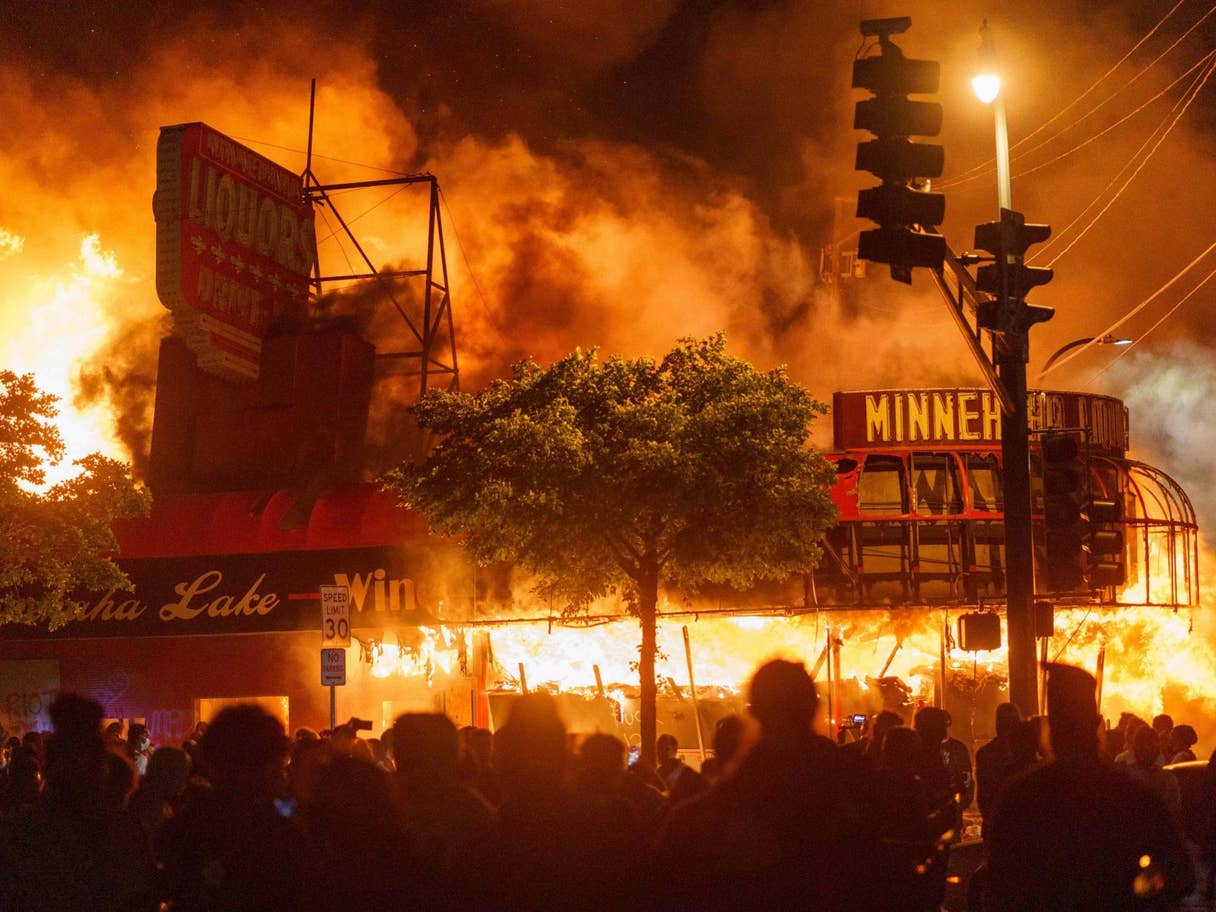
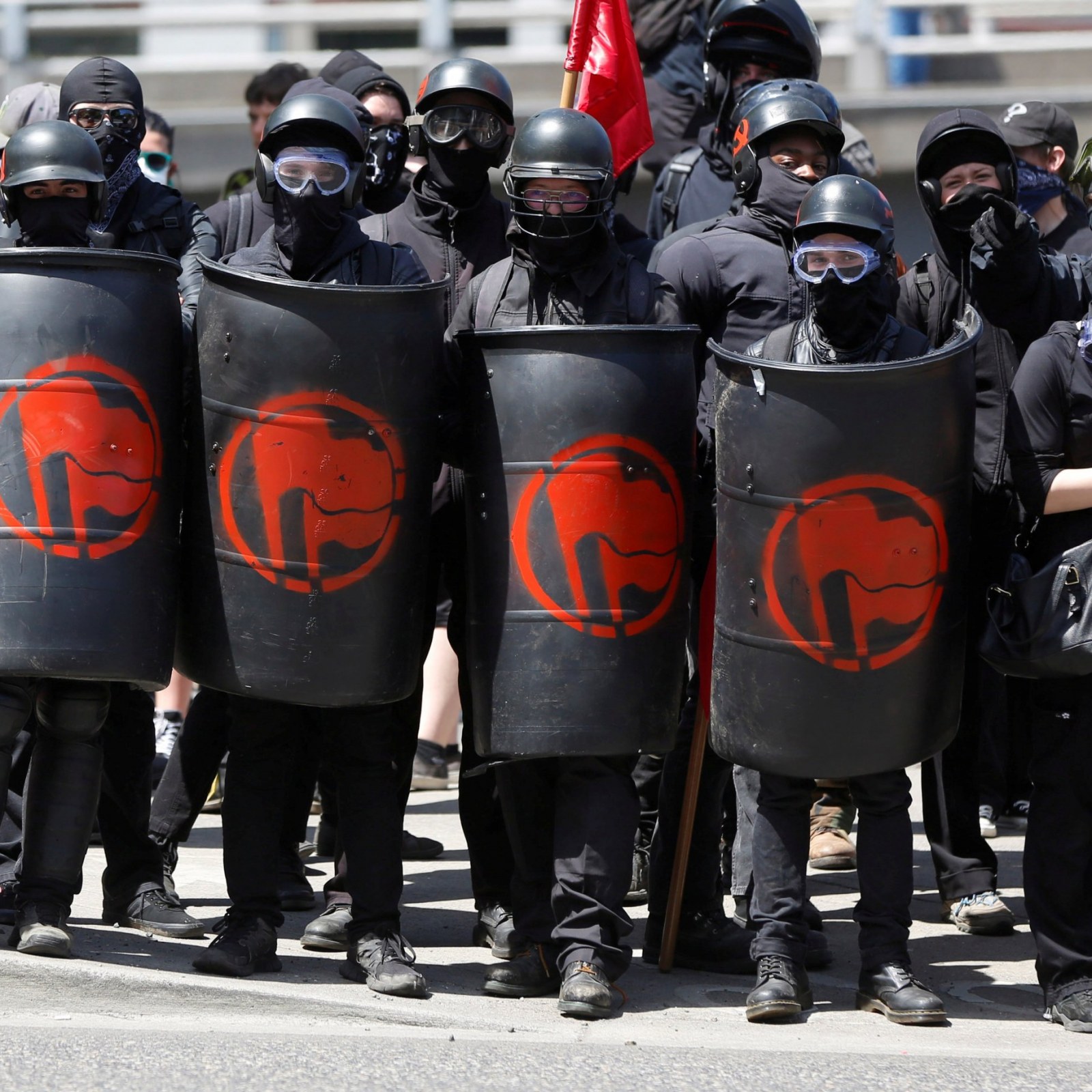
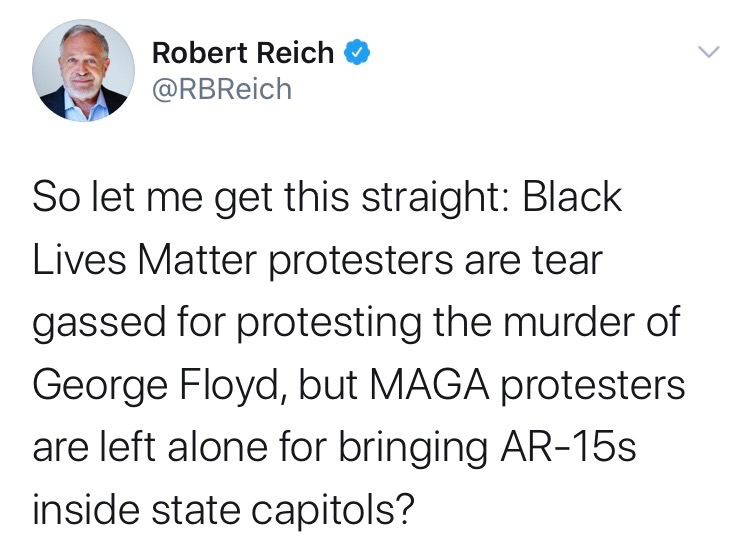
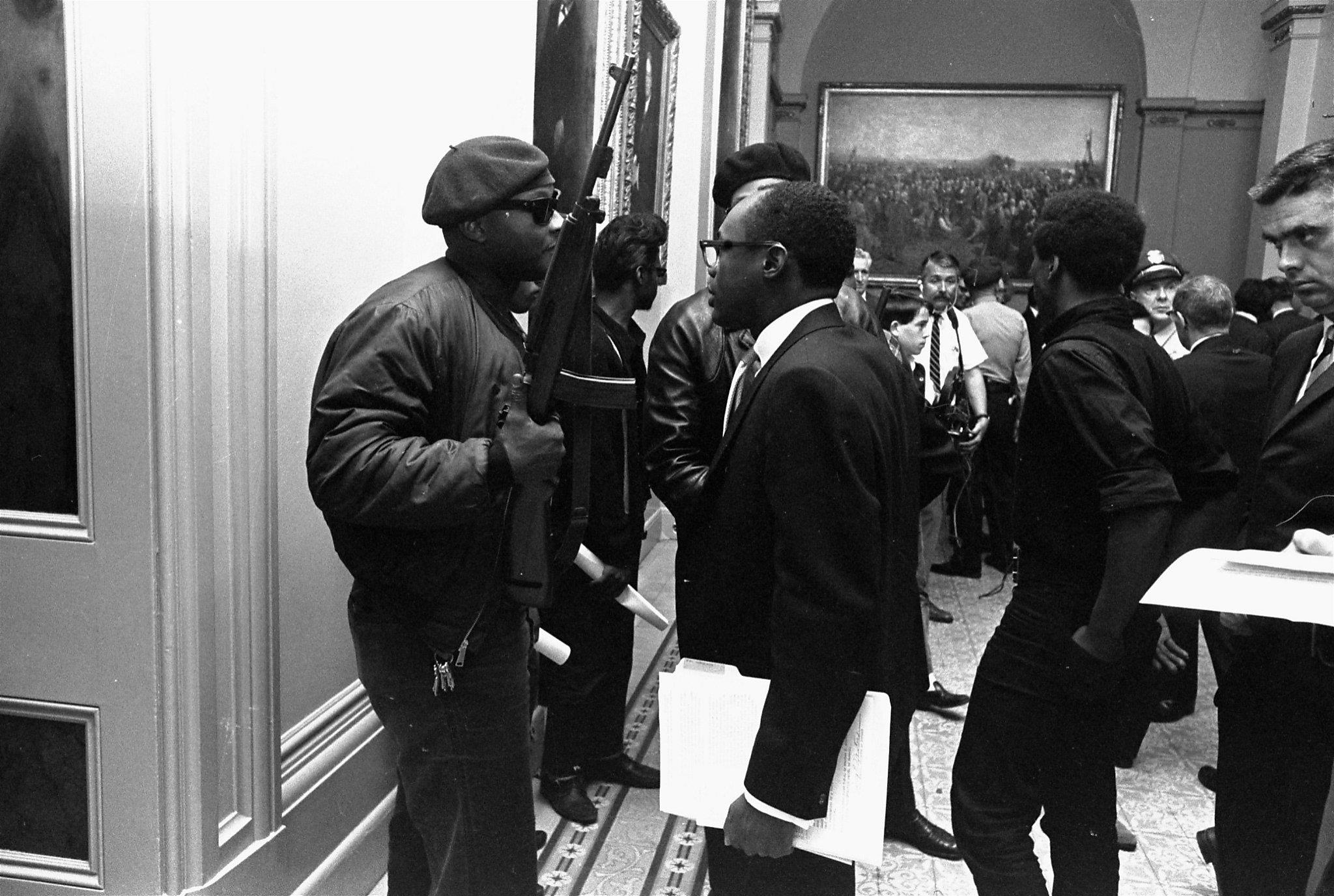
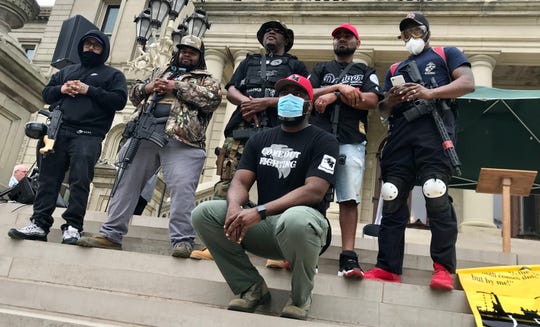

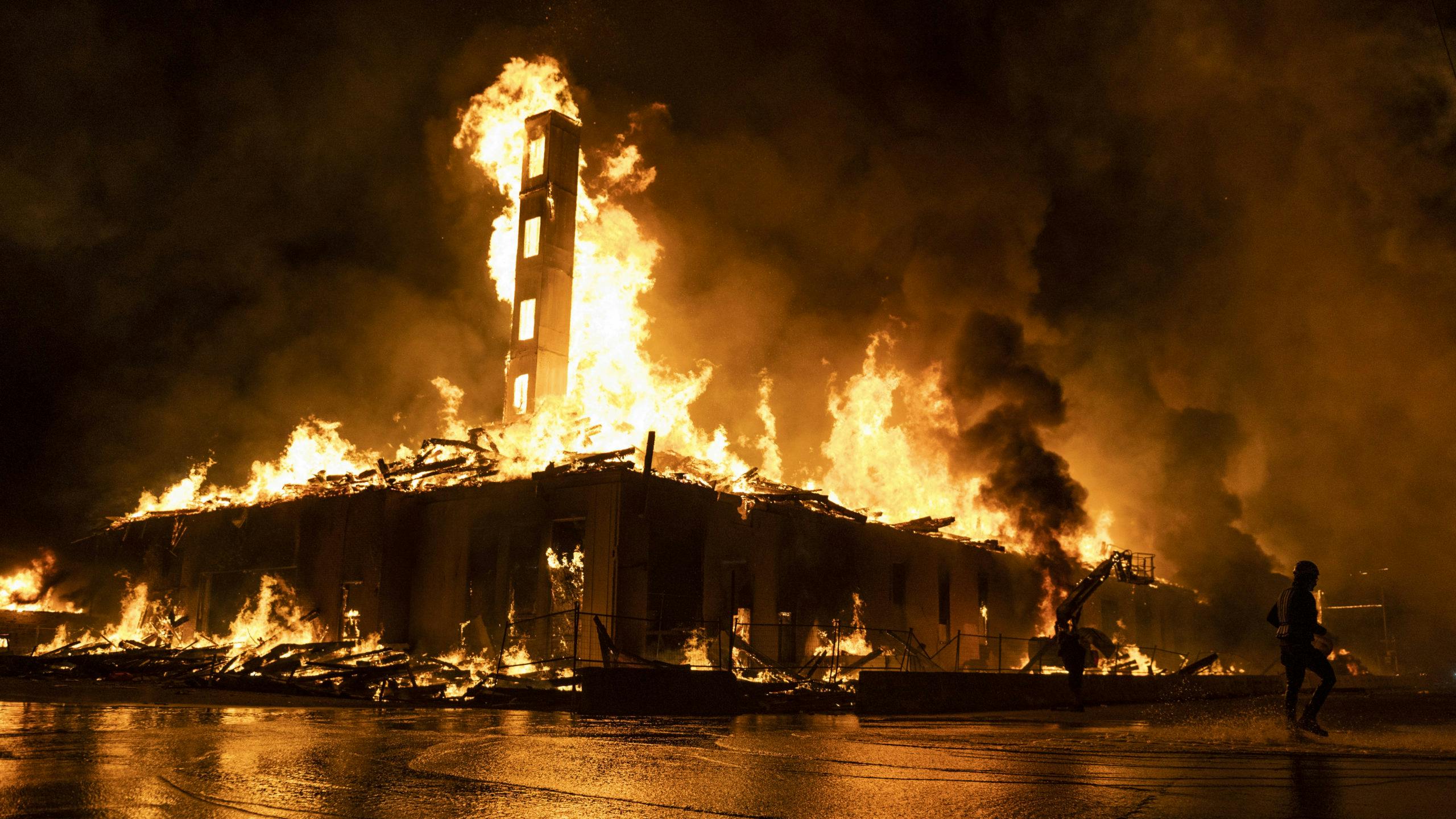


 freedom and reason