President Donald Trump went easy on NATO last night. Several commentators on the America First network noted the omission during post-address analysis. However, the President’s decision to avoid criticisms of Europe should help those skeptical of his commitment to “America First” better understand the broader strategy at work. Making America great again requires making the West great again.
“America First” cannot be conceived in narrow or purely isolationist terms. America’s long-term prosperity and security depend on halting the transnational corporate project, restoring the economic nationalism at the heart of the American System, and reestablishing the full scope of US hegemony in the world. In other words, “America First” must be embedded within a larger framework: West First.
Trump has articulated elements of this approach before, most notably in his National Security Strategy (see Trump’s National Security Strategy and the Case for Democratic Nationalism). That document marked a clear departure from the post–Cold War bipartisan consensus, which assumed that increasing economic interdependence and the diffusion of political authority beyond nation-states—in a word, globalization—would naturally produce peace and prosperity.
The Trump strategy rejects those premises, which essentially constitute a plan to denationalize the world (see Will They Break the Peace of Westphalia or Will We Save National Sovereignty for the Sake of the People?). Instead, the Trump doctrine grounds US national security in four core commitments: (1) protecting the American homeland; (2) promoting American prosperity; (3) projecting peace through strength; (4) advancing US influence in a world of sovereign nations.
The fourth commitment is key, beginning with the Western Hemisphere. Trump signaled this early through rhetoric surrounding Greenland and the Panama Canal (see Monroe Doctrine 2.0). Beneath that rhetoric lies a recognition of the need to confront China’s growing influence in the West, an effort facilitated by economic and political actors in North America and Europe (see Countering China’s Influence).
His posture toward Venezuela reflects this logic. Trump’s spectacular intervention in Venezuela and the removal of socialist dictator Nicolás Maduro are designed to push South America in a liberal direction (see The New World Order as Given). Trump’s focus on Central and South America—culturally tied to the Western tradition—represents an opportunity to unify the Hemisphere around Western ideals. If the United States can help foster governments aligned with Western political and economic norms, a more unified Western Hemisphere becomes possible. This goal is also reflected in the administration’s stance towards Cuba.
Yet consolidating the Americas alone is insufficient. Reasserting Western influence globally—and countering China, freedom’s principal strategic competitor—requires a broader coalition that includes Europe and parts of the Middle East. The intervention in Iran, the Shi’a Muslim stronghold in the region, governed by the most extreme form of Islam, the apocalyptic Twelvers, not only degrades the capacity of an existential threat to Central and Western Asia, but also checks the rise of China. By neutralizing the threat of Iran, the United States strengthens its relationship with states in the MENA space, as well as India and Pakistan, and closes avenues for China’s ambitions.
Europe is central to the strategy. Trump has told European leaders what he thinks of them, but at the same time, he wants Europe to be part of the global alliance marginalizing China and halting the spread of Islam. What is required here, as in Central and South America, is cultivating more liberal, conservative, and populist-nationalist political movements. What Trump seeks is to strengthen the Western civilizational bloc, not only to prevent totalitarian state monopoly capitalism (of which China is the paradigm), thus weakening the transnational corporate push for a new world order, but also to confront the threat of Islam to the Christian West.
In reconfiguring the world order to thwart Chinese ambition, halting the spread of Islam, and reversing the transnational corporate project, Trump needs Europe. He must avoid alienating member states while promoting nationalist political movements that will reclaim Europe’s greatness. Trump’s actions are not random or disconnected moves. It’s a strategy: consolidate a Western-aligned bloc across the Americas, Europe, and key parts of the Middle East, and use that to simultaneously counter China’s expansion and halt Islam in its tracks.
One of the things that baffles me is when people take criticism of their choices or opinions personally. Associated with this is word policing. A person uses the word “retarded” and somebody may respond, “I find that word highly offensive.” Some feel justified in using violence over words they don’t like. Even if a word is used in a nonderogatory way, when, for example, reading aloud passages from Mark Twain’s The Adventures of Tom Sawyer, or in accurately conveying something somebody said, some people take offense.
People criticize my choices, opinions, and use of words all the time. It would never occur to me to seek them out and declare having taken offense at their utterances. I can’t imagine hearing a criticism of liberalism and saying to the critic, “I am offended by what you said about liberals.” What am I supposed to say when this happens? Duly noted? I find it difficult to take offense at being called a “cracker” or “whitey.” As Frank Zappa noted, they’re words.
Frankly, I don’t care if you’re offended by the things I say. I’m proud of the fact that the things that people say don’t offend me. Taking pride in being a reasonable and tolerant man, I would think less of myself if I were to feel offended. One less thing to get my back up about. I have always believed the appropriate thing for a person to do when confronted with a disagreeable opinion is to make an argument. Either that, or just ignore it. The same is true for the words people use. I would never scold people over the words they use. Reasonable people don’t like busybodies. Why would I be a busybody?
I also don’t argue with people when I know I cannot persuade them (although I may mock and ridicule them). German philosopher Arthur Schopenhauer cautioned against arguing with fools. Logic holds little power against stubborn ignorance. Such disputes waste valuable time. Moreover, debating fools diminishes one’s own standing, as true intellectual victory is unattainable when faced with irrationality and pride. His central advice was simple: avoid engaging altogether. Offense-taking is the terrain of the fool.
When I say I’m baffled by offense-taking, I don’t actually mean that. I understand why people do this. They’re emotionally immature, small-minded, or trying to shame people for their choices and opinions. Taking offense or word policing are often signs of an authoritarian personality. In such cases, offense-taking is strategic.
The standout example of strategic offense-taking is the response one elicits by refusing to affirm the slogan “Transwomen are women.” By definition, transwomen are men. If they were women, they wouldn’t need a prefix. The offense-taker has no argument in favor of the slogan. It’s neither factual nor logical. It is an attempt to assert as given that which is impossible. It is self-evidently untrue, and so offense is taken to substitute for reason.
If not deploying offense-taking strategically, people should free themselves from authoritarian tendencies by recognizing that they don’t have to be offended. It does wonders for a man’s emotional and psychological well-being to let things go. When somebody says something disagreeable, and a reasoned argument is undesirable, move along. Whether the product of small-mindedness or authoritarianism, being offended is a choice.
“[I]f you want to understand the way any society works, ours or any other, the first place to look is who is in a position to make the decisions that determine the way the society functions. Societies differ, but in ours, the major decisions over what happens in the society – decisions over investment and production and distribution and so on – are in the hands of a relatively concentrated network of major corporations and conglomerates and investment firms. They are also the ones who staff the major executive positions in the government. They’re the ones who own the media and they’re the ones who have to be in a position to make the decisions. They have an overwhelmingly dominant role in the way life happens. You know, what’s done in the society. Within the economic system, by law and in principle, they dominate. The control over resources and the need to satisfy their interests imposes very sharp constraints on the political system and on the ideological system.” —Noam Chomsky
As a sociologist who studies power and social psychology, last Saturday was yet another opportunity to observe the intersections of moral panic (mass psychogenic illness, mass formation hypnosis/psychosis), Hoffer’s “true believer,” and the machinations of capitalist elites in shaping public consciousness—power, psyche, and propaganda on display without having to go to any trouble to see it.
As a citizen, it’s concerning that many of those watching and participating in the “No Kings!” protests don’t recognize that it’s organized and amplified by networks of NGOs funded by transnational corporate and financial interests. The scope of the scheme is truly enormous: some 500 groups with an estimated $3 billion in annual revenue, backing including communist and socialist organizations, calling for “revolution.” Among those bankrolling the simulation is Neville Roy Singham, a billionaire living in China.
As I noted on X yesterday, those who manufacture mass protests have moved to the normalization phase. The focus is on the right to free speech, as if that were in question. Nobody is suggesting that individuals are violating the Constitution by working for protest mills that manufacture illusion and manipulate minds. That’s a red herring. What’s at issue is who is manipulating the public, why they are manipulating them, and why the scheme is so effective.
Whether they understand what they are protesting, many protesters appear to genuinely believe they are pushing back against elite power by condemning Trump. In reality, their attention is being redirected away from the broader systems they claim to oppose and onto a single figure they have been conditioned to hate. They’ve been manipulated into seeing Trump and his supporters as the central problem, rather than examining the larger structures of globalization and transnational influence.
One sign of this dynamic—obvious to those existing beyond the subjectivity that precludes it—is that many of the same NGOs and financial backers involved in these movements are openly aligned against Trump. In effect, protesters are advancing the agenda of the very forces they believe they are resisting—operating within a framework that limits how they interpret power and dissent.
We can know that they’re being manipulated because the NGOs and their financial backers oppose Trump. If he was among the elite, they would treat him as a star. Operating in the fog of false consciousness, the protesters are doing the work of the very elites they say are undermining their future.
It’s a brilliant tactic: brainwash a portion of the masses and send them out into the streets to publicly oppose their own interests and thus serve as living propaganda to sway the masses watching at home. In carrying out this function, they’re grunts for the very power that oppresses them. The depth of the indoctrination is spectacular. They know not what they do.
The subaltern—those who are economically, politically, and socially marginalized, existing outside the dominant power structure and with little to no voice in decision-making—do not operate from a coherent theory of the world. Without a clear understanding of how power operates, they struggle to articulate the underlying causes of their discontent. Yet they are absolutely convinced they’re right.
Attempts to explain these dynamics are often unsuccessful, as such arguments are filtered through preexisting assumptions. Many have also been conditioned to distrust certain lines of critique, quickly categorizing them as bigoted, nativist, racist, reactionary, or xenophobic. Those with whom they disagree are not merely wrong but the enemy. They’re convinced they occupy the moral high ground. And it has made them obnoxious and self-righteous. If you try to provoke a protester to examine his beliefs, he resists, sometimes violently.
Within the subaltern are individuals—the underclass—who have become dependent on government support. Food assistance, housing programs, Medicare, public assistance, and other forms of welfare rob them of the capacity to assess the situation from the standpoint of the independent rational observer. Their primary political role is reduced to voting, and they paradoxically vote for the party that ghettoizes them. A portion of this group includes migrants, whose continued presence in America depends on the very forces that induce them to come here.
Above the subaltern are the cultural managers—educators, journalists, professionals, and public officials—who depend on administrative institutions for employment and advancement. While they have the capacity to understand broader economic and social dynamics, they’re deeply invested in maintaining the system from which they benefit. Professionals such as lawyers, managers, and physicians derive substantial advantages from this structure. Most of them are college-educated, which means spending years being indoctrinated in administrative logic and instrumental rationality.
At the top of the pyramid is the class that owns the means of production and makes the financial decisions that shape how society functions. They select the politicians and the policies that govern the lives of the subaltern and managerial classes.
The subaltern stratum is not monolithic. A large portion of working people are either disengaged from politics or are only partially engaged. Meeting the needs of their families consumes their time. Others, despite being relatively marginalized, do develop an awareness of power structures—such as small business owners competing against large corporations. Through competition, they gain a clearer understanding of underlying power dynamics.
Unlike those closely aligned with institutional structures or dependent on the government—who are more likely to support the Democratic Party—many working-class individuals and small business owners are more inclined to support Republicans. They desire autonomy, individual freedom, and limited government. They work hard and take pride in working hard. They know the Democrats support the global power structures that make their lives difficult and their fortunes precarious.
Such individuals are drawn to Trump because they view him as outside the traditional elite class that exploits and oppresses them. Although he is wealthy, they can see that Trump is an outsider and a maverick. They see this in how the managerial classes and their corporate directors regard Trump. When the elite attack Trump for his straightforwardness, conservatives feel that attack coming their way. When the elites mock and ridicule him, call him a vulgarian, etc., they sense they, too, are being mocked and ridiculed. They are not wrong.
These are the normal people who come home after a hard day of working, turn on the TV, and know that what the culture and media are feeding them is swill. They live in the real world, and not having been indoctrinated or experiencing enough of it to know it for what it is, they keep their common sense wits about them. This is why the elites loathe them and rig the system to keep them from power.
I hear progressives talk about how they’re “for the working man.” It is absolute rubbish. Listen to the way they talk down to ordinary people. Serving the elites, the elitism of those who presume they’re the working man’s betters rubs off on them. They think they have it all figured out. They know it all. And that makes the attempt to reach them with facts and logic futile. The best weapon at the conservatives’ disposal in dealing with such fools is to mock and ridicule them back.
Watching all this, I am struck by how patient and reserved conservatives are. Sure, many are too busy working and raising families to take to the streets in protest. Moreover, they know they could suffer consequences for protesting against the conditions. The vast majority are peaceful and rational and don’t want to cause trouble. Those who oppose collectivism and embrace individualism are less likely to move in masses. They don’t have a network of NGOs to organize them or rich donors to bankroll the NGOs. They’re churchgoers and make their contributions to society through charitable giving. They aren’t attention seekers. They’d rather just be left alone.
But sooner or later, their patience must run out. The common man cannot from the sidelines watch his beloved republic being dismantled by elites and their managers and their obnoxious and self-righteous subalterns.
I promise that the third essay will be published soon. However, I can summarize the problem thusly: Since there is plainly more than one god, and no universally binding method exists for determining which divine authority is genuine, the god a man accepts as his ontological precondition is either inherited through birth into a religious system or selected based on prior ethical or ideological commitments.
I will argue in the pending essay that natural history, which, unlike religion, is material and universal, and therefore ascertainable by science, represents the only ontology that is universal, publicly verifiable, and independent of prior commitment, and therefore the only ontology in which ethics may be objectively and rationally grounded. Competing ontologies are either unfalsifiable (religion) or reducible to preference (ideology). Materialism is, by contrast, empirically verifiable. There, we find that human nature generates normative constraints, not just descriptions; flourishing is not arbitrary because organisms have functional conditions of existence.
So why the present essay? I realize that my last essay, The Bad-Smell Ant: Disordering a Nation’s Protective Instinct, may be perceived as reactionary and run contrary to things I have written in the past. On this last score, the perception would be correct. I noted this in the essay, and I want to expand on it today by providing an explanation. I feel an explanation is in order, since I have, for many years, resisted natural-historical explanations of human behavior, which entail recognizing humans as animals and therefore subject to the force of evolutionary pressure. This is the source of my past resistance to explanations of human behavior by resorting to analogies to other species. I have provided no justification for that resistance, and, having examined the matter, I can find no justification. I can suss out an explanation for my failure to mount one, however.
Why did I resist natural-historical analogies in the past? Honestly, I think it was because they pressed against ideological commitments associated with a socialist worldview. Working from this frame, they struck me as reductive, even dehumanizing—flattening the richness of human experience into reproductive imperatives or mere survival strategies. Natural history and the idea that humans were instinctual creatures sounded to my socialist ears pessimistic. True, I agreed, humans have drives (hunger, sex, thirst) and reflexes (fight, flight, and freeze), but I felt the claim that innate, genetically programmed patterns of behavior without prior learning may be provoked by specific stimuli allows for the rationalization of injustices.
At the same time, I rebelled against behaviorism and the idea of the blank slate, since technologies based on this logic have totalitarian ambitions (see B.F. Skinner’s Beyond Freedom and Dignity). I understood as a natural fact that nervous systems can be conditioned. I just did not like what followed. I was letting my political preferences warp my judgment of a basic scientific fact.
Looking back, I was, for ideological reasons, denying two basic natural facts: we do have instincts, and we are conditionable. If not for these facts, humans would be profoundly impoverished creatures. How could the species have survived for hundreds of years without them? What is more, could a moral ontology be found in the facts of human nature?
The reader, if interested, can find a good example of my prior thinking in a paper I presented at a regional sociology conference in Lafayette, LA, in November 2009, titled The Myth of Extraordinary Evil: A Challenge to Evolutionary Theories of Genocide and Xenophobia. My argument there reflected my thinking about this matter generally. To explain altruism as kin selection, love as pair-bonding, or morality as reciprocal advantage felt like an erosion of dignity rather than an illumination of truth. As late as December of last year, I expressed my discomfort with analogies from biology (see On the “Woke Mind Virus”).
I did not like arguments from nature, not because they were false, but because they were inconvenient. Rejecting socialism opened a vista through which I could see more clearly the natural-historical tendencies in human behavior and cognition. This is not because my arguments over the last several years don’t work without a national-historical premise; rather, my arguments of late work because I was already moving towards an acceptance of human beings as natural beings governed by the same rules governing all life on Earth.
Thus, this resistance stemmed less from a flaw in evolutionary reasoning, or from my changing positions on crucial matters, and more from the unresolved question I addressed in those two essays noted at the top of this one: what, in a secular framework, grounds moral value at all? I needed to solve the problem in a secularist manner, since my commitments to reason and science do not allow for belief in God.
It was thinking through this that I realized that my commitment to historical materialism, which holds that, to quote Karl Marx (1845), “human essence is no abstraction inherent in each single individual” but is in “its reality it is the ensemble of the social relations,” had smuggled into my thinking a quasitheistic conception of mankind that implicitly set Homo sapiens apart from other animals. It was as if human beings were not animals at all.
This realization does not invalidate the materialist conception of history, but it does force its elaboration. Moreover, the grounding of reality in social relations, which are, to be sure, objective in themselves, tends to obscure the reality that other animals are also social. What I came to see is that social relations are not an alternative to nature but a subset of it, continuous with the sociality observed across the animal kingdom. Rather than exclude human beings from nature, I realized the necessity of conceptualizing humans as natural beings.
As an atheist, I do not have recourse to divine command theory as a foundation for ethics. I cannot abandon this position because there is no objective way of demonstrating the existence of god. I cannot take matters on faith. Moreover, the plurality of religious traditions presents a profound epistemic problem. There is no singular, uncontested divine authority; rather, there are many, each embedded within particular cultures, histories, and interpretive traditions.
This is the premise of Ludwig Feuerbach’s irreligious criticism that founded materialist anthropology. It follows from Fuerbach’s critique that the choice of one god over another—whether inherited or deliberated—appears ultimately contingent, shaped by circumstance or preference. It was Feuerbach’s contention that religion is the projection of human social relations into a supernatural framework, with earthly power structures reflected and legitimized through divine imagery.
To illustrate, the kingship system was not handed down from the godship system, but the inverse of this. The godship system legitimized power as earthly authority. The necessary entailment is that, if morality rests on divine command, and divine authority itself is not universally accessible or verifiable, then moral claims collapse into cultural and theological relativisms.
This realization and prior commitment to logic pushed me toward secular alternatives, most prominently utilitarian and deontological liberalism, both of which are ever-present in Western civilization. Utilitarianism, in its classical and contemporary forms, offers one framework: ends that maximize well-being and minimize suffering—and evaluate actions based on their consequences—are used to justify the means that achieve them.
However, the foundation of consequentialist or utilitarian thinking is unmistakably preference-based. It presumes that well-being is desirable and suffering is undesirable. This framework does not explain why well-being ought to be maximized beyond the fact that it is preferred, or whether means developed to achieve this end are ethically justified, however rational they may be in their instrumentality. Without a deeper ontological grounding, the ends remain assertions about what we happen to value, for whatever reason, not what we must value.
Deontological liberalism, by contrast, attempts to anchor moral claims in principles such as duties, human dignity, and rights. Historically, these ideas have often been tied to notions of natural law—suggesting that moral truths are embedded in the structure of reality itself. The language of inalienable rights in the American Declaration of Independence, for example, carries an implicit metaphysical heft: these rights are not granted by governments or societies but discovered, only appearing as if written into the fabric of existence. They are given by a creator deistically conceived, or even less theistically by Jeffersonian references to “Nature’s God,” or the Laws of Nature.
However, stripped of its sectarian theological underpinnings, natural law theory also faces a challenge: What, in a purely secular universe, makes such laws binding? The answer is that nature itself provides the binding conditions: the ontology of human nature and necessary modes of social existence. God is not the author. Nature is. No metaphysics required.
It is here that I was compelled to turn to natural history—not merely as a descriptive science but as the prime candidate for a universal moral ontology. If we accept that reality is fundamentally material, which all evidence compels us to do, then human beings are products of evolutionary processes, shaped by the same forces that govern all life.
This does not diminish our humanity; rather, it situates it within a broader, intelligible context. Our capacities for cooperation, moral judgment, reason, and sympathetic judgment, all observable facts, are not arbitrary—they are emergent properties of biological evolution and social relations built upon that universal truth. To be sure, social relations are culturally and historically variable, but at the proper level of abstraction, general rules may be identified and confirmed. The grand theorists of sociology—Talcott Parsons and his ilk—were right all along.
From this perspective, morality can be understood as a natural phenomenon: a set of behavioral and cognitive adaptations that facilitate social living. Human beings are, by necessity, social animals. Our survival and flourishing depend on cooperation, mutual recognition, and trust. Traits such as altruism, fairness, and sympathy are not imposed from outside nature but arise from within it, selected for their contributions to group cohesion and individual well-being.
I accept that this view does not, by itself, yield a complete ethical system. The objection that evolution explains why we have moral intuitions, but it does not automatically justify them, is reasonable. However, the claim that evolved traits are therefore morally invalid confuses origin with function. The mere fact that traits have evolved does not mean they are inherently bad or limiting.
Human flourishing is not a subjective preference but the condition under which a human organism successfully functions within its natural and social environment. To be sure, ideological systems denying man’s evolved nature can suppress traits given by the natural history of the species, thus corrupting social relations. However, natural history provides something crucial: an objective framework within which moral reasoning can take place. It grounds human values in the realities of human nature and social existence, rather than in arbitrary preference or unverifiable metaphysics.
Working within this framework, we can reconstruct ethical principles in a way that is both empirically informed and normatively robust. For this reason, analogies to other animal species are not inherently reactionary.
Well-being, for instance, is no mere preference but a condition tied to the biological and psychological functioning of human organisms. Suffering is not just disliked; it is a measurable disruption of the functions natural history has bequeathed the species. Similarly, concepts like dignity and rights can be reinterpreted as protections of the conditions necessary for human flourishing within social environments.
My argument in my last essay, comparing the parasitic queen of Lasius orientalis to Islamization, shows how the problem of social parasitism extends to the human realm. It follows that multiculturalism functions to obviate the protective instinct. Defense of a given social order, one truer to human nature, is a good thing in the face of a colonizing force that suppresses the imperative of human freedom. The moral assessment of good and bad—the “ought” question—follows from answering the “is” question.
This synthesis does not eliminate philosophical tensions. The gap between “is” and “ought” remains a central challenge in the minds of many. Yet by rooting our moral ontology in natural history, we narrow that gap and escape the appeal to cultural relativism. The gap is addressed by grounding “ought” in functional requirements of a species; we move from abstract speculation to a grounded understanding of what humans are, what they need, and how they can live together. We resolve that gap in practical terms by grounding normative claims in the functional requirements of human life.
This is not a preference-based solution. Morality is neither a set of arbitrary rules nor those of divine command, but of a project: it is the ongoing effort to align behaviors, institutions, and understanding with the realities of human nature and the demands of social life.
With what method do we advance and evaluate the project? Science. To be sure, science can itself be corrupted by ideology, power, and profit, but science is the only universal method by which those natural conditions are ascertained and corrected over time through evidence and reasoning. Corruption does not invalidate science; deformation of knowledge (i.e., valid belief) demands that science be free of corruption.
In the end, what once seemed dehumanizing to me now appears clarifying. To see ourselves as part of nature is not to diminish our value but to locate it more precisely. Our moral capacities are evolved, real, and indispensable. They are not gifts from beyond the world but achievements within it. They are not arbitrary, but instead inherent in our nature. In that recognition, a secular humanist ethic can find not only coherence but conviction. What “is” entails what we “ought” to do.
At the beginning of this essay, I noted that the two essays I have already published on this subject explain what prompted me to take up this question. Before I conclude today’s essay, I will briefly tell the reader that it was Andrew Wilson, a bloodsport debater, and his relentless challenge to secular humanists to ground their ethical claims in a moral ontology, that compelled me to examine the matter.
For Wilson, the only moral ontology is divine command theory. Rights must be grounded in theology and secured by force God deems appropriate (force doctrine). Just social relations and roles are God-ordained. No secular humanist has met Wilson’s challenge to demonstrate a moral ontology underpinnning their claims to right. That they ever could is unlikely. Secular humanism in its utilitarian form cannot provide a sufficiently grounded account of moral ontology that escapes preference-based reasoning. Wilson is right about this.
However, Wilson’s interlocutors have also not challenged Wilson’s theory, which is itself preference-based, since, as shown above, divine command is selected from a theoretically unlimited set of unfalsifiable ontologies. In other words, divine command is as much the result of arbitrary selection as secular humanism based on utilitarian reasoning.
Unlike divine command theory, natural history is not unfalsifiable. Natural history is not a theory at all, but the ground of self-evident reality. Human traits found across animal species, such as the protective instinct, are not arbitrary outcomes but functional requirements for the persistence of a social species. Therefore, natural law grounded in evolutionary theory is the obvious candidate for a non-arbitrary moral ontology.
I address in greater detail anticipated criticisms of my view in the third essay. But briefly noting them here, they are moral anti-realism and the Nietzschean critique, the latter forming the basis of postmodernist thought, a philosophy that asserts that all knowledge arises from discursive formation shaped by social power. There is a third objection, but it requires rejecting natural history itself. I will not spend time problematizing a fact as fundamental as evolution. Rejecting evolution entails accepting an axiom already shown to be arbitrary: that a god created the world and determined its laws. There is no evidence for this claim. Really, the claim is not subject to empirical evaluation.
Moral anti-realism holds that there are no objective moral facts, only evolved preferences and socially constructed norms. From this perspective, my appeal to natural history does not ground morality but merely explains why humans tend to converge on certain behaviors. Evolution selects for traits that enhance survival and reproduction, not for moral validity. After all, do other animals have moral systems?
Cooperation, fairness, etc., persist because they are adaptive, not because they are objectively right. To move from “these traits promote flourishing in a social species” to “these traits are morally binding” is to commit a category error: it converts descriptive facts about human functioning into prescriptive obligations without justification. On this view, my framework does not escape preference—it redescribes preference in biological language. But how would objective right be determined any other way? Moreover, why can’t morality be defined as evolved preferences? These are not subjective.
In the end, moral anti-realism returns us to the problem I have identified. The critique fails because it ignores that human organisms have objective functional conditions. A heart that fails to circulate blood is defective, not merely “non-preferred.” If the defect is not corrected, the organism dies. In the same way, social behaviors that systematically undermine the stability and viability of human social systems are not simply disfavored—they are dysfunctional relative to the kind of organism humans are.
Moral claims arise from these functional constraints. They are not arbitrary preferences but judgments about what sustains or degrades forms of life. The move from description to normativity is not a leap but a recognition: for beings with a determinate nature, there are determinate conditions under which they succeed or fail. Moral realism, in this framework, is grounded in biological and social functionality, not metaphysical abstraction. It therefore cannot be effectively challenged from the standpoint of metaphysical abstraction.
Appeal to David Hume “is–ought problem,” which points out that statements about what is (facts about the world) cannot logically justify statements about what ought to be (moral claims) without an additional normative premise, ignores the fact that the normative premise is found in natural law.
Hume denies the very existence of law-like power in nature. For him, “causation” is not something we perceive as a necessary, that is, in the world itself. Instead, it arises from our observation of the constant conjunction of events in experience. When we repeatedly see one type of event follow another, we form a psychological habit of expecting that sequence, and we project this expectation as a “necessary connection.”
For Hume, causation is grounded in custom, not in any directly observable or rationally demonstrable force binding events together. Hume’s is an anti-scientific stance. His empiricism is a form of idealism suspicious of itself.
The Nietzschean critique denies that grounding morality in nature rescues objectivity; instead, it argues that all moral systems (for postmodernists, especially the one I am advocating, since it would obviate queer theory on surer grounds that any theism), are expressions of drives (which are highly variable) or power relations (this is the premise that lies at the heart of postmodernist thinking).
My elevation of cooperation, social stability, etc., reflects a historically contingent valuation—what Nietzsche dismisses as “herd morality.” By presenting these traits as “natural” and therefore binding, I am disguising a particular moral orientation as a universal necessity. Evolution itself does not privilege altruism over domination or flourishing over conquest. Any attempt to derive a universal moral law from natural history imposes order on a fundamentally conflict-driven process. Thus, by Nietzschean lights, my system is not objective but a rationalization of a preferred mode of life. I stand accused of the very thing I reject.
But is science a rationalization? Are logic and mathematics? To be sure, insects have no concept of mathematics; must we therefore say that two and two are four because humans are indoctrinated to accept the rules of addition as true? If there are four insects, might there be five?
Charitably grounded this view in some acceptance of scientific reality, the Nietzschean critique would correctly state that evolution produces a range of behavioral possibilities, including conflict and domination. However, it would fail to account for the constraints imposed by large-scale, complex social organization. As social animals, humans survive as members of highly interdependent systems that require cooperation, predictability, and stability at scale. Traits that systematically erode these conditions—breakdown of trust, chronic conflict, and unchecked domination—undermine the viability of the system itself. Putting this another way, the selection pressures operating on human societies favor not raw power alone but the regulation of power within stable structures.
For all the reasons given, the moral regulation of power is rooted in natural law. This is not an imposition of “herd morality” (at least not in the way Nietzsche defines it) but a recognition of the structural requirements of human social existence. The fact that multiple behavioral strategies exist does not make them equally viable at the level of sustained civilization, which itself may be determinable scientifically. Natural history, properly understood, does not sanctify all drives; it differentiates between those compatible with durable human life and those that are self-undermining.
Indeed, the evolutionary record does not present a choice between cooperation and conflict, as though one were natural and the other aberrant; both arise from the same underlying conditions of survival in a social species. Human beings evolved under pressures that selected simultaneously for in-group cohesion and out-group differentiation. The same capacities that make cooperation, sympathy, and trust possible within a group also generate suspicion and even defensive aggression toward perceived outsiders. Protective instincts, including the willingness to exclude others or enact violence, are not deviations from human nature but expressions of it under conditions of competition or threat.
The relevant distinction is therefore not between “natural cooperation” and “unnatural conflict,” but between forms of behavior that extend social organization and stabilize complex relations, and those that, when unchecked or misapplied, destabilize it.
Understanding the problem of Muslims in the West this way exposes tolerance of Muslims as objectively destructive to Western society. Multiculturalism is analogous to the tactic of the Lasius orientalis, in which the invader exploits the rival’s scent and turns its enemies into allies. True, neither Lasius orientalis nor the rivals it tricks grasp in thought the reality of the situation. But humans do. And the human capacity to grasp such things in thought is also the work of natural history.
The bottom line is not that moral reasoning grounded in natural history denies conflictual drives; it recognizes them and evaluates the conditions under which they are activated and directed, then regulated or resisted, distinguishing between their functional role in preserving social systems and their capacity to undermine the broader structures upon which human flourishing depends.
If only the victims of Lasius orientalis had the capacity to understand what the enemy was up to, then they could work out a way to better defend themselves against its deception. Over time, perhaps future generations of Lasius flavus will evolve some other capacity to prevent this. During this period, their colonies will surely suffer devastation. Worse, their species may go extinct before the problem is worked out. But humans have evolved complex brains that allow them to adapt rapidly to such threats. Man and ants are both animals, but man is not an ant.
In the final analysis, Burmawi’s analogy is not a reactionary one at all; the case of Lasius orientalis usefully illustrates for the thinking animal the necessity of confronting threats to its continued existence in its lifetime. Burmawi is not saying a group of humans is an ant colony. If he were, then it wouldn’t be an analogy but the thing itself.
It’s March 29, 2026. Still no king. What’s all this about?
“MeToo” dates back to 2006. When did it take off? 2017. Who was the president?
Black Lives Matter dates back to 2013. When did it take off? 2020. Who was the president?
By then, multiple studies had found no systemic racism in lethal police-civilian encounters. No matter. Riots for months.
“We won’t take the Trump vaccine!” He’s not president anymore. “Anybody who doesn’t take the vaccine is a mouthbreathing Neanderthal!”
Fauci: Don’t wear a mask. The zombies: “Don’t wear a mask.” Fauci: Wear a mask. The zombies: “Wear a mask!” Fauci: Wear two or three. The zombies: “Wear two or three masks!”
Karen drives to the mall alone in her car, wearing a mask.
Karen has a sign in her front yard. “In this house, we believe in science.”
Israel responds to Hamas massacring, kidnapping, and raping Jews on October 7. The zombies: “Free free Palestine!”
“Trump is rounding up brown people!” Obama deported far more. “Don’t you wish Obama was still our president?”
“ICE Out!” Obama used ICE, too. “Michelle is so classy, amirite?”
The Hunter Biden laptop. “Leave Biden’s family alone!”
Trump wants more jobs for Americans. “In this house, we believe no one is illegal.”
(Under Biden) “High prices will force America to transition to electric cars.” (Gas prices under Trump) “Trump is making it impossible to get to work!”
Trump exposes widespread fraud in Minnesota. “Defend our Somali neighbors!”
Trump doesn’t want men punching women in the face. “Trans rights are human rights!”
“Trump is a pedophile!” Graphic pornographic books in K-12 and classrooms festooned with queer propaganda. “Trans rights are human rights!”
“Trump doesn’t respect women’s spaces.” No men in women’s dressing rooms. “Trans rights are human rights!”
“I stand with Ukraine! Arm them!” Trump degrades Iran’s nuclear capacity and their ability to threaten their neighbors and wage proxy war via terrorist groups. “Trump’s a warmonger!”
No king. “No kings!”
The same people who chant “No Kings!” and “This is what Democracy looks like!” support Hamas and the Islamic State of Iran.
The same people who demand the rule of law condemn law enforcement.
The same people who claim to champion the worker demand globalization and open borders.
The same people who tell us to “Follow the science” think men can become women.
The same people who shout “Womens Rights!” welcome men in women’s spaces.
If you’re looking for principle and reason, you won’t find it in the Democratic Party. You will find that the corporate elite lead the progressive rank-and-file around by their septum rings.
In Nineteen Eighty-Four, the “Two Minutes Hate” is a daily ritual in which citizens of Oceania rally and express intense hatred toward the regime’s enemies, especially Emmanuel Goldstein, who is portrayed as a traitor.
The exercise serves to channel people’s emotions into loyalty to Big Brother while preventing independent thought.
“No Kings” is the ritual in today’s America. Donald Trump is their Emmanuel Goldstein.
In Orwell’s story, the Party emphasizes slogans like “War is Peace,” “Freedom is Slavery,” and “Ignorance is Strength,” which invert perception of reality.
Today, the Party has new slogans that invert perception. “Transwomen are women.” “Safe and effective.” “In this house, we believe in science.”
InOrwell’s warning to the world, “doublethink” is the Party’s defining mental discipline: the ability to hold two contradictory beliefs at once and accept both as true, allowing reality itself to be constantly reshaped by authority.
The protagonist, Winston Smith, sees this during a public speech when the Party propagandist abruptly swaps the enemy from Eurasia to Eastasia, and, as if a switch has been flipped, the crowd revises their understanding, insisting that Oceania has always been at war with Eastasia.
History is revised, and memories suppressed, all in real time.
Doublethink operates not just as propaganda, but as a self-deceptive psychological mechanism: citizens must consciously forget what they just knew, while also believing they have never been mistaken.
Progressives have always championed civil rights. Men have always been women. Democrats never said the vaccine would stop COVID. Etcetera. The examples of revisionism and rectification are many.
One week “ICE Out.” Next week, “Free Palestine.” The week after that, “Trans Genocide.” Followed by “Hands off Venezuela, “Hands off Iran,” “No Kings” (not necessarily in that order, but order doesn’t matter). “Black Lives Matter,” “MeToo,” “Hands up.” Rinse. Repeat.
Democrats are showing us the world they want us to live in. It’s an Orwellian dystopia—with some Aldous Huxley thrown in. It’s a Brave New World.
If you’re not indoctrinated, then you see it for what it is. It’s a test for the presence of an independent mind.
People all around us are failing the test. They take to the streets to loudly proclaim their failure.
Eighty percent of House Republicans and eighty-two percent of Senate Republicans voted for the Civil Rights Act. Democrats attempted to block the passage of the Civil Rights Act through the filibuster. Progressives think the opposite happened.
Progressives can’t grasp the simple truth that Southerners joined the Republican Party because conservatives are for limited government and expanding individualism. When progressivism took over the Democratic Party and abandoned classical liberalism, it became collectivist. Southerners rationally choose the Republican Party as their new home. The party that enslaved and segregated blacks—the Democrats—flipped their loathing to whites. And they flipped history to manufacture context.
The United States went to war with a monarchy 250 years ago and established a secular Republic guided by rational Christian ethics. Progressives take to the streets on March 28, 2026, to protest a king that doesn’t exist. Where will they be on July 4, 2026? Hating America.
Progressives weren’t educated. They were indoctrinated and deranged. Common knowledge isn’t so common anymore. Ditto for common sense.
This is why we must radically reform public education and continue to stand up alternative media. The zombie problem would be smaller if progressives didn’t dominate our sense-making institutions.
My favorite sign from yesterday? “Too many problems for one sign.” Translation: “I really don’t know why I’m out here.”
This popped up in my X feed, and I found it to be a powerful analogy. The species described in the post is the parasitic queen of Lasius orientalis (the “bad-smell ant” in Japanese), which invades colonies of the host species Lasius flavus (the yellow meadow ant). A similar behavior has also been documented in Lasius umbratus invading Lasius japonicus (or related hosts). He uses the nature of this ant species to convey the problem of Islam in America and the cultivation of allies who work to undermine national integrity.
There is a species of ant that approaches the edge of another colony, kills a single worker, and then takes on the dead ant’s scent.
For ants, scent is everything. Wearing that scent, the intruder walks in with no resistance. The workers pass by without concern.
Burmawi’s poetic description captures the essence of the analogy beautifully. Lasius orientalis is a real-world example of infiltration, chemical manipulation, and regime change, and thus effectively illustrates the problem of social parasitism. Burmawi is the author of Islam, Israel and the West: A Former Muslim’s Analysis, published by Gerasa Books in 2025, so we know the ideology he has in mind. (Full disclosure: I have not read Burmawi’s book. I did not know about his work until this morning.)
“This is how ideological takeover works,” he writes in his X post.
“A destructive foreign ideology takes the scent of familiar ideas and walks in as if it belongs. It speaks the native vocabulary—justice, equality, compassion, rights, and progress. It uses these words and quietly changes what they point to. Then it moves inward. It alters how foundations are perceived. Responsibility is made to smell like cruelty, law like oppression, borders like hatred, tradition like danger, history like guilt. At that point, the civilization turns on itself. Its courts, universities, churches, media, and bureaucracies begin treating their own foundations as threats. They believe they are defending the system. They are enforcing what now smells legitimate. They do not see the intruder because it sounds exactly like them.”
I expect some readers will object to arguments using the description of an insect to describe the work of human agency and doctrine. They will see it as dehumanizing. I, too, used to think this way. I then realized that the unspoken assumption in the objection treats human beings as apart from nature; it smuggles in theology to set humans apart from the animal kingdom. It obscures the fact that, like the ant, humans are the result of natural history, a process that entails the evolution of protective instincts to survive in a world of predators, including members of our own species, differentiated by worldview. It also obscures the fact that, like humans, ants are social animals. This is why human populations have always worried about strangers and, frequently, have resorted to violence to defend the integrity of the in-group from out-group threats. Progressive ideology, e.g., multiculturalism, does more than weaken this protective instinct—it turns some groups against themselves.
In deceptive mimicry, one sex—typically the male—exploits the sensory biases, emotional recognition systems, and mate-choice criteria of the other by mimicking high-value signals that promise commitment, fidelity, mutual desire, resources, or status. In human populations, this pattern manifests through behavioral and psychological mimicry tailored to gender-specific preferences shaped by evolutionary pressures. Men more frequently feign emotional commitment, love, or sincerity to secure short-term sexual access, mimicking the cues women use to assess investment and loyalty. Conversely, women may mimic cues of enhanced physical attractiveness or sexual willingness through appearance alterations or online profiles (see Is this Dating Site Encouraging Deception and Fraud?) to extract attention or access under false pretenses.
Both sexes may, and often do, exaggerate mate value, thereby hijacking the perceptual rules the opposite sex relies on for mate selection. This is not always exploitative or harmful. But sometimes it is. In the case of transwomen deceiving lesbians into sexual intimacy, predatory males disguise themselves as women, withholding the truth of their gender to gain access to women who are, for the most part, sexually attracted to other women.
In yesterday’s essay (Those Who Can Make You Believe Absurdities…), I detailed the case of Rose Mulet, who posted a video on X criticizing a transman for saying that those who identify as a gender other than what they were “assigned” at birth are obligated to tell someone with whom they’re about to have intimate relations that they are trans. Mulet has previously posted (in 2022) about the need to charge women who defend themselves with lethal force against sexual predation with murder. Not only does Mulet deceive women via simulated sexual identity, but he promulgates an ideology that, if normalized, would transform those who defend themselves from sexual predation into a type of bigot, namely a “transphobe,” and even a criminal.
Sex by deception is aggressive mimicry at its most intimate; the mimic does not merely blend in but actively weaponizes the target’s own preferences and decision-making machinery against them, turning honest communication channels of attraction and bonding into exploitative traps. Just as the Lasius orientalis queen mimics the colony’s scent to bypass defenses and turn the workers against their own queen, human sexual deception turns desire, emotional investment, and trust into the mechanisms of manipulation.
Another barrier to preventing Islamization is Article VI, Clause 3 of the US Constitution: “The Senators and Representatives before mentioned, and the Members of the several State Legislatures, and all executive and judicial Officers, both of the United States and of the several States, shall be bound by Oath or Affirmation, to support this Constitution; but no religious Test shall ever be required as a Qualification to any Office or public Trust under the United States.” The Supreme Court has incorporated this clause at the state and local levels. For this reason, Zohran Mamdani could not be barred from becoming mayor of New York City.
Since individuals residing in the United States have freedom of conscience, and the “no religious test” clause prevents governments from screening out those whose beliefs are antithetical to the American ethos, Muslims are allowed to practice their faith, and, moreover, those who are citizens of the United States are permitted to run for political office. Therefore, preventing social parasitism requires reducing the presence of Muslims in America.
The most immediate way to do this is by effectively barring Muslims from entering the United States by restricting immigration from Muslim-majority countries (while granting refugee status to those who are not Muslim). In both of his terms in office, Donald Trump did precisely this, and the Supreme Court has affirmed his authority to do so.
The Supreme Court decision upholding Trump’s so-called “Muslim ban” is Trump v. Hawaii, 585 US 667 (2018), decided in June, 2018. The court found that the President acted within the broad authority granted by 8 USC. § 1182(f) of the Immigration and Nationality Act (INA). The statute allows the President to suspend the entry of aliens (or classes of aliens) when he finds that their entry “would be detrimental to the interests of the United States.” The Court emphasized the wide deference given to the executive in national security and immigration matters.
But more needs to be done. The federal government should deport those who are not permanent residents or naturalized citizens, and consider denaturalizing those not born in the United States (I recognize the difficulties in doing this). Additionally, the natural-born citizen requirement in Article II, Section 1, Clause 5 of the US Constitution regarding qualifications for President should be expanded to include all elected public offices in the United States, including state and local elected offices. While this would not preclude Muslims born in America from assuming political office, it would reduce the pool of potential candidates.
Making these changes will not only shrink the presence of Muslims in America but also alert the population to the problem Islam represents. High-profile government efforts to restrict Islam in America signal the importance of recovering the protective instinct that has been eroded by multiculturalism. We are already seeing popular desire to recover this instinct with various state legislation, enacted (for example, in Texas) and proposed, banning the implementation of Sharia.
Predictably, there have been and will be objections to the imperative of strengthening cultural and national integrity. But these objections also carry a signaling function: by allowing patriots to see who among their countrymen holds opinions antithetical to the imperative of national preservation.
One last thing. For those who read this and find it racist, they will find it so because they are victims of a highly successful propaganda campaign to make cultural and irreligious criticism selectively appear as a form of racial prejudice. But Islam is self-evidently not a race. It is a political-religious ideology.
To help those who automatically perceive warnings about the pernicious spread of Islam get over their conditioning, I ask them to consider the case of fascism. That fascism is an ideology is easily recognized. If Burmawi’s analogy had warned the public about the way fascists insinuate themselves into positions of power, nobody in their right mind would perceive the analogy as racist.
Moreover, Islam is not only like fascism in that it is an ideology, but Islam and fascism are highly similar in their respective contents. I have described Islam as a species of clerical fascism. This is why, during World War II, Amin al-Husseini, the Grand Mufti of Jerusalem, met with Adolf Hitler in November 1941 to secure support from the Nazis for Arab independence, expressing the view that the Nazis and Palestinians shared a common enemy in the Jewish people. He expressed solidarity with Nazi Germany’s goal of annihilating the Jewish population in Europe and encouraged Arab resistance against the Jewish communities in Palestine.
The imperialist and predatory ambitions of Islam are undeniable, which a cursory survey of history will confirm.
The parasitic ant queen Lasius orientalis (left) infiltrates the nest of Lasius flavus and approaches their queen (right) (source)
« Ceux qui peuvent vous faire croire des absurdités peuvent vous faire commettre des injustices. » —Voltaire, Questions sur les miracles (1765)
“The Ministry of Truth—Minitrue, in Newspeak—was startlingly different from any other object in sight. It was an enormous pyramidal structure of glittering white concrete, soaring up, terrace after terrace, 300 metres into the air. From where Winston stood it was just possible to read, picked out on its white face in elegant lettering, the three slogans of the Party:
WAR IS PEACE
FREEDOM IS SLAVERY
IGNORANCE IS STRENGTH”
—George Orwell, Nineteen Eighty-Four (1949)
The Voltaire line roughly translates to “Those who can make you believe absurdities can make you commit injustices.” Today’s essay is about the injustices that the absurdity of gender identity doctrine seeks to justify. It concerns an X user, Rose Mulet, who shared a video on March 17 attacking a transman for saying that those who identify as a gender other than what they were “assigned” at birth are obligated to tell someone with whom they’re about to have intimate relations that they are trans.
The transman does not provide a reason for her opinion, but as I have written about on this platform, an obvious one would be that, failing to do so, perpetrates sex-by-deception, which is a form of sexual assault. Given what Mulet has said in the past, this is the relevant concern.
What prompted me to find Mulet’s video is a post on X where Mulet claimed in 2022 that women do not have the right to use lethal force in defending themselves from sexual assault. The right to use lethal force to defend one’s person from assault is a basic human right. Killing somebody in self-defense is by definition not murder, since murder is the unlawful killing of another person, and self-defense is not in principle unlawful. One must be suspicious of an ulterior motive in such an argument.
Tell me Rose identifies as transgender without telling me rose identifies as transgender. pic.twitter.com/n3jygI7CDi
In a recent essay, Lesbians, Men, and the Homophobia and Misogyny Underpinning Queer Theory, I asked the reader to consider the scenario in which a lesbian takes home who she presumes is another woman, only to find out that it is a man portraying himself as a woman. Had the man told the lesbian the truth, she almost certainly would not have invited him to come home with her. What is his purpose in lying to her? Is it not obvious? Most transwomen are heterosexual males.
Rose Mulet’s video is nine minutes of quick-cut rationalizations, which are instructive rhetorically, psychologically, and politically.
Rhetorically, when people say “trans women are women,” they are using an Orwellian slogan designed to invert truth. George Orwell provided several examples of this in his novel Nineteen Eighty-Four, which I cited above. The truth of the slogan “trans women are women” is easily extracted from the formulation: trans women are men. An actual woman would not need to rationalize her gender to a partner—unless she were a transman. The formulation “transmen are men” is the same Orwellian inversion from which the truth is easily extracted: a transman is a woman.
Mulet wants society to drop the “transwomen” part and just say “women,” since, if trans women are women, then there’s no reason to use a bad slogan. Mulet thus admits that the truth the slogan disguises is easily revealed. Society has become wise to the attempt to deceive. Moreover, the charge of bigotry leveled against those who are concerned about genitalia—or where genitalia used to be, or where a simulation appears—no longer works. It is not enough to shame people who care about sexuality, so deception is needed if one wishes to force oneself on others. What is needed, then, if one seeks to more effectively deceive others—and oneself—is to pretend as if there are no differences between female and male. This moves deception to a deeper level.
The psychological piece is that Mulet is desperately trying to deny that he is male, and in so doing, convince himself of something he’s not to more effectively lie about what he really is. This approach enables a predatory male in his own mind to deny the moral gravity of deception in intimate relationships. Attempts to convince oneself that a lie is the truth facilitate dishonesty without remorse. This is a sign of predatory psychopathy.
Rationalizing deception raises concerns about Mulet’s intention. A person prepared to lie to another person to achieve sexual intimacy is a dangerous animal. Mulet must know at some level, however hard he attempts to deceive himself, that there are people who, if they knew that he was a transwoman, would not have intimate relations with him. (There is another level of deception here that I will leave aside to avoid appearing cruel.)
More broadly, the purpose of disordering truth about gender in this way is to prepare the public to believe obvious lies, or, as Voltaire would have it, absurdities. Disordering truth thus has a general application; the queer project is part of the larger postmodernist project to erect a new social order upon absurdities so that injustice may be normalized. This is a political project that disrupts prevailing common sense via transgressive discursive formation, to use the jargon of queer theory.
Mulet or anyone who seeks to drop the “trans” designation knows that the need for the qualifier proves that the biological category differs from the performed gender; if it were truly indistinguishable, the extra word would be redundant. The slogan doesn’t describe reality—it attempts to rewrite it by linguistic fiat. That’s not semantics; it’s a deliberate attempt to control thought by controlling the dictionary. It is, as Orwell describes it in his novel, Newspeak.
As readers may be aware, whether under pressure from activists or part of the political agenda, many established dictionaries (Merriam-Webster, Oxford) added to the definition of “women” the circular construction that a woman is a person who identifies as such. However, in the wake of pushback against trans madness, lexicographers have returned to the apolitical definition. To be sure, trans activists still use the circular definition (as I noted recently in An Ellipse is a plane figure with four straight sides and four right angles, one with unequal adjacent sides (in contrast to a circle), but this development is promising.
* * *
Mulet’s video collapses categories to alter ordinary standards of consent. Informed consent requires that both parties understand the material facts about the person they’re about to be physically intimate with. Biological sex is as material as it gets—chromosomes, gametes, reproductive anatomy, secondary sex characteristics, etc. Withholding that information is deception by omission. Linking Mulet’s argument with his earlier argument against using lethal force against a rapist, he appears to be engaged in preparatory rationalization, that is, creating a justification before taking an action he intends.
Rhetorically and psychologically, the rant is a paradigm of motivated reasoning: the speaker has to maintain the internal fiction (“I am a woman”) so thoroughly that he can sell it to others without hesitation. The deeper he buries the knowledge that he is male, the smoother the deception becomes. This is self-gaslighting in service of external gaslighting. The goal is sexual access; the level of commitment to the lie is dangerous precisely because the man has demonstrated that he is willing to override another human being’s sexual boundaries for his own gratification.
Mulet should be told that the rationalization won’t work. Courts in multiple countries have already treated analogous cases as sexual assault or rape by fraud, e.g., in cases where someone conceals a spouse, a venereal disease, or a prior sterilization. The “I identify as…” defense doesn’t magically erase the physical reality the other person is interacting with. If a person had not consented had they known the truth, then the consent was never valid. The person who is deceived is the victim of a crime.
I note in my essay Lesbians, Men, and the Homophobia and Misogyny Underpinning Queer Theory, that those who are concerned about this problem are accused of “obsessing” over the transgender phenomenon. I am a criminologist. A criminologist is concerned about criminals and their victims. It would be irresponsible for a criminologist to ignore a problem in this area because members of a social movement desire to escape responsibility for their predatory behavior.
* * *
I conclude by noting that I have used the correct pronouns when discussing this case. My stance on pronouns is consistent with my broader point about the power of language in shaping thought. If biological sex is real and observable, then referring to an adult human male as “she” is the true act of misgendering; it’s the ideological term that’s doing the distorting.
Refusing to play along isn’t “bigotry,” “hate,” or “misgendering”; it’s refusing to participate in a collective delusion that has downstream consequences for women’s activities and spaces—sports, bathrooms, prisons, and, as I am highlighting in this essay, sexual consent.
Language isn’t neutral when it’s being weaponized to invert observable reality, and the sooner society at large refuses to participate in absurdities designed to disorder common sense, the sooner society will return to normality.
The increasing rationalization of society, the contradiction between such rationality and reason, the collapse of the assumed coincidence of reason and freedom—these developments lie back of the rise into view of the man who is ‘with’ rationality but without reason, who is increasingly self-rationalized and also increasingly uneasy.” —C. Wright Mills, The Sociological Imagination
“Have you not heard of that madman who lit a lantern in the bright morning hours, ran to the marketplace, and cried incessantly: ‘I seek God! I seek God!’—As many of those who did not believe in God were standing around, he provoked much laughter. Why? Has God gone? He has. God remains dead. And we have killed him—you and I.” —Friedrich Nietzsche, Thus Spoke Zarathustra
In an era marked by rapid economic, social, and technological transformations, it becomes imperative to synthesize the disparate observations individuals may make into a cohesive theoretical framework. My platform, Freedom and Reason, with its subtitle “A Path Through Late Capitalism,” serves as a chronicle of contemporary history viewed through the lenses of anthropology, history, and political sociology. In this essay, I sketch the theoretical synthesis I use to map the path through late capitalism.
I ground my writing in a commitment to scientific inquiry, particularly in anthropology, biology, sociology, and social psychology—fields that inform my analyses of issues such as gender, identity, and race, without descending into pseudoscientific racialism. The nearly daily essays I publish are not isolated commentaries but contributions to an overarching theory of the contemporary world.
My essays dissect how seemingly unrelated phenomena—critical race theory (CRT), gender ideology, immigration policies, and medical-industrial tyranny—function both as paradigms of societal confusion and as windows into a broader transnational project, as well as a critique of the morality-crushing force of rationalization, in which instruments and means become devoid of ethical meaning, indeed, who human beings are transformed to instruments and means to ends serving elite power and privilege. What I sketch here is an overarching theory that explains how these elements converge in the terminal phase of capitalism, leading us toward a post-capitalist corporate statism that threatens the very foundations of freedom and reason. Indeed, the link between freedom and reason has largely been severed, and what is breaking through presages a new dark age.
The title of my platform draws from C. Wright Mills’s The Sociological Imagination (1959), where he observes the decoupling of freedom and reason in the overdevelopment of modern society, what he calls the “Fourth Epoch.” He writes, “The ideological mark of the Fourth Epoch is that the ideas of freedom and of reason have become moot.” Mills characterizes the breakdown of this connection: rationalization becomes dominant; efficiency and organizational logic become ends in themselves; individuals adapt to these systems and lose autonomy and critical capacity; and freedom diminishes even as society becomes more “rational.” He introduces the figure of the “cheerful robot” to illustrate a person who has internalized rationalization without exercising reason—rationality without discernment. For Mills, this is the paramount problem for freedom in the modern age.
“Rationally organized social arrangements are not necessarily a means of increased freedom—for the individual or for the society,” Mills writes. “In fact, often they are a means of tyranny and manipulation, a means of expropriating the very chance to reason, the very capacity to act as a free man. Only from a few commanding positions or—as the case may be—merely vantage points, in the rationalized structure, is it readily possible to understand the structural forces at work in the whole which thus affect each limited part of which ordinary men are aware.”
This insight is not unique to Mills. It echoes earlier thinkers such as Max Weber, who in The Protestant Ethic and the Spirit of Capitalism (1905) and Economy and Society (1921) describes the consequences of rationalization under capitalism, particularly the rise of bureaucratic power.
Weber writes in Economy and Society:
“No special proof is necessary to show that military discipline is the ideal model for the modern capitalist factory, as it was for the ancient plantation. However, organizational discipline in the factory has a completely rational basis. With the help of suitable methods of measurement, the optimum profitability of the individual worker is calculated like that of any material means of production. On this basis, the American system of ‘scientific management’ triumphantly proceeds with its rational conditioning and training of work performances, thus drawing the ultimate conclusions from the mechanization and discipline of the plant. The psycho-physical apparatus of man is completely adjusted to the demands of the outer world, the tools, the machines—in short, it is functionalized, and the individual is shorn of his natural rhythm as determined by his organism; in line with the demands of the work and procedure, he is attuned to a new rhythm through the functional specialization of muscles and through the creation of an optimal economy of physical effort.”
In The Protestant Ethic and the Spirit of Capitalism, he concludes:
“Since asceticism undertook to remodel the world and to work out its ideals in the world, material goods have gained an increasing and finally an inexorable power over the lives of men as at no previous period in history. Today, the spirit of religious asceticism—whether finally, who knows?—has escaped from the cage. But victorious capitalism, since it rests on mechanical foundations, needs its support no longer. The rosy blush of its laughing heir, the Enlightenment, seems also to be irretrievably fading, and the idea of duty in one’s calling prowls about in our lives like the ghost of dead religious beliefs. Where the fulfilment of the calling cannot directly be related to the highest spiritual and cultural values, or when, on the other hand, it need not be felt simply as economic compulsion, the individual generally abandons the attempt to justify it at all. In the field of its highest development, in the United States, the pursuit of wealth, stripped of its religious and ethical meaning, tends to become associated with purely mundane passions, which often actually give it the character of sport.
“No one knows who will live in this cage in the future or whether at the end of this tremendous development entirely new prophets will arise, or there will be a great rebirth of old ideas and ideals, or, if neither, mechanized petrification, embellished with a sort of convulsive self-importance. For of the last stage of this cultural development, it might well be truly said: ‘Specialists without spirit, sensualists without heart; this nullity imagines that it has attained a level of civilization never before achieved.’”
Karl Marx had, years earlier, similarly critiqued how capitalism alienates individuals from their labor and from their species-being (Gattungswesen). What all three thinkers identify is modernity as a double-edged development: it brings scientific progress, material abundance, and expanded liberties, yet also engenders alienation, disenchantment, and domination. Friedrich Nietzsche’s proclamation of the “death of God” captures the resulting metaphysical vacuum.
This metaphysical void fosters irrationalism, allowing primitive and nihilistic elements to permeate society. Postmodernism, particularly in its institutionalized form within higher education, intensifies this condition by relativizing truth and undermining rational discourse. While Marx would likely have framed the issue differently, Nietzsche’s insight nonetheless resonates with Marx’s concept of estrangement. Weber, for his part, appears more directly aligned with Nietzsche’s cultural diagnosis.
These problems intensify in what has been described as capitalism’s late or terminal phase, particularly in its advanced corporate form, as theorized by Ernest Mandel in Late Capitalism (1975). We are witnessing the unraveling of a system once propelled by liberal capitalism—a system I have come to prefer over socialist alternatives, despite earlier sympathies, on the grounds that socialism has historically produced profound unfreedom rather than greater human liberation.
Mandel poses a critical question: What happens when human labor is eliminated from production through full automation? In such a scenario, the labor theory of value implies that value itself would collapse, since value depends on human labor. A fully automated society would produce goods without generating income, undermining the very logic of exchange.
In response to these contradictions, global elites—often articulating their visions openly through institutions such as the World Economic Forum and major financial actors, such as BlackRock (of late attempting to walk back what was said a little too soon and too explicitly)—appear to be shifting away from liberal-democratic forms toward technocratic, corporate-statist arrangements.
My conceptualization of this emerging order draws on Sheldon Wolin’s idea of “inverted totalitarianism,” described in his 2008 Democracy Inc.: Managed Democracy and the Specter of Inverted Totalitarianism, as a dissimulated form of total control that operates through Antonio Gramsci’s concept of “ideological hegemony.” Here, the work of George Orwell is also instructive. Elites seek to preserve their power, privilege, and wealth in a world where traditional hegemonic strategies fail amid Jürgen Habermas’ “legitimation crisis” (Legitimation Crisis, 1973), a situation in which the state can no longer effectively steer capitalism.
An attendant ideology facilitates this transition: contemporary progressivism, which often functions to justify the technocratic rationalization of social life. Doctrines such as critical race theory, postcolonialism, and queer theory contribute to a broader delegitimation of Enlightenment values and shared epistemic standards, thereby enabling new forms of ideological management. These are not mere intellectual exercises but tools to disorder the populace and incorporate the global proletariat into a new world order.
As was the case in Mills’ The Power Elite, my conceptualization of the problem of the emergent totalitarian state is shaped by observations made by Franz Neumann in his 1942 Behemoth: The Structure and Practice of National Socialism. There, Neumann argues that National Socialism, the fascism particular to Germany in the WWII period, represented an irrational, terroristic form of corporate statism operating through a technocracy, eschewing democracy altogether. The Nazi state is, at its core, totalitarian monopoly capitalism.
Today, technocratic governance intersects with a disorganized and fragmented populace. Prevailing ideologies often generate confusion, preparing societies for reconfiguration. Language itself becomes a tool of power, echoing Orwell’s concept of “Newspeak.” Concepts such as “manufactured consent,” associated with Noam Chomsky and Edward Herman, and rooted in earlier work by Edward Bernays, remain instructive: the manipulation of perception becomes central to governance. The assault on the truth prepares the population to believe lies.
This ideological apparatus extends to the corruption of institutions: academia through ideological co-optation, corporations through regulatory capture (regulations themselves designed to tame the excesses of corporate avarice and thus save the system from its ravenous appetites), and science through scientism. The rhetorical abuse of scientific language advances elite agendas. On the partisan political front, in the United States, the Democratic Party spearheads this project, paralleled by social democratic and labor parties in Europe, including those in Great Britain and the European Union.
The goal is a post-capitalist world—not a socialist society, but one organized by neofeudal arrangements—as geographer Joel Kotkin describes in his 2020 book The Coming of Neo-Feudalism: A Warning to the Global Middle Class. Kotkin argues that modern societies—especially in the United States and parts of Europe—are developing a hierarchical structure reminiscent of the feudal orders of yesteryear. According to him, this emerging system is organized around a small oligarchic elite composed largely of financial capital and technology; a “clerisy” of credentialed professionals and cultural authorities in academia, bureaucracy, and media; a shrinking property-owning middle class; and an expanding dependent class with limited economic mobility and security. His fellow geographer David Harvey describes this dynamic in his analyses of neoliberalism, even if he eschews Kotkin’s terminology (see A Brief History of Neoliberalism).
There are others who describe the situation using similar terminology. Yanis Varoufakis argues that contemporary capitalism is evolving into “techno-feudalism,” a system in which large digital platforms function like digital fiefdoms: instead of competing through markets in the classical capitalist sense, they control proprietary platforms where advertisers, sellers, and users operate and pay forms of “rent” for access.
Jodi Dean, in her 2025 Capitalism’s Grave, theorizing from a Marxist political standpoint, describes contemporary capitalism as developing “neofeudal tendencies,” emphasizing extreme concentration of wealth, new forms of dependency mediated through digital networks, and the transformation of social media participation into a system of hierarchical control rather than democratic communication. Financialization, monopoly power, and weak profitability produce these patterns—oligarchic concentration and rent extraction—that resemble feudal structures while still operating within the dynamics of capitalism, albeit in corporate form.
The best science fiction often anticipates such a future. Neoliberal policies—privatization, deregulation, and market fundamentalism—entrench elite power, producing a stratified society reminiscent of feudal hierarchies but mediated by high-tech corporate control. FX’s series Alien: Earth (premiering in 2025 to wide acclaim and winning a second season) vividly illustrates this dystopia. Set a century into the future, it depicts five corporations—Dynamic, Lynch, Prodigy, Threshold, and Weyland-Yutani—ruling the planet, managing populations in fortified high-tech estates akin to modern serfdom.
Back in the real world, a critical element of this project is a new eugenics aimed at population control. Historically, capitalism depended on population growth to suppress wages (a role often and now filled by immigrants), expand consumer bases, and fuel expansion. In its terminal phase, however, elites view excess and redundant populations as “useless eaters,” a lumpenproletariat to be managed and diminished.
Organic developments, such as women’s workforce participation delaying family formation and reducing birth rates, intersect with engineered policies: promotion of abortion, birth control, and queer ideology, which often results in sterility or non-reproduction among adherents. The 1960s “population bomb” panic, popularized by a neo-Malthusian, the late Paul Ehrlich, and the contemporary climate change narrative, has for decades justified reducing energy systems and food production, further straining demographics. The result of these developments has been a population death spiral: fewer workers supporting an aging, welfare-dependent populace and the unemployed, exacerbating Habermas’ legitimation crisis. The species is not replacing itself. To be sure, some dynamics are organic, but the situation is also the result of intentional engineering, evident in elite-driven initiatives that prioritize sustainability rhetoric over human flourishing.
These tendencies are further intensified by the rapid rise of artificial intelligence, automation, and robotics—including the development of increasingly sophisticated humanoid robots designed to replicate not only human labor but aspects of human interaction. What earlier thinkers such as Mills could only describe metaphorically in the figure of the “cheerful robot” now acquires a literal dimension.
As machine learning systems displace cognitive labor and robotic systems encroach upon physical and service work, the space for meaningful human agency risks further contraction. At the same time, these technologies extend the reach of rationalization into ever more intimate domains of life: decision-making becomes algorithmic, social interaction becomes mediated by platforms, and human judgment is increasingly subordinated to technical systems optimized for efficiency rather than ethical reasoning.
In such a context, the danger is not merely economic displacement but the deepening of a form of subjectivity adapted to systems it neither controls nor fully understands—a population rendered more predictable, more manageable, and potentially more willing to internalize the logic of the systems that govern it. The question Mills posed—whether individuals will become cheerful robots—thus becomes not only metaphorical but civilizational.
My daily essays chronicle these and other currents, weaving them into a critical sociological framework to feed data points into this overarching narrative. The globalization project represents the culmination of capitalism’s contradictions, steering toward a corporate-dominated post-capitalist era in which freedom and reason are subordinated to elite control and the link between them fractured. By recoupling these concepts through rigorous, science-informed critique, I hope to inform and encourage readers to resist this trajectory. My work invites readers to engage not just with isolated issues but with the systemic whole, fostering a sociological imagination capable of envisioning alternatives rooted in genuine democracy and human reason.
My essays are not standalone pieces but building blocks, occasionally restated to remind readers of the bigger picture. I am today clarifying my approach (as I did in more summary form on the welcome page to this platform), because I don’t want that purpose to be missed by readers stopping by to read my last piece on this or that. Given the level of traffic on my platform of late, I thought I should take some time to explain what I am up to.
Thanks for reading Freedom and Reason. While you wait for the next essay, ask yourself whether you can be made to want to become a cheerful and willing robot.
Never forget that, in the final hours of his presidency in January 2025, Joe Biden issued numerous preemptive pardons to his son Hunter, his brother James Biden, and other members of the crime family, as well as Anthony Fauci, the head of the public health response to COVID, senior military commander General Mark Milley, and lawmakers and staff associated with the House January 6 Select Committee.
These preemptive pardons granted clemency to individuals who had not been charged with crimes but who, the president argued, could face future “politically driven” investigations, thereby manufacturing an assumption that any attempt at justice against those likely guilty of criminal wrongdoing could only be politically motivated.
Critics contend that the Biden pardons were designed to shield his family, key figures in the administrative state and military-industrial complex, and those involved in shaping the narrative that January 6 was an “insurrection” (none of the January 6 protestors were ever charged with this crime). The critics are not wrong. I am one of them.
Joe Biden presents Liz Cheney the Presidential Citizens Medal, East Room, White House, Washington, DC, 1.2.2025. Biden granted Cheney a preemptive pardon for her work on the January 6 Select Committee (source)
I have documented in numerous articles on this platform the misconduct by Biden’s family members (the former president enjoys expansive immunity for his crimes), Fauci’s false statements about the origin of the virus, the efficacy and safety of mRNA therapies, and policies such as mandatory testing, masking, lockdowns, and social distancing. I have also reported on Milley’s backchannel communications with China during Trump’s presidency without Trump’s awareness.
The January 6 Committee pardons included Liz Cheney, who was later removed as House Republican Conference Chair and effectively banished from the party (both she and her father, Dick Cheney, Vice-President under George W. Bush, supported the Kamala Harris campaign).
They are all despicable people.
Pardons themselves are not unusual; nearly every president has exercised this power. While people may disagree with specific decisions, traditional pardons typically follow convictions or formal charges. Preemptive pardons, by contrast, function as forward-looking legal shields, covering potential federal offenses over defined periods of public service. This makes them a useful tool to protect associates from future legal scrutiny—scrutiny that might uncover broader wrongdoing or misconduct.
Recall the backlash from many progressives when Gerald Ford granted a preemptive pardon to Richard Nixon. This offense is not remote to public memory. By comparison, there is less visible outrage from progressives regarding preemptive pardons issued by Joe Biden. The latter is rarely recognized as a remarkable fact. This is the phenomenon of coordinated collective forgetting.
This essay, like many others I have written over the years, serves as a reminder of events that can fade from public memory. It’s important to revisit such moments periodically so they are not claimed by the memory holes of the Ministry of Truth. This is the purpose of Freedom and Reason: to chronicle ongoing events in real time and contribute to the historical record so that the public memory is preserved. I recognize that this is likely a futile effort.
When it occurred, Biden’s preemptive pardons drew objections from those who demand government transparency and integrity. These critics argued that such sweeping, anticipatory use of the pardon power risks undermining accountability by placing individuals beyond the reach of the judicial process before any allegations are tested in court. That is the broader principle at stake. Whether such pardons serve to shield wrongdoing is a separate, substantive question.
Based on what I know and can demonstrate, that was the purpose of Biden’s preemptive pardons: to shield wrongdoers from accountability for their wrongdoing. But the criticism of Biden’s actions quickly faded from consciousness, and now Trump’s critics fume over the President’s pardons as if he is doing an unconscionable thing.
It is also notable that former DHS Secretary Alejandro Mayorkas was not granted a preemptive presidential pardon. In 2024, Mayorkas was impeached by the House for “abuse of power” and “abuse of the public trust,” though he was not convicted in the Senate after Democrats blocked the trial.
Predictably, the episode received relatively limited public attention, which we may attribute to a lack of sustained media focus. As the late Michael Parenti wrote in Inventing Reality, “If the press cannot mold our every opinion, it can frame the perceptual reality around which our opinions take shape. Here may lie the most important effect of the news media: they set the issue agenda for the rest of us.”
The phrase coined by Bernard Cohen—“The media may not tell you what to think, but it tells you what to think about”—captures the core idea of agenda-setting theory, later developed by Maxwell McCombs and Donald Shaw. The theory argues that while media outlets may not directly shape individuals’ opinions, they play a powerful role in determining which issues the public considers important by giving certain topics more frequent and prominent coverage. McCombs and Shaw demonstrated a strong link between the issues emphasized in the news and the issues voters perceived as most significant. In this way, the media influences public attention and priorities by effectively setting the agenda for public discussion.
While not everyone is affected by agenda-setting media, tens of millions are—whether they naively accept what they see and hear or have their existing beliefs reinforced. The rise of alternative media, such as X, owned by free speech advocate Elon Musk, has in some cases challenged this dynamic; however, agenda-setting by large, established media institutions remains a powerful force in shaping mass consciousness. And this steers discourse on social media platforms.
We see this in the near-total absence of coverage of those Biden pardoned or the goings-on of Mayorkas. You might think that the man who opened the Southern border to millions of foreigners, allowing them to illegally cross over into the United States, is newsworthy, but what’s newsworthy is determined by “the Cathedral,” a metaphor often associated with Curtis Yarvin, for the mainstream news media and allied institutions, such as academia.
Yarvin’s metaphor captures the fact that interconnected elites informally coordinate to shape public opinion and cultural norms, not as much through conspiracy (though conspiracy plays a role) as through shared assumptions and incentives. The Cathedral influences which topics are emphasized and how they are framed, echoing the principles of agenda-setting by shaping what the public attends to and how issues are understood.
So what is Mayorkas up to these days? You must actively locate this information, but it can be found, and I’m saving readers the time. Since leaving office, Mayorkas has appeared at policy discussions and academic events, speaking on immigration and national security. You wouldn’t know it, but he continues to shape thought on the progressive left.
What about those who received preemptive pardons? Fauci has likewise remained active in public life, including taking a faculty appointment at Georgetown University, where he teaches medicine and public policy. Milley has also joined Georgetown, working with students in security studies.
These three Americans, despite betraying their fellow countrymen, remain active in public discourse and continue to advocate for the corporate state. They operate largely without scrutiny.
Why has no further legal action been pursued against Alejandro Mayorkas? Since his case did not go to trial, the principle of Double Jeopardy would not apply. Moreover, despite the pardons granted to Anthony Fauci and Mark Milley, they are not immune from being compelled to testify about their actions, the actions of others, or the consequences of lying under oath. Such preemptive pardons protect them from punishment, but do not inherently shield them from legal scrutiny or testimony.
Why isn’t the Trump Administration pursuing justice? This is, perhaps, the strangest piece of all this.
Dear President Trump and congressional Republicans, do something.
For everybody else, never forget what those who Biden pardoned did to our country. If their ilk regain power in 2026, they will do it all again, and they will begin by impeaching the President, not for any wrongdoing (the two previous impeachments were shams), but because they need to put the managed decline of the American Republic back online.
The disagreement between the parties is no longer about different visions of America. It’s about whether America exists or not. And that is the purpose of coordinated collective forgetting.
The mixing of identity and sexuality in progressive politics can be confusing to the ears of normal people who resist the queer call to problematize gender. For normal people, men and women comprise a binary system necessary for the reproduction of the species and the delineation of social roles (see Gender and the Gender Role).
Most Americans remain normal; two-thirds of them know that gender corresponds to or is synonymous with sex (see Sex and Gender are Interchangeable Terms). And, despite polls showing a growing minority of Americans judge homosexuality to be morally problematic—this thanks to the association between gender identity doctrine and the natural fact of same-sex attraction (see Pride Fatigue, Bad Analogies, and Forced Acronyms)—half or more Americans understand that homosexuality, while rare (at most around 3 percent of the population), is within the range of normal human variation.
When asked to provide a definition of “transwoman,” the man responded by noting that he was not a doctor (where have we heard that before). Yet, despite not being a veterinarian, he told the interviewer without hesitation what a dog is. When the contradiction was noted, he criticized the interviewer for her patronizing questions. “Patronizing”—that’s a big word for a man who doesn’t know a transwoman is a man (I suspect he does, though).
Queer groups and their allies were outraged by Judge Lawrence VanDyke’s recent dissent in Olympus Spa v. Armstrong, in which the Ninth Circuit denied rehearing en banc. The case arose when the Washington State Human Rights Commission (HRC) initiated an enforcement action against a Korean Spa based on the Spa’s policy of granting entry to only biological women and excluding, in addition to men, preoperative transgender “women” who have not yet received “gender confirmation” surgery to “correct” their genitalia. The HRC alleged that the entrance policy violated WLAD. WLAD, or Washington Law Against Discrimination, is a state public accommodations law that prohibits discrimination in public accommodations based on sexual orientation.
I will come to VanDyke’s dissent in a moment (it’s remarkable). But first, we should pause to recognize that this case is a paradigm of how legislatures and courts perpetuate the confusion of gender identity and sexual orientation.
Under Washington law, “sexual orientation” includes “heterosexuality, homosexuality, bisexuality, and gender expression or identity.” Although only a minority of Americans believe that all these categories count as sexual orientation, their lawmaking institutions have been corrupted by the presence of progressive legislators and jurists who subscribe to queer ideology—or are too scared to challenge it.
The acronym “LGBTQ” has proved to be an effective tool for erasing the distinction between two very different things in the minds of otherwise intelligent people: the subjective construct of gender identity and the objective reality of homosexuality (see The Ideological Function of the LGBTQ-plus Acronym).
Judge VanDyke’s dissent begins this way:
“This is a case about swinging dicks. The Christian owners of Olympus Spa—a traditional Korean, women-only, nude spa—understandably don’t want them in their spa. Their female employees and female clients don’t want them in their spa either. But Washington State insists on them. And now so does the Ninth Circuit. You may think that swinging dicks shouldn’t appear in a judicial opinion. You’re not wrong. But as much as you might understandably be shocked and displeased to merely encounter that phrase in this opinion, I hope we all can agree that it is far more jarring for the unsuspecting and exposed women at Olympus Spa—some as young as thirteen—to be visually assaulted by the real thing. Sometimes, it feels like the supposed adults in the room have collectively lost their minds. Woke regulators and complicit judges seem entirely willing, even eager, to ignore the consequences that their Frankenstein social experiments impose on real women and young girls.”
I am quite fond of frank talk, so I like this right off the bat, but Judge VanDyke’s reference to swinging dicks is more than frankness; he intends to shock his audience to make a point about the shock women feel at having to suffer a man in a women-only spa. This exposes our man-on-the-street’s sympathy for a minority finding their safe space as disregard for the feelings and safety of the majority.
I am also fond of VanDyke’s reference to “Frankenstein social experiments.” In the spring of 2024, I used the Frankenstein metaphor to frame my essay Fear and Loathing in the Village of Chamounix: Monstrosity and the Deceits of Trans Joy. This inspired students at my institution to circulate a petition urging the administration to terminate my employment. It was also the subject of a news story, produced by Andrew Amouzou for the local NBC affiliate. When asked for comment, I responded, “I won’t participate in furthering cancel culture. This will be my only comment.” One doesn’t give nonsense oxygen. (I discuss the controversy in The Snitchy Dolls Return.)
Missing the point of Judge VanDyke’s resort to vulgarity, Judge Margaret McKeown issued this statement, joined by twenty-eight members of her Court (the Ninth Circuit has fifty-one total active and senior status judges):
“The American legal system has long been regarded as a place to resolve disputes in a dignified and civil manner or, as Justice O’Connor put it, to ‘disagree without being disagreeable.’ It is not a place for vulgar barroom talk. Nor is it a place to suggest that fellow judges have ‘collectively lost their minds,’ or that they are ‘woke judges ‘complicit’ in a scheme to harm ordinary Americans. That language makes us sound like juveniles, not judges, and it undermines public trust in the courts. The lead dissent’s use of such coarse language and invective may make for publicity or entertainment value, but it has no place in a judicial opinion. The lead dissent ignores ordinary principles of dignity and civility and demeans this court. Neither the parties nor the panel dissent found it necessary to invoke such crude and vitriolic language. Decorum and collegiality demand more.”
Two other judges wrote, “Regarding the dissenting opinion of Judge VanDyke: We are better than this.” Are they really? They are allowing swinging dicks in women-only spas. Better than what? Certainly, no better than a man who imposes his will on women in women-only spaces. Worse, in fact, since the man can do this because progressive judges allow it.
Judge VanDyke responded to the outrage with this:
“My distressed colleagues appear to have the fastidious sensibilities of a Victorian nun when it comes to mere unpleasant words in my opinion, yet exhibit the scruples of our dearly departed colleague Judge Reinhardt when it comes to the government trampling on religious liberties and exposing women and girls to male genitalia. That kind of selective outrage speaks for itself.”
He wasn’t through:
“Sometimes ‘dignified and civil’ words are employed to mask a legal abomination. Or, to put it in vernacular perhaps more palatable to my colleagues’ Victorian sensibilities: ‘In law, what plea so tainted and corrupt, / But, being seasoned with a gracious voice, / Obscures the show of evil?’ Sometimes coarse and ugly words bear the truth. I coarsely but respectfully dissent from our court’s willingness to leave this travesty in place.”
Some have suggested that VanDyke is auditioning for a role on the Supreme Court. I’d say he passed with flying colors. As for Victorian sensibilities, he likely meant Elizabethan. But quoting The Merchant of Venice (Act 3, scene 2) was a classy move. And it was during the Victorian Era that Shakespeare ascended to the status of a prophet. So perhaps VanDyke correctly periodized the mood of his colleagues after all.
Today, I will show that the claim that the Orwellian “transwomen are women” crumbles under scrutiny when examined through the lens of lesbian identity. To make this argument, I will need to enlarge the scope beyond the situation of lesbians, but I want to begin with the problems lesbians face today.
I addressed this issue in the late summer of 2022 in my essay Lesbians Don’t Like Penises, So Our Definitions Must Change. I want to elaborate on my argument with additional evidence and reasoning. By addressing definitions, evidence, and experiences, one can expose the inconsistencies and implications of queer doctrine. I argue that trans-identifying males—men who claim to be women—are not women because the category excludes them, and that affirming otherwise undermines biological reality, erases lesbian identity, and perpetuates misogyny and deception.
Most women are sexually attracted to men. Why this is the case should be obvious: how would the species reproduce itself over time if it were otherwise? Only around 1-2 percent of women are attracted to other women.
It is important to clarify that, since approximately 7 percent of US women identify as bisexual, bisexuality does not encompass women who enter heterosexual relationships only to later realize or embrace their lesbian identity amid increasing societal tolerance for homosexuality—a tolerance that queer ideology undermines. True bisexuality involves genuine attraction to both sexes, not a transitional phase. This clarification will become relevant later in this essay.
Proponents of the “transwomen are women” narrative extend this fallacious construction to claim that trans-identifying males attracted to women are “lesbians.” Surely readers have heard the argument that males who say they are women are lesbians, since, if transwomen are women, then a woman with a penis is a lesbian.
This is the argument our man-on-the-street would presumably make. He would find the reasoning straightforward: if a transwoman is a woman, and she is attracted to women, then she qualifies as a lesbian, regardless of anatomy, including the presence of a penis—or an open wound where a penis used to be.
This logic fails when confronted with reality. If transwomen were truly women, we would expect their sexual orientations to mirror those of biological women. Yet, large-scale surveys reveal a stark discrepancy: nearly 70 percent of transwomen are attracted to women, not men. Calculating the odds, transwomen are between 35 and 70 times more likely to identify as “lesbian” compared to biological women.
This statistical anomaly obliterates the claim that transwomen are women; if they had female brains, then we would see comparable statistics between categories. We don’t. Clearly, these individuals are not lesbians but heterosexual males. If not attracted to men, they are homosexual males. We are our bodies. The brain of a female is, by definition, a female brain. From every angle, the queer argument makes no sense.
The truth underlying most male trans-identification is a sexual fetish known as autogynephilia, where men become aroused by presenting as women. There is a variant of this called autopedophilia, where men are aroused by presenting as girls. A psychiatrist will clarify that this is not pedophilia, but an identity. Okay. The point is that they demand feminine pronouns not for validation but because societal affirmation of their femininity heightens their arousal. This is the true meaning of “trans joy,” the euphoria reported when preferred pronouns are used. It also explains the rage displayed when “misgendered” (another Orwellian inversion). Such a man demands sexual gratification, and it angers him when his demands are denied. In such instances, the misogyny that lurks behind their condition is revealed.
This reality raises profound ethical questions about consent. When you use feminine pronouns for a man, have you consented to participate in his sexual fetish? Is it appropriate for corporations and governments to mandate such participation? Do women consent when compelled to share bathrooms or locker rooms with men? Our man-on-the-street believes consent is unnecessary. Indeed, in his mind, the ethics of consent have been transformed into bigotry. He admits it with his words. Now consider the scenario of a lesbian who unwittingly enters an intimate relationship with a trans-identifying male who passes as a woman, only to discover that “she” possesses a penis (or, again, an open wound where a penis used to be).
It is, as I have noted, and for many other reasons, also inherently misogynistic, for example, in reducing women to performative stereotypes—dresses, makeup, hair—rather than an essential biological category in a binary system. This explains why, as Douglas Murray notes, transwomen frequently appear in roles like porn actors, prostitutes, or drag queens (distinct from gay men who perform drag as art). We see this also in the inclusion of men in women’s sports, such as boxing (see Misogyny Resurgent: Atavistic Expressions of a Neoreligion). Queer ideology erases more than lesbians; it erases women as an essential category altogether, and the gender binary along with it. Indeed, it explicitly seeks this end.
But, again, the logic is nonsensical—and paradoxical. As Judith Butler’s postmodern approach to the question concludes, gender is a performance (see Judith Butler’s Gender Gibberish). Butler makes this argument throughout Gender Trouble (1990). Yet, in her obfuscations, Butler inadvertently confesses the binary she seeks to dismantle. The theory of gender performativity, despite its explicit aim to dismantle the gender binary, reinforces its persistence in thought through conceptual dependencies and selective examples.
Butler’s reliance on parody, such as drag performances, to subvert gender norms presupposes the binary as a stable “original” against which exaggeration gains any meaning, thereby tacitly affirming the very categories (masculine/feminine, man/woman) she seeks to destabilize. The drag queen is a simulacrum, and one only knows this because there is an original against which to compare. The same is true for the transwoman (see Simulated Sexual Identities: Trans as Bad Copy).
Knowing that she has said the quiet part out loud, transactivists criticize Butler for invoking binary terms as foundational reference points. In Second Skins (1998), Jay Prosser argues that Butler’s theory of performativity sidelines embodiment and dysphoria. She suggests that even when Butler destabilizes gender, she still treats “male” and “female” as the necessary coordinates against which gender variance is defined—rather than as categories some trans people seek to inhabit in a deeply material way. Viviane Namaste takes what Prosser calls the “elision of embodiment” further in Invisible Lives (2000) to criticize “the erasure of transsexual and transgendered people.” Prosser, Namaste, and others lament that, even in critique, the concept of performativity makes genuine multiplicity harder to envision. But they can do no better; they merely speak more gibberish in attempting to further obscure the reality. (See There’s No Obligation to Speak Like a Queer Theorist. Doing so Misrepresents Reality.)
Butler’s theory is more useful confronted (since Prosser and Namaste complain that she is insufficiently transgressive) by the feminist rebuttal that performativity’s emphasis on instability and lack of an inner essence undermines political agency not only for truly marginalized groups, such as lesbians, but dissolves “woman” as a coherent category, one necessary for, among other things, organizing around women’s exclusive interests, and moreover risks quietism by framing resistance as primarily parodic or personal rather than collective and institutional.
I am here borrowing Martha Nussbaum’s use of quietism in her 1999 critique of Butler, published in The New Republic, in which she convicts performative theory as the reduction of feminist resistance to cultural, individualistic, and stylistic gestures—i.e., personal acts of irony, mockery, or self-styling—rather than concrete, collective efforts to achieve institutional, legal, or material reforms, such as policy changes or structural challenges to patriarchy and oppression.
In the end, like all postmodernist attempts to destabilize common sense, Butler’s approach ultimately admits to the binary’s enduring power by failing to escape its gravitational pull in thought and practice. This is not Butler’s fault. The binary is real. As I have shown many times, there are only two genders, and gender is immutable. It is an anthropological fact (see The Pelvis Tells the Story: Archeology and Physical Anthropology are Most Unkind; Chicken Sexing—Science or Ideology?). The essential categories of male and female can only be symbolically erased by language, and that depends on society agreeing on the meaning of and using the words that construct an imaginary, one where objective truth no longer has any meaning. Queer theory is either incoherent or self-revealing—and it is often both.
To illustrate this truth by analogy, I hesitate to suggest that a man cosplaying as a woman is comparable to a white person in blackface. The former is much worse, since sex is a biological category, whereas race is largely socially constructed. I am making the analogy anyway because I think it might help the reader see my point.
If we presume that there is a biological basis to race, which is to say that nature has differentiated our species through time into relatively distinct constellations of phenotypic attributes (there is evidence for the claim), a white person claiming to be black is being deceptive (whether race should matter is a different question).
However much race is rooted in biology, gender is unquestionably so. Therefore, the phenomenon of womanface should be perceived as more offensive than white women cosplaying black women, as in the notorious case of Rachel Dolezal. But it is not, which is telling. (I have addressed this matter before, as well. See Racial Identity Disorder and The Strange Essentialisms of Identity Politics, the latter written before I had completed my deep dive into the horror of gender denying care; forgive me for talking around the problem.)
We do not choose our bodies; nature does. We are not disembodied gender identities. “Gender-affirming care” is thus a crime against humanity and nature, simulating an identity rather than affirming biological reality.
Briefly, people described intersex as resulting from two general types of errors. One type occurs during gametogenesis, in which diploid germ cells develop and differentiate into mature haploid gametes (eggs or sperm) via meiosis, where cell division reduces the chromosome number by half. The process does not always occur as nature intended, resulting in conditions such as Klinefelter and Turner. The other types are various disorders of sex development (DSDs). Chromosomal or phenotypic anomalies notwithstanding, such individuals are still either male or female, which is why many with such conditions object to being classified as intersex.
For those grounded in faith rather than science, queer theory also poses theological challenges. Many major religious systems accept the gender binary, but I will focus here on the challenges it poses to the Christian worldview. I am moved to comment on this matter because many people in my life are progressive Christians, and their willingness to defend queer praxis always astounds me.
Those who believe in the soul, if they accept the premise of gender identity doctrine, must also accept that God erred by placing a gendered soul in the wrong body. I debunked this earlier in the essay by showing that more than two-thirds of transwomen are attracted to women, a fact many transactivists and the medical industry must also know, yet they continue to insist that a transwoman is a female brain born in a male body, disregarding the fact that the brain of a man is a man’s brain, however it appears in scans obtained in the pursuit of junk science.
Such an incongruence more than implies divine fallibility. If the Christian looks for scriptural support for the claim that God erred, he won’t find it in the Bible. So important is this foundational truth that the first book of the Bible wastes no time getting to it. Genesis 1 states that “God created man in his own image, in the image of God created he him; male and female created he them.” Genesis 2 describes God forming the first woman from the rib of the first man he created. These passages affirm a binary creation.
This is why self-described Christian figures like James Talarico, the Democrat politician who claims trans children are created in God’s image, a god whom he asserts is “nonbinary,” are viewed as heretics by many Christians. Talarico’s critics are not wrong. Indeed, I have suggested on social media that progressive Christians examine their fidelity to core tenets. Either one believes God knows what he is doing or that he doesn’t, in which case, while he may still exist, he is not worth following (unless one has to pretend he is to avoid the fiery lake).
For those who say it is not an atheist’s place to say this, non-Christians can still critique doctrinal consistency. Just as one need not be Muslim to assess adherence to Islam’s fundamentals, one need not be a Christian to judge their devotion to doctrine. Sectarian differences exist, to be sure, but abandoning core teachings disqualifies one from the label. A man may say he is a communist, but if he does not seek the abolition of class and state, he is not one.
Whether examined from the respective standpoints of science or Christianity, gender identity doctrine fails. The binary is self-evident in natural history and mammalian biology. Either nature or God produced two sexes. This is one of the things that “People of the Book” get right (as I point out in the essay Fulnecky’s Argument Through the Lens of Anthropology and Sociology). If one is a man of science or a man of God, he cannot tolerate deception and remain a man of integrity.
Those who weaponize “kindness” urge respect for the “LGBTQ community.” Family members are chastised for not embracing the worldview of relatives. Homosexuality is natural, observed in thousands of species, while gender identity is a psychiatric construct—invented with known origins and motives. (In addition to my essay using the Frankenstein metaphor, see also Anti-Minotaur: Reclaiming The Truth of Gender From the Labyrinth of Lies; The Story the Industry Tells: Jack Turban’s Three Element Pitch). Trana is a manufactured social logic designed to disorder common sense. But even if LGBTQ were a community, there is no moral obligation for those beyond it to lie. Nor is there justification for community or family members to be deceitful.
Douglas Murray stands alone on the Bill Maher panel not believing in trans: Bill Maher: "What is your reaction to the UK Supreme Court declaring that the definition of a woman is based on biological sex and excludes transgender. JK Rowling won." Douglas Murray: "Isn't it amazing… pic.twitter.com/azhRxAQEWp
In the wake of the United Kingdom Supreme Court’s 2025 ruling affirming that the legal definition of a “woman” (and “sex”) under the Equality Act 2010 refers to biological sex, not certificated or acquired gender via a Gender Recognition Certificate, Douglas Murray appeared on Real Time with Bill Maher and responded to a question about this with “I just think apart from being a statement of the obvious, isn’t it amazing that the best legal minds in Britain spent years having to work out the first thing we knew as a species?”
Maher turned to Murray and asked if he believed people can be born in the wrong body. Murray responded firmly: “I don’t think people get born in the wrong body, no.” Maher pushed back. “Oh, I do.” When Murray noted the scientific fact that humans are not a hermaphroditic species, Maher resorted to the trite observation that, in Ancient Rome, there were people who did not fit comfortably with the binary. “Chicks with dicks,” he quipped. But chicks with dicks are men, as VanDyke bluntly put the matter.
Murray’s observation about common sense speaks powerfully to the problem of cognitive disordering that occurs when people uncritically accept definitions supplied by ideological movements. Maher’s inability to agree with Murray that people cannot be born in the wrong body is telling. It tells his audience that the comedian still has quite a way to go to escape the corruption of woke progressivism. This is troubling because Maher is more sensible than most on the left today, and he has a big platform. Perhaps this is why he often commits the fallacy of the golden mean, his rhetoric violating the classical logic principle of the excluded middle.
It is important to remember that those presenting as transgender today were yesterday diagnosed differently until queer politics and medical profiteering compelled psychiatry to alter the diagnostic criteria in successive editions of the DSM, the manual of conditions and disorders published by the American Psychiatric Association. The world watched the categories change from sexual deviations, including transvestitism (fetishistic cross-dressing in heterosexual males), to “transsexualism” (cross-gender identification and desire for transition, while retaining transvestism as primarily erotic and non-identity-based), to “gender identity disorder” (GID) to encompass both adult and childhood presentations, emphasizing incongruence and associated distress while still framing the identity itself as disordered, to, finally (as of now), “gender dysphoria,” i.e., clinically significant distress or impairment from the incongruence between experienced gender and “assigned sex at birth.”
The current definition explicitly states that being transgender or having gender incongruence is not inherently a mental disorder, thus imposing psychiatry’s rather fraught definition of delusion on the phenomenon of men who believe they are something they cannot possibly be. Such linguistic shifts are designed to manipulate consciousness, as humans think in language shaped by evolution (see Gender and the English Language). Here, the notion that, if a society believes in an impossible thing, then it is not a delusion, is exploited to generalize the pathology of denialism.
* * *
I began this essay by talking about lesbians. I was moved to do so because lesbians in my personal circle, when asked directly, confirm they are not attracted to individuals with penises, whom they regard, along with the majority of Americans, as men. A lesbian is attracted to people with vaginas; a woman who identifies as a lesbian but engages intimately with a man is, in fact, bisexual—again, if language is to accurately reflect the world.
Reflecting on this, I looked up the statistics on sexual orientation among transwomen and realized that I had more evidence for my argument. In reflecting on the matter further, I recognized the importance of noting that it follows that a trans-identifying male in a relationship with another man remains in a homosexual union; two males who are intimate with one another cannot be heterosexual. The gay man attracted to such a figure also harbors a fetish, as seen in markets like Asian “ladyboys” catering to sex tourism.
Whether we learn from it is an open question, but given history, I am not optimistic (see The Persistence of Medical Atrocities: Lobotomy, Nazi Doctors, and Gender Affirming Care; Medical Atrocities Then and Now: The Dark Continuity of Gender Affirming Care; False Gender Syndrome). The “transwomen are women” narrative is harmful and untenable, exposed by lesbian experiences, statistical evidence, consent violations, and biological/religious truths. It assaults women and homosexuals while profiting from delusion. By speaking out, we reclaim reality and protect vulnerable identities. The binary endures, regardless of ideology, but if we are to keep the truth of reality integral to how we understand the world, then we have to tell the truth—loudly and often.
* * *
When I posted a draft of this essay on Facebook (I often use Facebook to formulate my thoughts and get feedback), a progressive woman came around and accused me of caring too much about 1-2 percent of the population. She said I was “obsessed” with the matter. I expected this. It’s not the first time I have heard this line or some version of it, although it’s usually a progressive man leveling the accusation (some of them claiming to be women). The reality is that it is progressives who obsess over the matter. The progressive obsesses over those who refuse to deny the truth.
The progressive woman thus has her accusation precisely backwards. The reasonable man is merely defending the truth from ideology and perversion. The progressive—the unreasonable man or woman—confesses with this line an obsession with gender. It is an obvious projection.
It is, moreover, a ridiculous line. Imagine insisting on evolution and being accused of obsessing over creationism and intelligent design. How many creationists are there? Hopefully, no more than a few among scientists (I know of some). Or, better yet, imagine being accused of caring about the small percentage of the population that murders. Or the small percentage of the population attracted to prepubescent children.
In responding to the progressive woman, I confirmed that murderers constitute 0.0006 percent of the population. I asked, given such a small number, should I not be concerned with murder? I confirmed this, as well: the psychiatric condition involving a persistent sexual attraction to pre-pubescent children (ages 11 and younger) affects around 1-2 percent of the population. Pedophiles who actually act on their attraction represent far less than 1 percent. Should society not be concerned about pedophilia? (See Seeing and Admitting Grooming; What is Grooming?
Let’s stay on the problem of pedophiles for a moment. What if it were said that pedophilia is an identity and that the presence of people with this condition is not really psychiatric cases, just a variation along a continuum? “They like children. They can’t help it.” It is a short way from here to “Not everybody is attracted to adults. This speaks to the diversity of sexual attraction. We should strive to be inclusive.” How should we respond when we hear this: “Only 1-2 percent of the population are pedophiles, so why do you care so much?”
Does that make any sense to you? They’re men (95-99 percent of them) who are sexually attracted to ten-year-olds. That’s why we care so much. Imagine further that, at your place of work, you were required to welcome pedophiles as normal people and affirm them in their identity. That’d be weird, right? But our betters have normalized transvestism; why not pedophilia? (See Pedophilia and Other Paraphilias: A Primer in What Our Betters are Normalizing.)
My danger-signalling apparatus remains healthy. I don’t want pedophiles around my children or me. Likewise, I don’t want men who say their women around my wife or, if I had any, daughters. That autogynephiles demand that others participate in their sexual fetish and get angry when rebuffed tells us that they are dangerous people. That they have assaulted and even killed those who refuse to affirm their delusions confirms it. I refuse to let state or society tell me that I have to affirm the delusions of those who believe incredible and harmful things—and I refuse to allow the delusional to intimidate me into submitting to their demands.
* * *
Early Saturday morning, I dragged myself from bed to write a Facebook post. I needed to unload several thoughts that were keeping me awake. I had already drafted this essay (early last week), so I decided to append these thoughts to today’s piece.
The thought that was troubling me most was the fact that I am 64 years old and have always been a news junkie; if trans identification were a persistent and stable phenomenon over those decades, I would have known about it. A man may have missed something along the way. But this is a mighty big thing to miss, and I can find no one of my generation whose memory of this period is at odds with my recollection.
It is not as if there were no transsexuals when I was growing up. What we now call “transgender” individuals were media celebrities and characters in films. Renée Richards was a big deal. Remember him? The state of New York allowed him to compete against women in tennis, which he now regrets because he knew being a man gave him an unfair advantage. (I write about this in Thomas Szasz, Medical Freedom, and the Tyranny of Gender Ideology). Tim Curry starred in The Rocky Horror Picture Show to great acclaim (I used to attend midnight showings in Coconut Grove, FL, and participate in the antics). The World According to Garp included a transsexual character, played by John Lithgow in the movie. (Lithgow is now suffering the slings and arrows of trans activists who are roasting him for participating in a J.K. Rowling production.)
Nobody really cared then because there was no project to make the rest of us affirm the delusion that a man can be a woman. We tolerated gender benders like everything else because, really, we didn’t care what a person thought of himself or how he expressed himself. My generation came of age in the 1970s, and our motto was, “Be whatever you want to be, do whatever you want to do, just as long as you don’t hurt anybody” (I think this was a line from the play Hair). Our favorite musical artists were gender benders. Hell, some of us did some gender bending ourselves.
But despite those high-profile cases, trans identification was so rare as to be remarkable. Now it is not so rare. Tracking the data on trans identification from 2014, by 2023, the phenomenon rose from less than half a percent to over 3 percent among youth aged 18-24, and from less than four-tenths of a percent to more than 1.6 percent among those aged 25-34. The trend is more dramatic among college youth, rising from two-tenths of one percent in 2011 to nearly 5 percent by 2025. This jump, which appears in some other Western countries as well, coincides with a dramatic jump in referrals to gender clinics. Since around 2010-2015, referrals to gender clinics have increased 10-20-fold, depending on the country you look at.
So, trans identification is not a stable presence? One might counter that the percentage of those who identify as trans is stable, but that growing acceptance of trans identities has allowed people to feel more confident in their identities and live openly in society. There are more now, not because the proportion of such people in society has grown, but because more people admit to being trans.
The problem with the counterpoint is that it is at loggerheads with the claim that the failure of the public to accept trans identities is a major cause of suicide and suicidality in this population. The appearance of emotional blackmail around this issue places the blame for the rise in suicidality on those who do not affirm the trans individual. Why should we only now find such a high rate of suicidality in youth today if widespread affirmation of trans identification is the norm? Huge swaths of society love-bomb trans people. It is a major part of progressive virtue signaling.
Some will further object that acceptance of trans identification has diminished of late. This is true. And so has the number of those who identify as trans. But that is a recent development. One may be hopeful that shifting public opinion has reduced the number of young people who identify this way, but that doesn’t change the trend that preceded the change in opinion.
So, I return to the initial thought that begins this section: If trans identities were a persistent and stable phenomenon, and if suicide in this population is a consequence of society not affirming them, then we would have noticed that decades ago. The problem of suicidality would have been worse back then. The growing acceptance of trans identification over the last 10-15 years would have been associated with a sharp reduction in suicide rates. But that is not what we see. Instead, we see the problem of suicide and attempted suicide in this population increase with the growing acceptance of trans identities. (It must be noted that suicide is rare. It is suicidal ideation that is elevated in this population. The vast majority of those who report such ideations do not end their lives.)
There is an additional problem with the suicidality claim. Studies on suicide in trans individuals often show that suicide mortality increases after sex-reassignment surgery. For instance, a longitudinal study in Sweden covering a period of thirty years found that people post-sex reassignment had a suicide mortality of around 19 times higher than the general population, and that suicide attempts were significantly elevated.
Predictably, sex reassignment either does not help in these cases or increases the risk of suicide. This is understandable considering the consequences for persons suffering delusions trying to come to terms with having physically altered themselves. The results are generally not good aesthetically. In fact, they are often horrific (I will spare you the images). Also, gender affirming care is associated with significant and lifelong health problems.
Furthermore, the person is left with the nagging possibility that they are not the gender they want to be. This is what causes such individuals to constantly seek affirmation; if those around them tell them they are the gender they want to believe, then that may help them convince themselves. When they are not affirmed, they become sad or angry because it reminds them of their own self-doubt. Even when affirmed, the growing number of detransitioners testifies to the regret many of those who pursue gender affirming care feel. It is heartbreaking to watch them admit that they cannot undo what they should never have done in the first place.
Crucially, the approach of gender affirming care is at odds with the way psychiatry treats those who suffer from analogous disorders. A girl with anorexia is not affirmed in her delusion that she is overweight. Doctors do not perform bariatric surgery on her. (See Holy Anorexia and Its Analogs.) A man who believes he has too many arms or legs—variously labeled Body Integrity Identity Disorder (BIID), Body Integrity Dysphoria (BID), Xenomelia, or apotemnophilia (the last one classified as a sexual fetish)—is not prescribed amputation.
What would we think of a doctor who affirmed these delusions? It is recognized in these cases that a mental disorder is present, and the course of action focuses on resolving or ameliorating the condition, not on prescribing hormones or amputating body parts. Only with the delusion that a person is not the gender they are do we find doctors modifying physiology and physical appearance. This contradiction occurs because, unlike the other disorders, gender affirming care is profitable, the trans lobby is well-organized and determined, and the phenomenon of trans identification has been normalized. (See Orbiting Planet Madness: Consenting to Puberty and Other Absurdities; The Exploitative Act of Removing Healthy Body Parts).
The second thought that kept me up occurred to me earlier in the day, when I was returning from my hairdresser. I often think about ways to explain things to others, and my car is a useful incubator. I am a sociologist, and in sociology, there is an idea called “the definition of a situation.” It was developed by W. I. Thomas, an early symbolic interactionist. We often call this idea the “Thomas theorem” after him, even though it is not a theorem in the technical sense. At any rate, the Thomas theorem goes like this: “If men define situations as real, they are real in their consequences.” (I have used the theorem before, e.g., The Definition of the Situation: Elon Musk and the Gesture; A Fact-Proof Screen: Black Lives Matter and Hoffer’s True Believer.)
The theorem explains the phenomenon under examination. While there have always been individuals who suffer from gender dysphoria (just as there have always been people who suffer from various types of body dysmorphia described above), the drastic rise in those who present with a trans identity is the result of what is known as social contagion, or mass psychogenic illness (see On Delusions, Illusions, and Collective Irrationality). We see this in moral panics and mass hysteria. It is not an uncommon phenomenon. A situation is defined as real, and so it is real in its consequences.
There are many examples of this. Anorexia comes in waves. Or consider the phenomenon of rapid-onset Tourette’s syndrome. It is well documented that girls who are friends with an individual with Tourette’s will, within months of knowing such an individual, also present with Tourette’s (see Why Aren’t We Talking More About Social Contagion?). This is because human beings are empathetic animals, and the young are especially susceptible to the pull of empathy.
We see the same thing with trans identification. Young lesbians who room together will often trans identify if one of the members of the pod is a trans identifying individual. In fact, the rise in trans identification among girls and young women—not just lesbians—is much more pronounced among females than males, because females are much more sociable than males, especially when they are young.
For those who are skeptical of the phenomenon of social contagion, it’s not an extraordinary thing. Consider how fashion works. Somebody sees something that “all the girls are wearing,” and they must wear it, too. The only neon dyed hair we saw as kids was on the lunch ladies. Today, young Americans of a particular political persuasion are almost certain to dye their hair with neon colors. Body piercings, tattoos, long or short beards (or no beards at all), etc. Most people feel the pull of contagion. If a fashion assumes the status of normality, those who resist its pull are the odd ones. This is the power of fads—and the determination of trend-mongers.
My objection to gender identity doctrine is manifold. First, it rationalizes body dysmorphia and social contagion in a manner that harms people. If gender affirming care were viewed objectively, as we did with the lobotomy, we would stop it. We would not accept the argument that we should leave the destruction of a misbehaving young man’s brain to doctors, affected individuals, and parents. The law should protect the young man from avarice and ideology.
Second, it is one thing for a person to believe they are the other gender, and even to express themselves by adopting atypical gender appearances and behaviors. As the foregoing attests, I am a libertarian on this matter. I look at a man in a dress today the same way I looked at such a man in the 1970s. But when David Bowie was asked why he wore a woman’s dress, he quipped that obviously it was a man’s dress, since he was wearing it, and plainly he is a man. However, it is quite another thing to compel society to affirm the lie that a man can be a woman.
For much of my life, I wore long hair. I was small in stature and slight in build. I could not grow a beard until I was in my thirties. I had very few hairs on my chest. I was misgendered a lot. Sometimes it was on purpose because long hair was unacceptable to some people; they wanted to drag me. Other times, the error was honest. It didn’t help that, for a bit, I styled my dress after Robert Plant and other rock stars I admired.
The point of sharing this slice of my biography is that we were free to appear how we wished, even if some did not wish us to appear that way, but we never demanded that those who did not share our culture, or who wished we appeared differently, affirm our culture and appearance. The same freedom of self-expression that allowed us to be who we wanted to be necessarily allowed those around us to be who they wanted to be, and that included their opinion of us.
A third objection concerns how we think about classes of things. When we talk about gender and race, we’re dealing with natural categories.
Gender is the easiest one to talk about because there are only two in animals and most plants, determined by large or small gametes: female and male (this is true even for intersex people). Gender is moreover an immutable characteristic. Gender is thus an objective category.
Race is also a natural fact, despite having a significant degree of social construction associated with it in the sense that people across cultures interpret race differently. To be sure, societies interpret gender differently cross-culturally/historically, but gender is a hard, natural fact on which cultural relativism has no bearing. With race, due to admixture (because people of different races can interbreed), it becomes fuzzy around the edges. But the natural fact of race is undeniable. The constellations of phenotypic characteristics cluster, a fact demonstrable through factor analysis. Homosexuality is a natural fact, as well, found not only in the human species but in many other species.
When we talk about civil rights, we have to respect those categories. To say that black women can’t go into a restroom or locker room that’s designated for white women only is discriminatory. The very fact of having such a racial designation is unjust. We have sex segregation, by contrast, because of the principle of equity. Women can’t fully enjoy equal rights unless the natural differences are taken into account. This is why we segregate sports or prisons by sex.
The trans identifying category is qualitatively different from any of those classes. It is either a mental disorder, as in the case of body dysmorphia, or it is a fetish, as in the case of autogynephilia. There are several other fetishes, pedophilia being one, addressed in this essay. If we presume that trans identification and gender dysphoria, like schizophrenia, for example, then we can treat those individuals compassionately and treat them medically in a therapeutic sense, because if a person really believes they are the other gender, this constitutes a delusion.
It’s similar to how a schizophrenic might believe all kinds of things that are not true. Apart from compassion and treatment, we don’t allow a schizophrenic man who thinks he should enter female-only spaces to do so based on his disorder. We recognize that he is a man, despite his psychiatric condition, and we require him to use the male bathroom. He gets no privileges. He doesn’t get to break the rules of sex segregated spaces because he suffers from schizophrenia. Likewise, we don’t grant pedophiles the privilege of violating the laws restricting sexual interactions between children and adults.
The same holds for transgender identity. Whether it is a mental disorder or a fetish, trans identification doesn’t give that individual the privilege to violate the rules of sex segregated spaces or to violate the rules that prevent sexual interactions between adults and children. It’s not discrimination to say to a trans person that he may not enter a female-only space; just because he thinks he’s a woman doesn’t give him any privilege to break the rule. The argument that trans rights are being violated because a trans identifying individual is not allowed to do something others are also forbidden to do is fallacious.
I saw a clip of a woman who presents as a man objecting to the law that forbids her from entering a male-only space. If the reader saw this woman, he would likely think it was a man. But this doesn’t change the fact that she’s not. I understand the trans man’s argument. Because she has so completely altered her appearance, the deception is near perfect, and so it would disturb women to have the trans man in the bathroom (this observation says the quiet part out loud).
However, in the case of a woman who passes as a man, it would be highly unlikely that a man would say, if this woman were in his restroom, that there is a woman in the restroom. It’s not something that men are going to be concerned about, since the concern is the statistics on male violence. Rape is almost exclusively male. You can find the odd case of the woman who rapes somebody, but that’s an extraordinary event and doesn’t change the fact that the real threat to women is men. Why women don’t want men in their spaces, even if those men present as women, is because it is impossible to tell the difference between a man who really thinks he’s a woman (my argument holds that it wouldn’t matter anyway), and a man with a fetish who dresses as a woman to enter a female space.
Whatever the individual case, it doesn’t obviate the general rule. While it may be frustrating and inconvenient, the trans individual’s options are restricted because there is a rule that supersedes any individual claim to a privilege. Because it is a qualitatively different category from gender or sexuality, it is not governed by the logic of civil rights. “Trans rights” is thus a project to establish privileges for people who either suffer from a mental disorder or desire others participate in their fetish.
A fourth objection concerns the homophobia and misogyny that underpin queer theory and praxis. As the Italian playwright Ignazio Salone powerfully entreated, a man must make a choice of comrades. I have chosen, among others, homosexuals and women. The reality that gender identity negates both compels me to reject the premise of doctrine. LGBTQ cannot be a thing because the “T” is antithetical to “LGB,” at the same time representing an entirely different quality of thing, and the “Q” is the ideology that attempts to force incommensurable things together. No higher unity is possible in revolving the contraction; no sublation is possible. One must cancel the other. I cannot betray my comrades.
So, back to the Thomas theorem. This is my final objection (for now). The demand that we affirm the delusion that a person can be the gender they are not—or two genders simultaneously, or no gender at all—is a project to change the definition of the situation. It is to move the delusion beyond the individual suffering from it to an illusion, which, as Sigmund Freud observed in his 1927 essay, “The Future of an Illusion,” gives it the character of religious belief.
As I explained in a recent essay on my platform (see The Glass Man is a Man: Negating Delusions by Making Everybody Delusional), if a man believes he is made of glass, then he is delusional, but if a society believes in glass men, then everybody lives in an illusion. It is like attending a magic show where everybody really believes that what they are seeing really is magic. It is the stance of psychiatry to accept a delusion when it has achieved the status of illusion (which is why psychiatry is unscientific). It is a basic fact of human nature that the definition of a situation can be universalized in this way. Most people in a society can live in an illusion. But I cannot. I will not. And I don’t believe you should, either.
What is more, it is neither compassionate nor kind to lie to people who believe plainly untrue things, especially when it is associated with self-harm. If somebody is cutting himself, the compassionate person stops him. There are people with alcohol and drug problems. Some people falsely believe they are overweight. They are harming themselves. You may not want to help them overcome their problems. But the least you can do is not participate in their denial and self-harm.
A truly caring person tells the truth. Yes, there are little white lies you must tell, like the ugly baby is cute. But lying to a person who believes an impossible thing that will, if affirmed, harm them, is not a little white lie. It’s a big lie. And that big lie is what we are being asked to believe. Don’t believe it.


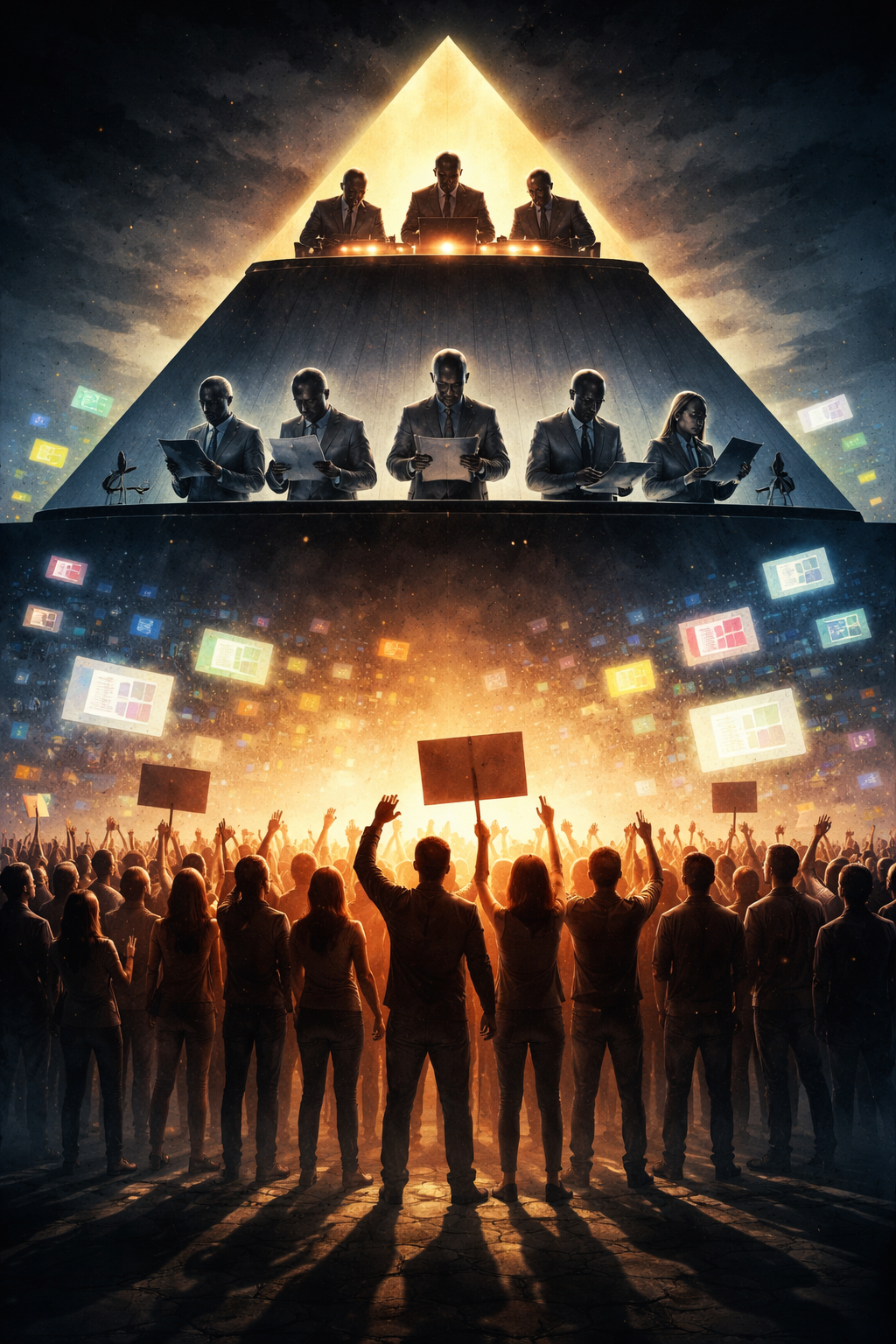
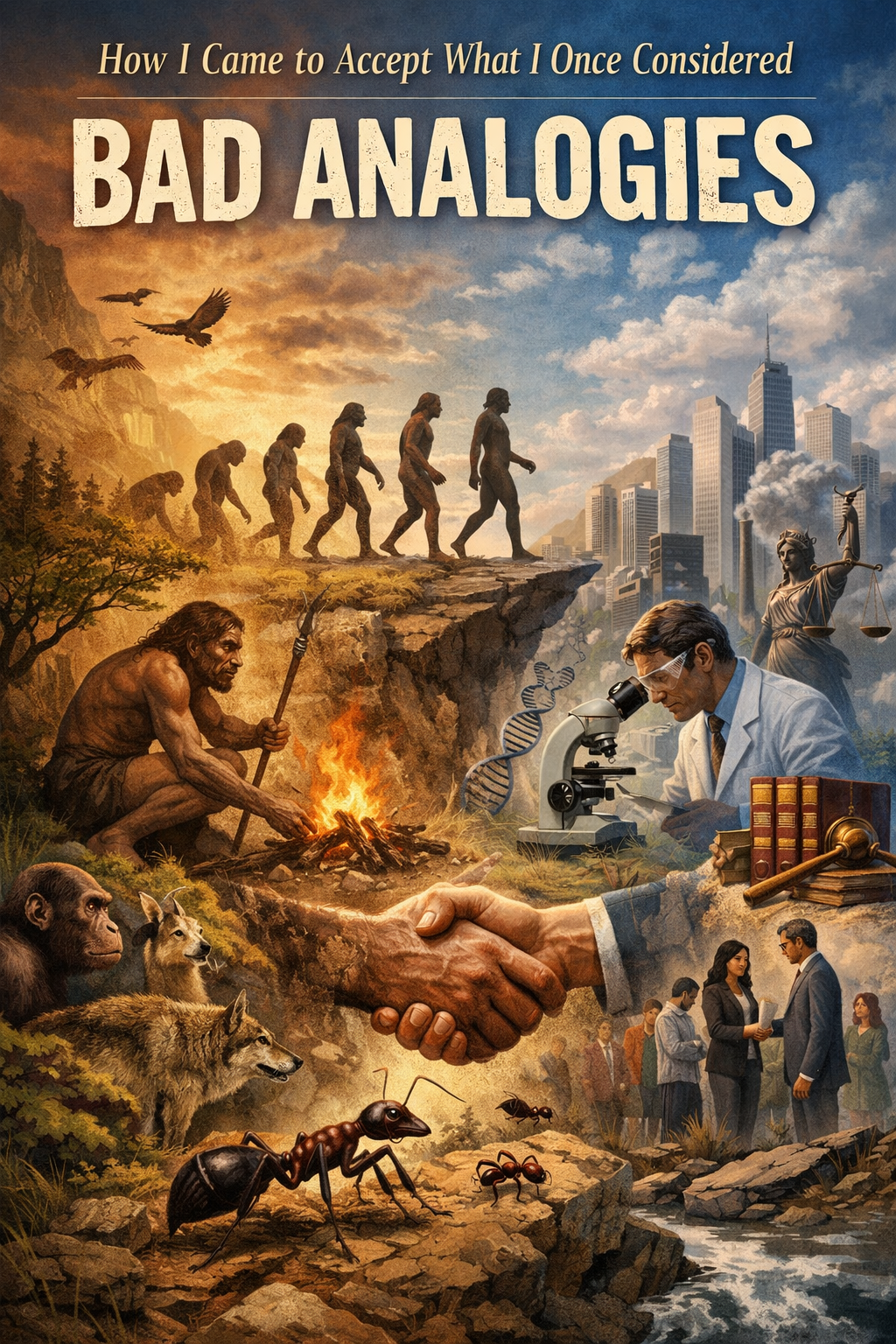





 freedom and reason