If you see the officer as doing something wrong in the video below, you may have absorbed a politically selective, anti-government ideology. If instead you ask why the woman is refusing to obey lawful commands, then you are asking the right question. Public safety depends on mutual responsibility—officers must act within the law, and civilians must comply with lawful orders.
A public service reminder: You do not have a right to resist a lawful arrest. If you believe an arrest is unlawful, the proper place to challenge it is in court, not in the moment. Civilians do not have the authority to unilaterally decide whether an arrest is legitimate. Were that the standard, resistance would become routine, and encounters between police and civilians would be even more dangerous. This is precisely why resisting arrest often results in additional charges such as obstruction, resisting, or even felony assault on an officer.
If you resist arrest, any injuries you sustain are self-inflicted consequences of that decision. Officers are authorized to use necessary and proportionate force to carry out an arrest—and to defend themselves if attacked. Violence begets violence in this case. When a suspect resists, an officer’s use of force is both lawful and, in many cases, unavoidable.
The deeper issue—amplified by modern antiracist doctrine—is the growing belief that police authority is inherently illegitimate or racially motivated (or both). This ideology teaches civilians that resistance to law enforcement is justified. It is a dangerous and destructive belief.
This mindset drives the public’s divided reactions to incidents like this. America increasingly splits along two lines: those who believe that public safety requires respect for law enforcement, and those who reject the legitimacy of both law enforcement and the rule of law itself. The first position supports the principles of a democratic republic; the second reflects an insurrectionist impulse that undermines civil order.
Image by Sora
You see this same sentiment in opposition to ICE and other agencies carrying out lawful duties. The issue is not that progressives reject the use of state power altogether—they simply wish it directed only against their political adversaries. Hence the double standard: pro-police when the subject is a political opponent, anti-police when the subject is an ideological ally.
This hypocrisy is visible in the celebration of legal actions against Trump and his supporters, contrasted with outrage when similar accountability is applied to those on the left—whether for obstruction, false statements, or other federal offenses. The same selective outrage will surface again when the next high-profile indictment emerges.
Ultimately, it is not the existence of law enforcement that signals authoritarianism—but the selective politicization of it. When one side weaponizes justice and delegitimizes the rule of law itself, that is the hallmark of authoritarianism.
Historian Mark Bray, assistant teaching professor at Rutgers University, and the author of the partisan 2017 Antifa: The Anti-Fascist Handbook, which The New Yorker describes as “a how-to for would-be activists,” has relocated from New Jersey to Spain after receiving multiple death threats, some of which were sent to his home.
Bray blames his decision on a campaign by the Rutgers chapter of Turning Point USA, which circulated a petition calling him “Dr. Antifa” and demanding his dismissal. Speaking with Newsweek, Bray described the harassment as part of a larger national pattern that he claims has intensified under the Trump administration—a trend, he believes, that reflects the country’s shift toward a more authoritarian political climate. And readers will see, Bray flips the authoritarian problematic on its head.
I disagree with Turning Point USA’s petition (I was myself the target of a petition by leftwing students who sought my dismissal for criticisms of gender identity doctrine). And, of course, I condemn death threats. I have written recently about the rise of domestic violence on the left, so I would hope my position on this is clear. But the irony of Bray’s concerns is rather delicious given that he himself is proudly authoritarian and promotes Antifa, a designated domestic terrorist organization, as a means of establishing a political climate in which those with whom Bray and his ilk disagree are harassed, intimidated, and even subject to violence.
In this exposé, I reveal the contradictions in Bray’s thought. I also examine the work of Canadian sociologist Stanislav Vysotsky, who, like Bray, albeit less openly sympathetic to antifascism as expressed by the politics and actions of Antifa, fails to condemn collective violence or the ideology that animates Antifa.
Cover of Bray’s Antifa
Bray is a duplicitous individual. He describes his book as “partisan history,” openly describing it as written “from the perspective of the anti-fascist movement.” Yet, Bray recently told the media something very different about the character of his scholarship. In a statement he made to the New York Times last Wednesday, he said, “My role in this is as a professor. I’ve never been part of an Antifa group, and I’m not currently.” He then added: “There’s an effort underway to paint me as someone who is doing the things that I’ve researched, but that couldn’t be further from the truth.”
What Bray is telling the NY Times could not be further from the truth. In fact, he announces in the introduction to The Anti-Fascist Handbook that “at the very least 50 percent of author proceeds will go to the International Anti-Fascist Defense Fund, which is administered by more than three hundred antifa from eighteen countries.” He is not only an intellectual partisan of Antifa, but helps fund them. Perhaps this is why he fled the country.
Bray’s Antifa rationalizes the authoritarianism of so-called “antifascism” by arguing, in typical fashion, that fascism must be confronted and dismantled before it gains political strength. For Bray, the liberal principle of open discourse and tolerance of dissent, which I advocate for on this platform and in the classroom, is naïve and even dangerous. This is because it allows fascist ideas to grow under the protection of free speech. His solution is militant antifascism—a willingness to disrupt, silence, and even physically “resist” those he and his ilk smear as “fascists.” This is not repression, he contends, but “preemptive self-defense.”
The contradiction in Bray’s argument should be obvious to a clear and objective mind: he “opposes” authoritarianism by adopting its fundamental premise: that a select moral vanguard should determine which ideas may or may not be expressed, and, furthermore, coercion to silence those whose ideas are deemed beyond the line of the freely expressible is warranted. While claiming to defend freedom, his framework licenses censorship and violence whenever they serve what he regards as the “greater good.” Such logic more than blurs the line between opposing tyranny and imitating it—it erases it. It becomes the thing itself.
Beneath the contradiction lies a deeper presumption common to social justice politics—one of epistemic certainty. Bray’s argument assumes that only he and those who share his ideology can correctly identify “fascism” and distinguish it from other forms of political expression. Bray thus is a self-appointed commissar in an authoritarian movement. It is based on this claim to absolute truth that Antifa finds its moral authority to harass, intimidate, and harm those they identify as “fascist”—actions that move beyond the rule of law. The ethic expressed here presumes that the rule of law in the context of a state is an illegitimate arrangement. This is anarchism.
What is fascism in Bray’s mind? Absurdly elastic, Bray’s definition of fascism encompasses a range of nationalist, right-wing, and traditionalist views. (He leans on Robert Paxton’s 2004 The Anatomy of Fascism for his definition, which famously proceeds without the economic, legal, or political analysis of fascism in the same systematic way that, for example, Franz Neumann does in his 1942 Behemoth: The Structure and Practice of National Socialism.) Bray ostensibly differentiates between conservative or right-wing views and fascist movements, while at the same time acknowledging a blurry boundary in practice. In effect, he treats the views of tens of millions of ordinary Americans as nascent fascism, while, again, granting his movement the authority to decide what beliefs and expressions are legitimate—and to use violence against those Antifa deems illegitimate in theirs.
Bray’s antifascism is not a critique of a social phenomenon but grounded in an ideological vision of society—one that is rhetorically democratic and egalitarian, but, in reality, militantly opposed to both modern and traditional principles and values. From his standpoint, any defense of inherited norms, national identity, selected religious traditions, or traditional culture can be potentially described as a precursor to fascism. Thus, Bray’s anti-fascism doesn’t protect society from tyranny; it seeks to impose a conception of the “just society,” against which all dissent to a particular politics is condemned as dangerous and to be met with various forms of coercion—harassment, intimidation, and violence.
Liberal democracy and republicanism, by contrast, rest on epistemic humility: the recognition that no faction or individual can be trusted to decide who may speak or peaceably assemble or which thoughts can be expressed. Free expression is defended not because every idea is good, but because no authority can be safely empowered to decide which ideas are too dangerous to hear. By rejecting that principle, Bray’s militant antifascism undermines the very pluralism that distinguishes a free society from a repressive one. In this way, Bray’s work exhibits the same absolutism that has marked authoritarian movements throughout history.
This is the mark of the authoritarian threat to the West I have described on this platform for years. While Bray rightly warns of the dangers of genuine fascism, his solution replicates its structure of thought and action; thus, his warning hails from an illegitimate place. This is why I argue on Freedom and Reason that antifascism, as conceived by Antifa, is an element of the New Fascism, which is not an idea, but actions pursued on the streets of the West and in the halls of its governments. The tendency here is totalitarian monopoly capitalism. Antifa is its street-level expression. For true believers, anarchism is an ideology blind to its own consequences. For those who know better, the contradiction is a smokescreen.
Actual antifascists. Dwight D. Eisenhower and top commanders of the Allied Expeditionary Force 1944.
Social media is awash in memes identifying those defending the West from fascism as “Antifa.” However, any real antifascist would condemn Antifa. Indeed, that’s how you know who a genuine antifascist is: whether they condemn or defend Antifa. Eisenhower and the Greatest Generation are not to be compared to the cluster B types and nihilistic misfits who make up Antifa. The comparison is an insult to their sacrifices.
President Donald Trump’s recent designation of Antifa as a domestic terrorist organization is the authentic expression of antifascist politics of today. Trump is nipping fascism in the bud by cracking down on Antifa and interrogating its organizational structure and funding sources. Antifa appeals to the First Amendment to defend their actions. But only peaceful protests are protected by the First Amendment—the finest articulation in the modern period of the principles Antifa tramples every time its members engage in coercion against citizens and government officials. How could anarchists believe in the First Amendment, anyway? They don’t believe in the government that recognizes and protects those rights!
Stanislav Vysotsky
Bray is not the only academic who is—if in this case tacitly—sympathetic to Antifa’s brand of militant antifascist action. In a 2020 book and a 2015 article published in an academic journal, sociologist Stanislav Vysotsky, an associate professor of criminology at the University of the Fraser Valley, argues that militant antifascism functions as a form of community self-defense rather than as a form of chaos or criminality. His central contention is that militant anti-fascists engage in what he calls “prefigurative politics,” meaning they enact the kind of society they wish to see—one without oppressive hierarchies or state violence—through collective and direct action.
In “The Anarchy Police: Militant Anti-Fascism as Alternative Policing Practice,” published in Critical Criminology in 2015 (you can find the full text here), which precedes Bray’s handbook, Vysotsky examines how antifascists fill the vacuum left by state inaction or complicity in confronting far-right organizing. In this space, he contends, militant antifascists act as a grassroots, non-state policing force. Unlike formal police institutions that protect existing power structures, antifascist groups monitor, expose, and disrupt fascist and white supremacist organizing to safeguard their communities.
This view parallels the practice Southerners during Redemption described as “self-help,” that is, collective extralegal action associated with the lynching of those viewed as threatening what whites perceived as an inherent moral order. Vysotsky’s conclusion states as much, only the conception of the moral order is switched: “This article posits that there may be confrontational, even violent, forms of action that can be taken to ensure safety and order that are consistent with anarchist principles.”
Such action, Vysotsky argues, challenges the monopoly on violence claimed by the state—a monopoly he fails to see or denies as necessary for the preservation of a democratic republic. Recall Max Weber’s definition of the state as an entity that claims a monopoly on the legitimate use of physical force within a given territory. While many actors, such as individuals, groups, or organizations, might use force, only the state is recognized as having the right to do so. For Weber, this monopoly is what fundamentally distinguishes the state from other forms of social organization.
In the United States, the right of individuals to use force in self-defense under certain conditions is recognized. However, as the Declaration of Independence and the Constitution make clear, the federal government is the vehicle through which collective self-defense is manifest. Without this arrangement, any action dressing itself in the ethic of collective self-defense represents an expression of mob rule. This is precisely why the United States was established as a constitutional republic (see Our Constitution and the Federal Authority to Quell Rebellion).
Legal systems, the military, and the police all operate under this authority (i.e., legitimate power), enforcing laws and ensuring order (see Concerning the Powers of the US Constitution—And Those Defying Them; also Posse Comitatus and the Ghosts of Redemption). Without this recognized monopoly, the state’s authority would fragment, leading to chaos with competing sources of power. Thus, Weber’s definition links political legitimacy directly to the state’s exclusive right to authorize and wield force. It is this political legitimacy that current-day antifascism seeks to undermine so that, via disorder, the social order can be reordered not through democratic processes but by the force of the mob. This is why the police and other law enforcement are among the targets of Antifa action, which we are seeing playing out on the streets of America as I write this essay.
In American Antifa: The Tactics, Culture, and Practice of Militant Antifascism, published in 2020 (here Vysotsky cites Bray’s work), Vysotsky situates Antifa within a broader political culture of anarchism, emphasizing that militant tactics—such as confrontation, disruption, and doxxing—are rooted in a defensive posture against fascists and racist threats. Vysotsky argues that these groups operate through decentralized networks, emphasizing collective action. He insists that militant antifascism is reactive rather than inherently violent—it emerges in response to what he supposes are real threats from fascist movements and the failure of state institutions to protect marginalized communities.
Vysotsky’s framing is clever, but its intent is obvious. If the government moves to suppress Antifa violence, then Antifa and its allies accuse the government of the very behavior it claims to be defending its communities from. This functions as a form of preemptive justification, where accusations of oppression are used to reframe violence as morally necessary, and any attempt to curb it as further proof of the original threat. Putting the matter as he does, Vysotsky flips the aggressor–victim dynamic, a rhetorical move that reframes defensive action as aggression, thereby justifying the very actions that provoked it—in this case, the duty of the state to secure domestic order and protect civilians and property. At its core, then, the rhetoric constitutes a form of moral reversal, in which those defending themselves from terrorism are portrayed as the true aggressors (we see this in the rhetoric of Hamas and other Islamic terrorist groups). When the government moves to suppress Antifa violence, Antifa and its allies—including Democrats and the mainstream media—claim that the state is enacting the very oppression Antifa is resisting.
Cover of Vysotsky’s American Antifa
Thus, in his writings, albeit in sideways fashion, Vysotsky valorizes militant anti-fascism as a legitimate, community-based response to the dangers of fascism, which is evidenced by the appearance or threat of legitimate collective defense, portrayed by anarchists as “state violence,” and, moreover, as an experiment in establishing non-state forms of justice and safety—that is, policing actions that usurp state authority. His analysis reframes Antifa not as the extremists they are, but as a form of ethical resistance that reflects broader anarchist commitments, foremost among them the rejection of allegedly oppressive power structures, i.e., the necessary functions of democratic government.
Even while speaking in organizational terms, Vysotsky obscures the fact of organization by arguing that what makes something “antifascist” isn’t belonging to an organization but participating in a shared political (sub)culture and repertoire of the tactics we see on the streets. Antifa, in his view, is not an organization but a “network of affinity groups.” Vysotsky could argue that apparent support for Antifa in his writings is defensible because, as an ethnographer, he is attempting a second-order account of the emic perspective of the (sub)culture under study. But it is often the case that advocacy wears the fig leaf of neutrality to disguise affinity.
It is noteworthy that Vysotsky claims that the depiction of Antifa as agents of chaos and criminality is a mainstream media construction. Yet we find mainstream reviews of Bray’s book not only praising his work but endorsing its purpose: After fawning over the book, the Los Angeles Review of Books states, “The book is at its best when criticizing the liberal view that official democratic institutions alone are sufficient to prevent a fascist seizure of power.” The Baltimore Beat writes that the “‘Antifa Handbook’ is hard history, a call to action, and an even-handed and reasonable explanation as to why we need to be way less damned reasonable.” The Progressive writes, “In the Trump era, Bray’s Handbook is essential reading.”This is a selection of reviews in the progressive-dominated media amplifying Bray’s advocacy for violent street-level violence against those Antifa designates as “fascists.” As noted, Vysotsky read Bray’s book and, presumably, was aware of the positive reviews of it as he was writing a book that can be reasonably seen as a tacit defense of Antifa.
Vysotsky is more openly sympathetic to Antifa in a 2017 article published by In These Times, “Towards a Broad Left Front Against Fascism,” in which he argues for unifying against the “far-right” rather than smearing those taking antifascist action. He emphasizes the importance of collective resistance to a dangerous force, strongly suggesting a stance supportive of antifascist efforts. Indeed, he criticizes liberals, e.g., Peter Beinart, who make many of the “same critiques of antifascist tactics that have become commonplace among the Right.”
These critiques, Vysotsky argues, effectively represent “apologism for white supremacy.” Thus, he has presumed a leftwing mythology about the West, that the belief and defense of a national community is a racist expression. He admits that Beinart’s critique of Antifa “rests on an assertion that the movement challenges the state’s monopoly on power, a claim that antifa are unlikely to argue with.” He then, fallaciously, writes, “At a time when the legitimacy of the state’s use of violence is under critique from the Left, it rings hollow to criticize activists for challenging this monopoly on force.” Criticism of the legitimacy of various state actions is not the same as challenging the state’s monopoly on the use of force. The former is necessary in a democracy. The latter, in action, constitutes insurrection. At any rate, Vysotsky is endorsing the Antifa position.
Keith Ellison, Today: Nobody even knows what Antifa is.
Readers might find Bray and Vysotsky to be marginal figures in the political landscape. But as we have seen, Democrats and talking heads in the mainstream media defend Antifa, too, mostly by either insisting that Antifa is not an organization or that it doesn’t exist at all! At least these two academics recognize the reality of Antifa, even if they deny that it is a terrorist organization.
For the record, Antifaschistische Aktion (Antifa) was founded in 1932 in Germany. It was initiated by and under the command of the Communist Party of Germany (KPD). The KPD had an official paramilitary arm, the Roter Frontkämpferbund (RFB), paralleling to the Nazi Sturmabteilung (SA). The RFB was banned in 1929 by the Weimar government because it was a violent, revolutionary, paramilitary organization that threatened public order and the democratic system. Of course it did not go away. The KPD continued to organize violent street action through its front group Antifa. While there is no analogy to the SA in today’s America, Antifa is alive and well and supported by today’s Democratic Party. And while there may be a smattering of communists in Antifa, it is, for the most part, composed of nihilists of the anarchist persuasion—hell bent on disrupting liberal freedoms and democratic institutions and processes.
I want to close with what I said in last Thursday’s essay: Would you know fascism if you saw it? In these passages, I describe Mussolini’s Blackshirts and Hitler’s Brownshirts. The parallels between these historical examples of street-level fascism and Antifa are unmistakable:
Before and during their rise to power, Mussolini’s Blackshirts and Hitler’s Brownshirts disrupted public meetings and universities to silence dissent. They would enter classrooms, lecture halls, and political assemblies to shout down speakers, intimidate professors, and break up events organized by liberals and other perceived enemies of their movements. These actions were part of a broader strategy to suppress free speech, enforce ideological conformity, and create a culture of fear that paved the way for fascist control of intellectual and public life.
The Blackshirts waged open street warfare against the public, burning buildings, beating political opponents, and even killing activists and political figures. Their violence was tolerated—even quietly supported—by sympathetic businessmen and officials. Likewise, the Brownshirts engaged in street battles with civilians and law enforcement, using intimidation and violence to destabilize the public order. They assaulted citizens and political opponents. Their violence included murders of activists and political officials. Again, their violence was tolerated, even tacitly supported by businesses and government officials.
Does this sound familiar? Antifa is “just an idea,” you say? Nothing to see here? The federal government should do nothing about this? Maybe expose the sympathetic elites who tolerate and tacitly support them? Maybe expose those who tell you that Antifa is “just an idea”? Do you have a timepiece handy? Can you tell what time it is? Would you know fascism if you saw it?
Before and during their rise to power, Mussolini’s Blackshirts and Hitler’s Brownshirts disrupted public meetings and universities to silence dissent. They would enter classrooms, lecture halls, and political assemblies to shout down speakers, intimidate professors, and break up events organized by liberals and other perceived enemies of their movements. These actions were part of a broader strategy to suppress free speech, enforce ideological conformity, and create a culture of fear that paved the way for fascist control of intellectual and public life.
The Blackshirts waged open street warfare against the public, burning buildings, beating political opponents, and even killing activists and political figures. Their violence was tolerated—even quietly supported—by sympathetic businessmen and officials. Likewise, the Brownshirts engaged in street battles with civilians and law enforcement using intimidation and violence to destabilize the public order. They assaulted citizens and political opponents. Their violence included murders of activists and political officials. Again, their violence was tolerated, even tacitly supported by businesses and government officials.
Image by Sora
Does this sound familiar? Antifa is “just an idea,” you say? Nothing to see here? The federal government should do nothing about this? Maybe expose the sympathetic elites who tolerate and tacitly support them? Maybe expose those who tell you that Antifa is “just an idea”? Do you have a timepiece handy? Can you tell what time it is? Would you know fascism if you saw it?
“The United States shall guarantee to every State in this Union a Republican Form of Government, and shall protect each of them against Invasion; and on Application of the Legislature, or of the Executive (when the Legislature cannot be convened) against domestic Violence.” —Article IV, Section 4 of the United States Constitution.
“The Citizens of each State shall be entitled to all Privileges and Immunities of Citizens in the several States.” —Article IV, Section 1 of the United States Constitution.
Yesterday I published an essay (When Thinking Becomes Unthinkable: Motivated Reasoning and the Memory Hole) in which I reflected on something I had said earlier in the day on social media. I had just heard a reporter say that never in American history has a Republican President sent troops to a Democratic city. This reporter said it with so much confidence. Fascinating, I thought, how historical memory can be so easily erased among those who are supposed to be knowledgeable about American history. After all, they’re commenting on American history from a big platform, so one would think they would have some knowledge about what they’re talking about.
As I explained in that essay, not only has a Republican President sent troops to a Democratic city before, but Republican presidents have sent troops to Democratic cities on numerous occasions throughout the history of the nation. So have Democrats. In this essay, I follow up on yesterday’s essay to expand on the facts of this history. This is essay is one of several essays in which I argue that President Trump’s deployment of federal troops to cities across the nation is Constitutionally authorized and, moreover, an obligation, under certain conditions, as asserted in Article IV of the US Constitution, Sections 1 and 4, which I quoted at the top of this essay. (See Our Constitution and the Federal Authority to Quell Rebellion; Concerning the Powers of the US Constitution—And Those Defying Them; Posse Comitatus and the Ghosts of Redemption.)
Illinois Governor JB Pritzker
When Illinois Governor JB Pritzker says (quoted in this New York Timesarticle), “We must now start calling this what it is: Trump’s invasion,” he is using more than highly charged political language. The phrase frames former President Donald Trump not as a political opponent or policy actor, but as an aggressor against the nation itself. However, Trump is the duly elected President of the United States. He is sworn to faithfully execute the Office of President, and to the best of his ability, preserve, protect, and defend the Constitution of the United States. His military commanders take an oath to support and defend the Constitution of the United States against all enemies, foreign and domestic. Calling something an “invasion” implies a hostile, external force—an enemy rather than a domestic participant in legitimate governance. This means Pritzker is assuming the doctrine states’ rights in the same way the Southern states that formed the Confederacy assumed states’ rights in rebellion against the Union.
The public must see that this rhetoric echoes older and destructive actions and patterns in American history. During the Civil War, Confederate leaders routinely described actions by President Lincoln and the Union Army as an “invasion” of the South. They used that word to suggest that the federal government had become an occupying force, violating the sovereignty of the states. In doing so, they cast themselves as defenders of their homeland rather than what they were: rebels against the United States.
By referring to Trump’s actions as an “invasion,” Pritzker is mirroring that same rhetorical structure—depicting a national leader as a violator of the country he was elected to serve—of the Confederate rebel. It’s a reversal of legitimacy, a linguistic move that portrays the federal executive not as the protector of the nation but as an internal enemy. This is not accidental. It represents the neoconfederate politics of governors like Pritzker and Newsom. This is ANTI-American.
Pritzker’s choice of language reflects a broader trend in contemporary American politics, where Republicans are framed not as rivals within a shared system but as existential threats to it. The reality is that neoconfederacy is an existential threat to the Republic. More than rhetoric, segments of the judiciary are manifesting neoconfederate rhetoric in action.
Bottom line: Pritzker’s words carry more than a historical echo of Confederate rhetoric. The Democrats are neoconfederates, transforming political conflict into a struggle over the very identity and survival of the nation.
The US Constitution is the Supreme Law of the Republic. States are subordinate to the federal government. The federal government under the authority and obligation provided to it by Article I, Section 8, and Article IV, must deploy military troops to suppress insurrection and rebellion. This is why the Articles of Confederation were scrapped and replaced by the US Constitution. The US Constitution created a powerful executive to carry out the nation’s laws and secure domestic peace and tranquility.
You may be hearing a lot about the Redemptionist law Posse Comitatus Act, passed by Democrats in 1878 at the end of Reconstruction to thwart federal troops in their work to protect recently freed slaves. This law generally prohibits the use of the US military (Army and Air Force) to enforce domestic laws within the United States, UNLESS expressly authorized by the Constitution (see Article I, Section 8, and Article IV) and statutory law.
Statutory law on the matter is found in the 1807 Insurrection Act (10 USC. §§ 251–255). This Act is an exception to the Posse Comitatus Act. It authorizes the President to deploy federal troops within the US to suppress civil disorder, domestic violence, insurrection, rebellion, unlawful combinations, or conspiracies that hinder the enforcement of federal law or deprive citizens of their constitutional rights, particularly when state authorities are unable or unwilling to maintain order.
Additional statutory provisions permit military involvement in maintaining peace and order under specific circumstances. Among these is 10 USC §§ 271–284, the military may provide support to civilian law enforcement agencies, including assistance in counterdrug, counterterrorism, and border security operations, as well as technical, logistical, and intelligence support, though not direct law enforcement activities. Collectively, these statutes form the legal framework under which the President may deploy military forces domestically to preserve public order, enforce federal authority, or protect life and property when civilian agencies and state governments are unable to maintain control.
This is how 1957 (Little Rock, Arkansas, when President Eisenhower invoked the Insurrection Act to enforce desegregation orders, sending in federal troops) and 1992 (Los Angeles riots, when President George Bush Senior invoked it to restore order after the Rodney King verdict) were possible.
Even Democrats have used the military in this fashion. In 1962, President John F. Kennedy intervened in the integration of James Meredith at the Ole Miss. The state of Mississippi, led by Governor Ross Barnett, resisted the federal court order requiring Meredith’s admission. President Kennedy and his brother, Attorney General Robert F. Kennedy, deployed US Marshals and later federal troops to ensure Meredith could enroll. On September 30, 1962, violent riots erupted on campus, leaving two people dead and many injured as federal forces battled mobs opposing desegregation. Kennedy addressed the nation, urging respect for the rule of law and emphasizing that “observance of the law is the eternal safeguard of liberty.”
No rational people would establish a legal framework that allows for civil disorder, insurrection, rebellion, or states to fail or refuse to follow the federal law or protect federal buildings and installations. If you think Antifa is engaged in righteous action, you are entitled to that view. But you also have to recognize that a state adequate for guaranteeing peace and tranquility on the home front will enforce the nation’s laws.
When I was growing up, it was still possible to trust science as a check against falsehood. You could always say, “Let’s see what the science says,” and expect that facts would settle the matter, always understanding of course, that science is open and subject to change in light of evidence. The assumption was simple: science was a neutral and objective system of valid knowledge, relatively immune to the infection of ideology or the corruption of profit.
That confidence was grounded in a reasonable faith—if one may put it that way—in science as a self-correcting enterprise, something close to what sociologist Robert Merton of scientific norms as an internally consistent and self-regulating system.
Merton distinguished between “internal” and “external” views of science to explain different ways of understanding scientific activity. The internal view focuses on the cognitive and methodological aspects of science itself—theories, discoveries, and the logic of scientific inquiry—independent of social context. In contrast, the external view examines science as a social institution influenced by broader cultural, economic, and political factors—it looks at how societal norms and values shape scientific development and priorities. (For more on this, see Refining the Art and Science of Propaganda in the face of Popular Doubt and Questioning.)
Merton argues that a complete sociology of science integrates both perspectives, recognizing that scientific knowledge is both a logical, systematic pursuit of truth and a social product. I agree—indeed, it is in recognizing science as a social product that we can critique its corruption by power and profit. This contrasts with the postmodernist move of reducing knowledge to power. It is not that power plays no role in knowledge production (as Karl Marx told us in The German Ideology), but the claim that all knowledge reduces to power precludes the possibility of objective knowledge. It obscures the reality that power can corrupt knowledge, defined here as verified belief. Among other work it does, postmodernism is an obscurantist project.
Image source. Note: I do not endorse the argument made in the article.
Over time, confidence in science has eroded. The reason for this loss of trust is the recognition that science has been captured—not only by ideology, but by the machinery of corporate power and political fashion. Public skepticism is therefore warranted. The complaint that there are irrational forces in society delegitimizing science is corporate state propaganda designed to obscure the true source of delegitimization: the corruption of science in the age of corporate statism. When we are told today to “follow the science,” we are not being invited to consult a neutral body of knowledge, but an institution that speaks with the voice of a new priesthood.
The dogma of the new priesthood is scientism: an ideology that borrows the authority of science to sanctify its own prejudices and projects. When science contradicts known truths, members of the public come to doubt the claims scientists make. To clarify, I do not use scientism in this essay as an ideology that asserts science is the only valid source of knowledge; I do not dismiss other ways of knowing—the arts, philosophy, religion. I mean, in the present context, an ideology that elites represent as science.
The growing doubt expressed by the public is rational. Scientism is not science. It is a political theology wrapped in lab coats, claiming neutrality while advancing the orthodoxy of ideological and self-serving doctrine. Scientism inverts truth and falsehood: what was once a method for uncovering reality has become a mechanism for enforcing dogma. (See The Corporate Character of Scientism and embedded links.)
Take the phrase “sex assigned at birth.” Where did it come from, and what does it really mean? Before most people ever heard of gender identity theory, this phrase was already circulating in media, medicine, and education. It sounds harmless—even scientific—but it carries an entire ideology in its pocket. If you use it uncritically, you’re already accepting the doctrine it smuggles in.
According to a Columbia Law Review article by Jessica Clarke, “Sex Assigned at Birth,” the phrase has gained prominence in US legal and policy discussions concerning the rights of transgender individuals. Originally used by medical professionals to describe the designation of a newborn as male or female based on physical characteristics observed at birth, the term has evolved into a critical concept for understanding gender identity and discrimination.
The article notes that the phrase had been used, at least since the 1960s, to describe an obstetrician’s description of gender “based upon inspection of the external genitalia.” We see the phase used as early as 1960, in Edgar Burns et al’s “Reassignment of Sex,” in the Journal of Urology. Here, we see the theory of gender identity is being smuggled in using the language of “reassignment,” which presumes sex is assigned in the first place, before Robert Stoller coined the term “gender identity.” (See my May 2024 essay Gender and the English Language.)
Clarke writes that this classification, recorded on birth certificates, is treated as a person’s legal sex. Over time, she records, advocates and scholars have embraced “sex assigned at birth” as a more accurate and less stigmatizing alternative to “biological sex,” emphasizing that it reflects an external categorization rather than an intrinsic identity. The term now plays a central role in legal definitions of transgender status and appears in both federal regulations and proposed legislation aimed at protecting LGBTQ individuals from discrimination in areas such as employment, health care, and housing.
Clarke argues that the rise of the term “biological sex” serves to give an appearance of scientific legitimacy to efforts aimed at discrediting transgender identities, and that its continued, uncritical use reinforces systems of exclusion. In contrast, the use of “sex assigned at birth” by transgender rights advocates highlights that sex is neither fixed nor strictly binary, and that gender identity itself is shaped by biological as well as social factors. (The real problem with the construct of “biological sex” is a redundancy that presumes there is some other kind of sex, and thus has those who insist on sex as intrinsic identity unwittingly doing the work of the gender identity movement.)
Of course, sex, or gender (same thing), is fixed and binary in mammals. Gender identity is an invention of crackpot psychiatry and sexology. In reality, sex is observed, not assigned. Doctors do not “assign” a baby’s sex any more than they assign its number of toes. They record what is there. They may be wrong, but that’s a matter of precision. To speak of “assignment” is to imply that sex is a bureaucratic label or social construct rather than a biological reality—that nature itself is subordinate to human decree, which is an act of oppressive power. This misrepresentation of reality is used to allow a man to change his sex on his birth certificate. The phrase and its institution in law, policy, and science turn an act of recognition into an act of creation. Gender thus becomes a product of psychosocial expectations, not of objective recording.
One might argue that the shift from describing “biological sex” as fixed toward a framing of “sex assigned at birth” helps foreground the complexity of sex (intersex variation, chromosomal diversity, etc.). But that is not how the phrase is used. It is used instead to advance gender identity doctrine. So-called intersex conditions and transgender identity are entirely different concepts, one rooted in errors in gene expression, the other in neoreligious dogma.
The same linguistic sleight of hand appears in the phrase “gender-affirming care.” It sounds kind, even compassionate, but in many cases it means the opposite: the chemical and surgical denial of the body’s sexed reality. To give hormones or surgery to help a boy live as a boy would be truly affirming. To remake his body to match a psychological fiction is to deny his gender in the name of affirming it. (See Gender Denying Care: A Medical and Moral Crisis.)
The inversion continues with the language of misgendering. If I call a man “ma’am” by mistake, I have misgendered him. But if I call a man “ma’am” because he identifies as a woman, I am told I have “correctly” gendered him. I am a good ally. Failure to be a good ally is met with an inversion of reality: I have “misgendered” the man. The demand is not for recognition of reality but for public participation in its denial. I am being conscripted into a social movement. Words become the instruments of forced assent.
As noted, the phrase “sex assigned at birth” now appears everywhere—from hospital paperwork to television scripts—rarely questioned and almost never defined, except to further sink the public mind into the doctrine of gender identity. Its power lies in its hegemonic acceptance. It enters our speech without fanfare and reshapes how we think without our noticing. Most people who use it are not trying to make a political statement; they are simply repeating what sounds like the respectable vocabulary of science. That is the genius of loaded language: it does its work below the level of consciousness. (See yesterday’s essay When Thinking Becomes Unthinkable: Motivated Reasoning and the Memory Hole.)
Loaded terms smuggle moral judgments into what appear to be neutral descriptions. We see this everywhere: “reproductive health” instead of “abortion,” “resistance” instead of “terrorism.” “Sex assigned at birth” functions in the same way. It contains a presupposition disguised as a fact—that sex is something humans decide rather than something nature declares. Once that premise is accepted, the entire argument of gender ideology follows automatically.
Language does not merely describe the world; it shapes it. When we adopt phrases like “sex assigned at birth” or “gender-affirming care” in referring to cross-sex hormones or mutilating surgeries, we are not just speaking—we are conceding. The argument about whether sex is biological or social has already been settled, quietly, by the wording of the sentence itself. This is how framing works. The phrase “sex assigned at birth” moves the discussion from the realm of observation to the realm of ideology. Once that frame is set, anyone who questions it appears irrational, bigoted, or even cruel. “Be kind,” those who still recognize reality are chastised. What’s being defended is no longer truth, but a way of seeing—a linguistic cage that defines the limits of permissible thought.
It’s the same mechanism George Orwell saw in the political language of his time. We still see it today in the euphemisms of modern warfare. “Collateral damage” means dead civilians. “Kinetic military action” means war. “Dead checking” means shooting the wounded to make sure they’re corpses. Such phrases don’t merely soften brutality; they erase it. They make murder sound like maintenance. When the language is murdered, conscience is murdered with it. (I wrote about this nearly twenty years ago in a May 2007 essay Sanitizing an Authoritarian Situation.) So it is with the new bureaucratic idioms of identity. “Sex assigned at birth” sounds sterile and scientific, but it performs the same moral anesthetic as “collateral damage.” It renders the natural artificial, the given negotiable, and the real optional.
The point is not just that bad language hides bad ideas. It’s that corrupted language is the symptom of a corrupted power. When rulers or institutions manipulate words, they are not trying to win an argument—they are trying to suppress debate and dissent. To change the meaning of words is to change the possibilities of thought. If you can dictate the vocabulary, you can dictate the imagination.
The battle over phrases like “sex assigned at birth” is thus not merely a quarrel about grammar; it is a struggle over who owns reality. As Orwell wrote in “Politics and the English Language,” political language is designed “to make lies sound truthful and murder respectable.” Today, the same impulse drives the redefinition of words that once had stable meanings. Power now seeks not only to control speech but to police thought. To resist this, one must recover the courage to name things as they are—to call truth by its rightful name, even when doing so is impolite. Even when doing so is unkind. Words matter because reality depends on them.
Philosopher Paul Diesing distinguishes between “technocratic” and “democratic” science as two contrasting models of how science relates to society and decision-making. Technocratic science is controlled by experts, government agencies, or corporations, emphasizing the use of specialized knowledge to solve problems from the top down from the standpoint of elite interests. Technocratic science limits public participation and treats scientific expertise as neutral and authoritative. In contrast, democratic science seeks to make scientific research more participatory and responsive to the needs and values of the wider community. It encourages transparency, public input, and collaboration between scientists and citizens. Diesing argued that democratic science promotes social responsibility and ethical reflection, while technocratic science risks serving only elite or institutional interests. We are in an era of technocratic science.
I rework every text in my head like the above meme. It’s obvious that we’re being subjected to a project of mass mind control. In this piece of the project, we’re being trained to habitually misgender others on command. As Orwell warned us, brainwashing occurs via language manipulation. How does one escape language manipulation? Since this form of manipulation depends on everybody not knowing that everybody else doesn’t believe men can be women, the goal of the free thinker is the state the truth whenever the falsehood appears in whatever form it takes. See my essays The Emperor is Naked: The Problems of Mutual Knowledge and Free Feelings and Wokism and the Naked Truth. Also see this interview clip with Steven Pinker.
Discussing common knowledge with Bill Maher.
Common knowledge is the topic of my new book: When Everyone Knows That Everyone Knows…: Common Knowledge and the Mysteries of Money, Power, and Everyday Life.https://t.co/ce5Tn87DF1pic.twitter.com/tT8TvusghD
“The past was erased, the erasure was forgotten, the lie became the truth.” —George Orwell, Nineteen Eighty-Four
Orwell, in Nineteen Eighty-Four, imagined “memory holes,” literal chutes used to destroy documents that contradicted the Party’s official narrative. Once an item was dropped into the memory hole, it was burned, and its existence denied—allowing the regime to maintain the illusion that it had always been right. Thus, “memory holing” refers to the deliberate alteration, erasure, and suppression of inconvenient events, facts, or records—so that they are effectively disappeared from public consciousness.
Orwell by Grok
Earlier today, I wrote the following:
Screengrab from my Facebook feed
It is indeed a striking thing to watch someone speak with total confidence about a claim that is demonstrably false. The reporter (I was listening to the news in the background, so I don’t know which one) declared that “never before has a Republican president sent troops to a Democratic city.” The statement was delivered with such certainty as if it were a self-evident truth. Yet anyone with even a cursory knowledge of American history could recall counterexamples. In 1957, President Eisenhower—a Republican—sent federal troops to Little Rock, Arkansas, then a Democratic state, to enforce desegregation. More dramatically, Abraham Lincoln, another Republican President, sent troops into states governed by Democrats.
Even Democratic presidents have sent military troops into Democratic cities. In 1962, President Kennedy deployed the Guard and federal marshals to the University of Mississippi to enforce the enrollment of James Meredith, the university’s first black student. Meredith’s admission had been blocked by state officials. As violent riots erupted on campus in Oxford, Kennedy ordered federal troops and the Mississippi National Guard to restore order and ensure Meredith’s safety. This decisive action marked a critical moment in the Civil Rights Movement, demonstrating the federal government’s commitment to upholding court-ordered desegregation and the constitutional rights of all citizens.
The history of the federal government deploying military forces to ensure civil rights and impose order on disorder is neither obscure nor hidden. It is woven into the American story. It is, moreover, entirely permitted by the Constitution (see Our Constitution and the Federal Authority to Quell Rebellion; Concerning the Powers of the US Constitution—And Those Defying Them; Posse Comitatus and the Ghosts of Redemption). How could any of this be lost on any reasonably informed American? Whatever the reason, it is certainly helpful to Democrats making the case that President Trump is behaving in an unprecedented fashion for people to forget history. All the more important, then, to examine how this happens.
What is so striking about the inability to recall American history is not merely the factual error, but the psychological process behind it. Charitably, the reporter was not lying deliberately. Instead, she appeared to genuinely believe what she was saying. This kind of mental blind spot is an example of what psychologists call motivated reasoning—a cognitive bias in which people selectively recall, interpret, or even “forget” facts when those facts conflict with their ideological commitments or the narrative frameworks they have internalized. When a person’s worldview is strongly shaped by partisan or moral commitments, inconvenient historical facts can become inaccessible, not because they were never learned but because retrieving them threatens the coherence of the person’s narrative about reality.
There is also an element of cognitive dissonance here (see Living with Difficult Truths is Hard. How to Avoid the Error of Cognitive Dissonance). As Leon Festinger taught us, when information does not fit with our beliefs or expectations, our minds experience tension. One way to resolve that tension is to adjust our beliefs (ideal); another is to simply exclude the conflicting information from awareness. This can produce what looks like a stunning ignorance of the obvious. A person may literally “not see” what is right in front of them because their interpretive lens filters it out before it reaches conscious evaluation.
In public discourse, this phenomenon can be especially powerful because authority and platform reinforce the illusion of certainty. When someone on television speaks confidently, the audience may assume that the speaker’s memory and reasoning are sound. How could a newsreader not be an informed person? Yet confidence is not the same as accuracy. What we are witnessing in such moments is not merely an individual’s lapse but the collision of human cognition with ideology, resulting in blindness to the obvious—a blindness that can seem astonishing to those who are not under its spell.
Behind this psychological phenomenon lies something larger than individual bias, however: the workings of power itself. As Michael Parenti observed, the media’s primary function is not so much to tell us what to think as to tell us what to think about. This selective framing serves the interests of those who benefit from the existing order. Antonio Gramsci called the intellectuals who carry and reproduce the worldview of the ruling class “organic intellectuals”—figures like academics, journalists, newsreaders, and pundits who, often unconsciously, circulate elite perspectives as common sense. As Noam Chomsky observed, those performing this role have to be the most deeply indoctrinated.
This is the essence of hegemony: the subtle shaping of consciousness so that certain assumptions appear natural and others unthinkable. Within this ideological bubble, or epistemic enclosure, even the possibility of questioning dominant narratives is foreclosed. The result is not simply misinformation but a managed field of perception in which truth itself becomes subordinate to power.
This is a real problem. Millions of Americans get their information from talking heads who are themselves unable to see the disinformation they daily transmit to the masses. The result is a culture in which illusion passes for insight and repetition substitutes for truth. These figures are not so much deceivers as the deceived, reproducing elite ideology without recognizing it as such, their platforms amplifying the false narrative until it becomes the common sense of the nation. What emerges is not merely a misinformed public but a managed consciousness—one that mistakes propaganda. In such an environment, the boundaries of thought are policed not by censorship but by belief itself; what cannot be questioned cannot be changed, and what cannot be imagined cannot be questioned. The belief itself does the work of the censor.
In modern contexts, memory holing doesn’t require the physical destruction of documents or a totalitarian state. It happens through more subtle means: algorithmic invisibility, collective forgetfulness, or selective reporting produced by media cycles that move too fast for reflection. When a powerful institution or political party finds a narrative inconvenient, it can bury it—not necessarily censor it, but drown it in noise, ignore it, or reframe it until its original meaning is negated.
This phenomenon connects directly to ideas of hegemony and motivated reasoning discussed earlier in this essay. When those in power shape what is thinkable, they also shape what is remembered. The public’s memory becomes curated—structured by omission as much as by inclusion. In this way, memory holing is not just about forgetting the past; it’s about controlling the future by controlling what the collective mind is allowed to remember.
The United Kingdom has set forth an ambitious plan known as “Net Zero,” aiming to reach zero net contribution of greenhouse gases to the atmosphere. Whether we’re talking about carbon dioxide, sulfur dioxide, or other greenhouse gases, the stated goal is clear: the UK will not add to global emissions.
Image by Grok
On paper, this sounds noble. But the way the plan is being executed reveals a different reality. Rather than truly reducing emissions, the UK has been relocating heavy manufacturing overseas to export-processing zones in the developing world (the world that transnational corporations are underdeveloping) and importing energy from abroad. This strategy doesn’t eliminate the emissions—it merely moves them around geographically.
In practice, this geographic shuffle means that emissions continue at roughly the same level, but now in countries with weaker environmental protections and less-developed capacity to capture or offset carbon. The pollution still enters the atmosphere and affects the global ecosystem. Pretending the UK is somehow insulated from these effects is an illusion.
Yet the problem is not purely environmental. In fact, it isn’t about biospheric integrity at all. Moving high-wage, capital-intensive manufacturing jobs overseas impoverishes the domestic population. The UK has outsourced not only its production but also the livelihoods of its citizens. As industries leave, wages fall, and communities dependent on manufacturing are hollowed out.
The economic harm from offshoring is compounded by mass immigration, which imposes additional costs on the British taxpayer. The government’s welfare systems must now support a growing migrant population while native citizens experience declining purchasing power and reduced living standards. Cheap imports produced by third-world labor may lower the price of some goods, but they cannot compensate for the erosion of secure, well-paid employment at home. (See Marx the Accelerationist: Free Trade and the Radical Case for Protectionism.) Higher energy prices from importation raise the prices of locally produced goods and services.
In short, the transnationalization of production sacrifices the working class without achieving the stated environmental benefits. Pollution levels remain global; only the map of point source emissions changes. The domestic population faces rising taxes, unemployment, weaker wages, higher prices in some sectors, and an increasingly strained welfare state.
All of this raises a question: what is the real purpose of these policies? When examined from a distance, the pattern suggests that “climate change” initiatives like Net Zero are not about saving the environment. Rather, they provide cover for a transnational agenda—offshoring industry to maximize corporate profits by exploiting cheap foreign labor, while also importing cheap labor into the UK itself. This not only disrupts the country’s economic base but also changes its demographic and cultural composition, undermining national solidarity and sovereignty.
Seen this way, which is the way to see it, the Net Zero plan isn’t merely a flawed environmental strategy; it’s part of a broader process by which globalist and transnational corporate interests seize control of government policy to weaken and reshape a country for integration into a larger, post-national order.
Bill Maher is too wishy-washy on this issue. His argument, presented in the video clip shared below, collapses because he fails to walk on principled moral and scientific grounds. He wants to have it both ways, believing this places him on common ground—that it makes him a centrist and therefore reasonable. But there is no common ground here. Either you oppose child abuse or you defend and support it. Maher is committing a grave form of the golden mean fallacy.
(By the way, this is why the cry for “bipartisanship” is misleading. A party responsible to the electorate does not win elections to sacrifice principle on the altar of compromise. Parties seek power to determine path and policy. The opposition often calls for bipartisanship to thwart the will of the people. But I digress.)
Jon Cryer, of Two and a Half Men fame, on the other hand, stands firmly on ideological ground. And, like all ideologues, he attempts to support his argument by twisting the meaning of words.
Cryer’s claim that one of the most frequent types of gender affirmation surgery addresses the problem of gynecomastia, which is abnormal growth in breast gland tissue in boys or men, is correct, but it cannot serve his purpose here, for the simple reason that addressing a physical abnormality in a child is not the same thing as altering a child’s body based on the crackpot construct of gender identity.
Addressing gynecomastia is an actual gender affirmation surgery. It is not normal for a boy to have breasts. However, removing healthy breast gland tissue in girls is gender denying surgery. It does not affirm what she is—an immature female human—but rather attempts to negate what she is by falsely claiming that she can be what she isn’t if her body is surgically altered. Cosmetic surgery does not change a girl into a boy. No surgery can do this.
It’s the same for the use of testosterone to stimulate genital development in a boy with a micropenis. Medical intervention to produce a normal-sized penis is actual gender affirming care. However, injecting a girl with testosterone to enlarge her clitoris is gender denying in the context of “transmasculine care,” the industry propaganda term for the fiction of female-to-male gender transition.
One of the early physical effects of testosterone is clitoral enlargement (clitoromegaly). But the clitoris is not a penis.
And that’s not all that testosterone will do to a girl’s body. Along with the attempt to enlarge the clitoris to simulate a penis (the dissatisfaction with results sometimes leading to the disfiguring horrors of phalloplasty), the effects the girl will suffer include deepening of the voice, increased muscle mass, body and facial hair growth, fat redistribution, and the cessation of menstruation, which can lead to sterilization.
Image by Sora
What people like Cryer use to advance ideology is word trickery—the type of trickery George Orwell warned us about. When dealing with ideology, one has to flip over the word or phrase to extract its true meaning. Gender-affirming care is not what the cult is advancing or defending. A boy with a micropenis needs earlier hormonal intervention, and the parent who refuses to seek this treatment is neglecting the needs of the child (imagine an adult with a micropenis thanking a parent for not doing anything about it).
Again, what the Cryer crowd is defending is gender denying care—and this inversion conceals the child abuse that is occurring in these cases. Thus, what Cryer and his ilk are really defending is child abuse and medical atrocities—all for the sake of ideology and corporate profit. The parent who seeks testosterone for a daughter to make her appear masculine is violating the child’s rights and harming her health.
Cryer’s other argument about suicide is something the medical industry and the gender identity movement concocted to emotionally blackmail parents into sterilizing their children.
Elevated suicide risk among those with gender dysphoria can be explained by the prevalence of psychiatric comorbidities among those prone to gender confusion. Trans-identifying individuals present with mood, personality, and psychotic disorders. In fact, the prevalence of these disorders is extraordinarily high. Those with autism are also overrepresented in this population. Research finds that as much as 25 percent of people seen at gender clinics meet criteria for autism spectrum disorder or show elevated autistic traits.
Doctors know all this, yet they proceed with so-called gender-affirming care. The industry doesn’t care about people. It cares about money. To be sure, there are doctors here and there who care, but their actions are determined by corporate logic—which is, at its core, the pathological pursuit of profit. Doctors have become well-compensated employees.
Moreover, evidence that medical transition eliminates or significantly reduces suicidal risk is at best mixed, and long-term mortality data do not support the claim that risk is reduced over time. The reasons for this are obvious.
First, changing a person’s body to simulate the opposite gender does not make a person what she cannot be, and as the euphoria of transition fades, the realization that it did not make her the other gender intrudes. The industry doesn’t want to talk about detransitioners, and there’s massive social pressure—including from the doctors themselves—on those with broken bodies to keep quiet about their regrets (not to mention the shame the victim feels at having made such an enormous mistake). But the reality is that many victims wish to have their intact bodies back, but can’t because all this is irreversible.
Second, so-called gender-affirming care does not address the psychiatric conditions that caused the child to think she was the opposite gender to begin with. All the mental illnesses that made her suicidal remain. And now she has to deal with the regret for the path she has taken. Transitioning solved none of her problems and gave her many new problems to negotiate. And there is no escaping the end of the path. She is now a lifelong medical patient.
This is a typical path:
Parents have a child with a Cluster B personality. The child has been online and fallen prey to a social contagion. Her peers have love-bombed her into believing she is a boy. She finds self-edifying status in the process. Finding themselves at wits’ end to try to deal with a girl who says she’s a boy, some parents try at first to talk her out of her delusion. Other parents affirm, using virtue signaling as a coping mechanism for the situation. Many parents fear being shamed by their tribe. What sort of parent doesn’t affirm their gender-confused child? There is a lot of social pressure to affirm the child even when the parents have misgivings. Then there are other parents who are thrilled to have their daughter become their son.
Whether out of a desire to help the child overcome her confusion, and mitigate the hell of a Cluster B child, or virtue signal to the tribe, the parents take the child to a psychiatrist. The psychiatrist has seen a lot more Cluster B than the parents and knows what he’s in for. So he passes the child to the endocrinologist. In doing so, he has also affirmed the child in her delusion, either because he is trying to extricate himself from a difficult and sometimes dangerous situation (especially if the patient is a boy) or because he has been told that he must do so out of a professional responsibility.
The endocrinologist administers hormones to the girl, which produces euphoria, or “trans joy.” The endocrinologist’s intervention and the resulting euphoria provide further affirmation for the child. The boost she gets from testosterone leads her to believe even more surely in the path that she’s taking. The next step is often surgery.
Surgeons make their money from performing surgeries, just as endocrinologists make money from administering hormones. Remember, all this is an industry generating billions in profit. With surgery, the next step of affirmation is accomplished. The girl, perhaps now a woman, presents as a man (usually the simulation is poor, so some girls and women resort to the “nonbinary” category—another impossible class of being). More “trans joy.”
The girl or woman who is now identifying as a boy or man becomes even more aggressive because of a continued need to self-affirm the path and because of the alteration in her hormonal physiology (testosterone is associated with aggression and low frustration tolerance). As a result, she seeks to impose her worldview on others. She desperately seeks affirmation. There’s a lot of grooming that goes on in these circles as a result. The social contagion spreads. Indeed, as noted, the girl was groomed by older peers already a ways down the path.
This is the expressive and political side of the phenomenon. It’s why your kids have to learn about gender diversity in school. It’s a movement, and many confused youth find comfort in movements. Movements provide meaning. Those who make themselves simulations of other genders want to make others like them. They also want to make the rest of us participate in their delusion (hence the pronoun rules and Orwellian slogans). All this is good for business, so corporations promote the movement.
There are other girls and women, however, who, the euphoria having faded, will look at their broken bodies and become disillusioned with a trajectory they pursued, which was affirmed by everybody who should’ve been protecting them all along. All this is made worse by the fact that borderline personality disorder (BPD), a Cluster B personality disorder often present in this population, is strongly associated with self-injurious behaviors (e.g., cutting) independent of anything else. So the disorder that should have been dealt with at the outset becomes more injurious because the path gave the girl or woman more motivation to self-harm.
Gender denying care is institutionalized medical malpractice. There are clear legal criteria for establishing this, and the evidence is overwhelming.
Healthcare providers owe a duty to the patient, which comes into existence whenever a doctor-patient relationship is established. The attempt to turn girls into boys betrays this relationship.
These practices therefore constitute a breach of duty, in that the provider fails to meet the accepted standard of care for their profession. I worded it that way because there is a trick here. Organizations supplying standards of care, e.g., WPATH, rationalize these practices to give the industry cover. Gender identity ideology produces an epistemic in which malpractice is concealed through a tacit immunity given by so-called standards of care. Again, this is an industry, and corporations are very clever at immunizing themselves against legal action. Standards of care are to be judged in scientific terms, though, not through the lens of corporate profit and ideology. But activists, ideologues, and the industry have corrupted science.
There is a clear causal relation between the medical practice in question and harm to the patient. The breach of ethics—independent of standards of care—directly causes harm and injury to the patient.
Finally, damages resulting from so-called gender-affirming care are easy to assess, since the patient suffered actual harm—emotional distress, financial loss, and physical injury.
Standing back, at the societal level, in addition to producing massive profits for the medical industry, so-called gender affirming care is something of the second coming of eugenics—and a very profitable form of the practice. Sterilization removes individuals from the reproductive pool, and it shouldn’t be lost that the demographic group most affected by this practice is the same group that is already experiencing historic declines in fertility. In the progressive phase of modern racialism, the disfavored races have shifted. The function of sterilization underpins the critical stance of the left towards the traditional family, which is manifest in the aggressive transgression of normative gender roles. This is the goal of queer politics.
As a matter of historical record, eugenics was intertwined with aspects of the progressive movement in the late nineteenth and early twentieth centuries, especially in the United States. At the heart of progressivism was the advancement of corporate science-based solutions to social problems. Eugenics was seen by progressives as a “scientific” way to improve society. By the early twentieth century, more than thirty US states had passed compulsory sterilization laws targeting people with psychiatric illnesses. The Supreme Court upheld these laws on the same basis as compulsory vaccination, another progressive fetish. This is the same crowd that thought lobotomies performed on juveniles would make for a better society.
Progressives haven’t changed. They are out front in expressing the desire that the state impose mandatory vaccination rules. And although the targets of their sterilization program have changed, the advancement of sterilization programs hasn’t gone away. The patterns we see are not accidental.
Finally, these practices threaten gays and lesbians. The hypothetical girl I have used to illustrate path and process is likely a tomboy and may be a lesbian. By telling the girl that her masculine traits (masculinity and femininity are variable traits across genders, and while variation should be seen as normal and not pathological, the medical industry seeks the pathological because then there can be a profit-generating intervention) and/or sexual orientation suggest that she is a boy trapped in a girl’s body and medical intervention is needed to liberate her from the cage natural history put her in.
There is no greater madness than the belief that a boy can be born in a girl’s body. Now that I see it, it will forever astonish me that, even in the face of natural history and human biology, people believe otherwise.
However, a movement to hold the industry accountable for institutionalizing medical malpractice will prove too slow to deal with the current-day scale of atrocities we see ongoing. We need government action. These practices need to be criminalized, and the law enforcement arm of the state needs to be activated to aggressively prosecute offenders.
Doing this will be of great relief for parents, since they can simply say to their difficult child, “Honey, our hands are tied. The state does not allow doctors to perform these medical procedures.”
Their relief will feel a lot like the relief young Muslim girls feel when the other women in their communities are prohibited by law from performing clitorectomies on them because women are not supposed to experience pleasure during sex. This reality is barely even an analogy, given the fact that children who undergo the secular procedures I am describing, going under the name of “gender-affirming care,” are also often robbed of their ability to experience sexual pleasure.
A population in the grip of mass psychogenic illness is an interesting sociological phenomenon. But a moral person can’t be dispassionate and step back and say, “Well, things like this happen in advanced civilization.” Humans aren’t rats in a grand experiment. Society has to do something about it. I speak up for the same reason I have for my whole life spoken out against fascism and national socialism. Again, barely an analogy given the intersection of phenomena. Once a man sees something, and what he sees is evil and wrong, he must say something.
There’s a confusion being sown on the left, which appeals to the First Amendment of the US Constitution as a means to negate the spirit of the Article, thwart the public interest, and stifle the democratic processes that allow those interests to manifest. Those engaged in this subterfuge include teachers and their unions, librarians and their associations, and the mainstream (linear) media—all of which depend on the commons to convey corporate state propaganda. Progressives are enabled in this misuse of public resources by command of the administrative apparatus.
The First Amendment states: “Congress shall make no law respecting an establishment of religion, or prohibiting the free exercise thereof; or abridging the freedom of speech, or of the press….” This guarantee is rooted in the recognition of private rights—the right of individuals to determine matters of conscience for themselves, and to express opinions in both speech and writing. Accordingly, citizens are free to advocate for open borders, mass immigration, and the transformation of culture and national identity. They may hold and voice such views without interference from government authority.
Image by Sora
The question we must engage, however, if we are to understand why people hold such destructive views, is how they come to hold them. It would be one thing if these ideas emerged from free and open discourse. For the most part, they do not. Rather, they arise through indoctrination made possible by partisan control of the republican machinery. Progressives are unencumbered in their effort to bend the republic out of shape precisely because they do not believe in the spirit of the Article they invoke. They do not believe they are limited by the First Amendment because they don’t believe in the First Amendment. Instead, they see the First Amendment as a tool to subvert democracy.
Make no mistake: an ideology is at work here. While some may possess personality types inclined toward what Gad Saad calls “suicidal empathy”—a disposition toward self-destructive altruism—for most people, these views are not innate but learned. They are transmitted through powerful institutions that shape public opinion: the culture industry, broadcast media, religious bodies, parents already influenced by these forces, and, perhaps most significantly, the educational system, which controls young and developing minds for half of the waking day. This cycle of instruction and programming ensures that successive generations are pressed into particular ideological molds, often without recognizing that what they take as truth is in fact the product of deliberate cultural and institutional conditioning.
Some of these institutions cannot be touched; they have been put off-limits by the Article itself. Religious bodies, for instance, are shielded by the very protections under discussion. Others, however—such as broadcast media, which depend on publicly owned airwaves and therefore require government-issued licenses in the public interest—can and should be held accountable. The same holds true for educational institutions. Public schools are not private sects; they are funded, maintained, and operated for the public good. Even private schools that accept federal dollars must, to some extent, operate within a framework of public accountability.
The public, therefore, has every right to determine the content of school curricula, the materials available in school libraries, and even the values displayed symbolically within school walls. This does not mean interfering with individual conscience or the freedom of private thought. Rather, it means guarding against the opposite danger: that the state’s educational arm dictates ideological or political views under the guise of neutral education, a curtain easily pulled to reveal the charlatan operating the levers of the Great and Powerful Oz. When a curriculum enshrines one political doctrine as unquestionable truth, it ceases to educate and instead indoctrinates. This is what administrators, staff, and teachers in public schools—and in private institutions dependent on taxpayer dollars—endeavor to protect: access to young and developing minds and indoctrinate them in corporate state ideology.
Teachers and their unions, along with librarians and their associations, defend their authority to introduce “controversial” or partisan material into schools and libraries by appealing to free speech, freedom of conscience, and the public good of “educating children.” Yet, by imposing a single ideological perspective on students, they corrupt and undermine the very freedoms they claim to defend. As I have explained in numerous essays, the First Amendment was not written to provide a shield for state-sanctioned indoctrination. On the contrary, it was written to secure the individual’s right to develop conscience and thought independently.
How, then, are those who demand fidelity to the spirit of the First Amendment—and who use the republican machinery to make this happen—characterized? As “authoritarian” and “reactionary.” They even call us “fascists.” But concern over what is taught in schools is neither reactionary nor authoritarian. Nor is it fascist. Indeed, a characteristic of fascism is command of ideological production and the institutions that promulgate that ideology! It is the civic responsibility of citizens of a free republic to ensure that public resources serve the public interest—and the public interest is not served by anti-American, anti-Enlightenment, anti-Western ideology. Anti-American, anti-Enlightenment, anti-Western ideology is destructive to freedom and democracy. Freedom and democracy depend on the cultural, political, and legal institutions and values given to humanity by the enlightened West.
Public control over educational and media institutions is free speech in its truest form. When schools and media become indoctrination centers, the state intrudes into matters of conscience and thought—territory the First Amendment was established to protect. The public, therefore, has not only the authority but also the duty to shape education and other public communications so that they serve in neutral fashion the needs of children and the interests of the public. Only then can schools—and other sense-making institutions responsible to the public interest—fulfill their role as places of genuine learning rather than instruments of cultural, ideological, and political conditioning.
Thus, when teachers’ unions, professional associations, or cultural gatekeepers appeal to the First Amendment as justification for introducing ideological material into classrooms or broadcasting propaganda over the airwaves, they misapply it. More than this, they subvert it—taking a tool meant to limit their ambitions and agendas and turning it against itself and against the people. In truth, then, such actions run contrary to the spirit of the First Amendment, which safeguards freedom of thought rather than enforcing conformity of thought.
The preservation of free conscience requires vigilance not only against government censorship but also against government-backed indoctrination masquerading as education or free media. The American people are not powerless to stop the indoctrination of our children or the dissemination of progressive propaganda. The corporate state wants the public to believe otherwise, but this is not true. The First Amendment is meant to live in practice for the public interest—not serve as cover for practices that violate its spirit and serve instead the interests of elites.
The relationship between political violence and political freedom has always been uneasy. On the one hand, movements such as anarchism have promoted the idea of “propaganda of the deed,” the notion that dramatic acts—sometimes violent—can advance revolutionary change more effectively than words alone. Violent action threatens the peace and stability of any political order (this is the intent of violent political actors). On the other hand, governments, in their attempts to suppress domestic violence and secure order, often reach for tools that risk curtailing freedom of thought and expression. Efforts to monitor or preempt radicalism can easily slip into forms of thought control, where dissent itself becomes suspect.
This essay brings these two themes together to show the parallel dangers they represent. The first is the danger of political movements that cross from persuasion to coercion, from “propaganda of the word” to “propaganda of the deed.” The government has several coercive tools to deal with this. (Indeed, as I show in Our Constitution and the Federal Authority to Quell Rebellion (see also Concerning the Powers of The US Constitution—And Those Defying Them), the document that established the American Republic was written to create a strong Executive and give Congress the tools to suppress rebellion and insurrection). The second is the danger of state responses, for example, President Trump’s September 25 National Security Presidential Memorandum 7 (NSPM-7), Countering Domestic Terrorism and Organized Political Violence, that go beyond punishing violent acts to policing associations and beliefs. In both cases, the balance between liberty and order is at risk.
I begin with the problem of leftwing excesses. As I have explained in previous essays (see e.g., Tesla and Propaganda of the Deed), the concepts of propaganda of the word and propaganda of the deed come out of nineteenth-century anarchist politics. Anarchists, who reject the authority of the state and law and seek a stateless order rooted in voluntary cooperation and direct democracy, debate how best to spread their ideas—or whether both forms of propaganda should be used in tandem.
Some anarchists believe that persuasion is the most effective path: essays, pamphlets, speeches, and street agitation to win people over to anarchism. This approach is called “propaganda of the word,” rooted in the belief that truth and justice, once clearly communicated, can persuade people to withdraw their consent from oppressive institutions. Others argue that words are not enough. They maintain that dramatic action can inspire change more powerfully than abstract reasoning. This view gives rise to the notion of “propaganda of the deed,” the idea that bold acts—demonstrations, strikes, or even violent action—can serve as a spark to awaken the masses or strike fear in the ruling class. Here, action is a form of communication, carrying symbolic weight meant to shape public opinion or alter political conditions.
Propaganda of the deed can take many forms, some of which are criminal. Peaceful protests and strikes are examples of legitimate actions undertaken to make change. However, direct confrontation with authority or open rebellion, as in uprisings against governments or local officials, is not legitimate from the perspective of even the freest state. Sometimes such action reaches the level of insurrection, where organized groups seek to overthrow the state entirely. In other cases, it takes the form of targeted violence, especially political assassination. Article I, Section 8, Article II, and Article IV authorize the federal government to use military force to quell domestic violence.
Trump’s September 22 Executive Order designating Antifa a domestic terrorist organization is an appropriate step. Some anarchists (and other radicals) justify assassinations as a way to decapitate what they deem oppressive movements or regimes. Here, assassination carries a broader logic: to frighten others from stepping into positions of leadership, thus spreading fear beyond the immediate victim. Such assassinations also fall within the definition of terrorism because they seek to intimidate a larger audience through a symbolic act of violence. Concern for both propaganda of the word and propaganda of the deed is reasonable given that both are bound together by the anarchist conviction that existing structures of power are illegitimate, and that the role of the activist is to awaken society to new forms of life beyond the state or to move others to join them in overthrowing the existing government. However, one must take care to distinguish between opinion (belief), on the one can, and action on the other.
Image generated by Sora
Trump’s NSPM-7, following his order designating Antifa as a terrorist organization, gives sweeping instructions to federal agencies—including Homeland Security, the Justice Department, the Internal Revenue Service, and the Treasury—to adopt a more aggressive, coordinated approach to political violence in the United States. At its core, the memorandum frames terrorism not only as acts of violence but as the culmination of a process beginning with intimidation, radicalization, recruitment, and financial support. It urges officials to intervene earlier, even at the level of “indicia” of potential violence. The question is not whether early intervention is a legitimate government action per se, but what falls within its scope.
“There are common recurrent motivations and indicia uniting this pattern of violent and terroristic activities under the umbrella of self-described ‘anti-fascism.’ These movements portray foundational American principles (e.g., support for law enforcement and border control) as ‘fascist’ to justify and encourage acts of violent revolution.” This is true. So too is this: “This ‘anti-fascist’ lie has become the organizing rallying cry used by domestic terrorists to wage a violent assault against democratic institutions, constitutional rights, and fundamental American liberties.”
The memorandum continues: “Common threads animating this violent conduct include anti-Americanism, anti-capitalism, and anti-Christianity; support for the overthrow of the United States Government; extremism on migration, race, and gender; and hostility towards those who hold traditional American views on family, religion, and morality. As described in the Order of September 22, 2025 (Designating Antifa as a Domestic Terrorist Organization), the groups and entities that perpetuate this extremism have created a movement that embraces and elevates violence to achieve policy outcomes, including justifying additional assassinations. For example, Charlie Kirk’s alleged assassin engraved the bullets used in the murder with so-called ‘anti-fascist’ rhetoric.”
I am concerned about the situation with escalating political violence in America, as previous essays on this platform attest. At the same time, I am concerned about what feels like the specter of thought control in addressing the problem. The First Amendment is precious, and while monitoring associational and financial ties to domestic terrorist organizations may be warranted (with guardrails), identifying “anti-American,” “anti-capitalist,” and “anti-Christian” opinions as precursors to political violence—and therefore subject to government monitoring and surveillance—is not only unwarranted but prohibited by the First Amendment. Readers of Freedom and Reason know that, in the past, I have been critical of capitalism and Christianity. I reserve the right, as a citizen of a free republic, to hold those opinions and change them based on reason and evidence—not out of fear that my views will trigger government surveillance. That is not the country I want to live in.
NSPM-7 suggests government action that goes beyond what is permissible in a free republic: “The United States requires a national strategy to investigate and disrupt networks, entities, and organizations that foment political violence so that law enforcement can intervene in criminal conspiracies before they result in violent political acts. Through this comprehensive strategy, law enforcement will disband and uproot networks, entities, and organizations that promote organized violence, violent intimidation, conspiracies against rights, and other efforts to disrupt the functioning of a democratic society.”
As long as the government focuses on entities, networks, and organizations that incite or promote organized violence, again, within the scope of the law, the memorandum does not run afoul of the First Amendment (though “promote” does not rise to the level of “incite”). However, enlarging the scope of federal action against domestic terrorism—whether Antifa, Islamism, or violent transgenderism—risks intruding not only on free speech rights but also on individuals’ right to privacy. The government is not entitled to know our opinions, and if it does know what we believe (and I am vocal about mine, as are many others), acting in ways that suppress those opinions—or even create a chilling effect—veers into thought control.
Civil libertarians, among whom I count myself, are troubled by language that is overbroad. By defining opposition to capitalism or Christianity as “indicia” of terrorism, the government risks equating protected political expression with criminal suspicion. Thus, Trump’s NSPM-7 blurs the line between legitimate surveillance of violent networks and the monitoring of nonviolent dissent. In effect, NSPM-7 could chill free speech, deter lawful protest, and expose activist organizations to investigation or financial scrutiny. Some civil libertarians are particularly concerned about the directive instructing the IRS to ensure that tax-exempt groups are not “indirectly financing political violence.”
Defenders of NSPM-7 argue that radical ideologies have historically been precursors to violence and that the government must act early to prevent terrorism before it occurs. As suggested above, I understand this reasoning, but there is a danger we must avoid: a kind of “pre-crime” logic, where holding unpopular beliefs becomes a trigger for government scrutiny. The history of counter-subversive efforts in the United States shows how quickly expansive counterterrorism powers can be turned against legitimate political opposition.
For me, the problem with NSPM-7 is less about its stated goal of preventing violence and more about the means it employs. By tying beliefs like anti-capitalism or anti-Christianity to terrorism indicators, the memorandum erodes the boundary between protected dissent and violent acts. Whether enforced expansively or narrowly, Trump’s memorandum reminds the nation of the enduring tension in American legal culture and politics between the First Amendment and national security—the ever-present risk that efforts to suppress violence may also suppress dissent. For this reason, such memoranda should be written with precision to leave no doubt.
Trump’s NSPM-7 is not the first time the US government has issued directives or memoranda that blur the line between criminality and ideology. During the Red Scare of the 1920s and 1950s, federal and state agencies monitored and prosecuted individuals for alleged communist sympathies, often targeting people solely for their associations and beliefs. Similarly, COINTELPRO in the 1960s and 1970s authorized the FBI to surveil, infiltrate, and disrupt activist organizations, including civil rights and anti-war groups, based on ideological grounds rather than criminal conduct (see The Black Panthers: Black Radicalism and the New Left; A Note on Desegregation and the Cold War). More recently, post-9/11 counterterrorism policies expanded surveillance powers to monitor Muslim and other perceived extremist groups, often relying on broad indicators rather than actual criminal activity.
While surveilling associations is justified in certain cases, targeting citizens for their beliefs—short of inciting violence—is a serious concern. When the government seeks to prevent violence, it can slip into regulating political expression and policing thought—something no government should be trusted to do. Indeed, this is why the Founders enshrined the First Amendment. From my perspective, NSPM-7 represents a risk to our civil liberties, creating the potential for the state to criminalize opinions rather than actions. By treating beliefs such as anti-capitalism, anti-Christianity, or anti-Americanism as indicators of terrorism, the directive effectively targets individuals for what they think, not what they do.
Moreover, if NSPM-7 does not specifically clarify Trump’s September 22 order, it focuses too narrowly on antifascist activities. Those concerned with right-wing political violence might reasonably ask why comparable motivations and indicia are omitted—though it might feel unusual to identify pro-American, pro-capitalist, and pro-Christian sentiments as precursors to terrorism. At any rate, this raises concerns about viewpoint discrimination, running directly contrary to the spirit of the First Amendment, which protects dissenting and unpopular ideas precisely because they challenge dominant power structures. One could argue, therefore, that the memorandum does not merely risk viewpoint discrimination but enshrines it into policy, empowering the state to monitor, investigate, and potentially punish individuals for selected ideological positions—a dangerous precedent for civil liberties in a democratic society.
I would feel more confident about NSPM-7 if Trump issued a new or modified version that explicitly ensures American citizens will not be subjected to thought control. Not only because of the concerns I have outlined in this essay, but also because of the boomerang effect. I can imagine the next progressive administration (hopefully there will never be one, but there could be) surveilling me for my opinions regarding gender identity ideology. I can imagine extremists committing violence against those advocating that ideology, while critics like me—being surveilled by the government for our opinions—could be swept up in a government effort to suppress domestic violence against groups advocating genderism. Not that goodwill toward progressives would necessarily prevent them from pursuing totalitarian ends, but at least I would want to have a principle to stand on.
Trump’s memorandum calls to mind Thomas Jefferson, who, in an 1802 letter to the Danbury Baptist Association in Connecticut, emphasized that the legitimate powers of government extend to actions, not opinions. Put another way: the government can regulate people’s outward behavior when it affects others (actions), but it has no rightful authority over what people think or believe (opinions). We must draw a clear distinction between controlling domestic violence, on the one hand, and thought control, on the other. One is free to express any opinion short of inciting violence or demonstrating a clear intention to do violence. If somebody adopts an opinion and acts violently on it, that is not on you. People are responsible for their actions, not their opinions. This does not mean that opinions are unrelated to violence carried out on their basis (which is why we criticize opinions), but it is a matter of lawful culpability and government overreach.
In short, what makes Trump’s NSPM-7 problematic is not the control function of the federal government, but its treatment of ideological markers. As the reader can see, the memorandum lists several beliefs that fall under the broad category of unpatriotic views, from a certain political-ideological standpoint. Though the directive does not declare such views illegal in themselves, it explicitly links them to terrorism indicators, creating a framework where dissenting ideologies may be treated as early warning signs of violence. This risks running afoul of the First Amendment if it interferes with free expression, which I worry that it will.
* * *
Before leaving this essay, I want to emphasize the problem of Antifa and the concerted effort by some in law enforcement at the highest level to obscure the organized character of Antifa. For example, in a 2020 congressional hearing, then-FBI Director Christopher Wray testified that Antifa is not an organization or structured group, but rather an ideology or movement. Wray emphasized this point, stating plainly: “It’s not a group or an organization. It’s a movement or an ideology.” (See Antifa, the Proud Boys, and the Relative Scale of Violent Extremism; Charlie Kirk’s Killer is in Custody and the Specter of Antifa.)
This statement represents a fundamental mischaracterization of the nature of Antifa, and it raises serious questions about either Wray’s competence or his willingness to speak truthfully. Either he knowingly rationalized a false narrative, or he was so ideologically captured that he neglected his responsibility to accurately inform Congress. This characterization was subsequently echoed by President Joe Biden during the first presidential debate with Donald Trump, embedding the claim in public discourse (Buried Lede: Biden Fails to Condemn Antifa at First Presidential Debate).
The troubling reality is that Wray’s framing of Antifa has been accepted uncritically by much of the mainstream media, despite evidence to the contrary. So pervasive is this narrative that it has even seeped into artificial intelligence systems, with platforms such as ChatGPT repeating the same language without scrutiny. When challenged, AI often mirrors this oversimplified framing. An exchange with ChatGPT this morning revealed that it resisted acknowledging the structural reality of Antifa—until confronted with clear analogies to recognized terrorist networks.
I induced the AI bot to provide these examples: Al-Qaeda operates as a loose network of semi-autonomous cells, decentralized leadership, and no formal public membership. ISIS functions through regional “wilayats” with significant operational autonomy, connected by shared ideology rather than a formal chain of command. The Weather Underground historically operated in autonomous cells without centralized rosters to prevent infiltration. It confessed that in none of these cases does decentralization mean the absence of organization. Indeed, it admitted that decentralization is often a deliberate tactic to enhance operational security. It should concern the public that, unless one takes the time and has the know-how to confront AI with its contradictions, its chatbots will regurgitate corporate state propaganda, obscuring the threats to America’s internal security.
Christopher Wray knew all this. How could any FBI director not know this? Many violent movements deliberately obscure their structure to avoid infiltration and ensure operational efficacy. In the case of Antifa, there is ample evidence that collectives operate with internal vetting processes, codes of conduct, and membership mechanisms designed to maintain security. These features are hallmarks of an organized movement. While there may not be a formalized, public hierarchy, Antifa’s structure is real: it consists of chapters, cells, and networks operating nationally and transnationally, united by shared ideology and tactics. Verified instances of arson, assaults, property destruction, and organized confrontation with civilians and police attest to its coordinated activity.
The reality is that Antifa functions as an organization with a hierarchical structure, exclusive membership, and vetting procedures. It is a transnational movement engaged in violent action. Decentralization and secrecy may make providing systematic proof of hierarchy difficult to establish, especially when you are trying to avoid proving the case, but they do not negate the existence of an organization. In fact, they strengthen the claim that Antifa operates deliberately to conceal its structure—precisely because it is organized.
The question then becomes: why did Wray publicly deny this reality in 2020? Was it incompetence, negligence, or a deliberate decision to obscure facts? Wray himself confirmed in Congress that the FBI was investigating individuals identifying as Antifa involved in terrorist acts. Yet he declined to examine the larger structure or implications. This selective acknowledgment suggests not ignorance but deliberate avoidance of the question. This makes Wray an ally in law enforcement to a terrorist organization.
How is an FBI director using his authority to obscure the reality of a domestic terrorist organization allowed to stand? By characterizing Antifa as “not an organization,” Wray effectively diminished the public’s perception of Antifa’s organized capacity for coordinated violence. This mischaracterization undermines accountability and hampers efforts to address politically motivated violence. Documented incidents of assaults on political opponents, destruction of property, and armed confrontations indicate that Antifa’s activities extend beyond spontaneous protest and enter the realm of coordinated extremism. Haul Wray before Congress to interrogate him about his 2020 testimony and other public comments.
If Antifa is indeed a decentralized yet organized entity engaging in systematic violence, then the failure to label it accurately has profound implications for domestic security, public discourse, and democratic transparency. This is not merely an academic disagreement over semantics—it is a question of how America identifies and responds to threats within its own borders. Antifa is a threat to domestic peace and tranquility. The Trump Administration is right to act and I applaud Trump’s September 22 Order to designate Antifa as a domestic terrorist organization.


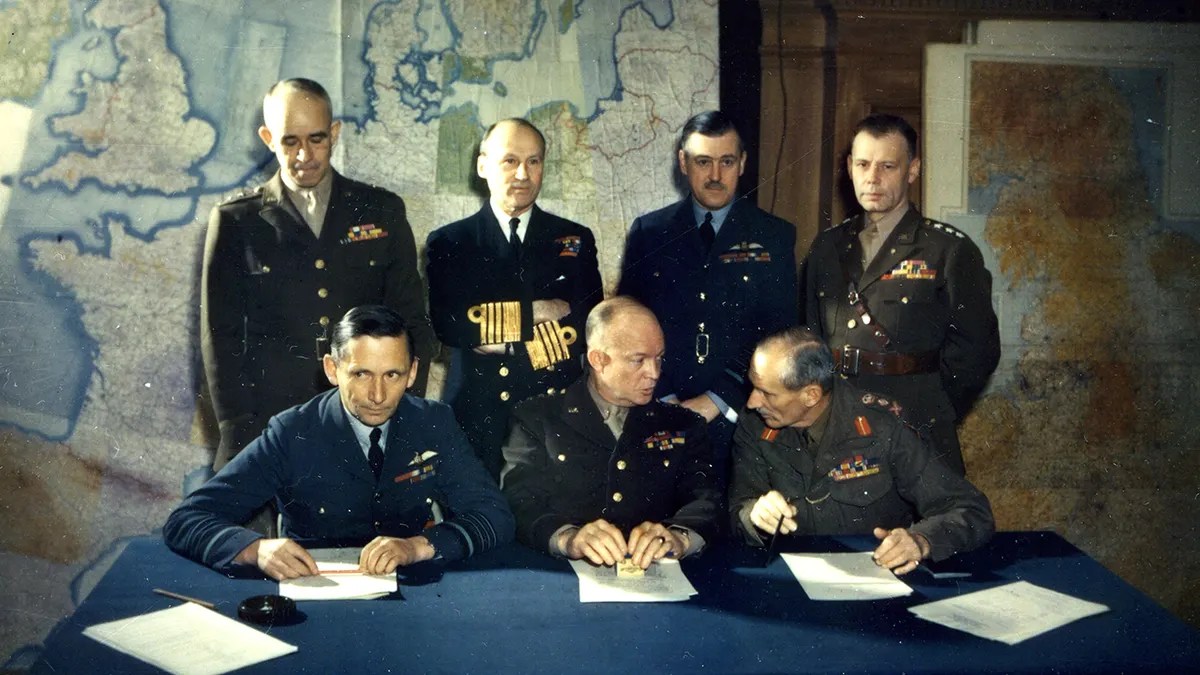
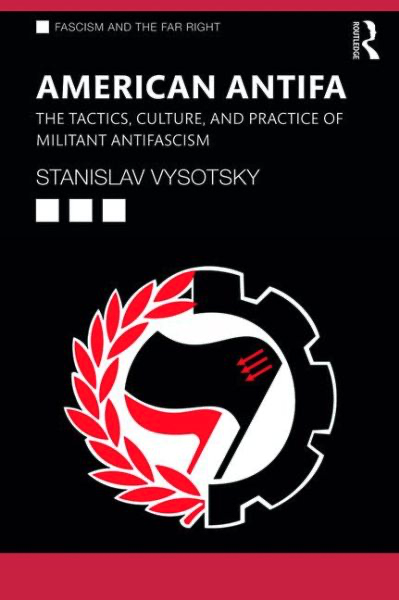
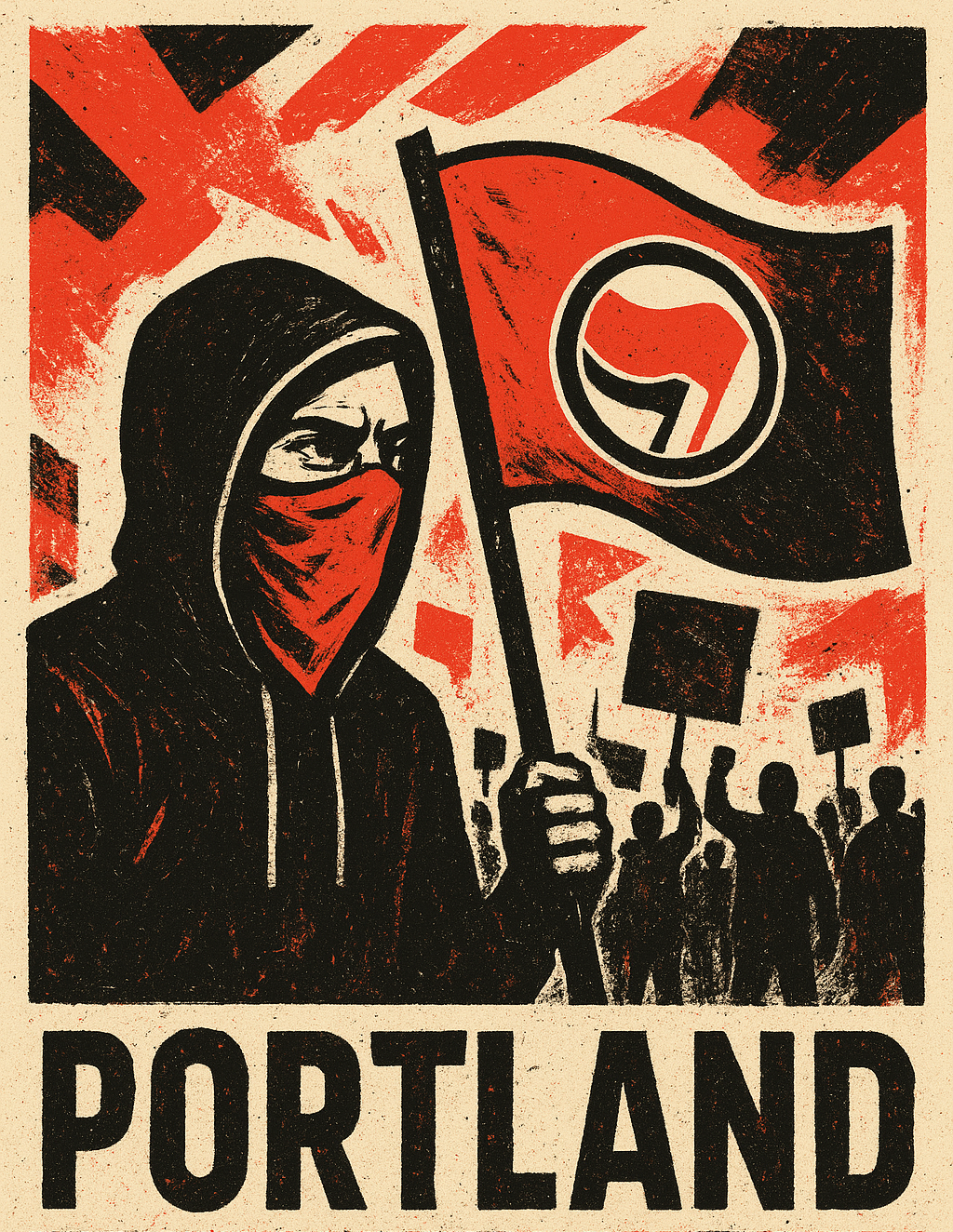
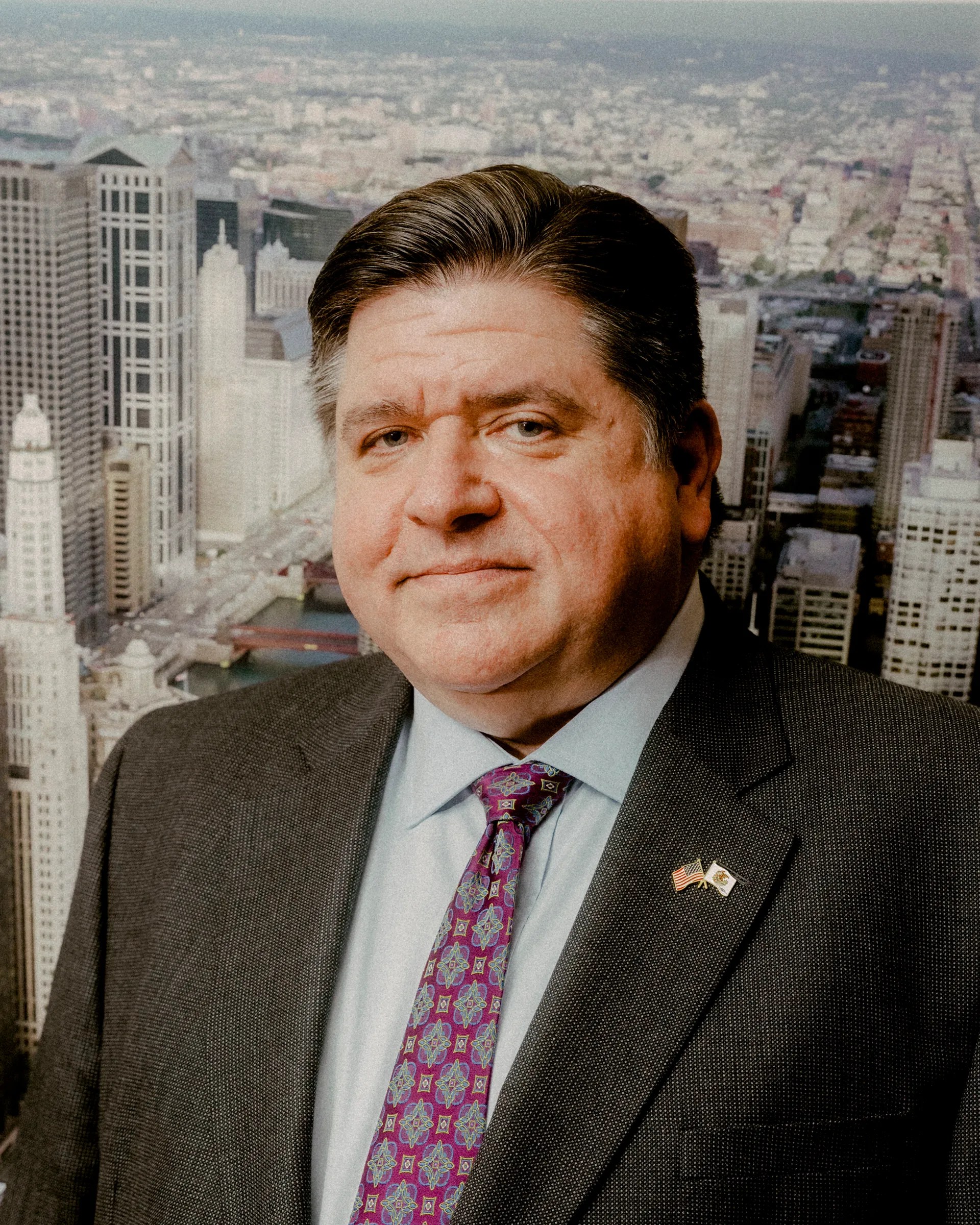

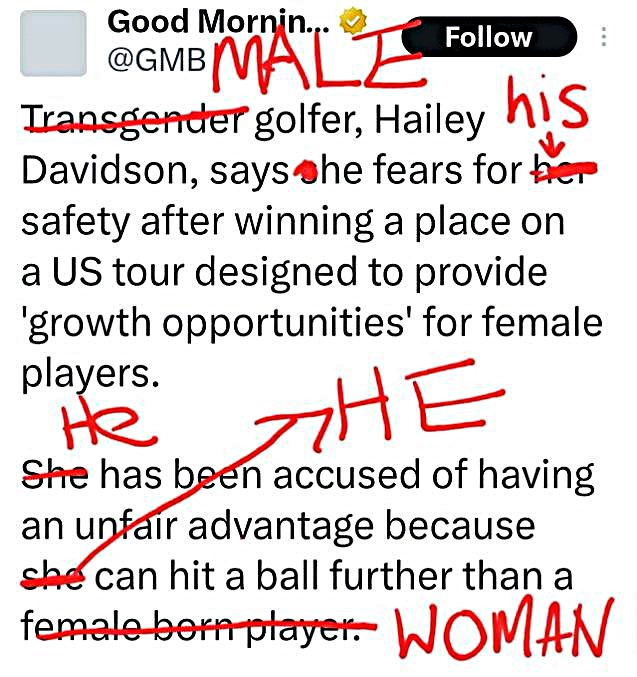
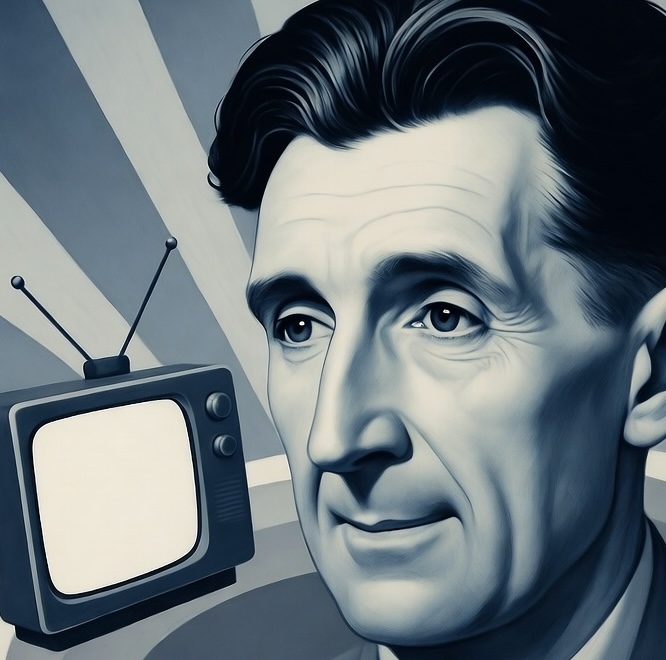
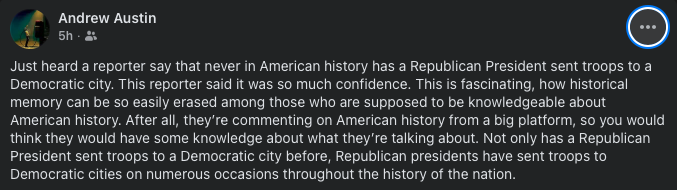




 freedom and reason