“Front lines.” “Coming ashore” “Hunker down.” “The trenches.” “Under siege.” Such phrases are rampant in the COVID-19 narrative. We are “at war” with a virus. These metaphors are used to anthropomorphize danger. And to manufacture glory.
In war, the soldier is lionized. The hero fighting for your freedom and security. Thank him for his service and sacrifice. He stands on that wall. Better be grateful. Don’t look beyond the soldier in the field to the forces that put him there.
The military-industrial complex needs resources and control over the narrative. Skepticism about the prudence and rightness of military action is shouted down with “Support our troops!” Dissension endangers the order that makes freedom (profits) possible. The soldier cries that the government ties his hands. And sells him short. “Let us fight the war on our terms. You do your part.”
The police borrow the language. “War on crime.” “War on drugs.” “War on cops.” We’re living in the era of the soldier-cop.
In pestilence, the healthcare worker is similarly exalted. Trump is a “war-time president.” Our heroes are on the “front lines” fighting for our health and lives.
The medical-industrial complex needs resources and control over the narrative. Free them to navigate the battlefield on their terms—which means empowering technocrats to govern the population’s movements. Don’t question the judgment of healers and scientists in the service of the “war effort.” Get in line.
Skeptics are heretics, dangers to health and well being. They’re like the peacenik.
The signs of pestilence
Pharmaceutical corporations managing the scenes? What are you? A conspiracy theorist? You fancy this a plot emanating from the Deep State? You really think these brave soldiers would exaggerate a viral threat to sell their tests, their therapies, their vaccines?
Whatever else they do, and their sacrifices are noted (as are those of who die on actual battlefields), they’re fighting for the sake of corporate profits moving under the cover of glory. The medical establishment has its diagnostics and nostrums. Face masks and latex gloves are the flags and ribbons of war. Don them, brave citizen, and proudly show your uncritical support for the “war” against the “invisible enemy.” Share pictures of yourself properly uniformed on Facebook and Instagram so your friends thank you for your patriotism. Tie light blue ribbons around the tree in your neighborhood. Scold those who don’t adhere to doctrine and ritual.
Threat selectivity and fallacious comparisons are signs of propaganda. The capitalist state and the corporate media select the threats “we” fight (the criminals “we” suppress and so on). Propaganda is never an objective assessment. There, the determination of threats is ideological, in line with political-economic need, and without regard to truth. Promoting fear, the moral entrepreneur conditions and induces the public to demand action.
It is much the same with the medical-industrial complex as it is with the military-industrial complex. Medical and pharmaceutical corporations, with the government and the media at their backs—and in tow—select profitable pathogens and raise awareness (hysteria) about them. The formula: manufacture danger and then meet the threat-demand with products and services.
The companies have their vaccines and antivirals for influenza—and profit handsomely from them. The efficacy of these products are questionable, but they have them. By February 2018, a particular bad season for influenza, Sanofi had raked in three-quarters of a billion dollars in profits, and GlaxoSmithKline’s vaccine business had climbed about 76 percent (“U.S. Flu Season Reaches Peak, Vaccine Profits Climb.”). A network of pharmaceutical companies produced 12 different vaccines for the 2017-18 flu season (and vaccines are but a division among divisions that pump out a myriad of chemical preparations every year). The Centers on Disease Control (CDC) dutifully reported (estimates of) tens of millions of flu cases, hundreds of thousands of hospitalizations, and tens of thousands of deaths.
The present pathogen, the novel coronavirus, a member of a family of viruses that are always present in the viral mix every year, represents a great profit potential in vaccines and antivirals. (See “When a Virus Goes Viral.”) Seemingly to aid the manufacture of danger, the typical method of estimation has gone to the wayside, and death rates are calculated from confirmed cases. It’s terrifying.
Rhinoviruses—the other major cause of cold-like illness—are not a profit potential. They are “common.” But it won’t take much going forward to select one them (A, B, or C), reveal it to be the culprit behind pneumonia deaths (which it is is) and “we” can enjoy vaccines and antivirals for that, too.
Product designers: “How will they know they want this?”
CEOs: “We will tell them what they want.”
A recent CNBC headline warned: “Coronavirus could kill more Americans than WWI, Vietnam or Korean wars, White House projection shows.” We are at war. Using CDC’s material, CNBC could have reported that every year pneumonia/influenza kills roughly the same number of Americans who died in the Korean War. During the 2017-18 flu season, nearly as many Americans died from pneumonia/influenza as died in the Vietnam war (CNBC inflates the number of dead Americans from that imperialist adventure). Where are the great flu pandemics on this list? Spanish? Shanghai? Hong Kong?
CNBC’s terrible inaccurate—but more importantly irrelevant graphic
And this headline: “Over 3,000 people have died in US from coronavirus, surpassing 9/11 death toll,” from The New York Post. “COVID-19 [it sounds like a terrorist cell or kick murder squad] has killed at least 3,170 Americans, surpassing the 2,977 victims who were killed in the World Trade Center, Pentagon, and four hijacked planes on September 11.” The article continues: “The 9/11 attacks had been the deadliest event in the continental US since the Japanese killed 2,403 Americans at Pearl Harbor in 1941.”
But viruses don’t mean to kill you. They have no agency. They don’t make war. Doctor are soldiers unless they are “soldier-doctors.”
I will leave you with this bit of wisdom from one of my favorites intellectuals, Douglas Murray.
The virus first known as the Wuhan virus or Chinese virus, then the 2019 novel coronavirus, is technically called severe acute respiratory syndrome coronavirus 2 (SARS-CoV-2). The disease is called the coronavirus disease (COVID-19). Like influenza viruses and rhinoviruses, coronaviruses are associated with potentially severe respiratory infections. This essay identifies problems with the reporting of this virus by government sources and media outlets.
Rhinoviruses (HRVs) were discovered in the 1940s and are estimated to be responsible for more than one-half of all cold-like illnesses. There are three genetically distinct HRV groups (A, B, and C) and they are traditionally associated with upper respiratory tract infection, otitis media, and sinusitis. However, calling them “cold-like” downplays their severity in the public mind. They are, in fact, recognized as a lower respiratory tract pathogen. As such, the represent a serious threat to individuals with asthma, the elderly, and those with compromised immune systems. There are presently neither vaccines nor (to my knowledge) antiviral therapies for rhinoviruses. The CDC puts it this way: “The common cold is normally a mild illness that resolves without treatment in a few days. And because of its mild nature, most cases are self-diagnosed. However, infection with rhinovirus or one of the other viruses responsible for common cold symptoms can be serious in some people. Complications from a cold can cause serious illnesses and, yes, even death.” That is, it is a source of flu-like illness.
Like rhinoviruses, coronaviruses are a family of viruses. There are many more types and they widespread in many animal species. They are usually associated with mild to moderate upper-respieratory tract illnesses, i.e., the common cold. However, like rhinoviruses, coronavirus are also a lower respiratory tract pathogen. At least three times during this century, serious coronavirus disease outbreaks have occurred as a result of a coronavirus jumping from non-human species to humans: SARS (severe acute respiratory syndrome) in 2003, MERS (Middle East respiratory syndrome) in 2012, and, currently, COVID-19. All three were associated with panics, but the panic over COVID-19 is historically outstanding.
We hear a lot about how SARS-CoV-2 is uniquely contagious. “Everybody’s catching it,” I was recently told. But the numbers reported so far are far less than the numbers of influenza cases every year (tens of millions in the United States alone), or rhinoviruses every year, which are more common than the flu, as everybody knows intuitively. The common cold rampages every season (viruses want cooler temperatures, shorter days, and people congregating in enclosed spaces), and they’re responsible for scores of lethal respiratory ailments. Yet we hear nothing about that in the media even though it is recorded in the medical literature. And you won’t hear in the media that many of these cold-like illnesses are caused by the coronaviruses that represent between 5% to 15% of the viral mix that circulates every year. You do hear about the flu, of course, but the stories are not framed like COVID-19. The CDC estimates an average of up to 60 thousand influenza deaths every year. Whether you or I have lost somebody to the flu, tens of thousands of people have. Every year. In fact, far more people likely die from influenza viruses than from corona viruses. Yet we do not shutter society and socially isolate on account of these lethal threats.
I don’t want to be misunderstood, SARS-CoV-2, like influenza A and B (the prevailing influenza virus this season is our old 2009 nemesis influenza A [H1N1pdm09]), is a serious health challenge. But in light of the fact that we have these challenges every year, we have to ask what is the novel circumstances that ask us to risk potentially long term damage to the economy, measures that deprive people, especially tens of thousands of people at the end of their days, of a quality social life and the company of their loved ones. Life is more than keeping hearts beating as long as possible. Life is about living. For thousands of people, they don’t have that much living left. We are also being asked to give up a considerable degree of personal liberty. Indeed, it is rather astonishing to see the way a cult of safety has produce so many people prepared to sacrifice a lot of liberty for a false sense of security. Why false? Because viruses have burdened mankind and our fellow species since time immemorial. And they won’t let up any time soon. Probably not ever.
The problems with the government and media hysteria were clear from the beginning of this panic if one worked logically through evidence and inference. Readers would be astonished by the numbers of people who die from rhinoviruses every year. Indeed, according to the World Health Organization (WHO), “rhinovirus is an underappreciated cause of severe pneumonia in vulnerable groups” (see Hai and associates 2012). The WHO estimates that some two million children die each year from acute respiratory tract infection associated with rhinoviruses. It’s not listed as the cause of death. But Coronavirus is. That’s because we now have a test for it. Moreover, it was not widely reported in the media at the time, nor has it been brought in the context of the current situations, but up to 80,000 people died of flu in the winter 2017 in the United States. That is the highest death toll in 40 years. A lot of those who died were elderly. “I’d like to see more people get vaccinated,” the director of the Centers for Disease Control and Prevention, Dr. Robert Redfield, told the Associated Press in September 2018. Like to see more people get vaccinated? That’s it? Why didn’t he say that we should shut down the economy and shelter in place to save tens of thousands of lives? Was Redfield asked about which older person in his life he was prepared to sacrifice to keep society open?
As testing SARS-CoV-2 has expanded, the proportional death rate from COVID-19 has dropped. A lot. This was expected. The vast majority of cases are asymptomatic or presenting with mild symptoms. The problem with government and media reporting mobility and mortality in this situation is that they’re taking the death rates from confirmed cases. Those who have cold-like illness from SARS-CoV-2, or who have no symptoms at all, are not likely to be tested. It is widely recognized by scientists that the number of unreported cases of SARS-CoV-2 are 10-20 times greater than the numbers of confirmed cases. If we take the 10 percent figure, the calculations put SARS-CoV-2 at flu mortality rates. Why, for example, are Germany’s numbers so much better than those of Italy or Spain? “The biggest reason for the difference, infectious disease experts say, is Germany’s work in the early days of its outbreak to track, test and contain infection clusters. That means Germany has a truer picture of the size of its outbreak than places that test only the obviously symptomatic, most seriously ill or highest-risk patients.” If we tested a large representative sample we would find the death rate to be lower everywhere. Moreover, in tests for the suspected virus, most come back negative, which means others viruses are making people sick, in some cases, very sick. The media isn’t telling you the numbers of those who die from rhinoviruses and other flu-like illnesses. Moreover, it is one thing to die with SARS-CoV-2. It is another to die from it.
I just visited the CDC website. Based on a sample of 8.5% of the population, it is estimated that, for flu season 2019-2020, there are between 38–54 million flu illnesses (various influenza viruses), 18–26 million flu medical visits, 400–730 thousand flu hospitalizations, and 24–62 thousand flu deaths. This is from March 27, 2020. This is real-time surveillance. (Supposedly.) Why isn’t the media curious about this? Why aren’t they informing the public? This is an extremely important question to pursue. If coronavirus turns out to be as dangerous as we were told—so dangerous that we had to wreck the economy to mitigate its burden—it will be said that the swift action of the United States government prevented the full extent of the pandemic predicted. Indeed, the precautionary/preventative action will need to have produced dramatic effects to derail the apocalyptic forecast by the government and media. But given the magnitude of that effect, why would the CDC project essentially the same flu numbers as they have over the last decade? If shutting down society will sharply reduce the coronavirus pandemic, then it must sharply reduce the numbers associated with influenza, or seasonal flu, since the transmission mechanism is the same. The order of magnitude should be very great. Yet, if these CDC numbers are in real time, it is not having an effect. The numbers are the same as the yearly average. What is going on? Is there no association between isolation and quarantine and influenza infections, hospitalizations, and deaths? If so, there is no association between isolation and quarantine and coronavirus infections, hospitalizations, and deaths. Given this, the only rational conclusion would have to be that the burden of the coronavirus pandemic has been fantastically miscalculated.
Now, the CDC might claim that—if they revise the influenza numbers downward (and I will get closer to actual real-time numbers in a moment), which they will have to if isolation and quarantine work—the dramatically lower numbers indicate that the vaccine was more effective this flu season. But this still won’t make sense, because the flu vaccine, efficacy statistics problematic to begin with (for one reason because people are vaccinated against prominent strains for which they already have natural immunity), becomes less effective as the season wears on because influenza viruses (like most RNA viruses) mutates rapidly and the vaccine is produced only at one point in time.
Let’s go deeper into this. First, I want to emphasize something the government and media aren’t but should be. When we’re talking about serious respiratory infections, we’re actually talking about pneumonia, which is the catchall term for a lung infection that ranges from mild to so severe that a person has to be hospitalized. I have reported twice to the doctor with severe respiratory infections that were diagnosed as pneumonia. What was the cause? Unknown, although both were treated a bacterial. I just had a flu-like illness last week (still affected it by it). Was it influenza? Maybe. But it could have been a rhinovirus. It also could have been a coronavirus. I may be one of the thousands—or tens of thousands—of unreported coronavirus cases. The causes of pneumonia may be bacterial, viral, or fungal. Flu viruses (influenza A and B), cold viruses (half of which are rhinoviruses), RSV viruses (respiratory syncytial virus, which affects children), and bacteria (Streptococcus pneumoniae and Mycoplasma pneumoniae). But among the causes of pneumonia are also coronaviruses, which, again, make up an estimated 5% to 15% of the viral mix every year. The media isn’t telling you this. What this means is that of the pneumonia deaths reported by the CDC every year, a proportion of them are from coronaviruses. Why influenza is often paired with pneumonia in the statistics is because influenza types, unlike rhinoviruses and coronaviruses, have vaccines and are monitored closely for vaccine production. This changes the way we perceive the threat.
Now, suppose there are 70,000 deaths one year from pneumonia. We are unsure of the mix of viruses implicated in these deaths. It could be 30,000 influenza viruses cases, 20,000 rhinoviruses cases, and 20,000 coronaviruses cases. Change the percentages if you want. It doesn’t matter. We’re dealing with huge numbers, numbers so huge that they should have panicked the public years before. This speculation isn’t off the hook. Remember, up to 80,000 people died of flu in the winter 2017 in the United States alone. The point is that all of these are implicated in lethal pneumonia. But since the CDC estimates these numbers, and since they test for influenza and not for rhinoviruses or coronaviruses, the numbers of all those who die from flu-like illness are thrown into the hopper with the influenza label, thus obscuring the numbers of people who die every year of the common cold, the assumption is that these are flu deaths. Now that we have a test for a coronavirus, it makes it appear as if a new virus is responsible for deaths that coronaviruses caused in years past that were not tested because there was no test and therefore not recorded as the cause of death. So, if the total number of pneumonia deaths this season are lower than the total number of pneumonia deaths of, say, the previous season, then whatever caused them, we are (over)reacting to the now-possible identification of a virus not to an actual new viral threat.
Based on that CDC report I noted earlier, The viral burden may actually be less this year than before. Maybe because of isolation and quarantine, but also because the death rates from pneumonia fluctuate annually. But if it is less or turns out to be the same as last year or the worst past year, you now know that influenza is not exclusively responsible for the tens of thousands of deaths every year from pneumonia. In other words, this may not be an extraordinary event, but rather a panic induced by being able to identify a virus by name thus making it appear as a new lethal force not actually a new lethal force, or at least no more of a new lethal force than every mutated virus implicated in pneumonia deaths. It will still be the case that the largest share of pneumonia deaths every year will be caused by influenza and rhinoviruses. But if we treated those threats the way we treat the threat of the less common coronaviruses, we would have to shut down society every year for the same reason we are claiming we have to do so now. That is what is novel here: the societal reaction.
Currently, the number of those estimated to who have died from pneumonia this flu season is around 24,000. Suppose we add 10,000 deaths attributed to coronavirus. That’s 34,000. That still less than half the pneumonia deaths from 2017. The death toll from coronavirus would have to be quite high to match the estimated up to 60,000 average annual pneumonia deaths. We have separated in the public’s mind the coronavirus from pneumonia deaths by a method that, for the first time, singles out the coronavirus as a special disease. This makes it feel like a novel event. But in fact coronaviruses are a mix in the viral burden annually and have always carried lethal consequences for vulnerable populations.
As I said, this was a health crisis. Influenza is a health crisis. Diabetes (which kills more people than influenza) is a health crisis. But there may be no extraordinary event justifying shutting down society. The societal reaction may be induced by a new definition not a new threat. This would be consistent with the social profile of previous mass hysterias, such as serial killers, satanic ritual murders, child abductions, and so on.
What strikes me as remarkable in all this—along with what is happening right now in real time—is how the H1N1 subtype of Influenza A in 2009, a variation on the virus implicated in the Spanish flu that killed so many people almost 100 years earlier, didn’t spark hysteria to the extent this coronavirus has. The CDC estimates that 151,700-575,400 people worldwide died from (H1N1)pdm09 virus infection during the first year the virus circulated. Perhaps it was because there was a vaccine available (which I did not receive). But had we panicked then as we are right now (not me, but clearly a lot of people), just think of how many lives could have been saved—if there is an association between social isolation and quarantine and infection rates.
The media is reporting that Italy has passed the 10,000 death mark. This is terrifying. But it will help to keep calm by keeping in mind that Italy always shows a higher rate of influenza-attributable excess mortality compared to other European countries, especially in the elderly. This is because of very poor air quality in Italy, a country known as the China of Europe. Consider that a study of the winter flu seasons 2013/14 to 2016/17 found an estimated average of 5,290,000 cases with more than 68,000 deaths attributable to flu epidemics estimated in the study period. That’s more than 17 thousand deaths annually. It is important to keep in mind terrain, life style, and the adequacy of health services when considering the impact of infectious agents. Almost 15,000 coronavirus victims—more than half the world’s total—have died in Italy and Spain. See the International Journal of Infectious Diseases. I would be greatly surprised to see these numbers replicated in other Western industrialized societies.
Stories emphasize how different SARS-CoV-2 is from the flu virus. Technically, this is true, because coronaviruses are not influenza viruses. They are not rhinoviruses, either. But all of these are a cause of pneumonia deaths. So when stories tells us its different, they are not wrong. However, what they are not telling us is that coronaviruses have always been different, have always been a cause pf pneumonia, and that therefore the situation is different for a different reason. And the way people are shaming those who question the government and media narrative makes this societal reaction a classic moral panic. When you are not allowed to ask reasonable questions about a scientific matter, when skepticism is treated as heresy, then you know you are in the midsts of a moral panic.
I am not denying that coronavirus is a burden. Influenza and rhinoviruses are also burdens. All of these pathogens kill people every year. Nobody wants anybody to die. So we need to deal with these burdens. What I am arguing is that shuttering an economy on account of coronavirus is novel will have serious consequences for jobs and livelihoods, not to mention emotional and psychological needs and human liberty, and, moreover, that wanting to get back to a normal life as soon as possible is not remotely the same as saying we want to kill old people. The societal reaction is following a pretty standard sociological explanation, except on steroids. It is proceeding on the basis of a novel definition of the situation more than a novel virus. The panic is viral.
I’m a humanist sociologist. That means I think about how important it is for people to have a social life. To see our friends and relatives and colleagues. To be in the world. The social world.
As a Marxist, I know how crucial the economy is for having a foundation for social life. I am not a fan of capitalism, as my blog entries make clear, but if the economy blows up, if workers sink into poverty, if the neighborhood are disorganized, if crime rates soar, our social lives are comprised. When health and safety and well being are put in jeopardy, people are forced to scrap at the bottom of Maslow’s pyramid. The higher order functions of life—our one and only life—are unattainable without the lower needs met. Dreams are dashed as people lose their jobs, their livelihoods, and their experiences. Fear is a terrible thing. Feelings of helplessness wear on person’s spirit.
The importance of social life to human being means we have to think about when we can open up our society again so that folks can have their lives back. We have to focus on sooner than later. Reasonable people interrogate the facts and make arguments to make determinations. I can’t stand passively by and watch partisans shame folks away from discussions about the most important matters confronting people.
When I read memes trashing people for wanting to consider life beyond avoiding a virus, shaming people by rhetorically asking them who they think should live and who should die, when the same question can be put to any other communicable disease to doesn’t ask us to shelter-in-place and, more than that, a host of other ordinary human activities that come with some risk to health and safety, I get angry. I admit it. It offends me. We don’t stop living because life is risky. People aren’t evil or reckless for wanting to live, work, and recreate.
It’s unfair to those who are asking folks to consider all the factors determining the human situation, those activities that make for the good life, to make them out to be heartless assholes, to trash the skeptic for his skepticism. Worse, on top of that, attacks on reasonable questions are thrown into the stupid and tired partisan frame, the frame that divides people into Republicans and Democrats—“are you for us or against us?”— taking a sledgehammer to one side or the other, pile-driving a vulgar ideological wedge between working people.
I don’t accept the corporate two-party hegemony, established by the ruling class to keep the working class in line by keeping us busy thinking in racial, ethnic, religious, gender, and partisan terms in order to keep us from organizing around what we have in common as working people. Progressives are the worst. That’s why my politics are populist and my morals secular-humanist. For the record. So you can understand me better.
Finally, Maslow, as a humanist, recognized that, devoid of instinct, our species builds its humanity through the fulfillment of our animal needs (air, drink, food, shelter, sleep) and, only then, through the fulfillment of human needs. The ruling class has been taking notes. By keeping down the majority of the world’s population on the lower rungs of the needs hierarchy, our betters have prevented the masses from contemplating the higher levels of humanity to be attained, namely self-actualization and substantively meaningful achievement and respect.
Indeed, it seems our masters have stepped up the project to keep the masses ignorant by forcing them to scramble to meet their basic physiological and safety needs (and here almost entirely on an individual basis) while giving them ideologies of fear and superstition. Creativity, curiosity, higher-order reasoning and fact-acceptance are luxuries when they should be the warp and woof of daily human experience. The power elite recognize that, if our needs are met, they know we will turn our attention to them and demand to know what contribution they are making to human well being. By then, it will be a rhetorical question. And a revolutionary one.
I am entitled to a moment of outrage. How dare people shame those who look at these realities with memes saying that they want to kill old people. Every one of you who has not heretofore clamored to shut down society to save tens of thousands of elderly people from dying from the flu every year are just as shameful by these lights. I wonder how many people before this crisis ever walked away from a death bed complaining that we didn’t shut down society for the sake of their loved one. Is the number greater than zero?
Some 80,000 people died of flu in the winter of 2017 in the United States, the highest death toll seen in forty years. Did you hear any news about this? This is almost twice as many as what health officials previously considered a bad year. A lot of those who perished were elderly people. In fact, most of those who perished were elderly.
“I’d like to see more people get vaccinated,” the director of the Centers for Disease Control and Prevention (CDC), Dr. Robert Redfield, told the Associated Press in September 2018. Like to see more people get vaccinate? That’s it? Why didn’t he say that we should shut down the economy and shelter in place to save tens of thousands of lives? Was Redfield asked about which older person in his life he was prepared to sacrifice to keep society open?
The CDC estimates that, since 2010, influenza has resulted in as many as 45 million illnesses, 810,000 hospitalizations, and 61,000 deaths annually. That means that as many as 610,000 people have died in the past decade from influenza, again the vast majority of them elderly. Reflect on that for a moment: well more than half a million dead Americans from influenza.
I know, I know, coronavirus may be worse than the flu. But in light of the fact that the flu is lethal enough, in light of the fact that some 60,000 people die every year in the United States from the flu, a number we could mitigate if we shut down the economy every flu season, where were all these obnoxious shaming memes claiming that, for Republicans, the economy is more important than your grandmother? Why this time around and not before? The data have been widely available all this time.
Aren’t all of these meme-shamers guilty of not demanding “shelter in place” every time the flu comes around for the sake of our grandmothers? In light of the numbers, the failure to sound the alarm has had lethal consequences. Were they in the habit of taking their children to see their grandmother knowing that they could be carrying viruses? A lot of people with viruses are asymptomatic and spread the virus anyway. Why haven’t people cared about this before?
Rhinoviruses, the main cause of the common cold (the agent in around 50 percent of cases), are a cause of lethal respiratory infections. Did you know that? Why didn’t you know that? The CDC reports out this stuff on a continual basis. Rhinoviruses kills a lot of elderly people. Should we have been shaming people all this time for suggesting by their silence that people should live normal lives and not shelter in place?
Why is it now that people feel moved to s silence about all the consequences of shutting down society? The millions of jobs lost. The thousands of small businesses shuttered. The memories robbed. Do these folks think that it is better to socially isolate old persons on a continual basis or to allow them, in the twilight of their days, to recreate, see their family, to live a normal existence? Or is it better to socially isolate everybody? Our children? Aren’t children inside alone enough, already?
Dr. Wolfgang Wodran (in German so use YouTube’s closed caption translator)
This coronavirus is going to sweep around the globe more times. Are we going to shelter in place until it passes? What about all those other viruses? Is this the new protocol for influenza? What about all the coronaviruses that sweep the planet every year, responsible for between 5 to 15 percent of flu-like diseases and thousands of deaths? This isn’t the first lethal coronavirus. It won’t be the last. There will be this one, the old ones, some new ones.
Maybe. Who knows. Folks are panicked. We’re in a weird place right now. We will be able to map the story of a moral panic and its folk devils soon enough. But is it too much to expect that the least folks can do is resist mounting stupid partisan attacks against their ideological enemies for asking a basic question: When are we going to be able to return to a normal life?
Don’t ask me who I am prepared to sacrifice for the economy. It’s a stupid question. There’s more to existence than dying. Indeed, the most important part of existence is living. And living is more than breathing. We’re social beings. It’s a fair question to wonder why this is happening and to wonder when is it going to be over.
Using the same logic that’s popular on my Facebook news feed right now (and I am sure the memes are rampant on Instagram and Twitter), the United States could have saved thousands of lives every year if we had just shut down the economy and sheltered in place during every flu season, but for those evil Republicans who wanted to keep the economy going and people in jobs and small businesses growing at the expense of our grandparents. Where were the Democrats during all this? Were were the progressives?
Can you imagine how crazy it would sound if folks were clamoring to shut down the economy in 2009, during the worst financial crisis since the Great Depression, because 50,000 Americans were going to die from the flu if we didn’t? You’d say, “What?” Don’t lie. That’s what you’d say.
Where has the “Pick which grandparent you want to die” meme been in previous years? Why have those tens of thousands of sick and dying old people not generated mass concern for the plight of elderly before now? All those visits to grandmother in her tiny house or the nursing home? “Give your grandma a kiss.” Where was our collective conscience then? With these numbers, somebody you know has watched a grandparent die on a ventilator. The media has had access to these numbers. I’ve been aware of them. The CDC is clearly aware of them. Crickets.
* * *
To be a sociologist for a moment, and be a little daring to talk about something now that everybody will be talking about after this crisis has past, what we are witnessing today is a classic moral panic. Only this moral panic is on steroids thanks to intersecting forces. The folk devil in this panic—the scapegoat—is the President of the United States (whom I did not and will not vote for). The new American pastime is to virtue signal how horrible this man is.
The superstitious think that by banishing Trump to the margins of the social landscape during the ritual exercise we call elections—or maybe even an impeachment—we will magically cleanse our community (or the intersection of communities, for the progressives) and restore the moral order to its proper parameters. Grandmother has become the ritual fetish, the totem, in this ritual. Kai Erickson would have something to say about this. Wayward Puritan. Remember that analysis? So would its inspiration, the theories of Emile Durkheim.
Somebody is injecting memes into social media that seek to shame those who want to open up society to social and economic activity. Why? To make anybody who talks about the social and economic fallout of this sound like a cold hearted asshole. Why? It’s a lot like what happened to people who doubted the veracity of the Inquisitor’s claims. Moral panics are meant to sweep you off your feet. This current one is no less irrational.
The meme injection piggybacks off of the media-created panic over coronavirus. But the media hysteria is not occurring in a vacuum. The nation has grown uneasy because of the disruption Democrats and the media has been sowing for years in a coordinated effort to delegitimize an outsider president and strangle the populist movement.
Even before Trump was elected, the media and the left prepared the ground for moral panic. Have you seen the videos of progressives, some prostrate on the ground, almost always dressed like a ghoul from Michael Jackson’s “Thriller” video, screaming and wailing in the wake of Trump’s election? I’d show them to you but I don’t want to see them again. Mainstream conspiracy theorist extraordinaire Rachel Maddow unable to keep her composure talking about it on TV? (Now she’s talking about censoring Trump’s new conferences.) Have you seen that? The army of psychological counselors deployed to universities to address the trauma? Did you hear about that? Left wing thugs attacking conservative and libertarian protestors? People so sensitive to disagreeable ideas that speech becomes violence? Criticism of ideology becomes genocide? Rallies and marches that look more like cosplay conventions than actual political protests? (And people thought Tea Party folks in their tricornered hats with dangling teabags were mockable. I mean, those pussy hats.) The president is a Russian agent. The president is caging children (Obama-era photos—anything goes). The president is conspiring with Ukrainians to take out a political opponent (who has already been taken out by dementia). Catholic boys are bullying American Indians in our nation’s capitol. It’s like the McMartin Preschool case mapped onto half the nation’s population, the people who pride themselves on not being hysterical.
A virus that would have been treated like the first go around with SARS (a more deadly coronavirus) is suddenly morphed into the Andromeda strain. Governments shut down economies and throw millions of people out of work, destroy thousands of small businesses, wreck the educational experience of tens of millions of children and young adults, acting as if this were a novel event, as if an asteroid had struck the earth. Meanwhile not recognizing that the cause of hospitals unable to cope with a pandemic is the result of decades of neoliberal devastation wrought by the very people who are fueling the hysteria. Pay no attention to the charlatan behind the curtain. Go melt the witch and bring back her broom.
* * *
My Facebook newsfeed is full of these damn memes. “Pick which grandparent that you want to die.” “Republicans put economy before your me-maw.” Memes celebrating that, on the day it happened, all the gains on Wall Street since Trump’s election were wiped out. “Tired of winning yet?” the gleeful memes and comments went. Did you see those? Retirement savings for millions wiped out. “Whee!” As if Trump were responsible for the virus and the panic that ensued. Of course. Trump is responsible for all bad things that happen in the. He is the folk devil par excellence. Had he not also panicked like the half the population, just imagine the pandemonium.
I’m not surprised by this. But I have to tell myself that I am to avoid the cynicism that is crouching in the corner, waiting to pounce and ravage my skeptical sensibilities. How is it that people can so easily trust the establishment media and the Democrats after they lied about Russia, the Southern border, Ukraine? Why is it that Trump’s popularity is rising in the middle of all this? Folks better figure that out.
Deaths are terrible. I don’t want to see widespread death from this or any other virus. But viruses kill people every day of every year. We cannot shut down social life for the sake of viruses. They will always be with us. Like bacteria. Like heart attacks. And cancer. Of course we should always strive to reduce disease and death. Wash your hands. Don’t cough on people. But humans have been dealing with disease and death before they were even human. It’s part of life. Life is more than dying. Life is social. You can’t mastermind this. We are mortal.
* * *
I hope this stimulus buys us some time. But there’s a huge downside to it. The more time it buys us, the more reasons the neoliberals will have to devolve the public function for the sake of curbing the debt.
Tragically, the left is in no shape to do anything to transform our societies in a better way. Frankly, given their contempt for freedom and their loathing of their countries I’m not sure I would want them to. The major project the left faces is actually fixing the left. But they’re sheltering in place right now. Meanwhile, economic depression, which it appears we are destined for, is going to hurt a lot of people.
* * *
Note: The latest numbers (as of the date of this blog entry) identify 81,836 cases of coronavirus in the United States. There are a reported 1,186 deaths caused by this virus. That’s a death rate of 1.4 percent. We know that many people who have this particular coronavirus are asymptomatic. Many more have mild symptoms and are never tested. Let’s suppose that there are ten infections for every confirmed (tested) case. That brings the number to 810,000 cases in a population of 320 million people. The number of deaths doesn’t change. Do the math. Now the death rate is 0.14 percent. The death rate for the seasonal flu is approximately the same, at around 0.1 percent. These are not confirmed cases of the flu, mind you, but epidemiological estimates.
Thomas B. Edsall, in an opinion piece, “How Racist Is Trump’s Republican Party?” published in the March 18, 2020 edition of The New York Times, concludes that “there is a large divide not only over the definition of racism, but also over the level of racism in the nation.” Edsall does not provide a direct answer to the question posed in the title of his essay, but rather implies one in course of reaching his conclusion. His essay provides yet another example of how academia participates in the depoliticization of a new type of racism, one that insinuates racism where racism isn’t and identifies supposed perpetrators on the basis of race.
“What this boils down to is that racism is detected, determined and observed through partisan and ideological lenses.” Edsall writes. “This is hardly shocking. Yet what is still quite striking is how much the perception of the importance of racism has changed in recent years.” This could be the starting point for a useful essay on how the perception of racism has shifted from race prejudice and the imposition of legal structures rooted in it or the violation of laws against it (discrimination on this basis) to the characterization of nationalism, populism, and group-based disparities as racist in essence, as well as the assumption of concrete individuals into abstract demographic categories—and then rendering a judgment. In this critique, I will repurpose Edsall’s piece for this end.
Thomas B. Edsall in 2014
Without any critical interrogation of the way in which the perception of widespread racism has been ramped up in the wake of a historic movement that not only dismantled Jim Crow and criminalized discrimination against non-white and non-Asian persons, but also established a system of positive discrimination (affirmative action) providing opportunities for non-white and non-Asians not available to whites and Asians, amounting to, in essence, reparations paid for by generations of Americans who cannot be tied to racial inequities, Edsall implies his opinion (that the Republican Party is racist) by leaving the definition of racism and the degree of racism in American subject to “partisan and ideological lenses.”
This obscurantism is irresponsible for a man who has been reporting on city and national politics since 1967, when he started as a reporter at the Baltimore Sun, before moving to The Washington Post in 1981-2006, and then on to The New York Times where he writes opinion. His experience as a student at Brown University and Boston College over the first half of the 1960s must also be considered here. Edsall is a witness to the radical transformation of American race relations that occurred during that period—a ring-side seat. How could such a transformation escape his ability to make an opinion? From this privilege purchase he could have described the shift from the old civil rights struggle to dismantle the racial hierarchy and establish equality under the law for every person to a post-civil rights movement to reorder the racial hierarchy by defining everything post-structuralist identitarian terms, a movement organized by progressives.
Edsall’s essay starts off on shaky legs, taking as its theme Stuart Stevens’ claim that the Republican Party is the “white grievance party.” Stevens, for those of you don’t know, was the lead campaign strategist for George W. Bush’s 2000 and 2004 elections, elections that saw the return to power of the Cold War liberal and the affirmation of neoconservative policy, a policy that took us into wars in the Middle East and Central Asia. Stevens makes this claim in his forthcoming book It Was All A Lie, which concludes that Republicans turned racist with Barry Goldwater. Stevens tells Edsall that “race is the original sin of the modern Republican Party.” Social justice warriors will find that conclusion grossly inadequate. Race is the original sin of the United States of America, in their view—indeed, race is the original sin of all white people. With this view in mind, a myriad of grievance parties has emerged, animated by the gospel of “intersectionality,” an oppression olympics that identifies whites, especially white males, as the common oppressor. This is is a movement that transforms egalitarianism in oppression.
But Stevens is a way into a discussion that allows Edsall to associate Trump and Republicans with racism. He must do this because he only a few short months ago advised Democrats to eschew political correctness and seek moderation in a piece published in The New York Times, “Democrats Can Still Seize the Center,” on November 1, 2019. There he argued that “President Trump is unpopular, but that doesn’t mean defeating him is going to be easy. Democrats will have to tackle issues that may alienate—and even give offense to—progressives, women, Latinos and African-Americans.” He continues, “Putting together a broad enough coalition to finish the job—to win 270 Electoral College votes—will require navigating fraught cultural arenas: race, immigration and women’s rights—while dodging the broadly loathed set of prohibitions that many voters, including many Democrats, file under the phrase ‘political correctness.’”
In that November piece, Edsall cites the work of Matt Grossman, a political scientist at Michigan State, who found, in a essay published at the Nikanen Center, “Racial Attitudes and Political Correctness in the 2016 Presidential Election,” that “[m]any people dislike group-based claims of structural disadvantage and the norms obligating their public recognition. Those voters saw Trump as their champion. The 2016 election produced greater candidate and voter division around the celebration of diversity and accepted explanations for group disparities.” This fact has not gone unnoticed by political strategists. For example, it led John Feehery, a Republican lobbyist, to suggest that, if they want to win, Democrats “drop the elitist attitude that currently suffuses the Democratic Party which has morphed into an insufferable army of virtue-signaling know-it-all’s who spend all of their time looking down their noses at the unwashed masses in flyover country. It has less to do with specific issues and more to do with the unbridled arrogance that is currently deeply embedded in the DNA of the once great Democratic Party.”
However, Edsall points out that the Democratic Party is no longer the party that enjoyed significant participation from blue-collar workers. Based on polling of Democratic primary voters in 2008 and 2016, the party now tilts toward minorities and well-educated whites. This demographic shift is associated with a shift in the proportion of those in the party who identified as conservatives or moderates towards those who identified as very liberal. In its efforts to weave together a multicultural coalition, which mirrors the public relations of the modern-day corporation and university with their emphasis on “diversity and inclusion,” the Democratic Party has marginalized working class Americans, whom progressives portray as disgruntled and reactionary white men. Edsall’s concern a year out from the general election is that centrism is troubled by primary voters who want a liberal candidate (liberal here meaning progressive). This does not reflect the general election. Edsall must surely be happy with where Joe Biden is at present. So the essay at hand appears meant to raise the racism specter on the other side without triggering those who Grossman found to “dislike group-based claims of structural disadvantage and the norms obligating their public recognition.”
In his latest essay, after introducing Stevens’ thesis, Edsall shifts to a discussion problematizing the definition and conceptualization of racism. Edsall starts with an actual definition by quoting Darren Davis, a political scientist at Notre Dame. Davis is co-author of “Reexamining Racial Resentment,” published in 2011. Davis: “I define racism as an attitude or a belief that stems from hatred or anti-black affect,” writes Davis. “Therefore, a racist is a person who is motivated by hatred or beliefs about the inferiority of African Americans.” Edsall next quotes Chloe Thurston, a political scientist at Northwestern, who argues that “racism, very loosely defined, is an ideology whereby racial groups are organized according to a hierarchy, and members of these groups are often thought to have immutable traits based on their group membership.” This is not very loosely defined, actually. It’s pretty tight, in line with the definition I have developed: racism is an ideology holding that the human population can be meaningful subdivided into categories differentiated by superficial phenotypic characteristics that predict abstractly cognitive ability, behavioral proclivities, and moral sensibilities. (Obviously, race realists would disagree. But the concept of race has been thoroughly debunked. See my Freedom and Reason podcast on this topic below. See also “Race, Ethnicity, Religion, and the Problem of Conceptual Conflation and Inflation” for more details.)
Freedom and Reason Podcast #11: Race 101
Erick Kaufmann, to whom Edsall next turns, presents a four-fold definition: “Attitudes or behavior that assert that one race is superior to another, or that is intended to promote fear, anger or hatred toward a racial group.” This is well put and uncontroversial. “Favoritism that results in denial of equal treatment under the law to people with regard to race.” A matter of established law. “Race essentialism: the belief that races have biologically sharp boundaries; a belief in racial purity.” (See the various sources above.) Finally, structural racism. This is “institutional practices put in place for racist reasons which have not been modified,” also “where non-racist people behave in a racist way to fit into an institutional norm/peer pressure which applauds racism.”
Kaufmann is a political scientist at the University of London and author of Whiteshift: Populism, Immigration, and the Future of White Majorities (2019). He insists that racism must “be defined rigorously.” The first three folds of his definition are consistent with the way “racism” and “racialism” were defined and understood when coined in the first decade of twentieth century. The fourth fold conceptualizes the world as fundamentally shaped by abstract social forces that concrete persons animate. Individuals are personifications of general categories. This is a sociological view and it demands a lot of those who claim it.
Eric Kaufmann interviewed about white group identity
Edsall picks up on the shift and pivots on Kaufmann’s fourth fold. He cites Lafleur Stevens-Dougan, a political science at Princeton, who, in an email, tells him that America (and presumably the trans-Atlantic community) has “baked racism into our political institutions and economic systems.” She argues that if the answer to why black and Latino neighborhoods struggle with poor schools and high crime rates, is that blacks and Latinos are “less smart, less hardworking, or less disciplined,” and so on, then the answer is “racist.” This would be racist if the claim were that blacks or Latinos (an ethnicity not a race, but let’s put that aside for the moment) were all these things because they were racially inferior to whites or other races who do not have these struggles. But these struggles could result from cultural forces. Culture is not race. Culture is a set of attitudes, beliefs, customs, habits, and values. Race is a creature of racism, which I have defined above.
Lafleur Stevens-Dougan interviewed during the 2016 president election
The difference between culture and race is crucial to grasp. Culture is a shared set of instructions for navigating daily life, for finding meaning in one’s existence, and for organizing social roles. Poor whites struggle with poor schools and high crime rates, too. In fact, in concrete numbers, there are many more of them than there are poor blacks. Is it racist to suggest that culture plays some role in determining the situation of whites? I think most of us would agree that it isn’t. Of course, those of us who study poverty know that it isn’t nearly a complete theorization of situation, either. Poverty, black and white, is substantially a consequence of capitalism. So why is it automatically racism if the poor person is black? As I have argued on this blog, because it obscures class relations. This is the function of progressivism: to normalize corporate capitalism.
The point of Edsall’s pivot becomes clear when he turns to this question, which he puts to Davis: would he find racist Asian-American protests of “the potential elimination of entrance exams as the sole determinant of entry into selective high schools”? He asked Davis several questions along these lines: Is “the opposition of well off suburbanites to affordable housing in their neighborhoods racist? Is the number of African-Americans in prison evidence of racism? And is white opposition to the decarceration moment or the prison abolition movement racist?” Davis answers that “not all racialized behavior and expressions stem from racial hatred or hating African Americans.” However, people, “without being racists themselves, may do and say things that are consistent with a racist ideology.” In the example of Asian-American protests, he does not believe they are racist because there are other motivations beyond “just beliefs about the inferiority of others.” What Davis is pointing out here is why it is so important to retain the standard definition of racism. Defining racism as things that lack racist motivation makes it impossible to oppose these things without appearing to be a racist. Racism becomes a smear used by those who lacks the consideration and patience for making actual argument, a tactic to delegitimize oppositional arguments.
Yet, surprisingly, Davis draws the opposite conclusion. “My overall point is that we have forgotten what racism means,” he tells Edsall. “In doing so, we have focused attention on bigots and white nationalists and not held ordinary citizens accountable for beliefs that achieve the same ends.” But would that not involve holding ordinary citizens responsible for racist acts that had no racist motivation? Moreover, holding them collectively responsible? Edsall buttresses Davis’ conclusion by suggesting that immigration restrictionists concerned with backgrounds stubborn to assimilation are racist in effect. But, once again, culture is not race. Finding some cultural systems stubborn or undesirable is not necessarily a racist argument. Furthermore, one can be an immigration restrictionist on economic grounds, for example in defending the livelihoods of citizen workers against foreign competition, and still have that position characterized as advocacy consistent with the ends racists seek. That makes workers trying to find and keep jobs complicit in racism because supporting restrictions on immigration is by definition racism. Thus is absurd. It puts people in a no-win situation. Thurston expands on this view. “People can participate in and perpetuate racist systems without necessarily subscribing to those beliefs,” she argues. “People can recognize something they participate in or contribute to as racist but decide it’s not disqualifying. And people can design racist policies and systems. These are distinctive manifestations of racism but not all of them require us to know whether a person is expressly motivated by racism.” Rather than meeting the burden of proof that comes with making the accusation, the logic here is that situations so defined are by definition racist.
This is critical race theory. This is not social science, but ideology, the (il)logic foundational to identity politics. The (il)logic shifts principle, from assigning the burden of proof to the party making an accusation, while presuming the accused is innocent of the charge, what critical race theorists call the “perpetrators perspective,” to a prima facie assertion of injustice presumed inherent in inequitable conditions with a guilty party assumed. This is called the “victim’s perspective” in this standpoint. Questioning whether the accuser is a victim becomes “victim blaming.” Victim blaming is racist. (See my essay “Committing the Crime it Condemns” for more discussion of this.)
His sense of charity in gear (or perhaps strategically), Edsall provides a nice counter view from Cindy Kam, a political scientist at Vanderbilt. In an argument consonant with Randall Kennedy’s essay “The Boundaries of Race,” published in the Harvard Law Review (which I summarize in the essay “Race and Democracy”), Kam writes that, as a social scientist, she would entertain a variety of other motivations, including economic consideration, self-interest, and values, such as commitment to a free market, that shape a person’s attitudes and decisions. Examples of the latter are the cases of Milton Friedman and Barry Goldwater with respect to the 1964 Civil Rights Act, which both opposed on the grounds of the rights of businessmen. She “would hesitate to label an action as ‘racist’,” she tells Edsall “unless racial considerations seem to be the only or the massively determinative consideration at play, based upon statistical modeling or carefully calibrated experiments.”
The debate over Barry Goldwater’s racism illustrates the controversy and challenges Stevens’ claim that the Republican Party’s racism starts there. Martin Luther King Jr. said that although he did not consider Goldwater a racist, but that the Senator “articulates a philosophy which gives aid and comfort to the racists.” This is Thurston’s view. Roy Wilkins, executive director of the NAACP, agreed. “Senator Goldwater himself is not regarded as a racist in their minds” he said, referring to black Americans, “but they note with dismay that among his supporters are some of the most outspoken racists in America.” Wilkins clarified: “Their quarrel with the Senator lies in their opinion that the federal government must act to protect the rights of citizens against infringement by the states, and the Senator’s belief that the federal government has no such rule.”
Kaufmann’s views are useful not only for Edsall’s recent essay, but could have been used in Edsall’s November 2019 essay. Kaufmann expresses concern over using the racist label others have worried about. He worries that “fear of being labeled racist may be pushing left parties toward immigration policies, or policies on affirmative action, reparations, etc., that make them unelectable.” He is also concerned that “overuse of the word ‘racist’ may lead to a ‘cry wolf’ effect whereby real racists can hide due to exhaustion of public with norm over-policing.” This phrase “real racists” sticks out in the piece. Indeed, Edsall writes, “[n]one of the examples I cited, in Kaufmann’s view, ‘are racist’ unless it could be explicitly demonstrated ‘in a survey that those espousing the policies were mainly motivated by racism.’ If not, he said, the ‘principle of charity should apply.’” I won’t hide this from the reader. I agree with Kaufmann in this debate on this point (I do not agree with Kaufmann when he characterizes antipathy towards Mexicans or Muslims as “racist.” Nor do I find his overall approach, which roots in psychology, to be the most useful way to approach these questions.)
Eric Kaufmann interviewed about the perils of political correctness
LaFleur Stephens-Dougan does not share this view. “In all the examples you have provided [speaking to Edsall], communities are marshaling their resources to exclude other Americans, who are disproportionately black and brown.” She sees this as racist action. This is a familiar refrain in the immigration debate. However, this view ignores the fact that American communities have been resistant to marshaling resources to those of European descent or supporting immigrations from European countries. These populations are not racialized (see my “Race, Ethnicity, Religion, and the Problem of Conceptual Conflation and Inflation”). Since it would make no sense to claim this was racism, it makes no sense to assume racism in the other cases. These are cultural prejudices and self-interested economic choices.
Satisfied that The NYTimes reader has a definition of racism that is useful to him, Edsall turns to the question of the popular definition racism held by partisans of the two-party system. Edsall cites a 2017 survey of 2,296 American adults to rank on a five-point scale ranging from racist to not racist ten statements (see below). The results show that Republicans have a better grasp of racism than do Democrats by a substantial margin. A majority of Democrats see racism everywhere. At the same time, Republicans consider things racist that have nothing to do with race, demonstrating the creep of the post-civil rights redefinition of racism.
Standpoint epistemology has turned the anecdotal account and categories of demography into badges of truth. But anecdotes don’t stand in place of general facts. A lazy person doesn’t explain the rate of joblessness. It only tells us why that person may not be working. And demographic categories are abstractions that cannot represent particular concrete situations. As I have said before on this blog, my whiteness reveals nothing about me as a person. As a white person, I could be anything beyond that meaningless classification. Now, anecdotes and demographics are stand-ins for objective or reasoned accounts of situations or interpretations of information. Our culture is shot through with these fallacies.
Perhaps nothing illustrates the latter fallacy—what I am calling the “appeal to identity”—better than the confrontation between Nina Turner and Hilary Rosen on CNN’s Cuomo Prime Time. In an argument intended to paint Joe Biden as bad on civil rights (a truth that may be accomplished in a myriad of other ways), Turner, a surrogate for the Bernie Sanders’ campaign, alerted viewers to Martin Luther King Jr.’s “warning” about “white moderates,” who, in a 1963 letter written from a Birmingham jail cell, suggested were “more devoted to ‘order’ than justice.”
The relevant clip is embedded in this clip from the Karen Hunter Show, the commentary for which represents the common interpretation of the dispute between Turner and Rosen (dwelling in Blue-no-matter-who land).
Rosen, defending Biden, countered that she understood MLK Jr. to be saying that “we should worry about the silence of white moderates.” Turner insisted Rosen’s interpretation was wrong. But instead of carefully explaining why, she responded indignantly with “Don’t tell me about Martin Luther King Jr. Are you kidding me?” Rosen interrupted. “Don’t use Martin Luther King against Joe Biden.” Then she said, “You don’t have that standing.”
Rosen apparently knew who Turner was going in, knew of her methods and politics, and expected that she was likely to pull something like this. Nina Turner sits on the faculty of Cuyahoga Community College where she teaches, among other things, African American cultural and intellectual history. One can see Turner in action on The Nina Turner Show, hosted by The Real News Network. There, for example, she has interviewed and expressed solidarity with Linda Sarsour, an Islamist and ally of the Nation of Islam, who expressed on Twitter a wish to take away outspoken secularist Ayaan Hirsi Ali’s vagina (Ali is a victim of female genital mutilation), saying that Ali didn’t deserve to be a woman. Bizarrely, Sarsour, who (sometimes) claims to be a “woman of color” (she is Palestinian), who argues that “oppression of women is absolutely shunned in the Islamic faith” (she entered into an arranged marriage at the age of seventeen), was tapped to co-chair the Women’s March on Washington. Turner’s interview with Sarsour was not a critical one. Like Sarsour, Turner is a paradigm of identity demagoguery.
With this awareness in mind, Rosen’s argument essentially took this form: “You don’t own the definitive meaning of King’s words on the grounds that you are black.” That’s what she meant by “standing.” Indeed, Turner doesn’t have standing as a black woman in this regard. This is nothing against Turner; nobody has standing in this regard. One’s racial identity lends no validity to one’s arguments. It’s a fallacious appeal to authority. It’s like supposing I have a special right to interpret the United States Constitution because I am a white man. Who would accept this claim but a white supremacist? However awkwardly she put it, Rosen wasn’t going to let Turner use skin color as an authority on the meaning of a text. Turner’s response was essentially said, “Yes, I will.”
The point of Rosen’s defensiveness was affirmed by Turner’s response. Rosen’s dismissal of Turner’s tactic infuriated Turner. She shot back, “Don’t tell me what kind of standing I have as a black woman in America! How dare you!” Rosen responded, “You have a lot of standing as a black woman in America.” “You don’t have a standing to attack Joe Biden using Martin Luther King’s words. That’s my point.” Turner came back with “Listen, don’t dip into what I have to say about the Reverend Martin Luther King. How dare you, as a white woman….” I have italicized key phrases to make sure the reader recognizes that Rosen did not inject race into the dispute. Turner was the one who asserted her race and insisted that it leant her point validity. She did this while diminishing Rosen’s interpretation on the basis of Rosen’s white identity. The appeal to identity is rooted in standpoint epistemology. This error is the basis of identity politics.
Predictably, the response has been overwhelmingly anti-Rosen. She “disrespected” Turner as a black woman. She “whitesplained” MLK Jr. to a black woman. That the backlash was directed at Rosen and not Turner tells us how far we have gone down the identity politics path. Turner is making a claim that being black means her understanding of Dr. King’s words automatically superior to that of a white person’s. She became apoplectic at the notion that a white woman would say such a thing to her (I suspect this does not happen very often). The left applauded.
Not to beat a dead horse, but you really do have to ask yourself: What does skin color have to do with the accuracy of interpretation? What special standing does a black person have to interpret another black person’s words? Do people working at Wal-Mart have a better understanding of Marx’s arguments in Capital than the Waltons, their class enemy? Why would poverty make people better able to grasp the complex economic and sociological forces that create and reproduce their situation? What on earth could explain the lack of class struggle and consciousness among the poor? Wouldn’t they organize and rebel against their conditions if they grasped the truth? Why are capitalists so damn good as keeping capitalism in place? How are the rich so damn good at keeping people poor?
Nina was trying to win the argument on the basis of her skin color. That’s not just nonsense, it’s racist. Imagine if the white woman tried that angle. What would the audience think? They’d think her a racist, of course. And they’d be right. Yet, in this case, the white woman sounds racist to many ears for not letting Turner use race to win an argument. Turner’s claim makes it appear as if Rosen is trying to erase Turner as a black person. This is a classic mark of identity politics. You can’t win an argument by asserting race or sex privilege. At least not rationally. You win arguments with facts and reason. You have to work from a theory.
Consider the correct method for going about such arguments. Karl Marx theorizes that there’s an objective structure shaping our lives, that one’s relationship to that structure determines his class location. These are material relations. One’s social location in the relations of production is not an imagined community. The proletariat is a class-in-itself. Some recognize the social class they’re in (the role of theory) and organize politically to become a class-for-itself. The capitalist class is a class-for-itself; because of this, its intellectuals have obtained a clearer grasp of the system. The bourgeois sees better because of its material advantage in knowing how the system works and in controlling that system. It does not see better because of its identity. Many capitalists are falsely conscious of their social location. Indeed, very few capitalists would admit that their power and privilege is oppressive and exploitative—and not because they are lying.
The counter to my argument might go something like this: “That’s like saying women don’t have any more insight into women’s suffrage.” Indeed, this was actually said to me by a comrade. But why would women have special insight into this? Some do. Some don’t. I know women who don’t know very much about women’s suffrage. Some know nothing about it. There is nothing about woman’s sex that makes her any better at interpreting a historical document or moment. This same comrade wondered about Bernie Sander’s privilege position with respect to the Holocaust on account of his Jewish identity. I asked him, why would Sanders be better able to grasp the history of the Holocaust on this basis? Is this a religious argument wherein God has put in Jews a privileged insight to have special standing in interpretations of this history? I put it sarcastically, but I was seriously. There’s a real problem here: if only Jews can see the truth of the Holocaust, then how can the rest of us know it? Is this an exercise in faith? Just trust the Jew? The argument reduces knowledge to ethnicity or religion and then gives ethnicity and religion privileged standing with respect to interpretation.
All my life I have had to listen to Christians tell me that I cannot have an opinion or valid interpretation of the Bible because I’m atheist. “How dare you, as an atheist, tell me, a Christian, what the Bible says!” But it turns out that, if you engage them in discussion, Christians routinely reveal a profound ignorance of the Bible. Of course, there are Christians who express opinions about the Bible that are quite sophisticated. But whether Christians get their Bible wrong or right has nothing to do with them being Christian. I don’t find this “As a Christian,” “As a Muslim,” “As a black women,” “As a gay man,” tactic convincing in the least. I find it obnoxious. Of course, the righteous indignation embedded in the throat clearing is strategic. But why do we put up with it?
Concerning Dr. King’s letter. I greatly admire Martin Luther King, Jr. But no man’s claims are infallible or always relevant. The Letter from Birmingham Jail, as it is most famously known, an open letter to King’s fellow clergymen, was unknown to the vast majority of the population at the time of its writing, even among many of those who were following or involved in the civil right movement. Its publication in the Atlantic Monthly under the title “The Negro is Your Brother” elevated its profile. The letter is strident in tone, roiling in anger and frustration. King writes:
“I must confess that over the past few years I have been gravely disappointed with the white moderate. I have almost reached the regrettable conclusion that the Negro’s great stumbling block in his stride toward freedom is not the White Citizen’s Counciler or the Ku Klux Klanner, but the white moderate, who is more devoted to ‘order’ than to justice; who prefers a negative peace which is the absence of tension to a positive peace which is the presence of justice; who constantly says: ‘I agree with you in the goal you seek, but I cannot agree with your methods of direct action’; who paternalistically believes he can set the timetable for another man’s freedom; who lives by a mythical concept of time and who constantly advises the Negro to wait for a ‘more convenient season.’ Shallow understanding from people of good will is more frustrating than absolute misunderstanding from people of ill will. Lukewarm acceptance is much more bewildering than outright rejection.”
Powerfully written, but it must be remembered that the white moderate, the liberal, was an ally to the civil rights movement. Without the support of liberals, the civil rights movement would not have accomplished nearly as much as it did—and in such a short time. What the movement accomplished within a generation was nothing short of a Second Reconstruction of American society, with court decisions, legislative action, and administrative policies dismantling the system of racial segregation, a system that had grown up over the decades following Emancipation, and criminalizing racial discrimination targeting blacks and other minorities. The fact is that Blacks were not in power during that period. White moderates were. White leaders were pressured by King and the movement, to be sure, but all the same, white leaders fought to change law and policy. They won, and the United States is a much better place today.
In our pursuit of justice, we must take care not to erase the work that people—black and white—did during this period by wrenching a polemic from its context. We must, furthermore, take care in using this polemic against persons living today, as if it’s a magical incantation that makes one’s point for her. It’s not that Joe Biden isn’t a problematic figure (it’s remarkable that he is earning so much support from the black community). It’s that the current period in which we live is such that an argument from 1963, written from a dingy jail cell in Birmingham by a man who was alone and frustrated, at a time when Jim Crow was the law in many states, is given more rhetorical prowess than it actually possesses. Much more relevant for our period is King’s words concerning the content of our character and equal treatment before the law. His sacrifice should at least have yielded that opportunity. It’s folks like Nina Turner who are keeping alive racial antagonisms.
Which brings me to the current situation in which Bernie Sanders and his supporters find themselves. It’s not over, but why is Sanders blowing it? He is blowing it. The 2016 version of the Sanders was on-message. His campaign eschewed identitarian nonsense. He told Americans truths that matter to everybody, such as the fact that mass immigration hurts American workers. (See Bernie Sanders Gets it on Open Borders Rhetoric—At Least He Did in 2015.) The 2020 version of Sanders is surrounded by such deeply unpopular figures as Alexandria Ocasio-Cortez, Ilhan Omar, Rashida Tlaib, Linda Sarsour, and Nina Turner. While he still advocates many of the same policies, his campaign has become corrupted by identity politics. These associations have compelled him to change one of his most pro-working class issues, his advocacy for restrictions on immigration. Indeed, he has taken it in the opposite direction (and this is still not extreme enough for Ocasio-Cortez, who has become a reluctant surrogate). The influence of identitarianism comes at an otherwise welcome moment in which people are rejecting progressivism and seeking to return the keys to the nation-state to the citizens. (See Bernie Sanders, Immigration, and Progressivism.) Working people don’t like people who run down their country. They want jobs and safe neighborhoods. They want their country to look out for them, to focus on their concerns. Tying socialism to identity politics kept working people home or casting their votes for Biden on Super Tuesday.
Congresswoman Rashida Tlaib holding Islamist Linda Sarsour’s book wearing a t-shirt erasing Israel.
The left will wander in the wilderness until it recognizes the meaning and importance of patriotism and sovereignty for working-class Americans. For example, the period of greatest progress and prosperity came after the nation restricted immigration and reduced the percentage of foreign-born from more than 13% of the population to less than 5%. During that period, it was the political right that wandered in the wilderness. Ever since those restrictions were removed (in 1965 by Democrats), working class fortunes have diminished and rightwing populism has flourished. Sanders could have represented a popular leftwing movement at a moment when populism is politics’ animating spirit. He could have made America American again. Instead his campaign has been hijacked by progressive identitarians, ideology extremists whose politics are quite useful to capitalism because they obscure class relations.
Nina Turner is not merely the surrogate for Sanders that she was in 2016. She is no less than the national co-chair of the Sanders’ 2020 presidential campaign. This means that Sanders has placed at the top of his leadership team a person who sees the world in racialist terms. Turner is part of a constellation of figures whom working-class Americans find profoundly alienating. Not because they are black or Muslim or whatever. But because this crowd doesn’t articulate the common interests of working-class America—at least not without smearing working class Americans as bigoted, nativist, and xenophobic. These cosmopolitan elites represent divisiveness when popular unity is needed. They speak ill of the very people with whom they claim solidarity. They call themselves socialists while disrupting class consciousness with identity politics. They’re misdirecting the left.
One cannot dismiss all this by claiming that identity politics are alienating to white working class folks because the latter are backwards and racist. All this is troubling to many blacks, as well, who are not going all in for Sanders. The immigration problem is particularly troubling for black Americans. Why do progressives defend mass immigration when so many black Americans are in need of work? It’s as if the power structure of America always wants black on the bottom. Foreign-born workers are desired more than black workers. Ocasio-Cortez and “the Squad” can get so exercised about immigration control. But why haven’t progressive cities established themselves as sanctuaries for members of the black community? Urban elites can’t allow ICE to find and remove criminal aliens from their cities, but the police kicking down doors and hauling black Americans to prison for drug possession is okay? No family separation there? The identitarian left seems to be all about immigrants. But not so much about citizens (black and white).
Bo Winegard, who was, until very recently, in a tenure-track position in psychology at Marietta College, has pinned an essay for Quintette, “I’ve Been Fired. If You Value Academic Freedom, That Should Worry You.” His case is very troubling for those of us who believe in the liberal values of intellectual liberty. But it is also troubling for those who have made their life’s work confrontation with right-wing ideas. It makes that job a lot harder.
Race realist Bo Winegard
Winegard does indeed appear to have objectionable views. While I am unfamiliar with the corpus of his work, I know a little something about it. I give a lecture in criminology on so-called “race realism” in my criminology class, and many of the folks Winegard quotes or admires are there exposed and criticized before students. Race realism is racism, I tell my students at the end—after telling them at the beginning to be patient with what they may find offensive as I avoid straw dogging the race realist argument. I show them the hazards of racial thinking and the many errors of evolutionary psychology, especially with the claims about differentiated grouped intelligence. I want students to know that racist hereditarian views are still around and are, in fact, mainstream. A cursory look at his work reveals that Winegard is at least sympathetic to many of the views I criticize.
One crucial piece of my critique is how the discipline of psychology continues to be a refuge for hereditarians like Winegard. IQ testing remains an industry and its aggregated findings reify racial categories. One routinely encounters the racist term “caucasian” in the discipline’s literature. Winegard can claim to have published peer-reviewed work because a discipline that accepts such assumptions will publish it. Racialists J. Philippe Rushton and his ilk are well published and have relied upon that fact to legitimize their racist views. Our job as rational humanists is to debunk this literature.
As important as debunking is, the RationalWiki pages used to undermine Winegard’s career are precisely the sort of stuff we must avoid using in this work. These pages are over-the-top, treating nationalism and concerns over population, immigration, and a certain pernicious religious ideology (Islam) as automatically “authoritarian” and “racist.” The entries are, frankly, obnoxious, the leftwing equivalent of Conservapedia. Its role in undermining intellectual freedom is akin to the rightwing’s TurningPoint USA and the professor watch lists. I would never use RationalWiki for debunking. It’s not a credible source. Such groups, whether on the left or the right, encourage students and others to harass teachers and disrupt their events, thus stifling free speech. In this case, interfering with the work of critique in the same arena.
I would never pursue the dismissal of a teacher or researcher on the basis of her views on this (or any other) subject. This is an argument that must be had in the open and on scientific terms. This can only happen if teachers and researchers are not punished for their views. Censoring, dismissing, harassing, and blacklisting people on the basis of political and ideological standpoint drives objectionable views underground where they remain unchallenged where they risk being accepted by those who do not have the expertise to doubt their veracity. Moreover, it gives them an argument that their views are so dangerous to the leftwing hegemonic structure of the contemporary academy that they must be censored and, on this account, they must be true. It allows them to paint themselves as modern-day Galileos.
This obsession with identity makes people put dumb things down in writing. The establishment seeks ways to divide the population into cul-de-sacs of identity (that are supposed to intersect in some way). It’s all about disuniting the proletariat, obscuring class relations, and undermining working class consciousness.
“Why can’t being a woman be an issue that guides us at the polls, when the political world has treated us unfavorably, limiting our reproductive rights, dismissing us in medicine, penalizing our careers when we choose to have families, providing us with no affordable options for child care and, generally, paying us less for the same work done by our male counterparts?”
Perhaps because not all women agree with everything Selinger wrote. Why does this writer think all women share her politics? Or that only a proper woman would. She does know that there are men who are committed to everything she has written here. It is about the issues or what’s between our legs? What are we struggling for?
“Part of this conflict lies with (mostly white) Republican women, 53 percent of whom voted for Donald Trump over Hillary Clinton in the 2016 presidential election. Those women supported party politics over the ideology of womanhood — but maybe they shouldn’t have.”
Or maybe they should have. Or at least maybe they should not have voted for Clinton and instead voted for someone like Jill Stein. Maybe many of these women have sons, are tired of endless wars, and didn’t want to vote for a warmonger. I know several women for whom this was a major issue. That’s not a legitimate concern? Maybe they didn’t define themselves in terms of a master status and voted instead on an issue important to them as people.
Demographics make for shitty politics. It’s what the establishment does.
There are competing ideologies of womanhood. Many women prefer traditional values. The writer has a set of values and attempts to turn them into the one and only “ideology of womanhood” by wrapping them in an alleged essential identity.
This is the problem with identity. It makes a person think she can speak for everybody who shares her gonads or skin color or whatever. It’s presumptuous. Exclusive. Alienating. Those who don’t get it are not merely wrong. They are betrayers. They are bad people.
A study came out the other day showing how the more sexist an abstract man is the less likely he was to vote for Warren or other female candidates. But I hasten to emphasize that the question concerns a woman running as a Democrat. What if it were a woman running as a Republican?
But I wonder, does this relation run in the other direction? That is, are women more likely to support a woman running as a Democrat the more sexist they are towards men? Yeah, I know, sexism only runs in one direction. That’s a bunch of bullshit. I have sat in rooms and listened to women and their male allies (who virtue signal like mad) run men down. If they feel that it’s important for men to know what it feels like to be reduced to a personification of an abstract category, I have known what that feels like since I was a child. The point is that it is wrong, no? Then why do it? To be sure, it gathers power. But not to create equality. Besides, I don’t want to be part of a movement that runs people down on the basis of their gonads. I avoid those meetings if I can.
If identity is the reason to vote for a woman, then why not vote for a woman running as a Republican? Otherwise, don’t tell me I will never understand how important it is to little girls to see a woman president.
But let’s be honest. That’s not what is actually desired here. What is desired is a woman Democrat. It’s not even about enlightened politics. If that were true then the author would have voted for Stein. I bet she didn’t.
The argument boils down to a partisan appeal to “stay in your lane.” This is party ideology. The ideology of a bourgeois party. One that wages war constantly. One that operates on the politics of grievance. The identity angle is really about bringing people into the party of those terms. This was why the establishment selected Obama in 2008. These are exercises in hegemony.
When I hear progressives professing working class loyalties say, “This is our party,” I cringe. It’s not my party. Democrats don’t speak for me. Objectively, the party doesn’t speak for the working class. It speaks for the capitalist class.
Why do people assume I am down with this? But they do. And they know I am a Marxist and a socialist! “Does this mean you are pro-Trump?”
As the election season approaches (it’s already here!), I have been asked this question with increasing frequency. It’s as if we nobody has heard a damn thing we’ve said the whole time. Either one is a Democrat or one is a Republican.
You can’t hear other people when you live in a idea-proof box.
I can hear it now. “You can’t make this argument because you are a man.” Yet a lot women make this argument. Are they not really women? We see the same rhetoric with race. A black person doesn’t toe the progressive Democratic line and their blackness is suspect. They are an “Uncle Tom.” A gay man isn’t queer enough if he doesn’t accept the whole acronym (which he played no role in assembling).
Folks are actually individuals, and individuals come with different opinions. If one’s opinion is selected on the basis of sex or race, then has it actually been reasoned through? Sex is a material relations in a very narrow way. Race is not a material relation at all. Stop practicing cerebral hygiene.
Who was it who said that, and I paraphrase, it is difficult to reason oneself out of a position he did not reason himself into? When you start questioning the politics of identity, the entire system starts to unwind. That’s why resistance to articulating the points of opposition is so stubborn, even aggressive. You aren’t supposed to think as a person. You have to say in your lane. This was decided for you. Free thought is a right wing value.
While some may see the argument of Selinger’s piece as feminist (there are many feminist standpoints), this is not the feminism to which I subscribe. I very much desire to see the elimination of sexism in social life (same with racism). We increase our chances of making this a reality when we control the way society works. That will come through class struggle.
Capitalist relations have historically devalued women as a class because the system exploits the sexual division of labor. It’s not the first system to do this. But, if we organize in class terms, we might make it the last system to do this.
Under exploitative relations genotype becomes exaggerated and warped. In a socialist society, the relations of production and reproduction are laid bare, use values are ascertainable and subject to democratic processes, the equality of individuals becomes obvious.
Capitalist conditions us to deny our animality. They alter the dynamics of family and intimacy. The phenomenology of this is that the problem lies in sex and its relations in-themselves, not in the way in which capitalism exploits sex for profit.
(There are other systems of sexual oppression, of course. And they can be worse than capitalism. Consider how Islam exploits sex for extreme male privilege. Then consider how progressives celebrate the hijab. Once again, we see how identity makes people believe dumb things.)
Crucially, the way capitalism exploits sex is differentiated across the class structure, and gender becomes variable across time and space, at once essential and arbitrary. This is why affluent cosmopolitan types focus on sex to the exclusion of class, and thus widen the gulf between people across the class structure, which in turn undermines class solidarity.
Failure to recognize the dialectic makes for bad politics. Capitalist relations distort consciousness. It does no good to swallow the distortions and regurgitate them as identity politics. Diversity is no substitute for equality. Tokenism stands in place of justice.
The latest Uniform Crime Report by the FBI indicates that crime is down in all index categories. Except for murder, which is down for all but two population groups, all population groups experienced declines in crime. Some of these declines are substantial. This is very good news for working people.
After significantly rising in several categories under Obama, crime has been in decline during Trump’s presidency. Where there were already declines, they continue and in many cases at a faster pace. I discuss the matter of crime under the Obama administration (and more broadly) in my essay “Demoralization and the Ferguson Effect.” Go here for my previous reporting on the Uniform Crime Report.
The reduction in crime is associated with a reduction in immigration and unemployment and an increase in wages. As many readers know, I am a criminologist, and one of the chief theories in criminology is the association of crime with material deprivation and demoralization. Both of these sources of crime are lessening, with the result a substantial decline in crime and violence in America.
Tightening labor markets are translating into higher wages. Wages are rising faster for lower income workers than their more affluent counterparts. Blacks and Hispanics are seeing rates of joblessness at their lowest levels in decades. Poor and minority communities are most at risk for street crime and violence.
Significantly Trump’s policies have reduced immigration from more than one million immigrants annually under Obama to presently fewer than 600,000 immigrants annually. By reducing supply in the face of growing demand, American workers are benefiting. Higher wages translate to the higher standards of living. Higher standards of living reduce material deprivation and raise the importance of conformity. This softens criminogenic environments.
Did you hear? Trump renegotiated NAFTA. Trump pulled the US out of the TTP. China is on the ropes. You probably didn’t hear about this. You’ve been watching establishment media.
Economist Richard Wolff made an appearance on Democracy Now on February 24, 2020 debating fellow economist Paul Krugman on the question of the socialist character of Bernie Sanders’ politics, what the Vermont senator and presidential candidate for the Democratic Party calls “democratic socialism.” Krugman, a consistent left-of-center liberal, was right on the substance, while Wolff continued his habit of conveniently defining terms to fit his agenda. Typical of the progressive left these days, Wolff appealed to the fuzziness of terms.
Krugman argued that, by calling himself a “democratic socialist,” Sanders is handing Republicans their central talking point. This has been a tactic of conservatives for decades, he noted, calling government intervention or social provision they don’t like “socialist.” “In Arguing with Zombies, I have a whole chapter called ‘Eek! Socialism!’ which is about the Republican habit of playing three-card monte. You say that you’re for universal healthcare; they say, ‘That’s socialist.’ You say you’re for universal child care; they say, ‘Think about how many people Stalin killed.’ You know, it’s this crazy stuff. So, why use the word?”
Indeed, Sanders confesses to the accusation before it’s leveled. In this Sanders is doing the work of the bourgeoisie. When capitalist elites move to roll back progressive reforms—as they have been doing for decades—they can more effectively speak of freedom, choice, and markets over against the specter of socialism. By calling social democracy “socialism” Sanders imperils the future, not only of any reforms going forward (if any are actually made), but also reforms of the past.
Perhaps worse is a point Krugman likely wouldn’t make: Sanders’ rhetoric dresses progressive reform as socialism, and this benefits the capitalist establishment in the long run. It puts the language of socialist politics under capitalist control. Whether intentionally or not, Sanders is rebranding progressivism, a philosophy endeavoring to humanize capitalist relations and validate corporate governance structures.
And then there is this tactic of calling the kettle black. It irks me to no end to hear Sanders talking about tax cuts and subsidies for the rich as “socialism.” It’s a line appropriated from an unfortunately remark made by Martin Luther King, Jr. in a 1968 speech.
But enough about Sanders. The present blog is about Wolff’s understanding of socialism and his manner of thinking. Wolff is on record claiming that the Soviet Union was “state capitalist,” for example in his book, co-authored with Stephen Resnick, Class Theory and History. But he also shifts his definition to fit his argument.
In challenging Wolff’s understanding of socialism, I bring to this blog an argument I published back in 2003 in the journal Nature, Society, and Thought. Renick and Wolff’s book had just come out and I was surprised to see the state capitalist thesis reappear. Theories that the Soviet Union was something other than socialist roamed the periphery of left academia and politics throughout the twentieth century. Hillel Ticktin argued that the USSR was neither capitalist nor socialist. In his view, the Soviet Union was a historical cul-de-sac, a peculiar and moribund social formation. Antonio Carlo and Umberto Melotti both argued that, while not capitalist, the USSR was not socialist, either. Echoing the earlier theories of James Burnham and Max Shachtman, Carlo and Melotti claimed that it was a bureaucratic collectivist alternative to capitalism. In their view, the Soviet Union embodied a new mode of production. Tony Cliff and Raya Dunayevskaya, among others, maintained that the Soviet Union was, paradoxically, what communists struggled to negate—a capitalist social formation.
I felt then, as I do now, that it is important to address the character of the Soviet Union, because the Soviet Union is the paradigm of actually-existing socialist society for a lot of socialists, but also for bourgeois propagandists. Whatever it was, the Soviet Union was markedly different from the countries of the capitalist world economy.
We can of course check the character of Soviet Union against the consensus definition held among scientists and historians. Here, socialism is basically defined as collective or governmental ownership and administrations of the forces of production. It’s a system in which the means of production are controlled by the state. Democratic socialism suggests these arrangements are steered by means of popular consensus. For Marxists, emphasis is placed on the state representing the interests of the proletariat. If the economics of the Soviet Union substantially meet this definition, then it was socialist.
Resnick and Wolff’s Class Theory and History is a twenty-first century attempt to portray the Soviet Union as something other than a socialist society, which means another definition is needed. Claiming to have extended Marx’s concept of communism and to have employed an original Marxist theory of social class, the authors produce an analysis of the Soviet Union that is, according to them, distinct from theories promulgated by both defenders and critics of the USSR. Crucially, unlike theorists who reached their conclusion based on concepts of hierarchy and power, Resnick and Wolff profess to have relied on Marx’s concept of exploitation to reveal the capitalist relations that comprised the actual class content of Soviet “socialism.”
Class Theory and History was not the first work Wolff and Resnick co-authored. There was their 1987 Economics: Marxian versus Neoclassical. Both works share a fundamentally flawed understanding of the historical-materialist standpoint manifest, particularly in the refusal of its authors to acknowledge property as a core component of Marx’s conception of social class.
A tacit acceptance of bourgeois assumptions emerges early in Resnick and Wolff’s book when they deny on grounds that the USSR was not socialist the legitimacy of criticisms finding Soviet socialism or communism to have failed.
Michael Parenti’s cogent analysis in Blackshirts and Reds, published five years before Class Theory and History, effectively challenges the logic that, if the Soviet Union was not state capitalist, it would be a state with classless production arrangements. This argument assumes that anything less than a classless society could not represent a form of socialism. How, then, could Wolff describe Sanders policies, which in no way portend the creation of classless structures, “socialist”? Wolff wants pragmatism. And Parenti scolds those who put “pure” socialism up against historical or “really existing” socialism. But the character of Sander’s reforms are progressive and not pragmatic from a socialist standpoint. Incorporating markets to create efficiencies in a socialist program is an example of appropriate pragmatism of a socialist character.
In contrast to Resnick and Wolff, Parenti cites the challenge of building socialism during a period of world capitalist hegemony and emphasizes the importance of theorizing from a realist standpoint. Parenti usefully designates the Soviet Union “siege socialist” (more on this later).
Readers interested in comprehensive study of the Soviet Union would be wise to look elsewhere. I can provide no treatment of this matter here. More sensibly, in this blog, I take account of the assumptions and arguments that comprise Resnick and Wolff’s thesis and assess their broader interpretation of the class character of the Soviet Union. Crucially, I raise these points to broach the matter of social class relations. Only in light of these is the proper attribution of socialism possible.
According to Resnick and Wolff, the two dominant approaches to the study of social class have heretofore posited either property relations or distribution of power (authority relations) as the determining features of class structure. In the former theory, ownership of the means of production—the basis of the social relations of production—establishes social class. In the latter, class is determined by who gives and who takes orders. The concept of class as power and authority is characteristic of previous state capitalist theories.
In contrast to both property and power conceptualizations, Resnick and Wolff focus on the production, appropriation, and distribution of social surplus. This “surplus labor” definition of class is, according to them, Marx’s definition. Consistent with their approach in Economics, Resnick and Wolff present no textual evidence to support this claim. The “surplus theory of class,” Resnick and Wolff aver, permits a clear demarcation between communist and capitalist class structures. In a communist class structure, the producers and the appropriators of the social product are the same persons. Laborers produce use-values and share or consume them. A capitalist class structure is one in which producers and appropriators are different persons. Therefore, exploitation occurs under capitalism because those who do not produce a surplus (capitalists) appropriate surplus labor from those who produce it (proletarians). Reprising the standard state capitalist formulation, Resnick and Wolff argue that capitalist exploitation can take two forms: “private capitalism,” in which nonstate actors are the appropriators, and “state capitalism,” in which state actors are the appropriators. In their view, the latter designation is the appropriate one for the Soviet Union.
Resnick and Wolff arrive at this judgment via a process of exclusion. They claim that Marxists recognize three basic forms of exploitative class structures: slave, feudal, and capitalist. In each structure, nonproducers appropriate the surplus. In order to know which form of exploitative class structure is present, one must establish the manner by which exploiters appropriate the surplus. Looking at Soviet history, they find that slave relations existed neither in the sense that human beings were property nor in the differentiation of society into master and slave power categories. Resnick and Wolff reach a similar conclusion with respect to feudal relations; generally absent in Soviet society were “formal relationships of interpersonal bondage.” That Soviet society was neither slave nor feudal means that, by elimination, it was capitalist.
Seemingly aware of the flimsiness of this argument, Resnick and Wolff defend their position by claiming that they did not judge the Soviet Union to be a capitalist society merely by eliminating the presence of other class structures. They suggest other points of convergence between Western capitalist countries and the class structure of the Soviet Union: Soviet industrial ministries were similar to the corporate boards of capitalist monopolies; workers in Russia, just as in capitalist countries, were compelled by mechanisms of structural coercion to sell their labor power; exploitation of the proletariat is a feature of both contexts, although in Russia it occurred in state-run enterprises. The authors find especially important the phenomenon of a discourse of freedom, rights, and equivalent voluntary exchange masking the exploitation of the Soviet worker.
Using a parallel demonstration procedure that is more illustrative than evaluative, they argue that since the surplus was produced in state enterprises, then appropriated and distributed by state entities such as the Veshenka (the Supreme Council of National Economy, later reorganized as the Council of Ministers), the Soviet Union was state capitalist. “The state bureaucrats leading this council functioned similarly to a centralized board of directors of a private capitalist industrial combine,” they write. Resnick and Wolff claim argumentum ad populum, that most historians “admit that the council functioned like a private capitalist board of directors,” yet err when identifying the fundamental difference between a board of directors and the Veshenka—namely that council members were appointed by the state, and that the economy was a state-planned, command affair whose class structure was distinguished by the collective ownership of the means of production. The problem with this explanation, in Resnick and Wolff’s view, is that it assumes “the theoretical framework that distinguishes capitalism from socialism and communism by reference to which group wields power over productive enterprises.” If historians adopted the surplus-labor definition instead, the fact that the Veshenka appropriated surplus would have compelled them to conclude that the Soviet Union was capitalist.
The problems with Class Theory and Historyare numerous. First, the existence of bourgeois characteristics does not mean that a social formation rests upon a capitalist mode of production. Marx emphasizes in his “Critique of the Gotha Program” that the initial stage of communism—what he described as “crude communism” in the Economic and Philosophical Manuscripts—is a social order emerging from the womb of capitalism. As such, socialism, as Lenin saw it, retains characteristics of bourgeois society, namely the existence of wage labor and the right of inequality. Yet, crude communism differs from capitalism because the social surplus is invested in the reproduction and expansion of the forces of production and the elaboration of social services for the benefit of the proletariat rather than being appropriated by private entities.
Extraction of the surplus from workers cannot therefore be in itself an indication of capitalist class relations. As Marx points out in chapter 49 of Capital 3, accumulation, and hence expansion of the process of reproduction even after the abolition of the capitalist mode of production would continue. Moreover, the existence of value will continue to prevail after capitalism: “After the abolition of the capitalist mode of production, but still retaining social production, the determination of value continues to prevail in the sense that the regulation of labor time and the distribution of social labor among the various production groups, ultimately the bookkeeping encompassing all this, become more essential than ever.”
Second, early in the Soviet Union’s development, the Bolsheviks combined features of central planning with retained capitalist relations and processes. Soviet leaders placed the economy under the control of the State General Planning Commission, or Gosplan. The state controlled heavy industry, finance, and foreign trade. However, with the New Economic Policy (NEP) of 1921, the worker-state permitted private agricultural production, retail trade, and control of small industries. The arrangement lasted less than a decade. Stalin established a command economy and emplaced successive programs of rapid industrialization and agricultural collectivization. To be sure, there were other moments of devolution similar to the NEP retreat. In a move to increase efficiency, for instance, Khrushchev permitted local councils to assume many of the functions of state ministries. Yet, each of these moments was eventually negated (for example, Brezhnev curtailed or eliminated Khrushchev’s reforms), and their bourgeois character is in every instance doubtful. It was not until Gorbachev and perestroika that the Soviet government permitted such bourgeois entities as small private businesses and forms of corporations.
Third, in confirming the absence of slave and feudal class structures in Soviet society, the authors rely on the two conceptualizations of social class they earlier rejected as inadequate: the distribution of property and power. The authors must turn to these other features of social class because their conceptualization of class as surplus labor is too abstract and incomplete to differentiate between concrete modes of production. To cover their resort to other criteria, they sneak them in through the back door using a rhetorical sleight-of-hand—they define property and power as “nonclass processes.”
Yet Marxists conceptualize property and power, along with surplus appropriation, as central and interconnected features of social class. It is through power derived from property that nonproducers expropriate the product of producers. “Slave masters and slaves constitute classes,” notes Erik Olin Wright, “because a particular property relation (property rights in people) generates exploitation (the appropriation of the fruits of labor of the slave by the slave master).” That exploitation takes place is a fact insufficient for determining the character of an exploitative class structure. One identifies a particular class structure by the concrete configurations of these several elements.
Resnick and Wolff’s neglect of property relations contradicts Marx’s concept of social class, a fact that would not necessarily undermine the book if its authors did not claim that they derive their thesis from Marxian thought. Marx emphasizes inCapital 1that ownership of past unpaid labor, that is, capital, is the sole condition for the appropriation of living unpaid labor on a constantly increasing scale. In other words, according to Marx, “property turns out to be the right, on the part of the capitalist, to appropriate the unpaid labor of others or its product.” Property rights derive from “the economic laws of commodity production,” which presuppose a historic process that “takes away from the laborer the possession of his means of production.” Essential to Marx’s theory is the argument that, although surplus production and appropriation occur in previous and other modes of production, the mechanisms by which these operate (the forms they take and their effects) differ fundamentally from those of the capitalist mode of production. At the core of this difference are the private ownership of capital by the capitalist and the ownership of labor power by the worker. Since private ownership of capital is, for a Marxist, one of the principal components of capitalism, it is unreasonable to continue calling something capitalist when revolution abolishes its defining economic relation and negates its legal categories.
Others working with the tools of historical materialism echo Marx’s emphasis on property relations. Even while his reformulation of Marx’s class analysis emphasizes authority relations, the late Wright observes in Class Counts the following: “Within the Marxist tradition of class analysis, class divisions are defined primarily in terms of the linkage between property relations and exploitation.” Elsewhere Wright notes: “Ownership of the means of production and ownership of one’s own labor power are explanatory of social action because these property rights shape the strategic alternatives people face in pursuing their material well-being.”
In Blackwell’s Dictionary of Marxist Thought, András Hegedüs cites Oskar Lange’s characterization of property as the organizing principle of capitalism, one that determines both the relations of production andthe relations of distribution. Hegedüs sums up his own view in the following fashion: “In Marxist social theory the notion of property and some related categories (property relations, forms of property) have a central significance. Marx did not regard property only as the possibility for the owner to exercise property rights, or as an object of such activity, but as an essential relationship which has a central role in the complex system of classes and social strata. Within this system of categories, the ownership of means of production has outstanding importance.”
Even orthodox sociologists grasp the central role property plays in class analysis from a Marxian perspective. The late Aage B. Sørensen, an authority on social stratification models, argues that Marx’s conception of class is based on property rights. At the same time, Sørensen recognizes that the core process of class relations is exploitation: the worker enriches the capitalist because part of the surplus produced in the labor process is appropriated by the capitalist. These elements of the theory—property and exploitation—are what make Marx’s project the most theoretically ambitious class-analytical framework. “It not only provides an explanation for inequality, it also points to an effective remedy: one must change the class relations that create exploitation.” Sørensen comprehends the essential point that property creates the opportunity for capitalists to exploit workers. Property as capital is the means of exploitation.
With the importance of property relations in mind, David Lane, writing in the pages of The Insurgent Sociologist, rejects the state capitalist argument. “The supposed ‘capitalist class’ is left with no proprietary rights.” Although state managers and administrators controlled Soviet production enterprises, they could neither dispose of their assets for their private good nor have their children receive any exclusive rights to nationalized property. Under the Soviet state, there was no identifiable group of persons that enjoyed a source of income derived from the ownership of property.” Moreover, Lane notes, such theories explicitly or implicitly privilege authority and control of the means of production over ownership. It is not just that they mix up the order of things—control substitutes for ownership in state capitalist theory. For Lane, such an approach, consistent with most bourgeois sociology, pays little attention to the scientific definition of social class.
Resnick and Wolff criticize state capitalist theorists who place too much emphasis on authority and control, but then fail to counter this one-sided conceptualization with a comprehensive definition of social class that includes property relations. Substituting exploitation for power without recognizing the historical property relations that stamp both with their specific class characteristic does not enhance the efficacy of state-capitalist theory. This problem is shown clearly when Resnick and Wolff criticize those historians who believe that the Veshenka was “marked by collective (rather than private) ownership of the means of production.” The authors are really indicating that the explanations with which they take issue are not those that founder on an abstract conception of power, but rather those that root power in property relations. The fact that the “board of directors” of a Soviet industrial ministry was answerable to the politburo instead of to shareholders is only irrelevant to Resnick and Wolff’s analysis because they ignore the role of property in social relations.
From the standpoint of a comprehensive conceptualization of social class, questions concerning the class character of a social system must take a different form. Were property relations in the Soviet Union like those that exist under capitalism? In a capitalist system, viewed from a historical-materialist perspective, we expect to find at least one class that privately owns and controls capital, extracts surplus value from workers in a wage-labor system, and realizes this value in a commercial market as profit. This class accumulates capital to strengthen its hold on society and increases the rate of exploitation to enrich itself. Similarly, we might ask whether collective ownership of the means of production in a society led by communists describes the Soviet Union.
In a socialist society, we would expect to find a communist party planning the economy with the goal of creating a level of productive capacity sufficient for raising social life onto a higher stage of human development. Resnick and Wolff avoid such falsifiable questions by denying the importance of property relations in determining social class and substituting an ahistorical conception of surplus labor extraction.
According to Parenti, socialist societies achieved a much greater degree of material equality than their capitalist counterparts. Soviet leaders organized the productive forces in the Soviet Union for the advancement of the proletariat, not for private enrichment or capital gain. Parenti notes that individuals could not hire other people and accumulate great personal wealth from their labor. The means of production were not privately held but were publicly owned. Human services were extensive and comprehensive. Soviet citizens were assured a minimal standard of economic survival and security, including guaranteed education, employment, housing, and medical assistance. It distorts Soviet history to suggest, as Resnick and Wolff do, that ministers were rewarded or behaved like capitalists and their managers in Western nations.
Parenti writes: “The perks enjoyed by Party and government elites were modest by Western corporate CEO standards, as were their personal incomes and life styles. Soviet leaders like Yuri Andropov and Leonid Brezhnev lived not in lavishly appointed mansions like the White House, but in relatively large apartments in a housing project near the Kremlin set aside for government leaders. They had limousines at their disposal (like most other heads of state) and access to large dachas where they entertained visiting dignitaries. But they had none of the immense personal wealth that most U.S. leaders possess.”
What was true of relations internal to the Soviet Union—that there was a greater degree of equality in Russia than in capitalist countries—was true of external relations between Russia and its allied countries. The Soviet Union did not pursue capital penetration of other socialist countries. On the contrary, its allied countries uniformly benefited from their relationships with the Soviet Union. “Lacking a profit motive” as a motor force, writes Parenti, the USSR “did not expropriate the lands, labor, markets, and natural resources of weaker nations.” In other words, the USSR “did not practice economic imperialism.” Instead, it intended its interventions to facilitate the development of alternatives to capitalism in the periphery of the world system and to strengthen socialist governments against insurgency.
In contrast to those U.S. leftists who “say that the communist states offered nothing more than bureaucratic, one-party ‘state capitalism’ or some such thing,” writes Parenti, the Soviet Union “constituted something different from what existed in the profit-driven capitalist world.” Parenti acknowledges the fact that the Soviet Union had to expropriate the surplus produced by labor “to rebuild society and defend it from invasion and internal sabotage.” Again, this was as Marx said it would have to be after the abolition of the capitalist mode of production. As noted, because the Soviet Union faced threats to its existence both from the capitalist world encircling it and reactionary forces internal to it, Parenti characterizes its system as “siege socialism.”
Shirley Cereseto works, published in the Insurgent Sociologist, lends empirical weight to Parenti’s claims. Drawing on Marx’s theory that historically specific laws of motion govern social systems, Cereseto finds that the socialist world system rested on developmental principles fundamentally different from the capitalist world system. Under capitalism, the law of accumulation, because of its emphasis on profit maximization in the context of private property relations, inexorably leads to concentrated wealth and uneven development both in the internal structure of bourgeois societies and in the external relations among capitalist nations. Under “real, existing socialism,” the means of production were publicly owned and the imperative of profit maximization was abolished. Production was planned to meet basic human needs. The results were less inequality, falling poverty, greater economic security, and a higher quality of life. Moreover, these results occurred during periods of rapid economic growth. One should expect the opposite if capitalist laws were in operation. Cereseto concludes that “the new social formations” were “neither capitalist nor communist, but rather as being in the early stages of the long, arduous transition from one to the other.” These stages comprise what Marx called the “first phase of communist society,” which contains the deficiencies of the society from which they emerge. “They contain many other defects as well, some of which arise from errors made while traversing the yet uncharted, obstacle-laden path to communism,” writes Cereseto. “Yet, the data . . . clearly distinguish them from capitalist societies.”
Alex Dupuy and Barry Truchil mount a critique of state capitalist theory similar to Parenti’s. They contend that economic relations, such as commodity and labor markets, must be reckoned in terms of state ownership and control. Granting that the law of value continued to operate in the Soviet Union, Dupuy and Truchil argue that it was constrained by and subordinated to state economic planning. The surplus was used to achieve the goals of a socialist society, not for private enrichment. If by “commodity market” one understands a mechanism that regulates the operation of productive enterprises on the basis of supply and demand, then the Soviet Union cannot be said to have been a market economy.
Productive investments in the Soviet Union were decided on the basis of social need and not on the profitability of enterprises. As Marx predicted, where capitalistic forms of accounting were used, they were used “primarily as measures of efficiency and accountability,” serving “to modify and correct former planned projections.” The money form used for accounting purposes was not a source of accumulation. Indeed, because of state planning, Dupuy and Truchil contend the capital-goods sector had lost its commodity form. Moreover, wages served more as a rational means of distribution rather than a mechanism of exploitation.
The notion that state and party functionaries (apparatchiki) represented the functional equivalent of the capitalist class fails to differentiate accurately among various strata of the Soviet state, and to identify precisely which stratum corresponds to the capitalist class. It also fails to acknowledge the central reality that bureaucrats could not “accumulate wealth for their own private ends, viz., they [could not] accumulate wealth to purchase means of production or labor-power: the prerequisites for the existence of a capitalist class.” Directly contradicting one of Resnick and Wolff’s main contentions, Dupuy and Truchil emphasize the fact that the privileged position of state officials, which existed by “virtue of their position within the state apparatus,” did not “result from the retention of capitalist forms of distribution, i.e., the wage system and of commodity production in the consumer goods sectors.”
Dupuy and Truchil writes: “In sum, the proponents of the state-capitalist thesis for describing the socialist countries have not demonstrated that capitalist relations of production indeed predominated in those societies. Their analyses start from a certain set of sociopolitical contradictions—namely the absence of workers’ control and the extant hierarchical social division of labor between state bureaucrats and workers. From these contradictions they then generate a theory of state capitalism by postulating the resurgence and dominance of capitalist relations of production, without ever demonstrating that this has occurred.
On the questions of the law of value, state planning, and the functional equivalency of the apparatchiki and the bourgeoisie, Dupuy and Truchil “maintain that these societies must still be considered socialist in character.” This conclusion is as relevant to the present critique of Class Theory and History as it was for those upon whom Dupuy and Truchil turned their critical eye.
Theorizing from the concrete totality is the foundation of the historical-materialist method. Marx argues in the Grundrisse that the categories of political economy become empty abstractions if conceptualization substantially removes determinant relations from concrete historical arrangements. One can only speak of production at a definite stage of social development—that is, as socially determined production. It is not the mere presence of private property or surplus appropriation that distinguishes social classes. Indeed, as Eric Olin Wright points out, the fact of property rights alone is insufficient for judging social class. For example, homeowners and the homeless would not constitute classes even though they are distinguished by property rights in housing since this division does not constitute a basis for the exploitation of the homeless by homeowners. It is rather the historically specific character of private property and the socially determined manner in which the surplus is appropriated and to what ends that surplus is put that shape the identity of the class structure. Capitalism is varied, and so therefore are the categories abstracted from its historical forms; but these categories, precisely because they are abstractions from the concrete, are not so malleable as to apply to radically different social formations. To accomplish this, one must evacuate their empirical contents in the manner of the functionalist. Resnick and Wolff’s conceptualization of social class conflicts with Marx’s method not so much in its attention to the question of social surplus as in its habit of improper abstraction and its denial of the centrality of concrete property relations. In sum, the framework of Class Theory and History is insufficiently discriminatory to support a claim that the Soviet Union was state capitalist and tightening up their method shows the falsity of their conclusion.
Ultimately, Class Theory and History feigns historical materialism, just as did Economics before it. Consider these representative statements: “The Soviet victories of collective over private property and of planning over markets altered how workers continued to be exploited [but] did not eliminate the worker’s exploitation” (page 91). “The personnel changed (no doubt a significant event), but the exploitative juxtaposition of producers vis-à-vis appropriators of surplus labor did not” (page 162). These statements exemplify the level of abstraction at which the authors operate. While such statements may be true on their face, they are irrelevant to the question the book poses, namely, was the Soviet Union a state-capitalist socia formation? Does anybody really argue that the Soviet Union was a communist society? Pre-capitalists societies were exploitative, as well. Were they capitalist? The appearance of historical materialism in the book is achieved through the appropriation of Marxian terminology in phrases such as, “the rate of surplus value appropriation (exploitation) inside state capitalist industry” (page 239). Surplus value, the form social surplus takes under capitalist relations, is thus “discovered” in various places in Soviet society. Each such discovery is prefixed with the term “state capitalist” to validate its alleged character. The practice of assuming what must be demonstrated cannot pass for Marxist class analysis.
Unlike those who avoid anti-Communist flak with such rationalizations as “the communist or socialist alternative to capitalism never prevailed,” Parenti confronts history, acknowledging that Communist countries suffered from major system deficiencies, while at the same time confirming the stubborn fact that socialism transformed desperately poor countries into modernized societies.
To be sure, capitalism comes in many forms. Modern Sweden is different from Nazi Germany, and the U.S. system differs from either of these societies. Yet, these social formations—all capitalist—share in varying degrees the following features: capital is privately owned and controlled; commodity production is conducted primarily for exchange in markets and the generation of profit, not for personal use-values to be consumed by immediate producers; profits are reinvested to generate more profits for private individuals, not for generating public goods and services benefiting the whole population; a labor market exists wherein labor power is exchanged for wages under conditions of structural coercion; decisions concerning investment, production, and distribution are for the most part made by private entities not collectivities; the owners of capital and their managers ultimately control the labor process; the money-commodity is the near-universal medium of exchange; and the state and law are organized as the executive committee for the whole bourgeoisie.
Returning to the Krugman-Wolff debate, in a 180-degree reversal, we see Wolff now defining social welfare under capitalism as “socialist,” whereas fundamental socialist relations are defined as state capitalist. Were only those programs and systems that appeared as social welfarism in the Soviet Union socialist? Wolff rationalizes in the Democracy Now debate: “There is no agency, neither public nor private, that defines what a socialist is. If you follow the socialist movement for the last 150 years, you would discover that it has been a contested terrain from day one. There were different interpretations and different meanings.” Yet Wolff seems certain enough about the definition of socialism in previous writings as to determine that the Soviet Union was not socialist. To be sure, this was a crackpot definition. So why stick with it? Now Wolff defines socialism this way: “It’s the government having a big role in offsetting some of the awful qualities of capitalism.” If the Soviet Union was anything, it was this! But, of course, all of that is progressivism. Ironically, from his own assumptions, the United States fully decked out in social democracy wouldn’t be socialist. Yet Sanders, a social democrat, is a “socialist.” Everything here is super squishy.

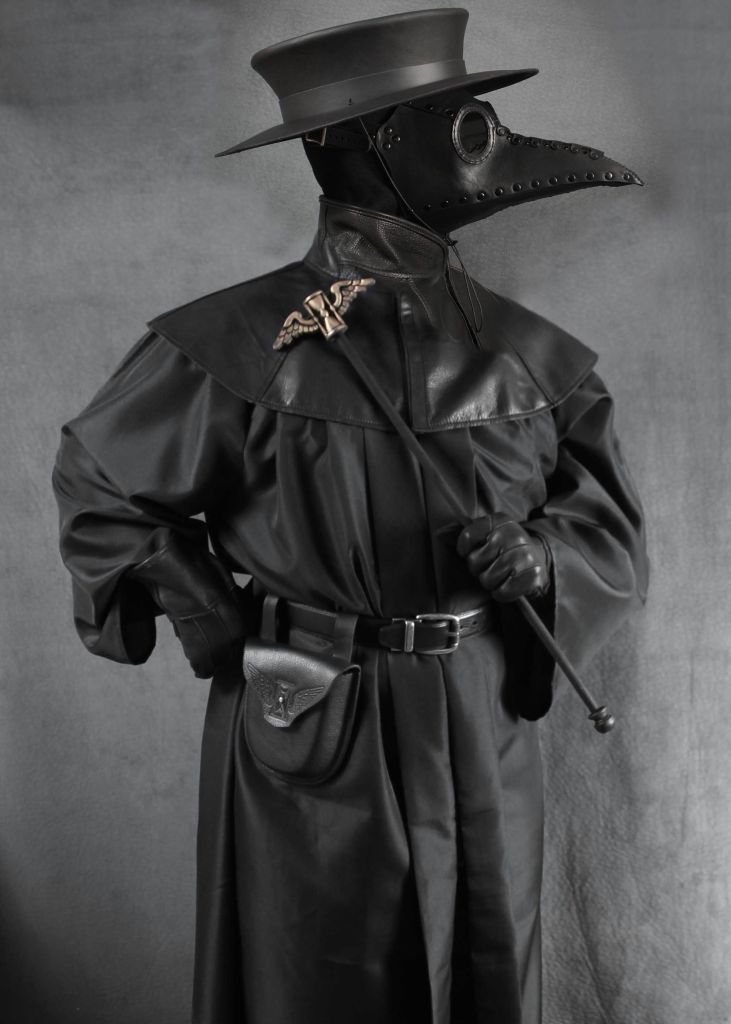
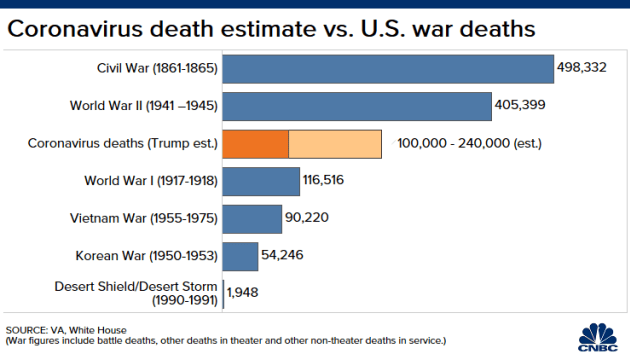

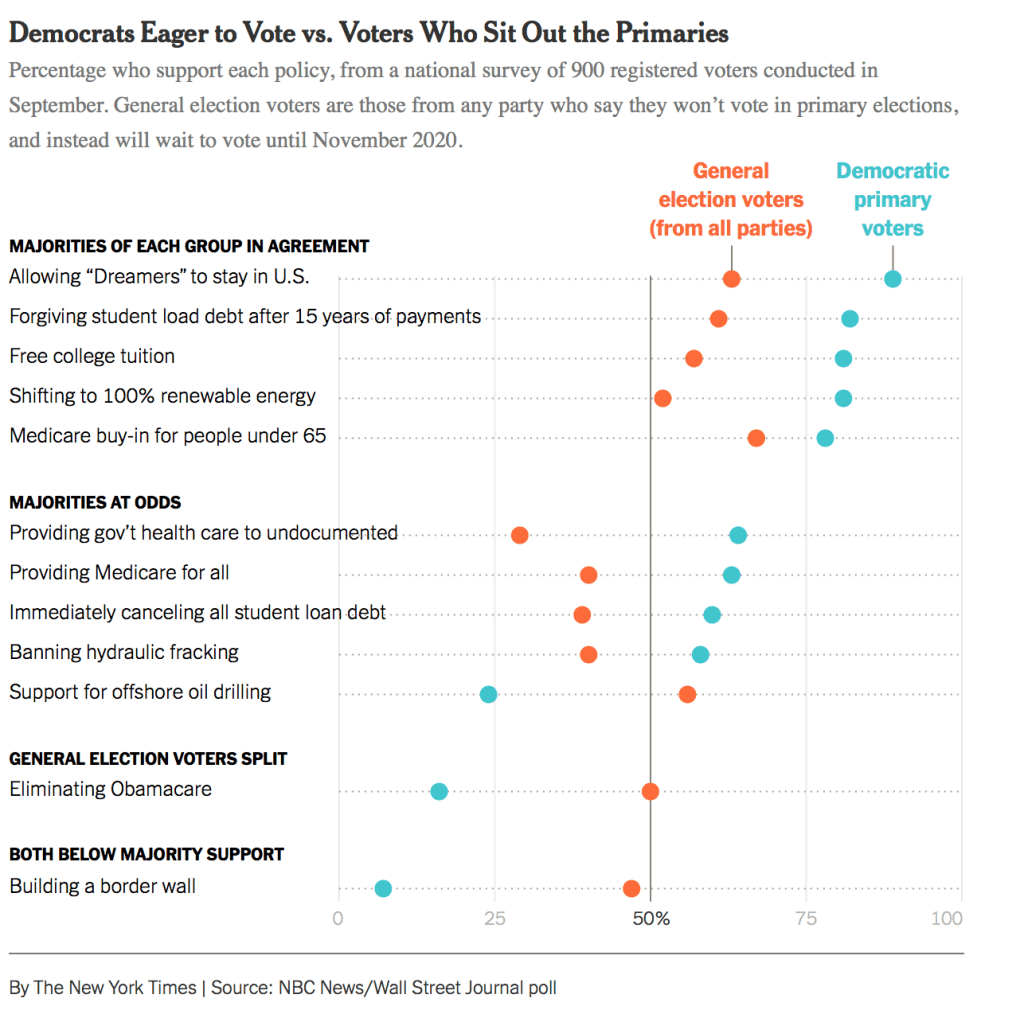







 freedom and reason