Resisting unlawful arrest is a concept that has a long history, dating back to the earliest days of legal systems. The idea is that an individual has the right to defend himself against an arrest that is not legally justified. In many legal systems, the concept of resisting unlawful arrest is thus based on the idea of self-defense. The principle is that a person has the right to use reasonable force to defend themselves from an attacker, including an officer who is trying to unlawfully arrest them. The key to understanding this concept is that the force used must be reasonable, and the person being arrested must have a reasonable belief that they are in danger.
Self-defense is a basic human right recognized in many legal systems around the world as a basic human right. The right to self-defense is rooted in the principle that individuals have the inherent right to protect themselves and others from harm. International human rights law, including the Universal Declaration of Human Rights, recognizes the right to life, liberty, and security of person. These rights provide the basis for the right to self-defense. The right to self-defense is also recognized in the laws of many countries and, in some cases, is enshrined in their constitutions.
The right to self-defense is not an unlimited right. The use of force in self-defense must be necessary and proportionate to the threat faced, and should not exceed what is reasonably required to protect oneself or others from harm. In some legal systems, there may also be a duty to retreat or avoid the use of force where possible, before resorting to self-defense. The scope and limitations of the right to self-defense depends on the specific legal system or jurisdiction in question, and may be subject to interpretation by courts or other legal authorities, and there may be further specificity to its use in situations of unlawful arrest.
In the United States, for example, the law recognizes a limited right to resist an unlawful arrest, but the amount of force that can be used in self-defense is generally restricted to non-deadly force. However, some states do not recognize any right to resist an unlawful arrest, regardless of the circumstances. In other countries, the law may be different. Crucially, the concept of resisting unlawful arrest is distinct from obstructing or assaulting an officer in the course of their duties. While an individual may have the right to resist an unlawful arrest, they do not have the right to obstruct or assault an officer who is acting lawfully.
What follows are is court rulings that make up the standing law in light of the principle of stare decisis. Stare decisis (“let the decision stand”) is the legal principle that refers to the practice of courts following and applying the legal decisions of previous cases when deciding similar cases in the future. The principle of stare decisis promotes consistency and predictability in the legal system. When a court decides a case, it sets a precedent that can guide the outcome of similar cases in the future. This allows individuals and businesses to make informed decisions based on past legal rulings, and helps to ensure that the law is applied consistently over time. The principle of stare decisis applies primarily to common law legal systems, such as those used in the United States, the United Kingdom, Canada, and Australia. In these systems, courts are bound by their own previous decisions and by the decisions of higher courts in the same jurisdiction. In other words, a court is generally required to follow the legal precedent established by its own decisions or by the decisions of higher courts, unless there are compelling reasons to depart from that precedent.
“Citizens may resist unlawful arrest to the point of taking an arresting officer’s life if necessary.” Plummer v. State, 136 Ind. 306. This premise was upheld by the Supreme Court of the United States in John Bad Elk v. U.S., 177 U.S. 529. This derives from the English common law, which recognizes the right of an individual to resist with reasonable force an attempt of a police officer to make an unlawful arrest.
“An arrest made with a defective warrant, or one issued without affidavit, or one that fails to allege a crime is within jurisdiction, and one who is being arrested, may resist arrest and break away. lf the arresting officer is killed by one who is so resisting, the killing will be no more than an involuntary manslaughter.” Housh v. People, 75 111. 491; reaffirmed and quoted in State v. Leach, 7 Conn. 452; State v. Gleason, 32 Kan. 245; Ballard v. State, 43 Ohio 349; State v Rousseau, 241 P. 2d 447; State v. Spaulding, 34 Minn. 3621.
“When a person, being without fault, is in a place where he has a right to be, is violently assaulted, he may, without retreating, repel by force, and if, in the reasonable exercise of his right of self defense, his assailant is killed, he is justified.” Runyan v. State, 57 Ind. 80; Miller v. State, 74 Ind. 1.
“These principles apply as well to an officer attempting to make an arrest, who abuses his authority and transcends the bounds thereof by the use of unnecessary force and violence, as they do to a private individual who unlawfully uses such force and violence.” Jones v. State, 26 Tex. App. I; Beaverts v. State, 4 Tex. App. 1 75; Skidmore v. State, 43 Tex. 93, 903.
“An illegal arrest is an assault and battery. The person so attempted to be restrained of his liberty has the same right to use force in defending himself as he would in repelling any other assault and battery.” State v. Robinson, 145 ME. 77, 72 ATL. 26.
“Each person has the right to resist an unlawful arrest. In such a case, the person attempting the arrest stands in the position of a wrongdoer and may be resisted by the use of force, as in self- defense.” State v. Mobley, 240 N.C. 476, 83 S.E. 2d 100.
“One may come to the aid of another being unlawfully arrested, just as he may where one is being assaulted, molested, raped or kidnapped. Thus it is not an offense to liberate one from the unlawful custody of an officer, even though he may have submitted to such custody, without resistance.” Adams v. State, 121 Ga. 16, 48 S.E. 910.
What in blue blazes are police officers doing hanging out in men’s bathroom busting gregarious civilians for non-criminal offenses? Isn’t the public better served by having the police fighting crime? It’s not like a man putting his foot in my stall is rape or some other actual violation of my person. I’ve had men make passes at me in bathrooms. Do you know how I respond in such a situation? It’s simple, really. I ignore their gestures, wipe my ass, and move on with on life. No harm no foul. But not Republicans. Not only do they oppose gay marriage, but they also support criminalizing gestures they think gay men use to communicate with one another in public places. Does anybody else out there recognize this as the hallmark of the police state – criminalizing homosexual flirting?
Because you can’t get away from this story, and because I have suspected there’s more to the facts of the case than what I have been hearing, I listened to the actual taped interview between Senator Larry Craig and the arresting officer. Good grief. The whole thing is nonsense, with the most irrational elements thrown in. The officer keeps going on and on about how embarrassing it all is and how disappointed he is in Craig. Who gives a damn what this police officer thinks about Larry Craig? It’s not for a cop in this situation to tell a senator that he’s disappointed in him. This isn’t Romper Room. The officer can be heard crying like Craig is his incorrigible son whom he’s at wit’s end to control. That is embarrassing.
Craig is heard rationally and politely disputing the officer’s account, as well he should (though not politely). The officer sounds like he knows he’s blowing smoke with this arrest (his shaky voice gives him away). But since he’s arresting a man for ambiguous behavior that shouldn’t even be policed in the first place, he’d better have a convincing story to tell. But he doesn’t. The officer says Craig made gestures with his left hand. He knows because he saw the wedding band and he knows what a left hand looks like. But Craig’s left hand was opposite the stall the officer was in. The officer even admits this fact. Does this officer really expect us to believe that Craig is turned all the way around in a bathroom stall to gesture with his left hand – the hand with a wedding ring on it, no less – when he could have simply used his right hand, already in a position close to the officer? Sure the officer knows Craig has a wedding ring on his left hand. That doesn’t mean he saw it in the bathroom stall. The officer asks Craig if he had his wedding band on his right hand at any point during the day. Why ask this? The officer already said he knows what a left hand looks like.
At that point, the officer goes all racist on Craig, saying that he usually deals with people from the wrong side of the tracks, real scumbags who are expected to lie, but that he expects more from Craig. Why, because Craig is a well-off white man? What makes his little lecture all the more disingenuous is that, while most people believe that “all politicians are liars,” this cop expects more from a US senator. Sorry, but that doesn’t pass the smell test.
I completely understand why Craig copped a plea of guilty. The officer keeps telling Craig that if he cops a plea it will all end and that he, the officer, won’t blab it around town; but if Craig decides to fight the charge in court, the officer tells him, then the officer will have to appear and testify about what happened – that is, give the court his story, and we all know that means a public trial and a media circus. So Craig says to himself, “Okay, just sign the papers, pay the fine, and move on with my life.” After all, the man is a US senator with a family and friends. He has a reputation to protect. Does anybody out there really believe that he should see such a thing to trial so that the whole world shares in his embarrassment – over gestures in a public bathroom? And then it gets blabbed all over town.
What we have here is entrapment, in which a cop is waiting around in a men’s bathroom stall to bust people who gesture with their feet and hands (note to self: when next taking a shit in a public restroom be sure to sit frozen like a stature with feet held firmly together and hands buried under armpits); blackmail, in which the cop says either Craig pleads guilty and makes it all go away or he disputes the cop’s story in public over a crime that is not even a real crime while the whole nation watches (which happens anyway); and the state criminalizing homosexual flirting. Imagine a unisex bathroom where a man or a woman flirts with a member of the opposite sex and one of them is a cop who arrests the flirter. Hard to imagine because it wouldn’t happen. Nor should it. Meanwhile, women suffer the real harassment of cat calls and whistling and the state does nothing about that. It’s about homosexuality, not flirting.
We all know I don’t care for Republicans, and the way they are bailing on Craig shows you why I find them such a despicable lot. They believe this cop’s story over their colleague – more importantly believe such charges are legitimate – and then run as fast as they can away from the man they used to call friend. At the same time, they have colleagues they stand behind who have committed actual ethical violations. It makes you wonder why the Democrats haven’t pitched in more here to help out Craig. Surely Democrats don’t approve of police officers arresting men in bathrooms for wandering feet.
Speaking of actual moral offenses, the obvious truth that appears to have eluded everybody now enters the public discourse: How can the Republicans distance themselves from Craig over such a petty thing – really a no thing – when they stand shoulder-to-shoulder with a president who is guilty of the crimes of kidnapping, lying to Congress and the public, spying on US citizens, torturing prisoners, and waging aggressive war? Playing footsies in a public bathroom is a terrible moral offense, but murdering Iraqi children for oil is noble? Talk about misplaced values. That, brothers and sisters, is the real hypocrisy in this whole affair.
Steven Pearlstein, writing in The Washington Post, argues,
It is more than a bit disingenuous for liberals to push for worthwhile programs like food stamps, housing vouchers, child tax credits and the earned income tax credit – and then to constantly cite official income and poverty statistics that do not include the impact of food stamps, housing vouchers, child tax credits and the earned income tax credit.
Why is that (more than a bit) disingenuous? For any maximally-objective grasp of things, we need to develop an honest empirical profile of the problem without the effects of the solution confounding it. Imagine if a doctor examined a patient whose symptoms were masked by another doctor’s previous intervention. The present doctor would quite likely miss the underlying condition affecting the patient. There is nothing at all disingenuous about wanting to see the patient’s medical records before drawing conclusions about the patient’s case. Indeed, that must be the approach the doctor takes.
This is not to say that having an after-intervention accounting of things isn’t useful. How else would one know if the intervention is working? More importantly, how else would one know if a different and better intervention was needed? As if we are ignorant of such things, Pearlstein believes he has to remind us that there is an after-intervention accounting:
[E]ach spring the Census Bureau gets around to computing an alternative after-tax measure of disposable income that includes these various tax and transfer programs, while also making adjustments in the official poverty line to reflect the economic realities of different household sizes…. In 2005, for example, they dropped the poverty rate from 12.6 percent to 10.3 percent, with the biggest improvement coming in a four-percentage-point reduction in child poverty.
In response to this account, Pearlstein notes the obvious, that “these revisions help put the lie to the right-wing conceit that government tax and transfer policies only make poverty worse.” But then he misses the most important fact – that even after adding in the benefits of government programs, one out of every ten Americans still lives in poverty. Moreover, for minorities that ratio is a lot more dramatic. (Frankly, to have one chronically poor person in the wealthiest nation on earth is a scandal, but more on that in a moment.)
Instead, Pearlstein comments,
Conservatives are left to fall back on the argument that government handouts and social insurance programs, while appearing to lift some out of poverty, have created a permanent underclass by discouraging work and thrift and fostering a culture of dependence.
Don’t expect Pearlstein to go on to blast the classist-racist-sexist “culture of poverty” thesis. Instead, he brings in Charles Karelis’ arguments from his new book The Persistence of Poverty. Karelis is the philosopher at George Washington University who argues that people are poor because they don’t have enough money. Before you scoff at Karelis’ tautology (I had a social problems professor who made the same observation), Pearlstein elaborates Karelis’ argument:
The reason the poor are poor is that they are more likely to not finish school, not work, not save, and get hooked on drugs and alcohol and run afoul of the law. Liberals tend to blame it on history (slavery) or lack of opportunity (poor schools, discrimination), while conservatives blame government (welfare) and personal failings (lack of discipline), but both sides agree that these behaviors are so contrary to self-interest that they must be irrational.
The only historical reason liberals give for poverty is slavery? That will come as a surprise to anybody who reads liberal scholarship on the subject. What about the oft-noted facts of the ghetto and Jim Crow segregation, de facto and de jure forces that have created a system of racial separation that continues to divide blacks and whites not only in housing, but also in occupation, education, and dozens of other things. Discrimination is rooted in the continuing objective system (or structure, if you like) of apartheid. A New Liberal, armed with the weapons of social science, should neither blame poverty only on slavery nor know discrimination only as an interpersonal phenomenon disconnected from an underlying system of racial separation. (As a Marxist, I don’t consider myself a liberal, but one thing clearly separating liberals from conservatives is a superior grasp of the methods and findings of sound social science.)
The conservative argument that poverty results from lack of discipline ignores the reality that our wealthiest citizens are the worst when it comes to discipline. Let us be blunt about the truth here: the wealthiest among us do little or no productive work. They don’t even mow their own lawns. I know they want the rest of us to believe they are the new Apostles of Christ, but in truth, their lives are spent in leisure, where their only concern for time is making sure they meet friends and business associates for golf games or have their weekly pedicure performed by their favorite salon employee. Wealthy parents allow their children free rein over their own lives protected within an exclusive communal cocoon. The male children of wealthy families are especially undisciplined (and frequently obnoxious to boot).
Contrast this existence with the lives of the working poor, who exhibit an extremely disciplined manner in making sure not only that they get to work on time every day and every night at their two or more part-time jobs, but that their children learn to unquestioningly respect authority (training to their children’s detriment, in my opinion, since respect for authority makes it harder to develop the consciousness sufficient for rebellion and revolution, which is sorely needed). Indeed, the strictest disciplinarians in American society are working people, especially the working poor.
Ultimately, then, several assumptions Pearlstein and Karelis operate with are wrong. First, in contrast to the wealthy, the poor do work. They work hard. It is expensive being poor, as Ehrenreich famously observed, and you have to work all the time to be able to support that lifestyle. To say the poor are poor because they don’t work is to exhibit a profound ignorance of the reality of poverty. Second, contrary to assumptions in Karelis’ argument, the poor are no more likely to drink and drug than are the wealthy. The difference is that the wealthy can hide their drinking and drugging within gated communities. And they can afford private treatment when their drinking and drugging get out of hand. Third, running afoul of the law has more to do with who breaks the law than it does about the essence of the behaviors to which the law is applied. The wealthy commit all manner of illegal, immoral, unethical, and socially dangerous acts, yet they are relatively immune from the sanctions that control or should control these acts. There’s a reason why our prisons are overflowing with poor people and not rich people, and it has very little to do with actual criminality. Fourth, if not working, drinking and drugging, and breaking the law cause poverty, then the wealthiest among us would be the poorest among us. Obviously that is an absurdity, hence the absurdity of Karelis’ argument.
There is an important and relevant truth in all this: wealth is passed on, either directly in inheritance or indirectly through the good fortune of being a child born to well-off parents. Indeed, this is the justification for passing wealth along! But the same is true for the poor – only here, the disadvantages accumulate. Since, there’s no such thing as parental selection, it ridiculous to blame the poor for poverty (something akin to blaming a corpse for murder). The structure of American society is such that it accumulates advantages at one end while accumulating disadvantages at the other. That is the fundamental character and operation of social class under capitalism. Without massive government intervention (such as we see in Scandinavia counties) or a socialist revolution (which is long overdue), nothing can be done about this.
Oblivious to the facts of the matter, Pearlstein opines,
After all, the reason we study, work, save and generally behave ourselves is that these behaviors allow us to earn more money, and more money will improve our lives. And, by logic, that must be particularly true of the poor, for whom each extra dollar to be earned or saved for a rainy day is surely more valuable than it is for, say, Bill Gates.
Yet, Pearlstein seems to understand something. After noting that the extension of logic in the previous paragraph is problematic, he writes,
On the other hand, maybe the point at which people are most willing to work hard, save and play by the rules isn’t when they are very poor, or very rich, but in the neighborhoods on either side of the point you might call economic sufficiency – a motivational sweet spot that, in statistical terms, might be defined as between 50 percent ($24,000) and 200 percent ($96,000) of median household income. And if that is so, then maybe the best way to break the cycle of poverty is to raise the hopes and expectations of the poor by putting them closer to the goal line.
Now, if he could only connect this observation to the reality he misses about the dynamic of capitalism, then he would understand that poverty can only be eliminated by getting rid of the wealthy (and I don’t mean persons but the station), since it is the lazy existence of the rich that forces so many millions of hard-working people into the hellish existence of poverty (where they are not only the victims of discrimination, but also of prejudice and shame, as well). Because a few have so much, the many have very little. Thus the conclusion Pearlstein reaches, that there is “a solid economic argument to replace the old moral ones for spending more money on programs like food stamps, subsidized child care and the earned income tax credit,” falls far short of a real and permanent solution. (Of course, generous social welfare programs are the least we can do as a civilized society.)
While liberals are mostly correct but insufficiently radical in all this, conservatives are completely wrong. As Pearlstein himself puts it, “after a decade of welfare reform, budget cuts and calls for individual responsibility, poverty is still very much with us.” The conservative solution to poverty is either to blame the poor for their situation – blame the corpse for murder – or to simply remind us that Jesus told us, “The poor will always be among us.” Just as they put the market beyond politics, they locate the source of poverty in theology, all of it out of the hands of “the haves.” How convenient.
Conservatives believe that poverty is explained by personal inadequacies, such as stupidity, bad values, and laziness. They believe that relief should be a gift of charity and that there should be conditions upon receiving it, such as performing menial labor. Aid should only be temporary, they say, and seeking it should carry stigma. Poor people should find public assistance an unpleasant experience so that receiving welfare is itself a deterrence to seeking it. Aid given to poor people should be minimal; the poor would prefer to receive generous aid rather than work so any assistance should always be much less than what they could get if they worked for the lowest possible wage. Fear of hunger and discomfort must exist to compel the poor to work. Individuals make their own decisions and society should not protect persons from the negative consequences of their actions.
Such beliefs are bizarre in light of the way the world actually works. At the individual level, poverty is almost always caused by factors beyond an individual’s control. This is because, at the structural level, poverty is the result of social stratification. Any society that is divided by class is necessarily a society in which the social product is unequally distributed; otherwise, there would be no social classes, there would be no inequality, there would be no poverty. In class systems, some get more for doing less, while others get less for doing more. This is the source of wealth and poverty in society. While some poor people may find their way out of poverty, there will always be poor people in a class society. Since you cannot blame the poor persons for the structure of the societal order, seeing how they haven’t the poor to determine that order, the conservative argument is irrational.
But it’s more than irrational. It’s hateful. Loving and compassionate human beings care about their brothers and sisters. Persons with a normal moral capacity believe that the poor are entitled to aid, since it is not their fault that they are poor. Ethical persons don’t blame victims. If all persons were free to produce for themselves, they would be no need for aid at all. Having people perform menial tasks with no productive or creative value is degrading; as a rule, human beings should never be forced to routinely perform work they do not find fulfilling. Because human beings realize themselves through productive work, most individuals prefer rewarding creative endeavor over receiving aid. The problem is that not everybody is allowed to pursue creative endeavors sufficient for the production of an adequate social provision for themselves. This is because there are some who get a lot for doing very little. They are called capitalists.
The death penalty should be abolished for the following reasons:
1. There are people on death row who are innocent. Individuals are being let out all the time after serving many years on death row facing execution. Killing innocents is an unjustifiable risk, especially when life in prison without parole is an option and sufficient for incapacitation.
2. The poor are disproportionately executed given their representation in homicide statistics. Poor people are at a marked disadvantage when it comes to defending themselves against the power of the state. The death penalty is class biased and therefore unjust. Most serious punishment is biased and unjust because of this, however the death penalty is irrevocable.
3. Blacks are disproportionately executed given their representation in homicide statistics. Blacks are at a marked disadvantage when it comes to defending themselves against the power of the state, both because blacks are disproportionately poor and the system is racially discriminatory. The death penalty is race biased and therefore unjust.
4. It is not a deterrent. In fact, it increases murder where it is practiced (what has been called the brutalization effect). This is because the state sanctions lethal violence. The state should not engage in behavior that increases the likelihood of lethal violence. The state, by killing people, puts others at risk of being killed or injured.
5. It is inefficient. The costs of killing a person is far more than the costs of keeping them in prison for life. It costs more because we have safeguards in place so that the risk of executing innocent person is less. The safeguards must remain in place as long as we practice the death penalty, so there is no way to make the punishment cheaper than imprisonment.
6. Incarceration is an effective method of incapacitation (and you don’t risk killing an innocent person). The more rational alternative is preferred.
7. The death penalty as currently practiced violates the eighth amendment prohibiting cruel and unusual punishments. It is therefore unconstitutional. It is unlikely that killing a person can with any certainty be made free of suffering, either physically or psychologically.
8. The taking of human life, except in self-defense or to save the lives of the innocent, is unjustifiable homicide. The death penalty is employed under neither exception and is therefore unjustifiable homicide – that is murder.
Note: I based the present article on a lecture I delivered to the United Nations University in Amman, Jordan in November 2006. The aim of the argument is to raise awareness among members of the international community about the role of Christian neo-fundamentalism, also known as Christian Zionism, in the development, marketing, and promotion of US foreign policy in the Middle East. I argue that material interests in Middle Eastern energy resources (namely oil), and the presence in government of neoconservatives, while clearly representing the major forces shaping the direction of US policy in the Middle East, are by themselves insufficient facts to explain military occupation of Iraq and the United States’ uncritical commitment to the state of Israel. What completes the explanatory picture is a study of what we might call the “Christianist” – that is, the Western counterpart of the “Islamist.”
In July of 2006, John Hagee Ministries of San Antonio, Texas, held its first annual conference of a newly founded organization, “Christians United for Israel.” Hagee Ministries is an evangelical Christian organization founded in 1987 that stands at the forefront of the countermovement Christian Zionism. Among other things, Hagee and his followers believe that the land of Israel never belonged to Arabs and that the people who call themselves Palestinians actually came from Egypt, Jordan, Syria, Iraq and other Arab nations. (Hagee’s propaganda draws from Joan Peters’ 1984 book, From Time Immemorial (1984), which was exposed as fraudulent years ago by Norman Finkelstein in his 1988 study “Disinformation and the Palestine Question.” Deceit notwithstanding, Peters’ thesis has formed the core of Alan Dershowitz’s 2003 work, The Case for Israel, which Finkelstein debunked in his 2005 book Beyond Chutzpah.)
Bush in prayer
Standing before 3,500 evangelical leaders in Hagee’s church, the Israeli ambassador, Danny Ayalon, spoke of the close relationship between Christian evangelicals and the Jewish state. Christians, Ayalon said, are Israel’s “true friends.” The chairman of the Republican Party, Ken Mehlman, along with several Republican senators, also attended the event. During dinner, Hagee read greetings from President and Prime Minister Olmert, and then told the crowd to tell their representatives in Congress “to let Israeli do their job.” What job was he talking about? Wiping out Hezbollah in southern Lebanon. Hagee called the conflict between Israel and Hezbollah “a battle between good and evil” and then asserted that support for Israel was “God’s foreign policy” (“For Evangelicals, Supporting Israel Is ‘God’s Foreign Policy’”, The New York Times, November 14, 2006).
Widespread support of Bush and his foreign policy among evangelical Christians is rooted in events unfolding in the late 1960s-early 1970s—events surrounding nationalist politics and economic imperatives. Up until the 1960s, US oil industry, represented by mega-corporations such as Chevron, Exxon, Gulf, Mobil, and Texaco, controlled energy supplies in the Middle East. However, during the decades of the 1960s and 1970s, political and cultural movements in the Arab and Persian world led to progressive nationalization of the oil industry. Flexing its political-economic muscle in the wake of the 1967 war between Israel and its neighbors, and especially moved to action by the 1973 Yom Kippur Arab-Israeli war, the Arab oil states shocked the US economy with disruptions of supply, pushing energy prices higher and fueling inflation in the US economy. With these changes, the Middle East became a pressing priority for US politicians and the corporations that finance them. (The following summary of planned and actual US intervention in this section is indebted to a chronology developed by Robert Dreyfuss. (See “The Thirty Year Itch”, Mother Jones, March/April 2003.)
The Ford administration, with a policy team led CIA director George H. W. Bush, Secretary of Defense Donald Rumsfeld, Secretary of State Henry Kissinger, and Chief of Staff Richard Cheney, developed a plan in 1975 to overthrow the Saudi government for the purposes of seizing their oil fields. Ford’s short term in office, and a lessening of the crisis in the mid-1970s, stalled implementation of the plan. However, the Iranian Revolution and Soviet intervention in Afghanistan, both occurring in 1979, moved President Jimmy Carter and Secretary of State Zbigniew Brzezinski to renew plans for military intervention in the region. In announcing the “Carter Doctrine” in 1980, Carter stated that any “attempt by any outside force to gain control of the Persian Gulf region will be regarded as an assault on the vital interests of the United States of America, and such an assault will be repelled by any means necessary, including military force” (State of the Union Address, January 23, 1980). Carter declared that the Gulf would be a zone of US influence and created the Rapid Deployment Force (RDF), which stood ready to invade the Gulf region in case of crisis.
Under the Reagan administration, the RDF became The Central Command. Reagan pressured countries in the region, primarily Saudi Arabia and Turkey, to permit access to and development of military bases, support facilities, and forward staging areas. The US government sold billions of dollars’ worth of arms to the Saudis in the early 1980s. Central to policy development was George Bush, then vice president. The goal of militarizing the region was more or less completed with the first Gulf War when, under the direction of Bush, then president, and Cheney, Secretary of Defense, the US persuaded Gulf states to allow permanent military presence on Arab soil. In the decade that followed, the US sold more than 43 billion dollars worth of weapons and military construction projects to Saudi Arabia, and some sixteen billion dollars more to Bahrain, Kuwait, Qatar, and the United Arab Emirates.
Like Carter, the Clinton administration sought to enhance America’s favorability in the region by pursuing peace between Israelis and Arab; yet Clinton carried out strikes in Yemen, Pakistan, and elsewhere, as well as maintaining economic sanctions and no-fly zones over Iraq in a perpetual climate of war. This history culminated in the overthrow of Saddam Hussein in the second Gulf War, led by President George W. Bush, along with Vice President Cheney and Defense Secretary Rumsfeld.
To meet the needs of the growing American empire, the United States has spent trillions of dollars on military hardware and war operations. The military budget, which stood around 80 billion dollars in the mid-1970s, is projected to reach 440-plus billion dollars in 2007, not including supplemental appropriations. That’s an annual price tag greater than the combined budgets of the next fourteen largest militaries. Much of this spending is dedicated to maintaining a militarized Middle East within a sphere of US control. The military character of the American state has not only spelled disaster for the people who are on the receiving end of bombs and bullets and disorganization, but has also affected Americans at home by intensifying authoritarian mentality, leading to the emergence of a security state, in which freedoms and rights guaranteed by the US constitution have been routinely suppressed.
One important feature of this period has been dedicated US political, economic, and military support for the state of Israel. Prior to the mid-1970s, official financial aid to Israel was, for the most part, in the form of loans, which amounted to, at most, around half a billion dollars. From 1974 on, the US made large grants to Israel, , in addition to the loans, most in the form of military aid, ranging from two billion to more than four billion annually. Not including the money that flows into Israel from private groups, aid to Israel represents the largest item in the US foreign-aid budget.
Given the fact that Israel is the most powerful military force in the region, such a level of financial support makes little sense from a security standpoint. As Steve Zunes points out, one would expect that military aid to Israel “should have been highest during Israel’s early years, and would have declined as Israel grew stronger,” however “99 percent of all US aid to Israel took place after the June 1967 war, when Israel found itself more powerful than any combination of Arab armies” “The Strategic Functions of US Aid to Israel.” However, Zunes notes that there are hegemonic benefits to the US supporting Israel: a client state working to destabilize nationalist movements, an intelligence agency, an arms broker, and a consumer of US made weaponry. This last point is secured by the presence of a powerful Israel lobby in Washington. John Mearsheimer, Professor of Political Science at Chicago and Stephen Walt, Professor of International Affairs at the Kennedy School of Government at Harvard argue that while “[o]ther special-interest groups have managed to skew foreign policy, …no lobby has managed to divert it as far from what the national interest would suggest, while simultaneously convincing Americans that US interests and those of the other country—in this case, Israel—are essentially identical,” than has the Israel Lobby (See “The Israel Lobby”, London Review of Books 28 [6], March 23, 2006). Israel uses the moneys it receives to colonize Palestine, a project that requires the construction of settlements and the violent suppression of the indigenous population. Much of that money stays in the United States, purchasing military hardware.
What is more, there is a dedicated group of US elites who believe Israel and the United States’ interests are inextricably bound together. One in particular has had a disproportionate impact on foreign policy towards the Middle East: Henry “Scoop” Jackson. Jackson, an influential Democratic Senator serving from 1941 to 1981, developed his understanding of foreign policy by carefully watching Israel’s conquest of Palestine. At the Conference on International Terrorism sponsored by the Jonathan Institute in 1979, Jackson articulated lessons learned by praising Israel’s suppression of Palestinian terrorists. He rejected the premise that the targets of terrorism should negotiate with terrorists. “To insist that free nations negotiate with terrorist organizations can only strengthen the latter and weaken the former.” He rejected the premise of Palestinian statehood. He said, “To crown with statehood a movement based on terrorism would devastate the moral authority that rightly lies behind the effort of free states everywhere to combat terrorism.”
His philosophy, known as “Jacksonian Zionism,” was at odds with the Democratic Party. Many Democrats — the “doves” — were arguing that peace was the path to regional stability. Conservative Democrats — the “hawks” — accused the doves of taking a “blame America first” approach, since it implied that terrorism was a reaction by oppressed people to Western imperialism. The dispute caused Jackson’s aides — among them Elliot Abrams, Douglas Feith, Richard Perle, and Paul Wolfowitz — to switch to the Republican Party, coming to staff the Reagan and Bush administrations. This is one key to understanding foreign policy planning from the 1980s onward: The chief architects of Bush’s Middle East policy, besides Cheney and Rumsfeld, were Paul Wolfowitz, Richard Perle, and Douglas Feith, and several others who were disciples of Henry Scoop Jackson. They became known as the “neocons” (short for neoconservatives). They see Israeli interests as identical with US interests and several of them have in fact been advisors to the right-wing Likud Party of Israel.
Here are two examples that show how closely neoconservatives working in the US government are aligned with right politics in Israel. In 1996, while serving with the prominent Israeli think tank, The Institute for Advanced Strategic and Political Studies (IASPS), Perle, along with Douglas Feith, the current Undersecretary of Defense for the United States, and David Wurmser, current Middle East and National Security Affairs advisor to Vice President Cheney, authored the report, A Clean Break: A New Strategy for Securing the Realm. They wrote the report for the right wing and Jewish restorationist Likud Party of Israel. The document advised then-prime minister, Benjamin Netanyahu, to walk away from the Oslo accord. In 1997, in A Strategy for Israel, Douglas Feith followed up on the report and argued that Israel should re-occupy the areas under the control of the Palestinian Authority (which they did). “The price in blood would be high,” he wrote, but such a move would be a necessary “detoxification” of the situation. This was, in Feith’s view, “the only way out of Oslo’s web.” In the report, Feith linked Israel’s rejection of the peace process to the neoconservatives’ obsession with the rule of Saddam Hussein and the Ba’ath regime. “Removing Saddam from power,” Feith wrote, is “an important Israeli strategic objective.” [For details, see my chapter, titled “War Hawks and the Ugly American: The Origins of Bush’s Central Asia and Middle East Policy,” in Bernd Hamm’s Devastating Society: The Neo-conservative Assault on Democracy and Justice London: Pluto Press, 2005, pp. 47-66. There is an Arabic-language version of this book published by All Prints, Beirut (News, as well as a German-language version Gesellschaft zerstören published by Homilius Verlag, Berlin.)
Assuming that a significant foreign policy direction in a democracy requires some degree of popular support, the facts of economic imperative and dedicated hard-line Zionists shaping and influencing US foreign policy are insufficient facts for understanding US policy in this period. Indeed, for much of the twentieth century, American conservatives, particularly religious conservatives, have held great antipathy towards the Jews. Moreover, conservative Republicans have traditionally been reluctant to support US intervention, democracy promotion, and national building.
Robert Herzstein records that “proper, prosperous mainstream Americans,” especially those “on the right” held extremist anti-Semitic sentiments (Professor of History at the University of South Carolina, records in his book Roosevelt and Hitler: Prelude to War (New York: Paragon House, 1989). A survey conducted by Fortune magazine in 1936 found that 500,000 persons reported attending at least one anti-Semitic rally the previous year. Anti-Semitism was particularly true in religious circles. In the traditional conservative Christian worldview, Jews are depicted as liberal puppet masters pulling the strings of communists, civil rights leaders, and feminists. These views were especially prevalent in the southern United States, where conservative Christians have historically been concentrated. Following WWII, open antipathy towards Jews shifted to widespread ambivalence towards Jews and Israel; nonetheless, there remained a deep anti-Semitism in American Christian culture.
Christian fundamentalism has not lessened in the years since. On the contrary. According to The New York Times in 2003, perhaps as much as 46 percent of Americans are evangelical or born-again Christians, and they are disproportionately Republican—72 percent of them voted for Republican candidates in 2004 (Nicholas Kristof, “God, Satan and the Media,” March 4, 2003). According to Gallup poll numbers taken in 2003, Bush’s popularity stood at 74% among born-again Christians. “The fact that this conservative and deeply religious president is a Republican is directly in line with the overall pattern of religious beliefs in American politics. Most scholars agree that there is a substantial relationship between strong religious faith, particularly within conservative, evangelical Protestant denominations, and identification with the Republican Party” (Frank Newport and Joseph Carroll, “Gallup Poll: Support for Bush Significantly Higher Among More Religious Americans,” March 5, 2003). Conservative Christians are vocal, committed, and organized. These cannot be the same fundamentalists who viewed Jews as evil only forty years earlier.
In the 1970s, as Christian conservatives were moving to take over American politics, political and religious elites launched a major effort to create widespread and uncritical support for Israel and Zionism (For an examination of a key aspect of this effort, see Norman Finkelstein’s The Holocaust Industry). This could happen if right-wing Christians and right-wing Jews were to see the preservation of Israel and the defeat of national aspirations of the Palestinians as shared interests. This common interest was fashioned into neo-fundamentalist Christianity. The Republican Party, the neo-conservative movement, and right-wing Jews, joined by influential conservative Christian leaders, fashioned an ideology that would secure the support of tens of millions of Americans for Western imperialism in the Middle East, serve the interests of capitalists seeking cheap fossil fuel to power the global economic system. This movement represented a historic shift from anti-Semitic fundamentalist Christian culture to a pro-Israel neo-fundamentalist Christian politics.
Christian neo-fundamentalism is a contemporary type of Christianity possessing a character of doctrinal militancy and aggressive missionary zeal. Neo-fundamentalists draw a sharp contrast between their faith and liberal Protestantism and Catholicism. Muslims are viewed as the “dangerous other” in this system, Islam representing an evil ideology.
There are five principles at the core of neo-fundamentalist Christianity. Rebirth involves a revelation in which a person accepts Jesus into their heart and turns himself completely over to the Holy Spirit. This act of becoming “born again” washes away that person’s sins. Sola scriptura — a rigid adherence to a literalist interpretation of the Bible. This is the view that the Bible is the sole source of religious authority. Missionarism — the practice of aggressive ministry and outreach to both Christians and non-Christians. The goal is to convert others to the Christian religion. Politicization — a commitment to pushing conservative Christian values into the larger cultural-political realm. This is what I have referred to as Christianism. Here definitions of “true Christian” are set forth. One who does not adhere to the definition is considered “unchristian.” Dispensationalism — this is a complex view, the relevant aspect of which, for our purposes here, is the focus on Jewish restorationism. Christian Zionists believe that the establishment of the State of Israel in 1948 and the return of Jews to the Holy Land, all set forth in prophecy (Revelations), put in motion the “end times,” in which God returns to claim his people for eternal existence in Heaven.
There are several well-known representatives of Christian Zionism, including Robert Grant, who founded Christian Voice in 1978; Jerry Falwell, who founded the Moral Majority in 1979; and Pat Robertson, who founded the Christian Coalition in 1988. There are others who are perhaps less well-known to people outside of America. As Bush was gearing up his presidential campaign, he made a pilgrimage to a gathering of right-wing Christian activists, organized as the Committee to Restore American Values, which was conducted by two dozen leading fundamentalists, and chaired by an apocalyptic evangelist Tim LaHaye. LaHaye presented Bush with a lengthy questionnaire on issues such as abortion, education, gun control, judicial appointments, religious freedom, and the Middle East. Hal Lindsey, who describes himself as an oracle, was an advisor to Ronald Reagan, who believed that “everything is in place for the battle of Armageddon and the Second Coming of Christ.” The Late Great Planet Earth, Lindsey’s most famous book, predicts the rebirth of Israel and war in the Middle East. “These and other signs, foreseen by prophets from Moses to Jesus, portend the coming of an antichrist…of a war that will bring humanity to the brink of destruction…and of incredible deliverance for a desperate, dying planet.” James Robison advocates a similar vision: “There’ll be no peace until Jesus comes. Any preaching of peace prior to this return is heresy; it’s against the word of God; it’s anti-Christ.”
Atheists should commit much effort to understanding the way the world appears to the Christian neo-fundamentalists and how this worldview moves the Christian to support US foreign policy in the Middle East. We must also show how state actors use Christian neo-fundamentalism to gain support for government policy. These intersect in the fact that many key state actors use faith to justify policy and believe in the tenets of Christian neo-fundamentalism. The proof is in the statements by the leaders themselves, and these quotes represent to many Americans I speak with the most frightening aspects of Christianism in the United States.
Reagan believed, as early as 1971, that “everything is in place for the battle of Armageddon and the Second Coming of Christ.” He left no doubt about his dedication to an apocalyptic view of history when he said, “In the 38th chapter of Ezekiel, it says that the land of Israel will come under attack by the armies of the ungodly nations and it says that Libya will be among them. Do you understand the significance of that? Libya has now gone communist, and that’s a sign that the day of Armageddon isn’t that far off…. Everything is falling into place…. Ezekiel tells us that Gog, the nation that will lead all of the other powers of darkness against Israel, will come out of the north…. Now that Russia has become communist and atheistic, now that Russia has set itself against God, now it fits the description of Gog perfectly.” He held these views into his presidency. In 1983, President Reagan told People magazine that never “has there ever been a time in which so many of the prophecies are coming together. There have been times in the past when people thought the end of the world was coming and so forth, but never anything like this” (reported in Holly Sklar, The Trilateral Commission and Elite Planning for World Management, South End Press, Boston, 1980).
The current president, George W. Bush, follows Reagan in depth of religiosity, but adds to this the belief that his presidency is willed by God. As Governor of Texas, he told a friend, “God wants me to run for president” (Paul Harris, “Bush says God chose him to lead his nation”, Observer, November 2, 2003). A Time magazine article reports that Bush has “talked of being chosen by the grace of God.” (See “An Evolving Faith: Does the president believe he has a divine mandate?” Deborah Caldwell, BeliefNet.) According to Bush, this calling occurred during a 1999 sermon by Mark Craig, the preacher at Bush’s church in Dallas. Craig spoke of Moses’ reluctance to heed the calling of the Lord. In that sermon, Bush heard God calling him to become the President of the United States. One can hear the commitment to a Biblical view of history in Bush’s speeches. “We are not this story’s author, who fills time and eternity with his purpose. Yet his purpose is achieved in our duty…. This work continues. This story goes on. And an angel still rides in the whirlwind and directs this storm,” he said at his Inaugural Address in 2001. At the fifty-first National Prayer Breakfast, held February 2003 in Washington DC he said, “We can…be confident in the ways of Providence, even when they are far from our understanding. Events aren’t moved by blind change and chance. Behind all of life and all of history, there’s a dedication and purpose, set by the hand of a just and faithful God.” As reported in many mainstream press sources, Bush told both the former Palestinian foreign minister Nabil Shaath and former prime minister and now Palestinian President Mahmoud Abbas: “I’m driven with a mission from God. God would tell me, ‘George, go and fight those terrorists in Afghanistan.’ And I did, and then God would tell me, ‘George go and end the tyranny in Iraq,’ and I did.”
One of Bush’s top military officials, General William Boykin, Deputy Undersecretary of Defense for Intelligence, who has played key roles in several recent military operations, asserts that the war on terror is a fight against Satan. It is a conflict between a “Christian nation” and “radical Islamists,” Boykin claims. Islamists hate the United States “because we’re a Christian nation.” He proclaims that the US Army is “a Christian army.” He has publicly uttered such things as
“Ladies and gentleman, this is your enemy. It is the principalities of darkness. It is a demonic presence in that city that God revealed to me as the enemy.” “Now ask yourself: Why is this man in the White House? The majority of Americans did not vote for him. Why is he there? He’s in the White House because God put him there for a time such as this. God put him there to lead not only this nation but to lead the world in such a time as this.” “We in the army of God, in the house of God, kingdom of God, have been raised for such a time as this.”
(See “Whether God Speaks to Him or Not, Bush’s Religious Fanaticism has Shaped Our World,” The Independent (London), October 8, 2005, “The Army’s Three-Star Zealot,” Pittsburgh Post-Gazette, October 17, 2003, and “War on terrorism ‘clash against Satan’: Rumsfeld defends officer’s assertion of battle against the devil,” The Gazette (Montreal, Quebec), October 17, 2003. For more on Christianism in the military, see http://militaryreligiousfreedom.org/.)
Julian Borger, writing in The Guardian, provides a compelling analysis of the meaning of Bush’s delusions of grandeur: “While most people saw the extraordinary circumstances of the 2000 election as a fluke, Bush and his closest supporters saw it as yet another sign he was chosen to lead. Later, September 11 ‘revealed’ what he was there for.” The President said in the State of the Union address, “this call of history has come to the right country” (January 28, 2003). Members of Bush’s staff believe that God chose their boss to lead the nation through these times. After his speech to Congress on September 20, 2001, Bush received a phone call from speechwriter Mike Gerson, who said, “Mr. President, when I saw you on television, I thought—God wanted you there.” (Caldwell, The Times Union, Albany, NY, 2-16-03.) Tim Goeglein, deputy director of the White House public liaison, once remarked, “President Bush is God’s man at this hour.” (Joel Rosenberg, World Magazine, October 6, 2001.)
The depth of fundamentalism in the Bush administration is the subject of a book by one of Bush’s key speechwriters, David Frum, the man who coined the phrase “axis of evil.” According to his book, The Right Man, a work actually praising Bush, Frum, Bush, and others who worked on the notorious Axis of Evil speech, desired very much to create an enemy the equivalent of Reagan’s Evil Empire. According to Frum, during the weeks leading up to Bush’s 2002 State of the Union Address, Gerson came to Frum with this challenge: “Can you sum up in a sentence or two our best case for going after Iraq?” This was in late December 2001. Frum came up with “axis of hatred.” He felt that the phrase “described the ominous but ill-defined links between Iraq and terrorism.” Gerson replaced the word “hatred” with “evil” because the latter sounded more “theological.” Frum really liked the phrase. He says, “It was the sort of language President Bush used.” (Julian Borger, in The Guardian, discussed these matters with Frum in an article published January 28, 2003. In the interview, Frum “talks about the disconcerting grip evangelical Christianity has on the White House.”
Any explanation for public support for the United States’ interventions in the Middle East must account for the degree and character of religiosity in the United States. This includes Bush’s religious views. “It’s impossible to understand President Bush without acknowledging the centrality of his faith,” writes Kristof. As I wrote in a 2003 article, “Faith Matters: George Bush and Providence”, published by The Public Eye, Bush’s war efforts reflect a “messianic vision” in which his administration will “‘remake’ the Middle East.” Rutgers University history professor Jackson Lears, in a letter to The New York Times, “How a War became a Crusade” (March 11, 2003), suggests that this is why Bush can be so cavalier about war in Iraq will, because the president “denies the very existence of chance.” This follows from Bush’s belief that events in the world “aren’t moved by blind change and chance,” but rather are determined by “the hand of a just and faithful God.” Linking war with Iraq to an eschatological view of history intersects with the problem of ignorance of just war principles among evangelicals. Neither the President nor his supporters concern themselves with the justness of war, nor do they worry much about the consequences of war. Providence, according to Lears, “sanitizes the messy actualities of war and its aftermath. Like the strategists’ faith in smart bombs, faith in Providence frees one from having to consider the role of chance in armed conflict, the least predictable of human affairs. Between divine will and American know-how, we have everything under control.”
As I noted in my writings and speeches back before the war, one might think that the vast majority of Americans would find Bush’s extremist worldview disturbing. But no such majority has spoken up. Part of this has to do with overwhelming media support of this president, which has led the media to gloss over the President’s religious fundamentalism. This support, though waning somewhat with the catastrophe in Iraq, is still rather deep. The warmongering of major media outlets aligns them with the interests of the Bush Administration. I argued in 2003 that the media should not absorb all the blame since Bush’s major speeches have been nationally televised, unmediated by pundits, and still there is minimal concern over his apocalyptic rhetoric. However, the media could have spent the past several years discussing not only Bush’s religious fanaticism but also educating the public on why religious fanaticism is so detrimental to US objectives in the world—assuming those objectives are what our leaders say they are, namely peace, security, and justice.
Let me close with a word on the hypocrisy that inheres in the way religiosity and political extremism are represented by dominant voices in the United States. Americans are told that the problems in the Middle East originate in extremist and totalistic religious sentiment that is held by a majority of the Arab population. The story is that this sentiment, known as Islam, is inherently conservative and fundamentalist and, when faithfully adhered to, and politicized, is inconsistent with, and in fact a barrier to democracy and freedom—democracy of course understood as democratic capitalism and economic liberty (the rhetoric of “democracy promotion”). “Proof” of Islam’s alleged “irrationalism” is readily available to Americans in images and stories generated by our pervasive culture industry. Coverage of Iranian president Mahmoud Ahmadinejad’s call to his country’s universities to purge its ranks of liberals and secularists is a typical example. The mass media exploited this moment to paint the Iranian president as a dangerous enemy of democracy. More generally, Americans are subjected to a welter of stories allegedly documenting the anti-Semitism and anti-Americanism said to inhere in the Islamic thought. Americans are told that Muslims hate Americans and Israelis because Muslims hate freedom and progress, which, it is assumed in this rhetoric, Americans and Israelis embody.
The portrait of intense religiosity and irrationalism on the Arab side is designed to make Islam appear to stand in stark contrast to the secularism and rationalism inherent to Western political and cultural life, a perfectly reasonable context in which plurality and tolerance are said to prevail (hence the irony that religious conservatives simultaneously boast of and object to this progressive portrait of America). The West, we are reminded, long ago negotiated a separation of religious society and political society — what we call the wall of separation of church and state — and this arrangement prevents the fanaticism that allegedly prevails in the Middle East from taking hold in the West — unless outsiders bring it to the West (a fear that has led to considerable oppression of Arabs and Muslims in the United States). It is true that this arrangement was set down in the bill of rights attached to our founding document (the Constitution), which states unambiguously: “Congress shall make no law respecting an establishment of religion, or prohibiting the free exercise thereof….” But an arrangement only works if people keep at it. And in the United States the wall is in great need of repair.
The July 2007 National Intelligence Assessment, “The Terrorist Threat to the US Homeland,” produced by the Office of the Director of National Intelligence (ODNI), is out and it contains several instructive points.
We judge the US Homeland will face a persistent and evolving terrorist threat over the next three years. The main threat comes from Islamic terrorist groups and cells, especially al-Qa’ida, driven by their undiminished intent to attack the Homeland and a continued effort by these terrorist groups to adapt and improve their capabilities.
There are two ways to interpret this judgment. Either the ODNI is continuing its campaign to maintain high levels of fear among the US population in order to justify high levels of domestic and foreign military and police presence; or, the ODNI judgment indicates the failure of Bush’s policy to protect the nation from Islamic terrorist groups. However, these interpretations may not be mutually exclusive, as enhancing the capabilities of Islamic terrorists functions to spread fear among the populace.
Al-Qa’ida is and will remain the most serious terrorist threat to the Homeland, as its central leadership continues to plan high-impact plots, while pushing others in extremist Sunni communities to mimic its efforts and to supplement its capabilities.
This is interesting because it only mentions al-Qaeda’s efforts to influence Sunni extremists to follow its efforts. It mentions nothing about the radicalization of Muslims by US invasion, occupation, and exploitation of Arab and Asian countries. It is beyond serious dispute that the main cause of terrorism against the United States is US foreign policy.
We assess that al-Qa’ida will continue to enhance its capabilities to attack the Homeland through greater cooperation with regional terrorist groups. Of note, we assess that al-Qa’ida will probably seek to leverage the contacts and capabilities of al-Qa’ida in Iraq (AQI), its most visible and capable affiliate and the only one known to have expressed a desire to attack the Homeland. In addition, we assess that its association with AQI helps al-Qa’ida to energize the broader Sunni extremist community, raise resources, and to recruit and indoctrinate operatives, including for Homeland attacks.
AQI exists because of the US invasion and occupation of Iraq. Before the United States invaded Iraq, there was no serious al-Qaeda presence in that country. Since the Bush administration continually reminds the public that “we are fighting them over there so we don’t have to fight them here,” we can only assume that it was the goal of the Bush administration to grow AQI.
We assess Lebanese Hizballah, which has conducted anti-US attacks outside the United States in the past, may be more likely to consider attacking the Homeland over the next three years if it perceives the United States as posing a direct threat to the group or Iran.
Of course Hezbollah will consider attacking US targets if it is threatened by the United States. Any rationally-behaving group will consider defending itself against the aggressions of a more powerful group. If the US doesn’t want Hezbollah to consider attacking US targets then the United States shouldn’t threaten Hezbollah and stop supporting Israel’s harassment of Lebanon. Hezbollah is a national defense organization set up to drive out Israel from Lebanon and make sure Israel does not re-invade their country. They are doing what any group of patriotic citizens would do when invaded and harassed by outside forces. If Iran is supporting Hezbollah’s efforts to defend Lebanon from outside aggression then Iran is doing what any good ally would do.
We assess that the spread of radical—especially Salafi—Internet sites, increasingly aggressive anti-US rhetoric and actions, and the growing number of radical, self-generating cells in Western countries indicate that the radical and violent segment of the West’s Muslim population is expanding, including in the United States.
Again, this outcome is precisely due of US interference in the affairs of other countries and regions. If the United States wishes to reduce the terrorist threat against its people and the west, then it needs to withdraw its military from the Middle East and Asia and negotiate a real and just peace with the rest of the world and establish ordinary diplomatic ties. It’s time for the United States to dismantle the empire and join the civilized community of nations.
In an interview with Stone Phillips of Dateline NBC (rebroadcast last week), ghoul Jeffrey Dahmer asserts that he committed his horrible acts because he did not believe in a supreme deity. Without such a belief, he said, a person is not accountable to anyone. Belief in evolution contributes to immorality because the theory posits that “we all just came from the slime.” When his father Lionel sent him “creation science” literature, Dahmer finally saw the light. He realized evolution was a lie and accepted the Lord Jesus Christ into his life.
Serial killer Jeffry Dahmer
The Holy Spirit rewarded Jeffrey by moving another inmate to beat him to death in 1994. Christians have not yet made Dahmer their poster child for Christ. Why not? After all, if belief in a supreme being can change a murderer like Jeffrey Dahmer into a good person, then it ought to be good enough to put the ordinary criminal on a moral path. Make Dahmer an example in a good way.
Then again, if belief in a supreme being is correlated with superior morality, and if superior morality makes society less violent and criminal, then the United States should be the least violent and crime-ridden region in the north-western quadrant of the world. And Europe should be a cesspool of crime and violence. Moreover, Europe should suffer from a great frequency of many other dysfunctions, such as abortion, juvenile mortality rates, suicides, teenage pregnancy, and so forth.
Gregory Paul, in the Journal of Religion and Society (2005) looks at data from Interpol, as well as other sources, and compared abortion, juvenile morality, murder, suicide and teenage pregnancy in religious and secular democracies and finds that the United States is the world’s only prosperous democracy where these dysfunctions remain high, a fact that would surprise Jeffrey Dahmer and his father because United States is also unique in its extraordinarily degree of religiosity. A large majority of Americans (around 90 percent) believe in a supreme deity and more than half of the population believe in creationism. In Europe, far fewer believe in god, and a majority accept the theory of evolution.
Why is the association so backwards? Why would anybody believe that belief in a supreme being would make society more moral in the first place? First, the Good Book is chockfull of violence. Nonbelievers are slaughtered, their livestock killed, their villages burned to the ground. Adulterers, fornicators, homosexuals, those who do not observe the Sabbath, even insubordinate children are killed. Second, Christians are the perpetrators of the Crusades, in which untold thousands were slaughtered. And, if another religion played a big role in the Crusades, then how about the Inquisition? Many more thousands were tortured and killed in the most brutal fashion imaginable. And that one was entirely on the Christians. Third, even in modern times, Christians, in the name of protecting the flock from godless communists and other heathens, have supported actions that have resulted in the deaths of millions.
No, I’m afraid religious belief won’t stop the Jeffrey Dahmers of the world.
The slave masters were Christians well acquainted with the Bible. Indeed, the Bible sanctions slavery. Even Jesus supported slavery. To be a good Christian, a slave must submit to his master as he would submit to Christ.
In this essay, I will supply the biblical passages supporting slavery. There are many translations of the Bible, so I will provide the most modern and understandable translation and in parentheses supply some of the older wording for those who have older translations.
You may purchase male or female slaves from among the foreigners (heathens) who live among you. You may also purchase the children of such resident foreigners (strangers), including those who have been born in your land. You may treat them as your property, passing them on to your children as a permanent inheritance. You may treat your slaves like this, but the people of Israel, your relatives, must never be treated this way.
Leviticus (25:44-46)
The African slaves were foreigners (heathens) brought into or born in the North American colonies and United States. They were treated as property and were permanent inheritance. However, the relatives of the slave masters—that is, white people—were not to be treated this way (albeit sociologist George Fitzhugh, inspired by the antidemocratic writings of Thomas Carlyle, argued in 1860 that some whites were suitable for slavery). The whites viewed themselves as analogous to the Israelites. Africans were not their brothers, as they were not of the white tribe, and therefore could be permanently enslaved.
There is a similar rule in Islam. Lawful enslavement is restricted to capture in war, on the condition that the prisoner is not a Muslim, or birth in slavery. However, conversation to Islam is not sufficient to free the convert from slavery.
When you buy a Hebrew slave, he shall serve six years, and in the seventh he shall go out free, for nothing. If he comes in single, he shall go out single; if he comes in married, then his wife shall go out with him. If his master gives him a wife and she bears him sons or daughters, the wife and her children shall be her master’s, and he shall go out alone. But if the slave plainly says, ‘I love my master, my wife, and my children; I will not go out free,’ then his master shall bring him to God, and he shall bring him to the door or the doorpost. And his master shall bore his ear through with an awl, and he shall be his slave forever.
Exodus (21:2-6)
This passage is important for understanding indentured servitude in the colonies. There, a white person could be a slave to another white person, but for a period of years, not permanently. One could therefore square Exodus 21:2-6 and Leviticus 25:44-46.
When a man sells his daughter as a slave, she shall not go out as the male slaves do. If she does not please her master, who has designated her for himself, then he shall let her be redeemed. He shall have no right to sell her to a foreign people, since he has broken faith with her. If he designates her for his son, he shall deal with her as with a daughter. If he takes another wife to himself, he shall not diminish her food, her clothing, or her marital rights. And if he does not do these three things for her, she shall go out for nothing, without payment of money.
Exodus (21: 7-11)
This passage follows the previous passage (versus 2-6). Since you can enslave those among you for a limited period of time, you can also sell you daughter into slavery. Since polygamy is a perfectly acceptable practice in the Bible, one may keep the slave forever and have sex with her. If she does not please the man, then he can return her, but he is not allowed to sell her to foreigners or heathens. He can, however, give her to one of his sons. Women have very few rights in the Bible. Fathers may sell them to other men, and these men may use them as they wish or give them to their sons.
It was permitted by Islamic law (the sharia) for men to purchase female slaves for sex. In fact this was the most frequent reasons for purchasing slaves amor Muslims.
There were some protections in the Bible for slaves against the violence of their masters, but it was minimal and contingent.
When a man strikes his male or female slave with a rod so hard that the slave dies under his hand, he shall be punished. If, however, the slave survives for a day or two, he is not to be punished, since the slave is his own property.
Exodus 21: 20-21
The logic here is that, if you strike your slave hard enough to kill them instantly, then it is clear that you meant to kill them. But if you strike them such that they die later on, then you obviously did not intend to kill them but accidentally killed them in the process of punishing them, which you had the right to do, as they are your property. Since they are your property, they are an investment, and while you will whip your cattle, you do not intend to kill them, although you accidentally may do so. Slaves were apparently one notch above cattle in the Bible, since they were protected from intentional homicide. But not really. If you want to protect people from such things you would abolish the system that endangers them. We should say instead that you couldn’t intentionally kill a slave without some consequence.
Often it is said that Jesus changes a Christian’s relationship to Jewish law, and therefore these passages from the Old Testament are to be disregarded. This is a rationalization that stems from inadequate study of the New Testament. I do not recall anywhere Jesus saying slavery is wrong. Nor do I recall him saying you can disregard the old law. Even more than this, Jesus sanctioned slavery in the clearest possible terms. Jesus said in Ephesians (6:5), “Slaves, obey your earthly masters with deep respect and fear. Serve them sincerely as you would serve Christ.” He also says in 1st Timothy 6: 1-2:
If you are a slave, you should respect and honor your owner. This will keep people from saying bad things about God and about our teaching. If any of you slaves have owners who are followers, you should show them respect. After all, they are also followers of Christ, and he loves them. So you should serve and help them the best you can. These are the things you must teach and tell the people to do.”
It fascinates me that, despite slavery being recognized as, if not the most immoral and sinful practice in which human beings engage, among the most immoral and sinful, I have never heard a mainstream Jewish, Christian, or Muslim leader condemn the passages in their own holy texts as immoral. In fact, I have heard it said a hundred times and more that the Bible is the perfect and completely moral word of God. If this is true, and I think Christians are bound to believe it is, then on what basis do Christians regard slavery as immoral and sinful?
Did the abolitionists, who used the Bible to argue for the emancipation of Africans in America, get it wrong? The logical argument against a slave society that justified slavery based on the Bible would have been to reject the Bible as justification for slavery, not to use the Bible to argue that slavery was unjust. That is to actually misuse the Bible because the book plainly doesn’t say that.
There are those who say that morality comes from the doctrine of a particular religion. Without religion, morality is not possible, and therefore atheists and non-adherents to faith are immoral people. But virtually every Christian regards slavery as immoral and sinful. So that means that Christians subject the Bible to moral judgment, determining which of God’s words to accept and which to reject, and in fact reject much of God’s word.
Human beings are thus judging God! But God is perfect. Human beings are not. God created the universe. How can his creation judge him? Yet here are Christians subjecting God’s word to their moral judgment. This means that, even for them, morality transcends religious doctrine. Our moral understanding does not come from the Bible. Not even a Christian’s moral understanding comes from the Bible. It comes from outside the Bible, and Christians use that moral understanding—whatever its source—to determine what parts of the Bible they should follow and what parts they should reject.
Why then should anybody follow any part of the Bible or the Quran? We already have a moral system that is more adequate than these doctrines. After all, it allows us to properly judge that slavery is immoral. More than this, these texts are not merely moral inadequate; Christian and Islamic teachings guide people in perpetrating immoral practices.
A video clip of a young black girl being silly in the back of a van has become the latest example for the mainstream media of black female irresponsibility. White people say to their kids when they act airheaded, “Did you smoke pot or something? Come down out of the clouds” How about the old standby, “You’re tripping!” Or the more recent, “Are you on crack?” Don’t tell me you haven’t heard that one.
Well, if you’re white folk that’s fine, but if you’re black folk and you say something like, “Cookie,stop rolling, girl. You shouldn’t have popped no X,” then you obviously gave ecstasy to your child and you and everybody involved have to be hauled into the police station and drug tested.
I have seen the two-and-a-half minute clip. The little girl is not on ecstacy. She is playing around, rolling her eyes, that’s all. She is even laughing at her game. She isn’t at times “unresponsive” as some news stories claim.
The media describes the video clip as sickening. But what’s really sickening is that the media believes that the little girl is on ecstasy. They believe this only because the van is full of black people. It’s blatant racism.
It is official national policy that the state of Israel exists as an ethnic Jewish homeland. The Declaration of the Establishment of the State of Israel, occurring on 14 May 1948, harkened back to Theodore Herzl and the First Zionist Congress, who “proclaimed the right of the Jewish people to national rebirth in what it claimed to be its own country,” a right that “was supported by the British government in the Balfour Declaration” and “reaffirmed in the Mandate of the League of Nations which, in particular, gave international sanction to the historic connection between the Jewish people and Palestine and to the right of the Jewish people to rebuild its National Home.”
The Declaration of the Establishment of the State of Israel asserted that the Holocaust necessitated “re-establishing in Israel the Jewish State, which would open the gates of the homeland wide to every Jew and confer upon the Jewish people the status of a fully privileged member of the community of nations.” The declaration claimed that the UN General Assembly resolution of November 29, 1947, called “for the establishment of a Jewish State in Israel” and that “recognition by the United Nations of the right of the Jewish people to establish their State is irrevocable.”
This right is the natural right of the Jewish people to be masters of their own fate, like all other nations, in their own sovereign State. Thus members and representatives of the Jews of Palestine and of the Zionist movement upon the end of the British Mandate, by virtue of “natural and historic right” and based on the United Nations resolution [h]ereby declare the establishment of a Jewish state in the land of Israel to be known as the State of Israel.
It is the contention of many that those who criticize this arrangement are anti-Semitic. But consider what your reaction would be if our government asserted that the United States of America was the homeland for Christian people or white people. To be sure, the United States is considered by many to be the true homeland of white Christian people. Recently, Fox News blowhard Bill O’Reilly, in a discussion with presidential candidate and current member of the Senate John McCain, accused the “far left” of wanting to “break down the white, Christian, male power structure, which you’re a part, and so am I.” Hey, I want to break down the white, Christian, male power structure of the United States! Does that mean I hate white people, men, and Christians? Am I a “self-hating white man”?
In Palestine, a place where people of different faiths and ethnicities have co-existed, a Jewish state was established that made every other non-Jew a second class citizen—that made every non-Jew a cultural, political, and religious outsider. That’s not democracy.
If the United States were to become a Christian state, I would, for many reasons, including the fact that, on principle, I oppose theocratic rule, oppose such a move. I regard any state declared by those in power to be the state of a particular religious group to be an unjust political and legal arrangement. Not only would I oppose it, but I would struggle to change it. I can hear the voices accusing me of being “anti-Christian” and “anti-American.” I am neither. I am pro-people.



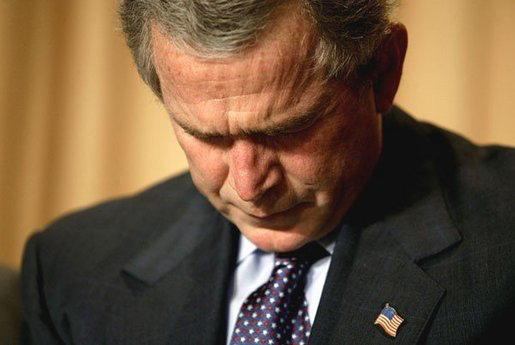

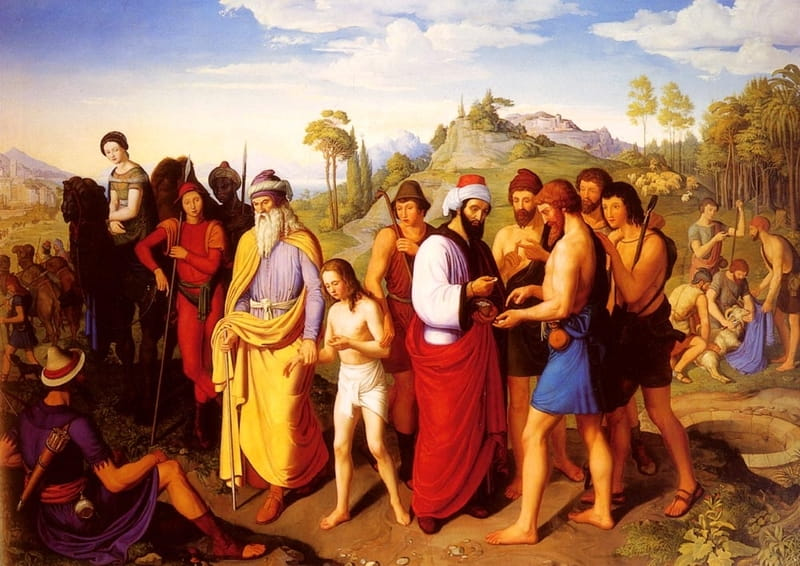
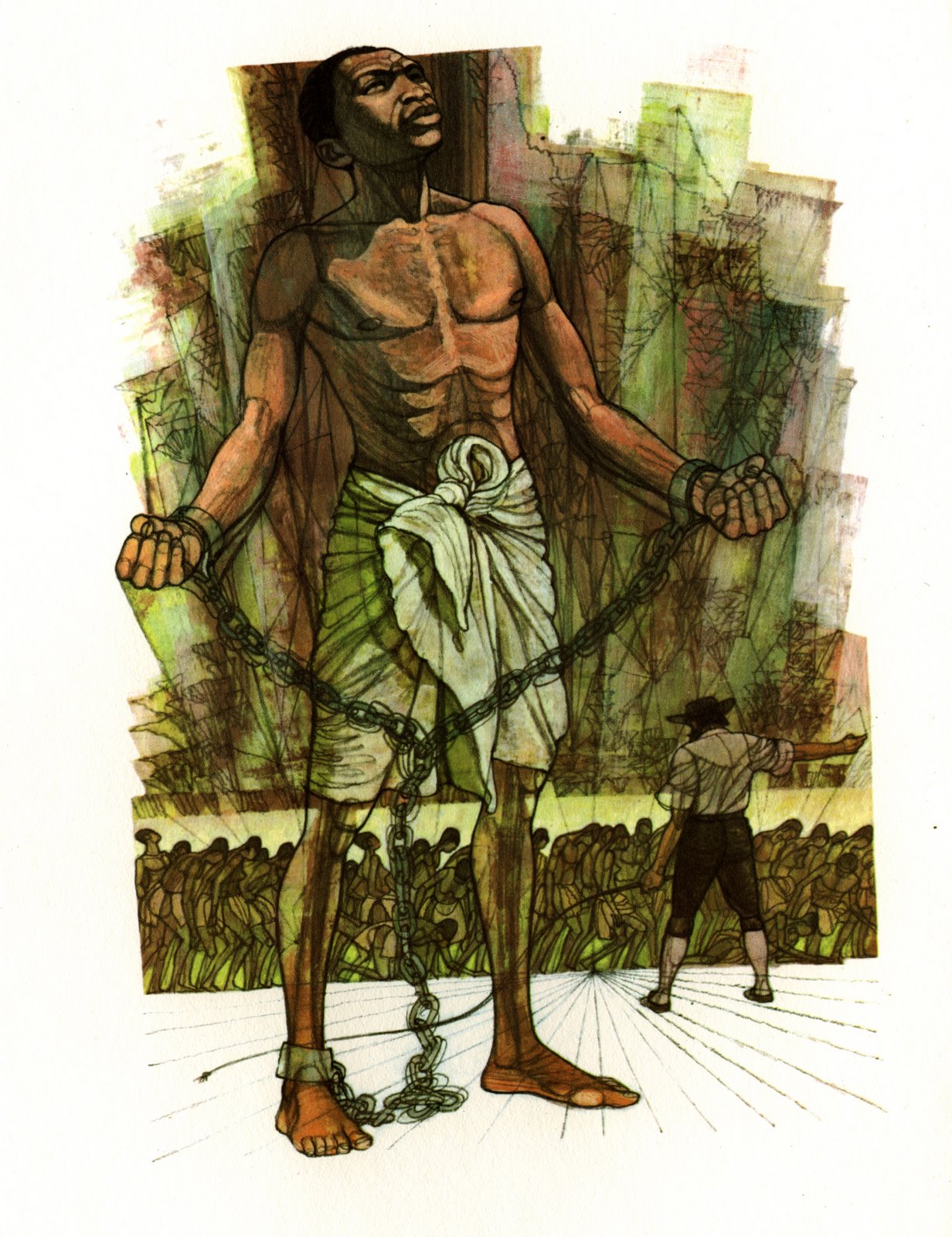

 freedom and reason