Kristi Noem, the governor of South Dakota, a large and sparsely populated frontier state with frontier values, is being criticized for confessing to having once killed a dog. The dog, Cricket, a 14-month-old wirehaired pointer, was a female with an aggressive personality. The behavior that prompted Noem to euthanize the dog was an attack the dog made on her neighbor’s chickens. When Noem went to restrain the dog, the dog bit her. Noem determined that the dog was untrainable. So, she put the animal down.
For this action, Noem is being branded a “murderer.” One cannot of course murder a dog; but resort to that word, besides resulting from ignorance of the law, also conveys the outrage felt by those with more cosmopolitan sensibilities, as well as the partisan nature of the present moment. We would be in denial if we claimed that a lot of reaction was driven by politics.
Kristi Noem, Governor of South Dakota
To the extent that the same people who condemn Noem for her action would condemn a Democrat who did this (and I assure you that there are Democrats who have), part of the explanation for the reaction is the cultural divide between town and country. In rural areas, the relationship of people to dogs can be complex. While many rural residents care for their dogs on an emotional level and consider them valuable companion and working animals, there are circumstances that prompt euthanizing them. A bullet is one of the most humane way to accomplish that end.
It’s not unheard of for rural residents to resort to such measures when they perceive a dog as a threat to their livelihood, property, or safety. Factors such as inadequate fencing, the roaming habits of dogs, or the presence of packs of feral dogs can exacerbate conflicts between dogs and livestock in rural areas. There are dogs that are diseased, injured, or old and a choice is made to humanely end their suffering. In many communities, dogs may be used for specific functions such as hunting or herding livestock. In cases where a dog fails to perform its intended function or exhibits behavior detrimental to its role, individuals may euthanize the dog. Cricket ticked several of these boxes.
Noem’s critics should consider the circumstances. They should also remind themselves that, while euthanasia rates for dogs in shelters have been declining due to increased efforts to promote adoption, spaying and neutering, and responsible pet ownership, hundreds of thousands of dogs are euthanized in shelters each year due to factors like behavior problems, health issues, lack of resources to care for them, and overcrowding. That doesn’t make what Noem did right (I am not saying what she did was wrong, either), but it highlights the complex and culturally variable relationship between humans and dogs, as well raises questions about the selective outrage.
The relationship between humans and nonhuman animals generally is complex. Most of us feed on the flesh of animals. According to the CDC, approximately 95 percent of American report consuming meat, poultry, or fish. This requires killing them. Most Americans would never eat dogs, however, putting on our anthropology hats, in cultures around the world, particularly in parts of Africa, Asia, and some regions of South America, we recognize that dogs are consumed as food. Immigrants from these parts of the world continue the practice here. The practice is rooted in various cultural, economic, historical, and social factors. It is the unique relationship between people and dogs cultivated in urban and suburban American communities that contributes the shock value of this case—which is not to say that many rural folks disagree with what Noem did.
Kristi Noam and President Donald Trump at a campaign event
My point in making these observations is to note that the outrage on social media is driven in part by class and regional-based ethnocentrisms—ironic coming from people who on the daily push the ethic of cultural pluralism—as well as political opposition to the populist character of rugged individualism. The point is punctuated by Michael Daly’s Daily Beast op-ed “R.I.P. Cricket. Now It’s Time to Talk About Kristi Noem’s Goat.”
I’m not denying that some of those who criticize Noem are not genuinely horrified by the story, especially given that the corporate media puts the inadequacies of the dog for its intended purpose as the central motive guiding her actions. But the story is more complex that the media is telling it, and it might behoove people to understand Noem’s actions in the context of culture and consider whether their own reaction is motived by political bias.
Update (5/4/2024): Fox News headline: “NYPD gives chilling update after 56 arrested at NYU, New School: ‘There’s somebody behind this movement.’” The story quotes NYPD Deputy Commissioner of Operations Kaz Daughtry: “There is some organization behind this movement.” “I just want to say, and I said it before, there’s somebody behind this movement,” Daughtry said. “There is some organization behind this movement. The level of organization that we’re seeing in both of these schools and at Columbia.” He continued, “There are leaflets on how to protest leaflets or how to commit civil disobedience. There are leaflets on what to do when you get arrested, leaflets on what to say to police,” reiterating, “There is somebody funding this. There is somebody radicalizing our students.”
Happy May Day, first of all. Let’s use this great day of remembrance to raise consciousness about the problem of anti-Western agitation.
NBC 4 reports today: “Massive police presence at UCLA following overnight melee on campus.” It was only a matter of time, in the face of insufficient official action against the illegal behavior of anti-Western agitators, before civilians took matters into their own hands. When public authorities fail to safeguard the citizens of a free republic, the citizen has a moral right and obligation to safeguard himself. It’s why we have a constitutional right to arms. Let’s hope it doesn’t come to that.
A CNN headline yesterday: “Columbia suspends pro-Palestinian protesters after encampment talks stall.” Good. Now clear the buildings and camps of anti-Western agitators, deport international students participating in these actions, and severely discipline every American student who took part in these actions.
This is not a First Amendment issue. It’s one thing to gather, chant slogans, and raise fists in the air. It’s another thing altogether to occupy public space and restrict access to others. Everybody has a right to that space. Refusal to voluntarily yield to requests to vacate the premises requires physical removal by law enforcement.
Nonviolent resistance and civil disobedience, righteous or otherwise, is no reason for the police to fail to enforce the law. Trespassing and encampments—propaganda of the deed—are illegal. Illegal actions come with consequences. Cops aren’t fascists for upholding the law. The police are enforcing the will of the people and the requirements of a free republic to safeguard them.
For those students having to flush the pepper spray from their eyes, there’s an easy remedy for this: quit your action and walk away. When your attempt to keep others from using public spaces results in a lawful order to disperse, then disperse or be dispersed. It’s a choice. And it’s your choice. You’re effectively spraying yourself with pepper spray.
Civil disobedience, even nonviolent resistance, does not grant individuals immunity from the rule of law. It’s not that your cause is not righteous (it isn’t) that the police are removing you. It’s because your actions are unlawful and you live in a free society. Welcome to liberal democracy.
Of course, it’s a lot more serious than protestors refusing the vacate the public spaces they have illegally occupied. Students at these elite universities are agitating neither for justice nor peace but for the goals of Islamic terrorist organizations—not just the Islamic Resistant Movement, or Hamas, but the constellation of clerical fascist tendencies across the Islamic world, the Party of God, its hook in the West now well in. Their self-loathing and desire to tear down civilization drives them into the arms of what they perceive to be exotic alternative belief systems. It’s what pushed a lot of Germans into the arms of the Nazi Party. Islam is just a clerical form of fascism.
So-called civil rights and woke faith-based groups are expressing solidarity with the anti-West protests; they’re also fundings the occupations. And it’s not just domestic progressive groups organizing the students. US Representative Virginia Foxx, who chairs the House Committee on Education and Labor told NewsNation that the protests are funded and organized by outsiders. “It’s obvious that someone is funding them,” she said. “They were well prepared.”
Even Eric Adams, the Mayor of New York City, questioned who was behind the protests, pointing out that the tents demonstrators used all looked alike. “What should have been a peaceful protest, it has basically been co-opted by professional outside agitators. We were extremely cautious about releasing our intel information because our goal was to ensure the safety of the students, the faculty, and without destruction to property.”
But Adams got the causal order backwards. “We have sounded the alarm several times before about external actors who attempted to hijack this private protest.”
We can confirm that the agitators are funded and organized by NGOs whose goal it is to topple the United States from its position as world super power—a goal, if successful, would throw the West into the hands of transnational corporate power totalitarian darkness. From the standpoint of the global elite, many of whom work inside the governments of the West, this is the uprising they have been working to foment. Some of the prominent groups they fund include American Muslims for Palestine (AMP), Jewish Voice for Peace (JVP), the Palestinian Youth Movement (PYM), and Students for Justice in Palestine (SJP). These are front groups of the transnationalist project.
According to an NBC investigation, Within Our Lifetime (WOL) is sponsored by a progressive New York-based nonprofit group called Westchester People’s Action Coalition Foundation (WESPAC), which collects and processes online donations. Tax law allows nonprofit groups with a 501(c)(3) status to collect money on behalf of smaller organizations. This is the way finding sources are dissimulated. But fingerprints can be dusted. George Soros has donated $132,000 to WESPAC, according to the New York Post.
Jonathan Schanzer, a former Treasury Department official, told NewsNation: “These [events] are not spontaneous. They are not necessarily organic. They are cultivated by groups that have an axe to grind.” He added, “They’re extremely organized. There are a lot of the Islamist-leaning groups that I think many of us have come to expect here.” That’s putting it mildly. The axe they’re grinding seeks the head of enlighten civilization.
The New York Post ran this headline on April 26: “George Soros is paying student radicals who are fueling nationwide explosion of Israel-hating protests.” It’s not just WESPAC. Soros and his allies (the same forces behind the lawfare being waged against Republican activists and politicians) are paying agitators across the country to fuel the explosion of anti-Israel protests across the country. We’ve seen the tent cities at Berkeley, Emory, Harvard, Ohio State, and Yale Adams talks about—they’re organized by Soros and other enemies of the West.
The protests are being encouraged by paid radicals, “fellows” of a Soros-funded group called the US Campaign for Palestinian Rights (USCPR). USCPR provides up to $7,800 for its community-based fellows and between $2,880 and $3,660 for its campus-based fellows in return for spending eight hours a week organizing campaigns led by Palestinian organizations. Here is a slide from an organization info session document:
A page from the info session
The group has received at least $300,000 from Soros’ Open Society Foundations since 2017 and also took in $355,000 from the Rockefeller Brothers Fund since 2019. CNN culture writer Harmeet Kaur tells us all this is a lie. CNN carries here headline: “Examining the long history of the ‘outside agitator’ narrative.” Kaur covers race, identity and social justice. That’s all you need to know to know that she is a propagandist for the enemies of freedom. They want to disarm the rational observer. They want to disorganized the collective instinct to safeguard the nation.
At Harvard, anti-Western agitators raise the Palestinian flag where the US flag previous waved.
The rallies are openly promoting sharia supremacism; masses of students are submitting to Islam and bowing in prayer to the totalitarian god of clerical fascism. Imagine these students were right wing conservatives agitating for Christian nationalism, a standpoint not remotely as nightmarish as Islamism in power, where women are forced to dress in cloth bags and gay men are thrown from towers or hung from cranes. Imagine if students in the wake of 9-11, funded by al-Qaeda, were occupying university campuses shouting “Death to America!” Imagine during WWII, American youth occupying public buildings and replacing the American flag with the Nazi rag. You don’t have to imagine these things. You are here. The Party of God is the postmodern Nazi Party—and the youth of America have been prepared to embrace it by their teachers and other influencers.
This isn’t about students protesting Israel action in Gaza—which is Israel righteous response to the forces of reaction. This is about the throng calling for the destruction of Israel and world Jewry, the United States, and the enlightened West. This is a cultural revolution, and no rational citizen should tolerate conditions that portend insurrection and rebellion against they country they are obligated to defend. Remember how the failure to put down the riots of 2020—because it benefitted the Democratic Party politically—inspired unrest across Europe? The Muslims are already flexing muscle in Germany and the UK.
New York City police enter an upper floor of Hamilton Hall on the Columbia University campus using a tactical vehicle, in New York Tuesday, April 30, 2024, after a building was taken over by protesters earlier Tuesday. (AP Photo)
The pro-Palestinian tendency among the American youth is a fifth column organized by an external enemies of democratic republics. These are the minions of the globalists who weaken the West to prepare its populations for incorporation into the new world order.
How exactly does a young Westerner work himself into such severe ideological corner that he finds himself supporting the clerical fascism of sharia supremacism? What concentrated bubble of bullshit can twist a brain into pathological self-loathing? This can’t be only because our universities have become indoctrination camps. There has to be, at least among some, a preexisting personality disorder that makes a person susceptible to losing touch with reality. As Erich Fromm told use in Escape from Freedom, some segment of the human population is always open to becoming a vehicle for authoritarian.
From a rational standpoint, there is nothing to be accomplished by these actions even if their alleged motive is accepted as righteous. The United States will support Israel as it should. The last ounce of decency in the Democratic Party is found in its support for the lone outpost of Western civilization in the land of the barbarians (yet this same party has invited the barbarians inside the gates). What can universities do about it anyway? Why should they do anything about it? Israel has a right to collective self-defense. Calls for a ceasefire are calls for allowing Hamas to regroup.
What we are seeing across America is in part a vanity project by clinical narcissists groomed by the culture industry and DEI programming, deranged by CRT, queer, and other neo-religions to self obsess, substituting identity for accomplishment, fashion for purpose. Many of the throng don’t know why they’re there. They confess their ignorance to reporters. They embarrass higher education. Arrested development has them stuck in the pre-operational stage of Piaget’s cognitive development scheme. Others have been made mentally ill by SEL and wellness centers designed by woke ideologues who long ago abandoned reason and science.
They hate the West and they hate themselves. They’ve been told they’re more wise than their elders. They believe in magic and think they have superpowers. They can’t differentiate the real from the imaginary and the virtual. They can’t even grasp that there’s no undo button in chemically and surgically altering their bodies.
The only way out of this morass is to clean out the rats nests. Sweep clean the campuses of the rabble and raze the encampments. Make the action harsh; they’ll be out of jail soon enough. Make the process the punishment.
“Just as Darwin discovered the law of development of organic nature, so Marx discovered the law of development of human history: the simple fact, hitherto concealed by an overgrowth of ideology, that mankind must first of all eat, drink, have shelter and clothing, before it can pursue politics, science, art, religion, etc.; that therefore the production of the immediate material means, and consequently the degree of economic development attained by a given people or during a given epoch, form the foundation upon which the state institutions, the legal conceptions, art, and even the ideas on religion, of the people concerned have been evolved, and in the light of which they must, therefore, be explained, instead of vice versa, as had hitherto been the case.” — Frederick Engels, Highgate Cemetery, London. March 17, 1883
A recent controversy has introduced me to a wider audience (see The Snitchy Dolls Return). Many of those who have just found me have noted that I identify as a Marxist, an identification wherein they see not an inconsiderable degree of irony given the nature of the controversy. Since many of them are on the political right, this identification may be off-putting; they found me in the context of a debate over my right to freely express my opinion about gender ideology, and thus may have initially thought of me as an ally.
I do not desire that any of them find this identification off-putting, so it seems to me useful to explain what I mean when I say that I identify as a Marxist. It’s not because I advocate for the socialist transformation of society (see my essays Marxist but not Socialist and Why I am not a Socialist). Indeed, I am a libertarian, a classical liberal who is critical of the political economy of corporate statism. It is rather because the work of Karl Marx, his materialist conception of history, is, or at least should be, the paradigm of the discipline to which I have devoted my professional life, namely sociology. To be sure, Marx was driven to his critique of capitalism in part because of his commitments to a socialist politics; at the same time, he believed these commitments required the development of science of history and of society.
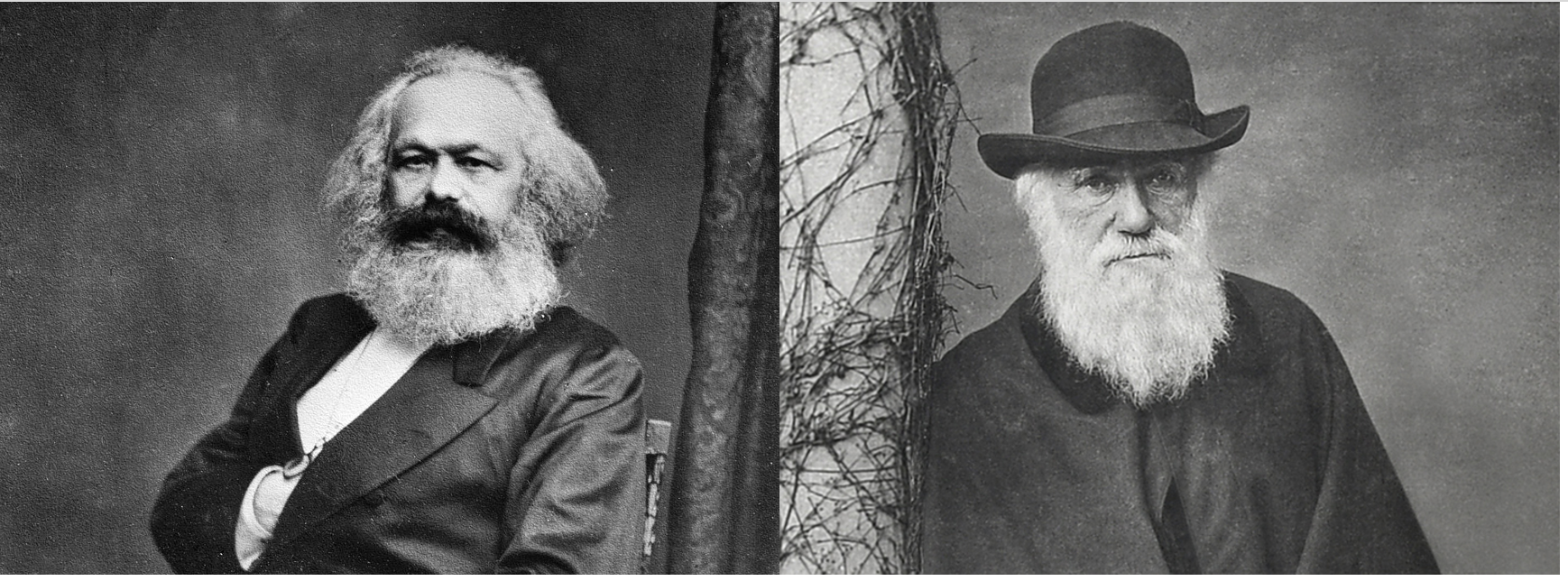
Giants of the nineteenth century intellectual scene Karl Marx (left) and Charles Darwin (right)
When I identify as a Marxist, I mean it in the same way as when I identify as a Darwinist. In the annals of intellectual history, Marx and Darwin left an indelible mark on their respective fields: Marx in social history; Darwin in natural history. While their names often evoke distinct realms of inquiry, a closer examination reveals a common project: to explain why things change over time—and why the take the forms they do.
To be sure, both Marx and Darwin are viewed with disdain by conservative observers, but Marx receives the most vitriol for his communist politics. Both were atheists, but the challenge Darwin poses to the Christian faith is moderated by the justification his naturalism provides for the competitive nature of capitalist relations (indeed, Darwin’s theory was inspired by Adam Smith’s invisible hand metaphor coined in The Wealth of Nations). However, putting politics aside (to the extent this is possible), it is worth considering Marx in the same way we consider Darwin, as having made a major contribution to our understanding of a domain of reality. Both were scientific materialists, which remains the superior way to understand the world around us.
At the heart of Marx’s analysis is his materialist conception of history, a framework that theorizes the interplay between economic forces, historical development, and social relations. Just as Darwin meticulously observed the natural world to unveil the mechanisms of evolution, Marx meticulously dissected the fabric of society to reveal the dynamics of class struggle and historical change. His seminal work, Capital, akin to Darwin’s On the Origin of Species, published less that a decade earlier, revolutionized our understanding of the social order by revealing the underlying laws governing capitalist production, the theory of surplus value, as Engels described it: “the special law of motion governing the present-day capitalist mode of production, and the bourgeois society that this mode of production has created. The discovery of surplus value suddenly threw light on the problem, in trying to solve which all previous investigations, of both bourgeois economists and socialist critics, had been groping in the dark.”
Much like Darwin’s natural history challenged prevailing notions of divine creation, of intelligent design, Marx’s critique of capitalism tore away the ideological veneer of bourgeois society, of which religion was a part, exposing its exploitative nature and inherent contradictions that make it both a powerhouse of material development and a source of perpetual crises. Just as Darwin demonstrated the interconnectedness of all living organisms through the principle of natural selection, Marx elucidated the ever changing arrangements of social classes and political power through the dialectic of revolutionary transformation. Both thinkers transcended the confines of their respective disciplines, offering comprehensive frameworks that continue to shape scholarly discourse and political debates to this day.
To identify as a Marxist, then, is to embrace a scientific approach to understanding the complexities of social phenomena, just as identifying as a Darwinist entails a commitment to the scientific exploration of the natural world. It is not an adherence to a set of dogmatic beliefs, but rather a recognition of the critical role of scientific materialism in elucidating the historical dynamics of human civilization. Just as Darwinism serves as a guiding principle in biological research, Marxism serves as a guiding principle in social analysis, providing invaluable insights into the historical processes and structural inequalities that shape our world. Both men faced vehement opposition from entrenched interests unwilling to relinquish their grip on power and privilege. Yet, their ideas have proved resilient, transcending ideological barriers and inspiring generations of scholars and activists to challenge the status quo and, in Marx’s case, strive for a more just society.
Marx saw Darwin’s theory as complementary to his own ideas about historical development, emphasizing the importance of material conditions and conflict in shaping human societies. Indeed, Darwin’s theory was the natural historical foundation for Marx’s base-superstructure model. Both Marx and Darwin approached their respective fields with a commitment to empirical evidence and a rejection of teleological explanations, seeking to uncover the underlying processes driving change and development—the laws of nature and of history. To embrace the legacies of both is to embrace a commitment to the relentless pursuit of knowledge in the service of understanding their respective domains.
Marx is often fingered as the cause of communist atrocities, but Marx did not lay out detailed plans for a communist society or advocate for the atrocities that marked man’s attempt to make such a society. Marx’s writings focused on analyzing the dynamics of capitalism and critiquing the social and economic structures that underpinned it. He envisioned communism as a society where class distinctions would be abolished, and the means of production would be collectively owned and managed by the workers, but he did not theorize such a condition, as such an order would need to first be established and defined through human labor. An opponent of utopia thinking, there is no blueprint for such a society in Marx’s work. (See Communism: The Real and the Theoretical, and Why Nomenclature Matters.)
It is therefore essential to distinguish between Marx’s ideas and the actions of individuals and regimes that claimed to be inspired by Marxism. While Marx’s theories provided the intellectual foundation for communist movements, including those governing societies that claimed to have at least reached the socialist stage of development, which were never communists by any definition Marx himself used, Marx himself did not advocate for the oppressive tactics or human rights abuses associated with those regimes. Critics often conflate Marx’s ideas with the actions of authoritarian regimes that claimed to be Marxist, such as the Soviet Union under Stalin and Maoist China. However, it’s crucial to recognize that these regime diverged significantly from Marx’s political goals and engaged in practices that Marx himself, a lover of liberty, would have condemned.
Had Marx the vision of future hindsight, he likely would have agreed with me about the socialist problematic. Famously, Marx is supposed to have said, “I am not a Marxist.” This was an expression of Marx’s frustration with the various interpretations and adaptations of his ideas by others, particularly some of his self-proclaimed followers. Marx lived during a time of intense intellectual and political ferment, and his ideas were often co-opted, distorted, or simplified by different political factions for their own purposes. Marx was critical of those who turned his ideas into dogma or rigid ideology, rather than engaging critically with the social context and material conditions of their own time. By disavowing the label, Marx signaled his reluctance to be associated with these simplistic or dogmatic interpretations of his work. So why do I identify as such? Again, for the same reason I identify as a Darwinist.
“The first human who hurled an insult instead of a stone was the founder of civilization.” —Sigmund Freud
In the Dave Huber article I shared in a recent blog post (The Snitchy Dolls Return), there is reference made to University of Wisconsin-Green Bay’s social media policy. What counts as use of social media associated with the university, are “blogs, wikis, forums, videos and social networks that are hosted or sponsored by UW-Green Bay; personally-managed [but university-hosted], but includes content about UW-Green Bay’s programs, constituent groups (e.g. students, employees, alumni, donors, etc.), customers, partners or competitors; externally-hosted or sponsored, but includes content about UW-Green Bay’s programs, constituent groups, customers, partners or competitors.”
Foundation for Individual Rights and Expression (formerly Foundation for Individual Rights in Education, or FIRE), currently flags UW-Green Bay for its questionable policies with respect to the protection of free thought and expression. I cannot tell if the yellow flag designation applies specifically to that institution’s social media policy, but it should—and maybe more than this. Perhaps red would be a better color.
My blog is externally-hosted and I do not speak for the university on my blog in any official capacity. I can’t think of any reason why I would do so. My views on Freedom and Reason are my own. While from time-to-time my blog includes content about happenings at the university, it does so obviously from the standpoint of an American citizen with all the rights and immunities that accrue to that privilege—rights and immunities that cannot be abrogated by policies and rules of a public institution. UW-Green Bay social media policy, however construed, cannot substitute the institution’s authority for the authority of the Constitution of the United States, which is the supreme law of the land.
My flag
In light of the incorporation doctrine established by the Supreme Court in the wake of the Civil War, federally recognized rights applied to the states include those enumerated in the First Amendment: liberty in religion, speech, press, assembly, and petition explicitly, and implicitly association. Suggestions that I may not comment on any given matter, or may comment on any matter except those that are publicly known occurring at my place of employment, are on their face a violation of my First Amendment rights to express and share opinions on social media or in any other media. I moreover have a right to defend myself against accusations and smears.
As for whether I can identify as an employee of that institution, that I am an employee at this institution is a matter of public record. If somebody asks me where I work, I am entirely within my rights to speak the same facts that others can concerning the matter. Moreover, if I identify my affiliation on my blog, I am well within my rights to do so. Professors across the United States identify their affiliations on social media. Indeed, the chair of my unit states his affiliation on his X (Twitter) feed and shares political opinions which, hailing from the standpoint of union politics, some no doubt find objectionable. It is only when somebody objects that this will become a problem? But it is no problem at all. Like me, my chair is a public figure and a US citizen with an inalienable right to state facts.
I did remove my university affiliation from my Twitter profile a while ago (not because of the current controversy), not because I was asked to do so, but because, frankly, it’s a liability. People assume—with good reason—that you’re a woke ideologue if you’re a humanities or social science professor (I am a sociologist, a discipline that blends social science with humanistic concern). I even went with only one of my two designated areas of specialization—criminology—because that one at least conveys nonpartisan intellectual heft.
Consider articles and essays I have published in academic journals. There are those who disagree with my conclusions concerning child sexual abuse, environmental matters, race relations, and many other things. My university affiliation is identified in those publications. Books, journals, and other academic presses are, like social media blogs, wikis, forums, and videos, protected by the Constitution’s recognition of my right to press my opinions. As a public institution, my employer cannot discipline or terminate me for those opinions because my affiliation with that institution is explicitly identified.
When I was hired and tenured at a public institution, I did not relinquish my civil, political, and human rights to make arguments and express opinions, nor could such a demand be made upon me, as these are inalienable rights. I direct you not only to the First Amendment to the United States Constitution (1791), but to Articles 18 and 19 of the Universal Declaration of Human Rights (1948), as well as articles of the same number and content in the International Convenient on Civil and Political Liberties (1966).
I will conclude with this. Sometimes the obvious isn’t so obvious. My blog Freedom and Reason was established in 2006, first on Blogger and now on WordPress, both externally-hosted sites. Except for brief downtimes for maintenance, and a lengthy hiatus (explained in my welcome message), it has always been public. The administration and faculty of my institution have known about my blog and its contents for nearly two decades. I announce my blog essays on my social media accounts, which many administrators and faculty follow.
I have never been told that my writings are inappropriate or objectionable or violate any policy or rule of the institution. Not that I need my institution’s permission to have and express opinions, but if I did, the public should know that I have enjoyed my institution’s tacit permission to do so since I have been employed by that institution going all the way back to 2000. If students have complaints that resonate with the illiberal tendency in our academic institutions, it’s not my problem; I have never acceded to the rules and values of DEI (DEI Has Got to Go). It is only a problem for those authorities and offices that have.
There is a correction that can be taken, however, the same action the administration and faculty took when rightwing forces tried to cancel me back in 2003-2004: publicly announcing that the university stands for free thought and expression and defends the principles of academic freedom. Viewpoint diversity is essential for the full realization of a liberal education. In an era when left authoritarian tendencies threaten the foundations of human freedom, it is more important today than it was two decades ago to reassert the values of the university in a free society.
I harbor no animosity towards individuals who buck gender stereotypes—or who lean into them. Those who know me know I have never cared whether a woman wears pants and no makeup. Why would I?
My problem is with ideologues who push pseudoscience and confuse children and vulnerable people for lust and profit while bullying me and others for calling them out for it.
Trans health care is pseudoscience. The construct of “transphobia” is a propaganda term to smear those who expose the scam.
It’s the same with “Islamophobia.” I have never discriminated against Muslim students or colleagues. But Islam is bogus. Allah doesn’t exist, and if Muhammad did, he either hallucinated his meetings with Gabriel or lied to vulnerable people to manipulate them for lust and power.
I have an absolute right as a free man to criticize both—or any other ideology. More than this, as a humanist and a moral person, I have an obligation to identify the most harmful and put them on blast. And I will continue to do so.
During 2003 and 2004, before being awarded early tenure for award-winning scholarship, there were two attempts to cancel me at the university where I work. The first came in response to my opposition to the Bush regime’s pending military action against Iraq. The campaign was organized by the College Republicans, who lost their faculty sponsorship for the audacity of their stunts.
The second came in response to a paper I gave at an academic conference in New Orleans critical of the damage caused to the Fox River in Northeastern Wisconsin by the paper mills’ dumping of PCBs and their refusal to clean up the mess they made. The latter campaign was much more serious, as it involved the deployment of astroturf groups organized by polluting corporations.
In both instances, the faculty rallied around me and I weathered the storm. I was tenured and remain at my institution. I’m coming up on a quarter century of research, teaching, and service.
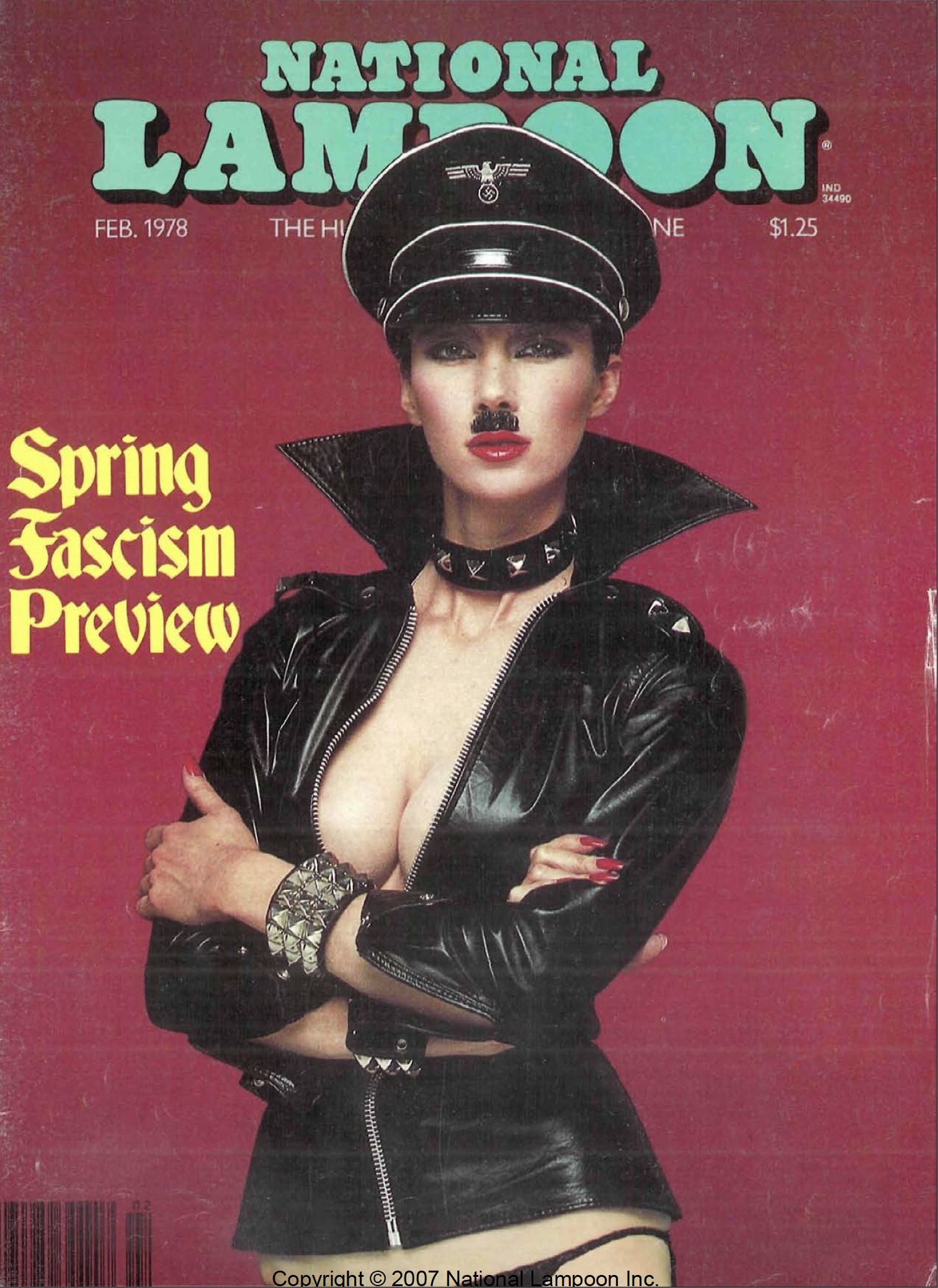
February 1978
It is perhaps poetic, then, that, as I approach the end of my career (a few more years left, but retirement is looming), that there would once more be an attempt to cancel me, only this time from the left (or what claims to be the left these days). Readers can find the link to the story at The College Fix: “UW-Green Bay students want professor fired for alleged racism, transphobia.”
It’s ironic that the example of my alleged racism is a piece I wrote in 2008 covering Jesse Jackson’s criticism of Barack Obama’s dog whistling about what bigoted whites see as the problems with black people. This is what would have back then been called an anti-racist take (since then, as I have shown on this blog, antiracism has come to represent anti-white sentiment).
My reflex to defend black Americans from the stereotypes Obama and others use is in part a product of my parents, who dragged me into Civil Rights activism in my diapers. My parents were activists in the movement and, later, the antiwar movement. My father, a Church of Christ preacher, was radicalized by the events of the 1960s and turned to liberation theology. We marched together. We went to black churches. We broke bread with black Americans.
When I was a toddler—this would have been in 1964—we had to flee a small-town church in West Tennessee after receiving death threats from the Klan, many of whom turned out to be congregants. Then in 1970, we were thrown out of a church in Sharpsville, Tennessee. We lived in the preacher’s house, a tiny cinderblock dwelling supplied by the congregation. I remember the night the mob came to the house with baseball bats and ax handles to drive us out.
I know what it looks like to see a principled man canceled because he stood straight and strong for social justice (which meant something very different then than now).
It is, for this reason, weirdly appropriate that the Jesse Jackson blog post was selected, which the students had to find by searching the Internet archives while my blog was down for maintenance. I imagine a conversation that went like this: “I’m offended by Professor Austin.” What offended you? “I found an article from 2008 where he quotes Jesse Jackson using the N-word.” Wait, you went searching for an example of him using an offensive word and had to go all the way back to 2008 to find him quoting somebody who used an offensive word? “Yes. And I was offended.” Could it be that you wanted to be offended?
These circumstances provide me with yet another opportunity to emphasize the things that make the American Republic so great and to identify the perils she faces in perpetuating her greatness into the future, namely threats to the constitutional rights to free conscience, press, and speech—and to remind people of points I have made over the years in my essays to this blog and in speeches at teaching and workshops:
While there is a right to engage in offensive speech, there’s no right not to be offended. If there’s a cost associated with offensive speech, then speech is not free. If I say something offensive, then you may ignore it, agree with it, or object to it. Ignoring, agreeing, or objecting to offensive speech costs nothing. If you cancel or punish offensive speech, there is a cost imposed. Then speech isn’t free. If you desire that a speaker be cancelled or punished for his utterances or writings, then you cannot claim to believe in free speech.
College students don’t need to announce their opposition to free speech. They need only seek the cancellation of the speaker. The desire speaks for itself. It is an authoritarian desire. Tragically, the illiberal impulse is rampant among our youth.
One thing that the proponents of cancel culture will tell you is that getting somebody disciplined or terminated from their job isn’t cancel culture but “accountability culture.” They’re saying this about the actions taken against me in this case. Actually, accountability culture is making people answer for their misdeeds. Making arguments and expressing opinions is not wrongdoing. Therefore, there is nothing for which to be held accountable. The premise is fallacious.
What’s happening here is an instantiation of cancel culture. Cancel culture is an illiberal impulse to harm a person’s reputation or career, or to intimidate them into silence, because some individual or group doesn’t like the things he says.
Usually, those who claim to be offended or hurt by speech are actually worried that others may hear or read words that may enlighten those they believe are under their charge. They feign offense and harm to punish those whom they find disobedient or insufficiently deferential to their beliefs to make an example of them. It’s a power trip. At its core, it’s authoritarianism.
Islamic clerics and their mobs attack people for blasphemy not because they’re offended by seeing a cartoon of Muhammad with a bomb in his turban. They exploit the cartoon as an instrument to chill speech critical of Islam. The goal of Muslim cleric and his mob is to Islamize society. Mocking the prophet undermines that goal. Attacking those doing the mocking is the attempted negation of the undermining.
As I have shown on these pages, Islamists developed the term “Islamophobia” to smear those who criticize the doctrine. It’s the same spirit as the accusation of “transphobia.” Like Islam, transgenderism is an ideology. For the true believer, no one is allow to criticize the ideology because the zealot seeks to make it total, to make others conform to doctrine. You may recall Christopher Hitchens rhetorically asking his audience: “What are the first five letters of totalitarianism?”
Knowing this, the totalitarians make themselves out to be victims, crying that the criticisms make them “unsafe.” This is the culture of “safetyism” that college administrators have incubated and socialized.
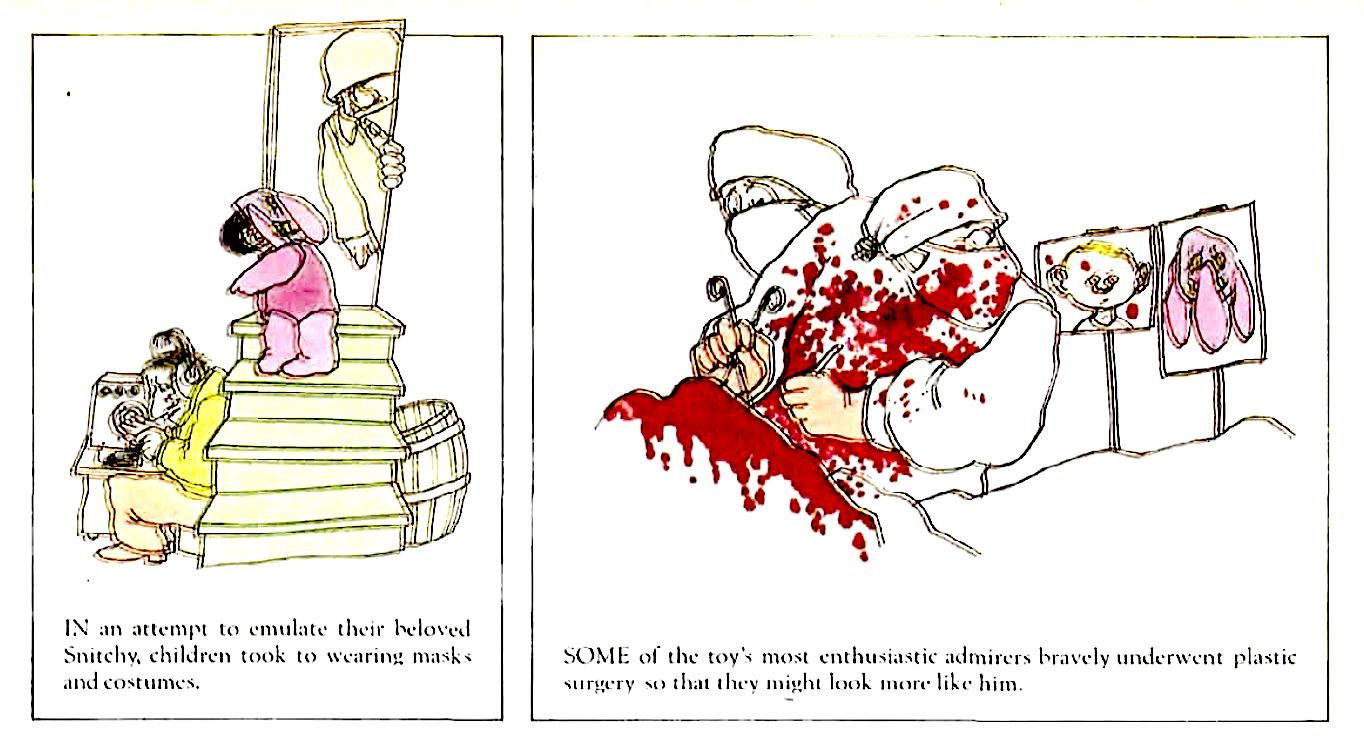
Snitchy by Gahan Wilson, National Lampoon February 1978
These are the children of DEI. “Safety” as a euphemism for “speech I don’t like” is not something that occurs organically—certainly not everywhere at once. Safetyism is a teaching, a preachment. One implication of safetyism is that “speech is violence” (so is silence, we are told). The “safe space” is then constructed and used to suppress problematic voices.
This is the “inclusion” piece of the authoritarian project of the corporate state. Because everybody is to feel included, facts and opinions that make them feel excluded are forbidden. To be sure, not everybody is to feel included. If a point of view is disallowed, then those who express it are excluded—and reported. In this way, the cult of safetyism transforms youth into a Stasi-like apparatus, where the names of those who speak forbidden words are shared with the authorities and the media.
There are obvious features of cultural revolution at work here, as well, such as mobbing members of the older generation. Those who dwell in the adult world have been here before. These phenomena are organized by forces above young people, other adults who use them as a means to an end. Again, I have written about these things on Freedom and Reason for many years and at great length, so I won’t belabor the point.
These developments are precisely why irreligious and other heretical forms of speech are essential for preserving a free and open society. Those who would cancel others for their speech are those who desire a closed society where they get to choose what speech is uttered and thus what thoughts are thunk. No man is worthy of the job of commissar.
I might as well as have been called an “infidel” or “witch.” Neo-religions function the same way as the traditions ones, perhaps the only difference being the level of intensity; because they are younger, the new religions are eager to establish hegemony over everyone. They’re desperate for their worldview—which rests on impossible things—to be validated. This is why the constant demand for “affirmation”: it betrays their doubt and insecurities.
Snitchy by Gahan Wilson, National Lampoon February 1978
I don’t like controversy and conflict. But nobody owns me, and I am not accountable to the trans activist. I am an autonomous person with my own mind. I do what I do because, while the truth has its own integrity, without people prepared to defend it and advance it, it will become lost to consciousness.
Without truth, there is only power. In some real sense, as we used to say in the South, the devil has the power you give him (the sociologist Max Weber famously gave us the secular version in defining obedience to authority). Giving zealots power is irresponsible in light of their desire to close minds and societies. They wear cat ears to appear harmless. Cat ears are one of the insignia of the New Fascism.
Finally, we need to say this out loud: pulling one’s pants down in public is a vanity project, often a manifestation of clinical narcissism. When people have accomplished little in life, they lean on identity, as if who they are gives what they say some special significance. But few people beyond their ilk really care that they think they have superpowers. When others affirm them, know that most are acting in bad faith—and snicker behind their backs because they are ridiculous. They put up a front because they don’t want to have to deal with the temper tantrum—or the agents of DEI.
In reality, compassionate and rational people pity those who think identity matters. They think to themselves, as we say in the South, “Bless their hearts.” Me, I don’t fear the agents of DEI or their minions. I understand what this is about. And now you do, too.
If you’re curious how it came to be that college students are chanting pro-terrorist slogans on the campuses of ivy-league universities, you only need to understand that they were prepared for this moment by their professors. There are interviews with students telling reporters that they’re putting into action the social justice values their professors taught them.
Over the last several years, college kids have been fed a steady diet of anti-American, anti-Israel, and anti-Western propaganda in the form of postcolonial, third world studies, and other ideological projects framed in the academic jargon of postmodernist critical studies.
Anti-Western mob at Columbia University last Saturday
Critical race theory, queer theory, and the rest of the fallacious mess are more than crackpot. They’ve turned young people against themselves, exploiting their lack of self confidence in the West (self-loathing betrayed by narcissism), reducing the Enlightenment to a mythology about white supremacy and a problematizing of the millennia long practice of settler colonialism (even while promoting the invasion of the West by backwards culture bearers).
In this worldview, free speech, individualism, progress, reason, and science are depicted as racist and violent. The solution, namely antiracism, is censorship and compelled speech, tribalism, indigenousness ways of being and knowing (i.e., atavisms), feeling over reason, anti-scientism—and violence.
Irrationalism and nihilism are now rampant in the West. And just in time for the 2024 US presidential election. The color revolution joins lawfare and security state intimidation in stifling the populist nationalist movement to restore democratic republican principles and the values of classical liberalism. In this way, the universities have become a key player in the corporate state transformation of free societies into tyrannies.
* * *
On a related matters… As I have shown on the pages of Freedom and Reason, gender ideology is a neo-religion, a techno-religious cult, as Jennifer Bilek calls is. Here’s another neo-religion:
In the year 2038, transhumanism has risen to become a dominant ideology, reshaping society in its wake, protected in DEI policy. Among the youth, it has become a fervent creed, promising liberation from the limitations of the flesh. Two distinct paths have emerged within this movement: individuals who identify as transspecies, referring to themselves as “otherkin” and “therianthropes,” and cyborgs, a synthesis of soft and hard machine.
An otherkin (AI generated)
Otherkin see themselves as nonhuman animals or other creatures. They undergo physical modifications to embody the characteristics of the creature with which they identify. This can involve surgically implanted features like whiskers, claws, scales, or other physical traits associated with their chosen animal identity. A person who identifies as a cat might undergo surgery to have cat-like ears and a tail implanted, while someone who identifies as a reptilian might have scale-like modifications to their skin. These modifications are a way for otherkin to express their identities and feel more aligned with their “true selves” within the framework of transhumanism.
Cyborgs are individuals who have integrated advanced technology with their bodies through neural implants and other technological enhancements. These enhancements can range from cybernetic limbs and organs to neural interfaces that allow direct communication with machines and networks. Like otherkins, cyborgs have embraced the principles of transhumanism, viewing technology to transcend the limitations of the human body and enhance their capabilities. They may undergo elective surgeries and procedures to integrate these technological enhancements seamlessly into their physiology, blurring the line between human and machine. Through their cybernetic enhancements, cyborgs may gain enhanced strength, speed, agility, and cognitive abilities. They may also have access to a vast array of information and communication tools, allowing them to interact with the digital world in ways that were previously unimaginable.
With a passion for sociology and a critical eye for societal shifts, Professor Adam Kessler was determined to unravel the complexities of this new era. He began, “Today, we apply foundational social theories to the phenomenon of youth, drawn to the allure of transformation, modifying their bodies to appear as other species or machines.” Kessler began with the historical materialism of Karl Marx, guiding his students through the concept of alienation. “In a world where connection seems elusive, where the individual feels estranged from their own body, it is no wonder they seek refuge in alteration,” he explained. Transitioning to the ideas of Max Weber, he elucidated the process of disenchantment, where the world loses its mystique and becomes mechanized. “In the pursuit of transcendence, the human spirit craves a release from the mundane, a departure from the banality of existence.” He then turned to Sigmund Freud. “In a civilization built upon consumption, where desires are manufactured and identities commodified, the individual grapples with a profound sense of disconnection.”
As the lecture unfolded, students found themselves drawn into the intricate web of theories. Beneath the academic analysis lay a dark truth, one that spoke to the insidious influence of profit and power. “The medical-industrial complex and tech conglomerates profit from the commodification of the body, perpetuating a cycle of modification fueled by consumerism.” Kessler finally came to it in the most concrete and immediate sense of the phenomenon: “The industry capitalize on the insecurities of youth, peddling promises of transcendence in exchange for a hefty price.”
In the aftermath of Professor Kessler’s lecture, a palpable tension lingered in the air. Among the students sat a group of transhuman individuals, their identities woven into the fabric of their being, their experiences colored by the very theories Kessler had dissected in the classroom. Gathering their resolve, they convened outside the dean’s office, their voices raised in solidarity against the injustice they had endured in Kessler’s class. With a collective determination, they invoked the school’s policy against misrepresenting transhumanism, demanding accountability for the harm inflicted upon their community.
Acknowledging the gravity of the situation, Dean Katherine Graves summoned Professor Kessler to her office. She informed him of the consequences of his actions, reminding him of the responsibility he bore as an educator entrusted with the minds and well-being of his students. “Professor Kessler, it has come to my attention that your recent lecture has violated our school’s commitment to inclusivity and respect for all identities. As such, you will be required to undergo professional development to ensure that such oversights do not occur in the future.”
Fearing for his reputation, Kessler acquiesced to the dean’s judgment. The students found solace in the acknowledgment of their grievances, their voices amplified by a system that, though imperfect (it had, after all, awarded tenure to a bigot like Kessler), remained committed to progress. And as they returned to their studies, a newfound sense of empowerment stirred within them. The transhumans had the state at their back.
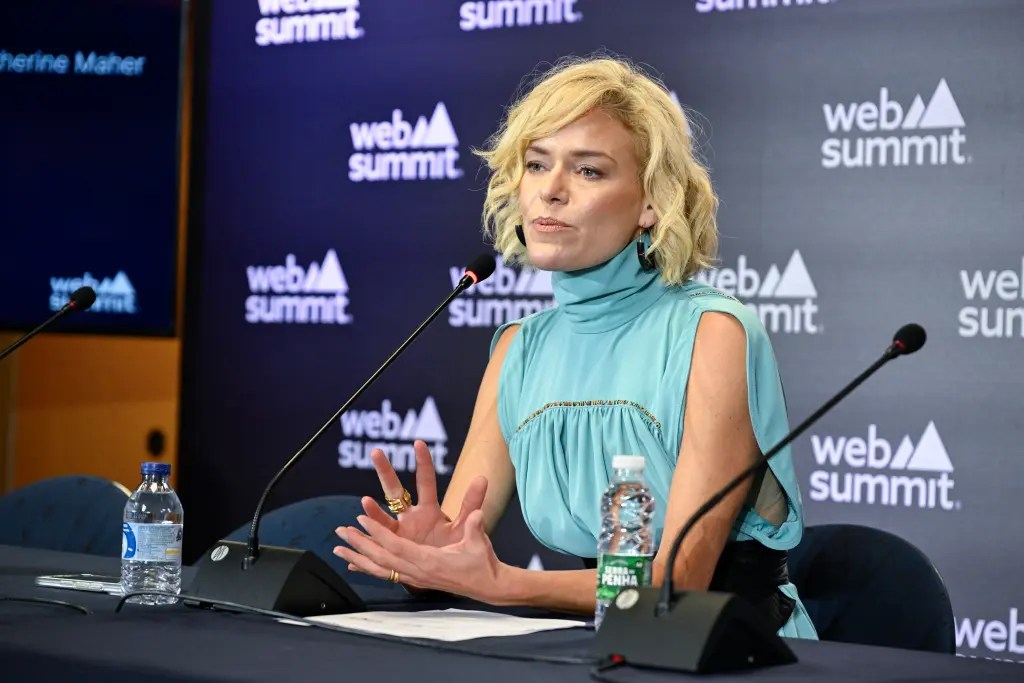
“Our reverence for the truth might be a distraction that’s getting in the way of finding common ground and getting things done.” — NPR’s CEO Katherine Maher on the truth
The “might be” is rhetorical. Maher is asserting that propaganda in the service of woke progressivism is of greater value than reverence for the truth. Hiding the truth of Biden family corruption and manufacturing stories about Trump family corruption is a way of finding common ground and getting things done.
Katherine Maher, CEO of National Public Radio
Maher is not speaking for herself. This is how the woke epistemic works. In postmodernism, truth is reduced to and dissolved by discursive formations, with formations to be selected for their power in advancing movement goals, which function to obscure the truth, which has its own integrity.
For example, the truth is that gender is binary and immutable in the human species (all mammalian species, in fact). The woke take is that gender is either a sociocultural construction and performance with no connection to natural history or a transcendent spirit independent of observable reality; however, whatever the case, the individual’s subjectivity stands in place of the truth, so people are what they say they are.
EXCLUSIVE: Katherine Maher says that she abandoned a "free and open" internet as the mission of Wikipedia, because those principles recapitulated a "white male Westernized construct" and "did not end up living into the intentionality of what openness can be." pic.twitter.com/Ved9mgGvJH
— Christopher F. Rufo ⚔️ (@realchrisrufo) April 18, 2024
To be sure, the reduction of truth to individual subjectivity is selective. While a man can be a woman and a lesbian, a white person cannot be a black person. But the disappearance of truth in wokeness makes contradiction irrelevant. You will simply be told that the analogy is fallacious. Not because it is (while it is possible for a white person to be black, the analogy holds), but because the woke movement is righteous; therefore, any rule it invents is correct because it “gets things done.”
This is not a pragmatic take on truth. This is the elevation of ideology over fact and reason. This is the way Nazism worked. The Nazis reduced truth to ideology. Rule and right under Nazism were arbitrary with respect to the truth of the world. The important thing for Nazis was to get things done—according to the ideology. And the goal was the same: advance the interests of the corporate state.
Maher tweeting about the color revolution aimed at derailing the Trump re-election campaign
NPR and PBS are are part of the corporate state media machine. Their claim to be apart from the profit-generating side of that machine is an attempt to manufacture the illusion of objectivity. In this way, their existence is more objectionable than their private sector counterparts.
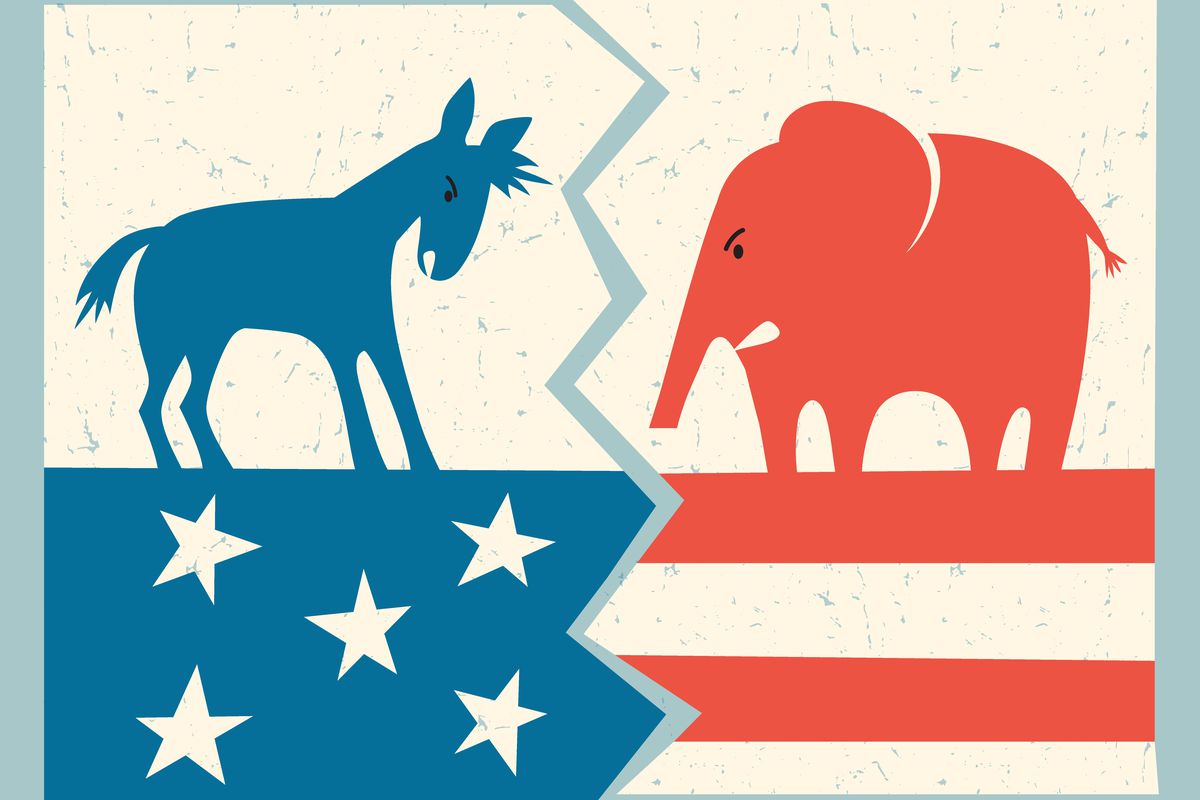
When thinking about who to vote for this November, consider what type of country you want to live in. Here are the two options. These options encompass our past and our present.
Option 1: A constitutional republic with a robust bill of rights, governed by citizens according to the principles of democratic republicanism, guided by the classically liberal values of free speech, conscience, assembly, association, individualism, and limited government, where the family and community are the core institutions organizing social life, who can depend on government to protect them—their neighborhoods and their livelihoods—from crime and disorder.
Option 2: A corporate state governed by bureaucrats operating via administrative rule, regulatory control, and technocratic means, guided by the progressive values of censorship, compelled thought, tribalism, collectivism, and expansive intrusive government, where corporations and state agencies organize social life at the expense of family and community. Families and communities cannot depend on the government to protect them from crime and disorder.
Shutterstock
Once you decide which country you want to live in, the next question is which political party will help you realize that country. Here we hit a snag since the hegemonic strategy of the ruling elite has been over the last several decades to put before the people two political parties that appeal to different class, cultural, and intellectual sensibilities, while perpetuating the status quo—corporate state control over the masses. This is the uniparty establishment.
Considering this, the question shifts to the history of each party and a determination of which party is reformable.
One party, the party of the caste, slavery, segregation, and woke is not reformable. It’s the party of the corporate state phoenix that rose from the ashes of the slavocracy. Its rules are exclusive, its operatives tightly controlled. It is moreover the party of those who captured the administrative apparatus—progressives. If you prefer Option 2, then this is your party.
The other party, founded as a populist antislavery party, because it is more open to popular forces in the grassroots, despite having been captured by corporate power and relegated for decades to the role of controlled opposition, is already being transformed internally by reformers who are articulating the vision described in Option 1. So, if a constitutional republic is the country you want to live in, the Republican Party, while not perfect, is the better option.
Restoring the American Republic to greatness requires returning the Republican Party to its roots by supporting populist activists and candidates. The people must do this at the same time they weaken the Democratic Party by withdrawing support for its candidates and refusing to submit to administrative rule. It’s time to return the United States to her people—the American citizen.









 freedom and reason