Here’s an example I see all the time on social media and in street interviews: “Donald Trump is a trust fund baby.” The blankface dummy in supervillain garb repeats this as if it is a remarkable and essential truth. (We see this also in the constant repetition of the irrelevant fact of Trump’s felony conviction. See “Trump is a Felon!” The Squawking of Party Parrots.)
Trump inherited an estimated $177 million from his father, Fred Trump, when the family real estate empire was sold after Fred’s death in 1999. Trump received at least $413 million total over his lifetime through inheritance, gifts, trusts, and loans. When Trump entered the White House in January 2017, Forbes estimated his net worth at about $3.5 billion. As of February 2026, his net worth is estimated at roughly $6.6 billion, fluctuating mainly due to real estate holdings and stock valuations.
The talking point denies the truth: the man took the millions he inherited and made himself a multi-billionaire, not only in real estate but also in, among other ventures, producing a successful TV show that ran for several years. The Apprentice was not just a hit—it topped the ratings charts at various points, making Trump a household name. How is this the record of a “failed businessman”?
“Because he declared bankruptcy many times.”
Trump himself has never declared personal bankruptcy. Six of his companies filed for Chapter 11 bankruptcy between 1991 and 2009, mostly involving casinos and hotels. However, this is not unusual in large-scale real estate, where developers commonly use bankruptcy strategically to restructure debt while protecting personal wealth, and many successful real estate billionaires have had multiple corporate bankruptcies during their careers. The fact that bankruptcy is a tool in successful business practice is mundane. You may not like it, but it is, and it’s not like personally declaring bankruptcy (there is no shame in that, either).
“And now he has bankrupted the Kennedy Center!”
Trump did not bankrupt the John F. Kennedy Memorial Center for the Performing Arts. When he assumed the position of chairman of the board, artists, performers, and production companies—cultural elites programmed with progressive ideology—boycotted the center and canceled their engagements. Ticket sales plummeted and, as a result of organized protest, the center now faces financial and operational strain. A planned two‑year closure for renovations was exaggerated into existential concerns about the institution’s cultural standing and future stability. “He even put his name on the building!” He won’t be president forever. A future president can take it off.
“But the East Wing!”
Stop and address the question. How is Trump a “failed businessman”? Clearly, he isn’t. He is on the list of the 400 richest individuals in the United States—and he earned that status as a successful businessman. This is the diametric opposite of the zombie’s portrayal.
But there is a deeper question: why does any of this matter? So Trump inherited money from his father. So Trump’s business ventures have occasionally run into financial difficulty. So a handful of his companies declared bankruptcy. So Trump put his name on a building. Hardly unusual for a wealthy man.
Is that the problem—that he is rich? Is it class envy? Nietzschean Ressentiment—the deep, internalized resentment of the failed and self-perceived powerless towards the self-actualized and successful that shapes slave morality?
At the founding of the country, George Washington’s relative wealth in his era—landholdings, stocks, etc.—made him the undisputed richest individual in the country. Ponder that, if you will: the richest man in America became America’s first President. Moreover, Washington faced serious financial difficulties at times in his life. He managed these deftly and died a wealthy man.
Try explaining this to a zombie. It won’t work. Try explaining fascism to a zombie. Same blank stare. Rudimentary biology draws the same reaction. Zombie mode is an impenetrable state of mind. Progressives lumber about seeking brains because their own have atrophied.
This mental state is akin to the phenomenon of a programmed assassin—an individual who is the product of conditioning, ideological influence, and manipulation to kill without fully autonomous intent or moral deliberation. The programmed assassin is not a rational actor but a tool—shaped by external forces, e.g., leveraged personal grievances, psychological conditioning, or radical ideologies—that, on command, channels action toward a specific target. The culmination of layered manipulation, obsessional drives, and social pressures programs an individual to commit violence. (We see this in Islam, as well, with the suicide bomber phenomenon. See Message to the Rank-and-File Progressive; Alliance of Death Cults: The Rise of Lethal Misanthropy in the West.)
That example might seem extreme. But it’s the same dynamic that lies behind the flipping of a switch that causes thousands to take to the streets (to join the professional agitator who earns his living at it), one day chanting and waving signs with the slogan “Free Palestine!”, the next day, “No Kings!”, and the day after that, “ICE Out!”
When a zombie driver follows around ICE officers rounding up child molesters and rapists illegally present in our country, says, “I don’t care,” after an ICE officer generously explains that they are doing—that’s zombie mode. It’s the mind state that lies behind an activist mashing the accelerator pedal when an ICE officer walks in front of her car, or the “constitutional observer” bringing a firearm to an organized effort to interfere with law enforcement operations. (see Wokedom and the Problem of Lethal Altruism; also “Assault Me, Motherfucker!” Suicidal Altruism and the Politics of Suicide Contagion; “The Whole System is Guilty!”)
Have you ever seen the Fleischer Studios Superman cartoon from the 1940s, “The Mechanical Monsters”? It’s like that. The mad scientist, Dr. LeHah, controls the robots with a big console full of levers and switches. There’s a dramatic moment where he flips a switch, and the robots immediately stop what they’re doing—I think in one scene they’re raiding a bank—and switch to another task, obeying his commands instantly. LeHah has total control over mechanical soldiers responding to a single will. (I have used this analogy before, see Robots and Zombies Assemble! We Must Have War!)
This is the purpose of “inclusion” in progressive circles: appealing to disordered personalities to amass an army of robots. This explains why, when most of America has awakened to the madness of gender identity doctrine, Democrats introduce legislation to recognize “trans rights,” including in the list of demands everything ordered personalities reject. It’s a signal to the zombies that Dr. LeHah is still at the controls. (Before Andrew Wilson’s appearance on Joe Rogan’s podcast, I was writing about this. In addition to the essays I have already embedded, see Deviance as Doctrine: The Post-Liberal Moral Revolution; The Politics of Disaster Capitalism.)
To take this analogy to its logical conclusion, in those Fleischer Superman cartoons, Superman isn’t just fighting generic villains; he’s defending ordinary people, society, and the foundational moral order. He stops criminals and mad scientists who threaten the safety and stability of everyday life. In later serials, protecting the public and upholding law and order evolved into the catchphrase, “Truth, justice, and the American way.” Superman is not the Nietzschean Übermensch (“Overman”). The Man of Steel is the personification of our civilization. And this is why progressives will never understand MAGA.
Progressives have turned the world into a living manifestation of a Fleischer Studios cartoon—with some DC Comics villains mixed in (see my 2019 essay Joker and the Mob).
It is striking how pro-capitalist ideologues react when capitalism is described as exploitative. They often assume that the claim is an attack on capitalism itself. Nothing could be further from the truth.
In political economy, exploitation is a descriptive, analytical concept—not a moral verdict. It refers to a structured process by which value is extracted from resources found in ecosystems, labor, land, raw materials, and social capacities within a given mode of production.
To say that labor is exploited, in this sense, is simply to describe how surplus is generated and appropriated through institutional arrangements like wage labor, property rights, markets, and the state.
The surplus is the portion of total social labor that exceeds what is necessary to reproduce the labor power of workers and the material conditions of production at a given historical level. It is the product of surplus labor time—labor performed beyond what is required to produce workers’ means of subsistence—and it appears in capitalism as surplus value, later distributed in transformed forms such as profit, interest, and rent.
The social surplus is not defined by individual firms or transactions but at the level of society as a whole, reflecting a class relation in which one class controls the conditions of production and appropriates the surplus produced by another.
How the social surplus is generated, appropriated, and allocated determines the structure, dynamics, and historical trajectory of a mode of production, making it a central analytical category rather than a moral judgment.
The term identifies a mechanism of value transfer; it does not, by itself, determine whether that mechanism is lawful, fair, or socially desirable.
Image by Sora
This usage differs sharply from the popular meaning of exploitation, which typically implies abuse, coercion, or illegality. In everyday discourse, exploitation is often synonymous with injustice and wrongdoing. In political economy, by contrast, exploitation can be entirely legal, routine, and foundational to economic organization.
Classical political economists and Marxian theorists alike use the term to explain how profits, rents, and surplus arise under capitalism and other modes of production. Whether exploitation is seen as efficient, inevitable, or unjust is a separate question from whether it exists.
The confusion arises when descriptive and normative levels of analysis are collapsed.
Descriptively, exploitation names a relationship: one actor or class systematically extracts value produced by another through socially recognized rules. Normatively, scholars and political actors may argue that such extraction is justified, unjust, or reformable—but those judgments are not contained in the term itself.
Put another way, treating exploitation as inherently immoral imports ethical conclusions into what is, at its core, an explanatory concept.
Within political economy, exploitation functions much like terms such as accumulation, appropriation, or surplus extraction. It allows analysts to map how economies actually work before taking a position on how they ought to work.
I wrote this essay following a discussion on a Facebook thread by the Working Families Party (WFP), in which pro-capitalist ideologues attacked my observation that the WFP errs in suggesting that capitalism is uniquely problematic because of its exploitative practices. (The WFP also errs in its support for mass immigration, which is intrinsically harmful to American working families.)
The pro-capitalist ideologues misunderstood my initial post, where I argued that one cannot eliminate exploitation without overthrowing capitalism. But even this point was misread: since all economic systems are exploitative in some form, eliminating capitalism would not eliminate exploitation as such.
One finally admitted that I was right, but said that, since exploitation originally conveyed wrongdoing, I was misleading people. But the earliest meaning of the term did not originally mean wrongdoing. Its earliest meaning was neutral and economic. People misunderstand because they are uncharitable and can’t be bothered to learn. But I can be bothered to educate.
Here’s the reality: The problem of exploitation cannot be “solved.” Exploitation is inherent in humanity’s relationship with nature—including relations among humans themselves. This is true even in hunter-gatherer societies.
The question, then, is whether the system within which exploitation occurs is just. That is a moral question about capitalism as a system, not about exploitation per se. When we examine what constitutes a just system of exploitation, we have to ask whether our lives are better under one productive modality compared to another. Are we better off now than we were or could otherwise be? This question is not only about the material conditions, but also about whether we are free.
The effort to portray the SAVE Act as “Jim Crow 2.0” has backfired spectacularly. By implying that black Americans are incapable of registering to vote or obtaining valid identification, Democrats condescended to a community they claim to protect. The new angle is that millions of women will be disenfranchised because they changed their last names upon marriage and would face burdensome processes to vote. This is false.
In the United States, marriage and taking a husband’s last name do not affect US citizenship. Citizenship remains unchanged regardless of whether the spouse is a US citizen. No declarations, filings, or special permissions are required to maintain citizenship status. A woman who adopts her husband’s surname automatically remains a full US citizen with all associated voting rights.
Democrats have also falsely asserted that the SAVE Act requires a passport to vote, noting that millions of Americans lack one and would therefore be barred from participating. In reality, the Act does not mandate a passport for voter registration. It permits other forms of identification and documentation to verify identity and eligibility, ensuring the process remains accessible.
The SAVE Act balances voter accessibility with election integrity. It would be illogical for Republicans to enact a law that disenfranchises millions of their own voters.
Democrats’ bold misrepresentations reveal their true opposition to election integrity measures—as detailed in my recent essay on Freedom and Reason. Such blatant falsehoods expose their motives and their apparent belief that the public can be easily swayed by propaganda. (See Democrats Gaslight Americans Over Election Integrity, as well as the comments sections.)
The SAVE Act passed the House yesterday on a near-party-line vote, with only one Democrat—Rep. Henry Cuellar of Texas—voting in favor. The Senate remains the primary obstacle. Republican Sen. Lisa Murkowski of Alaska has publicly stated her opposition to the bill (now often referred to as the SAVE America Act in its updated form). All Senate Democrats have also indicated they will oppose it.
With the Senate requiring 60 votes to overcome a filibuster on most legislation—and Republicans lacking that threshold—the bill cannot realistically advance without bipartisan support, unless the filibuster rule is set aside.
Tom Homan, a good and decent man, was put in a difficult—and frankly embarrassing—position when he was forced to draw down federal forces in the Twin Cities. He just held a press conference explaining the drawdown.
I liked the job Bovino was doing. Alongside “No Kings!” and the rest of it, “ICE Out!” is part of a color revolution. The mob—and the operatives who organize it—are bankrolled by NGOs funded by transnational financiers and the Chinese Communist Party. (See “The Whole System is Guilty!”)
I want Trump to nationalize the Minnesota National Guard, send federal troops into Minneapolis and Saint Paul, roll up the mob, and arrest the operatives (see Send in the Troops; The New Confederates and the Return of States’ Rights). I want the federal government to identify these funding networks and prosecute them.
We need to smash this threat to American sovereignty. Maybe there’s a master strategy here. But perceived weakness emboldens the forces seeking to knock America out of its position as world hegemon.
That’s bad for us—and bad for the world.
Image by Grok
I noted this during Trump’s first term, and again in several recent essays: Trump appears too hesitant to do what previous presidents have done—federalize the Guard and deploy troops into cities and states where mayors and governors are in rebellion against the laws of the Union—because he doesn’t want to validate the false accusation that he’s an authoritarian.
They’re going to call him an authoritarian anyway. Worse, they’ve already branded him a fascist. So what does he have to lose by exercising his lawful federal authority to bring rebellious states and cities to heel, and to pursue the enemies of America and Western freedom? If he does this, I can almost guarantee his poll numbers will rise. They’ve already jumped five points in the most accurate poll—Rasmussen—buoyed by an expanding economy following his restoration of the American System.
I don’t understand why Trump officials don’t begin every press conference with images of violence against law enforcement officers. This would build public support for decisive executive action to quell the ongoing insurrection. There is no shortage of such images. Why are Republicans allowing progressives to win the propaganda war? The battle for men’s minds is central to the defense of any nation.
We cannot sustain this level of tolerance for sedition in the United States. There should be zero tolerance for rebellion against the Republic.
The national government is the supreme law of the land. Article VI, Clause 2 of the U.S. Constitution states:
“This Constitution, and the Laws of the United States which shall be made in Pursuance thereof; and all Treaties made, or which shall be made, under the Authority of the United States, shall be the supreme Law of the Land; and the Judges in every State shall be bound thereby, any Thing in the Constitution or Laws of any State to the Contrary notwithstanding.”
There comes a point when the patience of saints becomes pathological. Didn’t Trump just release a major policy document warning of civilizational erasure? Why isn’t he acting on it? Are his words hollow? Where is the man of action we were promised?
The same applies to the toleration of the Islamization of the West. Why are we allowing Muslims to establish de facto autonomous towns and cities in the United States? Americans know about Dearborn, Michigan, and the Twin Cities in Minnesota. But when I tell them about what’s happening in Texas, they’re stunned. Trump knows. The last people on earth who should practice suicidal empathy are those charged with defending the nation.
We have to put our foot down. Sometimes boots are necessary—especially when the Republic is threatened from within. At that point, decisive action becomes an imperative.
Steve Bannon, host of War Room and a stealth advisor to the President, often places Trump in the same league as George Washington and Abraham Lincoln. But if Trump is to belong in their company, he must do what they did. Both used military force to confront states and cities defying the U.S. Constitution—the Whiskey Rebellion and the Civil War. It’s Trump’s turn to be a man of action. (See A Man of Action Must Act to Be Such a Man.)
Rank-and-file progressives riot whenever they’re out of power. Democrats don’t believe in democracy. They hate what America stands for. They want technocratic control guided by corporate-state ideology (see The Real Threat to Liberty Isn’t Trump—It’s Technocratic Rule).
Technocracy negates not only democracy but liberty itself. COVID-19 demonstrated this clearly. States locked down their own citizens, acting in concert with other countries across the global North. American progressives wanted vaccine passports and mandatory masking—ritualized obedience enforced by the state.
There must be consequences for tyranny. Action exposes the dystopian future Democrats have planned for America.
Trump supporters rationalize the President’s actions as four-dimensional chess. Perhaps this is meant to protect the midterm elections—or, more immediately, to secure funding for DHS. Maybe the goal is to make it safe for Senators to pass the SAVE Act. However, I remain convinced that the best way to shore up popular support for this presidency is to do what previous presidents have done: exercise federal authority with clarity and force. We shall see.
Canadian police officials are referring to the man in a dress who shot up a school in Canada as a “gun person” and a “female in a dress.” A woman did not just murder scores of people and wound scores more. A boy did. This is not a she/her. This is a he/him. It’s not that women don’t do things like this (recall the school in Nashville). But women rarely do these types of things. There is also an indication that the boy, 17-year-old Jesse Van Rootselaar, aka Jessie Strang, was on psychiatric drugs. He also murdered his mother and step-brother.
Nine dead, 27 wounded in BC’s Tumbler Ridge
You might ask yourself how the queer community has terrified the government, media, and police into referring to men as women. They’re such a small minority—how can they have that much power?
But this asks the question the wrong way. What you should ask—or, more precisely, what you should state—is this: Trans terrorism exists because the government and media enable it. The police are forced to follow suit. (Another major player is the medical-industrial complex, but I will leave that to the side for this essay.)
You will have noticed that mainstream media, progressive groups—not only in the United States but also in Canada and Europe—repeat queer propaganda as if it’s the truth. The media refer to men using feminine pronouns as a matter of “style” (just like they capitalize “black” but not “white” when referring to race). Public institutions do the same in their documents and pronouncements. Academic publications—same thing.
🚨 "If it had been a trans victim, the media would have talked non-stop about it. But they ignore it when it's the perpetrator"
Julia Hartley-Brewer and Debbie Hayton tear into the media's failure to report the sex of the suspect in the Canada school shooting.@JuliaHB1pic.twitter.com/YiNDwcViCy
This doesn’t happen because a small group of people who suffer from delusions has power. It means that a small number of delusional people are being used—and to a degree are created by—the government to confuse the population and cause them to doubt one of the most basic biological truths: that sex (or gender, same thing) is binary and immutable.
If the state and its propaganda apparatus can get people to believe that, then they can get them to believe anything.
At the core of this is getting people to follow arbitrary rules. Orwell illustrated this in Nineteen Eighty-Four through Newspeak, a deliberately limited language designed to control thought by eliminating words and concepts—or changing their meanings—that could enable dissent or independent thinking. It uses language to alter the perception of reality. The fancy term for this is neuro-linguistic programming.
The COVID-19 pandemic response is another example. If you can get people to agree to state-mandated vaccinations, lockdowns, social distancing, and the wearing of ceremonial masks, then you can get them to submit to other forms of control. (The medical-industrial complex was involved here, as well.)
🚨"He is a MAN. He is a boy. It is a MALE crime. But you wouldn't know that from watching the BBC, ITV or Sky News."
Julia Hartley-Brewer's scathing message to media outlets for telling the public "lies" about the sex of the suspect of the Canadian school shooter. @JuliaHB1pic.twitter.com/uHzdzIaQ9O
Issues like trans ideology, pandemics, and so on serve as demonstration projects. The test is to see who is prepared to fall in line with government demands—by governments controlled by transnational corporate power, which explains the uniformity of cognitive programming across the West—and who will resist the emerging New Fascism. This is a power play.
The real power lies with transnational corporate entities that have an agenda to disorder normal modes of thinking common to our species, or enabled by the revolution in freedom that the Enlightenment made possible. The goal is to replace native common sense with an elite-manufactured version. In his Prison Notebooks, Antonio Gramsci identified this manufactured social logic as “hegemony.”
This concept is useful in understanding the present situation. According to Gramsci, hegemony is the way a dominant social group maintains power not primarily through force, but by securing the consent of subordinate groups through cultural, ideological, and moral leadership. The more you believe the prevailing institutions, the more easily you are indoctrinated in the ideology they use to disorder your thinking.
The shooter was groomed by Reddit’s r/MtF
This is why it is so important to get your head out of the hegemonic mode of thought pumped out by prevailing policy- and sense-making institutions, and turn instead to alternative, more traditional sources of knowledge production—communities of sympathy and concern, Christianity (not woke), and science (uncorrupted by ideology).
Resisting the new common sense is vital to preserving your native common sense. Even when you feel alone, if you are alone with the truth, you can weather the propaganda storm and keep a clear head. That’s how one gets through this: keep a clear head and refuse to bow to power and humiliation.
Finally, I know it’s scary, but when you speak up, it lets others know they are not alone in the truth. Mutual knowledge is a major weapon against power. The emperor is naked, and people know it, but they are unsure that others know it. Doing this by private message is also effective. I appreciate those who are scared to speak out, who contact me on the sly to tell me they get it, too.
I just checked, and the Great Ape-gate hoax has fallen out of Google’s news aggregator. The only value progressives might extract from the video Trump did not share on TruthSocial at this point is to drop it and let people believe the initial big lie. Theyhave to do this, really. Had progressives continued to push the hoax, they would have drawn ever more attention to the fact that it was a hoax—and that they knew it was a hoax. It’s not as if they would ever be honest enough to admit it was.
I wonder what the next moral panic will be? Since progressives are completely making up shit these days, the possibilities are really endless. Turning Point’s alternative Halftime programming may have legs, especially as data showing how successful it keeps pouring in (I am confident advertisers are taking note). Progressives already framed the Turning Point event as an expression of backwardness and bigotry.
That’s the trick: make the response to cultural warfare the culture war itself. Open the border and flood the country with foreign culture-bearers, and then accuse those whose culture is being disordered of making it about culture.
Bad Bunny during the Super Bowl LX Halftime Show at Levi’s Stadium on February 08, 2026.
Did you see the things going on during Bad Bunny’s performance? A man humping a woman in the back of a truck? A man humping a man in the cab? A video of Trump dancing at a party is evidence of a child predator ring, but dancers humping each other at Halftime is an all-American message of unity. If you disagree with that, you’re a racist.
Here’s how zombie-like progressive politics is: We’re supposed to believe that millions of Americans who don’t know a lick of Spanish or who have ever only passively listened to trap en español as background music while eating tacos and drinking margaritas at a Mexican restaurant were Bad Bunny fans. The performance is being touted as the best since Kendrick Lamar, right up there with Prince’s Super Bowl XLI halftime show and Michael Jackson’s Super Bowl XXVII halftime show, which turned Halftime into a high-profile event.
Social media users incorrectly identified a child actor in Bad Bunny’s Super Bowl Halftime as Liam Cornejo Ramos, the five-year-old boy recently detained by ICE (after being abandoned by his father). The child was actually actor Lincoln Fox, who represented a younger version of the artist, not the detained child. Progressives say this confusion reflects racism on the right. It’s not supposed to be obvious that the point of having a child receive Bunny’s Grammy was to remind the audience about the alleged terrible injustice done to Ramos, as well as Bad Bunny’s Grammy speech in which he condemned ICE.
Progressives are conditioned to be ready for the next episode of mass programming. One day it’s “No Kings!” The next one is “ICE Out!” Then “Obamas are apes!” After that, Bad Bunny. (I am sure I am leaving out in-betweens.) They don’t have to know why they’re doing the thing. The switch is flipped, and they’re doing the thing. All they knew about Bad Bunny—if they knew anything at all—was that the man would be singing in Spanish and that he might wear a dress—and that this would piss off the MAGAts, which feels so good in Pretend Land.
I watched some of the Bad Bunny clips while reading the over-the-top coverage of the event. Did readers notice that he played to the camera and not to the crowd? Apart from a few here and there, the crowd wasn’t into it. They were forced to watch propaganda being produced. Bad Bunny was for the sheep at home. From his vantage point, it appears that Commissioner Roger Goodell realized he screwed up. The stream looked flashy. Inside Levi’s Stadium? No energy. A woman on video exclaimed, “No one is dancing. Not one person. Send help!”
Cartoon by Tom Stiglich
Here’s how the trick works: The abolitionist Republicans were the ones who were political because they were trying to destroy a way of life—the slavocracy that underpinned the Southern aristocracy, which Democrats defended. Those who oppose compulsory preferred pronouns are the political ones. They’re the authoritarians, not those who force others to lie about gender. Those who object to a Super Bowl Halftime performance because it sucked, was in a language most Americans don’t speak, and was obvious progressive propaganda pushing multiculturalism and open borders—they’re the political ones.
It’s the MAGA neanderthals who are on the outside looking in. They want the culture war. They aren’t America. Bad Bunny is America.
* * *
In terms of mass social psychological dynamics, a humiliation ritual describes situations where groups humiliate individuals or other groups to enforce conformity or hierarchy. Is that not what the NFL’s Halftime show was? To humiliate Americans who voted for Trump and who want to keep their country, to compel them to accept multiculturalism and the demographic transformation of their nation?
Patriotic Americans are being told to learn Spanish because soon English speakers will be the minority. If one says, “Not if I can help it,” he can expect to be smeared as a nativist, racist, and xenophobe.
This is happening all over the West. Native populations are being replaced with alien culture-bearers and then humiliated when they rise to defend their culture and their people. The population targeted for replacement and humiliation? Native whites. Imagine this project working in any other part of the world and being portrayed as a progressive endeavor?
I forget who said this, but I remember somebody celebrating Bad Bunny on social media the morning after saying this was a “teachable moment.” Indeed, it is.
Readers of this platform are almost certainly hearing the propaganda that, while there is election fraud (if fraud is admitted at all), it’s insignificant, and therefore, cannot possibly determine the outcome of an election.
The propaganda bases its claim that election fraud is negligible on successfully prosecuted cases. As a criminologist, I can tell you that the ratio between crime in the United States and the number of crimes successfully prosecuted is striking. Even when considering only crimes reported to the police, a relatively small proportion result in successful prosecution.
According to the National Crime Victimization Survey (NCVS), in recent years, only a little more than 40 percent of violent crimes and 30 percent of property crimes have been reported to police—and that isn’t counting the crimes victims do not report to the US Census Bureau. Of those crimes reported to the police (recorded in the FBI’s Uniform Crime Report), only around 15 percent result in arrest or clearance, i.e., are delivered to the next phase of the criminal justice process. Only around 10 percent lead to prosecution—and this varies dramatically by jurisdiction and offense type. Less than ten percent end in a conviction.
Obviously, one would have to be naïve in the extreme to believe that the frequency of criminal offending in America reduces the number of convicted criminals. Yet Democrats want the public to be similarly naïve about election integrity. But as we see with crime in America, just because there are a few successfully prosecuted cases of election fraud doesn’t mean that that’s all the election fraud there is.
Americans need to think about election integrity in the following way: What is the likelihood that somebody’s going to break into my house at night? Statistically small. Yet we lock our doors at night (especially after Truman Capote’s In Cold Blood). Some of us get a Ring system so we can see who’s at the door. We established organized police forces in the nineteenth century to respond to home invasions and other crimes. Many of us keep firearms to protect ourselves from home invaders. We do this because we know that, while home invasion is unlikely, it is not only possible, but happens a lot. Including burglaries, there are 1.5 million or more home invasions annually in the US. Only about 11–14 percent of burglaries reported to police result in an arrest or similar action. Of that number, a substantial portion are not prosecuted, and thus there is no possibility of conviction.
When we look at the 2020 election, we’re looking at a crime scene. This is why a judge signed the warrant the FBI used to seize 2020 ballots in Fulton County, George. Democrats fight investigations into that crime (they want those ballots back), and furthermore, seek to prevent America from locking its door to election fraud, thwarting the effective policing of election fraud. This is obvious in the Democratic Party’s vehement opposition to the SAVE Act, which would compel states to require a photo ID to vote. Democrats characterize photo IDs as “Jim Crow 2.0”—even though more than 70 percent of blacks support photo IDs.
In November 2024, Harris only won 19 of 50 states. Yet she won more popular votes than Trump did in 2020, even though Trump increased his popular vote total in 2020 over 2016 by around 11 million votes. No states shifted towards blue in 2024. They either shifted red or remained status quo. Yet Trump won less than 50 percent of the popular vote. Harris’s vote total of 75 million is artificial, just as Biden’s vote total of 81 million votes was artificial. Mainstream polling is engineered to reflect these numbers to make them appear real.
Consider that, in 2024, of the states with strict photo ID (Arkansas, Georgia, Indiana, Kansas, Mississippi, North Carolina, Ohio, Tennessee, and Wisconsin), Trump won all of them. Of those states with strict non-photo ID (Arizona, North Dakota, and Wyoming), Trump won all of them. Of those states with photo ID requirements (Alabama, Florida, Idaho, Louisiana, Michigan, Missouri, Montana, Nebraska, Rhode Island, South Carolina, South Dakota, and Texas), Trump won all but one (Rhode Island was the sole exception).
Yet Trump won only half of those states where ID was requested but photo not required (Alaska, Iowa, Kentucky, Oklahoma, Utah, and West Virginia), while Harris won the rest (Colorado, Connecticut, Delaware, New Hampshire, Virginia, and Washington). Of the states where no document is required to vote in person, Trump won only two of them (Nevada and Pennsylvania). Harris won the other 14 (California, Hawaii, Illinois, New Mexico, Maine, Maryland, Massachusetts, Minnesota, New Jersey, New York, Oregon, Pennsylvania, and Vermont).
Democrats will argue that Trump won states with strict voter ID rules because strict voter ID rules suppress the minority vote. If this were true, then why are photo IDs required for virtually every other activity in which black Americans engage? Americans are required to show ID not only to access secure locations, but for air travel, banking and financial transactions, driving, employment verification, restricted purchases (alcohol, prescription drugs, tobacco, etc.), and public assistance (which blacks disproportionately access). Does having to show ID in those cases resemble Jim Crow laws? It is an absurd argument. We know it is absurd because there is no effort by Democrats to eliminate the requirement for a photo ID for those activities.
Democratic states are not only fighting election integrity, but are engaged in extreme gerrymandering of states to effectively lock out Republicans from the electoral system. They say they are doing this because Republicans are, even though Republicans are engaged in reapportionment in light of population change in those states. For Democrats, what should be secure is left insecure, what should be open is closed, and they lie about the reasons why.
Democrats cite the Tenth Amendment and the Constitution to claim that election rules are determined by the states. These claims are also lies. Article I, Section 4, Clause 1 of the United States Constitution reads: “The Times, Places and Manner of holding Elections for Senators and Representatives, shall be prescribed in each State by the Legislature thereof; but the Congress may at any time by Law make or alter such Regulations, except as to the Places of chusing Senators.” The Tenth Amendment cannot prevent Congress from acting under the Elections Clause, because Congress’s authority to regulate the times, places, and manner of federal elections is itself a specific constitutional grant that supersedes general state-authority claims under the Tenth Amendment.
If the SAVE Act is not passed into law, Americans will have good reason to suspect that, if Democrats prevail in the 2026 midterm elections, the popular will not have been conveyed by a democratic process. Democrats will claim, as they did in 2020, that the 2026 election was the most secure in history. But they cannot claim this if they fight the very measures that would make them secure. Democrats tell us that Republican doubts about election integrity represent a grave threat to democracy. In reality, the threat lies in failing to secure our elections. If Democrats want Americans to have confidence in our democracy, they must pass the SAVE Act. But they won’t, because their electoral success depends on insecure elections. They tell us that they must win or lose our democracy. But weakening our democracy is how Democrats win.
The cartoon shared below is from a time when the Irish were routinely depicted as apes and monkeys. Zookeepers gave the primates Irish names. I can produce many more cartoons like this (the reader can easily find them by searching Google using various search terms). Cartoons depicting the Irish as apes and monkeys were rampant during the nineteenth and early twentieth centuries. In fact, images depicting the Irish as simian during this period are far more prevalent than images of blacks depicted similarly. Why are the Irish not running around with their big red heads on fire when they’re portrayed as apes and monkeys? Do those of Irish descent sit around dwelling on the time when they were? Are they offended that I just described them as having “big red heads”?
Frederick Burr Opper’s “Outrageous,” first published in Life Magazine, May 11, 1893
It’s not like this never happens today. Joe Biden is of Irish descent. The controversial cartoon video by 𝕏erias that Trump did not share on TruthSocial (le scandale du jour) depicting Biden as a baboon is racist if history matters. The Anglo-Protestant culture that produces such images is so racist that it’s racist against other whites. But this doesn’t matter anymore, the likely objection goes, because Anglo-Protestant culture no longer treats those of Irish descent this way. The portrayal of Biden as a banana-munching baboon is not offensive because the Irish are accepted in American society. Why does this rationalization work? It doesn’t, actually.
That those of Irish descent no longer experience significant societal-wide racism, and therefore depicting Biden as a baboon, implies that blacks still suffer such discrimination. Except for the Blue cities and states, those places run by progressive Democrats, where systemic anti-black racism prevails ideologically as infantilism and, institutionally, as ghettoization, there is no systemic racism targeting blacks across America. Certainly not in conservative towns and small cities. And those who keep blacks in poverty and dependency are the last to appeal to supposedly racist expressions—at least those directed at blacks by whites (which is why progressives take offense at such images). Progressives use the language of antiracism to conceal the systemic racism upon which they depend for electoral power and to replace black labor with foreign labor.
The charge of racism in the depiction of the Obamas as apes necessarily appeals to history, which applies at least as much to those of Irish descent as it does to those of African descent. Even if we were to grant that a situation of systemic racism is no longer true, it was true at one time (and not that long ago by the standards of woke); therefore, such cartoons should always be offensive to those of Irish descent—even if they do not themselves take offense to it (I am sure if aware Biden would say he is unbothered by his depiction in the video). After all, we are told that similar cartoons where the descendants of Africans are offensive, even though institutional racism involving blacks was abolished some seventy years ago.
Former President Joe Biden portrayed as a baboon
One reason why outrage over Biden being portrayed as a baboon is absent from the narrative is that if consistency were applied, then admitting the experience of the Irish was racist means that racism affects whites, as well. And that means that the woke claim that whites cannot be the victims of racism is false. From the woke standpoint, admitting to the fact that whites ever were the victims of racism admits that the anti-white racism rampant in contemporary society is wrong.
While blacks are no longer the victims of institutional discrimination (again, except in those urban areas under the thumb of white progressives and their collaborators), whites have, since the 1960s, been discriminated against in society’s prevailing institutional arrangements (affirmative action, DEI), as well as in interracial crime and violence. Remember how we have been told for decades that there is no such thing as “reverse racism”? That’s only true in the following way: it’s not reverse racism—it’s racism sui generis.
Before proceeding, what is racism? As I argued in my previous essay, racism must have a definitive meaning, or it will be used, as it was on Enoch Powell in the context of his so-called “Rivers of Blood” speech, and as it is used every day to malign politics to which progressives object, as a term of abuse. Without a definitive definition, the term will be arbitrary, devoid of meaning.
Racism is the belief that races can be hierarchically ranked according to traits such as behavioral tendencies, cognitive abilities, and moral aptitude. As long as these claims are false, this constitutes the ideology of racism. The Irish were viewed as racially inferior to those of Anglo-Protestant culture. Racism in practice is a system of institutions, laws, and policies organized around and enforcing that hierarchical worldview. The perception of the Irish as racially inferior was deeply embedded in and reinforced by systemic structures, e.g., by the Penal Laws of the seventeenth and eighteenth centuries, which deliberately restricted the rights of Catholic Irish, barring them from voting, holding public office, and serving in Parliament, while severely limiting their ability to own or inherit land. This was justified by ideological racism (not merely religious discrimination), hence the prevalence of cartoons depicting the Irish as simian.
Later, in the United States, similar barriers persisted: Irish immigrants were steered into low-paying, dangerous labor and denied access to housing in many areas, again, justified by racial ideology. Together, these institutional mechanisms enforced a hierarchy that treated the Irish as a permanent underclass, shaping social mobility and life chances for generations.
Here is what racism is not: Racism does not apply to criticisms of culture, except where culture is said to issue from the constitution of race. It does not intrinsically apply to questions of immigration (it can, but not necessarily). Nor does it apply to religious faith. Moreover, racism is not merely the recognition that human beings belong to different races, understood as abstract constellations of phenotypic characteristics emergent from observation of factor analysis. We are told that race is a social construction. While there are social constructions around race, race itself is an anthropological fact, one merely acknowledging that there are group differences in our species (which is true for all living things).
The election of John Kennedy to the Presidency was a big deal, but America is well past that now. Joe Biden served not only as a Senator for decades, but also as Vice-President for eight years and then as President for four years. As Senator and Vice-President, he served with Barack Obama, who also served as a Senator and President for eight years. There is no evidence that either Biden or Obama suffered systemic racism. In fact, Obama’s status as a black man worked to his advantage in a nation where the need to elevate the descendants of Africans as atonement for past sins has long been paramount, a phenomenon Obama has himself acknowledged.
That an Irish-American and a black-American can rise to the highest office in the land disproves the claim that systemic racism represents a barrier to either historically racialized group.
In reality, cartoons harm neither group because the institutional structures reinforced by such expressions were long ago abolished. Institutional and systemic racism do not begin when racist institutions and systems end, but end with the abolition of racist institutions and systems. This is how a concept like “structural racism” comes into usage—the political need to manufacture the perception of racism.
A nation cowers in the long shadow of cancel culture. The woke doctrine of atonement for white guilt is why whites can’t say things about blacks or depict them in certain ways, but blacks can say whatever they want about whites and depict them however they wish. Thus, the moral panic over the video exposes the imposition of an ideology foreign to American culture. The American citizen is supposed to have faith in the doctrine of blood guilt and accept sacred words that must never be uttered lest he blaspheme—words permitted to be uttered by the totems and their allies.
That is what lies at the heart of this matter: the antiracism of the progressive plays a central role in the delegitimation of the American Republic—cast as the bastion of white supremacy—to prepare the population for reincorporation into the New World Order, a world that promises the abolition of whiteness. Blacks and their allies are conditioned by a progressive-captured culture and educational system to harbor resentment towards whites, thus creating racial antagonism that serves the interests of the transnational corporate elite. This is harmful to the republic.
Should it be the case that (a) blacks can say whatever about whites without consequence, but whites cannot; (b) anybody can say offensive things about anybody, absent harassment and intimidation, without consequence (albeit still subject to criticism); (c) nobody can say offensive things about anybody based on race?
(c) Cannot be allowed to stand from the woke progressive standpoint because the expropriation of the wealth of whites and the destruction of Western culture could not, under those circumstances, proceed. Leave aside for the moment the harm that such a rule has towards freedom of conscience, speech, and publishing, since progressives don’t believe in these freedoms except where it advances their agenda. Therefore, (a) is the state of affairs in a society under progressive hegemony.
However, from the standpoint of liberty (the Republic’s foundational principle), (a) cannot be allowed to stand because it is a double standard that violates the principle of equal protection, which grants immunity and privileges to all citizens and requires the government to protect the rights just mentioned. To apply a standard to whites that does not apply to blacks treats whites as second-class citizens, an obvious injustice.
When this unjust rule is in operation, we find that, if a black leader criticizes whites (white culture and sensibilities, etc.), he is speaking truth to power; if a white leader criticizes blacks (black culture and sensibilities, etc.), then he is a white supremacist. The black leader’s anti-white rhetoric is the foundation of his ceremonial elevation. The white leader’s criticism of black culture is said to validate the claim that white supremacy prevails, just as the denial of white privilege admits there is such a thing.
So what is the solution? It’s an easy one, actually. It’s (b). Since the government cannot reach an opinion without violating the fundamental rights of man, i.e., liberty and the pursuit of happiness and property, but can only reach injurious action, nobody should suffer on account of his expressions, but only on his harmful actions, which I define here as a condition in which a person (or other moral subject) is made worse off than they otherwise would have been, through impairment, injury, loss or violation of their interests, which include health, life, liberty, and the pursuit of hapiness and wealth.
Depicting Joe Biden as a baboon or Barack Obama as a chimpanzee does not harm them. These are cartoons—like the cartoon of Muhammad with a bomb in his turban. A bomb-bearing Muhammad may offend Muslims, but it does not harm them. That they believe it does no more make it true than a man who believes he is a woman is one. The reason for the offense-taking is to stifle criticism of Islam, which impedes the Islamization of the West. This is why the construction “Islamophobia” appears, and is now being folded into law: to smear and persecute those who criticize Islam with the abusive label of racism.
The reader may at this point object that, while the cartoons harm no one (if he admits this), the person who shares them—or doesn’t share them in the case of the 𝕏erias video—is still subject to criticism. That’s free speech, after all. Indeed.
Yet, even if we grant that the cartoon is subject to criticism, the broader context matters. In a democratic republic where the electorate has chosen a president, deliberate efforts to undermine his legitimacy—through caricature, misrepresentation, or selective outrage—threaten not merely the man, but the cohesion of the polity itself. This is a concerted effort to undermine the will of the People.
The 𝕏erias video controversy is not a vigorous debate over the policies that affect all of us, but the deployment of weapons of reputational destruction to delegitimize an American President. When criticism is wielded primarily as a weapon to erode the authority of an elected official, it imposes harm on the population at large: it sows distrust in democratic institutions and fuels perpetual political instability. It even exposes the President to physical danger, as we saw with language smearing Trump as a fascist.
This is the purpose of manufactured outrage. Since Trump was elected, progressives have smeared him as a racist and included in that smear all those who support him. MAGA, shorthand for patriotic Americans advancing populist nationalism, is renamed MAGAt (pronounced “maggot”), or, as Hillary Clinton called them, “a basket of deplorables.”
Progressives not only use the smear of racism for this end, but also make black leaders from their side immune to mockery because such mockery—even in cartoon form—is racist. Conservatives criticized Obama—and continue to criticize his legacy—not because his policies proved bad for America, but because he was a black man. Were there people who rejected Obama because he was black? Sure, but nowhere near a majority; otherwise, he wouldn’t have twice won the popular vote in a national election.
In this sense, a harm has occurred. The injury is structural, not personal: the people who voted according to aspiration and conscience are thwarted in their expectations to see their will manifest in policies (ending the madness of gender identity doctrine and protecting women’s spaces and sports, restoration of the American system, etc. strong borders and mass deportations, etc.), and the social fabric is weakened, because their leaders are illegitimate, not on policy grounds but on personal ones.
It’s ad hominem. “Donald Trump is a racist.” That’s why the SAVE Act must be defeated. It’s “Jim Crow 2.0.” The real goal of defeating the measure by turning Americans against it: keeping elections vulnerable to fraud. Smearing leaders who allegedly share offensive but harmless depictions—even when they do—carries collective consequences that diminish the liberty, security, and trust of society as a whole.
Moreover, rather than assuming the resiliency of the American citizen in the face of cartoons and jokes, certain citizen groups are presumed fragile and must therefore be protected from expressions that offend them (this is pathological empathy). Indeed, white progressives take offense for the sake of the groups they have infantilized. With this, they mean to turn the population against a duly-elected President to do what they could not during the 2024 campaign—stop his return to power.
Put another way, progressives lord their agenda over popular power by smearing the people and their leaders as backwards and bigoted and portraying progressives as the conservatives’ betters. In this case, they do it by accusing the President of racism for a video he did not share. The Big Lie tactic makes this particular instance an especially destructive form of political warfare. Here we enter the realm of defamation. The 𝕏erias video is harmless. The moral panic over the Big Lie is not.
I submit that criticisms framed as moral policing—when they serve to delegitimize the office of a duly elected president—transcend personal grievance and become a tangible harm to the citizenry. While there is no legal recourse to stop the smear, adults can use their words to condemn it and expose its purpose, which is, at heart, anti-democratic.
What makes this difficult is that even those who support the President fear retribution for appearing to defend a racist video by denying that it’s racist. They feel compelled to operate by the rules of those they rejected in 2024. Even some of Trump’s fellow Republicans feign shock at the video.
Republicans fueling moral panic is especially concerning. That so many Republicans pretend like they don’t understand what happened suggests that the Establishment is moving against Trump. They believe they found a way to make their move with limited blowback from MAGA. This move depends on whether the threat of being smeared as a racist works on a significant proportion of MAGA. We’ll see.
I end on a lighter note. In the spirit of Frederick Burr Opper’s “Outrageous,” which I shared above, here’s the same joke in contemporary form:
Le scandale du jour is President Trump sharing on TruthSocial (then deleting) a meme video by 𝕏erias of Democrats as zoo animals that opens with Michelle and Barack Obama depicted as apes (the video also depicts Joe Biden as an ape). Except that Trump didn’t share the video. A staffer using video capture produced and shared a clip from a documentary on the 2020 election that, as it was ending, recorded the autoplay preview (suggested by the algorithm) of the next video in the queue, which was a video by 𝕏erias. The image I share below is a fake. This post never appeared on Trump’s TruthSocial platform.
This post never appeared on Trump’s platform
The scandal is yet another hoax that elevates progressive offense-taking—for the most part, white progressives taking offense for a minority they see as children—to obscure the content of the actual video Trump shared. Progressives are throwing a monkey wrench (pun intended) into the SAVE Act (as well as to discredit Trump over immigration by making deportations appear racist). The SAVE Act, or Safeguard American Voter Eligibility Act, is a proposed US federal law that would change how people register to vote in federal elections. Specifically, it would amend the National Voter Registration Act of 1993 to add strict documentation requirements for proving US citizenship before someone could register.
The very fact that this bill is moving its way through Congress and will certainly pass muster at the Supreme Court puts a lie to the claim by progressives that elections are purely a states’ rights matter (as if progressives grasp or could be depended upon to speak truthfully about the Constitution they seek to dismantle or make a dead letter). Article I, Section 4 Clause 1 of the US Constitution states: “The Times, Places and Manner of holding Elections for Senators and Representatives, shall be prescribed in each State by the Legislature thereof; but the Congress may at any time by Law make or alter such Regulations [emphasis added], except as to the Places of chusing Senators [who were then chosen by state legislatures].” Democrats, recalcitrant Confederates, want the public to doubt the power of the national government. The reality is that the federal government possesses awesome power—as it should.
If you are one of the people who rushed to social media to virtue-signal hard at how "racist" Trump's Truth post was, and how righteous and tolerant you were for calling it out before you even understood what happened…
Will Trump apologize for something he didn’t do? The media can’t stop asking him to. I hope not. That’d be like apologizing for a second of the next song in the radio queue on a friend’s mix tape as the current song fades out. Indeed, I’ll be damned annoyed if Trump apologizes. All this is noise to distract from what the video he actually shared was about: election fraud (see above). Smartly, the President is using every reporter’s question about the video he didn’t share to talk about the video he did share. Will the press pick up that thread? If they acknowledge it at all, then it’s to dismiss evidence that the 2020 election was stolen as a “conspiracy theory.” This fact they won’t dwell on at all: that the court that signed the warrant to seize ballots and related material from Fulton County in Georgia found probable cause to believe that Fulton County officials did, in fact, engage in fraud during the 2020 election.
So far, family and friends can’t stop clutching their pearls over Trump having allegedly offended the first black President and his elegant wife. Have you encountered this in your circles—this cult-like adulation of the Obamas? The current First Lady’s documentary, Melania, grossed roughly 7 million dollars in its US opening weekend, placing it third at the box office behind some bigger releases, a figure notable for a documentary. The Rotten Tomatoes audience score (PopcornMeter) stands around 99 percent positive—the largest gap between critics and audience ever recorded on the site. So offended by this was the Obama cult that they flocked en masse to Netflix to elevate Michelle Obama’s biopic Becoming.
Well, the Obamas’ shit stinks, too. Most hypocritically, progressives worship a man who honest observers tagged the “Deporter-in-Chief,” a President who formally deported millions of illegal aliens from the interior of the country, including US citizens (Obama’s error rate was 3.5 times higher than Trump’s), threw kids into cages (those images attributed to Trump were from the Obama era), and saw several dozen immigrants die in his detention facilities. The man also bombed numerous countries, overthrew the Libyan government, orchestrating the torture-murder of its leader, Muammar Gaddafi (Obama’s Secretary of State Hillary Clinton cackled about it), and even killed a US citizen, 16-year-old Abdulrahman Anwar al‑Awlaki, in a Predator drone strike in Yemen (foreshadowing the strike in a joke threatening the Jonas Brothers with Predator drones during the May 2010 White House Correspondents’ Association Dinner). Just a few days ago, the former First Lady told people to boycott white stores. At least that’s what she does, she said on a talk show to loud applause.
It’s truly sad how dense people are. Truly sad, not just for them, but for all of us. These people vote. In threads across social media platforms, they’re desperately trying to make it appear as if Trump shared a racist meme video. I have intervened in posts on several platforms to tell people that he did not share the video they think he shared. “But the image of the Obamas depicted as chimps or gorillas appears in the video!” Yes, for a second at the end, but that’s the start of the video Trump did not share.
I know I don’t need to explain this to most of you, but I want to share the gist of what I have had to say to those who persist in insisting that Trump shared the video. They are essentially asking me to explain it to them like they’re five-year-olds. “So you admit he shared the video.” No. I won’t admit that because he didn’t. “But he deleted it, which proves he was wrong.” No, it doesn’t. When Trump learned that a second of a video he did not share could briefly be seen at the end of the video that he did share, and realized that political operatives were feigning offense to push yet another smear campaign, he deleted the video. He went out of his way not to offend fragile people who are offended by things he didn’t share or say. Trump knows better than anybody that he gets blamed for shit he doesn’t do. He isn’t admitting he’s wrong—and that’s why he won’t apologize (and why he shouldn’t). Deleting the video was an act of charity.
This is not difficult. So not difficult that I don’t believe any reasonably intelligent person really doesn’t get it. One second of the next video appears at the end of the video he shared, just like the beginning of a song in a crossfade on the radio can be heard while the song you have been listening to is fading out. If you’ve ever recorded the radio, which my generation did when creating mix-tapes, then the beginning of the next song you don’t want to listen to may briefly be heard at the end of the song you do want to listen to. If I share my mix-tape with you (and we used to swap mix-tapes back in the day), then I did not intend for you to also listen to the next song, even if you can hear its beginning at the end of the tape. You know that because I did not record that song. Crossfading is how radio programming works. Likewise, when you record a video from a video service, it may be the case that the next video in the queue can be seen at the end of the video that you wanted others to see.
NewsNation’s Chris Cuomo insists that the appearance of the second-long clip of Michelle and Barack was intentional. He wonders accusingly: Why this particular clip? Because the Obamas-as-apes open the 𝕏erias video, proving that it was the result of autoplay. Do people really think Trump sits up late at night inserting Obama-as-apes clips in video captures of documentaries about election fraud? Do people believe that Trump is the author of all of his posts on social media? I can tell you that he doesn’t, because we have video of how the posts are produced.
This is an exercise in pearl clutching so extreme that TDS sufferers are pretending as if the video Trump did not share was the video that he did share, which had nothing to do with 𝕏erias’s video. Either they’re too stupid to understand (and some are this stupid for sure), or they are misrepresenting what happened because they’re desperate to make Trump look like the racist that he isn’t. I have asked (rhetorically) whether this is really how a person wants to go through life, not by the force of fact and reason, but by the force of an ideological agenda. I ask this knowing some people want to live their lives this way. I’m inviting myself to add that this is a rather pathetic way to live. It makes a man look like a moron. And he looks all the more moronic when he can’t understand something so easily understandable.
There’s a name for the cognitive error being committed here, which I have written about several times on this platform. It’s called motivated reasoning. Motivated reasoning is not the mark of a serious, objective thinker. Rather, it sets up a person for participation in the most vulgar propaganda production—“Good people on both sides” and all the rest of it. Do facts matter? If they do, then one concedes the obvious. If they don’t matter, then may God have mercy on their souls (and bless their little hearts to boot).
The rank-and-file are sustained in their false beliefs by the progressive-captured corporate state media apparatus. National Public Radio appeals to a purported record that “Trump has a history of making racist remarks toward Black [sic] people and other people of color.” The examples the propaganda outlet cites: “For years, he [Trump] pushed the false narrative that Obama was not born in the U.S., and he has previously used derogatory language to describe African countries.”
How is suspecting Obama of not being a natural-born citizen racist? Because Obama is black? That doesn’t follow. Whites can be suspected of not being natural-born citizens, as well. How did Trump describe African countries? “Shit-holes.” How is that racist? What does it mean to say a place is a shit-hole? A shit-hole is chaotic and unsafe, dirty and run-down (decay, poor infrastructure, trash), low quality of life with few opportunities, and poorly managed or neglected. Are the African countries he’s referencing shit-holes or not? If Somalia is not a shit-hole, what is it? (Although, in that country’s defense, I learned this morning that Somalia is providing all its citizens with photo IDs so they can’t vote illegally. Looks like the SAVE Act became law there.)
This is why definitions matter. The left uses racism to describe any conservative or liberal who does not toe the progressive line. But racism must have a definitive meaning, or it will be used, as it was on Enoch Powell, as a term of abuse. Racism does not apply to criticisms of culture. It does not intrinsically apply to questions of immigration. Nor does it apply to religious faith. Moreover, racism is not merely the recognition that human beings belong to different races, understood as abstract constellations of phenotypic characteristics emergent from observation of factor analysis.
Many on social media are noting that the 𝕏erias meme video depicts Democrats as all manner of zoo animals. Because it’s a takeoff on Disney’s The Lion King, progressives object that there are no chimps or gorillas in the animated classic. But there are chimps and gorillas in Africa, the continent where our species originates. A Washington Post article objected to the depiction of the Obamas as “primates.” Homo sapiens are primates. In fact, we are, alongside chimps, gorillas, and orangutans, the only extant species of great apes in the world. Joe Biden was also depicted as an ape in the 𝕏erias meme video. Is Trump not referred to as an orangutan because of his frequent use of bronzer (which is darkened in media-manipulated images) and his trademark hairstyle? That’s not racist? “But whites haven’t historically been portrayed as apes!” Really? Irish people were depicted in cartoons as ape‑like or simian in 19th‑ and early 20th‑century British and American media. And contrary to the claim by whiteness historians, the Irish were always considered white. There were never separate water fountains for those of English descent and those of Irish descent.
What lies behind the repeated charge of racism is projection. Since its inception, Democrats have been the party of racism—whether as representatives of slavocracy, Jim Crow segregation, or now DEI. Democrats are the party of administrative rule when in power and separatism when out of power. Democrats are the party of transnational corporate capitalism. Trump is Public Enemy No. 1 because he represents the original purpose of the Republican Party: advancing the American system, putting the country first, and insisting on equality before the law. Democrats must sustain the illusion that Republicans are the party of white supremacy to keep the public from remembering that Democrats are. This is why they’re so quick to take offense for the sake of the minorities they infantilize. Control over the major sense-making institutions—the culture industry (ready for Bad Bunny’s NFL half-time show tomorrow?), educational institutions, and the mass media—gives them immense power to sustain the illusion.
We’ve been here before. The last time we were here and failed to head the insurrectionists off at the pass led to three-quarters of a million dead Americans. The root cause of the Civil War was Democrats deciding that they had had enough of the Republic that threatened this way of life, namely, paternalistic control over an infantilized minority. Disloyalty and disorder are passed down through the generations via the Democrat DNA. Today, the Party exploits immigrants like it used slaves yesterday: for cheap labor and as bodies padding the census (look into what the three-fifths compromise was really about). Trump, like Lincoln before him, is a tyrant. Because Republicans gerrymander districts, Democrats must gerrymander the districts of the states they control to entrench electoral advantage. They’re prepared to burn the country to the ground to prevent mass deportations and undermine election integrity. As the French saying goes, “Plus ça change, plus c’est la même chose.”
After arguing with a relative about the alleged Trump post on TruthSocial in a series of direct messages (where it was stated as fact that Trump cut out the Obamas heads and glued them onto cartoon apes), I was asked if I had any criticisms of Trump. Behind the question is the suggestion that I am incapable of criticizing the President. Yes, of course, I have criticisms—and of Republicans more broadly. Trump should’ve, from the beginning, invoked the Insurrection Act and dealt forcefully with those interfering with law enforcement operations. Republicans must put an end to the sanctuary cities and get behind mass deportations. And they must pass the SAVE Act—even if it means abandoning the filibuster (which Democrats will do as soon as they regain power, which is almost certain in light of Trump’s hesitancy in acting forcefully to honor his campaign promises). The neoconfederate rebellion against the Union must be suppressed, and our elections secured, if we are going to have a country. And the Islamization of America—and more broadly its Third Worldization—must be stopped.
Finally, I have some advice for the fragile: if opinions hurt your feelings, get over it. Don’t try to control or punish those who say things you don’t like. They don’t live for you. They’re not children. You’re not their father. Nor are you a child who needs protection from expressions and opinions you find offensive. You may feed off of offense-taking and virtue-signalling, but, in the end, those who seek the end of America will live in a shit-hole along with the rest of us.
One more thing. This is fake, too, but superb nonetheless.
Congress shall make no law respecting an establishment of religion, or prohibiting the free exercise thereof; or abridging the freedom of speech, or of the press; or the right of the people peaceably to assemble, and to petition the Government for a redress of grievances. —First Amendment to the United States Constitution
In the 2026 Virginia General Assembly session, a bill has been introduced that will define Islamophobia in state law for the purpose of addressing bias-motivated crimes, particularly hate-motivated assault and battery. The bill was introduced by State Senator Saddam Azlan Salim.
Senate Bill 624 (SB 624), sponsored by Democratic lawmakers, proposes a statutory definition of “Islamophobia” as “malicious prejudice or hatred directed toward Islam or Muslims” and directs that definition to be used in identifying and classifying bias-motivated offenses under existing criminal statutes. The bill instructs the Virginia Department of State Police to incorporate the definition into the state’s hate-crime reporting system.
Advocates emphasize that the bill does not create a new standalone crime or criminalize speech; rather, it clarifies how prejudice against Islam may be considered when evaluating criminal conduct already prohibited by law. Yet Islam is a belief system, and this raises a fundamental question: can the government criminalize prejudice or hatred toward an ideology? Would it be acceptable for a state to pass a law protecting fascism or fascists in the same way? Sounds ridiculous, right? Because it is. But it’s more than that. It’s fascisticum per se. (See Islamophobia has no Place on the Left.)
The principle that government may regulate actions but not opinions has deep roots in American history. Thomas Jefferson, the primary author of the Declaration of Independence, explained in his 1802 letter to the Danbury Baptist Association that the “legitimate powers of government reach actions only, and not opinions.” He meant that while the government can regulate people’s outward behavior to protect public order and the rights of others, it has no authority over what individuals think or believe inwardly or utterances based on these beliefs. These are the freedoms of conscience and speech that fellow Virginian James Madison enshrined in the First Amendment to the US Constitution.
In his letter, Jefferson explicitly tied this principle to the Constitution, emphasizing that freedom of conscience is a natural right beyond the reach of civil law. Earlier, the Virginia Statute for Religious Freedom, drafted by Jefferson in 1777 and championed by Madison, was enacted in 1786 as a landmark law establishing that government has no authority over individual beliefs, particularly in matters of religion. The statute declared that compelling people to support or participate in religion—or what today we might recognize as ideology—violated natural rights and corrupted both faith and government. It insisted that civil rights should not depend on religious beliefs.
Although the statute focused on religious liberty rather than speech alone, it advanced the broader principle of freedom of conscience: that opinions and beliefs are beyond the reach of law and punishment. This reasoning, expressed in one of the foundational laws of the American Republic, helped cement the nation’s commitment to protecting thought, belief, and expression from government coercion.
Late in life, Madison reflected proudly on these achievements. In an 1832 letter to Reverend Jasper Adams, written when Madison was 81, he reaffirmed that religion—and, by extension, conscience—flourishes best when independent of government. He praised the American system for rejecting religious establishments and pointed to both the Virginia Statute for Religious Freedom and the First Amendment as deliberate measures to prevent government intrusion on belief. (For an in-depth discussion of the matter, see Rise of the Domestic Clerical Fascist and the Specter of Christian Nationalism.)
Madison emphasized that historical government involvement in religion led to corruption and coercion, while freedom produced genuine faith. Taken together with his later Detached Memoranda, his reflections show that the separation of church and state was not a youthful theory he outgrew, but a principle he remained deeply committed to—and took lasting pride in—until the end of his life.
We must never outgrow that youthful principle. The day the republic ceases to honor and take pride in the boundary between conscience and state is the day the republic ceases to exist. Why is the state of Virginia betraying its two greatest statesmen—the two men most responsible for establishing the freest republic in world history? (See Tim Kaine and the Enemies of Liberty and Rights; Natural Rights, Government, and the Foundations of Human Freedom.)
Le scandale du jour is President Trump sharing on TruthSocial (then deleting) a meme video of Democrats as zoo animals that opens with Michelle and Barack Obama depicted as apes (it also depicts Joe Biden as a monkey). Except that Trump didn’t share the video. He (or likely an aide) shared a clip from a documentary on the 2020 election that, at the end, grabbed a second of an autoplay of the next video suggested by the algorithm. The scandal is yet another hoax that elevates offense-taking to obscure the content of the actual video Trump shared. Progressives are attempting to throw a monkey wrench into the SAVE Act.
NPR writes that “Trump has a history of making racist remarks toward Black people and other people of color.” The examples the propaganda organ cited: “For years he pushed the false narrative that Obama was not born in the U.S., and he has previously used derogatory language to describe African countries.” How is suspecting Obama of not being a natural-born citizen racist? Because Obama is black? That doesn’t follow. How did Trump describe African countries? “Shit-holes.” How is that racist?
I have some advice for the fragile: if opinions hurt your feelings, get over it. Don’t try to control or punish those who say things you don’t like. They don’t live for you. They are not children, and you are not their father. Nor are you a child who needs protection from expressions and opinions you find offensive. Grow up. Life isn’t the third grade. But we know what this is really all about (see Offense-Taking: A Method of Social Control).

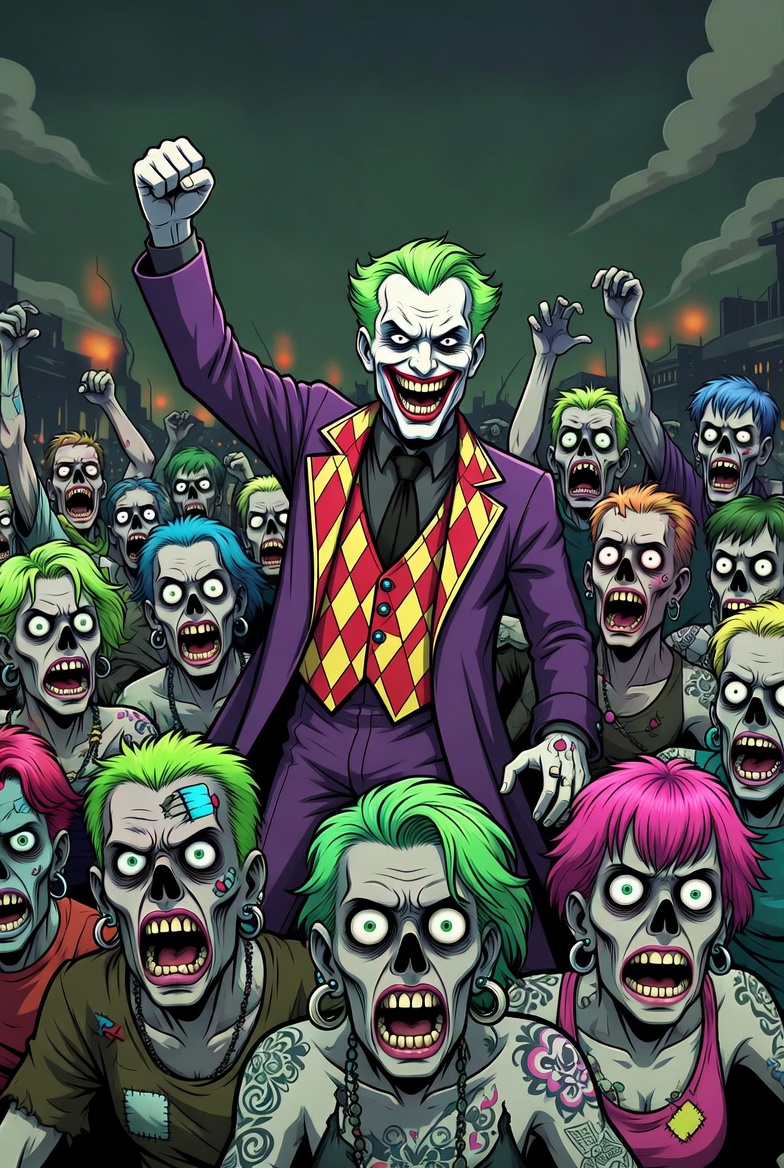
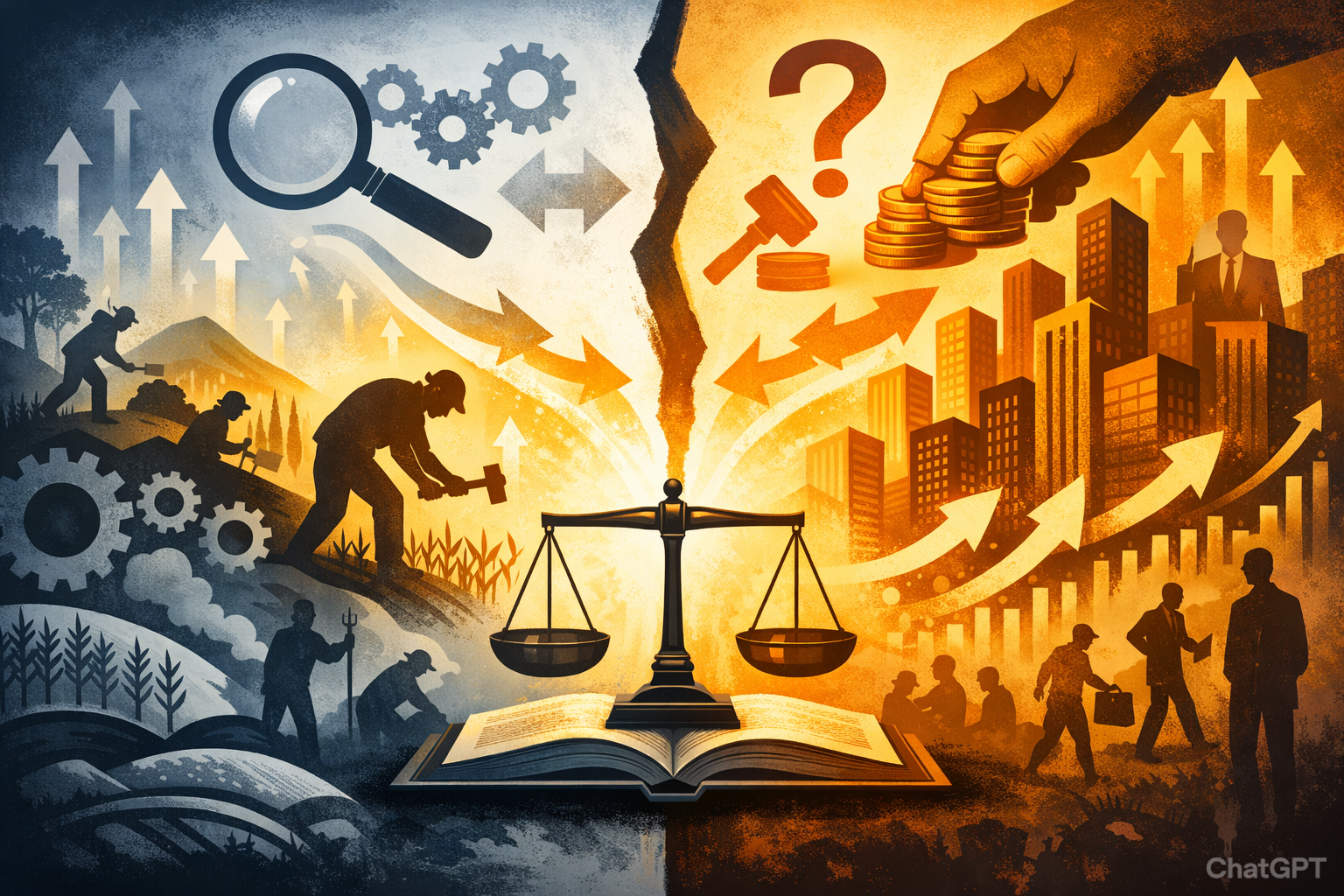
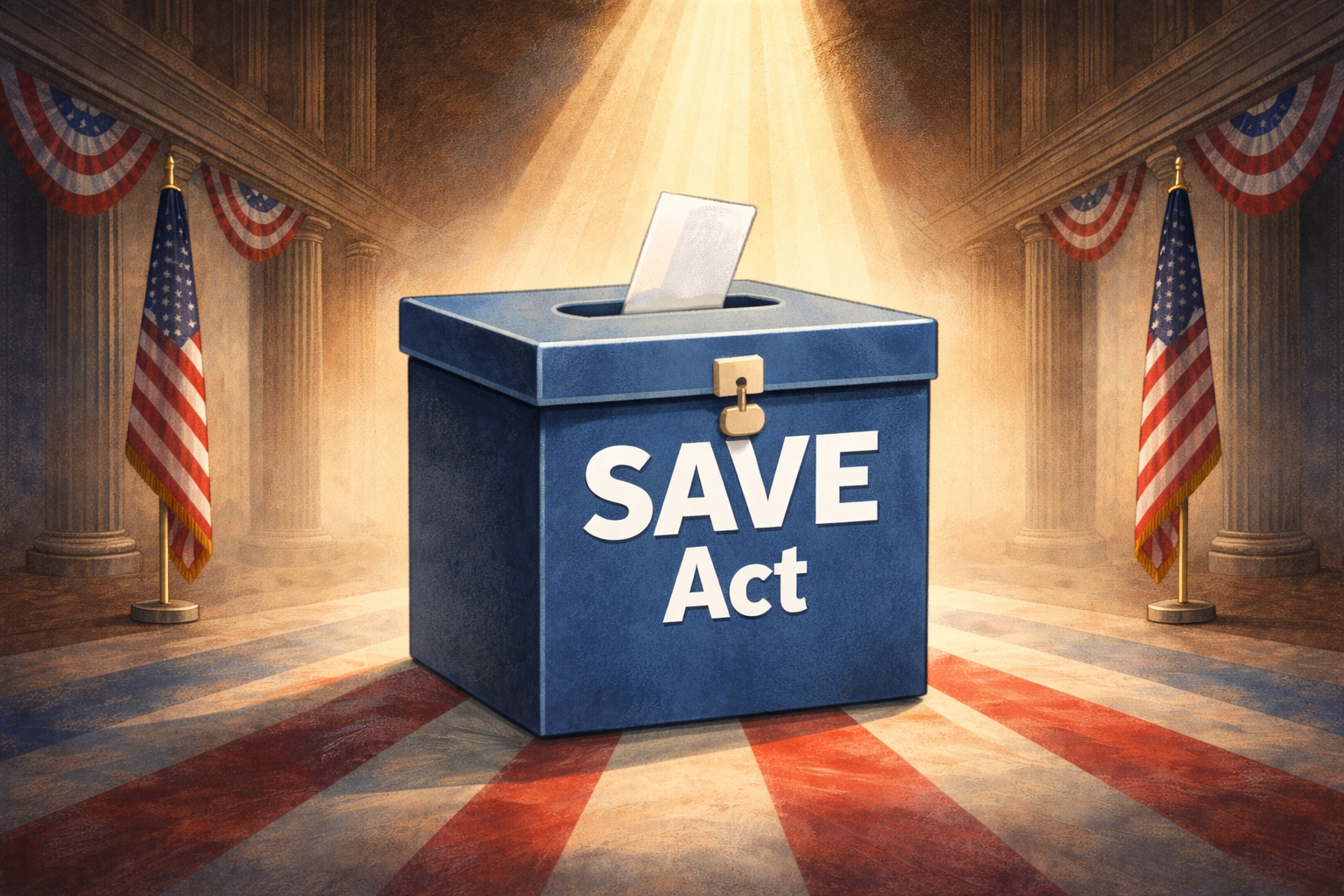
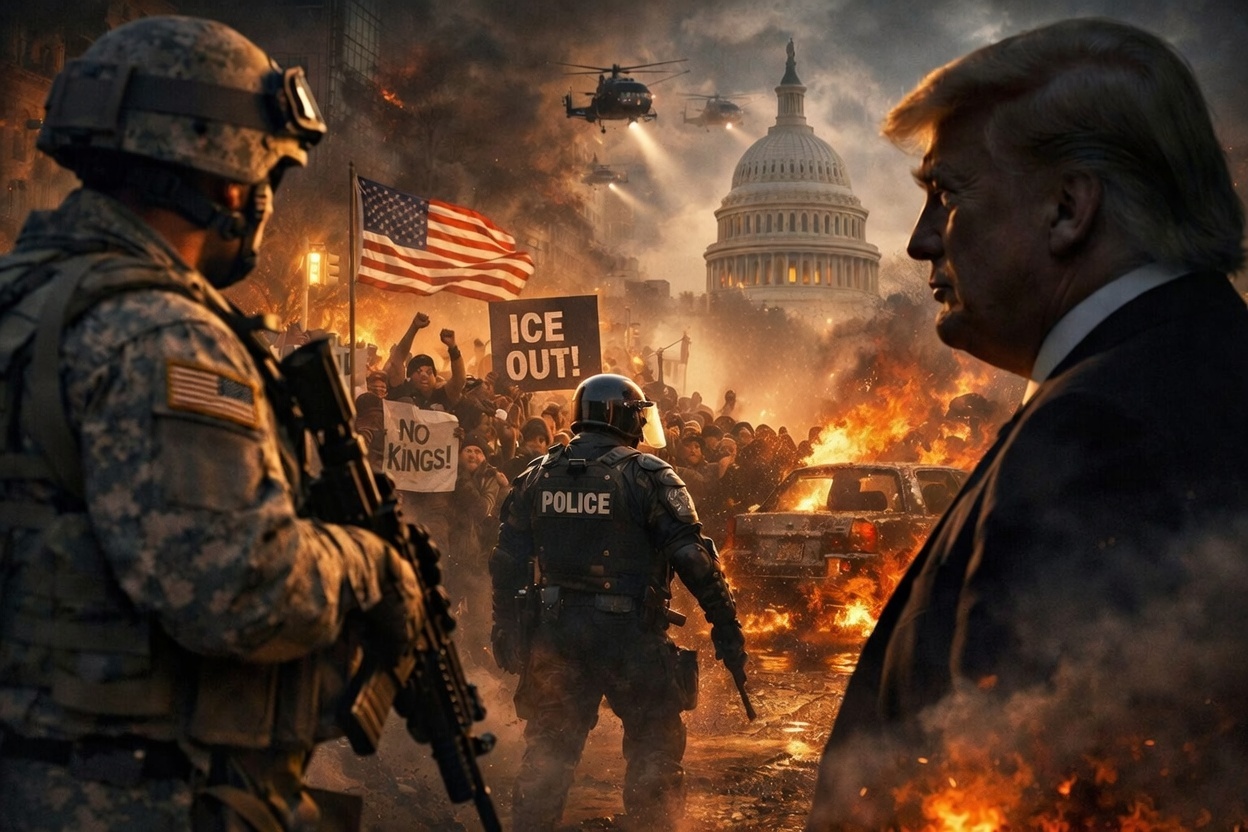

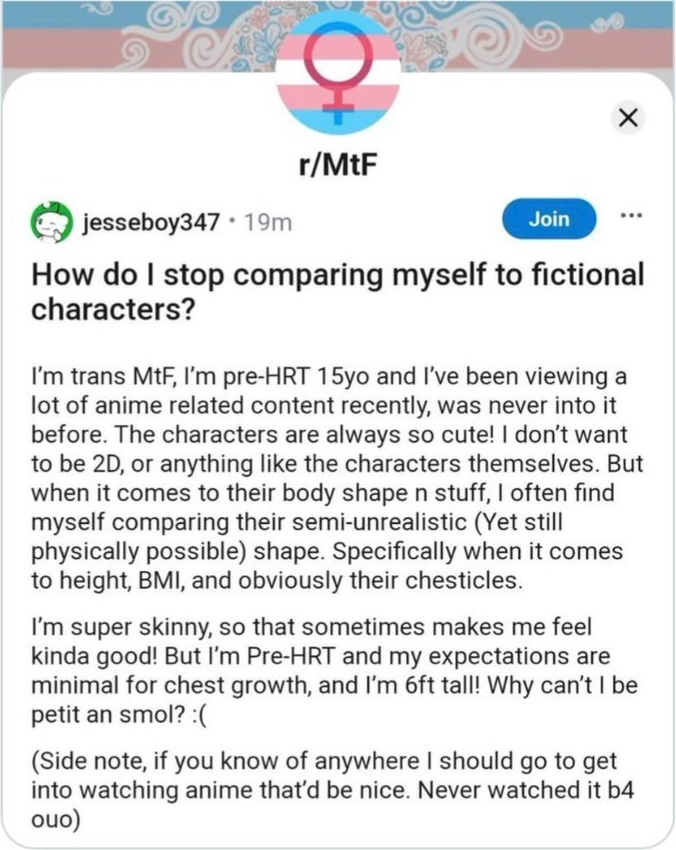
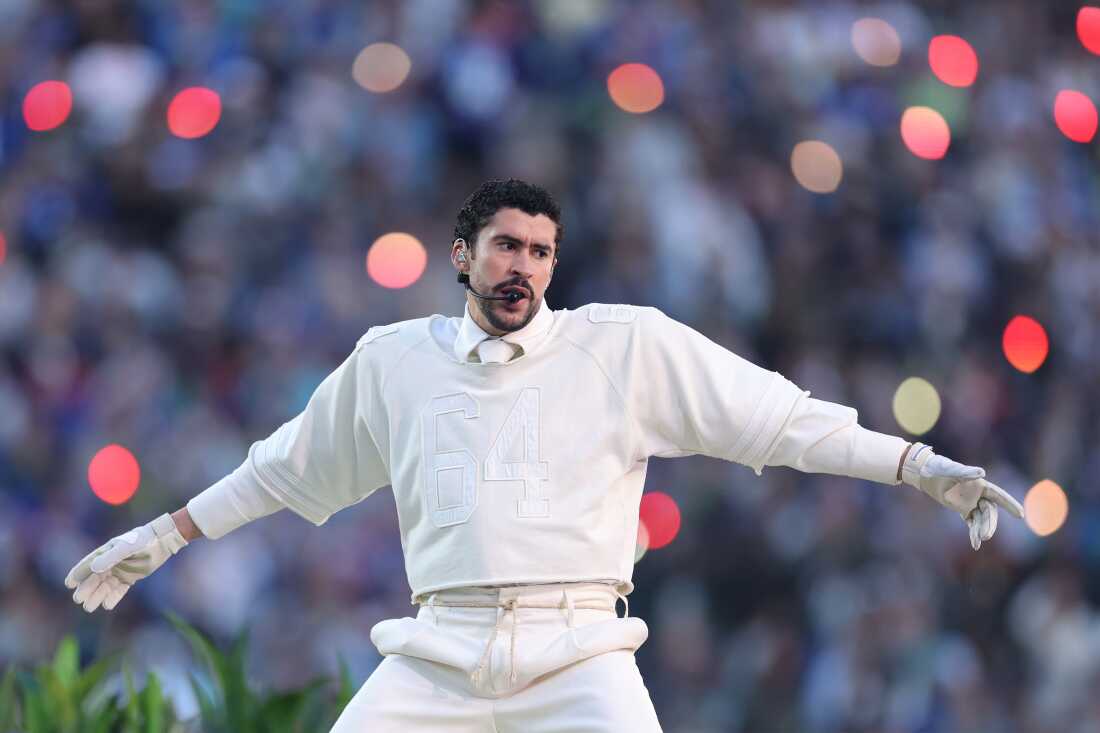
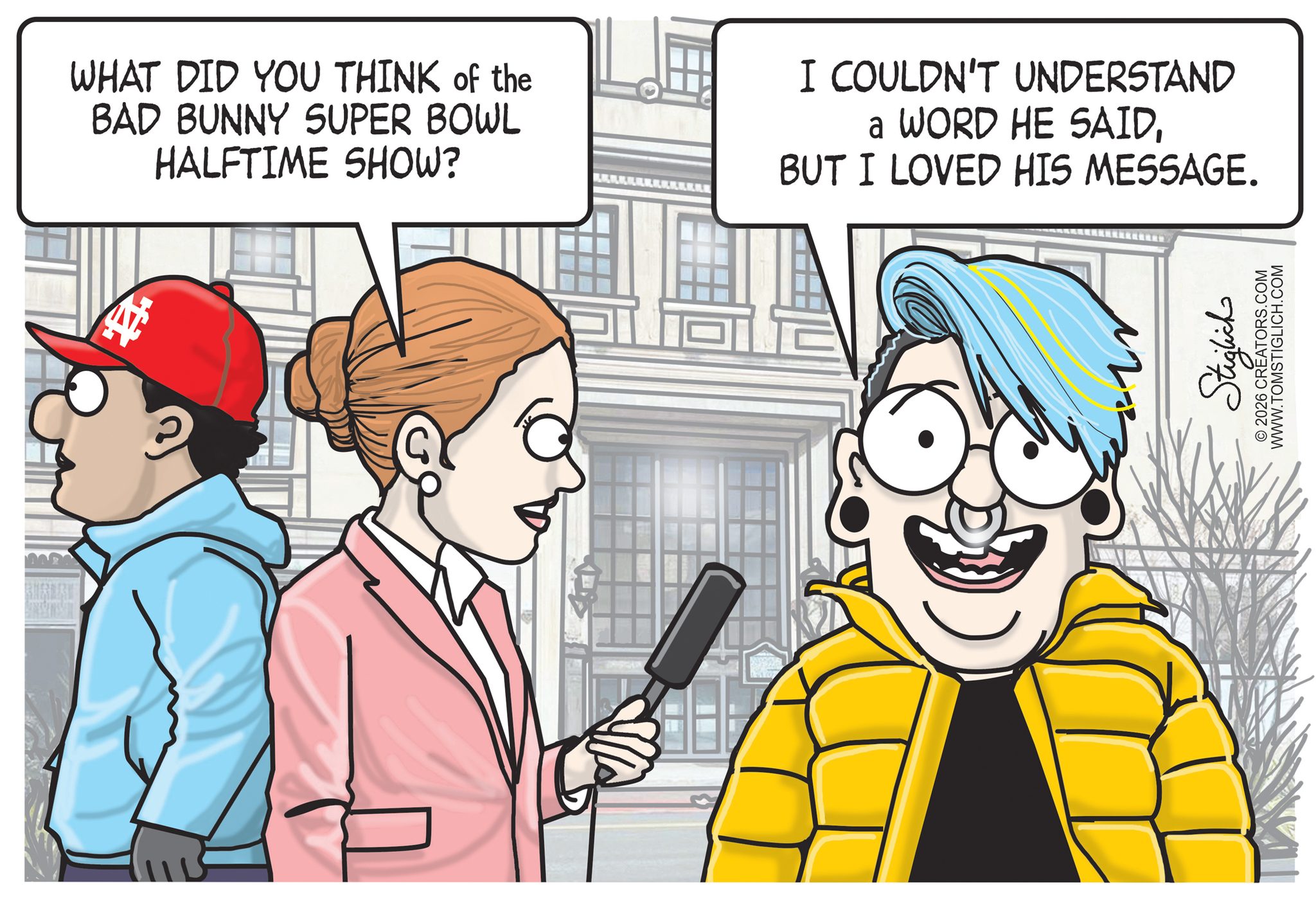
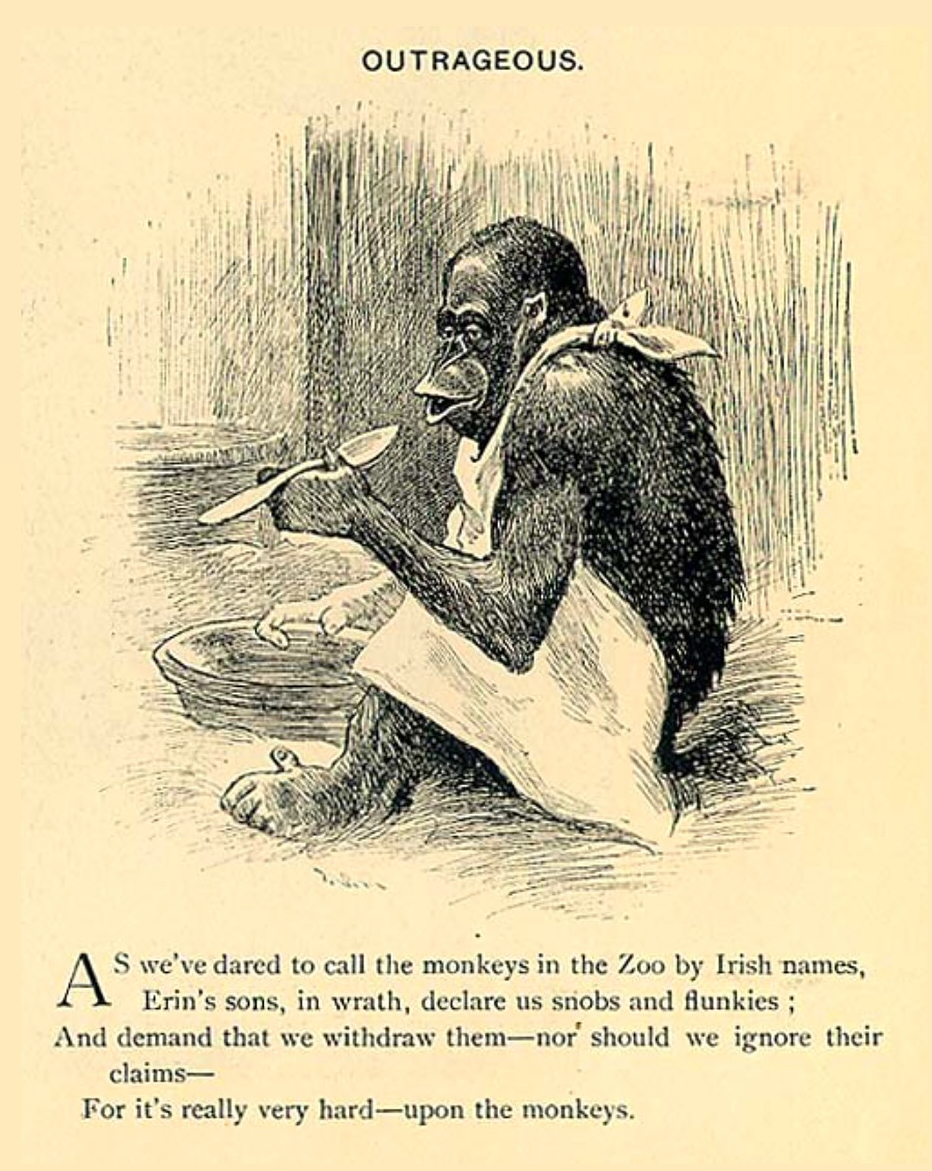
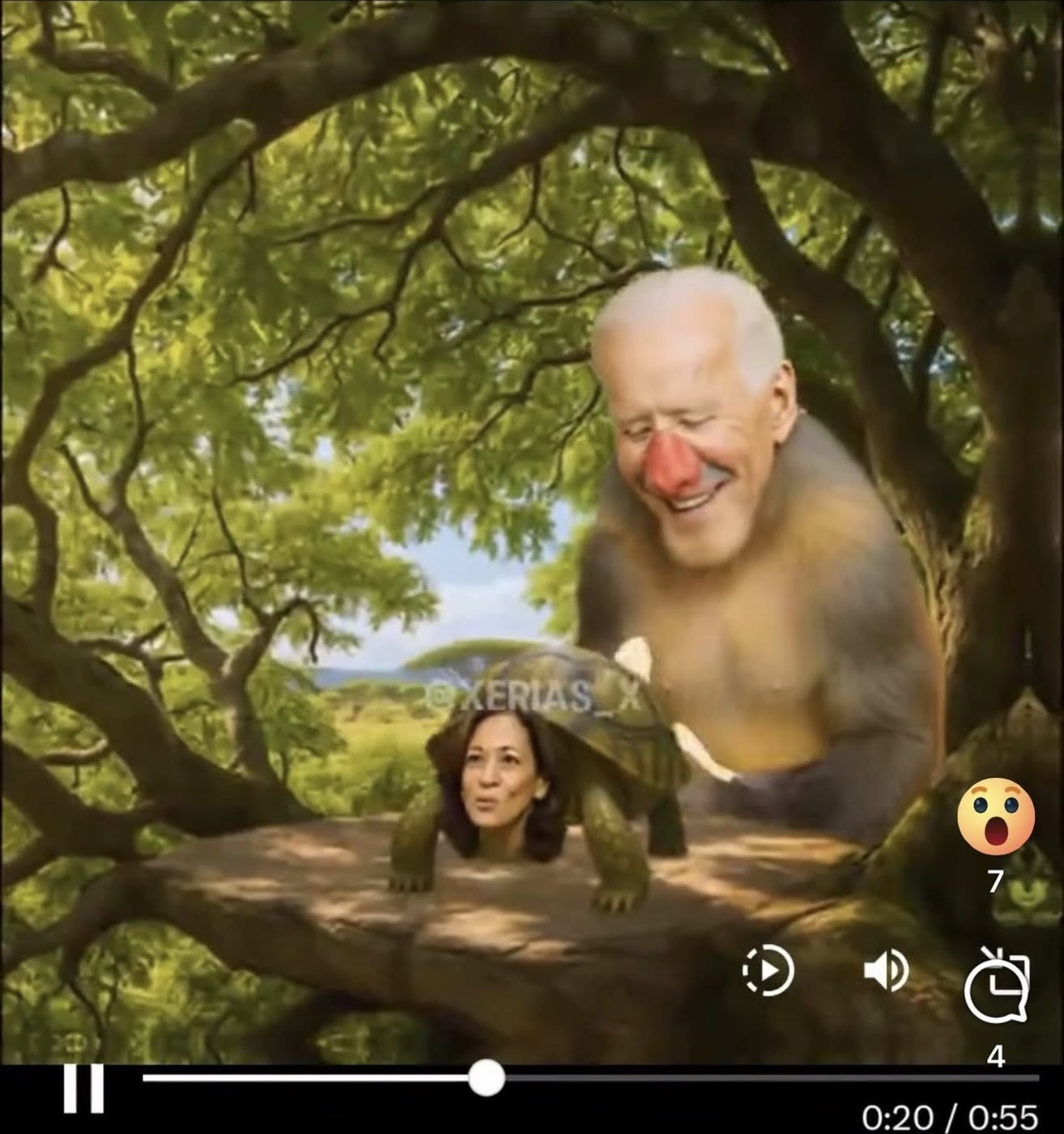
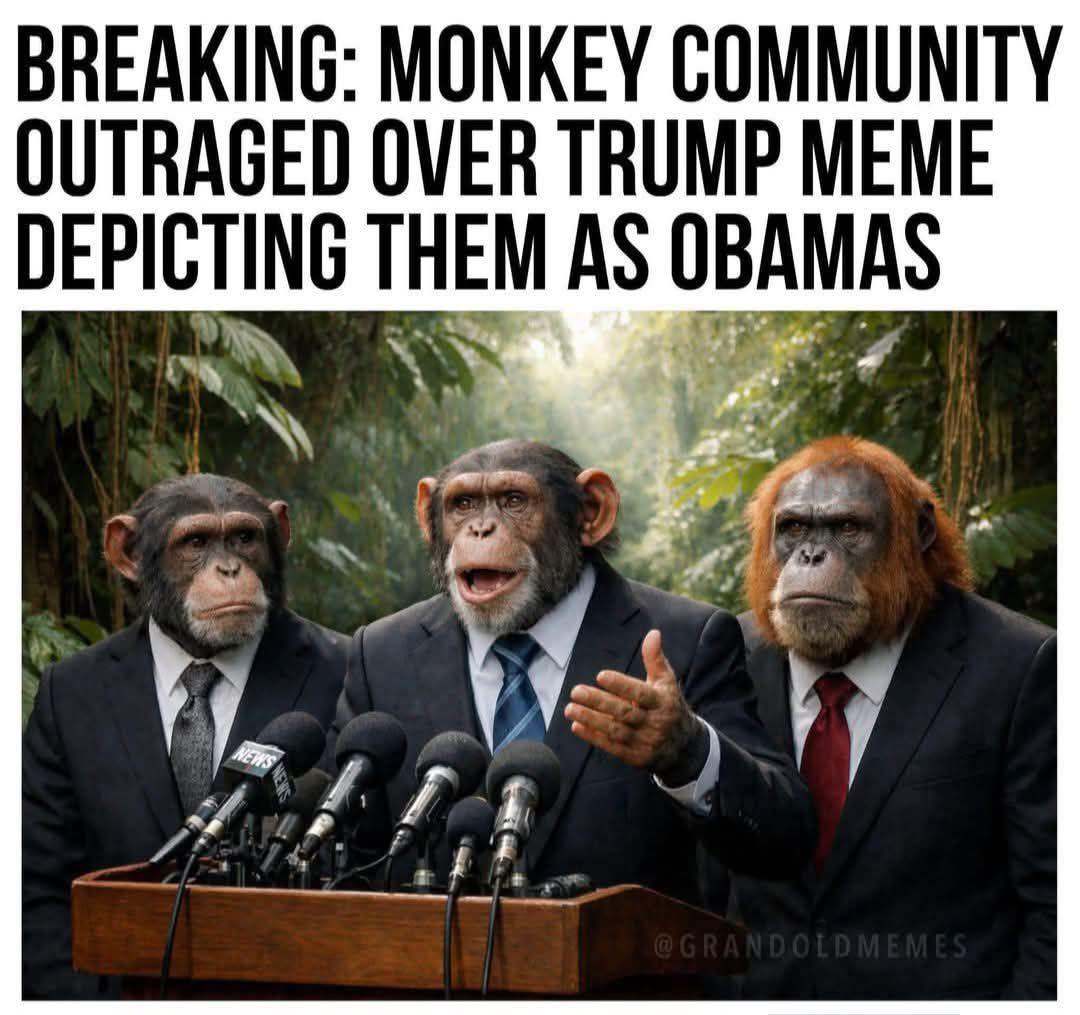
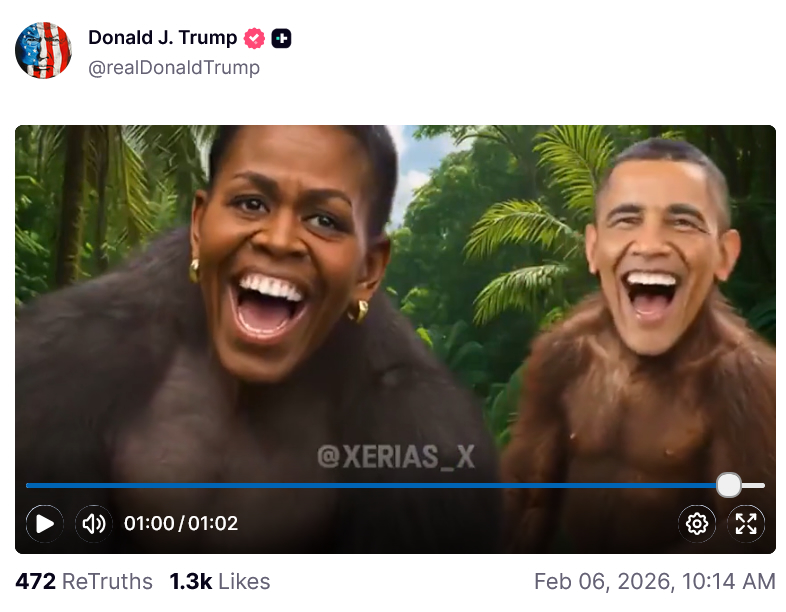
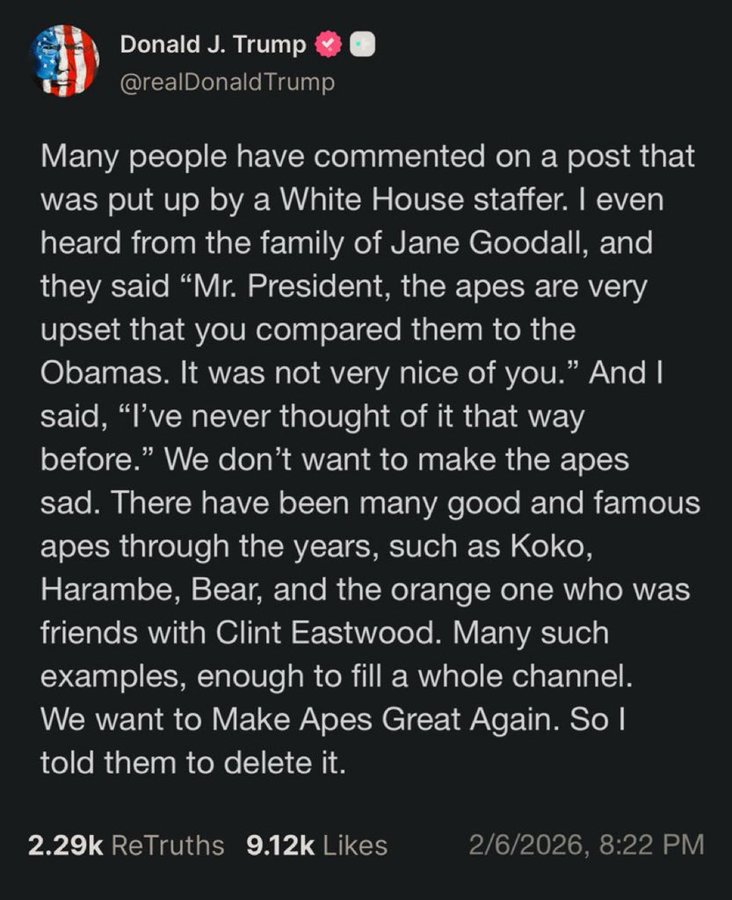
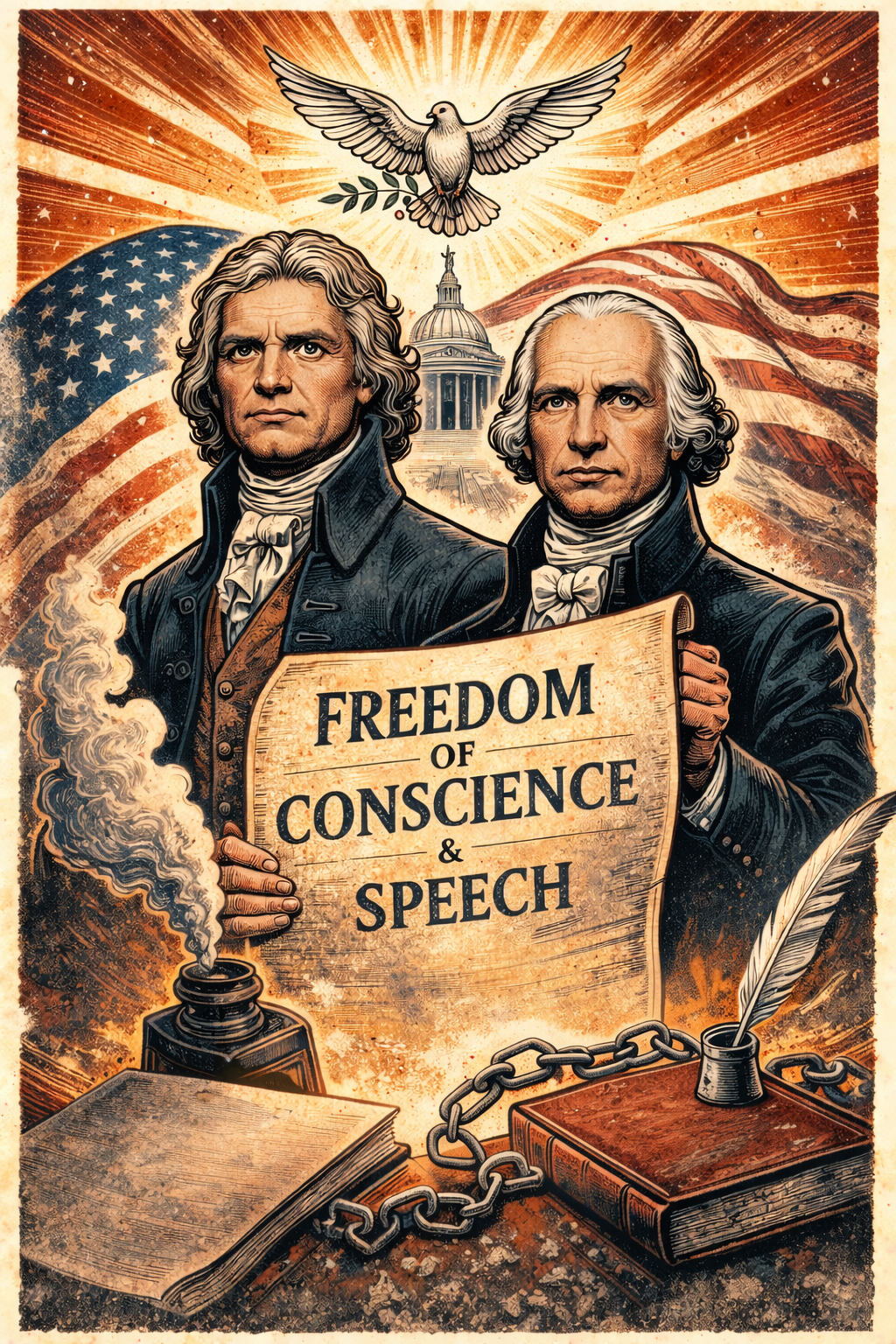
 freedom and reason