In the Shadow of Serfdom: Revisiting Liberalism in the Age of Progressivism

This essay argues that progressivism, despite its stated aims of emancipation and empowerment, leads to coercion, dependency, and the erosion of personal freedom through its reliance on centralized state control and corporatism. It contrasts progressivism with classical liberalism, primarily as articulated by FA Hayek, which champions individual liberty, limited government, and spontaneous order, rooted in the principles of America’s Founding Fathers and Judeo-Christian ethics.

The argument unfolds by first critiquing progressivism’s expansion of state power, which fosters dependency and undermines autonomy, as warned by Hayek in The Road to Serfdom and The Constitution of Liberty. It then distinguishes progressivism from socialism, defining the latter as worker-controlled, decentralized production, while portraying progressivism as a technocratic ideology serving corporate interests. The essay further explores classical liberalism’s commitment to liberty, contrasting it with progressivism’s positive liberty, which justifies state intervention and erodes the rule of law.

Finally, it examines issues like free trade, immigration, and nationalism, arguing that a civic nationalism aligned with liberal principles can safeguard freedom against the threats posed by progressive policies and unchecked globalism. I conclude by acknowledging Marxism’s insights into historical materialism and leverage those insight to advocate for a future that preserves liberty through decentralized, worker-driven systems in the aftermath of the Fourth Industrial Revolution.

* * *

In The Disenlightenment: Politics, Horror, and Entertainment, playwright David Mamet, who was on Steve Bannon’s War Room yesterday, argues that liberalism, which he once embraced, has been co-opted by elites who manipulate cultural institutions, language, and media to consolidate power and erode traditional values. Mamet contends that “disenlightenment” fosters a society driven by conformity and sentimentality rather than reason, turning governance into a tool of oppression akin to Circe transforming men into swine.

I ordered Mamet’s book and look forward to reading it. In his discussion with Bannon, Mamet summarizes his critique: the left’s focus on social consciousness as a hollow performance that undermines individual freedom and meritocracy. Against this, he advocated for constitutional conservatism grounded in logic and personal responsibility. His explained that his shift reflects disillusionment with what he sees as the Democratic Party’s betrayal of its principles, exemplified during the Biden years, when bureaucrats wielded unchecked power.

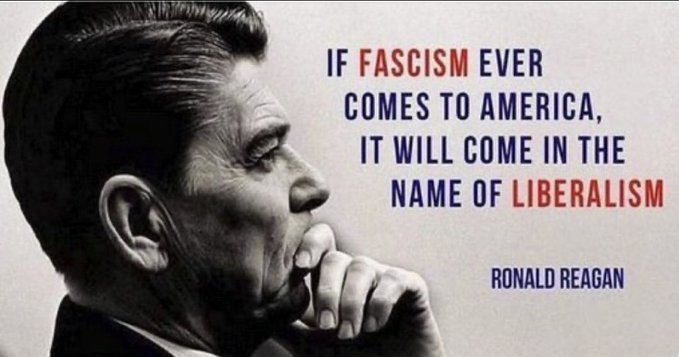
However, I disagree with what Mamet describes as liberalism. What he is describing is progressivism. In modern political discourse, on the left and the right, the terms “liberalism” and “progressivism” are often used interchangeably, particularly in American contexts. Yet they represent distinct, and ultimately incompatible, philosophical traditions. Classical liberalism emphasizes individual liberty, limited government, and the rule of law. Progressivism, in contrast, champions state intervention to- ostensibly ameliorate inequalities, aiming to engineer societal outcomes in accordance with standards of justice—criteria progressives define and establish via control over policymaking and sense-making institutions.

Image generated by Sora

While progressives often portray their policies as forms of emancipation and empowerment—expanding access to resources, reducing inequality, uplifting marginalized groups—the underlying logic of their ideology reveals a trajectory toward coercion, dependency, and the erosion of personal freedom. Progressives expand state control to achieve these ends, and expansion that involves bureaucratic oversight that limits individual autonomy and choice.

By positioning the state as the primary agent of justice and provider of welfare, progressive policies foster dependency, where citizens rely increasingly on government support rather than personal initiative or voluntary associations. Over time, this dynamic erodes the very freedoms progressives claim to protect, as the scope of individual responsibility shrinks and the power of centralized authority grows—an outcome that classical liberals like FA Hayek warn against as a subtle but inevitable path to servitude. Mamet admits to Bannon that his engagement with Hayek was one of the things that changed his mind.

The distinction between liberalism and progressivism is usefully articulated in the works of Hayek, particularly The Road to Serfdom (1945) and The Constitution of Liberty (1960). While Hayek does not refer to progressivism in his writings, when he speaks of socialism he is describing central economic planning, expansion of state control over the economy, and erosion of individual liberty through collectivist policies—the logic of the corporate state progressives advance and defend. Hayek offers a warning: that the well-intentioned interventions of such a state does lead not to liberation but to a form of servitude I have described as neofeudalism.

I do not agree with Hayek’s definition of socialism although I do agree that what he is describing threatens individual freedom because central planning—which progressivism moves from the state to the corporate oligarchy—inevitably concentrates power, suppresses spontaneous market order, and undermines personal autonomy. Hayek warned that even democratic attempts to implement this model would gradually lead to coercion, as the state would need ever more authority to enforce its economic decisions and resolve conflicts among competing interests.

In contrast, I define socialism as worker ownership and control of the means of production. In what we might describe as libertarian or market socialism, the people reject centralized state control and emphasizes decentralized, democratic control by workers. This vision sees socialism not as a technocratic state bureaucracy but as a radical democratization of economic life. In this framework, coercion and dependency are not inherent, but rather are what socialists seek to eliminate by dismantling corporate hierarchies and ending alienation in production.

Progressivism is the opposite of socialism. Progressivism is an ideology of corporatism. Thus, when I refer to progressivism throughout this essay (and across my work) I am not taking about something analogous to socialism as I have described it, but the praxis of technocrats in the service of the corporate state, which is a beast of late capitalism. To be sure, corporatism’s bureaucratic-managerial spirit has parallels to the state socialism of the Soviet Union, but in the latter arrangement social class was largely eliminated and the ruling class was political not economic. As for the state socialism of the Chinese Communist Party, here we see convergence with Western corporatism since China turned to capitalism to modernize its society in the late 1970s.

What do we mean by liberalism? Classical liberalism is rooted in the conviction that liberty is best preserved when government power is limited and individuals are free to pursue their own ends within a framework of general rules. The commitment to liberty among America’s Founding Fathers is the paradigm, evidenced in the principles laid out in the Declaration of Independence and the US Constitution. The Founders believed that liberty is not granted by government, but is an inherent right endowed by a Creator—the Laws of Nature and Nature’s God—and that government exists primarily to protect these rights. 

To preserve freedom, the Founders designed a system of limited government, rooted in checks and balances, federalism, and the rule of law. They feared concentrated power and understood that true liberty flourishes when individuals are free to pursue their own goals, provided they do so peacefully within a stable framework of general laws that apply equally to all. This vision gave rise to a republic in which individual enterprise, personal responsibility, and private property were celebrated as essential to human flourishing. And so has America flourished—to the extend that it has pursued the American System established at its founding.

Among the foundations that has made the United States so successful is the Enlightenment and its roots in the Judeo-Christian ethic. Hayek acknowledges the historical role of Judeo-Christian ethics in shaping the moral foundations of Western civilization and the rule of law. But his moral theory is more evolutionary than revelatory. In The Fatal Conceit (1988), Hayek argues that moral traditions evolve through cultural selection and that religion may serve a functional role in maintaining social order. Like many of the Founders, Hayek approached the matter from a secular perspective rather than one of personal religious conviction. 

By cultural selection Hayek means that customs, institutions, norms, and values evolve over time through a process analogous to natural selection in biology. Instead of genetic traits being passed on for survival advantages, cultural practices persist and spread when they help societies function more effectively or people adapt better to their environments. Many of our moral traditions—e.g., respect for contract enforcement, family structure, property rights, even religious codes—were not consciously designed, but rather evolved over generations. This was because they contributed to social stability and prosperity. Societies that adopted effective norms were more likely to survive and thrive, and those norms were passed down and imitated. We can judge the relative efficacy of normative systems by comparing them.

This evolutionary conception is a general principle for Hayek. What works in civilization comes from trial and error across generations—not from centralized planning. Cultural selection explains how spontaneous order arises: institutions and traditions that work are retained and those that don’t discarded, even if we don’t fully understand how or why at first. Useful social practices survive and spread not by deliberate design, but because they help societies succeed. It is our role as social scientists to describe and explain the development and success of institutions and traditions—not to elevate our status to that of world planner.

Liberty has proven itself to be central to social progress. In The Constitution of Liberty, Hayek describes liberty not as a guarantee of outcomes, but as the absence of coercion by others—especially by the state. This negative conception of liberty—freedom from interference—requires an institutional and legal order that is impartial, non-instructive, and predictable. Such a system facilitates what Hayek calls the “spontaneous order” of society: a self-organizing system in which knowledge is decentralized and individuals, guided by their own purposes, contribute to a dynamic and adaptive social order.

The Founders’ experience with Christianity aligns with Hayek’s evolutionary model through their shared emphasis on moral traditions that foster social order and liberty. The Founders, steeped in Judeo-Christian ethics, viewed liberty as an inherent right endowed by a Creator, as articulated in the Declaration, and designed a system of limited government to protect it. Their Christian-influenced moral framework—emphasizing individual responsibility, property rights, and the rule of law—provided the cultural bedrock for a flourishing republic. While the Founders saw these principles as divinely ordained, Hayek viewed them as products of spontaneous order, selected for their functional benefits over time. Both perspectives converge on the idea that enduring moral traditions, whether seen as God-given or culturally evolved, underpin the institutions—such as constitutional checks and balances or respect for contracts—that sustain a free and prosperous society.

Progressives challenge the sufficiency of Hayek’s model arguing that freedom cannot be truly exercised by those who lack access to material resources or social opportunity. They advocate a positive conception of liberty—freedom through empowerment—often demanding redistributive policies, regulatory oversight, and state-managed welfare programs. Roberto Unger expressed this position in his concept of “super liberalism,” a critique of liberalism that pushes beyond its traditional boundaries, reimagining how individuals can interact in ways that transcend established norms of personal autonomy, rights, and social organization to recover human solidarity.

In Unger’s view, traditional liberalism emphasizes individual rights, personal freedom, and legal structures to protect individuals from interference. However, he argues that liberalism in this conventional form fails to address deeper issues of social inequality, economic disparity, and the limitations imposed by rigid institutional frameworks. This view is inspired by Isiah Berlin’s observation of the distinction between “negative” and “positive” liberty, which was anticipated even earlier by Erich Fromm in his Escape from Freedom (1941). For the record, Hayek doesn’t rule out all social programs for those who need it, rather he warns that central planning is fraught with unintended consequences.

On the surface, progressivism might sound like it’s resonating with Marx’s political project. Both criticize inequality and advocate reforms to improve the lives of ordinary people—at least progressives say this. But they’re very different standpoints. One might say that Marx had something a little more radical in mind. While progressivism has historically worked within the corporatist framework, indeed, it is an animal of capitalism, Marx envisioned a revolutionary restructuring of society—abolishing class divisions and private ownership of the means of production.

From the beginning, American progressivism sought to overthrow capitalism but to harmonize relations between business, labor, and government through expert-driven administration, regulation, and social programs. Rather than empowering the working class to take control of production, progressives aimed to temper capitalism’s excesses in order to ensure its survival—thus extending and entrenching corporate hegemony over the populace. Progressivism is thus a managerial and technocratic project, far removed from Marx’s call for proletarian revolution to end social class. In the progressive mind, the proletariat is organized by the state, with control externalized to corporate governance. For Marx, with the elimination of social class, the state goes away.

Hayek rejected all of this—except concerning the matter of free trade. Let me address this straightaway, since I recently critiqued Marx’s position on the matter (see Marx the Accelerationist: Free Trade and the Radical Case for Protectionism). Both Marx and progressives advocate free trade, albeit for very different reasons. Marx was an accelerationist, seeing in free trade a hastened end to capitalism as national pursued a race to the bottom. This would clear the way for communism—a classless and stateless world system where man would be emancipated from necessary labor (AI will accomplish this without a communist revolution). Progressives see in free trade a global world order where the world’s population would be under the thumb of a world state run by transnational corporations. Thus, for their own projects, both Marx and progressives are critical of protectionism.

Hayek supported free trade for a very different reason. He believed that free trade on the world stage was crucial for preserving individual liberty and limiting the scope of state power. He viewed protectionism not just as economically inefficient, but as a step toward nationalism and centralized economic planning—forces he saw as threats to freedom. By contrast, a global system of free trade encourages competition, innovation, and the efficient allocation of resources based on comparative advantage, which presumes imperialism is not transforming foreign economies. For Hayek, global economic interdependence acted as a constraint on national governments’ ability to manipulate domestic markets for political ends.

Moreover, as a sociological point that I will discuss forthwith, Hayek viewed the world market as a spontaneously ordered system—an emergent outcome of voluntary interactions across borders. Free trade, then, was not merely a technical policy preference; it was a reflection of his deeper conviction that human prosperity depends on respecting the limits of our knowledge and allowing decentralized systems, like global markets, to function without coercive interference. In this sense, free trade was part of his broader vision of an open, liberal international order that safeguards both freedom and peace.

With that out of the way, let’s get to the ethical core of Hayek’s standpoint. In The Road to Serfdom, Hayek argues that economic planning and centralized decision-making, even when motivated by egalitarian aims, are fundamentally incompatible with individual liberty. When government assumes responsibility for securing particular social outcomes, it must necessarily infringe on the private choices of citizens, leading inevitably to a society governed by coercion rather than consent.

A central danger of progressivism thus lies in its implicit faith in centralized authority and technocratic expertise. To implement social reforms, redistribute wealth, and regulate markets, the state must gather information, prioritize among competing interest, and make value judgments—functions that cannot be performed impartially or without political bias. This necessarily undermines the rule of law, as state actions are no longer governed by general principles but by ad hoc decisions tailored to policy goals. The result is an administrative state that exercises discretionary power, often in ways that are opaque, unaccountable, and resistant to public scrutiny. The rule of law becomes the rule of bureaucrats. This is the very definition of bureaucracy: a system of government in which most of the important decisions are made by state officials rather than by elected representatives.

Moreover, Hayek argues that the expansion of the welfare state cultivates dependency and weakens the moral fabric of a free society. In The Constitution of Liberty, as suggested earlier, he acknowledges that a minimal social safety net may be compatible with liberty; however, as welfare systems grow more comprehensive and intrusive, they shift the relationship between the individual and the state. Citizens begin to look to government not as the protector of their rights, but as the provider of benefits. The paternalistic relationship fosters a compliant and passive public, eroding the virtues of initiative, personal responsibility, and self-reliance.

Progressivism thus redefines freedom not as the absence of coercion, but as access to goods and services deemed necessary by the technocrats. If one is charitable, he might say that this the unintended consequence of pursing positive liberty. Whatever the motive behind it, the end is destructive to liberty. This new vision of freedom requires constant interference with individual judgment, private property, and voluntary exchange. As more areas of life come under public control— education, employment, healthcare, even speech—the space for private decision-making contracts and freedom diminishes. The apparatus of the state grows not only in size but in moral authority, becoming the arbiter of fairness, inclusion, and even truth. 

The paradox is obvious: in the name of freedom, progressivism builds economic and political structures that reduce individuals to clients of the state, dependent on its favor and bound by its mandates. Liberals—real liberals—refuse to sacrifice freedom for illusory gains in equality or security, insisting that liberty is both the means and the end of a good society. A real liberal is what Mamet has become now that he has freed his mind from the progressive tribe. It is therefore disappointing that he has assumed the way the term is used by progressives to cover for the tyranny of progressivism.

The difference between liberalism and progressivism is not merely one of degree or policy preference, but of principle. Liberalism seeks to protect individuals from coercion; progressivism seeks to use coercion for what it deems the common good. What is the common good? What is good for the corporate elite. The social programs exist to control the masses. While progressives claim to empower individuals through redistribution and regulation, Hayek shows that such empowerment is an illusion—one that comes at the cost of liberty, leading to technocratic control and widespread dependency.

Returning the globalization problematic, as I explained in that recent essay I cited above, libertarians today are supportive of immigration which brings them into a strange alliance with Marx, for the same reason, namely wage suppression, albeit not with the same desired outcome. Both understand that driving down wages is what capitalist firms do: slash labor costs to maximize the surplus value in production. As Marx documents in Capital, displacement and impoverishment of labor makes difficult realizing as profit the value contained in commodities in the market, since it is by consumption that the worker completes the circuit—and all the cheap commodities in the world won’t mask the plunge in wages and disappearance of jobs. Libertarians reject Marx’s prediction, so full steam ahead.

Although Hayek favored open borders in principle, as do many libertarians, he acknowledged possible complications. In some of his later comments and writings, he recognized that immigration could raise issues if newcomers do not assimilate into the cultural or institutional framework of liberal society. Hayek was concerned in particular with the preservation of liberal institutions. If immigration brought in large numbers of people with illiberal values or expectations of a welfare state, this could pose a threat to a free society. While Hayek never advocated strong immigration controls as a solution to this problem, he was likely to argue that liberal institutions must be robust and that welfare systems should be designed in ways that don’t incentivize dependency.

Hayek is not alone in this concern. Classical liberals such John Locke (implicitly), and more recently thinkers such as James Buchanan and Milton Friedman have emphasized that liberal institutions require a stable framework of laws, norms, and values. If large-scale immigration introduces populations that do not share or support these norms (e.g., free speech, limited government, and property rights), it could undermine those institutions over time. Borders thus serve as a filter to ensure political assimilation and institutional continuity. Friedman famously argued that a society can’t have both open borders and a welfare state. Immigrants may vote for expanded government benefits or regulatory policies that classical liberals oppose. In other words, immigrants are likely to vote for progressives. From this perspective, some level of border control is seen as a way to prevent the political feedback loop that leads to more statism.

Some classical liberals, particularly those influenced by libertarian property-rights theory (e.g., Hans-Hermann Hoppe), argue that just as individuals have the right to control access to their own property, political communities should have the right to control who enters their territory. This is framed not as a collectivist claim but as an extension of voluntary association and contract. If citizens do not consent to the entry of outsiders, forced integration violates classical liberal principles of individual sovereignty.

Despite the default set on free trade, borders are viewed from this standpoint as necessary to uphold the rule of law, also a core tenet of classical liberalism. Liberty requires certain cultural preconditions: acceptance of pluralism, respect for norms, and rule-following behavior. These traits are not universally distributed, therefore societies must carefully manage immigration to preserve the cultural substrate necessary for freedom. Sudden or unmanaged flows of people overwhelms administrative and legal systems, leading to disorder. Borders ensure that migration is conducted through predictable legal processes, preserving the integrity of the legal order. Classical liberals who support borders do so not out of hostility to outsiders, but from a belief that liberty is fragile and depends on institutional and cultural conditions that can be disrupted by poorly managed migration. They view border controls as a prudential, not moral, safeguard for liberal democracy and limited government.

In light of the fact that progressives have weakened liberal institutions and established an expansive welfare state, Hayek’s view on open borders has to be reassessed. Nationalism, when grounded in civic identity rather than ethnic exclusion, can serve as a crucial force in preserving the cultural and institutional framework that sustains liberal societies. As Hayek recognized, liberal institutions—such as individual rights, limited government, and the rule of law—are not self-perpetuating; they rely on a shared cultural commitment to certain values like respect for pluralism, responsibility, and tolerance.

In a context of open borders, where large-scale immigration might introduce populations with illiberal norms or expectations incompatible with free market democracy, a cohesive national identity can help integrate newcomers into the liberal tradition. Nationalism, in this civic sense, fosters a common language of rights and duties, encouraging assimilation into the political culture rather than fragmentation into parallel societies. It acts as a social glue that maintains the trust and cooperation necessary for liberal institutions to function. Rather than being in tension with liberalism, a principled form of nationalism can provide the cultural continuity and civic loyalty that protect liberal societies from erosion—especially in an era of global movement and ideological divergence.

It might strike readers as a bit schizophrenic to profess liberal and republican principles and values while at the same time working from a historical materialist standpoint. I have said this before, but my view is that Karl Marx’s materialist conception of history should be the paradigm of the social science. Marx is to social history what Darwin is to natural history.

However, in many ways, Marx was a liberal, particularly in his foundational commitments to individual freedom and rational progress—core tenets of the Enlightenment. He saw capitalism as a dynamic and progressive economic force in history, washing away the old order of things and transforming the world. Marx believed in the transformative power of reason and history. And, like many liberals, Marx’s emphasis on individual freedom of thought and skepticism toward traditional authority brought him to a critical view of organized religion.

Marx’s critique of capitalism, while radical, was rooted in liberal ideals: capitalism had failed to deliver on the promises of quality and liberty liberals espoused. Social class was the obstacle. Marx advocated pushing liberalism to its logical conclusion—true freedom requires not just political rights, but collective control over the conditions of life. Marx’s vision of communism was not merely establishing economic equality but freeing individuals from alienation and enabling them to fully realize their human potential. He believed wiping away social class would make that possible.

As I implied above, the Fourth Industrial Revolution and the coming of agentic AI will radically change class relations. Either humanity will enter a new Dark Ages where a dwindling population will be managed on high-tech estates controlled by corporate overlords or the people will take possession of the apparatus and use it to generate commodities and services in a new economy without value. Both Locke and Marx agree that labor is the source of value. It follows that all value disappears with the elimination of necessary labor. Ernest Mandel told us about this back in 1967 (see The End of Work and Value). The question of which end we desire depends on whether we wish to preserve liberty or live as serfs.

The Democrat Playbook

The Rasmussen Reports daily presidential tracking poll for Monday shows that 51 percent of likely US voters approve of President Trump’s job performance. Trump was elected to deport illegal aliens. This is what democracy looks like.

CBS News just dropped this poll:

(Source)

Pay attention to Democratic Party rhetoric. They’re saying that Trump is manufacturing a situation in California to justify authoritarian action. This is a false narrative. Many progressives presume Trump, a liberal businessman from Queens, is an authoritarian. The social media platform X is shot through with this madness. Madness confuses one’s sense of cause and effect.

Trump is lawfully deporting illegal aliens. Anti-American sovereignty movement—the street-level thugs for the transnationalist elite—are rebelling against the Republic and defying the rule of law. Trump is responding. He did not start this.

This is not the first time Democrats have blamed a Republican for creating a situation to justify intervention. Before the Civil War, Democrats blamed the Republican Party for creating a political and moral crisis to justify Northern intervention in Southern affairs.

Likewise, Orval Faubus, the Democratic Governor of Arkansas during the 1957 Little Rock situation, said that President Eisenhower’s decision to send federal troops to enforce school desegregation was a dangerous overreach of federal power. He framed it as authoritarian and militaristic. The federal government created the situation be enforcing desegregation.

Another Democrat, Governor George Wallace of Alabama, like Faubus, also denied black kids entry into public schools. He portrayed federal intervention in civil rights enforcement as authoritarian interference. The federal government was overreaching. States rights!

Returning to the antebellum South, we find another parallel with what is happening today. Democrats then argued that the Republican Party was hostile to the South’s way of life—particularly its slave-based economy. Democrats today are openly telling us that their way of live is its immigrant-based economy. Trump is trying to undermining California’s way of life just as Lincoln attempted to undermine the South’s way of life. How did that turn out for the South?

Why not employ citizens in California? It’s not as if there are no native-born workers there. What about the tens of thousands of idle blacks in California’s inner cities? As of April 2025, the unemployment rate for black Californians stood at around seven percent—and that just those who are actively seeking employment.

It’s impossible to find them work and liberate black Californians from crime and poverty? Or do Democrats need them dependent on welfare to secure the votes necessary to keep California under the Party’s thumb?

Think about it: Why do Democrats in California defend the exploitation of illegal immigrants while ghettoizing black Americans? California isn’t alone in this regard. Blue Cities across the country exhibit the same pattern.

In the run up to the Civil War, Southern leaders viewed Republican opposition to the expansion of slavery as a direct assault on their way of life. Framing the Republican agenda as provocative and radical, Democrats claimed that it was the Republicans who pushed the country toward disunion. It was Republican ambition—not Democrat intransigence—that justified Northern hostility and federal coercion.

Remember, it was the Democrats who started the war. They’re trying to start another one.

Same playbook, different era. Like I argued in a recent essay on Freedom and Reason, the Democratic Party hasn’t changed all these decades. Today they’re neo-Confederates, arguing for states rights to keep their super-exploited migrant workers.

If I’d been alive in 1957 I would’ve been 100 percent on the side of Eisenhower. We cannot allow states to defy the Constitution and the rule of law. Trump needs to be far more aggressive in confronting the governor of California and the mayor of Los Angeles. They are entirely out of line.

What we’re seeing is a rebellion against the United States. Trump needs to sign an executive order asserting the Insurrection Act and send the National Guard in full force into California. I wouldn’t rule out sending other military as well— as did Eisenhower, for the record. We cannot continue this way. The Democrats are driving us towards another civil war. Nip it in the bud.

Trump should’ve done this in 2020. He’s far too patient. He needs to fully assert his Article II powers. Bring the hammer.

* * *

Want to see more of recent content on this subject? Here are some essays:

Deviance as Doctrine: The Post-Liberal Moral Revolution

The Politics of Grievance: Primitive Rebellion and Rhetoric of Social Justice

Tesla and Propaganda of the Deed

The Serfs Want More Serfdom. When Do they Want It? They Want it Now

The Resistance™ and Transnationalism

Quelling the Rebellion

In Los Angeles and across the country (Chicago, Denver, New York, and Seattle), anti-American sovereign agitators have taken to the streets to block Immigration and Customs Enforcement (ICE) actions—surrounding federal facilities, physically obstructing agents and interfering with detainment efforts, erecting barricades, throwing rocks, and setting fires—to stop the removal of illegal aliens.

(Source)

Federal agents have responded with riot police tactics—flash-bangs, rubber bullets, and tear gas—and made dozens of arrests. Officials have rightly labeled the actions of demonstrators as a rebellion against lawful authority. President Trump has deployed National Guard troops under federal Title 10 authority to support ICE operations. Federal officials warned that anyone assaulting officers or obstructing enforcement would face prosecution. The Department of Homeland Security has confirmed that it’s tracking organized efforts on social media and through activist networks.

California’s Democratic governor Gavin Newsom and Los Angeles’ mayor Karen Bass have criticized the raids as sowing chaos and terror in immigrant communities. However, rebellion and insurrection are not permitted under the Constitution—nor is the failure or refusal of state authorities to act in accordance with federal law. Newsom and Bass have failed to follow the law. They’ve made themselves obstacles to the popular will. Worse, they’re encouraging the anti-American sovereignty movement.

(Source)

As a civil libertarian and Constitutionalist, I value both individual freedom and the legal framework that preserves it. The US Constitution is not merely a historical document; it’s a system of government designed to outlast the passions of any single generation. In this essay, I explain Article II powers with respect to the current uprising by anti-American forces. I also clarify the concept of insurrection.

Is there a right to use violence in the pursuit of justice—even to overthrow a government? It depends. The righteousness of revolution is situational, and enforcement of America’s immigration laws is not a situation that justifies rebellion. Moreover, there is no right to expect that because one believes he has a righteous cause that the government shouldn’t intervene to stop him from breaking the law. Call it civil disobedience if you wish; civil disobedience comes with consequences.

A constitutional republic embeds structural safeguards against both centralized despotism and mob rule. The Founders, notably James Madison, designed a system that checks impulses for abrupt upheaval through deliberative processes, enumerated powers, and judicial review (the latter presuming the judiciary respects Article I and Article II powers).

It is in this context that we understand the federal government’s role in preserving a well-ordered society—particularly through Article II powers that allow the President to use force, including federalizing the National Guard, and even to use other branches of the military, to suppress insurrection and rebellion. These powers are not arbitrary; they are constrained and defined by the Constitution and statutory law to uphold the rule of law in moments when it is most at risk. Open defiance of federal agents engaged in law enforcement tells us that we reached this point.

Article II, Section 3 of the Constitution obligates the President to “take Care that the Laws be faithfully executed.” This clause, in combination with the role of the President as Commander-in-Chief under Article II, Section 2, provides the constitutional foundation for the federal executive to use military force, including federalizing the National Guard, to ensure the enforcement of federal laws and maintain civil order.

Article I, Section 8, Clauses 15–16: Gives Congress the power “to provide for calling forth the Militia to execute the Laws of the Union, suppress Insurrections and repel Invasions” and to provide for the organization and regulation of the militia, which supports the executive’s use of state militias (now the National Guard) under federal command. Article II, Section 2 states: “[The President] shall be Commander in Chief of the Army and Navy of the United States, and of the Militia of the several States, when called into the actual Service of the United States.” Trump has now called them into service.

The Insurrection Act of 1807 (10 USC §§ 251–255) is the primary statutory mechanism by which the President federalizes the National Guard or uses the Armed Forces domestically in response to insurrection, rebellion, or obstruction of federal law. Under 18 USC § 2383: “Whoever incites, sets on foot, assists, or engages in any rebellion or insurrection against the authority of the United States or the laws thereof, or gives aid or comfort thereto, shall be fined under this title or imprisoned not more than ten years, or both; and shall be incapable of holding any office under the United States.”

What is an insurrection? It’s a violent uprising against an authority or government, especially with the aim of overthrowing or obstructing lawful governance. The elements of insurrection are violence, involving physical acts such as attacking officials, obstructing law enforcement through force or intimidation, or rioting. Action must be directed against the authority of the United States or its laws—not just a protest, but an attempt to defy or dismantle legitimate governmental authority. It may involve organized groups or conspiracies to resist the execution of law. The present circumstances meet all the elements of insurrection.

I expect some will cite 10 USC. § 251, the “State Request” clause, to suggest that the President may only deploy troops when requested by a state legislature or governor if the state is unable to suppress an insurrection. Crucially, the President can federalize the National Guard short of an insurrection—and he doesn’t need the permission of legislature or governor. In 1957, Dwight D. Eisenhower federalized the Arkansas National Guard and deployed the 101st Airborne Division to Little Rock, Arkansas to enforce the desegregation of Central High School.

Eisenhower’s action came in response to Governor Orval Faubus’ defiance of the Supreme Court’s ruling in Brown v. Board of Education (1954), which declared racial segregation in public schools unconstitutional. Faubus had initially used the state’s National Guard to block the “Little Rock Nine” from entering the school. Citing his constitutional duty to ensure that federal law was faithfully executed, Eisenhower issued Executive Order 10730 to place the National Guard under federal control and restore order.

Eisenhower’s actions demonstrate the power of the federal government to act decisively to uphold the Constitution against resistance from state authorities. Trump is exercising the same authority. This power is clearly spelled out in the 10 USC § 252, “Enforcement of Federal Law” clause: “Whenever the President considers that unlawful obstructions, combinations, or assemblages, or rebellion against the authority of the United States, make it impracticable to enforce the laws of the United States in any State by the ordinary course of judicial proceedings, he may call into Federal service such of the militia of any State, and use such of the armed forces, as he considers necessary to enforce those laws or to suppress the rebellion.” Moreover, 10 USC § 253 states that the President may act without a request from a state if insurrection or domestic violence deprives any portion of the population of constitutional rights, and the state fails to protect those rights.

While civil libertarians are rightly skeptical of federal overreach, the Constitution recognizes that liberty requires order and that lawful force may, at times, be necessary to preserve constitutional government. The Insurrection Act is not a license for executive despotism; it is a tool of last resort, designed to preserve the civil and constitutional fabric of the nation. We are at the moment of last resort. If the rebellion is not quelled, it will only grow larger and more aggressive. Trump must intervene with military force.

What explains the violence of the anti-American sovereignty movement? Like a spoiled child, the left lashes out when it doesn’t get its way. The left lost the 2024 election in part because Americans want immigration control. Surveys by Gallup, Pew Research, and Rasmussen Reports over the past decade show that most Americans support strengthening border security, including the use of physical barriers and increased funding for enforcement agencies. There is strong bipartisan support for prioritizing deportation of illegal aliens who commit crimes. Most Americans oppose cities or states that obstruct federal immigration enforcement. They do not support open borders or the suspension of deportation. In other words, the left is out of step with the populace. So the left is attempting to achieve through violence what it failed to achieve at the ballot box: continuing the policy of open borders.

As I have explained, this is an odd position for the left to take in light of the pretense that those participating in the rebellion support the working class. The ongoing protests against the deportation of illegal aliens function to serve the interests of transnational corporations that benefit from open borders and mass migration. These corporations rely on a steady supply of cheap, easily exploitable labor to suppress wages and displace native-born workers, a strategy that aligns with their offshoring of manufacturing to low-wage countries.

It is deeply ironic that the political left—traditionally aligned with labor—now mobilizes to protect mechanisms that erode the bargaining power, job security, and standard of living of American workers. This movement is not grassroots activism; it is a coordinated effort by powerful elites and ideologically driven NGOs who seek to dissolve national boundaries for economic and political gain. What we are witnessing is not the will of the people, but an attempt to establish a tyranny of the minority—a campaign led by wealthy individuals and a vocal cadre of activists trained in anti-American, post-national ideologies, working to undermine lawful governance and national cohesion under the guise of humanitarianism.

Crucially, the protests and violence are not only over immigration. Trans activist factions have mobilized aggressively, often targeting public institutions and private businesses they view as complicit in policies they oppose. The vandalism of companies like Tesla reflects a growing hostility among ostensibly anti-corporate radicals toward high-profile entrepreneurs; in reality it targets those aligning with politically disfavored figures and movement, i.e., populists and the America First campaign. The pro-Palestine agenda demands an end to US support for Israel, calling for a ceasefire in Gaza, advocating for what they describe as Palestinian liberation, often framed in terms that reject the legitimacy of the Israeli state.

These disparate movements are unified more by a shared opposition to America—and more broadly the West—than by a cohesive policy vision, which makes them useful towards transnationalist ends seeking to use confrontation and disruption as a means of forcing political and social change outside the democratic process. The disordered personalities on the street are pawns of globalists busy dismantling the international system and replacing it with world government under the thumb of transnational corporate power.

I also expect—and have seen as much on social media—those defending insurrection to raise the matter of the January 6, 2021 Capitol riots. One might ask for consistency from the left, but this presumes that January 6 was an insurrection. From a civil libertarian and constitutionalist perspective, there is a credible argument that what occurred at the Capitol is more accurately described a police riot—an event in which law enforcement provoked, escalated, and mishandled a political protest to such a degree that they bear primary responsibility for the breakdown of order and the violence that ensued.

I have written about this before. The evidence I (and many others) have provided includes footage showing Capitol Police removing barricades, in some cases allowing protesters to move past checkpoints with minimal resistance. Rather than preparing for a large, publicly announced demonstration, law enforcement appeared under-resourced and disorganized—this despite the Trump Administration’s request for the presence of more law enforcement and National Guard troops (which was denied). Crucially, protesters were met with force—flash-bangs and chemical agents—before engaging in any physical confrontation.

Presuming that January 6 was an insurrection, one might point to the disparate treatment of political protests. During the 2020 BLM uprising, rebels were treated to a soft prosecutorial approach by local authorities. In contrast, January 6 defendants faced unprecedented federal charges and prolonged pretrial detention. Selective enforcement was based on political beliefs, not individual conduct. Indeed, the BLM demonstrations come far closely to meeting the terms of insurrection than the January 6 riot. In fact, none of the January 6 protestors were charged with insurrection.

To be sure, labeling January 6 as a police riot does not absolve individual lawbreakers of accountability. Rather it calls into question the integrity of the state’s response. For those committed to upholding the Constitution and civil liberties, it raises a crucial question: was January 6 a rebellion by citizens—or a moment when the state exploited chaos to expand its power? The question of whether what is unfolding on the streets of America today is a rebellion or a police riot is easily answered: this is an insurrection. The federal government needs to crush the anti-American sovereignty movement.

When Orval Faubus refused to allow nine black students from entering a high school in Little Rock, Arkansas, President Dwight D Eisenhower federalized the National Guard to ensure that those students could enter the building. If I’d been alive in 1957 I would’ve been 100 percent on the side of Eisenhower. We cannot allow states to defy the Constitution and the rule of law. Trump needs to be far more aggressive in confronting the governor of California and the mayor of Los Angeles. They are entirely out of line.

We’re seeing is a rebellion against the United States. Trump needs to sign an executive order asserting the Insurrection Act and send the National Guard in full force into California. I wouldn’t rule out sending other military as well— as did Eisenhower, for the record. We cannot continue this way. The Democrats are driving us towards another civil war. Nip it in the bud. Trump should’ve done more in 2020. He’s far too patient. He needs to fully assert his Article II powers. Now. Big league.

Elite Co-optation as a Hegemonic Strategy: From Empire to Corporate Governance

I want to follow up on two essays I penned in July 2023 and October 2024, Ending Patronage and Co-optation: The Death of Affirmative Action is a Start and Co-optation and Negation: Understanding Corporate Hegemonic Strategy respectively, in which I discussed the hegemonic strategy of co-optation and negation. Throughout history, rulers have faced the challenge of governing diverse populations with competing identities, interests, and loyalties. One enduring strategy for maintaining authority and suppressing dissent is elite co-optation—the deliberate selection and incorporation of representatives from various ethnic, social, and tribal groups into the ruling apparatus. While often presented as inclusive or meritocratic, this method serves a deeper strategic function: to legitimize elite rule, entrench and perpetuate the concentration of power, and neutralize opposition.

Image generated by Sora

In traditional imperial and monarchical contexts, elite co-optation involved granting prominent positions to token representatives from different groups within a realm. These individuals—chosen not for their ability to challenge power but for their willingness to align with it—were given administrative authority, court roles, privileges, and titles. Their presence in the ruling circle gave the impression of a unified, pluralistic society, even as real power remained concentrated in the hands of the king or imperial elite. This not only fostered loyalty among influential subgroups but also fragmented any unified opposition, as co-opted elites now had a vested interest in preserving the existing order.

Under colonial rule, this strategy became especially pronounced. Empires, such as the British, French, and Ottoman, leveraged colonial collaborators—educated elites, local chiefs, or religious leaders—to serve as intermediaries between the imperial center and the colonized populations. These collaborators helped administer imperial policies, collect taxes, and manage dissent, reaping personal benefits in return. They put a human face on foreign rule, while their elevation entrenched systems of inequality; their symbolic inclusion masked the exploitative nature of the imperial system, enabling empires to rule vast territories with limited direct oversight.

The legacy of elite co-optation did not disappear with the collapse of empires. In modern liberal democracies and capitalist economies, especially those with corporatist arrangements, the strategy has reemerged in subtler forms—for example in the deployment of Diversity, Equity, and Inclusion (DEI) initiatives in corporate and state institutions. DEI programs aim to increase representation of historically marginalized groups, including along lines of ability, gender, race, and sexuality. DEI is less an instrument of justice than it is a tool of symbolic incorporation that deepens corporate state control over the populace.

Image generated by Sora

Corporations and government bodies elevate individuals from underrepresented backgrounds into highly visible positions—as consultants on institutional diversity, on executive boards, in public-facing leadership roles—to put a human face on the corporate state. These figures become the modern equivalents of colonial collaborators: symbols of inclusion whose presence can deflect criticism and pacify broader demands for structural reform. By appearing progressive, institutions maintain legitimacy and public approval without necessarily redistributing power or altering foundational systems of inequality. Indeed, this is the core function of progressivism. While DEI offers opportunities for individuals from groups that have historically been excluded or marginalized, it traps those individuals within systems that expect them to represent their group while at the same time protecting the status quo.

Equity and Equality of Outcome

Equity and equality of outcome are too often conflated on both the right and the left. They represent fundamentally different principles.

I have written about this matter before (see Equity and Social Justice: Rationalizing Unjust Enrichment; Decoding Progressive Newspeak: Equity and the Doctrine of Inclusion; Sacrificing Equity Upon the Altar of Inclusivity; The Disaster Politics of Equity) but it bears repeating.

Equity is about fairness—ensuring individuals have access to the opportunities and resources they need to succeed based on their specific circumstances. It acknowledges that people start from different places and seeks to level the playing field through targeted support.

Equity recognizes that individuals and groups face different structural and biological realities, and thus need differential support to achieve fair opportunities—not necessarily the same outcomes.

For example, people with disabilities may require assistive technologies, flexible work arrangements, or modified environments to participate fully in education or employment.

Similarly, sex classes—biological differences between females and males—can shape different experiences, for example in athletics. Equity respects these differences by tailoring policy and support to context, rather than insisting that men and women must end up in the same activities and roles.

This depends on working from a standpoint to objectively determine law and policy. A man declaring himself a woman is insufficient groups to allow him to participate in women’s sports.

Equality of outcome, in contrast, flattens these complexities and misrepresents fairness as sameness.

Fairness lies in recognizing and responding to real differences where they matter and where they do not compromise the liberties and rights of others.

Freedom depends on allowing individuals to make something of themselves—and suffer the consequences of not striving.

Equality of outcome seeks to guarantee the same results for everyone regardless of effort, which can overlook personal agency, ambition, or talent.

Equity preserves the integrity of individual differences while addressing group differences or systemic barriers, whereas equality of outcome imposed uniformity in results at the expense of fairness and freedom.

Harrison Bergeron (AI image generated by Sora)

If you want to see what equality of outcome might look like you will find useful Kurt Vonnegut’s 1961 “Harrison Bergeron.” It’s fiction, to be sure, but plausible.

I assign this essay in my class Freedom and Social Control. For those who have busy lives, I will briefly summarize the story here.

The context is a dystopian future where the US government has amended the Constitution to ensure that everyone is equal in every conceivable way—not just in opportunities or rights, but in beauty, intelligence, strength, and talent.

To achieve this, the government uses “handicaps” to suppress any advantage: intelligent people wear ear devices that disrupt their thoughts, strong people carry weights to weaken them, and beautiful people wear masks to hide their desirable features.

These arrangements are policed by the vigilance of agents of the United States Handicapper General.

The protagonist, Harrison Bergeron, is a gifted and rebellious young man who tears off his handicaps in an act of defiance, only to be executed on live television.

The story illustrates the authoritarianism that results from pursuing equality of outcome at all costs. Enforced uniformity crushes excellence, freedom, and individuality. Far from promoting justice, radical egalitarianism is tyranny.

Harrison Bergeron is not an attack on equity, but a warning: when equality of outcome replaces equality of opportunity, the result is not justice, but tyranny disguised as fairness.

Pride Fatigue, Bad Analogies, and Forced Acronyms

Pride Month is here. I see on the news that the City of Green Bay kicked off the affair with a community-wide celebration on Sunday, featuring a Progress Pride flag-raising ceremony and a resource fair at Leicht Park in Downtown Green Bay. I have criticized the city in the past for raising the flag above City Hall, which should be reserved for the US and state flags (City of Green Bay Violates the First Amendment). I haven’t been out and about today so I don’t know whether it’s flying there now. But it is flying at Leicht Park, which is public grounds.

“As some of you might know, when I was elected, our score on the Municipal Equality Index, which is something that the Human Rights Campaign put together, was a lowly 28,” Mayor Eric Genrich told the crowd gathered in Leicht Park. “Now we are very proud to say that we have a 100. A perfect score for the City of Green Bay.” The Human Rights Campaign (HRC) is the largest and one of the most influential LGBTQ+ advocacy organizations in the United States. Founded in 1980, its stated mission is to promote and protect the civil rights of lesbian, gay, bisexual, transgender, and queer people through education, litigation, lobbying, and public campaigns. Why is the mayor obsessed with getting a perfect score from an organization that has harmed so many people in the United States?

Green Bay Common Council Member Joey Prestley said at Leicht Park that it’s important to him to have a city that is supportive of the community and all its members. “The next thing I want to do, I want to see our city ban conversion therapy,” told a local reporter. “If Ryan (Spaude) and Amaad (Rivera-Wagner) can’t get it done at the state level, we’re going to do it here!” To be sure, conversion therapy is wrong with respect to gays and lesbians, since homosexuality is a natural thing; but it’s an odd demand with respect to trans-identifying individuals given that gender affirming care (GAC) is conversion therapy. Presumably Prestley was lumping gays and lesbians in with trans-identifying persons. After all, he did say all members.

Those who know me know that I have for decades supported the gay and lesbian struggle for equal rights (my whole life, in fact), even if I don’t partake in the symbology of the moment. Frankly, I’m not a fan of taking pride in immutable characteristics, though that’s separate from recognizing the legitimacy of the struggle (largely won at this point). “Black pride” is as objectionable as “white pride.” Both smack of racism. That said, I want to use the moment of Pride to underscore my support for gays and lesbians and my opposition to gender ideology. In other words, the “T” does not belong with the first three letters of the LGBT acronym.

First, on the matter of affinity, a video currently circulating on social media draws an analogy between the LGBT movement and the black civil rights movement. The comparison is apt when it comes to gay and lesbian equality. Both movements confront systems that irrationally deny equal citizenship based on immutable traits. Just as there is natural variation in phenotypic traits, same-sex attraction is a naturally occurring feature of our species—and of many other species as well. However, the push to put access to gender-specific opportunities and spaces, as well as access to medical care, under the banners of “equality” and “justice” is not analogous to the gay and lesbian civil rights struggle.

In the cases of gay rights and racial equality, the injustice lies in the enforcement of second-class status through legal and social mechanisms—such as segregation, denial of marriage rights, lack of employment protections, or social exclusion. “Separate but equal” fails in these cases because there are no countervailing group rights being infringed. Heterosexuals and white individuals are not harmed by the inclusion of gays or black Americans in public spaces or institutions. Today, the United States highly recognizes interracial and same-sex marriages acknowledging that there is no coherent moral or rational basis to treat gay and lesbian individuals as lesser citizens. Sexual orientation, like race—that is, the natural clustering of phenotypic traits—bears no rational relation to principles of group rights or equitable treatment. The pursuit of legal and social parity for homosexual individuals is a direct extension of the universalist ideals that animated the civil rights movement. Members of both groups should be treated as individuals, not as representatives of identity groups.

However, this analogy breaks down when applied to trans-identifying individuals. Unlike sexual orientation or race, gender identity is not an immutable, biologically rooted trait. Rather, it asserts a subjective sense of self that may conflict with the material realities of sexed bodies. This is a fundamental and qualitative difference. While males and females exhibit overlapping distributions across many traits—such as empathy, intelligence, and physical strength—certain sex-based differences are both statistically significant and biologically meaningful. These differences are not merely matters of degree; they reflect sexual dimorphism, which produces distinct physiological and psychological profiles between the sexes. Male and female are not simply two points on a spectrum but qualitatively distinct and exclusive biological categories. This typological distinction has important implications: in contexts where physical safety, fairness, or privacy are relevant—such as sports, prisons, or bathrooms—these differences matter.

If scientific truth is to be the basis for law and policy, this must be acknowledged. Objective criteria, not ideological or subjective self-conceptions, must guide the governance of sex-segregated spaces. Because biological sex remains relevant in various legal, medical, and social contexts, the pursuit of gender equity requires differential treatment between the sexes—not the erasure of sex altogether. Equity, in this framework, does not mean erasing gender distinctions, but rather acknowledging them to ensure fairness and safety in areas such as healthcare, privacy, and sports. Therefore, while gay and black civil rights movements rightly call for removal of irrational barriers to full inclusion, the transgender demand for the same raises distinct philosophical and policy questions that cannot be resolved by appeals to sameness. This distinction and standards derived therefrom are being elided across the United States, as seen, for example, in the encroachment of boys and men on opportunities and spaces reserved for women.

The trespass of males on female spaces is a major reason for Pride fatigue. What is Pride fatigue? The month is young, but if it feels like Pride Month 2025 is more subdued compared to previous years, your feelings are not betraying you. Broader cultural, economic, and political dynamics are influencing how Pride is celebrated and supported across the US. There is a noticeable retreat of corporate sponsorships. Major events like San Francisco Pride have experienced substantial funding losses, with companies such as Anheuser-Busch, Comcast, and Diageo withdrawing support. This trend isn’t isolated to San Francisco (though most surprising there). There is national pattern of reduced corporate backing for Pride events. Nationally, a Axios survey revealed that nearly forty percent of companies planned to scale back Pride-related engagement in 2025—with none intending to increase it. Because corporations support Pride for business reasons, the rollback of spending on the month indicates a general awareness of fatigue.

Man in dog costume says exposing kids to kinks gives them options and puts those options on a level they can understand. If that sounds like grooming, that’s because it is.

Pride fatigue is not merely a consequence of antipathy towards gays and lesbians among the general population. Really it is more the consequence of trans activists and various paraphilia normalization factions hijacking the gay and lesbian struggle to push their own agendas, agendas that works at cross-purposes with the struggle for equality in same-sex attraction, as well as the rights of women to expect gender segregation for opportunity, privacy, and safety. Many gay and lesbian individuals have voiced concern over the presence of overt kink and fetish displays at Pride events, especially when those events are promoted as family-friendly. While Pride began as a radical assertion of dignity and visibility in the face of oppression, some within the community feel that it has drifted toward exhibitionism that misrepresents the broader aims of the movement.

For the record, I first voiced concerns about this in the early 1990s. If gays and lesbians aimed to homosexuality as merely a sexual preference and not a perversion, why would they tolerate leather freaks and open sexual displays in front of children? That goes for Drag Queen Story Hour, as well. Trans activists and their allies tell us that this is a tired debate. They get angry over it the same way they get angry when you ask about Rachael Dolezal.

But the reality is that inclusion of paraphilias and sexualized displays in public celebrations reinforces harmful stereotypes about gay people as inherently deviant or hypersexual, undermining the decades-long effort to secure equal rights and social acceptance. Such imagery is incompatible with environments intended to be inclusive of families, and that it alienates potential allies—particularly those who support equal rights but are uncomfortable with the blending of adult sexual expression and child-oriented public space. It looks like grooming. This critique doesn’t deny the importance of sexual liberation in history but rather calls for context-appropriate boundaries, particularly when Pride is positioned as a civic, educational, or family-oriented event.

(source)

Finally, to return to the matter of conversion therapy, since gender is synonymous with sex, what is commonly called gender-affirming care (GAC) within the trans movement and medical establishment does not, in fact, affirm gender, but rather attempts to simulate it through medical intervention. Ranging from hormone treatments to surgeries, GAC attempts to reshape the body to conform to an internal subjective identity, making it a form of conversion therapy not an affirming practice. Trans advocates thus stand reality on its head when they label efforts to align gender identity with birth sex as conversion therapy. Genuine gender-affirming care would involve medical intervention to support an individual’s natural sexual development—such as treating a boy with insufficient androgen production to ensure typical male development—not interventions aimed at suppressing naturally occurring sex characteristics. The current practices of the medical industry with respect to gender dysphoria are

Using the opportunity of the Pride to raise awareness of the contradiction between homosexuality and gender identity and the harm the latter causes to children, women, and truth has become a necessity. The exploitation of Pride by transactivists to push for the same equality that gays and lesbians must be called out. While I do not like the rhetoric of allyship in this space, I feel compelled to advance the position many gays and lesbians have taken that “T” must be separated from the LGBT acronym in order to return to a politics of respectability, as well as prevent the harms of GAC, the actual practice of conversion therapy.

Antisemitism Drives Anti-Israel Sentiment

Benjamin Netanyahu has spoken about the murders of two Israeli Embassy employees, Yaron Lischinsky and Sarah Milgrim. Shouting “Free, free Palestine,” Elias Rodriguez murdered the couple outside the Capital Jewish Museum in Washington DC. During his arrest, Rodriguez declared, “I did this for Gaza.” Netanyahu correctly assesses the situation in the video shared below: Rodriquez was a weapon cocked and pointed at Jews and their allies loaded by antisemitic sentiment propagated by the Free Palestine movement.

Rodriguez’s action was propaganda of the deed. What prepares the deed is propaganda of the word. And the word here has a long and vicious history. Eliminationist and exterminationist antisemitism are not new phenomena. A deeper history is in order to fully comprehend what the State of Israel is confronting. More than this: what confronts the West. The pro-Palestinian crowd is part of a fifth column operating in several Western states—the Red-Green Alliance–and it seeks to dismantle the Enlightenment and liberal democracy.

I have written about the problem of the fascination Western youth have with anti-Jewish politics and the rise of the leftwing antisemitism (The Growing Threat on Our College Campuses; Why are Western youth Falling in Love with Islam?; The Islamization Project on US College Campuses; Why the Woke Hate the West; Woke Progressivism and the Party of God; Israel’s Blockade of Gaza and the Noise of Leftwing Antisemitism; Jew Hatred and the Normalization of Sociopathy; Occupying Public Spaces is Not Free Expression OR Don’t Stick Metal Prongs in Electrical Sockets; Cornering Jews and the Falsification of History). I have also before written about the antisemitic double standard I explore in this essay (The Danger of Missing the Point: Historical Analogies and the Israel-Gaza Conflict; National Socialism and the State of Israel: The Perpetuation of a False Equivalency; Facing Down Evil), as well as the persistence of antisemitism in history (e.g., Jew-Hatred in the Arab-Muslim World: An Ancient and Persistent Hatred).

Today’s essay is a deep dive into the history of antisemitism and how anti-Jewish sentiment drives politics in the West. The core of this essay has a long development. I wanted to make sure of the historical narrative before publishing it. Before I turn to what I have been able to determine, I want to spend a moment emphasizing the point that criticizing Israel’s state policies falls within the bounds of legitimate political discourse. All states are subject to criticism. Indeed, everything is subject to criticism. Issues such as settlement expansion under cover of occupation, military actions, and treatment of Palestinian Arabs are subject to international debate, as well as domestically within Israel itself.

(I have in the past made some of these criticisms myself, although I admit that many of my arguments from the early 2000s were wrongheaded. I fell under the spell of the academic teachings I critique in this essay. Graduate school in the 1990s was dominated by critical race theory, postcolonial studies, and Third Worldism, and in the context of a near-total institution, I adopted many of those views and used them to criticize those who saw antisemitism lurking behind criticisms of Israel, moreover that the left’s fascination with Islam, especially the Palestinian Arab, is inspired by that ancient hatred. That ancient hatred lies at the core of Islamism.)

However, when such criticisms cross into demonization, such as suggesting something about the character of Jews apart from ideology or religion, employ double standards, or deny Israel’s right to exist (apart from the general problem of presuming such a right for any country in international law), antisemitism is manifest. Indeed, antisemitism drives demonization, double standards, and the desire to see Israel dismantled. Portraying Israel as inherently evil or uniquely genocidal, or invoking classic antisemitic tropes, e.g., global Jewish control or blood libel, transforms political critique into, or more precisely exposes it as ethnic vilification—and political critique becomes a cover for calumny.

One of the most pernicious expressions of this dynamic is the appropriation of settler-colonial language to describe Israel’s founding. The charge that Zionism is a colonial enterprise imports European academic frameworks and ignores the historical and indigenous connection of the Jewish people to the land. Jews are not foreign settlers in Israel; they are a people indigenous to the region, whose dispersion and persecution across centuries culminated in a return—sometimes from Europe, often from the Arab world—to their ancestral homeland. Jewish immigration to Israel was just that: immigration. It was not colonization. In many cases, it was an escape from systemic antisemitism.

The International Holocaust Remembrance Alliance’s (IHRA) working definition of antisemitism offers a framework for recognizing when anti-Israel sentiment becomes antisemitic. It outlines examples such as Holocaust inversion, collectively blaming Jews for Israel’s actions, or delegitimization of Israel’s right to exist—all of which are seen in various corners of Arab political and social life. I have criticized the IHRA’s definition of antisemitism in essays on this platform and in public talks, especially as it is used to form legislation addressing antisemitism; but not all of IHRA’s definition is wrong. What I regard as descriptive of antisemitism is reflected in the IHRA’s definition, so it might be helpful for readers to review that document here: Working Definition of Antisemitism.

Why do I oppose the use of IHRA’s definition in the formation of law? I want to spend a few moments explaining my position on that matter. From my standpoint states should not officially endorse historical claims or interpretations because doing so politicizes history, i.e., using history for partisan political ends, and undermines the integrity of historical scholarship. It risks historical revisionism—for the wrong reasons. History is a field that thrives on critical inquiry, evidence-based analysis, and the freedom to revise understandings as new information comes to light. When a government takes an official stance on historical events, it risks using history as a tool to promote national narratives or political agendas rather than encouraging honest reflection and debate. This can stifle academic freedom, marginalize alternative perspectives, and create a rigid, one-dimensional view of the past that serves current power structures rather than truth.

At the same time, while I believe states should not officially endorse historical interpretations, I do recognize that certain legal contexts—such as laws against genocide—require clear, codified definitions derived from interpretation of historical events. These definitions are not about shaping collective memory but about ensuring accountability, the protection of human rights, and meting out justice. In such cases, the legal recognition of events like genocide serves a necessary function within the justice system, distinguishing it from broader historical interpretation. This kind of legal clarity is essential for prosecuting crimes and upholding international law, as long as it does not preclude ongoing scholarly debate about the complexities of the events in question.

The problem I am identifying is illustrated by the attempt to delegitimize the state of Israel by portraying its actions as genocidal. Israel has faced accusations of genocide, particularly in the context of its military operations in Gaza and its broader policies toward Palestinians. These allegations have been made by various human rights groups, international figures, legal scholars, and some nation-states, especially during periods of intense conflict marked by high civilian casualties and widespread destruction (the consequence of Israel’s military superiority and determined fight for survival). The term genocide in these accusations is typically invoked to highlight what is seen as systematic violence or policies that threaten the survival of a people.

Many governments and legal experts argue that while Israel’s actions may raise serious concerns under international humanitarian law, labeling them as genocide requires meeting a very high and specific legal threshold—namely, the intent to destroy, in whole or in part, a ethnical, national, racial, or religious group (Genocide
Convention
). To date, no international court has officially found Israel guilty of genocide. Presumably there would have to be evidence of genocide for an international court to make such a finding. There is no genocide taking place in Gaza. We trust that international courts will not manufacture the perception of genocide by making such a finding. But should we? can we trust international courts?

Netanyahu has been charged with war crimes and crimes against humanity by the International Criminal Court (ICC). In November 2024, the ICC issued arrest warrants for Netanyahu and former Defense Minister Yoav Gallant. The charges pertain to actions taken during Israel’s military operations in Gaza from October 8, 2023, the day after Palestinian Arabs massacred Jews in Israel, to at least May 20, 2024. Specifically, Netanyahu and Gallant are accused of employing starvation as a method of warfare, intentionally directing attacks against the civilian population, and committing acts of murder, persecution, and other inhumane acts. Israel disputes the ICC’s jurisdiction, as it is not a member of the court, and has condemned the charges as politically motivated. Despite this, the arrest warrants obligate the 124 ICC member states, including many European countries, to arrest Netanyahu and Gallant if they enter their territories.

Driving the action of the ICC is an assumption that Israel’s policies are racist (or more precisely ethnicist). The assertion that Zionism is racism reflects the growing influence of newly independent and decolonizing nations—the Third World—within global institutions like the United Nations during the mid-twentieth century. In 1975, the UN General Assembly adopted Resolution 3379, which declared that Zionism is a form of racism and racial discrimination. This resolution was backed by the Soviet bloc, Arab states, and many non-aligned countries from Africa, Asia, and Latin America—nations that had recently emerged from colonial rule and were increasingly asserting themselves in international forums.

Many of these states viewed Zionism—the movement for the establishment and support of a Jewish state in Palestine—as a colonial or settler-colonial project that mirrored the systems of racial oppression they had themselves experienced under European imperial powers. For them, the displacement of Palestinians in the creation and expansion of Israel resembled forms of racial domination they associated with apartheid, segregation, or European conquest. In this context, the identification of Zionism with racism was as much a political statement about global power structures as it was a legal or philosophical assessment of Zionism itself.

This framing was—and remains—highly controversial. Western powers, especially the United States and European nations, condemned the resolution, arguing that Zionism was a national liberation movement for Jews, particularly in the wake of the Holocaust. Many saw the resolution as a distortion of human rights language for political purposes.

The double standard is obvious here. In the wake of World War II, the principle of national liberation emerged as a defining force in global politics, driven by a widespread rejection of colonialism and imperial domination. The war had discredited European empires, i.e., the core of world capitalism, exposed the brutality of racial hierarchies, and inspired ethnic populations to assert their right to self-determination. This principle gained legal and moral momentum through the newly formed United Nations, particularly with the adoption of the UN Charter and later resolutions that affirmed the legitimacy of anti-colonial struggles. So why were the Jews not entitled to collective self-determination and national liberation?

Across Africa, Asia, and the Middle East, movements for national liberation linked their cause to broader demands for dignity, equality, and sovereignty, challenging the international community to recognize the political agency of formerly subjugated peoples. National liberation became not only a political goal but a moral imperative, reshaping the postwar international order and redefining the meaning of autonomy and freedom on a global scale. Zionism was a national liberation movement in these terms. Yet, the Jewish case was treated differently. Most paradoxically, the Jews were treated as if they were colonizers.

The map shows the region in the 9th century BCE (source: Wikipedia)

History tells a very different story. The colonization of the Jewish homeland and the forced removal of Jews from their territory spans centuries of displacement, imperial domination, and ethnic persecution. Following the Roman destruction of the Second Temple in 70 CE and the Bar Kokhba revolt c. 135 CE, large numbers of Jews were enslaved, expelled, or exterminated, beginning a long period of diaspora in which Jews were scattered across the Middle East, Europe, and North Africa. Successive empires—including Roman, Byzantine, Islamic Caliphates, Crusader states, and later the Ottoman Empire—dominated the region historically known as Judea, later renamed Palestine.

It was following the Bar Kokhba revolt that the Roman Emperor Hadrian renamed the province of Judea to “Syria Palaestina.” This was part of a broader effort to suppress Jewish identity and connection to the land following the revolt. The name “Palestina” was derived from “Philistia,” referring to the ancient Philistines who had lived along the coastal region of the Levant centuries earlier. This renaming was intended to minimize Jewish ties to the territory and to punish the Jewish population for their rebellion against Roman rule.

However, in terms of deep historical time, this starts the story at a rather recent moment. Long before the Roman destruction of the Second Temple, the Jewish people had already experienced a long and tumultuous history of conquest, exile, and foreign domination at the hands of powerful empires such as the Assyrians, Babylonians, and Persians. In the eighth century BCE, the Assyrian Empire conquered the northern Kingdom of Israel, leading to the forced deportation of the ten northern tribes and the dismantling of their political and religious institutions. And in the early sixth century BCE, the Babylonian Empire under Nebuchadnezzar II invaded the southern Kingdom of Judah, destroyed the First Temple in Jerusalem in 586 BCE, and exiled much of the Jewish elite to Babylon, initiating a formative period of diaspora.

When the Persians, led by Cyrus the Great, conquered Babylon in 539 BCE, Cyrus issued a decree allowing Jews to return to their homeland and rebuild the Temple. Yet, while the Persian period marked a partial restoration, the Jewish homeland remained under foreign control, setting a precedent for centuries of imperial rule that shaped Jewish political, spiritual, and national consciousness long before the Roman era.

Throughout these eras, Jews remained a continuous, albeit often marginalized, presence in the land, facing discrimination and periodic violence. Over time, their ties to the land—at least in terms of legal claims—were weakened by external rule, while in many parts of the world Jews endured expulsions, forced conversions, and ghettoization. The colonization of the Jewish homeland was not only to foreign control of the territory but also to the systematic undermining of Jewish self-rule and identity in their ancestral land. This culminated in a deep historical yearning for return and national restoration. Zionism is an expression of the yearning.

Ultimately, Resolution 3379 was revoked in 1991 with the end of the Cold War and, under strong pressure from Western nations, a period of renewed peace efforts began in the Middle East. Thus the equation of Zionism with racism emerged at a time when postcolonial states were reshaping global discourse at the UN, using their collective voice to challenge narratives they viewed as embedded in imperialism and racial hierarchy. This episode underscores the extent to which international law and norms are often shaped by the shifting balances of global political power. But shifting sands must not be allowed to obscure the fact that antisemitism was behind the 1975 resolution. And, despite revocation of Resolution 3379, antisemitism persists. And it is on the rise.

Antisemitism in Slavic countries, including Russia, and plainly evident in Ukraine, has deep historical roots and has manifested in various forms over centuries—cultural, political, religious, violent. While each country in the Slavic region has its own specific history, several shared patterns emerge, particularly regarding state policy, religious influence, and nationalist movements.

In Russia, antisemitism dates back to the time of the Tsars, especially after the partitions of Poland in the late eighteenth century, which brought large Jewish populations into the Russian Empire. Jews were confined to the Pale of Settlement, faced legal restrictions, and were frequently scapegoated for economic and social problems. In the late nineteenth and early twentieth centuries, violent pogroms—often tolerated or even incited by authorities—terrorized Jewish communities. The infamous fabricated text The Protocols of the Elders of Zion, which became a key antisemitic conspiracy theory worldwide, originated in Tsarist Russia around 1903.

In other Slavic countries, antisemitism also took hold in different ways. In Poland, long-standing religious antisemitism, tied to Catholic identity and accusations such as deicide or ritual murder, fed periodic outbreaks of violence, including the Kielce pogrom in 1946, even after the Holocaust. In Ukraine, antisemitic violence was prominent during periods of political instability, notably during the Russian Civil War and under Nazi occupation, when some nationalist militias participated in pogroms and collaboration.

The roots of antisemitism in the Arab world are multifaceted. While pre-modern Islamic societies often treated Jews as a protected minority (dhimmi), albeit this narrative is often romanticized for political advantage, European colonialism, Arab nationalism, and later the Israeli-Palestinian conflict corrupted this tradition such as it was. With the establishment of Israel in 1948 and the subsequent Arab-Israeli wars, many Jews in Arab countries were expelled, fled violence, or left under state pressure. Their departure left a vacuum filled by state-sanctioned narratives that portrayed Jews not merely as political enemies, but as existential threats to the world. These narratives—embedded in antisemitism—falsely cast Jews who immigrated to Israel as colonial agents.

Antisemitic sentiment in any areas of the Arab world has been influenced by a mix of cultural, historical, political, and religious factors, including colonial and post-colonial narratives. Nationalist movements sometimes portrayed Jews as aligned with Western colonial powers or as alien intruders, despite Jews’ ancient ties to the region. The Israeli-Palestinian conflict has further led to a conflation of Jews with the policies of the State of Israel, fueling hostility toward Jewish people generally, with educational curricula reinforcing this conflation. Media and religious rhetoric often propagate antisemitic tropes or conspiracy theories, erasing the historical fact that Jewish immigration to Israel was often an act of survival and return, not conquest.

In several countries—including Egypt, Iraq, Syria, and the Palestinian territories—antisemitic rhetoric became commonplace in public discourse, sermons, speeches, and textbooks. Conspiracy theories, such as The Protocols, were widely circulated and became entrenched in Islamist thinking. For example, Hamas has referenced The Protocols in its ideological texts, particularly its 1988 charter, Covenant of the Islamic Resistance Movement. The charter includes explicit antisemitic rhetoric and cites the Protocols as if it were authentic, using it to support its allegation of a vast Jewish cabal.

Across much of the Arab world, in educational, media, and religious institutions, Jewish identity is often conflated with Zionism—a political and nationalist movement that emerged in the late nineteenth century with the goal of establishing a Jewish homeland in the historic Land of Israel. Zionism is frequently equated with racism or colonialism, a formulation that erases the indigenous nature of Jewish connection to the land and treats Jewish self-determination as an imperialist project. The result is a cultural environment where anti-Israel sentiment and antisemitism have become mutually reinforcing, and where legitimate grievances are often expressed through delegitimizing and dehumanizing language.

In Egypt, Iraq, Jordan, and Syria, one finds consistently high levels of antisemitic sentiment in public rhetoric and surveys. In the Palestinian territories, particularly Gaza under Hamas, antisemitic propaganda is intertwined with resistance narratives. Lebanon, under the influence of Hezbollah, maintains a strongly anti-Israel stance with rhetoric that crosses into antisemitism.

To be sure, countries such as Bahrain, Morocco, and the United Arab Emirates have made efforts to promote interfaith dialogue and preserve Jewish heritage. Morocco, for example, incorporates Holocaust education into school curricula and has restored synagogues and Jewish cemeteries. Bahrain and the UAE, following the Abraham Accords, have made overtures toward Jewish communities and supported cultural exchange. However, even in these contexts, antisemitic attitudes persist among segments of the population. The very need for these governments to pursue such efforts is testament to how deeply rooted antisemitism remains—even where formal policy changes occur.

The modern Arab world presents a complex landscape where antisemitism and anti-Israel sentiment frequently intersect—and this is because anti-Israel sentiment is driven by antisemitism. So, while it is crucial to distinguish legitimate criticism of the State of Israel from antisemitism, as I stress earlier, it is equally important to recognize that a significant portion of anti-Israel rhetoric in the Arab world is driven by or infused with antisemitic beliefs. This phenomenon is shaped by media representation and societal narratives that have developed over generations—fueled by the fallacy that Jews are colonial outsiders in their own land.

Thus, whatever anti-Israel sentiment in the Arab reflects genuine political grievances, the enemies of Israel draw on antisemitic beliefs and this is manifest in the misapplication of colonialist frameworks to Jewish history and identity. Anti-Jewish sentiment is part of a broader anti-Western antipathy, where the West alone is associated with colonialism and imperialism, this despite the fact that such practices are centuries old and global.

The ideological conflation of Zionism with colonialism, and Jews with foreign interlopers, is not confined to the Middle East. On university campuses in the United States and several European countries, pro-Palestinian activism has grown in visibility and intensity, especially following Hamas’ massacre of more than a thousand Jews in Israel on October 7, 2023. While some of this activism reflects sincere concern for Palestinian Arabs in occupied territories and in Gaza, it is nonetheless shaped by a worldview in which Zionism is cast as a colonial ideology and Jews as representing white settler power—despite the obvious historical incoherence of such framing.

However, the argument that this ancient hatred has migrated into Western discourse, particularly among academic and progressive political circles, is not quite correct. The Arab perspective borrows heavily from postcolonial theory and intersectional frameworks developed by Western intellectuals, in which Israel is analogized to apartheid South Africa and even to Nazi Germany—comparisons that rely on antisemitic tropes and historical revisionism. These frameworks erase or minimize Jewish indigeneity to the region, as well as the presence of Mizrahi and Sephardi Jews, who constitute a significant portion of Israel’s population and whose migration to Israel was largely involuntary and trauma-driven. Within this ideological structure, antisemitism is dismissed, redefined, or even justified under the guise of anti-Zionism (presuming this is a legitimate position), despite its clear resonance with classic forms of anti-Jewish hatred.

Thus, the academic and activist atmosphere has not remained merely theoretical. It has contributed to a cultural climate in which antisemitic speech and, increasingly, antisemitic violence, are tolerated, excused, or advocated. The killings in Washington, DC mark an escalation in the consequences of this radicalization. Such acts of violence underscore the degree to which certain forms of anti-Israel activism have crossed the line into racial and religious hatred. That the couple was targeted explicitly because of their Jewish identity—and not any political activity, which would not justify the assassin’s actions in any case—drives home the point that antisemitism, not critique of policy, was the motive.

The response from the US government under President Donald Trump to the rise of antisemitism has been swift. The Trump administration, citing the surge in campus antisemitism and the apparent inability—or unwillingness—of elite universities to contain it, has begun pulling federal funding from some institutions under Title VI of the Civil Rights Act. Most notably, Harvard University has had its certification to accept foreign students revoked. (This action was not based solely on the issue of antisemitism. It was influenced in part by longstanding concerns over foreign influence on US higher education, particularly the infiltration of Chinese Communist Party-aligned entities into American academic institutions.)

This intersection—between antisemitism cloaked as activism, ideological importation of fallacious settler-colonial narratives, and institutional failure—represents a crisis of both governance and values in Western liberal democracies. Universities, which should serve as bastions of critical thought and ethical discourse, are increasingly becoming echo chambers where nuance is unwelcome, and historical complexity is reduced to binary slogans. In this environment, Jewish students are being harassed and silenced, excluded from progressive spaces unless they renounce any identification with Israel.

What is most alarming is not that criticism of Israeli policies is taking place—that is expected and, in many cases, warranted—but that such criticism is being advanced within frameworks that require the erasure of Jewish history and legitimacy. As in the Arab world, antisemitism is not a reaction to Israeli state actions; rather it is antisemitism that shapes how those actions are interpreted and how Jews are portrayed as a people. It is precisely this inversion of history and morality that makes antisemitism so dangerous: it adapts to every ideological moment, whether nationalist or progressive, religious or secular.

1939 Palestinian

To combat this, it is not enough to issue condemnations after violent incidents or to gesture toward pluralism in abstract terms. What is required is a robust and unapologetic defense of historical truth: that Jews are not colonial interlopers in the Middle East, but indigenous people who have returned to a land from which they were violently exiled; that Israel’s existence is not a Western colonial outpost (although it is an outpost of the Enlightenment and Western values and rational, secular principles), but the political realization of Jewish self-determination; and that antisemitism—whether dressed in the garb of jihad or justice—is an ancient hatred wearing modern clothes.

The Western intellectual has played a chief role in this. While anti-Zionism and antisemitism in the Arab world have deep indigenous roots—shaped by the experience of colonialism, perceived historical grievances, and religious tradition—the postcolonial framing that casts Israel as a settler-colonial state the Arab world has adopted has been significantly influenced by Western academic and leftist thought. 

It may strike readers as odd that, beginning in the mid-twentieth century and accelerating with the global spread of postcolonial theory, Arab intellectuals and political movements began to adopt the vocabulary and conceptual apparatus of Western progressivism. European Marxist and post-structuralist/structuralist thinkers reinterpreted global conflicts through a colonizer-versus-colonized lens, the oppressor-victim trope, a model that resonated with Arab narratives of dispossession but also reshaped them.

International institutions helped amplify this shift. The United Nations and the Non-Aligned Movement, particularly during the Cold War, disseminated the language of anti-imperialism on a global scale. The aforementioned 1975 UN Resolution 3379, which declared Zionism a form of racism, exemplifies how Western intellectual and political frameworks were adopted to codify and internationalize a narrative that previously existed in a more nationalistic or religious register.

Thus, Western academic circles—particularly in elite universities corrupted by postmodernist thought—exported a model of decolonial rhetoric and intersectional politics. These frameworks reframe the Israeli-Palestinian conflict as a paradigmatic case of racialized colonial oppression. Arab discourse has not only absorbed these narratives but amplified them, finding in them both a justification for existing hostilities and a new language through which to express them—a language that appeals to Western youth radicalized in the universities (and even earlier in the educational process). Thus, while the emotional and political opposition to Israel is substantially local, the conceptual framing that dominates Arab and international discussion today is a hybrid—indigenous resentment expressed through the imported grammar of Western radicalism.

The adoption of a colonizer-versus-colonized framework by European Marxist and post-structuralist/post-modernist thinkers—and its subsequent embrace by Arab political discourse and Western academic institutions—reveals more than an analytical shift. It signals a deeper ideological realignment—the Red-Green tendency—that pits the West not simply against past imperial excesses (again, not unique in history) but against liberal modernity itself.

This interpretive model, ostensibly designed to critique power, inverts historical and moral clarity, casting liberal democracies as oppressors and authoritarian movements as agents of liberation. It smuggles in clerical fascism via the Trojan Horse of critical race theory and social justice rhetoric. The consequence is a paradoxical embrace of reactionary, even theocratic, politics under the guise of progressive struggle.

What emerges is not any real solidarity with the oppressed, but a form of Third Worldist romanticism that elevates any opposition to the West—however antisemitic, regressive, or antisemitic—as morally superior. This anti-Western stance increasingly tolerates, excuses, or sanctifies authoritarian ideologies, including jihadist movements, so long as they align against Western liberalism.

Such a worldview not only distorts history but corrodes the moral foundations of Western society. The anti-Jewish rhetoric embedded in today’s pro-Palestinian activism—rhetoric that erases Jewish history, denies the legitimacy of Jewish self-determination, and justifies terrorism—must be understood not as a fringe aberration but as a logical outcome of ideological drift and a convergence of anti-Western sentiment. As I have discussed in previous essay, what lies behind this is transnational corporate power.

When critiques of Western power abandon democratic norms and universal human rights in favor of binary moral absolutism, they do not elevate the oppressed—they empower those who would suppress freedom under the banner of resistance. The West is not perfect, to be sure, but to deny its role as a flawed but vital incubator of liberty, pluralism, and reason is to surrender the intellectual tools necessary to confront real oppression to destructive ideology. At the risk of sounding chauvinistic, the West is the moral center of the human universe. This is obvious with even a cursory glance across the world system. Why are Western youth apologists for the Chinese Communist Party, the real-world instantiation of George Orwell’s nightmare world depicted in his Nineteen Eighty-Four?

In a recent essay, I argued for counter-speech to address growing anti-Jewish, and more broadly the anti-white, sentiment associated with discriminatory policy and ethnic and racial violence. The task ahead is difficult but not impossible. It demands courage from educators, integrity from activists, and vigilance from policymakers. Most of all, it demands a renewed commitment to distinguishing criticism from calumny, and protest from prejudice. Without that distinction, the path forward will not lead to justice or peace, but to further hatred—and more graves.

Breaking the cycle of antisemitism in the Arab world requires more than diplomatic normalization with Israel. It demands grassroots education, honest historical reckoning, and public engagement that doesn’t separate Jewish identity from the political conflict but explains that the political conflict is largely caused by Jewish identity—not by Jews, but by antisemites. Raising this awareness requires challenging the false narrative that portrays Jews as colonial interlopers. Jews are not foreigners in the Middle East—they are an indigenous people with a millennia-long presence, who, like many others, have been subjected to persecution, displacement, and exile.

Debunking mythology and exposing historical revisionism is essential not only for combating hatred, but for building a future in which Arabs and Jews—whether in the Middle East or beyond—can coexist in mutual respect. An important element of the work is liberating Arabs, Persians, and others from Islam. The challenge lies not in silencing criticism, but in ensuring it does not become a vehicle for age-old prejudice masked as political analysis.

The Politics of Grievance: Primitive Rebellion and Rhetoric of Social Justice

This essay is a follow up to a recent essay Deviance as Doctrine: The Post-Liberal Moral Revolution. Here I get into theory.

It’s funny (not really), in most critical justice and law curricula, we are rarely taught what justice means. This is not true in the courses I teach, but I am rather exceptional in that regard. The term “justice” is rich with meaning, and interpretations of the term shift depending on the context—cultural, legal, ideological, moral, philosophical, political, social. At its most basic level, justice refers to the principle of fairness: the idea that individuals should receive what they are due, whether in terms of consequences, rights, or treatment. However, this apparently simple definition confronts competing and often conflicting theories about what fairness entails, and to whom it is owed. 

In legal terms, justice implies adherence to established laws and procedures. A just outcome in this sense is one that conforms to due process, treats all parties equally under the law, and dispenses punishment or protection in proportion to the facts and evidence. This concept of procedural justice, or proceduralism, is central to liberal democracies, where the legitimacy of the legal system rests on the perception that rules are applied consistently, regardless of class, race, or status. In modern, enlightened societies, the principle applies to individuals, although they may be grouped as an injured party in a class-action lawsuit. Moreover, group members may be treated differentially if they comprise an objective class, such as age, disability, or gender. Justice in this sense is not, however, applied to an imagined community, such as a race or a religion, as these are either abstractions or belief systems.

Philosophically, justice has long been debated as a moral ideal and whether that ideal may transcend existing laws. Thinkers from Plato to Rawls have proposed that justice involves more than mere legality; it encompasses the proper ordering of society, where individuals receive what is deserved not just according to law, but according to contribution, need, or virtue. Distributive justice, for instance, concerns how burdens, opportunities, and resources should be shared among members of a community. This gives rise to debates between egalitarianism, libertarianism, meritocracy, and socialism—all of which define fairness differently.

In social and political discourse, particularly today, justice often takes on a collective and historical dimension. Terms like economic justice, racial justice, and social justice suggest that fairness cannot be understood apart from historical wrongs, inherited dis/advantages, or structural inequalities. Here, justice involves rectifying systemic imbalances or addressing group-based harms, even if that requires unequal treatment to achieve equity—all of which are contested in political space. This version of justice is proclaimed as forward-looking in its goals but backward-looking in its moral claims: it calls not just for individual accountability, but for redistributive or reparative action grounded in historical grievance.

Finally, in cultural and emotional realms, justice is invoked in terms of restoration or vengeance. Victims or their communities may demand justice as a form of symbolic redress—where seeing someone condemned, held responsible, or punished offers psychological closure or social affirmation. Justice can blur into revenge, especially when it is untethered from impartial standards, becoming a vehicle for ideological, moral, or political assertion.

Each of these meanings carries different implications for how societies understand crime and punishment, equality and obligation. Tensions arise when one conception of justice—say, legal proceduralism—clashes with another—say, historical reparations. Much of our current cultural and political conflict can be traced to these underlying disagreements over what justice is, what it demands, and who has the authority to define it.

As I have explained many times before, modern enlightened systems of law explicitly reject the notions of intergenerational guilt and collective punishment because they violate foundational principles of due process, individual justice, and moral agency. Individualism is not merely a cultural preference. It is a moral and philosophical principle rooted in universalism—the recognition that all human beings share a common nature and are therefore entitled to the same fundamental rights, with equity prepared to considered objective group differences.

This idea underpins the concept of human rights: that dignity, justice, and liberty are not granted by governments or earned through group membership, but are instead inherent in each person simply by virtue of being a member of the species. It is this universalist ethos that animates the Declaration of Independence, which asserts that all men are created equal and endowed by their Creator with certain inalienable rights—life, liberty, and the pursuit of happiness. Such rights can only be meaningfully upheld when individuals are recognized as moral agents, not subsumed into classes, collectives, or tribes. Individualism, properly understood, is the safeguard of human dignity because it affirms that no person is expendable, and no one is reducible to their ancestry, identity, or inherited guilt.

Before the term “Creator” appears, the Declaration notes the entitlements due each person—in a democratic republic each citizen—by the “Laws of Nature” and of “Nature’s God.” These concepts reflect the Enlightenment-era appeal not to a specific religious tradition, but to natural law—a rational, universal order discoverable through reason and science and accessible to all people regardless of faith—and even in the absence of it. This language signals a move away from divine-right theories or scriptural authority and toward a humanistic framework in which rights are grounded in humanity itself.

This concept of Nature’s God suggests a moral order inherent in the structure of the world and in human reason, rather than one revealed solely through theology. It aligns closely with the views of thinkers like Locke and Jefferson, for whom equality and liberty were not contingent on religious belief but derived from the shared nature of all human beings. Thus, the authority of the Declaration’s moral claims lies not in religious dogma but in a philosophical conviction that human beings possess inalienable rights by virtue of their rational, moral nature—a view that unites individualism with a universal, secular ethic, sorted only by citizenship. This view has been confirmed by science and is the material basis of human rights.

In liberal democracies, responsibility for wrongdoing is thus understood to be personal and specific, tied to the actions and intentions of individuals, not to their ancestry, group identity, or historical association. The idea that one person could be held liable for the sins of their forebears or punished for the actions of others within their ethnic, racial, or social group undermines the rule of law by substituting moral retribution for individual accountability.

Enlightenment thinkers, influenced by humanism, reason, and secularism, articulated a break from primitive theocratic or tribal models of justice where bloodlines or collective identity determined guilt and obligations. Instead, they established the principle that punishment must correspond to a person’s own actions and be adjudicated through fair and impartial procedures.

This is why modern constitutions, and legal codes prohibit bills of attainder, collective reprisals (except in cases of national self-defense), and retroactive justice (except in the case where consequences follow action): such mechanisms treat people not as autonomous moral agents but as proxies for historical or group-based blame. Upholding individual responsibility preserves not only fairness but also social cohesion, by resisting the impulse to re/litigate history through the punishment of the present.

AI generated using Sora

However, tragically, devotion to humanist and rational principle is not shared to the same extent across the populations. Alongside modern, enlightened principle exists the primitive and tribal impulse, and these often take the form of collective blame, group-based moral reasoning, identity-bound loyalties, and retaliatory justice, impulses that prioritize in-group grievance over universal rights and individual accountability. Except for national integrity, necessary for the enlightened rule of law in a world with barbarians, for here is neither primitive nor tribal, it is destructive tolerate the primitive and tribal impulse for collective and intergenerational punishment. These are antithetical to the modern, enlightenment principle of individualism, an antithesis that comes with great harm precisely because it negates individualism. When individualism is negated, the rule of law devolves into the rule of the jungle.

Given the continued existence of primitive and tribal impulse in modern Western societies, there is a significant psychological and social risk when individuals are persistently told that they’re the victims of systemic injustice—particularly when this message frames the success of others as having come at their expense. Such narratives, especially when cast in zero-sum terms, can foster not only entitlement and resentment, but also a sense of moral justification for antisocial behavior. If one’s gain is perceived as another’s loss, then acts of aggression, hostility, theft, or even violence may come to be seen not as crimes, but as a righteous form of restitution—a reclamation of what was unjustly taken.

This framing becomes particularly combustible when situated within broader narratives of class and, especially, racial struggle. When marginalized individuals are told that their suffering is the result of deliberate exploitation—whether by a wealthier, more powerful class, or by a racially dominant group (whether a majority or minority)—the appeal to reparatory or revolutionary justice can override traditional moral constraints. Violence, in this context, is no longer a last resort, but a morally sanctioned tactic: a justified uprising against perceived oppressors. After all, oppressors don’t answer for their deeds or make good on their debt (that’s backed into the character of oppression), so extralegal means are in order.

Such dynamics are reflected in what German philosophers Karl Marx and Friedrich Engels described as primitive rebellion—a spontaneous, often unstructured eruption of violent discontent from the oppressed, whether an individual or an affinity group (or a alliance thereof), marked less by ideology (although sometimes organized by it by those who find discontent strategically useful) than by visceral rage at perceived injustice. In this light, street-level crimes—assault, looting, vandalism—are recast not as lawless acts, but as direct-action reparations or legitimate acts of resistance.

This sense of moral vindication is intensified when the rhetoric of grievance is linked not only to class but to racial identity. History tells that racial identity is enough by itself, and experience tells us that it is the more potent grievance. What begins as a cry for justice risks mutating into a license for revenge, especially when collective historical trauma is invoked to justify individual or group aggression.

Here, Engels’ notion of demoralization becomes relevant: when prolonged injustice is coupled with the failure of reform or revolution, the working (or marginalized) class may become disillusioned with ethical and legal norms altogether, leading to a kind of moral cynicism. In such a state, crime is no longer taboo, but a rational—even honorable—reaction to what is perceived is a rigged social order.

In criminology, sociologists David Matza and Gresham Sykes developed the theory of techniques of neutralization, published in 1957 in the American Sociological Review, which sheds light on how individuals justify wrongdoing. These techniques are particularly relevant here. One is the denial of the victim, wherein the offender sees the target of their harm not as an innocent person, but as someone who “deserved it.”

In the context of class- or identity-based grievance, the victim is recast as the oppressor—an abstract stand-in for centuries of perceived exploitation or systemic privilege. The perpetrator then frames their actions not as transgression, but as justice. A victim is an innocent person who did not deserve what happened to him. If the person is not innocent, then he is not a victim, but a just target for retaliation over perceived harms. A white man, by virtue of being white, and thus a member of a group believed to be the cause of a black man’s misery, is not a victim. Indeed, he is an oppressor. And victims have a right to retaliate against their oppressors. 

Another technique is the denial of injury: the claim that the harm caused is minimal or inconsequential. Stealing from the wealthy—or from members of an economically or racially dominant group—is seen as harmless because “they have enough,” or because they allegedly acquired their resources through unjust means. “They didn’t earn it—they took it from me. They owe me.”

This narrative is a hallmark of grievance politics, where collective resentment is weaponized to justify individual or group-level harm, it immorality neutralized via the frame of symbolic redress or reparation. This can take the form of the warehouse worker taking “wages-in-kind” by stealing laptops at a large retail computer store. Or it could be a flash mob smash and grab, in which a sudden, coordinated group action—typically organized via social media or messaging platform—forcibly breaks into a location and quickly grabbing valuables before fleeing. If any pangs of guilt crop up, the perpetrator can remind himself that the store has insurance that covers theft. 

Closely related to these techniques is the denial of responsibility, where the actor absolves himself by citing external forces. Poverty, marginalization, historical injustice—these become explanations that excuse action rather than strictly contextualize wrongdoing. Personal agency is downplayed in favor of structural determinism: “I did what I had to do. They put me in this situation.”

This attitude resonates with the phrase “Society prepares the crime; the criminal commits it” an observation often attributed to Henry Thomas Buckle, a nineteenth century English historian. His pithy line succinctly captures a central idea in sociological criminology: that while individuals are responsible for their actions, broader social conditions—such as cultural narratives, inequality, marginalization, poverty—create the environment in which crime becomes more likely. There is something to this sociologically, buy the result is too often a posture of perpetual victimhood in which the lines between explanation and exoneration blur.

Additional techniques include appealing to higher loyalties—violating societal norms or laws in service of a perceived greater good, such as a collective identity, group cause, or ideology. Here, the offender does not see himself as breaking the law for selfish reasons, but as upholding a higher moral imperative that transcends ordinary rules. This can involve loyalty to a class-based movement, an ideological struggle, or a racial group, wherein acts of disruption, theft, or violence are reframed as sacrifices or duties in the service of justice.

In this framework, the law becomes an instrument of oppression, and breaking it becomes an act of liberation. The moral compass is no longer calibrated to universal principles, but to the perceived needs and grievances of one’s group. The outside becomes expendable.

This technique is frequently coupled with condemning the condemners, wherein authorities or critics are discredited as morally compromised or complicit in systemic injustice. The offender shifts focus from his own conduct to the alleged hypocrisy or illegitimacy of those who seek to hold him accountable. In politicized or racialized contexts, this can take the form of asserting moral immunity based on historical victimhood: “They can’t judge me—they’re part of the system that created this.” The result is a potent form of justification, where lawbreaking is seen not as a moral failing but as an act of resistance, and where personal responsibility is eclipsed by collective grievance.

In their article, Sykes and Matza focused on juvenile delinquency, which was a major concern in America at that time (should still be). But the argument’s frame can be applied in many ways to many things. When I teach this theory in criminology class, the obvious application that occurs to me is to the situation in Nazi Germany during WWII. There, entire populations were dehumanized and recast not as individuals, but as symbols of a threat to be neutralized—“denial of the victim” on a genocidal scale. The Nazis denied injury by claiming they were merely defending themselves and their nation from subversion and Jewish elites, who were accused of running German life. They denied responsibility by embedding individual participation in a system that was framed as inevitable or necessary.

The Nazis appealed to higher loyalties—to Volk, Führer, Fatherland—and condemned the condemners as corrupt, foreign, and weak. The horrors of that period were not carried out by monsters, but by ordinary people equipped with the same psychological tools we see in everyday delinquency—techniques of neutralization writ large. The lesson is not that all acts of deviance are equivalent, but that the moral frameworks used to justify them are alarmingly portable. When group grievance becomes moral license, and ideology replaces personal responsibility, the results can escalate from petty theft to historical atrocity.

What links these techniques is a psychological and rhetorical inversion: the oppressor is reimagined as the victim, and the victim as the oppressor. The result is a moral logic that enables and even demands retaliation—justice requires it. When identity politics intersects with this dynamic, particularly along lines of class and race, it organizes resentment as action. Individuals are no longer acting out of personal grievance alone, but as part of a larger historical reckoning. This makes the resulting behavior more dangerous, because it is perceived not merely as justified, but righteous. The perpetrator becomes virtuous, while his victim becomes deserving of whatever terrible thing is visited upon him. Street-level criminality, in this context, becomes imbued with reparatory or revolutionary meaning—primitive rebellion, and sometime highly coordinated group action, fueled by a collective sense of moral outrage.

Of course, the existence of real injustice cannot be denied. Historical and structural inequalities are facts that demand attention and reform. This is why we have legal systems to manage conflict and disputes. But how we speak about those injustices matters a lot. If we teach people that their suffering is irreparable, permanent, unjust, the direct fault of an identifiable other, we risk nurturing a worldview in which violence is seen not as tragic, but necessary. Without a constructive vision for change—one that affirms agency, mutual responsibility, reconciliation, as well as one that recognizes when responsibility and reconciliation have no relevance to the situation in question—the language of justice may become indistinguishable from the rhetoric of vengeance. In this case, social justice becomes unsanctioned restorative and retributive justice—which means they are not form of justice at all. Indeed, they constitute injustice. 

The popular rhetoric surrounding critical race theory (CRT)—especially as it has filtered into mainstream discourse where it carries popular power—reinforces a binary worldview that divides society into two fixed and opposing camps—oppressors and victims—and feeds the antagonisms that risk crime, disorder, and violence. While some will argue that the academic origins of CRT are more nuanced (pealing back the overwrought jargon, it’s not really a nuanced standpoint), it nonetheless in its distilled public form essentializes identity categories and reduces complex social dynamics to a historical morality play, where guilt and innocence are predetermined by group membership. Individuals are not primarily evaluated by their actions, character, or intentions, but by their cultural or racial affiliation. The paradigm leaves little room for moral ambiguity or individual agency. One is either complicit in systemic oppression or a victim of it—there is no neutral ground. 

Readers will recall that race grifter Ibram X. Kendi makes a central and often-quoted claim in his 2019 book How to Be an Antiracist that there is no such thing as being “not racist.” According to Kendi, a person is either racist or antiracist—there is no neutral or passive position. He writes, “The opposite of ‘racist’ isn’t ‘not racist.’ It is ‘antiracist.’” He argues that claiming to be “not racist” is a way to evade responsibility for confronting racism. In his view a racist is not merely somebody who expresses a racist idea, but who supports a racist policy through action or inaction. An antiracist is someone who opposes racist policies and ideas through deliberate action.

Kendi frames racism as not just about intent or prejudice, but about structures, policies, and power. Therefore, inaction or neutrality in the face of racial inequality is itself a form of racism, because it allows those inequalities to persist. Under Kendi’s framework, being “not racist” is an impossibility. He must actively work against racism—or else, by default, be complicit in it. Widespread acceptance of this idea explains why many white progressives did not merely fail to condemn the theft, vandalism, and violence perpetrated by blacks during the George Floyd Riots, which they saw as righteous, but rationalized it and, in some instances, celebrated it, even joining with their black allies to commit crimes themselves. 

Such rhetorical framing is potent because it aligns with deeply rooted narratives of collective suffering and historical grievance. It repurposes legitimate critiques of racial inequality (explanations for which should be open and unflinching) into a form of moral absolutism. From this standpoint, there is only reason that explains racial disparities in American society: systemic racism, a reality from which whites benefit.

The danger here is that frame treats these categories as permanent and non-negotiable—and proceeds on the fallacy of reification. A white individual may be deemed an oppressor not based on any personal conduct, but purely due to alleged inherited benefit. Likewise, a person of color may be framed as a perpetual victim, regardless of actual circumstance or success. This erodes the possibility for solidarity across lines of class and identity, replacing it with a politics of categorical antagonism. This points the aggrieved weapon-like towards his perceived oppressor.

When CRT rhetoric intersects with the techniques of neutralization described earlier, it can serve to further justify antisocial or extralegal behavior. The denial of the victim becomes institutionalized: if certain groups are viewed as inherently oppressive, then the loos or suffering of individuals associated with that group is no longer morally significant. Similarly, the appeal to higher loyalties—to ancestral suffering, historical redress, or racial justice—can supersede traditional ethical norms. The individual no longer bears full responsibility for his actions, as he acts on behalf of a larger historical narrative. He is acting for the sake of justice. In this way, criminal or disruptive behavior becomes not only rationalized, but imbued with moral meaning and ethnical purpose.

This rhetoric also tends to obscure the class distinctions and internal diversity within both majority and minority groups. It flattens lived experience into ideological caricature. Poor whites, for instance, are often lumped into the oppressor category despite sharing many of the structural disadvantages associated with systemic marginalization. Wealthy elites of color, by contrast, may retain the status of “victim” by virtue of their racial identity, even if they hold substantial economic and cultural power—including over poor blacks. This inversion distorts the analysis of actual material conditions and redirects anger away from systems and structures and toward individuals or groups based solely on perceived identity.

In effect, this rhetorical framework becomes a secular form of original sin, where redemption is not achieved through personal growth, reform, or solidarity, but through permanent self-abasement. The moral logic here is not restorative (even if we agreed that such a thing were possible collectively or intergenerationally) but punitive, not reconciliatory but accusatory. As such, it encourages an emotional posture of entitlement, grievance, and suspicion, rather than constructive engagement or shared responsibility.

What this produces is a fertile ideological environment for primitive rebellion, as Marx and Engels described: unfocused, often chaotic eruptions of violence and disorder, rooted in a deep but often inarticulate sense of injustice. In a society where certain rhetoric frames material deprivation and personal frustration as the fault of a monolithic, racialized other, the moral inhibitions against acting out that frustration are weakened. Demoralization—the erosion of ethical norms under the weight of prolonged disillusionment—is accelerated when dominant cultural narratives themselves provide moral cover for transgression. When extralegal action is seen as morally courageous, and restraint as complicity, the path from grievance to violence becomes not only intelligible, but attractive.

Does this view have its roots in Marxism? The rhetoric of class antagonisms does. At the same time, class is not the same as race, since class is one’s objective position with respect to the means of production. Capitalism is an exploitative system.

What about CRT? Is this Marxist? CRT emerged in the 1970s and 1980s as a response to the perceived limitations of traditional civil rights discourse. It was also shaped by critical legal studies (CLS) and its perceived limitations. CLS, which developed in the 1970s out of legal realism (I will leave you to study that tradition to avoid another digression), was deeply skeptical of the idea that law is a neutral or objective system, contending that legal doctrines often serve to reinforce existing power structures, especially those rooted in capitalism.

CRT scholars took up this critique but felt that CLS was insufficiently attentive to the specific role of race in legal outcomes. As a result, CRT adopted many of CLS’s methods—such as deconstructing legal texts and exposing hidden power dynamics—but reoriented them around racial rather than purely class-based or economic hierarchies. So, however CLS was derived from Marxism, CRT moved beyond understanding law as rooted in the class struggle to portray race relations in a similar vein. 

CRT scholars like Derrick Bell, Kimberlé Crenshaw, and Richard Delgado were heavily influenced by the CLS emphasis on law as a tool of power, but critiqued CLS for being disconnected from lived experience, particularly the experiences of people of color. Where CLS tended to universalize oppression under bourgeoise legal structures, CRT insisted on the particularity of racial injustice and the ways in which it operates independently from, though often in conjunction with, class-based exploitation.

CRT introduced concepts like “intersectionality” and “interest convergence,” which were aimed at showing how racism persists even when formal legal equality is achieved, and how racial justice is often only advanced when it aligns with the interests of dominant groups. This is a crucial point, since the argument is that, even when race is no longer a factor in the administration of justice, the administration of justice perpetuates racial inequality. This is the reason why CRT rejects the doctrine of colorblindness. CRT advocates insist on seeing race everywhere. 

Marxism, especially in its critical and cultural forms, plays an indirect though, some would say, foundational role in shaping CRT. Much like Marxist thought, CRT views society through the lens of conflict and domination, rather than consensus or gradual progress. CRT shares with Marxism the belief that the legal and political order is not neutral but structured to maintain existing power relations.

However, CRT critiques classical Marxism for what it sees as its economic reductionism—that is, its tendency to treat race as epiphenomenal or secondary to class (Marx understood race as a strategy for disorganizing the proletariat, and thus a feature of the superstructure). In this way, CRT represents a substantial theoretical divergence from orthodox Marxism: it centers race as the fundamental axis of power, not merely a derivative of class struggle. Nevertheless, CRT’s emphasis on structural inequality, ideological hegemony, and systemic critique reflects the imprint of Marxist analysis.

By centering race as the primary axis of oppression rather than class, critical race theory fundamentally reorients the political struggle away from the unifying potential of class solidarity. In classical Marxist analysis, the working class—regardless of race—is the universal subject of history, united by its exploitation under capitalism. But in CRT, white workers are cast not as fellow victims of economic exploitation, but as beneficiaries of “white privilege” and complicit in maintaining racial hierarchies.

This framing fractures the cross-racial unity that Marxism sees as essential for revolutionary change. By portraying white laborers as oppressors rather than comrades, CRT divides the proletariat along racial lines, undermining the very solidarity needed to confront capital. As a result, the goal shifts from dismantling class domination to confronting racial power structures—a project with different ends, enemies, and methods. Rather than seeking to unite the working class against capitalist elites, CRT can function to polarize it internally, redirecting antagonism horizontally rather than vertically. This is very useful to corporate power. This is an antagonism they can wield as a weapon against the working class.

This divergence from classical Marxism is therefore not accidental. Critical race theory emerged not from labor movements or working-class activism, but from within elite academic and legal institutions—authored and advanced primarily by members of the professional-managerial class. Its architects are not coal miners or factory workers but civil rights attorneys, diversity consultants, and tenured professors: individuals embedded in the technocratic elite. Their goal is not to dismantle capitalism, but to ascend within it—to critique systems of power in ways that position themselves as indispensable interpreters and overseers of justice.

In this way, CRT serves as a tool of upward mobility for a segment of the credentialed class, allowing them to secure roles in corporate bureaucracies, foundations, media, and universities by promoting racial consciousness over class solidarity. The material interests of this class are not aligned with the working poor—black or white—but with maintaining and managing institutional frameworks that reward credentialism, ideological orthodoxy, performative equity initiatives. Rather than calling for the abolition of capitalist structures, CRT often functions to diversify their management.

Having explained the deeper logic and source of the antiracist line (I appreciate your patience), I can now return to the problem of interracial crime and violence. Beginning around 2010, the core concepts of CRT—previously confined to academic circles and legal scholarship—began to be popularized by corporate diversity initiatives, elite educational institutions, and major media outlets. Terms such as “systemic racism,” “white privilege,” and “white supremacy” entered the public lexicon, not just as descriptors of extremist behavior or overt prejudice, but as frameworks for understanding everyday life and social structure. (see Gender and the English Language. The first part of the essay concerns gender, as one can see by the title, but the second part pulls in the way corporate state media manufactured the myth of enduring racism in American.)

According to this rhetoric, racial disparities in education, health, incarceration, and wealth are not simply the result of historical discrimination or socioeconomic complexity, but of an ongoing, invisible system that privileges whites as a group and disadvantages blacks and other minorities (emphasis on “invisible”). Under this framework, all white individuals—regardless of background economic status, and intent—are presumed to benefit from unearned racial advantages, and are therefore implicated in the perpetuation of inequality.

This worldview provides the moral and philosophical foundation for contemporary calls for reparations. If systemic injustice is embedded in the very structure of society—and if whites continue to benefit from this structure—then restitution is framed not only as appropriate, but as necessary. Reparations, in this context, are not limited to government payments or policy changes, but are often envisioned in more expansive terms: educational preference, wealth redistribution, and in some cases, the acceptance of social blame and moral guilt. Such a model does not invite dialogue or reconciliation so much as it demands submission to a retributive moral logic: the present must continually atone for the sins of the past. This regime asserts itself as commissar, judge, and jury, and those who counterpose to it the long-standing model of modern enlightened justice, are accused of asserting the hegemony of white supremacy. 

This intensifying racial consciousness is closely linked to the growth of the Black Lives Matter movement (BLM), which gained national prominence after a series of police shootings in the 2010s and reached a fever pitch in 2020 following the death of George Floyd. While BLM began as a protest movement aimed at highlighting perceived racial injustice in policing, it quickly evolved into a broader cultural and ideological force. Its slogans, symbols, and talking points echoed and amplified the assumptions of CRT: that American institutions are irredeemably racist, that disparities equal discrimination, and that revolutionary action—not reform—is the only path to justice. The Democratic Party, the corporate media, and the culture industry all affirmed the BLM standpoint. This gave the movement cover to pursue CRT to its logical conclusion. The result was billions of dollars in damaged buildings and stolen merchandise, as well as the intimidation and perpetration of violence against white people.

The protests that erupted in the summer of 2020 were not merely spontaneous expressions of grief or outrage; they were manifestations of a deeper ideological shift. For many participants, especially those shaped by years of CRT-inflected rhetoric, the unrest represented not just protest, but restitution—even retribution. In cities across the United States, peaceful demonstrations gave way to arson, looting, and targeted attacks on symbols of perceived white or capitalist power. These acts were often rationalized—not just by fringe voices, but by some mainstream commentators—as understandable, even justifiable, expressions of historical pain. The line between political dissent and what Marx and Engels once termed primitive rebellion became increasingly blurred: acts of destruction were no longer condemned as criminal but reimagined as morally charged responses to systemic oppression.

For the record, Marx and Engels condemned this, accurately observing that primitive rebellion was counterproductive. “The ‘dangerous class,’ [lumpenproletariat] the social scum, that passively rotting mass thrown off by the lowest layers of the old society, may, here and there, be swept into the movement by a proletarian revolution; its conditions of life, however, prepare it far more for the part of a bribed tool of reactionary intrigue.” Indeed.

BLM was an organized uprising. But street-level reparations of an individual character occur on a continual basis in America. Street-level interracial crime, particularly when committed by those cast as historical victims against those designated as historical oppressors, illustrates the dangerous inversion of moral accountability produced by grievance ideology. While overall crime in the United States is largely intraracial, violent interracial crime—especially black-on-white incidents—occurs at disproportionately high rates relative to population sizes, a fact that is often suppressed or distorted in mainstream discourse. 

When it is acknowledged, it is frequently reframed through the lens of structural injustice, implicitly or explicitly rationalizing it as the understandable backlash of an aggrieved group. In such cases, acts of assault, robbery, or even murder are not merely crimes of opportunity or pathology, but are imbued with symbolic meaning—as payback for microaggressions, redlining, segregation, slavery. The perpetrator is no longer a criminal but a vessel of historical reckoning; the victim, stripped of individuality and moral standing, is recast as a deserving stand-in for ancestral guilt.

This dynamic sets justice on its head: instead of evaluating acts based on individual agency and harm, the system (and those who manipulate it) treats some perpetrators as victims of history and some victims as embodiments of systemic guilt. This not only destabilizes public safety but corrodes the moral foundation of a liberal legal order, which requires impartiality, equal treatment, and individual culpability.

The politicization of justice through the rhetoric of grievance has profound and corrosive implications for the moral and legal fabric of society. When justice is no longer tethered to individual responsibility but instead subordinated to collective blame and historical redress, it ceases to be justice in any meaningful sense. The ideological frameworks that justify disorder, theft, and violence in the name of reparation or resistance are not paths to equity; they are vehicles for revenge, often perpetrated against individuals who have committed no wrong.

By dissolving the distinction between explanation and justification, and between victimhood and vengeance, these narratives transform lawbreaking into moral action, and moral principle into tribal score-settling. It becomes blood feud. Enlightenment values— individual agency, reason, universal rights—must remain the foundation of a just society, or else we risk regressing into a world where justice is no longer blind, but guided by grievance, identity, and ideological zealotry. The modern legal system was built to transcend such tribal logic. We dismantle it at our peril.

Deviance as Doctrine: The Post-Liberal Moral Revolution

The Hodgetwins have been posting solid memes recently. Here’s one about the left’s penchant for elevating criminals and illegal aliens to the status of saints. We saw this with the recent attempt to recollect the energy from the Summer of Love. The attempt was a failure, but the spirit is persists, and they eagerly await the next black swan moment.

From the Hodgetwins’ Facebook feed

It’s true. Today’s left—progressives, the Democratic Party, the legacy media—makes heroes of criminals and illegal aliens and sexual deviants. At first glance, this seems irrational, even cultish. It feels like madness. And indeed, some of it is. The true believers are ridiculous people. But beneath the surface lies a deeper logic. Defining deviance down—and more than that, valorizing it—serves several ideological and strategic functions.

To those who prioritize personal responsibility and the rule of law—normal people—this behavior appears absurd. But for many on the left, elevating individuals deemed marginalized by legal or political systems is a form of resistance. By valorizing criminals and illegal aliens, progressives believe they are critiquing institutions they portray as unjust. When illegal immigrants are portrayed sympathetically, for instance, progressives believe they’re exposing a dehumanizing, racist immigration regime—thereby casting immigration enforcement advocates as racists themselves.

This perspective is rooted in a broader moral framework that privileges structural explanations—abstract, academic theories—over the concrete realities of individual behavior and common sense. Progressives often interpret criminality and illegal status not as moral or legal failures, but as products of imperialism, racism, poverty, and systemic injustice. Where a rational moral worldview excuses wrongdoing only in extreme circumstances (e.g., duress or self-defense), the progressive framework casts poverty and oppression as redeeming forces. Wrongdoers become victims—and in the moral schema of the left, victims are saints. Criminals and illegal immigrants who are caught and punished become martyrs in the woke religion.

Within this worldview, lawbreakers are reframed exclusively as victims of circumstance, then elevated as moral symbols. Punishment becomes inherently unjust, and those who enforce it are branded as cruel, authoritarian, or lacking compassion. This produces a moral inversion, where transgression is reinterpreted as virtue—because it exposes systemic injustice and challenges the legitimacy of the system itself.

In this moral universe, victimhood becomes the highest form of moral authority. Those who ally with the victims are the high priests of the highest form of moral authority. Those oppressed by institutional or state—especially if they are poor, non-white, or gender-nonconforming—are believed to possess a deeper insight into truth and justice. Their suffering doesn’t just excuse their transgressions—it ennobles them. Breaking the law, crossing borders illegally, overstaying visas—these become acts of civil disobedience. Borders and laws, in this view, are not neutral frameworks but tools of oppression.

This ethos defines much of the Democratic Party coalition and the media ecosystem that sustains it. The left builds a broad political tent that includes immigrants, urban populations, and select minority groups—communities more likely to encounter criminal justice or immigration enforcement. But rather than acknowledge patterns of behavior that make individuals more likely to subject to rule enforcement, progressives argue that the rules themselves are oppressive, designed to criminalize the marginalized.

Defending and humanizing these populations serves political ends beyond moral posturing. It energizes activism, drives fundraising, and mobilizes voters. Media portrayals of sympathetic lawbreakers attract others who feel excluded or resentful—especially those who see in these stories a validation of their own failures or grievances. Each narrative becomes a weaponized anecdote, turning tragedy into ideological ammunition.

The glorification of deviance, then, becomes a strategy of political rebellion—a way of redefining justice itself. Progressives believe that the justice system isn’t truly about fairness but about maintaining control—by their enemies: conservatives, nationalists, populists, republicans, traditionalists. They see such the system as punishing the poor, policing black and brown bodies, and protecting entrenched privilege—especially white privilege. “Law and order” becomes a dog whistle, not a principle. You have heard them say this.

If the current justice system protects a historically unjust status quo, then “real” justice must be radically reimagined. In place of punishment, there must be repair (i.e., redistribution of property and wealth); instead of guilt, context and circumstance; instead of retribution, liberation! This rhetoric dominates academia and activist circles, where transgression is viewed as revelation, and the deviant cast as prophet.

This redefinition of justice reflects a deeper philosophical shift: locating moral truth not in authority derived from the popular will, law, or tradition, but in the “lived experience” of the marginalized. Those who were historically criminalized—felons, illegal immigrants, trans sex workers—are elevated not despite their deviance, but because of it. Their nonconformity becomes a sign of moral clarity. They are fetishized as saints in a secular, postmodern religion.

Senator Chris Van Hollen (Democrat) meets with Kilmar Abrego Garcia in El Salvador

We saw this dynamic in the canonization of George Floyd, and again in the sympathetic portrayal of violent offenders and gang members—some even linked to groups like MS-13. These individuals are held up as symbols, challenging traditional categories of good and evil, legal and illegal, just and unjust. This is not simply a shift in tone—it is a deliberate reorientation of the moral compass, a cultural inversion where north becomes south, right becomes wrong, and deviance becomes virtue.

The purpose of redefining justice in this way is revolutionary: to deconstruct systems perceived as built on domination and to replace them with their moral antithesis. The glorification of deviance is not an accident or a misstep—it is a blueprint for a new moral order. An order that is not moral at all.

And there’s a strategic logic, too. By turning lawbreakers into martyrs, progressives generate emotionally compelling narratives that mobilize support and delegitimize the existing system. Each viral case becomes a parable—a story of injustice meant to indict the broader society. These are not individual tragedies—they are political arguments.

But this is not the revolution of the Old Left. This is a revolution from above. What appears as bottom-up idealism is top-down destabilization—enabled and encouraged by elite institutions. When traditional norms (family, gender, law, merit, nation, religion) are dismantled, society becomes disoriented and fragmented—and thus more governable by centralized bureaucratic and technocratic authority. In this view, disorder is not a bug—it’s a feature. Progressives want disorder. They want chaos.

Under the guise of liberation, powerful interests weaken the institutions that once mediated between the individual and the state—churches, families, communities. The result is an atomized, rootless individual dependent on state systems, corporate infrastructure, and managerial oversight.

The new governing class—corporate HR departments, media conglomerates, elite bureaucrats, NGO technocrats—marries progressive values with technocratic methods. The new moral language diversity, equity, and inclusion legitimizes their tools: dependency, surveillance, speech control, algorithmic governance, regulation. This system does not require liberty or self-government. In fact, it prefers citizens who are detached from stable identities—familial, religious, national, or otherwise—because such individuals are easier to mold, monitor, and manage.

Corporations don’t champion progressive causes because they are “woke” in the way the true believer is woke. They do so because it serves their interests. Labor flexibility benefits from the breakdown of family and gender norms. A population untethered from tradition is more mobile, more dependent, more exploitable. Market expansion thrives on commodified identities—every new invented gender or oppressed subculture becomes a niche consumer audience. Reputational management is easier when progressive causes obscure monopolistic practices, labor exploitation, and global entanglements.

What we’re seeing—around crime, immigration, and especially the reengineering of sex and gender norms—is part of a larger cultural project: the systematic dismantling of civilizational boundaries. Norms are what hold civilizations together. When they are disrupted, people lose their bearings. They become more susceptible to top-down redefinition of truth, morality, and reality.

In this environment, defining deviance down—or reversing it into virtue—is a way to erase inherited proven moral frameworks and replace them with new norms, not set by rational law oe tradition, but by elite decree. These decrees don’t come from voters, but from a professional class embedded in academia, bureaucracy, and transnational institutions.

This is the trajectory of post-liberal governance. Here, classical ideals like free speech, individual liberty, and rule of law are subordinated to amorphous goals like “equity,” “inclusion,” and “safety”—defined and enforced by unelected experts. And in nearly every case, these terms are turned against their original meanings. “Inclusion” becomes the justification for men entering women’s spaces. “Equity” becomes the rationale for discriminatory practices. “Safety” becomes the excuse for censorship and control.

The administrative-managerial state doesn’t rule through force. It rules through dependence, credentialism, and the illusion of moral progress. Under this regime, transgression isn’t a moral lapse—it’s a tool of transformation. Deviance is instrumentalized to centralize control and dismantle the nation-state model, particularly in the West. Indeed, the West is the chief target of deconstruction. 

In this light, the glorification of deviance is not a contradiction. It is the strategy. By sowing disorder, delegitimizing traditional norms, and destabilizing civilizational institutions, progressive ideology—backed by corporate power and technocratic ambition—clears the way for a new order. One built not on law, liberty, or responsibility, but on bureaucratic control, identity politics, and permanent social flux.

What appears as moral activism is, in fact, the cultural front of a deeper systemic power shift—one aimed not at reforming society, but reprogramming it entirely.

The Racial Affinity Ceremonial

CNN laments that colleges are canceling affinity graduations due to anti-DEI policies. “Here is how students are preserving the traditions,” it reports. But why should they?

The Black Commencement at Harvard University in Cambridge, Massachusetts, May 23, 2017. (Source: CNN)

Imagine if taxpayer money were used to fund white affinity graduations and ceremonies at colleges and universities. It would be a scandal—a national controversy. Academics, activist groups, media outlets, and public officials would line up to condemn it as an act of racial exclusion, a ritual of white supremacy dressed in institutional respectability. And they would have a point.

So why is it acceptable for those same institutions to fund black affinity graduations?

The answer, we’re told, lies in history. White affinity events risk reinforcing racial hierarchies in a society where whiteness has long been dominant. Black affinity graduations, on the other hand, are said to offer marginalized students an affirming space—a safe space—to celebrate achievement in the face of systemic exclusion. This is a radical theory of equity: race-based remedies for race-based harm.

I know this argument. I once believed it. I don’t anymore.

This is not a moral principle. It’s an ideological commitment—one that many, probably most, Americans reject (even if they’re scared of saying so because of the backlash), one that fundamentally contradicts the American Creed, which affirms the equal moral worth of every individual and the rejection of racial double standards. It replaces the universal with the tribal, and justice with selective grievance. They call it progressives. But it’s plainly regressive.

But the deeper problem isn’t just philosophical or theoretical—it’s practical and self-reinforcing. These ceremonies don’t merely reflect a view of the past; they manufacture a story about the present. Their very conduct presupposes the permanence of racial hierarchy. That is the fatal circularity of contemporary antiracism: the black affinity ceremony is justified by the claim that racial inequality persists—and yet it enacts that inequality (separate is not equal), and does so as if racism were fixed, inevitable, and undeniable.

It’s a strange alchemy. The ritual becomes its own proof. It presumes what it claims to resist. It asserts the reality of racial division by performing it. It reifies the very hierarchy it ostensibly seeks to dismantle—by treating racial identity as entitlement and experience. One doesn’t resist racial division by engaging in it. The paradox is obnoxious. What so-called antiracist really seek is cancellation of the American Creed.

Critically, those organizing black affinity celebrations assert the exclusive right to do so. If black students organize by race, it’s celebrated as resistance. If white students did the same, it would be condemned as racism. The asymmetry is not incidental. It is the entire logic.

This is bad logic. This isn’t moral clarity—it’s moral relativism. It’s the same double standard we see in language taboos: one group may use a slur as a symbol of reclamation; another may lose their career for quoting it, even in academic context. That’s not equality. That’s power exercised along racial lines. History doesn’t justify that—it’s discrimination repackaged as social justice. It flips racial power, which remains an assertion of racial power.

This framework demands permanent grievance. It cannot allow for resolution, because resolution would negate its justification. Racism, however recoded as antiracism, needs division to validate its existence. That’s not progress. It’s ideological entrenchment through ritualized racialization.

I have said this much before, but it bears repeating: If this is inclusion, it is an inclusion that requires exclusion. If it is equity, it is equity that demands unequal treatment. If it is justice, it is the justice of group identity—not individual merit, not moral consistency, but tribal entitlement. And that’s no justice at all.

We’re not building a post-racial society with affinity ceremonies; we’re entrenching race as the central organizing principle of public life. That is not a vision of shared citizenship; it’s a roadmap for perpetual division. And that’s what progressives want.

I reject the theory—and the politics—that make this acceptable. In a constitutional republic, individuals must not be treated differently based on skin color—whether that means denying them something or granting them a privilege. This is why reparations is such an immoral and un-American proposal. If black students wish to host separate ceremonies, they may do so—just not with public funding. Taxpayer-supported events must be open to all regardless of skin color.

The dismantling of DEI is not just a policy preference—it’s a moral imperative. This is about restoring the colorblind principle at the heart of the American project: that all people are to be judged by their accomplishments and character, not by the color of their skin.

Trump is doing more than dismantling DEI. He’s stabbing at the beating heart of institutional discrimination. He rightly wondered why Harvard was giving more than 30 percent of its seats to foreigners while excluding white and Asian Americans. But the President didn’t wait for an answer. He stopped Harvard from discriminating against selected demographics by importing students by revoking Harvard’s certification under the Student and Exchange Visitor Program (SEVP), effectively barring the institution from enrolling international students. 

The administration cited national security concerns and alleged insufficient transparency regarding the identities of foreign students to justify revocation. This is not cover for the real agenda. National security concerns are also part of the equation. Two birds with one stone.

Harvard responded by filing a lawsuit (of course), arguing that the revocation was retaliatory and unconstitutional, especially given the university’s opposition to certain governmental policies. What policies? Harvard accuses the Trump Administration of attempting to influence Harvard’s curriculum, governance, and the ideological perspectives of faculty and students. Harvard viewed this as an infringement on its academic independence and First Amendment rights. See how the Orwellian inversion works? Harvard uses the rhetoric of free speech to flout free speech.

Harvard is desperate to deflect attention from the very real concerns raised by the Trump Administration about institutional discrimination, campus antisemitism, and alleged coordination with the Chinese Communist Party. For it’s part, the Department of Homeland Security has accused Harvard of fostering a hostile environment and collaborating with foreign adversaries and demanded detailed records related to international students and foreign funding—reasonable inquiries in an age of cyber-espionage and ideological subversion.

More than decertification of SEVP, Harvard’s refusal to fully comply has been met with threats to revoke federal funding. I fully agree. What gives Harvard and its defenders the right to obstruct the federal government’s responsibility to protect the American people from threats to national security? If there are spies and extremists operating under the cover of academia, then Harvard isn’t just turning a blind eye—it is actively shielding those who are stealing secrets and undermining the nation from within.

Predictably, the federal district judge in the case, Allison Burroughs, issued a temporary restraining order blocking the revocation, allowing foreign students to continue their studies at Harvard while the legal proceedings unfold.

Remember when the Supreme Court told Harvard they couldn’t do the racist thing anymore? In June 2023, the US Supreme Court ruled that Harvard’s race-conscious admissions policies violated the Equal Protection Clause of the Constitution. The Court’s decision concluded that Harvard’s use of race in admissions lacked sufficiently focused and measurable objectives, unavoidably employed race in a negative manner, and involved racial stereotyping. 

Chief Justice John Roberts emphasized that while universities could consider how race affected an applicant’s life experiences, they could not use race as a factor in admissions decisions per se. But even this concession undercuts the foundational American principles of equality before the law and individual merit. The idea that a person’s race—even indirectly—should influence admissions decisions stands in tension with a nation built on the ideals of equal opportunity and individualism. If race is truly irrelevant to a person’s intrinsic capability and worth, then it should play no role, overt or subtle, in how educational—or any other—opportunities are distributed. A truly fair admissions system would judge applicants solely on personal achievement, character, and potential—not their racial or ethnic background.

Still, the ruling effectively ended affirmative action in college admissions, prompting institutions nationwide to reevaluate their admissions processes to comply with the new legal standards. That’s a huge win for the cause of justice. Yet, in the meantime, Harvard has been effectively discriminating against white and Asian Americans by luring foreigners to their institution and enrolling them. As with the black affinity ceremonial, that’s fine—as long as taxpayers aren’t paying for it.

I know progressives who are apoplectic over this. Why would any taxpayer support giving money to a racist institution that denied opportunities for Americans? Answer: because many progressives are anti-American, and they associate white and white-adjacent citizens with Americanism. It’s the same impulse that’s fueling the return of virulent antisemitism. Anything that is oppositional to Americanism, and broadly the West—transgressing boundaries protecting children and women, Islamofascism, whatever—is coded as social justice and any resistance to it is bigotry.

It would be one thing if anti-American anti-Enlightenment ideology was relegated to the fringes of society—Antifa, climate fanatics, BLM, trans activists, and the like—but we have major colleges and universities in the United States constructing the idea systems that mean to delegitimize the West and socializing an army of professionals whose purpose it is to take these ideas and colonize and command our sense-making and policy-making institutions.

Donald Trump is right to try to stop the runaway train of institutionalized racialization. In the 1950s and 60s, this country rightly dismantled the laws and customs that segregated people by race. But instead of moving beyond identity politics, progressives reengineered it through affirmative action, DEI, and critical race theory. So-called antiracist ideologies have entrenched race-consciousness into our culture, laws, and policies—and they have to be confronted.

The Cathedral portrays Trump’s actions as racist. But if anti-racism is to have any real meaning at all, it must mean that decision-making and segregation on the basis of race is intolerable.