Pelosi: “We have a shortage of workers in our country … In Florida, some of the farmers and the growers are saying ‘why are you shipping these immigrants up North? We need them to pick the crops down here.’”pic.twitter.com/mJxIQrXXkW
Migrants in Mexico headed towards the United States border
Pelosi is lying or repeating what she’s been told. There is no labor shortage. Real unemployment at the very least approaches eight percent of the work-force. It’s greater than that when considering the redundant population managed by the custodial state—not just the prison system, but the ghettos, too.
A smaller work force drives wages higher—and that’s why Democrats and the corporate elite seek open borders and desire to keep immigrant labor in the southern and western states. It’s also why they portray southern rural and urban working class families as “racist,” “reactionary,” and other nasty things. They delegitimize their concerns while conditioning the masses to lose empathy for them.
Corporations use open borders to draw super-exploitable labor to the United States in order to inflate the industrial reserve army of labor and push down wages for native workers. Half a trillion dollars is annually transferred from the US working class to the capitalist class via the super-exploitation of migrant labor—many more hundreds of billions from foreign labor super-exploited via offshoring. This is the transnational dynamic. This is why globalist push the denationalization agenda (see The Denationalization Project and the End of Capitalism; The Attack on Nationalism).
While we are shaking our heads at the image we see below, let’s also shake our heads clear of the fog of pathological political correctness and think about the safety of children—and ponder how this happened and where we’ll end up if we keep normalizing this behavior and presentation of self. (And if this dude is trying to make a point, I still worry about the kids. Let’s just hope it is effective.)
The Halton District School Board stands behind the “gender rights” of Kayla Lemieux.
Oakville High School and Halton District School Board in Canada are using that nation’s human rights model (making a mockery of a system that necessary includes the protection of children) to defend an adult male performing kink in front of a captive audience of minors for personal sexual gratification. Yes, this teacher appears this way in front of minors in a public school classroom.
I study psychopathology. The Oakville High School teacher appears to be a textbook case of autogynephilia. To quote from the abstract of a medical science journal: “Autogynephilia is defined as a male’s propensity to be sexually aroused by the thought of himself as a female. It is the paraphilia that is theorized to underlie transvestism and some forms of male-to-female (MtF) transsexualism. Autogynephilia encompasses sexual arousal with cross-dressing and cross-gender expression that does not involve women’s clothing per se.” The abstract continues: “Autogynephilia resembles a sexual orientation in that it involves elements of idealization and attachment as well as erotic desire.”
Perhaps we should feel sorry for this person. However, I think it’s fair to ask whether this public act of sexual fetishism around children is one step away from pedophilic acts with intent likely already present. That’s the criminologist in me talking. As a parent, I’m concerned, as well. Even if this individual is not a MAP, I’m still concerned.
I’m not saying it’s wrong for an adult male to strap on fake tits to cop wood. I’m no prude. As we used to say in the 1970s, “Different strokes for different folks.” (Remember, I’m a fan of the Rocky Horror Picture Show and took part in its rituals in the art district of Coconut Grove, South Florida—or have I not told you about this yet?) I’m saying that it’s wrong to do it in front of a captive audience of children and the school board’s defense of the man indicates the power of gender ideology in disorganizing the consciousness and conscience of otherwise intelligent people.
This is all the @HaltonDSB has to say for themselves? That there is a dress code for students, not for staff, and that we need to use respectful pronouns? A male teacher is wearing kink gear in front of students to sexually excite himself, and this is the pathetic response… pic.twitter.com/Dywxmk1n9U
It’s hard to avoid the conclusion that Foucault’s Nietzschean analysis of power as substance woven into the very fabric of modernity results from an acutely felt need (having been socialized in something approximating a decent society) to escape the conscience pangs associated with child rape. Read: boy love in Tunisia. The more I read and see and learn, the more I’m convinced that Derrick Jensen is over the target in his carpet bombing of queer theory and its connection to pedophilia and gender ideology.
As it so often does, living history gives us an opportunity to make more connections. I am now speaking of the uprising in Iran against compulsory hijab wearing. Foucault’s despicable defense of the Iranian Revolution, a regime that, as noted in a recent blog on Freedom and Reason, force-transitions gay boys to hijab-wearing brides (and fates lesbians to find love in the secret community of women), only strengthens the connection. Patriarchal heteronormativity manifests in a myriad of (perverse) ways.
Know that Foucault would see the present-day revolt against the murderous hijab in Iran as an atavistic expression of oppressive modernism, getting the truth precisely backwards (as all neo-Hegelian reflex inevitably does). And so it is that a male wearing clownishly massive prosthetic tits in front of students in the high school shop class he teachers becomes a substitute for actual progress for women in the inverted totalitarianism of corporate state society.
In retrospect, we might have guessed this would be the next step in a culture where progressive feminist academics in the West were, in the wake of 9/11, taking their female students to mosques for hijab day to learn how to tie oppression around their heads. (I watched the cult snag not a few young women thanks to the inclusive desire of woke progressivism.)
Women are rebelling against the hijab in Iran
Remember when Ward Churchill caught flak for suggesting the Islamic attack on the World Trade Center was justified in light of New York’s role in world imperialism? Ultimately, it led to his dismissal from the University of Colorado (albeit, technically for alleged academic misconduct). Unknown to most, at that same time, another French postmodernist, Jean Baudrillard, Janet Afary and Kevin B Anderson document in Foucault and the Iranian Revolution: Gender and the Seductions of Islamism, wrote something similar, that the 9/11 attack “represents both the high point of the spectacle and the purest type of defiance,” which means, in Baudrillard’s view that “it could be forgiven.” Baudrillard was merely following in Foucault’s footsteps—as was Churchill.
* * *
CNN reporter Christiane Amanpour was scheduled to interview Iran’s president, Ebrahim Raisi, in New York. The interview would have come just days after a 22-year-old Iranian woman, Mahsa Amini, died in the custody of the Iranian Morality Police after being detained for allegedly wearing a hijab too loosely. As noted earlier, wearing the hijab is required of women in Iran. The control of women through compulsory dress codes is an expression of Islam’s deep-seated patriarchal heteronormativity. The Iran president sought to require the hijab of Amanpour (more on that in a moment.)
As noted, patriarchal heteronormativity in Islam also manifests as a homophobic impulse. I really want the reader to grasp this connection. The idea that a boy could be attracted to other boys or like the things that girls like horrifies not only the elites in Iran but the Iranian population at large. Besides being shunned, homosexuality is punishable with death in Iran.
So profound are Iran’s gender norms, in fact, that the regime has adopted the position that gay people are the opposite gender trapped in the wrong physical body (an error of ensoulment, I suppose). To remedy this problem, the regime compels the parents of gay boys into drastically altering their sons’ bodies to appear as a girls’ bodies. The regime even pays for the hormones and surgeries. The surgeries involve castrating the boy and reconstructing his penis and scrotum into a faux-vagina.
I reported this in Elite Hankerings for Obedience. It bears repeating here: many young Iranians and their parents opt for medical intervention not only to avoid being hanged from cranes in public or other serious punishments, but to meet the demands of social pressure—to find some semblance of normal life in Iranian society. To put this another way, Iran has a project to eliminate gay and lesbian people by making them appear as the other sex. It’s a medical alternative to “pray the gay away” (since prayer never works). It’s a radical form of conversion therapy.
The western media doesn’t seem to interested in the plight of gay boys in Iran (or gay boys in the West, for that matter). However, they appear to have become interested in the circumstances of Iranian women. Something new must be afoot, since this problem has been around since the 1970s only to be accompanied by crickets (with the exception of the Hitch, which I share below).
Remember this?
Back to Amanpour. The CNN journalist reported on Twitter that she was prepared to question Raisi about it. After all, the incident has triggered protests across Iran. But Raisi demanded Amanpour herself don a hijab, which, to her credit, she refused to do (as the interview was to occur outside of Iran, suggesting that she shamefully would have in Iran—and I have seen her in a hijab). So Raisi refused to participate in the interview.
Not only is the mainstream media covering the story. Antony Blinken of the State Department said on Thursday in response to Amini’s death that the United States has imposed sanctions on the Morality Police and on senior security officials the United States has accused of engaging in serious human rights abuses. Blinken condemned the country’s Law Enforcement Forces of arresting women for “wearing ‘inappropriate’ hijab” and enforcing “other restrictions on freedom of expression.” (The inappropriate hijab is akin to the way dispirited citizens haphazardly wore their cloth and surgical masks during the COVID-19 pandemic. See the image of Busty Lemieux above.)
Again, there must be an ulterior motive in all of this attention, but we will take the attention where we can get it, I suppose. So, how about some attention for gay boys?
* * *
In 1978-79, as the Islamist protests against the Shah of Iran were reaching their peak, two French newspapers, Corriere della Sera and le Nouvel Observateur, tapped philosopher Michel Foucault as “special correspondent.” In this capacity, Foucault traveled to Iran and met with leaders of the revolution, including Ayatollah Khomeini, and wrote a series of articles on his experience with revolution, which he supported (for this, he was heavily criticized by Marxist scholar Maxime Rodinson and the French intellectual community more broadly, which has not let the memory of this affair escape down the memory hole).
Foucault’s love affair with the brutal Islamist regime in Iran is significant because Foucault’s postmodernism, organized around his loathing of the Enlightenment and modernity, affected his political attitudes (spiritual politics, as he would have it) towards his homosexuality, which in turn influenced the construction of queer theory.
Outside of France, the political and cultural left of the greater West, including the United States, has long adored Foucault and postmodernism, which dovetails with the Marcuse-perversion of critical theory, and so we already have part of the story of how we got here. (For an analysis of the Islamic Revolution in Iran see my 2019 essay Who’s Responsible for Iran’s Theocratic State?)
I am going to lean heavily on Michael J. Thompson’s 2005 review of Janet Afary and Kevin B Anderson’s Foucault and the Iranian Revolution: Gender and the Seductions of Islamism for much of this section. The book is important, but Thompson’s review in particular recognizes the Foucauldian reaction to Marxism, which is useful to my own project of pushing back against the rightwing misrepresentation of the origin of the perversions they rightly decry—the misrepresentation that postmodern critical theory has its roots in the materialist conception of history. On the contrary, as I have documented on Freedom and Reason, the present expression of critical theory that plagues our culture and politics has its roots in Hegelian idealism and resurrects these in spite of Marx’s efforts to correct the dialectic. It is neo-Hegelian, not neo-Marxist.
As I incorporate into my thoughts the intervention of Derrick Jensen concerning the pedophilia of Foucault and the perversions of other progenitors of queer theory (Jensen names Gayle Ruben, Pat Califia, and Judith Butler), I want to take care to specify where these ideas intrude so as not to expose Thompson to the wrath of TRAs. Thompson does not address the problem of queer theory in his essay. Nonetheless, queer theory is an instantiation of the profoundly unscientific, indeed antiscientific stance of the postmodernists. If you have been following these matters, whether you are on the left or right, I hope some lights will turn on.
Thompsons notes in his essay “a growing number of contemporary critics” who have themselves noted “a kind of marriage between postmodernism and religious fundamentalism.” You will recognize this argument in my writings on Freedom and Reason going back several years now (see also John McWhorter)—but not back to 2005. My ignorance of some earlier critiques of postmodernism allowed me (and McWhorter) to independently arrive at similar conclusions.
I would have benefitted from being a bit hipper a bit earlier. At the same time, in my own defense, I have been a vocal critic of postmodernism since the mid-1990s when it became clear that these ideas represented not a legitimate challenge to scientific rationalism but rather carried the potential to confuse people about the character of science with claptrap about “other ways of knowing.” I can now see that it amounts to a new religion.
Thompson cites Meera Nanda’s 2003 Prophets Facing Backward who argues that the postmodernist critique of scientific rationality as a left-wing attack on social domination and power “goes hand in hand with right-wing political and cultural projects.” I understand the spirit of Nanda’s observations, but the comparison is unfair to right-wing political and cultural projects. (For a critique of these ideas from a right-wing perspective, I highly recommend Roger Scruton’s 2017 Fools, Frauds and Firebrands: Thinkers of the New Left, a reworking of his 1985 Thinkers of the New Left.)
Thompson also cites Alan Sokal and Jean Bricmont’s well-known destruction of “the nonsensical approach of postmodern thinkers to science and mathematics” in Fashionable Nonsense (1999), “revealing postmodern thought as lacking any understanding of science or scientific rationality and therefore possessing no real ability to make a substantive critique of it.” Sokal has also associated the postmodernists’ difficulty with the truth with the assertion among those who call themselves liberals that conservative have, among other things, wrongly questioned COVID-19 policies and the 2020 presidential election. (See Alan Sokal descries the place of postmodernism in the alt-Right’s denial of facts, but neglects the Left. Unfortunately, Coyne also dismisses the concerns of conservatives. To his credit, Coyne criticizes Sokal for only focusing on the alleged perversions of the right.)
“These writers,” Thompson writes, “share a common concern to defend reason and science from the dismissive approach of postmodern thought.” The strength of Thompson’s essay is that he grasps the relevance of the critique to reclaiming the left, casting the defense of rationality and science as “a means to revive a left political discourse that can reclaim the political project dedicated to political equality, human rights and social justice.” This is why I have maintained on Freedom and Reason that an authentic left politics is not found in woke progressive ideology—critical race theory, gender theory, queer theory, and all the other ideologies cynically cribbing the language of science to create a false air of legitimacy while attempting to discredit science to create space for technocratic rule. An authentic left politics can only be found in a rights-based politics of individualism focused on class struggle and economic justice.
I want to make sure the readers are following the line of argument here. History is relevant. Remember the Sokal Affair? This is what first got my attention on this matter. In 1996, Sokal submitted a hoax paper to Social Text, a journal of postmodern cultural studies: “Transgressing the Boundaries: Towards a Transformative Hermeneutics of Quantum Gravity.” Sokal proposed that quantum gravity was a linguistic and social construction—and Social Text published it! It was Paul Gross and Norman Levitt’s suggestion that, if the paper fit within the parameters of leftwing ideological thought, journals in the humanities were likely to publish it that inspired Sokal to give it a try. His stunt inspired James Lindsay, Peter Boghossian, and Helen Pluckrose to organized a hoax publishing campaign they tagged the “The Grievance Studies affair,” manufacturing pretentious papers on cultural, fat, gender, queer, race, and sexuality studies. They demonstrated that Sokal’s intervention had not slowed down the postmodern perversion of the Western academy.
The “seductions of Islamism” is Afary’s and Anderson’s construction. “Their central argument is that Foucault’s theoretical views allowed him to embrace a politics—radical Islam as it manifested itself in the Iranian revolution of 1979—which was wholly against the goals and imperatives of the tradition of progressive politics,” writes Thompson.
[I apologize for what may feel like too many asides, but I’m really bugged by the reckless use of language here. By “progressive politics,” I believe the authors really, or should, at least, mean liberal politics. Progressive politics is not an adequate euphemism for what the contents of left liberal thinking since progressivism is the politics of the technocratic core of the corporate state. Moreover, the construction “racial Islam” misrepresents the spirit of Islam, which is as a form of extremism. There is nothing radical about extremist ideologies. If we are going to reclaim a viable politics for the left, we need clarify in our language.]
So what are the “seductions of Islamism”? They are the seductions of Foucault. Afary and Anderson explain that Foucault and the Islamists “were searching for a new form of political spirituality as a counter discourse to a thoroughly materialistic world; both clung to idealized notions of pre-modern social orders; both were disdainful of modern liberal judicial systems; and both admired individuals who risked death in attempts to reach a more authentic existence.” (Note the concepts here, for example, “authentic existence.” Sound familiar?)
Thompson writes that Afary and Anderson show that “Foucault’s oeuvre is marked by a discourse that is hostile to grand narratives, totality, and modernity as a whole.” As a consequence, Foucault embraces the “totalizing ideology that radical Islam was presenting to the world, one that still has consequences today both in Iran and in the West.”
Thompson tells us that Foucault and the Islamists “shared three core, overlapping ‘passions’: an opposition to imperialism and colonialism, a rejection of modernity, and ‘a fascination with the discourse of death as a path toward authenticity and salvation’.” Thompson continues: “These three points of commonality would shape Foucault’s interpretation of the Iranian revolution and lead him to interpret the anti-modernism of Khomeini and his coterie as a liberating political impulse against domination, power, and against the Enlightenment rationality and the institutions of modernity that had, in his view, plagued western consciousness, culture and political life.”
One may be excused for finding great irony in all of this. Those familiar with Foucault’s work were likely seduced by his intellectual project to abolish what he called the “fascism of the mind,” a project declared in his 1968 preface to Deleuze and Guattari’s Anti-Oedipus in 1968. It is likely that many young people were seduced not by a comprehensive engagement with Foucault’s ideas but through the influence of a professor in a literature, philosophy, or sociology class. It is likely that I played a role in instilling in a young person’s mind the notion that Foucault was on an honorable mission by employing the principle of charity (a pedagogical tactic). They were not told of Foucault’s hostility towards Marxism, and had reinforced their already cultivated aversion to liberalism, as these “narratives of liberation and emancipation” had only, in Foucault’s eyes, “succeeded only in reproducing domination.”
Really, this should have been obvious in Foucault’s best known work, Discipline and Punish, work I use in my class because, while there is certainly something to it, I see clearly now that there’s even more to it—or something else, if that makes my point clearer. By flipping matters upside-down Foucault convinced himself that the negation of Enlightenment in Iran, in cancelling the western project of modernization there, was actually what it wasn’t: an emancipatory moment in the lives of the Iranian people—a moment that represented, to borrow Thompson’s words, “the opening up of a new path that could serve as a guide for merging the spiritual and the political.” And there we have it: the paradigm of woke progressivism—a new religion of extremist politics that sees authentic selves released by the bright knives of surgeons. Or shop teachers with massive fake mammalian protruberances.
What a cluster-fucking several decades postmodernist bollocks has wrought on humanity. Can we at once rise up and bury this shit forever and be sure to bullhorn to the world what a complete catastrophe it’s all been (and always will be)? Fuck critical theory since and including Marcuse. And fuck the post-1950s French intellectual. If it were just babble, whatever. Babies babble. But this is destructive.
And it’s pushed out by real power. Not fantastical power embedded in the warp and woof of modernity (what crap), but real power from above: corporate state power. Next-level crazy doesn’t dominate the academy by accident. And now they are gaslighting you. You’re supposed to see an adult male with giant fake tits and visible nipples standing in front of a classroom full of students as neither mad nor dangerous, but brave and beautiful, as a subject worthy of protection by the Canadian human rights model. And so pedophilia is normalized. And the impressionable want fake tits, too.
I close by returning to the video embedded in the tweet at the top of this page. What’s happening in Iran makes quite obvious the unique matter of women’s rights. Women are oppressed because of who they are and the fact that they are not men. The sexual dimorphism of the species is the basis of the patriarchy, the rights of women overthrown with the emergence of the sate and law.
The women’s right movement has made great progress in dismantling the patriarchy. However, just as the faux-left politics of intersectionality, informed by postmodernist critical theory, has undermined the class struggle, so it is undermining women’s rights. Sex, family, and class antagonisms are the most important factors in driving world history and determining the life chances of concrete individuals.
You might be wondering from where this idea comes that it doesn’t matter what you intend with your words only what the listener hears—you know, this authoritarian and illiberal notion that you have to shut up because somebody might be offended by what you say or write. Words become violence. Words erase identities. Etcetera.
There is a complicated history here, but here’s a piece of it that I bet most of you don’t know—and that some of you will criticize as a leap: the French intellectual Roland Barthes, who was a major voice at the beginning of postmodernist thought. In the late 1960s, Barthes published an essay titled “The Death of the Author,” wherein he argued that a given text has multiple meanings that elude the author. According to Barthes, you are not the source of the meaning in the ideas expressed in your writing or speech.
Roland Barthes at home in Paris
Indeed, since the author is (metaphorically) dead as the source of intended meaning of a text, we now have instead, according to Barthes, the “birth of the reader,” by which Barthes means that the source of meaning in the text is determined by the reader, and since there are many readers (or listeners), there are many readings, and all are equally valid. In fact, after injecting power and intersectionality into everything (thanks Foucault), some readings are more valid that others. If the author is white and male and heterosexual and other terrible things, then his intention isn’t really valid at all—as he is the super-oppressor. What do the oppressed hear?
With this idea, a core tenet in postmodernist thought (who cares whether he intended this), Barthes has stamped external interpretations of what you say with equal or superior validity such that a stupid person who cannot grasp the intended meaning of your words or the dishonest person who imposes upon your words his own agenda, if they lies at the intersection of oppressed identities, can twist your words to harm your reputation and make you fearful of speaking or writing—if you’re the wrong person or hold the wrong view, of course.
For example, you may have for some purpose used the word “nigger” in your writing (or in a joke you told or song you sang or poem you wrote), but if a person hears the word and is offended, then you are responsible not for your intended meaning (I was pushing the envelop at the Comedy Store) but for the listener’s imposed meaning (I have to go on The David Letterman Show and cop to something I didn’t do and tell the audience I will seek therapy because I don’t know why I say words like that). In this way, responsibility for utterances is turned on its head, with the utterer is punished for the listener’s intentions (supposing he has any).
This is why we find ourselves with a blanket ban on the word “nigger” (at least by those who are not black) rather than making any effort at all as to determine in what way and in what context the utterance was made (or walk away if we are too lazy to make the effort). And so we find woke progressives removing from the bookshelves of our nation’s public schools To Kill a Mocking Bird and Huckleberry Finn and a number of other books that contain the word “nigger.” And Dr. Seuss has to go, too, because he drew a Chinese man. And I have to watch Blazing Saddles on network television with a few minutes of dialogue festooned with beeping—a movie that was, at the time, an enlightened smackdown of bigotry. Never mind what Mel Brooks intended. The beeping is intolerable so I change channels.
Brilliant. Let art, language, and literature by some be suppressed by those who don’t get satire or who want to get even with the often imagined deeds of corpses or oppressors by suppressing the freedom of others.
You may be thinking, Andy, is this really that big of a deal? I don’t know, but it seems to me that one of the chief markers of nascent totalitarianism—maybe the chief marker—is conditioned fear to use certain words. When you know which words you can’t use, then you know which words will get you in trouble, and if words get you in trouble, then you have to learn to think differently. They called this “mind-control” when I was growing up. I still do.
In Nineteen Eight-Four, George Orwell called speaking and thinking in a disallowed way “thoughtcrime.” Orwell coined another term in Nineteen Eight-Four: “crimestop.” Crimestop is the mental discipline people develop in order to avoid the punishment meted out by the social controllers. Crimestop is the mark of an obedient person—the self-disciplined person, to put in virtuous terms. Obedient to whom? Disciplined for what ends? It doesn’t sound like freedom to me. So, yeah, it’s that big of a deal.
As for Barthes, is he alone responsible for word policing? No. There are many others. His arguments is an intellectual spin on robbing words of their intended meaning and that’s why I making this connection. I don’t want to diminish the significance of his work. His impact is felt across the Western world and many disciplines. He is taught in college classrooms everywhere. Perhaps he didn’t intend for his work to be taken this way. But if we hold him to his own theory, then he’s dead and readers can interpret his words any way they wish.
It harms a person to force him to say things he doesn’t believe or punish him for saying things others wish not to hear because those actions restrict his cognitive liberty. Cognitive liberty is a right to which all are entitled, even if formally unrecognized by the global community; the entitlement to mental self-determination is the principle underpinning the free speech ethic.
Children pledging allegiance to the US flag. Was their expression of patriotism compelled?
On the other hand, it does not hurt a person to hear something he doesn’t believe or that offends his sensibilities—even if it is meant to degrade him. If he think such utterances hurt him, that’s his problem. Indeed, it is to his benefit that he hear opinions and sentiments with which he disagrees or that make him feel uncomfortable; his personal growth and development depends on it. How are we to change minds if we cannot challenge beliefs and offend sensibilities? How do we build resiliency and tolerance? How cruel it is to leave person stuck in the mud of confusion, bitter and resentful over words.
The demand that any of us speak in a manner desired by others, either by formal social control (laws, policies) or informal social control (bullying, mobbing, shaming), either intends or functions to prevent the development of mutual knowledge through the exclusion of other ways of speaking and, therefore, of thinking. An ignorant man loses opportunities for enlightenment when the arguments with which he is unfamiliar are denied him through speech codes.
Consider the arrests of republicans in Great Britain who took the opportunity of the queen’s death to persuade their fellow citizens (subjects, actually) to abandon the monarchy for a more democratic and secular form of government. Consider that Pay-Pal has shut down the accounts of Toby Young, the founder of the Free Speech Union, a non-partisan, mass-membership public interest group in the United Kingdom that stands up for the speech rights of its members, as well as the founder of The Daily Sceptic, a blog Young set up during the COVID-19 pandemic to scrutinize Britain’s lockdown. This action hurts Young for the reasons I gave in the first paragraph.
Moreover, the acts of compelling and punishing speech forces those who would speak in a different way into bad faith; fearful of speaking in the objectionable manner, they lie, prevaricate, or fall silent (Can I Get an “Amen” to That? No, But Here’s Some Fairy Dust). Bad faith creates a deeply unjust situation in which those who disagree with the prevailing speech norms and the structures they mean to impose are enlisted in at least tacitly affirming the ideology that establishes those norms by denying or lying about beliefs that contradict the prevailing ideology.
One of the most serious abridgments of the freedom of speech is at once among the most subtle, and that’s this notion of “inclusion.” Inclusion, which in practice includes the idea of belonging, aims to ensure that every person feels safe to bring their unique selves to the endeavor at hand. Thus inclusion is in the service of establishing diversity in our institutions and organizations. It follows that speech that makes a person feel reluctant to express their unique self is exclusive. Exclusive speech must therefore be suppressed in achieving the goal of an inclusive space for diversity’s sake. The goal of inclusion may lead to bad faith, wherein a person is afraid to speak his mind for fear of sanction, which can include his own exclusion via marginalization, segregation, or termination. Is there a contradiction?
Yes, there is a contradiction. However, the contradiction is “resolved” via the deployment of a rhetoric that manufactures a theory of power that is alleged to justify suppressing the unique selves of some groups as necessary to allow members of other groups to express theirs. In other words, some speech (and therefore certain ideas and sentiments) are excluded so others may feel included.
Whose views are to be excluded and why? There’s a pattern in the West. If you are white, heterosexual, Christian, and especially male, your beliefs, opinions, and sentiments are justifiably suppressed for the sake of others. The justification comes from a supposed theory of power that imagines a world in which white, cis-gendered, heterosexual people, and some gays and lesbians, and some nonwhites—really any one who voices opinions that are contrary to the tenets of woke progressivism, are oppressors; these are opinions and sentiments that do not affirm the beliefs of those allegedly oppressed by them. Opinions and sentiments are thus assigned to the oppressor category and excluded on that basis.
For example, the desire expressed by a small minority (with a lot of allies) that people believe that males identifying as women are women seeks popular affirmation and is offered as necessary in advancing the cause of an inclusive workplace. One might think that it is fundamental to cognitive liberty for a person to reject the premise that a woman, i.e., an adult human female, a scientific designation, cannot by the other genotype, i.e., an adult human male. However, this view is portrayed as a bigoted one, one that makes individuals who wish others to participate in the illusion they wish to establish feel excluded.
Imagine being told to affirm that there is no God but Allah and the Prophet Muhammad, peace be upon Him, is His messenger. Is this a violation of your religious liberty? Obviously. Will you be accused of being an “Islamophobe” if you refuse to chant the slogan. Maybe. But you will very likely be accused of being a “transphobe” if you refuse to repeat the slogans of gender ideology. The mark of a free society is the ability to question any ideology and refuse to affirm the slogans of any doctrine without consequence. You cannot force citizens to pledge allegiance to a flag in a free republic. Really, situations should not be contrived in which this end is likely to manifest.
Then there is this absurd problem of how others will use one’s arguments, a question Helen Lewis famously put to Jordan Peterson a few years ago in an interview on British GQ in 2018 (which you can view below), is an attempt to persuade and, if the law or other authority is involved, compel self-censorship. But the notion of holding a person accountable for something somebody else says, besides resting on a fallacious premise, is profoundly illiberal. Freedom demands that each person is responsible for his of her actions and not the actions of others. The attempt to stifle speech because some might use the ideas conveyed to rationalize their behavior should be seen for what it is: a naked attempt to prevent the transmission of arguments, opinions, and sentiments that those who would presume to know better wish others not know.
Harper Lee’s To Kill a Mockingbird, a novel that won the 1960 Pulitzer prize, and that I put on the reading list a judge asked me to assign a racist white juvenile who came through her court, was ranked seventh on American Library Association’s list of the most banned books as recently as 2020. Why? Because it contains the word “nigger.” Public schools in Burbank, California, banned not only To Kill a Mockingbird, but the district also banned Mark Twain’s The Adventures of Huckleberry Finn, John Steinbeck’s Of Mice and Men, Theodore Taylor’s The Cay, and Mildred D. Taylor’s Roll of Thunder, Hear My Cry. All books that contain the word “nigger.”
When First Lady Melania Trump sent a collection of Dr. Seuss books to schools around the nation for “National Read a Book Day,” Liz Phipps Soeiro, a school librarian at Cambridgeport Elementary School in Massachusetts, sent them back, writing in The Horn Book blog that “Dr. Seuss’s illustrations are steeped in racist propaganda, caricatures, and harmful stereotypes.” I feel confident that Soeiro wasn’t alone among progressive librarians in interpreting Trump’s actions as a provocation. NBC News ran a story on my birthday in 2021 explaining “Why Dr. Seuss got away with anti-Asian racism for so long”: the “reckoning has been delayed because of historically ingrained anti-Asian racism, experts say.” Experts say. Must be true then.
Pages from Dr. Seuss’ 1937 book, And to Think That I Saw It on Mulberry Street. NBC wants you to note that the spread “includes an image of an Asian man with yellow skin, slanted eyes and a pigtail, holding a pair of chopsticks and a bowl of rice over the text, ‘A Chinaman who eats with sticks.’” Not also that others have skin the same as the pages of the book (nobody is actually that white). Note the yellow rabbits. There do not appear to be many colors to work with. Consider that the story is told from the perspective of a child. How would a child describe the scene given the language he would have had to work with in 1937? How should Dr. Seuss have drawn the man’s eyes?
I recently wrote in Some Notes on Free Speech: “Did you know that censoring content for adults is not the same thing as censoring content for children? That’s because the body of science in child development finds that, because of variation in imagination, sense of self, and degree of maturity in the capacity for abstraction and reason, not everything from the adult world is age-appropriate and that the regulation of childhood experience is important for normal development of children into adulthood.” I wrote further in that blog, “In figuring out the world and their place in it, their role in the system of roles and statuses, children often pretend to be things they encounter in their environment. Children may obsess over certain thoughts. Children are easily influenced and manipulated.”
I did not have in mind To Kill a Mockingbird when I wrote those words. There is nothing in that book or in Huckleberry Finn that a child shouldn’t read or see. To be sure, “nigger” is widely regarded as an offensive word, but To Kill a Mockingbird, a powerful critique of racism in America’s past, affords adults an opportunity to teach children about the history of racial bigotry. Huckleberry Finn humanizes a black man when racism was a problem in America. And Dr. Seuss? There is nothing racist in And to Think I Saw It on Mulberry Street. However, there are books aimed at children that do not intend to teach them about tolerance and equality or the joy of rhyming and cultivating a playful imagination, but rather to expose them to the adult world of sexuality. “As a general rule, no books should be censored,” I write in Some Notes on Free Speech. “However, in the case of children and material designed to sexualize them, censorship is appropriate.”
I clarify my words today to push back against the argument that the desire to censors books is mostly a right-wing desire—that whereas progressives want to band a book here and there for its racist imagery, rightly from their woke sensibilities (which are wrong from any rational standpoint), conservatives want to purge the library of materials that sexualize children or urge them to doubt their sexuality. An examination of many of the books to which parents are objecting will find explicit depictions of sex acts that are inappropriate for school age children. Where are such things in Dr. Seuss? Moreover, whereas the books progressive seek to ban are books written in opposition to a pernicious ideas, the materials over which conservatives are objection are written to promote an ideology. One would understand if progressives petitioned to have materials supplied by the neo-Nazi organization Storm Font excluded from public school libraries. But Harper Lee?
First time reading this from the Boston Globe: “The statistical paradox of police killings: In the numbers of fatal encounters with the cops, one kind of discrimination masks another.” Aubrey Clayton may be a good mathematician, but his appeal to Simpson’s paradox only matters if the facts are accurate—and they’re not. Clayton is off the mark in his claim concerning racial disparities in civilian-officer encounters. By a lot. Whites are far more likely to encounter police in both police-initiated (including street stops and arrests) and public-initiated contacts (whites are significantly more likely to call police to report a possible crime, for example) than are blacks.
A protester in Philadelphia wore a shirt with the names of people who died in encounters with the police.
What Clayton doesn’t talk about is that police shootings are determined not by racial bias (where is the evidence of this?) but by individual and situation factors, and these factors are more likely to be present on a proportional basis when black suspects are involved. Even then, the police kill twice as many whites as blacks on an annual basis. More than that if you count Hispanics as white, the race two-thirds of Hispanics identify as (Hispanic isn’t a racial category but an ethnic one).
Moreover, even if the facts supported Clayton’s claim, it would not follow that racial bias explained the disparity. Any claim that racial disparity is the result of racial bias must come with clear evidence of racial bias. Disparity is not prima facia evidence of bias. Ever. It’s like this claim that we need to do away with standardized testing because blacks don’t do as well as whites as a group and therefore the tests are racially bias. How about this: blacks don’t do as well as whites as a group because they are not as well prepared for the test as whites? That’s what the evidence shows. Is the lack of preparation racist? The evidence suggests that these effects are produced by class and culture, not race. So probably not. (See John McWhorter’s New York Times article “Lower Black and Latino Pass Races Don’t Make a Test Racist.“)
For the record, civilian-police encounters run in the tens of millions annually. The police kill approximately a thousand civilians a year (again, most of whom are white). The proportion of those civilians who are unarmed is around a dozen–and being unarmed does not make a person not dangerous. The fact is that the probability that a violent offender will be killed by a cop is vanishingly small. Given that the United States is the most criminally violet advanced democracy in the world, Cops show remarkable constraint in interactions with civilians.
“Confessions” was a word game popular in Victorian England. It involved candidly answering revealing questions that went to character. One could learn a lot about a person from reading his answers. In the spring of 1865, Karl Marx played the game (apparently he played the game often, and here we have his answers recorded). He was asked what vice he most hated. His answer: “Servility.” He was also asked his idea of misery: “To submit.”
Scene from the 1984 movie Nineteen Eighty-Four
Reflecting on Marx’s answers over coffee this morning, I realized that this is why, despite being a Marxist and very much a man of the left, I no longer consider myself a socialist: socialism has required servility and submission everywhere it has been tried (or installed, some might insist). Indeed, servility and submission seem to be intrinsic to the logic of socialism. Like Marx, I hate servility and submission.
This is why, I think, the corporate state in its overdevelopment appears more and more like a socialist state: elite control over the economy is not enough for the masters of the universe; they also must comprehensively manage the people reduced to masses, even to the extent that the masses—the proles—must think and talk in a prescribed manner. As with the Soviet Union, even telling jokes under corporate state rule risks reputational damage and loss of livelihood.
Bureaucratic collectivism demands a reduction in the capacity of people to think and speak for themselves. Bureaucratic collectivism requires that the state replace the family. In meeting the needs of the people, the corporate state, like the socialist state, tells the people what those needs are. Bureaucratic collectivism demands servility. It necessitates submission. Right or left, totalitarianism, naked or inverted, makes servants of everybody.
Today, we are witnessing a Great Convergence. The US and China, whatever condemnation a Democrat politician may cobble together in response to a questions about China’s totalitarianism (which is never really considerable, genocide and organ harvesting being an ignorable fact), are partners in organizing the world economy (a project Joe Biden spearheaded, for the record).
For my friends on the right, if you loathe socialism, then you must also loathe the corporate state. It’s the New Fascism. For my friends on the left (not the faux left of woke progressivism, but the actual leftists who still center social class in their understanding of social dynamics), I don’t believe socialism is the solution to the corporate state. I think what you see in the corporate state is what you can expect in the next failed socialist experiment. Unlike Marx, we have a record we may consult.
One might say that the Soviet Union was an exception. Oh, and China, as well. And, of course, Cuba. Etcetera. One might say, “But this time the experiment will succeed!” But it’s the same story everywhere. It never works in the end. Not for the people anyway. For them, it always manifests like the nightmare world of Orwell’s imagination (which is why, as Christopher Hitchens noted, Orwell never needed to spend much time criticizing national socialism—metaphorically criticizing Stalinism was good enough to get across the point).
I have read most of everything Marx ever wrote. I am now convinced that every instantiation of “really existing” socialism was not what Marx would have desired in a social system fit for species-being. Why? Because he most hated servility and considered the state of submission to be the most miserable state of them all. If Marx were alive today, I seriously doubt he would be a socialist. But I know I am not. Not anymore.
When asked about his maxim, Marx answered: Nihil humani a me alienum puto. Asked about his motto, he responded: De omnibus dubitandum. These responses reinforce my confidence that Marx, if he were alive today, would likely consider a different path forward from the one he offered to the world in 1848. This does not diminished his critique and his discoveries. After all, Marx (and Engels) insisted that critical political analysis must be concerned first and foremost with existing conditions in the light of history.
As many of you know, I am a professor at a public university. My semester begins tomorrow (I am teaching four classes this semester—I always teach four classes a semester), and that probably means my blogging will have to give way to class preparation, lecturing, mentoring students, etc. I have been thinking about organizing a series of podcasts arounds my lectures, so we will see how that goes. If this happens, I will use Freedom and Reason to notify readers. Stay tuned! In today’s blog I make a few observations about the desire of elites to control people and the way race is used to thwart class consciousness.
* * *
My iPhone keeps asking me if I want to sign up for a surveillance program that lets me know if I’ve been exposed to coronavirus. Why would I need to be notified if somebody I know caught cold? Why would I want to embed my life in a surveillance program run by the Wisconsin Department of Health? (See Why Coronavirus and Not Other Cold Viruses?When a Virus Goes Viral.) I need that like I need a mRNA shot in my arm.
Every time I open my iPhone I have to see this on my screen.
Remember during the Bush/Cheney years the color-coded terrorism threat assessment chart? The Department of Homeland Security (DHS) called it the National Terrorism Advisory System (NTAS)—as if it were a method for alerting the public to severe weather conditions. Like the NTAS, “exposure notifications” for COVID-19 is fear mongering. This is not to suggest that Islamic terrorism is analogous to a coronavirus (or to severe weather); it’s to point out the way in which the government uses similar strategies to keep the public in a perpetual state of dread. The technocrats mean to make you afraid of a cold virus, and, for a lot of you, it worked like a charm. Still does. It’s a tactic of control. Tragically, many people like to be controlled. It keep them from having to think for themselves.
The National Terrorism Advisory System (NTAS) of the Department of Homeland Security (DHS)
Speaking of severe weather, now they’re using climate change to take away your energy and food. Perhaps you have heard (perhaps not in America where the corporate media has buried the story) that Dutch farmers have been protesting the government’s demands they reduce emissions, the resistance described by Prime Minister Mark Rutte as “willfully endangering others, damaging our infrastructure and threatening people who help with the clean-up.” The government’s is planning to cut nitrogen emissions in the agriculture industry in half by 2030. Other countries are discussing implementing similar measures. This policy will not only harm farmers, but it will hurt everybody, as everybody depends on the food farmers grow. It’s almost as if the Dutch government is trying to antagonize the public as a pretext for raising the level of authoritarian control of the population—while driving up food prices and impoverishing the masses.
To be sure, we need to be concerned about global warming, but at the expense of access to nutritious food? How much longer are folks going to do the Chicken Little? I mean, if the climate situation is as bad as they say it is, then the only way out of it is through technological development—and technological development depends on economic growth. Does starving people grow the economy?
* * *
Things got bizarre real quick, didn’t they? Stuff like this doesn’t happen by accident. There are longer trends behind the chaos. How does it happen, for instance, that, in a country that condemns racism, it’s okay to be racist towards whites? In fact, with the possible exception of East Asians, whites are the only racial group folks are allowed to be racist towards. And not just a little bit racist.
Listen to the nonsense coming out of Bernie Sanders’ face at the top of the video. Almost everything he says is demonstrably false. I’m white. I’ve been poor. I’ve even been homeless. I’ve lived in roach-invested cramped apartments. I have gone hungry, I have even begged for money. I have been hassled by the police just for walking down the street, dragged out of a car by cops just for sitting in a car, harassed by cops in front of an arcade talking with friends just for hanging out in front of an arcade talking with friends. These cases may sound anecdotal, but they are experiences shared by millions of other white people.
Fact: there are many more poor whites than there are blacks—by tens of millions (see They Do You This Way). Fact: cops kill twice as many whites than cops kill blacks every year (see The Myth of Racist Criminal Justice Persists—at the Denial of Human Agency). Fact: black people kill more white people than white people kill black people by a lot (see Why are there so Many More White than Black Victims of Interracial Homicide?). What on earth is Sanders talking about? How can he be that out of touch with the largest segment of the working class? Isn’t he a democratic socialist? (No, he’s a progressive. That’s why he is out of touch. And that is a charitable spin on his rhetoric.)
Congresswoman Ilhan Omar tells us to watch out for white people. They’re committing most of the murders in the United States, she says. Fact: black men commit most murders (and most robberies) in the United States—not proportionately, but absolutely (see The Myth of Racist Criminal Justice Persists—at the Denial of Human Agency). I won’t go through each clip in this video. It will suffice to say that the video is chockfull of anti-white racism. Watch it for yourself.
This what “anti-racism” is all about—if you haven’t figured that out yet (I’m sure many of you have but are hesitant to say so in public). Just stick “white” between “anti” and “racism” and you’ll have the complete picture. Now you know why, according to race hustlers like Ibram Xolani Kendi (deadname: Henry Rogers), non-racism equals racism. These are word tricks. They mean to confuse you. Racism is not rehearsing Martin Luther King, Jr.’s dream of colorblindness. Racism is centering race by demanding that everybody regard everybody else in terms of racial identity and not as individuals. Racism is the reduction of people to race and treating them on that basis. Racism is saying that every white person enjoys skin color privilege and is either an oppressor or an ally. Colorblindness is the real antiracism.
There is a concerted effort by progressives to paint white people as the greatest threat to democracy and to move whites to self-loathe. Why is that? There’s a claim going around that white supremacy is the most serious problem in the United States. It’s an utterly false claim, so why do they keep saying it? You’ve surely heard that whites enjoy racial privilege. That’s a false claim, too. And that the country is plagued by systemic racism. Another false claim. What’s going on?
The extent of and expressed confidence in what are demonstrable lies tells you that the rhetoric has in back of it power and a project to transform the West by scapegoating white people—to equate western culture with whiteness and use this conflation to dismantle western civilization and that inheres in that sociocultural system: democracy, equality, individualism, liberalism, rationalism, secularism, etc. (See The Myth of White Culture.) The reason is obvious enough: elites are racializing the working class to keep to the proles politically inert (see The Elite Obsession with Race Reveals a Project to Divide the Working Class and Dismantle the American Republic). White workers are “racist” and “fascist”—they’re the “deplorables.” And the US security services—and the same is true in Great Britain—use the racialization of working people to surveil and harass them (MDM is the New WMD: DHS Issues a New NTAS Bulletin).
This is what the Orwellianisms—“diversity,” “equity,” “inclusion,” etcetera—are all about: disempowering the working class by centering race and ignoring class. The working class happens to be majority white, so by centering race, progressives make whites appear as a bunch of oppressors, with social justice representing the strategy for rectifying what is a manufactured situation, fragmenting workers along identitarian groups in the name of race and gender equity. In the end, progressives are undermining what MLK, Jr gave his life for: racial equality. It’s shameful. But it’s functional and so it continues. It continues also because it’s a quasi-religion, and giving up religion risks admitting you are duped or becoming completely lost, and these possibilities terrify the emotionally childish and psychologically insecure.
You surely will have noted that the actual source of inequality in our society, namely social class, is rarely, if ever, mentioned by progressives. Why is that? Don’t progressives like Bernie Sanders stand for the working class? Don’t we “Vote for Democrats because Democrat vote for us”? No. Progressives represent the middle class, not the working class. By “middle class,” I mean the professional-managerial strata of the corporate capitalist state. The working class is the class where most black and brown people toil alongside their white comrades. Remember when Joe Biden said “Poor kids are just as bright as white kids”? Why would he say such a thing? Because he gaffs? Because he’s a stutterer? Because in his mind—as in the minds of millions of progressives—white kids are rich kids and poor kids are the nonwhite kids. Poor white kids don’t exist. They have been erased like the white victims of police shootings (Tony Timpa Can’t Breathe).
Progressivism is an expression of the technocracy, the ideology of the professional managerial stratum: administrators, teachers, doctors, and so on. This ideology sees abstract demographic categories as tribes and selects a few amongst them to represent the rest at the table—as if once extracted from one’s class location allows them to actually do that. Indeed, they’re expected to do the opposite—represent the interests of the corporate class. This is why a black man who resists wokeness is an Uncle Tom. Remember, if you’re not voting for Joe Biden, you’re not black.
Biden giving a speech before a fascistic backdrop. The only thing added to this image is the word “obey.” Perhaps there was no need to add the word. The image screams obedience.
Have you listened to the now notorious Joe Biden September 1, 2022 speech? It’s very clear what the establishment’s position is going into the midterm elections: Republicans who agree with Biden and the Democrats—“mainstream Republicans”—are acceptable if not approved; populists pushing republicanism (note the lower case) in the face of the administrative state, patriots opposed to the managed decline of the West, to globalization, mass immigration, multiculturalism, and all the rest of it—they are “enemies of state.” Maybe they are. But what is the character of this state? That matters in deciding whether the enemies are really patriots.
Biden’s speech, bellicosely projected before a full-throated fascist aesthetic (in blood red that CNN, in a tacit admission of the mood conveyed, softened to pink), was a rebuke of liberalism and nationalism, the foundations of the American project. Biden represents the interests of the transnational corporate elite. These are not the people’s interests. Democracy in elite parlance is technocracy, the “managed democracy” of the corporate state—the “inverted totalitarianism” of the New Fascism—run by the professional-managerial class (Quotes denote the concepts of the late, great Sheldon Wolin. (See From Inverted to Naked Totalitarianism: The West in Crisis; C. Wright Mills and the New Fascism. See also Totalitarian Monopoly Capitalism: Fascism Yesterday, Today, and Tomorrow.)
Biden’s speech was an instantiation of the project to make ordinary working class Americans out to be fascists and racists. But the reality is that Biden and his party represent the most authoritarian and illiberal force in America today: the corporate state. But he is right about the desire for a one-party state. Democrats represent the chosen party of corporate power and corporate power wants no rivals. They do mean to destroy any social movement that threatens the globalist establishment. With the rise of a populist-nationalism explicitly aimed at restoring democratic-republicanism, corporate power is desperate to derail the challenge. Not just in America. Populist-nationalism is a trans-Atlantic phenomenon. It is unfortunate that there is no organized political left to offer an alternative to the right-wing style of populist-nationalism.
— Adam B. Coleman, President of Aintblackistan (@wrong_speak) September 2, 2022
When asked about culture, history, tradition, etcetera, Martina Big told her interviewers that she’s going to have her nose worked on, too, broadened the way she perceives black noses to be. That will make her appear more black, she believes. Martina says that she likes the way black women look, so she wants to look like one. Put another way, she wants to make a costume of black woman out of her body and wear it around. Martina used to be pretty hot, to be frank about it. Now she’s hideous. I am sorry to be so blunt, but people shouldn’t do things like to their bodies and maybe shaming them will help others avoid repeating their mistake. Martina has, like a growing number of people today, turned herself into a monster. (See Disordering Bodies for Disordered Minds.)
Martina Big has disfigured herself It is difficult to look at her.
Race, if reduced to physical differences, which is what the term referred to when it appeared in the early twentieth century, based as it was on the development of the science over the previous two centuries (at least), is really about ancestry (albeit there is some genetic affinity with ordinary understanding of phenotypic constellations defined as race). To changes one’s appearance only allows the person to appear as if their ancestry is black, albeit I am not sure Martina has pulled it off; I doubt this woman has black ancestry. In other words, trans-racialism, again, if race is about physical differences, is short-circuited by the fact of genetics and inheritance. To be sure, race, like gender, is to some degree a social construction, but that does not mean it doesn’t have empirical referents. Same with gender. One can claim to be a different race or gender, but they actually can’t. The idea that we’re supposed to affirm their self-identification as another race or gender is a rather bizarre notion—and an oppressive one if the state and law is at its back (which increasingly it is).
I understand why those interviewing Martina are criticizing her, but I honestly don’t know what one means by “black culture”—and I’m a sociologist who studies these things! Culture is associated with shared space and worldview, the conditions of which are determined by a myriad of factors, none of which has anything to do with race … except if you’re a racist, then you explain culture in terms of genetics. Likewise, there’s no white culture. There’s only a culture wherein one finds may find many or few or no white people in it. Western culture is not “white.” It just happens to be the case that western culture emerged in a space where whites were the majority. Western culture does not spring from the genetics of the people who comprise its majority. Again, that is a profoundly racist idea. Western culture emerges from climatic, geographical, historical, and a myriad of other actual forces. Western chauvinists are not racist. They seek to preserve the Enlightenment and its fruits. It has nothing to do with race.
I suppose Martina can appear any way she wishes, but we must say that she is not black in the way that concept is understood. Once more: you can’t change your genetics. They’re fixed. You will always be the race you are born as, whatever you or anybody else thinks of you. You will also grow old and die some day. Life comes with brutal truths. We don’t help people by helping them avoid confronting reality.
* * *
Speaking of drastic body alterations…
As with most Islamic-majority nations, Iran is profoundly homophobic. This deep homophobia goes hand-in-hand with that religion’s extreme patriarchal worldview. The idea that a boy could be attracted to other boys or like the things that girls like horrifies not only the elites in Iran but the Iranian population at large. Besides being shunned, homosexuality is punishable with death in Iran.
However, the regime has adopted the position that gay people are the opposite gender trapped in the wrong physical body. Why else would a boy find other boys sexually attractive? So the regime pushes gay people into drastically altering their body to appear as the opposite gender (what in the West is referred to as “sex reassignment surgery” or “gender affirming care,” terms that assume sex is assigned and that gender needs affirming). The regime will even pay for hormones and surgery. Many young Iranians and their parents opt for medical intervention not only to avoid being hanged from cranes in public or other serious punishments, but social pressure to be accepted in Iranian society. In other words, Iran has a project to eliminate gay and lesbian people by making them appear as the other sex. It’s a medical alternative to “pray the gay away” (since praying doesn’t work). It’s a radical form of conversion therapy.
* * *
I am writing this blog on Labor Day. A friend on Facebook posted this as a reflection on the day:
Meme on Facebook
The meme obscures an essential point about unskilled labor. Unskilled labor exists as the result of industrial capitalism deskilling labor via breaking up the production process, deploying automation and mechanization, and the imposition of scientific management, i.e., Fordism and Taylorism. For example, weaving used to be a skill. With the advent of the power loom, the “weaver” only needed to clear the shuttle when it jammed, or manage other simple tasks, tasks that a five-year-old could do—and often did. Building a car used to be a skill, but Ford fixed it so a person had to put a nut on a bolt as the automobile rolled by. Etcetera.
The beauty of unskilled labor is that workers became interchangeable and needed little training. Skilled workers are valuable—so abstracting labor from the process and turning the worker into a cog in a vast machine transferred that value to the man who owns the machine. Unskilled workers lived in constant fear of being canned at any moment. And if a worker had his arm ripped off by a flywheel, then another worker could take his place the next day, as no skill was involved. An additional benefit was reducing the capacity of workers to think and to grasp the production process as a whole, which may raise consciousness about class exploitation.
“In the beginning was the Word, and the Word was with God, and the Word was God.”—John 1:1
What’s up with the struggle between trans women and TERFs? What’s a TERF? Twitter is blowing up over this as I write this blog. I’ve had these questions put to me several times now by different individuals. “Dude, you’re a sociologist. You guys do sex and gender and social movements, right? Explain this to me.” I was asked this just last night at a dinner party (of which there are no images.) Okay, I will. But reluctantly, as you will see.
I wrote most of this blog a while ago but avoided posting it because I see what happens to people who talk about gender ideology in a direct way with words that do not affirm the truth of what has become a worldview for many—not a majority—of people. But I listened yesterday to a podcast in which Brendan O’Neill interviewed satirist Andrew Doyle and the discussion has moved me to be, well, more direct.
Andrew Doyle’s new book, The New Puritans: How the Religion of Social Justice Captured the Western World, was the subject of discussion on O’Neill’s show. I have not read the book, but I have read John McWhorter’s 2021 Woke Racism: How a New Religion Has Betrayed Black America, and from the detailed interview O’Neill produced, I hear a lot of parallels.
The specific discussion point that brought me back to the draft of this blog was an email revealing Stonewall’s attempt to suppress a report about predatory males entering woman’s spaces in which an official of Stonewall branded lesbians “sexual racists” for raising concerns about being pressured into having sex with transwomen who have male genitals (and presumably even those who don’t). This was precisely the issue I raise in this blog. So here we are.
Stonewall is an activist organization in the United Kingdom describing itself as a lesbian, gay, bisexual, and transgender rights charity and recognized as such by the British government. It is the largest such organization in Europe. Stonewall rose to a position of policymaking power with New Labour (the takeover of labor by the professional-managerial class in association with transnational corporate power) in the latter 1990s. Its agenda was an admirable one, fighting for the equality of gays and lesbians, which was, as it was also in the United States, achieved. Seeking to keep the organization alive (you are surely familiar with the problem of bureaucratic inertia), it took up gender ideology and switched its advocacy to transgender interests. This has brought it into conflict with the interests of gays and lesbians.
I had not heard about the Stonewall email before Doyle brought it up. But I do remember hearing all my life that rude remark that all lesbians need to turn them around is some dick. I bet you’ve heard that rude remark, too. However, lesbians are women who don’t like dick—just like gays are men who don’t like pussy. And to bully lesbians into having sex with males with accusations of bigotry is quite a hateful thing to do.
It’s a lot like bullying heterosexual men into sex with transwomen by smearing them as “transphobic,” isn’t it? If a man wants to have sex with another male, whatever. I don’t care. I’m a libertarian. Why would I care? But for the same reason, if a man does not want to have sex with another male, then he shouldn’t be shamed for this. Moreover, for the same reason, I object to organizations with the state at their backs (power Stonewall enjoys) creating a climate of fear and consequence for individuals committed to their preferences when they smear them for their commitments.
As I tweeted a few hours ago, even if I disagreed with JK Rowling on the trans issue, I would have to defend her in the same way that I defend the cartoonist over Islamist threats. We have to be free to express contrary opinions without having to worry about losing anything.
Even if I disagreed with JK Rowling on the trans issue, I would have to defend her in the same way that I defend the cartoonist over Islamist threats. You have to be free to express contrary opinions without having to worry about losing anything.
We don’t have to accept the terms of gender ideology as a guide to whom we fuck or not. Nobody voted to install gender ideology as the operating system of western counties—and even if they did, it would be a tyrannical act of majoritarianism. Nor has the majority consented to this ideology (or to other woke ideologies, such as critical race theory). Doyle suggests that the public only doesn’t oppose gender ideology more vigorously because they’re scared. They see what happens to people who resist woke ideology. He has a point.
Andrew Doyle uses the West’s experience with Puritanism to expose the ideology of social justice as an illiberal assault on liberty and rights.
How could it be that lesbians could be accused of bigotry for not wanting to have sex with males to who they are by definition not attracted? The smear depends on an assumption, that identifying one’s self as a woman makes one also a female—that one literally changes their sex by saying they are of the opposite sex—and that therefore a heterosexual male can become a lesbian, a female with a penis who is attracted to women. It may be the case that this female with a penis is not attracted to other females with penis. Indeed, a true lesbian is only attracted to persons without penises. Here we find ourselves in a vast paradox. You can see it, right?
How do you get out of the paradox? Redefine the situation. Until recently, all dictionary definitions of woman went something like this: “an adult human female,” or “adult female person,” with female “denoting the sex that can bear offspring or produce eggs, distinguished biologically by the production of gametes (ova) which can be fertilized by male gametes.” Folks will tell you it’s complicated and so definitions need to change. Whenever I hear a person say this, the words of philosopher Roger Scruton echo through my skull: “Newspeak occurs whenever the primary purpose of language—which is to describe reality—is replaced by the rival purpose of asserting power over it.”
Lesbians are not necessarily queer
I have noted the act of dictionaries changing the definitions of words to align with woke political ideology (Some Sunday Thoughts: Speech, Progressivism, mRNA shots, and FBI Plots; What Lies Behind the Popular Reracialization of the Human Population?) Dictionary definitions have traditionally concerned common usages. The art of lexicography (obviously it is not a science) involves studying words and compiling these into dictionaries. Any word can be defined in a myriad of ways, so the lexicographer is interested in identifying the most common usages so that people can have reasonable certainty in what people mean by the words they use. However, and Doyle points this out in the interview, dictionary companies have changed the state of the art to produce dictionaries that change the usages of words to align with political movements, such as the movement guided by gender ideology. Dictionaries have been captured by narrow but influential political forces and no longer represent common and organic usages of those words the powerful wish to repurpose for elite social engineering.
The specific problem here is that descriptions of reality are not inclusive of those who, while not female, nonetheless want others to consider them as women and even female—and inclusivity, we are told, is a virtue we must signal. “Trans women are women” has become a common slogan used by trans activists and many queer folk. The slogan means to tell us that a woman does not need to be an adult human female or adult female person to identify as a woman. A woman can be an adult human male. She can have a male genitalia. She is what she says she is.
According to Merriam-Webster, a girl is now “a person whose gender identity is female,” but while they were busy inserting the construct of “gender identity” into the definition, they were also busy changing the definition of “female.” A female is now a person “having a gender identity that is the opposite of male,” which is, of course, a person who identifies as such. How do I know this? Because the same dictionary redefines male as a person who identifies as such, natural history notwithstanding. Hardly anybody in the world believes that this is possible. The vast majority of people use gender and sex not in the way the dictionaries would have those who look up words believe. This is a perfect an instantiation of what Orwell warned us about as one can imagine.
Why are activities and elites trying to change the usage of words? A core element of trans gender doctrine is the praxis of transgression. Transgression is the political act of questioning structures of knowledge and ways of knowing, not in a rational or scientific way, but as a means of disrupting ordinary understanding with the goal of undermining prevailing social relations and transforming society into something that fits a particular ideology.
Knowledge structures and ways of knowing are, as postmodernism and critical theory would have these, stood up by the oppressors to control others with language. Transgression is therefore a challenge to power, and part of this challenge involves changing our understanding of language so that in the shift from description to manipulation Scruton identifies, the latter becomes language’s normative function.
Orwell, from whom Scruton borrows the idea of newspeak, warns the world in his novel Nineteen Eighty-Four, the paradigm critique of totalitarian desire and situation, that language is manipulated to serve the interests of those with the power to manipulate language in a world where this mode of social control has been normalized. The complaint of postmodernists that language is used to control people is thus the projection of a desire to use language to control people. I suppose that’s one function of language, but it’s not a very democratic or liberal one, which is to say that it promotes the opposite of what a free people would desire for the basis of social interaction.
The praxis of transgression asserts that, since language is action (the speech act), power can be reconfigured through the transformation of language and thought. This notion has a definite religious quality to it. It’s found, for example, lying at the heart of the Christian tradition. James (3:5) tells us that through the tongue is but a small organ, a small spark can set a ranging forest fire. A verse later, James tells us that words are fire—fire that burns the entire course of life (and history). Proverbs (18:21) tells its followers: “Death and life are in the power of the tongue, and those who love it will eat its fruits.” And don’t forget the first verse in John, quoted at the outset of this blog, where he tells us: “In the beginning was the word.” It is not accidental that gender ideology, alongside critical race theory, is a religious movement fulfilling the needs of those longing for meaning in a secular world where secular institutions are being delegitimized through transgressive politics.
The doctrine of transgression is central to grasping aggressive trans activism
TERF is an acronym for “trans-exclusionary radical feminist.” My understanding is that this term was invented in 2008 by a radical feminist who wished to differentiate trans-inclusive radical feminists from other feminists (lesbians, primarily) who do not agree that men can be women. It has since become a smear, similar to such smears as “homophobe” and “racist” (which is not to say in those cases that there are no such persons). Proponents of gender ideology define TERFs as “cis-women who don’t believe trans people truly exist and who believe women’s rights are damaged when trans women are treated equally and with dignity.” It would be accurate to say, then, that TERFs, or gender critical feminists, do not accept the trans slogan “Trans women are women.” Does anybody deny that trans people exist? How could that be possible given the visibility of trans gender people in cultural and social life? So those smearing feminists with this term indicates something else.
The activist organization Gender Justice is the source of the definition of TERF used above. Gender Justice “envisions a world where everyone can thrive regardless of their gender, gender expression, or sexual orientation.” The organization works towards “dismantling legal, structural, and cultural barriers that contribute to gender inequity.” Equality for groups like Gender Justice means opening women’s spaces (such girls and women’s locker rooms) and activities (such as sports) to “male-bodied” persons. Gender Justice “work(s) to ensure that people of all genders have a meaningful right to bodily autonomy, safety, health, and opportunity.” These are the goals of Stonewall, as well.
Straight away we see the ontological problem of whether trans women are women and an epistemological fight over how we would address this problem, i.e., is reality what powerful people say it or is there any objective way of accurately ascertaining reality, e.g., science. But the struggle goes deeper than this, and it’s this practical., indeed interpersonal piece that I believe is most important for understanding why Twitter is blowing up right now over the presence of lesbians and other women attempting to assert their rights in law and policy.
Many gender critical feminists are lesbians. A lesbian is a homosexual woman, that is, a woman who is attracted to women, not men. Here men are defined as “adult human males” or “adult male persons.” Homosexuality is defined as same-sex attraction. Lesbians are therefore not attracted to those who have penises or, often, even to those who used to have penises. (Most trans women still have penises.)
This may be obvious, but a trans woman can be attracted to men or women or both, as well as to people who claim to be neither (nonbinary). According to gender ideology, if a trans woman is attracted to men, and trans woman are women, then the trans woman is heterosexual. Heterosexual men should, therefore, accept trans women in their dating circles.
If, on the other hand, a trans woman is attracted to women, and trans women are women, then the trans woman is a lesbian. The doctrine makes it possible, then, for a person, with male chromosomes, gametes, and genitalia, who is attracted to women, to identify as a lesbian if this person identifies as a woman. This shifts the meaning of lesbian from same-sex attraction to same-gender attraction, with gender becoming self-designating.
If a lesbian does not accept the trans gender slogan “Trans women are women,” then that lesbian is not interested in having a romantic or sexual encounter or relationship with trans woman, as the lesbian is homosexual (not heterosexual)—and the trans woman is not a woman. In other words, if one does not accept the alchemy of trans activism, the trans woman is either a heterosexual male attracted to women or a homosexual male attracted to men, since the character of the person’s sexual orientation is same-sex attraction.
I need to something briefly about the matter of human rights here because there is a threat to fundamental rights when ideologues wrap themselves in cloak of universal justice while advocating for privileges for specific groups to define reality in self-interested ways with the force of law or scientific authority behind them. If the idea that an individual can be any sex they claim they are is allowed to colonize science, the one objective method for determining (albeit provisionally) the truth of reality, scientists will not be able to say without consequence that sex does not change when one changes gender.
We are close to the point where rules will be instituted in scientific practice that will keep us from upholding the integrity of scientific truth—or at least the pursuit of it. The editorial board of Nature Human Behavior has published an editorial, “Science must respect the dignity and rights of all humans,” in which the idea of human rights are used to advance the political agendas of (some) groups over against the rights of individuals—for example the right of to ask and answer questions that may offend the sensibilities of others. (There is a right to offend, as I am sure you well know, but no right to not be offended in western society, despite what the British police say.)
“In this guidance, we urge authors to be respectful of the dignity and rights of the human groups they study,” goes the editorial, using language that amounts to an exercise in reification. Objectively, there are very few actual groups among humans. Identitarianism manufactures groups hand-over-fist and then picks their representatives. Watch out for politics that appeals to the dignity and rights of such groups—it’s often backed by power that punishes those who challenge the legitimacy of claims made by these groups. The alchemy here is to turn opposition to and the interrogation of ideologies into acts of harming persons. Watch out for the rhetoric of asymmetrical power for it often presumes coherent groups of persons with common interests.
The neologism “cis gendered” is quite revealing here in this regard. A cis gendered person is a person who identifies with the gender (or sex) he or she was “assigned” at birth. If you have male genitalia and identify as a male, then you are a male; if you have male genitalia and identify as a woman, then you are women—and your penis and testicles (and prostate, etc.) all become female. The person whose gender and sex match is thus made equal to the person for whom these do not align by giving the former a prefix, too (the power of words). Since, in this world view, reality depends entirely on how you define it, it’s your truth, since only you can know your “true” or “authentic” self—and those around you are obligated to affirm that truth or risk being labeled “transphobic.” In this way, ideology is conflated with supposedly actually existing reality determined by personal subjectivity and a regime that demands others affirm, if not that subjectivity, then the person’s right to it over against the rights of others—no discussion.
Since thoughts determine reality in this view of things, it follows that transphobic people can erase the existence of trans people by the power of thought. Questioning the doctrine thus becomes an act of erasure. As with Islam for the Islamist, you’re not allowed to question the doctrine because it denies the cosmology behind it. The TERF is a person—an apostate, heretic, infidel depending on where one stands in relation to the faith—with the power to erase trans people and therefore represent an existential threat to trans people. It follows that the lesbian’s existence suggests that trans women are not really women since trans women are rejected by women who are only attracted to women. A lesbian is by definition transphobic if she refuses intimacy with a trans woman—and if she doesn’t, then is she really a lesbian? See how definitions work? The accusation is a way of suppressing opposition to or even interrogating claims generated by the ideology.
Trans woman identifying as lesbian seek access to lesbian spaces as well as to lesbian bodies, spaces, and statuses and hold up this desire not only as a metric of equality but affirmation as their existence as women. Therefore lesbians who reject trans woman as romantic and sexual partners, along with women who do not want male bodies in female-only spaces, are oppressors. But from the lesbian’s standpoint, the trans woman is a man and the lesbian is not heterosexual and therefore she is not a bigot. (The same is true for women who do not want men in their spaces; are they bigots, or women who feel unsafe when men intrude into their spaces? In any case, they do not accept the slogan as the definition of the situation. And this makes them bad people.)
Words cannot erase groups of people. Only actions—real actions, not “speech acts”—can hurt people. Lesbians are not erased by trans women claiming they are gay women any more than trans women are erased by lesbians countering that trans women are males and cannot therefore be lesbians. However, lesbians may be erased as a group, in terms of their human rights, if laws and policies take up gender ideology, make it official, and impose this ideology on society at large. Gender ideologists will claim the same problem for their side. And this is why the conversation must be had—and precisely why there are those who do not wish society to have this conversation. If we do not protect and defend the right of people to challenge claims free of consequence, then no rational conversation is possible, no consensus is possible, and an ideology is imposed on others because power.
Doyle’s evoking of the Salem witch trials is a pretty apt one. Again, it’s not new. On July 13, 2020, I penned this blog: Witch Finder Boylan: Free Speech and Mass Hysteria. It concerns the attempt to cancel JK Rowling, who, it turns out, is, so far at least, uncancellable. But the attempt to scare Rowling into repentance is not the only goal of the denunciations against her. It is also the intent is to scare those who might agree with her into saying so. Doyle and O’Neill focus quite a bit on Rowling in the interview. Here’s what I wrote more than two years ago on Freedom and Reason:
“In case you haven’t been following all this, this witch Rowling apparently has the magical ability to harm people by noting that persons who menstruate have traditionally been called women. She has been speaking out for a while now about what she perceives as the cancelling of women.
“Rowling fails to chant the approved slogan, indeed appears to casts spells against it, because she is worried about the cancelling of women by defining them out of existence. Not just in rhetoric, but in law and policy and even science (according to some scientists). Rowling is not alone in this concern and is with her example producing what we call ‘mutual knowledge.’ Mutual knowledge often spells trouble for counter/movements if it catches on.
“Rowling is a powerful witch, i.e. difficult to cancel given her status and success. She uses her position to defend the right of others who do not enjoy her level of success to be free from the cancel mob. In other words, she is the leader of a coven of young and less powerful witches. Since she cannot be canceled by destroying her career, the witch finders are trying to make an example of her in order to silence others who can be destroyed.”
This is the greater goal of any inquisition. One might say that Rowling is being scapegoated, made to be a stand-in for whatever plagues the community. It is not quite apt here given that the community that seeks to purge the evil in its mists is not really a community as such, but a small group of activists seeking to sell an ideology as the next societal operating system.
A concern here not voiced by Doyle or O’Neill is that this project has in back of it transnational corporate power (I have written extensively about this problem on Freedom and Reason). I am not convinced by Doyle’s hopeful analysis that those elites who cow before the gender ideologists do so because they, too, like the elites at Salem, are scared, and that, in some five years time, this moment will pass. How could it possible that a small minority of activists could be more scary than the communists before whom the West collectively refused to grovel? Until the deeper source of power in all this is interrogated, I worry that our return to an open liberal order will not be forthcoming. I do hope I am wrong, though. Maybe that’s the same thing.
“Throughout history, outbreaks of social contagion have typically spread in small, close-knit groups, most commonly in schools and factories. Investigators are often able to identify an index case—the first person to exhibit symptoms—which then spreads to other group members. Unbeknownst to the rest of the group, the index case is often suffering from a medical condition. There is a common saying in the social contagion literature that mass psychogenic illness is spread by sight and sound—that is, by hearing or watching others who are affected. But what would happen if outbreaks could spread over the internet and on social media sites by a virtual index case? This appears to be exactly what has happened in the current outbreak. It represents a major shift in the presentation of psychogenic illness. In the past, most episodes of mass psychogenic illness were limited to a specific location or community, but this is no longer true in the Internet Age.”
— Robert Batholomew, Psychology Today
Social contagion, or mass psychogenic illness, is the rapid spread of an irrational or pathological activity, behavior, belief, or perception in a population. Thoughts and actions can move rapidly through social networks of like-minded people or those who share similar traits, such as age, gender, and so on. Individuals calibrate their self-image to align with those with whom they identify or have an affinity; when one individual adopts a certain attitude or behavior those in her social network catch the pathogen. Girls and young women are especially susceptible to social contagion because of greater innate sociability compared to men. But men are susceptible to psychogenic illness, as well. Adolescence is a risk factor because of rapid changes in cognitive, emotional, and physiological developments occurring during puberty make a person vulnerable to suggestion. But, as we see with the COVID-19 and white guilt hysterias, people of all ages can suffer from mass psychogenic illness.
Pathogenic thoughts and behaviors spread rapidly across social networks.
We see this social phenomenon at work in the appearance of fads, or crazes, which are intense and popular albeit often short-lived enthusiasms for some activity, style, or thing. Many crazes are harmless; while they are irrational, they are not always pathological. But some crazes are pathological—they are literally crazes. For example, adolescents who learn that peers have engaged in self-harm, such as cutting, are more likely to cut themselves. We see the phenomenon in anorexia nervosa and other eating disorders. Self-harm is not always a random personal event, but often a social phenomenon. The power of social forces in corrupting reason and causing self-destructive attitudes and behaviors has been known for more than a century at least (see, e.g., Émile Durkheim’s Suicide).
Those suffering from social contagion are more likely to receive a psychiatric diagnosis and treated as medical patients by a profession that doesn’t typically consider the social causes of disorders for which there is no objective physiological evidence. This is not to say that the effects of psychogenic illness are not real. Remember the Thomas Theorem: “If men define situations as real, then they are real in their consequences.” Hysteria is a crippling disorder. But it is to say that, just as placebos can make a subject feel better, medical intervention can produce in a person’s mind the belief that he is actually unwell—or confirm for him what he suspected all along.
Last fall, Robert Batholomew, a medical sociologist, penned “The Girls Who Caught Tourette’s from TikTok,” in Psychology Today. He cites several studies concerning the rise in Tourette’s syndrome, what researchers call “functional tic-like behaviors,” in users of TikTok and social media generally. Bartholomew’s article is a useful thumbnail sketch of the phenomenon and a taste of what is a vast literature on the subject. He concludes his brief with this: “In the future, we can expect more outbreaks of social contagion in which the primary vector of spread is the internet and social media.” (See also Jonathan Haidt’s writings concerning the effect of social media on the emotional and mental wellbeing of America’s youth.)
The body of scientific study one can bring to bear on this matter goes well beyond self-harm and the Tourette’s contagion. Multiple Personality Disorder (MPD) or, as it’s now called, Dissociative Identity Disorder (DID), a disorder about which mental health officials are highly skeptical, is spreading across networks of social media users. One source of MPD is iatrogenic, that is caused by the therapeutic experience. When it occurs outside the therapeutic context it is often pseudogenic, its cause an invention of the subject. A young woman with a diagnosis or who imagines trauma and learned than DID can be an outcome may spread her symptoms to other women in her social circle.
Despite their being such a vast literature on the problem of social contagion, and the significance of the problem, one almost never hears about the phenomenon in the media or from policymakers or politicians. Noting the character of these exceptions is part of understanding the politics of the silence. When an individual suspects there is an organized attempt to gaslight, mob, and terrify him, authorities, professionals, and influencers are eager to portray him as a delusional paranoid and schizophrenic (see The Psychiatrization of Gangstalking). When individuals are on to something about the world that threatens power, then they’re crazy. This is how authorities and the corporate media portrayed claims made by the Black Panthers before COINTELPRO came to light (see The Black Panthers: Black Radicalism and the New Left).
However, when the person’s is actually delusional, or several people share an illusion, and these false beliefs are useful to some group with power, as profitable or enabling social control, then the pathogen is normalized or treated as unremarkable. I suspect that if the problem of social contagion ever becomes the topic of popular conversation that it will be censored and its proponents cancelled. Indeed, when the related phenomenon of mass formation psychosis drew the attention of the public thanks to Dr. Robert Malone’s appearance on the Joe Rogan Experience, the corporate media launched a comprehensive delegitimization campaign before dropping the subject entirely. (See The Future of a Delusion: Mass Formation Psychosis and the Fetish of Corporate Statism.)
One of the arguments I have made (I suggested moments ago), and this explains both media silence and delegitimization campaigns, is that mass hysteria and moral panics are not always accidentally emergent but rather are manufactured for various purposes, from taking advantage of vulnerable populations (the medical-industrial complex is, after all, a profit-generating endeavor) to realizing political agendas. I discussed an example of profiting from delusions in my blog Disordering Bodies for Disordered Minds.
In light of all this, there is good reason to be concerned that the sharply rising cases of rapid-onset gender dysphoria we see among young people, a phenomenon disproportionately affecting girls and young women, is the result of social contagion. In his article, “Why is Transgender Identity on the Rise Among Teens?,” Samuel Paul Veissière, an anthropologist and cognitive scientist at McGill University, summarizes research indicating that the rise of rapid-onset gender dysphoria “points to a complex web of social pressures, changing cultural norms, and new modes of distress and coping that warrant further investigation.” He encourages parents, educators, and clinicians to be cautious in dealing with this growing phenomenon.
Referrals to the Tavistock Gender Clinic 2009-2019. The clinic was shuttered by the NHS in summer 2022.
Gender dysphoria, previously identified in the DSM as gender identity disorder, or GID, is defined as persistent and powerful feelings of discomfort with one’s “assigned” gender or sex, or identification with another gender or sex. Gender, according to social scientists, refers to the attitudes, behaviors, and feelings that one’s culture associates with sex, which is a biological and, in mammals, an immutable reality. Gender is related to sex but is culturally and social constructed. Gender is variable across time and space. Indeed, as the ideology metastasizes, the relation of sex to gender flips so as to see gender is fixed and a priori and sex as mutable. Some individuals come to believe that they are not the gender they are and this causes significant distress. This distress is medicalized and the individual is sent to the doctor. To qualify for the disorder the subject must present with feelings that cause significant distress or impairment. There is no objective criteria for determining whether a person is suffering from dysphoria; it relies entirely on the sufferer’s subjective perception. This subjective perception is feed by an ideology asserting that the patient is the gender he thinks he is.
Unlike anorexia and other disorders, the psychiatric community is not for the most part approaching gender dysphoria with caution, nor are sociologists linking the concept of social contagion to the rapid rise of the phenomenon, but rather the push is for the Orwellian-named “gender-affirming” treatment, which may result in individuals amputating their breast or their genitals, many losing forever the enjoyments of a normal sex life and most becoming life-long medical patients. Thus what makes this particular social contagion especially dangerous is that it is backed by popular academic theory and the authority cultivated by medical professionals, and pushed by politicians and social influencers in a way other crazes are not. There is no learned theory aggressively advocating cutting or anorexia as a solution to the distress that causes individuals to take a sharp object to their forearms or emaciate themselves, yet there is one enabling self-harm as “affirming care.”
Although the role social contagion plays in rapid-onset gender dysphoria does not enjoy public awareness, there is growing concern among some political leaders and health authorities that the approach taken by medical professionals to this disorder is the wrong approach. Texas recently passed a law to protect children from medical interventions in these cases (see State Action in Texas Concerning Medical Interventions for Minors Suffering from Gender Dysphoria Explained). Florida governor Ron DeSantis has been a leader in raising awareness about the problem (see the video below). And only a few weeks ago, on the basis of a damning report concerning the treatment of children, the National Health Service of Great Britain shut down the Tavistock gender clinic, prompting writer Douglas Murray to state, “We pretend that we protect children and that we want to help them—and actually it’s not just unhelpful but actively cruel to say to a child that is confused if you feel a bit strange in your body maybe you’re of the opposite sex.”
.@GovRonDeSantis: “They want to castrate these young boys. That’s wrong … I think these doctors need to get sued for what’s happening.”
Social contagion, or mass psychogenic illness, the rapid spread of an irrational or pathological activity, behavior, belief, or perception in a population, is something that we need to talk more about. Because of the technological leap in communication, thoughts and actions can move rapidly through networks of like-minded people or those who share similar traits, such as age, gender, and so on, and profoundly affect their choices. Although girls and young women are especially at risk, other categories of people are susceptible to psychogenic illness. Adolescence is a special risk factor because of rapid changes in cognitive, emotional, and physiological developments occurring during puberty make a person vulnerable to suggestion. Parents need to limit their children’s use of social media and pay more attention to the things going on in the lives of their kids.






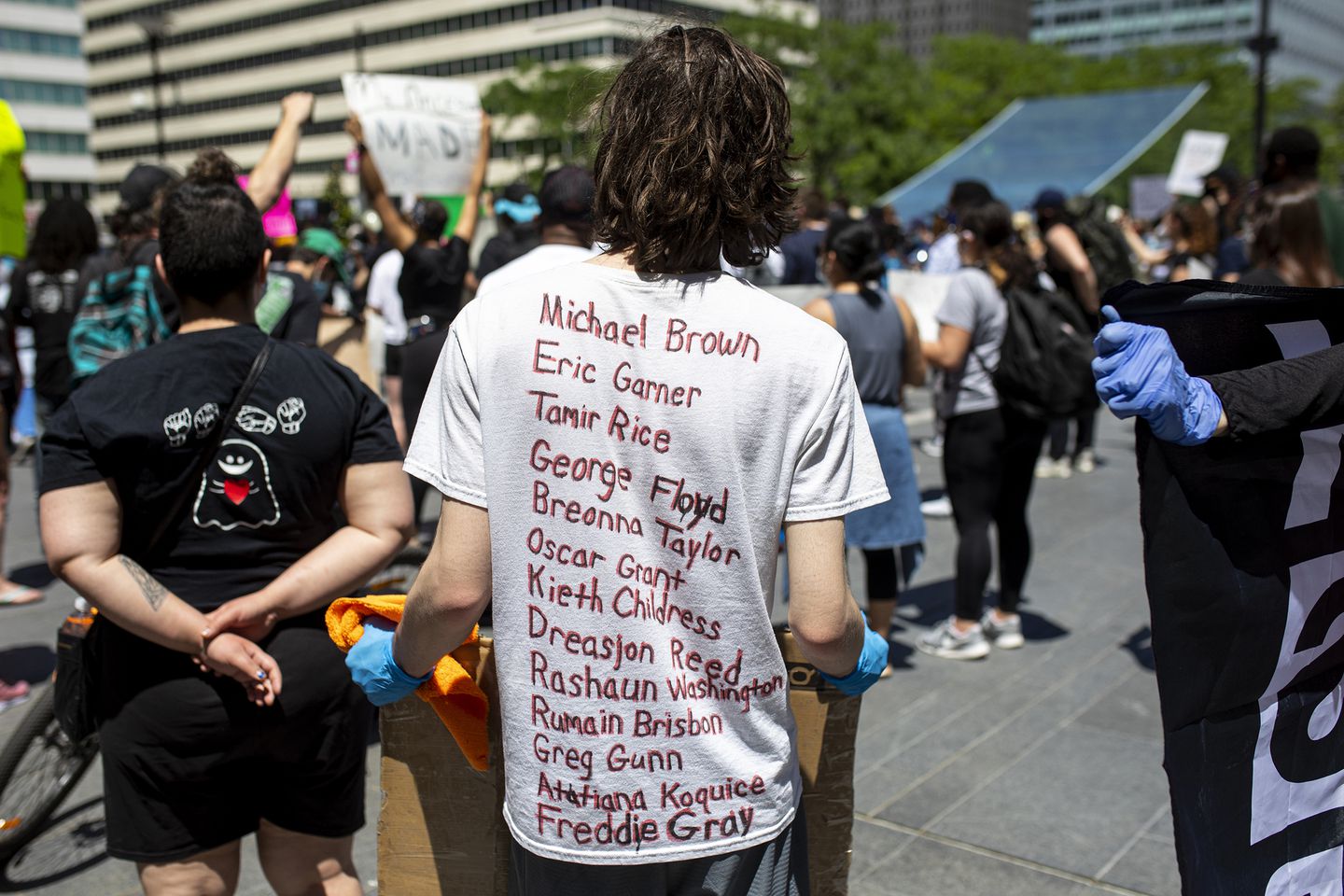
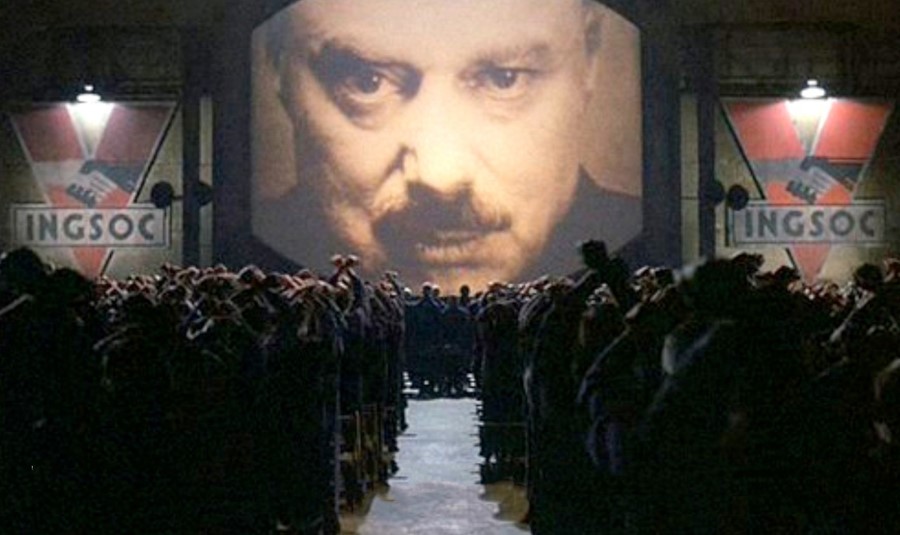


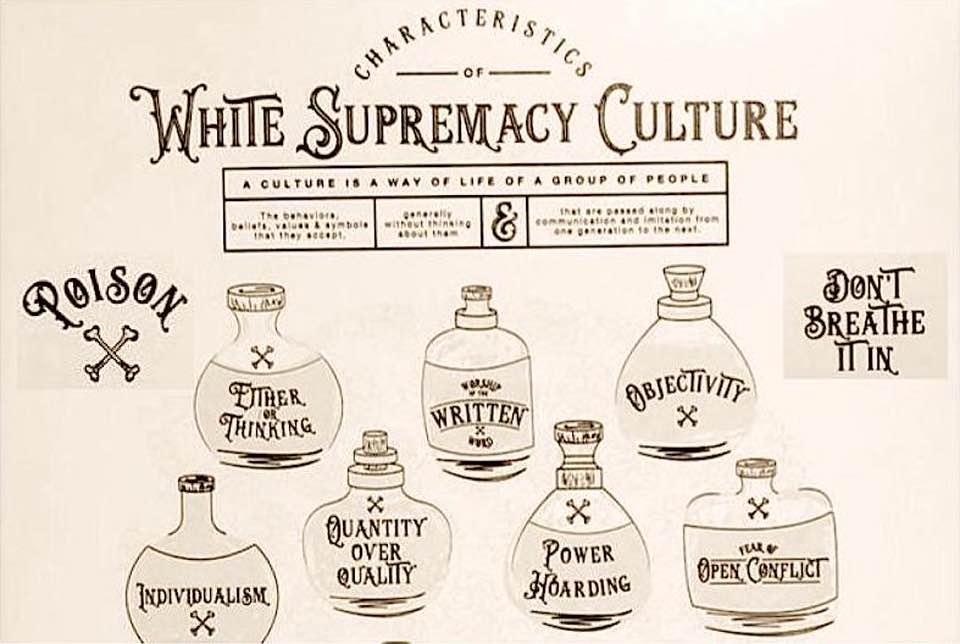


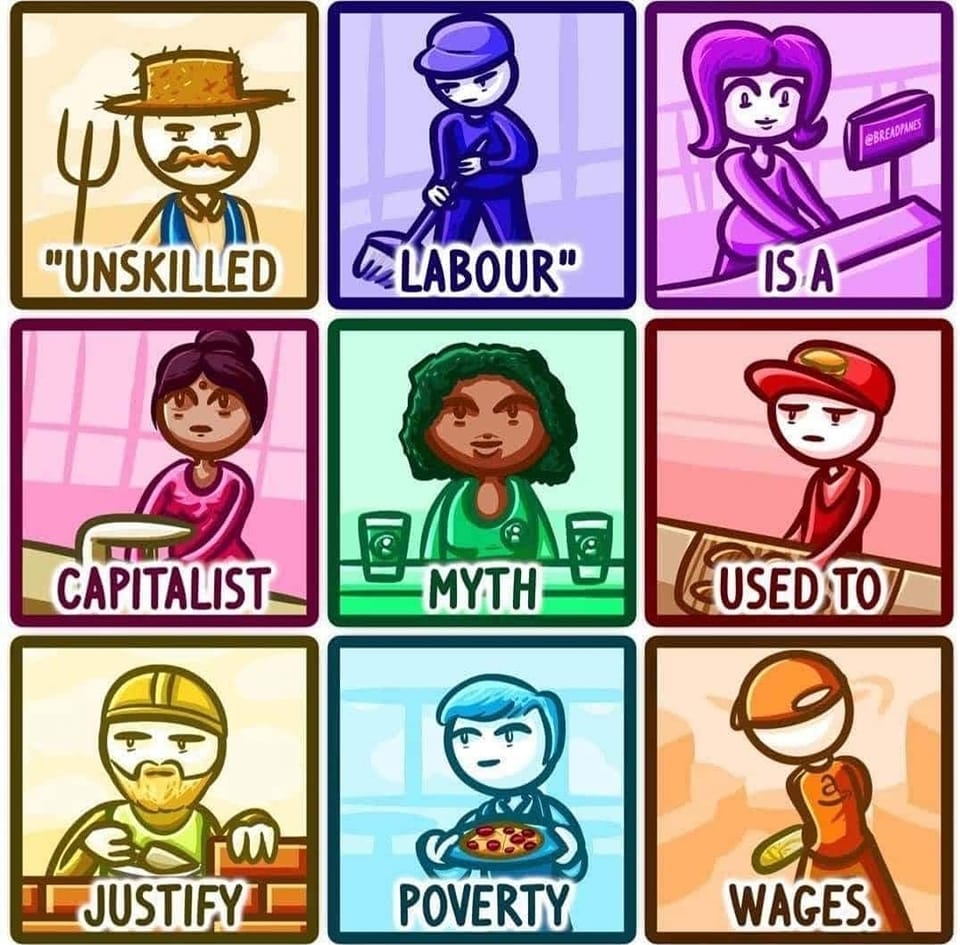

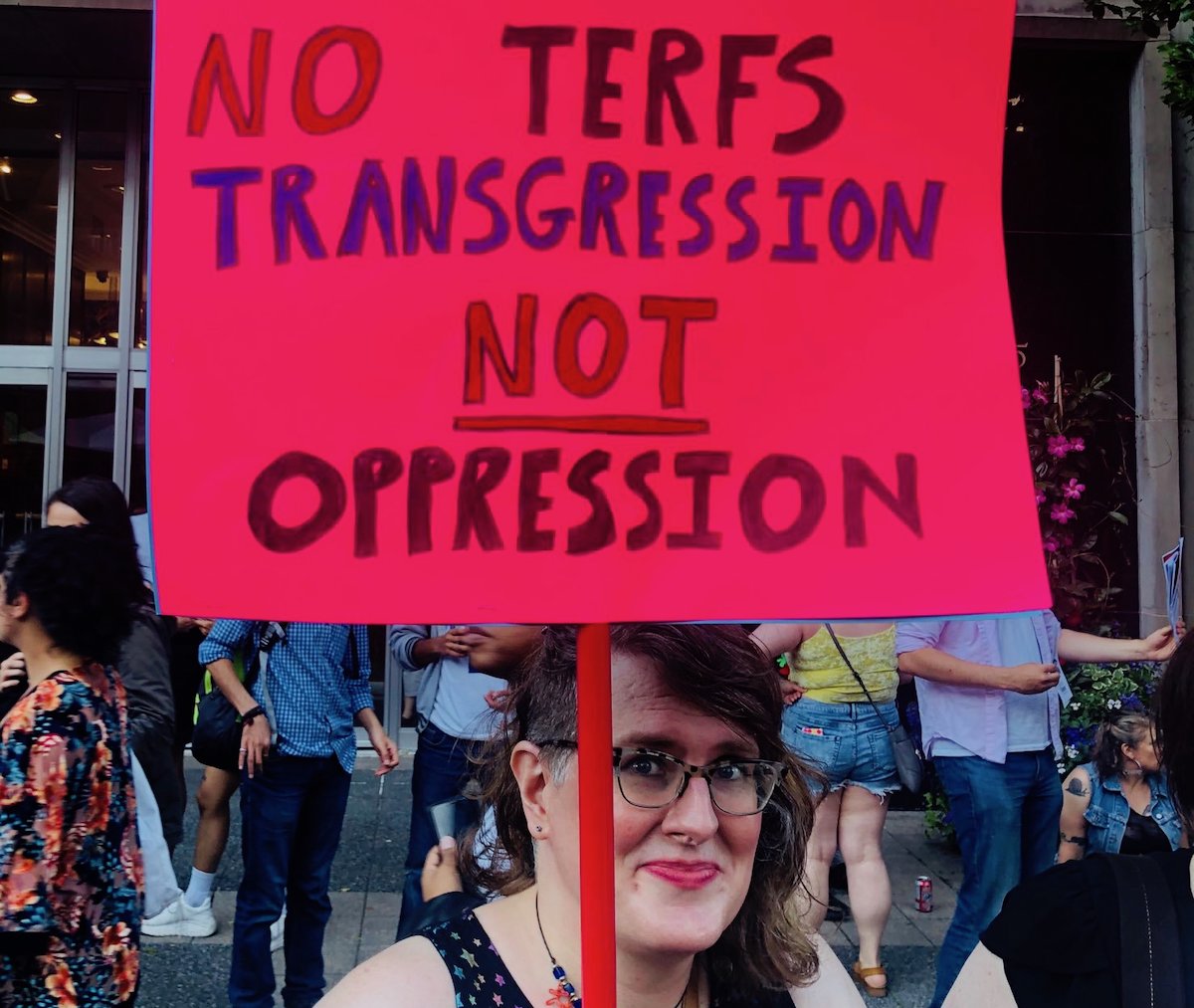


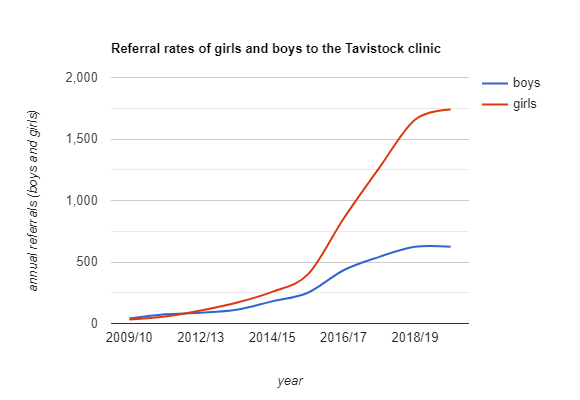
 freedom and reason