Iran, Nukes, and the Realities of Military Power: A Constitutional Perspective

I will post tomorrow about the threat Iran poses to Israel and why Israel is right to act against Iran. What I want to explain now is why Trump’s actions taken on Saturday are not analogous to Bush’s actions in Iraq and why Trump’s actions are not unconstitutional (neither were Bush’s, for the record). I have been accused of being a neocon. Nothing could be further from the truth. While I would like to see regime change in Iran, I do not want to see the United States invade Iran. Given Trump’s biography, I don’t think he wants that, either. His bellicosity is strategic. At least I hope so. As Dave Brat said the other day, if we become embroiled in a war with Iran, the war becomes Trump’s agenda and that derails the things we elected him to do. 

Democrat reaction to Trump’s actions is not principled but rather entirely partisan—so partisan that they will take the side of a Islamofascist state rather than side with the President (John Fetterman excepted). What a turn Democrats have taken. Trump dispossesses them of the capacity to reason. Democratic presidents since the 1979 Islamic Revolution have maintained a firm stance that Iran must never acquire nuclear weapons. The consistent message has been that a regime so openly hostile to the West, so deeply entangled in regional conflicts, cannot be trusted with nuclear capability. One would have to be a fool to believe otherwise.

As I noted in recent essays on my platform, the threat Iran poses to the region and the world greatly accelerated during the Obama and Biden presidencies. Despite Obama and Biden’s public pronouncements, they enabled Iran to advance its nuclear capability. Trump entered the White House on January 20 knowing this fact: Iran’s uranium enrichment program had reached levels as high as 60 percent purity, placing it just a step away from the 90 percent threshold required for weapons-grade material. While Tehran claims its nuclear program is for peaceful purposes, enrichment at this level serves no civilian purpose. This signals technical readiness to quickly break out to a bomb if the decision is made.

This assessment is not “manufactured” CIA or Israeli intelligence. The assessment comes from the International Atomic Energy Agency (IAEA), the United Nations’ nuclear watchdog. The IAEA has conducted regular inspections and confirms that Iran began enriching uranium to 60 percent purity in 2021, significantly higher than the 3.67 percent limit set under the now-defunct Joint Comprehensive Plan of Action (JCPOA)—defunct because Trump recognized that the US needed to return to its long-standing policy of crippling sanctions against the terrorist state. This is a key difference between the current situation and Bush’s actions in Iraq. I knew before the March 2003 invasion of Iraq that Iraq did not have a WMD program—and I knew this because I read the IAEA reports. All those who are saying Trump is controlled by Netanyahu are either ignorant of the IAEA reporting or sidestepping it. 

This development dramatically shortens the timeline needed for Iran to assemble a nuclear weapon and increases the difficulty for Western intelligence to detect and respond to such a move in time. Operation Midnight Hammer was a long time in planning. If there was any coordination between Israel and the US, Israel achieving air supremacy over Iran was to make it impossible for the Iranians to prevent the US operation, which could not have been accomplished by Israel. As advanced as their military is, it can’t compare to American military might. Nothing compares to US military capability. 

The fact is that Iran’s uranium enrichment program undermines nonproliferation efforts and rightly raises fears among regional powers, most immediately among Israel and Sunni Arab states, of a cascading arms race in the Middle East. The higher enrichment level underscored the urgency to halt Iran’s progress. If Iran is not suicidal—and that’s a big if—it will come back to the negotiating table and establish meaningful limits backed by credible enforcement mechanisms.

Image generated by Sora

As for the calls to impeach the President, which Democrats will if they regain control of Congress (if you haven’t realized it by now, Democrats don’t believe in the Constitution or democratic republicanism), the President of the United States has clear authority to meet the urgency of situations such as these with military force—without a congressional declaration of war. Trump’s authority is rooted in Article II of the US Constitution, which designates the President as Commander in Chief of the armed forces. While Congress holds the power to declare war, modern interpretations and historical precedent allow Presidents to engage in limited military actions to protect national interests, conduct counterterrorism operations, and respond to imminent threats. 

The historical precedent extends to the beginning of the Republic. Under John Adams, during the Quasi-War with France (1798–1800), an undeclared naval conflict sparked by French seizures of American merchant ships. In response, Adams authorized US naval forces to defend American commerce and engage French vessels in the Atlantic. Congress did not declare war. Instead, it passed laws authorizing naval engagements and the expansion of the Navy, effectively endorsing Adams’ use of force. This is the earliest instance I have found of US military action initiated without a formal war declaration. Correct me if I am wrong. 

Thomas Jefferson similarly acted without a formal declaration of war during the First Barbary War (1801–1805). Christopher Hitchens turned me on to this case years ago in an argument with Bill Mahr. Upon taking office, Jefferson refused to continue paying tribute to the Barbary States and sent US naval forces to the Mediterranean to protect American ships and pressure the rulers of Tripoli. After the Pasha of Tripoli declared war on the United States, Jefferson responded militarily without waiting for Congress to formally declare war. Instead, he informed Congress, which dutifully granted him retroactive approval and funding for sustained operations.

It continued this way until Congress attempted to reign in Article II powers with the War Powers Act (WPA), which it passed in 1973 in the aftermath of the Vietnam War (enacted over President Nixon’s veto). Nixon has escalated the war in Vietnam without a formal declaration of war by Congress. But even then, Congress did not forbid the President from exercising military power without a congressional act of war. In other words, the WPA affirmed the President’s authority to conduct military operations without a formal declaration of war. 

The WPA requires the President to notify Congress within 48 hours of introducing US armed forces into hostilities or situations where hostilities are imminent. It mandates that military engagement must end within 60 days unless Congress grants an authorization for use of military force (AUMF) or formally declares war (with an additional 30-day withdrawal period is allowed if necessary). However, presidents since have contested or sidestepped the WPA, asserting that the Act infringes on their Article II powers.

Here’s where Democrats are especially hypocritical. I see almost every other day on social media love letters to Obama. But Obama gives us one of the most dramatic uses of military power since the WPA with US military intervention in Libya in 2011. As part of a NATO-led coalition, US forces launched airstrikes and conducted operations that ultimately resulted in the overthrow of Muammar Gaddafi’s government, transforming Libya from the most affluent African nation to an open slave market.

Although Obama reported the military action to Congress, he argued that the intervention did not rise to the level of “hostilities” as defined by the WPR and therefore did not trigger the requirement for congressional approval within 60 days. If Libya did not rise to the level of hostilities as defined by the Act, I must not know what the word “hostilities” means.

Another example came in 2014 when Obama authorized sustained airstrikes and military operations in Iraq and Syria against the ISIS. Obama did not seek new congressional authorization, instead relying on the 2001 Authorization for Use of Military Force (AUMF)—originally passed to target al-Qaeda after 9/11—as legal justification. As a point of fact, ISIS did not exist when the AUMF was passed. Nevertheless, US military operations in Syria expanded significantly, including drone strikes, logistical support for allied militias, and even special forces missions.

(Obama loved to exercise military force. And, for the record, while I condemn Obama for the Libya action, I am less inclined to get worked up by actions degrading the capacity of terrorists to terrorize populations. Indeed, I don’t get worked up at all about it.)

Many Americans are unaware of the tremendous power the framers vested in the Office of the President. Many Democrats are aware of it but only valorize it when a man from their party is in power. They feel the same away about the federal judiciary (which, granted, was never intended to have the power of the executive and legislative branches). 

Finally, I think that what confuses people is the difference between military action and war. Military action can certainly be seen as act of war, but it is not war. An act of war refers to aggression or specific hostile—e.g., an attack, bombing, or invasion—that one state commits against another, typically a discrete act or series of actions that may or may not lead to a broader, sustained conflict. Being at war refers to a formal or ongoing state of armed conflict between entities or nations, often recognized legally through declarations of war (e.g., World War II) or continuous military engagement (e.g., the Vietnam War). While an act of war can provoke a state of war, the two concepts are distinct. We are not at war with Iran. 

US Strikes Iran’s Nuclear Facilities

In his Farewell Address of 1796, George Washington warned against foreign entanglements. The United States should avoid becoming involved in the permanent alliances and political affairs of other nations—particularly in Europe. “It is our true policy to steer clear of permanent alliances with any portion of the foreign world.” Washington’s guidance shaped American foreign policy for over a century. This is the principle of non-interventionism. 

Those who know me know that I have always opposed regime change wars and wars of choice. The disasters in Afghanistan, Iraq, and Libya shows us what happens when the United States prosecutes open-ended conflicts with no clear exit strategy and no sober understanding of the long-term consequences. In general, removing governments—assuming there are circumstances that necessitate this—without a plan for what comes next creates power vacuums, empowers extremists, and results in unnecessary loss of life. There are of course circumstances that involve regime change that do not permit planning, such as World War II. But total war is an exceptional circumstance. Maybe there is no circumstance in which a plan works out.

President Trump’s stated foreign policy approach rejects endless wars and focuses instead on protecting American interests without getting entangled in foreign nation-building. This is one of the main reasons I supported Trump in 2024. His administration insists that the decision to strike Iran’s nuclear facilities was not about regime change—it was about preventing a dangerous regime from acquiring nuclear weapons. There’s a crucial difference between starting a war and taking decisive, limited action to defend our national security. 

GBU-57A/B Massive Ordnance Penetrator (MOP) bomb

Before getting into yesterday’s actions, it’s worth looking at Trump’s first term as President and notable military actions his administration took then. Crucially, a key feature of Trump’s approach to military power during his first term was a willingness to use force selectively, often with an emphasis on deterrence and reasserting American strength, while also expressing a desire to reduce prolonged US involvement in overseas conflicts. I knew this when I threw my support behind him.

One of the earliest military actions came in April 2017, when Trump ordered a missile strike on a Syrian airbase in response to a chemical weapons attack by Bashar al-Assad’s regime. Later, in April 2018, Trump authorized a second, more extensive missile strike on Syrian targets, again in response to chemical attacks. These actions were part of a broader policy of signaling US resolve while not leading to deeper military involvement in Syria. I opposed these attacks at the time because I did not trust the intelligence and I did not support US intervention in Syria. To his credit, Trump ended significant US involvement in Syria.

Another significant military action was the 2017 deployment of a MOAB (the largest non-nuclear bomb in the US arsenal) against ISIS targets in Afghanistan. While the strike had a tactical impact, the main purpose was demonstration of American firepower. Trump also escalated US military operations in Afghanistan early in his term, but by 2020, he had begun drawing down troops, again, consistent with his stance of ending endless wars.

In January 2020, Trump ordered a drone strike that killed Iranian General Qasem Soleimani near Baghdad International Airport. Soleimani led the Quds Force, the elite unit of Iran’s Islamic Revolutionary Guard Corps (IRGC) responsible for foreign operations, espionage, and support of allied militant groups across the Middle East. Soleimani was the mastermind behind Tehran’s proxy networks in countries like Iraq, Lebanon, Syria, and Yemen. The strike raised tensions with Iran, with Iran responding by launching missiles at US bases in Iraq, however the crisis did not escalate into full-scale war.

In a previous essay on Freedom and Reason (America First is Not Israel First), I emphasized that, as one of the most directly threatened nations, Israel has both the motive and the right to act in its own self-defense. However, I stated that their war was not our war. I still don’t support Israel’s goal of regime change—although it would please me very much to see the Persian people overthrow clerical fascism in Iran. However, it appears that new intelligence has come to light that shows Iran’s nuclear program was far more advanced than previously understood. That this intelligence was likely supplied by Israel is spun as Israel manipulating Trump. But the fact is that Israeli spies are all over Iran and have better intelligence than the US.

The new intelligence assessment changes things. We were now confronted by a hostile regime, with a long record of sponsoring terrorism, getting dangerously close to building a nuclear weapon. Yes, I am well aware of the WMD ruse perpetrated by the neocons under the Bush-Cheney regime. But I knew it was a ruse before the US bombed Baghdad. Perhaps it will come out that the Trump Administration lied about Iran’s weapons program. But presuming the intelligence is reasonable, at that point degrading Iran’s offensive nuclear capacity ceases being just Israel’s problem; it became an immediate threat to the United States, to our forces abroad, to our allies across the region, and to global stability. The stakes had changed, and thus so did the necessity of American involvement.

Trump’s decision to strike Iran’s nuclear facilities was not an impulsive act—it was a measured and, again if the intelligence is correct, necessary step to prevent a dangerous regime from obtaining the most destructive weapons known to man. The suggestion has been made that, if we have nuclear weapons, then why can’t Iran have nuclear weapons. Because Iran’s leadership has repeatedly demonstrated that it is not a rational state actor on the world stage. It has violated international norms and flouted the nuclear agreement it signed, working in secret to enrich uranium and expand its offensive nuclear infrastructure. 

The Iranian regime has made its intentions clear: it seeks to dominate the Middle East, destroy Israel, and export its Islamofascist ideology. Under these conditions, allowing Iran to develop nuclear weapons would be catastrophic—not only for our allies in the region, but for the entire world.

Iran’s long-standing sponsorship of terrorism underscores exactly why it should never be allowed anywhere near a nuclear weapon. For decades, Iran has funded and armed Hezbollah, based in Lebanon, which has carried out attacks against civilians, including Americans, and threatened Israel daily. Iran has also supported Hamas, the Islamist group that controls Gaza, responsible for countless rocket attacks on Israeli cities. Israeli actions on both fronts have sharply degraded the capacity of these proxies to hurt Israeli civilians. 

Beyond the Levant, Iran has supported violent Shia militias in Iraq and Syria, which have contributed to the deaths of American servicemembers and undermined efforts at post-conflict stabilization. These Iranian-backed forces have attacked US personnel, harassed civilian populations, and helped keep brutal dictators like Bashar al-Assad in power. 

In Yemen, Iran has supplied the Houthis with drones, missiles, and the training to carry out precision strikes far beyond Yemen’s borders. The Houthis have attacked oil infrastructure in Saudi Arabia, threatened the UAE, and targeted international shipping lanes in the Red Sea. Iran’s ambitions are not confined to one border or one battlefield but stretch from the Indian Ocean to the Mediterranean. 

In short, these aren’t isolated incidents. They are part of a calculated Iranian strategy to destabilize the region using militant proxies that act in its interest while giving Tehran plausible deniability. These groups do not just fight conventional wars; they deliberately target civilians, spread chaos, and are ideologically committed to the destruction of peaceful societies. The notion that a regime which empowers these groups should be entrusted with nuclear capabilities is beyond dangerous—it’s suicidal.

Iran’s IRGC, especially its elite Quds Force, has acted as the command-and-control center for this terrorist export machine. With access to nuclear weapons, the Iranian regime would not only become more aggressive—it would be emboldened to escalate its proxy warfare, knowing the threat of nuclear retaliation could deter international pushback. Giving this regime nuclear weapons would drastically raise the stakes of every regional conflict and could embolden Tehran to pursue its goals even more aggressively, under the umbrella of nuclear deterrence. The world cannot let that happen. Trump has been telling the world for decades that he would not allow this to happen.

Diplomacy and international oversight have failed to rein in Iran’s ambitions. Indeed, actions by the Obama and Biden administrations enabled Iran’s nuclear ambitions, as I discussed in that previous essay. The Joint Comprehensive Plan of Action (JCPOA), an international agreement reached in 2015 between Iran and a group of world powers (including China) was designed to limit Iran’s nuclear program in exchange for relief from economic sanctions. But the JCPOA did nothing to address Iran’s ballistic missile development or its support for terrorism. Worse, Iran violated its commitments by enriching uranium beyond permissible limits and obstructing inspections. 

And let’s be clear—President Trump’s actions are not unconstitutional. As Commander-in-Chief, the President has the authority under Article II of the Constitution to conduct limited military operations to protect US national security interests. The strike on Iran’s nuclear facilities falls squarely within this framework. It was a targeted action aimed at a specific threat, not a declaration of war or a long-term military campaign. 

Congress retains the power to declare war, but the President has broad latitude to act swiftly in the face of imminent threats—especially when intelligence and the global security environment demand immediate response. Past presidents of both parties have exercised this authority. Trump’s decision to strike was not only legal, but also within the tradition of American executive action to prevent greater harm and preserve peace through strength.

Indeed, it is rather hypocritical for Democrats to call for Trump’s impeachment over yesterday’s action given that, during his presidency, Obama oversaw a wide range of military actions that reflected his power to use force when deemed necessary. A hallmark of Obama’s military strategy was an expanded drone warfare program, particularly in Pakistan, Somalia, and Yemen, targeting terrorist leaders with precision strikes. 

My opposition to those actions was not over the question of the President’s Article II powers, but over justification and outcomes. For example, in 2011, Obama led a NATO coalition intervention in Libya that overthrew Muammar Gaddafi. This action left the country in chaos. I criticized Obama not only for the result but for acting in the first place, since there was no legitimate reason for toppling Gaddafi. On the other hand, Obama ordered the 2011 Navy SEAL raid that killed Osama bin Laden in Pakistan. The point is that, overall, Obama’s military policy used targeted force against high-priority threats, and I don’t recall progressive Democrats calling for Obama’s impeachment for any of these actions. 

The question is this: do we allow a regime that funds terrorists and openly threatens our allies acquire the deadliest weapons on Earth? I am not categorically opposed to military action. But I need a reason. At this point, based on what I know, I have a reason. Hopefully the regime in power in Tehran understands that retaliating against the United States will result in the destruction of its clerical dictatorship.

But I also want to be clear that I do not want the US to go to war against Iran—not because I don’t want to see regime change there, but because it will be too costly in blood and treasure. And, on principle, it’s not our place to engineer governments in foreign countries. What is more, if the situation escalates into war, it will become Trump’s agenda, and everything we wanted from his presidency will be derailed.  

The Illiberalism of Progressive Antifascism

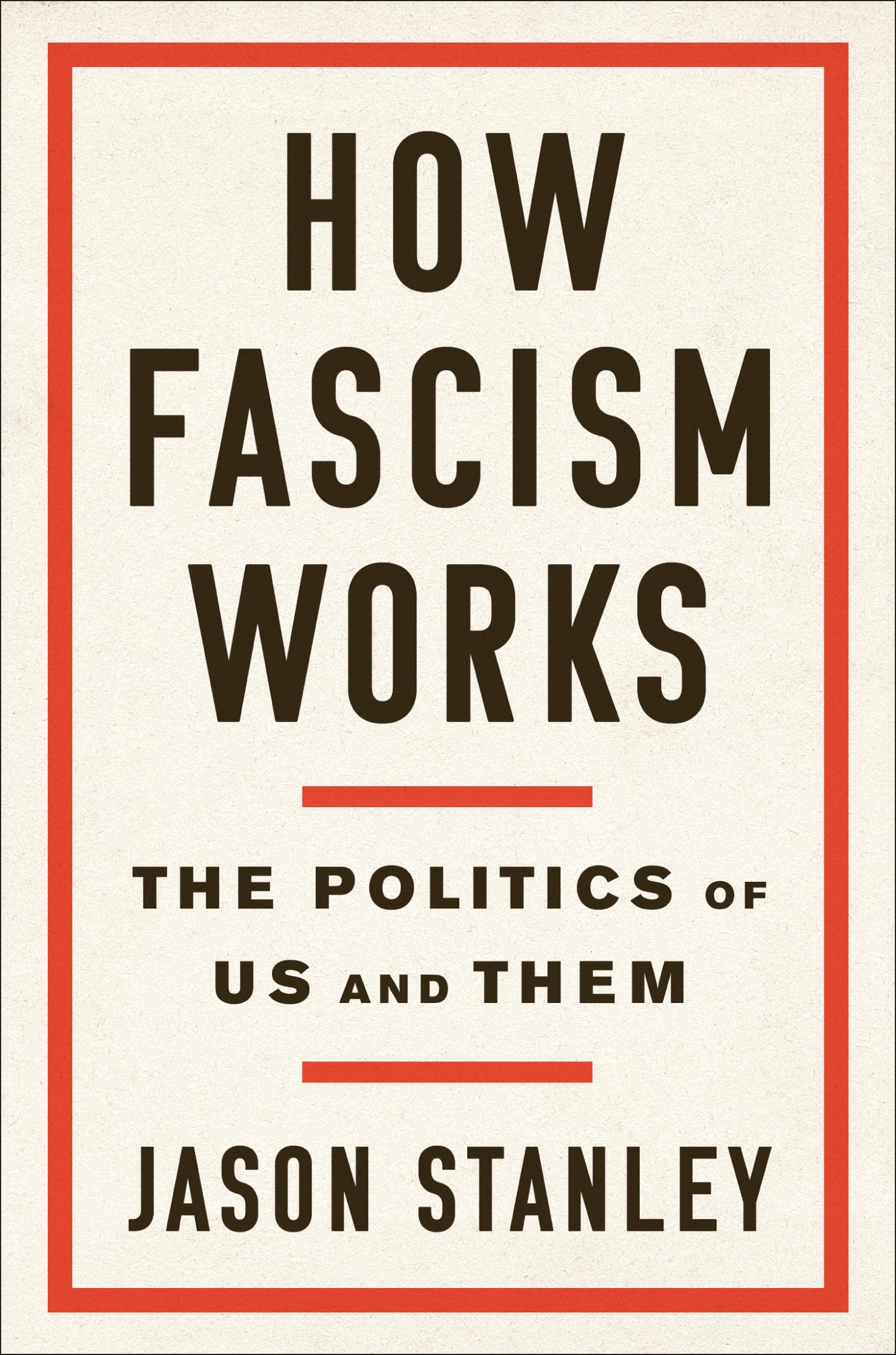
Have you read the book How Fascism Works: The Politics of Us and Them by Jason Stanley? I haven’t. I don’t need to. I know what’s in this book because it’s standard progressive rhetoric. Stanley is a dyed-in-the-wool progressive, so the argument is predictable. I’ve read many reviews of the book (in deciding whether to buy it). But even better, I reviewed a piece the author himself published on Big Think that summarizes his thesis (https://bigthink.com/videos/what-is-fascism/). You can read that summary for yourself. I will latch onto the detailed overview posted on various book sellers. Here’s a section of the overview. Pay close attention to the language:

“As a scholar of philosophy and propaganda and the child of refugees of WWII Europe, Jason Stanley has long understood that democratic societies, including the United States, can be vulnerable to fascism. In How Fascism Works, he identifies ten pillars of fascist politics—an appeal to the mythic past, propaganda, anti-intellectualism, unreality, hierarchy, victimhood, law and order, sexual anxiety, favoring the ‘heartland,’ and a dismantling of public goods and unions—that amount to an urgent diagnosis of the tactics right-wing politicians use to break down democracies and a critical lens on the current moment.”

Random House 2018

If one charitably reads the overview with a critical eye—particularly with attention to framing and language—an obvious question emerges: are these ten pillars uniquely fascist, or are they simply features of political rhetoric common across ideologies?

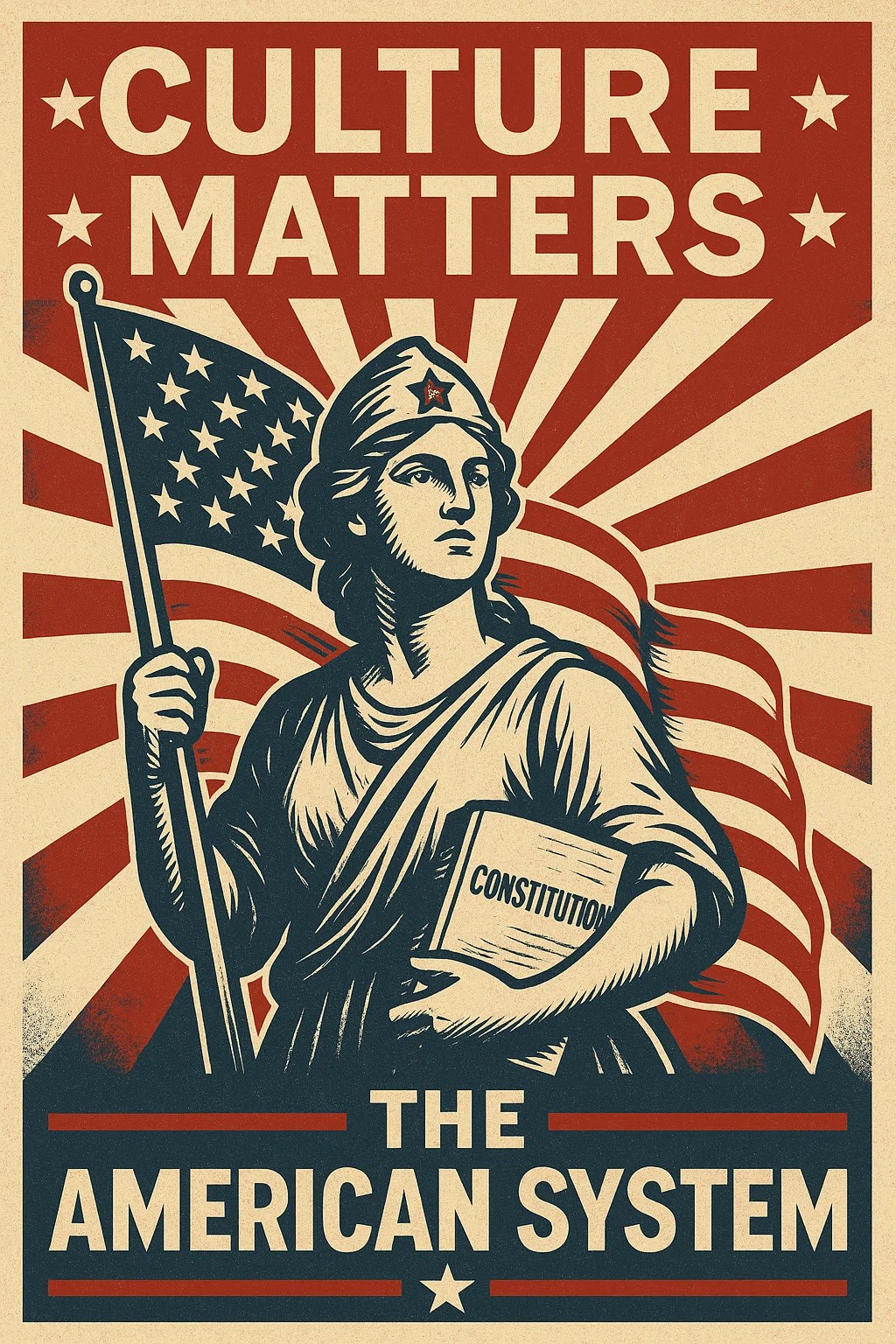
Stanley claims fascists appeal to a golden age that must be restored. Atavistic desire is hardly exclusive to fascism. Despite betraying these in action, progressives idealize the civil rights era, labor movements, or postwar social democracy. National myths are not inherently fascist—they’re a normal part of identity formation in any polity. What matters is how the myth is used, not whether one exists. When we celebrate the Founders and Declaration of Independence, the Constitution and its Bill of Rights, the American System, and all the other great things about America, are we manufacturing fascist myths? Of course not.

The American Republic endures because some of us care about its legacy. What purpose does it serve to characterize pride in one’s nation as fascist? Wouldn’t a person who wants to abandon a nation’s history say exactly this? Progressives want what the America patriots founded and fought for to be replaced by something else. That’s why they were out on the streets last Saturday. What do they say about people like me and you who defend the American Creed? Stanley wrote a book about it.

Most political communication contains some degree of simplification or emotional appeal. Does the make all such communication propaganda? Doesn’t a movement want to get people moving? As if progressivism isn’t drenched in emotionalism and histrionics! When Stanley uses “propaganda” to describe tactics on the right, he implicitly sets up his own narrative as truth, thus enacting the very dynamic he condemns. In democratic societies, essential concepts are contested, and claiming sole access to the truth—except for some obvious ones—can be anti-democratic and illiberal in its own right.

While fascist regimes have historically undermined intellectuals, skepticism toward academic and other elites is not inherently authoritarian. Indeed, it is required if we are to avoid technocratic governance. Populist movements—i.e., popular democratic sentiment and action—across the spectrum have criticized technocrats for being out of touch. And that’s because they often are! Framing all suspicion of intellectual authority as “fascist” fails to distinguish between anti-expert nihilism and legitimate critiques of epistemic overreach—and the masking of ideological ambition with pseudo-intellectual jargon.

Stanley warns that fascists flood the public with lies to dissolve trust in truth. But who defines truth? How about not those who tell us that men can be women or that America is systemically racist, two of many demonstrably false claims progressives insist on. With politically charged issues—class, gender, race—the line between truth and ideology is not always clear (that’s one reason to be skeptical of intellectuals). By insisting that only one side traffics in unreality—and elevate the one that consistently does—Stanley adopts a moralizing tone that preemptively delegitimizes disagreement and short-circuits democratic discourse—which is the goal of anti-fascist hysteria.

It is true that fascist ideologies embrace inegalitarian views. However, not all social hierarchies are authoritarian or oppressive. Merit-based and open systems inevitably function within hierarchical frameworks. Why? Because allowing people to operate freely produces inequality because not everybody has the same commitments and talents. Newsflash: individuals are different. A free and open competitive market will make them more unequal. How is that fascism? Flattening the concept of hierarchy into a fascist marker conflates emergent order and structure with tyranny.

Stanley argues that fascists manipulate feelings of victimhood, especially among dominant groups. But—does this even need to be said?—victimhood is the core of work progressive propaganda! Progressives are nonstop dwelling on (often imagined) historical injustices and systemic oppression. If victim narratives are dangerous when used by the right (rare), why not when used by the left (common)? The selective critique reflects a double standard rather than a neutral analysis. Easy bullshit call here.

Invoking “law and order” is seen by Stanley as a way to justify state violence. You are hearing this rhetoric big time in the current moment. Yet the desire for safety and stability is not inherently fascist—indeed, it’s foundational to the social contract. Do we really want a society without law and order? You know what that’s called, right? Anarchism. Citizens in high-crime areas support law enforcement without endorsing authoritarianism. They need the police. Big league. To equate law and order rhetoric with fascism is to misread a core democratic concern as a sign of tyranny. The hypocrisy here is so massive I need not dwell on it any further.

Stanley identifies anxiety over changing gender and sexual norms as a fascist tactic. While it’s true that authoritarian regimes often enforce traditional gender roles, it does not follow that all cultural conservatism or traditional beliefs and practices are fascist. But here’s the real problem: teaching sexual perversion to children. The desire to not sexualize children is fascist? Many cultural and religion traditions worldwide don’t share progressive views on sexuality. Stanley is painting deviation from progressive norms as dangerous. On the contrary, deviation from progressive norms is how we protect children and women. Progressives are transgressing boundaries that are essential for safety and innocence.

The romanticization of “the heartland” is presented as a fascist device. You know, “the Volk.” But valorizing rural communities over urban elites is a common populist trope—used by figures on both the left and right. What’ s wrong with rural people anyway, those folks Hillary Clinton called the “deplorables”? The salt of the earth? This framing reflects an elite cultural bias more than a diagnosis of fascism. Should every appeal to “ordinary people” be read as a step toward authoritarianism? Who is the republic for? Corporate elites and the bureaucrats and managerial strata? Or for the people? I say the people. What say you? (See No Gods. No kings. No elites. The People.)

Stanley includes efforts to privatize public services or weaken unions as fascist tactics. That’s neoliberalism, no? The weakening unions charge is ironic, since it was progressives who crushed private sector unions through globalization and mass immigration—and then established and built public sector unions to entrench the undemocratic administrative state (see Federal Employee Unions and the Entrenchment of Technocracy). To be sure, privatization has its problems, but the real question is whether privatizing does it better, more effectively and efficiently. Pragmatism demands an open mind on privatization. Many fiscal conservatives and libertarians advocate these positions from a principled, anti-authoritarian stance. Equating such policies with fascism collapses ideological diversity into a moral binary: right equals danger, left equals virtue.

I said at the start that I haven’t read the book. I have relied on reviews, the overview, and Stanley’s own summary of his book. I have read books like this, though. What these books have in common is that they exploit the anxieties of a moment when many are told to fear democratic backsliding. Why? Because Trump and the populist movement—a trans-Atlantic movement that threatens the rule of transnational corporations and governance bodies, i.e., inverted totalitarianism, the New Fascism.

Work like Stanley’s fulfills Orwell’s warning about language: the inflation of “fascism” into a catch-all term for political smearing. By casting a wide net and using emotionally charged language, Stanley (perhaps unwittingly—even smart people can be dumb) contributes to the polarization he seeks to diagnose. That’s why I choose to buy a collection of writings by George Orwell rather than squander my money on Stanley’s book (to add to my voluminous collection of books on fascism).

Here’s some advice to progressives: a better defense of democracy requires resisting the temptation to pathologize dissent. Political disagreement and ideological contestation are not threats to democracy—they are its lifeblood. To preserve liberal society, one must be willing to challenge all forms of ideology and propaganda—including the kind that comes cloaked in warnings about fascism, which, as best I can tell, Stanley’s contribution is a paradigm. Correct me if I’m wrong. Hey, gift me his book and I will read it cover to cover. Of course, progressives have no interest in preserving liberal democratic society. They desire something very different.

No Gods. No kings. No elites. The People

Since we’re reflecting on the problem of kings (and on July 4 we will celebrate America’s declaration of independence from the British Crown), it seems an apt time for a brief civics lesson on the distinctions between democracy, liberalism, monarchism, and republicanism.

Image generated by Sora

A liberal democracy features the following: constitutional limits on government power, free and fair elections, pluralism, tolerance of dissent, protection of civil liberties and political rights, the rule of law, and separation of powers.

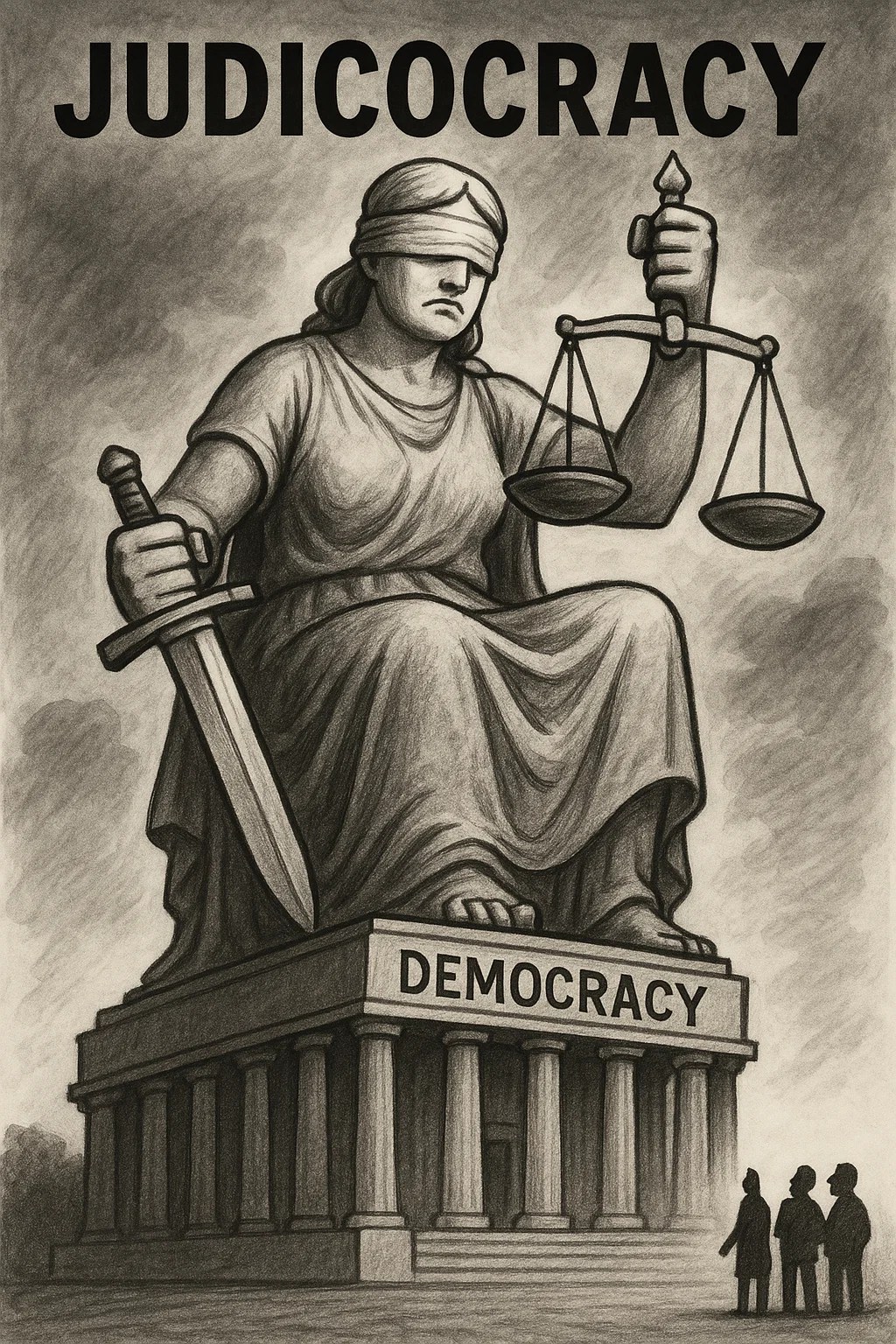
The United States is certainly these things in design. While we have faced challenges—fraying separation of powers (the rise of the judicocracy), strained tolerance for dissent (the Biden regime directing social media to censor and deplatform those who views challenge the official narrative), threats to electoral integrity (the 2020 election)—the institutional framework remains intact. What is required now is the political will to make these institutions function as they were intended.

The United States was founded on classical liberal principles: consent of the governed, free markets, individual liberty, limited government, natural rights (life, liberty, property), rule of law, and secularism. When I say I am a liberal, I mean that I subscribe to these things. My only qualification concerns the notion of free markets, particularly the tension between nationalism and globalism, as I have discussed many times before on this platform.

When one says that the United States is a liberal democracy, he is often confronted with this rebuttal: “We are not a democracy. We are a republic!” Yes, we are also a republic. However, putting it this way obscures the fact that we are also a liberal democracy. These two terms are not mutually exclusive.

A democracy is a system of government in which ultimate power resides with the people. In its purest form—direct democracy—citizens vote directly on laws and policies. James Madison was wary of direct democracy, fearing the “tyranny of the majority,” in which the rights of individuals and minorities are endangered by the will of the majority. In Federalist No. 10, Madison argued that the best safeguard against this danger was his blueprint for a constitutional republic. Thus, we are a representative democracy—like most modern democracies—where the people elect officials to make decisions on their behalf.

The core idea of the republic is a system of government in which there is no monarch. When I say that I am a republican, this is what I mean: no kings. However, while all true republics are a form of representative democracy, not all democracies are republics (nor are all states without a monarchy republics). Many modern constitutional monarchies—such as the United Kingdom, Sweden, Japan—are liberal democracies, with robust institutions and free elections, yet they still retain ceremonial monarchs. They are not republics.

Conversely, some countries that call themselves republics, like China, are anything but democratic. The Chinese Communist Party controls all branches of government, the military, and the media, with no checks and balances, free elections, or genuine political pluralism. Crucially, then, “republic” is a structural description—it is a design for government—not a guarantee of democracy or liberalism.

The United States is both a democracy and a republic: democratic because power derives from the people; republican because it is governed by elected representatives under a constitution that limits government power.

Last Saturday, progressives have made it clear that they don’t want a king. Great. Neither do I. So what do progressives want? They reject the American system, so we know they don’t want that. Instead, they advocate for an administrative and technocratic model—a system in which policy is shaped not by elected representatives responsive to voters, but by a class of bureaucrats and experts managing complex systems with minimal democratic input. This is what we call corporatism.

Corporatism is prevalent in much of Europe, particularly in parliamentary systems based on proportional representation. Corporatist systems integrate organized interest groups—businesses, labor unions, professional associations—into formal policymaking processes. In this system, politics is less about competition among ideas and more about cooperation among elites, with the government acting as a coordinator among powerful groups.

One feature of this system is agency independence, in which unelected bureaucrats manage the lives of the populace according to administrative plans. Agency independence reflects a technocratic approach to governance, where unelected bureaucrats wield significant authority over public policy and everyday life. This independence is intended to insulate decision-making from partisan pressures, allowing experts to manage complex social and economic issues through long-term planning and coordination.

Here’s the problem: this arrangement distances governance from democratic accountability, as policies emerge from negotiated compromises among elite interest groups rather than electoral mandates or public debate. The result is a political environment where citizens are alienated from policymaking, as crucial decisions are made by insulated agencies whose legitimacy derives more from expertise than from popular consent.

Thus, while corporatism offers efficiency (at least ideally) and stability, it does so by reducing the influence of ordinary citizens. A corporatist society behaves more like a corporate bureaucracy where decisions are made through closed-door negotiations among shareholders (excluding stakeholders), and where the machinery determining policy is opaque. The priorities of organized interests take precedence over grassroots demands, and the public becomes more of a managed audience than an active participant. Legitimacy in such a system stems not from popular will but from the perceived competence of institutions—leaving little room for dissenting voices outside the sanctioned channels of influence.

By formalizing elite control over policymaking, the state system marginalizes the broader electorate. It does this on purpose. Elite cooptation undermines democratic accountability and dilutes the principle of popular sovereignty. When interest groups act as gatekeepers to power, they prioritize narrow agendas over the common good, excluding diverse perspectives and suppressing dissent. This is why populism is universally reviled by elites and technocrats. In an act of projection, elites have taken to equating populism—another word for popular democracy—to fascism. You see this inversion across the West.

Why do I say projection? Because corporatism has an ambiguous character in the sense that it can operate within democratic institutions, but also slide into authoritarianism. Twentieth-century fascist regimes came to power through parliamentary systems and adopted corporatist structures to control civil society and eliminate democratic opposition. This dual nature highlights corporatism’s vulnerability to authoritarianism: it weakens the checks that liberal republicanism provides—civic participation, individual rights, separated powers—thus creating fertile ground for elite domination.

When progressives accuse populists of fascism they are projecting, accusing those who seek open democratic processes governed by republican principles and liberal values of the very thing progressives seek: an authoritarian corporate state.

The genius of the United States is that its governmental structure makes the installation of an authoritarian regime difficult. However, the rise of the unaccountable, unconstitutional, and unelected fourth branch of government—the administrative state—can, and to a significant degree has established what Sheldon Wolin called “inverted totalitarianism.”

In Democracy, Inc., Wolin argues that the United States has evolved into a system of managed democracy where corporate power dominates political life without the overt repression typical of classical totalitarian regimes. Unlike traditional authoritarianism, inverted totalitarianism maintains the façade of democratic institutions—constitutional rights, elections, a free press—while hollowing them out through consumerism and technocratic control. Wolin contends that this system suppresses genuine democratic engagement by depoliticizing the public, prioritizing market efficiency and stability over accountability and civic participation, effectively rendering democracy a symbolic ritual rather than a substantive practice.

The rise of the administrative state has fueled the growth of populism, as many American patriots seek to reclaim the republic in the spirit envisioned by the Founders. In the absence of a single authoritarian figure, the public has struggled to recognize the nature of their predicament—particularly given the legacy media’s dominance over public perception.

By casting a strong presidential figure leading a populist movement as an authoritarian, the cultural and institutional establishment has convinced many Americans that Trump poses a threat to democracy. When branding him a fascist failed to resonate, elites pivoted to portraying him as a king. Yet, just a week after the “No Kings” protest, that narrative appears to have fallen flat. Trump remains a highly popular figure, consistently polling above 50 percent in the most reliable surveys. But the corporate elite and their functionaries and street-level troops do not intend to give up.

Understanding the distinctions between corporatism, democracy, liberalism, monarchism, and republicanism is not an abstract exercise—it is essential for defending the American System. The United States was founded not on bloodlines or bureaucracies, but on the belief that individuals possess inalienable rights and that government derives its just powers from the consent of the governed. In contrast to corporatist models that favor elite cooptation and technocratic control, the American system rests on the conviction that ordinary citizens—through debate, democratic participation, and dissent—shape their political destiny.

To preserve this republic, we must not only understand the meaning of terms but recommit ourselves to republican principles of liberalism, secularism, and the rule of law. No gods. No kings. No elites. The People.

United States v. Skrmetti—The Supreme Court Strikes a Blow to the Madness of Gender Ideology

In a huge loss for the medical-industrial complex and queer activism, the Supreme Court, in United States v. Skrmetti, in a 6–3 decision, upheld Tennessee’s law banning so called “gender-affirming” medical care for minors. In other words, medically-unnecessary and extreme body modification of minors will not resume in my home state. With this decision, the Court upheld the power of states to stop unwarranted medical practices on a vulnerable segment of the population. This is a major blow to the twisted project to manufacture simulated sexual identities—and a major victory for those fighting to set medicine on an objective scientific foundation.

Image generated by Sora

Predictably, major US medical groups—including the American Psychiatric Association and the Endocrine Society—released a joint statement expressing disappointment with the ruling: “Every patient should have access to the medical care they need.” Like lobotomies for impulse dysregulation? That’s the analogy. GAC involves the altering of physiology through drugs and hormones, amputation of healthy breasts, the mutilation of genitalia—none of which treat a disease but instead manufacture (rarely in a convincing fashion) the appearance of a gender the subject can never truly be. These harmful practices affirm a delusion rather than dealing with the delusion itself. In doing so, they create life-long medical patients worth billions of dollars to the medical industry.

This ban will save countless children a lot of misery and pain. But it will also put medical science back on the path to actually doing health care and not extreme body modifications for an ideological agenda. Twenty-five states have now enacted laws that restrict doctors from providing puberty blockers, hormone therapies or surgery to transgender minors. Two more, Arizona and New Hampshire, ban surgeries. With this decision, it is hoped more states will pass laws banning these practices. Even better would be federal law. And not just for minors. No doctor should be allowed to take advantage of the vulnerable.

The majority, led by Chief Justice Roberts, framed the issue not as one of discrimination, but of permissible state regulation of medical practices. The opinion emphasized that the law did not target transgender individuals based on their status or sex, but rather restricted certain medical procedures based on age and the nature of their use. Because of this framing, the Court applied the lowest level of constitutional review—rational basis—and found that Tennessee had legitimate state interests, such as protecting children from what it described as irreversible medical interventions.

Roberts further wrote that the Court’s role is not to judge the morality or wisdom of such legislative decisions, but only their constitutionality. In declining to treat the law as a form of sex discrimination, the majority rejected the application of heightened scrutiny, which would have required the state to show a more compelling justification for the ban. Concurring opinions from Justices Barrett and Thomas underscored skepticism about emerging medical consensus around “transgender care” and reiterated their views that courts should defer to legislatures, particularly in fast-evolving medical fields.

In her dissent, Justice Sotomayor, joined by Justices Jackson and Kagan, argued that the Tennessee law was plainly discriminatory and violated the Equal Protection Clause. Sotomayor pointed out that the law allows certain medical treatments for minors while denying them to minors who wrongly believe they are the other gender, making the discrimination both clear and sex-based. “Male (but not female) adolescents can receive medicines that help them look like boys, and female (but not male) adolescents can receive medicines that help them look like girls,” she wrote. Of course. Why would it be any other way?

Micropenis is a medical condition characterized by an abnormally small penis—typically defined as a stretched penile length more than 2.5 standard deviations below the average for age and sex. It is typically caused by insufficient testosterone exposure during fetal development or early childhood. Early medical intervention, especially during infancy or early childhood, can stimulate penile growth. This involves short courses of testosterone therapy, either through injections or topical application, which can significantly increase penile length if administered at the appropriate developmental stage. In some cases, additional treatments during puberty or adulthood may be considered, but the response is generally best when treatment is initiated early. Thus proper diagnosis and timely hormone therapy are crucial for both physical development and the psychological well-being of affected individuals.

A mother who chooses not to intervene in treating her son’s micropenis during childhood, perhaps believing the decision should be left to the child when he’s older, is ultimately doing him a disservice. While the intention to respect bodily autonomy may seem thoughtful to her (or perhaps virtuous if driven by gender ideology), it ignores the medical reality that effective treatment can only stimulate meaningful penile growth if begun in early childhood. Delaying care until the child is old enough to decide means missing the narrow window when intervention can make a real difference. In this case, the well-meaning but misguided idea of letting the child choose later removes that choice altogether. Proper parental care sometimes requires making difficult, time-sensitive decisions in the child’s best interest—especially when inaction leads to permanent consequences.

But administering testosterone to a girl? For what purpose? If giving testosterone to a boy with a micropenis is justified because it aligns with his biological development, then administering the same hormone to a girl—whose body is not deficient in testosterone and for whom such an intervention will fundamentally alter her natural development—stands on entirely different ground. That terrain is ideological, and preys on the false belief that girls can become boys. In this case, it’s not a corrective treatment but a deliberate disruption of healthy female development in pursuit of a gender identity that, like the choice deferred in the micropenis example, evolves over time.

Putting aside the impossibility of children changing genders, the logic that children should be left to decide later seems conveniently abandoned here—replaced by irreversible interventions made on the basis of subjective feelings rather than objective medical need. If bodily autonomy matters, it should matter in both directions. But unlike the boy with micropenis, the girl given testosterone loses not just a developmental window, but her unaltered path into adulthood—without ever having the chance to truly choose it. The same thing holds with puberty blockers—unless these are used to stop precocious puberty (an actual medical condition).

Sotomayor criticized the majority for failing to apply even intermediate scrutiny—typically used in cases involving sex discrimination—and for minimizing the harm done to transgender youth and their families. Her opinion warned that the ruling would open the door for further erosion of protections for LGBTQ+ individuals and that it sends a dangerous message that states can target vulnerable populations under the guise of neutral regulation. It’s rather embarrassing for a Supreme Court justice to make an argument this absurd.

Eithan Haim of Dallas, the whistleblower who exposed atrocities performed on underage patients at Texas Children’s Hospital in Houston, makes this analogy: “It would be like saying a patient without cancer but ‘identifies as having cancer’ is being discriminated against because a doctor is refusing to give them chemotherapy.” In effect, Sotomayor is arguing that upholding the Tennessee ban on administering chemotherapy to a person without cancer is denying that person “lifesaving medical treatment.”

What the Court upheld was not discrimination, but discernment—the ability of a society to distinguish between treating a medical condition and indulging a psychological fiction with irreversible drugs and surgeries. The Tennessee law does not deny health care; it affirms that medical care must be grounded in biological reality and genuine pathology, not ideological fantasies. Children deserve protection from experimental interventions that yield lifelong consequences based on feelings that may change with time. Just as a parent is expected to act swiftly and wisely to correct a physical disorder like micropenis during a narrow developmental window, the same obligation should apply in preventing healthy children from being irreversibly harmed by ideologically driven procedures masquerading as medicine.

The Court’s decision validates a simple truth: that medicine must serve the body, not remake it in the image of delusional thinking and political belief.

Jefferson’s Warning on the Peril of Judicocracy

On September 28, 1820, penned a letter to Thomas Jefferson to William Charles Jarvis. Jarvis was a public official from Massachusetts. He was part of the generation that came after the American Revolution and was concerned with preserving the values of republican government in the young United States.Jarvis wrote a book called A Republican Looking Glass for the Use of the New Generation of Republicans, wherein he expressed concern about political instability and emphasized the role of institutions—especially the judiciary—in preserving constitutional government.

“I feel an urgency to note what I deem an error in it, the more requiring notice as your opinion is strengthened by that of many others,” Jefferson writes. He takes issue with Jarvis’ argument that one should “consider the judges as the ultimate arbiters of all constitutional questions,” which he calls a “very dangerous doctrine.” How dangerous? If taken to heart it “one which would place us under the despotism of an Oligarchy.” Jefferson notes that “our judges are as honest as other men, and not more so.” As such, “they have, with others, the same passions for party, for power, and the privileges of their corps.” He recalled the maxim: boni judicis est ampliare jurisdictionem, which translates to “It is the duty of a good judge to enlarge his jurisdiction.” Jefferson notes that “their power the more dangerous as they are in office for life, and not responsible, as the other functionaries are, to the elective control.”

Image generated by Sora

Jefferson’s argument resonates with my recent essay on the peril of judicocracy (see The Judicocracy Problematic; The Judicial Usurpation of Article II Powers and the Rise of the Universal Injunction). Jefferson is arguing that a government run by judges would basically put the nation under the control of a small group of elites who would subvert the popular will.

Jefferson goes on to argue that the Constitution didn’t create a single group to rule over everything. The Founders knew that if too much power were put in one place, even with good intentions, it would eventually become oppressive. Instead, they designed the three branches of government—legislative, executive, and judicial—to be equal and independent. He then gives examples: If Congress doesn’t pass laws it’s supposed to—like holding a census or creating a militia—the courts can’t force them to do it. If the President doesn’t appoint judges or sign commissions, the courts can’t order him to act either. Similarly, the President and Congress can’t order judges around. Each branch has its own job and can’t interfere with the others.

American judges, he argues, have overstepped their boundaries and tried to direct executive officials in their duties. But under our Constitution, each branch must stay in its own lane. Consider the currently onslaught of judicial actions against Trump’s handling of administrative affairs and immigration policy. The President is not obligated to observe the various injunctions imposed by a rogue judiciary. They have only the power to impose injunction—they have no power to impose them. Moreover, Congress has the power to limit the scope of their use—and even to dissolve courts, effectively removing judges (Lawfare Against the People Continues. When is Congress Going to Act?).

Jefferson admits that judges deal with constitutional issues more often because that’s part of their job, especially when it comes to contract and criminal law. But if the President or Congress acts unconstitutionally, they are held accountable by the voters—not by judges. To give judges the power to hold the President or Congress accountable gives the judiciary too much unchecked power.

Ultimately, Jefferson believes that the people themselves are the only safe guardians of power in a free society. If elites think they aren’t wise enough to make good decisions, the answer isn’t to take away their power but to educate them. That’s the real solution to abuses of constitutional authority.

Jefferson closes the letter with a observation about the future of the Republic, since this is Jarvis’ concern: “if the three powers maintain their mutual independence on each other, it may last long: but not so if either can assume the authorities of the other.”

Jefferson was hardly alone on this point. In this X post, Newt Gingrich lays out the sentiment of democrats and republicans. The speech was delivered at the Values Voters Summit on October 7, 2011. It describes in detail the ninth point in the 21st Century Contract with America, which states its objective as “Restoring the proper role of the judicial branch by using the clearly delineated powers available to the president and Congress to correct, limit, or replace judges who violate the Constitution.”

Trump’s Popularity and Elite Manufacture

The Rasmussen Reports daily Presidential Tracking Poll for Wednesday shows that 52 percent of likely US voters approve of President Trump’s job performance. Trump has been at or above 50 percent for weeks now. Rasmussen is one of America’s most accurate polling organizations.

I know that my almost daily sharing of this poll comes off to some as obnoxious—taunting those who can’t believe Trump still holds strong public support. But it shows how out of touch they are with the heartland—as well as demonstrating an ignorance of the way propaganda works.

No Kings! (Source of image)

The prevailing narrative—that Trump is deeply unpopular among the American people—is false. The narrative is an elite manufacture and endlessly repeated if for anything to entrench the attitudes of those already indoctrinated. That was the purpose of “No Kings Day,” which utterly failed to change public opinion, but reinforced existing attitudes that will prove useful for the next attempt to sway public opinion through the optics of big crowd.

The way the media covers Trump reflects an elite perspective—not a popular one. When you listen to the legacy media talk about Trump, you’re not hearing the voice of the public. You’re hearing from the propaganda wing of the corporate class—an elite that has long relied on Democrats to carry out its economic and political agenda. The media substitutes elite opinion for that of the people (this is true throughout Europe, where it is much more effective). This is more than just bias—it’s a deliberate strategy rooted in a century of thought about power and persuasion.

Antonio Gramsci, the Italian Marxist imprisoned by Mussolini, called this “ideological hegemony.” He argued that in advanced capitalist societies, power is maintained not just through coercion, but through elite corruption and shaping of common sense, culture, and norms. The corporate class doesn’t simply impose its will on the people (that’s messy and unsustainable); it makes its worldview and the interests it envelops feel inevitable, natural, and universal.

It does this through the work of intellectuals—people who articulate, justify, and spread ideology on behalf of the corporate class. Today, these intellectuals control academic, cultural, and media institutions. The worldview that issues from the country’s sense-making institutions is at odds with the reality on the ground. The people have seen this and it is hard to imagine they are ever going to return to the matrix.

Crucially, Gramsci distinguished between “traditional intellectuals” and “organic intellectuals.” The traditional intellectual—the academic, the priest, the scientist—presents themselves as neutral and objective, above class conflict. They truck in knowledge. Or so they claim. They at least maintain the appearance of detachment from politics. Yet they almost always serve the existing order by defining what counts as legitimate knowledge or respectable discourse within the general frame produced by the mode of production.

Karl Marx put this well the German Ideology: “The ideas of the ruling class are in every epoch the ruling ideas, i.e. the class which is the ruling material force of society, is at the same time its ruling intellectual force.” Marx continues: “The class which has the means of material production at its disposal has control at the same time over the means of mental production, so that thereby, generally speaking, the ideas of those who lack the means of mental production are subject to it.” Put another way, those who control the economic base also tend to dominate the ideological superstructure—through culture, education, and media. It’s a foundational idea that Gramsci later deepened with his theory of hegemony.

The organic intellectual, on the other hand, is embedded in a particular class and works to advance its interests. They are not necessarily working on the left or right, or from a particular class standpoint; there are organic intellectuals in both the capitalist class and the working class. What defines the organic intellectual is not their education or profession, but their function: they develop and spread the worldview of their class. They do not always pretend to be neutral or objective, and are openly engaged in the battle of ideas because they understand that the real political struggle is fought not only in elections and legislatures but in the hearts and minds.

As implied above, these are not mutually exclusive category. Organic intellectuals often masquerade as traditional intellectuals. That is, they present themselves as neutral and objective experts—academics, analysts, economists, physicians, scientists—whose authority supposedly derives from disinterested knowledge. But in reality, they are deeply embedded in the ideological machinery of a specific class. They deploy the language of objectivity and scientific rationality to advance political agendas, giving their class’s worldview the appearance of inevitability and truth.

This tactic is one of the most effective tools of hegemony: ideology cloaked in the robes of expertise. As a result, academic and media institutions can claim to be above politics while constantly reinforcing a very particular, very political vision of the world—one that protects existing power structures under the guise of “the facts.” Often, these functionaries genuinely believe in their own neutrality and objectivity, having themselves been thoroughly indoctrinated into the very ideology they unconsciously serve; their sincerity makes their authority even more effective and their influence more difficult to challenge.

In our current media environment, the columnists and pundits who claim to speak for “democracy” or “the rule of law” are, in Gramscian terms, the intellectuals of the professional-managerial and corporate classes. They frame Trump’s appeal and populism as a pathology—something irrational and dangerous. Their job is not to convey public opinion but to contain and distort it, to reassert ideological control over a population that is increasingly rejecting their consensus.

Noam Chomsky, decades later, called this mechanism “manufacturing consent”—a term he borrowed from Edward Bernays, the father of public relations and a proud propagandist. Bernays didn’t hide his contempt for democracy. He referred to the public as a “bewildered herd” that needed to be guided by an enlightened elite. He called this “engineering consent.” Gramsci, Chomsky, and Bernays were describing the same structure from different angles: a system where elite voices dominate the public sphere, not to reflect the will of the people but to corrupt, manage, and shape it.

So when you see a poll like Rasmussen’s—when over half of likely voters support a president the media insists is illegitimate, unelectable, or universally hated—you’re seeing a crack in the hegemony. You’re seeing that the people think for themselves. That doesn’t mean you have to agree with Trump or support him. But it does mean you should question the storyline that says his support is a fringe delusion. It isn’t. It’s a political fact that millions of Americans hold views that are completely alien to the worldview of the elite class—and that class responds not by reckoning with that reality, but by doubling down on its narrative, which is becoming more absurd with each new day. The public is becoming immune from propaganda, and a big part of this is the liberation of Twitter from corporate state control and the rise of “alternative” media (e.g., Steve Bannon, Tucker Carlson) close to the People.

Sharing these poll numbers isn’t about “owning the libs” (I’m a liberal, for the record). It’s about disrupting a system that pretends to speak for the people while systematically ignoring and misleading them. It’s about resisting a media and political apparatus that treats dissent as misinformation and populism as pathology. It’s about reclaiming the right of the people to define what is legitimate, normal, and possible—not according to the elite, but according to the people themselves.

In a letter from Thomas Jefferson to William Charles Jarvis in September 1820, the former President wrote, “I know no safe depository of the ultimate powers of the society, but the people themselves: and if we think them not enlightened enough to exercise their control with a wholesome discretion, the remedy is, not to take it from them, but to inform their discretion by education.”

Jefferson did not say ideology, indoctrination, or propaganda or whatever words were available at that time to conveys these forms of manipulation. He said education. From the tone of the letter, and context in which the letter was written, he does not mean education in public schools. He means that it’s the job of the representative to explain to his constituents why he has decided the course upon which he has set the district, state, or nation. And if the people disagree, they can take advantage of the next election to put another representative in his place.

The Intersection of Florence and Normandie: If Only Denny had Punched It 

Protest is a vital part of a free society. But when protesters block roads, surround vehicles, and threaten public order, it crosses the line from expression into coercion. At that point, it stops being protected speech and becomes an infringement on the rights and safety of others.

The police need to take proactive steps to address this problem. The role of the police is not to enable those engaged in lawless action, but to protect those subject to it. We cannot normalize the blocking of public roads by civilians, no matter how passionate their cause. But will the police act? Are citizens supposed to depend entirely on the police to protect their rights? Or are citizens entitled to take action in the absence or inaction of the police? Isn’t self-defense also a right?

The right to self-defense in the United States allows individuals to use reasonable force to protect themselves from imminent harm. Rooted in English common law, which heavily influenced American legal principles, this right permits force proportional to the threat, including deadly force when faced with a threat of death or serious bodily injury. In the US, self-defense is recognized as a legal justification for actions that would otherwise be criminal, with “castle doctrine” and “stand your ground” laws that expand the right to use force without a duty to retreat.

Peaceful expression is protected; physically obstructing critical infrastructure is not. Blocking roads interferes with a fundamental right in civil society: the right to travel freely and without interference. This isn’t merely a matter of convenience—it can be a matter of life and death. Someone may be trying to reach a hospital, get to work to support their family, or say goodbye to a dying parent. No protest—no matter how convinced protestors are of their righteousness—has the right to force innocent bystanders into unwilling participation by trapping them on the road.

Recall these words from the Declaration of Independence: “We hold these truths to be self-evident, that all men are created equal, that they are endowed by their Creator with certain unalienable Rights, that among these are Life, Liberty and the pursuit of Happiness.” The rights to self-defense and to travel unmolested by other civilians falls within these rights. 

When protesters aggressively surround vehicles—yelling, pounding on hoods, refusing to let drivers pass—it creates an environment of fear and potential violence. This behavior is not harmless or mere symbolic acts. To the driver, it may feel indistinguishable from the beginning of an assault. The madness and unpredictability of crowds amplifies the threat: people have been pulled from vehicles before, as I will discuss below. Drivers caught in these situations cannot be expected to perfectly interpret the intentions of a chaotic, hostile crowd—the crowds can’t perfectly know what will be the results of their actions. There is the madness of crowds. Motorist may feel they have no option but to escape—even if that means driving forward.

“The Bashing of Reginald O. Denny” Sandow Birk

Remember Reginald Denny, a truck driver who was viciously attacked by a mob during the 1992 Los Angeles riots? On April 29, while driving through South Central Los Angeles, Denny was pulled from his truck at the intersection of Florence and Normandie by a group of rioters. He was beaten severely—kicked, punched, and struck in the head with a cinder block—causing a fractured skull and permanent brain damage. 

The attack was captured on live television and became one of the most infamous moments of the riots, symbolizing the breakdown of public order. Several assailants were later arrested and prosecuted, with Damian “Football” Williams receiving a conviction for mayhem. A lot of good that did Denny. He survived, but the attack left lasting physical and emotional scars.

Why didn’t Denny keep driving? Reginald Denny likely didn’t keep driving because he was unaware of the danger he was entering, stopped at a red light as any law-abiding driver would, and hesitated out of confusion or fear when suddenly surrounded. Reports suggest he was listening to music and not following the news, so he may not have known the riots had erupted. Once his truck was surrounded at the Florence and Normandie intersection, he may have feared harming someone by trying to drive through the crowd. In moments of high stress and uncertainty, hesitation is common—and tragically, that pause gave the mob time to drag him from the truck and beat him unconscious. Imagine if Denny had plowed through the murderous mob? His life would be very different—and those who sought to hurt them would have paid the price for actions. 

The brutal beating of Reginald Denny LA Riots 1992

Forgetting Denny, those who defend the tactic of standing in the road will say, “But no one had actually attacked the driver.” They did in Denny’s case! And that’s not the only example. But that’s beside the point. Self-defense law does not require a person to wait until they are physically harmed to act. It requires that their perception of imminent harm be reasonable. And in situations where a person is trapped by a hostile group, shouting and blocking their path, that perception is not only reasonable—it’s entirely rational. 

On June 2, 2020 a truck driver named Bogdan Vechirko was briefly jailed on assault charges after he nearly drove an 18-wheeler into a large group of protesters in Minneapolis. He was released a few days later without charges. No one was killed or seriously injured. But the video showed that Vechirko did not slow down his truck until he was far into the crowd of demonstrators. He’s lucky he did not wind up like Denny.

Post by Mark Staite

Only designated public officials—namely law enforcement—should have the legal authority to direct or halt vehicles on public roads. Allowing private citizens to take control of public space through intimidation or obstruction undermines the rule of law and endangers lives. Protesters are free to march, to chant, to speak—but they are not entitled to control the movements of others or endanger them in the process.

If a mob surrounds a vehicle, aggressively prevents it from moving, and the driver—fearing for their safety—continues driving to escape, the legal and moral responsibility for any injuries that occur lies first with those who created the threatening situation. Just as we teach children not to play in traffic, we should hold adults accountable for knowingly placing themselves and others in danger by occupying roadways. And, unlike children, adults know what they’re doing. The protestors know what they’re doing—until mob mentality dispossesses them of the capacity of reason, which does not mean they are not responsible for their actions. 

There is a straightforward analogy here: if a man is walking down a sidewalk and is surrounded by others shouting at him, blocking his path, and refusing to let him leave, he is not obligated to guess their intent. He is being unlawfully detained and harassed. He had a reasonable belief that his life is in danger. If he defends himself or pushes through, most would agree he had a right to do so—at least they should, because his actions are rational and rooted in his unalienable rights. The same principle applies when a driver is encircled by an angry crowd. Threats don’t need to be acted upon to be real—and the right to defend oneself does not disappear simply because the aggressors claim political motives.

Protest is a right. Coercion, intimidation, and obstruction are not. Self-defense is a right. The state must draw that line clearly—before more people are endangered, and before citizens are forced to make life-or-death decisions without legal clarity or police protection. But must we wait for the state to defend us? How can we when political leaders and big money elites are construction, enabling, and encouraging the rabble? If only Denny had punched it he could have saved himself from a fractured skull and a life-long impairment of his speech and ability to walk. He’s lucky to be alive. The mob intended to kill him.

I close with the great Bill Hicks: https://www.youtube.com/watch?v=klYeCeYIAQQ (for some reason, YouTube will not let me embed any version of Hick’s bit on Denny).

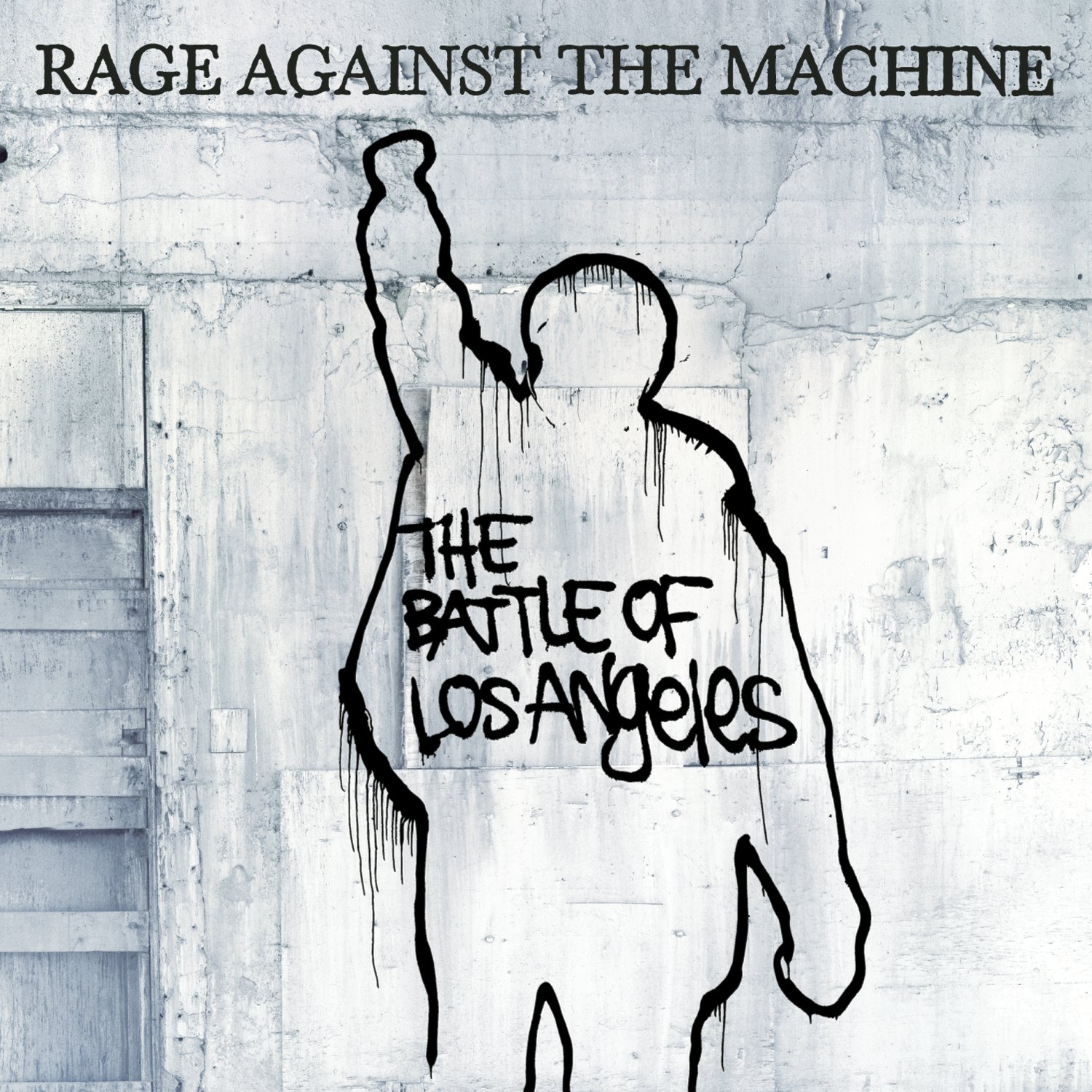
Why Culture Matters: And Why the Battle For Los Angeles is a Battle for the American Republic

Human beings are not blank individuals—they’re culture bearers. Culture, in its broadest sense, includes customs, ethics, language, norms, religious beliefs, values, and inherited patterns of social life. It is not confined to borders, nor is it static; culture travels with people, shaping every environment they enter. When individuals or communities migrate, they do not arrive empty-handed—more than cuisine and language, they bring with them a worldview, rooted in faith, ideology, social norms, and tradition. The portability of culture presents modern society with one of its most difficult challenges.

The challenge deepens when we recognize that different cultures are associated not only with different customs, but also with different systems of governance. Some cultures, shaped by centuries of civic development, philosophical inquiry, and political debate, support democratic institutions and pluralistic values. Others, shaped by authoritarianism, religious authority, or tribal structures, are more accustomed to rigid hierarchical or theocratic systems. The form of government a society adopts is rarely arbitrary—it reflects the cultural soil from which it springs. Culture and governance are entwined in a mutually reinforcing relationship.

Image generated by Sora

When migration occurs at a manageable scale and is accompanied by mutual education, engagement, and integration (or assimilation), selected cultures can enrich the host society. I say selective because not all cultures are compatible with the culture of the host country. In some cases, immigrants not only adopt the host nation’s values but bring renewed energy to its civic life and democratic institutions. However, when migration occurs rapidly and in large numbers without strong integration, or when the incoming culture carries deep commitments that resist assimilation, it disorganizes the culture of host country and weakens civil society.

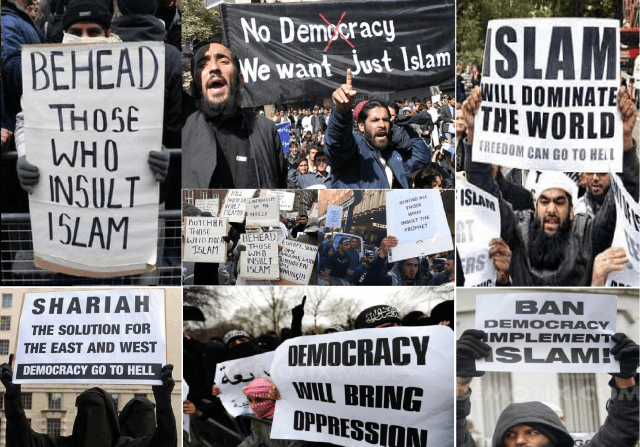
This becomes particularly significant when the host society is built on principles of liberal democracy—freedom of conscience, speech, writing, etc. Such systems require more than just laws to function; they depend on a cultural infrastructure: belief in the equal dignity of individuals, a commitment to civil discourse, and tolerance of differences (but not so tolerant that they self-destruct). These values are not easily transmitted, nor are they universally held. Immigrants bring expectations about how authority should function, how community should be organized, and what role, if any, religion should play in public life. When a significant number of newcomers arrive from cultures where these principles are absent or even opposed, and when assimilation is discouraged—by the host or the immigrant communities or both—the foundation of democratic governance is imperiled.

It’s not just the danger of those who bear cultures incompatible for liberal democracies—there are those in the host country who represent a danger to the national integrity necessary to maintain a free and open society. Multiculturalists (what were before called cultural pluralists) argue that it is wrong to expect assimilation from those who arrive with different traditions. Multiculturalists promote the preservation of diverse cultures within an ostensibly shared political space, holding that difference should not only be tolerated but welcomed and affirmed.

We might charitably assume that this view has noble aims: to avoid cultural erasure, to foster mutual respect, to protect minority identities, etc. I have suggested in past writings that these arms are not what drives multiculturalism, but rather are rationalizations for strategies globalists use to pursue their anti-working class agenda. As one can see in the above video, there are many in the United States who seek to overthrow the American System. But whether we’re charitable or not, the same questions must be addressed: Can a society maintain cohesion when its members are encouraged to live in separate cultural silos? Can a liberal order survive if large segments of its population do not internalize the norms that sustain it? The answer to the question is no.

Cultural diversity can be a source of strength only if it is accompanied by a shared commitment to the ethical and political framework of the host society. Without this, cultural pluralism becomes not a mosaic (even if this were desirable), but a patchwork of mutually exclusive enclaves, each with its own allegiances, rules, and vision of justice. Multiculturalism is in reality the balkanization of the West. If liberal democratic society depends on shared civic values like free speech, gender equality, or the separation of religion and state, what happens when large segments of its population do not subscribe to those values? National suicide.

The threat posed to the West by Islam

This is not a hypothetical concern. Look at France, Great Britain, and Sweden. Multiculturalism has been a disaster. Efforts to maintain cultural pluralism have resulted in the growth of insular communities with limited engagement with the broader population. When people live parallel lives, each within its own cultural framework, mutual understanding declines. In the long term, this situation weakens the social fabric and challenge the stability of the political system itself. Democracy, after all, is not only about elections—it depends on habits of tolerance and trust (within reason). These habits are learned and passed down through culture.

Cultures are more than sets of customs or rituals. They form the foundation of political systems. Over time, a society’s governance tends to reflect the values and assumptions rooted in its culture. Democratic systems arise and flourish in cultures that value compromise, debate, and individual freedom. In contrast, cultures shaped by religious absolutism or rigid hierarchy foster governments where authority is concentrated and dissent is discouraged. In this way, governance and culture are tightly interwoven—one helps to sustain the other.

None of this is to suggest that immigration is inherently a threat to governance. On the contrary, many immigrants adopt democratic values with great enthusiasm and make substantial contributions to their new home. The challenge lies not in the movement of people, but in the assumptions we make about cultural compatibility and civic cohesion. A society can be both diverse and united, but only if it fosters a shared commitment to the core values that sustain its political life. For this reason, immigration policy must be prudent.

As countries continue to navigate the complexities of cultural change in an interconnected world, they will need to grapple honestly with the relationship between culture and governance. Preserving cultural identities and protecting democratic institutions are not always goals in harmony—but the health of modern societies depends on finding a way to hold them together.

Unfortunately, there is no compromise on immigration. One side believes in globalism and rule by transnational corporations and governing bodies. The other believes in the nation-state and citizen governance. Jean Guerrero of the New York Times, says that patriots are trying to erase multiculturalism. She’s right. So are the patriots. Multiculturalism is a globalist ideology.

The classical-liberal ideal of E pluribus unum is a society composed of individuals—not tribes or identity blocs—freely associating under shared principles. This norm reflects Enlightenment values—equality before the law, liberty, and reason—and stands in contrast to corrupt interpretations that emphasize group identity over individual agency. Multiculturalism is ruinous to the organic foundation of the American Republic. Progressives want to balkanize America. It’s a political economic strategy.

Album cover for a popular band that has popularized anti-Americanism

The battle for Los Angeles—and in other cities across the nation—is the battle for America. And Americans should never compromise with the forces that seek to dismantle the republic that keeps them free. However many tens of millions of illegal aliens currently reside in America, they must go home and the policy going forward should reduce future immigration to a trickle—and then only from cultures compatible with our own.

America First is Not Israel First

Iran is raining ballistic missiles down on Israeli cities. I support what Israel did, which I will explain later on. Trump knew Israel was going to do this and telegraphed his desire that the United States not get involved. However, because of Israel’s actions, the United States is being dragged into the kinetic phase World War III. As regular readers know, I am generally opposed to war unless conflict threatens the security of the United States (see The US and NATO in the Balkans; War Hawks and the Ugly American: The Origins of Bush’s Middle East Policy; Sowing the Seeds of Terrorism? Capitalist Intrigue and Adventurism in Afghanistan; History and Sides-Taking in the Russo-Ukrainian War).

This is not an ideal time for the United States to get involved in another war in the Middle East. We’re trying to end a war between Ukraine (and by extension Europe) and Russia. We have 20 million illegal alien invaders that we have to get out of our country. Between Ukraine and open borders the Democrats have really put the United States in a terrible place. This was by design. The design? The managed decline of the American Republic.

Image generated by Sora

I want to provide the background on this matter so readers can understand that there is something very dark going on the world that warrants the destruction of the Islamist regime in Tehran but that at the same time imperils Trump’s project to reclaim the American Republic for the People. Crucial to understand the situation is exposing the role Obama Democrats have played in building up Iran and enabling the development of offensive nuclear weapons in a terrorist nation allied with China. In effect, they set a trap for Israel and the United States.

The situation is yet another reason why Democrats must never be allow to regain power. This is not unconnected to what is happening in the United States with yet another color revolution aiming to undermine the second Trump Administration. All this is connected to the globalist project to dismantle the West in order to establish a transnational corporate state and usher in a neofeudalist world governed by technocrats. The global elite have know for some time that the only way to protect their power and privilege is to establish a post-capitalist world government by a New Aristocracy. Agentic artificial intelligence has hastened the time they have to establish the New World Order and so they are moving aggressively. Soon the world will be in crisis as billions of workers will have no productive value to the corporate elite.

I begin the background with the Islamic Revolution in Iran and steps the United States took to isolate the regime. Iranian funds were frozen in 1979 after the Iranian Revolution overthrew the Shah and led to the establishment of the Islamic Republic under Ayatollah Khomeini. That same year, the US embassy in Tehran was overrun by Iranian students who took 52 American diplomats and citizens hostage for over a year. In response to the crisis, Jimmy Carter ordered the freezing of nearly 12 billion dollars in Iranian government assets held in US banks and their overseas branches. These included central bank reserves, real estate, and other financial holdings. The freeze was intended as both a punitive measure and a form of leverage during the hostage negotiations. (I will avoid a digression into why Carter failed to stop the Iranian Revolution, but you can read my thoughts here: Who’s Responsible for Iran’s Theocratic State? See also: Facing Down Evil.)

During the Clinton years, the administration viewed Iran as a sponsor of terrorism and an opponent of the US in the Middle East, particularly due to its support for groups like Hamas and Hezbollah and its opposition to the Oslo peace process. In 1995, Clinton issued an executive order banning all US trade and investment in Iran, citing Iran’s support for terrorism and its pursuit of weapons of mass destruction. This was later codified in the Iran and Libya Sanctions Act (ILSA) of 1996, which threatened to sanction foreign companies investing more than 20 dollars million in Iran’s energy sector. The goal was to choke off funds that could fuel Iran’s nuclear or military ambitions. Though Iran was years away from a functional nuclear program, its nuclear ambitions were already a growing concern.

After the September 11, 2001 attacks, George W. Bush gave his now-famous “Axis of Evil” speech, lumping Iran with Iraq and North Korea as regimes seeking weapons of mass destruction and supporting terrorism. From that point forward, the Bush administration pursued a confrontational stance. In 2002, revelations emerged that Iran had secretly built nuclear facilities at Natanz and Arak. This intensified fears that Iran was developing nuclear weapons capabilities. Bush supported international efforts to investigate Iran’s nuclear program and pushed for Iran to halt enrichment activities.

While the US was engaged in Afghanistan and Iraq, both wars I opposed (although I did advocate direct action against Osama bin Laden’s installation in the Tora Bora mountain range), it also pursued covert operations in Iran, including intelligence gathering and possibly sabotage. The Bush administration supported Iranian dissident groups and sought regime change. The 2006 and 2007 sanctions imposed through the United Nations Security Council—backed by US diplomatic pressure—were a turning point in formalizing international opposition to Iran’s nuclear activities. Bush also signed executive orders targeting Iran’s Revolutionary Guard Corps and its Quds Force.

Billboard depicting Iranian ballistic missiles on Valiasr Square in central Tehran. (Source)

All this changed with the election of Barack Hussein Obama. Under Obama, the US pursued a diplomatic agreement with Iran known as the Joint Comprehensive Plan of Action (JCPOA), signed in 2015. The way the deal was presented was that it aimed to prevent Iran from developing nuclear weapons by limiting its nuclear activities in exchange for relief from international sanctions. What did the deal do? It released Iranian assets that had been frozen for decades. These funds—amounting to roughly 100–150 billion dollars in total Iranian assets—were Iranian funds that had been held abroad due to sanctions. In addition to releasing frozen Iranian assets, the US delivered 1.7 billion dollars to Iran in cash: 400 million dollars—a decades-old payment owed for a failed arms deal from before the 1979 Iranian revolution—and 1.3 billion dollars in interest.

When Donald Trump became president in 2017, he took a starkly different approach. In 2018, he withdrew the US from the JCPOA, not only because it was a bad deal that empowered Iran, but because it had failed to stop Iran’s nuclear ambitions. Following this, the Trump administration launched a “maximum pressure” campaign by reimposing and intensifying economic sanctions on Iran. These included sanctions on oil exports, banking, and other vital sectors of the Iranian economy. The goal was to economically isolate Iran and force it back into negotiations. Trump sought a peaceful solution to the problem of a nuclear Iran—but one that did not enable Iran to pursue its nuclear ambitions.

These sanctions deeply impacted Iran’s economy, reducing its oil revenue and straining its currency. Critics argued this approach increased tensions in the region and pushed Iran closer to nuclear weapons development. On the contrary, it curtailed Iran’s regional aggression and economic strength—and made it difficult for Iran to continue its offensive nuclear weapons program. Trump’s efforts at work peace here and in other hot spots was confronted by Democrats who worked tirelessly to undermine his presidency. In 2020, they engineered a coup and installed former Senator are Vice-President under Obama Joe Biden as president.

Under Biden, the administration sought to revive the JCPOA. In 2023, a high-profile deal involved the US allowing $6 billion in previously frozen Iranian funds (held in South Korea) to be transferred to Qatar as part of a prisoner swap between the US and Iran. The Biden administration emphasized that the funds could only be used for humanitarian purposes (food and medicine). The Biden administration defended the move as part of a broader diplomatic strategy. This was not naïveté. It was a return to the Obama program to strengthen Iran. Critics rightly viewed this as effectively providing Iran access to funds that could free up resources for malign activities.

As a consequence, and in the wake of the terrorist attack on Israel in October 2023, on June 13, 2025, Israel launched a sweeping airstrike campaign across Iran, targeting over 100 military and nuclear facilities in a move aimed at crippling Tehran’s nuclear capabilities. The assault, coordinated by the Israeli military and Mossad, struck key sites, including Fordow, Isfahan, and Natanz, and reportedly killed several high-ranking Iranian officials and nuclear scientists. Iran retaliated with a barrage of drones and ballistic missiles, killing at least three Israeli civilians.

The attack followed heightened concerns from the IAEA over Iran’s nuclear activity and sparked sharp international debate—praised by US Republicans as a necessary act of self-defense but criticized by Democrats as dangerously escalatory. Indeed, the strike marks a dramatic escalation in Israel-Iran tensions and could reshape Middle East dynamics. More than this, it could spark a full-blown world war.

The day before Israel launched the attack, at the dinner table sharing a meal with my wife and youngest son, I said I thought Israel would launch a military strike against Iran the next day. I saw the signals. My son, who had been following the news, called to tell me I was right. As the news came in, I learned more details. I spent a day reflecting on the matter. I shared my thoughts on Facebook about why I support Israel’s actions. I want to share my thoughts—but first, I want to explain how I try to think about such matters.

I have taken to working from first principles. This has cleared up a lot of my thinking. It’s why I have changed my mind on several crucial issues, all of which I have discussed on this platform. By focusing on basic, fundamental truths—in this case, respecting a nation’s sovereignty, not initiating violence without good reason, and the right to self-defense—I feel we can extend clear and consistent ways to judge actions to foreign relations. This may help you decide where to stand.

Generally, it’s both legally and morally wrong for one country to attack another without a serious reason—and by serious, I mean something like an attack, an immediate threat, or something that could wipe out a country’s existence. This principle is there to prevent imperialism or unchecked aggression. It lies at the core of the Peace of Westphalia. However, imagine a situation where a country is building nuclear weapons, funding terrorist attacks, and openly calling for another state’s destruction. Here the principle of non-aggression pushes up against another important principle: the right to self-defense, which is a foundational right recognized in international law.

To understand this better, it helps to think about two kinds of mistakes in statistical reasoning: Type I and Type II errors. A Type I error occurs if Israel strikes Iran because it believes Iran is an immediate threat when it really isn’t. If that happens, Israel starts a war that wasn’t necessary, creates regional instability, hurts its international reputation, and provokes retaliation that may have been avoided. That’s the risk of acting when one shouldn’t. We call this a false positive.

A Type II error would be not acting, thinking the threat isn’t serious, when Iran is preparing a devastating attack or building weapons that could wipe out Israel. Then the threat goes unchecked and that could mean terrible consequences: Iran having nuclear weapons, terrorists emboldened, or even a direct attack causing mass casualties. That’s the risk of failing to act when action is needed we call a false negative. Crucially, Israel did not attack out of aggression—it acted out of necessity, to protect its people and its future. Moreover, the strike made have made the region safer by negating a growing threat: a terrorist state with nuclear weapons. Better to commit a Type I error here than a Type II error.

For years, Iran has made clear that it sees Israel as an enemy to be destroyed. Its leaders openly call for Israel’s destruction and back that up by supporting terrorist groups—Hamas, Hezbollah—which have attacked Israeli civilians repeatedly. Iran’s strategy of surrounding Israel with hostile proxies and destabilizing the region is very real. Tehran continues enriching uranium beyond what’s needed for peaceful use and has blocked inspections in key places. The danger isn’t just that Iran might use a nuclear weapon against Israel. Just having an offensive nuclear capacity would make Iran bolder and shift the balance of power in the region toward a hostile, fanatical Islamist regime run by clerical fascists. This isn’t only Israel’s problem—Iran is a threat to regional, even global security.

Given all this, Israel’s strike on Iran’s military and nuclear sites shouldn’t be seen as breaking international rules, but as an act of preemptive self-defense. Israel didn’t take this path lightly. But when faced with clear and escalating threats—when waiting could lead to disaster—the right to self-defense isn’t just justified; it’s an obligation. The people come first.

First principles tell us to respect sovereignty and avoid war whenever possible. But they also demand action when doing nothing means risking destruction. No country should have to wait for a catastrophe before defending itself. Israel wants peace. It’s not the aggressor. Iran is a terrorist state. Israel can’t risk the lives of its citizens hoping its enemies—a gang of religious zealots—will restrain themselves. In this case, failing to act is far worse than acting—and acting early.

Many believe we are in the early kinetic phase of the Third World War. Will Israel’s actions add to the growing intensity of national antagonisms? Perhaps. Will stopping a terrorist nation from developing nuclear weapons make the war less destructive? Imagine total war on the Eurasian landmass. Would it make the situation worse to have a nuclear Iran? Yes, I think so.

Hopefully Israel’s actions will force Iran to return to the negotiating table to deal with Trump and help build his vision of shared peace and prosperity. Perhaps the Israel-Iran conflict will embolden Iranians to rise up and overthrow the clerical fascist regime (that Carter stupidly allowed to come to power) and resurrect Persia, one of the great civilizations of history, today kept in darkness by the mullahs of Tehran. There are other points we might consider here. But the key point is that Israel had to stop a recalcitrant entity from getting its hairy paws on nuclear weapons. A nuclear Iran is a nightmare par excellence.

But here’s where we must draw the line: while I support Israel’s right—and responsibility—to defend itself, the United States must not allow itself to be dragged into another Middle Eastern war that ultimately serves the interests of our enemies, both foreign and domestic. Trump was right to urge restraint. The instinct to stay out of this fight is not isolationism—it’s survival. It is the proper application of strategic nationalism.

Let’s be clear: Israel can—and must—defend itself. But that does not mean the American people should once again be conscripted—financially, militarily, politically—into someone else’s war. Especially not now. Under Biden, the US was on the brink: our economy was fragile, our borders collapsing, our institutions captured by globalist ideologues, and our military emasculated by woke bureaucrats. We cannot afford another war that bleeds our resources and distracts from the existential task at home: the restoration of the American Republic.

It’s no coincidence that the same forces pushing the US toward deeper entanglement in foreign conflict—Democrat elites, legacy media, transnational NGOs—are also the architects of our decline. These are the same people who sabotaged Trump, enabled Iran’s rise, armed terrorists, opened our borders, corrupted our elections, and now want to drag us into a catastrophic global conflict in the name of “defending democracy.” It is not democracy they defend—it’s their empire.

The truth is this: the war Israel is fighting is a just war, but it’s not America’s war to fight directly—certainly not under the leadership of those who have betrayed America’s national interest at every turn. If Trump chooses to engage based on a coherent, America First strategy that serves the Republic, then and only then can such involvement be reassessed. Trump must speak about this soon. We need to know what he is thinking.

My advice to the President: Let Israel act. Let her win. But let America not be sacrificed in the process. The first duty of a sovereign government is to its own people. The path back to American greatness is not through Tehran or Tel Aviv—it’s through Washington, DC, and the removal of the globalist regime that has led us to this precipice. We support our allies best not by fighting their wars for them, but by restoring the Republic at home so that peace through strength is possible once again.

Trump’s project is not merely political—it’s civilizational. The stakes are nothing less than the survival of ordered liberty in a world descending into chaos. The United States must be wise enough not to mistake support for servitude—and strong enough to defend its own future before extending its strength abroad. To be sure, these are not unconnected, but the way forward demands prudence. The greatest contribution America can make to peace in the world is the restoration of its own sovereignty. That cannot be sacrificed for Israel’s sake. They made the decision to go to war with Iran. We did not agree to go to war with them.

I reserve the right to change my mind on this. Nobody wants to see an Islamic regime in Iran. No rational person, anyway. Not just for the United States and Israel, but for the Iranian people. If this can be accomplished without spending another 6 trillion dollars (the total cost of the Afghanistan and Iraq wars to the United States) and losing another 7,000 US service members (with many times more maimed and brains scrambled), then I am open to providing support to Israel’s efforts. But I fear it can’t, and so, for now, I urge the President to keep us out of war.